You need a signature notarized. The signer is three time zones away. The document is time-sensitive, the identity check is legally required, and scheduling an in-person appointment adds days you do not have. That friction is the exact problem electronic notary software solves.
It is no longer a niche workaround. Over 1.5 million remote online notarizations were recorded in 2020, according to Intel Market Research (2026), and the e-notary software market is projected to grow from roughly USD 285.71M in 2026 to USD 628.18M by 2035 at a 9.1% CAGR, per Market Growth Reports (2026). Cloud-based deployment is the fastest-growing segment, expanding at a projected 11% to 21% CAGR according to Research and Markets (2025).
For a founder whose company touches legal, finance, real estate, HR, or contract workflows, that shift matters. Manual notarization is a hidden operational tax: coordination overhead, delayed closes, and compliance risk that surfaces at the worst moment. A virtual notary that stays compliant across state rules removes that tax without adding headcount.
The hard part is not deciding to move online. It is choosing a notary online platform that matches your state coverage, identity verification standards, and audit trail requirements. Compliance is not a feature you can bolt on later. It is the foundation the whole workflow sits on, and it varies by jurisdiction. If your product experience already lives in interactive formats like an interactive demo, you already understand why buyers want to evaluate before they commit. The same principle applies here: pick the platform that fits your operational reality, not the loudest brand.
What's inside
This guide compares 9 electronic notary software platforms for teams evaluating remote online notarization, fraud prevention, compliance, and workflow fit. It is written for operators, not hobbyist notaries: founders, RevOps leads, and legal or finance owners who need documents notarized reliably and defensibly.
We selected and compared platforms on four criteria that actually matter when you are on the hook for compliance:
- State coverage and state approval for remote online notarization
- Identity verification strength, including KBA and credential analysis
- Audit trail and electronic journal depth for defensibility
- Ease of use and workflow support, including API and integration options
TL;DR
Short on time? Here is the quick decision map.
- Best for enterprise workflow and eSignature integration: DocuSign Notary, if your team already runs agreements through DocuSign.
- Best for high-volume business notarization: Notarize (now offered under Proof), with 24/7 access and multi-signer support.
- Best free entry point: OneNotary and BlueNotary both offer no-cost starting tiers.
- Best for identity assurance across transactions: Proof, built around identity verification as the core layer.
- Best for API-driven notary workflow: SigniX, for teams embedding notarization into their own product.
- Best for straightforward on-demand notarization: NotaryCam, for real estate closings, wills, and one-off documents.
What is electronic notary software?
Electronic notary software is a digital notary platform that lets a commissioned notary verify a signer's identity and notarize documents remotely over live audio-video, producing a legally valid, tamper-evident record without an in-person meeting.
Remote online notarization (RON) is the regulated process this software runs. The signer joins a live video notarization session, proves who they are, signs electronically, and the notary applies a digital seal. Every step is logged.
Core capabilities you should expect from any serious online notarization platform:
- Live video notarization: Real-time audio-video sessions between signer and notary, recorded and retained.
- Identity verification: Knowledge-based authentication (KBA), government ID credential analysis, and sometimes biometrics to confirm the signer is who they claim.
- Electronic journal: A digital record of each notarial act, replacing the paper journal notaries have kept for centuries.
- Audit trail: A timestamped, tamper-evident log of the entire session, from ID check to final seal.
- Certificate of completion: A document verifying that the notarization occurred, who was present, and when.
- State compliance: Configuration that matches the specific RON rules of each state where the notary is commissioned.
- Fraud prevention: Session recording, ID checks, and credential analysis that make impersonation and forgery materially harder.
Read as a whole, e-notary software is less about "signing online" and more about producing a defensible, court-admissible record of a notarial act. The signature is the easy part. The evidence trail is the product.
When to use electronic notary software
Not every document needs remote notarization, and not every team feels the pain equally. Here is where it earns its place.
High-volume document signing
If your team notarizes dozens or hundreds of documents a month, in-person notarization is a coordination nightmare. RON software removes the scheduling, travel, and physical handoff. A signer completes a notarization in minutes from their laptop, and your operations team stops chasing appointments. At volume, the time savings compound fast.
Distributed teams and remote customers
When your signers live in different cities or states, a mobile notary alternative that works over video is not a convenience, it is the only practical option. Remote customers close deals without leaving home. Distributed teams notarize internal documents without flying anyone anywhere. The value scales directly with how spread out your signers are.
Compliance-sensitive workflows
Legal agreements, real estate closings, financial disclosures, and regulated HR documents all carry compliance weight. When a notarization is challenged, you need the audit trail and identity verification records to prove it happened correctly. This is where RON software earns its keep: the electronic journal and session recording turn a "trust me" into a "here is the evidence." For any regulated workflow, that defensibility is the whole point.
Comparison table
Here is the shortlist at a glance. Pricing and ratings reflect verified first-party and G2 sources as of mid-2026. Where a provider does not publish a figure, we have left it out rather than guess.
| # | Product | Intent | Key use case | Pricing | G2 rating |
|---|---|---|---|---|---|
| 1 | DocuSign Notary | Enterprise eSignature + RON | Notarizing agreements at scale inside DocuSign | From $25 per notarization; Business Notary contact sales | 4.4/5 |
| 2 | Notarize (Proof) | Business + individual RON | 24/7 multi-signer online notarization | $25 per notarization; Premium custom | 4.6/5 |
| 3 | OneNotary | SMB + individual RON | On-demand or bring-your-own notary | Free; Business Professional $49/mo | - |
| 4 | DocVerify | eSign + e-notary workflows | Combined signing and notarization layer | Not publicly listed | 4.1/5 |
| 5 | SigniX | API-driven digital signature + RON | Embedding notarization into your product | From $120/user/year | 4.0/5 |
| 6 | BlueNotary | Self-serve RON + eClosings | Real estate closings and on-demand notarization | Free; Notary Pro $24.75/mo | - |
| 7 | NotaryCam | On-demand online notarization | Real estate, wills, one-off documents | From $25 per seal | - |
| 8 | Proof | Identity-first transactions | Verifying, signing, and notarizing high-trust deals | From $25 per transaction | - |
| 9 | SafeDocs | RON-focused document workflow | Creation-to-execution-to-return notarization | Not publicly listed | 5.0/5 |
A quick note on ratings: some newer platforms have few or no G2 reviews yet, which is not a knock on the product. It just means you should weigh first-party trials and reference checks more heavily than star counts.
1. DocuSign Notary
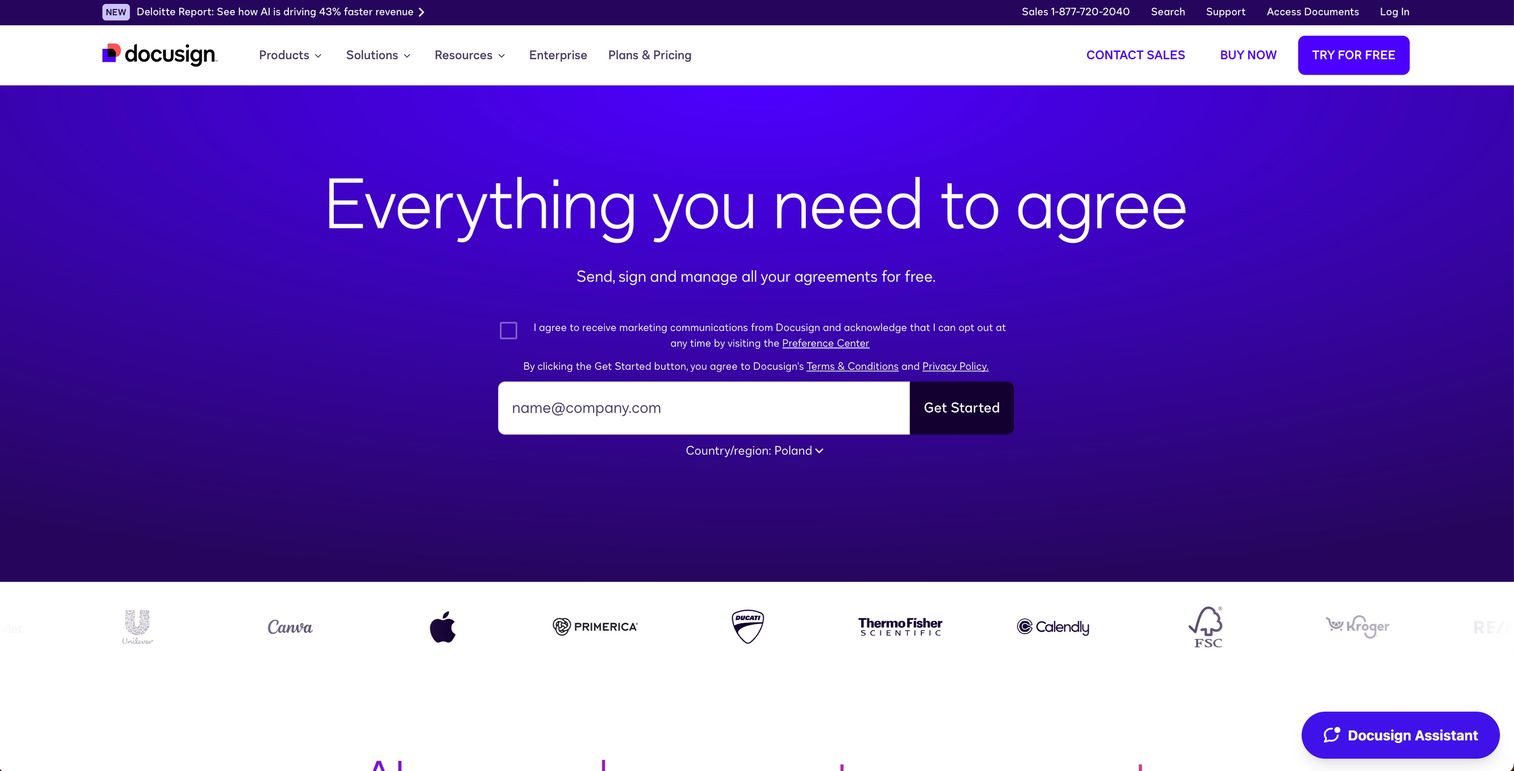
DocuSign Notary brings remote online notarization into the eSignature workflow that many teams already run every day. If your agreements, contracts, and disclosures already flow through DocuSign, adding notarization on top means one system instead of two. It is MISMO Certified for RON, which matters if you touch mortgage or real estate documents where that certification is a gating requirement.
Best for: Enterprises and organizations that need remote online notarization at scale inside an existing eSignature stack.
Key strengths
- 24/7 notary access: Use DocuSign's network of qualified notaries or bring your own commissioned notaries.
- Secure identity proofing and audit trail: Identity verification and a full audit trail built into every session.
- MISMO Certified for RON: Meets the industry certification that mortgage and real estate workflows require.
Why choose DocuSign Notary: The pull is consolidation. If you already trust DocuSign for signatures across legal, sales, and HR, layering notarization onto that same platform removes a second vendor, a second login, and a second integration to maintain. For a founder trying to reduce tool sprawl while proving process maturity, that single-stack story is compelling.
DocuSign Notary pricing: DocuSign shows a partner-led instant notarization flow starting at $25 per notarization. The Business Notary offering, aimed at teams notarizing at volume, is contact-sales only, so you will need to talk to their team for a custom quote. There is no free tier. Verified from DocuSign's product page as of mid-2026.
2. Notarize
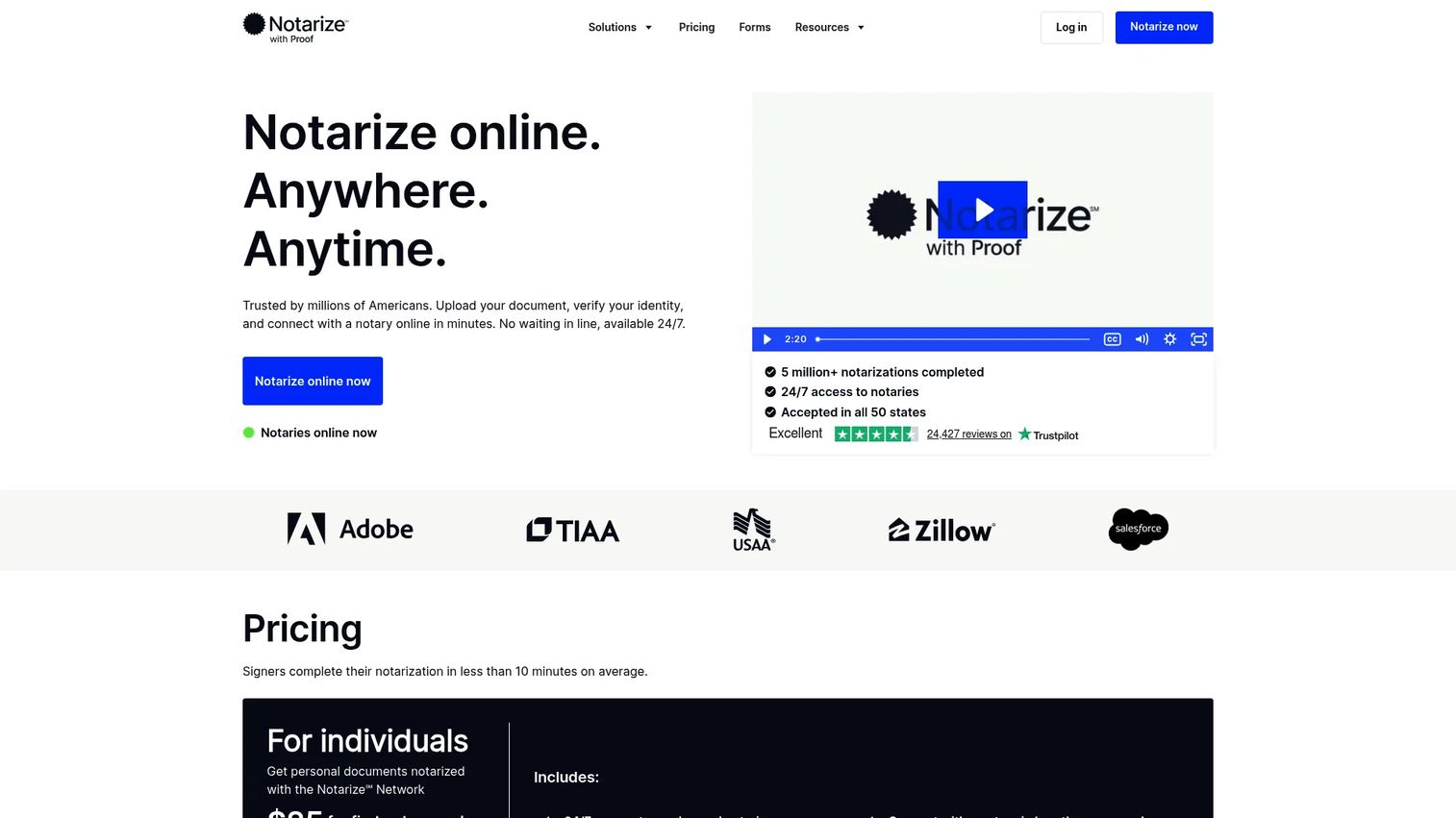
Notarize is one of the most recognized names in online notary service, now offered under the Proof brand. It built its reputation on 24/7 access to a network of commissioned notaries, so a signer can get a document notarized at 2 a.m. without booking anything. For businesses, it adds eSignature, identity verification, and multi-signer online notarization for documents that need more than one party.
Best for: Businesses and individuals needing reliable remote online notarization with round-the-clock availability.
Key strengths
- 24/7 online notarization network: On-demand access to notaries whenever a signer is ready.
- eSignature and identity verification: Business-grade signing and ID checks in the same flow.
- Multi-signer online notarization: Support for documents that require several signers across locations.
Why choose Notarize: The trust signal here is maturity. Notarize processed notarizations at scale before most competitors existed, and that operational depth shows up in reliability. For a company that cannot afford a failed session on a time-sensitive close, that track record is worth paying for.
Notarize pricing: Business Pro is pay-as-you-go at $25 per notarization, which keeps costs predictable for lower volume. Business Premium is custom and requires a sales conversation, typically for teams with higher throughput or specific compliance needs. There is no free tier. Verified from the official pricing page as of mid-2026.
3. OneNotary
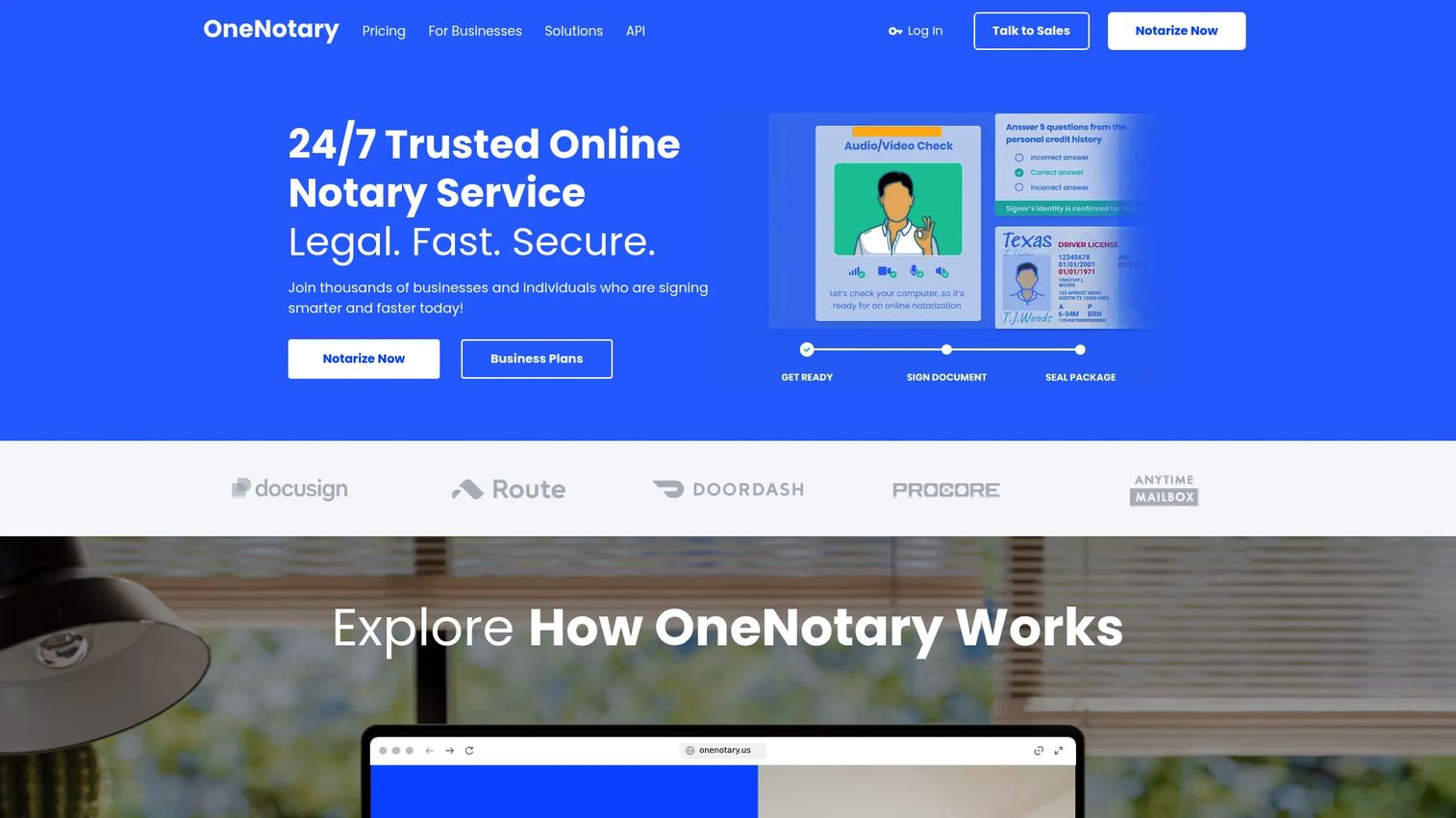
OneNotary is an online notarization platform aimed at both individuals and businesses, with remote and mobile notarization options. It shows up in comparison lists often because it pairs a genuinely usable free tier with business features like custom branding, an API, and the ability to connect your own notary. That combination makes it easy to start small and scale without switching platforms.
Best for: Individuals and small-to-mid businesses that want a low-cost entry point with room to grow.
Key strengths
- 24/7 professional notary service: On-demand notaries plus the option to connect your own.
- Business-ready features: Custom branding, unlimited team members, document templates, and a REST API.
- Biometric verification and compliance extras: Biometric identity checks plus remote Form I-9 and E-Verify integration.
Why choose OneNotary: The appeal is flexibility without a big upfront commitment. A signer-pays option lets you push notarization costs to the party who needs the document, and unlimited storage plus unlimited team members mean the platform does not punish you for growing. For an early-stage team testing whether RON fits their workflow, starting free is a low-risk way to validate.
OneNotary pricing: The Pay-as-You-Go plan starts free per month, with per-notarization fees applied as you use it. Business Professional runs $49 per month for teams that want the fuller feature set, and Enterprise is custom. Verified from OneNotary's pricing page as of mid-2026.
4. DocVerify
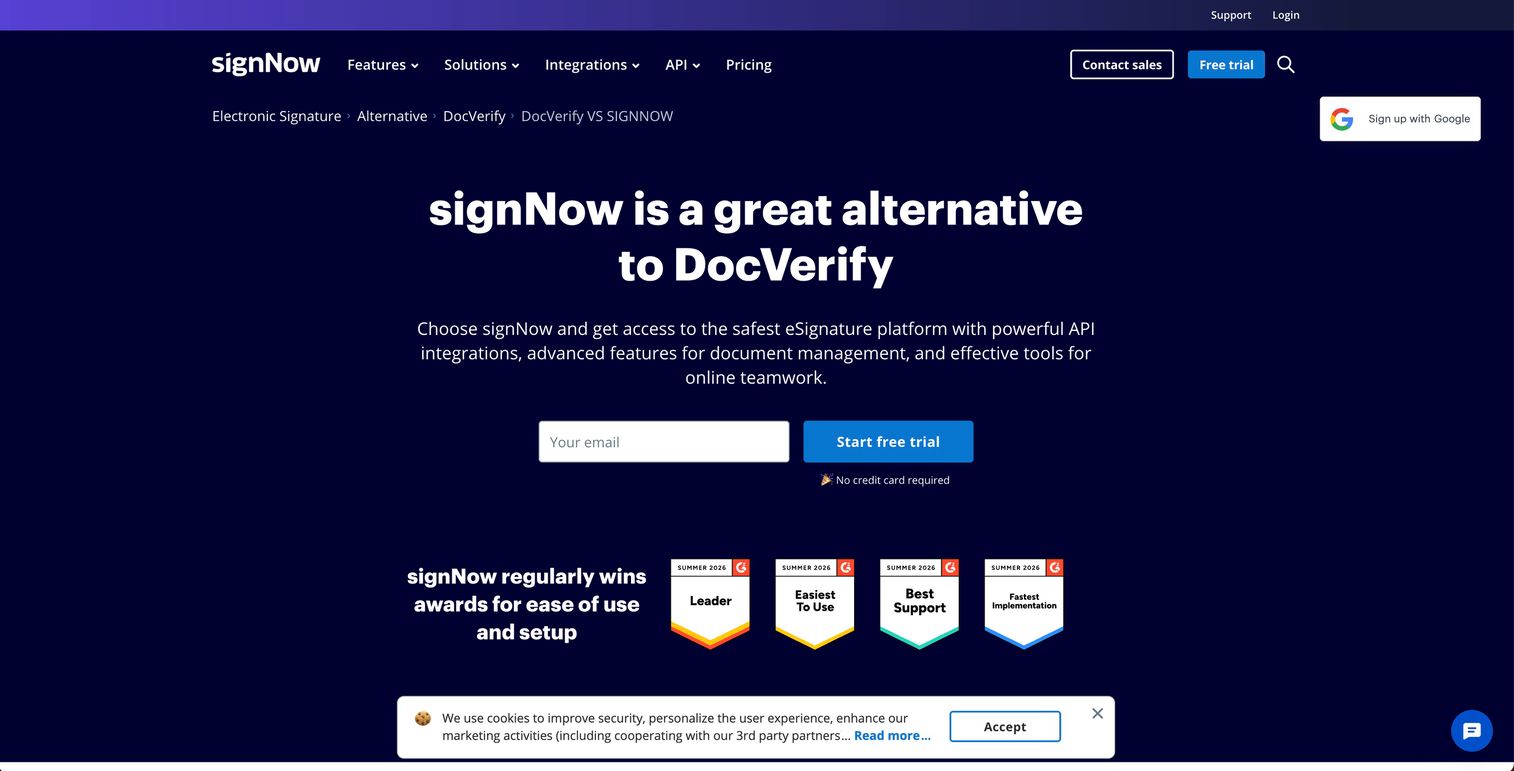
DocVerify positions itself as a combined digital signature and electronic notarization platform, so teams can handle both e-signing and e-notary workflows in one document layer. That single-workflow framing appeals to operations teams tired of stitching separate tools together for signing and notarizing the same document.
Best for: Teams that want e-signature and e-notary handled inside one document workflow rather than two.
Key strengths
- Combined eSign and e-notary: One platform for both electronic signatures and remote notarization.
- Document verification focus: Positioning built around verifying and securing executed documents.
- Workflow consolidation: Designed to reduce the number of tools touching a single document.
Why choose DocVerify: If your friction is tool fragmentation, having signing and notarization under one roof simplifies your stack and your audit trail. Fewer handoffs between systems mean fewer places for a document to fall out of compliance. For a lean operations team, that consolidation is the draw.
DocVerify pricing: DocVerify does not publicly list current pricing on its site, so you will need to contact the vendor for a quote scoped to your document volume. Its G2 rating sits at 4.1/5. When pricing is not transparent, ask specifically about per-notarization cost, minimum commitments, and whether identity verification is included or billed separately.
5. SigniX
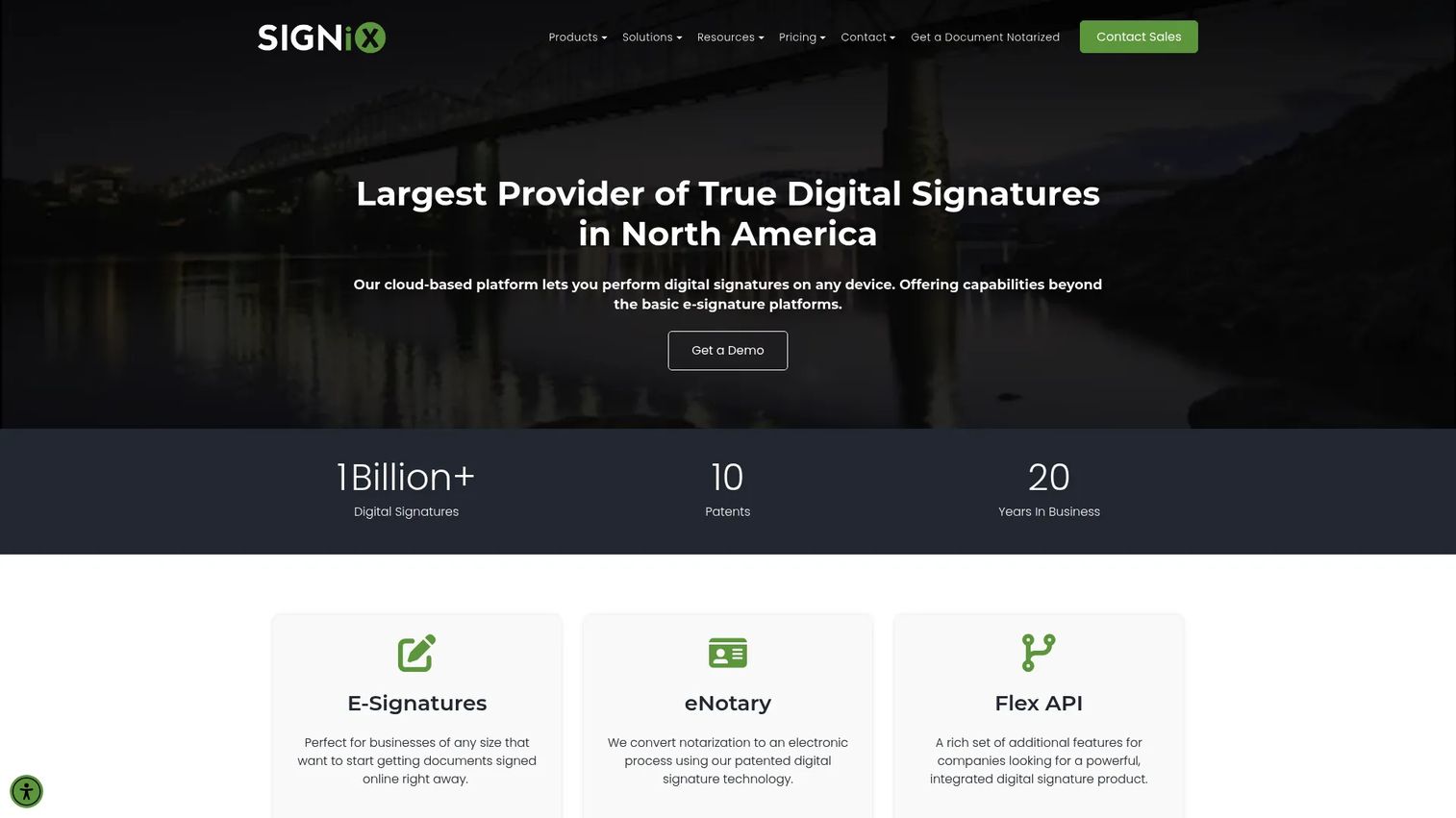
SigniX is a digital signature and remote online notarization platform built with a legally focused, standards-driven approach. Its RON product, eNotaryDoX, sits alongside a digital signature engine that produces tamper-evident, independently verifiable records. The standout for operators is its API orientation, which makes it a fit for teams that want to embed notarization directly into their own product or workflow automation.
Best for: Organizations that need legally rigorous digital signatures or want to build notarization into their own product via API.
Key strengths
- Independently verifiable records: Tamper-evident signatures that can be verified without SigniX in the loop.
- Remote online notarization (eNotaryDoX): Purpose-built RON alongside the core signing engine.
- API, white labeling, and multi-party workflows: Embed and brand notarization inside your own product.
Why choose SigniX: For a SaaS founder whose product needs notarization as a native feature, the API and white-label options matter more than a slick consumer UI. You can offer notarization under your own brand without building the compliance machinery yourself. That build-versus-buy math is exactly what a Series B team should be running.
SigniX pricing: The Standard digital signature plan starts at $120 per user per year on a 3-year agreement, or $199 per user per year on a 1-year term. Enterprise is custom. SigniX also publishes a separate RON pricing page with individual and team options, so confirm which product line matches your use case. Its G2 rating is 4.0/5 from a small review base. Verified from SigniX's pricing pages as of mid-2026.
6. BlueNotary

BlueNotary is a self-serve online notarization platform serving individuals, businesses, notaries, and real estate closings. It leans into flexibility with a free starting tier, on-demand notarization, and dedicated eClosing support for real estate. For smaller teams or solo operators, the low-friction, pay-as-you-grow structure is the main draw.
Best for: Individuals and smaller teams that want on-demand remote online notarization and eClosings without a heavy contract.
Key strengths
- On-demand online notarization: Get a document notarized when you need it, no scheduling overhead.
- eClosing for real estate: Purpose-built support for real estate closing workflows.
- KBA and biometric identity verification: Layered identity checks for fraud prevention.
Why choose BlueNotary: The free Basic plan makes it genuinely easy to test before committing budget, and the real estate eClosing focus makes it a fit for property-heavy workflows. For a small team that notarizes occasionally, paying only for what you use beats a fixed enterprise contract. Start free, and upgrade only when volume justifies it.
BlueNotary pricing: The Basic plan is free. Notary Pro runs $24.75 per month, and Business Pro is $37 per notary per month with two free sessions included. There is also a custom invoicing option with per-session platform fees starting at $5 for the first seal. Verified from BlueNotary's pricing page as of mid-2026.
7. NotaryCam
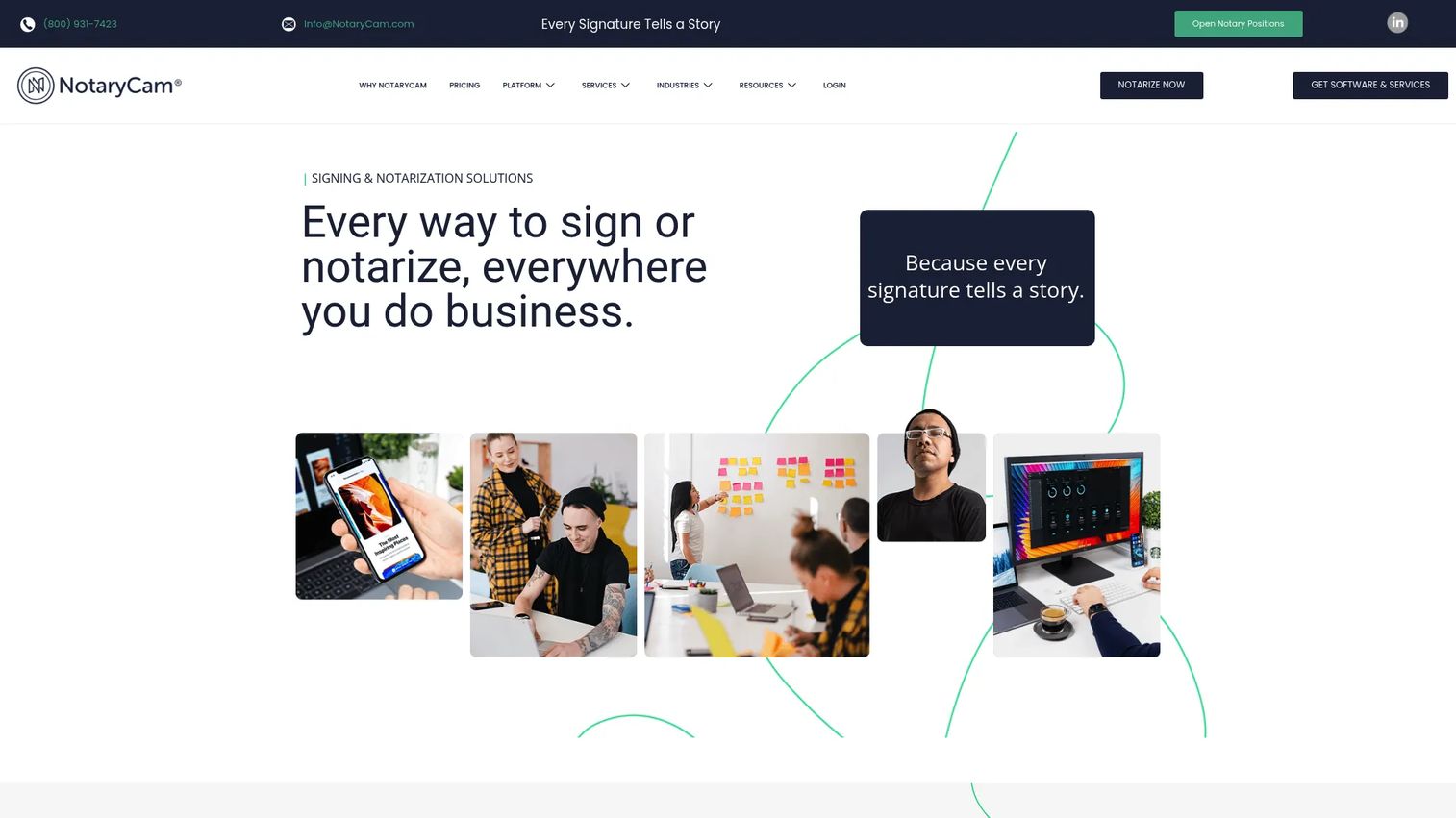
NotaryCam is an online notarization and digital signing platform focused on straightforward, on-demand notarization needs. It handles real estate closings, general document notarization, and wills and trusts where approved. If your requirement is simple, notarize a specific document quickly and correctly, NotaryCam keeps the workflow uncluttered.
Best for: Businesses or individuals who need clean, on-demand notarization for real estate, wills, or one-off documents.
Key strengths
- Real estate closings: Dedicated remote online notarization for property transactions.
- Notarize Now for general documents: On-demand notarization for non-real-estate documents.
- Wills and trusts support: Notarization of estate documents where state approval allows.
Why choose NotaryCam: The value is clarity. Rather than a sprawling feature set, NotaryCam offers distinct pricing for distinct jobs, so you know what a closing, a general notarization, or a will costs before you start. For a team that wants predictable per-document costs without a subscription, that transparency is refreshing.
NotaryCam pricing: Pricing is job-specific. Notarize Now starts at $25 per seal, real estate closings start at $199, and wills and trusts are $175 per document. There is no free tier. Verified from NotaryCam's pricing page as of mid-2026.
8. Proof
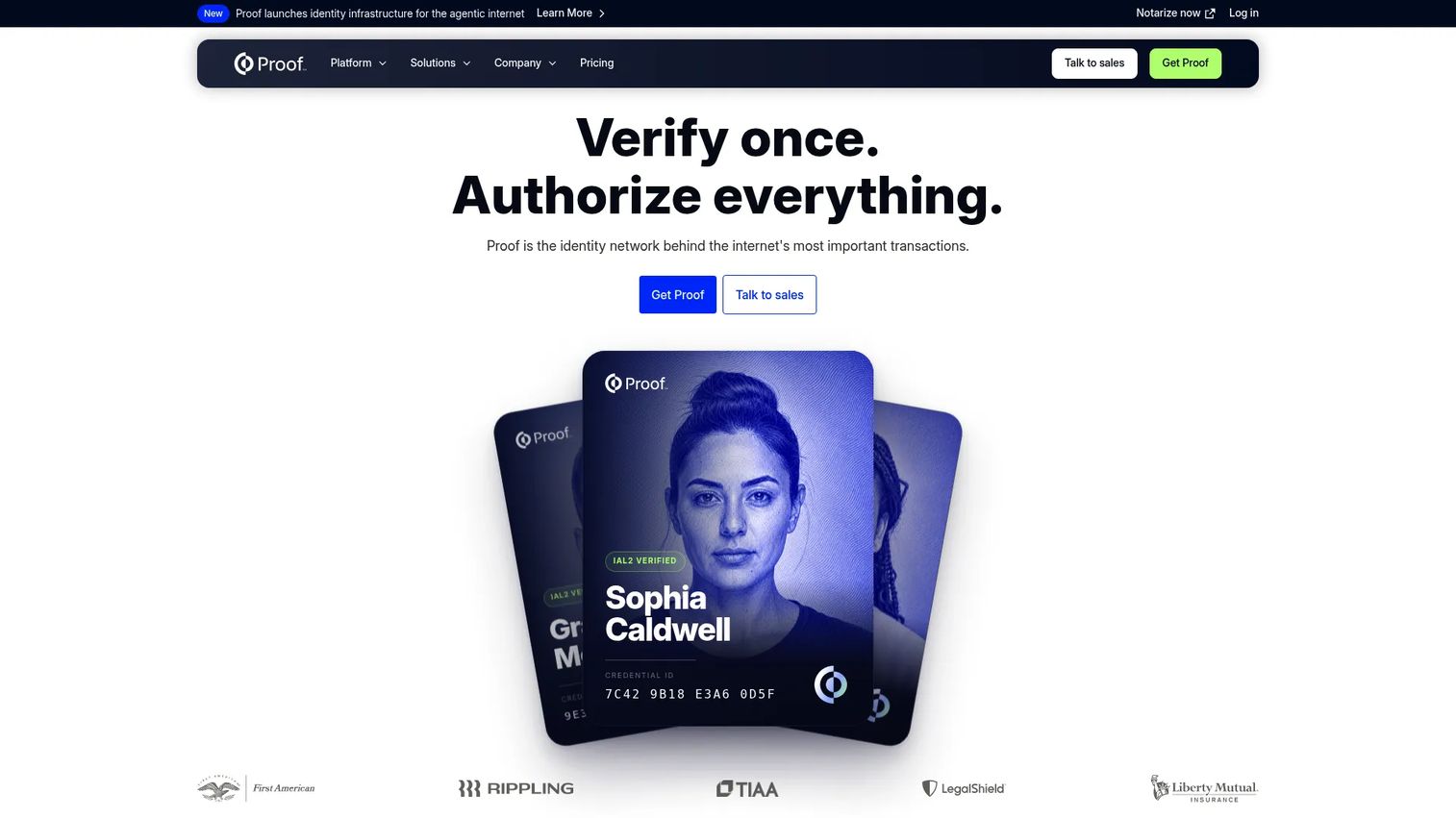
Proof frames notarization as one piece of a broader identity-centric security platform for verifying, signing, notarizing, and authorizing high-trust transactions. Its three pillars, Notarize, Sign, and Identify, position identity verification as the foundation rather than an add-on. For workflows where knowing exactly who signed matters as much as the signature itself, that identity-first architecture is the differentiator.
Best for: Businesses that need identity verification woven into their e-signature and notarization workflows, not bolted on.
Key strengths
- Identity-first architecture: Verification is the core layer, not a checkbox step.
- Notarize, Sign, and Identify: A unified set of tools for high-trust transactions.
- Fraud prevention depth: Built specifically to make impersonation and fraud harder.
Why choose Proof: If your biggest risk is not a missing signature but a fraudulent one, Proof's identity assurance model directly targets that exposure. It absorbed the Notarize brand, so it carries that operational history while pushing the conversation toward trust and verification. For finance, legal, or high-value contract workflows, that emphasis on who is on the other end of the transaction is the right one.
Proof pricing: The Pro plan is pay-per-transaction at $25. Title Pro, for teams using in-house notaries, runs $45 per meeting. Premium is billed annually with pricing on request, and Enterprise plus custom options are quote-based. There is no free tier. Verified from Proof's pricing page as of mid-2026.
9. SafeDocs
SafeDocs is an online notary software and cloud solution built around secure digital document transactions that include notarial acts. Its framing centers on a full creation-to-execution-to-return process, meaning the document lifecycle stays inside one secure workflow from drafting through the notarized return. For teams that care about keeping the whole transaction in a controlled environment, that end-to-end scope is the appeal.
Best for: Organizations that want an online notarization workflow covering the full document lifecycle in one secure environment.
Key strengths
- Secure document transaction workflow: End-to-end handling from creation to notarized return.
- Remote online notarization support: RON built into the document process.
- Creation-to-execution-to-return process: A single controlled path for the whole transaction.
Why choose SafeDocs: If your concern is document security across the entire lifecycle, not just the moment of notarization, SafeDocs's end-to-end framing fits. Keeping creation, execution, and return inside one secure workflow reduces the number of systems that touch sensitive documents. For security-conscious operators, that containment is worth evaluating.
SafeDocs pricing: SafeDocs does not publicly list pricing on its site and instead uses a contact prompt, so you will need to reach out for a quote scoped to your needs. Its G2 rating is 5.0/5, though from a very small review base, so lean on a direct trial and reference checks. When evaluating, ask about state coverage, per-notarization cost, and how the audit trail is stored and exported.
Considerations before you choose
Before you sign a contract, run every shortlisted platform through this checklist. The differences that matter are rarely on the marketing page.
State approval and coverage
RON legality varies by state, and a platform's supported states are the first hard filter. Confirm that the states where your signers and notaries are located are fully supported, not "coming soon." A platform that covers 40 states is useless if it misses the two you operate in.
Identity verification standards
Look past the word "verified" and ask what actually happens. Does the platform use KBA, government ID credential analysis, biometrics, or a combination? Stronger identity verification means better fraud prevention and a more defensible record if a notarization is ever challenged. This is not the place to accept the cheapest option.
Audit trail and electronic journal
When a notarization is disputed, the audit trail is your evidence. Confirm what the platform logs, how long it retains records, whether the electronic journal is exportable, and whether session recordings are included. Ask specifically how you retrieve records years later, because that is when you will need them.
Workflow and integration fit
A notary online tool that does not connect to your existing systems creates manual work. Check for API access, eSignature integration, and CRM or document management connectors. For teams building notarization into their own product, API depth is the deciding factor, not the consumer UI.
Pricing model and total cost
Per-notarization, per-seat, and subscription models each favor different volumes. Model your realistic monthly volume against each pricing structure. A free tier is great for testing, but confirm what it excludes, and whether identity verification or session storage costs extra.
Conclusion
There is no single best electronic notary software, only the best fit for your state coverage, security requirements, and document volume. That is the honest answer, and it is the useful one.
If you want notarization inside an eSignature stack you already run, DocuSign Notary is the consolidation play. For proven 24/7 business notarization, Notarize under Proof brings operational depth. If identity assurance is your top risk, Proof puts verification at the center. Teams wanting a free starting point should test OneNotary or BlueNotary, and developers building notarization into their own product should look hard at SigniX's API. For clean, per-document notarization, NotaryCam keeps it simple, while DocVerify and SafeDocs focus on unified document workflows.
Your next step is concrete: list the states you operate in, define your identity verification and audit trail requirements, and estimate monthly volume. Then run a trial with the two platforms that clear those three filters. The right choice reveals itself quickly once you match the tool to your actual workflow rather than the loudest brand.
FAQs
Not uniformly. Most U.S. states have authorized some form of remote online notarization, but the specific rules, permitted document types, and requirements differ by state. Always confirm that both your notary's commission state and your signer's state support RON before relying on a platform, since state approval is the foundation of a valid notarization.
Many common documents can be notarized through remote online notarization, including affidavits, powers of attorney, contracts, real estate closing documents, and certain wills and trusts where state law permits. Some documents are excluded by specific state or federal rules, so check the platform's supported document types and your jurisdiction's restrictions before you start.
Most RON platforms use a layered approach. Knowledge-based authentication (KBA) asks the signer questions only they should be able to answer, credential analysis validates a government-issued ID, and some platforms add biometric checks. The live video session lets the notary visually confirm the signer, and the combination creates a strong, fraud-resistant identity record.
For most consumer notarizations, no. A signer typically needs a device with a camera and microphone, a stable internet connection, and a valid government-issued ID. The notary may have additional requirements set by their state, but the signer's side is designed to work from a standard laptop or phone.
An e-signature captures a person's intent to sign a document electronically. Electronic notarization adds a commissioned notary who verifies the signer's identity, witnesses the signing over live video, and applies a notarial seal, creating a legally recognized notarial act with an audit trail. Notarization is a higher-assurance process built on top of signing.
The audit trail is a timestamped, tamper-evident record of the entire notarization session. It typically logs the identity verification steps, the live video recording, the signer's actions, and the notary's seal, alongside an electronic journal entry. This record is what makes a remote notarization defensible if it is ever questioned in court or during an audit.
Businesses with frequent, distributed, or compliance-sensitive document workflows gain the most, including real estate, lending and finance, legal services, insurance, and HR teams handling regulated forms. Any organization coordinating notarizations across locations or at volume will see the biggest reduction in operational friction and turnaround time.
Start by listing every state where your signers and notaries operate, then confirm each provider fully supports RON in those states today. Compare their identity verification standards, how they handle the electronic journal and record retention, and whether their compliance approach is documented against current state statutes. Prioritize providers that keep compliance current as state rules change rather than treating it as a one-time setup.