
You scoped a wallet feature. Then the questions started. Who owns the ledger? What happens at reconciliation? Which vendor handles KYC without turning your roadmap into a compliance project? And can any of this ship before the next board review?
Most "digital wallet software" pages answer none of that. They sell tap-to-pay convenience or list feature bullets that could describe any payments product. That gap matters, because the wallet you pick is an architecture decision, not a feature checkbox.
Here is the scale you are building into. Digital wallet users passed 4.5 billion globally in 2025 and are projected to reach 6 billion by 2030, according to Juniper Research (2025). Global wallet transaction value hit US$10 trillion in 2024 and is expected to surpass US$17 trillion by 2029, per Capital One Shopping (2026). Those numbers set the compliance, throughput, and reconciliation bar you inherit the day you launch.
This guide treats wallet software the way a PM actually evaluates it: by deployment model, operational burden, and fit for your business motion.
What's inside
This guide is for product managers, engineering leads, and operations teams evaluating a wallet platform for a real launch, not a definition lookup. We split the market into consumer wallet apps, white-label wallet infrastructure, and pass or loyalty layers, because those solve different problems.
Tools were selected and compared against four criteria that matter at evaluation stage:
- Core wallet model: balances, ledger, transfers, cards, or pass storage
- Compliance depth: KYC, KYB, AML, and reconciliation support
- API and deployment flexibility: cloud, self-hosted, or source-code access
- Operational control and scale: admin tooling, multi-country, and throughput
TL;DR
- Best for consumer wallet users: Google Wallet, free and native on Android
- Best for white-label wallet infrastructure: SDK.finance, ledger-first with source-code access
- Best for enterprise mobile wallet programs: Software Group, multi-country deployment
- Best for wallet plus loyalty ecosystems: Open Loyalty, API-first loyalty and wallets
- Best for card and pass experiences: Apple Wallet, native on iPhone and Apple Watch
- Best for payment orchestration and wallet builds: Mangopay, marketplace-grade funds flows
- Best for wallet pass distribution: PassKit, Apple and Google Wallet passes at scale
If you are building custom wallet infrastructure, start with the white-label platforms. If you are extending an existing product with wallet-like passes, start with the pass layers.
What is digital wallet software
Digital wallet software is a platform that stores, manages, and moves value or credentials on behalf of a user, covering payment cards, balances, transfers, loyalty points, tickets, identity, and transit passes across web and mobile.
The category splits into distinct architectures, and mixing them up is the most common evaluation mistake.
- Consumer wallet apps: Ready-made wallets like Google Wallet and Apple Wallet where end users store cards and passes. You integrate into them, you do not build them.
- White-label wallet infrastructure: Platforms like SDK.finance that give you a ledger, APIs, and account model to launch your own branded wallet under your own name.
- Mobile wallet platforms: Enterprise programs, often multi-country, built for financial service providers and telcos rather than a single app.
- Wallets for payments, loyalty, identity, and transit: Specialized layers that extend wallet value beyond payments into rewards, membership, and passes.
Core features you should expect to evaluate include balances and account holding, transfers and payments, card issuing, KYC and KYB onboarding, AML monitoring, ledgering, reconciliation, and an API surface deep enough to support your roadmap.
A quick distinction. A simple payment app moves money between two parties. A store-branded pass sits inside a consumer wallet you do not control. Wallet software, in the infrastructure sense, gives you the ledger and account model to hold and move value yourself, which is why the operational and compliance bar is higher.
When to use digital wallet software
Launch a branded wallet experience
You want your users holding balances, sending transfers, and paying under your brand, not a third party's. This is the moment for white-label wallet infrastructure with a ledger, KYC, and reconciliation built in. Fintechs, neobanks, telcos, and super-app builders usually land here, because they need full control over the account model and the money movement.
Add payments and transfers to an existing product
Your product already has users, and you want to move money inside it without becoming a bank. Payment infrastructure with wallet creation and funds-flow control fits here. Marketplaces, platforms, and SaaS products with a payout or split-payment need are the typical buyers, and they care most about compliance-ready funds flows and clean APIs.
Extend value into loyalty, identity, tickets, or transit
You do not need a full financial wallet. You need wallet-like passes: loyalty cards, coupons, event tickets, memberships, or transit. Retailers, event organizers, and brands with a loyalty motion usually need this, and a pass or loyalty layer ships far faster than a ledger-first build.
Comparison table
Read the table by matching the "Best for" column to your business motion first, then check pricing and deployment fit. Consumer wallets and infrastructure platforms are not interchangeable, so filter by category before you compare specs.
| # | Product | Best for | Key differentiator | Pricing | G2 rating |
|---|---|---|---|---|---|
| 1 | Google Wallet | Consumer Android wallet | Native tap-to-pay, passes, and IDs on Android | Free | Not listed |
| 2 | SDK.finance | White-label wallet infrastructure | Ledger-first platform with source-code access | Quote-based | 5.0/5 |
| 3 | Software Group | Enterprise mobile wallet programs | Multi-country digital and agency banking | Contact sales | Not listed |
| 4 | Open Loyalty | Wallet plus loyalty ecosystems | API-first loyalty with wallet support | Custom | 4.7/5 |
| 5 | PassKit | Wallet pass distribution | Apple and Google Wallet pass issuance | From $39.50/mo | Not listed |
| 6 | Mangopay | Payment orchestration and wallets | Marketplace funds flows and virtual IBANs | Custom | 4.5/5 |
| 7 | Apple Wallet | Consumer Apple wallet | Native wallet on iPhone and Apple Watch | Free | Not listed |
Best digital wallet software tools for 2026
1. Google Wallet
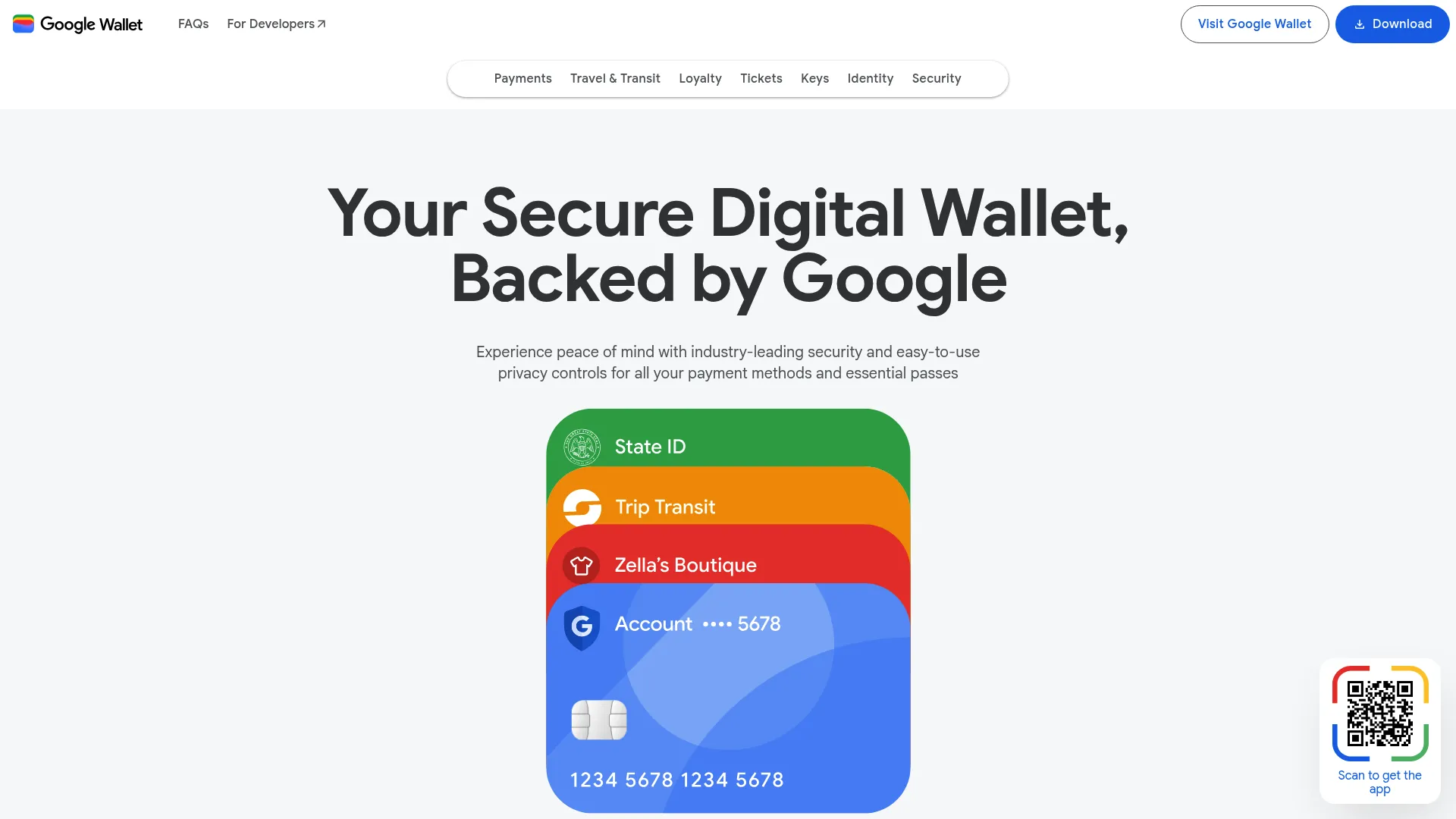
Google Wallet is Google's consumer digital wallet for storing and using payment cards, passes, tickets, keys, and IDs on Android. It handles tap-to-pay at the terminal, stores transit cards and boarding passes, and holds loyalty cards and select digital IDs. For a PM, the key point is direction: you integrate your cards, passes, or loyalty programs into Google Wallet, you do not build a wallet with it.
Best for: Android users who want a free digital wallet for everyday payments and passes.
Key features
- Tap to pay with saved payment cards
- Store transit cards, tickets, loyalty cards, keys, and IDs
- Security and privacy controls built into Android
Why choose Google Wallet: If your goal is meeting consumers where they already keep their cards, Google Wallet is a distribution surface, not an infrastructure play. It fits teams issuing passes or cards to Android users rather than teams building a ledger.
Google Wallet pricing: Free of charge to all users.
2. SDK.finance
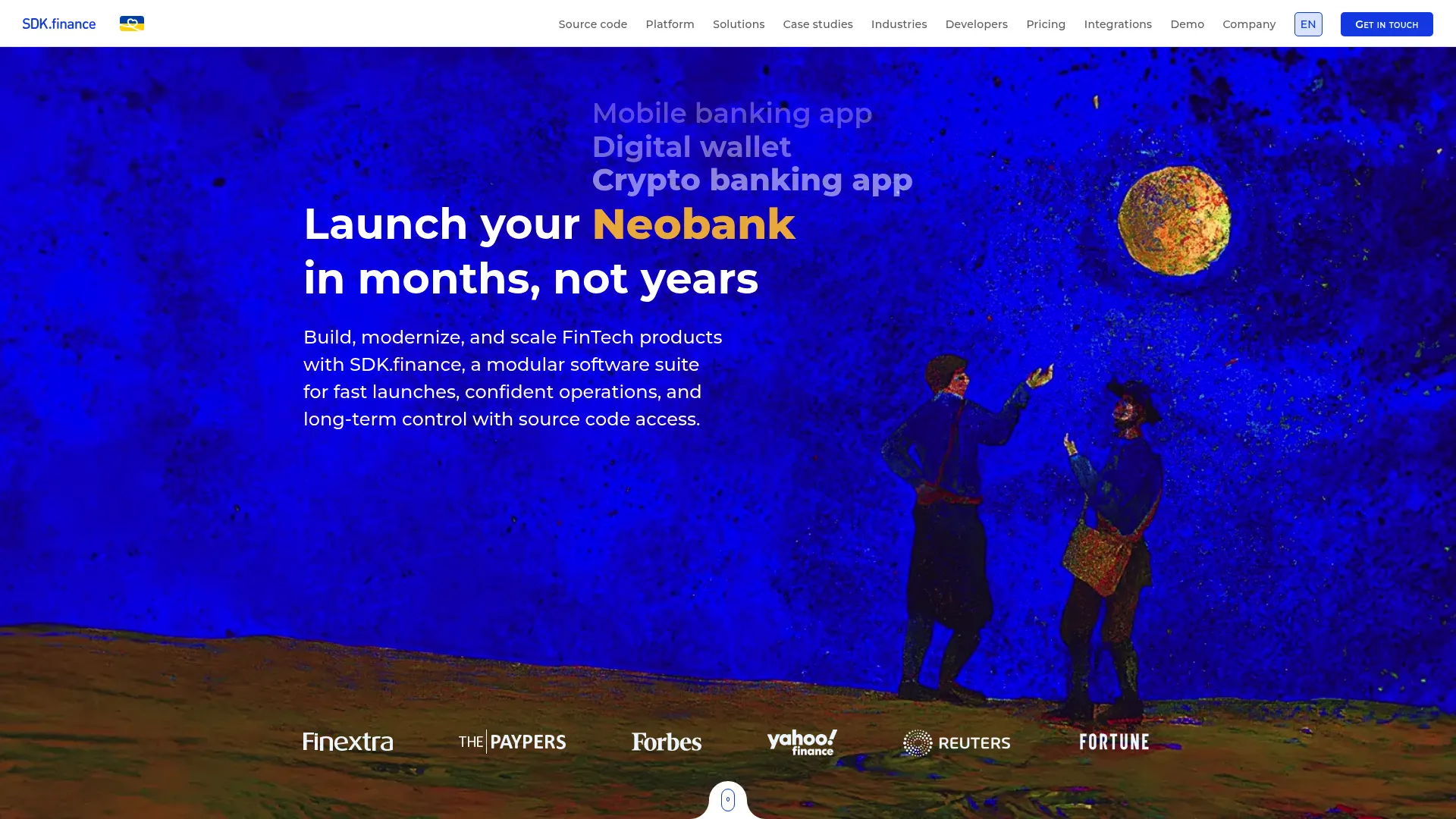
SDK.finance is an enterprise fintech platform for building and scaling banking and payment products, with source-code access as an option. It is a ledger-first, API-driven backend that ships pre-built capabilities for onboarding, payments, cards, ledgering, AML, and reconciliation. For teams building their own branded wallet, this is the white-label wallet infrastructure category in its most direct form.
Best for: Banks, fintechs, PSPs, and enterprises launching a white-label banking or payment product.
Key features
- Modular backend platform with API-driven architecture
- Pre-built onboarding, payments, cards, ledger, AML, and reconciliation
- Web, iOS, and Android interfaces plus a merchant portal included
Why choose SDK.finance: The source-code option matters when your compliance or data-residency requirements rule out a pure SaaS deployment. It fits teams that want to own the wallet core and its roadmap rather than rent it, and who can staff the build.
SDK.finance pricing: Quote-based licensing. The pricing page lists annual and lifetime licensing options without public numeric prices.
3. Software Group
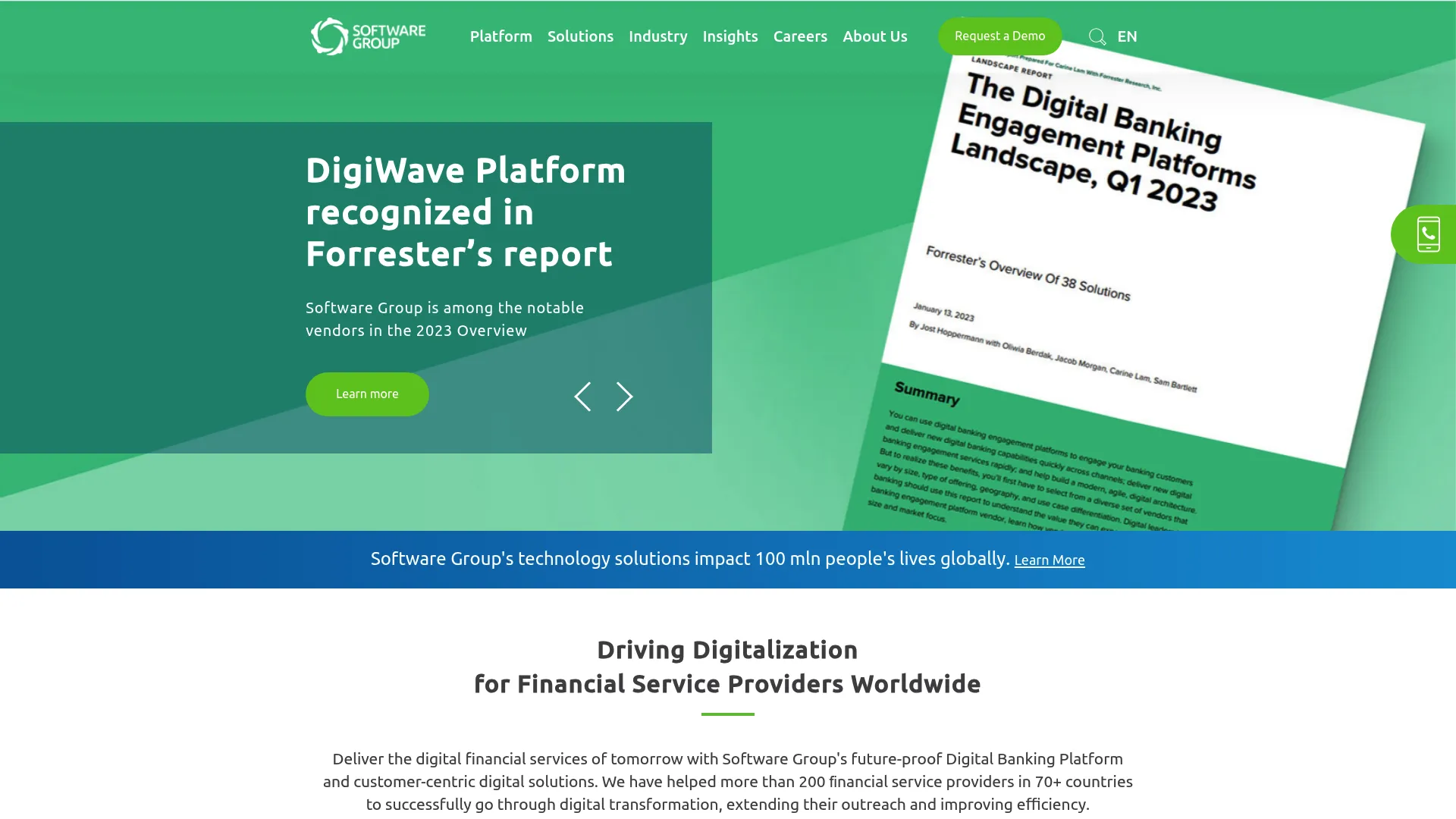
Software Group is a global technology company providing digitalization and integration for financial service providers. Its stack spans a digital banking platform, agency banking, and a payment switch with card management, built for multi-country deployment. For enterprise wallet programs that must span markets and channels, this is a mobile wallet platform aimed at operators rather than app builders.
Best for: Financial service providers needing digital banking, agency banking, or payment infrastructure.
Key features
- Digital banking platform and customer-centric digital solutions
- Agency banking with pay-per-use and revenue-share positioning
- Payment switch and card management with multi-country support
Why choose Software Group: The fit is strongest when you operate across regions and need channel breadth, including agency banking, rather than a single consumer app. It suits banks and financial institutions extending services into underbanked or multi-country markets.
Software Group pricing: Software Group doesn't list its pricing. You'll need to contact sales, though some pages mention pay-per-use or revenue-share options.
4. Open Loyalty
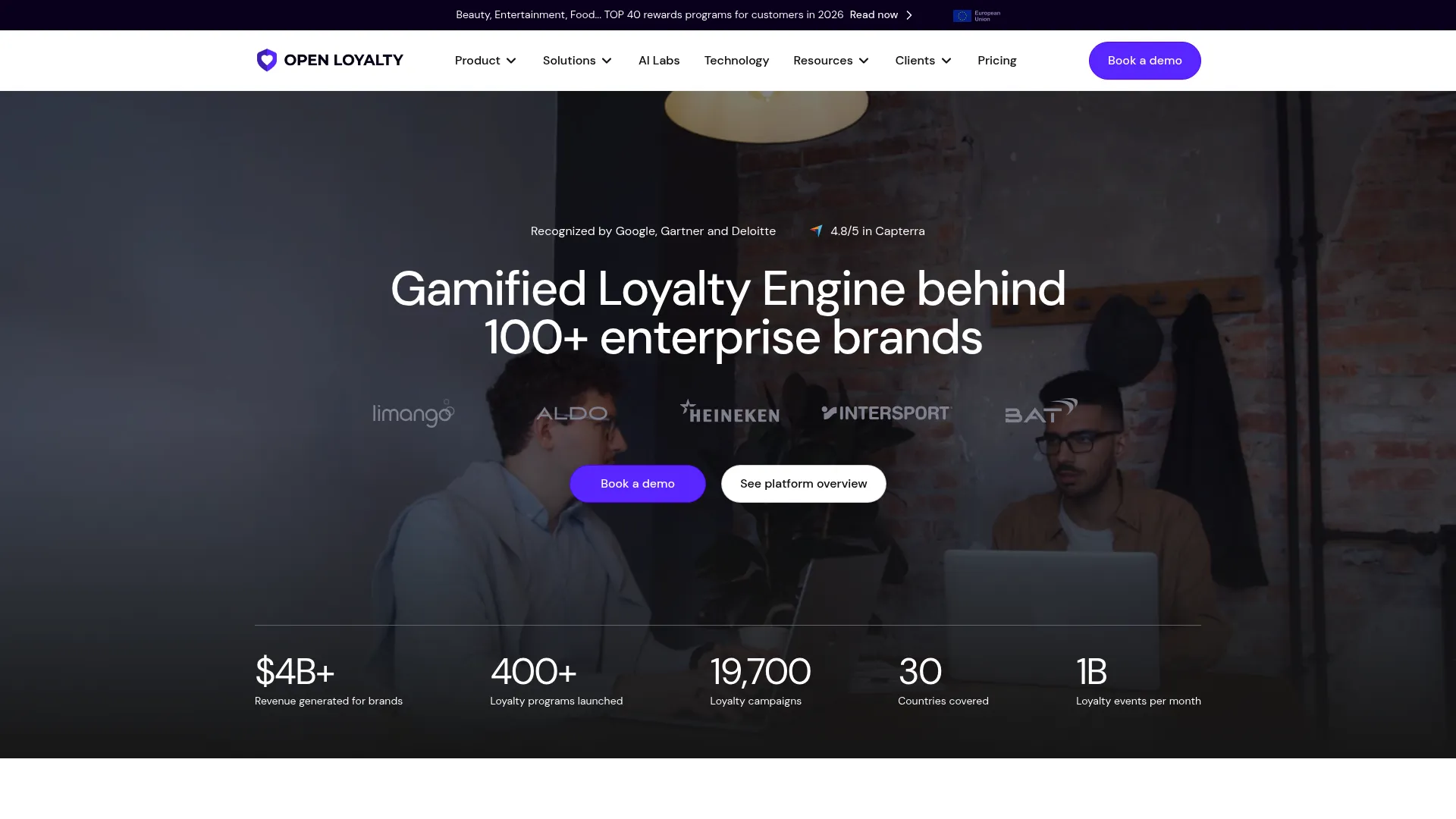
Open Loyalty is an API-first loyalty and gamification platform for enterprises, with wallet functionality built into its feature set. It covers points, tiers, rewards, referrals, wallets, badges, coupons, challenges, and code scanning, all through full API access with an admin UI. When the wallet is a vehicle for a loyalty motion rather than a payments ledger, this is the category to evaluate.
Best for: Enterprises building a flexible, API-first loyalty program with wallet support.
Key features
- Points, tiers, rewards, referrals, wallets, badges, coupons, and challenges
- Full API access with an admin UI
- Multi-tenant SaaS with loyalty analytics and campaign management
Why choose Open Loyalty: A loyalty-led wallet makes sense when your primary goal is engagement and repeat purchase, not money movement. It fits retail, hospitality, and consumer brands that want wallets and rewards under one API rather than two vendors.
Open Loyalty pricing: Custom. The platform estimates pricing based on monthly active members using a platform fee and an allowance fee.
5. PassKit
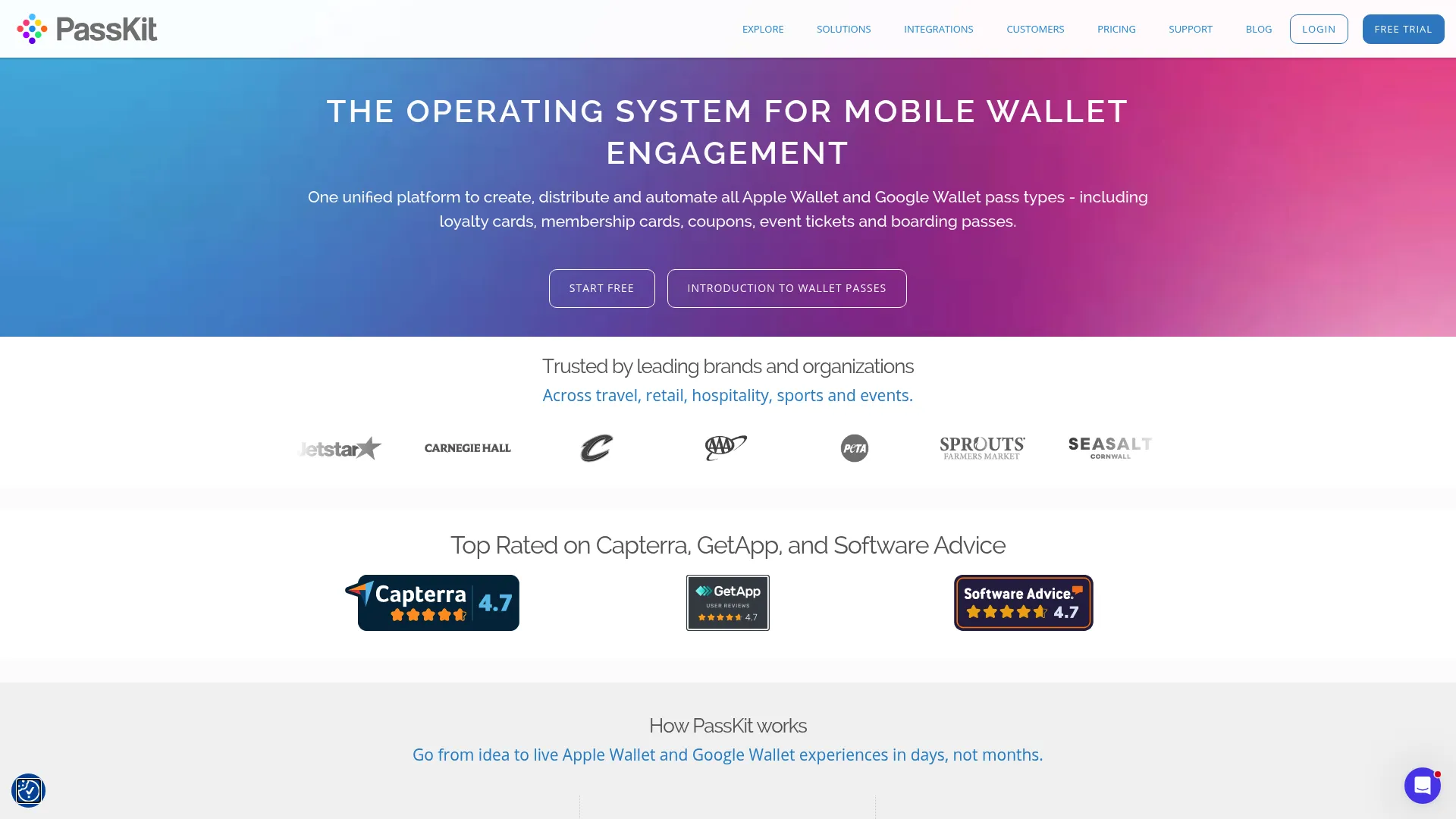
PassKit is a mobile wallet pass platform for creating, issuing, and managing Apple Wallet and Google Wallet passes. It handles loyalty, membership, coupon, ticket, and gift-card passes, with real-time updates via API or dashboard and distribution through email, SMS, QR codes, and links. For teams extending wallet-like experiences rather than building a wallet core, this is the pass distribution layer.
Best for: Teams that need to issue and manage wallet-based loyalty, membership, coupon, ticket, or gift card passes.
Key features
- Apple Wallet and Google Wallet pass creation
- Real-time pass updates via API and dashboard
- Distribution via email, SMS, QR codes, and links
Why choose PassKit: Choose PassKit when your fastest path to value is putting a pass into a wallet your users already have, not standing up a ledger. It fits retailers, event teams, and membership programs that want to ship in weeks.
PassKit pricing: Usage-based with a 45-day free trial. The platform fee starts at $39.50 per month and scales with usernames plus pass volume.
6. Mangopay
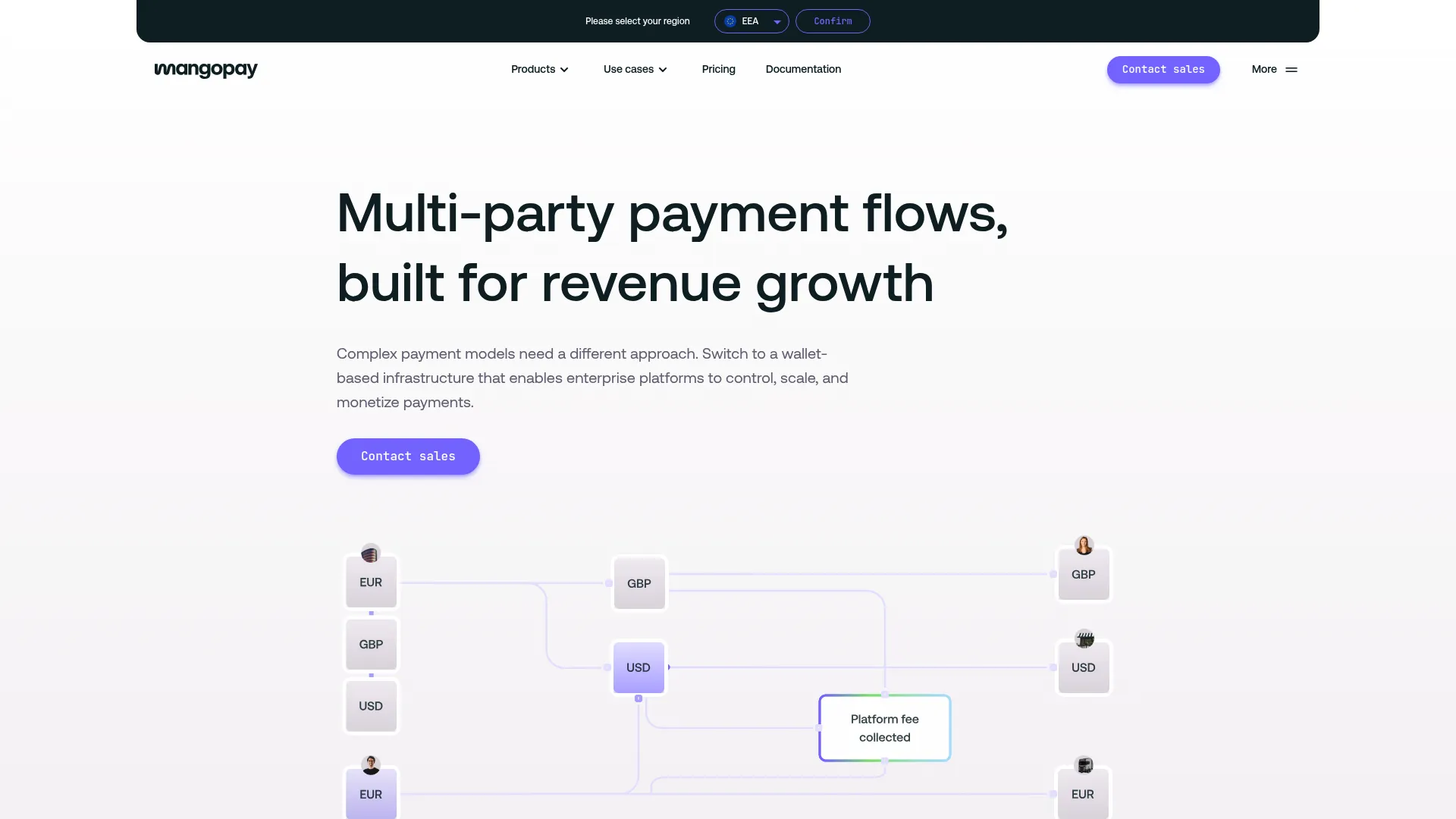
Mangopay is payment infrastructure for platforms and marketplaces, with wallets, payments, payouts, FX, identity, and fraud tools. It provides wallets and virtual IBANs, payment and payout workflows, plus fraud prevention and identity verification. For platform businesses that need to hold and route funds between multiple parties, this sits between a payments processor and a full wallet build.
Best for: Marketplace and platform businesses needing multi-party payment infrastructure.
Key features
- Wallets and virtual IBANs
- Payments and payout workflows
- Fraud prevention and identity verification
Why choose Mangopay: The fit is strongest for marketplaces managing split payments, escrow-style holds, and payouts to many sellers. It suits platforms that want compliance-oriented funds flows without building the money-movement stack from scratch.
Mangopay pricing: Custom, volume-based pricing. No fixed public tiers or free plan are listed.
7. Apple Wallet
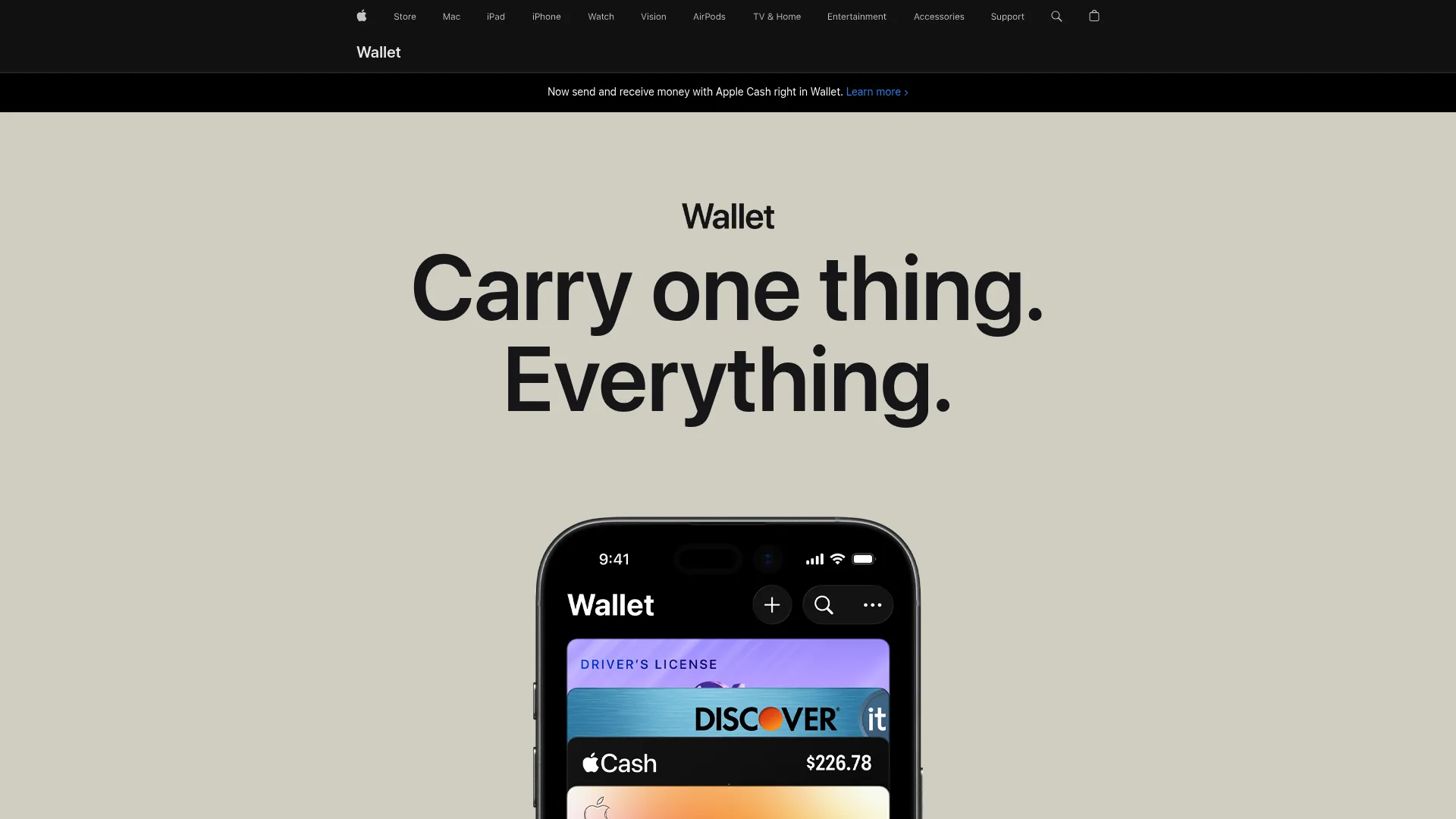
Apple Wallet is Apple's built-in wallet app for storing payment cards, passes, IDs, keys, and tickets on iPhone and Apple Watch. It powers Apple Pay for in-store, in-app, and online payments, and supports Apple Cash, rewards, order tracking, Express Mode, and select digital IDs and keys. Like Google Wallet, it is a consumer distribution surface, not a stack you build a wallet on.
Best for: iPhone and Apple Watch users who want a secure all-in-one wallet for payments, passes, IDs, and keys.
Key features
- Store credit and debit cards, transit cards, boarding passes, tickets, IDs, and keys
- Use Apple Pay for in-store, in-app, and online payments
- Support for Apple Cash, rewards, order tracking, Express Mode, and select IDs and keys
Why choose Apple Wallet: If your users are on iPhone, Apple Wallet is where they already keep cards and passes, so it is a distribution target for your issued passes. It is not a white-label wallet solution you can rebrand or run a ledger on.
Apple Wallet pricing: Free. The App Store lists Apple Wallet at no cost, with no paid tiers shown.
Considerations
Before you commit, run each shortlisted platform through the same checklist. The goal is to catch architecture and operational decisions now, before they become migration projects later.
Core wallet model
Decide first whether you are building a wallet or distributing into one. A ledger-first platform gives you balances, accounts, and money movement. A pass layer puts credentials into consumer wallets. Picking the wrong model is the most expensive mistake here, because it is hard to reverse.
Security and compliance readiness
Look for concrete KYC, KYB, and AML support rather than a compliance page. Ask how reconciliation works, how sensitive data is stored, and what audit trails exist. Do not accept broad "bank-grade" claims without seeing the actual controls and how they map to your regulatory context.
API and integration depth
Read the API docs before the sales call. Check whether the endpoints cover your funds flows, card issuing, and reporting needs, and how the platform connects to your CRM, ledger, and data stack. Shallow APIs surface as engineering debt six months in.
Operational control and scale
Evaluate the admin tooling your operations team will live in daily. Check multi-country support, throughput limits, and how fees, limits, and disputes are managed. A wallet that scales technically but not operationally still stalls.
Long-term maintainability
Wallet software is a multi-year commitment, so weigh deployment model against your team's capacity. Source-code and self-hosted options give control but need staffing. SaaS reduces overhead but ties you to a vendor roadmap. Match the choice to your release cadence and engineering bandwidth.
Conclusion
The right wallet platform depends entirely on your buying motion, not on a ranking.
If you are building a branded wallet with balances and money movement, SDK.finance leads for white-label infrastructure, and Software Group fits multi-country enterprise programs. If you are adding payments to an existing platform or marketplace, Mangopay handles multi-party funds flows without a full ledger build. If your wallet is really a loyalty engine, Open Loyalty ties rewards and wallets under one API. And if you just need to distribute passes, PassKit issues them into the consumer wallets your users already carry, namely Google Wallet and Apple Wallet.
Your next step is a scoping decision, not a demo. Pick your category first, build or distribute, then shortlist two platforms and run them through the considerations checklist above. That order saves you from evaluating a pass tool against a ledger platform and wondering why the specs do not line up.
Ready to move faster on your own product story? Start your journey with Guideflow today!
FAQs
Digital wallet software is a platform that stores and moves value or credentials for a user, including payment cards, balances, transfers, loyalty points, tickets, and identity. It spans consumer wallet apps like Google Wallet, white-label infrastructure you build on, and pass layers that extend wallets into loyalty and membership.
For an infrastructure build, expect account and balance holding, transfers and payments, card issuing, KYC and KYB onboarding, AML monitoring, ledgering, and reconciliation. You also want a deep API, admin tooling for operations, and analytics. For a pass-focused use case, the priority shifts to pass creation, real-time updates, and multi-channel distribution.
A consumer wallet like Apple Wallet or Google Wallet is a finished app where users store cards and passes, and you integrate into it. White-label wallet software gives you the ledger, account model, and APIs to launch your own branded wallet under your name, with full control over money movement and compliance.
At minimum, look for KYC and KYB onboarding, AML transaction monitoring, and clear reconciliation and audit trails. What matters most depends on your jurisdiction and license model, so map each platform's controls to your regulatory context rather than trusting general security claims.
Yes. Platforms like Open Loyalty build wallets around loyalty points, tiers, and rewards, while consumer wallets store loyalty cards, tickets, and select digital IDs. If loyalty or identity is your primary goal, evaluate a loyalty-led or pass-focused platform rather than a payments ledger.
Look past feature lists to throughput limits, multi-country support, and the operational tooling your team will run daily. Check API depth against your real funds flows, and weigh the deployment model, SaaS, self-hosted, or source code, against your engineering capacity and release cadence.
A payment app typically moves money between two parties for a single transaction. A wallet holds stored value or credentials over time, such as balances, cards, passes, or loyalty points, and often supports multiple functions like transfers, payments, and rewards from one account.
Fintechs, neobanks, telcos, and super-app builders need white-label wallet infrastructure to launch branded financial products. Marketplaces and platforms need payment infrastructure with wallets for multi-party funds flows. Retailers, event organizers, and loyalty-driven brands usually need pass or loyalty layers rather than a full ledger.