The live stream is running. Every office has joined. And now the corporate WAN is the problem.
When thousands of endpoints each pull a separate video stream across the same branch connection, even a working video platform cannot save the experience. Buffering spreads. IT gets flooded with calls. The town hall that took weeks to produce lands as a bad memory for the people who needed it most.
Enterprise content delivery network software - eCDN software - solves this by distributing content locally rather than forcing every viewer to reach back to a central origin. A well-deployed eCDN can absorb the concurrency that breaks ordinary streaming delivery. The global CDN market was valued at $31.5 billion in 2025 (Grand View Research, 2025), and a meaningful share of that growth is coming from enterprises grappling with distributed workforces, hybrid events, and growing internal video programs.
For product and enablement teams, the stakes are concrete: A product launch webcast that buffers destroys the adoption signal you were trying to measure. Which architecture and vendor can deliver a stable experience without adding another system that IT has to babysit long-term?
What's inside
This guide is for product managers, IT leaders, workplace technology teams, and internal communications owners evaluating enterprise eCDN software options in 2026.
- Ten enterprise content delivery network software platforms, reviewed and compared
- Selection criteria: Streaming architecture, enterprise deployment fit, Microsoft Teams compatibility, analytics, security controls, and pricing transparency
- A plain-English explanation of eCDN versus public CDN delivery
- A buying checklist covering what IT, product, and communications teams each need to validate
TL;DR
- Best for Microsoft Teams events: Microsoft eCDN, with WebRTC-based peer-to-peer delivery built into Teams administration
- Best for large-scale internal live streaming: Hive Streaming, with verified G2 rating of 4.8/5 and per-user annual pricing from $0.50/user/month
- Best for distributed corporate video delivery: Kollective, designed for peer-to-peer content distribution across enterprise networks
- Best for managed enterprise video programs: Vbrick (4.5/5 on G2) or Kaltura (4.3/5), depending on whether live event governance or learning integrations matter more
- Best for public-facing global delivery: Cloudflare Application Security and Performance (free plan available) or Google Cloud CDN (usage-based pricing from $0.0075 per 10,000 requests)
What is enterprise content delivery network software?
Enterprise content delivery network software, often called eCDN software, distributes live and on-demand video content across corporate networks while reducing repeated bandwidth use at offices, campuses, and remote sites.
Rather than sending a separate stream to every viewer across a constrained WAN or internet link, an eCDN uses local distribution methods so that a single stream enters an office and is shared internally. Administrators monitor delivery quality, bandwidth savings, viewer reach, and event health in real time.
How enterprise eCDNs work
The core architecture works in a few steps. A primary stream enters an office or network segment. Peer-to-peer agents, multicast protocols, proxy caches, or edge nodes then share that stream locally among endpoints. Fewer duplicate streams cross the WAN, reducing congestion during high-concurrency events like town halls, product launches, and training programs.
Enterprise eCDN versus public CDN
These two categories solve different problems. Understanding the distinction prevents a costly shortlist error.
| Capability | Enterprise eCDN | Public CDN |
|---|---|---|
| Main environment | Corporate networks and managed endpoints | Public internet and customer-facing sites |
| Typical content | Internal town halls, training, Teams events | Websites, apps, media, APIs |
| Core optimization | Reduces duplicate delivery within offices | Delivers content from edge locations near internet users |
| Common architectures | Peer-to-peer, multicast, local caching | Edge caching, PoPs, routing, origin shielding |
| Key stakeholders | IT, workplace technology, internal communications | Web engineering, infrastructure, digital teams |
Key features to look for
- Peer-to-peer or multicast delivery support
- Microsoft Teams live event compatibility
- Network discovery and bandwidth controls
- Viewer analytics and event health monitoring
- Enterprise identity and access controls
- Firewall and VPN-aware deployment
- Global office coverage and policy management
- Integration with enterprise video platforms
Some products on this list straddle the public CDN and enterprise video platform categories. The tool entries below clarify which job each product does best.
When to use enterprise content delivery network software
Stream company-wide town halls without saturating office networks
High-concurrency events are where office WAN links fail first. When thousands of staff join simultaneously from distributed branches, each pulling a separate stream, the bottleneck is the connection, not the video platform. An eCDN routes a single stream into each site and redistributes it locally, so IT sees lower WAN utilization without restricting the event.
Deliver training and product education across distributed teams
For product managers, this scenario is the most operationally relevant. A product launch webinar or onboarding session that buffers breaks the adoption signal you were measuring and increases support load. eCDN matters when training sessions run concurrently across offices or regions and network capacity is fixed.
Support Microsoft Teams live events and enterprise webcasts
Teams-based events create a specific evaluation path. Buyers need to validate which event types are supported, how network policies are configured, what analytics are available, and how the eCDN integrates with existing Teams administration. Check current Microsoft licensing documentation before shortlisting vendors.
Use an eCDN when:
- More than one major office site joins the same live event
- Network teams have flagged webcast capacity as a constraint
- Internal video usage is growing faster than WAN capacity
- Executive sponsors require event-level reporting
- Training or launch content must reach global teams on a fixed schedule
Enterprise content delivery network software comparison
No single architecture wins everywhere. Microsoft Teams-heavy organizations often prioritize native integration. Global communications teams may need a broader enterprise video platform with content management. Network engineering teams may focus on peer-to-peer efficiency, multicast, caching policies, and reporting granularity.
| # | Product | Best for | Key differentiator | Pricing | G2 rating |
|---|---|---|---|---|---|
| 1 | Microsoft eCDN | Microsoft Teams event delivery | WebRTC peer-to-peer delivery inside Teams | From $0.50/user/month (legacy standalone) | N/A |
| 2 | Hive Streaming | Large-scale internal live streaming | Peer-assisted delivery with network analytics | From $0.50/user/month (billed annually) | 4.8/5 |
| 3 | Kollective | Distributed corporate video delivery | Peer-to-peer and software-defined distribution | Contact for quote | 4.0/5 |
| 4 | Ramp | Enterprise event delivery with architecture flexibility | Multicast, caching, and peer-to-peer eCDN modules | Contact for enterprise quote | N/A |
| 5 | Vbrick | Governed enterprise video programs | Enterprise video platform with built-in eCDN | Contact for quote | 4.5/5 |
| 6 | Kaltura | Learning and training video programs | Modular video platform with live and on-demand delivery | Contact for quote | 4.3/5 |
| 7 | IBM Enterprise Content Delivery Network | Large organizations with constrained WAN | On-premises caching and LAN delivery | Custom pricing | 4.6/5 |
| 8 | Cisco Enterprise Content Delivery System | Cisco-centric network environments | Enterprise video distribution for Cisco infrastructure | Contact for quote | 4.4/5 |
| 9 | Cloudflare Application Security and Performance | Public-facing global content delivery | Edge performance, application security, global CDN | Free plan; paid from $20/month | 4.5/5 |
| 10 | Google Cloud CDN | Google Cloud-based public content delivery | Usage-based CDN integrated with Google Cloud | From $0.0075/10,000 requests | 4.4/5 |
Best enterprise content delivery network software for 2026
1. Microsoft eCDN
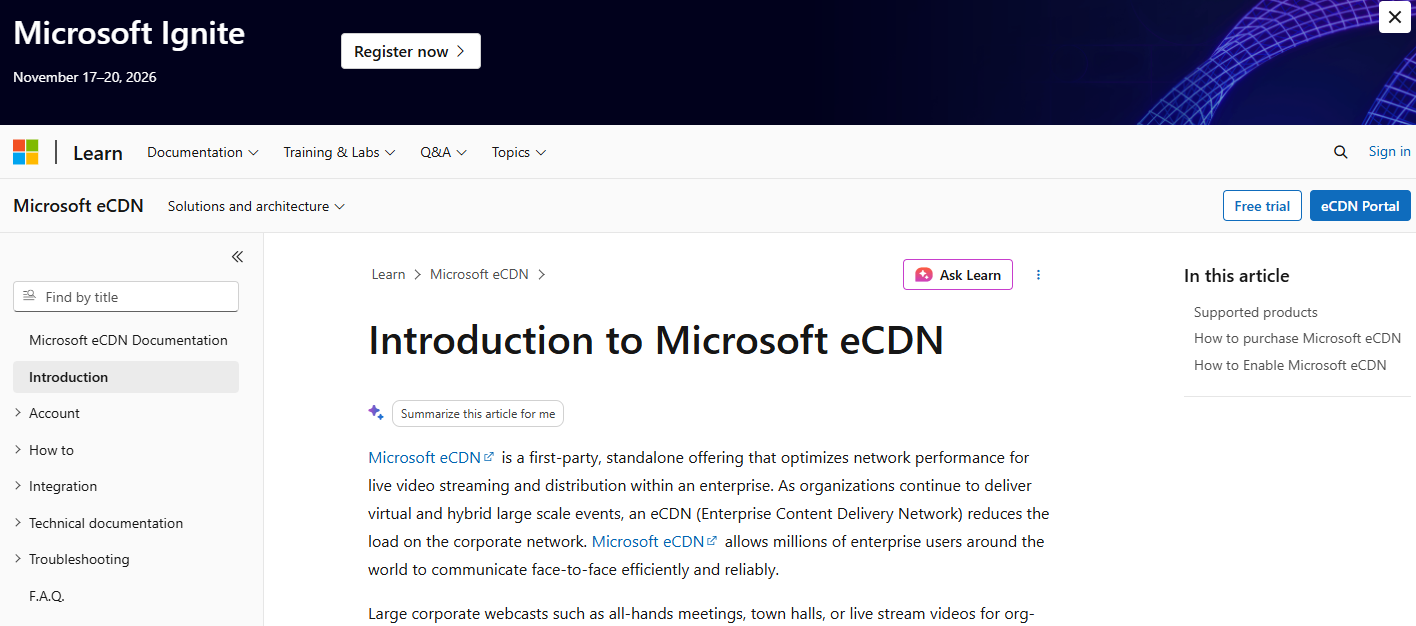
Microsoft eCDN is an enterprise streaming solution built directly into the Microsoft ecosystem, designed to reduce network load during large Teams live events. It uses WebRTC-based peer-to-peer delivery, where viewers in the same office network share stream segments locally rather than each pulling from the origin. Administration happens through the Teams admin center, which keeps the eCDN workflow inside the tools IT teams already manage.
Best for: Enterprises running large Teams town halls and employee broadcasts where Teams administration is already the central layer.
Key features
- WebRTC peer-to-peer streaming for corporate network load reduction
- Microsoft Teams Town Hall and live event integration
- Teams admin center controls and policy management
- Advanced analytics for user experience and network performance monitoring
- Integration with Viva Engage and third-party streaming platforms
Why choose Microsoft eCDN: The strongest fit for organizations where Teams is the default employee communication layer and IT wants eCDN administration managed without adding a separate vendor relationship.
Microsoft eCDN pricing: Microsoft eCDN is included with Teams Enterprise and Town Hall configurations under current Microsoft licensing. A legacy standalone licensing path is available at $0.50/user/month billed annually. Confirm current licensing entitlements against Microsoft's documentation before procurement, as included versus add-on status can change with subscription tier.
2. Hive Streaming

Hive Streaming is an enterprise video delivery and communications intelligence platform built specifically for internal video at scale. Its eCDN uses peer-assisted delivery, where viewer endpoints collaborate to share stream segments locally, reducing repeated WAN traffic during concurrent events. The platform adds real-time monitoring, audience engagement analytics, and integrations with Microsoft 365, Workplace from Meta, and GlobalMeet.
Best for: Global organizations running recurring all-hands events, executive broadcasts, and learning programs across many distributed offices.
Key features
- Peer-assisted eCDN for live and on-demand video distribution
- Real-time monitoring and automated alerts during live events
- Audience engagement and network performance analytics
- Integration with Microsoft 365 and enterprise video platforms
- Browser-based deployment with no software installation required
Why choose Hive Streaming: Strong choice when the business case requires proving network impact and viewer quality to IT leadership before, during, and after each event.
Hive Streaming pricing: Single-event packages start from $985 per event. Annual plans are priced at $0.50/user/month for Standard, $0.75/user/month for Standard+, both billed annually. The Premium tier is available by proposal. A separate Hive Focus product offers a 90-day free trial and a $95/organizer monthly plan.
G2 rating: 4.8/5
3. Kollective

Kollective positions its platform as an enterprise distribution layer for internal video, software delivery, and corporate communications. Its peer-to-peer and software-defined distribution model routes content across managed endpoints within branch offices, reducing the repeated WAN downloads that occur when many users access the same content simultaneously. The platform targets IT teams looking for a single distribution layer across large, geographically dispersed organizations.
Best for: Enterprises that need a unified distribution layer for internal communications and large-scale content delivery across regional offices.
Key features
- Peer-to-peer and software-defined content distribution
- Enterprise video and software delivery over shared endpoints
- Network bandwidth controls and policy enforcement
- Endpoint-based delivery across managed devices
- Usage reporting and delivery analytics
Why choose Kollective: A practical candidate when IT wants to reduce repeated downloads across branches and gain visibility into how internal content moves through the network, not just whether a stream played.
Kollective pricing: Kollective does not display pricing on its website. Contact the vendor directly for enterprise quote details. G2 reviewer discussions indicate pricing is structured around enterprise contract terms.
G2 rating: 4.0/5
4. Ramp
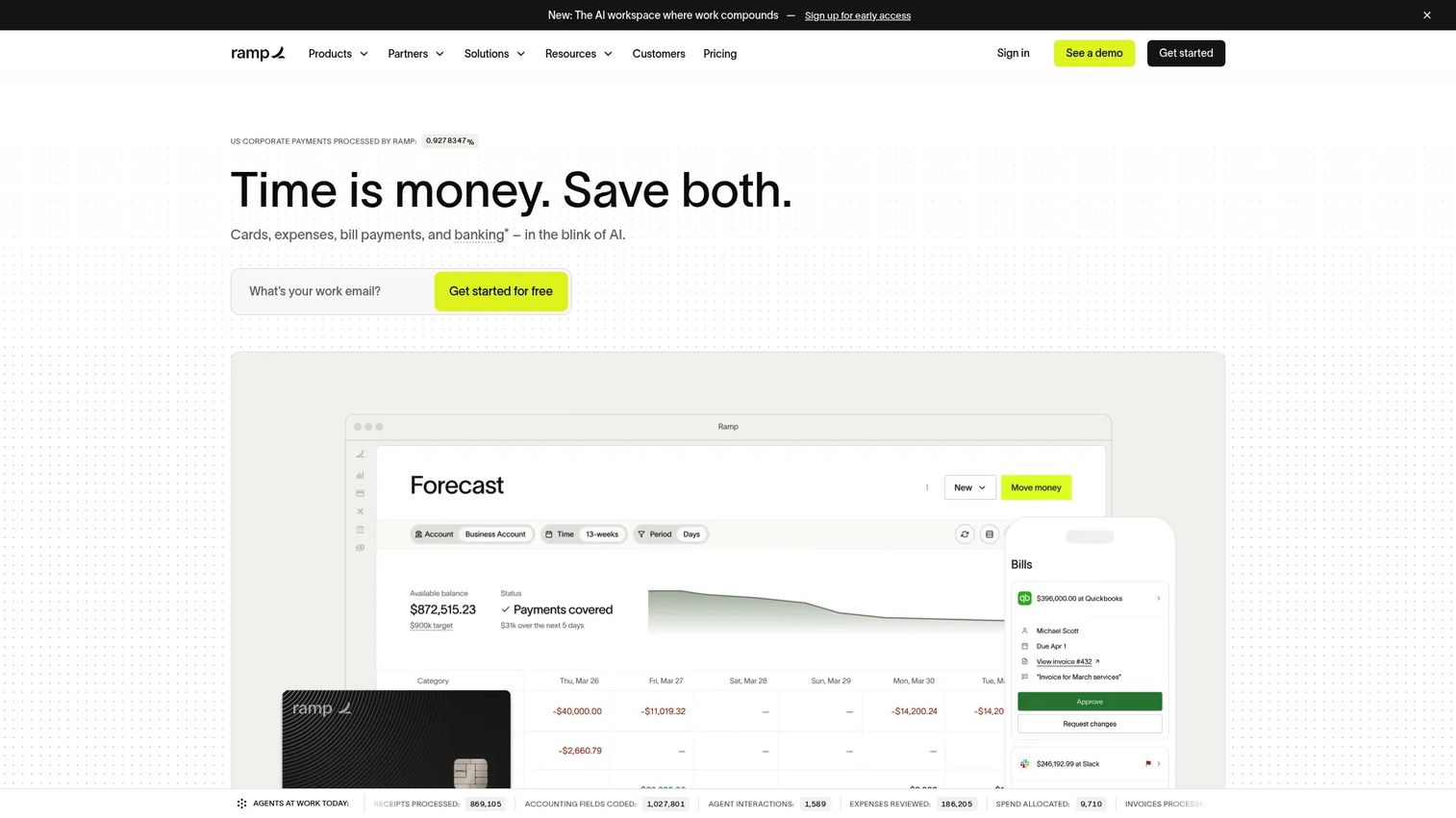
Ramp covers enterprise event delivery through modular eCDN capabilities that support multicast, local content caching, and peer-to-peer streaming. This modular approach is useful when an organization's network environments are not uniform, since different delivery models can be applied to different sites or event types. Ramp also offers event delivery reporting to help teams understand performance across locations.
Best for: Organizations that need flexibility across network environments and want to evaluate several delivery architectures before committing to one.
Key features
- Enterprise multicast delivery for supported network environments
- Peer-to-peer streaming for distributed endpoint coverage
- Local content caching to reduce repeated origin requests
- Network-aware distribution policies per site or event
- Event delivery reporting and performance monitoring
Why choose Ramp: Appropriate for teams assessing multiple delivery architectures in parallel, particularly where some office networks support multicast and others rely on peer-to-peer or caching.
Ramp pricing: Ramp's eCDN capabilities are priced through enterprise contracts. Contact the vendor for current module packaging and event volume terms.
5. Vbrick

Vbrick is a cloud-native enterprise video platform that combines content management, live event management, and distribution into a single governed system. Its built-in eCDN distributes live and on-demand video at enterprise scale, and its AI capabilities cover transcription, translation, content search, and in-video assistance. Security and compliance features include FedRAMP, SOC 2 Type II, GDPR compliance, encryption, SSO, and role-based access controls.
Best for: Large enterprises and regulated organizations that need live event delivery alongside a managed internal video destination and content governance.
Key features
- Enterprise live streaming and webcasting with built-in eCDN
- Video portal with AI-powered search, channels, and permissions
- AI transcription, translation, and concept-based search
- Video creation, browser capture, and screen recording tools
- FedRAMP, SOC 2 Type II, and GDPR security and compliance
Why choose Vbrick: The right fit when the buyer's problem spans content management, video publishing, and event operations, not only network distribution. Particularly relevant for regulated industries where FedRAMP or SOC 2 compliance is a procurement requirement.
Vbrick pricing: Vbrick does not display pricing publicly. Contact the vendor for a quote. Pricing reflects organizational size, event volume, and security or compliance requirements.
G2 rating: 4.5/5
6. Kaltura

Kaltura is a modular enterprise video platform covering live streaming, virtual events, video portals, and learning integrations. Its architecture allows organizations to adopt capabilities incrementally, which suits teams that need video delivery connected to learning or knowledge workflows. Kaltura is used by enterprises, media companies, service providers, and educational institutions.
Best for: Product education, internal learning, customer training, and communications teams that need video experiences connected to learning or content management workflows.
Key features
- Live streaming and webinar delivery at enterprise scale
- Video portal and content management with on-demand access
- Virtual event delivery with audience engagement tools
- Screen recording and video creation tools
- Learning platform integrations and analytics reporting
Why choose Kaltura: A strong candidate when the business case centers on learning outcomes, content reuse across audiences, and measuring video engagement alongside training completion, not only streaming performance.
Kaltura pricing: Kaltura does not display pricing on its website. Pricing is quote-based and depends on the modules selected and organizational scale. Contact the vendor for current packaging details.
G2 rating: 4.3/5
7. IBM Enterprise Content Delivery Network
IBM Enterprise Content Delivery Network (ECDN) is an on-premises video delivery service that caches video content within corporate networks to reduce WAN bandwidth use during large-scale events. It deploys as a virtual appliance on VMware ESXi, Microsoft Hyper-V, or Oracle VM VirtualBox, and is managed through a web-based portal for topology configuration and instance administration. IBM ECDN is included in IBM Enterprise Video Streaming's Custom plan.
Best for: Large organizations delivering security-enhanced video to many viewers across corporate locations with limited WAN capacity and an existing IBM infrastructure relationship.
Key features
- Local LAN caching of video content to reduce WAN traffic
- Virtual appliance deployment on VMware, Hyper-V, and VirtualBox
- Web-based management portal for topology and instance control
- Performance monitoring and automated software updates
- Reduced firewall load through local content distribution
Why choose IBM ECDN: Include it in an evaluation when the organization already uses IBM Enterprise Video Streaming, operates large on-premises infrastructure, or needs an on-premises caching architecture rather than a software-agent or cloud-coordinated delivery model.
IBM ECDN pricing: IBM ECDN is part of IBM Enterprise Video Streaming's Custom plan. Contact IBM for pricing. No standalone public price is listed.
G2 rating: 4.6/5
8. Cisco Enterprise Content Delivery System
Cisco Enterprise Content Delivery System (ECDS) is a media delivery system for scaling live and on-demand video distribution across enterprise WANs. It supports video caching, prepositioning, dynamic content acquisition, and service routing for load balancing and redundancy. Administration is centralized for configuration, monitoring, and maintenance. Buyers should verify current commercial availability and support status directly with Cisco before including this product in a procurement process.
Best for: Organizations distributing live and on-demand video across geographically distributed enterprise networks, particularly those with Cisco-centric network architecture.
Key features
- Live and video-on-demand streaming across enterprise WANs
- Video caching, prepositioning, and dynamic content acquisition
- Service routing for load balancing and delivery redundancy
- Centralized configuration, monitoring, and maintenance
- H.264 and Windows Media video format support
Why choose Cisco ECDS: Relevant primarily for Cisco-oriented environments evaluating compatibility with existing network infrastructure. Confirm procurement and support status before shortlisting.
Cisco ECDS pricing: Cisco does not display current pricing for ECDS on its public website. Contact Cisco sales for current commercial availability and pricing terms.
G2 rating: 4.4/5
9. Cloudflare Application Security and Performance

Cloudflare Application Security and Performance is a public internet delivery and application security platform, not a direct replacement for internal enterprise eCDN scenarios. It operates a global edge network that caches and accelerates customer-facing web applications, APIs, and media, while providing DDoS protection, a web application firewall, bot detection, and API security. The product is relevant when the delivery problem is external, not office-network congestion during internal events.
Best for: Digital product teams delivering customer-facing web experiences, global media assets, and APIs, where the primary problem is internet performance rather than internal streaming concurrency.
Key features
- Global edge caching and CDN for public-facing content
- Web application firewall with managed and custom rule sets
- DDoS protection for volumetric and application-layer attacks
- API security with schema validation and rate limiting
- Bot detection and traffic analytics
Why choose Cloudflare: Choose this route when the primary delivery problem is external customer performance, not office-network congestion during employee events. Many organizations run both Cloudflare for external delivery and a separate eCDN for internal streaming.
Cloudflare pricing: Free plan available with core DNS, CDN, SSL, and DDoS capabilities. Pro plan starts at $20/month billed annually, or $25/month billed monthly. Business plan starts at $200/month billed annually. Enterprise contracts are priced on request.
G2 rating: 4.5/5
10. Google Cloud CDN
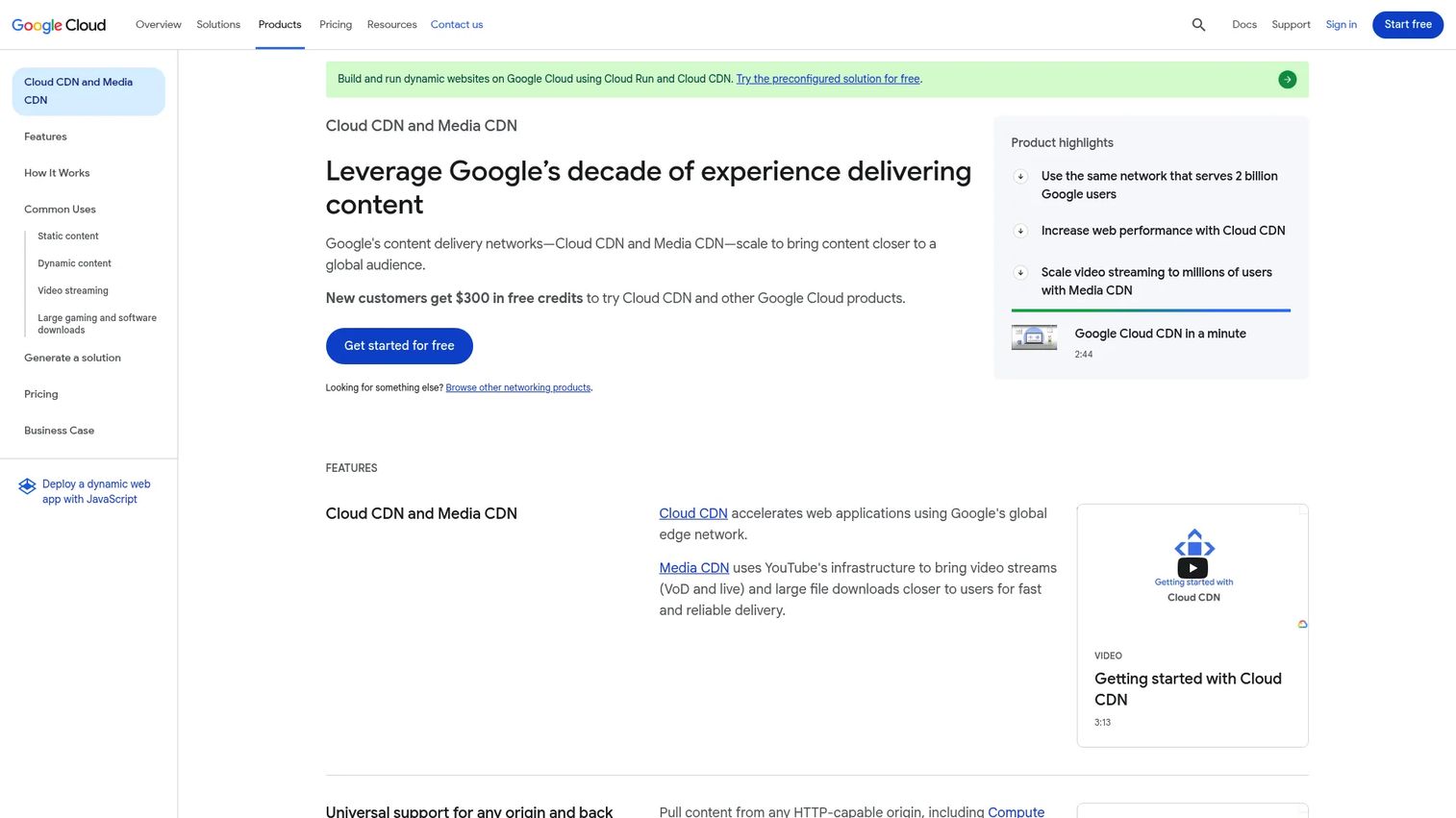
Google Cloud CDN accelerates websites and applications by caching content at Google's global edge network, reducing latency and origin load for customer-facing digital services. It integrates with Compute Engine, Cloud Storage, GKE, Cloud Run, App Engine, and external backends, and connects with Cloud Armor for security, Cloud Logging for observability, and Cloud Load Balancing for traffic distribution. Like Cloudflare, it serves a different architecture than an internal peer-to-peer eCDN.
Best for: Engineering teams already operating on Google Cloud that need CDN delivery for customer-facing digital content within their existing cloud architecture.
Key features
- Global edge caching integrated with Google Cloud Load Balancing
- Configurable cache modes, TTLs, invalidation, and dynamic compression
- Support for Compute Engine, Cloud Storage, GKE, Cloud Run, and App Engine backends
- Integration with Cloud Armor, Cloud Logging, and Cloud Monitoring
- HTTP/3, HTTP/2, TLS 1.3, and Global Anycast support
Why choose Google Cloud CDN: A practical fit where the team already runs on Google Cloud and needs CDN delivery without adding a separate vendor or infrastructure layer.
Google Cloud CDN pricing: Usage-based pricing applies. Cache data transfer out costs $0.02 to $0.20 per GiB depending on region. Cache fill costs $0.01 to $0.04 per GiB. HTTP/HTTPS cache lookup requests cost $0.0075 per 10,000 requests. New Google Cloud customers receive $300 in free credits. No permanent free tier was confirmed on the public pricing page.
G2 rating: 4.4/5
Considerations when choosing enterprise content delivery network software
Match the delivery architecture to the actual problem
Start by identifying whether the core issue is internal WAN congestion during employee events, or external website and application performance. A public CDN will not solve bandwidth contention inside a branch office. A peer-to-peer eCDN may not address customer-facing application delivery at all. Define the problem before shortlisting vendors.
Validate Microsoft Teams and video platform compatibility
Ask each vendor which Teams event types are supported, how admin policies are configured, and which analytics are available through the admin center. Check compatibility with the organization's existing video stack, including any enterprise video management or LMS integrations in use.
Test network and security requirements early
Include firewalls, VPN traffic, proxy behavior, device management, browser support, identity requirements, and data residency in the evaluation scope. Run a controlled pilot event before making rollout commitments. This step catches environment-specific deployment issues before they become escalation tickets.
Measure delivery quality beyond bandwidth savings
Track stream startup time, buffering rate, viewer completion, concurrent viewers, regional performance, and help desk ticket volume. Product and enablement teams should connect delivery metrics to learning completion rates and feature adoption outcomes, not just infrastructure efficiency.
Price for scale, not just the pilot
Require vendors to explain how costs change with active users, managed devices, event size, office count, streaming volume, and analytics depth. Ask for a projected annual cost at both pilot scale and full organizational rollout. eCDN pricing depends heavily on these inputs, and pilot-scale costs often differ materially from production-scale contracts.
Conclusion
Enterprise content delivery network software is an architecture decision as much as a product purchase. Getting it wrong means shortlisting a public CDN to solve an internal streaming problem, or buying an eCDN when the primary issue is global customer-facing application performance.
For Teams-first organizations, Microsoft eCDN is the natural starting point given its native administration path. Hive Streaming and Kollective are strong candidates for organizations running recurring large-scale internal events that need network analytics and delivery visibility. Vbrick and Kaltura suit teams where content management, governance, and learning integrations matter alongside distribution. IBM ECDN fits organizations with established on-premises infrastructure and constrained WAN links. For public-facing delivery, Cloudflare and Google Cloud CDN each address different infrastructure contexts.
Before requesting vendor demos, map your next high-attendance event, identify the network hotspots IT has flagged, and build an evaluation scorecard that captures architecture fit, Teams compatibility, deployment complexity, analytics depth, and cost at scale. That scorecard, not a feature comparison, is what drives a defensible procurement decision.
For related evaluations across enterprise software categories, explore our guides to best enterprise search software, analytics platforms that drive ROI, and best content marketing tools.
FAQs
An eCDN (enterprise content delivery network) focuses on distributing video and content inside corporate networks, typically through peer-to-peer sharing, multicast, proxy caching, or virtual appliances deployed at branch offices. A public CDN distributes customer-facing content from internet edge locations to reduce latency for external users. The two serve different environments and should not be treated as interchangeable.
Microsoft offers eCDN capabilities for eligible Teams environments, using WebRTC-based peer-to-peer delivery. Whether it is included or requires separate licensing depends on the current Microsoft subscription tier and the event type. Check current Microsoft licensing documentation for Teams Enterprise and Town Hall configurations before making procurement decisions, as inclusion terms can change across subscription updates.
In a peer-to-peer eCDN, one device in a local network receives the stream and helps distribute it to nearby managed endpoints on the same branch connection. Rather than each viewer pulling a separate stream across the WAN, the traffic is shared locally. The reduction depends on network policy, endpoint support, and whether browsers and firewalls permit peer communication.
Multicast is effective in networks designed and configured to support it, typically managed LAN environments where routers and switches are already multicast-enabled. Peer-to-peer delivery suits distributed endpoint environments where multicast is impractical, such as networks with strict firewall policies or a mix of managed and unmanaged devices. The answer depends on network design, security requirements, and which team owns ongoing operational maintenance.
Many enterprise delivery systems support both live and on-demand content. For on-demand delivery, buyers should verify cache behavior, how long content is retained locally, endpoint requirements, access controls, and how delivery integrates with the existing video platform or LMS. Analytics requirements for on-demand content, such as completion tracking per user, may also affect which products qualify.
Core delivery metrics include bandwidth reduction on WAN links, stream startup time, buffering rate, playback failures, concurrent viewers, and regional performance. Operational metrics include help desk ticket volume related to streaming issues and viewer completion rates per event. Product and enablement teams should pair these with learning or adoption outcomes, such as training module completion and feature usage rates, to build a full picture of delivery impact.
Smaller events or low-concurrency environments may perform adequately without one. eCDN software becomes necessary when offices, VPN links, global audiences, or recurring high-attendance events create measurable network strain. A useful threshold: If network teams are actively limiting webcast capacity or if IT has reported WAN congestion during video events, an eCDN evaluation is warranted.
Pricing for most eCDN platforms depends on active devices, employee population, office count, delivery architecture, event volume, and analytics depth. Hive Streaming publishes plans starting from $0.50/user/month billed annually. Microsoft eCDN's legacy standalone path is also $0.50/user/month. Most other enterprise eCDN and video platforms require a quote. Ask vendors for a projected annual cost at both pilot and full-rollout scale, and request clarity on which inputs drive price increases as the program grows.