You run three buildings. The dues live in a spreadsheet, maintenance tickets live in a shared inbox, and the reserve fund balance lives in an accountant's email from last quarter. Month-end close takes a week. Owners email the board asking why their assessment changed, and nobody has a clean answer.
That is the real cost of fragmented tools. Not the software fee. The manual handoffs, the reconciliation drift, and the missed board notices that turn a routine meeting into a fight.
The market has grown around this problem. Grand View Research put the global property management software market at USD 3.6B in 2025, and Industry Research valued the HOA and condo association management software segment at USD 1.51B in 2024. Adoption is now mainstream: a 2026 LinkedIn Pulse market summary reported roughly 65% of U.S. HOA and condo associations with 50 or more units run dedicated software.
This guide compares seven condo management software platforms on the things that actually break: accounting, resident communication, work orders, and board visibility. Some are all-in-one condominium management software. One is open source. A few are broader condo property management software built for mixed portfolios. The goal is a shortlist you can defend, not a generic roundup.
What's inside
This guide is for board members, property managers, HOA administrators, and small to mid-sized management companies evaluating condo management software in 2026.
We selected and compared the seven platforms below on four criteria that matter most for running buildings and associations:
- Accounting depth: general ledger, AP, AR, bank reconciliation, and reserve fund accounting
- Resident and board workflows: owner portals, notices, board packets, and delivery tracking
- Maintenance handling: work orders, service requests, and vendor management
- Integrations and reporting: online payments, accounting connections, and audit-ready records
Where it helps, we compare commercial and open-source options side by side.
TL;DR
- Best for all-in-one condo operations: Condo Control
- Best for enterprise condo and HOA management: Yardi Voyager Condo, Co-op & HOA
- Best for board and resident communications at scale: FirstService Residential
- Best for technical or open-source teams: Condo is Open Source
- Best for mixed residential property portfolios: Buildium
- Best for larger managers needing accounting depth: AppFolio
- Best for lean teams prioritizing affordability: TenantCloud
What is condo management software?
Condo management software is a platform that helps associations and property managers handle accounting, maintenance, resident communication, online payments, and board workflows in one system instead of scattered spreadsheets and inboxes.
It overlaps heavily with HOA management software and condo association management software. The core difference is scope, not category: condos manage shared ownership and reserves, HOAs manage community rules and dues, and most tools serve both.
Core capabilities to expect:
- Resident and owner portals: account access, documents, and requests
- Dues, assessments, and billing: recurring charges, invoices, and collections
- General ledger, AP, AR, reconciliation: full association bookkeeping
- Work orders and preventive maintenance: service requests and scheduling
- Board packets, notices, and meeting records: governance and communication
- Online payments and vendor management: ACH, card, and vendor insurance tracking
The strongest condo administration software connects these so a paid invoice updates the ledger, a resident request becomes a work order, and a board notice reaches every owner with delivery tracking.
When to use condo management software
Manage recurring dues and reserve accounting
Use it when billing and accounting outgrow a spreadsheet. Recurring dues, special assessments, and reserve fund accounting all need an audit trail, not manual math. Finance-heavy communities and property managers running month-end close for multiple associations get the most value here, because reserve tracking and reconciliation are where errors compound fastest.
Reduce manual resident communication
Use it when board and resident communication turns into a full-time job. Notices, announcements, portal messaging, and board packets replace long email chains and reduce missed updates. Delivery tracking matters most for governance: you can prove a notice went out, which protects the board when a decision gets challenged.
Centralize maintenance and vendor workflows
Use it when work orders, service requests, and vendor management create too much admin overhead. Fragmented maintenance stalls resolution and buries accountability. A shared system for maintenance requests, preventive maintenance schedules, and vendor insurance tracking gives faster turnaround and clear visibility into what is open and who owns it.
Comparison table
Here is how the seven platforms compare on intent, differentiator, pricing, and rating. Pricing reflects each vendor's published figures where public; several use custom quotes.
| # | Product | Best for | Key differentiator | Pricing | G2 rating |
|---|---|---|---|---|---|
| 1 | Condo Control | All-in-one condo and HOA operations | Community-focused portal plus operations and accounting | Custom quote | 4.8/5 |
| 2 | Yardi Voyager Condo, Co-op & HOA | Enterprise condo and HOA portfolios | Integrated accounting and modular ecosystem | Custom quote | 5.0/5 |
| 3 | FirstService Residential | Communications and full-service management | Managed services plus resident and board portal | Custom quote | Not listed |
| 4 | Condo is Open Source | Technical and open-source teams | Self-hosted, extensible platform | Free, open source | Not listed |
| 5 | Buildium | Mixed residential portfolios | Leasing plus accounting and community association support | From $62/month | Not listed |
| 6 | AppFolio | Larger managers needing accounting depth | Property and investment management in one platform | Custom quote | 4.6/5 |
| 7 | TenantCloud | Lean teams prioritizing affordability | Low-cost all-in-one rental operations | From $15/month | Not listed |
Best 7 condo management software for 2026
1. Condo Control
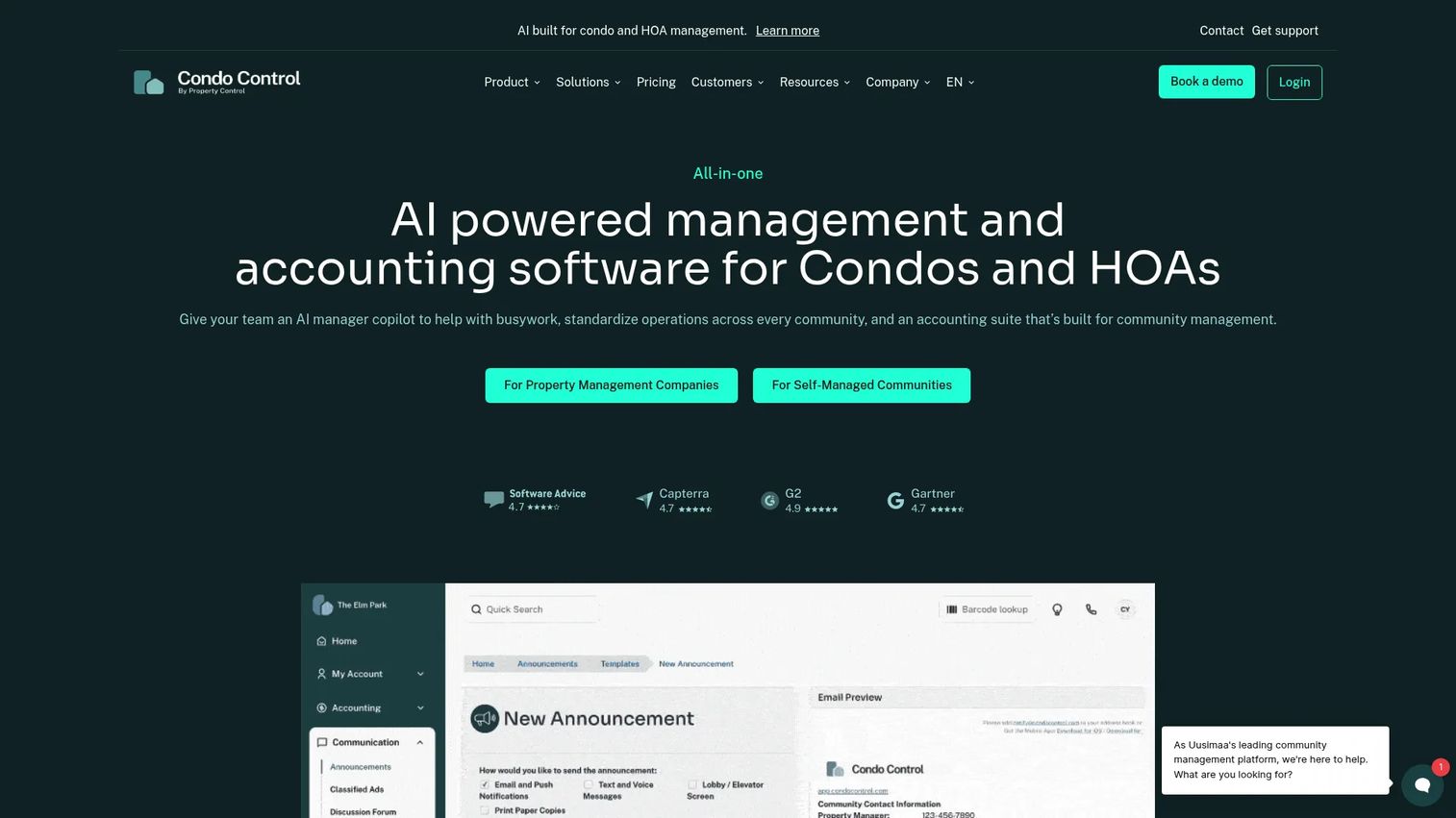
Condo Control is AI-powered community management software built specifically for condos, HOAs, and the property managers who run them. Unlike broad rental platforms, it starts from the community: resident communications, board governance, and building operations in one place. That focus makes it a strong operational standard for associations that want condominium management software instead of a repurposed landlord tool.
The platform combines a resident portal and mobile app with communications, announcements, and notices, plus maintenance requests, amenity booking, and payments. Accounting, AR, and AP sit alongside board workflows, so a paid dues invoice and a maintenance ticket both live in the same system with an audit trail.
Best for: Condo and HOA communities that need resident communications and operations management together.
Key features
- Resident portal and mobile app
- Communications, announcements, and notices
- Maintenance requests, amenity booking, and payments
Why choose Condo Control: If your primary pain is resident communication and board visibility, not managing rental leases, this fits better than a general property tool. It speaks the language of associations and reserves.
Condo Control pricing: Pricing isn't listed on the site. It's all custom quotes through contacting sales, and the cost scales with your community size and needs.
Condo Control holds a 4.8/5 rating on G2.
2. Yardi Voyager Condo, Co-op & HOA
Yardi Voyager Condo, Co-op & HOA is browser-based property management software built for condominiums, co-ops, and HOAs that need enterprise-grade accounting and governance. It sits inside the broader Yardi platform, so associations that already run other Yardi products get one connected system rather than separate tools.
Integrated accounting and financial management is the core strength: general ledger, payments, and reporting handle the full weight of association bookkeeping. Maintenance and operations management and real-time analytics round it out, giving boards and managers current numbers instead of last quarter's export.
Best for: HOA and condo property managers who need an integrated operations and accounting platform at scale.
Key features
- Integrated accounting and financial management
- Maintenance and operations management
- Real-time analytics and reporting
Why choose Yardi: Pick it when you manage larger portfolios or want a modular ecosystem you can expand into. The tradeoff is that this depth suits bigger operations more than a single self-managed building.
Yardi pricing: Yardi doesn't list pricing for this product. Expect a custom quote based on your portfolio size and which modules you turn on.
Yardi's seller profile shows a 5.0/5 rating on G2, based on a small number of reviews for Yardi overall.
3. FirstService Residential
FirstService Residential pairs property management services with resident-management software for residential communities. It is the strongest fit where service operations and resident experience matter together, because you get managed services and technology rather than software alone.
The platform provides 24/7 resident customer care, a resident and board portal for account, amenity, and service request management, and community management across HOA, condo, high-rise, and multifamily properties. For boards that want communications, maintenance visibility, and resident experience handled as a package, this is a different model than buying a tool and staffing it yourself.
Best for: HOAs, condos, and residential communities that want full-service management, not just software.
Key features
- 24/7 resident customer care
- Resident and board portal for accounts, amenities, and requests
- Community management across HOA, condo, high-rise, and multifamily
Why choose FirstService Residential: Choose it when the board would rather outsource operations and resident support than run the software in-house. It trades the control of a self-managed stack for managed service depth.
FirstService Residential pricing: The site uses a request-a-proposal and contact flow, so cost depends on your community and the services you need.
4. Condo is Open Source
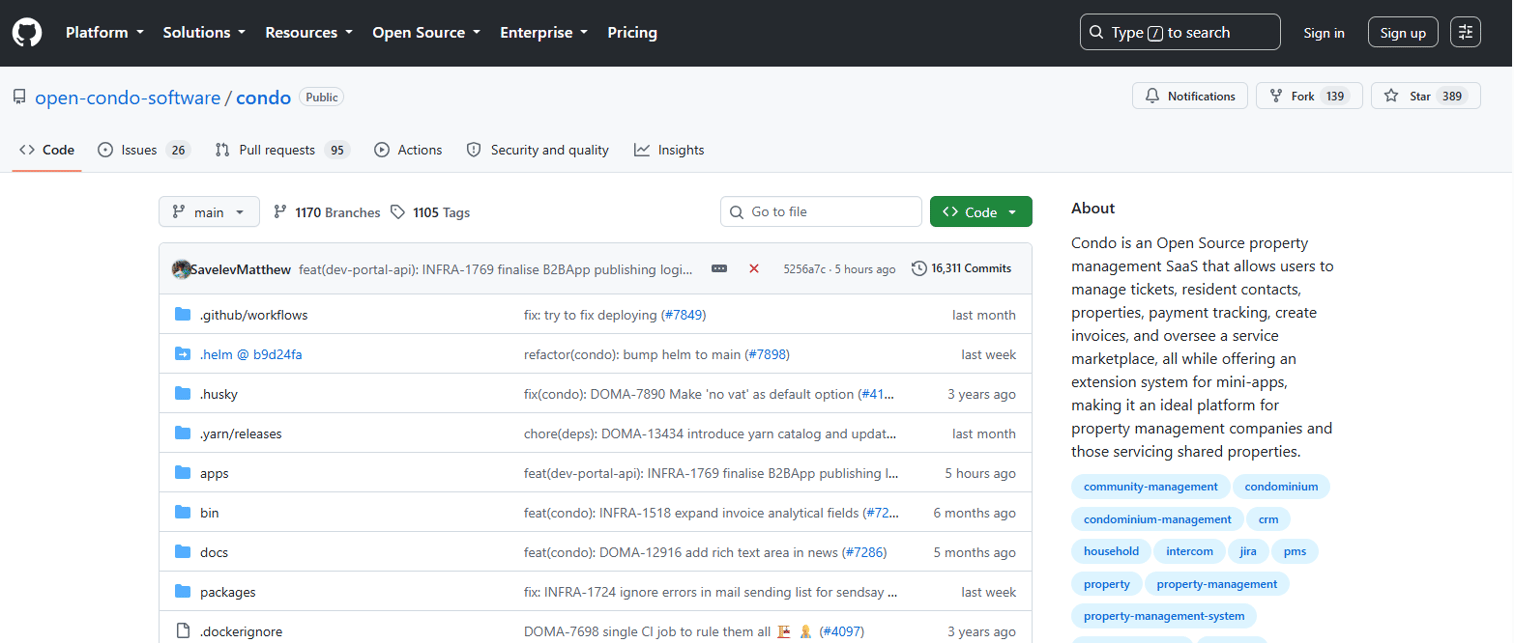
Condo is Open Source is an open-source property management SaaS platform for shared properties and condominiums. It suits technically capable teams and organizations that want to customize their stack rather than accept a fixed feature set. Because it is open source, you can self-host and extend it.
The platform manages tickets, tracks resident contacts and properties, and creates invoices with payment tracking. A service marketplace and an extension system for mini-apps make it flexible, so teams with development resources can adapt it to workflows a commercial tool would not cover.
Best for: Property management teams that need an open-source, extensible platform for shared-property operations.
Key features
- Manage tickets and service requests
- Track resident contacts and properties
- Create invoices with payment tracking
- Extension system for mini-apps
Why choose Condo is Open Source: Pick it when customization and control outweigh the convenience of a hosted commercial product. It fits teams with engineering capacity who want to own their platform.
Condo is Open Source pricing: The software is open source and available on GitHub, so there is no published subscription price. Your cost is hosting and the engineering time to run and extend it.
5. Buildium
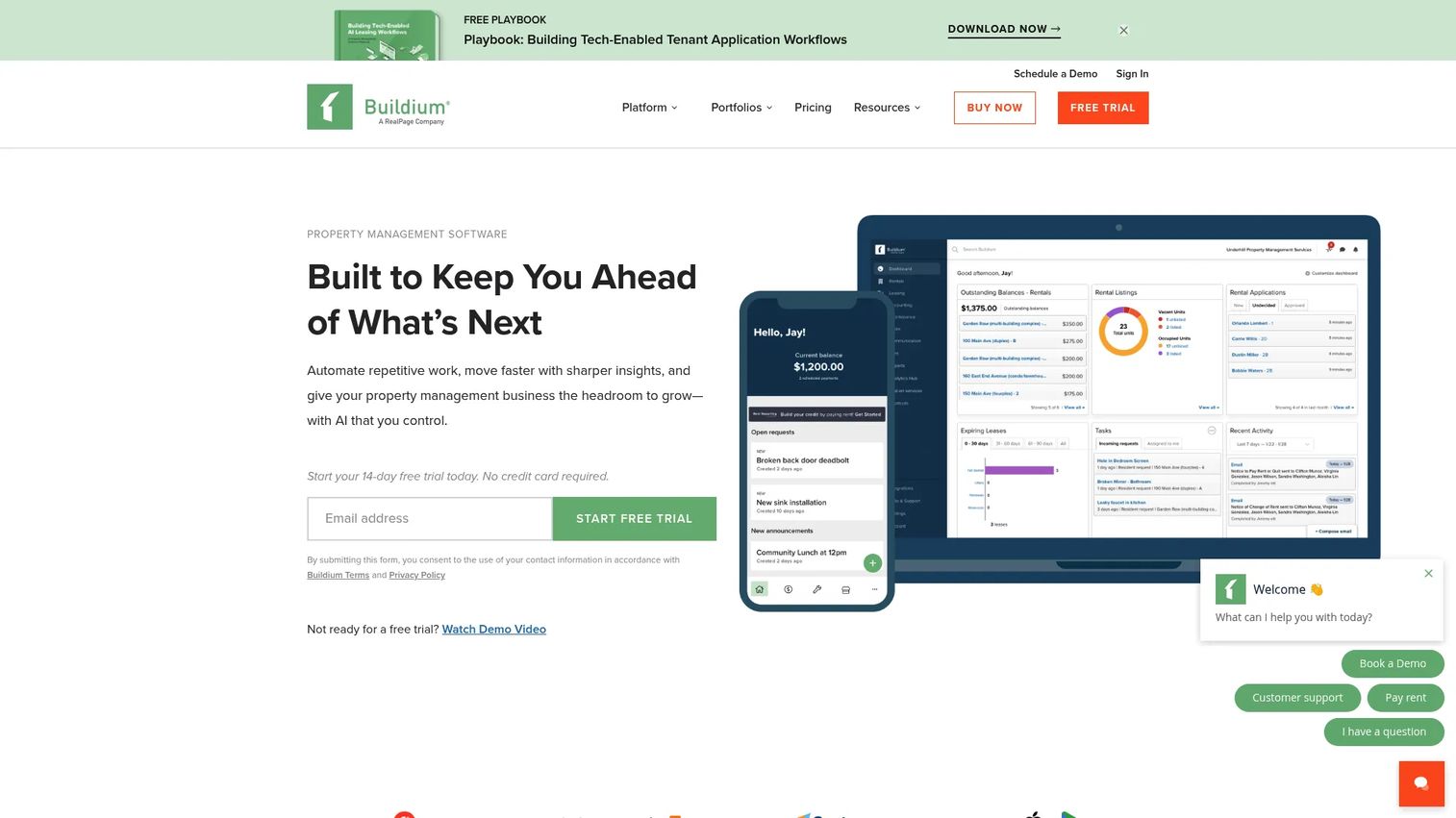
Buildium is cloud-based property management software for residential, commercial, and community association managers. It fits teams that manage condos alongside other residential units, because leasing, accounting, and community association support all live in one platform.
Core workflows cover rental listings and tenant screening, lease management and online leasing, plus rent collection, accounting, and maintenance. For a management company with a mixed book of business, that breadth means one system for condos and rentals instead of two.
Best for: Property managers who need an all-in-one platform for leasing, accounting, maintenance, and resident communication.
Key features
- Rental listings and tenant screening
- Lease management and online leasing
- Rent collection, accounting, and maintenance workflows
Why choose Buildium: Choose it when your portfolio is mixed and you do not want a condo-only tool. If you run pure associations with no rentals, a community-focused platform may map more cleanly to reserves and dues.
Buildium pricing: Buildium publishes three plans: Essential at $62/month, Growth at $192/month, and Premium at $400/month. A 14-day free trial is available, and pricing for very large portfolios or community associations is custom. Additional transaction and setup fees apply.
6. AppFolio
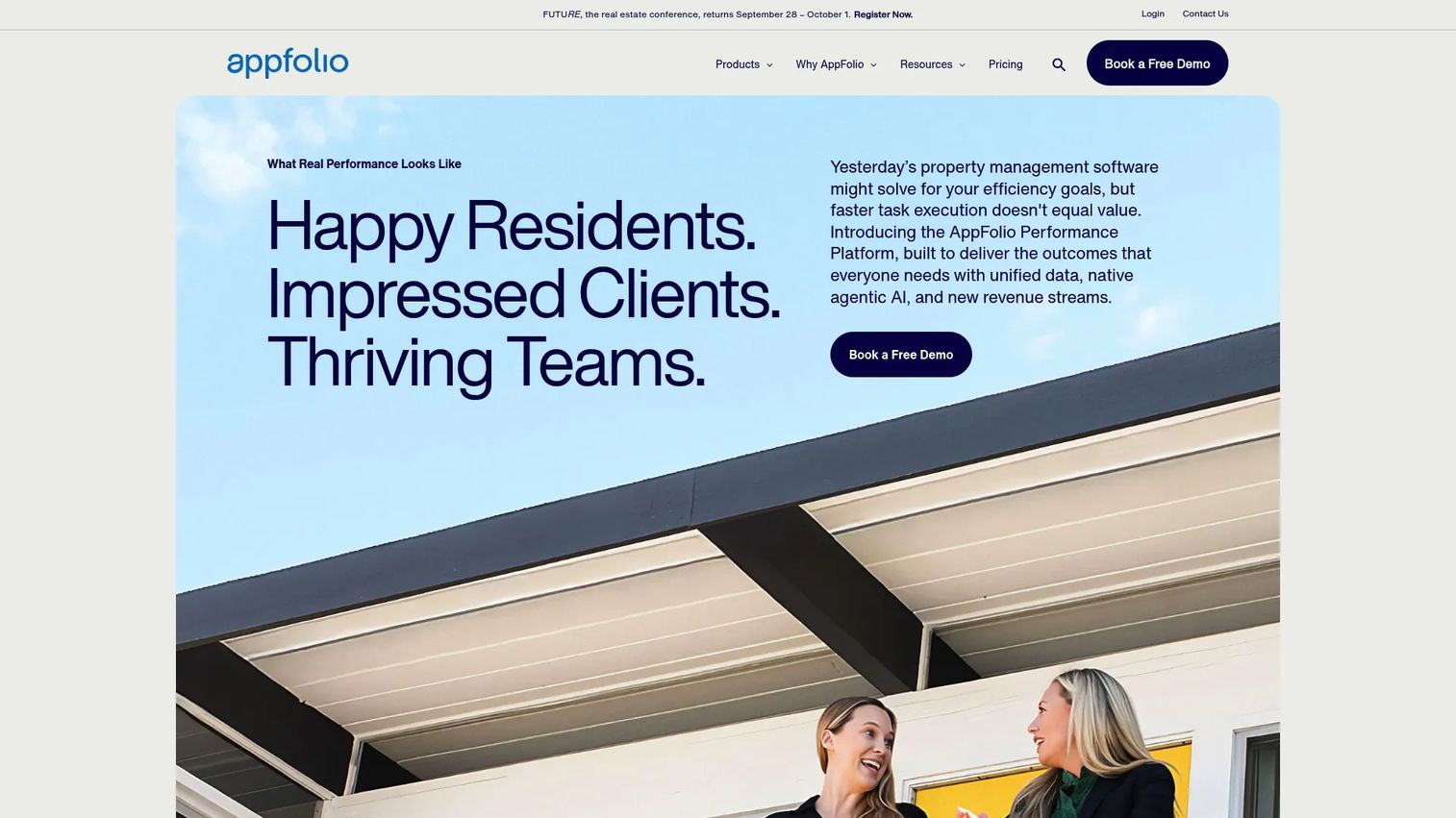
AppFolio is cloud-based real estate software spanning property management and investment management. It suits larger managers who need operational structure and reporting depth, because property accounting, leasing, and maintenance run through one platform with strong analytics behind them.
The platform covers property accounting and reporting, marketing and leasing workflows, and maintenance and work order management. For teams that have outgrown a lighter tool, that combination supports both day-to-day operations and portfolio-level visibility.
Best for: Real estate operators who need an all-in-one platform for property and investment management.
Key features
- Property accounting and reporting
- Marketing and leasing workflows
- Maintenance and work order management
Why choose AppFolio: Pick it when accounting depth and reporting matter more than a low entry price. Minimum spend and unit minimums mean it is built for scale, not a single small building.
AppFolio pricing: Property Manager pricing is quote-based across Core, Plus, and Max plans, with minimum spend and unit minimums. There is no free tier. AppFolio's Investment Manager Core plan starts at $650 per month.
AppFolio holds a 4.6/5 rating on G2.
7. TenantCloud
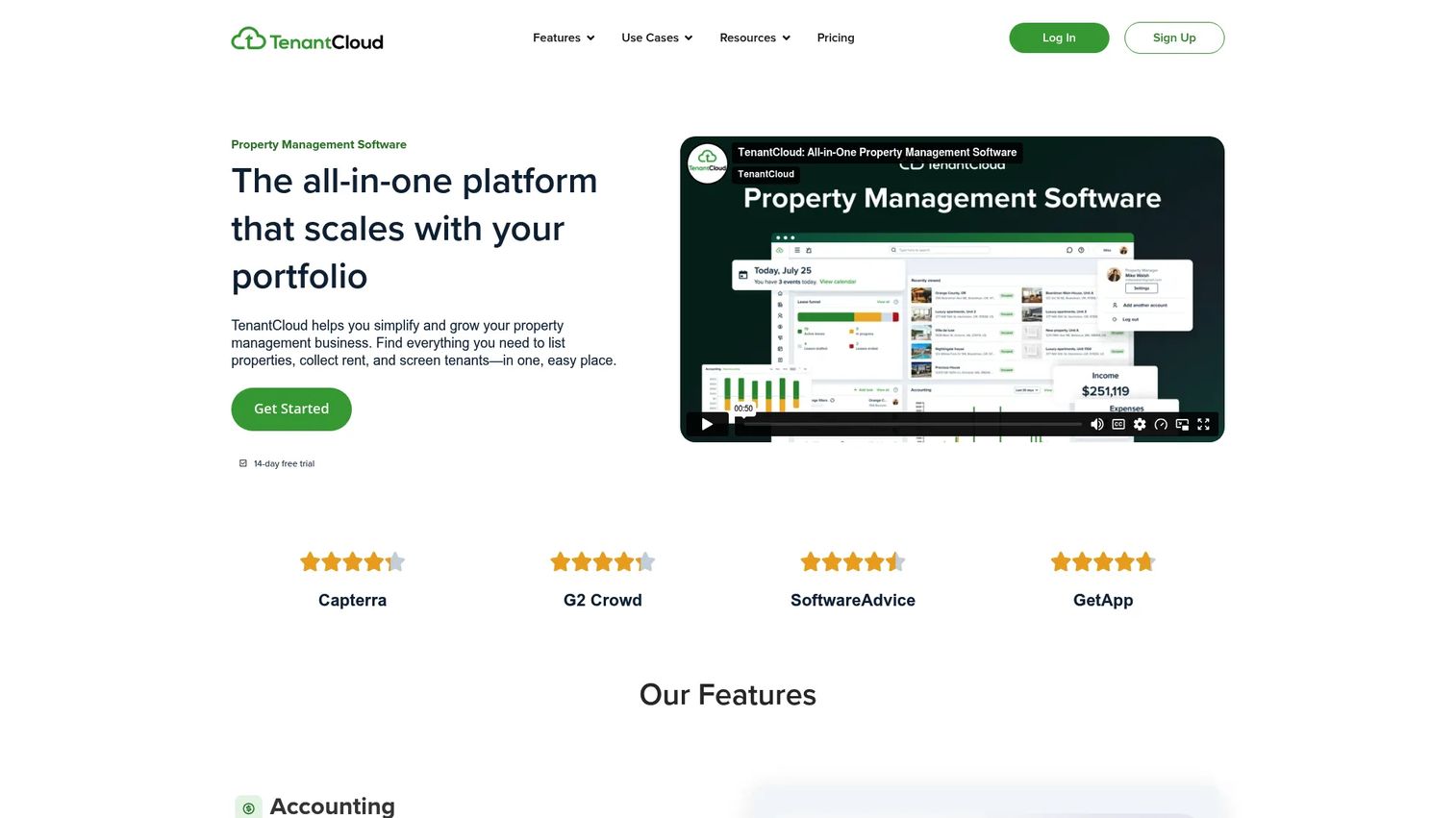
TenantCloud is property management software for landlords and property managers who want affordability without giving up core operations. It fits lean teams and smaller portfolios, because online payments, communication, and maintenance come at a low entry price.
The platform handles online rent collection, tenant screening and rental applications, plus accounting, reporting, and maintenance management. For a small operator or a self-managed board watching every dollar, that covers the essentials without an enterprise contract.
Best for: Landlords and small-to-mid property managers who need an all-in-one rental operations platform.
Key features
- Online rent collection and payments
- Tenant screening and rental applications
- Accounting, reporting, and maintenance management
Why choose TenantCloud: Choose it when budget is the deciding factor and your portfolio is small. Larger associations with deep reserve accounting needs may outgrow it, but for lean operators the value is clear.
TenantCloud pricing: TenantCloud publishes four plans. Starter is $15/month billed annually or $25/month monthly. Growth is $29/month annual or $35/month monthly. Pro is $50/month annual or $60/month monthly. Business starts at $100/month and is custom for enterprise needs.
Considerations
Use this checklist to narrow the shortlist before you book demos.
Accounting depth
Condo bookkeeping is not just rent collection. Confirm the platform supports a full general ledger, AP, AR, and bank reconciliation, plus reserve fund accounting and audit-ready reporting. If reserves and month-end close are your pain, this criterion outweighs everything else.
Communication and board visibility
Check for notices, delivery tracking, portal messaging, meeting packets, and board access. Delivery tracking matters most: it turns a disputed notice into a documented one. Fewer email chains and cleaner governance follow from getting this right.
Maintenance and vendor management
Verify work orders, service requests, preventive maintenance, and vendor insurance tracking. Operations stall when these are fragmented across inboxes and spreadsheets. A single system for maintenance requests and vendor management keeps resolution fast and accountability clear.
Integrations and modularity
Look at online payments, accounting connections, access control, and add-on modules. For growing portfolios, modular integrations and ecosystem fit often matter more than any single isolated feature, because you want the stack to expand with you.
Setup and support
Confirm onboarding time, training, support quality, and migration help. A strong feature set is useless if rollout stalls. Ask how data migration works and how long a real association took to go live.
Conclusion
Match the tool to your operation, not the marketing page. Condo Control fits associations that want communications, board governance, and operations in one community-focused system. Yardi Voyager Condo, Co-op & HOA suits enterprise portfolios that need integrated accounting and a modular ecosystem. FirstService Residential works when you want managed services alongside the software. Condo is Open Source fits technical teams that want to self-host and customize. Buildium covers mixed residential portfolios, AppFolio serves larger managers needing accounting depth, and TenantCloud keeps lean teams affordable.
Shortlist on the three things that break most: accounting depth, communication and board visibility, and maintenance handling. Then compare one smaller tool against one enterprise platform so you can feel the difference in setup, support, and reporting. Book two demos this week, bring your reserve accounting and board packet requirements to each, and you will have a defensible pick fast.
FAQs
At minimum: a resident and owner portal, dues and assessment billing, full accounting with general ledger, AP, AR, and bank reconciliation, work orders and maintenance requests, board packets and notices, and online payments. Vendor management and an audit trail round it out. Strong platforms connect these so a payment updates the ledger and a request becomes a work order automatically.
Mostly in scope, not category. Condo management software focuses on shared ownership, reserves, and building operations. HOA management software leans toward community rules, dues, and covenant enforcement. Most modern platforms serve both, so the practical question is which workflows and accounting depth match your community, not which label the vendor uses.
Yes, the stronger platforms do. Reserve fund accounting needs a proper general ledger, dedicated reserve tracking, and audit-ready reporting, not just rent collection. Enterprise-grade tools like Yardi and accounting-deep platforms like AppFolio handle it well, and community-focused tools like Condo Control build it into association workflows. Confirm reserve tracking specifically during a demo.
Yes. Online payments, including ACH and card, are standard across the platforms here. Condo Control, Buildium, AppFolio, and TenantCloud all support online dues and rent collection, and open-source Condo tracks invoices and payments. Check transaction fees, since those often sit outside the base subscription and add up across a portfolio.
Prioritize ease of use, resident communication, board packets, and online payments over enterprise depth you will not use. A self-managed board wants notices with delivery tracking, a clean owner portal, and simple accounting. Affordable options like TenantCloud or a community-focused tool like Condo Control usually fit better than a heavy enterprise platform.
Very. The resident portal cuts the email volume that buries self-managed boards and small managers, giving owners self-serve access to documents, payments, and requests. Board packets and meeting records protect governance by keeping decisions documented. Together they reduce disputes and missed updates, which is where most association friction actually lives.
Yes. Maintenance requests, work orders, and preventive maintenance are core to most platforms here. A resident submits a request, it becomes a trackable work order, and you assign a vendor with insurance on file. That workflow replaces the shared inbox and gives boards visibility into what is open, who owns it, and how fast it closes.
Match it to team size and portfolio complexity. All-in-one tools like Condo Control or Buildium suit teams that want one system with less setup. Modular platforms like Yardi and AppFolio suit larger operations that need to expand capabilities over time. Decide whether you value fast rollout now or room to grow into more modules later, then shortlist accordingly.