You can prototype a connected device fast. Scaling it is where the real product work starts. Device identity, telemetry pipelines, alerting, firmware management, security controls, and support workflows all need to hold together after the first thousand devices. The enterprise IoT market grew 13% in 2025 to $324 billion, with 21.1 billion devices connected worldwide by the end of that year, according to IoT Analytics (2026). Behind every one of those devices is a team making decisions about which software layer handles which job. Buy the wrong one and you are rebuilding six months later.
This guide cuts through the noise. It maps 13 IoT software options to specific jobs: Device management, analytics, integration, maintenance, digital twins, and connected-product security. Use it to shortlist the right tool for the right layer of your stack, not just the most popular name.
What's inside
This guide compares 13 IoT software options across the full stack for product managers, engineering leaders, and operations teams building or managing connected products.
- Who it's for: PMs, heads of product, and engineering leaders evaluating IoT software for connected devices, operational tooling, or customer-facing workflows
- How tools were chosen: IoT category fit, device workflow coverage, analytics depth, deployment flexibility, and integration support
- What to compare: Device management, protocol support, dashboards, automation, security, and pricing model
- What to verify before buying: Protocol coverage, data residency rules, deployment limits, and implementation complexity
TL;DR
- Best overall IoT platform: ThingsBoard for teams that need device management, telemetry, dashboards, alarms, and cloud or self-hosted deployment in one platform
- Best for AWS-native enterprise teams: AWS IoT for organizations already committed to the AWS cloud stack
- Best for Microsoft-first teams: Azure IoT Hub for teams standardized on Microsoft Azure infrastructure
- Best for fast connected-app development: Blynk for PMs and makers building customer-facing device applications quickly
- Best for maintenance-driven operations: Fracttal for teams connecting IoT signals to asset maintenance workflows
- Best for digital twin and facility modeling: SpinalTwin and Drawbase for building operations and spatial IoT contexts
- Best for connected-product security: CYBEATS for teams managing SBOM visibility and software supply chain risk
What is IoT software?
IoT software is the set of platforms and applications used to connect physical devices, collect telemetry, manage device states, automate workflows, analyze data, and integrate connected-device systems with business applications.
For product managers, this category is not just infrastructure. It directly affects activation rates, support ticket volume, security exposure, compliance posture, and roadmap scope. Bad device data creates support escalations. Weak provisioning flows create onboarding friction. Missing alert routing creates operational blind spots.
Core IoT software capabilities
- Device connectivity and identity: Registering, authenticating, and communicating with physical devices over protocols such as MQTT, AMQP, HTTP, CoAP, and LoRaWAN
- Telemetry ingestion and event processing: Collecting sensor data, processing events in real time or in batches, and routing to storage or downstream systems
- Device management and provisioning: Handling device lifecycle from onboarding to firmware updates, state management, and decommissioning
- Dashboards, alerts, and rules engines: Visualizing device data, triggering alarms, and automating responses based on thresholds or event patterns
- Digital twin modeling: Maintaining a software model of a physical asset that reflects real-world state
- Edge and gateway support: Processing data closer to devices to reduce latency or handle offline scenarios
- Security and access control: Managing device identity, encryption, audit logs, vulnerability tracking, and secure update workflows
- Business system integrations: Connecting device data to ERP, CMMS, CRM, analytics platforms, and customer applications
One important distinction: IoT software spans several subcategories. An IoT platform manages devices. An analytics tool processes telemetry. An integration platform routes data to other systems. A CMMS triggers maintenance work orders. A digital twin models a building or asset. Shortlist based on the job you need to own first.
When to use IoT software
Manage connected devices after launch
Device fleets move beyond prototypes faster than most teams expect. Once you are provisioning real hardware for real customers, you need identity management, state tracking, firmware delivery, and lifecycle controls. For PMs, this translates directly to fewer support escalations and clearer operational ownership across engineering, CS, and operations.
Turn telemetry into product and operational decisions
Raw sensor data has almost no value until teams segment it by customer, device type, location, or alert condition. The gap between data collection and actionable insight is where most IoT products stall. Analytics and dashboard tools close that gap, but only when instrumentation is set up with the right segments from the start.
Connect IoT data to business workflows
IoT signals often need to trigger something outside the device platform itself: A maintenance work order, a customer notification, a field service ticket, or a compliance report. The best tool for this layer depends on whether the team needs an integration platform, a CMMS, or a business intelligence layer, not more raw telemetry.
IoT software comparison
The table below maps all 13 tools to their primary use case, pricing model, and G2 rating. Pricing reflects the most accessible publicly available figures verified at time of writing. G2 ratings reflect current listings; tools with insufficient review volume are marked N/A.
| # | Product | Best for | Key differentiator | Pricing | G2 rating |
|---|---|---|---|---|---|
| 1 | ThingsBoard | Full-stack IoT platform teams | Open-source roots with cloud, on-premises, and edge options | From $0/month | 4.5/5 |
| 2 | AWS IoT | AWS-native enterprise teams | Broad cloud IoT services across device, edge, and analytics | Usage-based | 4.3/5 |
| 3 | Azure IoT Hub | Microsoft cloud teams | Managed device messaging inside Azure architecture | Free tier available | N/A |
| 4 | Blynk | Connected-app product teams | Fast IoT app development with dashboards and device control | From $0/month | 4.6/5 |
| 5 | Boomi | IoT and enterprise integration | Connects device data with business systems and workflows | From $99/month + usage | 4.4/5 |
| 6 | Fracttal | Maintenance and asset operations | Connects IoT signals to CMMS and maintenance workflows | Custom pricing | 4.6/5 |
| 7 | Wolfram Mathematica | Advanced IoT analytics and modeling | Technical computing for complex data analysis and simulation | Custom pricing | 4.1/5 |
| 8 | iGrafx | Process modeling around IoT operations | Process intelligence for workflows affected by connected devices | Custom pricing | 4.6/5 |
| 9 | Applicare | Application and infrastructure monitoring | Full-stack observability for connected application environments | Custom pricing | N/A |
| 10 | SpinalTwin | Building and facility digital twins | Digital twin modeling for buildings and physical infrastructure | Custom pricing | N/A |
| 11 | Drawbase | Facility visualization and spatial management | CAD/CAFM and IWMS for connected facility environments | Custom pricing | 3.5/5 |
| 12 | CYBEATS | IoT security and SBOM visibility | SBOM management and software supply chain risk visibility | Custom pricing | 4.4/5 |
| 13 | SkySpark | Building analytics and energy optimization | Analytics engine for equipment, building systems, and energy data | Custom pricing | N/A |
Best 13 IoT software tools for 2026
1. ThingsBoard
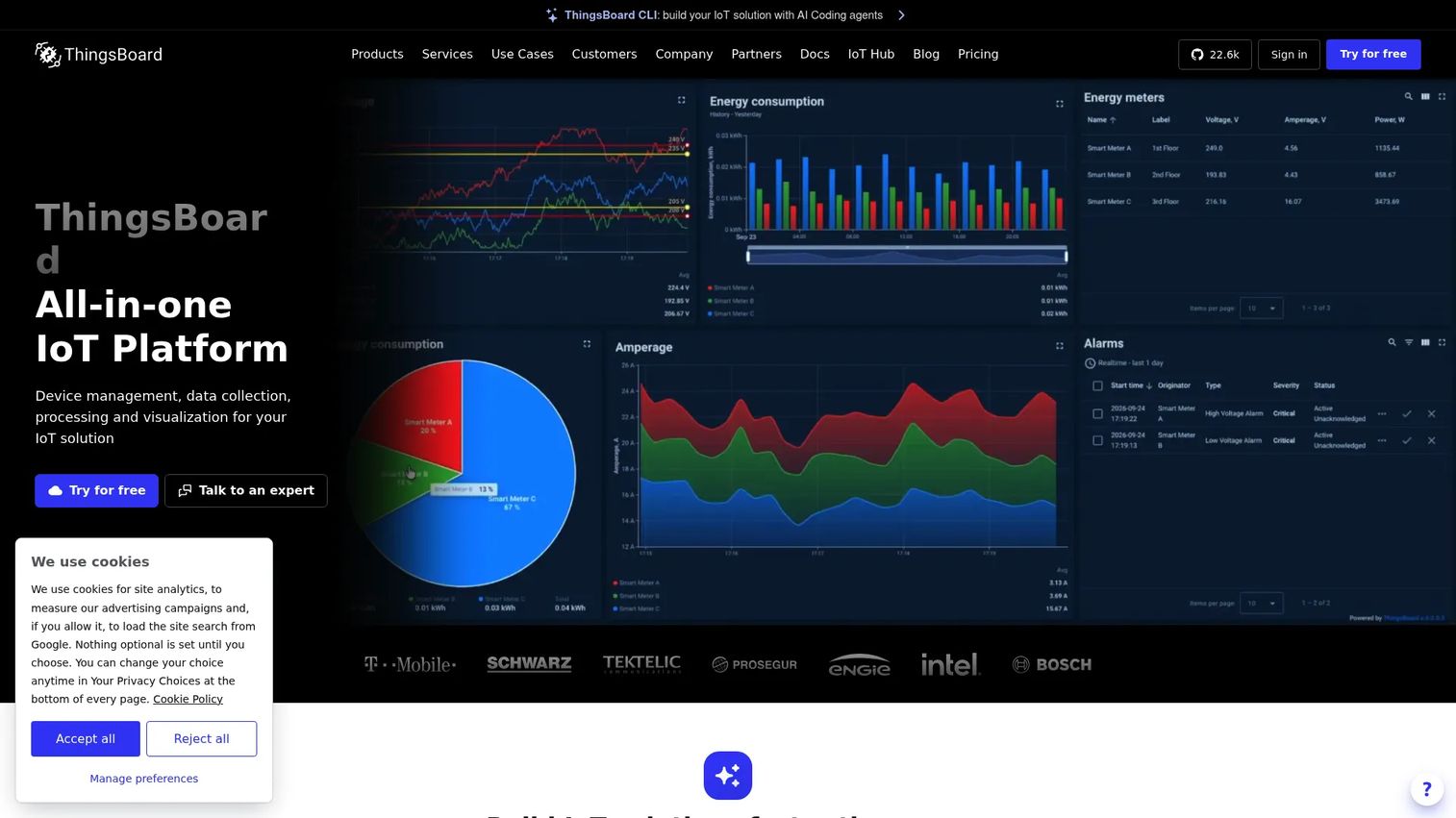
ThingsBoard is an open-source IoT platform for device connectivity, telemetry processing, visualization, and flexible deployment. It supports cloud hosting, self-managed on-premises installations, and edge deployments, making it one of the more versatile choices for teams that need to own more of the stack. The community edition is free and actively maintained, while commercial editions add white-labeling, enhanced support, and additional enterprise controls.
Best for: Product and engineering teams that need a full IoT platform rather than a single monitoring or integration tool.
Key features
- Real-time dashboards with 600+ built-in widgets
- Rule chains and alarm management for automated event handling
- Device management including OTA firmware updates and device emulators
- Digital twin support for physical asset modeling
- Multi-tenancy and white-labeling for customer-facing deployments
Why choose ThingsBoard: ThingsBoard fits teams that want to build device workflows, dashboards, and automation without stitching together too many separate products. The open-source foundation reduces vendor lock-in, and the breadth of deployment options gives engineering teams flexibility as scale requirements change.
ThingsBoard pricing: The self-managed Free plan is $0/month. Paid self-managed plans start at $99/month (Pilot), $299/month (Startup), and $499/month (Business), billed monthly. Cloud and Private Cloud plans are priced separately.
G2 rating: 4.5/5
2. AWS IoT
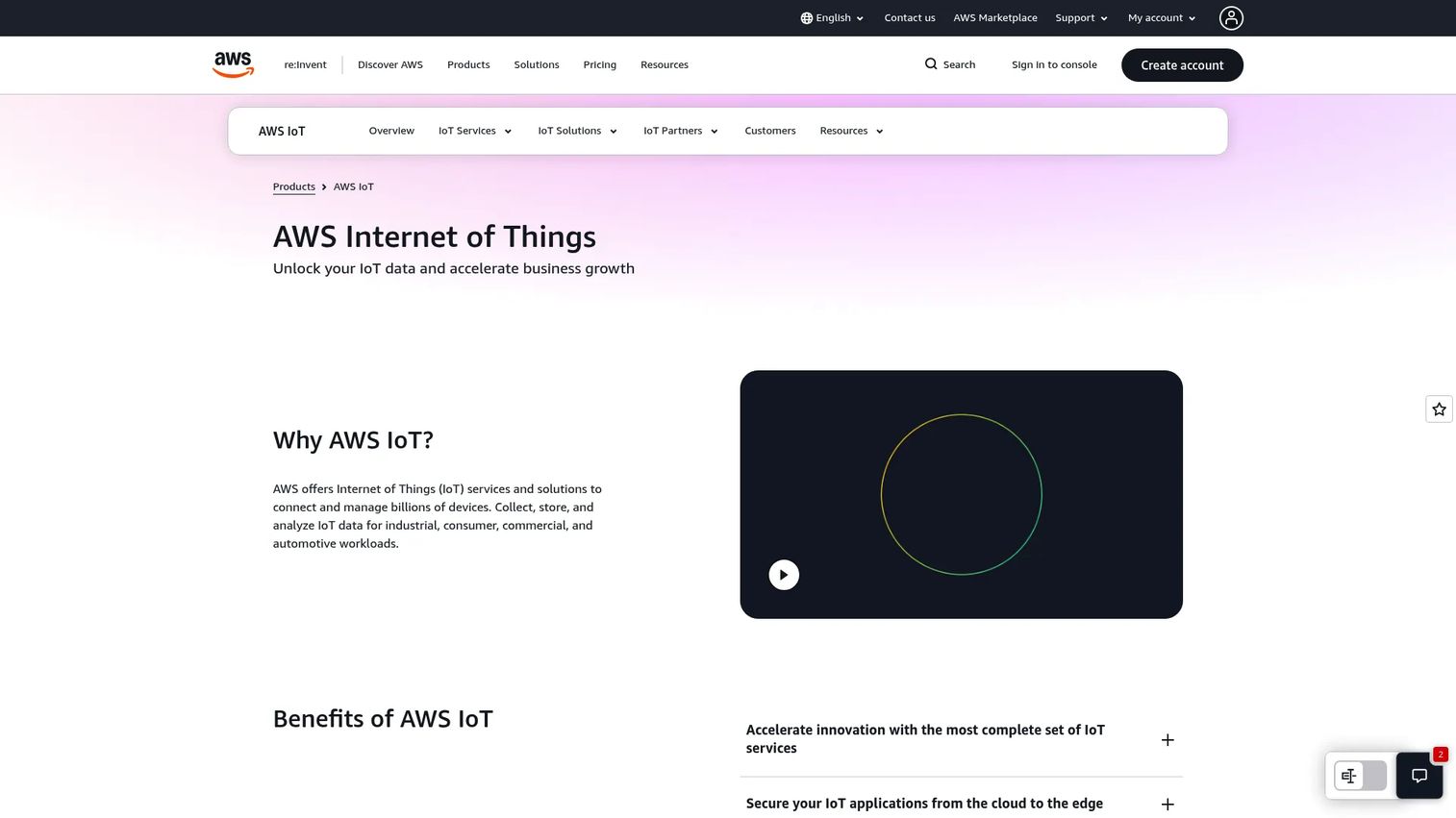
AWS IoT is a family of cloud services covering device connectivity, messaging, edge computing, fleet management, analytics, and security. It is not a single packaged product; it is a set of building blocks that engineering teams assemble based on their architecture. Teams already running workloads on AWS get the most value here, since the services integrate directly with the broader AWS data, compute, and security stack. The asset lifecycle management software perspective matters here too: AWS IoT handles device lifecycle as a first-class concern.
Best for: Enterprise teams that already use AWS and need scalable, cloud-native device infrastructure.
Key features
- Secure device connectivity via MQTT, MQTT over WebSockets, HTTPS, and LoRaWAN
- Device Shadow for storing and synchronizing device state when devices are offline
- Fleet indexing for querying and managing large device populations
- Rules Engine for filtering, transforming, and routing device data to AWS services
- Edge computing through AWS IoT Greengrass
Why choose AWS IoT: Choose this when engineering wants cloud-native building blocks rather than a packaged application. It scales to billions of devices and messages, but it requires real AWS expertise to configure and maintain correctly.
AWS IoT pricing: Pricing is usage-based with no flat subscription. AWS IoT Core connectivity starts at $0.08 per 1,000,000 minutes of connection in the US East region. Additional charges apply for messaging, Device Shadow operations, registry usage, and Rules Engine actions. A 12-month AWS Free Tier is available for new accounts.
G2 rating: 4.3/5
3. Azure IoT Hub
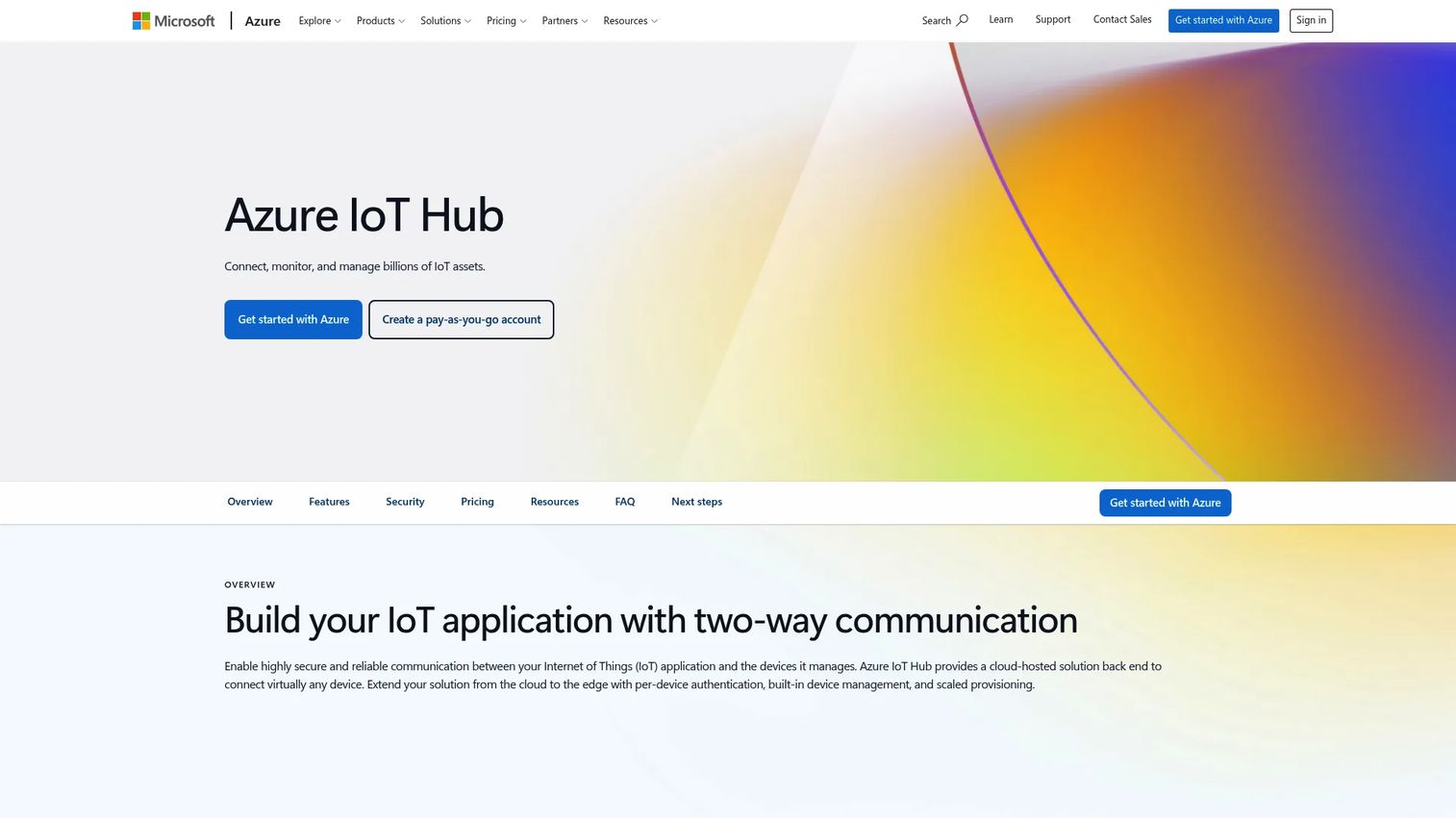
Azure IoT Hub is Microsoft's managed device-to-cloud messaging service for building IoT applications at scale. It provides reliable, bidirectional communication between devices and cloud-based applications, with per-device authentication and deep integration with the Azure data and analytics stack. For teams already using Azure Active Directory, Azure Stream Analytics, or Azure Digital Twins, the Hub is the natural device messaging layer.
Best for: Teams already running Microsoft Azure for data, security, and application infrastructure.
Key features
- Bidirectional device-to-cloud and cloud-to-device messaging
- Per-device authentication and identity management
- Device twins and module twins for state synchronization
- Zero-touch device provisioning via the Device Provisioning Service
- Azure IoT Edge compatibility for edge workloads and offline scenarios
Why choose Azure IoT Hub: Strong fit when product teams need reliable device messaging inside an existing Azure architecture. The service handles the protocol translation and routing complexity so engineering can focus on application logic rather than connectivity infrastructure.
Azure IoT Hub pricing: A Free tier is available. Paid tiers span Basic (B1, B2, B3) and Standard (S1, S2, S3) editions, priced per IoT Hub unit per month. The Azure pricing page did not display numeric amounts for paid tiers at time of writing; contact Azure sales or check the Azure pricing calculator for current unit costs.
G2 rating: N/A
4. Blynk
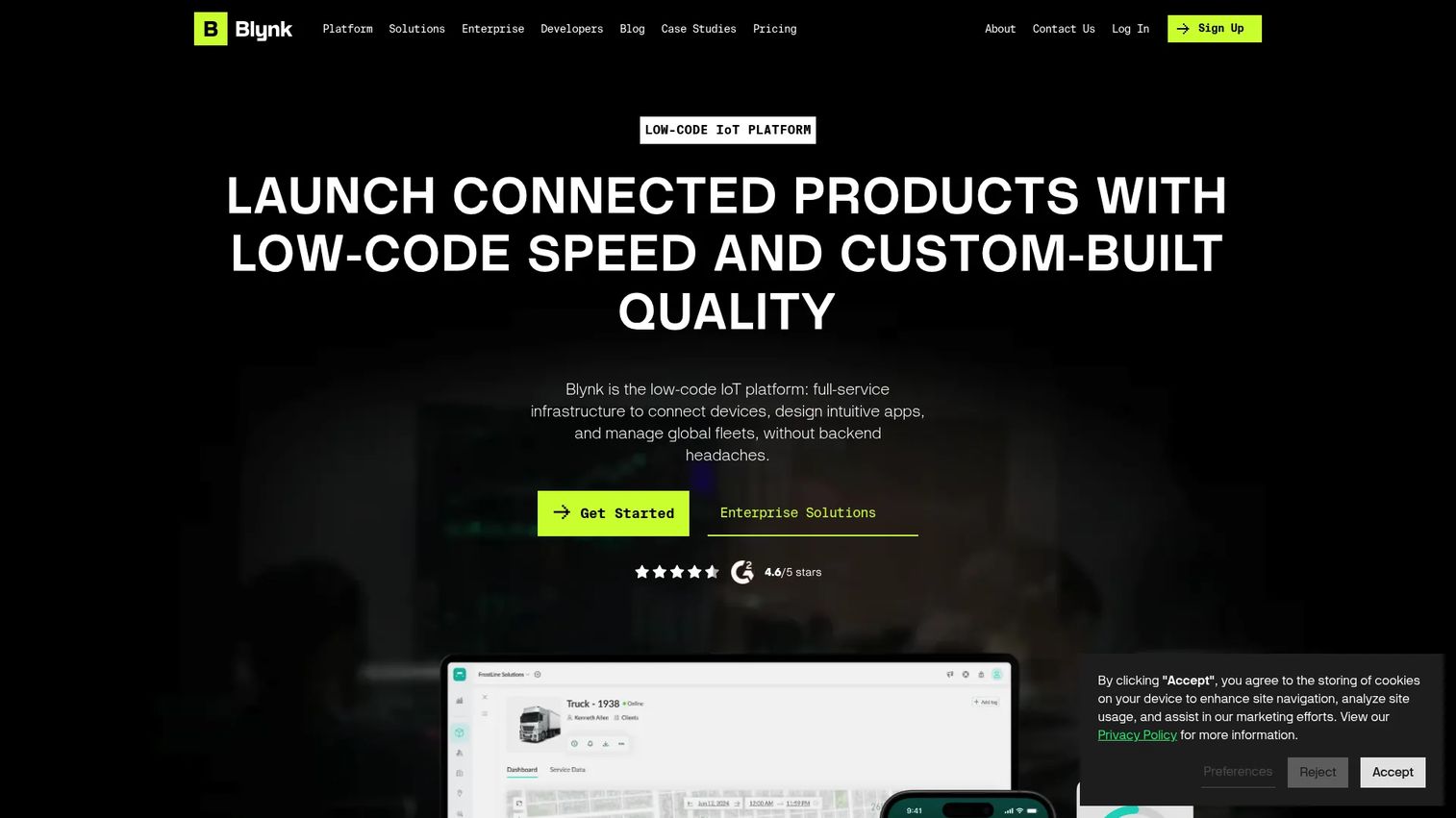
Blynk is a low-code IoT platform built for teams that need to ship connected product experiences quickly. It covers mobile app building, web dashboards, device management, and data handling in one environment, with no-code tooling that reduces the engineering time required to get from hardware prototype to working customer-facing application. It is particularly well-suited to smaller device fleets and product validation scenarios before heavier custom development begins.
Best for: PMs and product teams validating connected-device workflows before committing to custom backend infrastructure.
Key features
- No-code mobile app builder for iOS and Android
- No-code web console for device configuration, user management, and data visualization
- Device connectivity via Wi-Fi, cellular, Ethernet, LoRaWAN, and satellite
- Real-time data exchange, historical storage, APIs, and webhooks
- Automations, OTA firmware updates, and role-based access control
Why choose Blynk: Blynk shortens the path from prototype to usable device application. For PMs evaluating whether a connected-product workflow is worth full custom development, Blynk lets you validate the concept with real devices and real users first. The free tier supports up to 5 devices, which is enough for internal testing and early pilots.
Blynk pricing: Free plan available at $0/month for up to 5 devices. Paid plans start at $29/month (Starter, 10 devices), $99/month (Prototype, 50 devices), and $199 to $1,099/month (Production, 100 to 1,000 devices). Enterprise plans with private infrastructure use custom pricing.
G2 rating: 4.6/5
5. Boomi
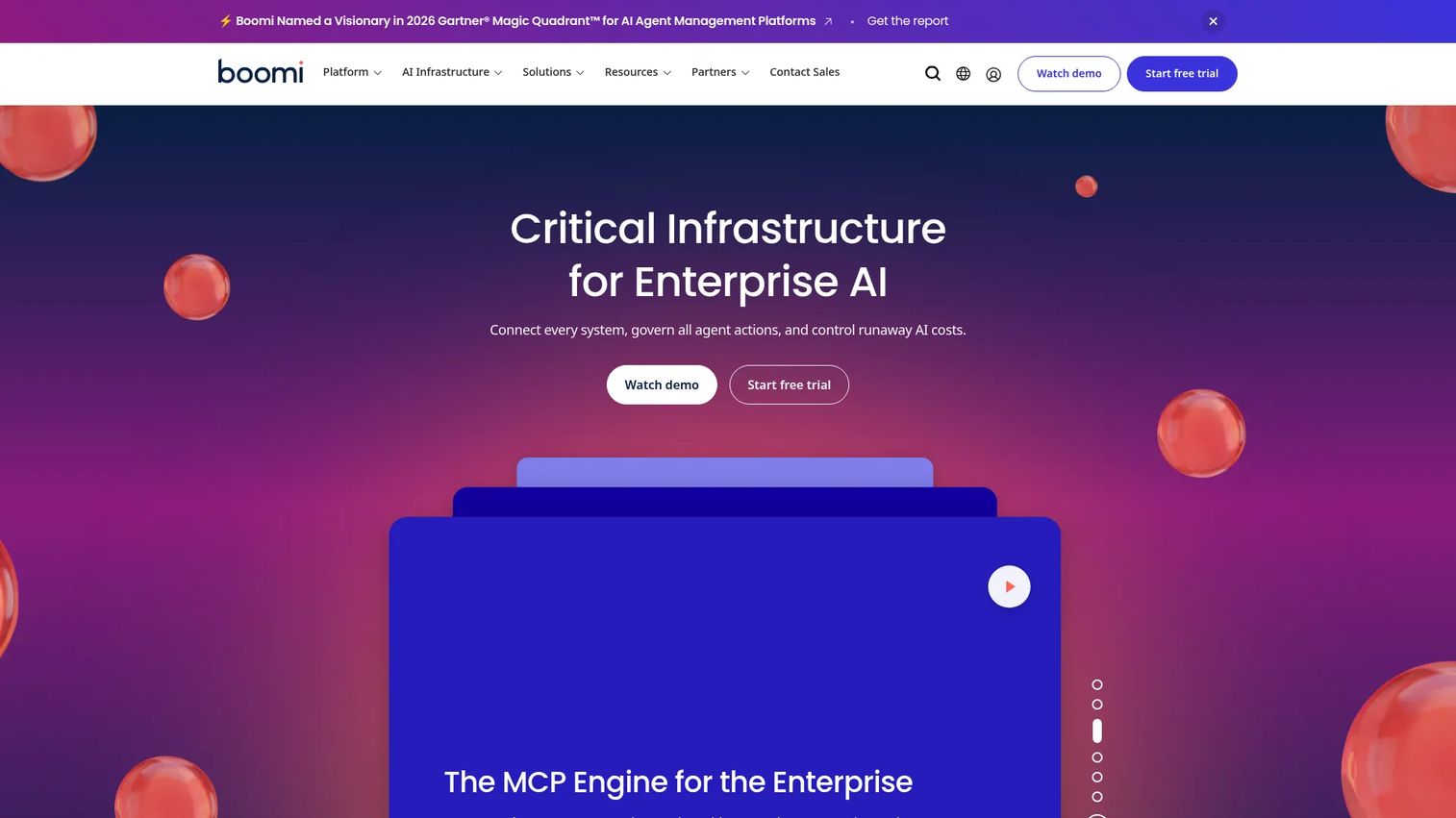
Boomi is an enterprise integration and automation platform, not a device management system. Its relevance to IoT comes from the integration challenge: Device data rarely stays in a device platform. It needs to flow into ERP systems, field service applications, CRM, finance tools, and customer support platforms. Boomi handles that routing with 200+ native connectors, data transformation, API management, and workflow automation. For teams where the IoT problem is primarily about connecting telemetry to business systems, this is the right layer. See also the big data analytics software comparison for adjacent tooling.
Best for: Teams whose primary IoT challenge is moving device signals into enterprise workflows rather than managing devices directly.
Key features
- Application and data integration with 200+ native connectors
- API management for exposing and consuming connected-device data
- Data transformation and orchestration across cloud and on-premises systems
- B2B connectivity and partner data exchange
- Workflow automation triggered by device events or data thresholds
Why choose Boomi: Choose Boomi when the hardest part of your IoT implementation is connecting device outputs to ERP, CRM, maintenance, or operations systems. It is not the right choice if the primary need is device provisioning, telemetry dashboards, or rule-based alerting.
Boomi pricing: A 30-day free trial is available. The Pay-As-You-Go plan starts at $99/month plus usage, billed monthly. Subscription plans for Integration, API Management, Data Hub, and Data Integration editions require a sales conversation for pricing.
G2 rating: 4.4/5
6. Fracttal
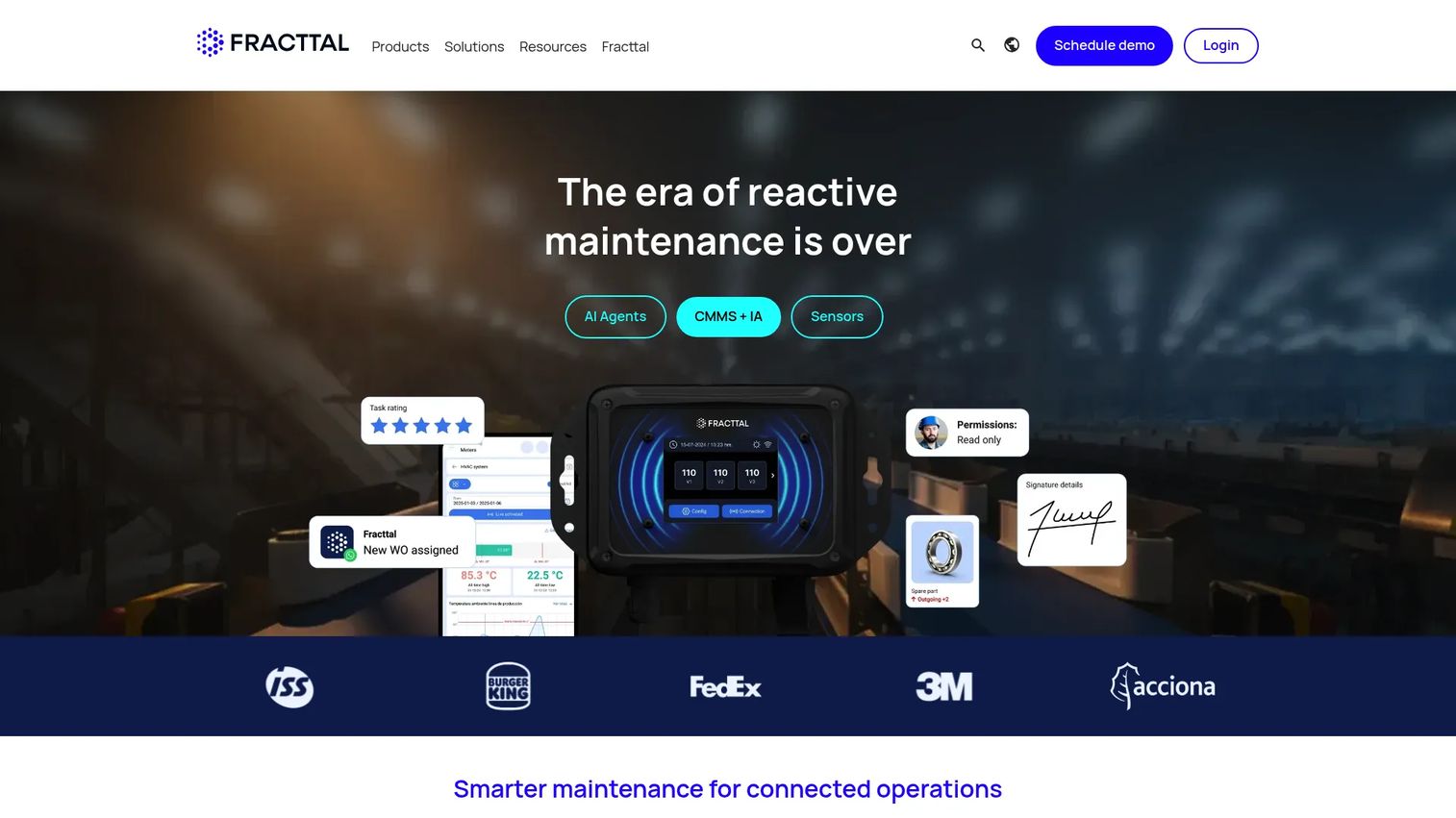
Fracttal is a cloud-based maintenance management platform that combines CMMS functionality with IoT condition monitoring, asset management, and work order automation. When a sensor reading crosses a threshold, Fracttal can trigger a maintenance task, assign a technician, and update an asset record automatically. This closes the loop that many IoT platforms leave open: Telemetry arrives, an alert fires, and then nothing happens because the maintenance workflow lives in a separate system. See also asset performance management software for related tooling.
Best for: Operations and maintenance teams connecting IoT sensor data to CMMS workflows and field technician operations.
Key features
- Hierarchical asset management and equipment records
- Work order creation, assignment, and tracking
- IoT-based condition monitoring with automated alert triggers
- Maintenance planning and scheduling tools
- Mobile access for field technicians
Why choose Fracttal: Fracttal fits teams where IoT signals need to become maintenance actions, not just dashboard metrics. If the goal is reducing unplanned downtime by connecting sensor data to maintenance workflows, Fracttal handles both sides of that equation.
Fracttal pricing: Fracttal does not display pricing on its website. Contact the sales team for a commercial proposal tailored to your asset count and deployment requirements. G2 reviewers report positive ROI outcomes but do not cite specific per-seat figures.
G2 rating: 4.6/5
7. Wolfram Mathematica
Wolfram Mathematica is technical computing software for data analysis, modeling, simulation, and visualization. It is not a device management platform and does not handle device connectivity or fleet operations. Its value in an IoT context is at the analytics and modeling layer: Processing complex sensor datasets, building statistical models, running simulations, and producing visualizations for engineering and R&D teams.
Best for: Data science, R&D, and engineering teams analyzing complex IoT datasets and building predictive or simulation models.
Key features
- Symbolic and numeric computation via the Wolfram Language
- Data manipulation, analysis, and interactive visualization
- Machine learning and statistical modeling capabilities
- Simulation tools for physical system modeling
- Notebook-based workflows with cloud deployment options
Why choose Wolfram Mathematica: Useful when the IoT challenge is analysis, modeling, or experimentation rather than fleet operations or telemetry ingestion. Teams running predictive maintenance models, sensor fusion research, or anomaly detection experiments benefit from the depth of the computing environment.
Wolfram Mathematica pricing: Pricing varies by license type, including commercial, government, education, student, and personal options.
G2 rating: 4.1/5
8. iGrafx
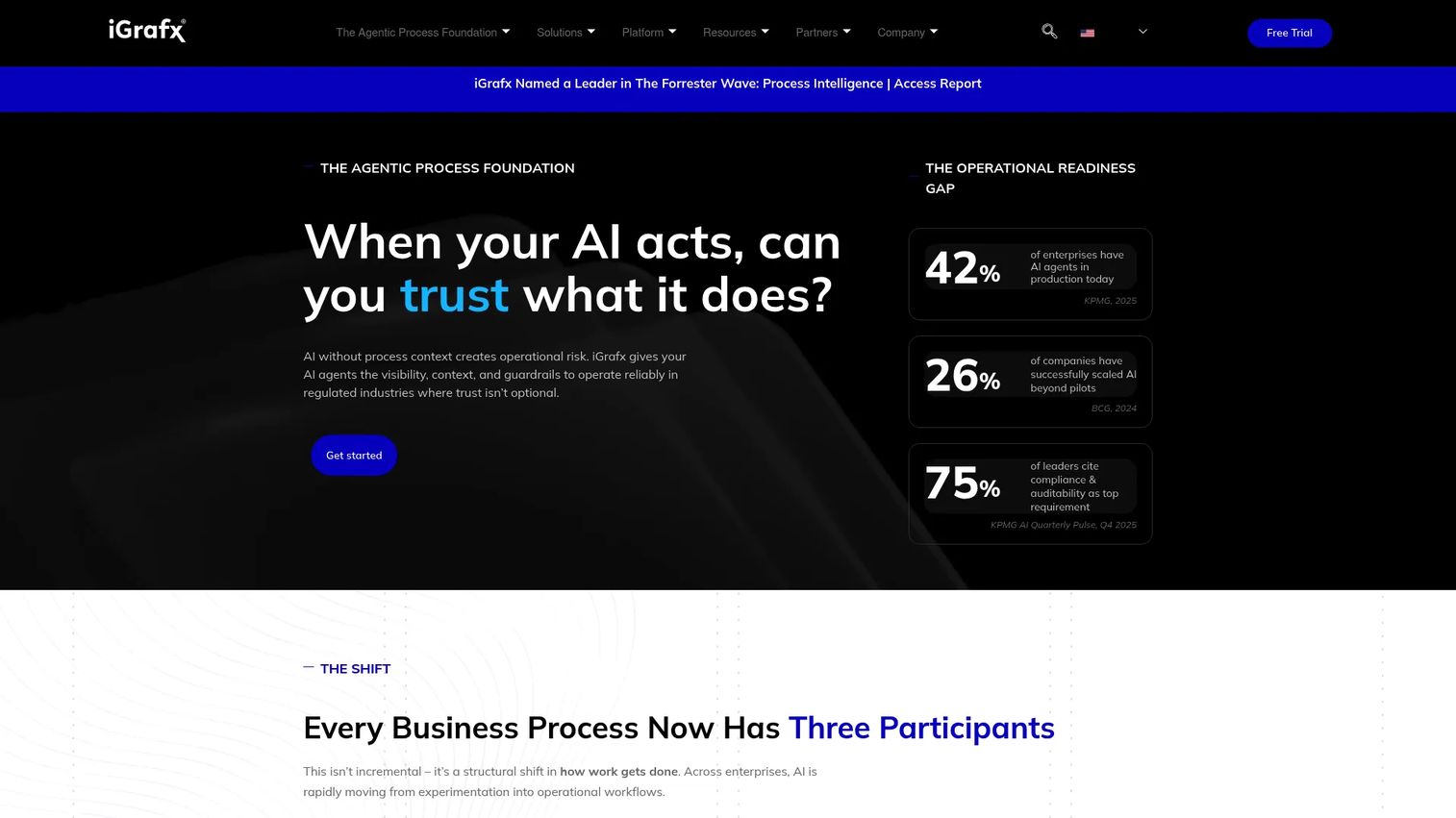
iGrafx provides process intelligence and modeling software for large and regulated organizations. Its connection to IoT is operational: When connected devices change how work flows through an organization, teams need to map those processes, model the impact of changes, identify compliance risks, and monitor execution. iGrafx handles that layer with process mining, process design, simulation, task mining, and risk analytics capabilities.
Best for: Operations and compliance teams that need to model and improve business processes affected by connected devices.
Key features
- Process mining from event log data
- Process design, mapping, and business process management
- Process simulation for scenario testing
- Risk analytics and governance workflow support
- AI-assisted process intelligence (Pia assistant)
Why choose iGrafx: Useful when IoT data is changing how operational workflows run and teams need to model the process before automating it. It is not the right choice for teams that only need device connectivity or telemetry dashboards.
iGrafx pricing: The sales team provides custom quotes based on organizational size, process scope, and selected modules. Contact iGrafx directly for current pricing.
G2 rating: 4.6/5
9. Applicare
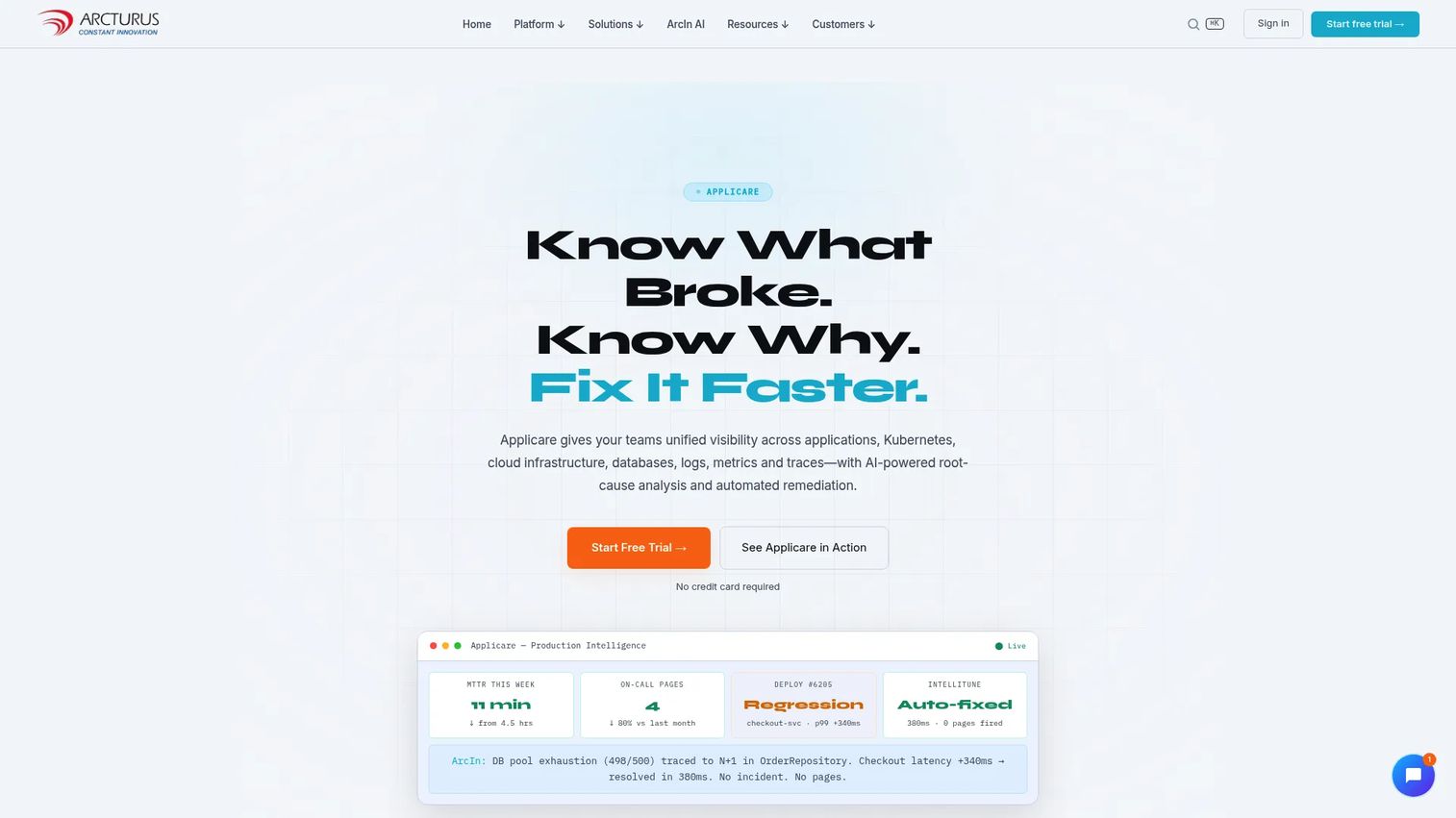
Applicare is an AI-powered full-stack observability platform for applications, Kubernetes environments, cloud infrastructure, and databases. In an IoT context, it addresses the application performance layer: The APIs, services, and infrastructure that sit between devices and the customer experience. When device interactions cause application latency or errors, Applicare surfaces root causes and can trigger automated remediation. It is distinct from device management platforms, which operate at the hardware and telemetry layer.
Best for: Engineering and SRE teams monitoring the application and infrastructure performance behind connected-device experiences.
Key features
- Full-stack observability across applications, Kubernetes, and cloud infrastructure
- AI-powered root-cause analysis for incident diagnosis
- Automated remediation and self-healing workflows
- Distributed tracing and database monitoring
- OpenTelemetry support for standardized instrumentation
Why choose Applicare: Strong fit when the product risk is not device onboarding but application reliability behind connected-device workflows. If users are experiencing slow or failed device interactions because backend services are degrading, this is the monitoring layer to add.
Applicare pricing: Applicare offers Starter, Professional, and Enterprise plans priced per monitored host per month, with volume pricing on Enterprise. A free 14-day Starter trial is available. Pricing requires a sales conversation; contact Arcturustech directly for current per-host rates.
10. SpinalTwin
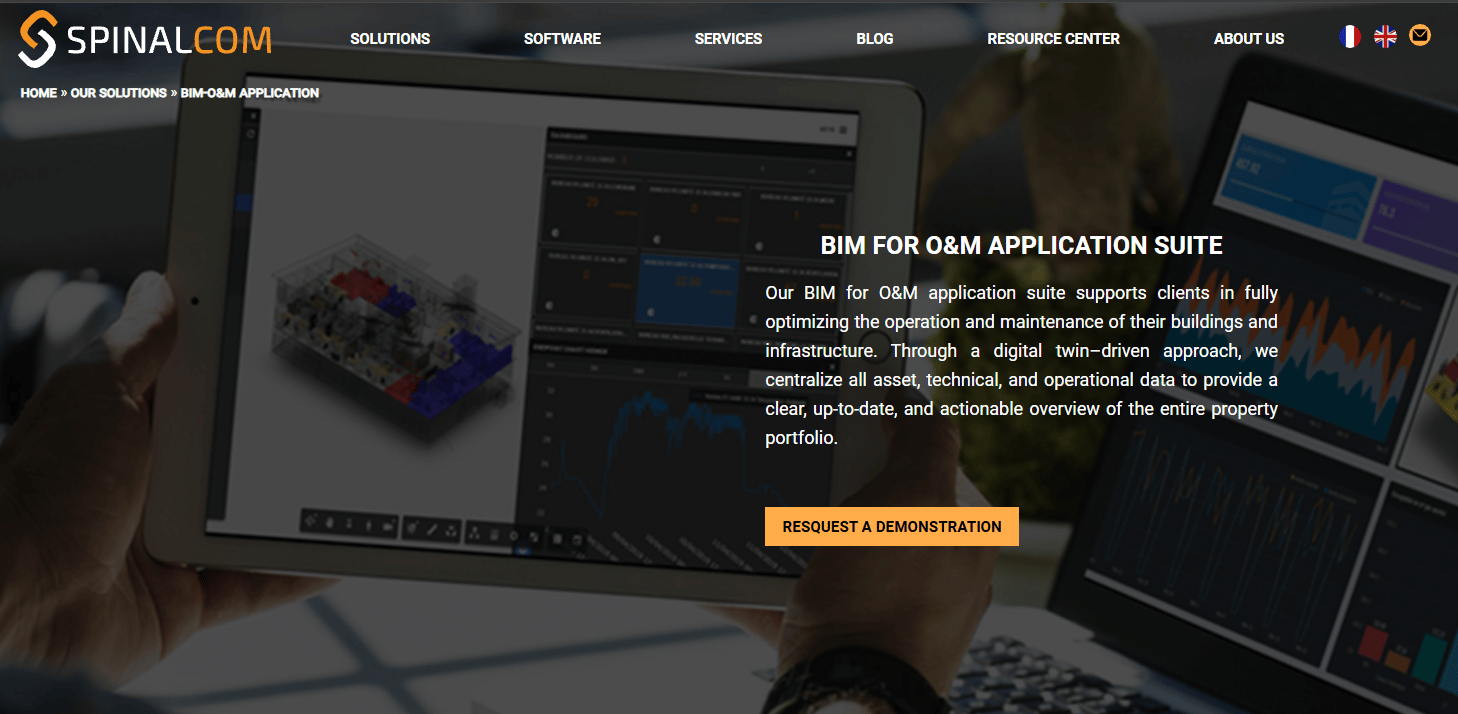
SpinalTwin is a suite of building operations and maintenance applications built on a digital twin foundation. It centralizes asset, technical, and operational data for buildings and infrastructure in a single model, then layers on maintenance management, space management, energy tracking, and real-time systems supervision. The platform integrates BIM models, building management systems, CMMS data, sensor feeds, and documentation into a unified view accessible through a web browser.
Best for: Building owners, facility managers, and infrastructure operators building digital twin-based operations and maintenance workflows.
Key features
- Building digital twin creation and maintenance
- Asset contextualization linking sensors, documents, and equipment records
- BIM integration for spatial and technical data
- Real-time technical supervision with KPI dashboards and alarms
- Energy analysis, consumption tracking, and regulation support
Why choose SpinalTwin: Choose SpinalTwin when device data needs to live inside a model of the physical space it comes from. It is particularly strong for teams managing complex buildings where understanding which sensor belongs to which asset, floor, or system is as important as the sensor reading itself.
SpinalTwin pricing: SpinalTwin does not display pricing on its website. Contact SpinalCom for a proposal based on building count, floor area, and selected application modules.
11. Drawbase
Drawbase is CAD/CAFM and IWMS software for designing, tracking, and managing facilities, infrastructure, assets, and space. Its IoT relevance is spatial: Connected environments depend on knowing where assets, sensors, equipment, and people are within a physical layout. Drawbase provides the floor plan and location context that makes IoT data interpretable in facility management workflows.
Best for: Facility and real estate teams that need spatial visibility across buildings and assets in connected environments.
Key features
- Interactive facility floorplans with layered data overlays
- Space management and occupancy tracking
- Asset and infrastructure location mapping
- CAD/CAFM capabilities for facility planning
- IWMS functionality for integrated workplace management
Why choose Drawbase: Useful when the IoT workflow depends on where assets, sensors, or equipment sit in a facility. Floor plan context often matters as much as sensor readings for facilities teams making operational decisions.
Drawbase pricing: Contact Drawbase directly for a quote based on facility count and feature requirements.
G2 rating: 3.5/5
12. CYBEATS
CYBEATS provides SBOM management and software supply chain security for connected products. As regulators in the US and EU increase pressure on IoT manufacturers to document and monitor the software components in their devices, SBOM governance is moving from optional practice to procurement requirement. CYBEATS gives product security and compliance teams the tooling to ingest, validate, monitor, and share software bills of materials. This matters for PM teams managing product releases: A vulnerability in a third-party component can block a firmware update or trigger a recall. See also the best AI security posture management tools for related security tooling.
Best for: Connected-product teams and IoT manufacturers that need SBOM visibility, vulnerability lifecycle management, and regulatory compliance support.
Key features
- SBOM inventory management and automated ingestion
- Vulnerability lifecycle management with VEX and VDP support
- Regulatory compliance reporting for frameworks requiring SBOM disclosure
- Software licensing risk assessment
- Continuous vulnerability monitoring and alerting
Why choose CYBEATS: Strong fit when security and compliance around connected-device software become a release blocker. Teams shipping firmware to regulated industries or government customers are increasingly required to produce and maintain SBOMs; CYBEATS handles the operational overhead of doing that at scale.
CYBEATS pricing: Contact the sales team for a quote based on product count and organizational requirements.
G2 rating: 4.4/5
13. SkySpark
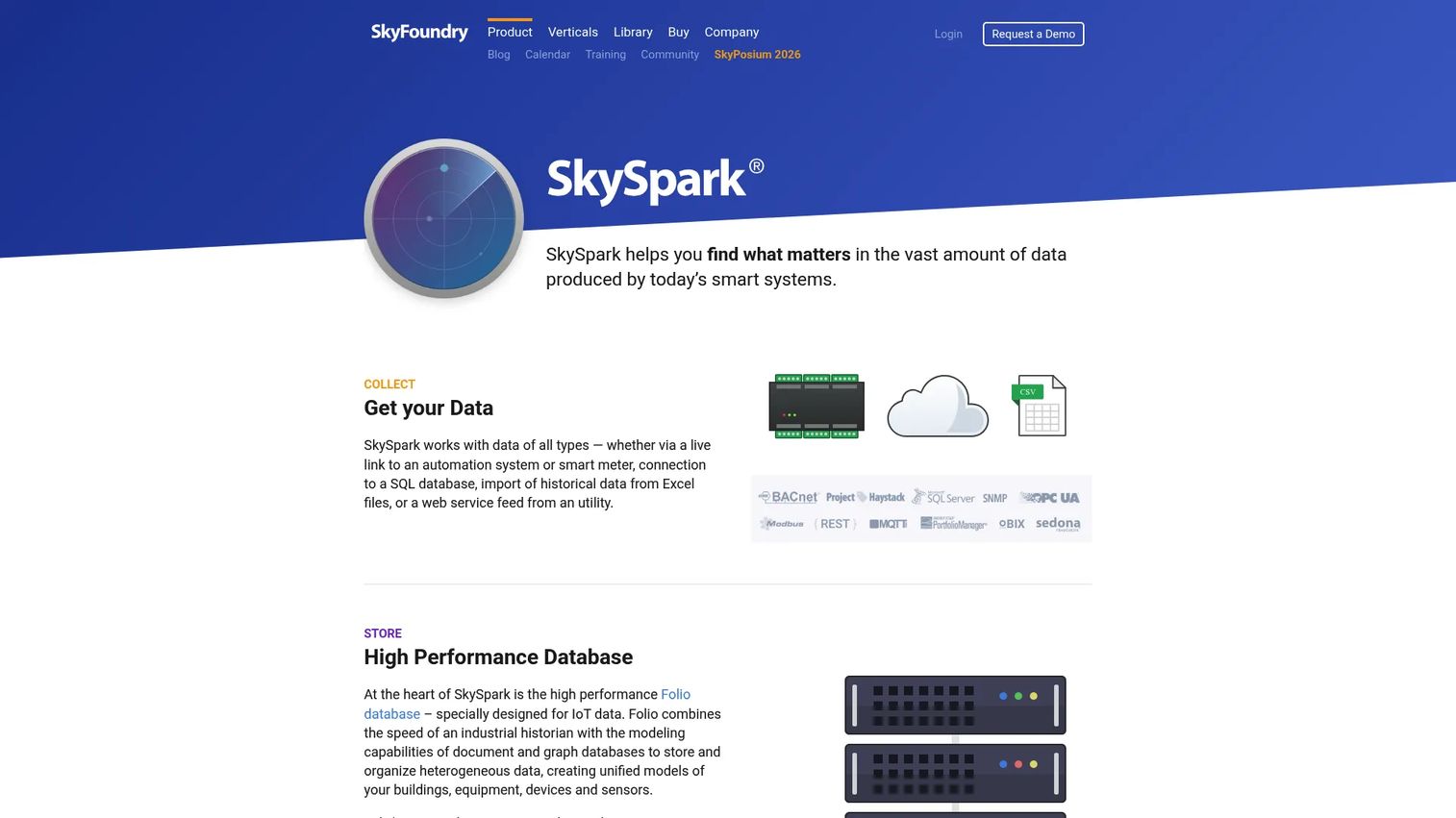
SkySpark is an analytics platform for building systems, equipment, energy data, and smart device infrastructure. It connects to automation systems, smart meters, SQL databases, and web services, then applies a semantic tagging layer (Project Haystack) and a purpose-built analytics engine (Axon) with over 500 built-in analytic functions. The result is fault detection, energy optimization, KPI dashboards, and operational insights built on top of real equipment data, not just raw telemetry.
Best for: Energy, facility, and building operations teams analyzing equipment performance, detecting faults, and optimizing energy consumption.
Key features
- Data collection from building automation systems, smart meters, and databases
- Project Haystack semantic tagging for data organization and normalization
- Axon analytics engine with 500+ built-in functions for fault detection and analysis
- Energy and KPI visualization dashboards
- Edge-to-cloud distributed deployment with custom rules and reporting
Why choose SkySpark: Strong fit when the team already has building or equipment data and needs insight rather than device provisioning. SkySpark excels at making sense of historical and real-time data from complex, heterogeneous building systems where raw data alone does not surface operational problems.
SkySpark pricing: SkySpark is sold through reseller, distributor, and OEM partners. The official buying page does not publish pricing. Contact a certified SkySpark partner or SkyFoundry directly for current pricing based on your deployment and data requirements.
Considerations when choosing IoT software
Start with the layer you need
"IoT software" covers at least six distinct jobs: Device platform, cloud messaging service, analytics system, integration layer, CMMS, digital twin, and security tooling. Map the specific workflow you need to own before shortlisting vendors. Teams that shortlist based on category name alone frequently end up buying a platform that solves an adjacent problem.
Verify protocol and device support
MQTT, AMQP, HTTP, and CoAP are common. LoRaWAN, Zigbee, and Bluetooth LE matter for specific hardware ecosystems. Protocol gaps create engineering rework that is expensive to discover after procurement. Ask vendors for a protocol compatibility matrix specific to your hardware before signing.
Pressure-test scale before committing
Device count, message volume, data retention period, and regional requirements all drive cost and architecture decisions. Ask vendors for reference architectures at your projected scale, not just your current size. Usage-based pricing models like AWS IoT can produce significant cost surprises at high message volumes if modeled only at starting rates.
Treat security as part of product experience
Device identity, access control, firmware update mechanisms, audit logs, and data residency rules affect compliance posture and customer trust. Security gaps in IoT products become sales blockers in regulated industries and enterprise procurement. Evaluate security controls against your compliance requirements before the final shortlist, not after.
Make analytics actionable for the whole team
Dashboards are not enough. PMs need segmentation by customer, device type, alert severity, and use case. Operations teams need alert routing into ticketing systems. CS teams need visibility into device states without engineering involvement. Evaluate how well a platform's analytics layer connects to the people and systems that act on the data.
How to explain IoT software to buyers, users, and stakeholders
IoT software is genuinely hard to evaluate from screenshots. Device onboarding flows, telemetry dashboards, alert handling, digital twin navigation, and maintenance workflows all involve multiple steps, states, and system interactions that static images cannot convey.
Teams selling IoT platforms to enterprise buyers face the same problem. Showing a live environment to a prospect often means provisioning a demo environment, exposing production data, or walking through a scripted call that does not match the buyer's specific use case. An interactive demo lets IoT vendors show device onboarding, dashboard workflows, and alert configurations to prospects without granting access to a live system. It also lets product and presales teams tailor the story to a specific buyer's industry or device type, without rebuilding assets from scratch each time.
Start your journey with Guideflow today!
Conclusion
Most IoT software mistakes happen before procurement. Teams compare tools using the same search term but different underlying jobs. One platform provisions devices. Another processes telemetry into dashboards. Another routes sensor events into maintenance workflows. Another models a building. The shortlist should start with the specific workflow you need to own.
For full-stack IoT platform needs, ThingsBoard, AWS IoT, and Azure IoT Hub cover the most ground. For fast connected-app development, Blynk reduces the gap between prototype and customer-facing product. For maintenance and asset operations, Fracttal connects sensor data to work order workflows. For building operations and spatial context, SpinalTwin and Drawbase provide the digital twin and floor plan layers. For product security and SBOM governance, CYBEATS addresses the regulatory pressure that is growing for IoT manufacturers. For building and equipment analytics, SkySpark turns heterogeneous systems data into operational insight.
Pick the tool that owns the layer of the IoT stack your team needs to solve first. The others can follow.
Start your journey with Guideflow today!
FAQs about IoT software
IoT software is the set of platforms and applications that connects physical devices to digital systems. It covers device registration, authentication, telemetry collection, event processing, dashboard visualization, alert automation, and integration with business applications. The category spans everything from cloud device management platforms to building analytics engines and product security tools.
IoT software is the broad category, covering any application that handles connected-device workflows. An IoT platform is typically a more complete system providing device connectivity, telemetry ingestion, device management, dashboards, rules engines, and integrations in a single product. Not all IoT software is an IoT platform; analytics tools, integration middleware, CMMS systems, and security tooling are IoT software without being platforms.
Product teams should prioritize device identity and provisioning, protocol support relevant to their hardware, telemetry segmentation by customer or device type, alert routing into operational systems, and security controls including audit logs and access management. Maintainability matters too: Evaluate how much engineering effort is required to update dashboards, rules, or device configurations as the product evolves.
Neither is universally better. AWS IoT fits organizations already running significant workloads on AWS who want cloud-native building blocks assembled by their engineering team. Azure IoT Hub fits teams standardized on Microsoft Azure who want managed device messaging that integrates directly with Azure data and security services. The better choice follows the cloud architecture, identity system, data stack, and engineering skills already in place.
Industrial teams typically need device monitoring, equipment analytics, maintenance workflow automation, and edge support for environments with unreliable connectivity. ThingsBoard covers device management and telemetry. Fracttal connects sensor data to maintenance workflows. SkySpark provides analytics for equipment and building systems. The right combination depends on whether the primary need is device operations, predictive maintenance, or operational analytics.
Costs vary significantly by deployment model and usage. Cloud platforms like AWS IoT use message-based pricing that scales with device count and message volume. SaaS platforms like ThingsBoard and Blynk start with free tiers and scale through monthly subscription plans. Enterprise tools for maintenance, digital twins, process intelligence, and security typically require a sales conversation and quote. Model costs at your projected device count and message rate, not just your starting volume.
Cloud deployment works for teams that want managed infrastructure and fast time to production. On-premises or air-gapped deployment fits regulated industries, government environments, and use cases with strict data sovereignty requirements. Edge deployment is essential when latency matters, devices operate offline, or local processing is required to reduce cloud data transfer. Many platforms support hybrid configurations that span cloud and edge.
Security capabilities vary by tool type. Device management platforms handle device authentication, identity certificates, access control, and secure firmware delivery. Security-specific tools like CYBEATS address software supply chain risk through SBOM management and vulnerability tracking. Evaluate device trust mechanisms, encryption in transit and at rest, audit log completeness, and support for your specific compliance framework before finalizing a shortlist.