Headquarters launches a promotion on Monday. By Wednesday, nobody can tell which stores completed the signage, which managers saw the instruction, or which locations are falling behind. The regional director starts making calls. Store managers start sending photos through chat. Someone builds a spreadsheet to track it.
That pattern plays out in thousands of retail chains every week, and it costs real money. The retail and e-commerce frontline-worker technology market reached USD 3.46 billion in 2025, growing at a 21.38% CAGR, according to Mordor Intelligence (2025). The demand signal is clear: Retailers are replacing manual execution with software because the chase doesn't scale.
The harder question is which kind of software fits your operating model. The category is not uniform. Some platforms focus narrowly on task assignment and completion. Others combine tasks with frontline communication, learning, audits, scheduling, or workforce self-service. Choosing the wrong architecture means paying for features nobody uses while the actual execution problem stays unsolved.
This guide cuts through that by distinguishing platform types, laying out verified pricing, and helping you choose based on operational fit rather than feature count.
What's inside
This guide is built for retail operations leaders, operations-minded founders, and anyone evaluating frontline execution software for a multi-location business. Tools were selected and ranked based on four criteria:
- Frontline adoption fit: Mobile usability, shared-device support, and shift-aware task delivery
- Verification capability: Photo proof, location data, audit trails, and corrective actions
- Operational breadth: Whether the platform covers tasks alone or includes audits, communication, and learning
- Pricing transparency: Verified tiers, free plans, or clear quote-based signals
TL;DR
- Best overall for retail execution: Zipline for retailers that need HQ-to-store communication, task workflows, and operational consistency in one platform
- Best for configurable store workflows: YOOBIC for retail teams that need tasks, audits, frontline communication, and modular rollout options
- Best for large frontline workforces: WorkJam for enterprises combining tasks, communication, learning, and workforce self-service
- Best for multi-location workflow flexibility: Wooqer for franchise and retail operators running diverse operational processes
- Best free starting point: Mitti for teams that want to test inspections, tasks, and issue reporting before committing to a larger contract
- Best for visual compliance: PAZO for teams where photo evidence and planogram verification drive the business case
- Best for enterprise task orchestration: Zebra Workcloud Task Management for large retailers already invested in Zebra's broader technology portfolio
- Best for foodservice and franchise operations: Crunchtime Ops Execution for recurring operational routines across restaurants and multi-unit operators
What is retail task management software?
Retail task management software is a store operations platform that helps headquarters, field leaders, store managers, and frontline employees assign, complete, verify, and report on work across multiple retail locations.
It replaces email threads, paper checklists, and disconnected spreadsheets with a shared operational layer that runs from corporate planning down to individual store tasks.
Core capabilities to evaluate:
- Task creation, scheduling, prioritization, and recurrence
- Assignment by store, region, role, or shift
- Mobile completion for frontline workers on shared or personal devices
- Digital checklist management, store audits, and inspection workflows
- Photo proof, signatures, and location-based verification
- Exceptions, escalations, and corrective actions
- HQ-to-store communication tied to operational work
- Compliance dashboards, overdue-task tracking, and regional reporting
- Integrations with workforce management, HR, point of sale, or analytics systems
Four platform types in practice:
| Platform type | Best for | Core strength | Watch for |
|---|---|---|---|
| Retail execution platform | Multi-store retailers | Store tasks, communication, and compliance in one layer | Contract and module complexity |
| Frontline workforce platform | Large distributed workforces | Tasks combined with learning, staffing, and employee tools | Broader rollout scope than task-only buyers may need |
| Audit-led operations platform | Safety, quality, and compliance-heavy teams | Inspections, issue reporting, and proof of completion | May require configuration for retail-specific merchandising |
| Restaurant or franchise execution platform | Foodservice and multi-unit operators | Daily routines, checklists, and location accountability | Retail merchandising requirements need validation |
The distinction matters. A specialty retailer running seasonal campaigns needs a different operating model than a restaurant chain managing food safety checks. Choosing an audit management platform when you need frontline communication creates a gap. Choosing a broad workforce platform when you need task tracking creates overhead.
When to use retail task management software
Standardize chain-wide promotions and visual standards
Headquarters needs to assign location-specific launch tasks, attach merchandising guidance, require photo proof of completion, and confirm execution before a campaign goes live. Without a dedicated system, compliance depends on who remembered to follow up. With one, the workflow runs from instruction to verified completion with a dashboard showing which stores are on track.
Replace paper audits and manual field visits
Field visits and safety checks generate paper forms, photo attachments, and follow-up emails that go nowhere. The value of an audit comes from closing the loop, not collecting another checklist. A platform with escalation routing, corrective task creation, and audit trail storage turns a one-time inspection into a repeatable accountability cycle. Good audit checklist software makes this automatic rather than reliant on individual managers.
Give frontline employees one clear daily work queue
Store associates often receive work through three channels simultaneously: Manager conversations, group chats, and pinned notes. Priority is unclear. A platform that delivers role-based tasks by shift, with mobile completion and simple evidence capture, removes that ambiguity. Adoption rises when the work queue is the same tool employees use to complete and report their work, not a separate system they have to remember to check.
Retail task management software comparison
Starting price alone does not capture what you will actually spend. Enterprise retail platforms typically price by location count, user count, module selection, or annual contract scope. A platform affordable for 50 store managers can cost significantly more when rolled out to every frontline associate across hundreds of locations.
Four dimensions matter for comparison: Location count supported, frontline adoption design, depth of completion verification, and reporting visibility.
| # | Product | Best for | Key differentiator | Pricing | G2 rating |
|---|---|---|---|---|---|
| 1 | Zipline | Multi-location retailers needing HQ-to-store execution | Retail communication, task management, and operational analytics | Custom pricing | 4.8/5 |
| 2 | YOOBIC | Retailers standardizing tasks, audits, communication, and learning | Modular frontline platform with AI performance tools | Custom pricing | 4.6/5 |
| 3 | WorkJam | Enterprise frontline workforces | Tasks, communications, learning, and shift marketplace | Custom pricing | 4.5/5 |
| 4 | Wooqer | Retail and franchise operations with diverse workflows | Configurable workapps for tasks, audits, and field evidence | Custom pricing | 4.7/5 |
| 5 | Mitti | Teams wanting a lower-risk operational entry point | Free tier with inspections, tasks, issue reporting, and analytics | Free tier; Premium from $24/seat/month | 4.6/5 |
| 6 | Zebra Workcloud Task Management | Enterprise retailers with complex task orchestration | Priority-based execution inside Zebra's workforce suite | Custom pricing | 4.1/5 |
| 7 | PAZO | Retailers focused on visual compliance and field verification | AI image analysis, geofenced checklists, and photo verification | Custom pricing (15-day trial) | 4.7/5 |
| 8 | Crunchtime Ops Execution | Restaurants, franchises, and multi-unit operators | Operations execution integrated with broader Crunchtime workflows | Custom pricing | 4.6/5 |
Ratings verified from each tool's G2 listing, October 2026. Pricing verified from each vendor's official pricing page, October 2026.
Best retail task management software for 2026
1. Zipline
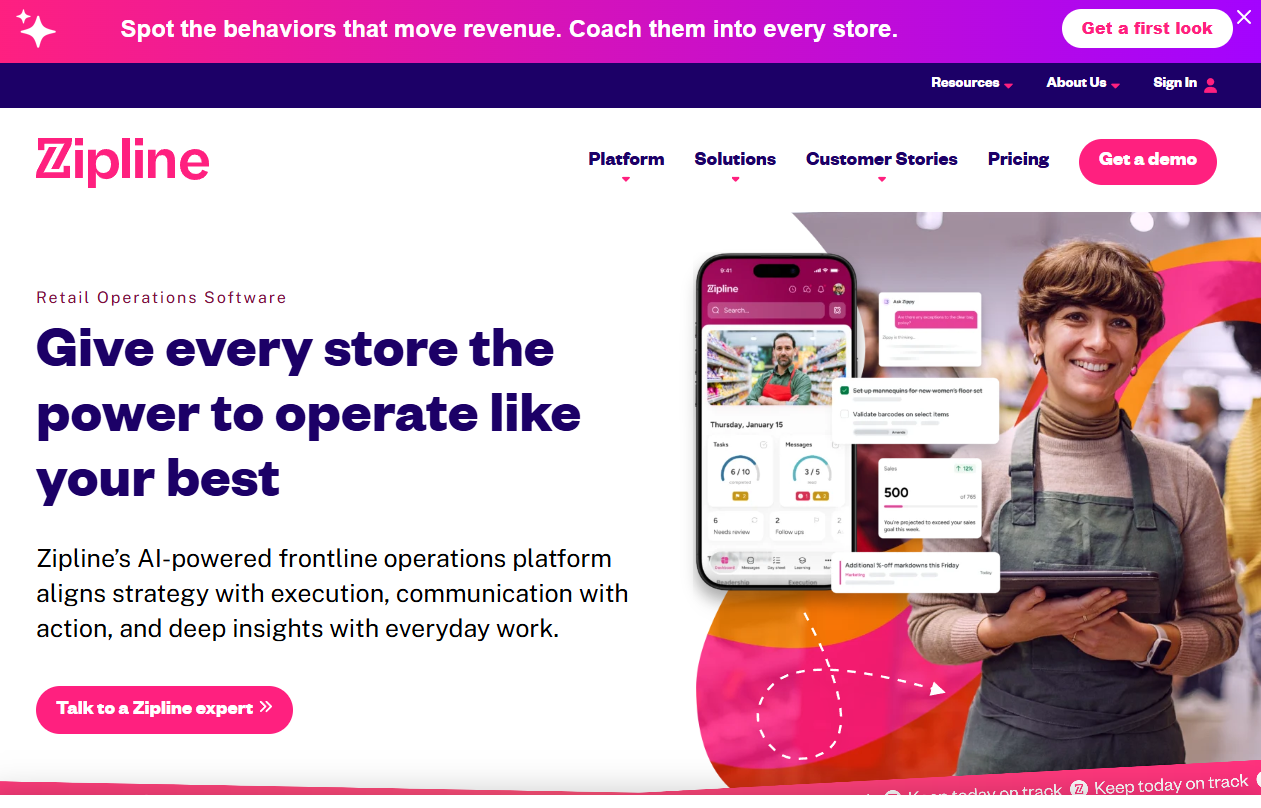
Zipline is a retail-specific operations platform that connects corporate communication, task management, knowledge resources, and field execution in one environment. It is designed for brands where store teams receive instructions, complete work, and report back through the same tool rather than switching between email, chat, and a separate task system. The platform includes AI-powered features for frontline communication, task delivery, and store analytics.
Best for: Multi-location retail operators that need a single execution layer for store communication, recurring work, campaign launches, and operational reporting.
Key features
- Employee communication with targeted messaging and acknowledgement tracking
- Task management with recurring workflows and role-based visibility
- Store audits and assessments with evidence capture
- AI-powered knowledge base and learning center
- Reporting and analytics on compliance, overdue tasks, and regional performance
Why choose Zipline: Its value rises when store teams need one operating rhythm rather than separate tools for task, communication, and resource access. It is a strong fit for retailers where the primary problem is fragmented HQ-to-store communication.
Zipline pricing: Zipline prices by number of locations and selected modules, with no public numeric tiers. Contact Zipline directly for a quote based on your location count and feature requirements.
G2 rating: 4.8/5 (verified October 2026).
2. YOOBIC
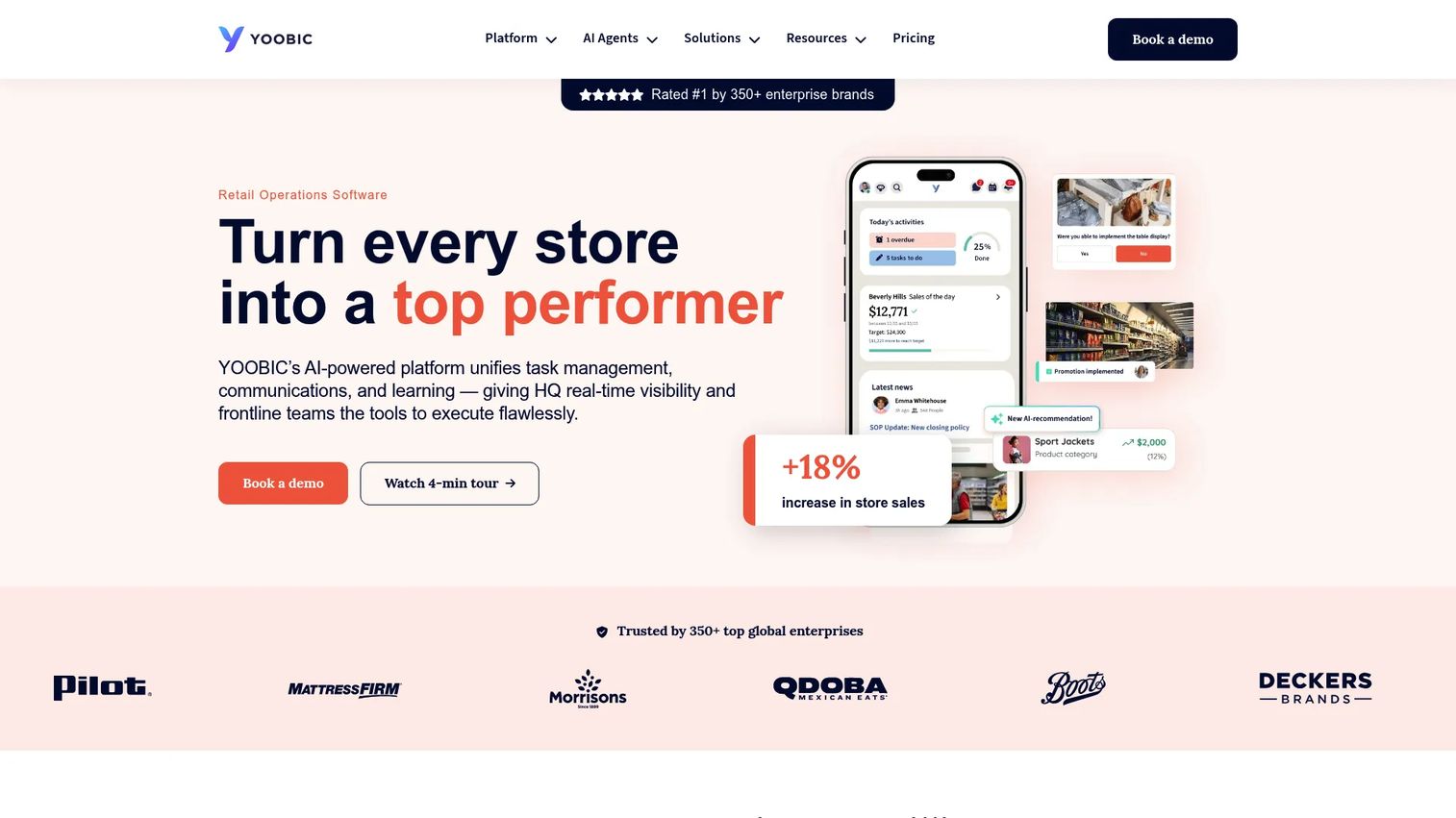
YOOBIC is a modular frontline operations platform used by enterprise and mid-market retailers with distributed store teams. It combines task management, mobile communications, learning and microlearning, visual merchandising compliance analysis, and AI-driven performance recommendations in a single environment. The platform is built around the idea that store execution, training, and communication should run from the same interface rather than separate tools.
Best for: Retail chains that need task execution alongside frontline communication, training, site visits, and store-performance visibility.
Key features
- Task assignment by store, region, and role with recurring workflows
- Mobile-first frontline communications with targeted messaging
- Learning, onboarding, and microlearning modules
- Visual merchandising compliance analysis with photo capture
- Real-time dashboards across 200-plus enterprise integrations
Why choose YOOBIC: The integrated frontline model fits teams that need store managers and associates to receive work, complete it on mobile, access resources, and report outcomes in the same environment. Buyers who only need task management may find the broader module scope more than necessary.
YOOBIC pricing: The vendor uses modular pricing based on locations or users and the modules selected. Buyers choose from task management, communication, learning, and AI capabilities. Request a quote for your specific configuration.
G2 rating: 4.6/5 (verified October 2026).
3. WorkJam
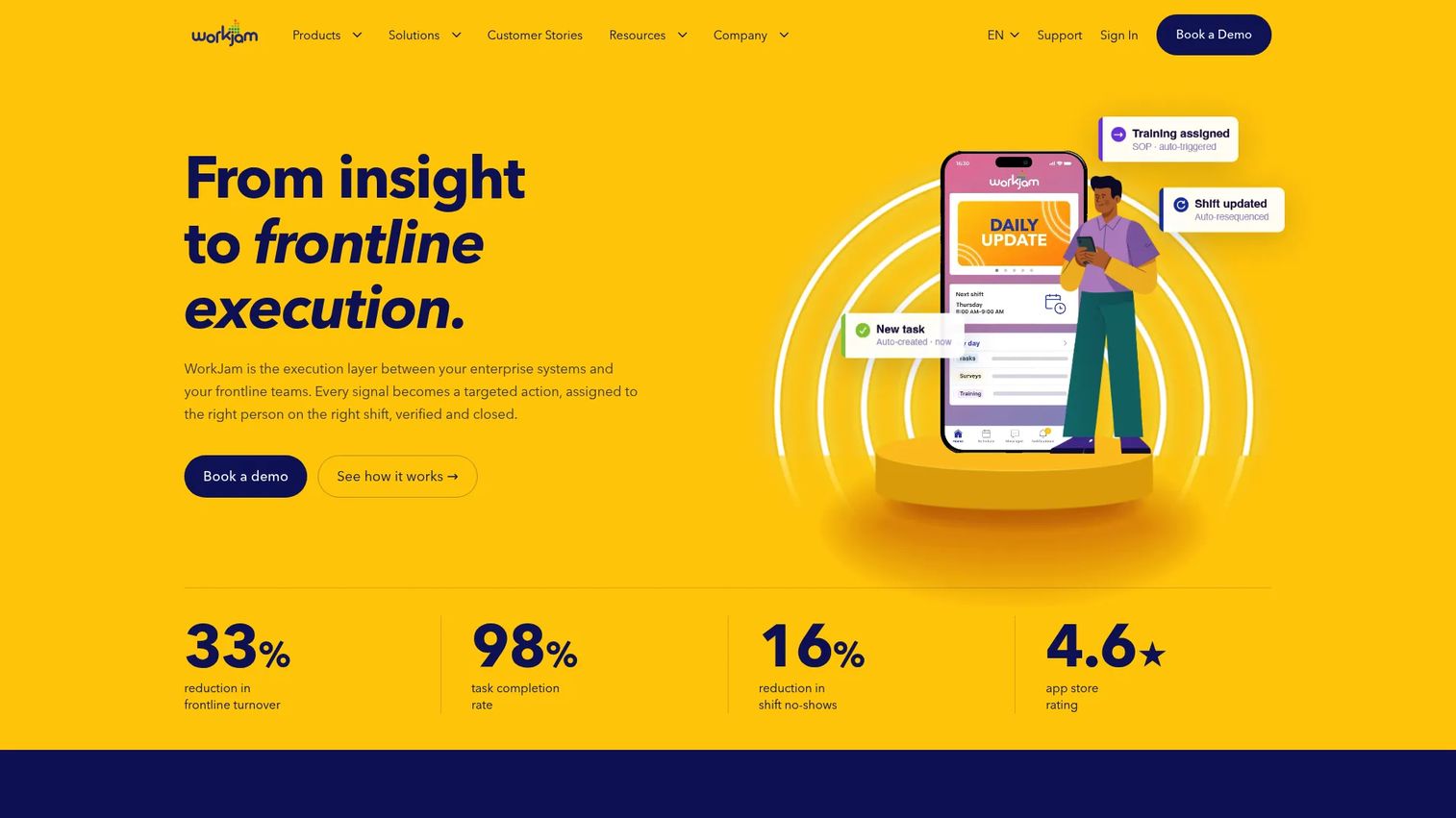
WorkJam is a digital frontline workplace platform for enterprise retail, hospitality, manufacturing, and healthcare organizations. It combines task management with communications, learning, employee self-service, and an open shift marketplace. WorkJam positions itself as a complete frontline operating system rather than a dedicated retail task tool, connecting headquarters to every employee across shifts and languages.
Best for: Large retail organizations that want task management embedded in a broader frontline workforce experience, including scheduling, learning, and employee self-service.
Key features
- Shift-aware task assignment with photo and video verification
- Frontline communications with targeted messaging and chat
- Learning and microlearning tied to task completion
- Workforce self-service for scheduling, time-off, and shift swaps
- Open shift marketplace for flexible staffing
Why choose WorkJam: It is the right choice when the leadership team has decided that frontline employee experience is part of the operating-model change, not just task tracking. For retailers whose primary problem is task assignment and completion verification, a narrower tool may be proportionate.
WorkJam pricing: Plans are quote-based. A regional pricing page lists AUD-denominated tiers for its Frontline Connect product, with an Essential plan and Operations Elite tiers at different user scales. Contact WorkJam for USD pricing and commercial terms.
G2 rating: 4.5/5 (verified October 2026).
4. Wooqer
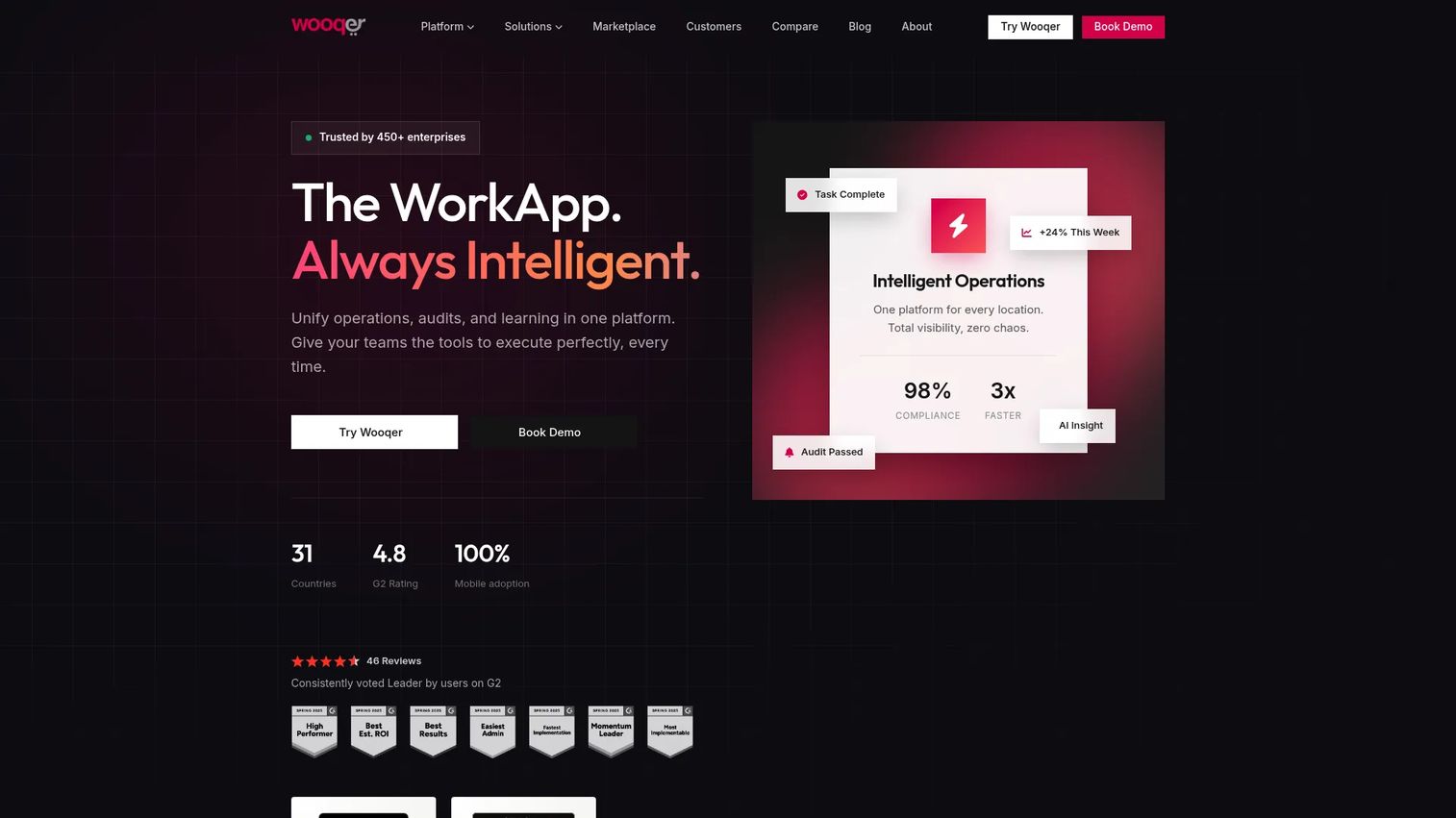
Wooqer is an AI-powered operations platform for multi-location retail, restaurant, banking, and manufacturing organizations. Its core design is a no-code workflow builder that turns operational processes into role-specific workapps. Audits, task checklists, training sequences, and field evidence workflows are all built from the same configurable environment, with offline mobile operation for locations with unreliable connectivity.
Best for: Retail and franchise operators that need adaptable workflows across tasks, audits, training, field data collection, and evidence-based compliance.
Key features
- No-code workflow and audit builder with scoring and conditions
- Task checklists with assignment, escalation, and completion tracking
- Photo and geofenced evidence capture with corrective actions
- Training and certification workflows with tracking
- Offline mobile operation and real-time analytics dashboards
Why choose Wooqer: Flexibility is its primary differentiator. It fits operating models with many distinct process types, including visual merchandising, opening procedures, maintenance checks, field visits, and manager attestations, when a single rigid template would fall short. Ask the implementation team to build one live workflow during evaluation to confirm a non-technical operations owner can maintain it post-launch.
Wooqer pricing: Pricing is tailored to location count and workflow scope. Contact Wooqer for a quote based on your operational footprint.
G2 rating: 4.7/5 (verified October 2026).
5. Mitti
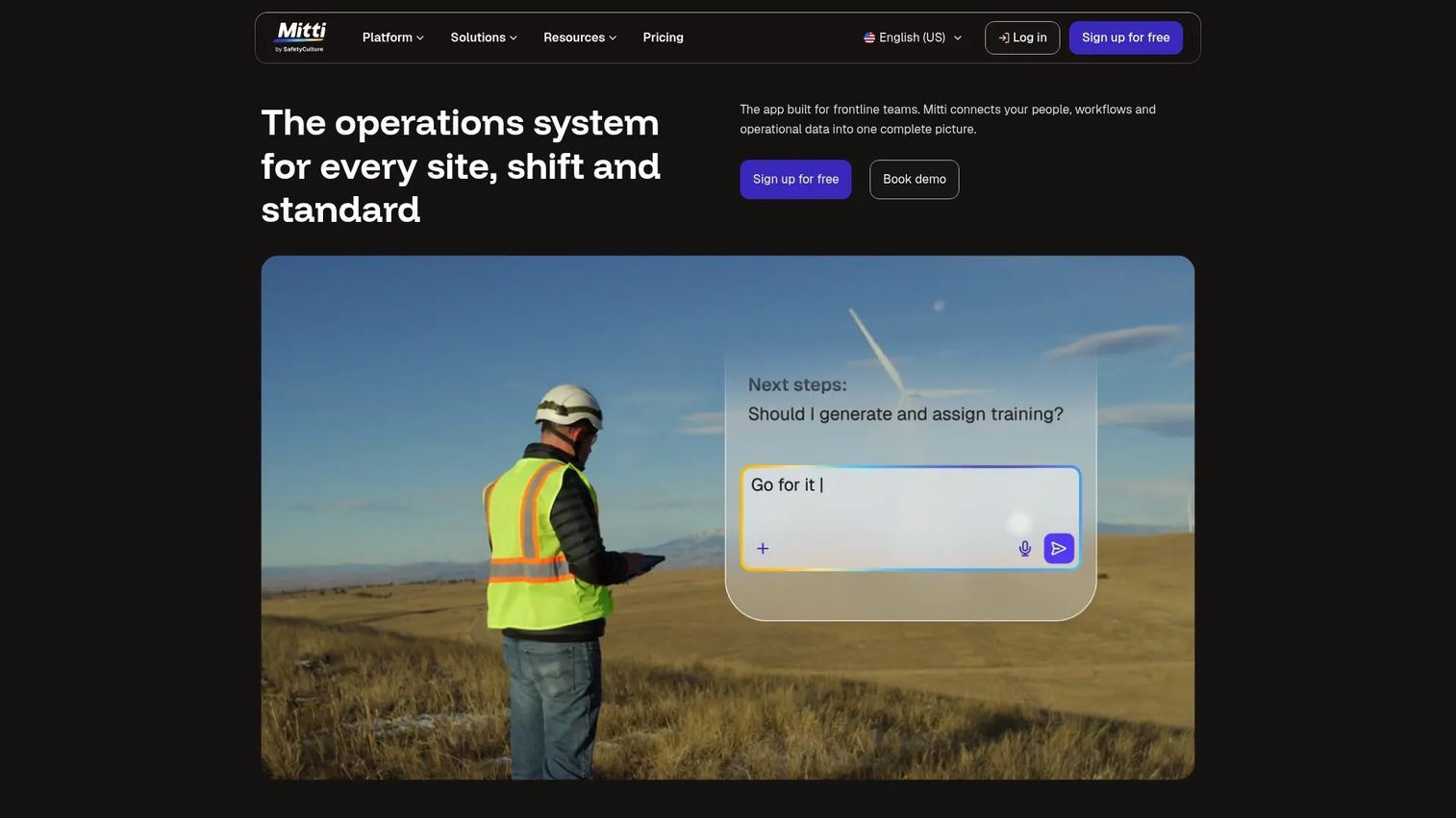
Mitti is a workplace operations platform covering inspections, task management, incident reporting, asset maintenance, training, and analytics. It serves frontline and multi-site organizations across retail, construction, healthcare, and manufacturing. For retail buyers, Mitti offers an accessible entry point into the category with clear plan tiers, a free option for small teams, and enterprise capabilities that can scale as the deployment grows.
Best for: Growing retail operations that need mobile tasks, inspections, issue reporting, and basic analytics with a free starting tier before committing to a larger contract.
Key features
- Mobile inspections with templates, scoring, and connected workflows
- Task management and issue reporting with escalation
- Training and certification tracking
- Asset maintenance and management
- Analytics, benchmarking, and integrations on paid tiers
Why choose Mitti: The free plan and transparent Premium pricing set it apart in a category dominated by quote-only enterprise contracts. It works well for teams validating adoption before standardizing across every location. Use the free tier to measure completion rates, audit consistency, and manager engagement in a real environment. The free plan supports up to 10 users and includes inspections, tasks, issue reporting, and basic analytics.
Mitti pricing: Free plan available. Premium costs $24 per seat per month billed annually, or $29 per seat per month billed monthly. Enterprise pricing is custom. Multi-site teams can ask about fixed location-based pricing.
G2 rating: 4.6/5 (verified October 2026).
6. Zebra Workcloud Task Management
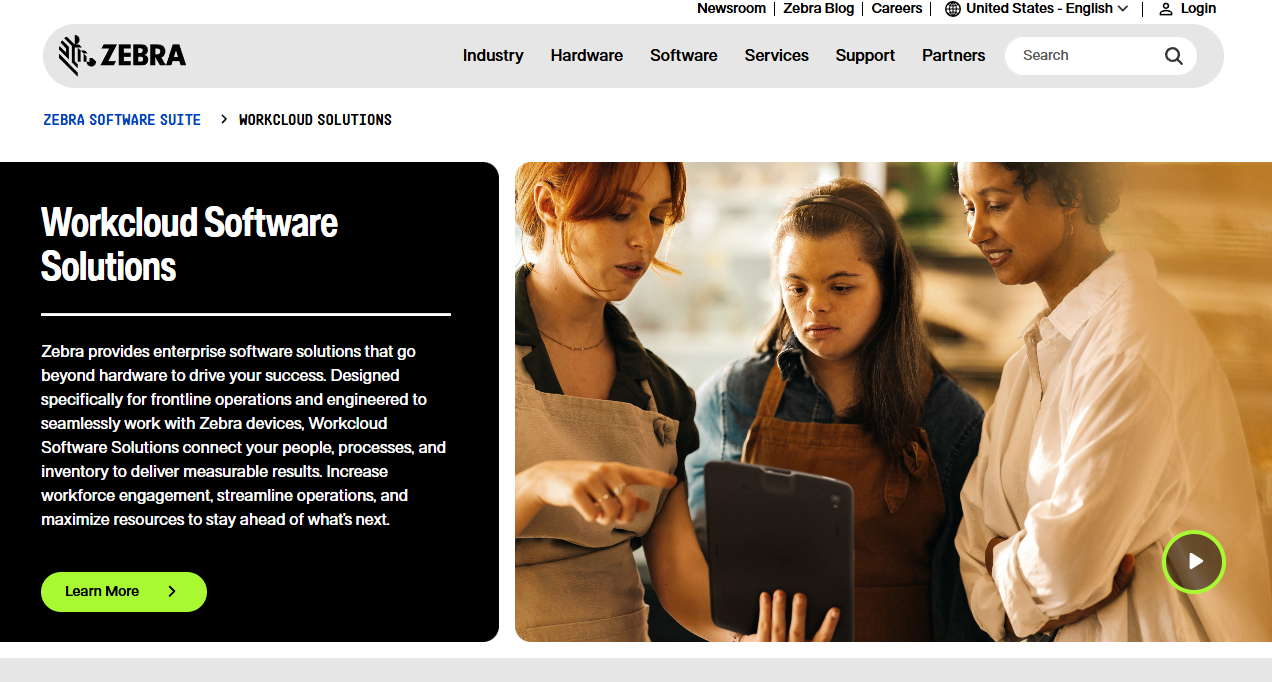
Zebra Workcloud Task Management is an enterprise retail task platform within Zebra's broader workforce optimization portfolio. It uses AI-powered prioritization to deliver real-time operational tasks to frontline teams, aligning daily store execution with corporate goals and live operational data. The product includes digital checklists, real-time audits, and guided walk functionality, and connects with Zebra's device, inventory, and store-technology infrastructure.
Best for: Large retailers already using, or actively evaluating, Zebra's broader retail and workforce technology portfolio.
Key features
- AI-powered task prioritization using corporate goals and live data
- Real-time automated task delivery to frontline devices
- Digital checklists and real-time audits
- Guided walks for store visits and compliance checks
- Integration with Zebra workforce optimization suite
Why choose Zebra Workcloud Task Management: Portfolio alignment is its core advantage. It fits a retailer that needs retail task management connected to broader workforce, device, inventory, or store-technology initiatives already running on Zebra infrastructure. For a smaller chain without existing Zebra investment, assess implementation scope before assuming the suite matches the problem.
Zebra Workcloud Task Management pricing: Sold through enterprise quote-based agreements. Pricing, licensing structure, and module dependencies are not posted publicly. Contact Zebra directly for commercial terms.
G2 rating: 4.1/5 (verified October 2026).
7. PAZO
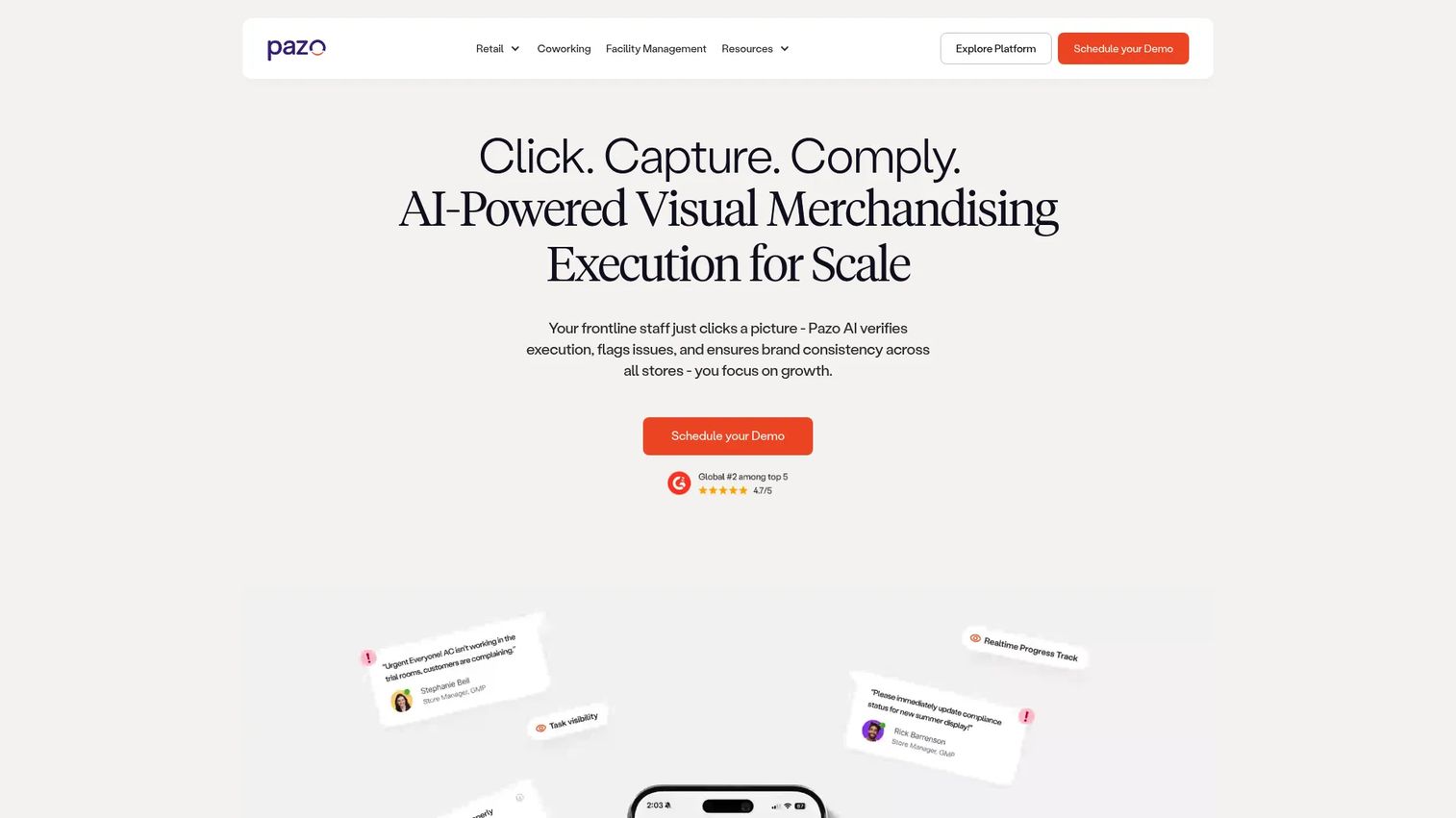
PAZO is an AI-powered, mobile-first operations platform with a strong visual-compliance orientation. It suits retailers, franchise operators, and quick-service teams where product placement, display standards, shelf execution, and field evidence matter as much as task completion. The platform combines smart checklists, AI-supported image analysis, geofencing, issue management, and a no-code workflow builder.
Best for: Retail, franchise, and quick-service teams that need mobile checklists, visual verification, and location-level operational control as core functionality.
Key features
- Smart checklists with geofencing and real-time photo capture
- AI-powered visual verification and planogram compliance checks
- Issue management with ticketing, SLA tracking, and auto-escalation
- Customizable dashboards with real-time updates and drill-down analytics
- No-code workflow builder with conditions and approval routing
Why choose PAZO: The central distinction between "task marked complete" and "task visibly completed to standard" is where PAZO earns its place. For visual merchandising, planogram checks, and store-condition programs where a checkmark is insufficient, the photo verification and AI analysis capability creates accountability that standard task tools cannot match.
PAZO pricing: Plans are customized by location count, user count, and feature selection. A 15-day free trial is available on request. Contact PAZO for a quote across Silver, Gold, or Enterprise tiers.
G2 rating: 4.7/5 (verified October 2026).
8. Crunchtime Ops Execution
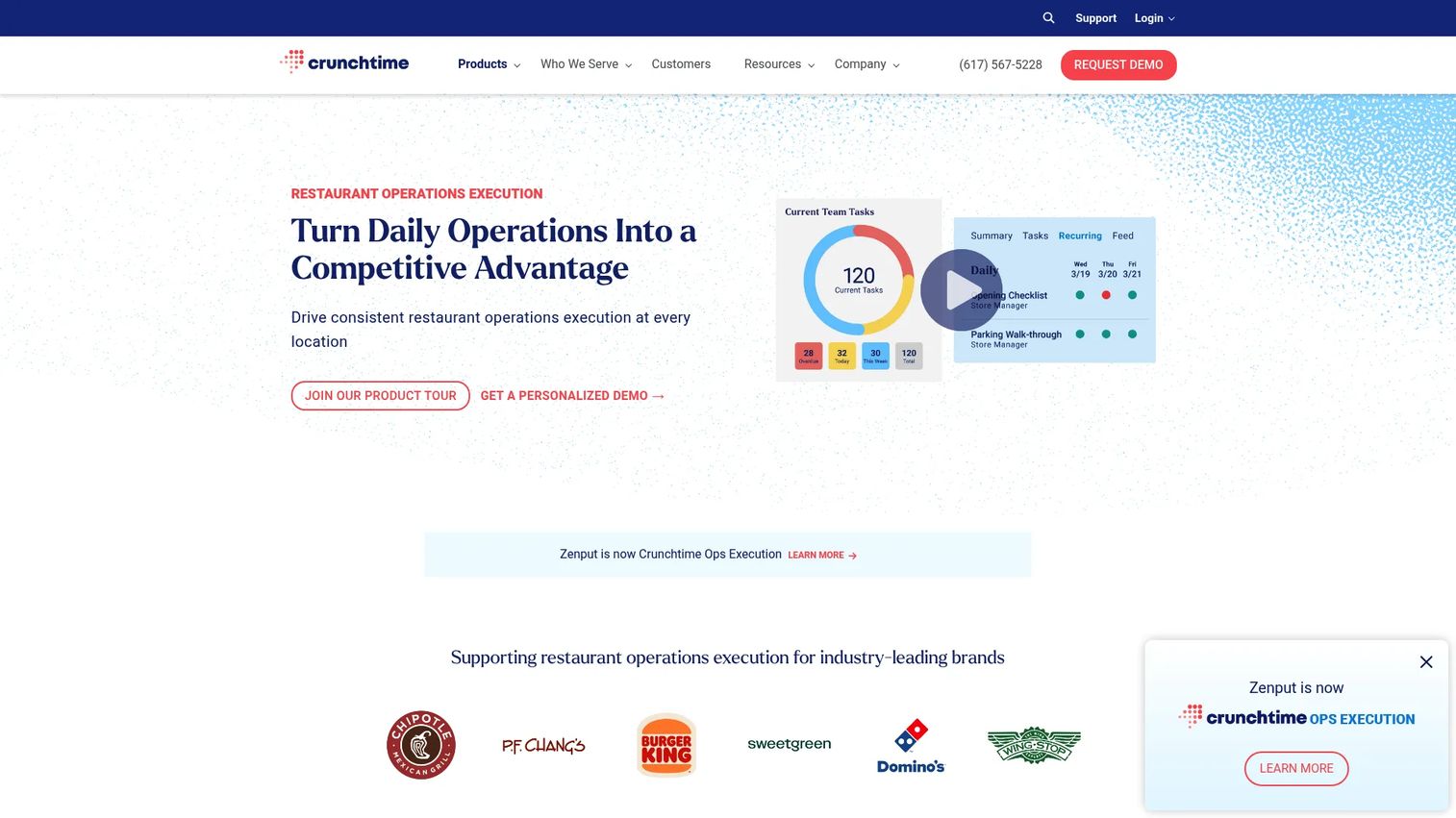
Crunchtime Ops Execution is the current product name for the former Zenput operations execution platform, now part of the Crunchtime restaurant operations suite. It helps multi-unit restaurants, convenience operators, and franchise brands manage daily tasks, audits, food safety workflows, brand-standard compliance, and real-time operational visibility across locations. Its integration with Crunchtime Kitchen lets temperature checks and food safety tasks appear directly on kitchen display screens.
Best for: Restaurant, franchise, grocery-adjacent, and convenience operators running repeatable daily procedures tied to broader operations management.
Key features
- Task management, daily checklists, and recurring or ad hoc work tracking
- Audits, brand-standard compliance, and incident management
- Food safety workflows including temperature monitoring and labeling
- Real-time reporting and visibility into location performance
- Automated corrective actions and follow-up task routing
Why choose Crunchtime Ops Execution: Operational routine depth is its primary advantage. It fits teams running many repeatable location-level procedures and needing task execution connected to labor, inventory, kitchen, or restaurant systems. For general merchandise retailers, validate merchandising and non-food workflow support during evaluation before committing.
Crunchtime Ops Execution pricing: Pricing requires a sales conversation. G2 lists Team, Company, and Enterprise tiers. Contact Crunchtime for current commercial terms and minimum contract scope.
G2 rating: 4.6/5 (verified October 2026).
Considerations when choosing retail task management software
Adoption on the shop floor
A strong dashboard means little if frontline workers avoid the app. Ask whether tasks can be completed quickly on shared devices during a busy shift. Confirm whether the daily work queue is clear enough that an associate can open the app and know exactly what to do. Retail associates have short shifts, no desk time, and limited tolerance for friction. If the tool requires more than a few taps to log a completed task, adoption will suffer.
Proof of completion: What counts as done?
For some tasks, a checkbox is sufficient. For merchandising, food safety, pharmacy, and compliance work, you need photos, signatures, location data, or manager approval. Decide the verification standard before evaluating tools. Platforms that support photo capture and exception routing turn failed evidence into corrective actions automatically, which is what makes verification operationally useful rather than just a record.
Pricing model and rollout economics
Compare per-user pricing, per-location pricing, and module-based pricing across your actual rollout scenario. A platform priced affordably for 50 managers can become expensive when extended to every frontline associate across 300 locations. Request a total cost estimate for your full rollout, including implementation, training, and any required integrations, not only the software license.
Integration and long-term ownership
Identify the systems that must connect to the task platform: Workforce management, HR, learning, point of sale, business intelligence, or facilities. Confirm whether integrations are native or require professional services. Assign ownership of the platform before implementation begins. A platform that requires ongoing IT involvement to maintain creates a bottleneck that founders and new operations leaders will feel within the first quarter.
Reporting that changes behavior
Completion rates alone are weak evidence of operational health. Look for visibility into late tasks, recurring failure patterns, location-level variance, audit scores, and issue resolution time. The best analytics platforms surface where standards are slipping, not just where work was logged.
Conclusion
Retail task management software earns its place when it replaces the weekly chase with a measurable operating rhythm. The right platform tells every store what matters today, gives frontline employees a workable mobile queue, captures evidence of execution, and shows headquarters where standards are slipping.
For a retail-specific execution layer, Zipline and YOOBIC are the strongest starting points for multi-location operators. WorkJam suits large enterprises where task management needs to sit inside a broader frontline workforce experience. Wooqer fits operators with diverse operational process types that require configurable workflows. Mitti is the clearest entry point for teams that want transparent pricing and a free plan to validate adoption. PAZO is worth close attention when visual compliance drives the business case. Zebra Workcloud Task Management fits enterprise environments with existing Zebra infrastructure. Crunchtime Ops Execution is especially relevant for restaurant and franchise operations.
The next step is concrete: Choose one recurring workflow, such as promotional setup, opening checks, or visual merchandising, and run it through two shortlisted platforms before committing to a chain-wide rollout.
Start your journey with Guideflow today!
FAQs
Retail task management software helps multi-location retailers plan, assign, complete, verify, and report on store work. It replaces disconnected emails, spreadsheets, and paper checklists with a shared workflow for headquarters, field leaders, store managers, and frontline employees. The best platforms also include verification workflows, audit checklist capabilities, and location-level compliance reporting.
Retail operations teams use it most often, but the platform typically serves several groups simultaneously. Headquarters assigns work and tracks completion, field teams audit execution, store managers prioritize and manage daily workloads, and frontline associates complete tasks through a mobile app or shared device. Enterprise buyers often add HR, workforce management, and learning connections as the deployment scales.
Look for recurring tasks, role-based assignment, mobile completion, checklists, photo verification, audit trails, escalations, location-level dashboards, and integrations with the systems your stores already use. The right feature set depends on whether the main operational problem is campaign execution, compliance verification, training, food safety, or daily store management. A checklist management capability alone is usually insufficient for multi-location retailers.
Implement it when managers spend more time following up than managing, store standards vary visibly by location, promotion rollouts miss deadlines, or headquarters cannot verify work without calling stores. A pilot on one specific workflow, such as on-time campaign setup or audit completion, is useful when you need a measurable outcome to justify the broader rollout to your board or operations leadership team.
Yes. Many platforms combine task assignment with digital audits, checklists, corrective actions, photo evidence, approvals, and reporting. Depth varies significantly across vendors. Regulated operations, including pharmacy, food service, and convenience retail, should validate audit trails, permissions, evidence retention, and exception routing during evaluation rather than assuming those capabilities are included in the base tier.
Photo verification adds evidence to a completed task, which matters when leadership must confirm a display, safety check, shelf condition, or promotional setup rather than relying on a checkbox. The most operationally useful workflows route failed photo evidence automatically into corrective tasks, so exceptions are addressed rather than logged and forgotten. This is where platforms like PAZO, with AI image analysis, add measurable accountability beyond simple task tracking.
Costs vary by vendor and rollout model. Mitti offers a free plan for teams of up to 10 and a Premium tier at $24 per seat per month billed annually. Most enterprise retail platforms price by store location count, user count, selected modules, and contract scope, and require a quote. Budget for implementation, integrations, training, and change management alongside the software license. A platform that looks affordable for 50 managers can cost significantly more when extended to every frontline associate across hundreds of locations.
Many enterprise platforms support integrations with workforce management, HR, learning, point of sale, facilities, and business intelligence systems. Confirm which integrations are native, which require professional services, and whether data sync timing matches your operational needs. Zebra Workcloud Task Management, for example, is built to connect directly with Zebra's broader workforce optimization suite. WorkJam includes its own scheduling and self-service modules as part of the core platform.