Sensors generate data faster than most teams can clean, store, and explain it. A single site can push thousands of readings per minute across mismatched protocols, gateways, and vendors. The hard part is not collecting the data. It is turning fragmented feeds into something you can query, chart, alarm on, and defend in front of a technical buyer.
That matters because the volume is climbing fast. The global IoT sensors market is forecast to rise from USD 31.1 billion in 2026 to USD 549.2 billion by 2035, at a CAGR of 37.6%, according to Global Market Insights (2025). More sensors mean more streams, more schemas, and more ways for a fragile custom pipeline to break at the worst possible moment.
Choosing the wrong platform creates downstream pain you feel for years. Dashboards lag. Reporting breaks after a firmware update. Interoperability gaps force manual exports. For presales teams supporting technical validation, that is the difference between a smooth proof of concept and a stalled deal. If you build interactive product experiences for buyers, you already know how much a clean data visualization layer and reliable analytics platforms drive roi. The same logic applies here.
This is a practical shortlist, not a theory piece. Below you get a real comparison of eight sensor data platforms, from industrial data unification to environmental monitoring, so you can match a tool to how you actually ingest, store, and present sensor data.
What's inside
This guide compares sensor data platforms for teams that need ingestion, processing, storage, integration, and visualization in one place. It is written for presales engineers, product teams, and operations leads who have to prove technical fit before a purchase.
We selected tools based on four criteria: platform fit for your data sources, interoperability across protocols and systems, analytics and visualization depth, and deployment model (cloud, on-prem, or hybrid). We also weighed buyer proof signals like public pricing and documented use cases. The list spans environmental, infrastructure, industrial, and general IoT tools so you can pattern-match to your own workload.
TL;DR
- Best for industrial and infrastructure data: Capture, for unifying PLC, SCADA, MES, and ERP feeds at scale.
- Best for multi-protocol IoT middleware: MobiusFlow, for normalizing sensors, systems, and protocols into one data layer.
- Best for ecosystem and environmental restoration: Dendra, for AI-driven insight across large field sites.
- Best for infrastructure condition monitoring: Bentley sensemetrics, for structural sensor data, alarms, and collaboration.
- Best for LoRaWAN environmental sensing: Decentlab, for Swiss-made devices plus a data access layer.
- Best for remote, off-grid monitoring: Spero Analytics, for solar-powered sensing without cellular coverage.
- Best for configurable monitoring and compliance: Telemetry2U, with transparent per-device pricing and a free trial.
- Best for makers and small IoT teams: SensorOcean, with a free tier and MQTT-based connectivity.
What is a sensor data platform?
A sensor data platform is software that collects, ingests, processes, stores, and visualizes data from physical sensors so teams can monitor conditions, trigger alerts, and analyze trends over time.
The platform manages a full lifecycle. Sensors capture readings. The platform ingests those readings through gateways or APIs. It validates and processes the raw stream, then stores it, often as time series data. From there, teams access it through dashboards, alerts, exports, and analytics.
Most buyers evaluating a sensor data management platform should expect these capabilities:
- Ingestion across protocols: support for MQTT, LoRaWAN, Modbus, HTTP, and vendor gateways so sensor data ingestion is not a bottleneck.
- Validation and processing: filtering, deduplication, unit normalization, and anomaly detection on real-time sensor data.
- Sensor data storage: durable, queryable time series storage that scales with device count.
- Visualization and dashboards: a sensor data dashboard layer for live and historical views.
- Alerting: threshold and anomaly alerts by email, SMS, or webhook.
- Integration: an API and connectors for sensor data integration into external systems.
- Deployment flexibility: cloud, on-prem, or hybrid to match security and latency needs.
The strongest platforms treat sensor data analytics and sensor data visualization as first-class features, not afterthoughts. That is what turns a raw feed into a decision.
When to use a sensor data platform
Centralize fragmented sensor feeds
When data arrives from too many devices, sites, or vendors to manage by hand, a platform becomes the single source of truth. If you are exporting CSVs from three gateways and stitching them in spreadsheets, you have outgrown the manual approach. A sensor data management platform normalizes those feeds into one schema you can query and share.
Monitor assets in real time
Infrastructure health, utility networks, environmental conditions, and factory operations all depend on knowing what is happening now, not last week. Real-time sensor data with live dashboards and alerts lets teams catch a failing pump, a rising water level, or a temperature excursion before it becomes an incident.
Build reporting and analytics on sensor streams
When you need historical analysis, anomaly detection, and repeatable reporting, a platform pays off. Teams running compliance reports, trend analysis, or predictive maintenance need durable storage plus a sensor data analytics layer. This is also where an environmental monitoring platform proves its worth by turning years of readings into defensible reports.
Comparison table
Here is a side-by-side view of all eight tools. Pricing and ratings reflect verified public sources where available. Where a vendor does not publish a price or a third-party rating, the field is left blank rather than estimated.
| # | Product | Intent | Key differentiation | Pricing | G2 rating |
|---|---|---|---|---|---|
| 1 | MobiusFlow | Multi-protocol IoT middleware | Normalizes sensors, systems, and protocols into one layer | Usage and object-based | - |
| 2 | Dendra | Environmental and ecosystem management | AI-driven ecosystem insight at scale | Contact sales | - |
| 3 | Bentley sensemetrics | Infrastructure condition monitoring | Sensor data, alarms, and collaboration for assets | Contact sales | - |
| 4 | Decentlab | LoRaWAN environmental sensing | Swiss-made devices plus data access hub | Quote request | - |
| 5 | Spero Analytics | Remote, off-grid monitoring | Solar-powered, no cellular coverage needed | Contact sales | - |
| 6 | Telemetry2U | Configurable monitoring and compliance | Per-device pricing with alerts and control | From $15/device/year | - |
| 7 | SensorOcean | Maker and small-team IoT | MQTT connectivity with a free tier | Free, paid from $39/mo | - |
1. MobiusFlow
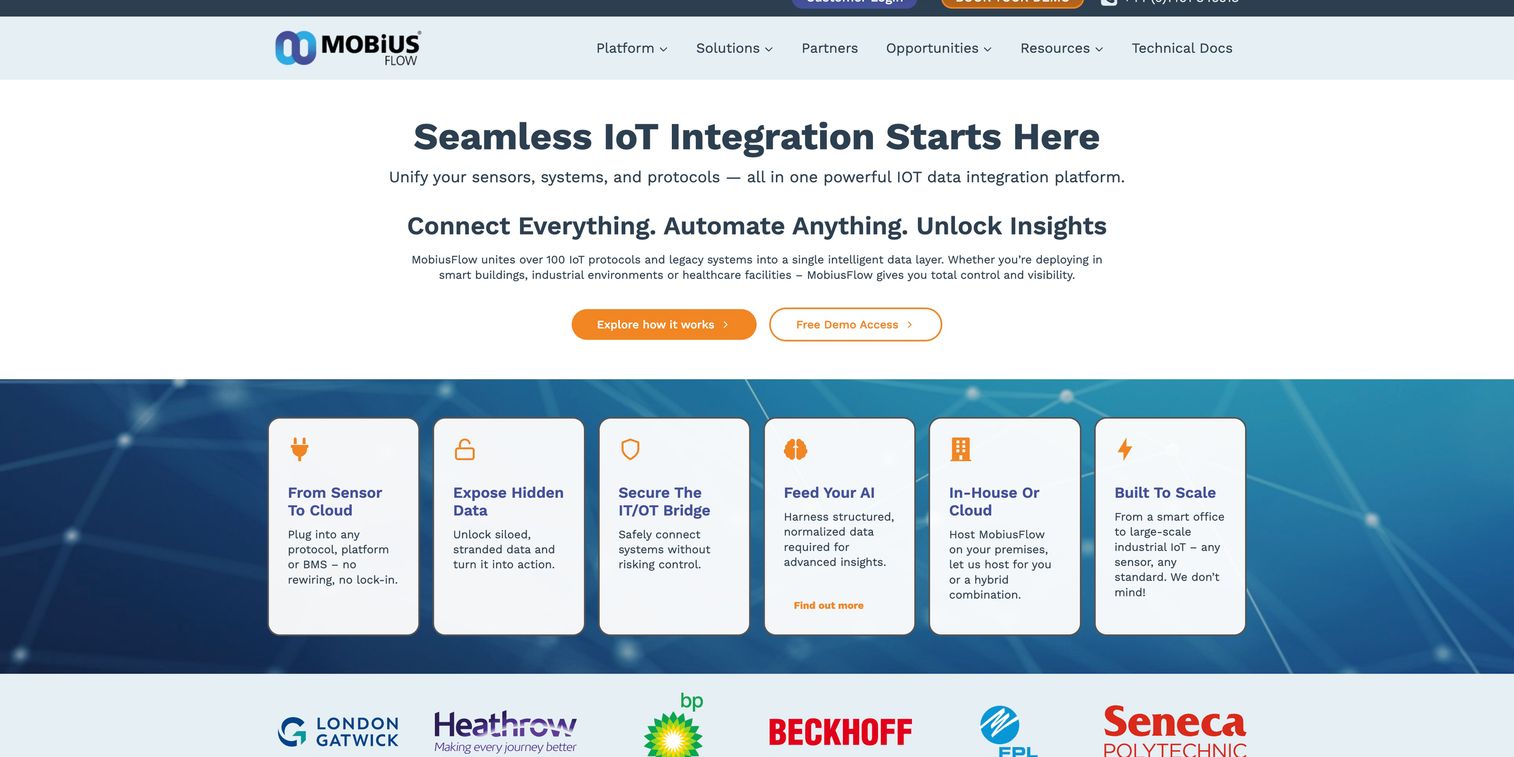
MobiusFlow is an IoT data integration middleware platform that connects, normalizes, controls, and visualizes device data. It sits between your sensors and your applications, uniting protocols, systems, and legacy equipment into a single data layer. For organizations blending old building management systems with modern IoT devices, that orchestration is the core job.
MobiusFlow ships as a set of products, including Engine, Toolbox, View, and Manager, that cover ingestion, transformation, visualization, and device management. That modular design is useful for integrators and enterprise teams who want to assemble a pipeline rather than adopt a monolith. Evaluate the protocol coverage and orchestration depth against your specific device mix during your proof of concept.
Best for: Enterprises and integrators consolidating multi-protocol IoT and legacy equipment into one data layer.
Key strengths
- Protocol flexibility: Connects sensors, systems, and protocols into a unified data layer.
- Device management: Manager and related products handle control and orchestration at scale.
- Flexible pricing model: Usage-based and monthly object-based options with volume discounts.
Why choose MobiusFlow: Choose it when interoperability is the deciding factor and you need middleware that speaks many protocols. It fits teams standardizing data across buildings, sites, or industrial estates. The evaluation question is scope: map every protocol and system you need to connect before committing, so the orchestration layer matches your reality.
MobiusFlow pricing: The vendor confirms a subscription and usage-based model, including pay-per-data-point, monthly object-based plans, and volume discounts with custom enterprise pricing. No public numeric starting price is displayed on the pricing page, so confirm figures directly with the vendor during evaluation.
2. Dendra
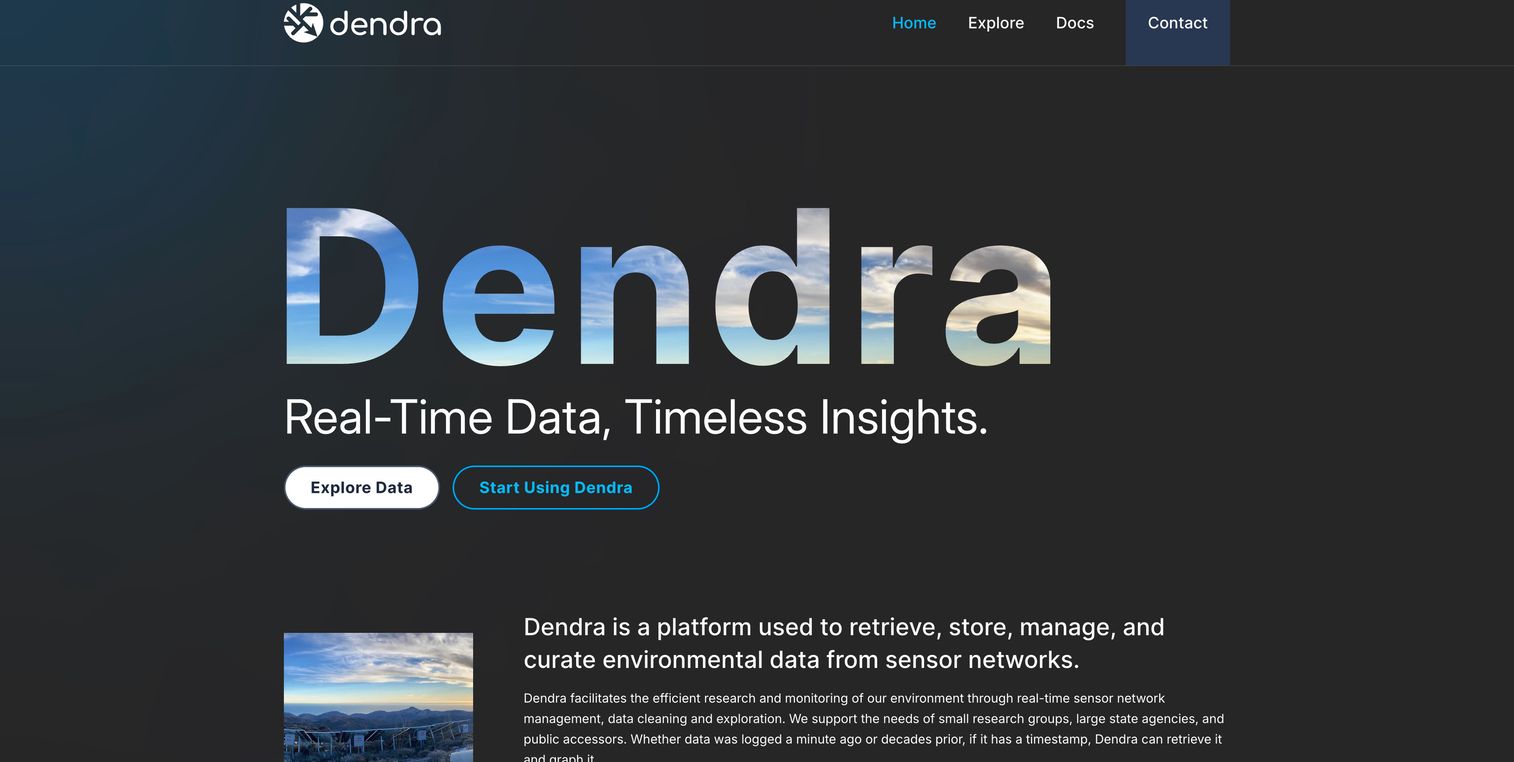
Dendra is an AI-powered ecosystem restoration and environmental management platform for large-scale sites. It goes beyond passive sensor collection into active ecosystem insight, combining aerial data, drone-based seeding, and AI-driven reporting. For teams running restoration or long-term environmental observation programs, it turns field data into management decisions.
Dendra fits research groups, restoration enterprises, and land managers who need to retrieve, store, manage, and curate sensor network data across wide areas. The platform's Optical Intelligence and AI reporting are the differentiators, aimed at making sense of ecosystems rather than single readings. If your buyer's job is measuring change across thousands of hectares, this is a strong fit.
Best for: Enterprises and research teams running large-scale ecosystem restoration and monitoring.
Key strengths
- Optical Intelligence: AI-driven ecosystem management from aerial and sensor data.
- Ecosystem reporting: Automated insight and reporting on environmental change over time.
- Aerial seeding: Drone technology that ties monitoring to active restoration.
Why choose Dendra: Choose it when environmental monitoring means large sites, long timelines, and a need for curated, defensible data. It fits programs where sensor data curation and real-time environmental insight drive funding and compliance decisions. The strength is scale and AI-assisted analysis, not lightweight single-sensor dashboards.
Dendra pricing: No public pricing is listed. The site directs visitors to book a demo or contact sales, and terms indicate fees are set in an order form or statement of work. Request a scoped quote based on your site size and data volume.
3. Bentley sensemetrics
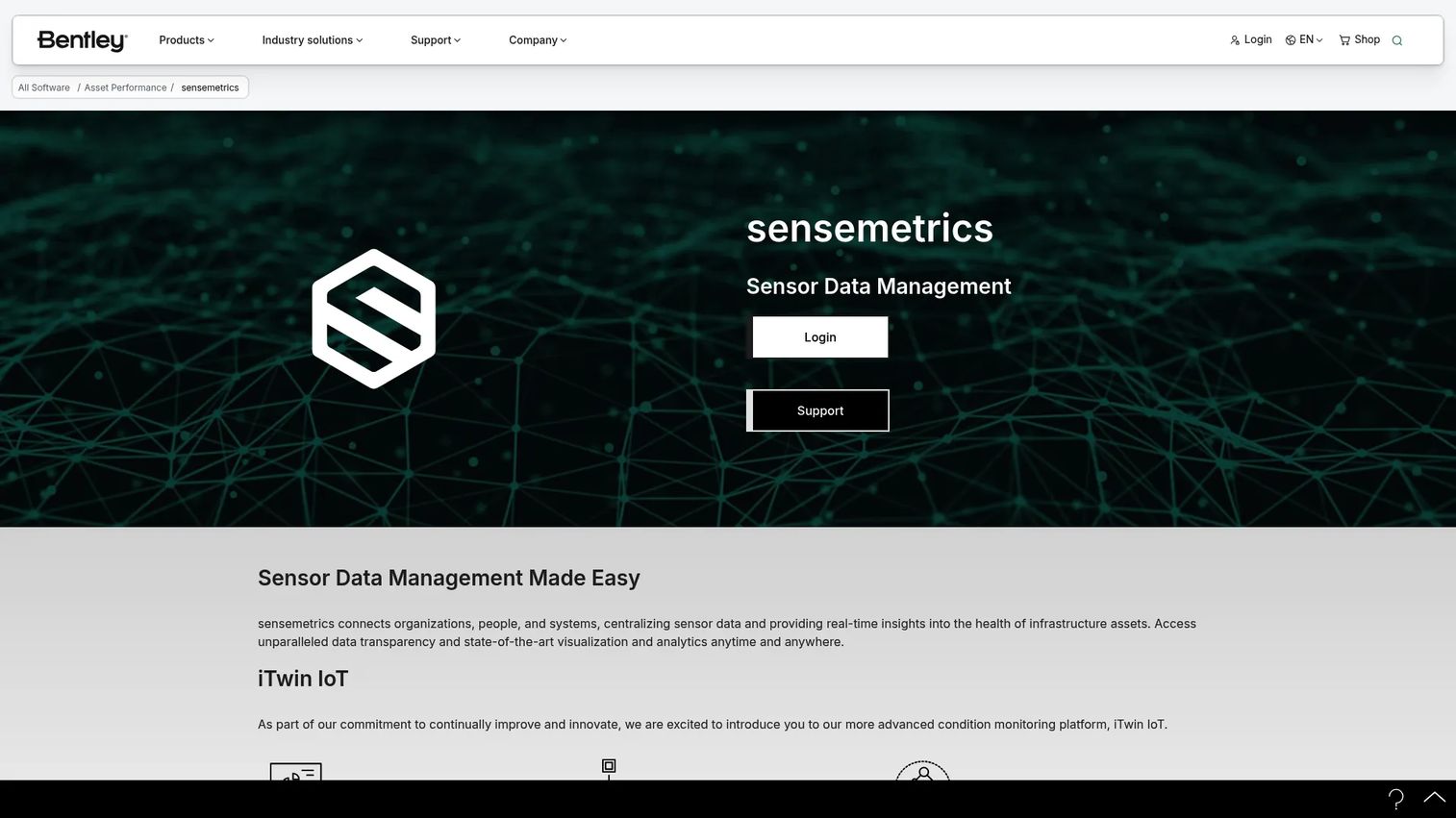
Bentley sensemetrics is sensor data management software built for infrastructure monitoring and insight. It centralizes sensor data from structural assets, then layers real-time visualization, analytics, alarms, and reporting on top. The platform connects organizations, people, and systems around a shared view of asset condition, which matters for teams managing bridges, dams, tunnels, and buildings.
Bentley sensemetrics is part of Bentley's infrastructure portfolio and connects to iTwin IoT for broader digital twin workflows. For presales teams selling into engineering and construction, the appeal is a purpose-built platform for condition monitoring rather than a generic IoT tool. Data acquisition, alarms, and collaboration are handled in one place.
Best for: Infrastructure and structural monitoring teams needing cloud-based sensor data management and condition monitoring.
Key strengths
- Centralized sensor data: Connects organizations, people, and systems around one data view.
- Real-time visualization: Live analytics for infrastructure assets and structural health.
- Alarms and reporting: Data acquisition, alerting, and collaboration built in.
Why choose Bentley sensemetrics: Choose it when your use case is structural or geotechnical monitoring and you want a platform designed for that domain. It fits bridge, dam, and building monitoring programs where alarms and reporting carry safety and compliance weight. The iTwin IoT connection is a plus for teams already invested in digital twins.
Bentley sensemetrics pricing: Public pricing is not shown on the product page, which points users to login, support, and iTwin IoT resources. Contact Bentley for a quote scoped to your asset count and monitoring requirements.
4. Decentlab
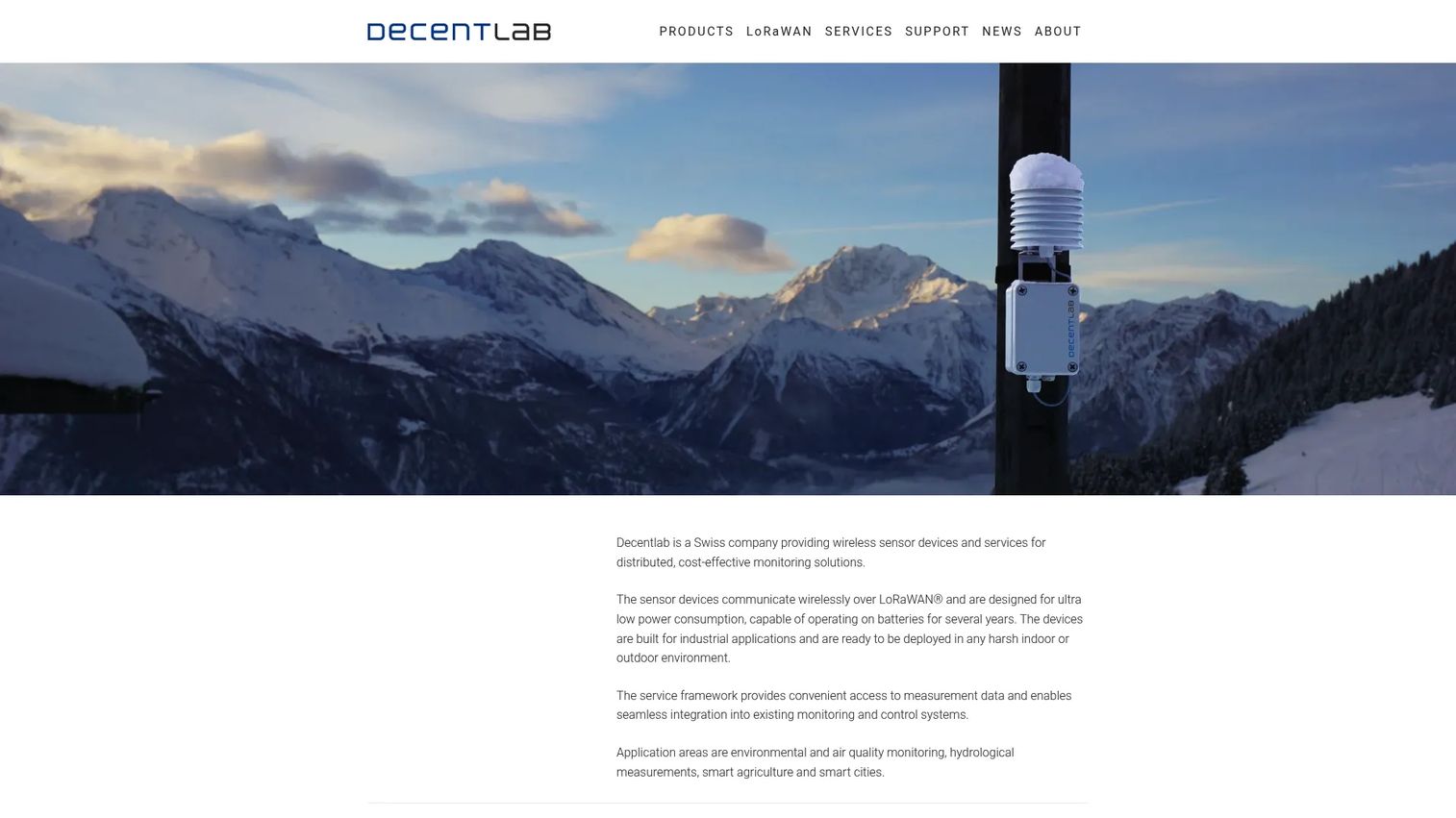
Decentlab pairs Swiss-made wireless LoRaWAN sensor devices with a data access layer, making it both a hardware and a platform choice. The Decentlab Data Access platform acts as a common hub for sensor data, with dashboards, CSV export, alerts, and API integration. That combination suits organizations that want ultra-low-power devices and a place to see the readings without building a stack from scratch.
Decentlab focuses on environmental monitoring across water, air, soil, and climate, with devices designed for years of battery operation. For LoRaWAN deployments, the data access hub integrates cleanly with third-party environments through its API, so you are not locked into a single interface. That flexibility matters when a buyer already runs their own analytics stack.
Best for: Organizations deploying industrial LoRaWAN environmental sensing that need reliable devices plus data access.
Key strengths
- LoRaWAN device range: Sensors for water, air, soil, and climate monitoring.
- Long battery life: Ultra-low-power devices built for multi-year operation.
- Data access hub: Dashboards, CSV export, alerts, and API for sensor data visualization.
Why choose Decentlab: Choose it when you want proven LoRaWAN hardware and a data access layer in one relationship. It fits environmental programs that value device reliability and open integration over a heavy proprietary platform. The API-first data access hub means your sensor data integration stays flexible.
Decentlab pricing: No public pricing is displayed. The site directs visitors to request a quote, which makes sense given the hardware plus platform bundle. Scope your device count and monitoring needs before requesting pricing.
5. Spero Analytics
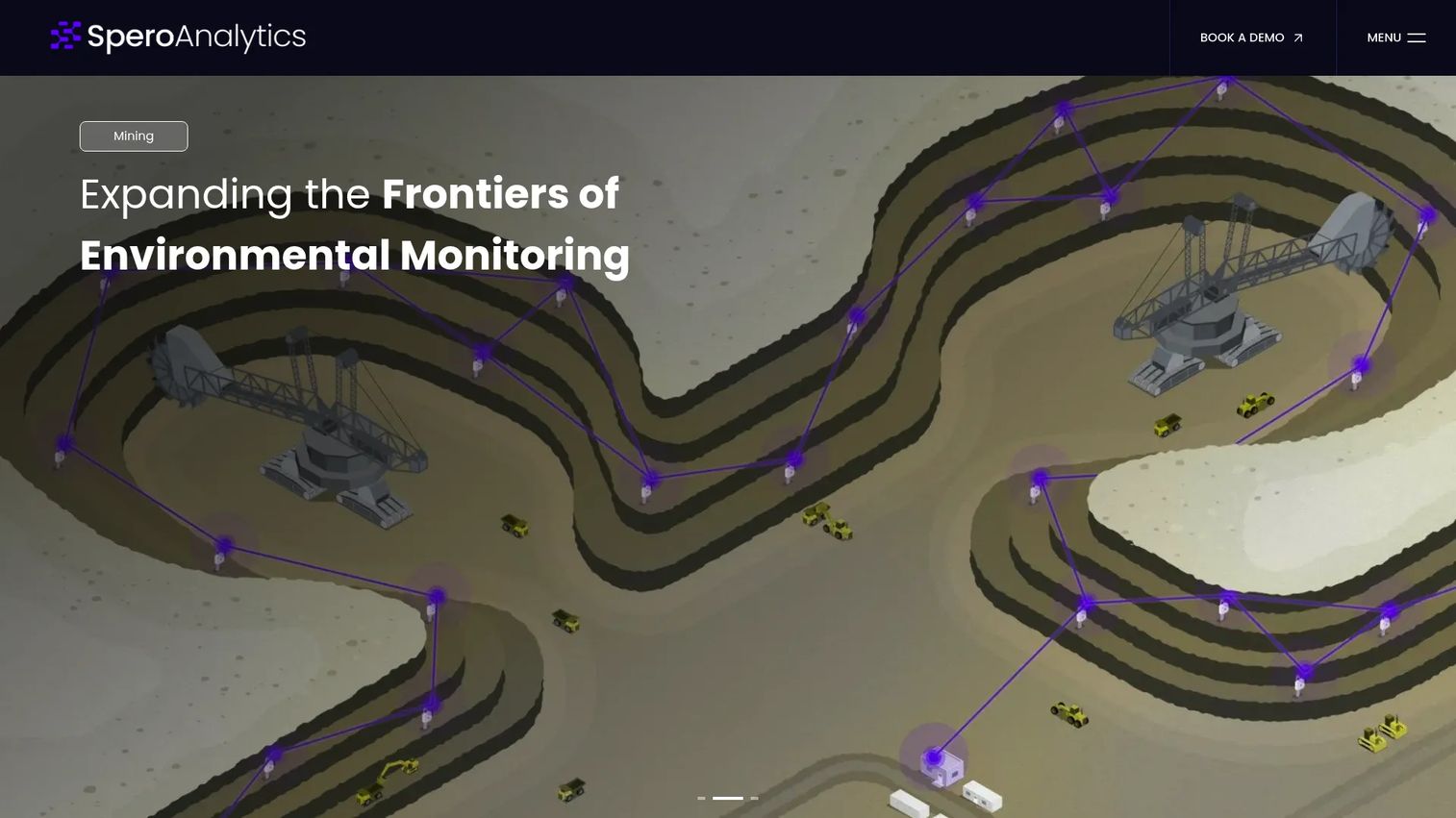
Spero Analytics is an environmental monitoring platform as a service built for remote and off-grid locations. It pairs managed hardware with remote health monitoring so field data keeps flowing without a cellular connection or grid power. For sites in infrastructure-poor areas, that managed model removes a lot of operational overhead.
Spero Analytics runs on solar power and does not require cellular coverage, which opens up monitoring in places most platforms cannot reach. The interactive dashboard surfaces alerts and historical readings, so teams get real-time sensor data and trend context in one view. Because the hardware health is monitored remotely, buyers spend less time maintaining the monitoring system itself.
Best for: Organizations needing uninterrupted environmental monitoring in remote, off-grid locations.
Key strengths
- No cellular required: Captures field data where connectivity is unavailable.
- Solar powered: Runs in off-grid locations without external power.
- Interactive dashboard: Alerts and historical readings in one managed view.
Why choose Spero Analytics: Choose it when your monitoring sites are remote and you want less operational burden on maintenance. It fits site monitoring and long-term field data capture where uptime matters more than a self-managed stack. The platform-as-a-service model shifts hardware health monitoring off your team's plate.
Spero Analytics pricing: No public pricing page or visible price was found; pricing appears to be demo or contact-based. Request a quote scoped to your number of sites and sensor types.
6. Telemetry2U
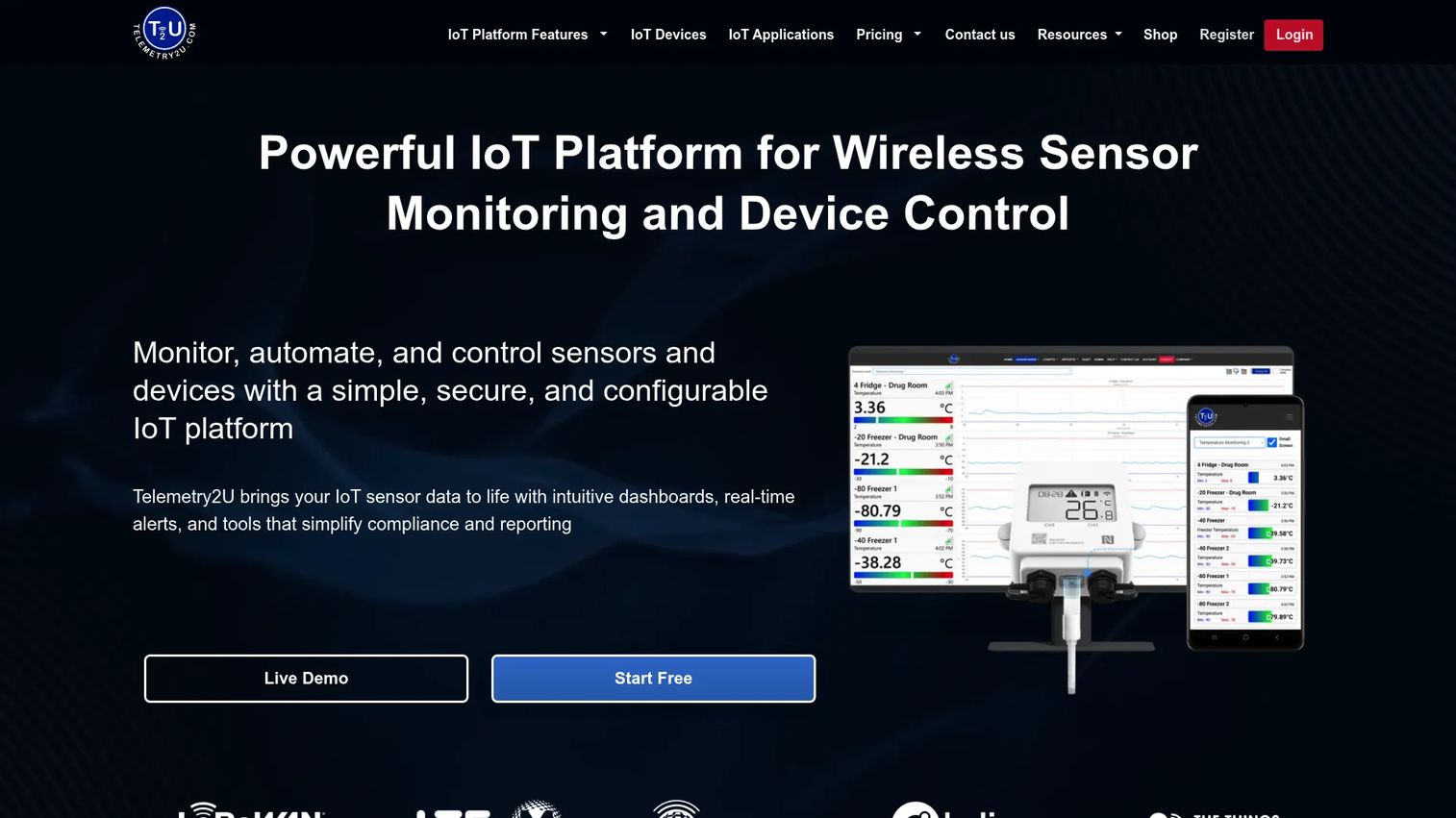
Telemetry2U is a cloud-based IoT platform for remote sensor monitoring, device control, alerts, automation, and compliance reporting. It handles single sensors or distributed fleets with built-in visualization and maintenance tools. The transparent per-device pricing and free trial make it one of the easier platforms to evaluate without a sales call.
Telemetry2U covers the practical monitoring workflow: real-time dashboards, alerts via email, SMS, and voice, plus device control and automation. For teams that need audit and compliance controls, those features are built in rather than bolted on. That combination suits operations teams who want configurable monitoring without heavy setup.
Best for: Organizations needing configurable IoT monitoring and control with compliance features.
Key strengths
- Multi-channel alerts: Notifications by email, SMS, and voice for real-time sensor data.
- Device control and automation: Manage and automate devices alongside monitoring.
- Compliance controls: Audit trails and API integration built into the platform.
Why choose Telemetry2U: Choose it when you want a straightforward deployment with public pricing and a free trial to validate fit fast. It fits teams scaling from a single sensor to a distributed fleet who value transparent costs. The compliance and audit features add value for regulated monitoring.
Telemetry2U pricing: Public pricing is annual and per device, varying by reporting frequency and storage duration. Tiers start from $15 per device per year for low-frequency monitoring, $60 for standard, and $150 for high-frequency. A 14-day free trial is available.
7. SensorOcean
SensorOcean is an IoT platform for building, monitoring, and automating sensor networks. It turns device data into usable applications through MQTT connectivity, dashboards, and workflow automation. With a GraphQL API, webhooks, and both cloud and edge deployment, it serves as a flexible application layer for sensor-driven use cases.
SensorOcean fits makers, startups, and small teams building IoT applications, especially those who want to start free and scale into paid tiers. The workflow automation with rules and scripts lets teams act on sensor data, not just watch it. The free Nebula plan and clear paid tiers make it easy to prototype before committing.
Best for: Makers, startups, and small teams building IoT sensor-network applications.
Key strengths
- MQTT connectivity: Standard protocol connection for sensors and networks.
- Workflow automation: Rules and scripts to act on incoming sensor data.
- Developer-friendly: GraphQL API, webhooks, and cloud or edge deployment.
Why choose SensorOcean: Choose it when you want a low-cost entry point and a developer-friendly application layer. It fits early-stage IoT projects that need dashboards and automation without enterprise pricing. The free tier plus MQTT and API support make it a practical starting point for prototyping.
SensorOcean pricing: The free Nebula plan is available at no cost. Paid plans include Supernova at $39/mo ($36/month billed yearly), Constellation at $99/mo ($92/month yearly), and Galaxy at $299/mo ($277/month yearly). Custom solutions are also offered, and access is by request.
How to choose the right sensor data platform
Before you commit, run every shortlisted tool through the same checklist so you compare like for like.
Match the platform to your data sources
Your sensors and protocols dictate the shortlist. Industrial teams with PLC and SCADA need different ingestion than a LoRaWAN environmental network. List every protocol, gateway, and system you must connect, then confirm coverage during a proof of concept before signing.
Test interoperability, not just features
A feature list means little if the API cannot export to your existing stack. Check whether the platform offers an open API, standard protocols like MQTT, and clean sensor data integration into your analytics and reporting tools. Interoperability is where fragile builds break.
Weigh deployment model against security needs
Cloud, on-prem, and hybrid each carry different security, latency, and cost tradeoffs. Regulated environments or low-latency control loops often push toward on-prem or edge. Confirm the deployment options match your IT and compliance requirements early, since this often decides the whole evaluation.
Validate analytics and visualization depth
Ingestion is table stakes. The differentiator is what you can do with the data: dashboards, anomaly detection, historical analysis, and exportable reports. Push the sensor data dashboard and alerting features hard during a trial to confirm they meet your reporting needs.
Conclusion
The right sensor data platform depends entirely on your data sources and deployment reality. For industrial and infrastructure data unification, Capture leads on breadth of source coverage. For multi-protocol middleware, MobiusFlow handles orchestration across sensors and legacy systems. Dendra and Spero Analytics fit environmental and remote monitoring, while Bentley sensemetrics owns structural condition monitoring. For LoRaWAN environmental sensing, Decentlab pairs devices with a flexible data access hub. Telemetry2U and SensorOcean offer the most transparent entry points, with public pricing and free options for teams that want to validate fit fast.
Your next step is simple: map your protocols, sites, and reporting needs, then run a proof of concept with the two or three tools that match. Confirm ingestion, interoperability, and dashboard depth against real data before you commit. If you also build interactive product experiences to prove value to buyers, Guideflow can help you show how your platform handles sensor data in a guided, self-serve walkthrough.
Start your journey with Guideflow today!
FAQs
A sensor data platform is software that collects, ingests, processes, stores, and visualizes readings from physical sensors. It turns raw device output into queryable time series data, dashboards, alerts, and reports. Teams use it for monitoring, historical analysis, and technical validation across industrial, environmental, and infrastructure use cases.
Look for multi-protocol ingestion, data validation and processing, durable time series storage, dashboards, alerting, and an open API for sensor data integration. Strong platforms also offer anomaly detection and flexible deployment. If a tool treats sensor data analytics and sensor data visualization as core features rather than add-ons, that is a good sign.
An IoT data platform is broader, often covering device provisioning, connectivity management, and application development. A sensor data platform focuses on the data lifecycle: ingestion, storage, visualization, and analytics of sensor readings. Many tools overlap, so evaluate whether you need full device management or mainly data handling and reporting.
For large-scale ecosystem work, Dendra offers AI-driven insight and curation. For LoRaWAN device networks, Decentlab pairs reliable hardware with a data access hub. For remote, off-grid sites, Spero Analytics runs on solar power without cellular coverage. Match the choice to your site size, connectivity, and reporting needs.
Capture is built to unify PLC, SCADA, MES, ERP, and IoT sensor data, which fits factory and operational environments. MobiusFlow handles multi-protocol orchestration across legacy and modern devices. Both suit teams that have moved past pilots and need production-grade ingestion across mixed systems.
Yes. Most platforms include a sensor data dashboard for live and historical views, plus threshold and anomaly alerts. Telemetry2U sends notifications by email, SMS, and voice. Bentley sensemetrics adds alarms tuned for infrastructure condition monitoring. Confirm the alerting channels and dashboard flexibility match your operational workflow during a trial.
Through standard protocols and open APIs. Look for support for MQTT, LoRaWAN, Modbus, and HTTP, plus a documented API or webhooks for exporting to your existing stack. MobiusFlow specializes in normalizing many protocols, and SensorOcean offers a GraphQL API. Interoperability is where fragile custom pipelines usually fail, so test it early.
It depends on your security, latency, and cost requirements. Cloud is faster to start and easier to scale. On-prem or edge suits regulated environments and low-latency control loops. Some platforms, like SensorOcean, support both cloud and edge deployment, so confirm the model fits your IT and compliance needs before committing.