One exposed employee SSN can cost your company far more than the breach itself. Fraudulent tax filings, drained accounts, and stolen credentials all start with a single compromised identity, and the cleanup lands on HR, IT, and finance long after the initial leak. Most teams still rely on ad hoc monitoring: a free credit alert here, a forwarded breach notice there, and a lot of manual checking that nobody has time for.
That gap is expensive. The global identity theft protection software market was worth $4.93B in 2024 and is projected to reach $10.5B by 2035 at a 7.1% CAGR, according to WiseGuy Reports (2025). The reason is simple: workforce exposure keeps growing, and reactive monitoring does not scale. Businesses want software that watches credentials, financial accounts, and public records continuously, then routes alerts and recovery support before fraud spreads.
This guide compares the tools that do that job. The same way growth teams evaluate any stack addition, you want to know what each platform replaces, how fast alerts fire, and whether coverage justifies the cost. If you build comparison content yourself, the discipline behind a clean roundup mirrors how you would approach the best business intelligence software or application performance monitoring tools: define the criteria first, then rank against them. We applied that lens to business identity theft protection so you get a shortlist, not a sales pitch.
What's inside
This guide compares employee identity theft protection software for business buyers, not consumers. We evaluated each option on five criteria that matter when you are protecting a workforce rather than a single household: monitoring breadth (credit, dark web, financial, public records), recovery and fraud remediation support, pricing clarity, identity theft insurance and reimbursement limits, and bundled security features like antivirus and VPN that reduce stack sprawl. Each entry includes verified pricing, a G2 rating where available, and a clear read on where the tool fits for employees versus individuals. The goal is a practical shortlist you can defend to finance.
TL;DR
- Best overall for broad monitoring: Aura combines identity, credit, and financial monitoring with bundled antivirus, VPN, and a password manager.
- Best for low-cost entry: IdentityIQ starts under $9/month with dark web and SSN monitoring plus fraud restoration support.
- Best for straightforward protection: Identity Guard pairs 3-bureau credit monitoring with U.S.-based fraud resolution.
- Best for bundled cybersecurity: Norton 360 and Bitdefender fold identity protection into full device security suites.
- Best for brand recognition and plan ladder: LifeLock offers tiered identity restoration and reimbursement coverage.
- Best for business-facing exposure monitoring: NordStellar focuses on credential monitoring and external threat exposure for teams.
What is employee identity theft protection software?
Employee identity theft protection software is a service that continuously monitors employees' personal and financial data for signs of theft, alerts them and the business when exposure happens, and provides recovery support to limit damage. Unlike consumer tools sold to households, the employer-oriented use case centers on reducing workforce risk: credential leaks, exposed SSNs, and financial fraud that create downstream support burden and legal exposure for the company.
Most platforms combine several layers of protection. Here are the categories you should understand before comparing vendors.
- Identity and credit monitoring: Tracks credit reports across one or three bureaus, watching for new accounts, hard inquiries, and score changes that signal fraud.
- Dark web and exposed-data monitoring: Scans breach dumps, paste sites, and dark web marketplaces for leaked emails, passwords, and SSNs tied to your people.
- Financial account alerts: Flags suspicious activity on bank accounts, cards, and 401(k) or investment accounts in near real time.
- Recovery and fraud remediation: Provides hands-on case management, often with dedicated specialists who help restore a stolen identity rather than just notifying the victim.
- Insurance and reimbursement: Covers eligible losses, legal fees, and lost wages up to a stated limit, commonly $1M per adult on consumer-grade plans.
- Bundled security add-ons: Layers on antivirus, VPN, password management, and data broker removal to reduce the number of separate tools you manage.
Adoption skews toward smaller organizations. On G2, 67% of employee identity theft protection software adoption comes from small businesses, with 17% from mid-market firms, per G2 (2026). That matters when you weigh per-seat pricing against coverage depth.
When to use employee identity theft protection software
Not every company needs the same depth of coverage. Use these scenarios to pattern-match your own risk profile before scanning the list.
Protect employees who handle sensitive data
Finance, HR, sales, and executive teams touch payroll data, banking credentials, and customer records every day. Basic security hygiene like strong passwords and MFA reduces account takeover, but it does nothing once an SSN or financial record is already exposed in a third-party breach. Identity protection software adds a monitoring layer that watches for that exposure and catches fraud attempts the firewall never sees.
Reduce response time after exposure
The damage from identity theft compounds with time. A fraudulent account opened on Monday and caught on Friday is far cheaper to unwind than one discovered three months later. Continuous identity theft monitoring with fast fraud alerts shrinks that window. When an employee email, password, or SSN surfaces on the dark web, the team gets notified immediately and can freeze credit, reset credentials, and start remediation before the loss spreads.
Support a broader cybersecurity stack
Identity protection works best as a complement to your existing controls, not a replacement. Pair it with VPN, antivirus, a password manager, and security awareness training, and you cover both the technical attack surface and the human identity layer. Some vendors bundle these together, which appeals to lean teams trying to consolidate. The same consolidation instinct that drives marketers toward fewer overlapping platforms applies here: fewer vendors, cleaner billing, less to manage.
Comparison table
The list below is sorted by fit for employee-focused identity protection use cases, balancing monitoring breadth, recovery support, and bundle value. Pricing and ratings are current as of mid-2026 and pulled from each vendor's official pages and G2 listings.
| # | Product | Intent | Key differentiation | Pricing | G2 rating |
|---|---|---|---|---|---|
| 1 | Aura | Broad all-in-one protection | Identity, credit, and financial monitoring plus antivirus, VPN, and password manager | From $12/mo (billed annually) | Not listed |
| 2 | Identity Guard | Straightforward identity protection | 3-bureau credit monitoring with safe browsing and password manager | From $4.49/mo (billed annually) | 4.3/5 |
| 3 | IdentityIQ | Cost-conscious entry | Dark web, SSN, and synthetic ID monitoring with credit reports | From $5.24/mo | 4.5/5 |
| 4 | LifeLock | Brand-recognized plan ladder | Identity restoration specialists, reimbursement, and dark web alerts | From $10.42/mo (1st yr.) | 4.6/5 |
| 5 | Norton 360 | Security suite plus identity | Antivirus, malware protection, and scam protection with LifeLock bundles | From $39.99 (1st yr.) | 4.2/5 |
| 6 | Bitdefender | Bundled endpoint security | Multi-device antivirus with VPN, password manager, and scam protection | From $24.99 (1st yr.) | 4.2/5 |
| 7 | NordStellar | Business threat exposure | Dark web monitoring, leaked data management, and attack surface monitoring | From $5,000/year | 5.0/5 |
1. Aura
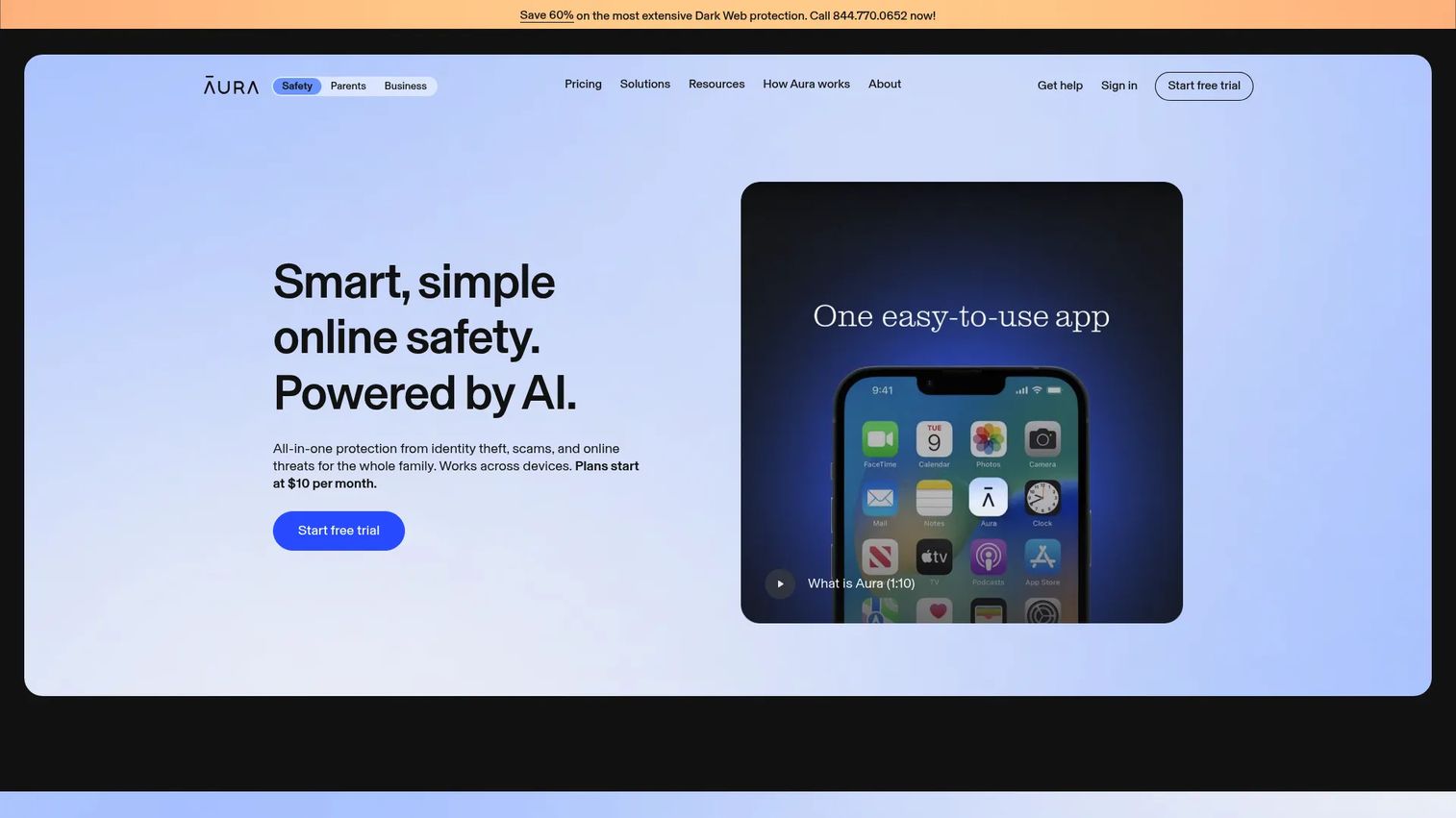
Aura is an all-in-one digital security service that bundles identity theft protection, credit monitoring, online privacy, device security, and family safety into a single subscription. It is the broadest option on this list when you want one platform to cover both monitoring and security tooling. For businesses, the appeal is coverage breadth: identity and financial monitoring sit alongside antivirus, VPN, and a password manager, so employees get protection across the identity and device layers at once.
Best for: Teams that want bundled identity protection plus online safety tools without stitching together separate vendors.
Key strengths
- Identity and credit monitoring: Watches credit reports and financial accounts for fraud signals and alerts users fast.
- Bundled security suite: Includes antivirus, VPN, and a password manager, reducing the number of tools you manage.
- Data broker removal and spam protection: Removes personal data from broker sites and blocks spam calls and messages that fuel social engineering.
Why choose Aura: Aura fits when you want maximum coverage from one subscription rather than assembling identity monitoring, a VPN, and antivirus from three providers. The family and couple plans also work for employee-plus-household overlap, which matters when you offer protection as a benefit. The trade-off is that it is built consumer-first, so there is no native admin console for managing employees as a group.
Aura pricing: Aura publishes four plans, all billed annually with 14-day free trials. Individual starts at $12/mo, Couple at $22/mo, and Family at $32/mo, with a Kids plan at $10/mo. There is no free tier, and monthly billing options are shown at higher rates on the pricing page. For a per-employee benefit, the Individual plan is the relevant entry point.
2. Identity Guard
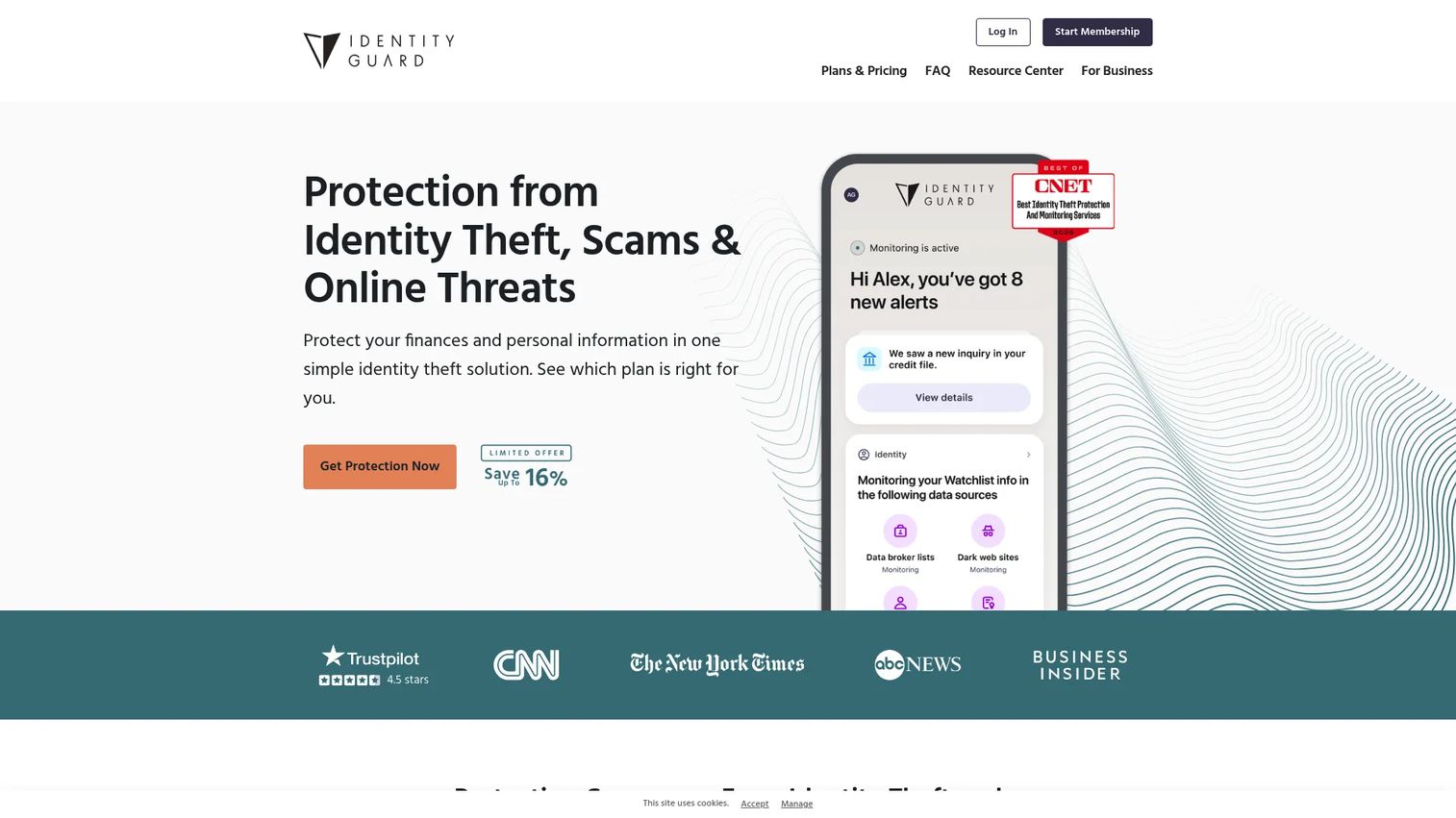
Identity Guard is an identity theft protection and credit monitoring service for individuals and families. It earns a spot here for buyers who want straightforward protection without complexity, paired with U.S.-based fraud resolution. The platform combines dark web and data breach monitoring with 3-bureau credit monitoring, so employees get coverage across both their credit profile and exposed-data risk.
Best for: Buyers who want clean identity theft protection with credit monitoring and human support, minus the bloat.
Key strengths
- Dark web and breach monitoring: Scans for leaked employee data and notifies users when their information surfaces.
- 3-bureau credit monitoring: Tracks credit across all three bureaus on higher tiers for fuller fraud visibility.
- Safe browsing and password manager: Adds a privacy layer and credential management to reduce account takeover.
Why choose Identity Guard: Identity Guard fits when you want predictable, lower-complexity protection that employees can set up without hand-holding. The tiered Value, Total, and Ultra plans let you scale coverage from basic monitoring to 3-bureau credit tracking as risk warrants. It is consumer-oriented, so like most options here it is best offered as an individual benefit rather than centrally administered.
Identity Guard pricing: Plans come in three tiers. Value starts at $4.49/mo billed annually ($7.49/mo monthly), Total at $9.99/mo annually ($14.99/mo monthly), and Ultra at $14.99/mo annually ($19.99/mo monthly). There is no free tier. Three-bureau credit monitoring and richer features live on the higher tiers, so match the plan to the employee's risk exposure.
3. IdentityIQ
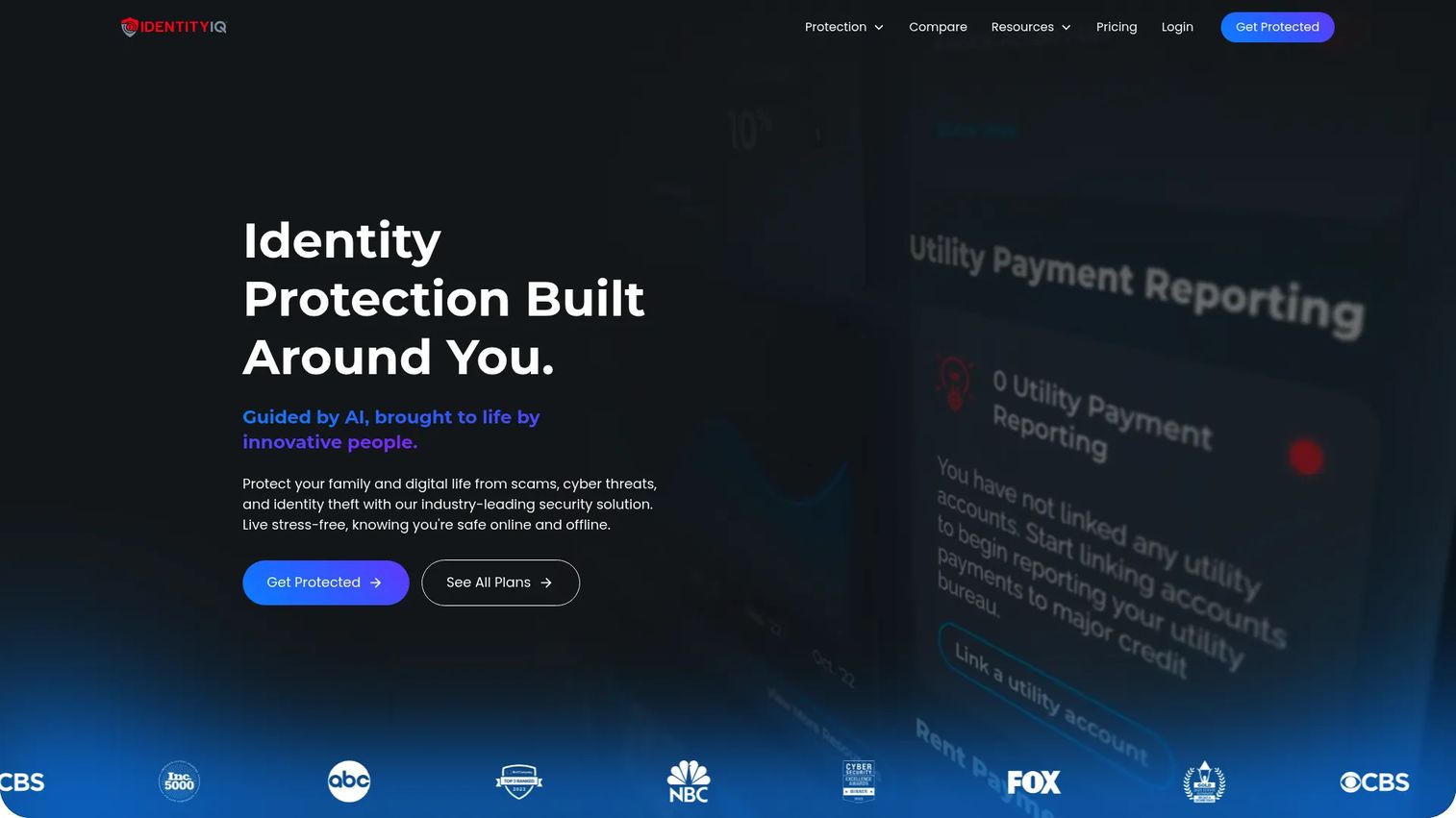
IdentityIQ is an identity theft protection and credit-monitoring service with optional VPN and antivirus add-ons. Its draw is the low starting price combined with fraud restoration support, which makes it the cost-conscious pick for teams watching budget. The service covers dark web and internet monitoring, credit report monitoring, and SSN alerts, including synthetic ID theft protection and application monitoring that catches fraud opening new accounts.
Best for: Cost-conscious buyers who still want fraud restoration support and dark web monitoring.
Key strengths
- Dark web and internet monitoring: Continuously scans for leaked credentials and exposed personal data.
- Credit monitoring and scores: Delivers credit report monitoring plus scores so employees see changes early.
- SSN and synthetic ID protection: Adds SSN alerts and application monitoring to catch new-account fraud.
Why choose IdentityIQ: IdentityIQ fits when budget is the constraint but you still want real identity theft recovery support, not just alerts. The under-$9 entry pricing keeps a per-employee benefit affordable, and the optional VPN and antivirus add-ons let you layer in device security if you need it. The plan structure rewards comparing tiers carefully, since prices shift with add-on selection.
IdentityIQ pricing: Four plans are available: Secure Basic at $6.99/mo, Secure Plus at $9.99/mo, Secure Pro at $14.99/mo, and Secure Max at $22.49/mo. The lowest visible price on the pricing page is $5.24/mo depending on configuration, with prices varying based on whether you add VPN and antivirus. There is no free tier.
4. LifeLock
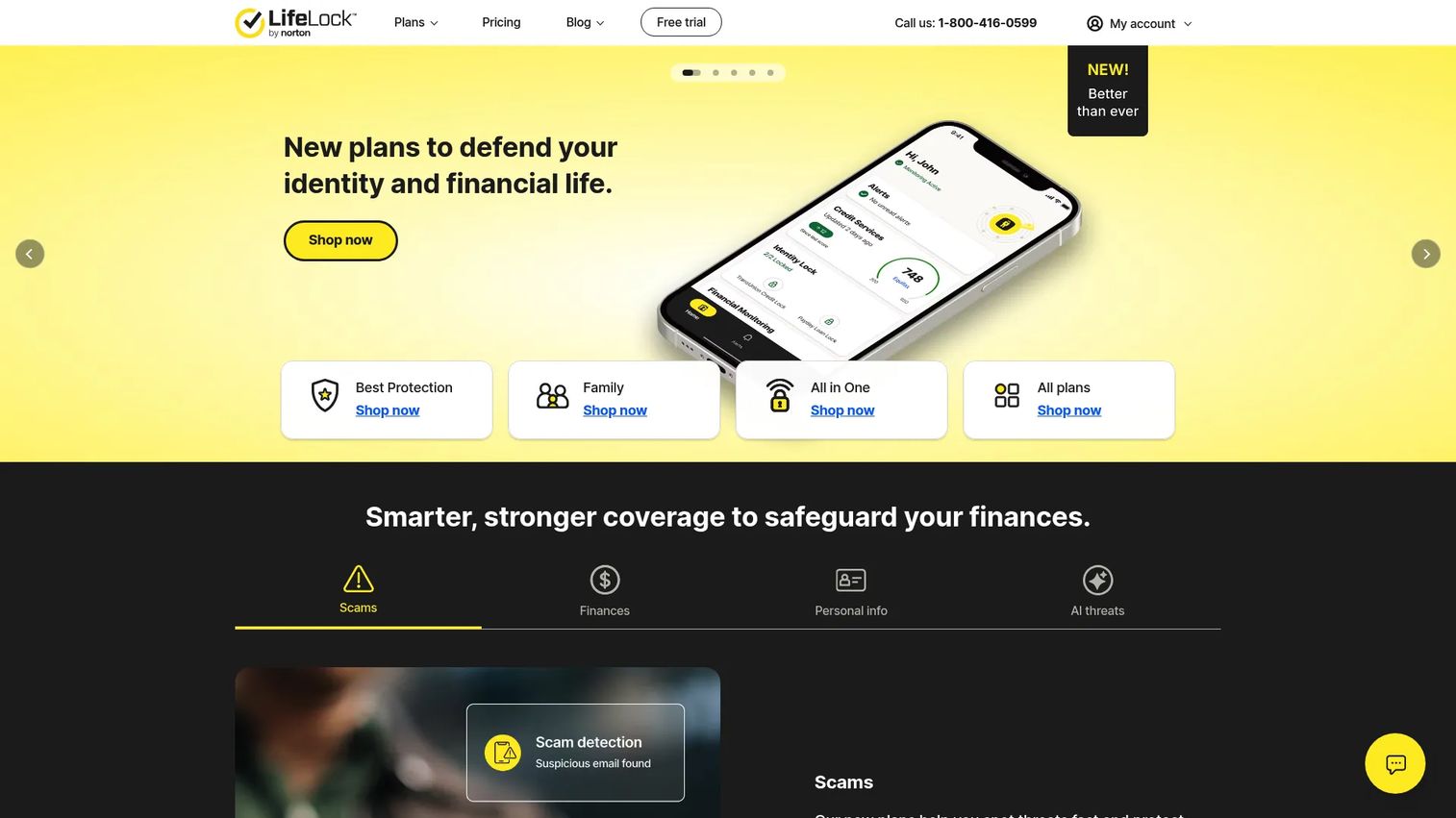
LifeLock is a widely recognized identity theft protection and monitoring service, now part of the Norton family. Its strength is the plan ladder and identity restoration: tiered coverage from basic monitoring up to full reimbursement, backed by restoration specialists who manage recovery on the victim's behalf. The brand recognition also helps when you present identity protection as a benefit employees already trust.
Best for: Buyers who want a recognized brand with a clear plan ladder and hands-on identity restoration.
Key strengths
- Identity theft reimbursement: Covers eligible stolen funds and expenses up to plan limits.
- Credit monitoring: Tracks credit activity for fraud signals across tiers.
- Dark web and breach alerts: Notifies users when their information appears in breaches or on the dark web.
Why choose LifeLock: LifeLock fits when identity theft insurance and dedicated restoration support carry more weight than bundled device security. The Core, Advanced, and Total ladder lets you start light and step up coverage as risk grows. All annual plans include a 60-day money-back guarantee, which lowers the risk of committing for a workforce rollout.
LifeLock pricing: Three individual plans are offered. Core starts at $10.42/mo for the first year ($12.49/mo monthly), Advanced at $16.67/mo first year ($19.99/mo monthly), and Total at $29.17/mo first year ($34.99/mo monthly). There is no free tier, and first-year promotional pricing renews higher.
5. Norton 360
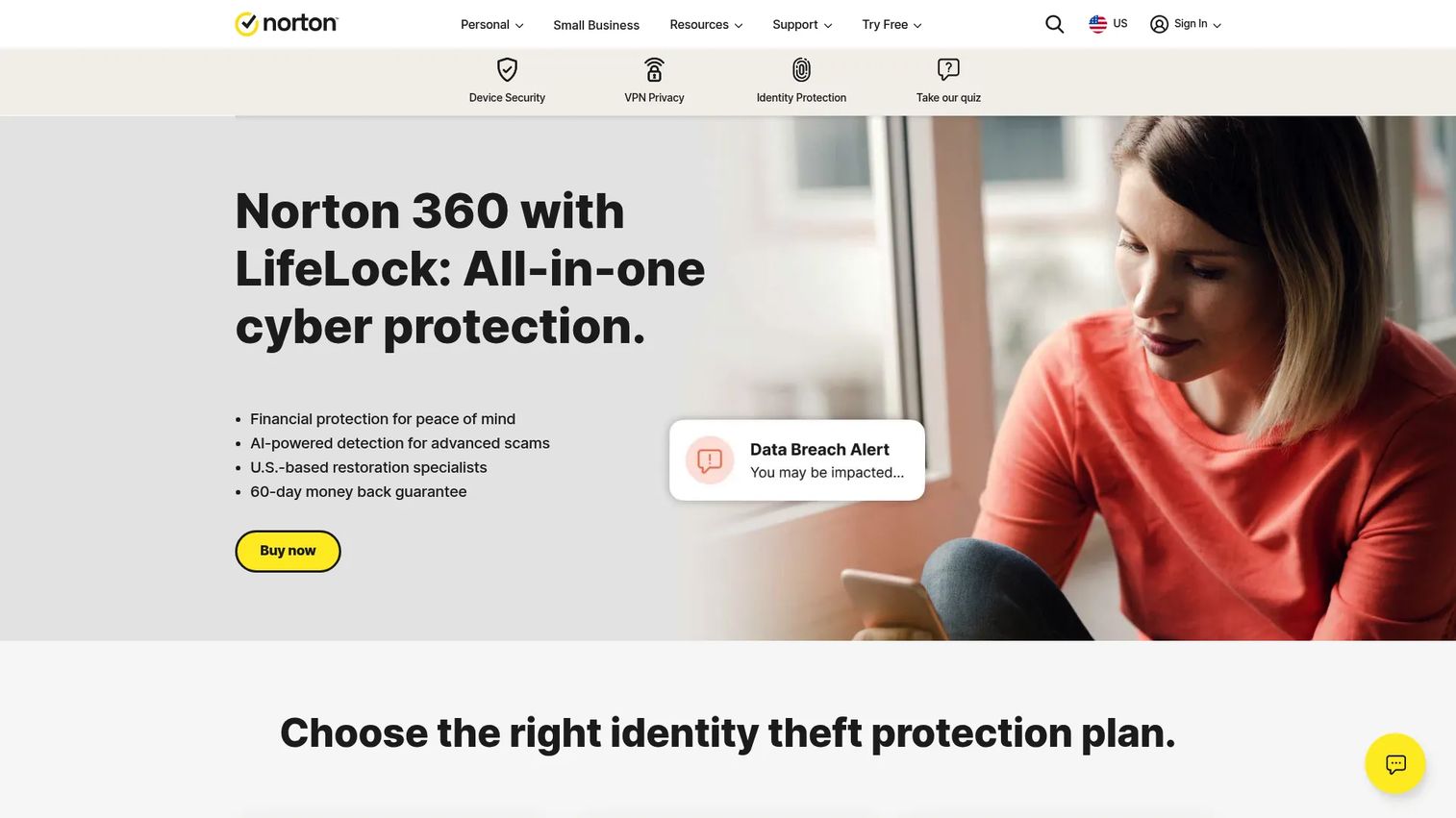
Norton 360 is a consumer cybersecurity and identity-protection suite that pairs device security, privacy, and scam protection with identity coverage through LifeLock bundles. It is the pick when you want fewer tools to manage and would rather buy antivirus and identity protection from one vendor. For lean teams, that consolidation is the whole point: one subscription, one renewal, one support line.
Best for: Buyers who want antivirus and device security with identity protection folded into a single suite.
Key strengths
- Antivirus and malware protection: Defends employee devices against malware, ransomware, and online threats.
- AI-powered scam protection: Flags scam messages and phishing attempts before they land.
- Cloud backup: Protects critical files against ransomware and device loss.
Why choose Norton 360: Norton 360 fits when device security is a priority and identity protection is the welcome add-on, especially via the LifeLock Select bundle. The combined suite reduces vendor sprawl and gives employees malware, VPN, and identity coverage in one place. It leans toward device protection first, so confirm the identity tier matches your monitoring needs.
Norton 360 pricing: Annual first-year pricing covers several plans: Norton 360 Standard at $39.99, Deluxe at $49.99, Premium at $139.99, for Gamers at $44.99, and Norton 360 with LifeLock Select Plus at $99.99. There is no free tier, and renewal pricing is listed separately and runs higher than the first-year rates.
6. Bitdefender
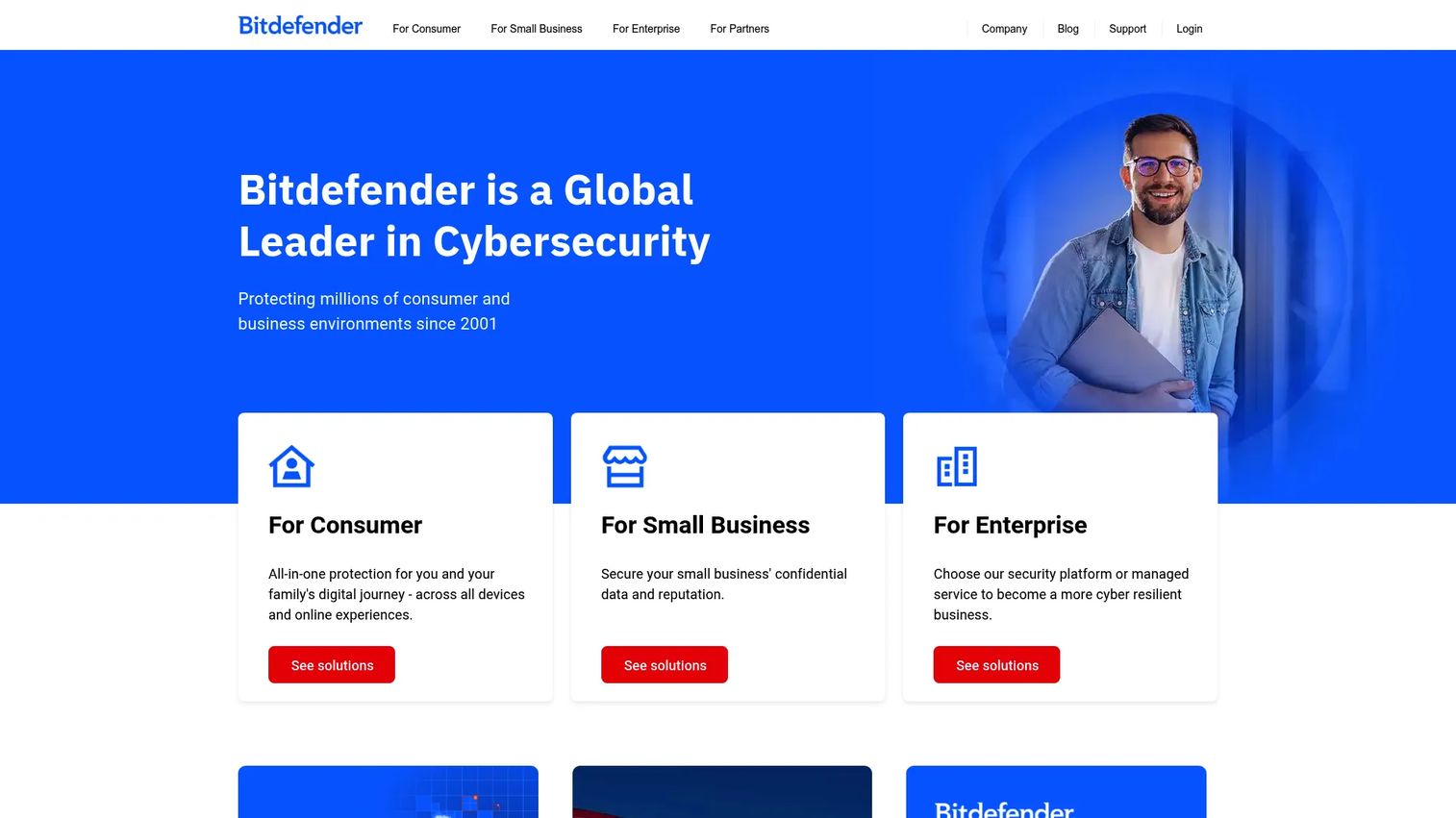
Bitdefender is a cybersecurity company offering consumer and business protection, privacy, and threat detection products. It belongs here as the bundled security alternative for teams that care more about broad endpoint protection than a stand-alone identity service. If your priority is securing devices across the workforce with privacy features layered in, Bitdefender's suite covers that ground.
Best for: Households and teams wanting cross-platform device security with privacy features built in.
Key strengths
- Multi-device antivirus: Protects across Windows, macOS, Android, and iOS from a single subscription.
- Unlimited VPN on Premium Security: Adds private browsing without a separate VPN purchase on the top tier.
- Password manager and scam protection: Manages credentials and blocks scam attempts that lead to identity fraud.
Why choose Bitdefender: Bitdefender fits when endpoint and device security pairing matters more than dedicated identity monitoring and recovery. The multi-device coverage and VPN make it a strong consolidation play for teams already shopping for antivirus. Identity-specific monitoring is lighter than the dedicated services above, so weigh it against your exposure priorities.
Bitdefender pricing: Antivirus Plus is publicly listed at $24.99 for the first year, or $29.99 for the three-device option. Premium Security, which adds unlimited VPN and broader coverage, is available on yearly and monthly billing. There is no free tier on the paid lineup. Match the tier to how many devices and which privacy features your team needs.
7. NordStellar
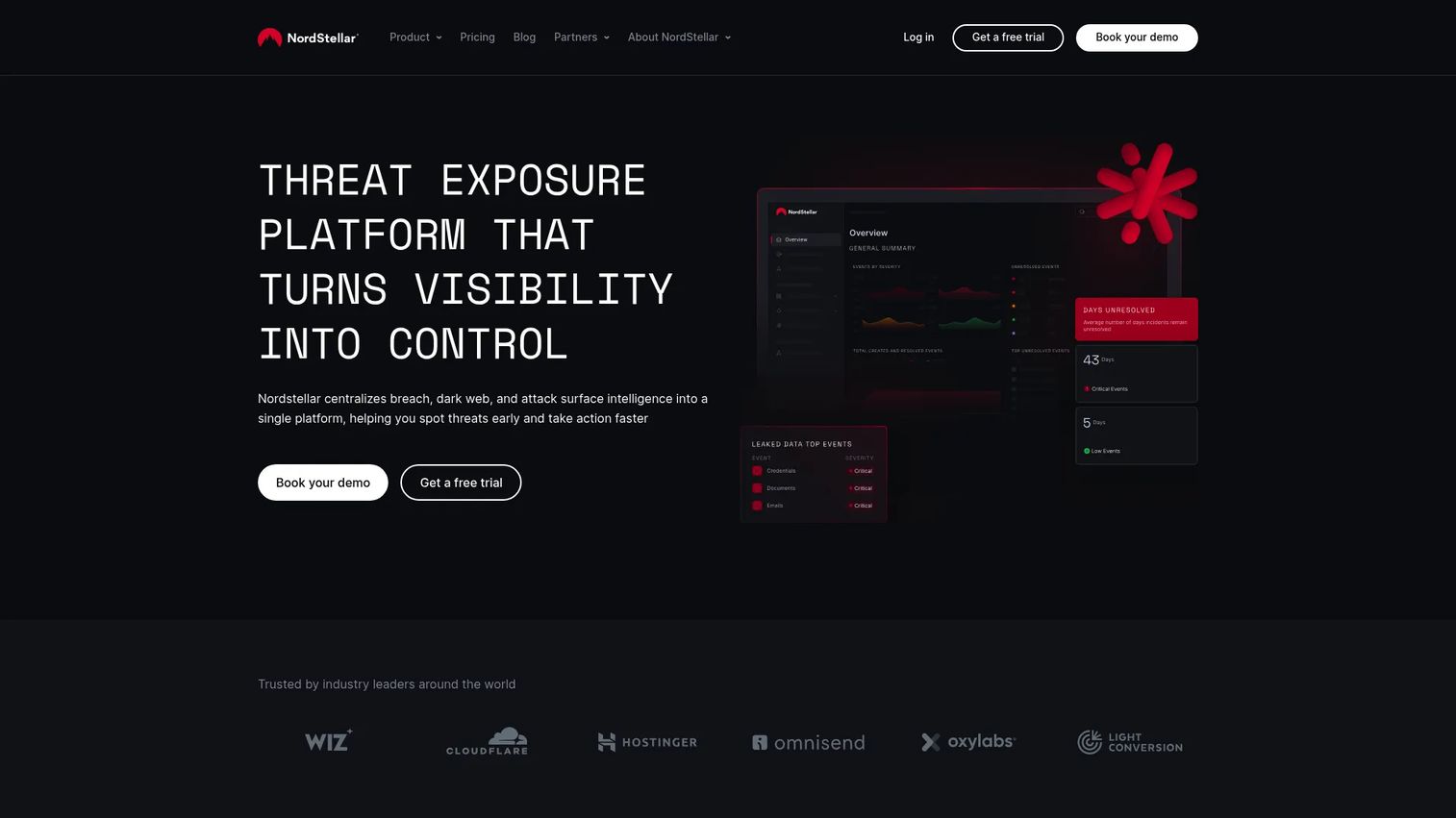
NordStellar is a threat exposure management platform for monitoring the dark web, data leaks, and external attack surface. It is the most business-facing option on this list, which is why it lands closest to the employee and workforce monitoring need. Rather than protecting one individual's credit, NordStellar watches for leaked credentials and exposed data tied to your organization and people, with a proactive prevention posture.
Best for: Teams that need external threat exposure monitoring, credential monitoring, and brand protection at the organization level.
Key strengths
- Dark web monitoring: Tracks dark web sources for leaked employee and company credentials.
- Leaked data management: Surfaces and helps manage exposed data before attackers weaponize it.
- Attack surface management: Maps and monitors your external attack surface for exposure.
Why choose NordStellar: NordStellar fits when you want business identity monitoring at the company level, not a consumer subscription per employee. Credential monitoring and exposure management make it a proactive prevention layer for security teams managing workforce risk. It is built for organizations, so it carries enterprise pricing rather than a low per-seat consumer rate.
NordStellar pricing: The Essential plan starts from $5,000/year. The Growth tier and the Brand Protect+ add-on require contacting sales for custom pricing. There is no free tier. The pricing reflects its position as a business-grade exposure management platform rather than an individual identity service.
Considerations before you buy
A clean feature list is not the same as the right fit. Run each shortlisted tool through these criteria before committing budget.
Monitoring scope
Confirm exactly what data is watched. Strong options cover credit (one or three bureaus), dark web and exposed-data monitoring, financial accounts, and public records. Ask whether employee-related exposures, like leaked work credentials, are included or only personal financial data.
Recovery support
Alerts without action leave employees stranded. Check whether the vendor provides hands-on identity theft recovery support with dedicated case managers, or only notifications and an insurance claim form. Restoration specialists who do the legwork are worth a premium when fraud actually hits.
Insurance and reimbursement
Read the identity theft insurance terms closely. Look at the coverage limit, which losses are eligible (stolen funds, legal fees, lost wages), and any exclusions. A $1M headline limit means little if the eligible-loss categories are narrow.
Bundle value
Decide whether bundled antivirus, VPN, or password management genuinely reduces your stack. If you already pay for endpoint security, a bundle may duplicate spend. If you do not, consolidation can cut both cost and the number of vendors you manage.
Deployment fit
Most consumer-grade tools are activated per individual, so plan how you will roll them out without confusing employees or creating admin burden. Business-facing platforms add central management but cost more. Match the deployment model to your team size and IT capacity.
Conclusion
The right pick comes down to what you are protecting and how you want to manage it. For the broadest single-subscription coverage that bundles monitoring with antivirus and VPN, Aura is the strongest all-around choice. If budget leads the decision, IdentityIQ delivers fraud restoration support and dark web monitoring at the lowest entry price, while Identity Guard offers clean, lower-complexity protection with U.S.-based support.
When device security matters as much as identity, Norton 360 and Bitdefender fold identity coverage into full security suites and cut vendor sprawl. LifeLock remains the recognized name for tiered restoration and reimbursement. And when the job is organization-level workforce monitoring rather than a per-employee benefit, NordStellar is the business-facing pick built for credential and exposure monitoring.
Start by sizing your risk: a small team handling sensitive data may be well served by a consumer-grade benefit, while a security-conscious mid-market firm should evaluate business identity monitoring like NordStellar. Shortlist two options, run a trial, and measure how fast alerts fire and how much recovery support actually shows up.
FAQs
It is software that monitors employees' personal and financial data for signs of theft, alerts them and the business when exposure occurs, and provides recovery support to limit damage. The focus is workforce risk reduction rather than individual consumer protection, covering credential leaks, exposed SSNs, and financial fraud that create downstream cost for the employer.
The features overlap, but the framing differs. Consumer tools protect a single household, while employee-focused deployment aims to reduce company-wide exposure from leaked credentials, breached records, and fraud that lands on HR, IT, and finance. Most vendors sell consumer-grade plans you offer as a benefit, while business-facing platforms like NordStellar monitor exposure at the organization level.
Most options do. Credit monitoring tracks credit reports for new accounts, hard inquiries, and score changes that signal fraud. Some plans cover one bureau and others all three, with 3-bureau monitoring typically reserved for higher tiers, so check the specific plan before assuming full credit visibility.
Look for continuous scanning across breach dumps, paste sites, and dark web marketplaces, plus fast fraud alerts when employee emails, passwords, or SSNs appear. The best dark web monitoring ties an alert to a clear next step, such as freezing credit or resetting credentials, rather than just notifying the user that exposure happened.
It depends on your existing stack. If you already pay for endpoint security, a bundle may duplicate spend. If you do not, bundles from Aura, Norton 360, or Bitdefender consolidate identity protection, antivirus, and VPN into one subscription, cutting both cost and the number of vendors you manage.
Consumer-grade plans typically run from roughly $4.49 to $35/month per person depending on tier and monitoring depth. Business-facing exposure platforms like NordStellar start around $5,000/year because they monitor at the organization level rather than per individual. Match the pricing model to whether you are offering a per-employee benefit or central monitoring.
Small businesses dominate adoption in this category, and the cost-conscious consumer-grade options fit well. IdentityIQ and Identity Guard offer affordable per-person plans with credit and dark web monitoring, while Aura adds a bundled security suite. For organization-level monitoring, NordStellar is purpose-built but carries higher pricing.
Yes. After a breach, continuous identity theft monitoring with fast fraud alerts shrinks the window between exposure and detection, so employees can freeze credit and reset credentials before fraud spreads. Recovery and reimbursement support then limits the financial and time cost of unwinding any theft that does occur.