You model a factory line, a bridge, or a production process in spreadsheets. Then you paste a few dashboards into slides. Then you make an operating decision from signals that are already stale, disconnected, and missing the one variable that mattered.
That gap between what you can see and what you need to decide is exactly what digital twin software closes. A digital twin connects a virtual model of a physical asset or system to live or simulated data, so teams can test scenarios, forecast outcomes, and reduce operational risk before touching the real thing. The market reflects how fast this shift is moving: the global digital twin market is valued at roughly USD 49.2 billion in 2026 and is projected to grow at a 35.95% CAGR through 2031, according to Mordor Intelligence (2026).
For a product manager or operations leader, the buying question is not "is this cool." It is whether the platform ingests your data, models the decision you actually care about, scales across teams, and produces proof you can show a stakeholder. This guide walks through seven platforms with that lens. If you also evaluate adjacent operational tooling, our roundups of the best digital adoption platforms and the best customer data platform options use the same criteria-first approach.
What's inside
This guide compares seven digital twin software platforms for teams evaluating simulation, predictive maintenance, and operational optimization. We chose vendors that serve real production workloads, not demos.
We ranked and reviewed each platform against four criteria that matter most for evaluation teams:
- Real-time data support: Can it ingest live signals from IoT, ERP, APIs, and operational systems?
- Simulation depth: Does it support scenario testing, predictive analytics, and optimization?
- Integration and deployment: Cloud, edge, hybrid, and how it connects to your existing stack.
- Enterprise readiness and proof: Governance, scale, and documented customer outcomes.
TL;DR
- Best overall for broad enterprise digital twin programs: Autodesk, for design-to-operations continuity across large assets.
- Best for simulation-heavy engineering teams: Ansys, for physics-based fidelity and validation.
- Best for enterprise asset management and operations: IBM, for ecosystem integration and operational intelligence.
- Best for scenario-based modeling and cloud sharing: AnyLogic, for multimethod simulation and cloud collaboration.
- Best for infrastructure and built-environment workflows: Bentley, for civil and utility assets.
- Best for product lifecycle and connected engineering: PTC, for digital thread and connected products.
- Best for industrial automation and smart manufacturing: Siemens, for factory-scale digitalization.
What digital twin software is
Digital twin software is simulation and virtual-replica software that mirrors a physical asset, process, or system and keeps that model synchronized with live or frequently updated data. The physical asset streams data. The virtual model reflects it. Analytics layer on top so teams can forecast, test, and optimize without disrupting production.
A working digital twin platform ties together four things: the physical asset or system, the virtual model, a data connection that keeps them in sync, and an analytics layer that turns the model into decisions.
Core capabilities readers should expect
Most mature digital twin solutions share a common capability set. When you evaluate a digital twin platform, expect to see:
- Real-time data ingestion and bidirectional updates from sensors, IoT, and operational systems.
- Simulation and scenario testing so you can model changes before committing to them.
- Predictive analytics and maintenance planning to prioritize interventions.
- Integration with IoT, ERP, APIs, cloud, and edge systems so the twin reflects real operations.
- Visualization and dashboarding for cross-functional stakeholders.
- Security, access control, and governance to manage who sees and changes what.
Why it matters now
The reason digital twin technology is a boardroom topic now is simple: it maps directly to uptime, planning quality, rework reduction, and decision speed. Large enterprises captured roughly 67.3% of the market in 2025, per Mordor Intelligence (2026), because they run the complex, high-stakes systems where a bad decision is expensive. Buyers increasingly want a digital twin model that scales across teams and data sources rather than a one-off engineering experiment that dies when its creator leaves.
When to use digital twin software
Not every operational question needs a twin. These three situations are where the category earns its cost.
Improve forecasting before you change the real system
When you plan a process change, a new production schedule, or an asset reconfiguration, a digital twin simulation software model lets you test it against real data first. Operations and product teams run the scenario, read the forecast, and commit only when the numbers hold. You change the model, not the plant.
Reduce downtime and maintenance surprises
Predictive analytics on live sensor data lets you rank maintenance by risk instead of by calendar. Reliability-focused organizations use this to catch degradation before failure, schedule work during planned windows, and stop paying for emergency downtime. The twin tells you what is trending toward failure and when.
Validate complex systems across teams
Engineering, operations, planning, and leadership often argue from different data. A shared digital twin model gives them one source of truth. When everyone reads the same model, alignment gets easier and the meeting about whose numbers are right gets shorter.
Comparison table
The table below compares each platform by buyer intent, its strongest use case, entry pricing where public, and G2 rating. Ranking reflects breadth of enterprise digital twin fit first, then specialization.
| # | Product | Intent | Key use case | Pricing | G2 rating |
|---|---|---|---|---|---|
| 1 | Autodesk | Broad enterprise programs | Design-to-operations continuity for [buildings and infrastructure | From $100/year (product-specific) | 4.4/5 |
| 2 | Ansys | Simulation-heavy engineering | Physics-based validation and hybrid analytics | Free trial; contact sales | 4.4/5 |
| 3 | IBM | Enterprise asset management | Operational intelligence and ecosystem integration | Free trial; product-specific | 4.3/5 |
| 4 | AnyLogic | Scenario modeling](https://en.wikipedia.org/wiki/Building\_information\_modeling) | Multimethod simulation and cloud sharing | Public Cloud free tier; contact sales | 4.2/5 |
| 5 | Bentley | Infrastructure teams | Civil, roads, and utility asset twins | Contact sales | 4.1/5 |
| 6 | Siemens | Smart manufacturing | Factory-scale automation and digitalization | From $1 first month (Solid Edge) | 4.3/5 |
| 7 | PTC | Product lifecycle | Digital thread and connected products | Free trials; contact sales | 4.4/5 |
1. Autodesk
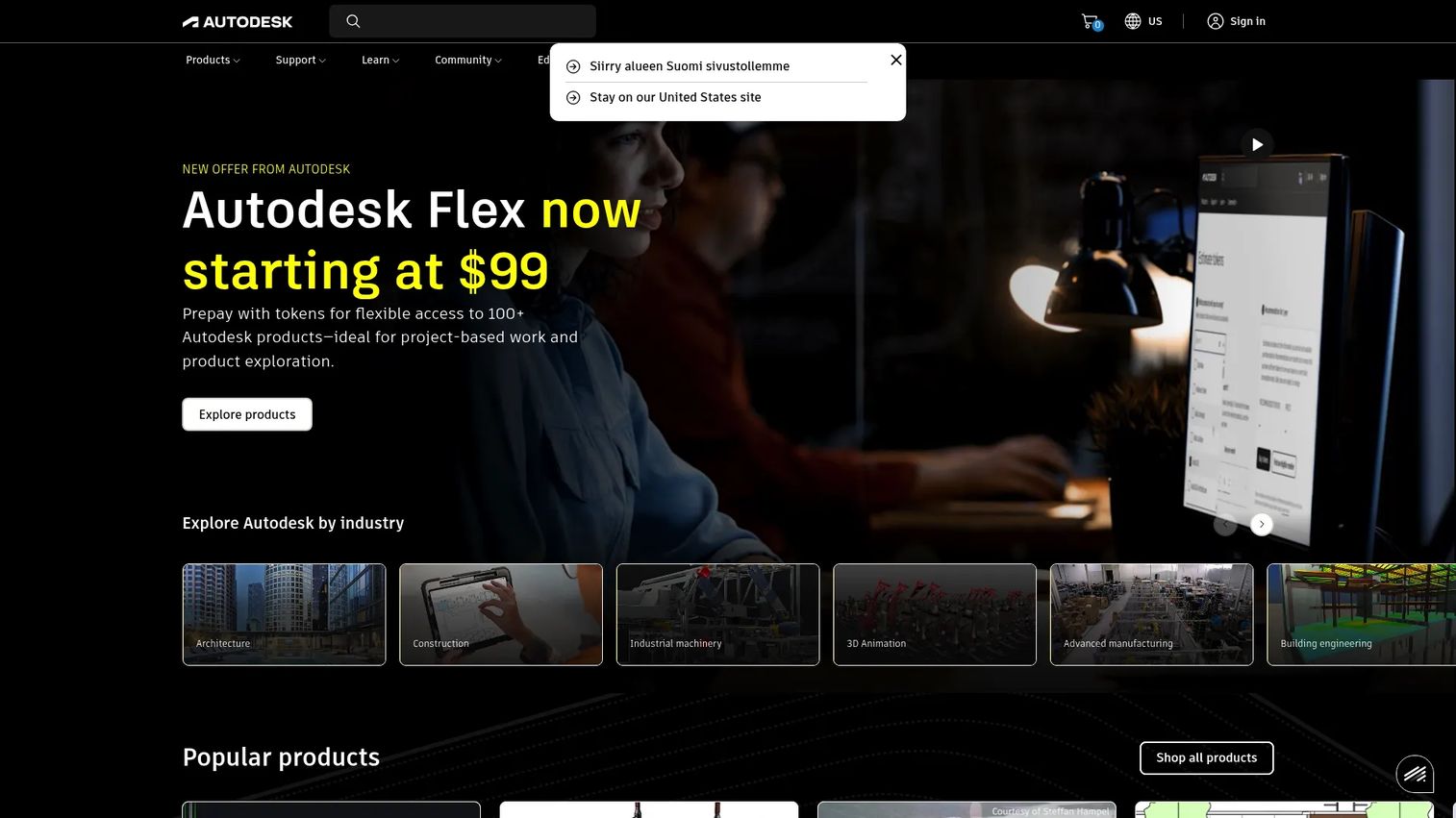
Autodesk is design and make software for architecture, engineering, construction, manufacturing, media, and entertainment. In the digital twin context, its strength is continuity: the same models used to design a building or infrastructure asset carry forward into construction and operations. For teams managing large physical assets across a long lifecycle, that continuity removes the handoff losses that usually break a twin program.
Autodesk fits best where the built environment and large asset workflows dominate. If your organization already designs in Autodesk tools, the path to an operational twin is short because the source model already exists.
Best for: Teams needing professional design, engineering, and construction software across multiple industries, extended into operations.
Key strengths
- 3D CAD and modeling: A shared model foundation that carries from design into operations.
- BIM and construction workflows: Building information modeling that feeds construction and asset management.
- Cloud-based design and manufacturing tools: Collaboration across distributed teams and vendors.
Why choose Autodesk: For a product or operations leader, the appeal is lifecycle continuity. When the design model becomes the operational twin, you avoid rebuilding the asset representation from scratch and you keep engineering, construction, and operations reading the same source. That reduces model drift, which is where most twin programs quietly decay.
Autodesk pricing: Autodesk does not publish a single company-wide plan; pricing is product-specific. Verified entry points from the official Autodesk store include AutoCAD Web at $100/year, AutoCAD LT at $540/year, Fusion at $680/year, Forma Build Essentials at $800/year, and Revit at $3,005/year, all billed yearly. Free trials and educational access are available on individual products.
2. Ansys
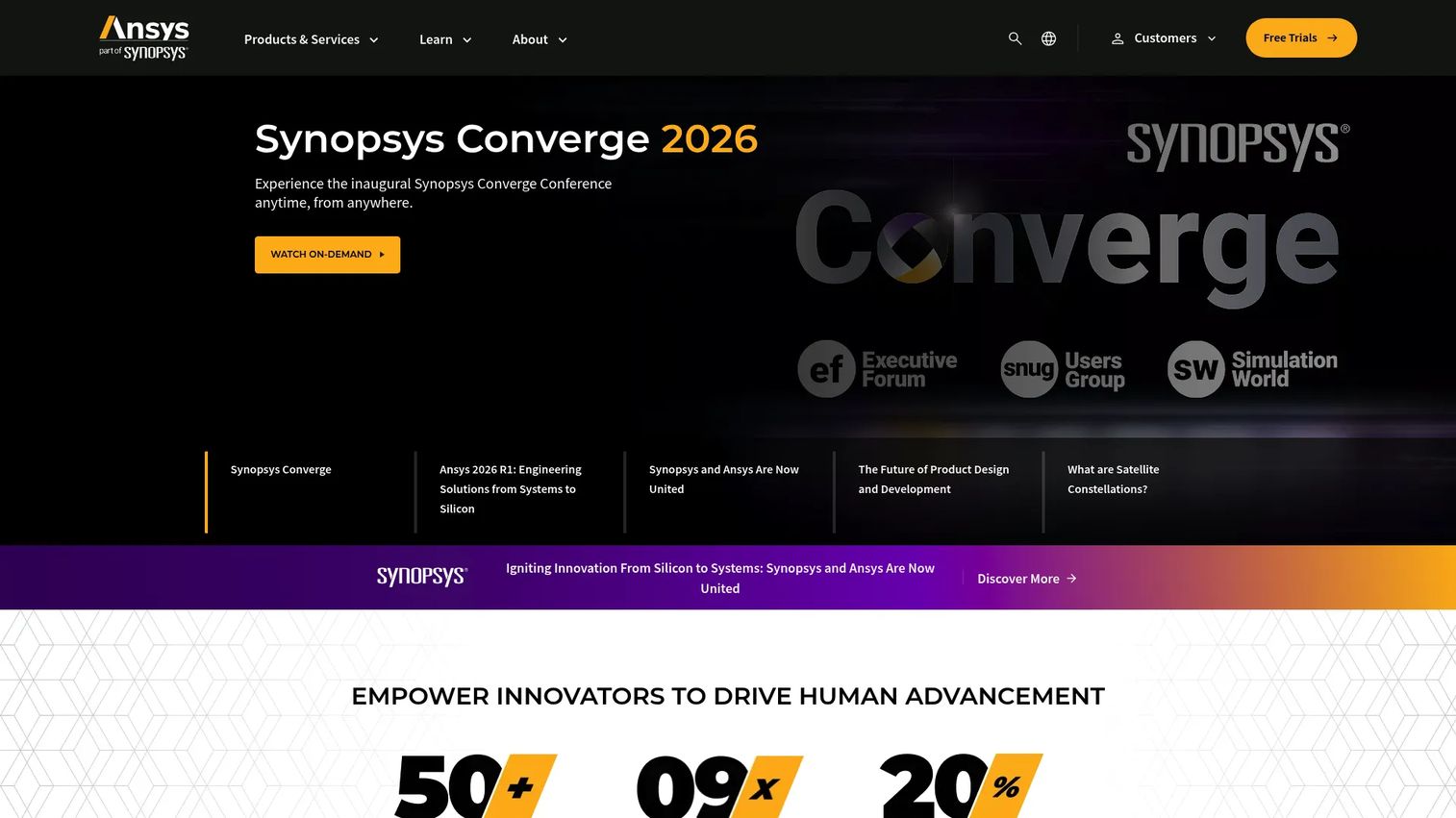
Ansys is engineering simulation software for physics-based product design and analysis. Where many digital twin tools focus on data plumbing, Ansys leads with simulation fidelity: structural, fluid, and multiphysics models that behave like the real object under real forces. For engineering-heavy environments, that depth is the point.
Ansys fits teams that build a twin to answer physics questions, not just operational ones. If your decision hinges on how a component behaves under stress, heat, or flow, simulation depth is the criterion that matters.
Best for: Engineering teams needing high-end simulation software for product development and validation.
Key strengths
- Structural analysis and finite element analysis: Model how physical structures behave under load.
- Fluid dynamics and multiphysics simulation: Combine multiple physics domains in one model.
- Cloud-powered simulation and design exploration: Scale compute and explore design spaces faster.
Why choose Ansys: The build, validate, deploy, and scale framing maps cleanly to how engineering teams actually work. A PM overseeing a hardware-adjacent product cares that the twin can validate behavior before physical prototyping, which cuts iteration cycles and de-risks launches. The tradeoff versus broader operational platforms is that Ansys rewards teams with simulation expertise already in house.
Ansys pricing: Public numeric subscription pricing is not shown on the primary product pages. Ansys Discovery offers a free 30-day trial, and other products direct buyers to contact sales for a quote. Expect quote-based pricing tied to the specific simulation products you need.
3. IBM
IBM is an enterprise technology company focused on hybrid cloud, AI, automation, software, consulting, and infrastructure. Its digital twin story is a definition-led enterprise one: connect asset management, operational intelligence, and AI on a hybrid cloud foundation so the twin plugs into the rest of the enterprise stack rather than sitting beside it.
IBM fits platform-minded buyers who care as much about ecosystem integration as about any single twin feature. If your evaluation weighs how a twin connects to enterprise data, AI, and automation, IBM's breadth is the draw.
Best for: Large enterprises needing hybrid cloud, AI, and automation software.
Key strengths
- Hybrid cloud platform and software portfolio: Deploy across cloud and on-premises environments.
- AI and automation across apps, workflows, and infrastructure: Layer intelligence onto operational data.
- Enterprise software for mission-critical workloads: Built for scale and reliability.
Why choose IBM: For a buyer thinking in platform terms, IBM's advantage is that the twin does not live in isolation. Asset data, AI models, and automation share one foundation, which matters when you need operational intelligence to feed decisions across teams. The consideration is scope: IBM's portfolio is broad, so scoping the right products for a twin program takes upfront work.
IBM pricing: IBM pricing varies by product. As an example, IBM Robotic Process Automation offers a no-cost 30-day trial and an on-premises option starting at USD 981.00 per month. For twin-specific components, pricing is product-specific and typically quote-based for enterprise deployments.
4. AnyLogic
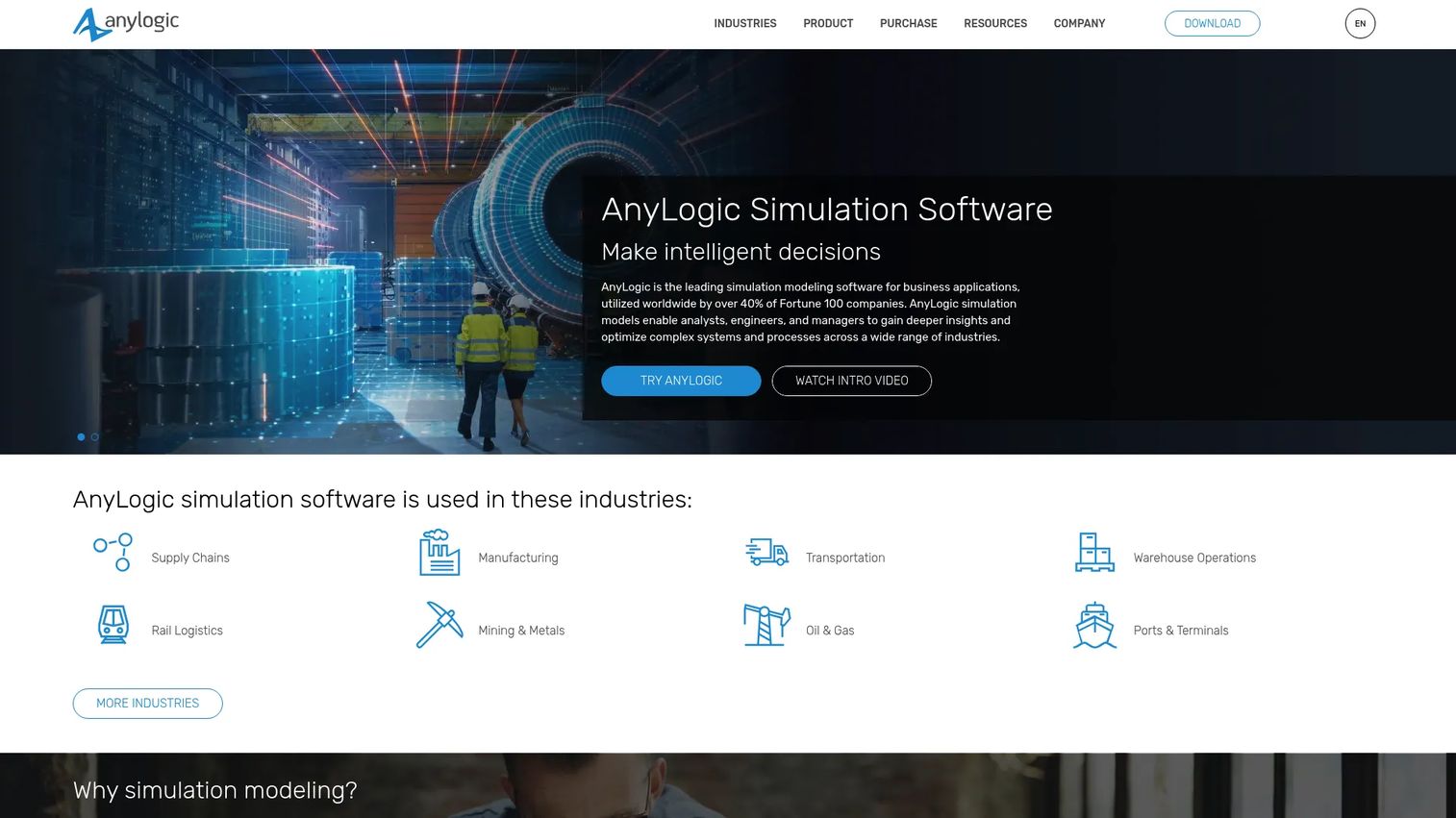
AnyLogic is simulation modeling software for business applications, and it is one of the more flexible digital twin solutions for operational decision-making. Its multimethod approach combines discrete event, agent-based, and system dynamics modeling in one environment, which suits messy real-world operations that do not fit a single modeling paradigm.
AnyLogic fits teams building complex operational simulations and twins, especially in logistics, supply chain, and process optimization. If your decision spans queues, agents, and flows at once, multimethod modeling is a genuine differentiator.
Best for: Teams building complex operational simulations and digital twins.
Key strengths
- Multimethod modeling: Combine discrete event, agent-based, and system dynamics in one model.
- Cloud-based execution and dashboards: Run, share, and visualize simulations in the cloud.
- Industry libraries plus GIS and Java extensibility: Extend models with domain-specific components.
Why choose AnyLogic: For operations and planning teams, the flexibility to model different system behaviors in one place is what wins. You are not forced to simplify a supply chain into a single method just because the tool prefers it. Cloud sharing also makes it practical to put scenario results in front of stakeholders who will never open the modeling environment themselves.
AnyLogic pricing: AnyLogic Public Cloud is free and subscription-based, while Private Cloud is an in-house installation. The pricing page does not show a public numeric price for private deployment, so plan on a sales conversation for on-premises or enterprise use.
5. Bentley
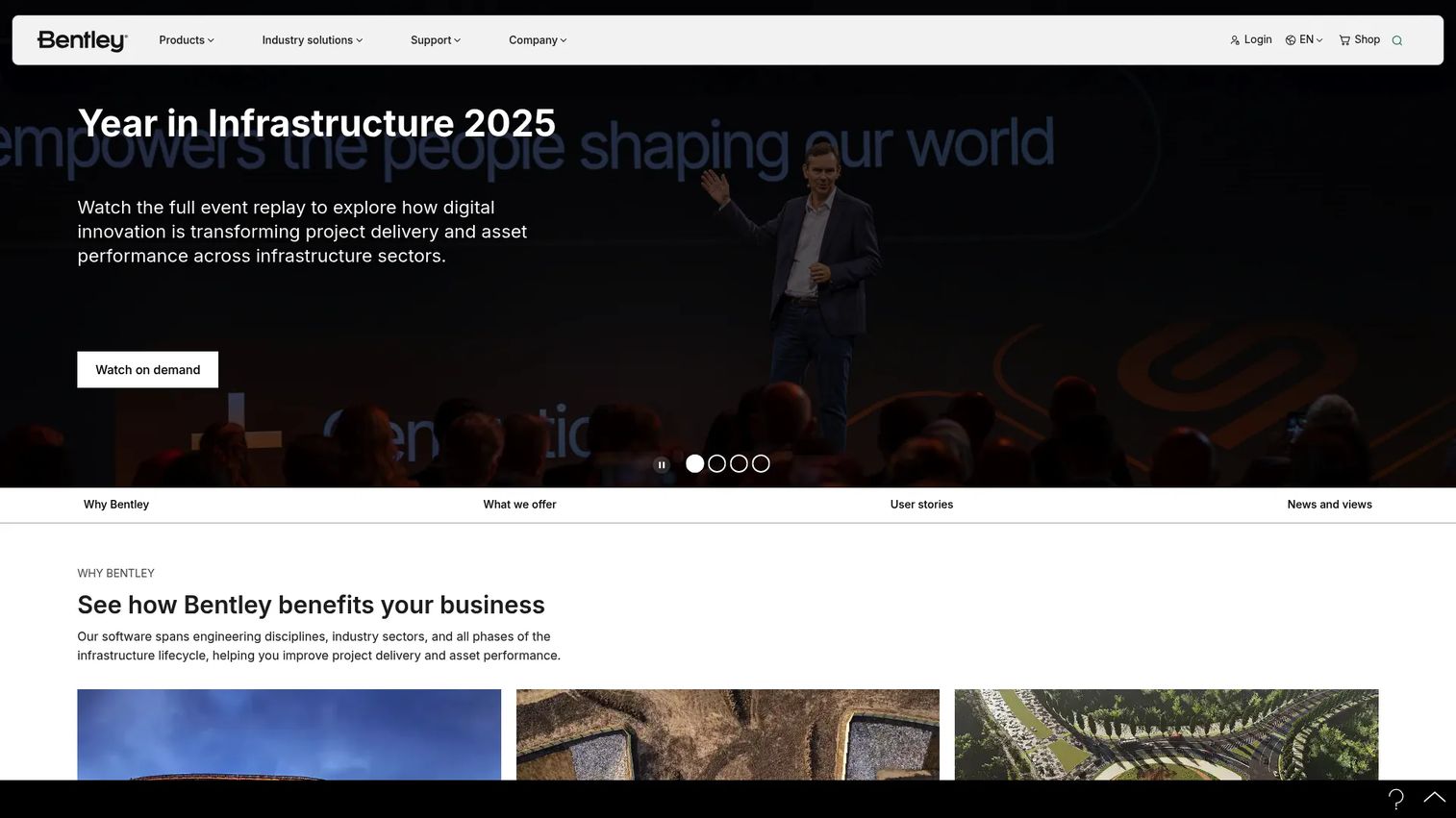
Bentley is an infrastructure engineering software company for designing, building, and operating infrastructure assets. Its digital twin focus is squarely on the built environment: roads, bridges, utilities, rail, and other civil infrastructure where the asset lives for decades and operations data matters as much as design data.
Bentley fits engineering and infrastructure teams that need CAD, project delivery, and digital twin software in one lineage. If your assets are civil and long-lived, Bentley's open-standards approach and infrastructure depth are the differentiators.
Best for: Engineering and infrastructure teams needing CAD, project delivery, and digital twin software.
Key strengths
- Digital twin and data workflows: Purpose-built twin capabilities for infrastructure assets.
- AI-powered engineering applications: Intelligence layered onto infrastructure data.
- Open APIs and open standards: Interoperability across tools and data sources.
Why choose Bentley: For infrastructure owners, the value is that the twin reflects the realities of civil assets: long lifecycles, mixed data sources, and operations that outlast the original design team. Open APIs and open standards reduce lock-in, which matters when an asset will outlive several software refresh cycles. This is a specialist choice, and that specialization is the point for civil and utility teams.
Bentley pricing: Bentley publicly describes subscription, perpetual license with SELECT, and enterprise options, but no public starting price is listed on the main licensing page. Plan on a sales conversation to scope licensing for your asset portfolio.
6. Siemens
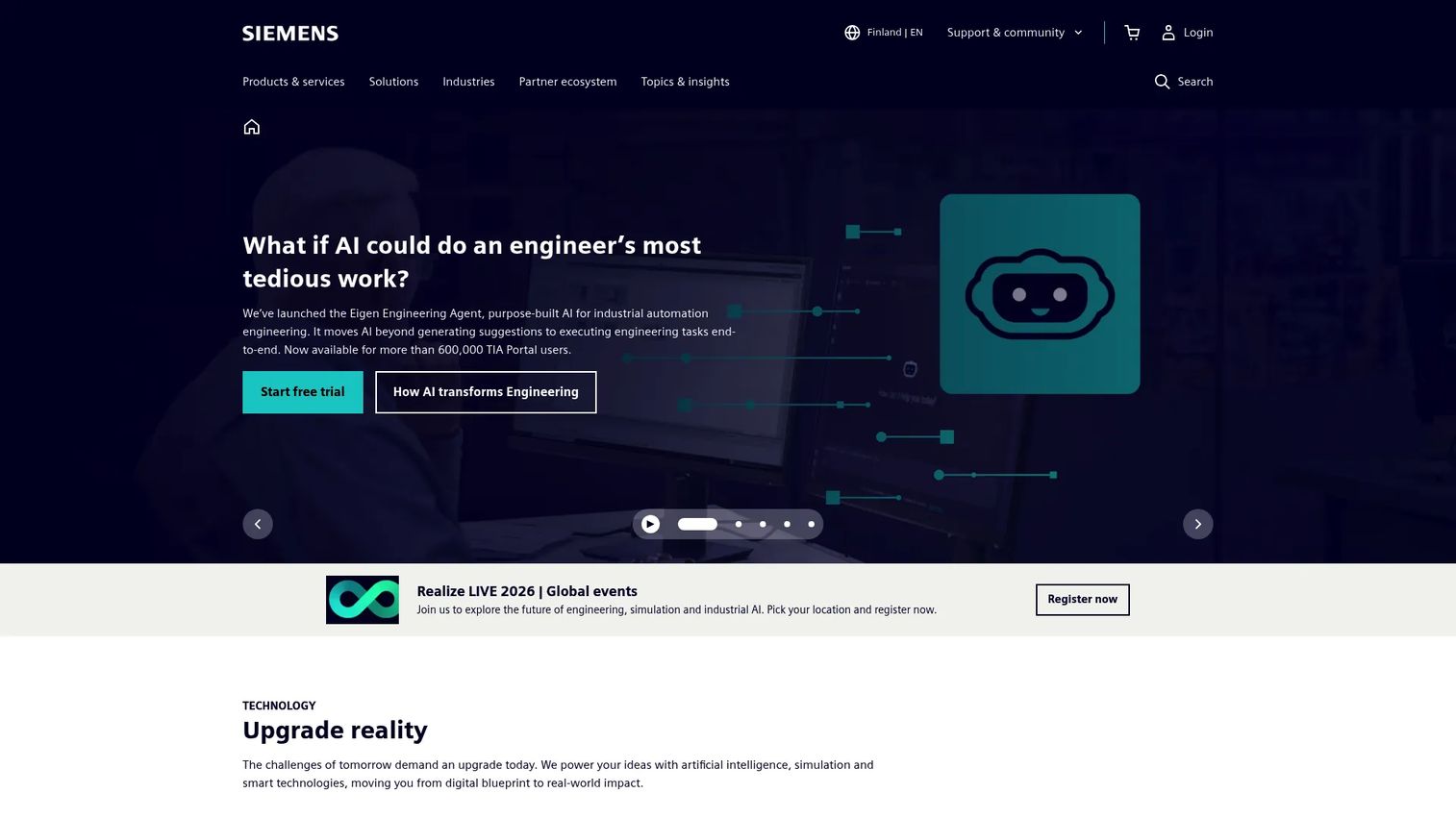
Siemens is a global technology company offering industrial automation, electrification, digitalization, mobility, and software. In digital twin terms, Siemens is the industrial-scale option: twins that connect to factory automation, CAD, and PLM so manufacturing operations model and optimize at the plant level.
Siemens fits enterprise teams seeking industrial software, automation, and digital manufacturing tools. If your twin needs to reach down into the shop floor and up into product lifecycle management, Siemens' industrial ecosystem is why manufacturing teams shortlist it.
Best for: Enterprise teams seeking industrial software, automation, and digital manufacturing tools.
Key strengths
- Industrial AI and automation: Intelligence connected to factory automation systems.
- Digital twin, CAD, and PLM software: Model products and processes across the lifecycle.
- Building and electrification platforms: Extend twins beyond the factory to facilities.
Why choose Siemens: For industrial teams, the draw is depth of integration between the twin and the automation layer that runs the plant. When the model connects to the systems actually executing production, optimization moves from theory to action. The consideration is scope again: Siemens is a broad conglomerate, so scoping the right software for a specific manufacturing twin takes upfront alignment.
Siemens pricing: Public pricing is limited to a promotional offer. Designcenter Solid Edge Design and Drafting starts at $1 for the first month, with a 30-day free trial available. Other Solid Edge tiers (Standard, Advanced, Premium) use request-quote CTAs rather than public prices, so enterprise manufacturing deployments are quote-based.
7. PTC
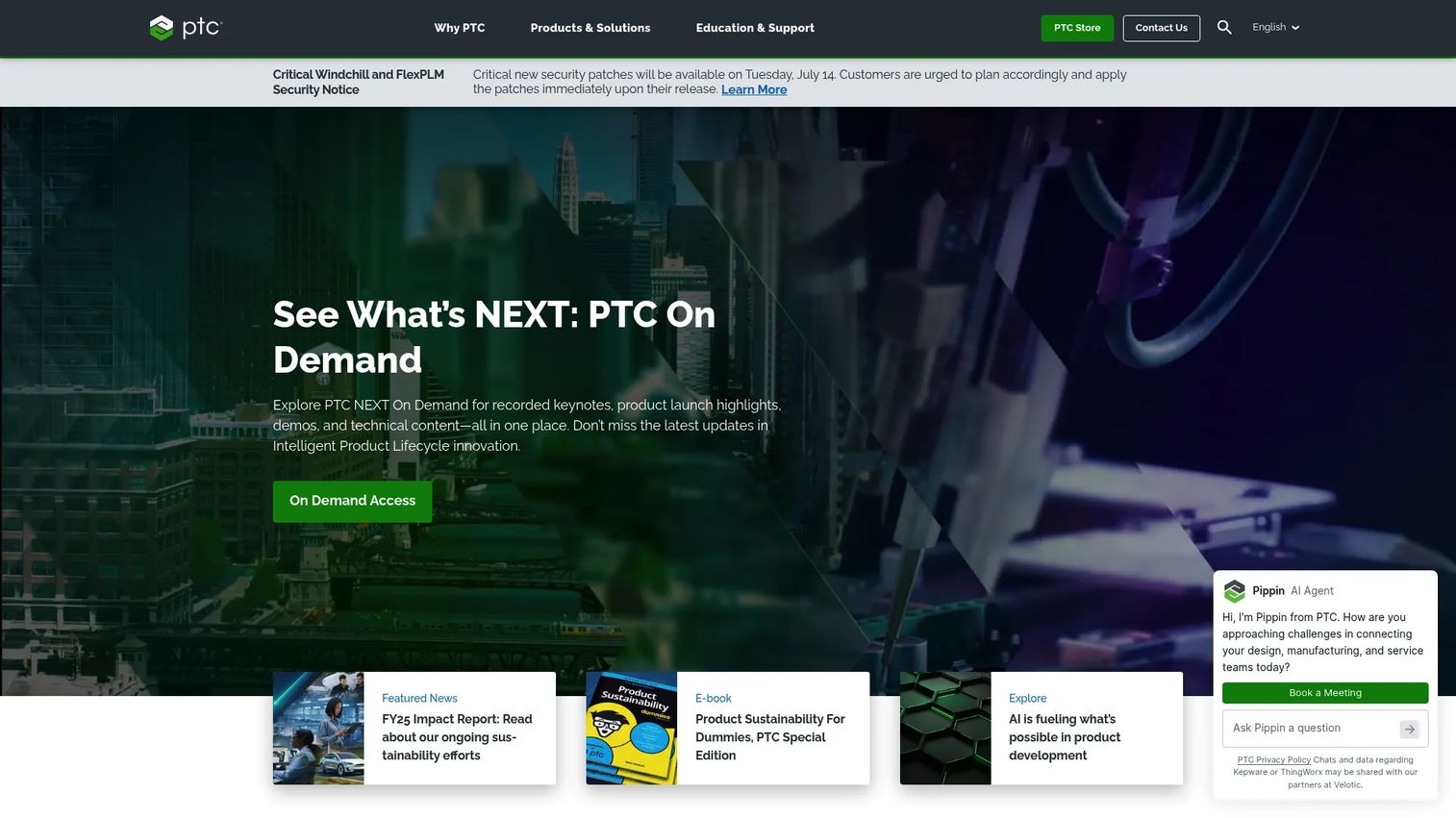
PTC is a global industrial software company that provides digital backbone software for product design, manufacturing, service, and lifecycle management. Its digital twin approach centers on the digital thread: connecting product data across design, manufacturing, and service so a twin reflects the full lifecycle of a connected product.
PTC fits manufacturers needing enterprise PLM, digital thread, and industrial software across design, manufacturing, and service. If your organization is asset-centric and product-focused, PTC's lifecycle backbone is the fit.
Best for: Manufacturers needing enterprise PLM, digital thread, and industrial software across design, manufacturing, and service.
Key strengths
- Enterprise PLM (Windchill): Manage product data across the full lifecycle.
- Cloud SaaS PLM (Windchill+): A cloud-delivered PLM foundation.
- Industrial connectivity and IoT (Kepware, ThingWorx): Connect devices and operational data to the twin.
Why choose PTC: For product organizations, PTC's strength is the digital thread tying design intent to as-built and as-serviced reality. That continuity is valuable when a twin must reflect how a product actually performs in the field, not just how it was designed. Compared with broader operational platforms, PTC is most compelling when product lifecycle and connected-product data are central to your twin.
PTC pricing: PTC uses a mix of free trials and contact-sales pricing. Kepware Server offers a free trial, PTC for Startups provides no-cost solutions for qualifying companies, and core products like Windchill and Vuforia use contact-sales pricing. Publicly visible numeric pricing was not confirmed for core products, so budget for a quote.
Considerations before you buy
Feature checklists lie. What separates a twin that ships value from one that becomes shelfware is how it handles these five dimensions.
Data integration depth
The twin is only as good as the data feeding it. Verify the platform can ingest live signals from your IoT sensors, ERP, APIs, and operational systems, not just a subset. Partial integrations create blind spots, and a twin with blind spots produces confident decisions built on missing information.
Simulation fidelity
Match the model to the decision. A physics-heavy validation needs finite element depth; an operations question needs multimethod flexibility. Confirm the platform supports the scenario testing, predictive maintenance, and optimization your actual decisions require, and no more than you will maintain.
Scalability and deployment
Check cloud, edge, and hybrid deployment options against your architecture. Then look past deployment to collaboration: can stakeholders who will never build a model still read its output? Governance and model sharing determine whether a twin stays a single-team experiment or becomes shared infrastructure.
Implementation effort
Ask what setup, data preparation, and ongoing maintenance actually look like. The hidden cost in every twin program is model drift: as the real system changes, an unmaintained model quietly becomes wrong. Confirm the update cadence you can realistically sustain before you commit.
Proof of value
Look for customer stories with quantified outcomes, not aspirational marketing. Tie the proof to specifics: downtime reduction, cost savings, faster decisions. A vendor that can show operational metrics from teams like yours is worth more than one selling a vision.
Conclusion
The right digital twin platform depends on your asset type and data environment, not on which vendor markets hardest. Autodesk is the broad choice for design-to-operations continuity across the built environment. Ansys wins when simulation fidelity drives the decision. IBM suits platform-minded buyers who prioritize ecosystem integration. AnyLogic excels at flexible operational modeling, Bentley at civil infrastructure, Siemens at factory-scale manufacturing, and PTC at product lifecycle and the digital thread.
Start with the platform most aligned to your asset type and data reality, run a scoped pilot on one real decision, and measure the outcome before you scale. The best twin is not the most capable one; it is the one your team will keep synchronized with the real system a year from now.
FAQs
Digital twin software is used to model physical assets, processes, and systems so teams can forecast outcomes, plan maintenance, and optimize operations without disrupting the real thing. Common applications include operations optimization, predictive maintenance, scenario planning, and cross-team validation of complex systems. The core value is testing decisions in a virtual model before committing them to the physical world.
It collects data from sensors, IoT devices, and operational systems, then maps that data onto a virtual model of the physical asset. Simulation and analytics run on the model to forecast behavior, and the results feed back into planning decisions. In a true twin, the model stays synchronized with live or frequently updated data, creating a continuous feedback loop.
Manufacturing uses it for factory optimization and quality, infrastructure and AEC for asset lifecycle management, energy for grid and equipment reliability, and industrial operations for uptime and process efficiency. Each ties the twin to a business outcome: fewer failures, better planning, lower rework, and faster decisions. Large enterprises dominate adoption because they run the complex systems where twins pay off fastest.
Prioritize real-time data ingestion, simulation and scenario testing, predictive analytics, and broad integrations with IoT, ERP, APIs, cloud, and edge systems. Scalability across teams and deployment models matters as programs grow. Do not overlook governance and access control, since a twin that touches operational data needs clear rules about who can see and change it.
Compare platforms by your system type, integration needs, required simulation depth, and deployment model rather than by raw feature counts. A civil infrastructure team, a manufacturing plant, and an engineering group will each weight these differently. Prioritize outcomes over feature lists: the platform that models your specific decision well beats the one with the longest spec sheet.
Enterprise use is most common because large organizations run the complex, high-value systems where twins deliver the clearest return. But smaller teams benefit when the use case is narrow and the decision value is high, such as a single production line or critical asset. Match the complexity of the twin to the value of the decision it informs, not to the size of the company.
A simulation model can be a standalone, static representation you run to answer a specific question at a point in time. A digital twin is connected to live or frequently updated data from the physical asset, so it stays synchronized and reflects current conditions. Put simply, every digital twin uses simulation, but not every simulation is a digital twin.