Your team is running site models in one tool, tracking asset performance in another, and coordinating grid integration in a third. Nobody has a single view of what is actually happening across the portfolio.
That fragmentation is the real cost of renewable growth. As portfolios add solar, wind, storage, and hybrid assets, the number of workflows explodes faster than any one dashboard can absorb. Planning teams model. Operations teams monitor. Utilities orchestrate. Each job needs different software, and the wrong pick slows every deal, every reforecast, and every reliability decision that follows.
The category is scaling fast. The global renewable energy management software market reached $9.2B in 2025 and is projected to hit $28.9B by 2033, according to HTF Market Intelligence (2025). Money is moving into these tools because the assets they manage are moving onto the grid.
So the question is not whether you need renewable energy software solutions. It is which one matches the job you are trying to improve.
What's inside
This guide is for founders, operators, and buyers evaluating software for renewable energy across planning, monitoring, and grid workflows. We picked tools that serve real jobs, not generic green tech branding.
We selected each platform based on:
- Workflow fit: whether it serves planning, monitoring, forecasting, or grid integration
- Software breadth: how much of the asset lifecycle it covers
- Proof: named customers, ratings, and documented use cases
- Buyer relevance: how clearly it maps to a specific decision you are trying to make
You will get a comparison table, a definition of the category, and a per-tool breakdown so you can shortlist fast.
TL;DR
- Best for grid orchestration and DER integration: GE Vernova, built for utilities coordinating renewables at grid scale
- Best for wind and solar advisory plus modeling: UL Solutions, with resource assessment and simulation tools like Windographer and HOMER
- Best for industrial monitoring and predictive analytics: AVEVA, anchored by the PI System and asset performance software
- Best for solar design and proposals: Aurora Solar, the standard for cloud-based solar design and sales workflows
- Best for utility-scale solar engineering: PVcase, with AutoCAD-integrated, terrain-aware design
- Best for end-to-end solar project management: ENACT Systems, spanning proposal, financing, and post-install monitoring
- Best for forecasting and utility data: Clean Power Research, with SolarAnywhere and rate optimization
These clean energy software picks split cleanly by job. Match the tool to the workflow you need to fix, not the category label.
What is renewable energy software?
Renewable energy software is a category of energy software solutions used to manage, optimize, plan, monitor, forecast, and integrate renewable assets like solar, wind, storage, and hybrid systems across their full lifecycle.
In practice, that spans everything from early site assessment to real-time grid orchestration. Some tools focus on one stage. Others cover several. The strongest software solutions for the energy industry connect data across planning and operations so teams stop working from disconnected views.
Core capabilities of renewable energy optimization software include:
- Forecasting and analytics: predict generation, load, and revenue using weather and production data
- Planning and simulation: model site layouts, energy yield, and financial scenarios before construction
- Asset monitoring: track live performance across a fleet of solar, wind, or hybrid assets
- Predictive maintenance: flag equipment issues before they cause downtime using predictive analytics
- Grid orchestration: coordinate distributed energy resources, storage, and dispatch across the grid
- Data management: unify operational data from meters, inverters, SCADA, and third-party sources
- Sustainability reporting: measure and disclose generation, emissions, and program outcomes
The renewable asset management segment alone reached $5.62B in 2024 and is growing at a 13.2% CAGR through 2031, per MetaStat Insight (2024). Different tools own different parts of that spend, which is exactly why matching software to workflow matters.
When to use renewable energy software
Plan wind, solar, or hybrid projects
Development teams reach for renewable development software during site assessment and design. You model terrain, run resource forecasting, and simulate energy yield before committing capital. Good planning tools let you compare layouts, estimate production, and build a financial case that survives investor scrutiny. The output is a design and a forecast you can defend.
Monitor assets and improve performance
Operators use renewable asset monitoring software once projects go live. You track generation across a fleet, detect underperformance early, and use predictive analytics to catch equipment failures before they cause downtime. The goal is fewer surprises and higher availability. Strong monitoring platforms turn raw meter and inverter data into decisions your field teams can act on the same day.
Integrate renewables into grid operations
Utilities and energy teams use grid integration software to coordinate distributed energy resources, storage, and dispatch. As more variable generation joins the grid, orchestration tools keep supply, demand, and reliability aligned in real time. This is where DER management, forecasting, and control systems converge. The work here is less about a single asset and more about the whole system staying stable.
Comparison table
Here is how the seven platforms compare across the job each one does best. Ratings reflect current G2 seller and product listings where available. Pricing reflects each vendor's published figures; several serve utility and enterprise buyers through custom quotes.
| # | Product | Best for | Key differentiator | Pricing | G2 rating |
|---|---|---|---|---|---|
| 1 | GE Vernova | Grid orchestration and DER integration | GridOS for utility-scale renewables integration | Custom quote | 4.3/5 |
| 2 | UL Solutions | Wind and solar advisory plus modeling | Resource assessment with Windographer and HOMER | ULGHS from $275 per document | 4.4/5 |
| 3 | AVEVA | Industrial monitoring and analytics | PI System and asset performance software | InTouch from $1,850 | Not listed |
| 4 | Aurora Solar | Solar design and proposals | Cloud-based 3D design and sales workflows | Basic from $159 user/mo | 4.7/5 |
| 5 | PVcase | Utility-scale solar engineering | AutoCAD-integrated, terrain-aware design | Custom quote | 4.7/5 |
| 6 | ENACT Systems | End-to-end solar project management | Proposal, financing, and monitoring in one | Custom quote | Not listed |
| 7 | Clean Power Research | Forecasting and utility data | SolarAnywhere and rate optimization | Subscription, contact sales | Not listed |
Best renewable energy software for 2026
1. GE Vernova
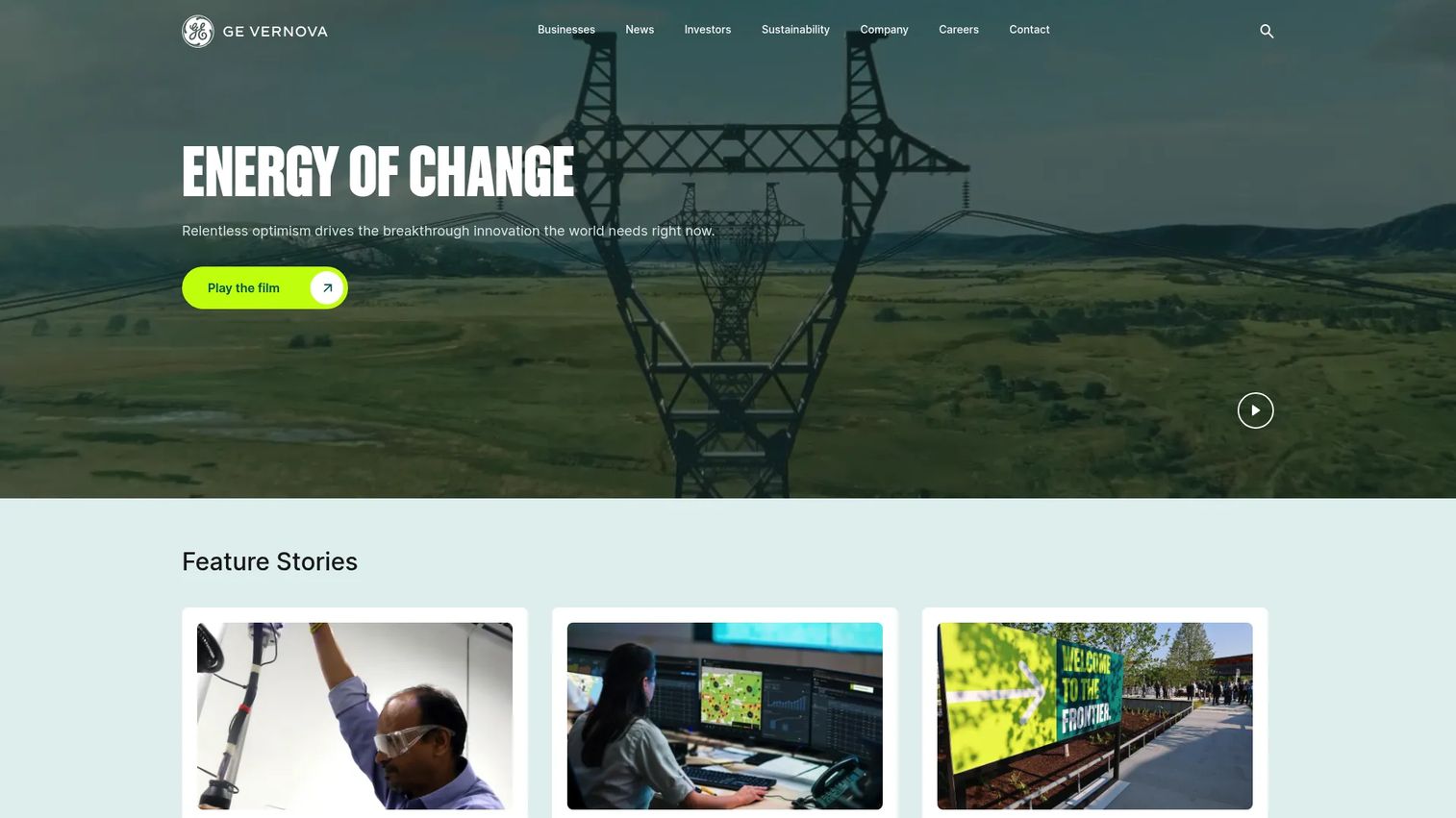
GE Vernova is an energy company focused on electrification and decarbonization across power, wind, and grid businesses. Its GridOS renewable energy software helps utilities manage, optimize, and integrate large-scale renewables into the grid. For teams whose core problem is coordinating variable generation and distributed resources at scale, this is the utility-grade option.
Best for: Utilities and grid operators managing renewable integration and DER orchestration across large portfolios.
Key features
- Management of large-scale renewables
- DER orchestration and integration
- AEMS, ADMS, and DERMS support for grid reliability
- Grid solutions and electrification software
- Wind, nuclear, hydro, and storage businesses
Why choose GE Vernova: Pick it when your problem is the grid, not a single site. GE Vernova fits utilities and infrastructure operators who need to keep supply, demand, and reliability aligned as more renewables come online.
GE Vernova pricing: GE Vernova sells through custom quotes for utility and enterprise deployments. Pricing is not published on the site, so plan on a direct conversation to scope your integration.
GE Vernova holds a 4.3/5 rating on its G2 seller listing.
2. UL Solutions
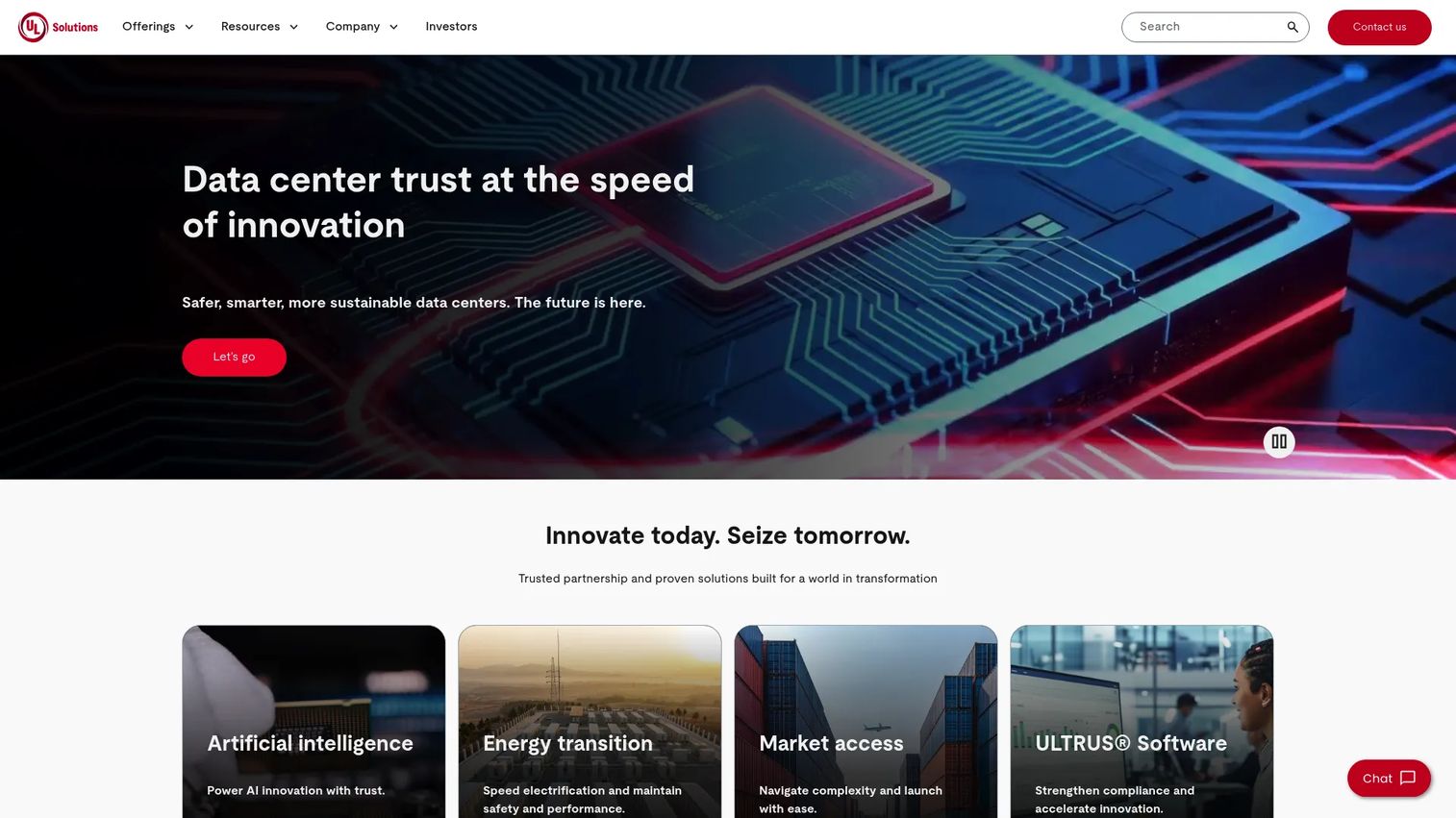
UL Solutions is a global applied safety science company offering testing, advisory, and software across wind, solar, monitoring, and microgrid workflows. Its renewables tools cover resource assessment, project development, and modeling, including Windographer for wind data and HOMER for microgrid modeling software. This is the pick when you want advisory depth alongside the software.
Best for: Development and engineering teams needing resource assessment and simulation backed by advisory support.
Key features
- Wind and solar advisory support
- Resource assessment and RAMP workflows
- Windographer for wind data analysis
- HOMER for microgrid and hybrid modeling
- ULTRUS platform for compliance and ESG reporting
Why choose UL Solutions: Choose it when modeling accuracy and advisory validation both matter. UL Solutions suits teams that want proven assessment tools plus expert input during early project development.
UL Solutions pricing: ULGHS starts at $275 per product document. UL 360 ESG software is demo-based with deployment options quoted directly rather than posted publicly.
UL Solutions holds a 4.4/5 rating on G2.
3. AVEVA
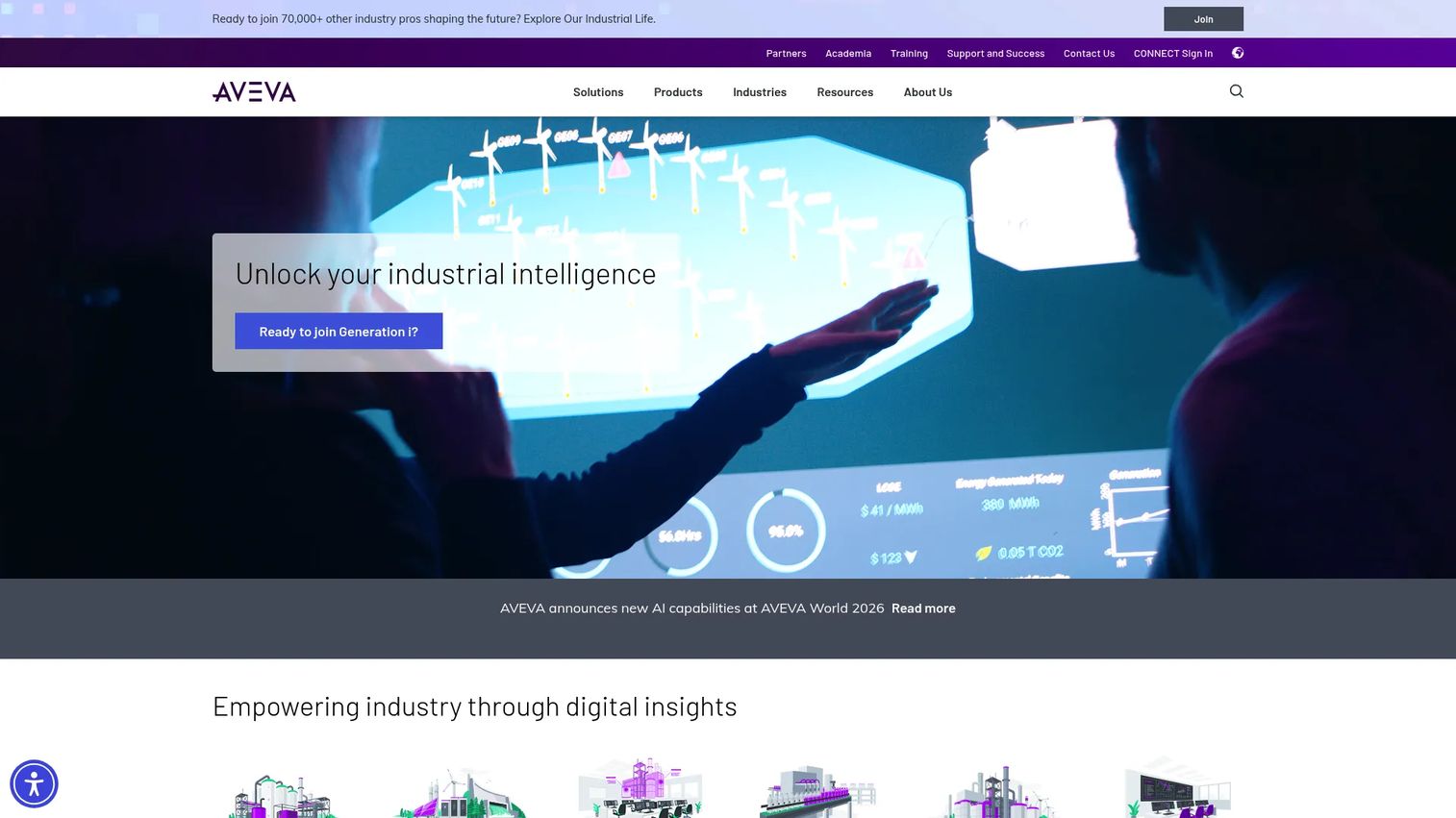
AVEVA is an industrial software provider for engineering, operations, and asset performance across energy, process, and infrastructure sectors. It frames renewable energy software as a suite for operational data, asset management, and engineering efficiency. Anchored by the PI System, AVEVA fits operators who need to turn high-volume asset data into predictive action.
Best for: Large industrial and utility operators needing monitoring, predictive analytics, and engineering software in one portfolio.
Key features
- PI System for operational data management
- Unified Engineering for design workflows
- Asset Strategy Optimization
- Predictive Analytics for equipment health
- Unified Operations Center for Renewables
Why choose AVEVA: Reach for it when data volume is the challenge. AVEVA suits operators running large fleets who want predictive maintenance and unified operations rather than a single-workflow tool.
AVEVA pricing: AVEVA InTouch HMI starts at $1,850 for a workstation, with Unlimited editions listed at $12,360 and $20,600. AVEVA Operations Control is subscription-based and quoted through a distributor.
AVEVA does not have a current published G2 rating for this portfolio at time of writing.
4. Aurora Solar
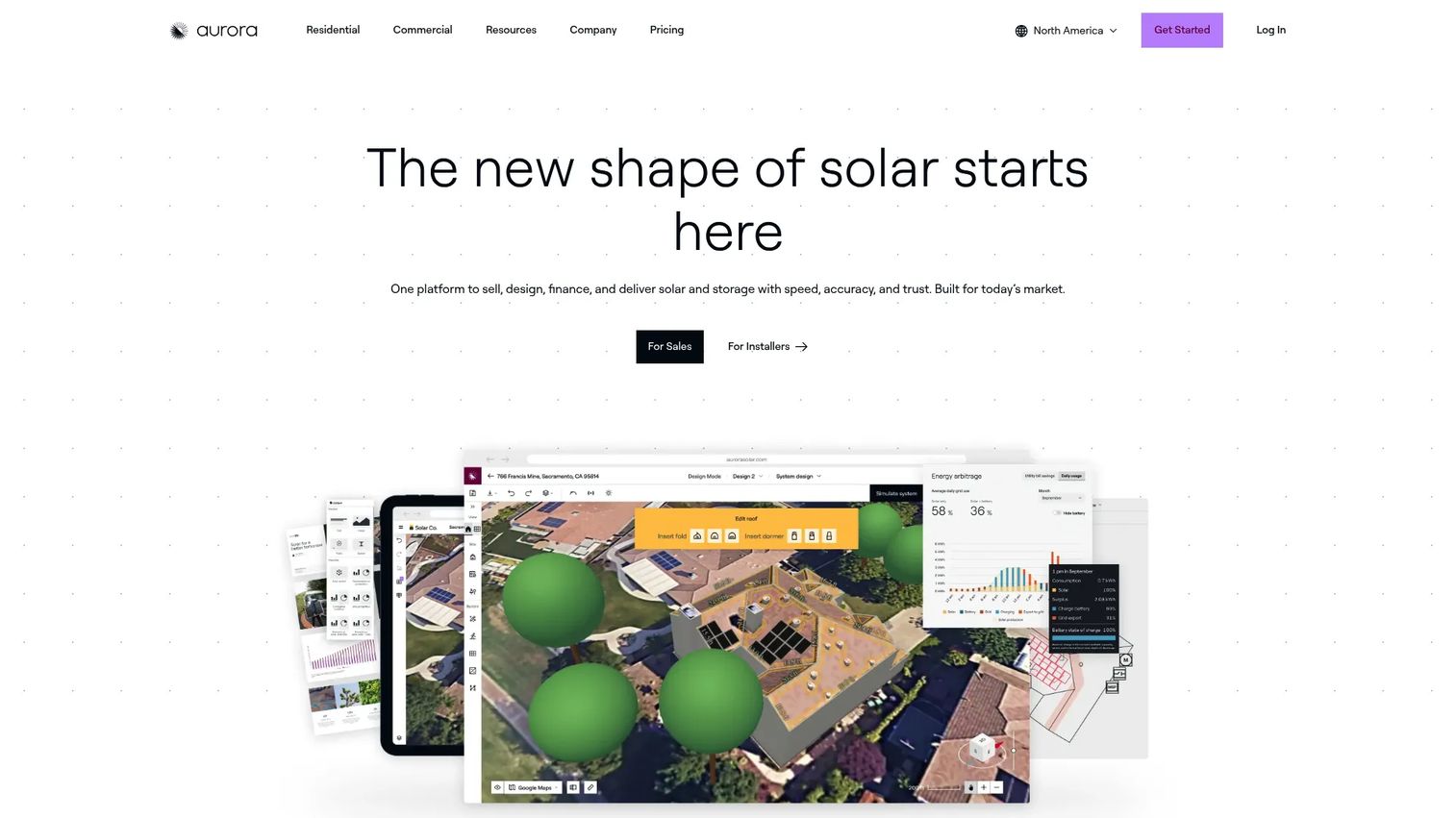
Aurora Solar is cloud-based solar design, sales, and delivery software for solar professionals. It handles 3D roof modeling, energy simulation, siting, and proposal workflows in one platform. Among solar software companies, Aurora is a widely adopted standard for teams that design and sell residential and commercial solar.
Best for: Solar installers and sales teams needing design, simulation, and proposal tools in a single workflow.
Key features
- 3D roof modeling and design
- Energy simulation and shade reports
- LiDAR-assisted modeling
- Sales proposals and financing workflows
- Siting and layout tools
Why choose Aurora Solar: Choose it when your bottleneck is turning site data into a closed sale. Aurora fits installers who want design accuracy and proposal speed without stitching multiple tools together.
Aurora Solar pricing: The Basic plan starts at $159 per user per month, and Premium at $259 per user per month, both billed monthly. Enterprise is custom per project, and on-demand site models start at $9.99.
Aurora Solar holds a 4.7/5 rating on G2.
5. PVcase
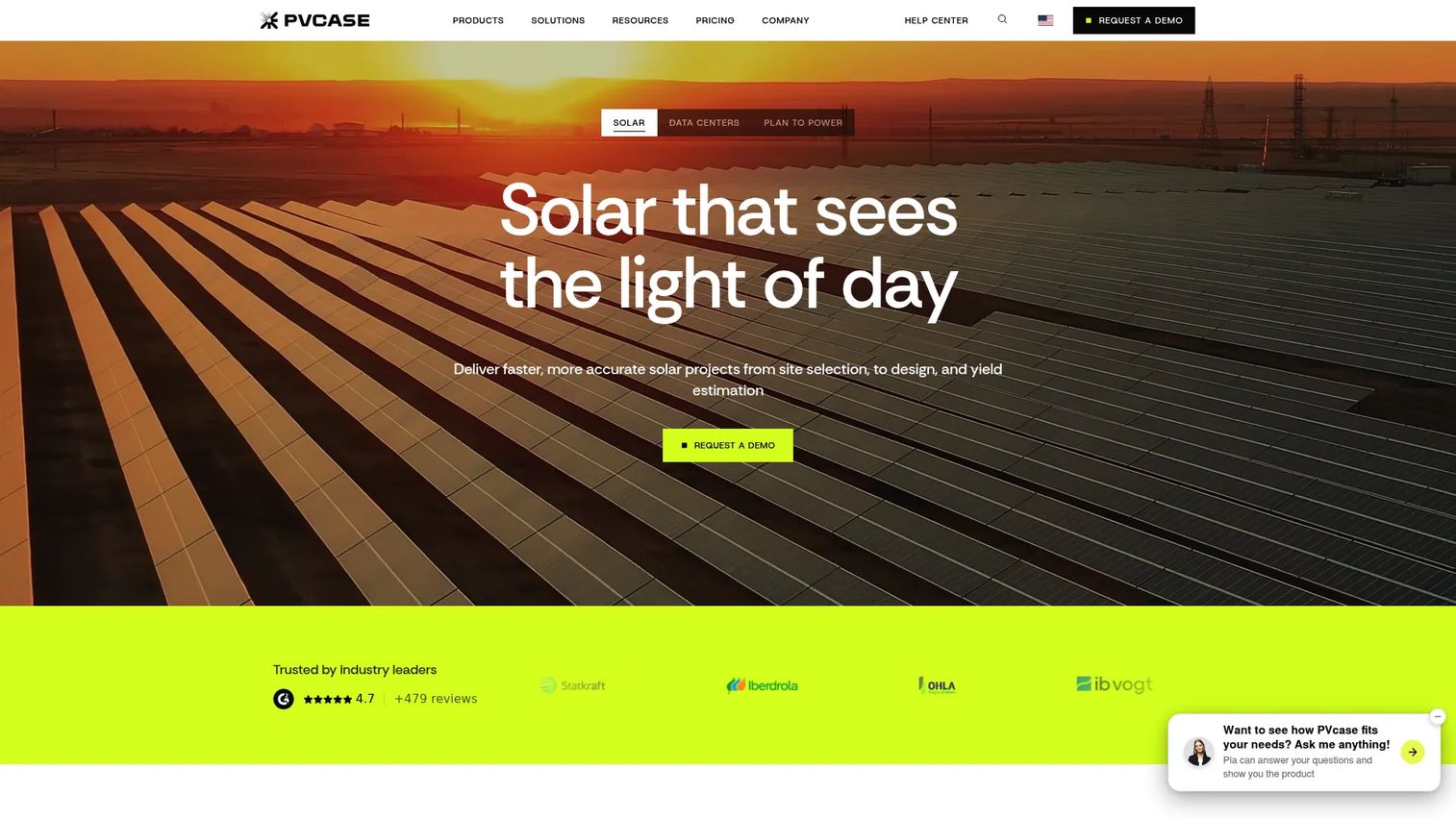
PVcase is a solar software platform for site selection, utility-scale design, rooftop design, and energy modeling. Its AutoCAD-integrated, terrain-aware engineering makes it a strong fit for developers designing large ground-mount projects on complex terrain. PVcase covers the design side of renewable development software with real engineering depth.
Best for: Solar developers and engineering teams needing integrated utility-scale design and modeling.
Key features
- PVcase Prospect for site selection
- PVcase Ground Mount for utility-scale design
- PVcase Roof Mount for rooftop design
- PVcase Yield for energy modeling
- AutoCAD-integrated, terrain-aware workflows
Why choose PVcase: Pick it when terrain and utility-scale complexity define your projects. PVcase suits engineering teams that need design and yield modeling connected in one workflow.
PVcase pricing: PVcase offers customized packages rather than a public price list. The site directs buyers to request pricing or a demo based on scope.
PVcase holds a 4.7/5 rating on its G2 seller listing.
6. ENACT Systems
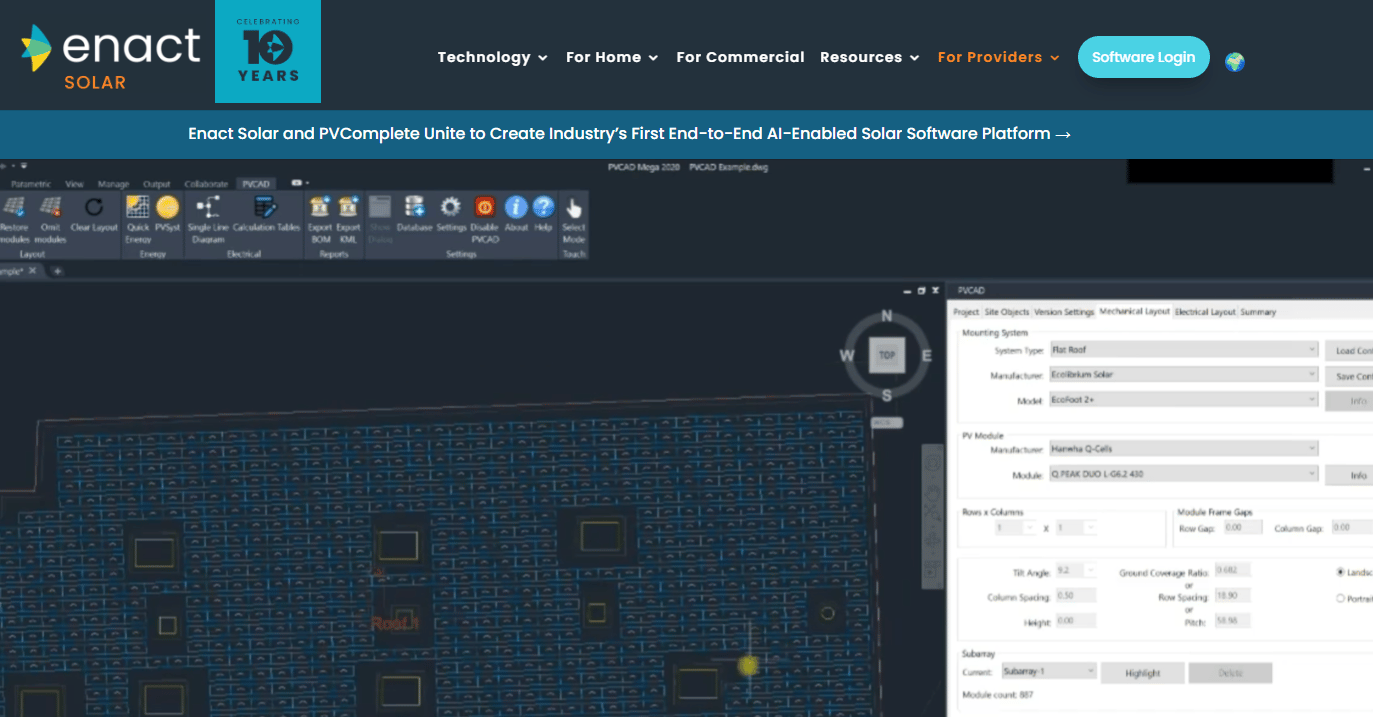
ENACT Systems is solar design, sales proposal, and monitoring software for solar installers and owners. It covers project management across proposal, financing, and post-install monitoring, so teams can run more of the lifecycle in one place. For installers who want fewer handoffs between sales and operations, ENACT consolidates the workflow.
Best for: Solar companies needing design, proposal, and monitoring tools connected across the project lifecycle.
Key features
- Solar proposal design and pricing
- PVCAD engineering workflows
- Rooftop and ground-mount project support
- Financing workflows
- Enact Home solar and storage monitoring
Why choose ENACT Systems: Choose it when you want proposal, financing, and monitoring under one roof. ENACT fits installers reducing the friction between selling a project and operating it.
ENACT Systems pricing: ENACT Systems uses demo and quote-based pricing rather than posting figures publicly. Reach out through the site to scope a plan for your team size and workflow.
ENACT Systems does not have a current published G2 rating at time of writing.
7. Clean Power Research
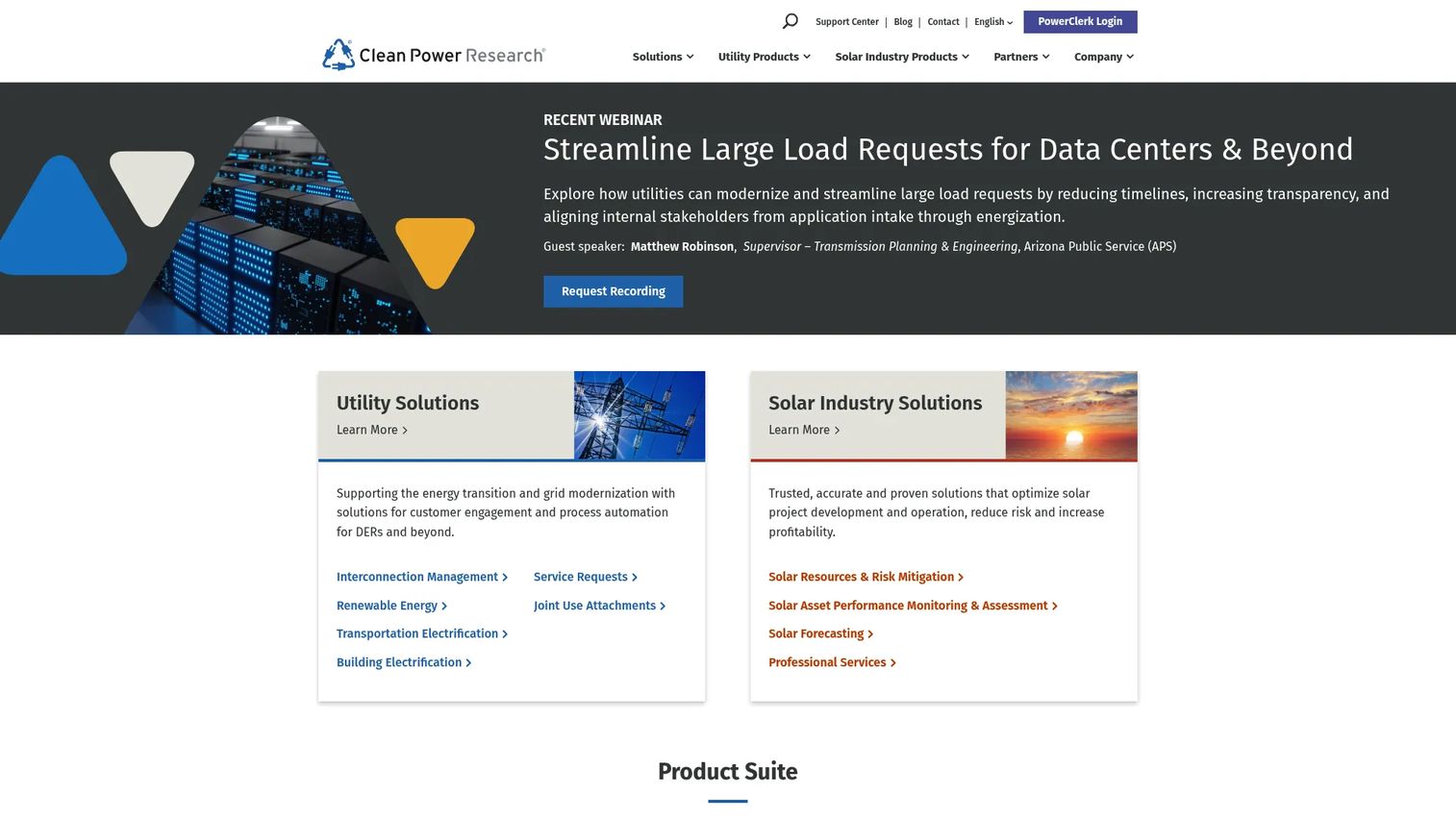
Clean Power Research is a software company providing energy-industry SaaS and APIs, including forecasting and utility workflow automation. Its SolarAnywhere data powers generation forecasting, and PowerClerk automates interconnection and incentive programs. This is the pick when forecasting accuracy and utility data products are the job.
Best for: Utilities and energy agencies needing forecasting, rate optimization, and workflow automation.
Key features
- SolarAnywhere solar resource data
- Generation forecasting
- Rate optimization
- No-code workflow automation via PowerClerk
- APIs and connectors for data integration
Why choose Clean Power Research: Reach for it when forecasting and utility program automation drive your decisions. Clean Power Research fits utilities and agencies that need trusted solar data and workflow tooling together.
Clean Power Research pricing: PowerClerk is licensed as a subscription, with pricing quoted directly rather than posted. Contact Clean Power Research to scope a subscription for your programs.
Clean Power Research does not have a current published G2 rating at time of writing.
Considerations
Before you commit, run each option through this checklist. The right pick depends on the job, not the brand name on the box.
Planning versus operations fit
Decide first whether you are buying to plan projects or to run them. Planning tools like Aurora Solar and PVcase model sites and yield. Operations platforms like AVEVA and GE Vernova monitor and orchestrate live assets. Buying the wrong side of that line wastes budget and slows your team.
Data and integration depth
Check how the tool ingests and unifies data from meters, inverters, SCADA, and third-party sources. Fragmented data is the reason most portfolios lack a single view. Prioritize software that connects to your existing systems rather than adding another silo.
Grid and DER support
If grid integration is your challenge, confirm the platform handles distributed energy resources, storage, and dispatch. GE Vernova and Clean Power Research lead here. A pure design tool will not solve an orchestration problem, no matter how strong its modeling is.
Modeling accuracy
For planning and forecasting, accuracy directly affects your financial case. Ask for validation data, resource assessment methodology, and how the tool handles terrain and weather. UL Solutions and Clean Power Research build their reputation on this.
Proof and customer validation
Look for named customers, ratings, and documented outcomes in a portfolio like yours. Peer proof beats any feature list. Ask each vendor for a reference running the same asset mix and scale you operate.
Conclusion
The strongest pick depends entirely on the workflow you need to improve. For grid orchestration and DER integration, GE Vernova is built for utility scale. For wind and solar planning backed by advisory depth, UL Solutions pairs modeling with expert validation. For industrial monitoring and predictive analytics, AVEVA turns high-volume data into action.
On the solar side, Aurora Solar leads for design and proposals, PVcase for utility-scale engineering, and ENACT Systems for running the full project lifecycle in one place. For forecasting and utility data, Clean Power Research brings SolarAnywhere and rate optimization.
Do not buy the category. Buy the job. Map the workflow that slows you down most today, whether that is planning, monitoring, forecasting, or grid integration, then shortlist the two tools that own that job. Request a demo from each, run your own asset data through them, and let the results decide.
If your next challenge is showing your own product or workflow to buyers, Start your journey with Guideflow today!
FAQs
Renewable energy software helps teams manage, optimize, plan, monitor, forecast, and integrate renewable assets like solar, wind, and storage. Depending on the tool, it covers site modeling, energy yield simulation, live asset monitoring, predictive maintenance, and grid orchestration. The best clean energy software connects these jobs so planning and operations share one view of the portfolio.
For solar design and proposals, Aurora Solar is a widely adopted standard with 3D modeling, simulation, and sales workflows. For utility-scale engineering on complex terrain, PVcase offers AutoCAD-integrated, terrain-aware design. Both are solar software companies focused on turning site data into buildable, financeable projects.
AVEVA and GE Vernova both serve renewable asset monitoring at industrial and utility scale. AVEVA's PI System and predictive analytics track equipment health across large fleets, while GE Vernova focuses on managing and integrating renewables into grid operations. ENACT Systems also offers monitoring through Enact Home for solar and storage owners.
Grid integration software coordinates distributed energy resources, storage, and dispatch. GE Vernova's GridOS is built for utility-scale renewables integration and DER orchestration. Clean Power Research supports the data and forecasting side with SolarAnywhere, plus workflow automation for interconnection through PowerClerk.
Forecasting tools combine weather data, historical production, and resource models to predict generation and revenue. Clean Power Research uses SolarAnywhere data for solar forecasting, while UL Solutions applies resource assessment methods through tools like Windographer for wind. Better forecasts reduce financial risk and improve grid coordination.
Modeling software runs before construction. You simulate site layouts, terrain, and energy yield to design a project and build a financial case, using tools like PVcase and Aurora Solar. Monitoring software runs after assets go live, tracking real performance and flagging issues with tools like AVEVA and GE Vernova. Some renewable energy software development platforms span both stages, but most tools specialize in one.
Yes. GE Vernova and Clean Power Research both target utility workflows directly. GE Vernova handles grid orchestration and DER integration at scale, while Clean Power Research automates interconnection, incentives, and forecasting programs. These energy software solutions are built for the reliability and data demands utilities face rather than single-site solar design.