

Your team logs a dispute in a spreadsheet. Someone emails a colleague for backup documentation. The case sits for six days waiting on an approval nobody chased. Then it gets misassigned. Then it gets written off, because chasing it costs more than the money it recovers.
That is what manual dispute handling looks like at scale. Not one broken step, but a chain of them, each one draining working capital and none of them visible until the quarter closes.
The category built to fix this is growing fast. The dispute management software market reached $4.2B in 2025 and is projected to hit $9.1B by 2034, a 9.8% CAGR, according to MarketIntelo (2025). That growth tracks a simple shift: finance teams are moving disputes out of inboxes and into structured, automated workflows.
For a founder watching burn and reporting quality, disputes are a repeatability problem. Every write-off is revenue you already earned, leaking out through a process that depends on someone remembering to follow up. This guide breaks down seven dispute management platforms, how automated dispute resolution actually works, and how to match a tool to your dispute mix, ERP stack, and appetite for automation versus control.
What's inside
This guide is for finance, AR, and operations leaders evaluating dispute management software, plus founders who care how it affects cash efficiency and reporting.
We picked tools based on four criteria that separate a real dispute management platform from a glorified ticket queue:
- Automation depth: rules, AI assistance, and exception handling
- ERP integration: SAP, Oracle, NetSuite, Dynamics, and real-time sync
- Workflow control and auditability: assignment, approvals, and a clean audit trail
- Reporting: cycle time, backlog, and recovery visibility
Every tool here earned its place on breadth of dispute coverage, not marketing polish.
TL;DR
- Best overall for scale and automation: HighRadius
- Best for issuer-focused fraud and disputes: Quavo
- Best for core and digital banking workflows: Q2
- Best for workflow discipline and AR collections overlap: Gaviti
- Best for mid-market AR operations needing visibility: Kolleno
- Best for document-heavy finance teams: Quadient
- Best for European finance teams and back-office automation: Esker
The right pick depends on three things: how many disputes you process, what ERP you run, and how much of the resolution flow you want automated versus manually controlled.
What is dispute management software
Dispute management software is a system that helps finance and operations teams capture, classify, route, investigate, resolve, and report on disputes across cards, ACH, invoices, deductions, and related claims.
Manual dispute handling scatters this work across spreadsheets, email chains, and shared drives. A dispute management system pulls it into one workflow, so a card chargeback, an invoice deduction, and an ACH claim all follow the same tracked path from intake to resolution.
Core capabilities of an automated dispute resolution software platform:
- Intake and classification: capture disputes from any channel and sort them by type, reason code, and priority
- Evidence collection and linking: attach invoices, proofs of delivery, and correspondence to each case
- Workflow routing and approvals: assign cases by rule, escalate exceptions, and enforce approval steps
- ERP and system synchronization: keep balances, credits, and case status aligned across finance systems
- Audit trail and reporting: log every action and surface cycle time, backlog, and recovery rate
The stronger platforms add compliance support and root-cause analytics on top, so you learn why disputes happen, not just how fast you closed them.
When to use dispute management software
Reduce manual work when disputes pile up
Spreadsheets work until they don't. Once dispute volume climbs past what a person can track by memory, cases start slipping. A deduction sits unworked. A chargeback misses its response window. If your team spends more time locating evidence than resolving claims, the manual model has hit its ceiling.
Standardize resolution across rails and case types
Card disputes, ACH claims, invoice deductions, and merchant chargebacks each arrive from different sources with different rules. Handling them in separate tools or ad hoc processes creates inconsistency and gaps. A single dispute resolution workflow applies the same intake, routing, and approval logic across every case type, so nothing falls through a seam between systems.
Improve recovery speed and visibility
Faster resolution is working capital recovery. Every day a valid dispute stays open is a day that cash is stuck. Automated workflows compress cycle time, and structured reporting shows leadership exactly where money is trapped: which reason codes, which customers, which stages. That visibility turns disputes from a quarter-end surprise into a managed line item.
Comparison table
Here is how the seven platforms compare on fit, differentiation, pricing, and rating. Pricing for most of these tools is quote-based, which is typical for enterprise finance software.
| # | Product | Best for | Key differentiator | Pricing | G2 rating |
|---|---|---|---|---|---|
| 1 | HighRadius | Enterprise receivables and dispute automation | AI-driven order-to-cash lifecycle | Custom | 4.3/5 |
| 2 | Quavo | Issuer fraud and dispute automation | End-to-end issuer disputes with AI | Custom | Not listed |
| 3 | Q2 | Digital and core banking disputes | Dispute case management inside banking | Custom | 4.2/5 |
| 4 | Gaviti | AR collections plus dispute handling | Invoice-to-cash with dispute workflow | Custom | 4.4/5 |
| 5 | Kolleno | Mid-market AR and collections | Collections automation with visibility | From $545/user/mo | 4.9/5 |
| 6 | Quadient | Document-heavy back office | Communications plus finance automation | Custom | 2.3/5 |
| 7 | Esker | European finance operations | Source-to-pay and order-to-cash | Custom | 4.3/5 |
Best dispute management software for 2026
1. HighRadius
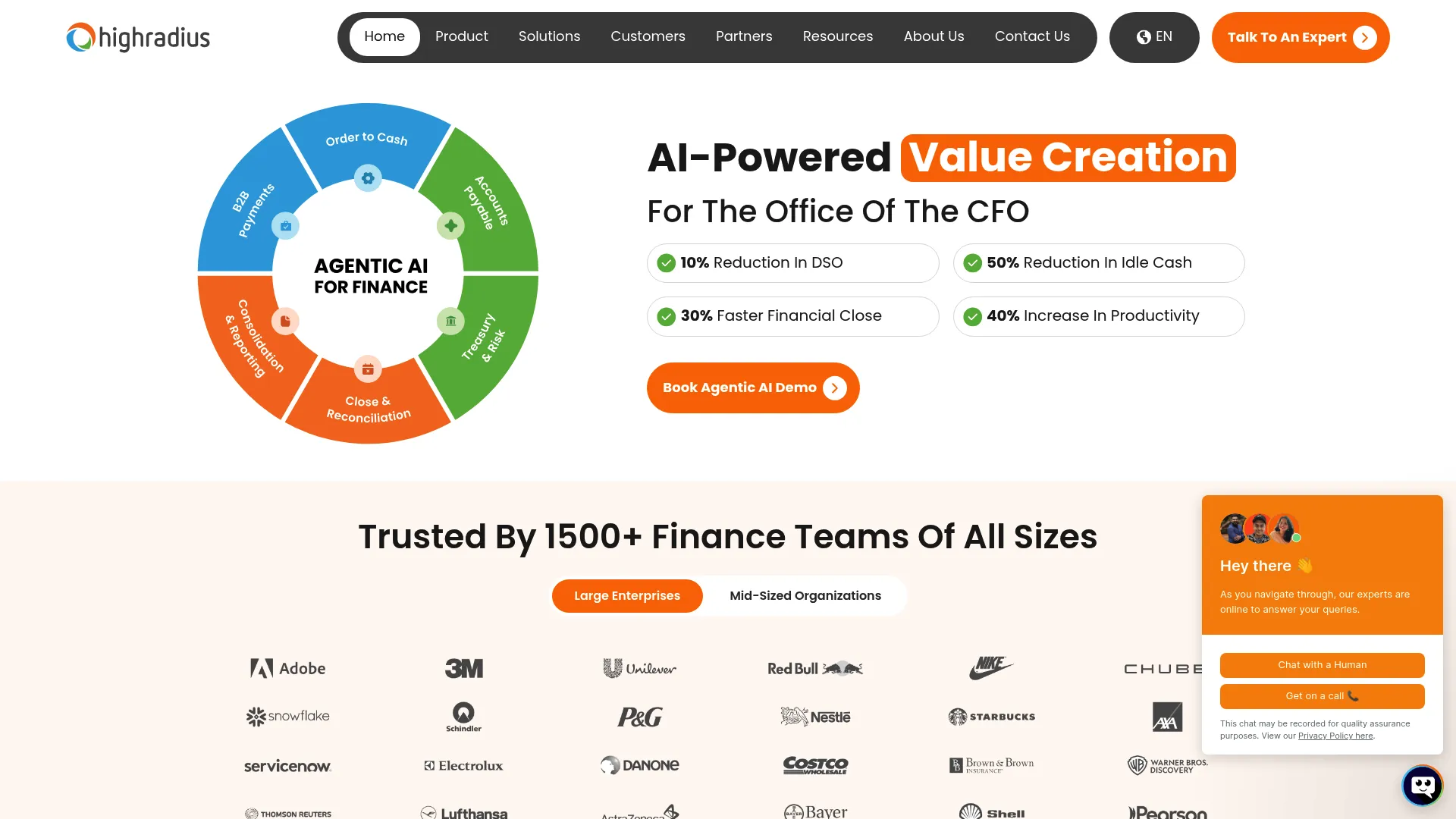
HighRadius is an AI-powered finance automation platform built for the Office of the CFO. Disputes and deductions sit inside its broader order-to-cash suite, which means a dispute doesn't live in isolation. It connects to the invoice, the payment, the credit decision, and the reconciliation, so resolving one case updates the whole receivables picture.
That lifecycle framing is the real differentiator. Most tools manage disputes as tickets. HighRadius manages them as part of the cash cycle, with AI handling classification, evidence gathering, and routing so analysts work exceptions instead of every case.
Best for: enterprise finance teams automating receivables, AP, treasury, and close workflows at high dispute volume.
Key strengths
- Order-to-cash automation with integrated dispute and deduction handling
- AP automation across the payables workflow
- Close and reconciliation automation
- AI-driven case classification and routing
Why choose HighRadius: if you run an ERP-heavy operation with high dispute volume and want disputes tied directly to receivables, AP, and close, this is the deepest platform on the list. It suits teams ready to commit to a full order-to-cash system, not a point solution.
HighRadius pricing: Pricing is subscription and outcome-based. HighRadius does not publish numeric pricing; you engage sales for a quote scoped to your volume and workflows.
2. Quavo
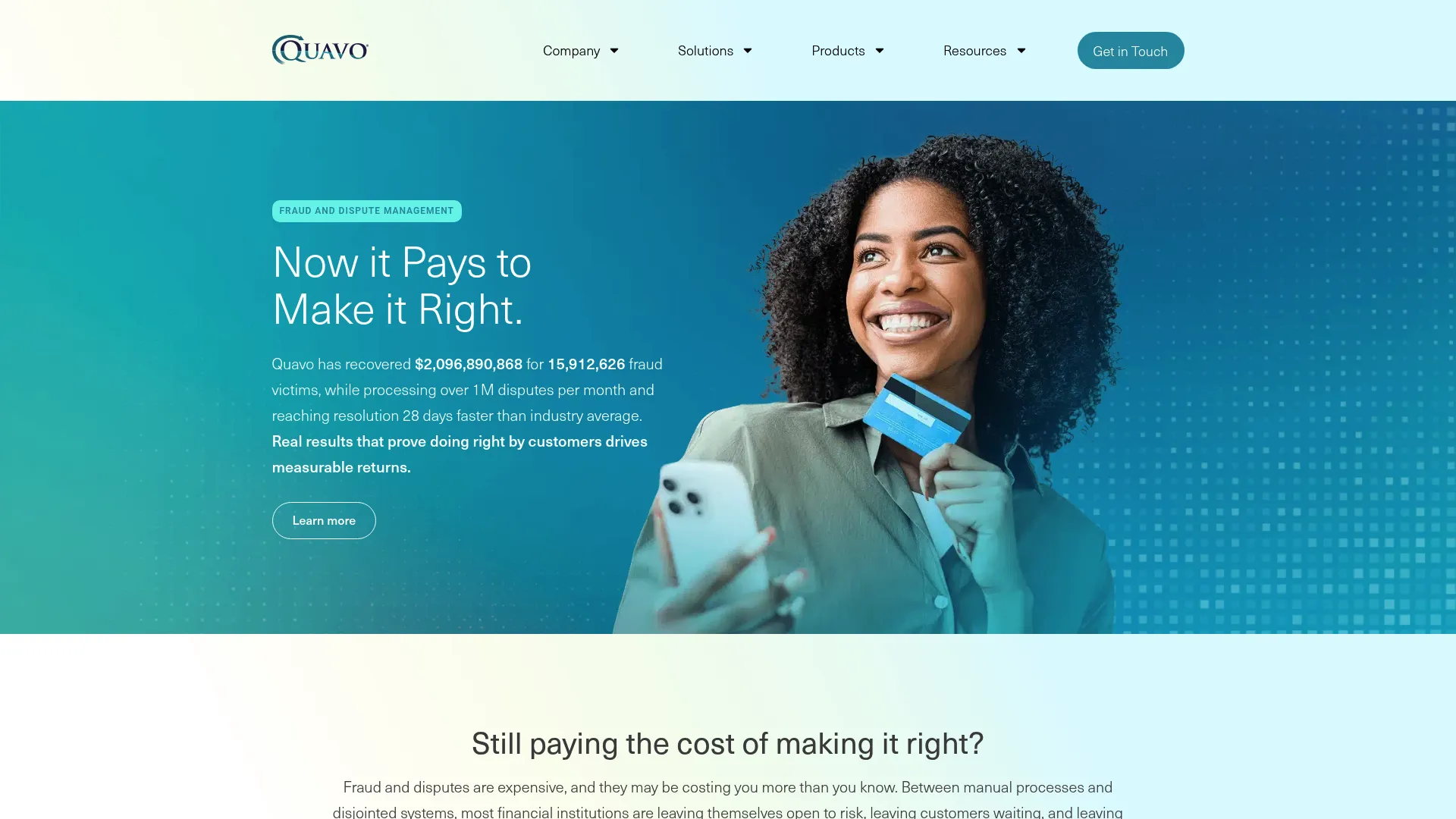
Quavo builds AI-powered fraud and dispute management software for financial institutions. Where receivables tools focus on invoices, Quavo focuses on the issuer side: card disputes, fraud claims, and Reg E and Reg Z obligations that banks and credit unions have to meet on a clock. Its QFD product automates the dispute lifecycle end to end, and its Aria AI handles resolution logic.
Compliance is the anchor here. Issuer disputes carry hard regulatory deadlines and audit requirements, and Quavo pairs automation with managed services so under-resourced teams can keep pace without missing timelines.
Best for: banks, credit unions, fintechs, and processors that need dispute automation plus managed dispute operations.
Key strengths
- End-to-end dispute automation across the issuer lifecycle
- AI dispute resolution with Aria
- Managed services and operational support
- Compliance-first workflow built for issuer obligations
Why choose Quavo: if disputes for you mean card and fraud claims under Reg E and Reg Z rather than invoice deductions, Quavo is built for exactly that context. The managed-services option fits institutions that want automation without hiring a larger dispute team.
Quavo pricing: Quavo doesn't list its prices. Costs are custom and tiered based on the solution you need and your dispute volume, so you'd request a quote tailored to your situation.
3. Q2
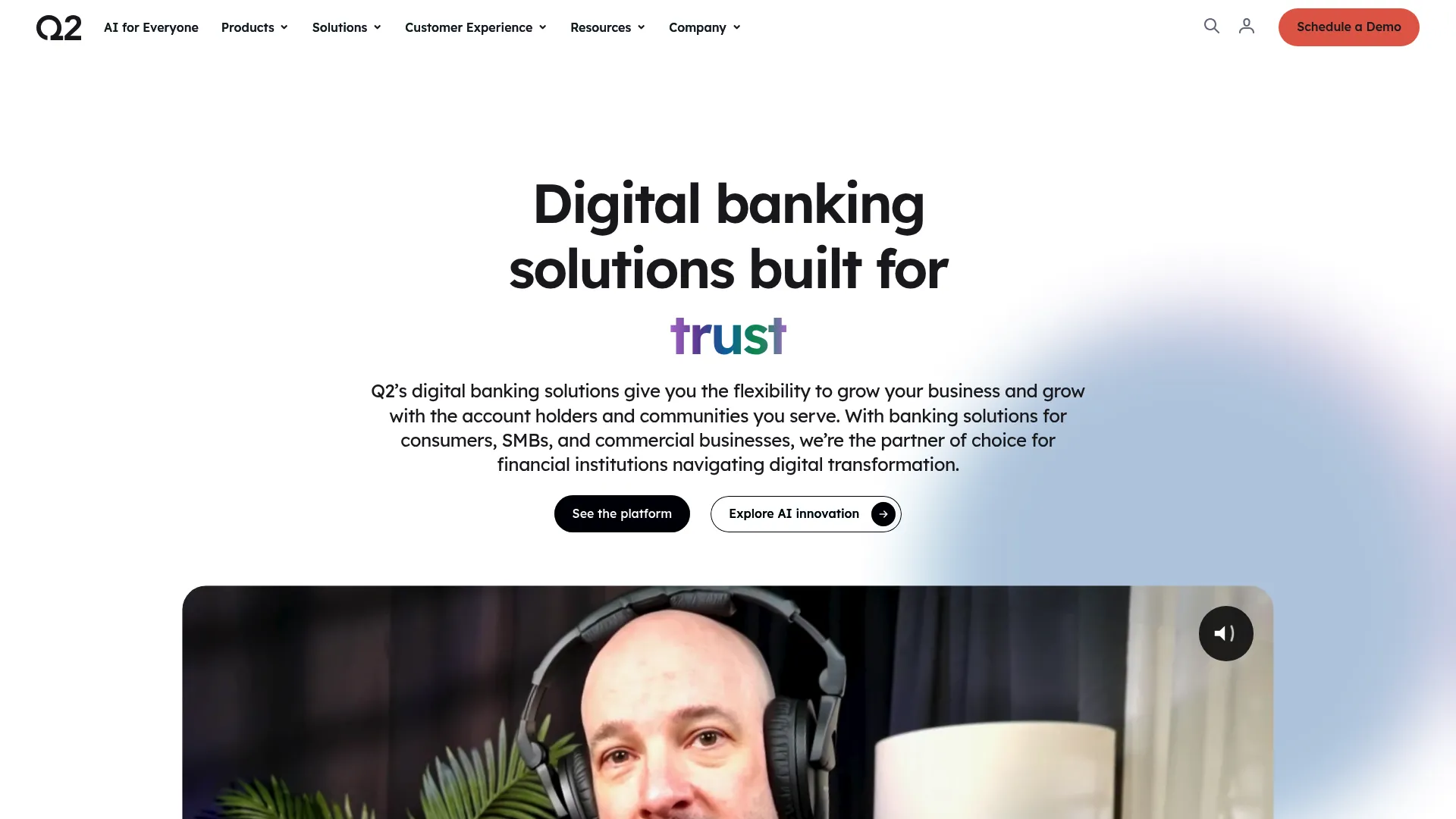
Q2 is a digital banking and lending platform for financial institutions, with dispute case management built into its Centrix tooling. The advantage for banks and credit unions already running Q2 is that disputes live inside the same environment as the rest of the banking workflow. There is no separate system to reconcile against.
Its dispute tracking covers a broad range of case types with case management and compliance references baked in. For an institution already in the Q2 ecosystem, that consolidation matters more than best-of-breed dispute features bolted on from outside.
Best for: banks and credit unions that already run Q2 and want dispute case management inside their existing banking platform.
Key strengths
- Dispute tracking and case management across rails
- Digital banking for consumer, SMB, and commercial segments
- AI embedded into banking workflows
- Broad integrations and extensibility
Why choose Q2: if you are already a Q2 customer, keeping disputes inside the platform removes an integration and a vendor. It fits institutions that value one banking environment over a standalone dispute specialist.
Q2 pricing: Q2 doesn't list pricing anywhere. You'll need to schedule a demo or contact sales, and the quote depends on your institution's size and needs.
4. Gaviti
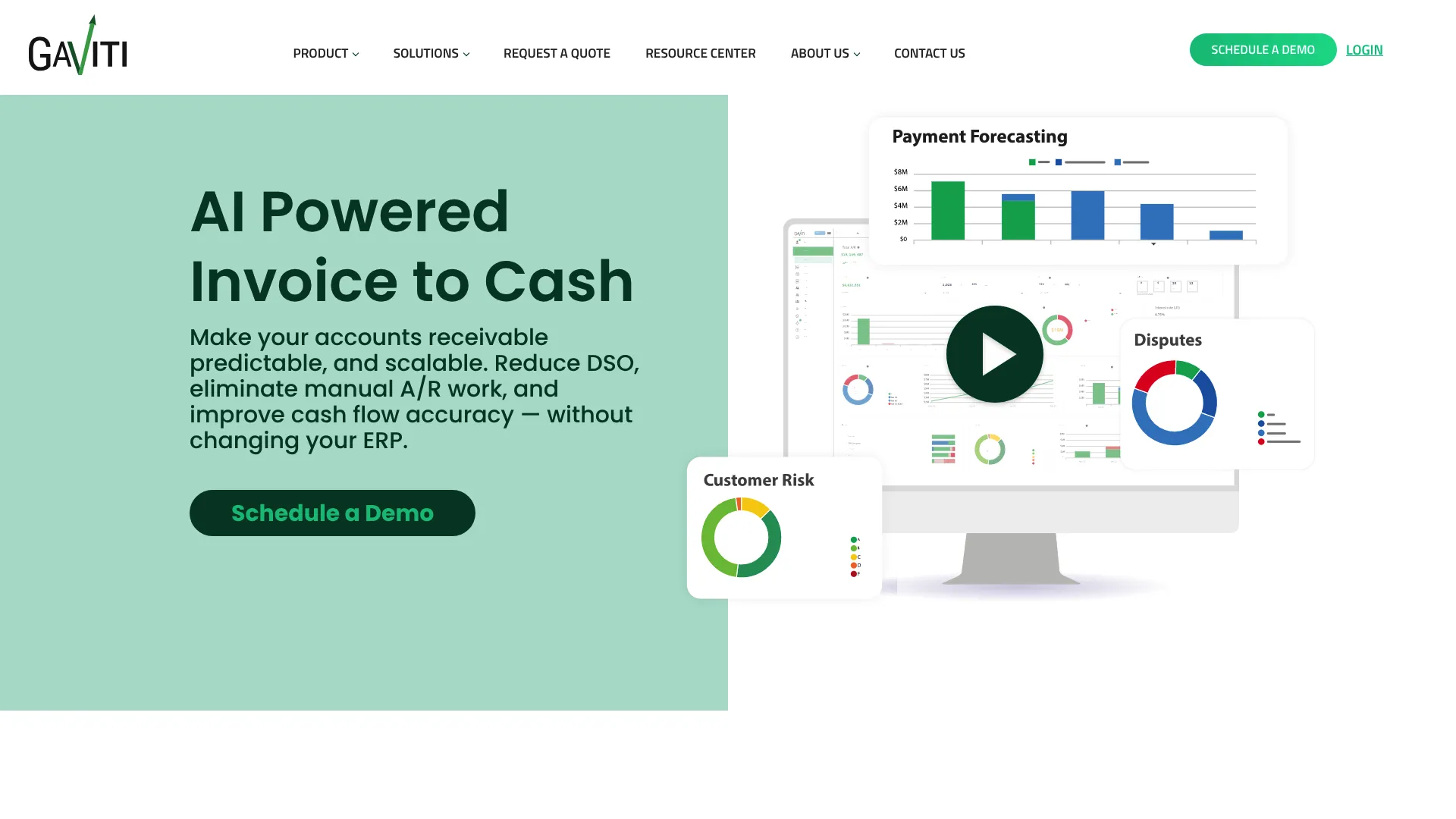
Gaviti is an invoice-to-cash and accounts receivable automation platform that ties dispute and deduction handling directly to collections. That link is the point. When a customer disputes an invoice, the case doesn't leave the collections context; it stays attached to the account, the aging, and the collector working it.
For finance teams that want disputes managed as part of receivables rather than as a separate discipline, Gaviti keeps the workflow tight. Its self-service payer portal and cash application features round out the invoice-to-cash picture.
Best for: B2B finance teams that want dispute handling connected to AR collections and invoice-to-cash.
Key strengths
- Automated AR collections management
- Dispute and deduction workflow tied to accounts
- Customer self-service payer portal
- Cash application and credit management
Why choose Gaviti: if your disputes are mostly invoice deductions and you want them worked alongside collections rather than in a silo, Gaviti's overlap is the draw. It fits mid-market finance teams building discipline into receivables.
Gaviti pricing: Gaviti uses custom pricing across Standard, Pro, and Expert packages, all billed annually. Gaviti doesn't show any actual prices. You'll need to reach out to them directly for a quote.
5. Kolleno
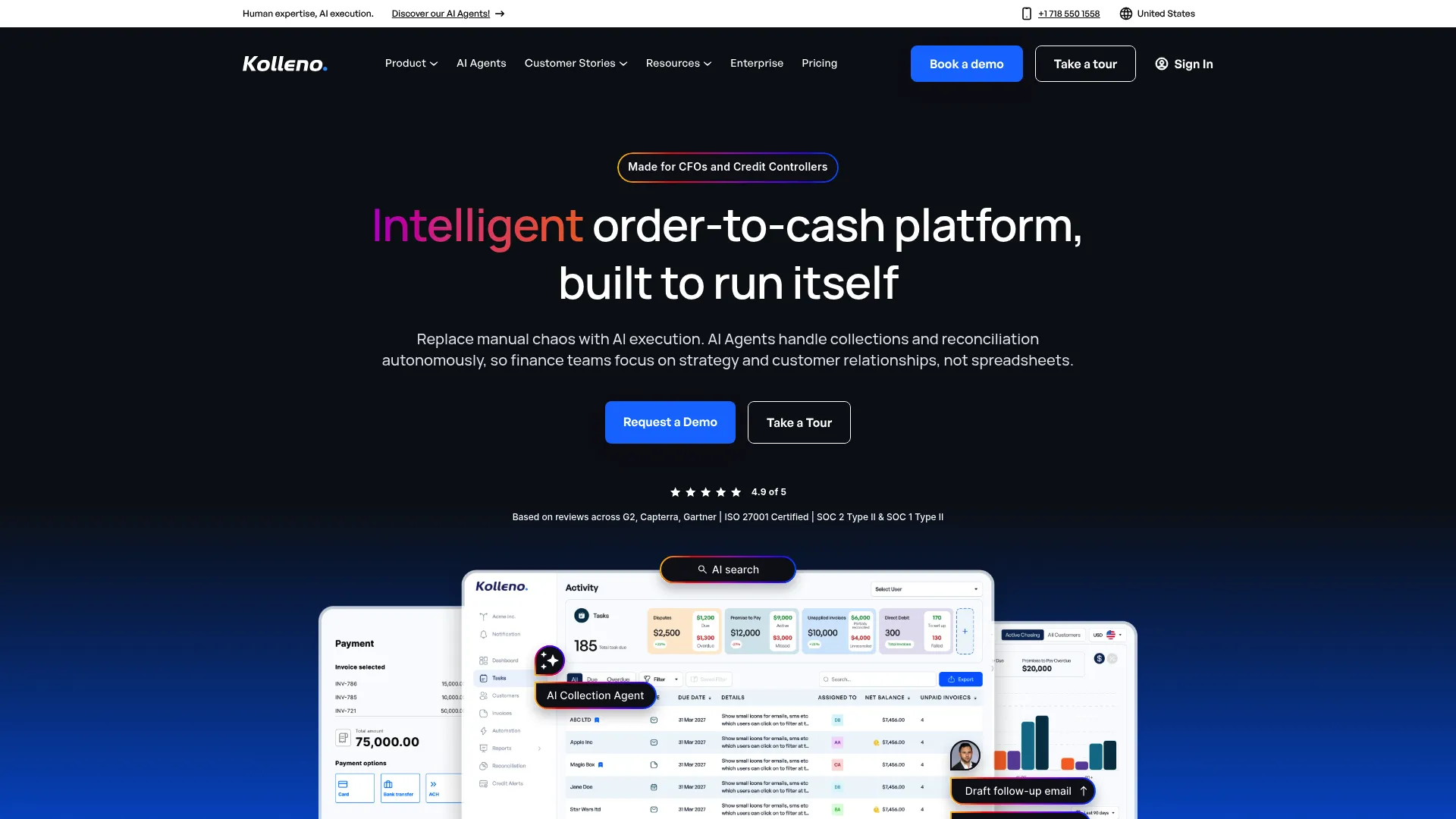
Kolleno is an AI-powered accounts receivable and collections platform with collaborative dispute and collections workflows. It leans toward simpler operations: teams that want automation and visibility without a heavy enterprise rollout. Real-time dashboards and customer timelines make it easy to see where a case stands without digging.
Its highest-in-class G2 rating reflects that usability focus. For a growing finance team, Kolleno offers structured collections and dispute handling that a small team can actually run.
Best for: mid-market and enterprise finance teams automating AR collections that want visibility without a long implementation.
Key strengths
- Automate B2B collections and dunning workflows
- Reconcile and match payments automatically
- Real-time dashboards, reporting, and customer timelines
- Collaborative dispute and collections handling
Why choose Kolleno: if you want AR and dispute automation your team can operate without a large deployment project, Kolleno's usability is the case. It fits teams that value simpler operations and clear dashboards over enterprise breadth.
Kolleno pricing: the public pricing page lists BusinessPay at $545 per user per month and Business Plus at $1,245 per user per month, with a custom Enterprise tier. A free trial is available.
6. Quadient

Quadient is a business automation company spanning customer communications, finance operations, and mail and delivery. For dispute-adjacent work, the draw is document-heavy back-office automation: its Quadient Suite covers AP, AR, invoice delivery, and customer communications in one place.
That combination fits finance teams whose disputes are wrapped up in customer correspondence and structured documents. When resolving a claim means pulling communications, invoices, and delivery records together, Quadient's communications-plus-finance angle handles that document flow.
Best for: organizations needing connected finance, communications, mail, and delivery automation across claims and correspondence.
Key strengths
- Quadient Suite for AP, AR, invoice delivery, and cash visibility
- Customer communications management
- Mail and shipping automation
- Smart lockers and parcel delivery solutions
Why choose Quadient: if your dispute work is tied to structured customer communications and document handling, Quadient's breadth across communications and finance is the fit. It suits teams that need claims managed alongside correspondence.
Quadient pricing: Quadient doesn't show software pricing on its site. You'll need to contact them directly to get a quote scoped to your operation.
7. Esker
Esker is AI automation software for Office-of-the-CFO workflows across source-to-pay and order-to-cash. Disputes and deductions sit within its broader finance automation, which appeals to teams that want dispute handling as one part of a wider back-office and shared-services motion rather than a standalone tool.
Its cloud platform brings AI, dashboards, and multi-ERP integration, which matters for European and multi-entity finance teams juggling more than one system of record. Esker frames disputes inside the full order-to-cash and source-to-pay picture.
Best for: mid-to-large finance teams automating AP, procurement, customer service, and AR alongside disputes.
Key strengths
- Source-to-pay automation
- Order-to-cash automation with dispute and deduction handling
- Cloud platform with AI, dashboards, and multi-ERP integration
- Shared-services and back-office workflow support
Why choose Esker: if you want disputes handled as part of broad finance process automation across multiple ERPs and entities, Esker's back-office breadth is the reason. It fits European and multi-region teams standardizing shared services.
Esker pricing: Esker doesn't list any actual numbers for pricing. You'll need to contact them for a quote based on your workflows and volume.
Considerations
Before you commit, run each shortlisted platform through this checklist.
Automation depth
Look past the AI label and ask what actually gets automated. Which steps run on rules, where does AI assist with classification or evidence, and how does the tool handle exceptions? The honest question is how much work still needs a human, because that number drives your real headcount cost.
ERP and system integration
Confirm the platform connects to your system of record: SAP, Oracle, NetSuite, or Dynamics. ERP integration is where dispute tools succeed or stall. Ask whether synchronization is real-time or batch, because a case that shows resolved in one system and open in another creates the exact reconciliation mess you are trying to remove.
Workflow control and auditability
Check assignment rules, approval steps, and collaboration features against how your team actually works. Then verify the audit trail: every action logged, full case history, and reporting a compliance reviewer can accept. In regulated dispute work, the audit trail is not optional.
Reporting and recovery visibility
A dispute management platform should show cycle time, backlog, recovery rate, and root-cause analysis without a data-export project. Ask to see the executive dashboard. If leadership can't read dispute health at a glance, you are back to reconstructing the picture manually every quarter.
Fit for your dispute mix
Match the tool to what you actually process. Chargebacks, card disputes, and ACH claims point toward issuer-focused platforms. Invoice deductions and merchant claims point toward AR-focused ones. Mixed environments need a platform broad enough to cover all of it in one dispute resolution workflow.
Conclusion
The best dispute management software depends on your context, not a leaderboard. HighRadius fits enterprise, ERP-heavy receivables teams that want the deepest automation. Quavo owns issuer-side fraud and card disputes under regulatory pressure. Q2 makes sense when you already run its banking platform. Gaviti and Kolleno serve AR-focused teams, with Gaviti tying disputes to collections and Kolleno favoring usability and fast setup. Quadient fits document-heavy, communications-driven finance work, and Esker suits multi-ERP European operations automating the full back office.
Three questions decide it: how many disputes you process, what ERP you run, and how much you want automated versus manually controlled. Answer those honestly and the shortlist narrows fast. The payoff is working capital recovery you can measure, cycle times you can shorten, and reporting clean enough to survive a board review.
Start with the two platforms that match your dispute mix, then pressure-test their ERP integration and audit trail against your real workflow before you sign.
Start your journey with Guideflow today!
FAQs
Dispute management software is a system that captures, classifies, routes, investigates, resolves, and reports on disputes across cards, ACH, invoices, and deductions. It replaces spreadsheets and email chains with one tracked workflow, giving finance and operations teams a single place to work every case and measure recovery.
Automated dispute resolution software uses rules and AI to handle the repetitive parts of the resolution flow. It classifies incoming disputes by type and reason code, gathers and links evidence, routes cases to the right owner, and enforces approval steps. Analysts then focus on exceptions rather than processing every case by hand.
Prioritize automation depth, ERP integration, workflow control, and reporting. You want configurable intake and classification, a full audit trail, real-time synchronization with your system of record, and dashboards showing cycle time, backlog, and recovery rate. Compliance support matters most for issuer and card dispute work.
Yes. Most enterprise platforms integrate with SAP, Oracle, NetSuite, and Microsoft Dynamics. The detail that matters is whether synchronization is real-time or batch, because a dispute marked resolved in one system but still open in another recreates the reconciliation problem you bought the tool to fix. Confirm sync behavior before signing.
Manual dispute handling spreads cases across spreadsheets, email, and shared drives, so work slips and evidence gets lost. A dispute management system centralizes intake, routing, approvals, and reporting into one workflow. The result is shorter cycle times, fewer missed deadlines, a clean audit trail, and visibility into where money is trapped.
Chargeback management is a subset of dispute management focused specifically on card transaction disputes and the issuer or merchant response process. Dispute management is broader, covering chargebacks plus ACH claims, invoice deductions, and other receivables disputes. A full dispute management platform handles chargebacks as one case type among several.
Start with your dispute mix, your ERP stack, and how much automation versus manual control you want. Card and fraud disputes point toward issuer platforms; invoice deductions point toward AR-focused tools. Shortlist two, then verify ERP integration, audit trail depth, and recovery reporting against your actual workflow before committing.