Your reps sat through onboarding, watched the videos, and passed the quiz. Then they got on a real call and froze when the prospect asked about pricing.
That gap between knowing and doing is where most sales training fails. This guide breaks down 19 platforms that help reps build real skills. Coverage spans AI roleplay, interactive product demos, and honest takes on what each tool does best.
What this guide covers
This guide covers what sales training software is, when to use it, and the key features to look for in a platform. You'll find a detailed comparison table and in-depth reviews of 19 platforms for 2026. We also provide advice on how to choose the right tool, measure ROI, and understand the latest AI trends shaping the industry.
TL;DR
Sales training software: Digital platforms that help organizations onboard, coach, and develop sales teams with scalable, on-demand learning.
Top picks by category: Gong for conversation intelligence, Second Nature for AI roleplay, WorkRamp for LMS, and Guideflow for product demo training.
Selection criteria that matter most: Deep CRM integration, AI automation capabilities, and ease of adoption for your sales reps.
What is sales training software
Sales training software equips professionals with skills to sell technical products. Top programs focus on consultative selling, MEDDIC qualification, value-based demonstrations, and navigating complex, long-cycle enterprise deals. Providers like Richardson, Coursera, MEDDIC Academy, and HubSpot Academy cover prospecting, AI tools, and negotiation.
These platforms replace or supplement traditional classroom training with scalable, on-demand learning that reps can access anytime. Core capabilities include course delivery, skill practice, performance tracking, and coaching. Modern platforms now include advanced features like AI roleplay, conversation intelligence, and interactive product demos to create more engaging learning experiences.
Learning management: Structured courses, certifications, and learning paths
Skill practice: AI roleplay, call simulations, and product demo walkthroughs
Performance tracking: Progress monitoring, completion rates, and skill assessments
Coaching tools: Manager feedback, call reviews, and personalized recommendations
When to use sales training software
Sales training software delivers the most value in specific business scenarios where scalable, consistent, and measurable training is critical.
Onboarding new sales hires faster
Sales training platforms reduce ramp time - which now averages 5.7 months for SaaS reps - by delivering consistent onboarding content to every new hire. Structured learning paths guide new reps from foundational product knowledge to first-call readiness.
Upskilling existing reps on new products or methodologies
Ongoing training is crucial when launching new features, entering new markets, or adopting new sales frameworks like MEDDIC or value-based selling. Training software allows you to deploy and certify your entire team on new information quickly.
Preparing teams for product launches
Teams use training software to certify reps on new product messaging, competitive positioning, and demo skills before a big launch. This ensures the entire go-to-market team is aligned from day one.
Training remote and distributed sales teams
Training teams across different time zones presents a significant challenge for global companies. Online sales training software and mobile sales training apps enable asynchronous learning, allowing every rep to train at their own pace.
Reducing frontline manager coaching burden
AI sales coaching software automates skill reinforcement with on-demand coaching and feedback. This is essential given that 43% of sales leaders miss coaching requests. It frees managers to focus on deal strategy and territory planning.
Teaching reps how to demo products effectively
Interactive demos serve as powerful training tools. Reps can practice with clickable, self-guided product walkthroughs to master complex workflows and talking points before they are on a live customer call.
Comparison of the best sales training platforms
The following platforms were selected based on hands-on learning capabilities and deep CRM integrations. Selection also considered industry focus for SaaS and tech, plus customization options for different go-to-market models.
Rank | Product | Best for | Key differentiation | Pricing | G2 rating |
|---|---|---|---|---|---|
1 | Guideflow | Product demo training | Interactive product walkthroughs | Contact for quote | 5.0/5 |
2 | Gong | Conversation intelligence | AI-powered call analysis | Contact for quote | 4.7/5 |
3 | Highspot | Sales enablement | Embedded training & content | Contact for quote | 4.7/5 |
4 | Mindtickle | Sales readiness | End-to-end training & AI roleplay | Contact for quote | 4.7/5 |
5 | Lessonly by Seismic | Fast lesson creation | Simple authoring tools | Contact for quote | 4.7/5 |
6 | Allego | Video-based learning | Video practice & peer feedback | Contact for quote | 4.6/5 |
7 | SalesHood | Sales coaching systems | Peer-to-peer learning workflows | Contact for quote | 4.7/5 |
8 | Spekit | In-app training | Just-in-time learning overlays | Starts at $20/user/mo | 4.7/5 |
9 | WorkRamp | Enterprise LMS | Comprehensive learning paths | Contact for quote | 4.6/5 |
10 | Trainual | Small team onboarding | Simple playbook builder | Starts at $250/mo | 4.7/5 |
11 | TalentLMS | Flexible online training | User-friendly course builder | Starts at $69/mo | 4.6/5 |
12 | LearnUpon | Multi-audience training | Learner portal management | Contact for quote | 4.6/5 |
13 | Docebo | AI-powered learning | Social learning & content curation | Contact for quote | 4.4/5 |
14 | Chorus by ZoomInfo | Deal coaching | Conversation analysis | Contact for quote | 4.5/5 |
15 | Jiminny | Mid-market CI | Accessible call coaching | Starts at $85/user/mo | 4.7/5 |
16 | Attention | Real-time AI coaching | Live guidance during calls | Contact for quote | 4.8/5 |
17 | Loom | Async video training | Simple screen recording | Starts at $12.50/user/mo | 4.7/5 |
18 | Vidyard | Video prospecting training | Video creation & hosting | Free plan available | 4.5/5 |
19 | Exec | Personalized AI roleplay | One-on-one AI practice | Contact for quote | N/A |
19 best sales training software platforms reviewed
1. Guideflow
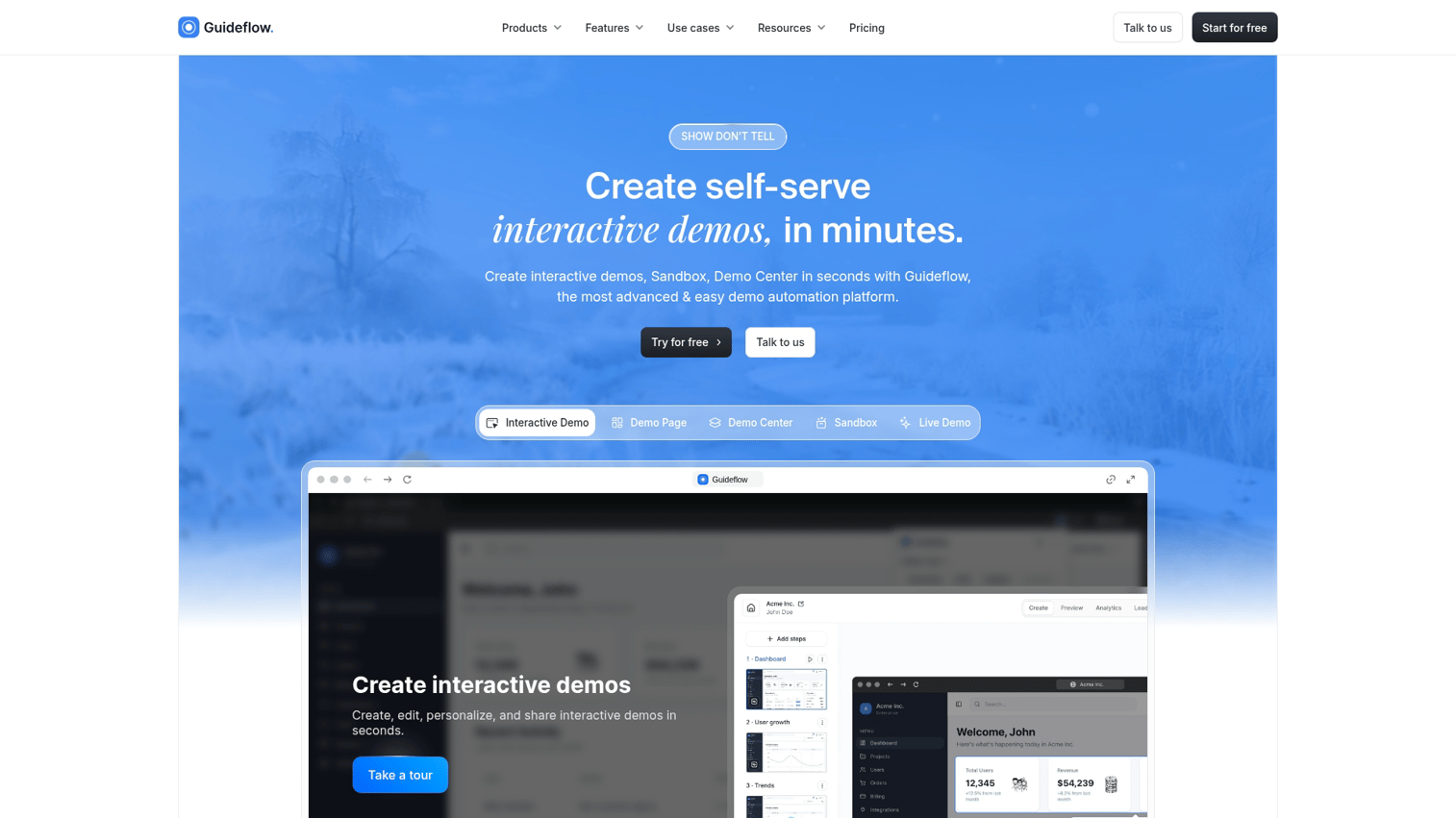
Guideflow is the best platform for product demo training and interactive skill practice. Sales teams use Guideflow to create interactive, clickable product demos that reps can practice with before customer calls. Instead of passively watching videos, reps learn by doing, clicking through realistic product experiences to master complex features and workflows.
The platform allows for easy capture of product flows, personalization for different scenarios, and detailed analytics on rep engagement.
Key strengths
Capture product flows in clicks without developer help
Personalize demos for different sales scenarios and verticals
Track which product areas reps engage with most
Embed training demos in onboarding sequences
Start your journey with Guideflow today!
2. Gong
Gong is the leader in conversation intelligence and call coaching. It records, transcribes, and analyzes sales calls using AI to surface key coaching moments for managers. Gong provides real-time feedback on talk patterns, identifies competitor mentions, and flags how top reps handle objections.
Key strengths
Call recording and transcription
AI-powered coaching recommendations
Deal intelligence and pipeline risk
Deep CRM integration
3. Highspot
Highspot is best for sales enablement platforms that have embedded training capabilities. It combines content management with training delivery, allowing reps to learn in the flow of their daily work.
Key strengths
Guided selling and sales plays
Content analytics and performance
Training reinforcement cards
Sales methodology integration
4. Mindtickle
Mindtickle is a comprehensive sales readiness platform designed for end-to-end training. It supports the entire seller journey, from initial onboarding to ongoing certifications, with features like AI-powered roleplay and readiness assessments.
Key strengths
Sales readiness assessments
AI roleplay and conversation practice
Content authoring and course building
Field communications and coaching
5. Lessonly by Seismic
Lessonly is known for its simplicity and speed in lesson creation and team practice. Its intuitive, drag-and-drop authoring tools allow enablement teams and frontline managers to quickly build and assign training.
Key strengths
Drag-and-drop lesson builder
Practice assignments (video, screen share)
Structured learning paths
Salesforce integration
6. Allego
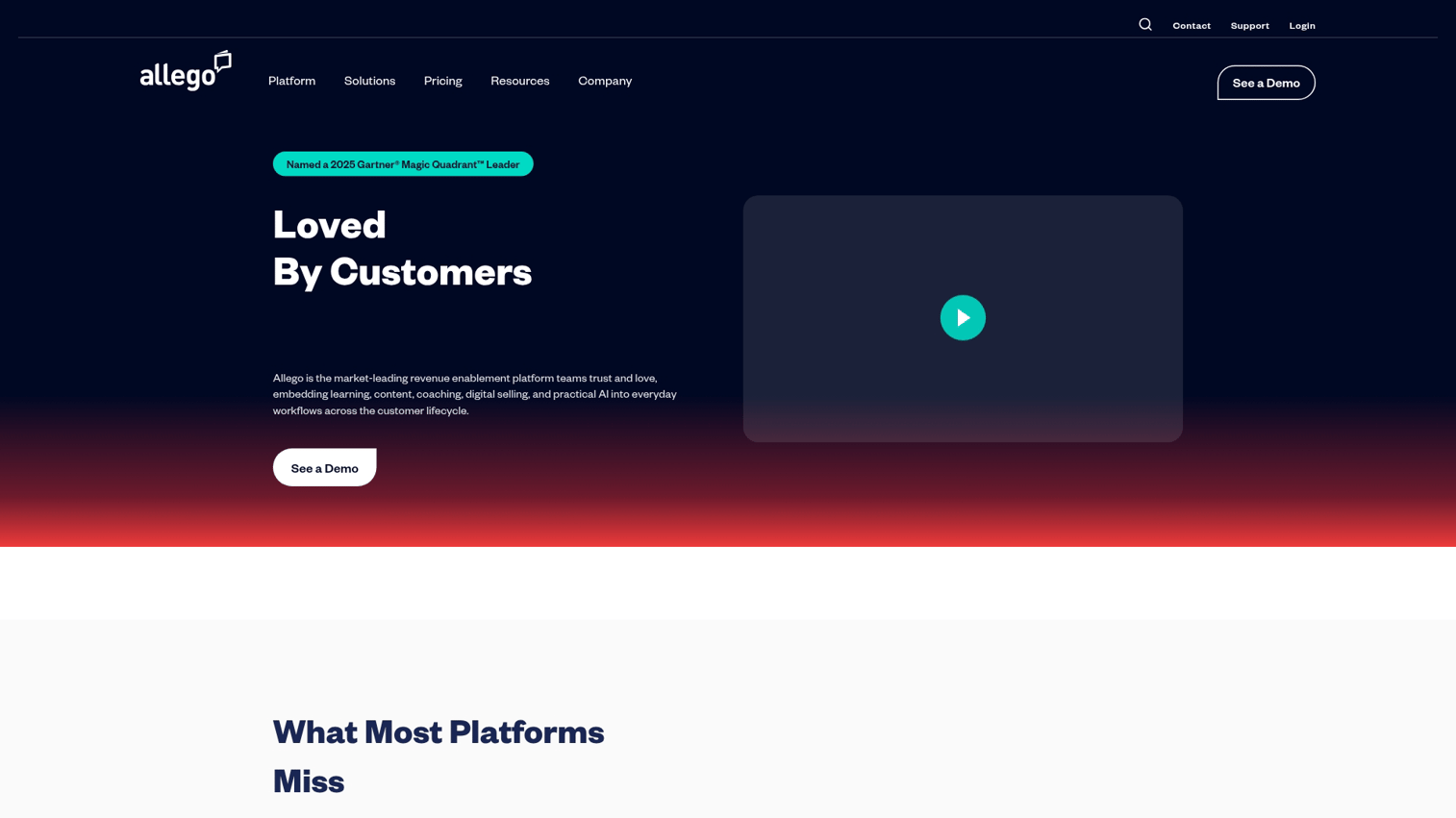
Allego excels at video-based learning and peer coaching. The platform enables reps to practice skills by recording videos, which can then be shared for feedback from managers and peers.
Key strengths
Video coaching and practice
Content curation and sharing
Mobile-first learning experience
Conversation intelligence features
7. SalesHood
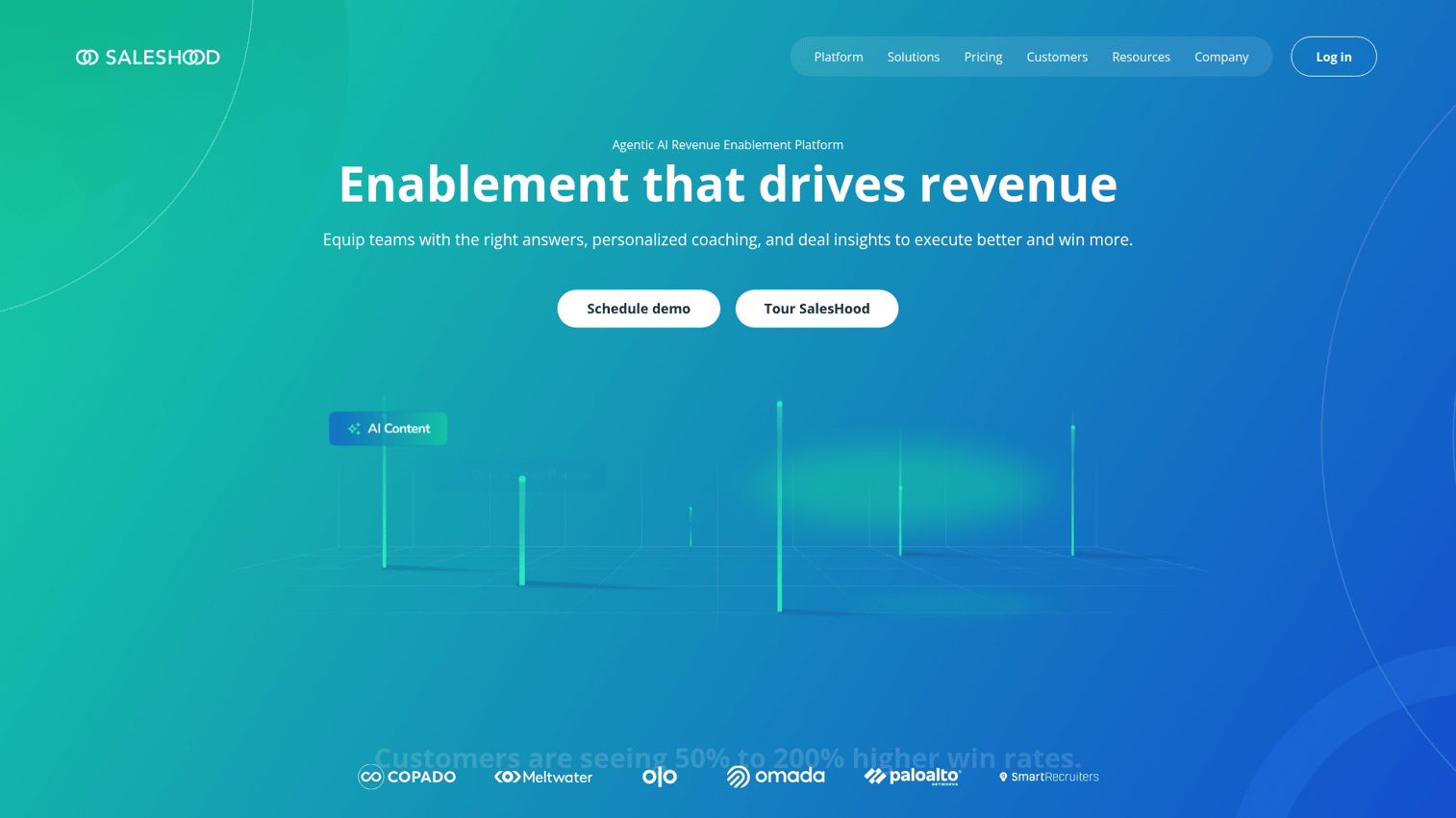
SalesHood is best for implementing structured sales coaching systems and fostering team collaboration. It focuses on peer-to-peer learning and manager-led coaching workflows.
Key strengths
Structured coaching programs
Content sharing and collaboration
Video pitch practice
Performance dashboards
8. Spekit
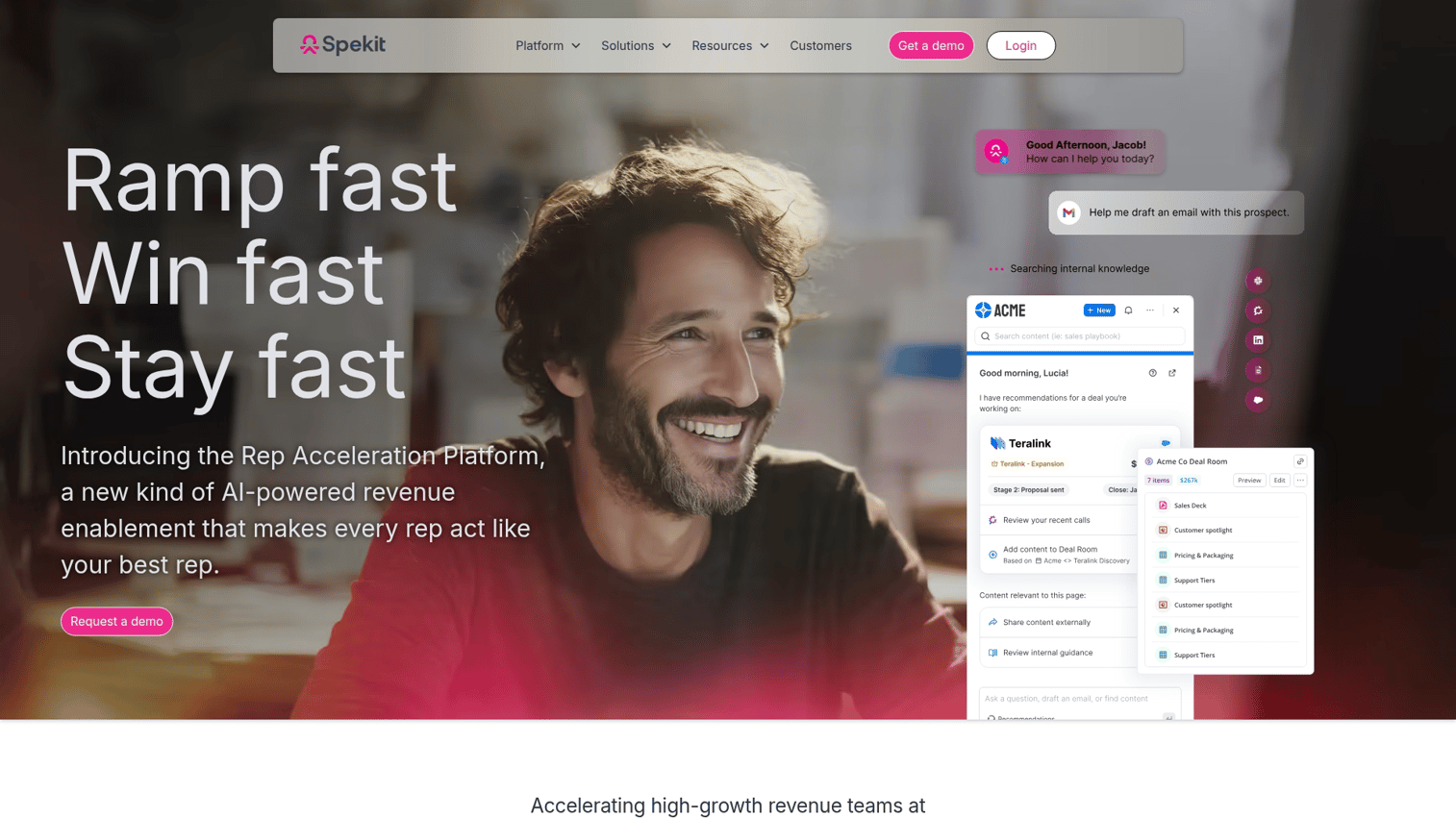
Spekit is best for in-app training and just-in-time learning. It surfaces training content and guidance directly within the tools your reps use every day, like Salesforce and Outreach.
Key strengths
In-app guidance and pop-ups
Centralized knowledge base
Salesforce and browser overlay
Change management and communication
9. WorkRamp
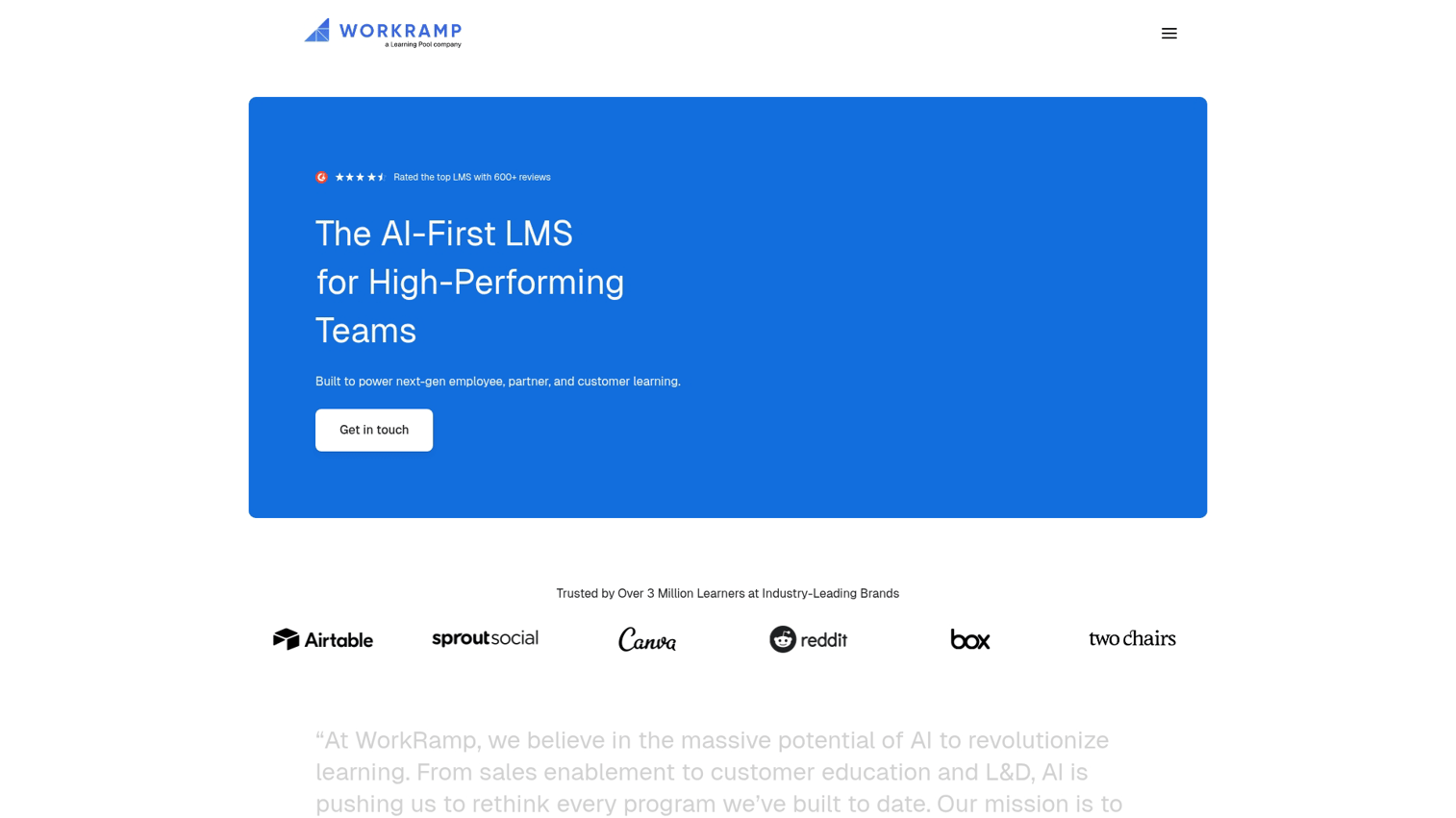
WorkRamp is a powerful learning management system (LMS) built for the enterprise. It offers comprehensive capabilities for building and managing training programs for large, complex sales organizations.
Key strengths
Custom learning paths and academies
Certifications and compliance tracking
External training for customers/partners
Extensive integrations with HRIS and CRM
10. Trainual
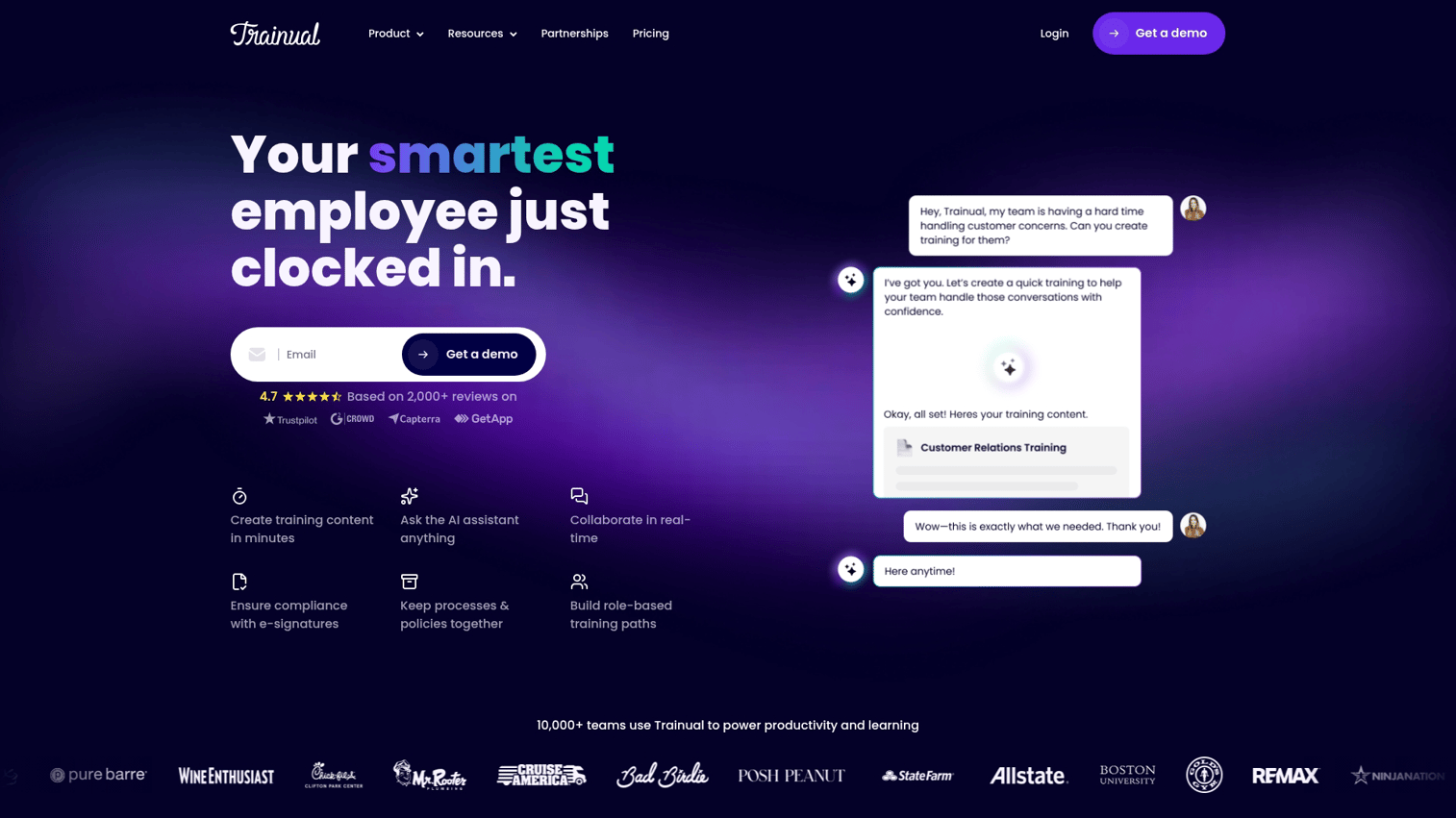
Trainual is best for small team onboarding and process documentation. It provides a simple way to build a centralized playbook for your business, documenting processes, policies, and roles.
Key strengths
Simple playbook builder
Role-based training assignments
Progress tracking and completion tests
Library of templates
11. TalentLMS
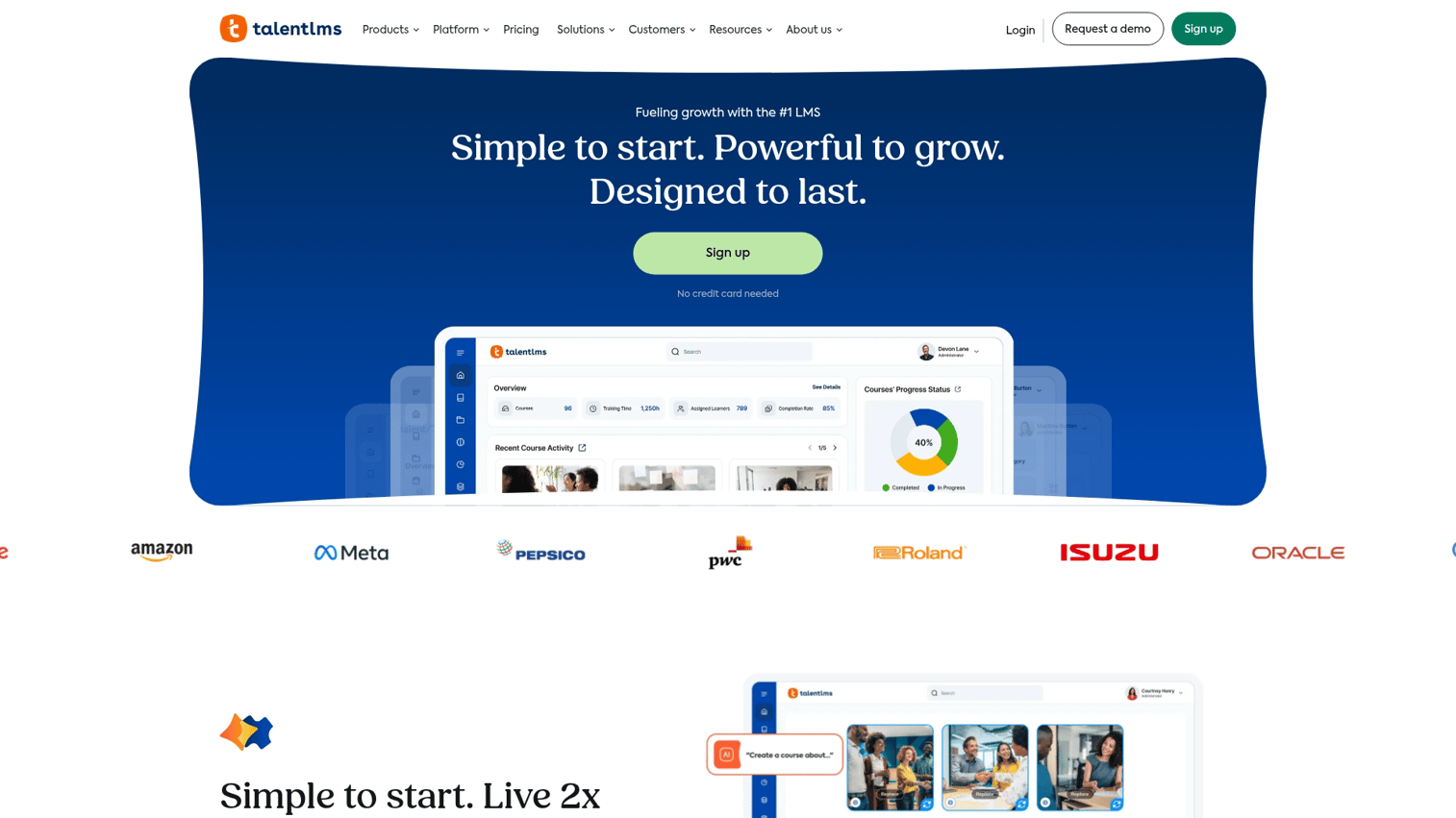
TalentLMS is a flexible and user-friendly online sales training software. It offers a great balance of powerful features and ease of use, with strong customization options, gamification, and a mobile app.
Key strengths
Intuitive course builder
Gamification and leaderboards
Native mobile app for iOS and Android
White-labeling and customization
12. LearnUpon
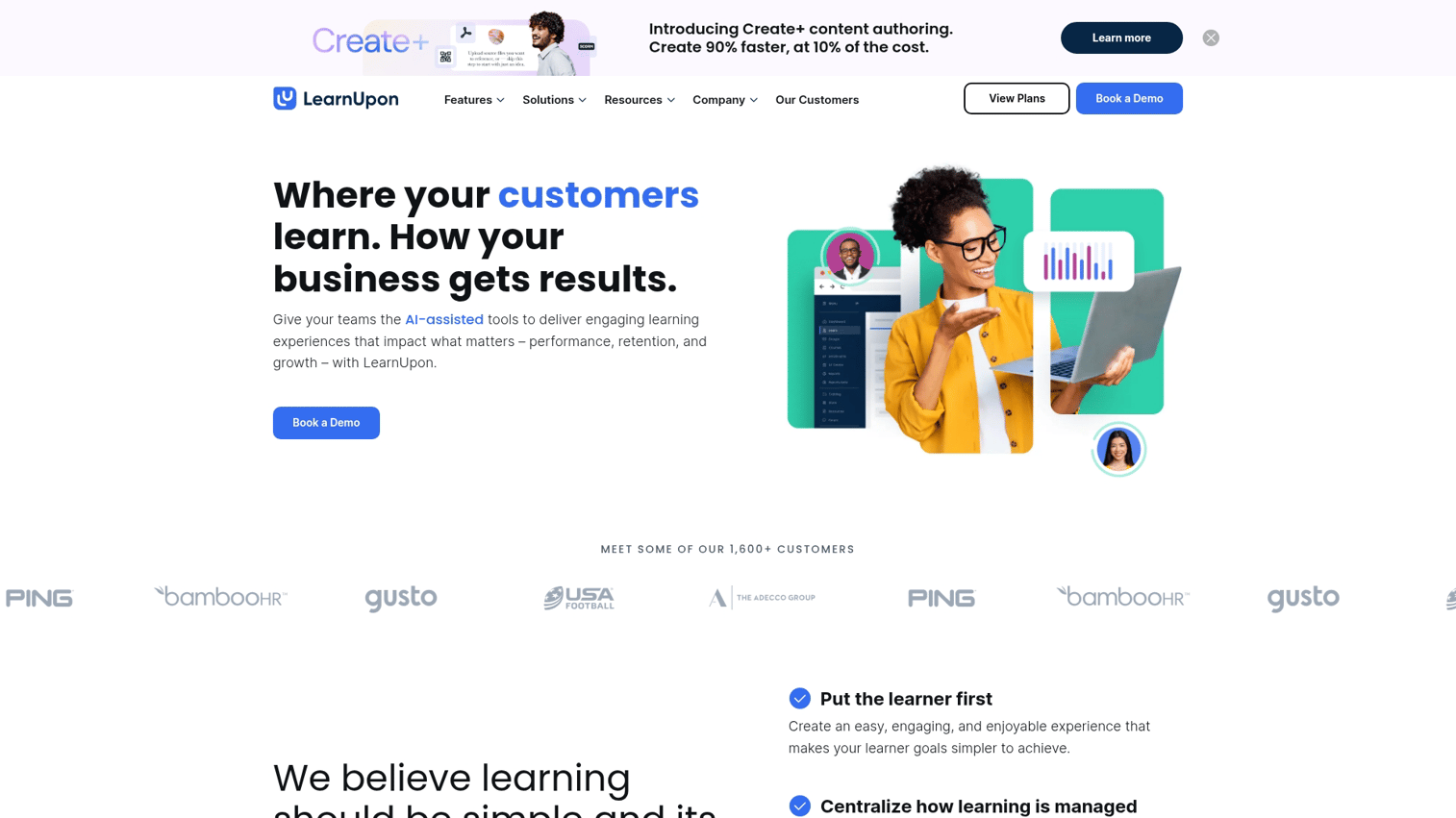
LearnUpon is best for training multiple audiences, including internal sales teams, partners, and customers. Its key strength is the ability to create and manage multiple, branded learning portals from a single account.
Key strengths
Multiple learning portals
Automation rules for enrollments
Deep integrations (Salesforce, Zapier)
Granular user management
13. Docebo
Docebo is an AI-powered learning platform that emphasizes social and informal learning. Its AI engine automatically curates and suggests relevant content, while social features encourage peer-to-peer knowledge sharing.
Key strengths
AI-driven content curation
Social learning and expert Q&A
Extended enterprise (customer/partner training)
In-depth learning analytics
14. Chorus by ZoomInfo
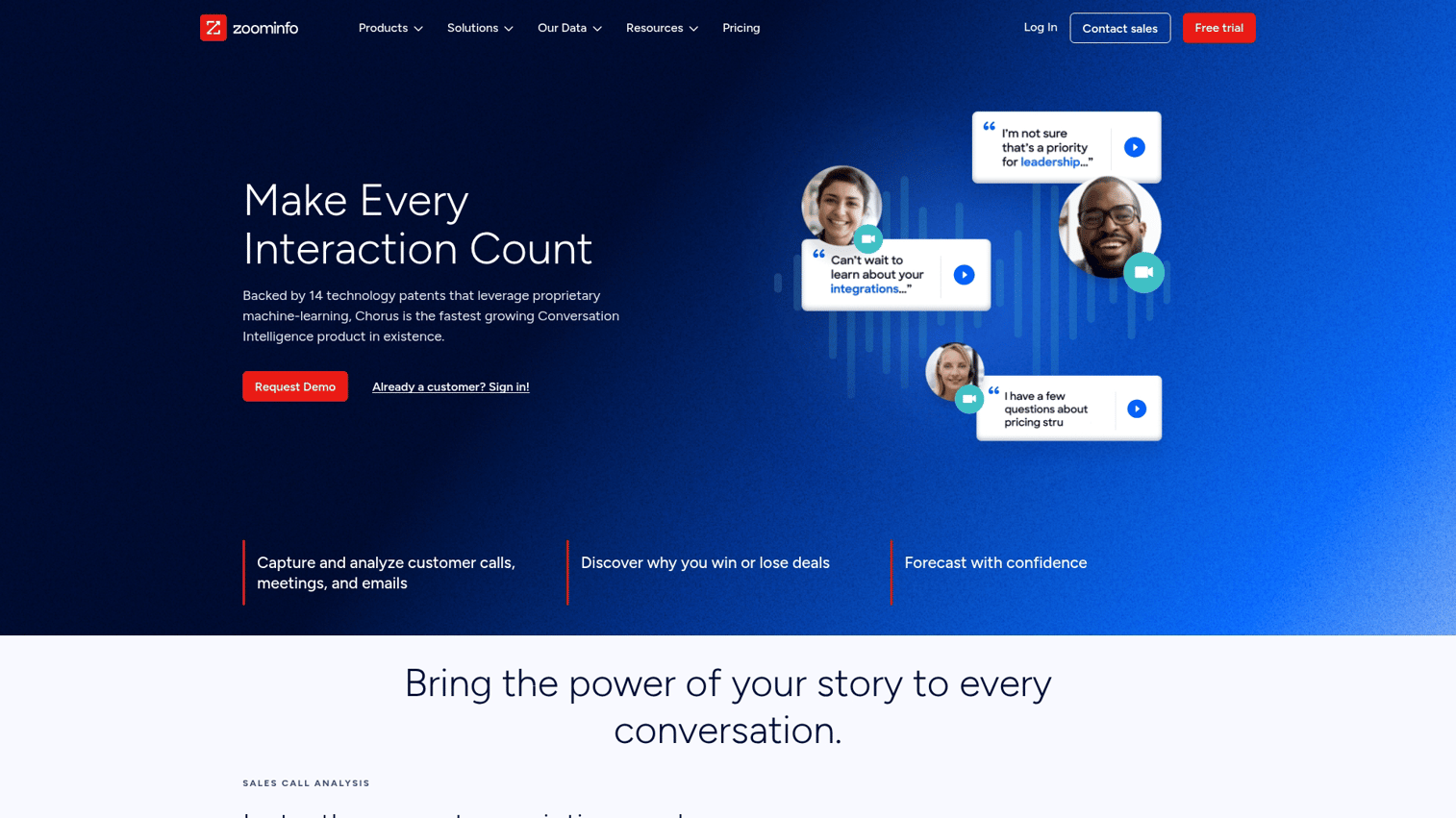
Chorus is a leading conversation intelligence platform for call recording and deal coaching. Similar to Gong, it analyzes sales conversations to identify risks and opportunities in your pipeline.
Key strengths
In-depth call analysis
Deal intelligence and momentum tracking
Coaching playlists and scorecards
Native ZoomInfo and CRM sync
15. Jiminny
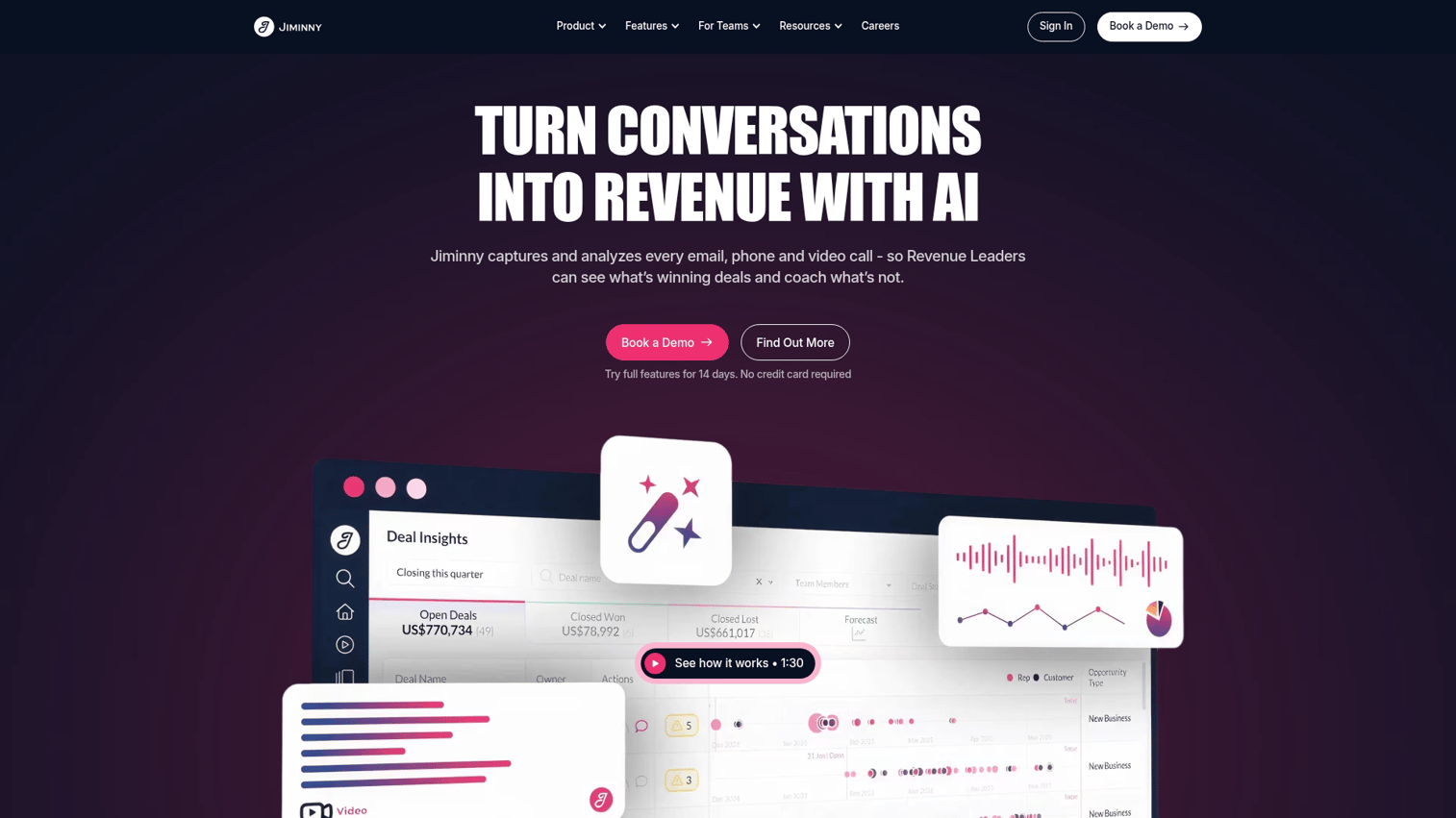
Jiminny offers conversation intelligence specifically for mid-market teams. It provides core call recording and coaching features with more accessible pricing and a focus on ease of use.
Key strengths
Live call coaching and recording
Actionable coaching insights
Broad integrations with CRM and dialers
Team performance dashboards
16. Attention
Attention is best for real-time AI coaching during live sales calls. The platform acts as an AI co-pilot, providing live guidance, pulling up relevant information, and automating post-call tasks like CRM updates.
Key strengths
Real-time prompts and battle cards
Automated call summaries
Hands-free CRM automation
Sales methodology tracking
17. Loom
Loom is the go-to tool for asynchronous video training and knowledge sharing. Its simple screen and camera recording makes it easy for anyone on the team to create and share quick training videos.
Key strengths
Simple screen and camera recording
Centralized team video library
Viewer analytics and engagement
Easy sharing and embedding
18. Vidyard
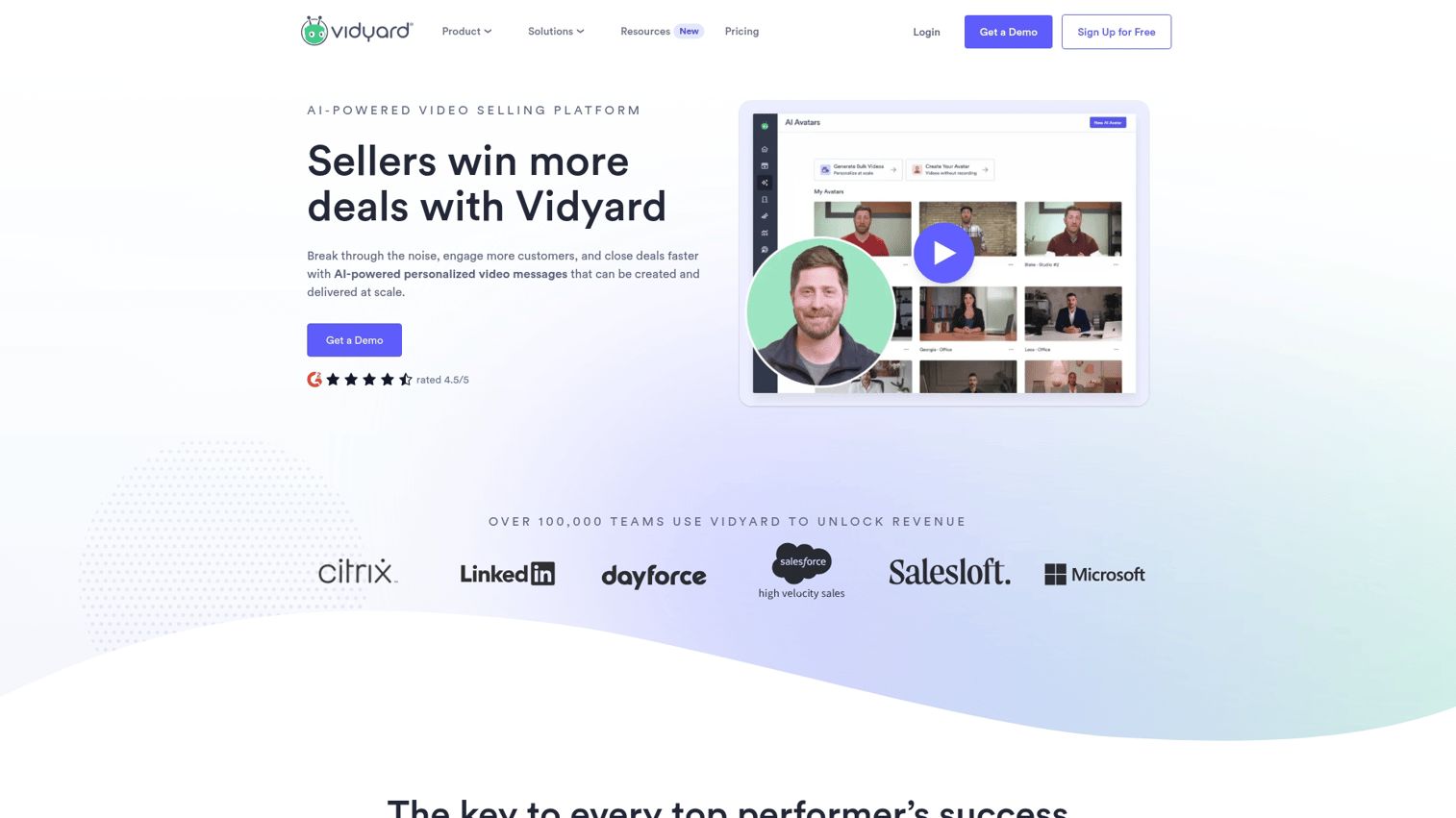
Vidyard is a video platform built for sales teams, excelling at video prospecting training and hosting. It allows reps to create personalized videos for outreach and tracks viewer engagement.
Key strengths
Video creation and personalization
Secure video hosting
Detailed viewer analytics
Deep CRM integration
19. Exec
Exec offers personalized AI roleplay coaching for individual skill development. It provides a one-on-one practice environment where reps can hone their skills against an AI coach that provides personalized feedback.
Key strengths
One-on-one AI roleplay
Personalized, granular feedback
Scenario customization
Progress and skill tracking
Key features to look for in sales training tools
Not all platforms include every feature, so it's important for buyers to prioritize based on their specific training goals and team needs.
AI roleplay and conversation practice
AI roleplay provides simulated sales conversations with AI-powered avatars. Reps can practice discovery calls, objection handling, and pitches without risking real deals. This is similar to how sandbox demos provide risk-free product exploration.
Content authoring and course builder
Content authoring tools are used to create custom training content, including videos, slides, quizzes, and interactive modules. Look for platforms with rapid authoring capabilities that allow sales enablement teams to quickly build and update materials.
Interactive demos and product walkthroughs
Interactive product demos help reps learn products by doing, not just by watching passive videos. Reps can build muscle memory and confidence before a live customer call.
Progress tracking and certifications
Progress tracking includes features for tracking course completion, scoring skill assessments, and managing certification programs. Managers can verify that reps are ready and certified on key knowledge before they engage with customers.
CRM and sales stack integrations
Deep integration with your CRM (like Salesforce or HubSpot) is non-negotiable. Training data, such as course completions and certifications, flows directly into the systems your managers already use to manage performance.
Mobile access for on-demand learning
Modern sales teams are often distributed or in the field, making mobile access essential. A good sales training app allows reps to complete training modules on their phones or tablets, enabling on-demand learning from anywhere.
Analytics and coaching insights
Software to track sales coaching impact on performance is crucial for proving ROI. Look for dashboards, completion reports, and skill gap analysis that help you understand training effectiveness.
How to choose sales training software for your team
Match software to your sales motion and team size
The right tool depends heavily on your context. SMB teams with a simple product may only need a lightweight LMS. Enterprise teams with a complex solution sale require robust methodology reinforcement and coaching tools.
Prioritize CRM integration with Salesforce or HubSpot
Training data is useless if it's siloed in a separate platform. Ensure the software you choose integrates deeply with your CRM so managers can see training completion and certification status alongside pipeline and activity data.
Evaluate AI automation capabilities
Look past the marketing buzzwords and focus on what AI features actually deliver value:
Automated coaching feedback: AI analyzes call recordings and provides specific improvement suggestions.
Personalized learning paths: The platform recommends targeted training modules based on performance data.
Scalable roleplay practice: Reps can practice with AI avatars and get immediate feedback.
Assess reporting depth and ROI tracking
The reports you need are those that connect training to business outcomes. Look for the ability to track completion rates, certification status, time-to-productivity for new hires, and the correlation between training and quota attainment.
Test ease of adoption before full rollout
Always run a pilot or trial with a small group of reps and managers before committing to a platform-wide rollout. Sales reps will not use tools that add friction to their workflow.
How AI is changing sales training platforms
AI is no longer a futuristic concept; it's a standard feature in modern sales training software. Sellers who effectively partner with AI are 3.7x more likely to meet quota. The focus is on practical applications that automate tasks, personalize learning, and provide data-driven insights.
AI-generated role play scenarios and conversation practice
AI creates a nearly unlimited number of practice scenarios, removing the bottleneck of manager availability. Reps can practice objection handling, discovery questions, and competitive pitches with realistic AI responses.
Automated coaching feedback after every call
AI sales coaching software analyzes 100% of sales calls and provides reps with specific, objective improvement suggestions. This allows for continuous reinforcement without waiting for a manager's 1:1 review.
Personalized learning paths based on rep performance
Adaptive learning technology can identify individual skill gaps from performance data (like call recordings or CRM metrics) and automatically recommend targeted training modules.
Real-time call analysis and performance scoring
The newest automated sales training and development tools provide live coaching prompts during customer calls and generate post-call performance scores. This real-time assistance and immediate feedback loop accelerates skill development.
How to measure sales training ROI and track impact
Connecting your training investment to tangible business outcomes is key to securing budget and proving the value of your program.
Track ramp time reduction for new hires
Measure the average number of days from a new hire's start date to their first closed deal or full quota attainment. Compare this metric for cohorts onboarded before and after implementing the new training software.
Monitor quota attainment before and after training
Use cohort analysis to compare the quota attainment of reps who have completed a specific training program against those who have not.
Measure completion rates and engagement scores
Completion rates and engagement scores are leading indicators of training effectiveness. High completion and engagement scores suggest the training is relevant and valuable, while low scores indicate a need to adjust the content or delivery.
Connect training data to win rate and deal velocity
The ultimate measure of impact is correlating training completion with core pipeline metrics. Look for patterns that show reps who completed specific skills training have higher win rates or faster deal cycles.
What to consider before buying sales training software
Use this checklist to avoid common pitfalls and ensure you select a platform that meets your long-term needs.
Budget and total cost of ownership
Look beyond the sticker price. Understand the licensing model (per user, per seat, flat fee) and ask about any hidden costs related to implementation, content creation services, or premium integrations.
Implementation time and internal resources required
Set realistic expectations for deployment. Some tools are plug-and-play and can be set up in a day, while enterprise-grade platforms may require significant setup, configuration, and internal project management resources.
Scalability as your team grows
Consider how the platform's pricing and performance will scale as your team grows. A tool that works for a 20-person team may become prohibitively expensive or cumbersome for a 200-person team.
Security and compliance requirements
For enterprise buyers, security is paramount. Inquire about SOC 2 compliance, single sign-on (SSO) capabilities, data residency options, and other security protocols relevant to your industry.
Vendor support and customer success
A great tool is only as good as the support behind it. Evaluate the vendor's implementation support, ongoing training for your admins, and the proactiveness of their customer success team.
How to build a complete sales training stack
Most modern sales teams use a combination of specialized tools rather than a single, monolithic platform, including sandbox demos for hands-on product exploration.
Core LMS or sales learning platform: The foundation for structured course delivery, certification, and progress tracking.
Conversation intelligence: Provides real-world feedback by recording and analyzing actual customer calls for coaching moments.
AI roleplay: Offers a safe, scalable practice environment for reps to develop conversational skills before they talk to customers.
Interactive demos: Builds deep product knowledge through hands-on experience, especially critical for software sales. Guideflow is the leader in this category.
Content management: Organizes and distributes all training materials, sales collateral, and playbooks.
Pre-sales teams often have a specific need for product demo training to ensure they can deliver flawless, compelling demonstrations. Marketing teams can also support training efforts by using product marketing tools to create consistent interactive demo experiences across the customer lifecycle.
Conclusion
Each sales training tool shines for a specific use case. These include conversation intelligence, AI roleplay, and product demo training.
Most trade off between ease of setup, depth of automation, and the level of customization. There's no universal "best" tool, only the best fit for your stack and workflow.
The next step? Try a free plan or demo with your real use case to see how each platform handles your team's actual needs.
Start your journey with Guideflow today!
Frequently asked questions about sales training software
The main types include Learning Management Systems (LMS) for course delivery, conversation intelligence tools for call analysis, and AI roleplay systems for practice. They also include sales enablement platforms with embedded training and interactive demo tools for product training.
Costs vary widely, from free tiers for simple tools to six-figure enterprise contracts. Most platforms charge on a per-user, per-month basis, with pricing dependent on team size, feature set, and vendor.
Yes, most modern sales training platforms offer native, deep integrations with major CRMs like Salesforce and HubSpot. This integration is crucial for enabling managers to see training data alongside performance metrics.
Results vary, but teams often see leading indicators of success, like improved onboarding times, within the first cohort of new hires. Measuring a direct impact on lagging indicators like quota attainment typically takes 2-3 quarters.
Sales enablement is a broader category that includes content management, coaching, and analytics, while sales training software focuses specifically on skill development and knowledge acquisition. Many modern platforms now combine both functions.
To drive adoption, make training highly relevant to their daily work, keep modules short and engaging, and integrate assignments into their existing workflows. Using gamification and tying completion to career advancement can also boost engagement.
Yes, interactive demos are an excellent tool for sales training. They allow reps to practice product walkthroughs in a realistic, clickable environment, helping them learn by doing rather than by watching passive videos.
For distributed teams, look for mobile-first platforms with strong offline access capabilities. Popular sales training systems for mobile teams include TalentLMS, Allego, and Brainshark, all of which offer robust mobile apps.
AI roleplay supplements, but does not replace, manager coaching. AI is superior for providing unlimited, scalable practice and immediate, objective feedback, while managers are essential for providing strategic deal guidance and nuanced relationship coaching.
The most effective way is to use interactive demo tools that let reps practice with clickable, self-guided product walkthroughs. Combine this practice with a conversation intelligence tool to record and review their actual customer demos for targeted feedback.