The load gets accepted. The driver leaves. Proof of delivery arrives by text. The invoice gets created two days later in a separate tab. And the founder finds out whether last week was profitable after month-end bookkeeping closes.
That is how most trucking operations actually run before they pick a platform. The global trucking software market reached $4.8 billion in 2025 (Dataintelo, 2025), yet most carriers still manage the gap between dispatch and cash collection through a patchwork of spreadsheets, texts, and generic accounting exports.
The right trucking management software closes that gap. It connects load planning, driver communication, document collection, invoicing, and profitability reporting into one operating view your team can run without routing everything through you.
The right choice depends on whether your immediate bottleneck is dispatch and billing, IFTA compliance and administration, fleet visibility and safety, or a broader transportation management foundation for a complex operation.
What's inside
This guide covers eight trucking software platforms for 2026, evaluated across dispatch depth, financial workflows, IFTA and compliance support, fleet visibility, integrations, and how fast a new operations hire can get productive on day one.
- Who it's for: Owner operators, small fleet managers, growing carriers, and founders evaluating software for a transportation business or portfolio company
- Selection criteria: Dispatch-to-invoice workflow coverage, financial reporting depth, verified pricing, and G2 ratings
- What you'll get: A comparison table, per-tool breakdowns, and a buyer checklist tied to operating bottleneck rather than feature count
- One honest note: Telematics platforms and full TMS platforms solve different problems. This guide names which tools fit which motion.
TL;DR
- Best for owner operators and small fleets: TruckLogics covers dispatch, accounting, IFTA, invoicing, and profitability tracking in one platform, starting at $35.96/month billed annually
- Best for administrative control: TruckingOffice gives small carriers tight trip records, invoices, expenses, and IFTA support, starting at $25/month
- Best for a modern small-carrier TMS: Toro TMS connects dispatch, driver communication, paperwork, and billing in one workflow; pricing requires contacting sales
- Best for growing carrier operations: Truckbase starts at $290/month (billed annually) and focuses on dispatch, ELD integration, and invoicing for asset-based carriers
- Best for budget-conscious TMS entry: AscendTMS serves carriers and brokers needing foundational TMS workflows at a lower entry price
- Best for fleet visibility and safety: Motive and Samsara handle ELD, GPS, driver safety, and maintenance signals for fleets where operational visibility is the primary gap
What is trucking software?
Trucking software is a category of digital tools that helps carriers, owner operators, fleets, and brokers manage loads, dispatch, drivers, documents, compliance tasks, invoicing, and business performance.
The category is not one product type. A transportation management system (TMS) typically owns the dispatch-to-invoice workflow. A telematics platform focuses on vehicles, GPS, ELD data, driver safety, and maintenance. An accounting-first tool handles trip records and financial visibility for smaller operations. Enterprise transportation platforms coordinate multi-entity workflows, financial management, and operational complexity at scale.
| Category | Primary job | Best-fit buyer |
|---|---|---|
| Trucking TMS | Manage dispatch-to-invoice workflow | Carriers, brokers, dispatch-led operations |
| Telematics platform | Monitor vehicles, drivers, safety, and asset data | Fleets with operational visibility needs |
| Accounting-first trucking tool | Track finances, trips, tax workflows, and invoices | Owner operators and small carriers |
| Enterprise transportation platform | Coordinate complex operational and financial workflows | Larger carriers, brokers, multi-entity operations |
Key features to look for
- Dispatch and load status tracking
- Invoicing, driver settlements, and payment monitoring
- Driver messaging and mobile document collection
- IFTA mileage and fuel-tax workflows
- ELD, fuel card, and accounting integrations
- Maintenance schedules and vehicle records
- Profitability, utilization, and cash-flow reports
- Proof-of-delivery and rate-confirmation storage
Many platforms support IFTA workflows by pulling trip, mileage, and fuel data automatically. Verify what each platform calculates, which data sources it accepts, and whether filing remains a separate step. Reports worth evaluating go beyond basic invoicing: Revenue per truck, empty miles, load margins, detention, outstanding invoices, fuel cost trends, and driver performance are the numbers that tell you whether the operating model is working.
When to use trucking software
Replace spreadsheet-based dispatch and billing
When load status lives in a dispatcher's notebook, proof of delivery arrives by text, and invoices get created days after delivery, the cost shows up as delayed cash and missed billing. A dispatch-to-invoice workflow should take a completed load from driver submission to customer invoice without manual data re-entry.
Get control of IFTA, maintenance, and driver paperwork
Administrative tasks that appear late, or get owned by no one, create month-end reconciliation work and compliance exposure. Structured reminders, centralized mileage data, and mobile document collection reduce the coordination burden on whoever currently owns this work manually.
Scale the fleet without scaling back-office headcount
Adding trucks should not require adding a proportional amount of dispatcher and bookkeeping hours. The right trucking company software uses templates, mobile workflows, and integrations so your operations team can handle more load volume without rebuilding the process every time.
Trucking software comparison
The tools below serve different operating models. A TMS runs dispatch and billing. A telematics platform delivers vehicle, driver, and safety data. An accounting-oriented platform suits an owner operator who needs trip and tax workflows first.
Pricing and G2 ratings are verified from live vendor and G2 pages. Where a vendor sells through custom quotes, the pricing model is described with any publicly confirmed starting figure.
| # | Product | Best for | Key use case | Pricing | G2 rating |
|---|---|---|---|---|---|
| 1 | TruckLogics | Owner operators and small fleets | Dispatch, accounting, IFTA, and profitability tracking | From $35.96/month (billed annually) | 4.6/5 |
| 2 | TruckingOffice | Small carriers needing administrative control | Dispatch, expenses, invoices, and trip reporting | From $25/month | Not on G2 |
| 3 | Toro TMS | Small and growing carriers | Dispatch, driver communication, document collection, and billing | Contact sales | 4.9/5 |
| 4 | Truckbase | Modern carrier operations teams | Dispatch workflows and ELD-integrated operational coordination | From $290/month (billed annually) | 4.9/5 |
| 5 | AscendTMS | Budget-conscious carrier and brokerage teams | TMS workflows with a low-cost entry path | Contact sales | 4.4/5 |
| 6 | Motive | Fleets focused on safety and visibility | ELD, GPS, driver safety, fleet operations, and maintenance signals | Contact sales | 4.4/5 |
| 7 | Samsara | Connected fleet operations | Telematics, video safety, asset data, and fleet performance | Contact sales | 4.5/5 |
| 8 | Axon Software | Complex carrier and brokerage operations | Enterprise transportation management and financial workflows | Contact sales | Not on G2 |
Best 8 trucking software tools for 2026
1. TruckLogics
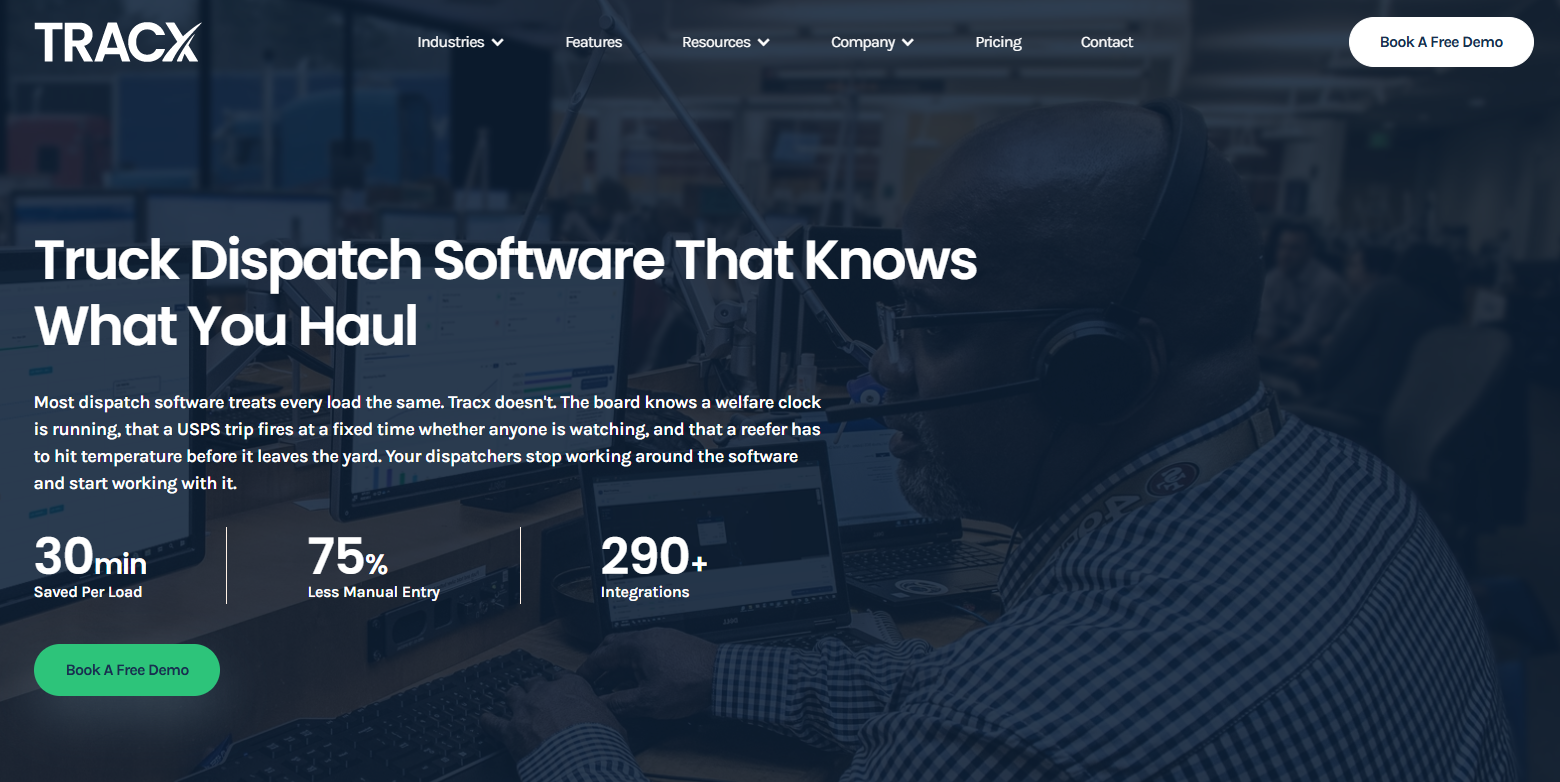
TruckLogics is an all-in-one trucking management platform built for owner operators, leased operators, small fleets, and brokers. It connects dispatch, accounting, invoicing, IFTA reporting, maintenance, and document management in a single system. Mobile apps for drivers and managers mean the workflow does not break when someone leaves the office.
Best for: Owner operators and small carriers that want one system connecting loads, expenses, invoices, IFTA, and trip profitability.
Key features
- Dispatch planning and load management
- Invoicing, expenses, and driver settlements
- IFTA reporting built from trip data
- Maintenance reminders and service records
- Real-time freight tracking and geofencing
Why choose TruckLogics: Choose it when your immediate problem spans dispatch and financial visibility together. It is strongest for operations that need broad coverage without assembling separate niche products for each workflow.
TruckLogics pricing: Plans start at $35.96/month for owner operators (billed annually). The Small Fleet plan runs $71.96/month, Mid-Size Fleet $179.96/month, and Large Fleet $224.96/month, all billed annually. Brokers pay $89.96/month. A 7-day free trial is available. Enterprise pricing requires a quote. IFTA quarterly reports are available separately at $24.95 per report for business owners.
G2 rating: 4.6/5
2. TruckingOffice
TruckingOffice is trucking management software aimed at owner operators and small fleets that need a practical back-office system. It handles dispatch, invoice creation, expense tracking, IFTA and IRP support, driver settlements, and maintenance reminders. The Basic tier covers full-truckload hauling; the Pro tier adds LTL dispatch workflows.
Best for: Small carriers replacing spreadsheets and scattered financial records with trip-level visibility and cleaner administrative control.
Key features
- Dispatch and load entry workflows
- Invoice creation and overdue-invoice alerts
- Expense tracking and driver settlement management
- IFTA reporting with mileage and fuel by state
- Fleet maintenance and credential reminders
Why choose TruckingOffice: It fits operators who value administrative simplicity over broad feature coverage. The goal is knowing which trips, trucks, and customers produce cash without waiting for month-end bookkeeping.
TruckingOffice pricing: The Basic Owner/Operator plan starts at $25/month (1 to 2 trucks). Basic Mid Size runs $55/month (3 to 7 trucks) and Basic Fleet $90/month (8+ trucks). Pro tiers start at $35/month for owner operators and $75/month for mid-size. A PC*MILER premium routing add-on costs an additional $5 to $25/month. A 30-day free trial is available with no credit card required.
3. Toro TMS
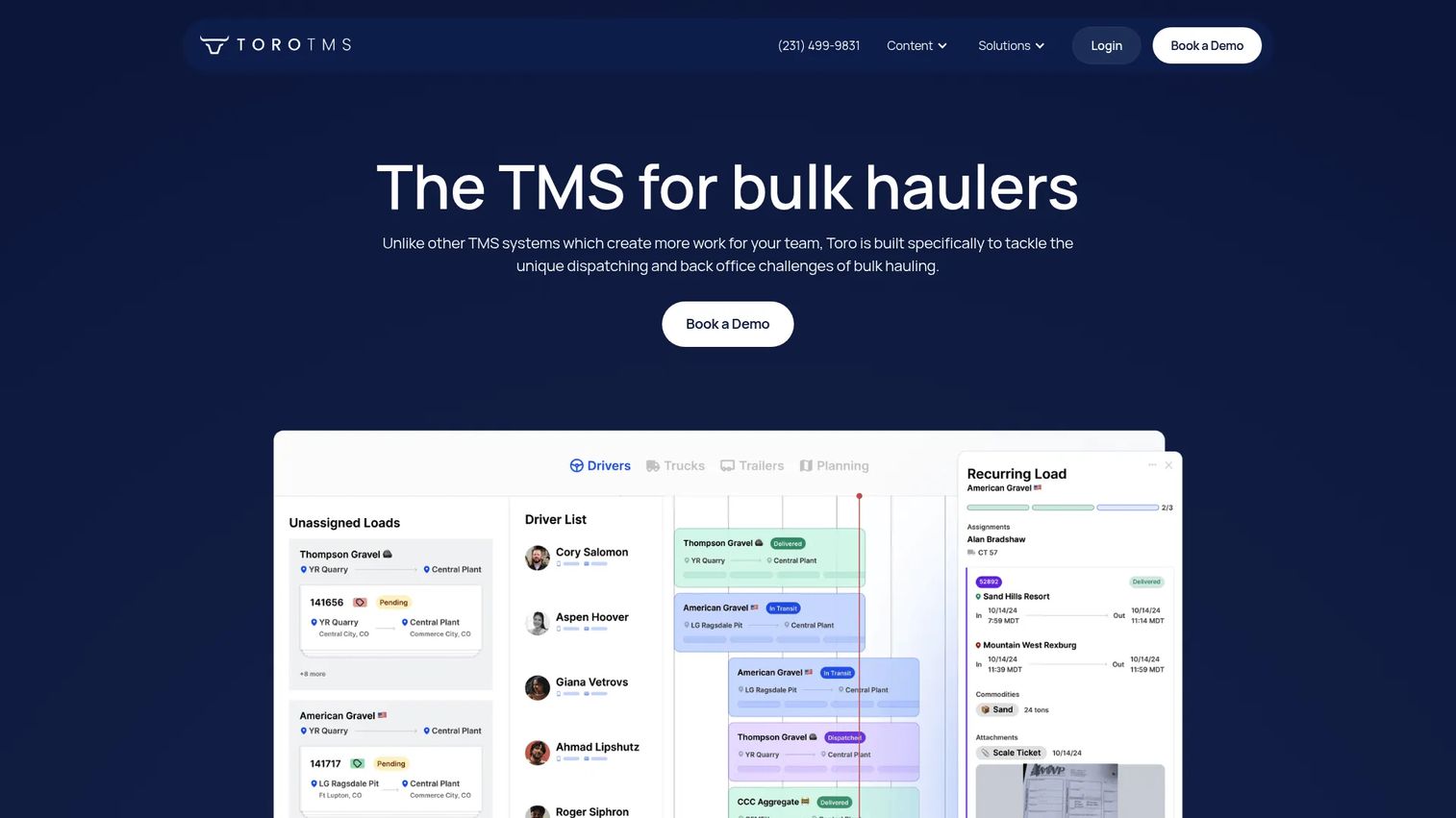
Toro TMS is a transportation management system built specifically for bulk haulers. It keeps dispatch, driver pay, invoicing, IFTA, and compliance workflows on one screen. Drivers submit paperwork without needing a login, which removes the most common friction point between completed delivery and invoice creation. QuickBooks Online and Desktop integrations keep accounting connected without double entry.
Best for: Growing small fleets where dispatchers lose time chasing documents, updating customers, and manually moving completed work into billing.
Key features
- Single-screen load planning and dispatch
- Text-based driver communication
- No-login driver paperwork uploads
- Automated invoicing from driver-submitted documents
- Driver pay calculation, settlements, and IFTA reporting
Why choose Toro TMS: The operational gain is speed from completed load to accurate invoice. If your dispatchers spend meaningful time chasing paperwork before billing can start, Toro TMS is built to close that specific gap.
Toro TMS pricing: Toro prices by truck count and required capabilities on a month-to-month basis. No annual commitment or upfront payment is required. Contact sales for a specific quote.
G2 rating: 4.9/5 from 45 reviews
4. Truckbase
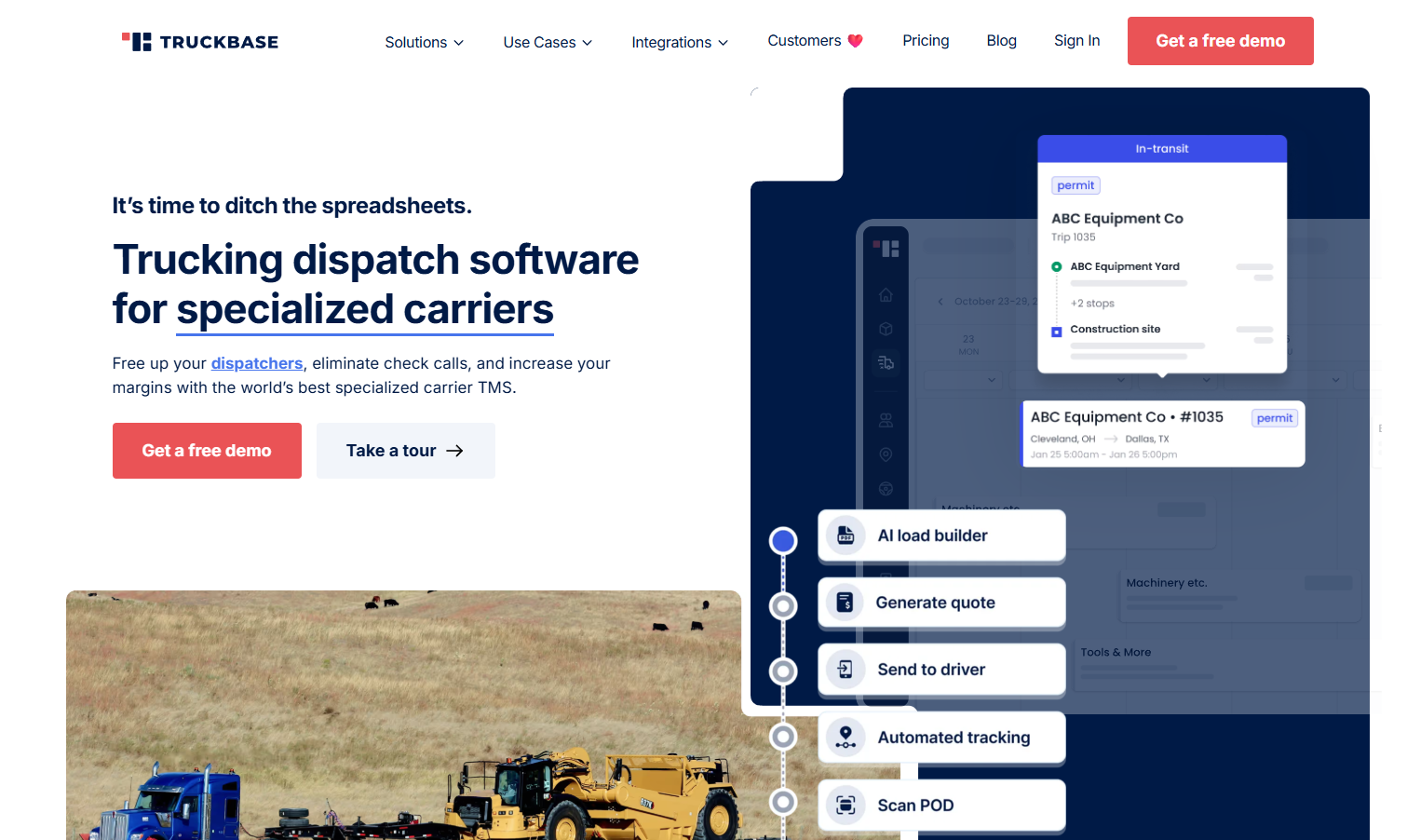
Truckbase is a cloud-based TMS for growing asset-based carriers. Its dispatch board imports load PDFs automatically using AI, which cuts manual data entry from the load creation step. More than 30 ELD integrations provide real-time truck tracking without manual status updates. Driver mobile access, BOL scanning, invoicing, and QuickBooks integration round out the core workflow.
Best for: Small and mid-sized asset-based carrier operations teams building more repeatable dispatch and invoicing processes.
Key features
- Dispatch and load management with AI-powered PDF importing
- Driver mobile access and BOL scanning
- Invoicing and driver settlements
- Real-time truck tracking with 30+ ELD integrations
- QuickBooks and EDI integrations
Why choose Truckbase: A new dispatcher can follow a structured workflow without inheriting undocumented tribal knowledge. The ELD integration depth also makes it a strong fit when operational visibility is as important as billing workflow.
Truckbase pricing: Pricing starts at $290/month billed annually. The platform offers per-truck, per-driver, per-load, flat annual, and custom pricing models. Contact sales to build the right configuration for fleet size.
G2 rating: 4.9/5
5. AscendTMS
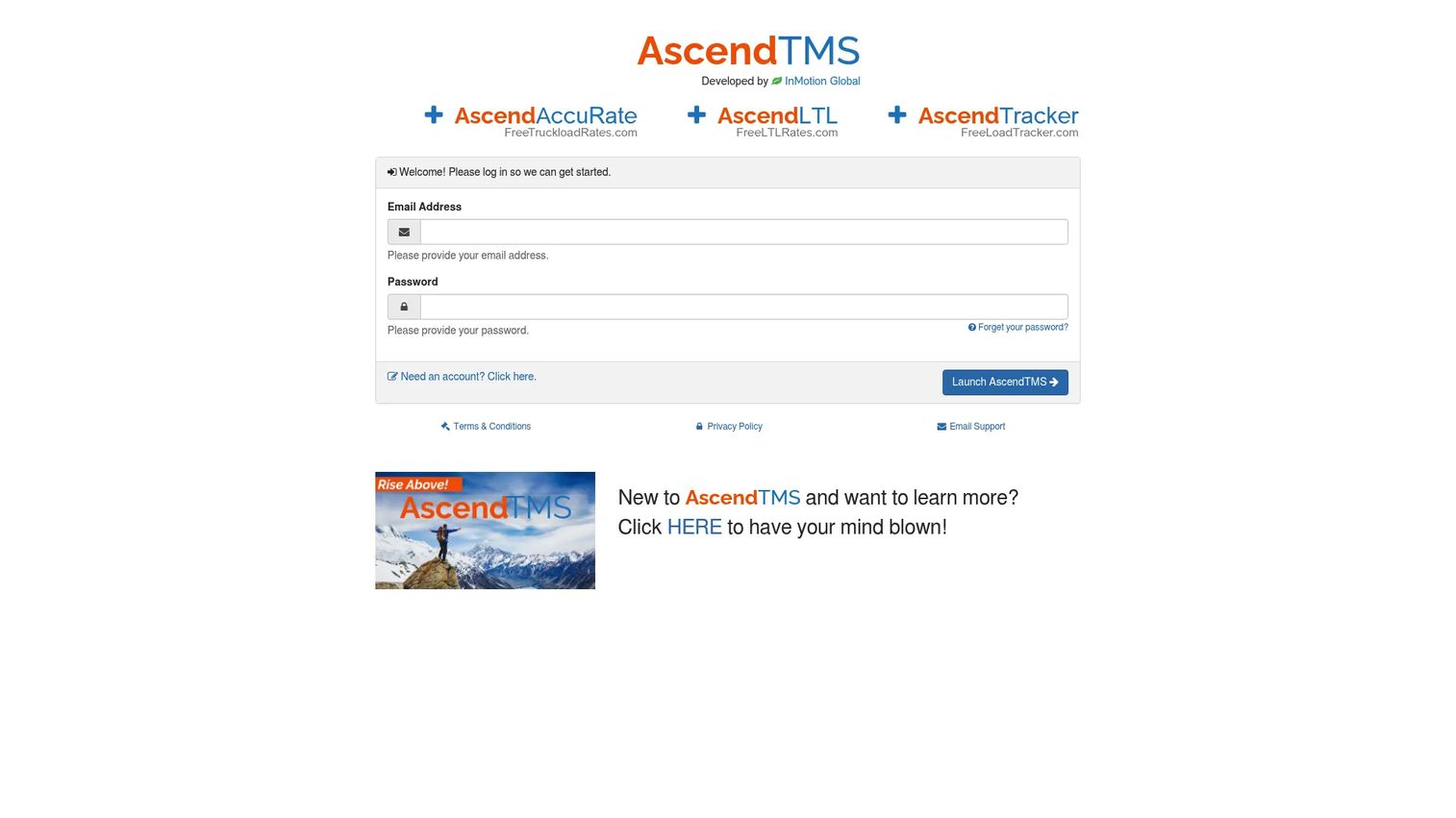
AscendTMS is a transportation management platform serving freight brokers, carriers, 3PLs, and shippers. It covers load management, dispatch and tracking, billing, accounting workflows, carrier records, and document storage. The platform is positioned as an accessible route into TMS functionality before committing to a higher-priced enterprise system.
Best for: Small carriers, brokers, and logistics teams that need foundational TMS workflows and are evaluating cost before committing to a larger platform.
Key features
- Load management and dispatch tracking
- Carrier and customer records
- Document storage tools
- Billing and accounting workflows
- TMS reporting capabilities
Why choose AscendTMS: It belongs on the shortlist when cost is the gating factor and the business still needs core transportation management workflows. That said, validate support depth, integration coverage, and workflow fit before selecting based on entry price alone.
AscendTMS pricing: Pricing details are not displayed publicly. Contact AscendTMS directly for plan names, tier inclusions, and contract terms. G2 reviewers describe it as competitively priced relative to other TMS platforms.
G2 rating: 4.4/5
6. Motive
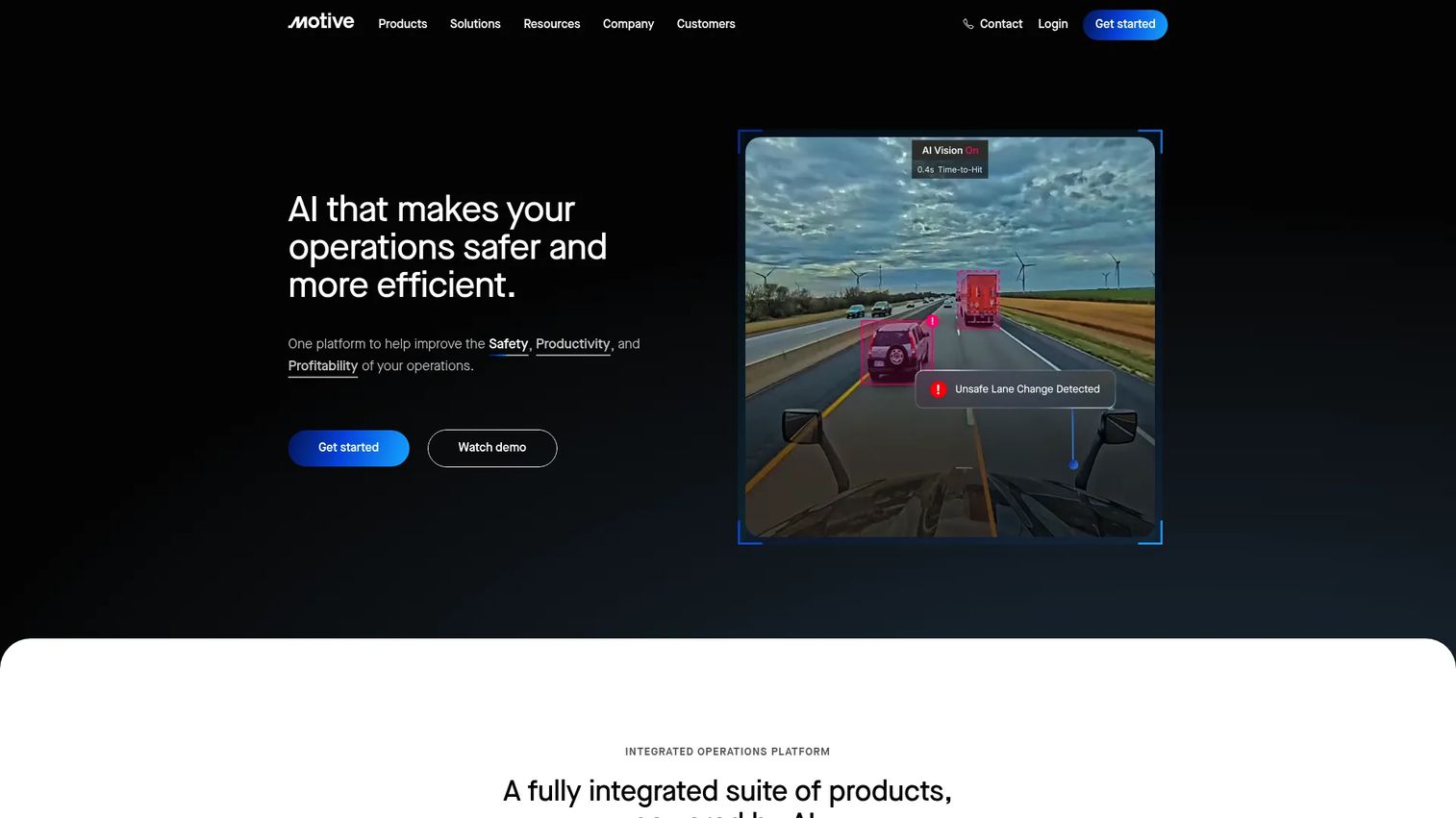
Motive is a fleet operations and telematics platform, not a dispatch-to-invoice TMS. It handles ELD compliance, HOS data, GPS tracking, AI-powered driver safety, dash cameras, and vehicle and asset management. According to the Verizon Connect Fleet Technology Trends Report (2024), 69% of surveyed fleets already use GPS fleet tracking, which signals how common the operational gap Motive addresses has become.
Best for: Fleets where the primary bottleneck is safety, driver behavior, compliance data, or vehicle visibility rather than billing and dispatch administration.
Key features
- ELD and HOS compliance data
- GPS fleet tracking and geofencing
- AI-powered driver safety workflows
- Dash camera and video safety tools
- Vehicle and asset management
Why choose Motive: It answers the question: Are trucks, drivers, and safety processes creating hidden cost, risk, or unplanned downtime? Pair it with a TMS or accounting platform if invoicing and settlement workflows also need attention.
Motive pricing: Software and hardware pricing requires contacting sales. Package costs vary by fleet size, module selection (fleet tracking, safety, dash cameras), and contract duration.
G2 rating: 4.4/5
7. Samsara
Samsara is a connected operations platform for fleets that need telematics, vehicle data, dash cameras, asset tracking, maintenance signals, and safety operations at scale. It goes beyond ELD compliance to surface real-time operational signals across the entire fleet. A first-party Samsara asset-monitoring configuration lists hardware at $249 MSRP with an all-inclusive license at $180/year; full platform pricing requires contacting sales based on fleet size and module selection.
Best for: Growing fleets that need a live operational view across trucks, drivers, equipment, and safety events as load volume and asset count increase.
Key features
- Real-time GPS fleet tracking and routing
- ELD and HOS driver workflows
- AI dash cameras and safety analytics
- Equipment maintenance and inspection tools
- Fleet operations reporting and fuel visibility
Why choose Samsara: Choose it when better operational data could reduce safety exposure, unplanned downtime, or blind spots across a larger fleet. If dispatch, invoicing, and financial workflows also need work, pair it with a dedicated TMS.
Samsara pricing: Full platform pricing is quote-based and varies by fleet size, hardware requirements, and module selection. Asset monitoring hardware starts at $249 MSRP with a $180/year license. Contact Samsara for full platform pricing.
G2 rating: 4.5/5
8. Axon Software
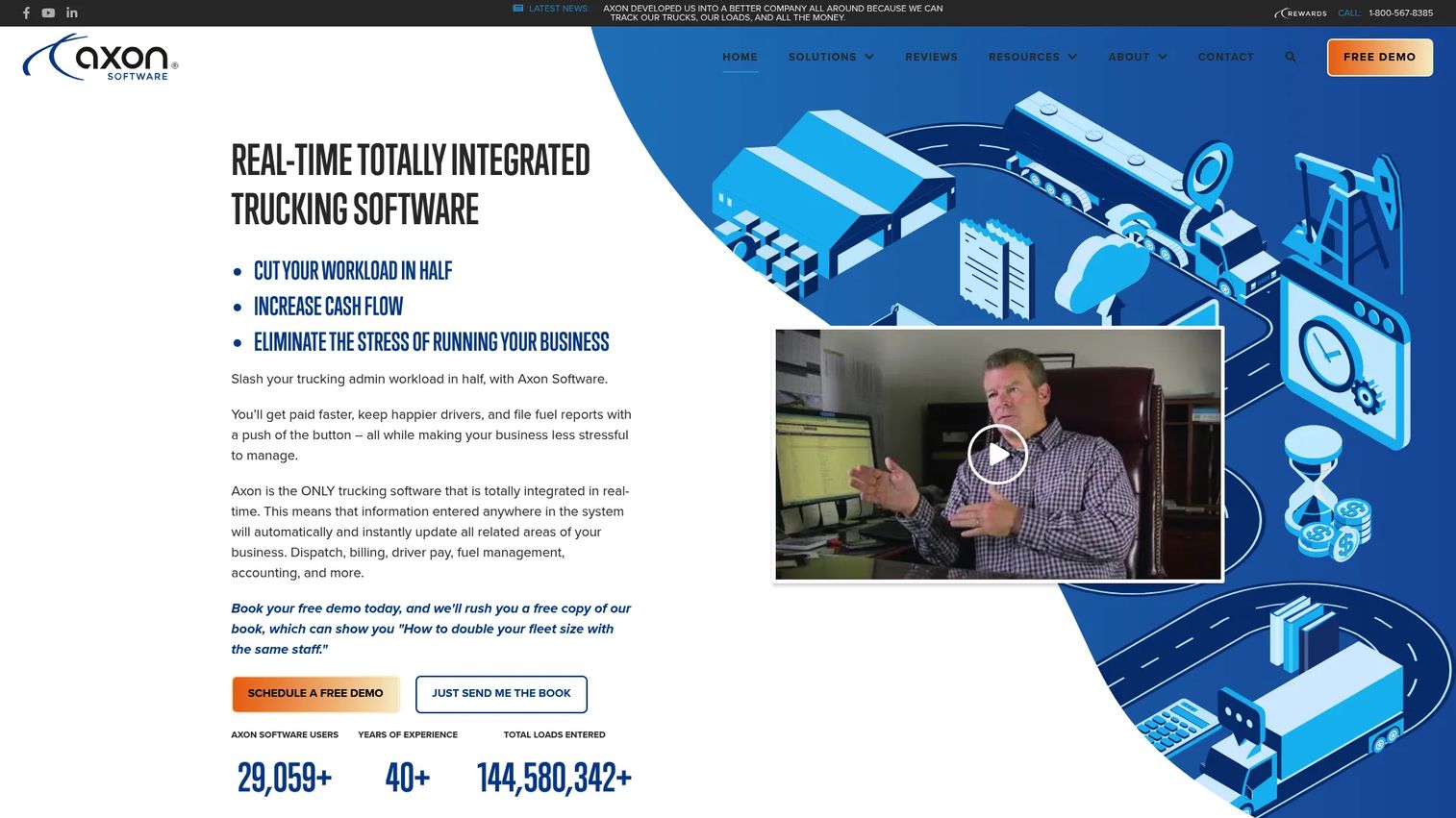
Axon Software is a real-time integrated TMS for carriers, brokers, and operationally complex transportation businesses. It connects dispatch, billing, driver pay, payroll, accounting, IFTA, fleet maintenance, work orders, and inventory controls in one platform. The Axon Truck Link mobile app handles driver communication and field ticketing.
Best for: Established carriers and brokerage operations that have outgrown lightweight small-fleet tools and need deeper transportation workflow coverage.
Key features
- Transportation management and dispatch
- Integrated billing, driver pay, payroll, and accounting
- IFTA and fuel-tax reporting
- Fleet maintenance, work orders, and inventory controls
- Mobile driver communication via Axon Truck Link
Why choose Axon Software: Evaluate it when multiple teams, terminals, or complex financial workflows make a basic trucking tool too limiting. The evaluation process should include implementation scope, data migration, integrations, and training requirements.
Axon Software pricing: Pricing is quote-based. Contact Axon Software directly for plan structure, included modules, and onboarding path.
Considerations when choosing trucking software
Match the tool to the operating bottleneck
Do not buy a telematics platform because it looks like a complete TMS. The first question is where the operation loses the most time or money between accepting a load and collecting payment. Start with software that removes that specific friction.
Verify the dispatch-to-cash workflow before committing
Ask a vendor to walk through one complete sequence: Create a load, assign a driver, send instructions, collect proof of delivery, issue an invoice, record payment, and report margin. If the workflow breaks across exports or separate modules, quantify the manual work left behind.
Check integration reality, not just the integrations list
Confirm which ELD providers, fuel cards, accounting platforms, and load boards connect natively. Ask whether each integration is native, partner-supported, or file-based. An integration that requires manual exports adds back the same admin burden the software was meant to remove.
Model total cost, not just the subscription line
A monthly software price may exclude hardware, additional user seats, vehicle units, premium reporting, or implementation services. Build a first-year cost model that accounts for those variables before comparing entry prices across platforms.
Plan for adoption before go-live
The best platform fails if dispatchers, drivers, and bookkeepers use workarounds from day one. Ask who owns the system, how drivers submit documents on mobile, how data quality gets reviewed, and what the first 30 days of onboarding looks like operationally.
Conclusion
The right trucking software is the one that removes your highest-cost handoff first.
TruckLogics and TruckingOffice fit owner operators and small carriers that need dispatch, IFTA, and financial workflows without heavy implementation overhead. Toro TMS suits bulk-hauling operations that need faster paperwork-to-invoice cycles. Truckbase fits asset-based carriers building repeatable dispatch processes with strong ELD integration. AscendTMS is worth evaluating when the immediate priority is a TMS foundation at a lower entry commitment.
Motive and Samsara belong on the shortlist when fleet visibility, driver safety, and ELD compliance are the primary gap. Neither replaces a TMS for billing and settlement workflows. Axon Software fits carriers and brokers where operational complexity has outgrown every lightweight option on this list.
The practical next step: Shortlist two platforms, run the same dispatch-to-invoice workflow in each demo, and measure the manual work remaining after the software is in place. The tool that requires fewer workarounds to complete that sequence is the one your team will actually use.
For broader software category research, the accounting software guide and the asset tracking software guide cover adjacent categories relevant to trucking operations teams.
FAQs
The best fit depends on the primary bottleneck. Small fleets that need dispatch, invoices, IFTA, and financial visibility in one place should evaluate TruckLogics or TruckingOffice. Fleets with safety and vehicle-visibility issues should evaluate a telematics platform like Motive or Samsara alongside a TMS for billing.
A trucking TMS typically manages dispatch, loads, customers, documents, billing, and operational administration from load acceptance to invoice. Fleet management software focuses on vehicles, GPS, ELD data, maintenance, safety, and driver activity. Many growing carriers use both categories, since each addresses a different part of the operating model.
Owner operators benefit once trip records, fuel receipts, invoices, IFTA work, or maintenance reminders become difficult to track consistently. The right software reduces paperwork and makes profitability visible at the trip level without adding unnecessary complexity to a one-person operation.
Many trucking platforms support IFTA mileage and fuel-tax workflows, often by pulling trip data, ELD data, or fuel card data automatically. Verify what the platform calculates, which data sources it accepts, and whether the actual quarterly filing remains a separate responsibility before relying on a platform for that process.
Some platforms handle invoices, expenses, settlements, and reports internally. Others sync financial data into QuickBooks or a dedicated accounting platform rather than replacing it. The right choice depends on whether the business wants one operational system with bookkeeping support or a connected stack where a TMS feeds a separate accounting tool.
Rank integrations by how much manual work they currently eliminate. ELD providers, fuel cards, load boards, accounting tools, and GPS navigation connections are the most common high-value integrations. Verify whether each connection is native, API-based, or file-export before counting it as a solved problem.
Pricing varies significantly by fleet size, number of users, trucks covered, required modules, hardware requirements, and contract terms. Owner-operator plans start as low as $25 to $36/month. Full fleet and enterprise platforms typically require a custom quote. Calculate first-year cost including implementation, hardware, and any per-module additions rather than comparing monthly entry prices alone.
Map the current dispatch-to-cash process, identify the biggest recurring bottleneck, then test that exact workflow during each vendor demo. The right tool should help a new dispatcher or back-office hire follow the same process without founder intervention or undocumented workarounds. Start with the workflow that creates the most rework, not the longest feature list.