Your trucks are already generating data. Every mile, every hard brake, every idle minute in a parking lot at 4 a.m. The problem isn't collection. It's that the data sits in a device, or a spreadsheet, or a report nobody reads until an accident, a failed inspection, or a fuel bill forces the conversation.
That gap is exactly what fleet telematics software closes. The global fleet telematics market was valued at USD 17.5 billion in 2025 and is forecast to reach USD 44.5 billion by 2032 at a 12.35% CAGR, according to Maximize Market Research (2025). Fleet management applications now account for 38.25% of the global telematics market by revenue, per Mordor Intelligence (2025), making it the single largest use case in the category. Fleets are buying because the math works: fewer incidents, less idling, cleaner compliance, tighter maintenance planning.
But most buyers evaluate telematics the wrong way. They collect feature checklists from eight vendors, stack them side by side, and pick whoever has the longest list. Feature parity is real in this category. What separates the tools is fit: how the device-to-dashboard pipeline actually works, whether the compliance module survives an audit, and how cleanly the data flows into the systems your team already lives in.
If your job involves rolling out a system across dispatch, safety, and maintenance without adding operational drag, this guide reframes the decision. We explain the telematics pipeline first, then rank tools by operational fit. If you also research adjacent operational software, you may find our roundups of audit management software and event management software useful reference points for how we structure buyer comparisons.
What's inside
This guide compares 8 fleet telematics software platforms built for commercial fleets in 2026: Geotab, Samsara, Fleetio, Verizon Connect, Teletrac Navman, Azuga, Omnitracs, and Motive. We selected tools based on four criteria that matter for a real rollout: telematics depth (GPS, sensor, and engine data capture), safety and compliance coverage (ELD, FMCSA, driver behavior), maintenance and cost control, and integration fit with your existing stack. Each entry includes what it does best, who it fits, verified pricing where public, and a G2 rating so you can weigh peer sentiment against your own requirements.
TL;DR
Short on time? Here's the fast decision layer by buyer need:
- Best overall platform for large fleets: Samsara, for its all-in-one operations breadth across vehicles, equipment, and sites.
- Best open-platform architecture: Geotab, for device-to-cloud data flow, Marketplace add-ons, and SDK extensibility.
- Best for maintenance-first teams: Fleetio, for preventive maintenance, inspections, and parts inventory control.
- Best for compliance and hardware flexibility: Verizon Connect, for ELD, HOS, DVIR, and OEM telematics support.
- Best for transparent, safety-led pricing: Azuga, for public per-vehicle tiers plus AI dashcams.
- Best for trucking and transportation: Omnitracs, for routing, dispatch, and long-haul compliance workflows.
What is fleet telematics software?
Fleet telematics software is a platform that captures vehicle, driver, and asset data from in-vehicle hardware, transmits it to the cloud, and turns it into dashboards, alerts, and reports that operators use to manage safety, compliance, maintenance, and cost.
That definition sounds simple. The pipeline underneath it is where the value lives. Understanding it changes how you evaluate every vendor on this list.
GPS, sensor, and device data capture. A telematics device, usually plugged into the vehicle's OBD-II port or hardwired to the engine, collects a constant stream of signals. GPS location and speed. Engine diagnostics through the vehicle's data bus. Accelerometer readings that flag hard braking, harsh cornering, and rapid acceleration. Fuel consumption, idle time, and odometer data. On trucks, tachograph and hours-of-service records. Many platforms extend this with connected sensors for temperature, door status, or trailer conditions.
Transmission to cloud dashboards. The device pushes that data over cellular networks to the vendor's platform, often in near real time. This is the part buyers underestimate. Data frequency, transmission reliability, and how the platform handles gaps all shape what your team actually sees. A dashboard is only as good as the pipeline feeding it.
What operators actually see and act on. Once processed, the data surfaces as live maps, driver scorecards, maintenance alerts, compliance logs, and exception reports. A dispatcher sees where every vehicle is. A safety manager sees which drivers trend toward risky behavior. A maintenance lead sees which asset is due for service before it breaks down.
Here's why telematics is more than tracking. GPS fleet tracking answers "where is it." Telematics answers "how is it being driven, how healthy is it, is it compliant, and what should we do next." That shift, from location to operational intelligence, is the whole point.
Across every category, telematics supports the same core outcomes: safer driving through behavior monitoring and coaching, lower fuel spend through idling reduction and route optimization, cleaner audits through automated ELD and FMCSA reporting, and higher uptime through preventive maintenance scheduling.
When to use fleet telematics software
Telematics earns its cost in specific operational situations. Here are the three that consistently justify a rollout.
Improve fleet visibility without manual check-ins
If your dispatchers still call drivers to ask where they are, you're paying for information you should already have. Real-time GPS tracking and live maps give you continuous location and status without a single phone call. That visibility scales: managing 20 vehicles or 2,000, the dashboard is the same. For teams tracking mixed assets, trailers, and equipment alongside vehicles, asset tracking extends the same visibility to anything that moves.
Reduce incidents, idling, and unsafe driving
Driver behavior data is the fastest path to measurable ROI. Harsh braking, speeding, and rapid acceleration get flagged automatically, and safety coaching turns those flags into behavior change. AI dashcams add video context so you can separate real risk from noise. Cutting idling alone can move the fuel line item meaningfully, which is why idling reduction shows up in nearly every telematics business case.
Centralize maintenance and compliance reporting
Reactive maintenance is expensive. Preventive maintenance scheduling, driven by engine hours and mileage data, catches problems before they become roadside failures. On the compliance side, ELD compliance and FMCSA-certified logging automate the paperwork that used to eat hours and invited fines. When an audit comes, the records are already clean and exportable.
Comparison table
Here's the shortlist at a glance. Pricing reflects publicly listed figures at the time of writing; several vendors quote per fleet, so contact sales for exact numbers. G2 ratings are pulled from each tool's live listing.
| # | Product | Intent | Key use case | Pricing | G2 rating |
|---|---|---|---|---|---|
| 1 | Geotab | Open telematics platform | GPS tracking, compliance, maintenance, routing | Contact sales (hardware included) | 4.5/5 |
| 2 | Samsara | All-in-one operations | Fleet, equipment, and site management | Quote by vehicle/asset count | 4.5/5 |
| 3 | Fleetio | Maintenance-first management | Maintenance, inspections, asset tracking | From $4/vehicle/mo (annual) | 4.6/5 |
| 4 | Verizon Connect | Tracking plus compliance | GPS tracking, ELD, HOS, DVIR | Quote (5-unit minimum) | 3.8/5 |
| 5 | Teletrac Navman | Operations telematics | GPS, dispatch, compliance, reporting | Contact sales (SaaS) | Not listed |
| 6 | Azuga | Safety-led telematics | GPS tracking, driver scoring, dashcams | From $25/vehicle/mo | 4.7/5 |
| 7 | Omnitracs | Trucking operations | Telematics, routing, dispatch, safety | Contact sales | 3.3/5 |
| 8 | Motive | AI-forward fleet ops | Telematics, AI safety, spend, equipment | Contact sales | 4.4/5 |
1. Geotab
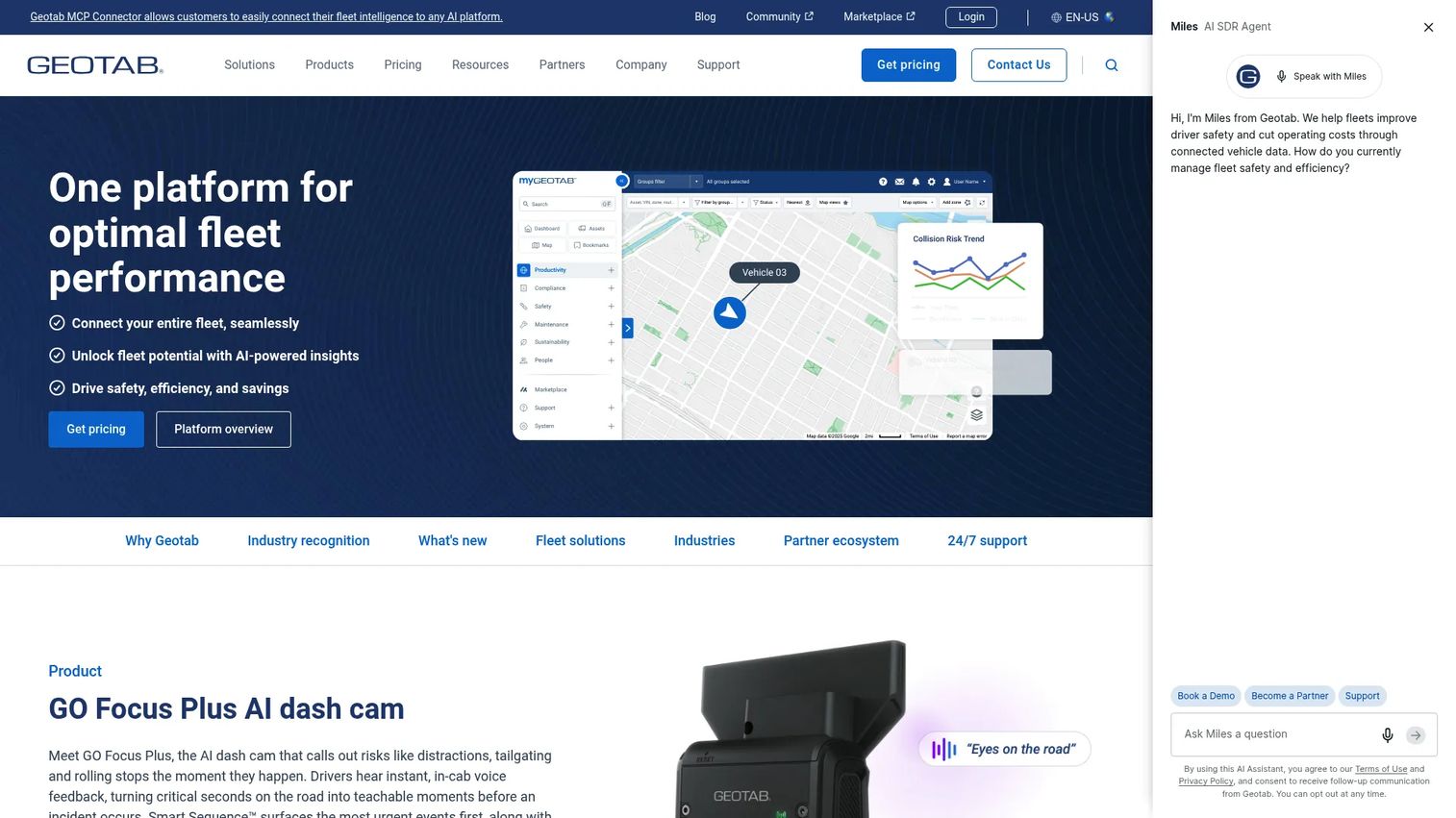
Geotab is the most platform-oriented option on this list. Where other vendors ship a closed product, Geotab is built as an open telematics platform: the GO device captures rich engine and location data, pushes it to the cloud, and exposes it through an extensible ecosystem. Its Marketplace hosts hundreds of third-party add-ons, and the SDK lets teams build custom integrations against the data directly. For a product manager thinking about a system that won't box you in as needs change, that extensibility matters.
The core platform covers what commercial fleets expect: real-time GPS tracking and live maps, maintenance scheduling with work orders, and HOS/ELD compliance including tachograph management for mixed international fleets. Layered on top are AI-driven insights that surface risk and efficiency patterns across the fleet.
Best for: Commercial fleets needing telematics, safety, and compliance management on an open, extensible platform.
Key strengths
- Open platform and Marketplace: Extend the core with third-party add-ons and custom SDK integrations rather than waiting on the vendor roadmap.
- Device-to-cloud data depth: Rich engine and sensor capture through the GO device feeds granular reporting and analytics.
- Compliance breadth: HOS, ELD, and tachograph management cover domestic and international regulatory requirements.
Why choose Geotab: If your fleet is large, mixed, or likely to evolve, the open architecture is the differentiator. You're not buying a fixed feature set; you're buying a data platform you can build on. Teams that value integration flexibility and data ownership consistently land here.
Geotab pricing: Geotab publicly lists two packages, GO Core and GO Plan, but does not display public prices; the pricing page routes to sales for fleet-specific quotes. Notably, hardware is included in the subscription for both plans, which simplifies the upfront math. Geotab holds a 4.5/5 rating on G2.
2. Samsara
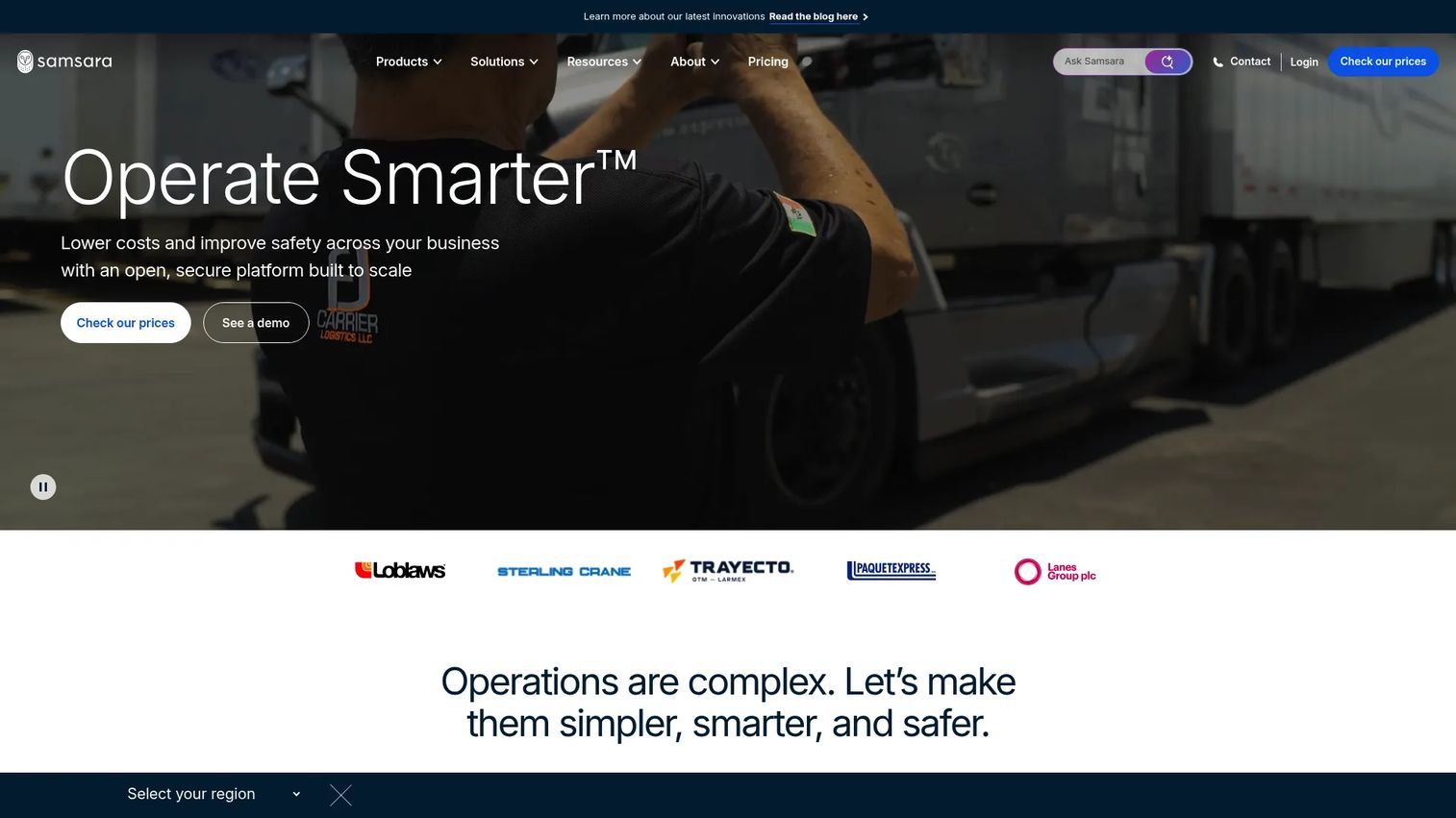
Samsara positions itself as a Connected Operations Platform, which is a fair description of its scope. It manages fleets, equipment, and physical sites in one system, making it a strong fit for operations teams that want telematics plus everything adjacent to it under a single login. For a growing physical-operations business, consolidating vehicles, assets, and workforce workflows into one platform reduces the tool sprawl that quietly drains ops time.
On the telematics core, Samsara delivers real-time GPS tracking, AI dash cams with video safety, and equipment and workflow management. The video safety layer is a standout: AI-flagged events give safety managers context, not just alerts, which shortens the loop between an incident and a coaching conversation.
Best for: Large or growing physical-operations teams needing an all-in-one fleet and operations platform.
Key strengths
- AI dash cams and video safety: Camera-based event detection pairs telematics data with footage for faster, fairer coaching.
- Fleet telematics and GPS tracking: Real-time location, engine data, and diagnostics across the fleet.
- Equipment and workforce management: Extends visibility beyond vehicles to equipment, sites, and field workflows.
Why choose Samsara: The pull here is breadth. If you run a physical operation where vehicles are one piece of a larger asset and workforce picture, Samsara's platform reach means fewer disconnected systems and one source of truth. Teams that value ROI framing and consolidation gravitate to it.
Samsara pricing: Samsara prices by vehicle and asset count through a quote flow rather than published tiers, so you'll work with sales to size a package to your fleet. Samsara holds a 4.5/5 rating on G2.
3. Fleetio
Fleetio approaches the category from the maintenance side. Where telematics-first vendors lead with tracking and add maintenance, Fleetio leads with asset and maintenance management and integrates telematics data into it. For fleets where uptime and service planning are the primary pain, that orientation is the whole reason to look here. It's fleet management software built to keep vehicles running, not just visible.
The platform centralizes maintenance scheduling, work orders, and inspections, plus parts inventory management so your shop isn't guessing at stock. Asset management covers vehicles, equipment, and tools, and a motor pool feature handles shared-vehicle reservations. The mobile app keeps drivers and technicians inputting inspection and service data from the field.
Best for: Fleets that need centralized maintenance, asset, and inspection management.
Key strengths
- Preventive maintenance and work orders: Schedule service on mileage or engine hours and track it to completion.
- Parts inventory management: Tie work orders to stock so maintenance planning reflects what's actually on the shelf.
- Inspections and mobile app: Digital inspections from the field feed the same system that drives service planning.
Why choose Fleetio: If your biggest cost driver is unplanned downtime and reactive repairs, Fleetio's maintenance-first design does what a tracking-first tool bolts on as an afterthought. It also integrates with telematics hardware, so you can pair it with a tracking layer rather than replacing one.
Fleetio pricing: Fleetio publishes clear per-vehicle pricing. The Essential plan starts at $4 per vehicle per month billed annually (or $5 monthly). Professional runs $7 per vehicle per month billed annually, and Premium is $10 per vehicle per month billed annually. Pricing also varies by fleet size range and contract term, and a 14-day free trial is available. Fleetio holds a 4.6/5 rating on G2.
4. Verizon Connect
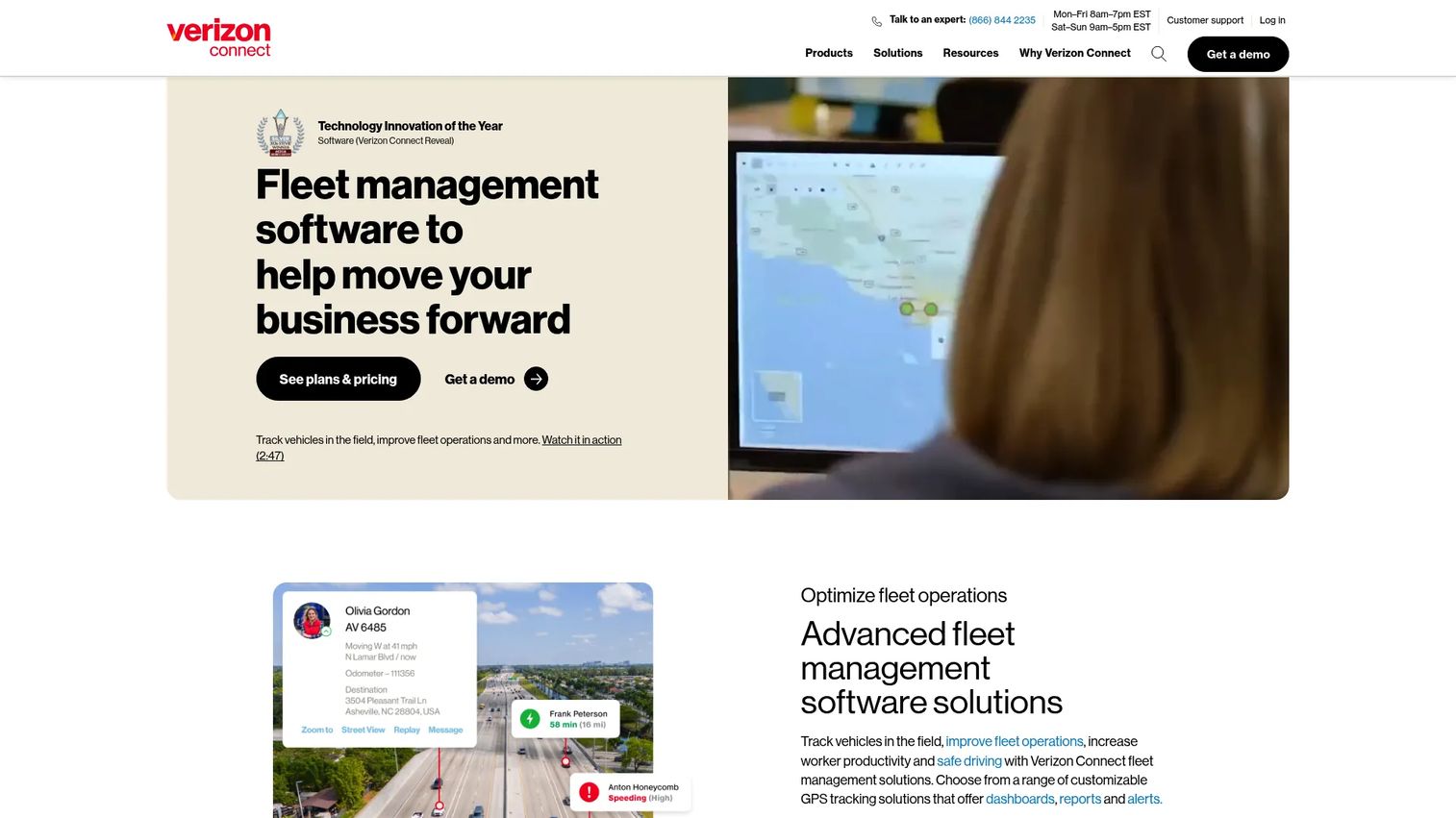
Verizon Connect is a modular telematics platform that pairs deep GPS fleet tracking with strong compliance coverage. Its strength is combining near real-time vehicle and driver location with the regulatory tooling long-haul and regulated fleets need, plus flexibility on hardware including OEM telematics support. For fleets that need both tight tracking and audit-ready compliance without stitching two vendors together, it consolidates the requirement.
The compliance module covers HOS, ELD, and DVIR, so driver logs and inspection records live in the same system as your tracking data. Asset tracking extends visibility to non-powered equipment and trailers, and driver behavior monitoring feeds the safety side.
Best for: Fleets needing a modular telematics platform with tracking, compliance, and driver visibility.
Key strengths
- Near real-time location tracking: Continuous vehicle and driver location for dispatch and visibility.
- Compliance management: HOS, ELD, and DVIR in one module for regulated and long-haul operations.
- Asset tracking: Visibility across trailers, equipment, and non-powered assets alongside vehicles.
Why choose Verizon Connect: The modular design and OEM telematics support give fleets flexibility on how they instrument vehicles. If you're standardizing tracking and compliance across a mixed or growing fleet and want hardware options, it's a practical fit.
Verizon Connect pricing: Verizon Connect does not publish prices; the site routes to a demo and quote flow and notes a minimum of 5 tracking units. You'll need a sales conversation to size it. Verizon Connect holds a 3.8/5 rating on G2, so weigh peer feedback against your specific requirements during evaluation.
5. Teletrac Navman
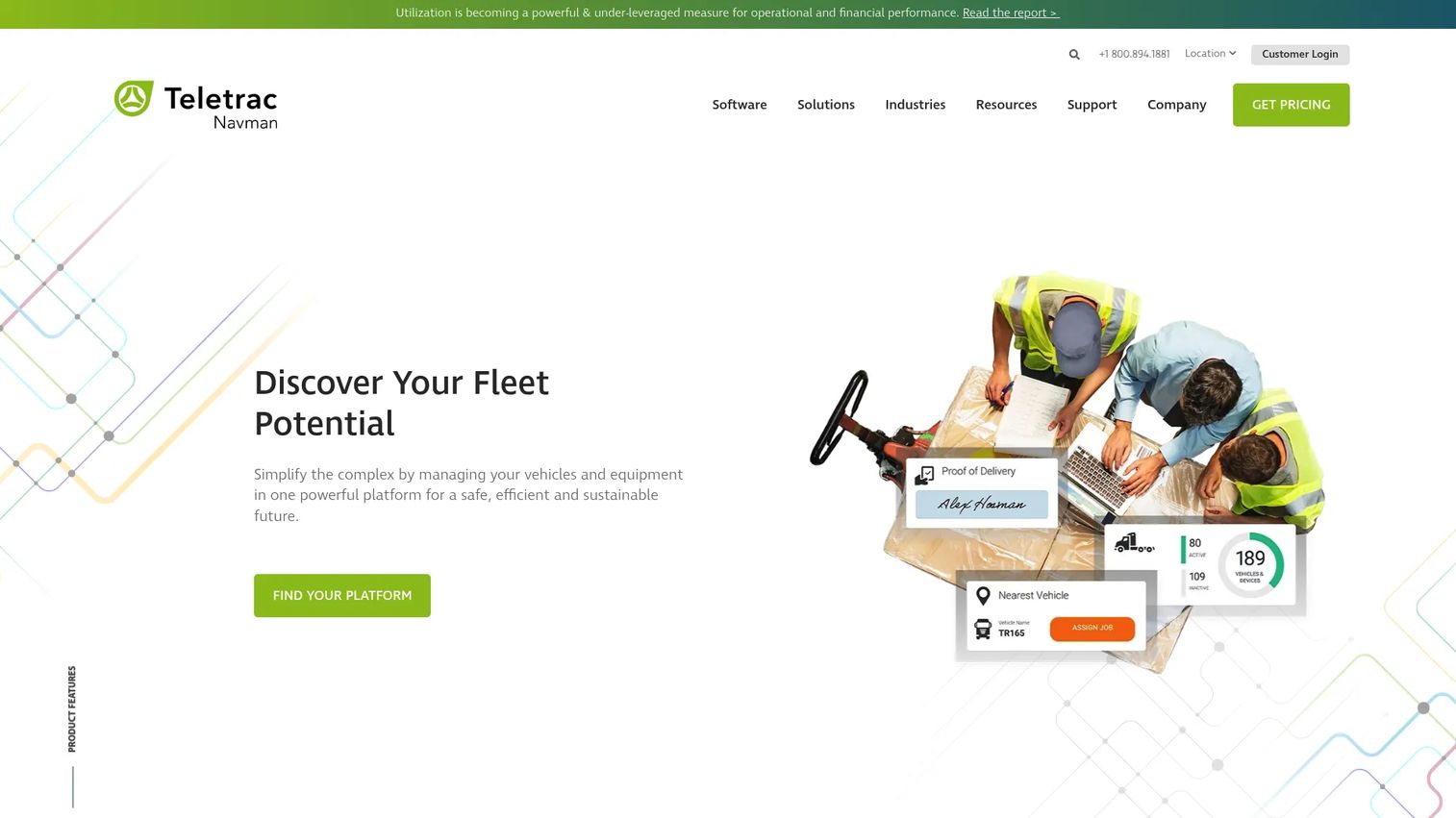
Teletrac Navman is an operations-focused telematics platform with particularly clear coverage of the device-to-data pipeline. It tracks vehicles, equipment, drivers, and compliance in one system, and its educational, pipeline-first approach makes it a strong fit for teams that want to understand exactly how their data is captured and transmitted before they commit. For a product manager evaluating instrumentation, that transparency is genuinely useful.
The platform covers real-time vehicle tracking, dispatch and job management, and maintenance, compliance, and reporting tools. Engine diagnostics and sensor data feed the dashboards, and the compliance and reporting layer supports the audit and regulatory side of operations.
Best for: Mid-market fleets needing GPS tracking, compliance, and asset visibility.
Key strengths
- Real-time vehicle tracking: Continuous location and status across vehicles and equipment.
- Dispatch and job management: Coordinate jobs and dispatch alongside tracking in one workflow.
- Maintenance, compliance, and reporting: Service planning, regulatory logging, and reporting in a single platform.
Why choose Teletrac Navman: If your team wants a clear line of sight into how telematics data flows from device to dashboard, Teletrac Navman's operations-plus-education framing fits mid-market fleets that value understanding the system, not just using it.
Teletrac Navman pricing: Teletrac Navman promotes a monthly SaaS subscription model and invites buyers to request pricing, but does not display public figures. Plan on a sales conversation to get a quote sized to your fleet.
6. Azuga
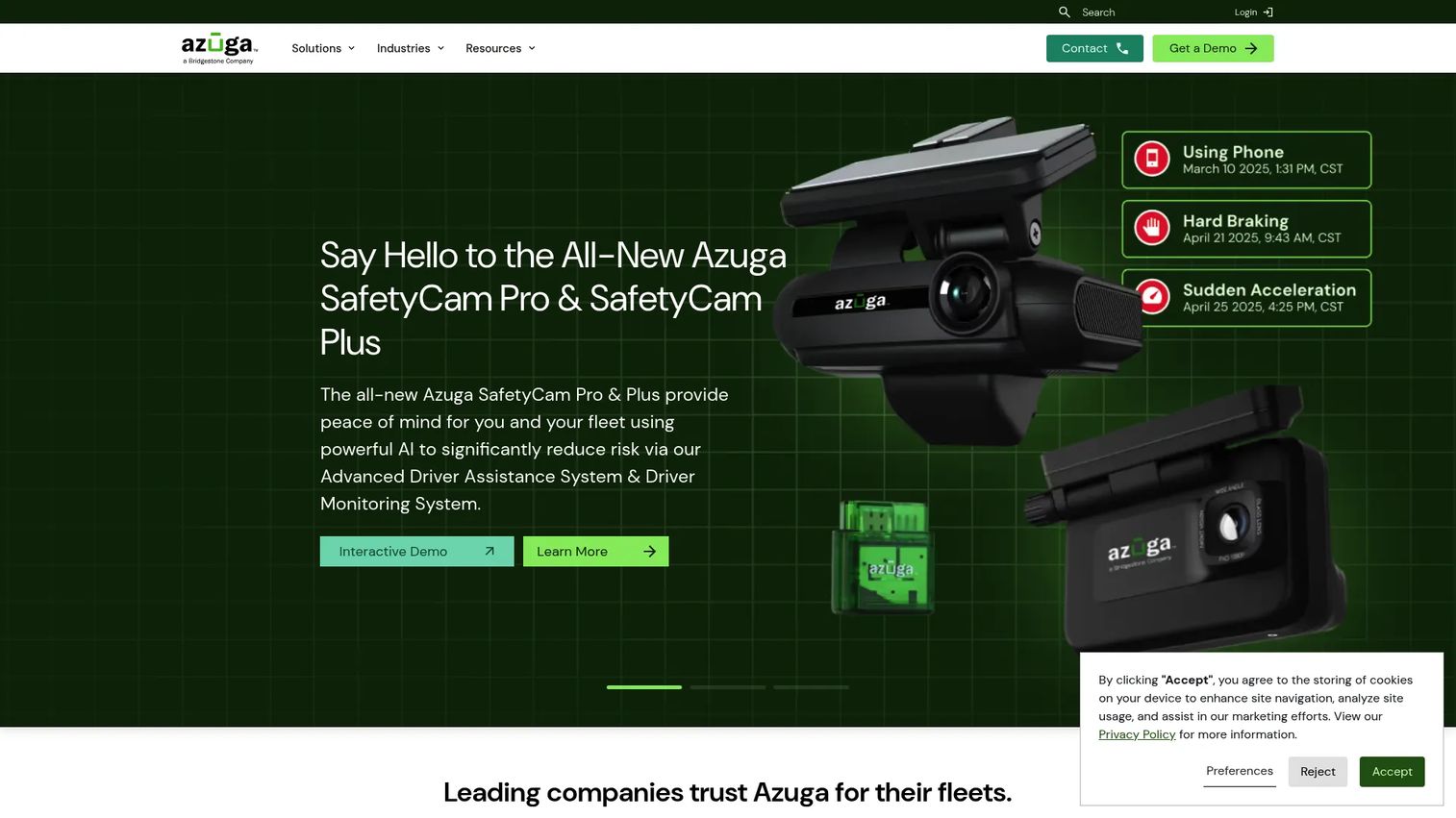
Azuga is a safety-led telematics platform with something rare in this category: transparent, published pricing. It combines GPS fleet tracking with driver scoring, rewards, and AI dashcams, wrapped in tiers you can read before you talk to sales. For buyers tired of quote-only vendors, that transparency shortens evaluation considerably.
The platform covers GPS tracking, driver scores and rewards, asset tracking, ELD/eLogs compliance, dual-facing AI dashcams, and route optimization. The driver scoring and rewards angle is distinctive: it turns safety monitoring into a positive incentive program rather than a purely punitive one, which tends to help adoption on the driver side.
Best for: Fleets needing GPS tracking, driver safety, and asset visibility in one platform.
Key strengths
- Driver scores and rewards: Turn behavior monitoring into an incentive program that drivers actually engage with.
- Dual-facing AI dashcams: Road- and driver-facing video adds context to safety events.
- Transparent per-vehicle pricing: Published tiers make budgeting and comparison straightforward.
Why choose Azuga: If safety is your headline priority and you want pricing you can evaluate without a sales call, Azuga's combination of driver scoring, dashcams, and public tiers is hard to beat for straightforwardness.
Azuga pricing: Azuga publishes tiered per-vehicle pricing. BasicFleet is $25 per vehicle per month, SafeFleet is $30 per vehicle per month, and CompleteFleet is $35 per vehicle per month. A SafetyCam AI add-on runs $41.99 per month, with SafetyCams starting at $49.99 per month. Some configurations still route to a custom quote. Azuga holds a 4.7/5 rating on G2, the highest on this list.
7. Omnitracs
Omnitracs is built for commercial trucking and transportation operations. Where general-purpose telematics tools serve mixed fleets, Omnitracs leans into the workflows long-haul and regulated transportation need: GPS monitoring, engine diagnostics, routing, dispatch, and compliance tooling designed around trucking realities. If your operation is over-the-road freight, the fit is more specialized than a horizontal platform.
The platform covers fleet telematics and GPS monitoring, routing, dispatch, and route optimization, plus video-based safety and driver workflow tools. That routing-plus-dispatch depth is the differentiator for fleets where load planning and driver workflow are as important as tracking.
Best for: Commercial fleets needing telematics, routing, and compliance tooling.
Key strengths
- Fleet telematics and GPS monitoring: Real-time visibility and engine diagnostics across the fleet.
- Routing, dispatch, and optimization: Route and dispatch depth tuned for trucking and transportation operations.
- Video safety and driver workflow: Camera-based safety plus driver workflow tools for regulated operations.
Why choose Omnitracs: If you run trucking or transportation and need routing, dispatch, and compliance built for that world rather than adapted from a general fleet tool, Omnitracs is purpose-fit. Weigh its 3.3/5 G2 rating against your own requirements during a trial.
Omnitracs pricing: Omnitracs does not publish public pricing; the site routes to contact and sales forms. You'll need a quote sized to your operation. Omnitracs holds a 3.3/5 rating on G2.
8. Motive
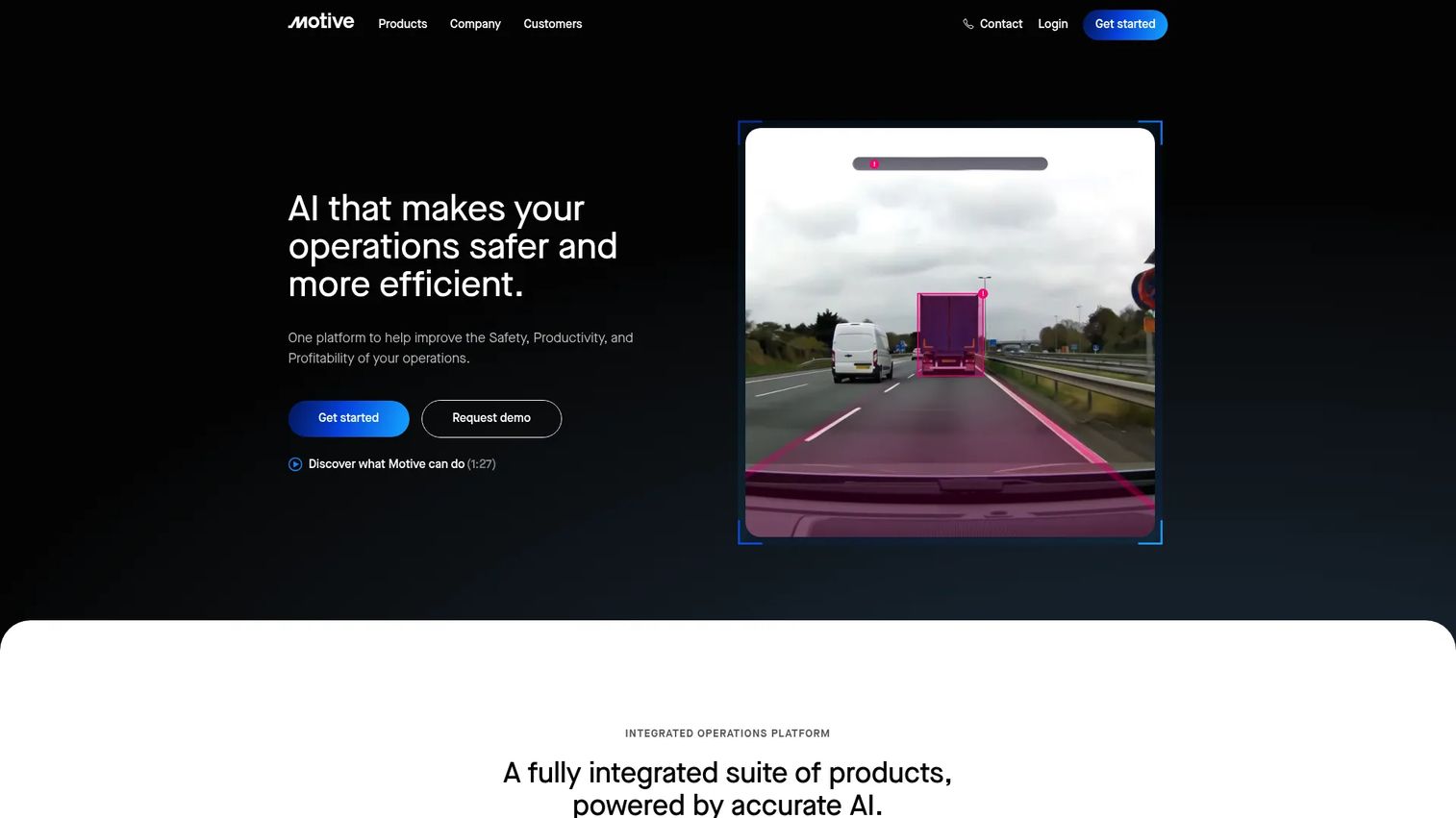
Motive is an AI-forward, all-in-one fleet management and driver safety platform. It combines telematics, AI dashcams, and driver safety coaching with broader operations tooling like spend and equipment monitoring, aiming to be the single platform commercial fleets run on. The AI safety layer is its most visible differentiator, using camera and sensor data to flag and coach on risk.
The platform covers fleet management with real-time vehicle visibility, AI dashcams with driver safety coaching, and workforce, spend, and equipment monitoring. That spend-management angle extends telematics into cost control territory that most tracking-first tools leave to separate systems.
Best for: Fleets that want unified telematics, safety, and operations tools.
Key strengths
- AI dashcams and safety coaching: Camera and sensor data drive automated risk flagging and coaching.
- Real-time vehicle visibility: Live tracking and engine data across the fleet.
- Workforce, spend, and equipment monitoring: Extends the platform into cost control and asset management.
Why choose Motive: If you want an AI-forward platform that unifies telematics, safety, and spend in one place, Motive's breadth and safety focus fit commercial fleets consolidating onto a single system. It's a strong option for teams prioritizing driver safety coaching backed by AI.
Motive pricing: Motive does not publish a public starting price; its offerings are quote- or subscription-based and sized through sales. Plan on a conversation to scope your fleet. Motive holds a 4.4/5 rating on G2.
Considerations before you buy
Feature lists converge fast in this category. These are the criteria that actually separate the right tool from the wrong one for your operation.
Device model and data coverage
The hardware determines what data you get. Ask what the device captures, how it connects (OBD-II, hardwired, OEM-integrated), and how often it transmits. A rich dashboard means nothing if the device underneath it samples data too infrequently to catch what you care about. Confirm engine diagnostics depth for your specific vehicle types.
Compliance fit for your regulations
ELD compliance and FMCSA-certified logging are table stakes for regulated fleets, but coverage varies. If you run internationally, check tachograph and regional support. Verify the ELD is on the FMCSA registered list and that the compliance workflow, from driver log to audit export, actually holds up under scrutiny.
Integration with your existing stack
Telematics data is most valuable when it flows into the systems your team already uses: maintenance software, dispatch, fuel cards, ERP, or analytics. Confirm the fleet management integrations you need exist and are supported, not just theoretically possible. Ask about API access and workflow automation if you plan to build custom flows.
Rollout time and driver adoption
The best platform stalls if drivers resist it. Ask about install time per vehicle, training requirements, and whether the driver-facing app is something people will actually use. Incentive-based safety programs and clean mobile apps tend to drive adoption; clunky interfaces quietly kill it.
Conclusion
There's no universal winner in fleet telematics software, and any guide that names one is oversimplifying. The right choice depends on what your operation prioritizes.
If you want platform breadth and extensibility, Geotab's open architecture and Marketplace lead. For all-in-one operations across vehicles, equipment, and sites, Samsara delivers the widest scope. Maintenance-first teams should shortlist Fleetio for its preventive service and inspection depth. Verizon Connect fits fleets needing tracking plus compliance with hardware flexibility, while Teletrac Navman suits mid-market teams that value pipeline transparency. Azuga wins on safety-led design and transparent pricing, Omnitracs on trucking-specific routing and dispatch, and Motive on AI-forward safety and unified operations.
Your next step is practical: shortlist two or three tools that match your priority, then compare them on device model, rollout time, data coverage, and integration fit. Run a pilot on a subset of vehicles before you commit the whole fleet. The platform that fits your workflow, not the one with the longest feature list, is the one that will actually get used.
FAQs
Fleet telematics software captures vehicle, driver, and asset data from in-vehicle hardware, sends it to the cloud, and turns it into dashboards, alerts, and reports. Operators use it to manage GPS tracking, driver safety, maintenance, fuel, and compliance from one system. It goes beyond location to deliver operational intelligence across the whole fleet.
A telematics device installed in each vehicle collects GPS, engine, and sensor data, then transmits it over cellular networks to the vendor's cloud platform. The platform processes that data into live maps, driver scorecards, maintenance alerts, and compliance logs. Your team acts on those outputs to reduce risk, cost, and downtime.
Typical data includes GPS location and speed, engine diagnostics, fuel consumption, idle time, odometer readings, and accelerometer data that flags hard braking and harsh cornering. On trucks it also captures hours-of-service and tachograph records. Many platforms add connected sensors for temperature, door status, or trailer conditions.
GPS fleet tracking answers where a vehicle is. Fleet telematics answers how it's being driven, how healthy it is, whether it's compliant, and what to do next. Tracking is a subset of telematics; telematics adds engine data, driver behavior, maintenance, and compliance on top of location.
Telematics platforms with FMCSA-certified ELDs automatically log hours-of-service, driver duty status, and inspection records. That replaces paper logs and reduces the risk of violations and fines. When an audit comes, the records are already digital, accurate, and exportable, which shortens the whole process.
The features that drive ROI most reliably are real-time GPS tracking, driver behavior monitoring with safety coaching, preventive maintenance scheduling, ELD compliance, and clean integrations with your existing stack. Match the feature emphasis to your biggest cost driver, whether that's safety, downtime, fuel, or compliance.
On fuel, telematics flags idling, inefficient routes, and aggressive driving, then supports idling reduction and route optimization to cut consumption. On maintenance, engine and mileage data drives preventive maintenance scheduling that catches problems before they become expensive roadside failures, improving uptime and lowering repair costs.
Check four things: the device model and how much data it actually captures, whether the compliance module fits your regulations and holds up in an audit, whether it integrates with your existing maintenance and dispatch systems, and how long rollout and driver adoption will take. Pilot on a subset of vehicles before committing the full fleet.