Revenue goes up. Gross margin gets harder to explain. Finance blames freight. Operations points to service exceptions. The ERP has every transaction, but it does not automatically show you which customer relationships create profit after fulfillment costs, handling, returns, and everything else that happens between the sale and the delivery.
According to Gartner (2025), 95% of organizations have increased supply chain analytics spending, yet fewer than 25% have achieved high levels of analytics-driven improvement. The gap is not effort. It is the wrong question. Most teams are measuring revenue and COGS while margin leakage compounds quietly in the operational layer below.
Supply chain cost-to-serve analytics software answers a different question: What does it actually cost to serve this customer, this SKU, or this channel, after every cost is accounted for? The answer changes which customers you prioritize, which contracts you renegotiate, and which service policies you can afford.
This guide covers eight tools built for cost allocation, profitability analysis, and supply chain scenario modeling. It is written for the founder forwarding a shortlist to a COO or VP Finance, and for the operator who needs to build a profitability model that survives board scrutiny.
What's inside
- Eight tools covering driver-based costing, network scenario modeling, enterprise profitability allocation, and product cost management
- Which platforms fit finance-led allocation versus operational scenario work
- Verified pricing information and G2 ratings for every tool on the list
- Selection criteria covering data readiness, ERP integration, implementation effort, and executive reporting needs
Selection criteria: Category fit for cost-to-serve use cases, verified feature coverage, available pricing data, and G2 or review-site rating evidence.
TL;DR
- Best for driver-based cost-to-serve analysis: CostPerform connects resources, activities, and cost objects to show the full cost of serving customers, products, and channels with transparent allocation logic
- Best for supply chain scenario modeling: Coupa Supply Chain Modeler fits teams asking operational "what if" questions about network design, sourcing, and service-level tradeoffs
- Best for enterprise finance-led profitability allocation: Oracle Cloud EPM Profitability and Cost Management suits organizations already running Oracle's planning suite who need controlled, auditable cost and revenue models
- Best for network transparency: 4flow vista is built for operations leaders who need to see cost flows across multimodal logistics networks before redesigning them
- Founder's decision rule: Match the tool to the decision you need to make. A driver-based customer profitability model answers a different question than a supply chain network simulator. Buying the wrong category produces a dashboard that nobody trusts
What is supply chain cost-to-serve analytics software?
Supply chain cost-to-serve analytics software calculates the full cost of serving a customer, product, channel, region, or order pattern by allocating operational and financial costs to the activities that create them.
Where standard gross margin reporting stops at the product level, cost-to-serve analysis adds the downstream layer: What it costs to pick, pack, ship, handle exceptions, process returns, and manage service requirements for a specific customer or segment. The result is a profitability view that finance and operations can act on together.
What the software measures
Cost-to-serve platforms typically allocate costs across:
- Transportation and freight, including mode, distance, and frequency
- Warehousing and handling costs per order or SKU
- Inventory carrying costs by location and dwell time
- Picking, packing, and return processing
- Customer-specific service requirements and exception handling
- Manufacturing, sourcing, and supplier costs where relevant
- Order frequency, minimum order penalties, and administrative allocations
What good cost-to-serve analysis changes
Once you can see the full cost of serving each customer or product, the business decisions that follow include pricing adjustments, customer or channel profitability reviews, SKU rationalization, service-level redesign, network and sourcing scenario planning, and contract renegotiation.
Core capabilities to look for
- Driver-based cost allocation that connects activities to costs
- Customer and product profitability drill-downs
- Integration with ERP, TMS, WMS, and finance data
- Scenario modeling so you can test changes before committing
- Audit trails that let finance validate allocation logic
- Dashboards exportable for board and planning workflows
When to use supply chain cost-to-serve analytics software
Find the margin leak behind revenue growth
The trigger here is predictable: Revenue holds, but gross margin moves in ways the team cannot fully explain. Cost-to-serve analysis isolates whether the problem is customer-specific fulfillment patterns, high return rates, low order density, or service exception costs. Without that allocation, finance and operations argue about different parts of the same problem.
Test service-level and network decisions before committing budget
Changing a delivery promise, shifting a fulfillment node, or renegotiating freight modes all carry cost implications that spreadsheets cannot model cleanly across a network. Scenario modeling tools let you compare the cost and profitability outcomes of competing options before any capital moves. The alternative is making expensive structural decisions on instinct.
Replace spreadsheet-based profitability reviews
A spreadsheet can start the work. It breaks when the allocation logic needs to refresh monthly, the model spans multiple business units, and three finance analysts maintain three versions. Cost-to-serve software creates a shared model with repeatable logic, controlled inputs, and outputs that both finance and operations interpret consistently.
Supply chain cost-to-serve analytics software comparison
These eight products do not all solve the same problem. CostPerform models allocation from the activity layer up. Coupa Supply Chain Modeler simulates network and sourcing decisions. Oracle allocates costs across enterprise dimensions with finance-grade governance. The others each carry a distinct primary use case, described in the table below.
| # | Product | Best for | Key differentiator | Pricing | G2 rating |
|---|---|---|---|---|---|
| 1 | CostPerform | Driver-based customer, channel, and product profitability | Activity-to-cost-object modeling with full allocation traceability | Custom pricing | 5.0/5 |
| 2 | Coupa Supply Chain Modeler | Network, sourcing, and service-level scenario analysis | Integrated network optimization, simulation, and AI recommendations | Custom pricing | 4.2/5 |
| 3 | Oracle Cloud EPM Profitability and Cost Management | Enterprise finance-led cost and profitability allocation | Point-and-click allocation model building within Oracle EPM Enterprise | Custom pricing | 4.0/5 |
| 4 | 4flow vista | Supply chain network visibility and logistics cost analysis | Modular network optimization with strategic and tactical planning | Custom pricing | 4.5/5 |
| 5 | Facton EPC Suite | Product cost management in manufacturing | Should-cost, quotation costing, and lifecycle profitability analysis | Custom pricing | N/A |
| 6 | CadDo Platform | Complex cost allocation and decision intelligence models | Configurable data foundation with AI-powered orchestration | Custom pricing | N/A |
| 7 | Jonova Portfolio Profitability Optimization | Portfolio and customer profitability decisions | Complexity cost analysis and profitability optimization by portfolio | Custom pricing | N/A |
| 8 | Bristlecone Neo | Supply chain transformation programs with cross-system analytics | SaaS data lake with prebuilt integrations into SAP, Salesforce, and Oracle | Custom pricing | N/A |
Best 8 supply chain cost-to-serve analytics software tools for 2026
1. CostPerform
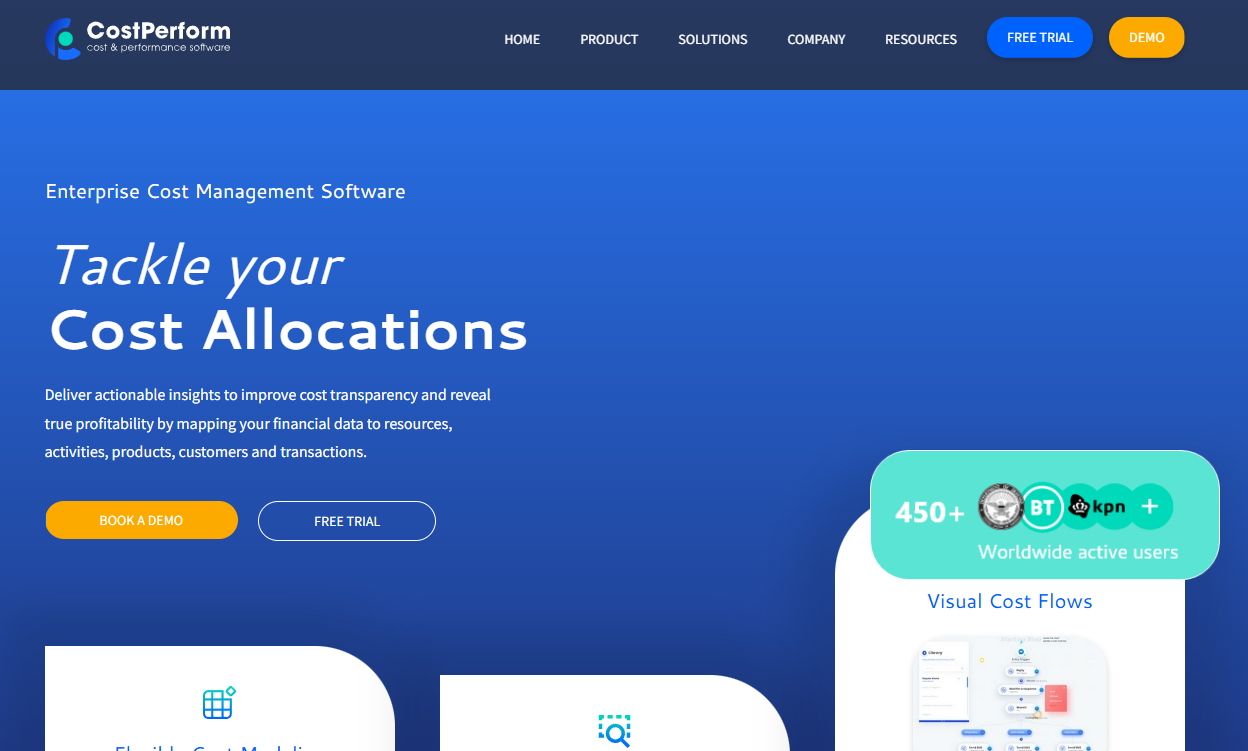
CostPerform is enterprise cost and performance management software built around driver-based allocation. It connects resources, activities, and cost objects, which means finance and operations teams build a shared model that traces every cost back to the activity that created it. The result is a profitability view by customer, product, channel, or transaction that both functions can interrogate and defend.
Best for: Finance and supply chain leaders who need a repeatable, auditable driver-based cost model across customers, products, and channels.
Key features
- Driver-based cost allocation with visual traceability
- Customer, product, channel, and transaction profitability analysis
- Activity-based costing across organizational cost objects
- Scenario and sensitivity analysis on cost models
- Technology Business Management and regulatory reporting support
Why choose CostPerform: Choose CostPerform when the team needs to explain not just what the profitability number is, but why it is that number. The allocation logic is traceable at every step, which makes it defensible in a board presentation or a contract negotiation.
CostPerform pricing: CostPerform uses a cloud pricing model based on organizational cloud spend. Contact their team for a quote shaped by model scope, data sources, and deployment needs.
G2 rating: 5.0/5 (based on 1 review on G2).
2. Coupa Supply Chain Modeler
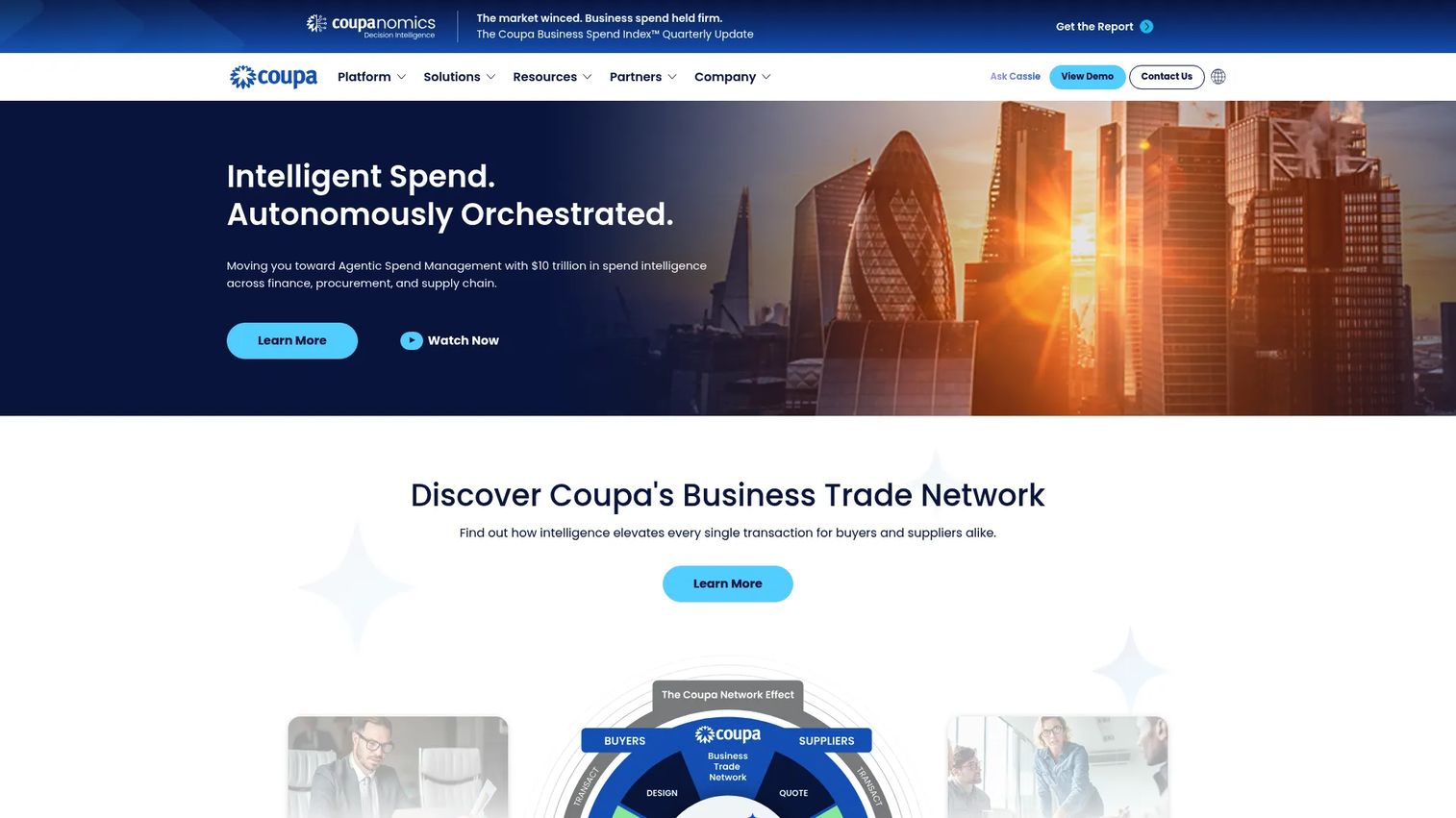
Coupa Supply Chain Modeler is an all-in-one supply chain modeling platform covering network design, discrete-event simulation, transportation optimization, and AI-based prescriptions. It belongs on the shortlist when the core question is operational: Where to source, how to structure the network, what service level is financially viable, and how inventory positioning affects cost.
Best for: Enterprise supply chain teams making network, sourcing, and fulfillment decisions before committing capital or changing policies.
Key features
- Network optimization with strategic and tactical planning
- Transportation and inventory optimization
- Discrete-event simulation for scenario comparison
- AI-based prescriptions and recommendations
- ERP data connectivity with cloud or on-premise deployment
Why choose Coupa Supply Chain Modeler: This is the right tool when the question is "what should our network do next?" rather than "which customers are profitable?" The scenario comparison capability lets operations teams test a distribution network change or a sourcing shift before spending money.
Coupa Supply Chain Modeler pricing: Pricing is not displayed on the product site. Commercial terms reflect module selection, modeling complexity, implementation services, and enterprise data integration requirements. Contact Coupa for a scoped quote.
G2 rating: 4.2/5
3. Oracle Cloud EPM Profitability and Cost Management
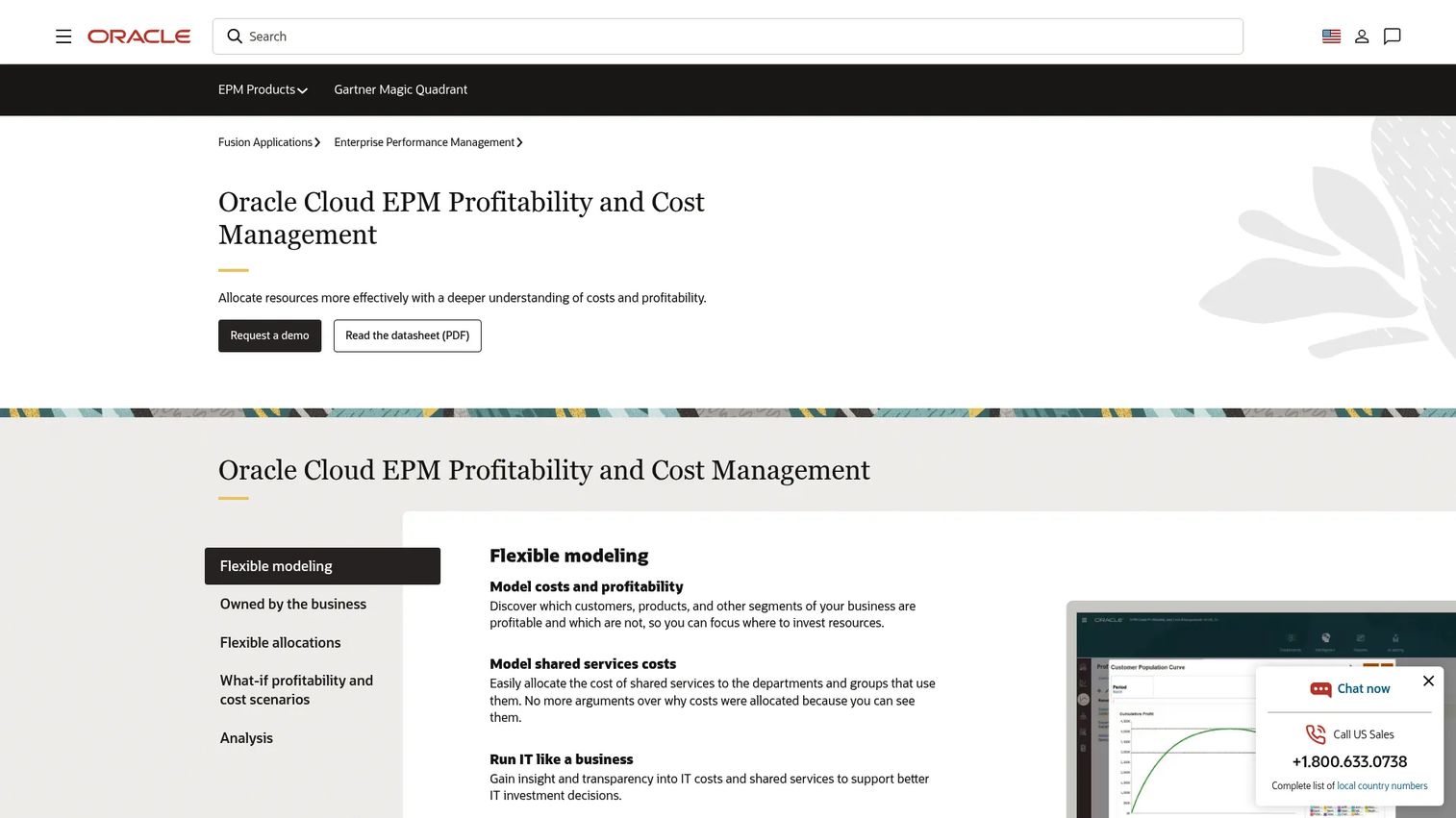
Oracle Cloud EPM Profitability and Cost Management is a cloud business process for modeling, allocating, and analyzing costs and revenue across any dimension of the business: Customer, product, region, branch, or business unit. It is built for organizations already operating in the Oracle EPM environment, where the allocation models connect directly to planning and reporting workflows.
Best for: Enterprise finance teams that need controlled, auditable profitability allocation across multiple business dimensions and units.
Key features
- Point-and-click profitability and cost model building without scripting
- Allocation of shared-service costs using financial and operational data
- Multi-dimensional analysis across customer, product, region, and segment
- What-if profitability and cost scenario modeling
- Traceability maps, validation reports, dashboards, and ad hoc analysis
Why choose Oracle Cloud EPM Profitability and Cost Management: The best fit is an enterprise finance team that already runs Oracle EPM for planning and closing, and needs profitability allocation to live in the same governed environment. Adding it outside Oracle is possible but loses the native integration advantage.
Oracle Cloud EPM Profitability and Cost Management pricing: Oracle documentation confirms this product is exclusively available with the EPM Enterprise subscription. No price was displayed on first-party pages. Request a quote through Oracle's enterprise sales process; implementation and existing Oracle footprint typically affect total cost.
G2 rating: 4.0/5 on G2.
4. 4flow vista
4flow vista is supply chain and transportation planning software for network optimization at strategic and tactical levels. It lets operations teams model multimodal networks, evaluate logistics cost flows, and test structural changes to routing, warehousing, and freight modes before implementation.
Best for: Operations leaders who need network transparency and scenario evaluation before redesigning freight, warehousing, or fulfillment decisions.
Key features
- Network optimization covering strategic transportation planning
- Tactical transportation planning and operational optimization
- Supply chain network visualization and flow analysis
- Logistics scenario evaluation with cost comparisons
- Modular deployment with per-license commercial structure
Why choose 4flow vista: Position this for teams with a physical network complexity question. 4flow vista answers "what does our supply chain cost to run, and what happens if we change it?" rather than serving as a customer profitability allocation platform. The distinction matters when deciding which tool earns the budget.
4flow vista pricing: 4flow uses modular, per-license pricing. No price is displayed on the product site. Contact 4flow directly for a quote based on module selection and deployment scope.
G2 rating: 4.5/5 (based on 1 review on G2).
5. Facton EPC Suite

Facton EPC Suite is enterprise product costing software for manufacturing companies. It manages the full lifecycle of product costs: From quotation costing and should-cost analysis through design-to-cost modeling, target costing, and profitability management. It also incorporates product-related CO2 emissions for sustainable costing decisions.
Best for: Manufacturing and product-led organizations that need to connect product design and engineering choices to margin outcomes across the lifecycle.
Key features
- Quotation costing and reliable cost estimates at bid stage
- Should-cost and standardized cost models
- Design-to-cost and product-cost analysis
- Target costing, controlling, and profitability management
- Integration with ERP, PLM, CAD, and PDM systems
Why choose Facton EPC Suite: Choose Facton when the profitability problem starts upstream in product design, component selection, or manufacturing cost structure rather than in fulfillment and distribution. For a founder whose margin erosion traces to product complexity or engineering decisions, this is the category that fits.
Facton EPC Suite pricing: No first-party price is displayed. Facton sells through an enterprise motion. Contact the sales team for commercial terms scoped to company size, integration requirements, and product portfolio complexity.
6. CadDo Platform
CadDo Platform combines data foundations, decision intelligence, and AI-powered orchestration to support enterprise analytical modeling. It fits organizations that need to model cost structures and profitability questions that do not map cleanly to a standard reporting template, where the allocation logic spans multiple source systems and the business model is non-standard.
Best for: Finance transformation and operations teams with complex, multi-source allocation models that require flexibility beyond standard cost reporting tools.
Key features
- Configurable cost models for complex allocation structures
- Decision intelligence with scenario-based analysis
- AI-powered orchestration across data sources
- Multi-source data integration and profitability reporting
- Enterprise-ready SSO, role-based access, and administration
Why choose CadDo Platform: The fit is strongest when the company's cost structure is genuinely unusual: Multiple revenue streams, non-standard cost drivers, or allocation logic that has been living in spreadsheets precisely because no standard tool handled it well. Flexibility here also requires disciplined ownership of data definitions.
CadDo Platform pricing: No first-party price was confirmed during research. Commercial terms are driven by model complexity, integration requirements, user access, and implementation scope. Contact CadDo directly.
7. Jonova Portfolio Profitability Optimization
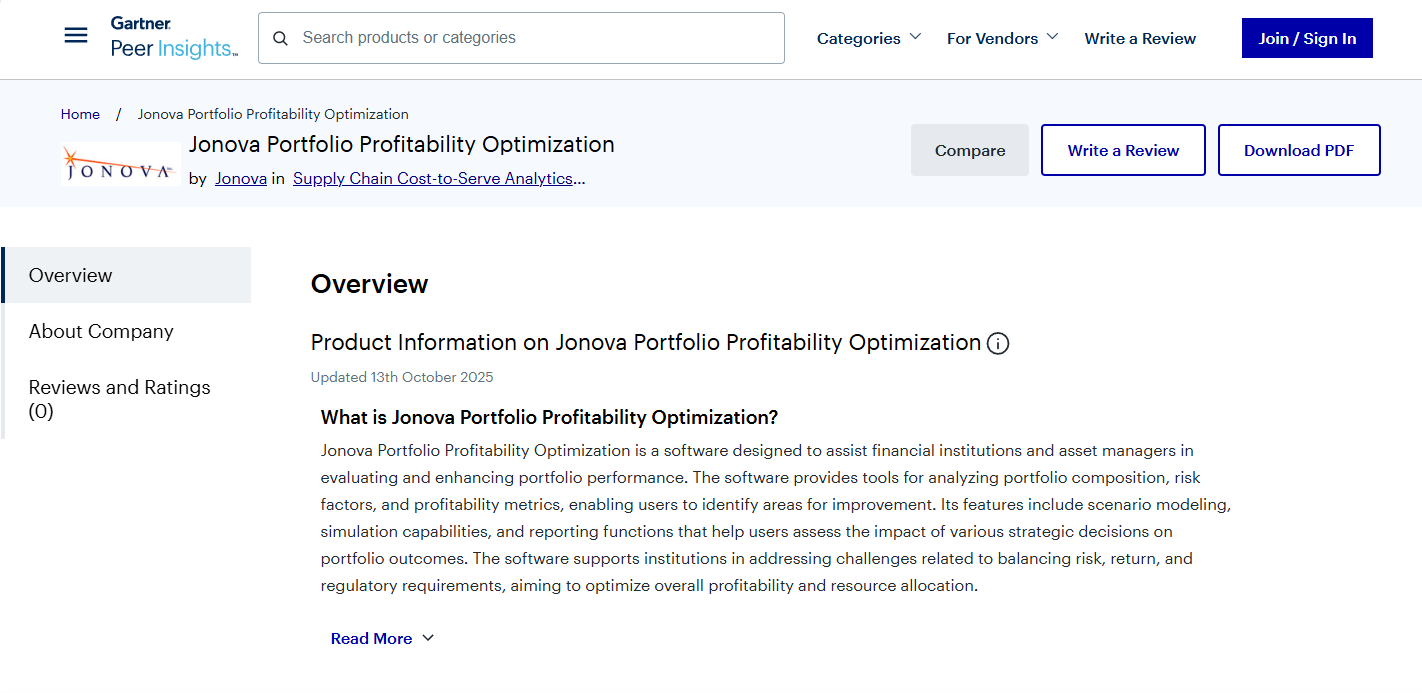
Jonova Portfolio Profitability Optimization supports portfolio-level profitability decisions by analyzing the complexity cost, margin contribution, and operational load of customer and product segments. It fits leaders who need to identify which parts of the portfolio earn continued investment and which consume disproportionate capacity relative to the margin they generate.
Best for: Leaders deciding where to simplify a product or customer portfolio, reset commercial terms, or concentrate resources on the highest-margin segments.
Key features
- Portfolio profitability analysis by product and customer
- Complexity cost analysis and quantification
- Customer and product performance views by segment
- Optimization recommendations for portfolio decisions
- Decision support workflows for prioritization
Why choose Jonova Portfolio Profitability Optimization: A founder with limited capacity and a broad portfolio needs to know which customers and products to double down on. Jonova helps frame that decision with profitability and complexity data rather than revenue rank alone.
Jonova Portfolio Profitability Optimization pricing: No fixed pricing was found during research. Commercial terms follow project scope, data sources, and optimization objectives. Contact Jonova for details. Note: The jonova.com domain was not loading from a standard product page during research; confirm current site status before outreach.
8. Bristlecone Neo
Bristlecone Neo is a SaaS data platform and modern data lake designed for enterprise organizations running supply chain transformation programs. It ingests data from systems such as SAP, Salesforce, and Oracle, creates a common data model, and enables cross-functional analytics including supply chain planning, operational performance visibility, and embedded data science.
Best for: Larger companies running a supply chain transformation program where cost-to-serve analysis is one workstream among planning, procurement, logistics, and operations initiatives.
Key features
- Enterprise data ingestion from SAP, Salesforce, Oracle, and other systems
- Common data model with prebuilt integrations
- Interactive and embedded analytics and data science tools
- Cloud-native SaaS architecture with serverless computing
- Enterprise SSO, role-based access, and administration
Why choose Bristlecone Neo: Evaluate Bristlecone Neo when the company wants program-level support rather than a narrowly focused cost allocation application. The data lake architecture means cost-to-serve analytics sit alongside broader operational, planning, and procurement data, which suits transformation programs with multiple workstreams.
Bristlecone Neo pricing: Pricing is not publicly displayed. Commercial terms change with program scope, module selection, integration requirements, and delivery services. Contact Bristlecone for a scoped engagement.
Considerations when choosing supply chain cost-to-serve analytics software
Start with the decision, not the dashboard
Before evaluating vendors, name the specific profitability question that, if answered, would change an operating decision. Customer margin review, product SKU rationalization, and freight mode optimization each require different data models. A platform can only answer the question it was designed to model, so starting with the tool before the question inverts the process.
Audit source data before committing to a platform
The required inputs typically span ERP and general ledger data, order management, warehouse management, transportation, inventory, and freight systems. Poor master data and inconsistent cost drivers produce outputs that finance and operations will dispute. Before signing any contract, map which systems exist, how clean the data is, and who owns each cost driver definition.
Require a live model during evaluation
Ask every shortlisted vendor to build a cost model for one real customer or SKU using a representative sample of your data during the evaluation. The allocation assumptions become concrete, the integration questions surface early, and both finance and operations see whether the output reflects operational reality. A demo with generic data tells you nothing about fit.
Separate historical reporting from scenario modeling
Historical cost-to-serve tells you what happened. Scenario modeling estimates what will happen if service levels, network structure, or sourcing choices change. Some teams need both capabilities; others need only one. Confirm which problem you are solving before paying for features that only address the other.
Price implementation alongside the license
A low software quote can disguise a high total cost when implementation services, data mapping, model ownership, and analyst capacity are added. Ask vendors for an all-in estimate covering data integration, model build, user training, and ongoing model refresh. That number, not the license fee alone, is what survives your first board Q&A on the investment.
Conclusion
Revenue growth that hides margin erosion is one of the more predictable traps at the Series B stage. The customers generating the most revenue are not always the customers generating the most profit after fulfillment, handling, returns, and service costs are counted. Supply chain cost-to-serve analytics software is what closes that gap.
Here is the practical shortcut for choosing: CostPerform for driver-based allocation that finance and operations can both defend. Coupa Supply Chain Modeler for network and sourcing scenario work before major operational commitments. Oracle Cloud EPM Profitability and Cost Management for teams already deep in the Oracle planning suite. 4flow vista for logistics network transparency at the physical flow level. Facton EPC Suite when the margin problem starts in product design rather than fulfillment. CadDo Platform for complex allocation models with non-standard structures. Jonova for portfolio simplification decisions. Bristlecone Neo when cost-to-serve is one workstream inside a broader transformation program.
Pick one profitability question that would change a real operating decision if answered, use it as the evaluation use case, and require every shortlisted vendor to model it with your data before you sign anything.
FAQs
Supply chain cost-to-serve analytics software allocates supply chain and operating costs to the customers, products, channels, or order patterns that create them. It moves profitability analysis beyond revenue and gross margin averages to show the full cost of serving a specific customer, SKU, or segment, so leaders can make pricing, service, and portfolio decisions based on complete margin data.
Cost of goods sold measures direct production or purchase costs. Cost to serve adds the downstream operating layer: Warehousing, freight, picking, packing, returns, customer-specific handling requirements, and service exceptions. A customer can carry a healthy gross margin after COGS and still create a net loss once the full cost of serving them is included.
ERP and general ledger data are the foundation, providing the cost and transaction records that allocation models run on. Order management, warehouse management, transportation, inventory, manufacturing, customer, and freight data are added depending on which cost components matter most. The exact mix depends on what decision the model is designed to answer.
Yes, when the company allocates relevant direct and indirect costs consistently across its customer base. The output should prompt a commercial or operational review rather than an automatic exit decision. A customer that appears unprofitable at current service levels might become profitable with adjusted pricing, order minimums, or a different fulfillment approach.
There is no single answer. Implementation time depends on data quality across source systems, number of systems requiring integration, complexity of the allocation logic, number of business units included, and the availability of internal owners for each cost driver. Poor master data extends every phase. Teams with clean ERP data and dedicated finance ownership typically move faster than those building the data foundation in parallel.
No. A narrower model focused on one product line, customer segment, or fulfillment network is achievable for a mid-sized company. The right question is whether margin complexity has outgrown what a spreadsheet can maintain reliably. At the point where allocation logic requires monthly refresh across multiple functions and nobody fully trusts the output, a purpose-built tool pays for itself quickly.
Four questions surface the most relevant information: Can you model a specific customer or SKU using our actual data structure? Which allocation assumptions can finance audit independently? How are ERP, logistics, and inventory sources refreshed and at what frequency? Can the tool compare two service-level or network scenarios before we change policy? A vendor that cannot answer all four with specifics during evaluation is unlikely to answer them post-signature either.
Software does not create margin directly. It gives leaders the evidence to change prices, adjust service levels, redesign sourcing, revise inventory policies, renegotiate customer terms, or rationalize the portfolio. The margin improvement comes from the decisions the data enables. Tools that promise margin gains without specifying which decisions change are describing outputs, not mechanisms.