Your quality team needs controlled records. Your clinical team needs trustworthy study data. Your scientists need experimental context they can find six months later. Buying one broad platform to solve all three often creates a longer implementation and a weaker system of record in every function.
Life sciences software is not one category. It is a portfolio of specialized systems, each built to control a specific high-risk workflow. The question is not which platform is best. The question is which workflow is creating the most expensive operational failure right now.
Deloitte's 2026 life sciences outlook reports that 48% of surveyed leaders expect accelerated digital transformation to have a substantial impact on their organizations in 2026. That shift creates both urgency and noise. More vendors, more overlap, and less clarity about what each system actually owns.
Which life sciences software category is essential for the workflow you are trying to run?
What's inside
This guide compares 12 platforms across life sciences quality management, clinical trial management, laboratory informatics, R&D, scientific data collaboration, and document control. Tools were selected based on:
- Category relevance: Does the platform own a distinct, defensible workflow?
- Operational depth: Does it serve regulated or complex scientific environments?
- Buyer adoption: Is there meaningful evidence of use in pharma, biotech, or medical devices?
- Governance fit: Does it address auditability, access control, and data integrity?
Pricing and G2 ratings were verified in October 2026 from each vendor's pricing page and current G2 listing.
TL;DR
- Best for regulated quality operations: MasterControl for mature quality teams; Qualio for organizations formalizing quality processes
- Best for biotech R&D workflows: Benchling for connected research operations across growing scientific teams
- Best for enterprise clinical development: Veeva Vault for cross-functional standardization; Medidata Rave for complex multi-site clinical trials
- Best for flexible academic or investigator-led data collection: REDCap, available at no cost to eligible non-profit institutions
- Best for secure life sciences content collaboration: Egnyte, starting at $22/user/month billed annually
- Best for scientific communication: BioRender, with a free tier and paid plans from $35/month
What is life sciences software?
Life sciences software is a group of specialized platforms that help pharmaceutical, biotech, medical device, laboratory, and clinical research organizations manage scientific data, regulated processes, quality records, trials, and operational workflows.
This is a system-of-record decision for each workflow, not a single software purchase. A laboratory system will not replace a clinical trial platform. A quality system will not replace an electronic lab notebook. Generic file storage rarely provides the process control that regulated operations require.
The main categories of life sciences software
- Laboratory informatics: Laboratory information management systems (LIMS), electronic lab notebooks (ELN), sample tracking, and instrument data
- Clinical research systems: Electronic data capture (EDC), clinical trial management systems (CTMS), electronic trial master files (eTMF), and site operations
- Quality and regulatory platforms: Corrective and preventive action (CAPA), document control, training management, and audit evidence
- Scientific R&D systems: Molecular design, experiment management, and discovery data organization
- Data and content platforms: Secure collaboration, governed data access, and analysis environments
Core capabilities to evaluate
- Audit trails and controlled records
- Role-based permissions and access management
- Integrations with instruments and existing systems of record
- Data lineage, exportability, and migration paths
- Validation and governance requirements for regulated environments
- Cross-functional implementation ownership (not just an IT project)
What life sciences software is not
It is not one interchangeable software class. Do not buy a broad platform to solve one narrow workflow. And do not assume that compliance management software designed for general business operations meets the validation and audit requirements of a regulated life sciences environment.
When to use life sciences software
Standardize regulated quality processes
When deviations, CAPA records, training logs, and controlled documents live in spreadsheets and shared drives, growth makes that model unsustainable. Distributed teams, increasing inspection risk, and customer audits all accelerate the need for a formal quality system of record. The question is not whether to formalize, but how much governance the organization is ready to own on day one.
Run clinical studies with less spreadsheet dependency
Regulated clinical studies need structured data capture, query management, and audit-ready records. Generic databases create reconciliation work during monitoring and database lock. Purpose-built EDC platforms handle protocol amendments, site access, and data review workflows in ways that spreadsheet-based processes cannot.
Make research data reusable across teams
Scientific data loses most of its value when experimental context disappears. Sample lineage, protocol versions, assay parameters, and molecular data need structure that survives personnel changes and handoffs from research to development. An ELN or R&D platform captures that context at the point of creation rather than trying to reconstruct it later.
Life sciences software comparison
The table below maps each platform to its primary workflow and category fit. Pricing reflects the first public tier or confirmed sales-led model. Use this as a starting shortlist, not a final ranking, because the right choice depends on workflow maturity and implementation capacity.
Pricing and G2 ratings verified October 2026 from each vendor's pricing page and current G2 listing.
| # | Product | Best for | Key use case | Pricing | G2 rating |
|---|---|---|---|---|---|
| 1 | MasterControl | Regulated quality and manufacturing teams | Quality management and controlled records | Custom pricing | 4.4/5 |
| 2 | Benchling | Biotech R&D teams | Unified scientific research workflows | Academic: Free; commercial: Custom pricing | 4.5/5 |
| 3 | Veeva Vault | Enterprise life sciences organizations | Clinical, quality, regulatory, and content workflows | Custom pricing | 4.1/5 |
| 4 | Medidata Rave | Complex clinical trials | Electronic data capture and trial operations | Custom pricing | 4.7/5 |
| 5 | LabWare LIMS | Regulated laboratory operations | LIMS and laboratory workflow control | Custom pricing | 4.5/5 |
| 6 | Medrio EDC | Clinical research teams | EDC for clinical study data | Custom pricing | 4.3/5 |
| 7 | REDCap | Academic and investigator-led research | Secure study data collection | Free for eligible non-profits | Not listed on G2 |
| 8 | Qualio | Growing life sciences quality teams | Cloud QMS and document control | Custom pricing | 4.4/5 |
| 9 | Egnyte | Controlled collaboration and data sharing | Secure content governance | From $22/user/month | 4.4/5 |
| 10 | BioRender | Scientific communication teams | Scientific figures and visual communication | Free tier; from $35/month | 4.9/5 |
| 11 | CDD Vault | Drug discovery teams | Compound and assay data management | Custom pricing | 5.0/5 |
| 12 | Pluto Bio | Omics and translational research teams | Collaborative multi-omics data analysis | Custom pricing | 4.8/5 |
Best 12 life sciences software tools for 2026
1. MasterControl
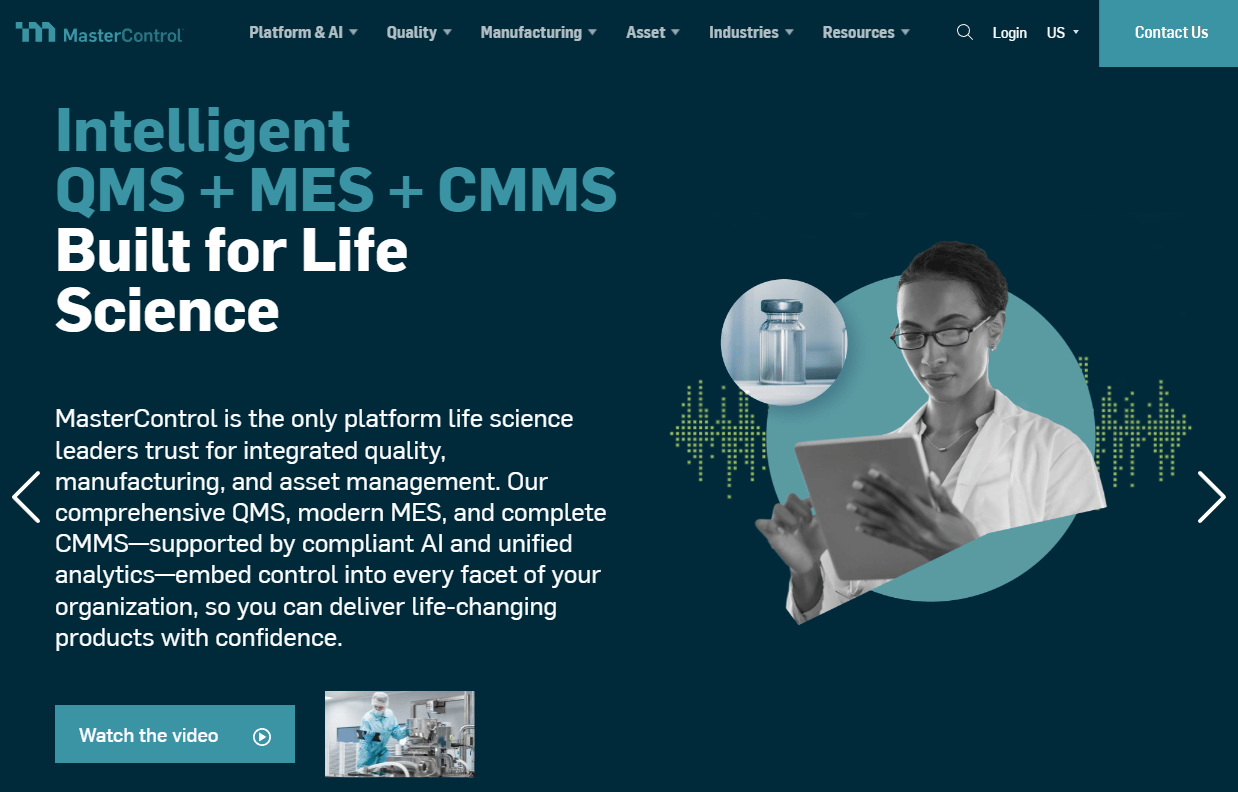
MasterControl is a connected quality and manufacturing software platform built for regulated life sciences organizations. It addresses the operational gap that grows fastest as organizations scale: Quality processes that live in spreadsheets, email, and shared folders cannot survive an FDA audit or a customer qualification visit. MasterControl brings document control, training, CAPA, deviations, and supplier quality into a single governed environment.
Best for: Pharma, biotech, and medical device organizations that need a mature quality system of record with manufacturing execution capability.
Key features
- CAPA and deviation management with controlled workflows
- Document control with electronic signatures and version history
- Training and competency tracking tied to document releases
- Audit management and inspection-readiness tools
- Supplier quality management and change control
Why choose MasterControl: Choose it when quality is a core operational system, not a compliance side project, and when your team has the bandwidth to own validation, data migration, and ongoing governance. This is a system-of-record decision, not another point tool.
MasterControl pricing: MasterControl prices to each organization's scope and requires a direct conversation with their sales team. Contact MasterControl for a quote based on modules, users, and implementation services.
G2 rating: 4.4/5
2. Benchling
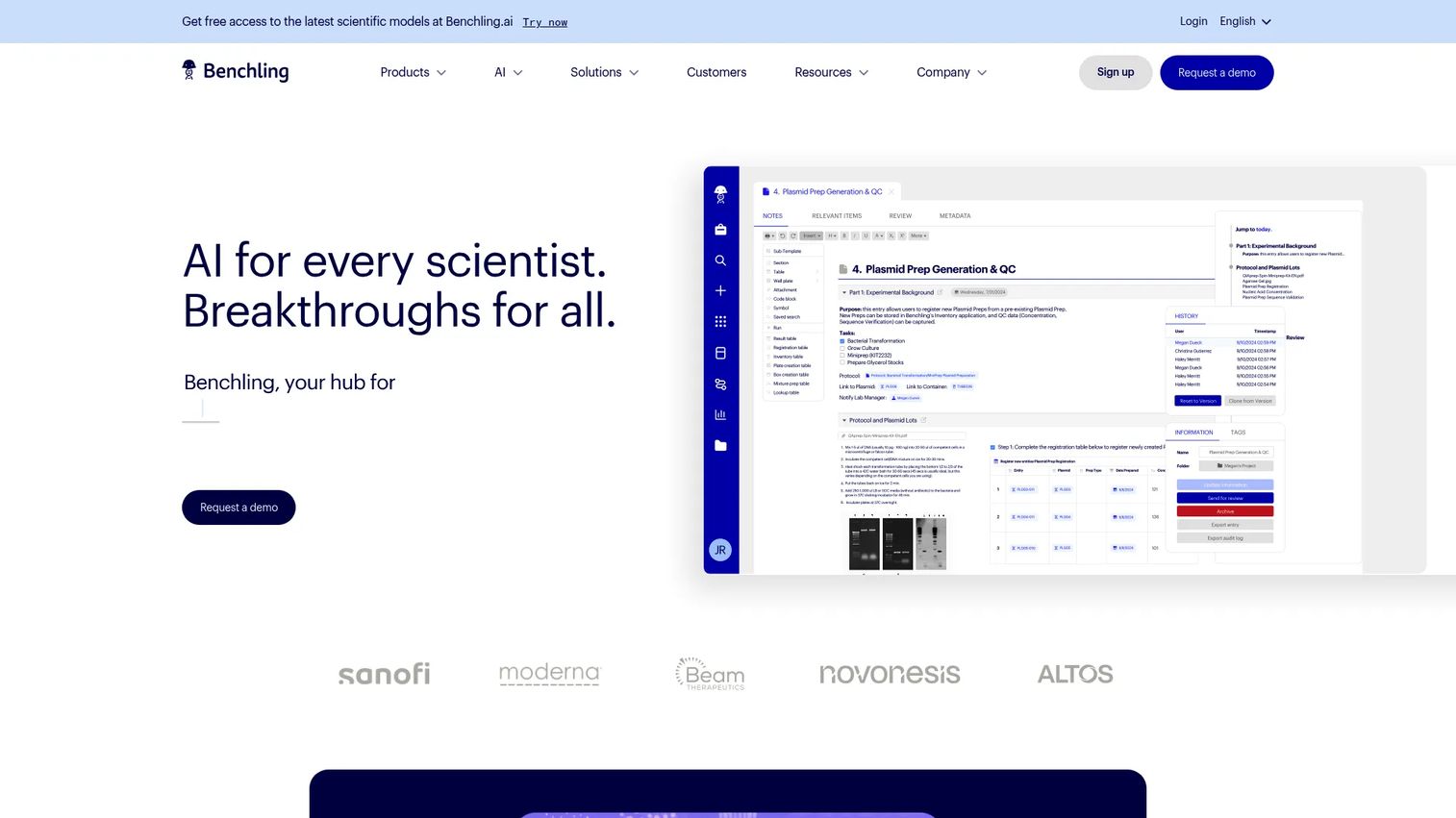
Benchling is a cloud platform that unifies scientific data, automation, and AI for life sciences R&D. Biotech teams lose significant scientific context when experimental work lives across disconnected notebooks, files, and lab systems. Benchling connects electronic lab notebooks, molecular biology workflows, sample and entity registries, and lab operations into a single environment that preserves that context from experiment to handoff.
Best for: Biotech companies building repeatable research operations across growing scientific teams, from early discovery through development.
Key features
- Electronic lab notebooks with structured data capture
- Molecular biology workflows and sequence analysis
- Sample, molecule, and inventory registries
- Lab automation and instrument connectivity
- REST APIs, Python SDK, and application framework
Why choose Benchling: This is an R&D operating model decision. Choose Benchling when experimental work needs structure and when the cost of lost scientific context across a growing team exceeds the cost of implementation. The question is whether the workflow is core enough to justify a vertical platform.
Benchling pricing: Benchling offers a free Academic Plan for eligible individual academic users. Commercial pricing is customized by products, capabilities, storage, validation, and support requirements. Contact Benchling for Professional and Enterprise plan details.
G2 rating: 4.5/5
3. Veeva Vault
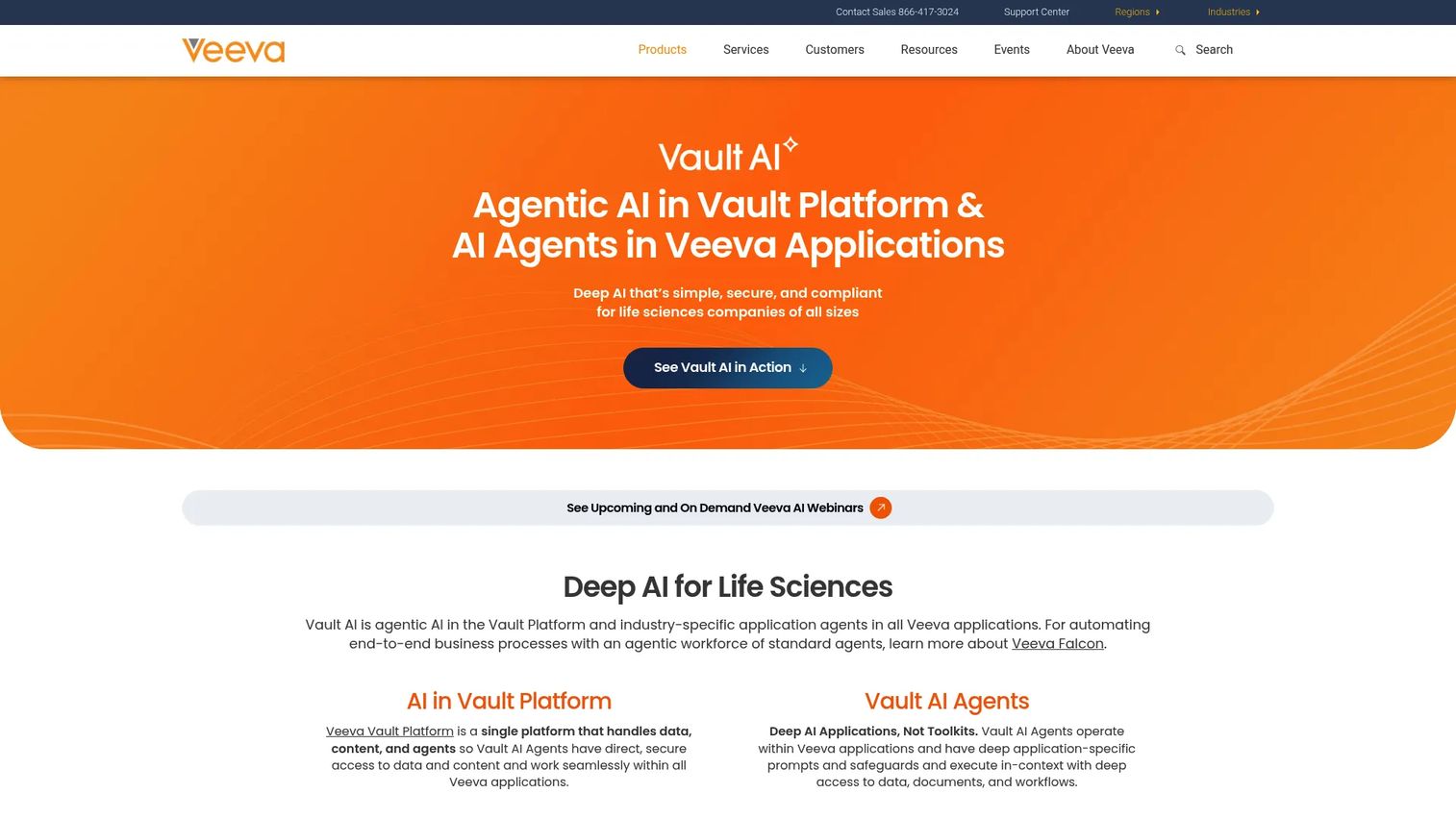
Veeva Vault is an enterprise cloud platform that unifies regulated content, structured data, and workflows across life sciences functions. It serves quality, regulatory, clinical operations, and controlled document management within a single governed architecture. Not every implementation uses every module, and that distinction matters: Vault is a platform with applications, not a single product.
Best for: Larger life sciences organizations standardizing controlled workflows across multiple regulated functions simultaneously.
Key features
- Quality document management with audit trails and electronic signatures
- Clinical operations applications for study and site management
- Regulatory content workflows for submissions and controlled materials
- Role-based access controls and configurable lifecycles
- Built-in AI agents and REST API integrations
Why choose Veeva Vault: Vault fits where cross-functional standardization is the strategic objective and where executive sponsorship, clear process ownership, and multi-year implementation capacity are already in place. Broad-suite adoption without that foundation creates expensive delays.
Veeva Vault pricing: Veeva does not display pricing on its website. Contact Veeva directly for module-specific and enterprise contract details.
G2 rating: 4.1/5
4. Medidata Rave
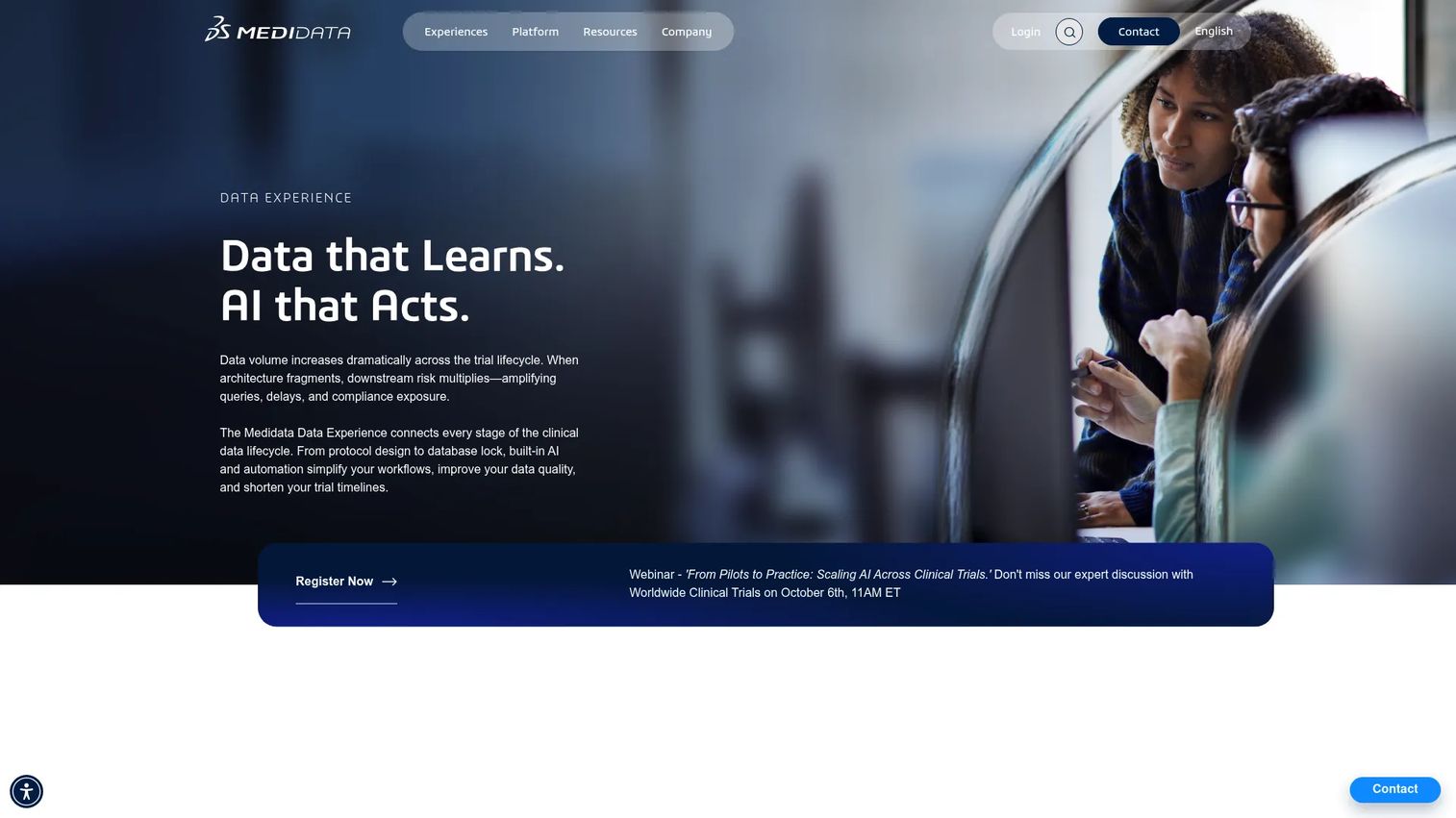
Medidata Rave is a cloud-based electronic data capture (EDC) system for capturing, managing, cleaning, and reporting clinical trial data. EDC is the regulated environment where study data is collected from investigators and sites, validated against protocol rules, and prepared for submission. Medidata Rave also connects to broader Medidata platform applications for monitoring, analytics, and site operations.
Best for: Sponsors and contract research organizations (CROs) running complex, multi-site clinical studies that require deep EDC capability and integration with clinical analytics.
Key features
- Electronic data capture with configurable case report forms
- Query management and data cleaning workflows
- Protocol amendment support without study downtime
- EHR-to-EDC data entry through Rave Companion
- Integration with Medidata clinical data source connections
Why choose Medidata Rave: Select it when trial complexity, site scale, and clinical data governance justify a purpose-built platform with validated infrastructure. Confirm required integrations with safety systems, CTMS, and randomization tools before committing.
Medidata Rave pricing: Medidata directs all pricing inquiries to its sales team. Contact Medidata for study-specific and enterprise licensing details.
G2 rating: 4.7/5
5. LabWare LIMS
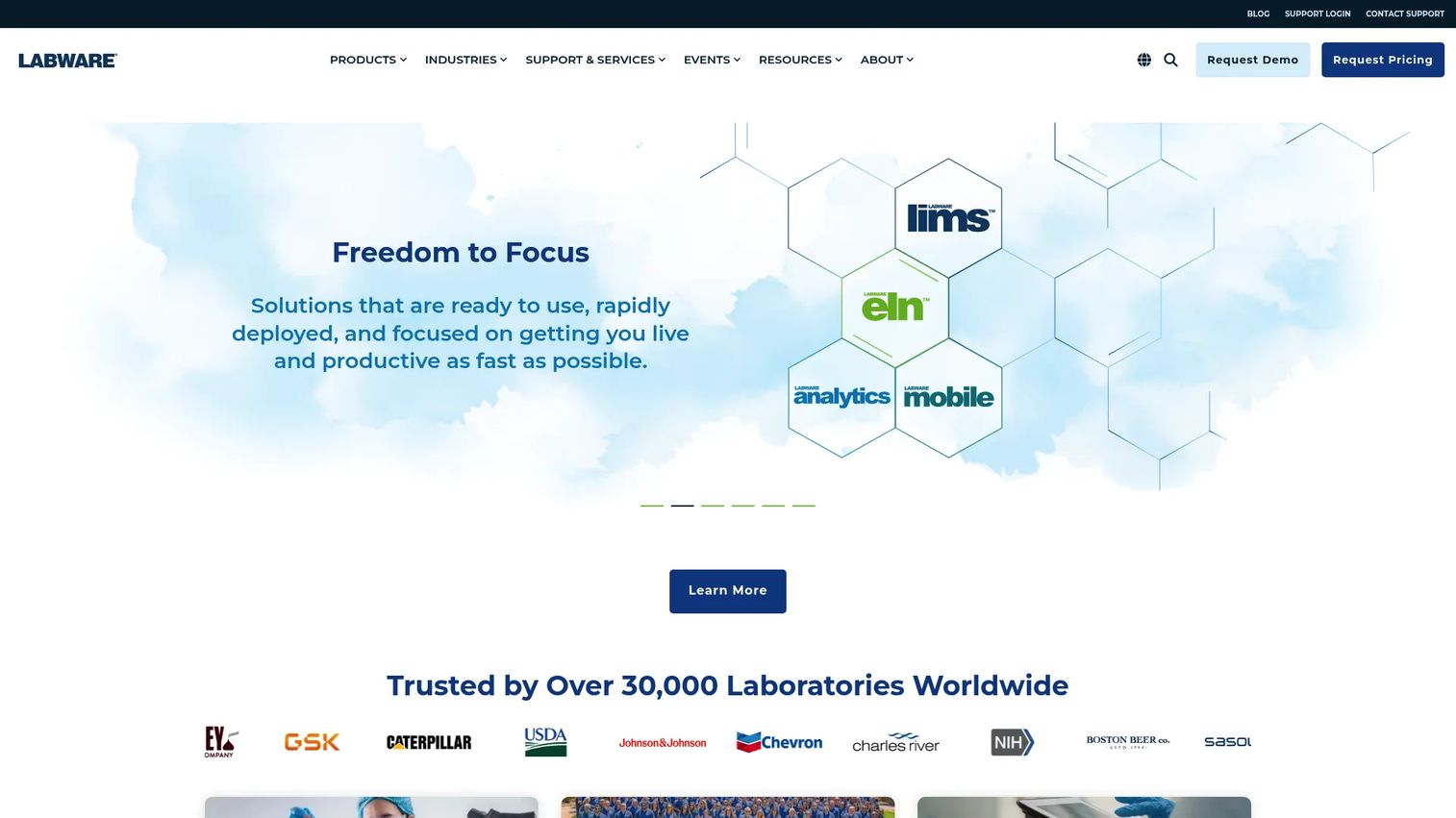
LabWare LIMS is an enterprise laboratory information management system (LIMS) for automating workflows, integrating instruments and systems, and managing compliant laboratory data. A LIMS manages samples, tests, results, and laboratory workflow control from sample login through result approval. LabWare offers SaaS, hosted, customer-cloud, and self-hosted deployment options depending on the organization's infrastructure requirements.
Best for: Laboratory leaders in regulated industries, including pharmaceutical QC, manufacturing, and research, who need highly configurable LIMS controls and multi-site laboratory data management.
Key features
- Sample lifecycle tracking from login through disposition
- Test and result management with batch processing
- Instrument interfacing and environmental monitoring
- Stability management and inventory control
- Barcode support, data visualization, and configurable dashboards
Why choose LabWare LIMS: Choose LabWare when laboratory workflow is operationally central and too complex for a lightweight research database. Implementation planning, data mapping, and lab-side ownership of configuration are prerequisites. Look for implementation ownership before comparing feature lists.
LabWare LIMS pricing: LabWare does not display pricing on its website. Pricing reflects deployment model, configuration scope, and support requirements. Contact LabWare for a quote.
G2 rating: 4.5/5
6. Medrio EDC
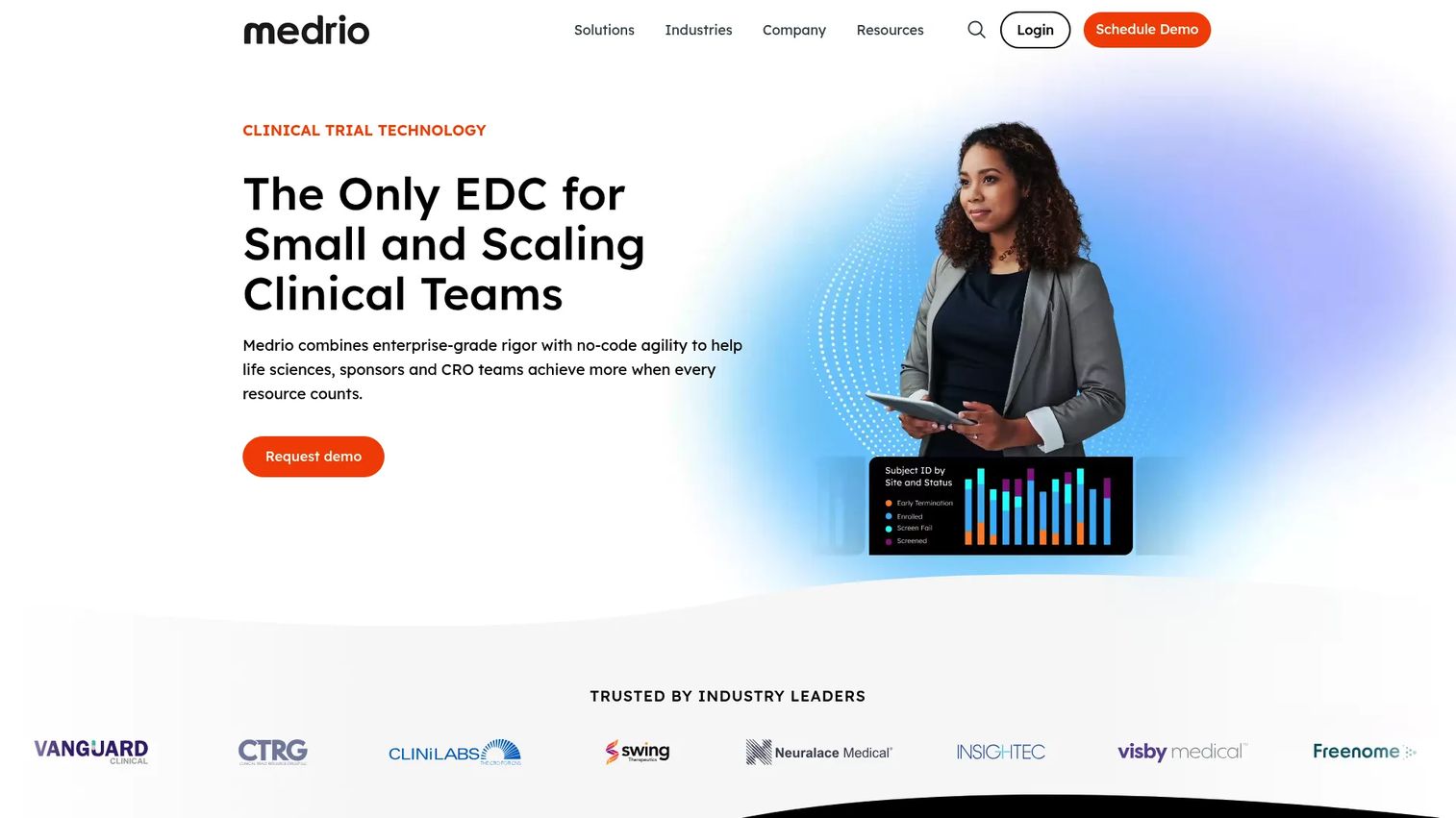
Medrio EDC is a no-code, cloud-based EDC and clinical data management platform built for audit-ready clinical trials. Its study-building approach is point-and-click, which reduces the configuration time between protocol finalization and study start. Medrio positions itself for sponsors and CROs that need EDC depth without buying an enterprise clinical suite that extends well beyond data capture.
Best for: Clinical research teams prioritizing EDC flexibility and rapid study builds without the implementation overhead of a broader clinical development platform.
Key features
- No-code study and eCRF building with point-and-click configuration
- Real-time dashboards, reports, and data visualizations
- Built-in validation, edit checks, query management, and audit trails
- Offline data capture and remote data collection
- Integrations with eConsent, RTSM/IRT, eCOA/ePRO, and safety systems
Why choose Medrio EDC: Medrio suits teams whose primary bottleneck is EDC setup time and data quality, not cross-functional clinical operations management. Confirm international site requirements, required integrations, and internal data management support before purchase.
Medrio EDC pricing: Medrio references subscription pricing but does not display specific figures on its website. Contact Medrio for study-specific pricing details.
G2 rating: 4.3/5
7. REDCap
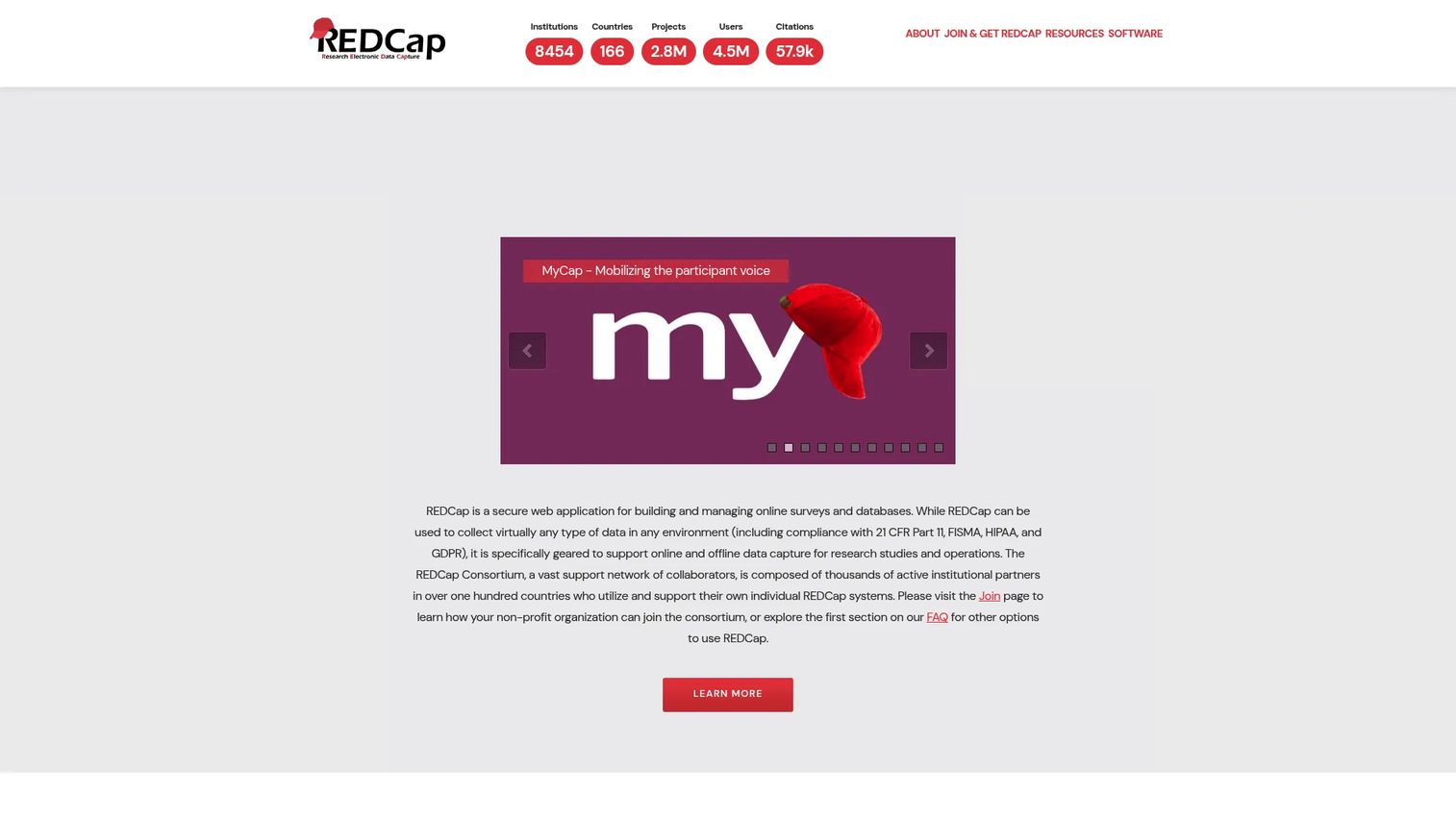
REDCap is a secure web application for building and managing online surveys and databases, widely used in academic medical centers, public health organizations, and investigator-led research. Its consortium model means that availability, hosting, and institutional support depend on the organization's participating institution, not on a standard SaaS purchase. That model makes REDCap very different from the commercial platforms in this guide.
Best for: Academic medical centers, research institutions, and investigator-led studies that need configurable, secure data collection with institutional-level support and governance.
Key features
- Configurable data collection instruments and branching logic
- Multi-site access with user permissions and logging
- Longitudinal study and survey support
- Automated exports to Excel, PDF, SPSS, SAS, Stata, and R
- FHIR-based interoperability with electronic health records
Why choose REDCap: Choose REDCap when your institution participates in the REDCap Consortium and when study complexity fits its configurable database model. It is not a substitute for validated enterprise EDC in regulated sponsor trials. Verify hosting, support, and governance terms with your institution before starting a study.
REDCap pricing: The REDCap software and consortium support are provided at no cost to eligible non-profit organizations. Separate hosting or REDCap Cloud services may carry additional fees depending on the institution and deployment model.
8. Qualio
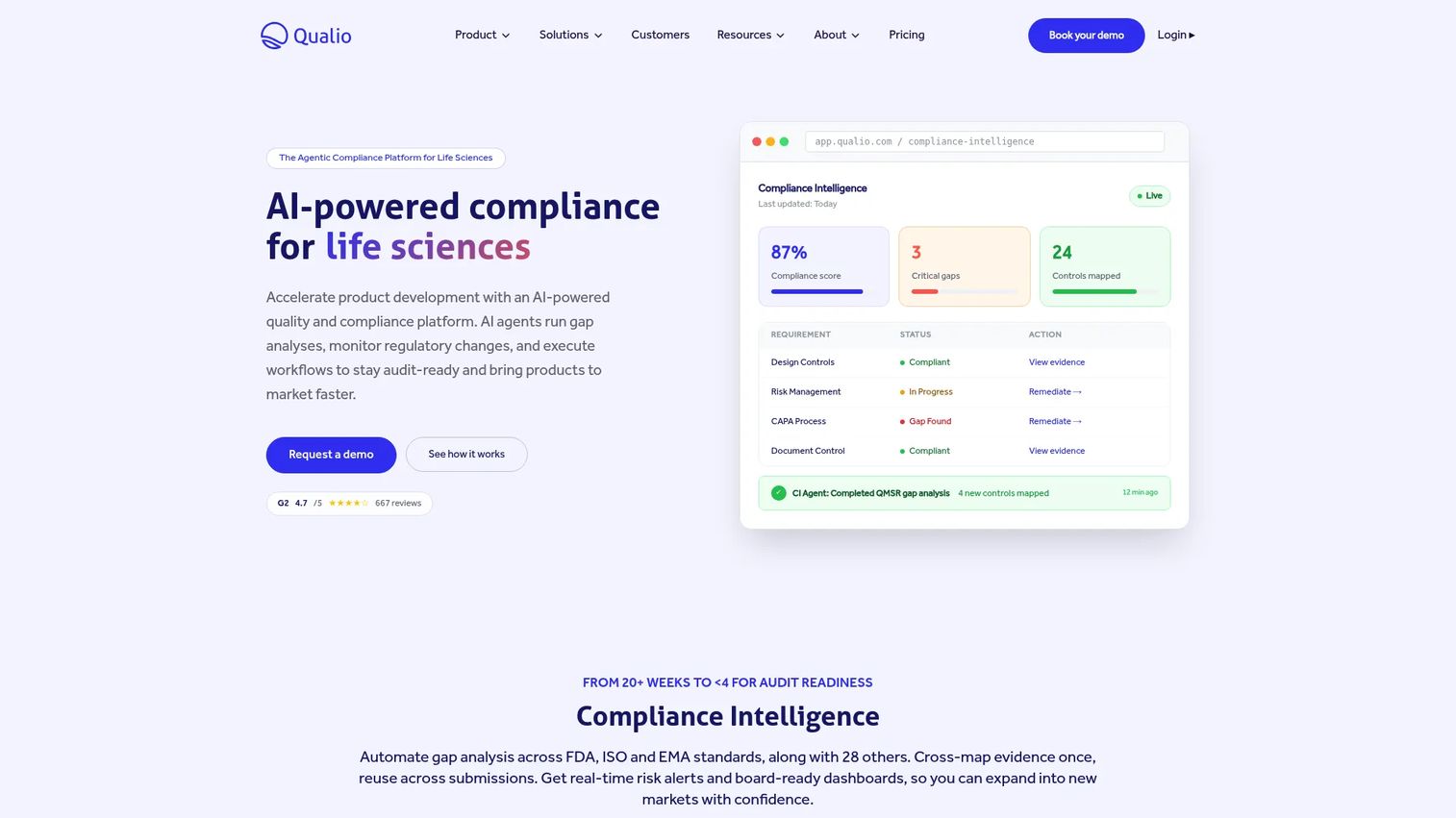
Qualio is a cloud quality and compliance platform for life sciences organizations. It covers document control, training management, supplier quality, CAPA, and audit preparation in a single environment designed for teams that have outgrown shared drives and manual approval workflows. Qualio positions itself for companies moving from early-stage informality to structured quality operations, without requiring the implementation burden of the heaviest enterprise QMS platforms.
Best for: Early-stage and mid-market life sciences companies formalizing quality processes ahead of customer audits, regulatory submissions, or commercialization milestones.
Key features
- Document control with version management and electronic approval
- CAPA and quality event management
- Training records linked to document releases
- Audit preparation workflows and compliance dashboards
- AI-powered gap analysis for compliance frameworks
Why choose Qualio: This is the founder-level decision: Quality processes must become repeatable before expansion creates inspection risk. Choose Qualio when the organization needs a functional quality system quickly and does not yet have the team to manage a heavy enterprise implementation. All subscriptions are annual and carry an implementation fee.
Qualio pricing: Qualio offers Foundation, Growth, and Scale plans. Foundation and Growth use tailored quotes; Scale uses custom pricing. All are annual recurring subscriptions with implementation fees. Contact Qualio for plan-specific pricing.
G2 rating: 4.4/5
9. Egnyte
Egnyte is a content cloud for secure file collaboration, governance, and workflow automation. In life sciences, it addresses the operational layer that sits between individual systems of record: Controlled sharing of sensitive files across internal teams, partners, vendors, and external collaborators. Egnyte is not a replacement for QMS, LIMS, or EDC. Its role is content governance alongside those systems, not instead of them.
Best for: Life sciences organizations that need controlled sharing of sensitive files, granular access management, and audit-ready content governance across internal and external collaborators.
Key features
- Secure file sharing with granular permissions
- Content governance policies and compliance controls
- AI Assistant and AI Search for content intelligence
- Workflow automation and e-signature integration
- Audit trails and activity reporting
Why choose Egnyte: Document-heavy operating models, including those sharing study files, regulatory packages, and partner materials, need stronger controls than consumer file storage provides. Use Egnyte alongside systems that manage regulated quality or clinical records, not as a replacement for them.
Egnyte pricing: Business plan starts at $22/user/month billed annually. Enterprise Lite is $39/user/month and Elite is $48/user/month, both billed annually. Ultimate requires a custom quote.
G2 rating: 4.4/5
10. BioRender
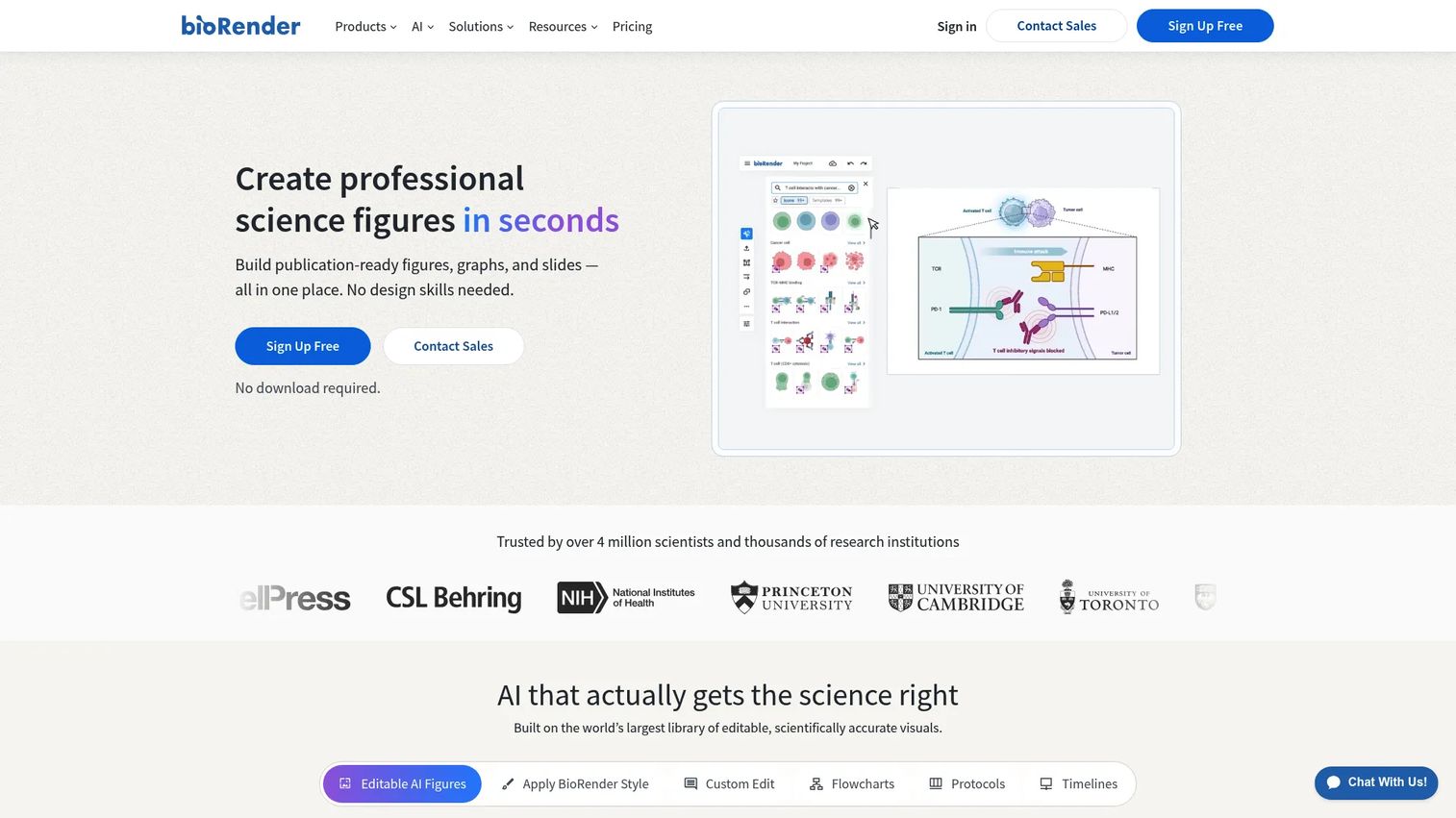
BioRender is a web-based platform for creating professional scientific figures, diagrams, presentations, and posters. It serves a different job than the operational platforms above. Its value is in making complex science visually communicable for publications, investor materials, grant applications, and product education. For founders, that means faster scientific storytelling without depending on a designer who understands cell biology.
Best for: Research, medical affairs, scientific communications, and product marketing teams producing technical visuals for publications, presentations, and external education.
Key features
- 50,000+ scientifically accurate icons and templates
- AI-powered figure generation and image stylization
- High-resolution PNG, JPEG, PDF, and SVG exports
- Real-time collaboration, commenting, and shared folders
- Graphing with imported Prism, CSV, and Excel data
Why choose BioRender: BioRender earns its place when scientific communication is the bottleneck between good science and understood science. It is purpose-built for that job. Generic design tools require significant scientific input to produce credible figures; BioRender reduces that dependency significantly.
BioRender pricing: Free plan supports up to 3 figures. Individual plan is $35/month billed annually (or $39/month). Lab plan is $99/month for 5 seats billed annually, with additional seats at $20/month each.
G2 rating: 4.9/5
11. CDD Vault
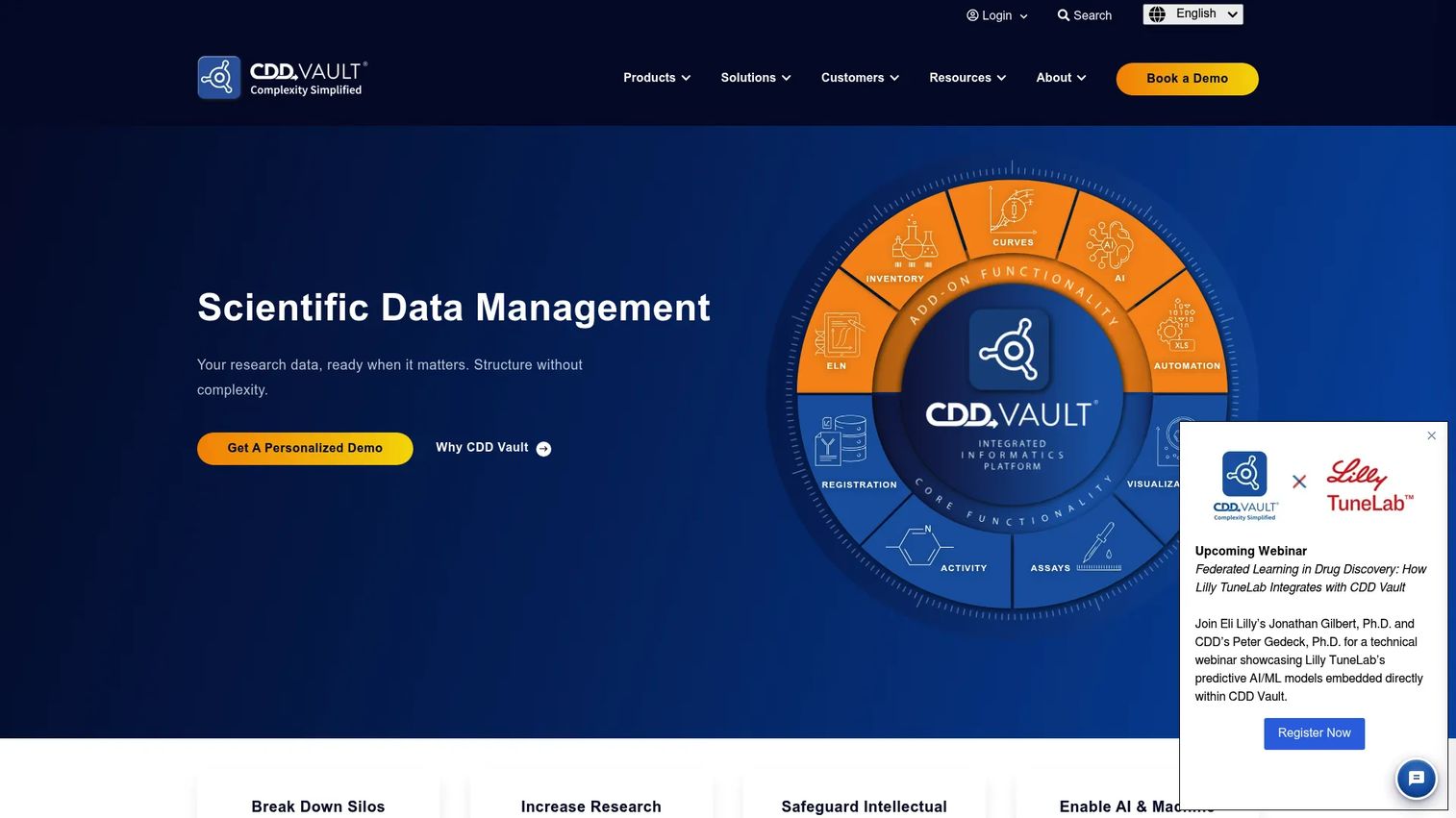
CDD Vault is a cloud-based scientific data management platform for organizing, analyzing, and securely sharing chemical and biological research data. Drug discovery teams accumulate compound registrations, assay results, and biological data across projects and collaborators. Without a structured source of truth, that data fragments across spreadsheets, local databases, and personal notebooks in ways that slow down decision-making and make collaboration difficult.
Best for: Drug discovery teams in biotech, pharma, and academic settings that need shared visibility into compounds, assays, and ELN data across internal and external collaborators.
Key features
- Chemical and biological data management with compound registration
- Assay and activity data management
- Electronic lab notebook (ELN) functionality
- Data visualization, analysis, and searchable scientific records
- AI-assisted folding, docking, and similarity search
Why choose CDD Vault: Choose it when the core problem is scientific data fragmentation at the discovery stage. CDD Vault fits teams that want a clearer source of truth for compound and assay data without implementing a broad research suite. Confirm API integration requirements with any existing LIMS or ELN before evaluating.
CDD Vault pricing: CDD Vault does not display pricing on its website. Contact CDD Vault for pricing based on users, projects, and required modules.
G2 rating: 5.0/5
12. Pluto Bio
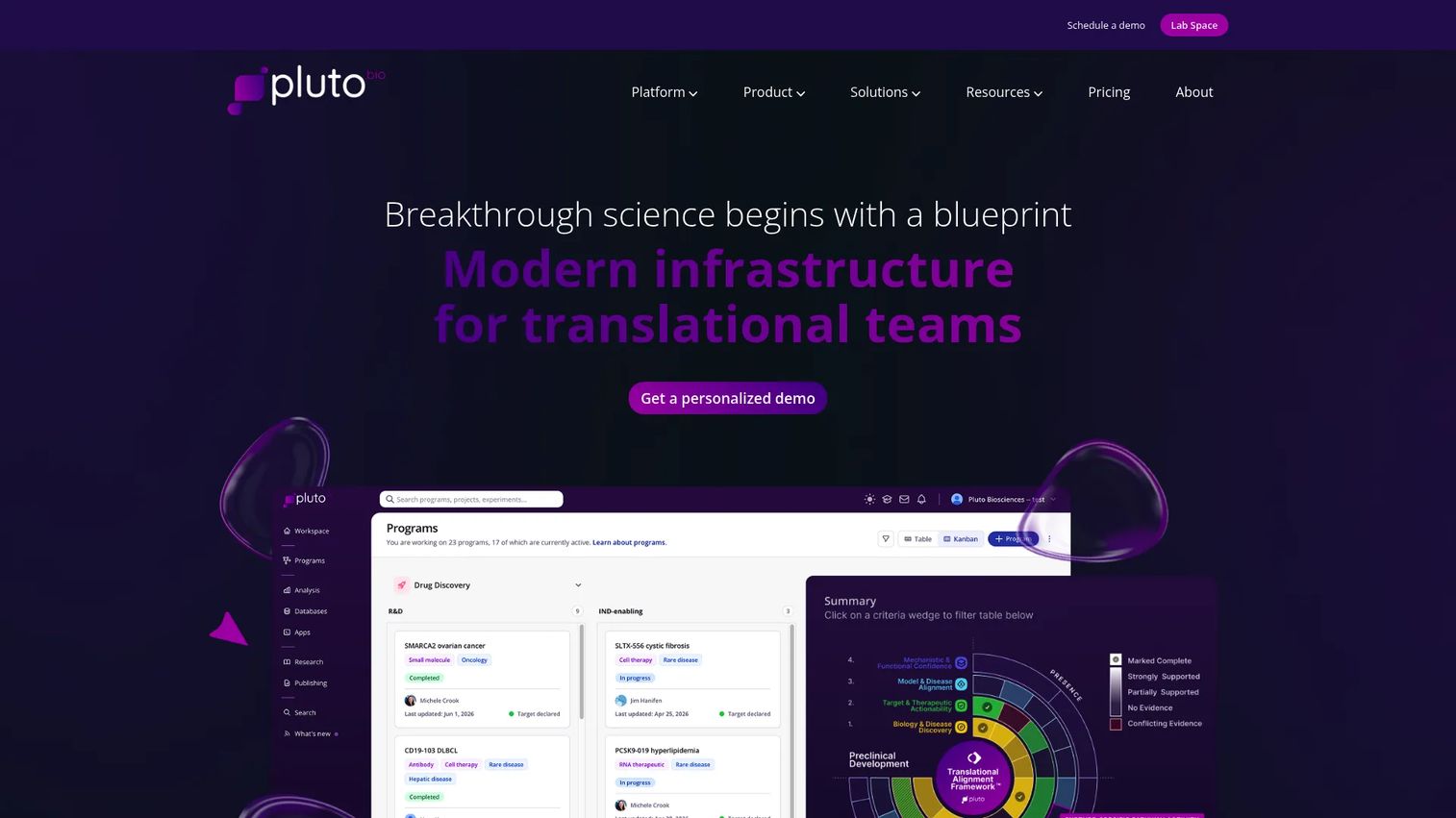
Pluto Bio is a cloud-based collaborative platform for managing, analyzing, visualizing, and sharing biological and multi-omics data. It covers single-cell RNA-seq, spatial transcriptomics, bulk RNA-seq, proteomics, and several other omics modalities. Pluto bridges the gap that slows translational research teams: Raw biological data sits in a computational pipeline while biologists wait for interpretable results, creating a bottleneck between bench science and shared research insight.
Best for: Biotech, pharma, academic, and translational research teams that need scientists and data-focused colleagues to analyze and share complex biological datasets without requiring coding expertise from every user.
Key features
- Multi-omics analysis including single-cell RNA-seq and spatial transcriptomics
- Automated NGS pipelines with preprocessing and quality control
- Interactive, biology-focused visualizations and publication-ready figures
- Real-time collaboration with comments, permissions, and change history
- REST API, Python SDK, and R package access
Why choose Pluto Bio: Tools that reduce the bottleneck between data science and bench science become more strategically valuable as data volume grows. Choose Pluto Bio when the constraint is the time between data generation and actionable scientific insight shared across the team.
Pluto Bio pricing: Pluto Bio offers Premium, Premium Managed, Enterprise, and Enterprise Managed plans. Pricing is customized by organizational stage and needs, with academic pricing available. Contact Pluto Bio for a quote.
G2 rating: 4.8/5
Considerations when choosing life sciences software
Start with the workflow that creates the highest operational risk
Begin with the workflow where errors create the largest downstream cost: Missing audit evidence, untraceable laboratory samples, incomplete trial data, or lost experimental context. A tool earns its place when it reduces audit risk, manual reconciliation, or scientific workflow drag in that specific area. Do not start with the broadest platform available.
Confirm system-of-record boundaries
Define where authoritative records live before buying. Avoid purchasing two platforms that both claim ownership of the same data without a clear integration and governance model between them. The question to ask before signing: Which system owns this data type, and what happens when the two systems disagree?
Price implementation, not only licenses
Include data migration, validation, configuration, SOP changes, training, and ongoing administration in the total cost. For many regulated systems, implementation and change management exceed the first-year license fee. A Series B founder evaluating these decisions through payback and leadership bandwidth should confirm internal ownership before the contract is signed.
Test interoperability before committing
Require evidence for integrations with relevant instruments, identity providers, BI tools, and data warehouses. Ask vendors for working integration documentation rather than a roadmap promise. If clinical trial management software is already in place, confirm how a new platform fits into that data flow.
Assign an executive owner and an operating owner
Life sciences platforms fail when they become an IT project without workflow ownership. The executive sponsor sets priorities; the functional owner defines the process and drives adoption. Both roles must be identified before the implementation starts, not after go-live pressure surfaces the gap.
How to choose the right life sciences software for your team
If your biggest risk is quality documentation and audit readiness
Start with MasterControl for organizations with formal quality processes and the team to own validation and governance. Choose Qualio if quality processes are still being formalized and you need a functional system faster than a heavy enterprise implementation allows. The decision depends on process maturity and available implementation bandwidth, not just feature lists.
If your bottleneck is laboratory research data
Benchling suits integrated biotech R&D workflows where connected notebooks, registries, and lab operations are the operational gap. LabWare LIMS fits laboratory operations where sample and test traceability across instruments and batches is the primary control need. CDD Vault addresses discovery-stage compound and assay data fragmentation when the team does not need a full R&D suite.
If clinical studies are delaying progress
Compare Medidata Rave and Medrio EDC on trial complexity, CRO or sponsor model, study scale, and required integrations. Medidata Rave is deeper on multi-site complexity and platform connectivity; Medrio EDC prioritizes no-code study builds and rapid configuration. Use REDCap for investigator-led data collection in institutional settings where a commercial EDC is not warranted. You can find a detailed breakdown of this category in our guide to clinical trial management software.
If cross-functional teams cannot find or govern the right files
Egnyte controls content sharing, access, and governance across internal teams and external collaborators. State the boundary clearly before purchasing: Content management strengthens the operating layer but does not replace clinical, quality, or laboratory systems. It works alongside those systems, not instead of them.
If scientific communication is the constraint
BioRender handles scientific figure creation for publications, investor materials, and product communication. Pluto Bio addresses collaborative biological data analysis when the bottleneck is the time between data generation and shared scientific insight. Both sit closer to communication and research visibility than to core regulated operational records.
Conclusion
Life sciences software is a portfolio decision. The right stack starts with identifying which workflow creates the most expensive operational failure, then choosing the platform built specifically to control it.
Quality systems for controlled processes. Clinical platforms for study data and trial operations. Lab and R&D tools for scientific workflows. Data and content systems for collaboration and analysis. These categories overlap in vendor marketing and diverge sharply in implementation reality.
The practical next step: Map the highest-risk workflow in your organization. Identify its current system of record. Then shortlist no more than three platforms for a structured evaluation that includes implementation ownership, integration requirements, and total cost.
For founders mapping a vertical market or evaluating acquisition and partnership opportunities in life sciences software, the category boundaries above are the framework. Each system of record represents a defensible workflow with high switching costs and deep domain requirements. That combination is what makes vertical software infrastructure, not just software.
Start your journey with Guideflow today!
FAQs
Life sciences software covers laboratory data management, clinical study operations, quality workflows, regulatory documents, scientific research records, and secure content collaboration. The right tool depends on which workflow must become controlled, repeatable, and auditable first. Most mature life sciences organizations run several specialized systems rather than one broad platform.
A laboratory information management system (LIMS) manages samples, tests, results, instruments, and laboratory workflow control from sample receipt through result approval. An electronic lab notebook (ELN) captures experimental context, observations, protocols, and research notes at the point of scientific work. Many R&D organizations use both, with the LIMS owning operational data and the ELN owning experimental records.
Electronic data capture (EDC) is the system where clinical trial data from investigators and sites is collected, validated, and managed. A clinical trial management system (CTMS) supports study operations: Sites, milestones, monitoring visits, and budgets. Some clinical suites combine both functions, but buyers should confirm exactly which modules are included and where data ownership sits for each workflow. For a deeper comparison, see our guide to clinical trial management software.
Biotech companies commonly run a combination of an ELN or R&D platform, a LIMS, a quality management system, a scientific data platform, and a document management or content governance system. The stack grows as research moves from discovery through clinical development and into regulated commercialization. Each transition introduces new workflow requirements and, usually, new systems of record.
Price varies by category, user count, data volume, implementation scope, integration requirements, validation services, and contract length. Most enterprise platforms in this category are custom-priced and sales-led. Implementation and change management costs often exceed the first-year license fee for complex regulated systems. Egnyte is the only platform in this guide with a transparent public starting price at $22/user/month billed annually.
Choose by workflow urgency. Select a QMS when controlled documentation and quality processes are blocking commercialization, customer audits, or regulatory filings. Choose a LIMS when laboratory sample and test workflows are the main operational constraint. Choose clinical software when a formal study requires structured trial data management that exceeds what a research database can provide. You can also explore our guide to compliance management software for related context on quality and governance tooling.
Broad suites like Veeva Vault cover multiple functions, but most organizations still use specialized systems for laboratory operations, clinical research, and quality. The key decision is defining the system of record for each workflow and integrating intentionally rather than assuming one platform eliminates the need for integration work. Buying a broad platform to solve one narrow workflow typically creates a longer implementation and a weaker system of record in the targeted area.
Run a structured evaluation based on workflow fit, data model, auditability, integration depth, implementation plan, and internal ownership. Require a working demonstration with data that resembles your actual use case, not a polished generic walkthrough. Reference checks with organizations at a similar stage and operating model are more useful than analyst reports alone. Confirm the vendor's validation support model and ask who owns configuration maintenance after go-live.