Your valet team is running the front drive with paper tickets, a whiteboard, and a landline. Two guests are waiting at checkout. A third just called down asking why their car is not ready. Nobody can find the ticket stub that matches the SUV in row four.
That is the operational reality most hotels and high-volume properties still run on. It works until it does not, and it stops working exactly when volume peaks, which is the worst possible moment for a guest to wait 20 minutes for a car they paid a premium to have parked.
The money behind fixing this is real. The valet parking technology market is projected to rise from $1.63 billion in 2025 to $6.01 billion by 2034, a 15.62% CAGR, according to Market Research Future (2024). Operators are moving from paper to software because the labor math and the guest satisfaction math both point the same direction.
The catch is that most content in this category is either a single vendor landing page or a broad parking directory. Neither gives you a straight, side-by-side read on what actually fits a hotel or hospitality operation. So this guide does that. It covers valet-first tools and the adjacent parking platforms operators keep asking about, judged on the things that matter when a car needs to reach the curb fast.
What's inside
This guide is built for hotel operators, hospitality managers, and founders scaling parking operations who need a valet parking system that reduces manual work and improves guest experience. We looked at valet software and adjacent parking management software through five criteria that decide whether a tool earns its place at the front drive:
- SMS or mobile guest retrieval
- Billing automation and tip handling
- PMS integration and folio posting
- Reporting, vehicle tracking, and damage documentation
- Deployment speed and labor efficiency
The list mixes dedicated valet platforms with reservation-led parking tools. We are clear throughout about which is which, so you do not confuse a consumer parking marketplace with a valet workflow engine.
TL;DR
- Best overall for integrated hotel valet operations: FlashParking, one platform across valet and parking with touchless workflows and reporting.
- Best for SMS-driven guest retrieval: O-Valet, ticketless valet built around SMS requests and kiosk workflows.
- Best for mobile valet workflows: Oobeo, cloud-based valet with license plate scan, damage photos, and mobile-first operations.
- Best for vendor discovery and benchmarking: HotelTechReport, a hotel software research hub for comparing vendors before you commit.
- Best for premium managed parking: Premium Parking, app and web payments with location-based rate control.
- Best for consumer parking demand: SpotHero, a reservation marketplace that fills spaces and captures book-ahead demand.
- Best for pre-booked parking access: ParkWhiz, digital parking reservations and pay-by-app access at supported lots.
What is valet parking software?
Valet parking software is a digital system that manages the full valet workflow, from vehicle check-in and location tracking to guest retrieval requests, billing, tip handling, and reporting, usually replacing paper tickets with SMS or app-based operations.
For hotels and high-volume properties, the good ones handle the entire loop between a guest handing over keys and getting the car back. Key capabilities to expect:
- Digital check-in and retrieval: log a vehicle, tag its location, and pull it back without a paper stub.
- SMS or app-based guest requests: guests request their car by text or a link, so retrieval starts before they reach the curb.
- Billing automation: capture parking charges, validations, and tips, then post them cleanly instead of reconciling cash later.
- Vehicle tracking: know where every car is parked and which runner has it.
- Damage documentation: timestamped photos at check-in and checkout to reduce liability disputes.
- PMS and folio integration: push valet charges directly to the guest folio in your property management system.
- Reporting and satisfaction tracking: ticket volume, retrieval times, labor hours, and guest feedback in one dashboard.
The through-line is operational visibility. A valet parking app turns a manual, memory-based process into an auditable one, which is what lets a property run peak check-out without adding runners or losing tickets.
When to use valet parking software
Reduce wait times at busy properties
Contactless valet operations matter most during the two windows that make or break a valet team: morning check-out and evening check-in. When 40 guests want their cars in the same 30 minutes, a paper queue collapses. An SMS valet request lets a guest signal from their room or the elevator, so the runner is already moving before the guest hits the lobby. That is where retrieval time drops from double digits to single digits, and where guest experience scores actually move.
Replace paper tickets and manual logs
Ticketless parking removes the single biggest source of front-drive confusion: the lost or mismatched stub. When check-in, location, and retrieval all live in one digital record, there is no arguing about which car belongs to which guest. You also get an audit trail, which matters for disputes, for shift handoffs, and for training new runners without a veteran babysitting them.
Connect valet activity to billing and hotel folios
The revenue leak in most valet operations is billing. Cash tips go untracked, validations get applied loosely, and parking charges never reach the folio. PMS integration and billing automation close that gap by posting every charge to the guest folio automatically. For an operator trying to prove parking is a profit center rather than a cost, that clean revenue capture is the whole argument.
Comparison table
Here is how the seven platforms compare across intent, core use case, pricing, and rating. Verify pricing and ratings at publish time, since vendors update them and several set rates by venue or location.
| # | Product | Intent | Key use case | Pricing | G2 rating |
|---|---|---|---|---|---|
| 1 | FlashParking | Integrated valet + parking | End-to-end hotel and mixed-use parking operations | Contact sales | Not available |
| 2 | O-Valet | Dedicated valet | SMS ticketless valet for hotels and venues | From $99/month | 1.0/5 |
| 3 | Oobeo | Dedicated valet | Cloud valet with plate scan and damage photos | From $96/year | Not rated |
| 4 | HotelTechReport | Vendor discovery | Comparing hospitality software before buying | Free to browse | Not available |
| 5 | Premium Parking | Managed parking | Daily, monthly, and reservation parking with app pay | Location-based | 4.9/5 |
| 6 | SpotHero | Parking marketplace | Book-ahead parking reservations and demand capture | Location-based | 4.2/5 |
| 7 | ParkWhiz | Parking reservations | Pre-booked parking and pay-by-app access | Free to use | Not available |
1. FlashParking
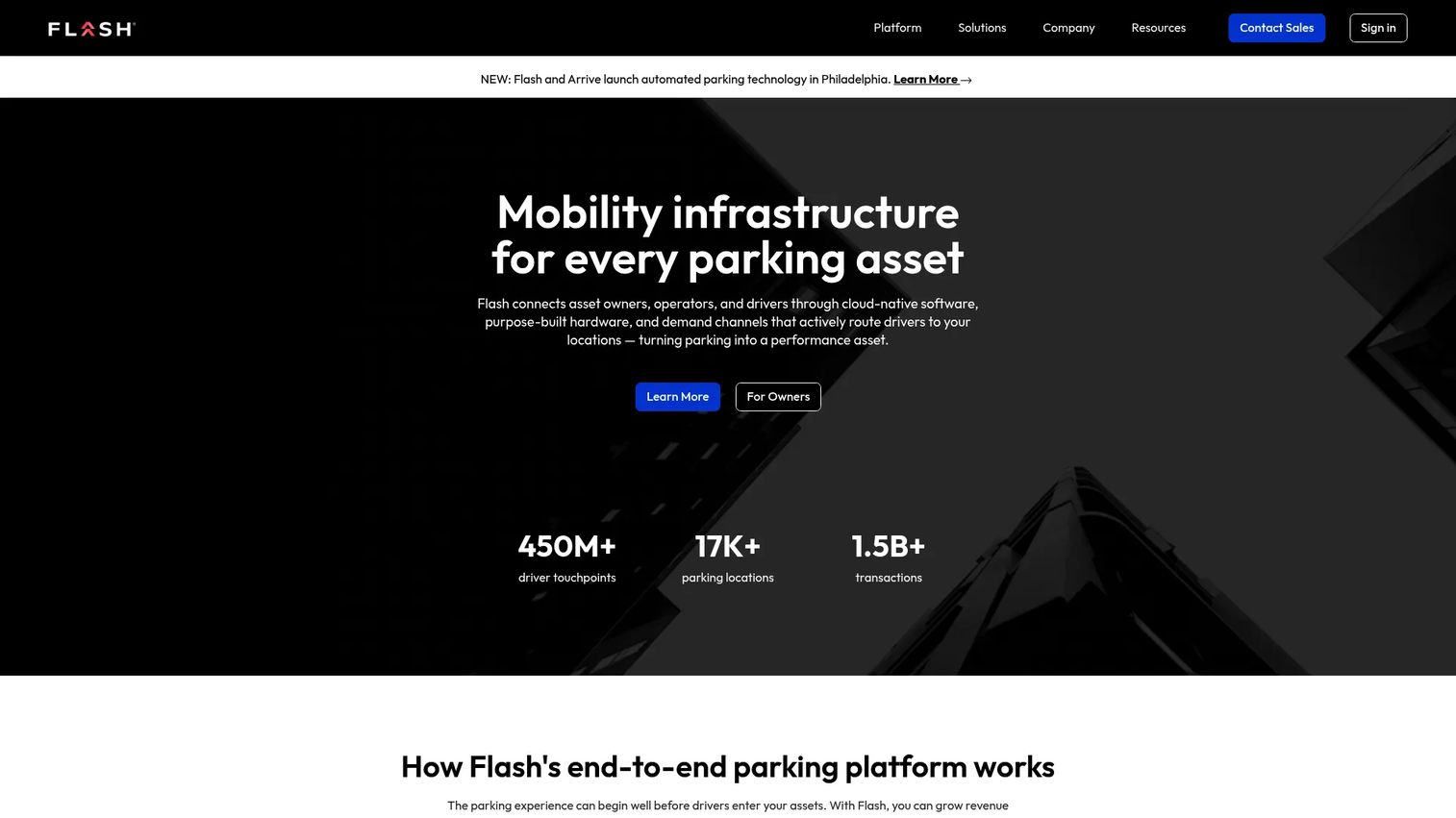
FlashParking is a cloud-based parking technology company that pairs software, purpose-built hardware, and digital demand channels for parking operators and real estate owners. For a hotel or mixed-use property, this is the option when you want valet and self-park running on one platform rather than stitching two vendors together. The cloud-native architecture means updates and reporting reach every location without a truck roll.
Best for: Parking operators and real estate owners who need one platform spanning valet, self-park, and reservations across a portfolio.
Key strengths
- Cloud-native parking software: manage valet and parking operations across sites from a single system, with reporting that rolls up by location.
- Purpose-built parking hardware: gates, kiosks, and readers designed to work with the software instead of forcing a third-party integration.
- Digital demand channels: reservation and demand tools that help fill capacity and capture prepaid parking revenue.
Why choose FlashParking: If your property runs both valet and self-park, or you manage parking across several assets, a unified platform removes the reconciliation headache of separate tools. The hardware-plus-software model suits operators who want accountability for the full stack rather than blaming the integration when something breaks. It fits real estate owners treating parking as a managed asset, not a side service.
FlashParking pricing: Public pricing is not listed. FlashParking directs prospects to contact sales or book a demo, and describes flexible payment models including Hardware-as-a-Service, transactional, and one-time payment options. That structure lets larger operators match cost to how they actually run parking, whether that is a capital purchase or an operating expense spread across volume.
2. O-Valet
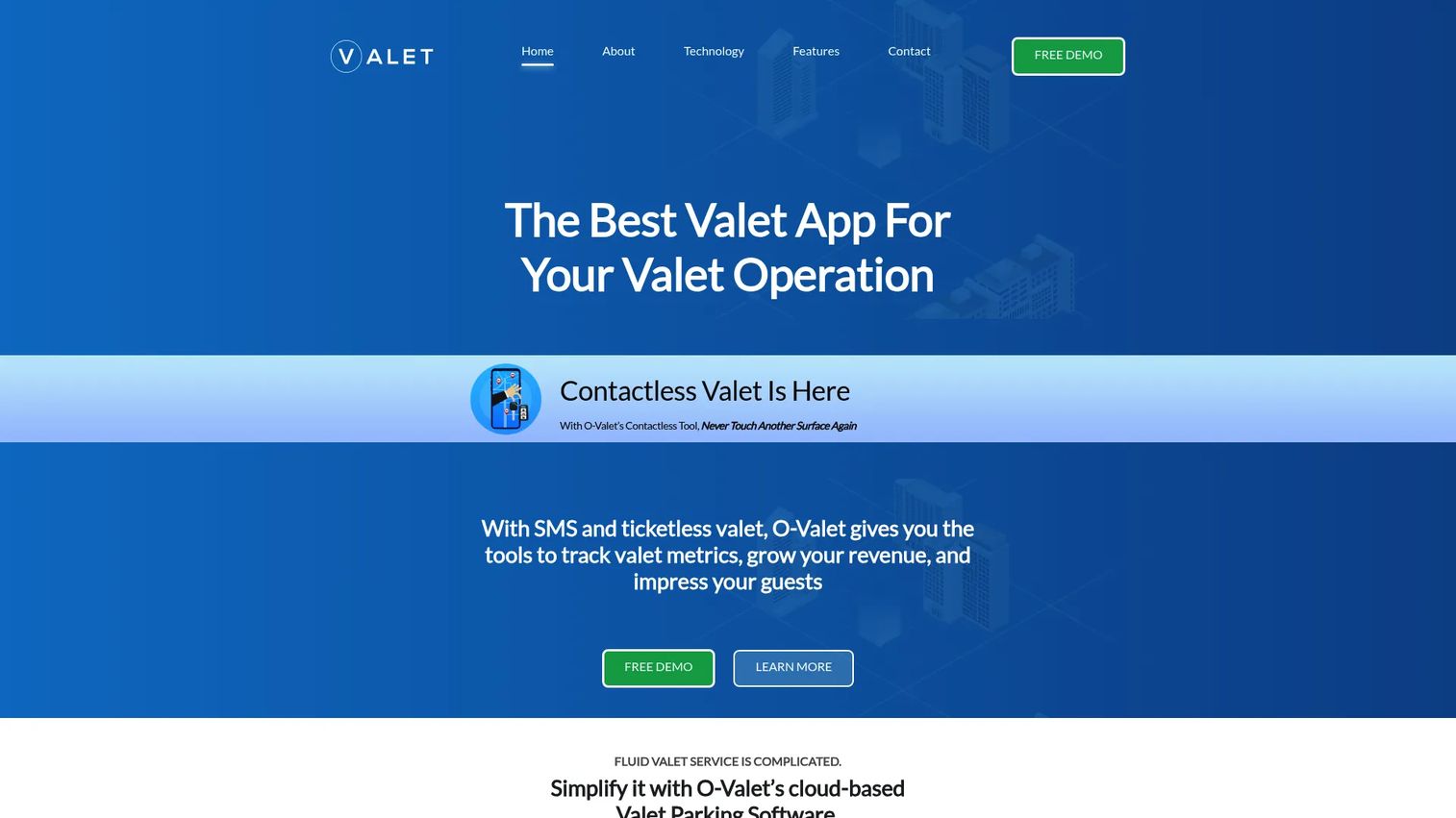
O-Valet is valet parking software built for hotels, airports, restaurants, and other venues, with SMS and kiosk workflows at its core. The product is designed around ticketless operation, so a guest gets a text link instead of a paper stub and requests their car the same way. That single change removes the most common failure point on a busy front drive.
Best for: Hotels and venues that want a dedicated valet management system centered on SMS retrieval and kiosk check-in.
Key strengths
- SMS ticketless valet tickets: guests receive and use a text-based ticket, so retrieval can start from anywhere on the property.
- Paperless valet workflows: the full check-in to retrieval loop lives digitally, cutting lost tickets and mismatch disputes.
- Gate arm, kiosk, and PMS integrations: connect valet activity to access hardware and push charges toward the property system.
Why choose O-Valet: This is a valet-first tool, not a parking platform with a valet add-on, which shows in how tightly the SMS workflow is built. For a restaurant group or a hotel that mainly needs faster, cleaner retrieval and folio-ready billing, that focus is the point. The kiosk and gate arm integrations also help venues that need to control access, not just track cars.
O-Valet pricing: Public pricing starts at $99 per month on the O-Valet site, with pricing described as based on venue type. There is no free tier. The starting price makes it accessible for a single property or a smaller venue testing digital valet before rolling it wider. O-Valet's G2 seller page currently shows a 1.0 out of 5 display, so weigh the low starting cost against a hands-on demo and reference checks before committing.
3. Oobeo
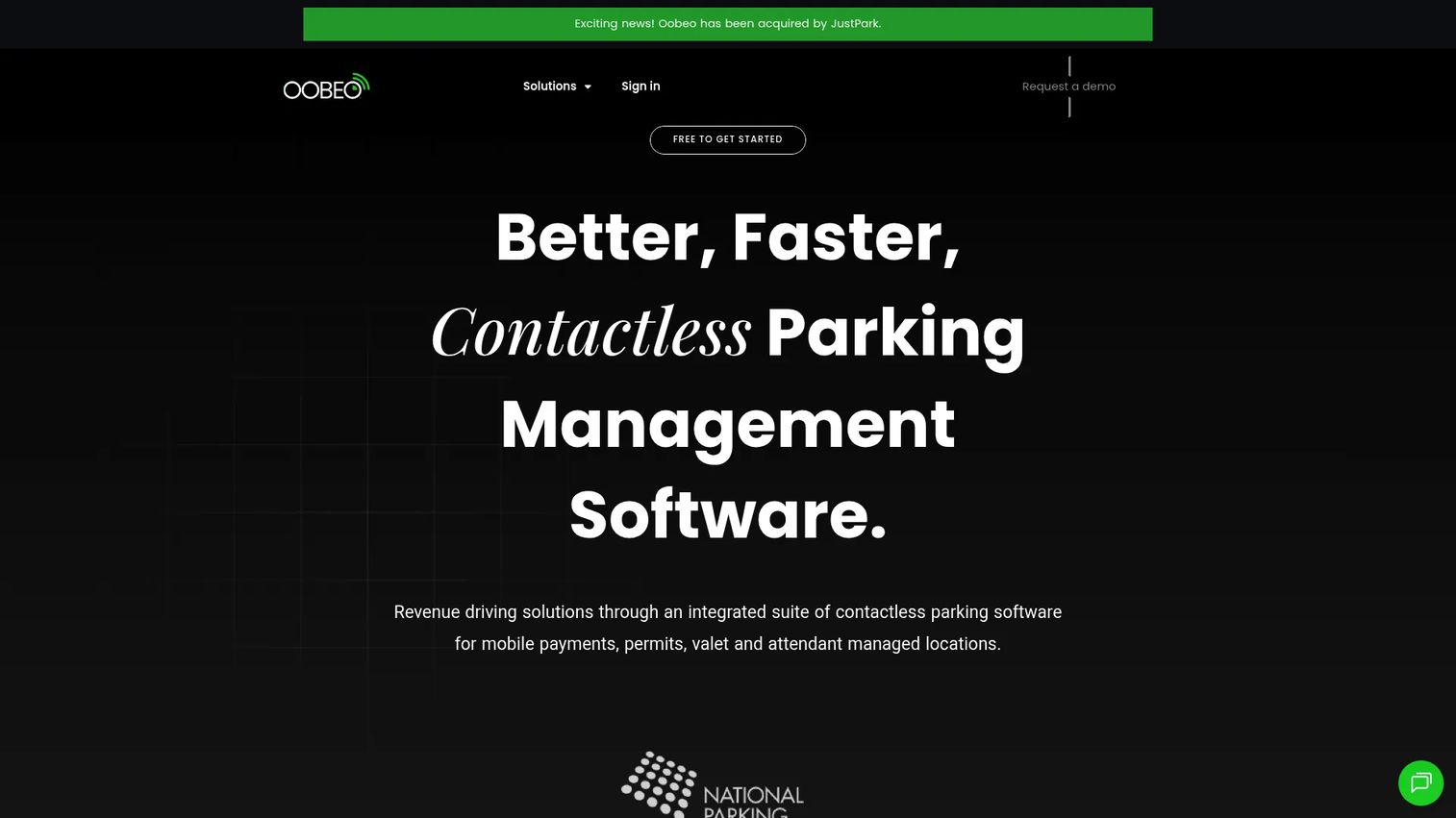
Oobeo is parking management software covering valet, permit management, and mobile parking payments. Its valet workflow is ticketless and contactless, with license plate scanning, timestamped damage photos, and a real-time reporting dashboard. That combination targets the two things operators lose sleep over: guest wait times and liability disputes over vehicle damage.
Best for: Operators who want contactless valet with strong damage documentation and permit management in one tool.
Key strengths
- Ticketless and contactless valet: plate scan and digital records replace stubs, keeping the front drive moving during peak windows.
- Permit management and billing: handle recurring permits and parking charges alongside valet, useful for mixed properties.
- Real-time reporting dashboard: watch ticket volume, retrieval activity, and revenue as it happens instead of reconciling after the shift.
Why choose Oobeo: The damage photo workflow is the standout for operators worried about liability, since timestamped images at check-in and checkout settle disputes fast. The plate scan speeds retrieval without depending on a runner's memory. Note that Oobeo's site states the company has been acquired by JustPark, so confirm current product roadmap and support during your evaluation.
Oobeo pricing: Public pricing is listed inconsistently across Oobeo's pages, with a Basic plan shown from $96 to $99 per year and an Agency plan around $119 to $135 per year, depending on the page. There is no free tier. The annual, low-cost structure makes it one of the more approachable entry points on this list, though you should confirm the current plan and price directly given the acquisition and the varied figures.
4. HotelTechReport
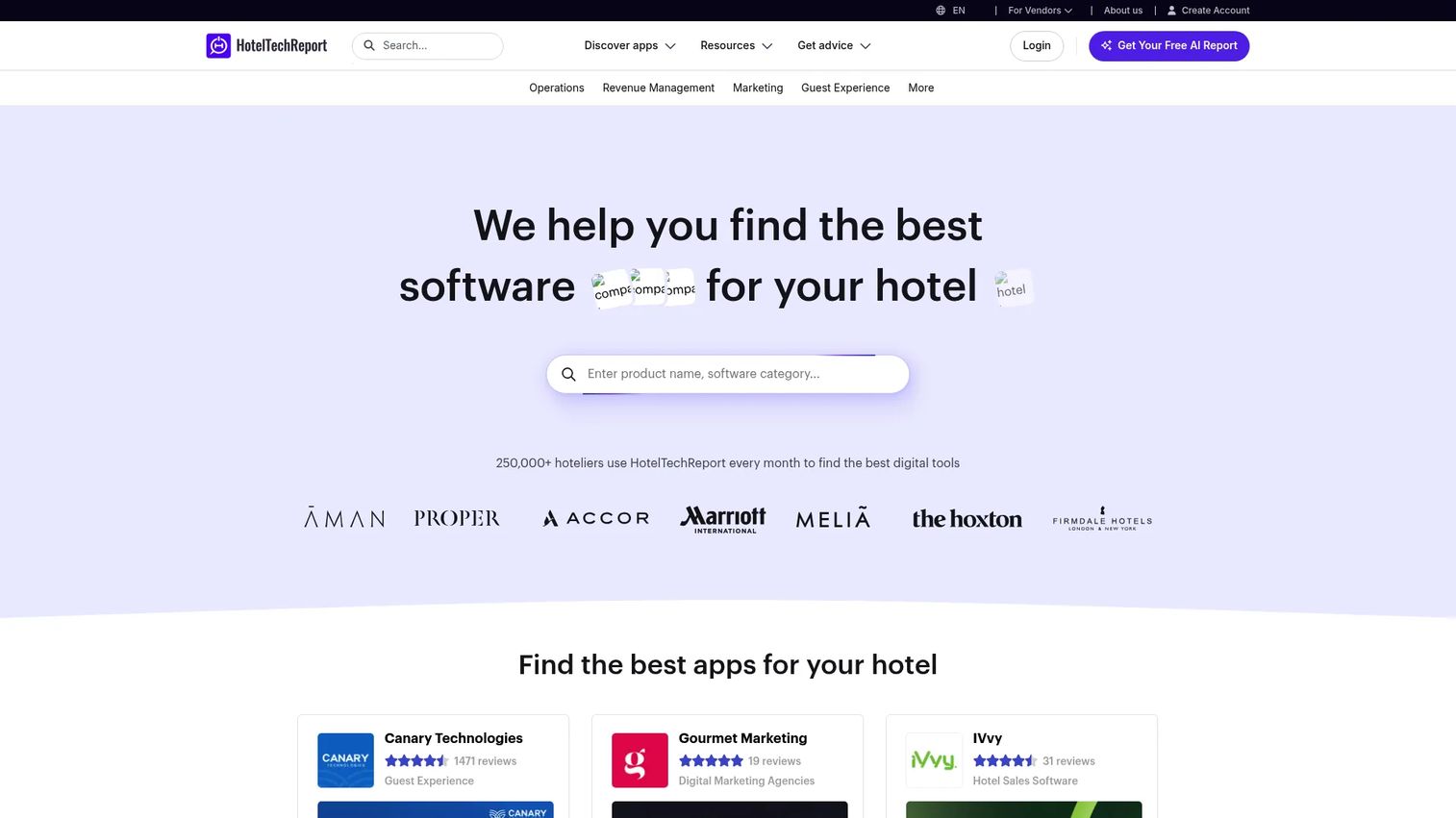
HotelTechReport is not a valet platform. It is a hotel software research and reviews site that helps hoteliers compare vendors, read verified reviews, and get recommendations. It earns a spot here because the hardest part of buying valet parking software is not using it, it is choosing it, and this is where operators do that homework.
Best for: Hoteliers researching and comparing hospitality software vendors, including parking and valet, before shortlisting.
Key strengths
- Verified hotelier reviews and rankings: read feedback from operators who actually run the software, not marketing copy.
- Vendor comparisons and buying guides: structured comparisons that surface the criteria you might otherwise miss.
- AI-powered recommendations and tech stack audit: get matched to vendors based on your property type and existing stack.
Why choose HotelTechReport: Use it early, before you sit through a single sales call. The verified reviews and hospitality-specific framing help you separate a valet tool built for hotels from a generic parking product wearing hotel language. It will not run your front drive, but it will keep you from picking the wrong tool that does.
HotelTechReport pricing: Browsing reviews, rankings, and comparisons is free for hoteliers. There is no public pricing to evaluate because it is a research resource, not an operational platform. Treat it as the free step that de-risks the paid decision.
5. Premium Parking
Premium Parking is a parking management platform and operator offering daily, monthly, and reservation-based parking with app and web payments. It leans toward managed parking operations rather than a pure valet workflow engine, but properties running premium guest parking will recognize the fit. The free mobile app and multiple pay options keep the guest-facing side simple.
Best for: Organizations needing managed parking operations, and drivers who want flexible app or web payment options.
Key strengths
- Daily parking sessions via web and app: guests start and pay for parking without a booth or a printed ticket.
- Monthly parking subscriptions by location: recurring parking managed per site, useful for properties with regular guests or tenants.
- TextPay, CameraPay, and a free mobile app: several contactless payment paths so guests pay however they prefer.
Why choose Premium Parking: For a property that treats parking as a premium, revenue-generating amenity, Premium Parking's payment flexibility and location-based rate control fit well. It is stronger on the parking commerce and payment side than on dedicated valet runner workflows, so pair it with a valet tool if SMS retrieval is your core need. The high guest-facing rating suggests the payment experience lands well.
Premium Parking pricing: There is no general public plan table. Rates are location-based and shown on the website or app, and the mobile app is free for guests. That model means cost depends on how each location is configured, so pricing conversations happen per site rather than off a menu.
6. SpotHero
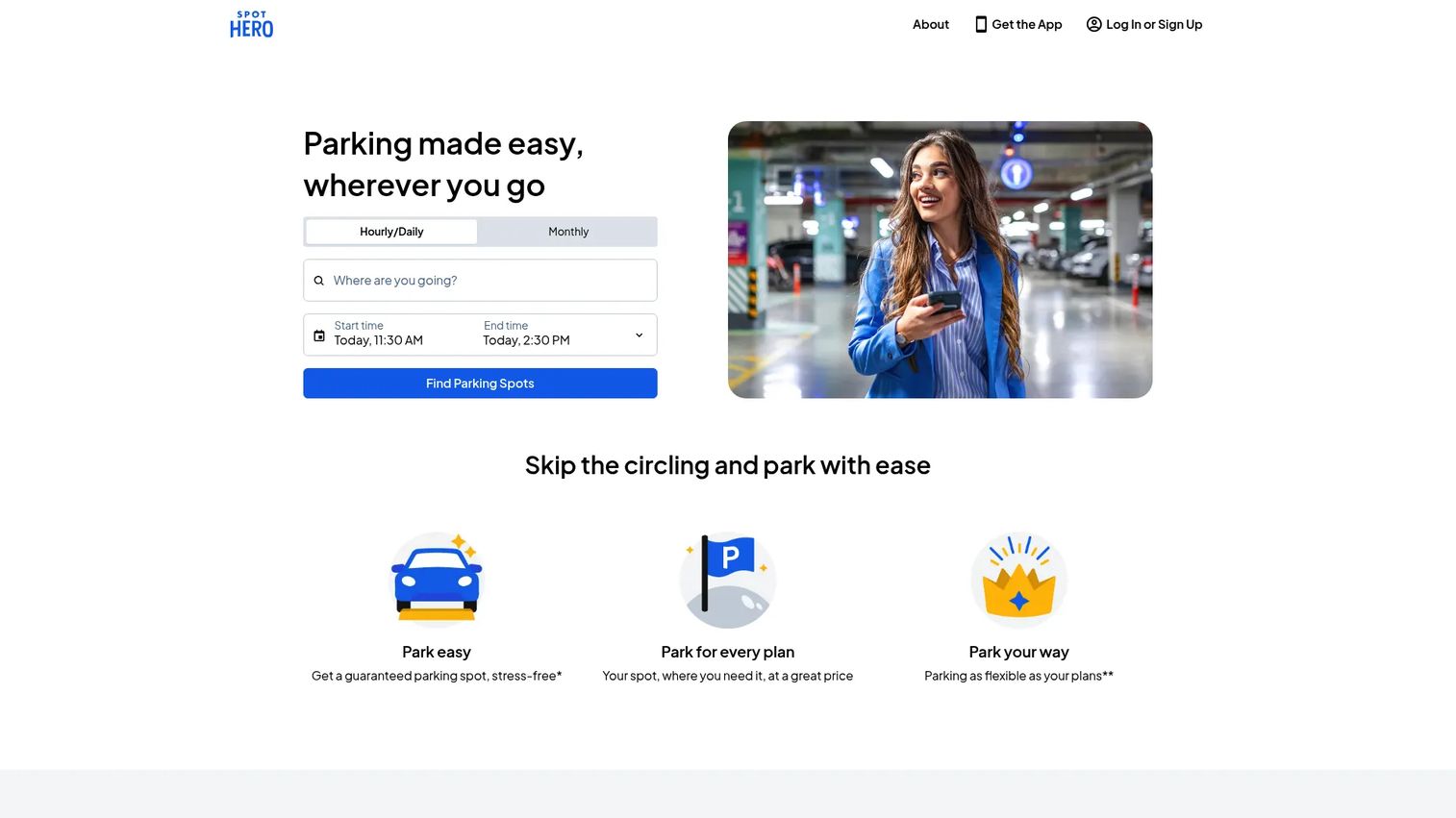
SpotHero is a parking reservation marketplace for finding and booking off-street parking in advance. Be clear about what this is: it is demand-side parking commerce, not a valet operations tool. Drivers search a destination, compare spots and prices, and book instantly through the app. For an operator, SpotHero is a channel to fill spaces, not a system to run the front drive.
Best for: Drivers and businesses that need book-ahead parking reservations, and operators wanting a demand channel.
Key strengths
- Destination-based parking search: guests find parking near your property before they arrive, reducing arrival friction.
- Compare locations, prices, and details: transparent options that help drivers commit to a spot in advance.
- Instant booking and in-app management: reservations and changes handled entirely in the app, no phone calls.
Why choose SpotHero: If your challenge is filling parking capacity and capturing demand from people already searching, a marketplace like SpotHero puts your spaces in front of them. Do not confuse it with dedicated valet software, though. It handles reservations and payments, not vehicle tracking, damage documentation, or runner workflows. It complements a valet system rather than replacing one.
SpotHero pricing: Pricing is variable by city and spot, not a public SaaS plan. SpotHero states the price at checkout includes applicable taxes and fees. Because rates are set per location and spot, there is no single company-wide starting price to evaluate. SpotHero holds a 4.2 out of 5 rating on G2.
7. ParkWhiz
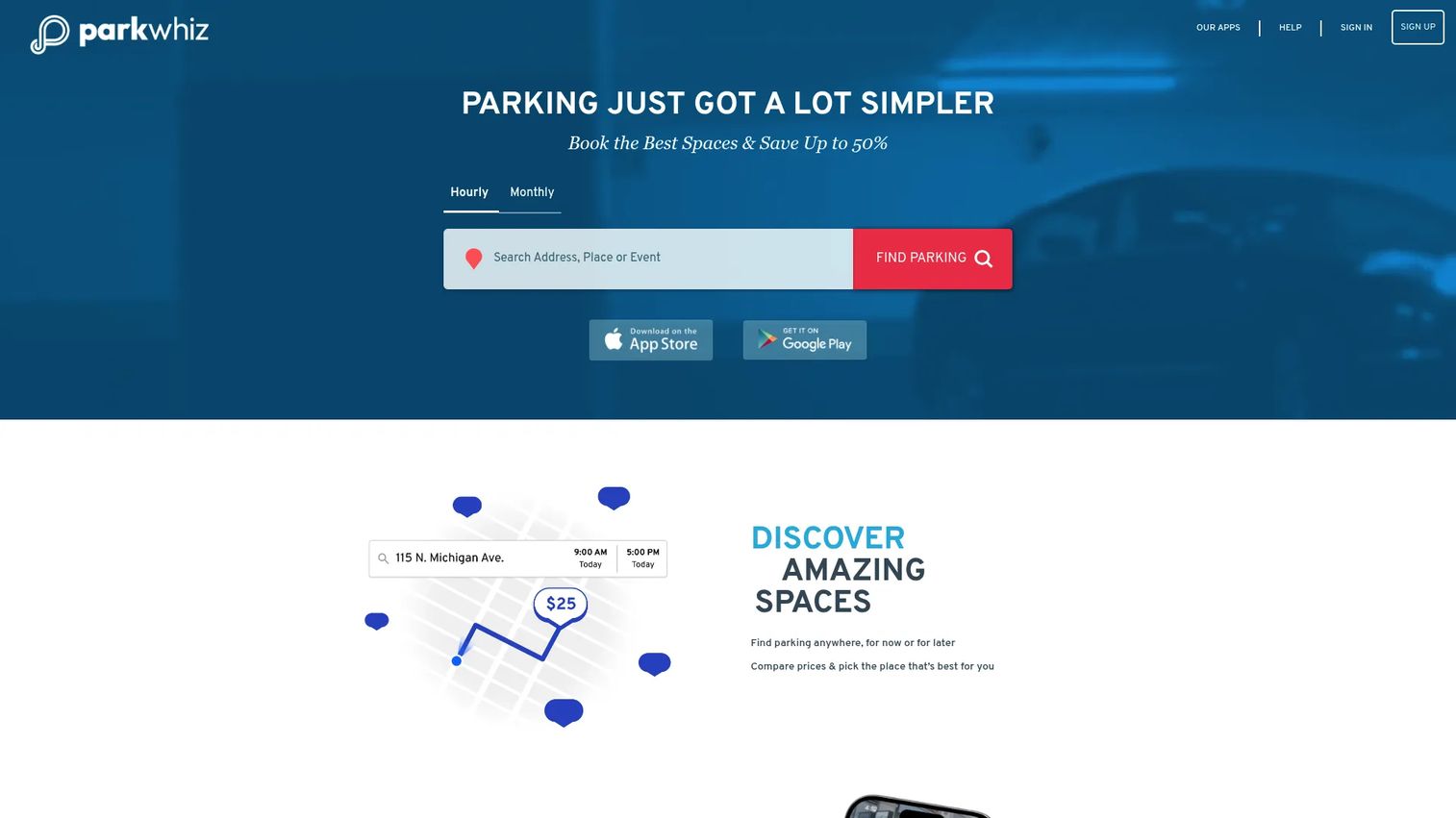
ParkWhiz is a parking reservation platform for finding, comparing, and booking parking in advance or on demand. Like SpotHero, it sits on the parking commerce side rather than the valet operations side. Its strength is guest convenience: drivers reserve, prepay, and use a mobile parking pass, plus on-demand payment options at supported lots.
Best for: Drivers and venue-goers who need to book parking in advance or pay digitally at supported lots.
Key strengths
- Search and compare by location and time: guests find and price parking before they leave, cutting arrival uncertainty.
- Reserve, prepay, and use a mobile pass: the full booking-to-entry flow lives on the phone.
- On-demand payment options: Express Pay, Digital Ticket Checkout, and Scan to Pay for flexible on-site payment.
Why choose ParkWhiz: For a venue or property looking to capture pre-booked parking demand and offer pay-by-app convenience, ParkWhiz covers that lane cleanly. It is worth repeating that this is not a valet workflow tool. There is no vehicle tracking, no damage documentation, no runner dispatch. Use it to capture parking demand and modernize payment, and pair it with dedicated valet software if you run a staffed front drive.
ParkWhiz pricing: ParkWhiz states the platform is free to use, with parking rates set by each facility and shown after you select location, date, and time. There is no single public platform price because pricing lives at the facility level. That makes it low-commitment to try as a demand channel, since the cost sits with the parking rate, not a subscription.
Considerations before you buy
Narrowing seven tools to one comes down to how well each fits your actual front drive, not a feature checklist. Here is what to verify before signing.
SMS and mobile retrieval fit
Test the guest retrieval flow yourself. How many taps from request to a runner being dispatched? Does the SMS valet request work without the guest downloading an app? Retrieval speed during peak windows is the single metric that moves guest experience, so make the vendor prove it under realistic volume.
PMS and billing integration
Confirm the tool integrates with your specific property management system, not just PMS in general. Ask exactly how valet charges, validations, and tips post to the guest folio. Billing automation only pays off if it removes reconciliation work rather than adding a manual export step.
Damage documentation and liability
Check that the tool captures timestamped photos at both check-in and checkout, and that those records are easy to retrieve during a dispute. Damage documentation is where valet software earns its cost in avoided liability, so treat it as a core requirement, not a nice-to-have.
Reporting and labor efficiency
Look at the reporting dashboard before you buy. You want retrieval times, ticket volume, labor hours, and revenue in one view. That visibility is what lets you staff the drive correctly and prove parking is a profit center rather than a cost line.
Deployment speed
Ask how long a single property takes to go live, including hardware and staff training. A tool that takes a quarter to deploy costs you a season of peak operations, so favor platforms that get a property running in weeks.
Conclusion
The right pick depends on what your property actually runs. For an operator wanting valet and self-park on one platform across multiple assets, FlashParking is the integrated choice. For a hotel or venue whose core need is fast, ticketless SMS retrieval with folio-ready billing, O-Valet is built for exactly that. If damage documentation and contactless workflows top your list, Oobeo's plate scan and photo trail fit well.
The three parking commerce tools, Premium Parking, SpotHero, and ParkWhiz, solve a different problem. They capture parking demand and modernize payment, so treat them as demand channels that complement a valet system rather than replace one. And before any of this, HotelTechReport is the free research step that keeps you from shortlisting the wrong tool.
Concrete next step: narrow to two dedicated valet tools, then run a live demo of each against your real PMS and billing setup. Do not sign until you have watched the SMS retrieval flow and the folio posting work with your actual stack.
FAQs
Valet parking software digitizes the full valet workflow, from vehicle check-in and location tracking to guest retrieval, billing, and reporting. It replaces paper tickets with SMS or app-based requests, documents vehicle condition with photos, and posts charges to billing systems. The result is faster retrieval, fewer lost tickets, and cleaner revenue capture.
At check-in, the guest's phone number is linked to their vehicle instead of a paper stub. When they want their car, they text a code or tap a link, which alerts the valet team to start retrieval before the guest reaches the curb. This cuts wait times most during peak check-out windows, when the front drive is busiest.
Prioritize SMS or app-based guest retrieval, PMS integration for folio posting, billing automation for charges and tips, and damage documentation with timestamped photos. Vehicle tracking and a real-time reporting dashboard round out the core set. These are the features that reduce labor waste and protect against liability disputes.
Many valet platforms integrate with property management systems so parking charges, validations, and tips post directly to the guest folio. Confirm the tool supports your specific PMS before buying, since integration depth varies by vendor. Clean folio posting is what turns valet from a cash-handling headache into tracked, auditable revenue.
Yes, mainly by improving labor efficiency during peak windows rather than cutting headcount outright. SMS retrieval lets runners start earlier, plate scanning removes time spent hunting for tickets, and reporting shows exactly when to staff up or down. Properties often move the same volume of cars faster with the team they already have.
Paper tickets get lost, mismatched, and offer no audit trail, which causes disputes and slows retrieval. Digital ticketless parking ties each vehicle to a phone number and a location record, so there is no stub to lose and a clear history for every car. Digital ticketing also feeds billing and reporting automatically, which paper never does.
Look at how pricing scales with your volume and number of locations, and whether hardware is a separate cost. Some vendors publish a monthly or annual starting price, while others quote per property or per venue type. Weigh subscription cost against the labor efficiency and revenue capture the tool delivers, not just the sticker price.
Not quite. Valet parking software focuses on staffed front-drive operations: check-in, retrieval, runner dispatch, and damage documentation. Parking management software is broader, covering self-park, permits, payments, and reservations. Some platforms do both, but a reservation marketplace that captures parking demand is a different tool from a system that runs your valet team.