Ask any operations lead at an airline, an MRO shop, or a private flight department where their time goes, and you will hear the same answer: reconciling systems that do not talk to each other. Flight planning lives in one tool. Maintenance records live in another. Compliance documentation sits in a third. Passenger and crew communications happen somewhere else entirely. Every handoff between those systems is a place where a delay, a manual re-entry, or a blind spot gets introduced.
That fragmentation is expensive, and it is growing more expensive as the category expands. The global aviation software market is projected to grow from USD 12.5 billion in 2026 to USD 22.5 billion by 2033, an 8.8% compound annual growth rate, according to Grand View Research (2025). North America alone accounts for 36% of that revenue. More money flowing into the category means more vendors, more overlapping feature claims, and a harder buying decision for the person who actually has to run operations on the software.
The problem is not a shortage of aviation software companies. It is knowing which tool fits which workflow. Flight operations software solves a different problem than maintenance software for aviation. Airline software built for disruption management does not overlap much with a pilot app built for the flight deck. The buyer who picks by brand recognition instead of workflow fit ends up paying for capability they never use while the gap they actually needed to close stays open.
This guide is a buyer-first shortlist. If you are evaluating tools the way a founder or operator evaluates any addition to the stack, you already know the drill: it has to earn its place, it has to fit the workflow, and it has to reduce operational friction rather than add a new tab. The same logic that applies to a GTM stack applies here. Teams comparing broader operational categories often look at adjacent research like AI governance tools and AI customer service software, because the evaluation muscle is the same: match the tool to the job, not the marketing to the fear.
What's inside
This guide covers the best aviation software tools for 2026 across the main operational categories: private aviation passenger experience, pilot and flight deck workflows, MRO and maintenance, airline operations, fuel and sustainability analytics, compliance and documentation, and passenger communications during disruption. We selected tools on four criteria: category fit against a real aviation workflow, depth within that use case, operational clarity for the teams who run it daily, and breadth across the different stakeholder types who touch aviation software. This is not a directory. Each tool earned its spot by owning a specific job well.
TL;DR
- Best for private aviation passenger experience: The Private Jet App, for brokers and operators who want a branded client app plus an internal trip and quote hub.
- Best for pilot and flight deck workflows: ForeFlight, the integrated electronic flight bag for planning, weather, charts, and logging.
- Best for MRO and maintenance: Ramco Aviation 6.0, cloud-based M&E and MRO for airlines, MROs, and defense operators.
- Best for airline operations at scale: IBS Software, enterprise software spanning passenger, cargo, and loyalty workflows.
- Best for fuel efficiency and sustainability: OpenAirlines, whose SkyBreathe platform turns operational data into lower fuel burn.
- Best for compliance and documentation: Vistair (now Comply365), for content, safety, and training management in regulated operations.
- Best for disruption and passenger communications: 15below, for automated, multi-channel passenger messaging.
What is aviation software?
Aviation software is software used to plan, run, maintain, communicate, and monitor aviation operations. It spans the full lifecycle of a flight and the organization that operates it, from route planning and weather before departure to maintenance records, regulatory compliance, and passenger communication after the schedule changes.
Because aviation is a regulated, safety-critical, high-velocity industry, the software in aviation tends to be specialized rather than general-purpose. A single vendor rarely covers every workflow well, which is why most operators run a stack rather than a suite.
Core capabilities across aviation software solutions include:
- Flight operations: route planning, weather, filing, charts, electronic flight bag, and flight logging.
- Maintenance and MRO: aircraft maintenance records, engineering, supply chain, and material requirements planning.
- Compliance: manuals, controlled documents, safety management, and audit readiness against regulatory standards.
- Passenger and crew experience: branded portals, trip details, secure chat, and disruption notifications.
- Analytics: real-time aviation analytics for fuel burn, emissions, on-time performance, and operational cost.
- Mobile access: web, desktop, and mobile parity so flight, maintenance, and ops teams work from any device.
Aviation management software and aviation planning software are often used as umbrella terms for the operations and scheduling layers of this stack. The distinctions matter when you buy, because a tool built for one layer rarely does the next one justice.
When to use aviation software
Not every operation needs every category. The trigger is usually a specific workflow that has outgrown spreadsheets, email, or a legacy system.
Standardize flight operations across devices
Flight teams work from the office, the hangar, the aircraft, and the road. When planning, weather, and charts live in tools that only run on one device, crews improvise, and improvisation is where errors creep in. Web, desktop, and mobile parity in flight operations software means the same current data reaches the flight deck, dispatch, and the pilot's tablet without anyone re-entering it. That consistency is the whole point.
Improve maintenance and compliance visibility
Maintenance and compliance both live or die on records. If a maintenance record is stale or a manual is out of date, you are exposed during an audit and grounded during an inspection. Maintenance software for aviation and aviation compliance software earn their place by keeping records current, controlled, and audit-ready in real time. When a regulator asks for proof, you produce it in minutes instead of days.
Upgrade passenger or crew communication workflows
In high-velocity operations, the experience of the passenger or crew member is part of the product. A delayed flight with proactive, accurate communication feels different than the same delay with silence. Passenger communications and crew communication software automate the messaging so a single schedule change reaches thousands of people across the right channels without a human sending each one.
Comparison table
Here is the shortlist at a glance. Pricing in aviation software is frequently quote-based, since deployments scale with fleet size, seat count, and regulatory scope, so several vendors direct buyers to sales rather than publish a rate card. Where a public price or G2 rating is verified, it is listed.
| # | Product | Intent | Key use case | Pricing | G2 rating |
|---|---|---|---|---|---|
| 1 | The Private Jet App | Private aviation client experience | Branded passenger app, secure chat, trip and quote management | Contact sales | Not listed |
| 2 | ForeFlight | Pilot and flight deck workflows | Flight planning, weather, charts, and logging in one EFB | From $10.83/month (Starter, billed annually) | 4.4/5 |
| 3 | Ramco Aviation 6.0 | MRO and maintenance | Cloud M&E/MRO, engine MRO, maintenance control, and MRP | Contact sales | 4.6/5 |
| 4 | IBS Software | Airline operations at scale | Passenger services, air cargo, and loyalty management | Contact sales | Not listed |
| 5 | OpenAirlines | Fuel and sustainability analytics | AI fuel management, emissions, and pilot engagement | Contact sales | Not listed |
| 6 | Vistair (Comply365) | Compliance and documentation | Operational content, safety, and training management | Contact sales | 3.4/5 |
| 7 | 15below | Passenger communications | Automated, multi-channel disruption notifications | Contact sales | Not listed |
The 7 best aviation software tools for 2026
1. The Private Jet App
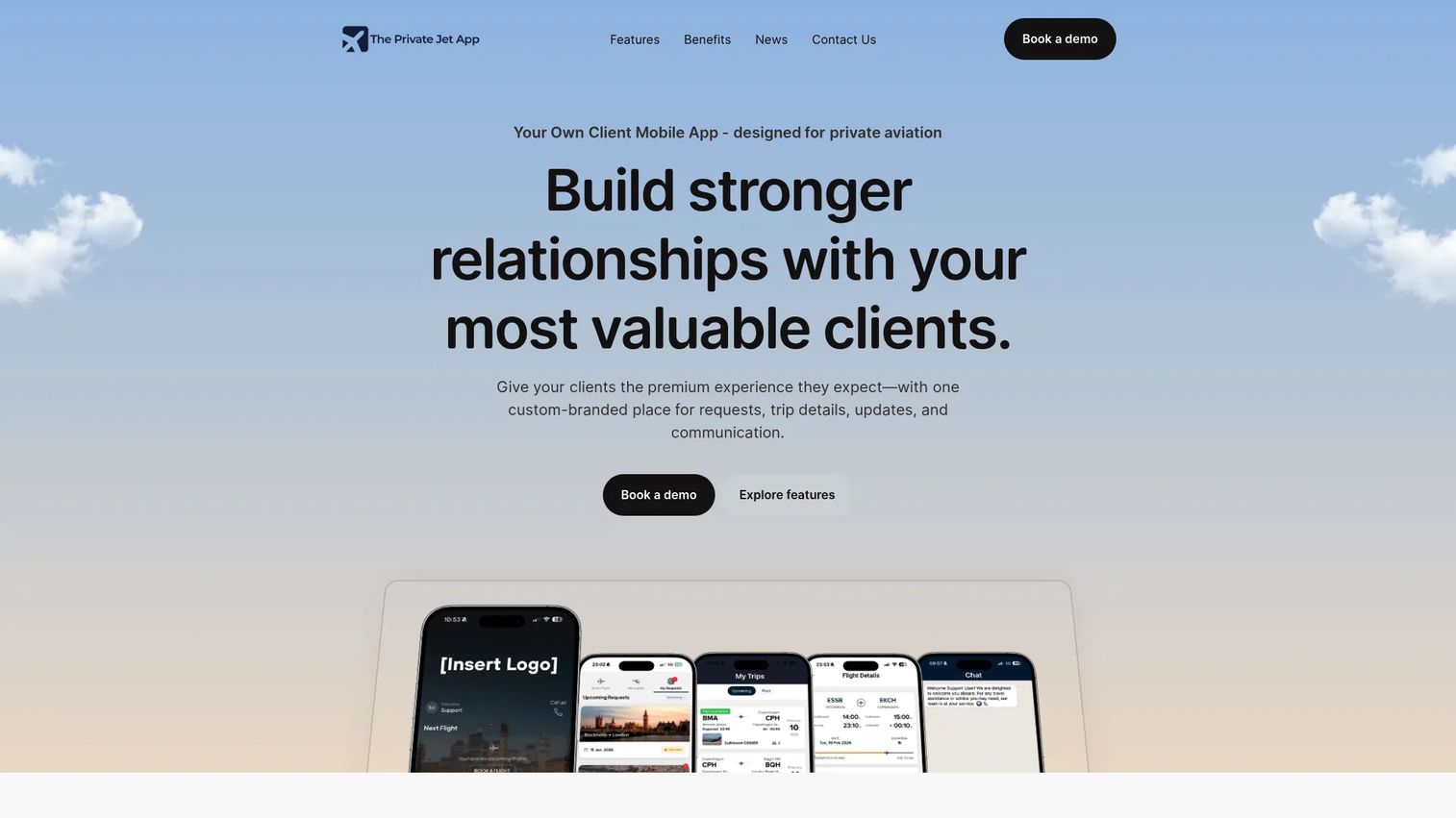
The Private Jet App is a private aviation software platform built around client communication and the branded passenger experience. It gives brokers and operators a passenger-facing app with flight briefs, trip details, news, and secure chat, paired with an admin tool for managing trips, requests, and quotes. The whole thing carries the operator's brand rather than a generic third-party one, which matters in a business where the client relationship is the asset.
Best for: Private aviation brokers, operators, and corporate flight departments that want a branded client app plus an internal trip communication hub.
Key strengths
- Branded passenger app: Flight briefs, trip details, news, and chat delivered under the operator's own brand for a consistent client experience.
- Secure in-app chat: A single channel for questions, documents, and images between the client and the flight team, so nothing gets lost in scattered texts and emails.
- Trip, request, and quote management: An admin tool that turns inbound requests into quotes and confirmed trips without juggling separate systems.
Why choose The Private Jet App: In private aviation, the passenger experience software is the product experience. This tool fits the operator or broker who competes on service quality and wants the client-facing surface to feel bespoke while the back-office workflow stays organized. If your differentiation is the relationship, a generic booking tool undersells you.
The Private Jet App pricing: Pricing is not published on the vendor site. The site directs prospects to book a demo or contact sales, which is typical for a category where deployments are tailored to the operator. Expect a scoped quote rather than a public rate card.
2. ForeFlight
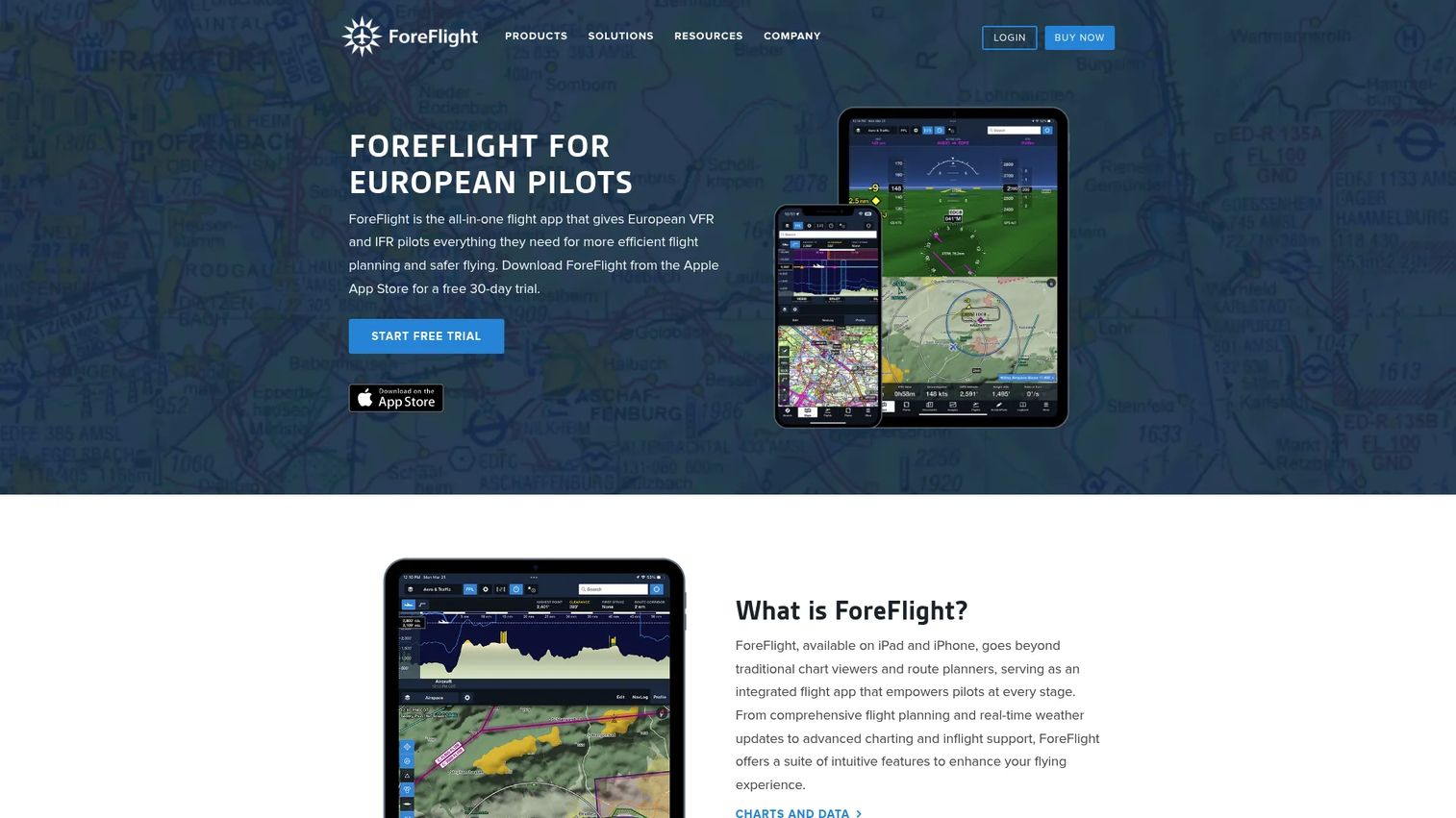
ForeFlight is the integrated electronic flight bag and pilot app that most general and business aviation crews recognize on sight. It combines flight planning and filing, aviation weather, charts, hazard awareness, and synthetic vision in one application that runs across a pilot's devices. Rather than stitch together separate planning, weather, and charting tools, pilots and flight departments get a single flight deck software experience with situational awareness built in.
Best for: Pilots and flight departments that need an all-in-one EFB for planning, weather, charts, and flight logging across general, business, military, and training use.
Key strengths
- Flight planning and filing: Build, optimize, and file flight plans without leaving the app, so the plan and the file stay in sync.
- Weather and charts: Aviation weather layered onto current charts, so the picture the pilot sees is the picture that matters for the route.
- Hazard awareness and synthetic vision: Terrain, traffic, and synthetic vision that raise situational awareness in the flight deck.
Why choose ForeFlight: ForeFlight fits the pilot and flight department that wants one tool to own the planning-to-logging workflow instead of a patchwork. Its ecosystem depth and multi-device parity mean the same current data follows the pilot from the office to the aircraft. The support and education resources around it also shorten the ramp for new users.
ForeFlight pricing: ForeFlight publishes individual plans on its pricing page. Starter is $10.83/month billed annually at $130, Essential is $21.67/month billed annually at $260, and Premium is $32.50/month billed annually at $390. Business plans are listed separately for flight departments. ForeFlight holds a 4.4/5 rating on G2.
3. Ramco Aviation 6.0
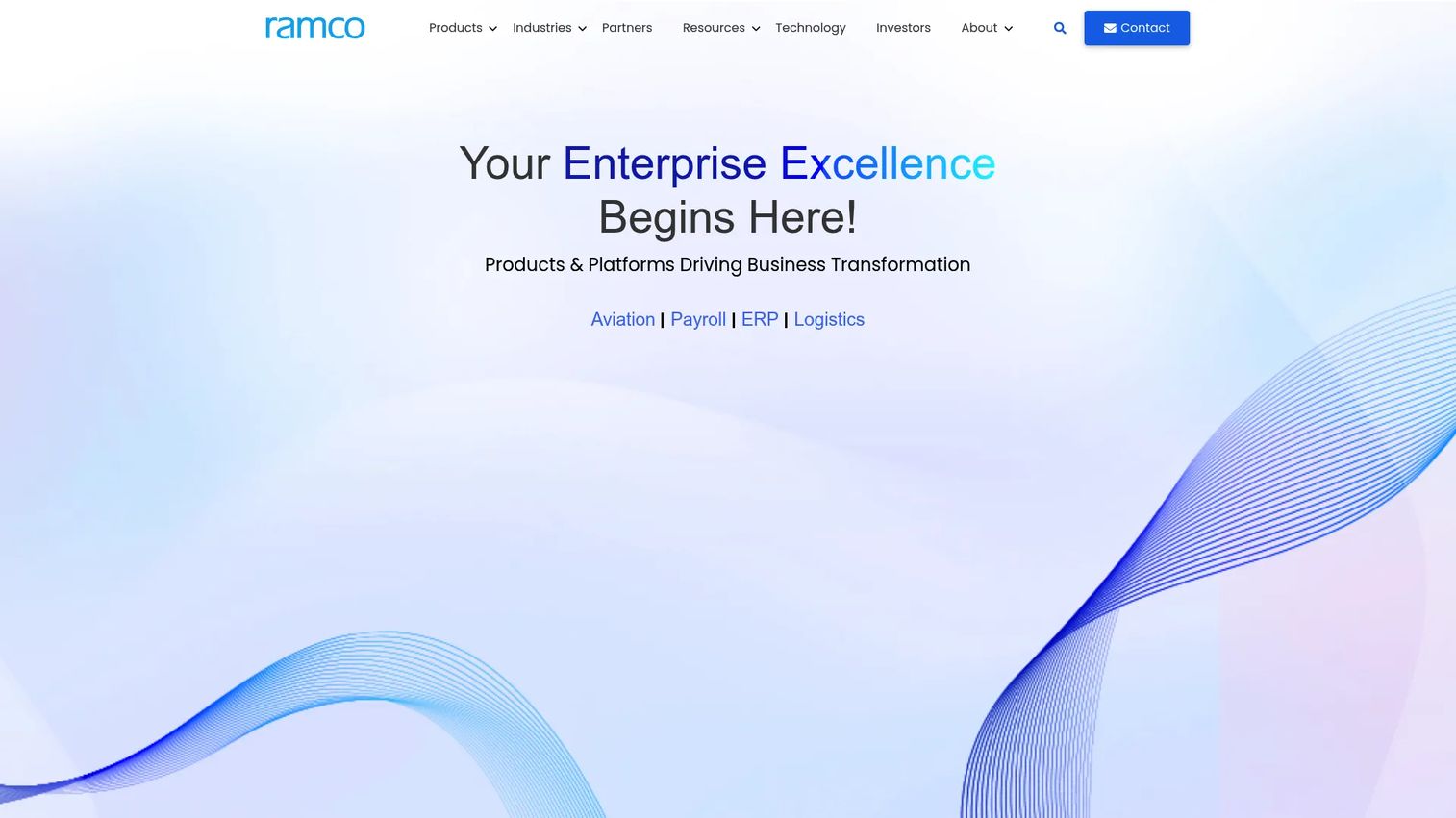
Ramco Aviation 6.0 is cloud-based aviation M&E and MRO software built for airlines, MRO providers, and defense operators. It covers maintenance, engineering, planning, supply chain, and compliance in one integrated platform, with modules for engine MRO, a Maintenance Control Centre hub, and aviation material requirements planning. For organizations moving off paper and legacy systems, it is positioned as the digital and paperless backbone of maintenance operations.
Best for: Aviation organizations that need integrated maintenance, planning, supply chain, and compliance workflows in one MRO software platform.
Key strengths
- Engine MRO module: Purpose-built workflows for engine maintenance, the most complex and cost-heavy corner of the MRO world.
- Maintenance Control Centre hub: A central hub that gives maintenance control real-time visibility into fleet status and open work.
- Aviation MRP module: Material requirements planning tuned to aviation, so parts and inventory line up with the maintenance schedule.
Why choose Ramco Aviation 6.0: Enterprise aviation organizations buy Ramco to replace fragmented maintenance systems with one platform that connects engineering, planning, supply chain, and compliance. The pull toward paperless operations, mobile execution, and analytics is what wins over MRO leaders who are tired of reconciling data across tools. It holds a 4.6/5 rating on G2, the highest verified rating on this list.
Ramco Aviation 6.0 pricing: Ramco does not publish pricing on its site and uses a contact-us CTA instead. Given the enterprise scope, deployments are scoped to fleet size, module set, and organization type, so expect a tailored quote.
4. IBS Software
IBS Software is an enterprise software provider for the travel, airline, hospitality, cargo, and logistics industries. In an aviation context, it supplies mission-critical airline software across passenger services, air cargo management, and loyalty management. This is the category for large operators that need software to run at airline scale, with the integration complexity that comes with connecting core operational systems.
Best for: Large travel and aviation organizations that need mission-critical, enterprise-grade airline software across passenger, cargo, and loyalty workflows.
Key strengths
- Airline passenger services: Core passenger service systems built for the operational scale and reliability airlines require.
- Air cargo management: Cargo workflows for operators where freight is a material line of the business, not an afterthought.
- Loyalty management: Loyalty and program management that ties passenger relationships back into revenue.
Why choose IBS Software: IBS fits the organization operating at a scale where mission-critical uptime and deep integration matter more than fast self-serve setup. Airlines and large travel businesses lean on it precisely because the operational stakes are high and the systems are interconnected. This is enterprise software for buyers who evaluate on reliability and integration depth first.
IBS Software pricing: IBS does not publish public pricing. As an enterprise vendor serving airlines and large travel organizations, its engagements are scoped and quoted directly. Plan for a sales-led evaluation rather than a self-serve signup.
5. OpenAirlines
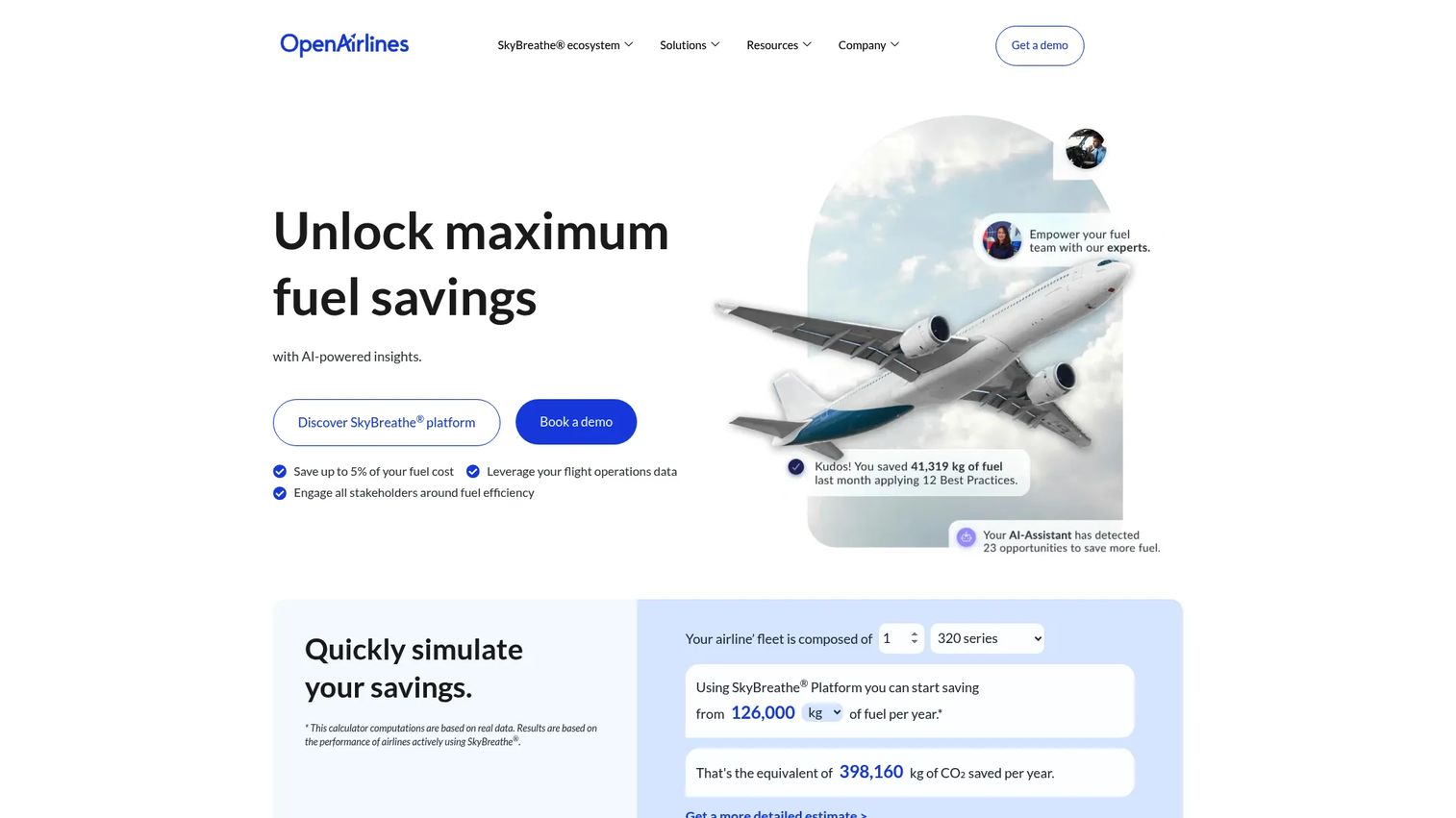
OpenAirlines is the airline sustainability software company behind SkyBreathe, a fuel-efficiency platform for commercial aviation. It uses AI-driven fuel management and analytics to find and quantify fuel savings, engages pilots through tools like MyFuelCoach and OnBoard, and layers on benchmarking, emissions, and on-time performance modules. For airlines where fuel is one of the largest and most volatile cost lines, this is real-time aviation analytics aimed straight at the P&L and the emissions target.
Best for: Airlines seeking to reduce fuel burn and carbon emissions with operational analytics that turn flight data into concrete savings.
Key strengths
- AI-driven fuel management: Analytics that surface where fuel is being wasted across the operation and quantify the recovery.
- Pilot engagement: MyFuelCoach and OnBoard bring pilots into the loop, so savings come from behavior change, not just reports.
- Benchmarking and emissions modules: Benchmarking, emissions, and on-time performance tracking that connect efficiency to sustainability reporting.
Why choose OpenAirlines: Efficiency-minded operators care because fuel is both a cost problem and a compliance-adjacent sustainability problem, and OpenAirlines addresses both from the same data. The platform ties analytics to action by engaging the pilots who actually influence fuel burn. If your board is asking about emissions and your CFO is asking about fuel cost, this is the tool that answers both.
OpenAirlines pricing: OpenAirlines does not display public pricing. The site notes that pricing depends on the airline's fleet and needs and invites prospects to contact the team for an estimate. Expect a fleet-scoped quote.
6. Vistair (Comply365)
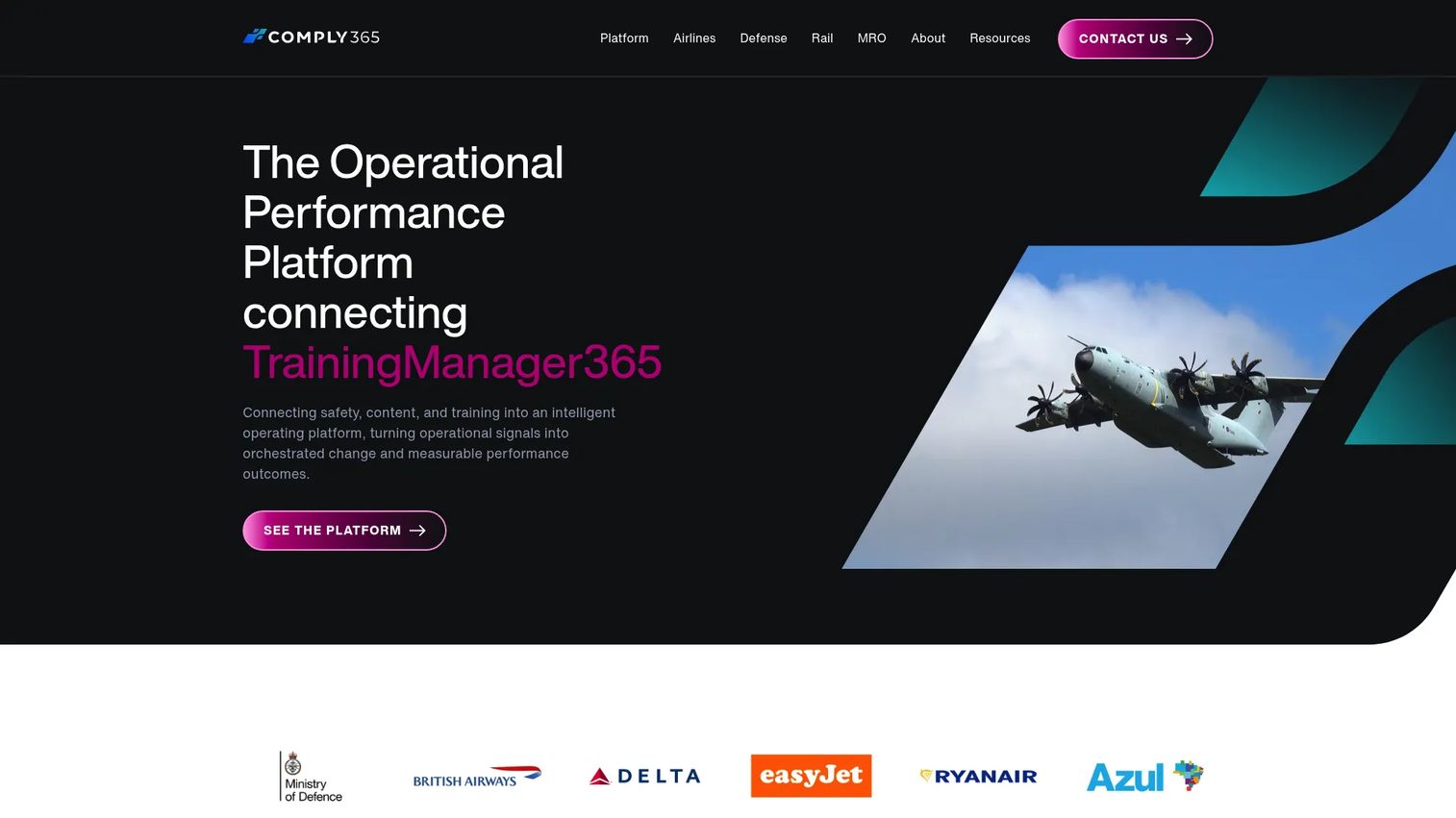
Vistair, now operating as Comply365 following a rebrand, is enterprise SaaS for aviation and rail operational performance, focused on content, safety, and training management. It centers on aviation compliance software: controlled operational content, safety management, and training management for large regulated operators. In an industry where an out-of-date manual is a real liability, controlled content and document governance are the whole value proposition.
Best for: Large regulated operators that need connected operational content, safety, and training workflows in one compliance-focused platform.
Key strengths
- Operational content management: Controlled manuals and documents kept current, versioned, and governed so the right version is always live.
- Safety management: Safety management workflows that connect reporting, tracking, and follow-through in one system.
- Training management: Training records and programs tied to the same content and compliance backbone.
Why choose Vistair: Compliance-heavy teams need aviation compliance software because the cost of a stale manual or a missed training record is measured in groundings and findings, not inconvenience. Vistair fits operators who want controlled content, audit readiness, and document governance in one connected platform. The rebrand to Comply365 signals a widening scope across regulated operations. Its G2 rating sits at 3.4/5, which is worth weighing against your specific documentation needs.
Vistair pricing: Vistair does not publish public pricing. As enterprise compliance software for regulated operators, engagements are scoped and quoted directly. Plan for a sales-led evaluation.
7. 15below
15below is a passenger communications platform for travel brands, built for automated messaging at scale. It handles automated passenger notifications across multiple channels and integrates with reservation and other travel data systems, so a single operational event triggers the right message to the right passengers. During delays, cancellations, or schedule changes, this is the airline disruption management layer that keeps thousands of people informed without a human sending each notification.
Best for: Airlines and travel operators that need automated, cross-channel passenger communications, especially during disruption.
Key strengths
- Automated passenger notifications: Operational events trigger passenger messages automatically, so communication keeps pace with the operation.
- Multi-channel messaging: Messages reach passengers across the channels they actually use, not just one.
- Reservation system integration: Direct integration with reservation and travel data systems, so messages are accurate and timely rather than generic.
Why choose 15below: Disruption is when passenger experience is won or lost, and doing it manually does not scale past a handful of flights. 15below fits airlines that want automation, cross-channel delivery, and accurate messaging tied to live operational data. When a schedule change hits, proactive communication turns a bad experience into a tolerable one, and that is exactly the moment this tool is built for.
15below pricing: 15below does not publish public pricing and runs a demo and contact-based sales process. Expect a scoped quote based on your passenger volume, channels, and integration needs.
Considerations before buying aviation software
The right tool depends on which workflow you are solving first. Use this checklist to pressure-test any shortlist.
Category fit against your actual workflow
Aviation software is specialized. A flight operations tool will not fix a compliance gap, and an MRO platform will not run passenger communications. Name the single workflow that hurts most right now, then buy for that. Breadth you do not use is cost you cannot justify.
Real-time data and visibility
The value of most aviation software is current, accurate data that everyone sees at once. Before you buy, ask how the tool keeps records live, who can see them, and how fast a change propagates. Stale data in aviation is not a nuisance, it is a risk.
Integration with your existing stack
Airlines and operators run interconnected systems. A new tool that cannot integrate with your reservation, maintenance, or planning systems just adds another silo. Confirm the integrations you need exist before you sign, not after.
Mobile and multi-device access
Aviation work happens away from a desk. Check that flight, maintenance, and ops teams get the same current data on web, desktop, and mobile. Parity across devices removes the manual re-entry that creates errors.
Compliance and audit readiness
If your operation is regulated, and most are, the software has to hold up under an audit. Ask how it handles controlled content, versioning, and proof of compliance. The best answer is that you can produce evidence in minutes, not days.
Conclusion
There is no single best aviation software, because there is no single aviation workflow. The right choice depends on what you are optimizing for. Pick The Private Jet App if your priority is a branded private aviation client experience. Pick ForeFlight for pilot and flight deck workflows. Pick Ramco Aviation 6.0 for MRO and maintenance depth. Pick IBS Software for airline operations at scale, OpenAirlines for fuel and sustainability analytics, Vistair for compliance and documentation, and 15below for disruption and passenger communications.
The practical next step is not to buy the broadest platform. It is to name the one workflow that costs you the most in delays, rework, or blind spots today, then evaluate the two or three tools that own that workflow well. Prove value on that single motion first. Once the software has earned its place in your stack on one job, you will have a much clearer read on what to solve next.
FAQs
Aviation software is used to plan, run, maintain, communicate, and monitor aviation operations. That spans flight planning and weather, maintenance and MRO records, regulatory compliance and documentation, passenger and crew communication, and operational analytics like fuel burn and on-time performance. Because aviation is regulated and safety-critical, most tools are specialized to one of these layers rather than covering all of them.
For pilot and flight deck workflows, ForeFlight is the common choice because it combines flight planning, weather, charts, hazard awareness, and logging in one electronic flight bag across devices. The best flight operations software for your team depends on whether you are optimizing for planning and situational awareness at the flight deck or broader operational scheduling at the airline level, which is a different category.
Maintenance and MRO teams use maintenance software for aviation that keeps records current, controlled, and audit-ready. Ramco Aviation 6.0 is a widely used MRO software platform covering engine MRO, maintenance control, planning, supply chain, and material requirements planning in one cloud system. The right fit depends on fleet size and whether you need integrated planning and supply chain alongside the maintenance records.
Aviation compliance software keeps manuals, controlled documents, safety records, and training records current, versioned, and governed. When a regulator asks for proof, controlled content means you can produce the current, correct version in minutes instead of reconstructing it from scattered files. Tools like Vistair focus specifically on operational content, safety, and training management for regulated operators.
For private jet operators and brokers, The Private Jet App is built around the branded passenger experience and internal trip management. It pairs a client-facing app with flight briefs, trip details, and secure chat with an admin tool for handling requests and quotes. It fits operators whose differentiation is service quality and the client relationship.
Aviation work happens in the office, the hangar, the aircraft, and on the road. Mobile and multi-device parity means flight, maintenance, and operations teams all see the same current data without re-entering it, which removes a major source of errors. A tool that only works well on one device forces the improvisation that creates operational risk.
Start with the single workflow that costs you the most today, then evaluate tools that own that workflow well rather than buying the broadest platform. Check real-time data visibility, integration with your existing reservation, maintenance, or planning systems, mobile parity, and compliance and audit readiness. Prove value on one motion before expanding, so the software earns its place in your stack before you widen scope.
The best aviation software solutions keep records live and shared, so a change made in one place reaches everyone who needs it at once. Real-time aviation analytics turn operational data into current views of fleet status, fuel burn, emissions, and on-time performance. That shared, current picture is what lets dispatch, maintenance, and flight teams act on the same facts instead of reconciling stale copies after the fact.