You own hundreds of applications. Maybe thousands. Nobody can name every owner, and finance keeps flagging renewals for tools half the org forgot it bought.
That is the real problem behind most application portfolio management searches. It is not a shopping problem. It is a governance and prioritization problem wearing a software costume. Redundant apps, end-of-life risk, and shadow spend all trace back to the same root: no clean inventory and no repeatable way to decide what stays, what goes, and what gets replaced.
The pressure is climbing fast. The application portfolio management software market sat around USD 2.9 to 4.4 billion in 2024 and is forecast to reach roughly USD 6.2 to 10.5 billion by 2032 to 2035, per Verified Market Research and WiseGuy Reports (2024). Custom Market Insights (2025) found that 82% of companies above USD 1 billion in revenue have adopted or intend to adopt complex strategic portfolio management solutions by 2026. Translation: your peers are already systematizing this, and the cost of poor visibility keeps rising.
The stakes are concrete. Every unmanaged application is budget you cannot fully explain, a compliance gap you cannot fully see, and a modernization decision you keep deferring. The right platform turns that mess into a defensible, cross-functional system.
What's inside
This guide covers seven real application portfolio management platforms, how they were selected, and what each one does best. It is written for enterprise IT, enterprise architecture, and product-adjacent leaders who need portfolio visibility without adding operational overhead nobody wants to own.
We evaluated each tool against the criteria that actually decide these deals:
- Inventory quality: how completely the tool captures apps, owners, usage, and lifecycle state.
- Rationalization workflow: whether it supports repeatable invest, sustain, retire, and replace decisions.
- Business capability mapping: how well it links applications to what the business actually does.
- Integration fit: CMDB, ITAM, finance, ERP, and enterprise architecture data sources.
No tool deep dives yet. First, the shortlist logic.
TL;DR
Here is the fast version by buyer scenario:
- Best overall for enterprise governance: ServiceNow, for unified workflows and CMDB-native visibility.
- Best for enterprise architecture teams: SAP LeanIX, for formalized inventory, roadmap, and capability mapping.
- Best for IBM-aligned environments: IBM, for governance and lifecycle inside a broader enterprise stack.
- Best for large-scale governance control: Broadcom, for complex, heavily governed portfolios.
- Best for IT financial management and cost control: Apptio, for TCO analysis and spend visibility.
- Best for technical portfolio assessment: CAST Highlight, for code-level insight and modernization scoring.
- Best for operations-tied portfolio insight: BMC Helix, for portfolio context inside ITSM and ITOM.
What is application portfolio management software?
Application portfolio management software is a system that inventories every application an organization owns, tracks its lifecycle and cost, and supports decisions about which apps to keep, retire, replace, or invest in. Think of it as the control tower for your entire software estate.
The core functions are consistent across serious tools:
- Application inventory: a single source of truth for every app, its owner, and its business purpose.
- Lifecycle management: tracking each app from active use through end-of-life and retirement.
- Application rationalization: structured decisions to invest, sustain, retire, or replace.
- Cost and TCO analysis: total cost of ownership across licenses, infrastructure, and support.
- Business capability mapping: linking apps to the capabilities they support so spend maps to strategy.
- Integration: connections to CMDB, ITAM, ERP, financial systems, and enterprise architecture repositories.
A few terms worth pinning down. Application rationalization is the analysis that decides an app's fate. Business capability mapping connects technology to business functions like billing or fulfillment. CMDB integration feeds the tool live configuration data so the inventory stays current instead of decaying into a stale spreadsheet. Cost rationalization is the discipline of cutting duplicate or low-value spend once you can finally see it.
Cloud deployment now dominates. Precedence Research and Mordor Intelligence (2025) report that cloud accounts for roughly 69 to 70% of project and portfolio management software revenue and is the fastest-growing deployment mode, at 13 to 17% CAGR through the early 2030s. If you are buying in 2026, you are almost certainly buying cloud-first.
What to look for in application portfolio management software
Feature lists blur together. These five criteria separate a tool that changes decisions from one that becomes another dashboard nobody opens.
1. Inventory quality and ownership clarity
A complete inventory is the foundation. Without it, every downstream decision runs on guesswork.
Evaluate whether the tool can identify each app's owner, real usage, business purpose, and lifecycle state, not just its name. The gap between "we have 400 apps" and "we have 400 apps, and here is who owns each one and whether anyone uses it" is where the value lives.
Ask how the inventory gets built and kept fresh. Manual entry decays fast. Automated discovery through CMDB or ITAM feeds keeps the picture honest as the estate changes.
2. Rationalization workflow depth
Inventory tells you what you have. Rationalization tells you what to do about it.
Look for structured support for invest, sustain, retire, and replace decisions. The strongest tools include scoring models that weigh cost, risk, and business value, plus approval flows so decisions carry authority instead of dying in a slide deck.
Repeatability matters more than any single review. A tool that supports recurring rationalization cycles turns a one-time cleanup into ongoing portfolio governance.
3. Business capability mapping
Mapping applications to business capabilities is what elevates application portfolio management from IT housekeeping to strategy. It answers the question executives actually ask: what does this spend do for the business?
When you map apps to capabilities, redundancy becomes obvious. Five tools supporting one capability is a rationalization opportunity you can defend with a picture, not a hunch.
Capability mapping also aligns the portfolio to strategic initiatives. When leadership funds a new priority, you can see exactly which apps support it and where the gaps are.
4. Integration fit
The best application portfolio management solutions do not create a new island of data. They connect to the systems that already hold the truth.
Check for connectors to CMDB, ITAM, ERP, financial platforms, and enterprise architecture repositories. Each source feeds a different dimension: configuration, assets, cost, and architecture. A tool that pulls from all of them keeps the portfolio current with minimal manual effort.
Weak integration is the quiet killer of these programs. Data that has to be re-entered by hand goes stale, and a stale portfolio loses trust fast.
5. Reporting and executive visibility
Product managers and cross-functional leaders live and die by clear reporting. Budget, risk, and roadmap decisions all trace back to how well the tool communicates.
Look for views tuned to different audiences: cost and TCO for finance, risk and end-of-life for security, capability and roadmap for strategy. One dataset, many lenses.
The test is simple. Could you drop a report into a board deck without reformatting it for an hour? The tools that pass save you time every planning cycle.
When to use application portfolio management software
Not every organization needs a formal platform on day one. These three situations are where it earns its keep fast.
Clean up app sprawl after rapid growth
Fast-growing SaaS and enterprise teams accumulate tools faster than they can track them. Every team buys what it needs, and within a year the stack is a maze of overlapping subscriptions.
Application portfolio management software restores portfolio visibility. It surfaces duplicate tools, unused licenses, and orphaned apps so you can consolidate spend and reduce risk before renewal season hits.
Prepare for modernization or cloud migration
You cannot modernize what you cannot see. Before a cloud transformation or technical debt reduction effort, you need to know what to keep, replace, or retire.
The right tool builds that decision map. It scores apps on modernization readiness and business value so migration budget flows to the right places instead of dragging legacy weight into the cloud.
Improve governance after M&A or platform expansion
Mergers and acquisitions collide portfolios. Two companies, two inventories, conflicting owners, and redundant systems everywhere.
Application portfolio management tools unify scattered inventories into one governed view. They expose overlap, clarify ownership, and give the combined organization a single basis for rationalization and lifecycle decisions.
Comparison table
Here is the shortlist at a glance. Products are ordered by relevance to enterprise application portfolio management. Pricing reflects publicly available information at publish time and should be confirmed with each vendor.
| # | Product | Intent | Key use case | Pricing | G2 rating |
|---|---|---|---|---|---|
| 1 | ServiceNow | Enterprise governance | Unified inventory, rationalization, and CMDB-native visibility | Custom quote | 4.4/5 |
| 2 | SAP LeanIX | Enterprise architecture | Inventory, roadmap planning, and capability mapping | Priced per application | 4.5/5 |
| 3 | IBM | Enterprise stack alignment | Governance and lifecycle inside a broader IBM environment | Free tier available; paid plans vary | 4.3/5 |
| 4 | Broadcom | Large-scale governance | Portfolio control across complex, heavily governed estates | Contact sales | 4.3/5 |
| 5 | Apptio | IT financial management | TCO analysis, budgeting, and cost rationalization | Contact sales | 4.3/5 |
| 6 | BMC Helix | Operations-tied insight | Portfolio context inside ITSM and ITOM workflows | Contact sales | 3.9/5 |
| 7 | CAST Highlight | Technical assessment | Code-level insight and modernization scoring | From $6.8K/year | 4.5/5 |
1. ServiceNow
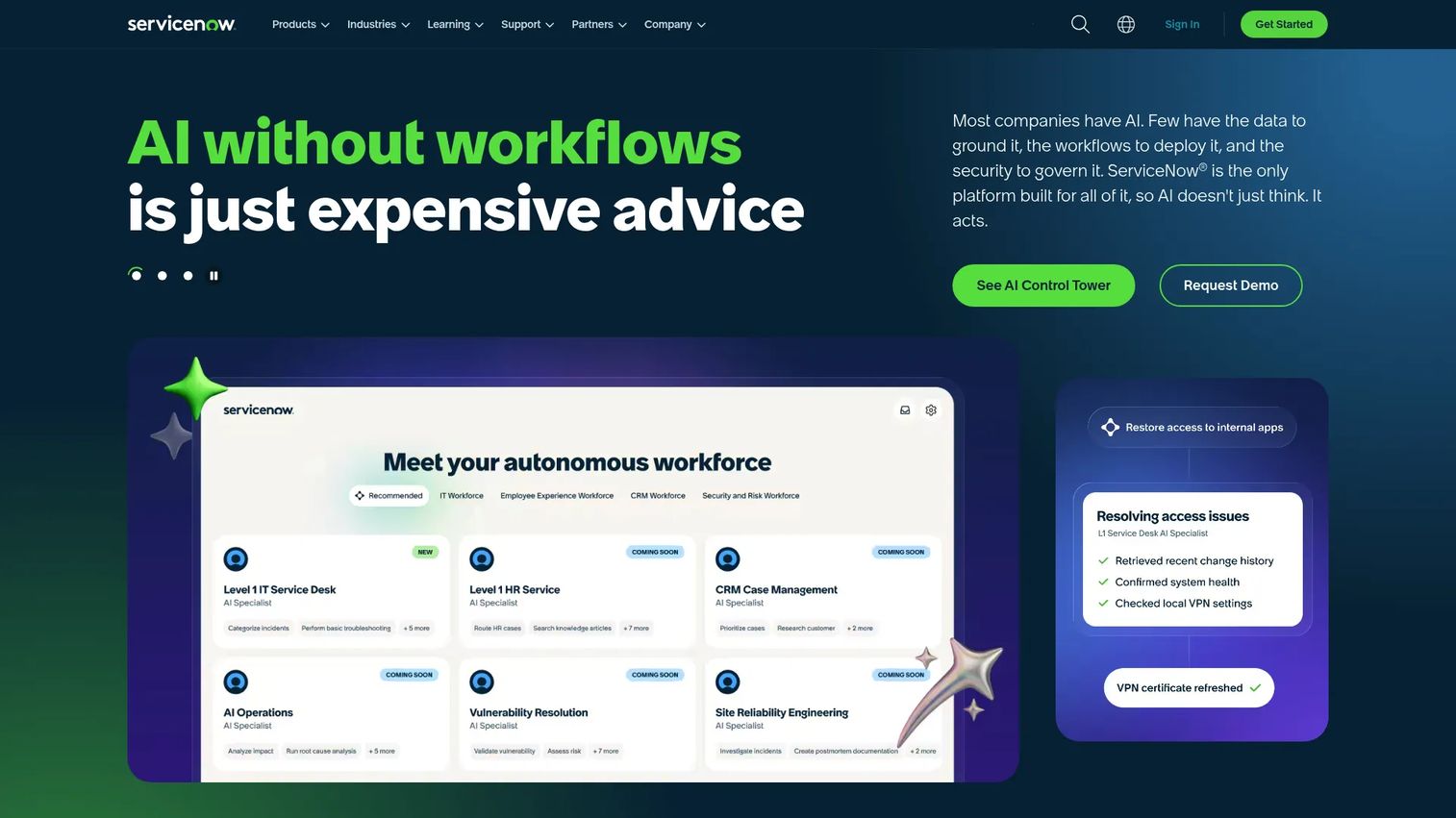
ServiceNow is an enterprise workflow automation platform spanning IT, customer service, HR, and security. Its Application Portfolio Management sits on top of the same CMDB that powers ServiceNow ITSM, which is why it delivers such strong portfolio visibility out of the box. If your configuration data already lives here, the inventory practically builds itself.
The pitch for large IT organizations is unification. Rationalization decisions, capability mapping, and lifecycle tracking all run on data your teams already maintain, rather than a separate island that decays over time.
Best for: Large organizations that already run ServiceNow and want portfolio governance native to their existing workflows.
Key strengths
- AI-powered workflows: Automation across enterprise functions extends the same engine into portfolio governance and review cycles.
- CMDB-native inventory: Application data pulls directly from the configuration base, keeping the portfolio current without manual upkeep.
- Capability and lifecycle mapping: Apps link to business capabilities and lifecycle states so rationalization decisions are grounded in real context.
Why choose ServiceNow: If ServiceNow is already your system of record for IT, the portfolio module is the path of least resistance. You inherit ownership data, integrations, and reporting instead of rebuilding them elsewhere. It fits organizations optimizing for enterprise governance depth over standalone simplicity.
ServiceNow pricing: ServiceNow does not publish list prices for its Application Portfolio Management. Its CSM pricing page shows package names such as CSM Advanced and CSM Prime alongside a "Get Custom Quote" call to action, with no public dollar figures. Expect enterprise-tier packaging and a sales conversation. ServiceNow holds a 4.4/5 rating on G2.
2. SAP LeanIX
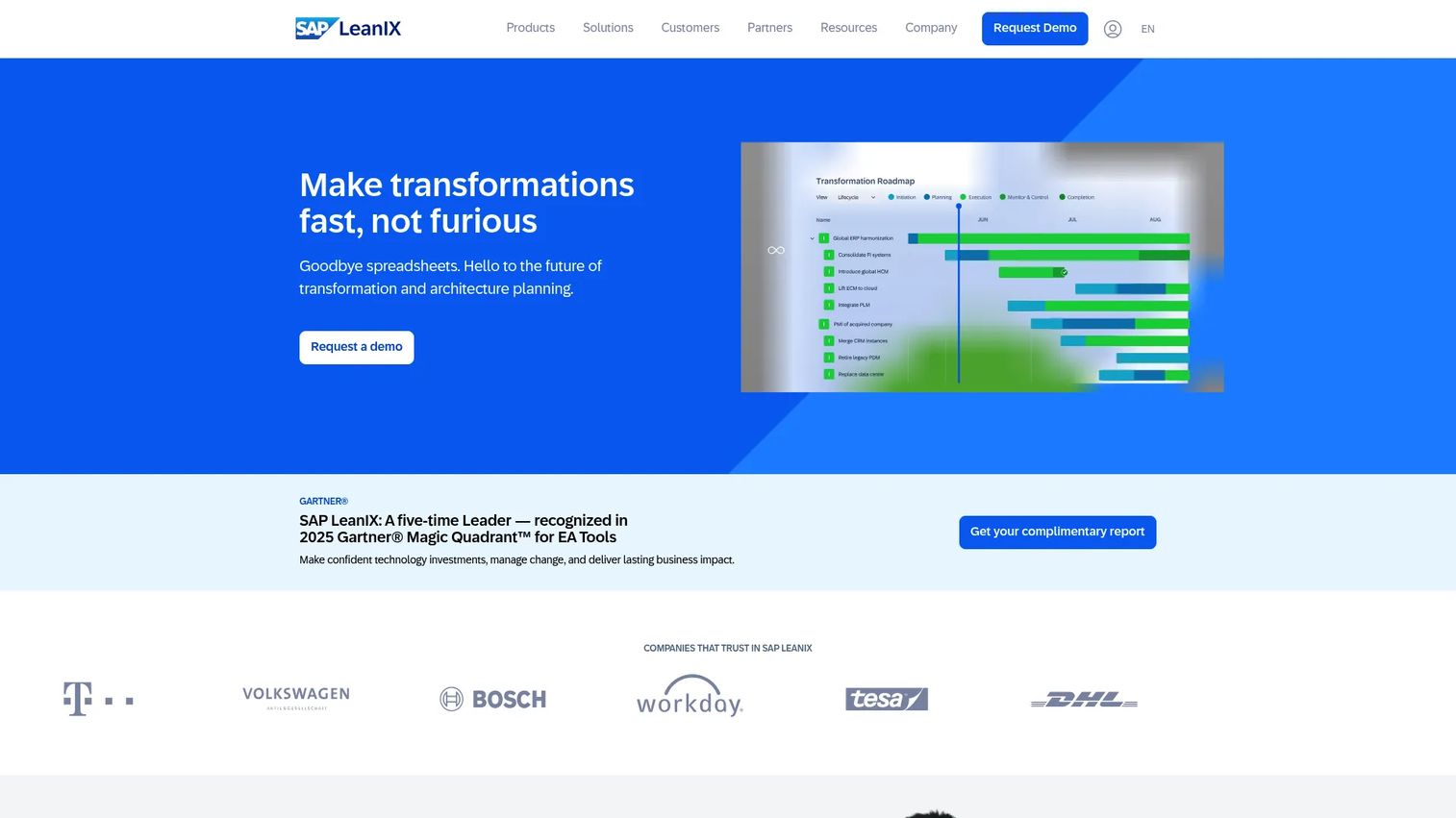
SAP LeanIX is enterprise architecture software built for managing application portfolios, transformation planning, and technology risk. Where ServiceNow leads from IT operations, LeanIX leads from the architecture side. It gives architecture teams a formalized process for inventory governance, value grading, and rationalization.
The tool shines at connecting the portfolio to the future state. Roadmap planning and capability mapping are first-class capabilities, not afterthoughts, which makes it a natural fit for teams driving deliberate transformation.
Best for: Enterprises that need a centralized enterprise architecture platform for application inventory, risk visibility, and transformation planning.
Key strengths
- Application Portfolio Management: A structured inventory with value grading so architecture teams can prioritize rationalization systematically.
- Technology Risk and Compliance: Visibility into obsolescence and compliance exposure across the portfolio.
- Architecture and Road Map Planning: Links current-state apps to target-state architecture and transformation timelines.
Why choose SAP LeanIX: Choose LeanIX when enterprise architecture owns the portfolio and wants a repeatable, architecture-first process rather than an IT-operations extension. It is purpose-built for the EA discipline, which shows in how naturally capability mapping and roadmap work fit together.
SAP LeanIX pricing: LeanIX prices its Application Portfolio Management per application, with no stated limit on the number of users. Additional modules cover Technology Risk and Compliance and Architecture and Road Map Planning. Public numeric prices are not shown on the pricing page, so plan on a scoped quote based on portfolio size. LeanIX earns a 4.5/5 rating on G2.
3. IBM
IBM brings hybrid cloud, software, AI, and consulting to the portfolio management conversation. For organizations already invested in IBM methods and tooling, IBM's guidance and ecosystem provide governance, lifecycle management, and business value analysis inside a familiar enterprise framework.
The strength here is fit with an existing IBM environment. Portfolio governance connects to the broader stack you already run, rather than standing apart from it, which reduces integration friction for IBM-aligned shops.
Best for: Large enterprises already standardized on IBM hybrid cloud, software, and AI platforms.
Key strengths
- Hybrid and multicloud deployment: Portfolio governance that spans on-premises and multiple clouds without forcing consolidation.
- Enterprise-grade security and compliance: Governance controls suited to regulated and high-stakes environments.
- AI and automation: Capabilities that support analysis, classification, and lifecycle decisions across the portfolio.
Why choose IBM: IBM makes the most sense when you are already committed to its ecosystem and want portfolio governance that speaks the same language as the rest of your stack. The consulting arm can also help stand up the discipline, which matters for organizations without a mature APM practice.
IBM pricing: IBM's cloud pricing page shows a free tier and promotional offers, so entry access starts at USD 0.00 for trials. Product-level pricing varies widely: IBM MQ starts at USD 312.00 on a minimum one-year term, IBM MQ Advanced with AI Agents starts at USD 583.00, and IBM MQ as a Service starts at USD 727.00 monthly. Portfolio-specific pricing depends on the products and consulting scope involved. IBM holds a 4.3/5 rating on G2.
4. Broadcom
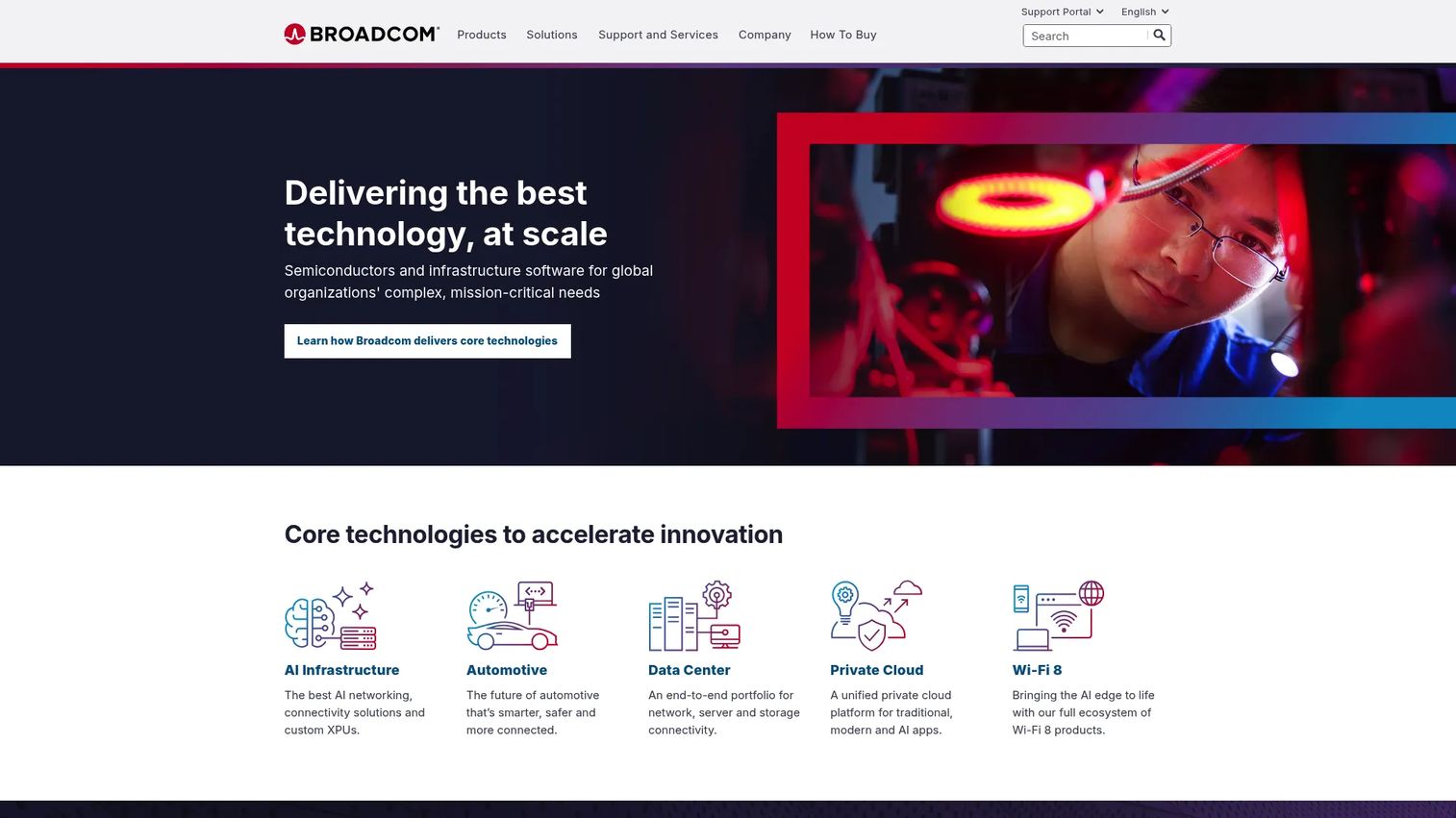
Broadcom is a global technology company spanning semiconductors, infrastructure software, and cybersecurity. Its infrastructure software portfolio covers automation, observability, service management, and FinOps, which positions it as an option for large enterprises that need portfolio control woven into broad IT management.
Broadcom fits organizations with complex, heavily governed environments. When the portfolio spans many business units and strict controls, the appeal is consolidating governance under an established enterprise vendor.
Best for: Large enterprises needing enterprise software and infrastructure governance at significant scale.
Key strengths
- Infrastructure software breadth: Automation, observability, service management, and FinOps under one vendor for broad portfolio context.
- Cybersecurity depth: Symantec, Carbon Black, identity, and endpoint management extend risk visibility across the estate.
- Enterprise scale: Built for the governance demands of very large, distributed organizations.
Why choose Broadcom: Broadcom is worth evaluating when you want portfolio governance connected to a wide enterprise software footprint and are comfortable with an established, large-vendor relationship. It suits organizations optimizing for consolidation and control across complex estates.
Broadcom pricing: Broadcom does not publish list prices for its software portfolio. Its product and "how to buy" pages direct prospective customers to contact sales, so expect a scoped enterprise quote. Broadcom holds a 4.3/5 rating on G2.
5. Apptio
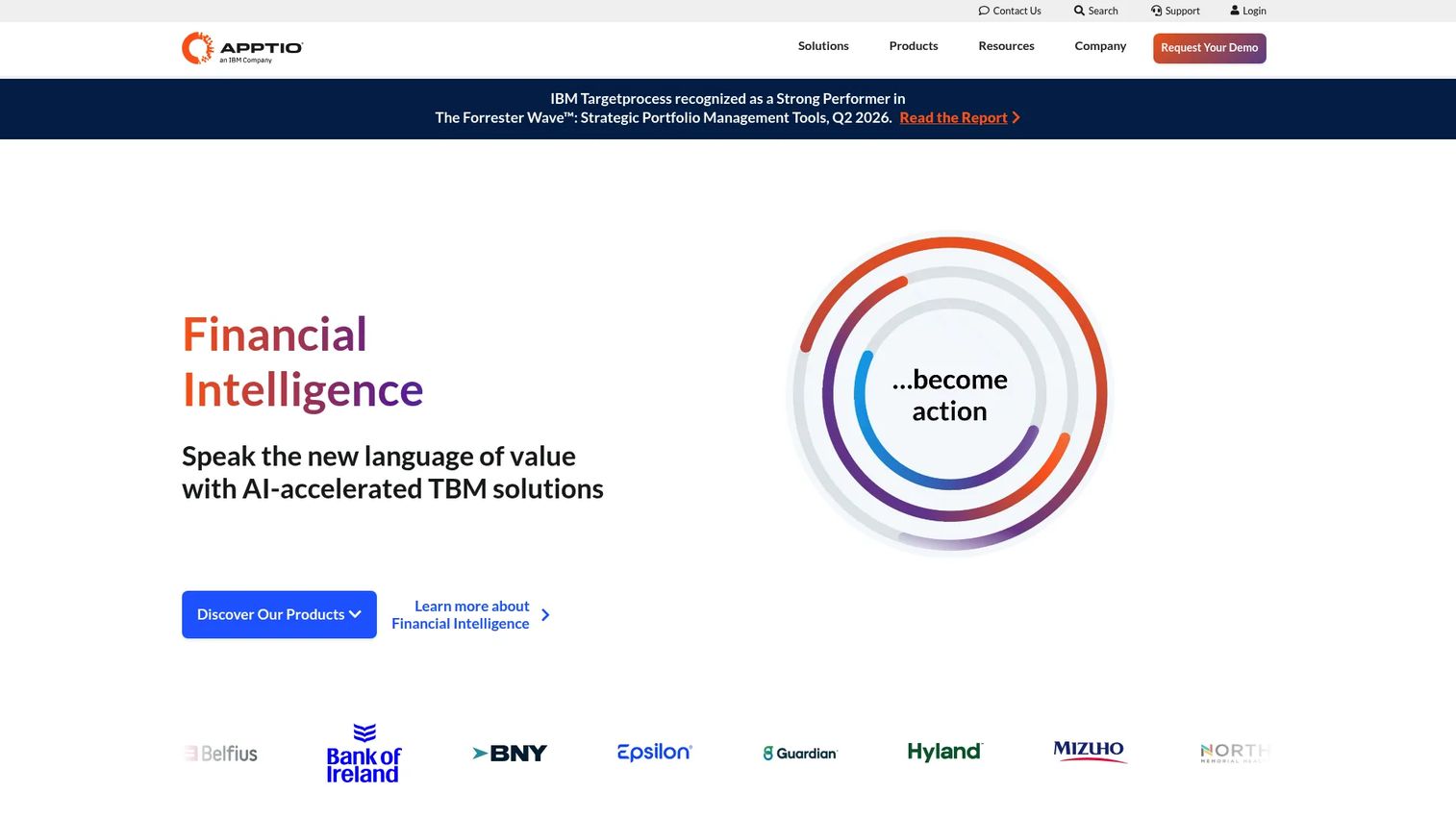
Apptio, now an IBM company, is a SaaS platform for IT financial management, FinOps, and strategic portfolio management. Where architecture-first tools lead with capability maps, Apptio leads with money. It brings TCO analysis, budgeting, and cloud cost management to the rationalization conversation.
That financial lens is the differentiator. For teams where the portfolio decision is ultimately a budget decision, Apptio gives cost rationalization the rigor it needs, backed by data ingestion from more than 350 source systems.
Best for: Enterprises that need IT spend visibility, budgeting, and cost-driven rationalization decisions.
Key strengths
- IT Financial Management: Clear visibility into where IT spend goes, mapped to applications and services.
- FinOps cloud optimization: Cloud cost management that surfaces waste and informs modernization budgets.
- Strategic Portfolio Management: Ties spend to portfolio decisions, with data ingestion from 350+ source systems for accurate allocation.
Why choose Apptio: Apptio fits teams that need financial clarity more than architecture-first workflows. When the recurring question is "what is this costing us and what should we cut," its TCO and allocation modeling give you a defensible answer. Its ties to the IBM ecosystem also help IBM-aligned finance and IT teams.
Apptio pricing: Apptio does not publish pricing on its site. The platform directs visitors to request a demo or free trial for some products, and enterprise deals are quoted based on scope. Plan on a sales conversation to size a package. Apptio (listed as IBM Apptio on G2) holds a 4.3/5 rating.
6. BMC Helix
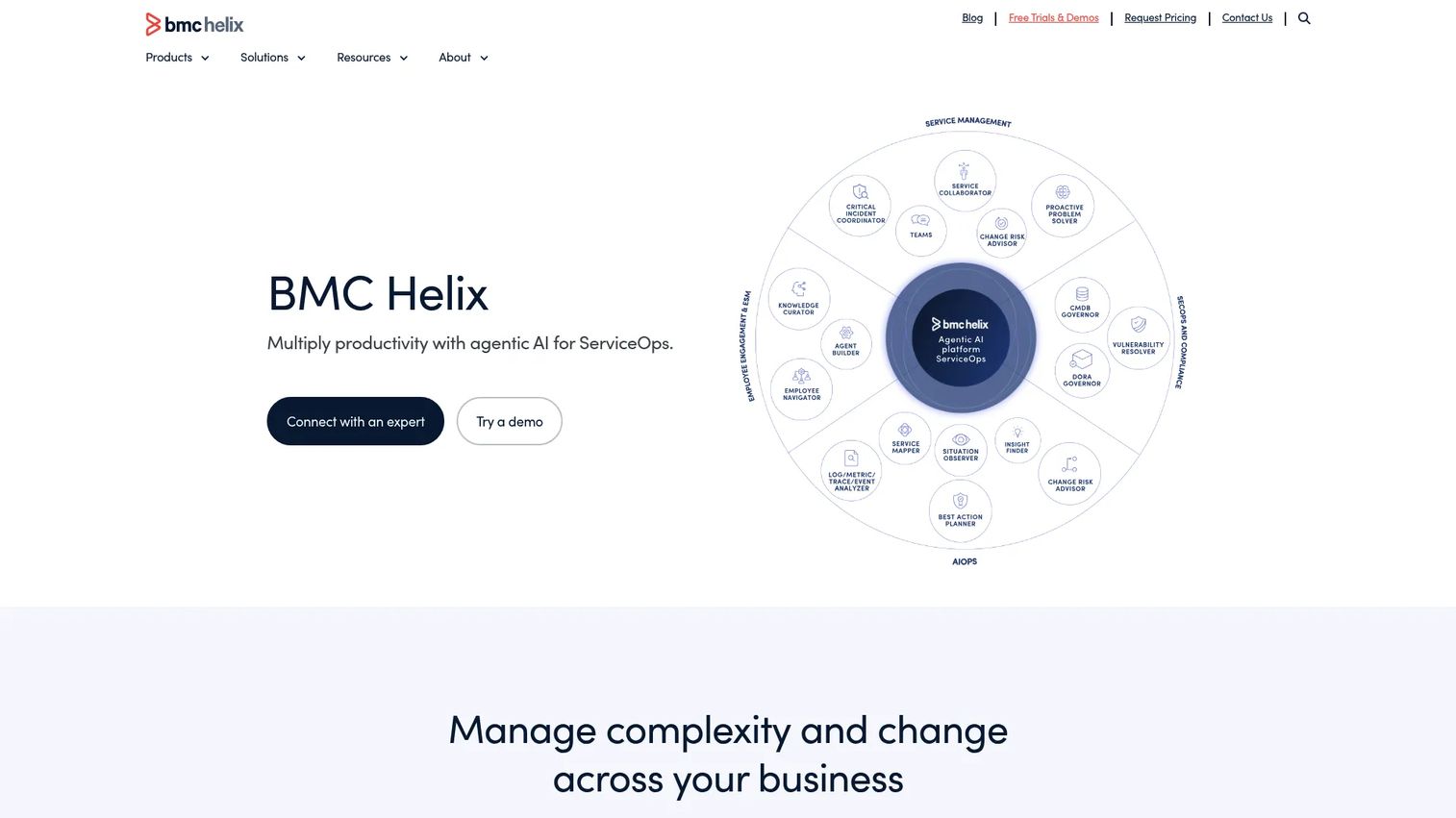
BMC Helix is an AI-powered enterprise IT service and operations management platform. Its relevance to application portfolio management comes from context: it ties portfolio insight to service and asset data, so lifecycle awareness sits alongside the IT operations that keep those apps running.
For organizations that want portfolio visibility connected to broader IT operations rather than standing alone, BMC Helix links the two. Service context, discovery, and AIOps feed a portfolio view grounded in operational reality.
Best for: Large enterprises standardizing ITSM, ITOM, and AIOps workflows that want portfolio context inside those systems.
Key strengths
- AI-driven IT service management: Portfolio insight enriched by the service data that flows through ITSM.
- Enterprise service management and digital workplace: A broad operational footprint that grounds lifecycle decisions in real usage.
- AIOps, observability, and discovery: Discovery keeps the application inventory current and tied to live infrastructure.
Why choose BMC Helix: BMC Helix fits when you want portfolio insight anchored to IT operations, not a separate architecture exercise. If service and asset context drive your lifecycle decisions, connecting the portfolio to the systems that run it keeps everything in sync.
BMC Helix pricing: BMC Helix does not publish list prices. Its site directs visitors to request pricing or contact sales rather than showing public plan figures, so expect a request-based enterprise quote. BMC Helix holds a 3.9/5 rating on G2.
7. CAST Highlight
CAST Highlight is application portfolio analysis SaaS focused on software health, cloud readiness, open-source risk, and green insights. It is the tool that looks beneath the surface of the inventory. While other platforms track apps as line items, CAST Highlight reads the actual source code to assess technical debt and modernization readiness.
That code-level view makes it the strongest fit for modernization programs. When you need to know which apps are genuinely cloud-ready and which carry hidden technical debt, CAST Highlight scores them on real evidence, not estimates.
Best for: Large organizations modernizing and governing a portfolio across software health, cloud, open-source, and sustainability dimensions.
Key strengths
- Source code analysis: Reads actual code and combines it with surveys to score software health and technical debt.
- Cloud maturity scoring: Blocker, booster, and effort estimates that prioritize modernization and migration work.
- Open-source risk analysis: Security and license risk scoring plus SBOM creation and import for supply-chain governance.
Why choose CAST Highlight: Choose CAST Highlight when your rationalization decisions hinge on technical reality, not just cost or ownership. It complements inventory-first tools by adding the code-level evidence that makes modernization prioritization defensible. It is the assessment layer that tells you what a rewrite actually costs.
CAST Highlight pricing: CAST Highlight publishes tiered annual pricing by portfolio size. Complete Insights for a single application starts at $6.8K per named application. Green Insights runs $11K, Cloud Insights $30.8K, SCA Insights $33K, and the Complete Edition $44K annually, scaling by application count up to 1,000. No free tier is shown. CAST Highlight holds a 4.5/5 rating on G2.
Considerations
Before you commit, run each finalist through this checklist. These are the factors that decide whether the tool becomes a governance backbone or a shelved purchase.
Inventory depth and data freshness
Verify how the tool builds and maintains the inventory. Ask about coverage across cloud and on-premises apps, whether owner and usage data are captured, and how often the picture refreshes. A portfolio that decays into a stale list loses trust within a quarter.
Governance and workflow fit
Confirm the tool supports your real decision process. Look at approval flows, scoring models, and whether it enables recurring rationalization reviews rather than one-time cleanups. Portfolio governance is a habit, and the tool has to support the habit.
Integration and data model
Check which of your systems it connects to: CMDB, ITAM, finance, ERP, and enterprise architecture repositories. The data model should absorb these inputs, not duplicate them. CMDB integration and ITAM integration in particular keep the inventory honest without manual effort.
Reporting for executives
Evaluate the reporting for the audiences that fund the program. You want cost and TCO views for finance, risk and end-of-life views for security, and capability and modernization views for strategy. If a report needs an hour of reformatting before a board meeting, that is friction you will pay every cycle.
Implementation effort
Be honest about setup time, data migration, and who owns the platform internally. The best-fit tool is the one your team can actually stand up and sustain. Confirm what onboarding looks like and which internal role holds the keys after go-live.
Conclusion
The right application portfolio management software depends entirely on what you are optimizing for.
If you want enterprise governance native to your existing workflows, ServiceNow is the strongest fit, especially with an existing CMDB. If enterprise architecture owns the portfolio, SAP LeanIX delivers the most formalized inventory, roadmap, and capability mapping. IBM suits organizations already standardized on its stack, and Broadcom fits very large, heavily governed estates.
For cost-driven decisions, Apptio brings the financial rigor that turns rationalization into a budget conversation. BMC Helix ties portfolio insight to IT operations for teams that live in ITSM and ITOM. And when the decision hinges on technical reality, CAST Highlight reads the code to tell you what modernization actually costs.
Your next step: shortlist the two tools that match your operating model, then run each against the considerations checklist above with your own inventory sample. The platform that keeps its data honest and produces reports your executives trust is the one that will still be running your portfolio governance in three years.
FAQs
Application portfolio management software is a system that inventories every application an organization owns, tracks its lifecycle and cost, and supports decisions about which apps to keep, retire, replace, or invest in. It combines inventory, governance, and rationalization into one control tower for the software estate. The goal is portfolio visibility that drives defensible spend and risk decisions.
Application rationalization is one part of the broader portfolio process, not the whole thing. Rationalization is the specific analysis that decides whether to invest in, sustain, retire, or replace each app. Application portfolio management is the wider discipline that also covers inventory, lifecycle management, cost analysis, and capability mapping, with rationalization as a recurring activity inside it.
Strong application portfolio management tools connect to CMDB for configuration data, ITAM for asset and license data, financial systems for cost and TCO, ERP for business context, and enterprise architecture repositories for structure. Usage data from monitoring or discovery tools keeps the inventory honest. The more of these a tool ingests automatically, the less the portfolio decays into a stale list.
Business capability mapping links applications to the business functions they support, which turns a technical inventory into a strategic one. It exposes redundancy, because you can see when several apps support the same capability. It also aligns spend to priorities, so leadership can fund the capabilities that matter and rationalize the overlap.
Ownership typically sits across enterprise architecture, IT, finance, and operations rather than one department. Enterprise architecture often drives capability mapping and roadmap work, IT owns inventory and lifecycle, finance owns cost and TCO, and operations contributes service context. The most successful programs treat it as a cross-functional prioritization system with shared accountability.
Tie the review cadence to your planning, modernization, and governance cycles rather than a fixed calendar. Most enterprises run a full portfolio review annually, aligned to budgeting, with lighter quarterly checks on high-risk or high-cost apps. Continuous data feeds from CMDB and ITAM mean the inventory stays current between formal reviews, so the review itself focuses on decisions rather than data cleanup.
For large enterprises, the best choice depends on governance depth, integration fit, and reporting needs. ServiceNow fits organizations wanting CMDB-native governance inside existing workflows, SAP LeanIX suits architecture-led teams, and Broadcom fits very large, heavily governed estates. Match the tool to your operating model and existing stack rather than chasing a single "best" label.
Product managers should care about prioritization, cross-functional alignment, cost visibility, and roadmap decisions. The right tool helps you see which applications support strategic initiatives, where spend is redundant, and what modernization actually costs. Look for reporting that communicates clearly to finance, security, and leadership without hours of reformatting, so the portfolio informs your roadmap instead of adding overhead.