Your pricing team is asked to do three things at once: protect margin, react faster than the market, and justify every move to finance. A spreadsheet cannot do all three. When a supplier raises input costs on Tuesday, a competitor undercuts you on Wednesday, and a rep wants a discount approved by Friday, manual pricing turns into a bottleneck that leaks revenue.
That is why price optimization software has moved from nice-to-have to core infrastructure. The global market reached roughly USD 1.95B in 2026 and is projected to hit USD 4.17B by 2031, according to Mordor Intelligence (2026). Over 3.7M businesses worldwide had integrated some form of pricing optimization solution by 2024, per Market Growth Reports (2026). Buyers are no longer asking whether to invest. They are asking which tool fits their pricing motion.
This is not a vendor page. It is a buyer's map. If you are a product marketing manager, revenue leader, or pricing owner comparing pricing optimization software, you want to understand which category of tool matches your systems, your governance needs, and your commercial model. AI recommendations, explainability, scenario testing, connected execution, and revenue optimization all sound similar on a landing page. They behave very differently in a live deal desk or a retail merchandising floor.
We built this guide to separate real capability from marketing copy. Below you will find eight platforms compared across the criteria that actually change outcomes, plus a checklist to shortlist the right fit before you sit through a demo or write an RFP.
What's inside
This guide covers vendor options for price optimization software across B2B, retail, and omnichannel use cases. Some tools lead with AI-driven deal pricing. Others focus on retail merchandising, promotion planning, or margin analysis. A few are research and reference resources rather than shipped products.
We selected and compared each option on four criteria that matter most to buyers:
- AI quality: how the models generate recommendations and adapt to demand or cost shifts
- Explainability: whether a human can understand and defend the recommended price
- Workflow fit and integration: how the tool connects to CPQ, ERP, CRM, and commerce systems
- Governance: approval flows, exception handling, and scenario testing depth
We did not rank on brand recognition. We ranked on relevance to the buyer's actual pricing motion.
TL;DR
- Best overall for enterprise pricing: Conga Price Optimization combines AI-driven deal guidance, elasticity-aware recommendations, and omnichannel execution, which makes it a strong default for revenue and commerce teams.
- Best for retail: RELEX price optimization software ties AI and rule-based pricing directly to promotion planning and unified merchandising.
- Best for B2B deal desk: Zilliant Price IQ delivers AI price recommendations, segmentation, and scenario testing built for complex commercial portfolios.
- Best for enterprise workflow: Pricefx CPQ Software connects price management and quoting in one cloud-native system.
- Best for AI-driven scenario planning: Grid Dynamics pricing optimization starter kit offers a custom AutoML reference build for teams that want to model their own pricing logic.
- Use these price optimization tools when static price lists and spreadsheets can no longer keep pace with cost, demand, and competitive change.
Background
Price optimization software is a class of pricing optimization tools that uses data, statistical modeling, and machine learning to recommend prices that balance margin, volume, and competitive position across products, customers, and channels.
It differs from a static price list or a manual spreadsheet in one fundamental way: it reacts. A spreadsheet holds a number until someone changes it. Pricing optimization software continuously ingests cost, demand, elasticity, and competitor signals, then recommends a price that reflects current conditions. It also records why, which matters when finance or a customer asks you to defend the figure.
Modern price management software and optimization platforms typically share a common set of capabilities:
- AI recommendations: models that suggest optimal prices based on elasticity, willingness to pay, and segment behavior.
- Dynamic price optimization: prices that adjust automatically as costs, demand, or competitive conditions change.
- Explainability: transparent logic that shows why a price was recommended, so teams can trust and defend it.
- Scenario testing: the ability to model "what if" pricing changes before publishing them to live systems.
- Governance: approval workflows, pricing guardrails, and exception handling that keep discounting disciplined.
- Connected execution: integrations that push optimized prices into CPQ, ERP, CRM, and commerce platforms.
The distinction that trips up most buyers is between price optimization and price management software. Management keeps prices organized, consistent, and enforced. Optimization decides what the price should be in the first place. The best platforms do both, and the strongest ones make the optimization logic explainable rather than a black box.
When to use price optimization software
Not every pricing problem needs a full optimization platform. But three situations almost always justify one.
Protect margin when costs or demand change
When input costs spike or demand swings, static prices erode margin fast. Price optimization software reacts to inflation, raw material volatility, competitive repricing, and demand shifts by recommending adjustments grounded in elasticity data. Instead of a quarterly price review, you get continuous recommendations that hold margin without pricing yourself out of the deal.
Standardize pricing decisions across teams
When pricing lives in individual reps' heads or scattered spreadsheets, discounting drifts and margin leaks. Governance features fix this. Approval workflows route exceptions to the right owner, pricing guardrails cap discretionary discounts, and audit trails record every decision. This matters most for organizations with distributed sales teams, franchise networks, or multiple regions where consistency is hard to enforce manually.
Improve pricing execution across systems
A recommended price is worthless if it never reaches the quote or the shelf. Connected execution closes that gap. Pricing optimization software plugs into CPQ so reps quote the right number, into ERP so invoicing matches, into CRM so deal context flows through, and into commerce or merchandising systems so retail prices update in real time. The goal is one source of pricing truth across every system that touches a transaction.
Comparison table
The table below sorts the eight tools by relevance to the primary use case, not alphabetically. Pricing and ratings reflect verified, first-party or G2-reported values where available. Several vendors use sales-led pricing with no public price, which we note directly.
| # | Product | Intent | Key differentiation | Pricing | [G2 rating |
|---|---|---|---|---|---|
| 1 | Conga Price Optimization | Enterprise B2B and commerce pricing | AI deal and quote optimization with elasticity-aware recommendations | Contact sales | 4.2/5 |
| 2 | RELEX price optimization software | Retail pricing and promotion | AI and rule-based pricing tied to promotion planning | Contact sales | 4.6/5](https://www.g2.com/products/relex-solutions-relex/reviews) |
| 3 | Zilliant Price IQ | B2B commercial pricing | AI price recommendations with scenario modeling and constraints | Contact sales | 4.4/5 |
| 4 | Pricefx CPQ Software | Enterprise pricing plus quoting | Cloud-native price management joined to CPQ | From $100,000/year | 4.4/5 |
| 5 | Vendavo Profit Analyzer | B2B profit and margin analysis | Price-volume-mix and margin bridge analytics | Contact sales | 4.3/5 |
| 6 | Grid Dynamics pricing optimization starter kit | Custom AI modeling | AutoML reference build on Microsoft Azure | Contact sales | Not listed |
| 7 | Periscope Price Optimization | B2B and B2C pricing and promotion | McKinsey-backed price, markdown, and deal optimization | Contact sales | Not listed |
| 8 | Gartner B2B profit optimization marketplace | Research and shortlisting | Independent vendor comparison and advisory | Contact sales | Not listed |
1. Conga Price Optimization
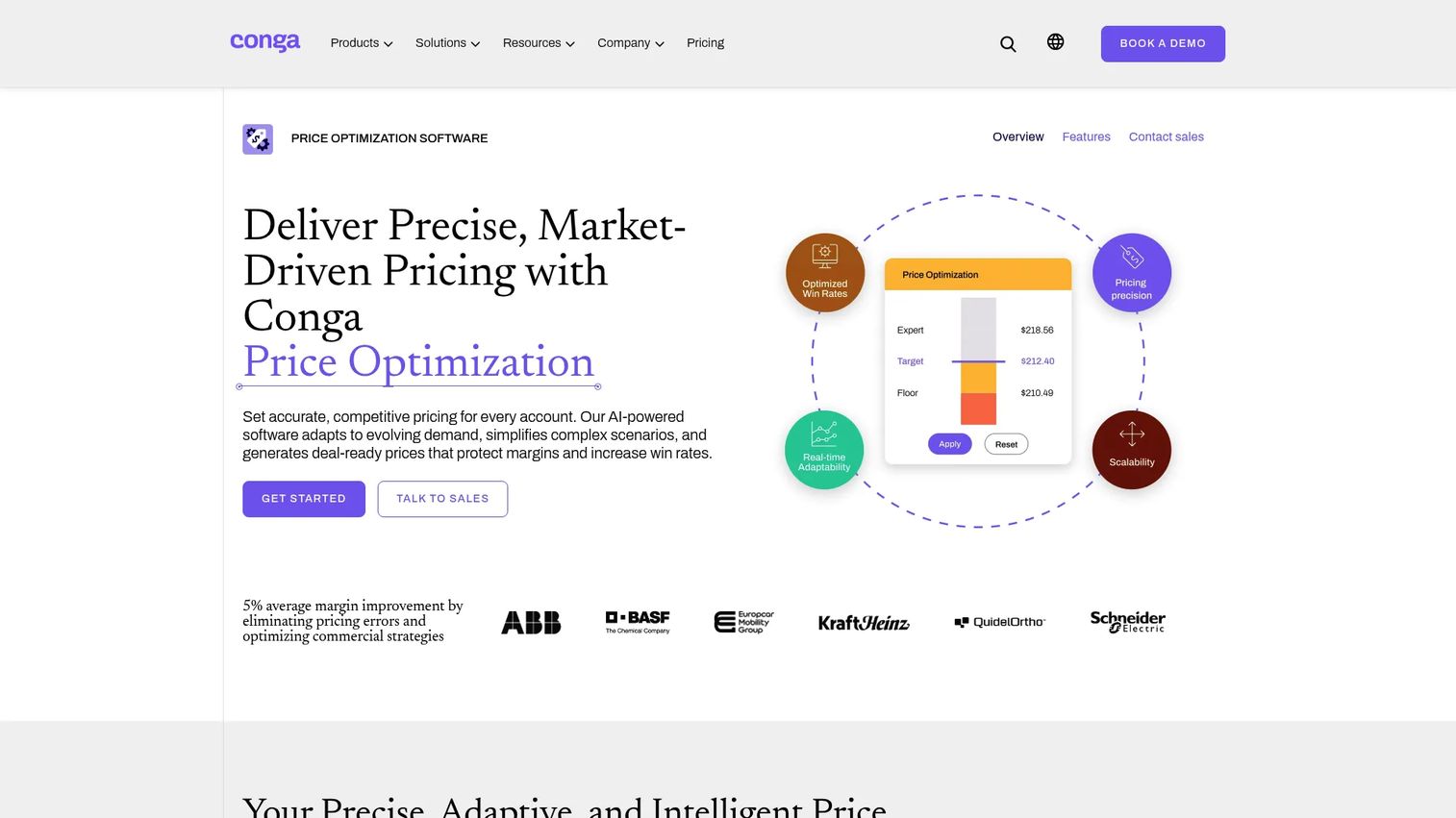
Conga Price Optimization is AI-powered price optimization software for setting deal-ready, market-driven prices across sales and commerce channels. It sits at the intersection of quoting and pricing, which is where most B2B revenue leaks. The tool generates elasticity-aware recommendations, guides reps toward deal-ready numbers, and pushes optimized prices across negotiated, eCommerce, and retail channels. For revenue and commerce teams that already run a quote-to-cash motion, it slots into an existing workflow rather than sitting off to the side.
Best for: Enterprise teams needing AI-assisted pricing recommendations and quote guidance across multiple channels.
Key strengths
- AI deal and quote optimization: Recommends deal-ready prices at the point of quote, so reps stop guessing on discretionary discounts.
- Dynamic market pricing: Elasticity-aware recommendations adjust as market conditions and demand shift.
- Omnichannel execution: Applies pricing logic consistently across negotiated deals, eCommerce, and retail channels.
Why choose Conga Price Optimization: If your pricing pain lives at the deal desk, where reps discount to win and margin quietly disappears, Conga's tie between optimization and quoting is the differentiator. It is built for organizations that need pricing discipline enforced inside the sales motion, not in a separate analytics tool that reps ignore. The G2 rating of 4.2/5 reflects solid enterprise adoption.
Conga Price Optimization pricing: Conga does not publish a public price for its price optimization product. Pricing is handled through sales, so you will need to contact the team for a quote scoped to your channels and deal volume. There is no listed free tier or public trial.
2. RELEX price optimization software
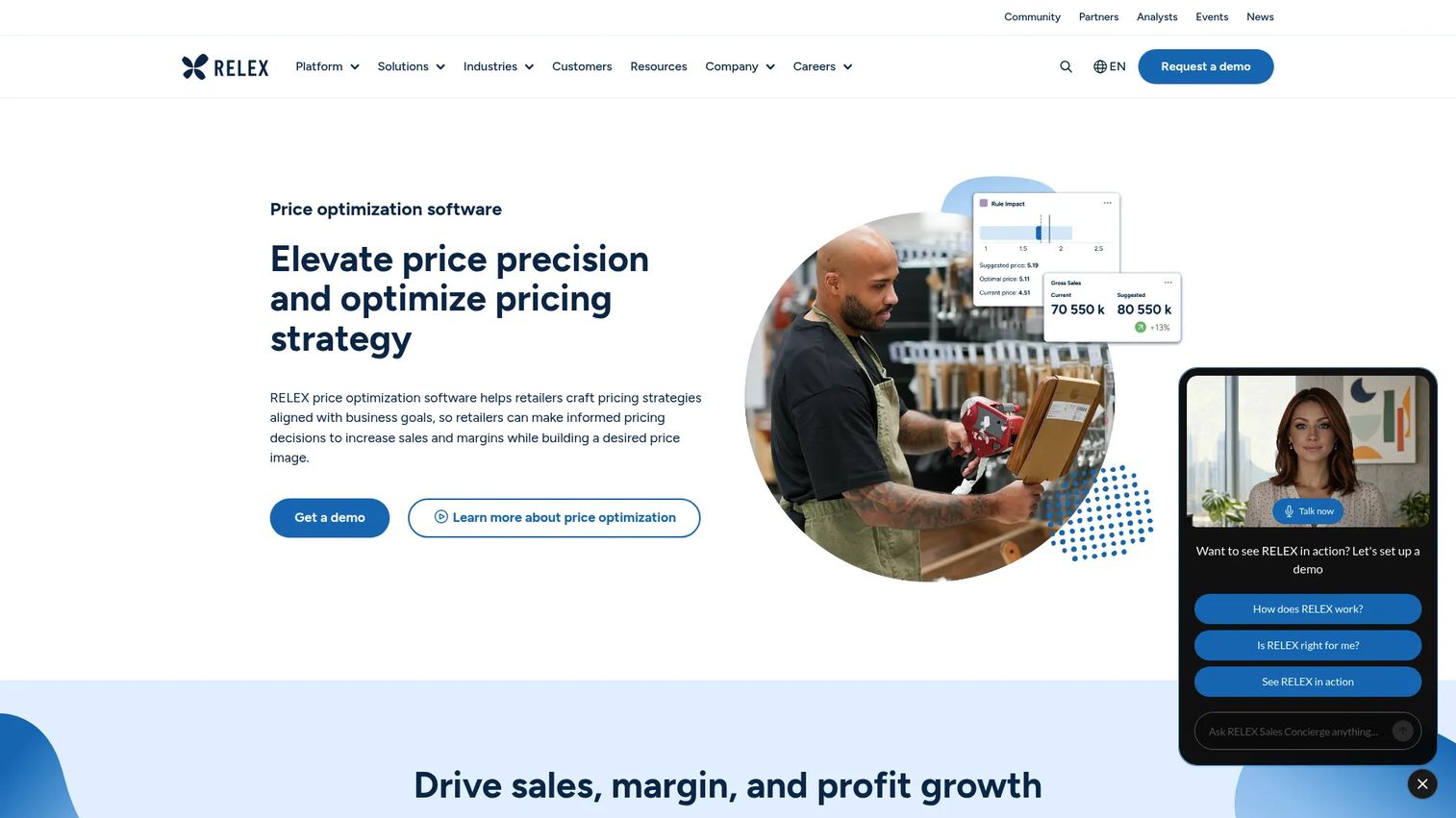
RELEX price optimization software is AI-powered retail price optimization software for pricing strategy, scenario testing, and coordinated pricing and promotion. Where most tools treat base price and promotions as separate problems, RELEX plans them together. That matters in retail, where a poorly timed promotion can undo a carefully optimized base price. The platform blends AI and rule-based logic, which gives merchandising teams the automation they want and the manual control they still need for sensitive categories.
Best for: Retailers and franchise pricing teams seeking enterprise-grade optimization tightly linked to promotion planning.
Key strengths
- AI and rule-based price optimization: Combines automated recommendations with manual rules for categories that need human judgment.
- Scenario testing: Models pricing changes with approvals, notifications, and alerts before anything goes live.
- Integrated pricing and promotion planning: Coordinates base price and promotional strategy in one merchandising workflow.
Why choose RELEX: Retail pricing is not just a number, it is a merchandising decision that touches inventory, promotion calendars, and category strategy. RELEX earns its strong 4.6/5 G2 rating by unifying those decisions. If your team plans promotions and base prices in separate tools today, the coordination alone can justify the move. Picture a grocery chain testing a markdown scenario across 400 stores before committing: RELEX runs that model, routes approvals, and alerts owners before the price hits the shelf.
RELEX pricing: RELEX does not display public pricing on its site, and G2 notes pricing details are not currently available. Expect a sales-led process scoped to your store count, category depth, and merchandising requirements. No public free tier or trial is listed.
3. Zilliant Price IQ
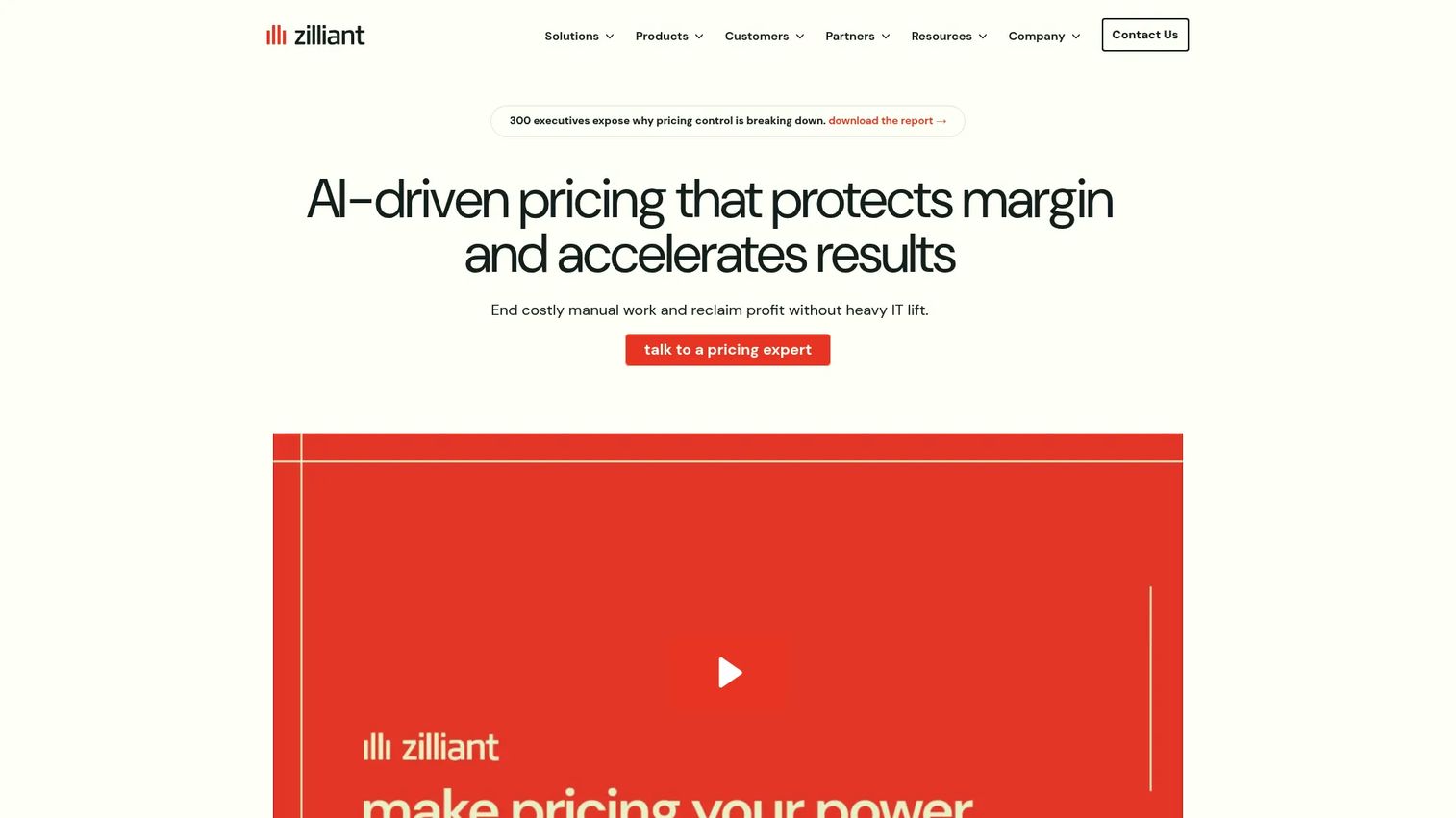
Zilliant Price IQ is AI-driven B2B price optimization software for evaluating scenarios, applying pricing constraints, and publishing optimized prices. It is purpose-built for organizations with large, complex product portfolios where every SKU, customer, and segment carries different willingness to pay. Rather than one blunt price, Price IQ segments intelligently and recommends prices that reflect the real commercial relationship. Scenario modeling lets pricing teams test the margin, revenue, and volume impact of a change before it ships.
Best for: B2B companies needing pricing optimization and decision support across products, customers, and segments.
Key strengths
- Model pricing scenarios: Test the revenue, margin, and volume impact of a pricing change before publishing.
- Apply pricing constraints and policies: Enforce guardrails and commercial policy so recommendations stay within approved bounds.
- Analyze margin, revenue, and volume impacts: Quantify tradeoffs across the three levers that matter in every pricing decision.
Why choose Zilliant Price IQ: For distributors and manufacturers with tens of thousands of SKUs and thousands of accounts, manual pricing simply cannot capture the segmentation nuance. Price IQ's AI price optimization brings commercial discipline at that scale, and its scenario testing gives finance the confidence to sign off. The 4.4/5 G2 rating reflects a mature product trusted in complex B2B environments.
Zilliant Price IQ pricing: Zilliant uses sales-led pricing, and no public first-party price is listed. Price IQ is presented as part of Zilliant's broader pricing portfolio rather than a standalone published SKU, so scope your quote around portfolio complexity and segment count. No free tier or public trial is documented.
4. Pricefx CPQ Software
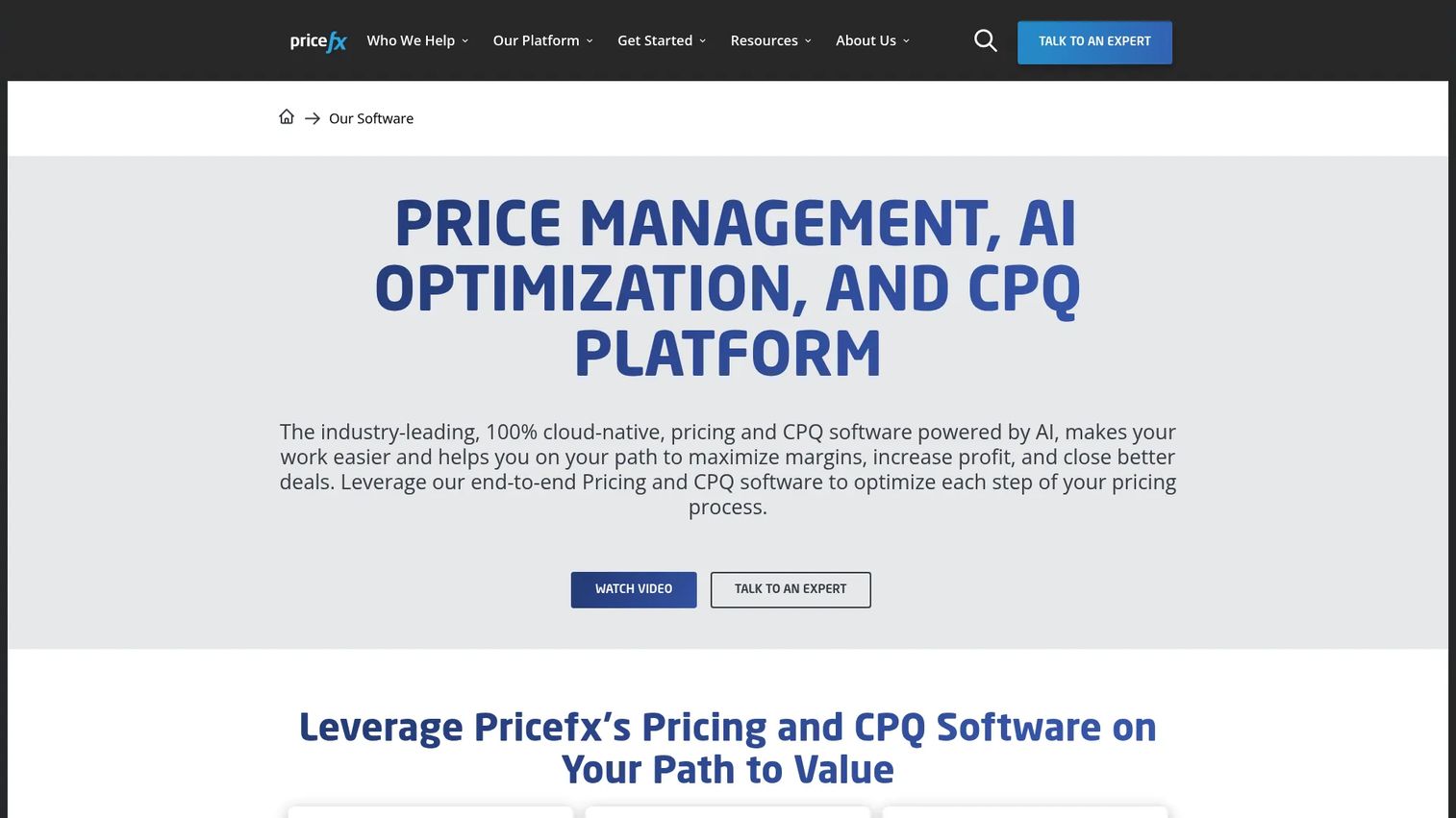
Pricefx CPQ Software is cloud-native pricing and CPQ software for price management, optimization, and quoting. Its differentiator is the connection between pricing and quoting in a single system. Optimized prices flow directly into the quote, so the number a rep sends matches the number pricing intended. For manufacturing, distribution, and process companies that live and die by accurate quotes, that continuity removes a common source of margin leakage between the pricing team and the field.
Best for: Manufacturing, distribution, and process companies needing enterprise pricing plus CPQ in one platform.
Key strengths
- Insights and analytics: Surfaces pricing performance and opportunity across products and segments.
- Price management: Keeps prices consistent, enforced, and governed across the organization.
- Quoting and CPQ: Joins optimized pricing directly to the quote workflow so sales quotes the right number.
Why choose Pricefx CPQ Software: If your pricing and quoting processes live in separate systems today, the handoff between them is probably where margin quietly erodes. Pricefx closes that gap in one cloud-native platform, and its 4.4/5 G2 rating reflects strong satisfaction among enterprise pricing and quoting teams. The workflow governance keeps discounting disciplined without slowing reps down.
Pricefx pricing: Pricefx is unusually transparent about cost. The company states subscription pricing ranges from $100,000 to $3.5 million per year, based on yearly Revenue Under Management (RUM) or Annual Revenue Managed (ARM). Entry starts at $100,000 per year. There is no free tier. Because pricing scales with the revenue you manage, smaller organizations sit at the low end and large enterprises at the top.
5. Vendavo Profit Analyzer
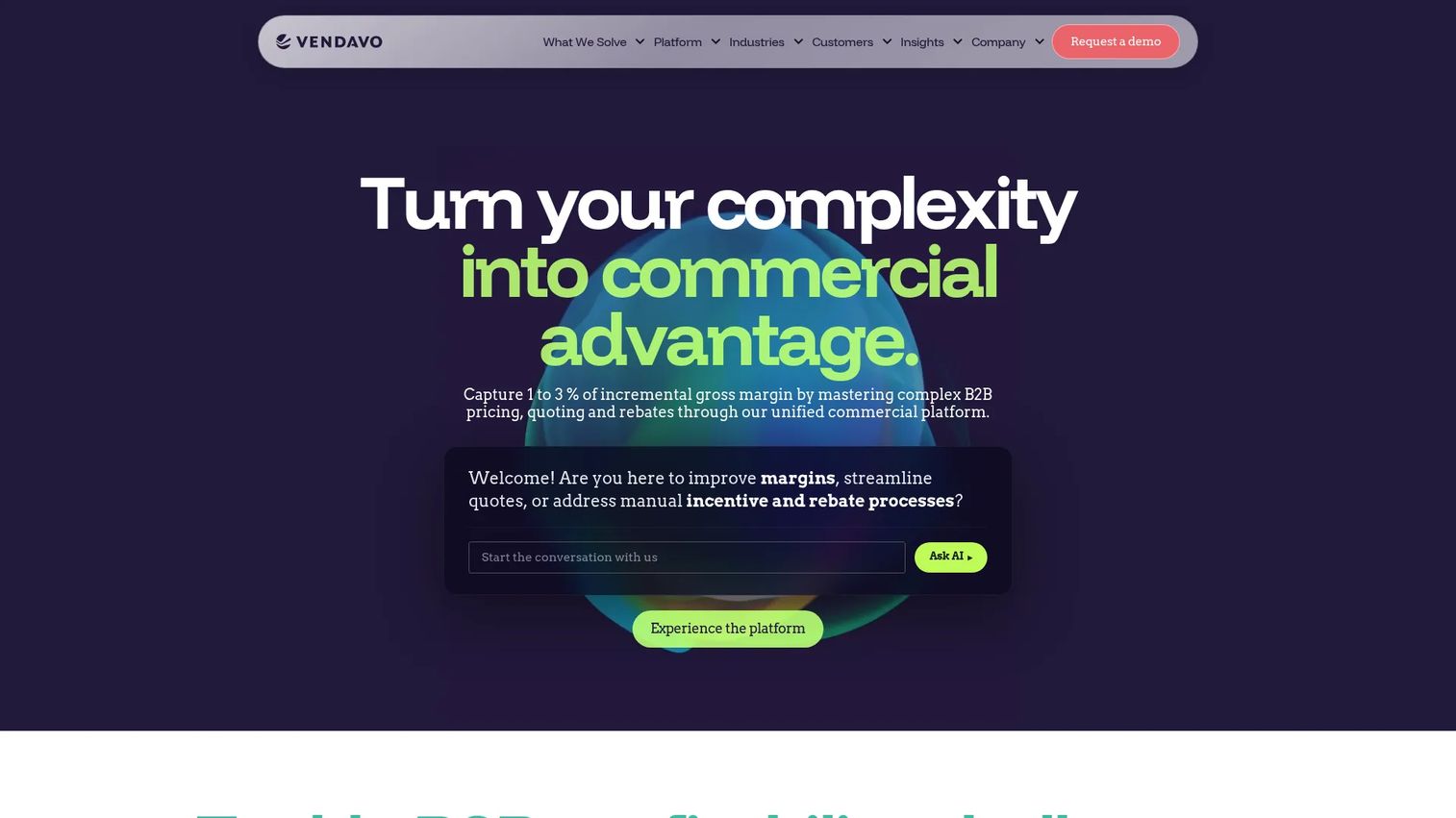
Vendavo Profit Analyzer is Vendavo's B2B profit and pricing analytics solution for analyzing price, volume, mix, and margin performance. It is less about publishing a price and more about understanding where profit is made and lost. Price-volume-mix and margin bridge analysis show exactly which customers, products, regions, and channels drive or drain profitability. For pricing and revenue teams managing large books of negotiated deals, that visibility is the first step toward tighter pricing discipline.
Best for: Enterprise B2B teams needing profitability and pricing analytics at scale.
Key strengths
- Price-volume-mix and margin bridge analysis: Decomposes margin change into its drivers so teams know exactly what moved profit.
- Profitability dashboards: Breaks down performance by customer, product, region, and channel.
- Margin leakage detection: Surfaces pricing opportunities and identifies where margin is quietly leaking.
Why choose Vendavo Profit Analyzer: Some teams need recommendations. Others first need to understand where their margin actually goes. Vendavo Profit Analyzer answers the second question, which makes it a strong fit for organizations early in their pricing maturity or those with sprawling negotiated-deal portfolios. Its 4.3/5 G2 rating (for Vendavo overall) reflects trust among enterprise B2B teams that need analytics before they act.
Vendavo Profit Analyzer pricing: Vendavo uses a demo and request-based pricing model, with no public price shown on its site. Scope a quote around your deal volume, portfolio breadth, and the analytics depth you need. No free tier or public trial is listed.
6. Grid Dynamics pricing optimization starter kit
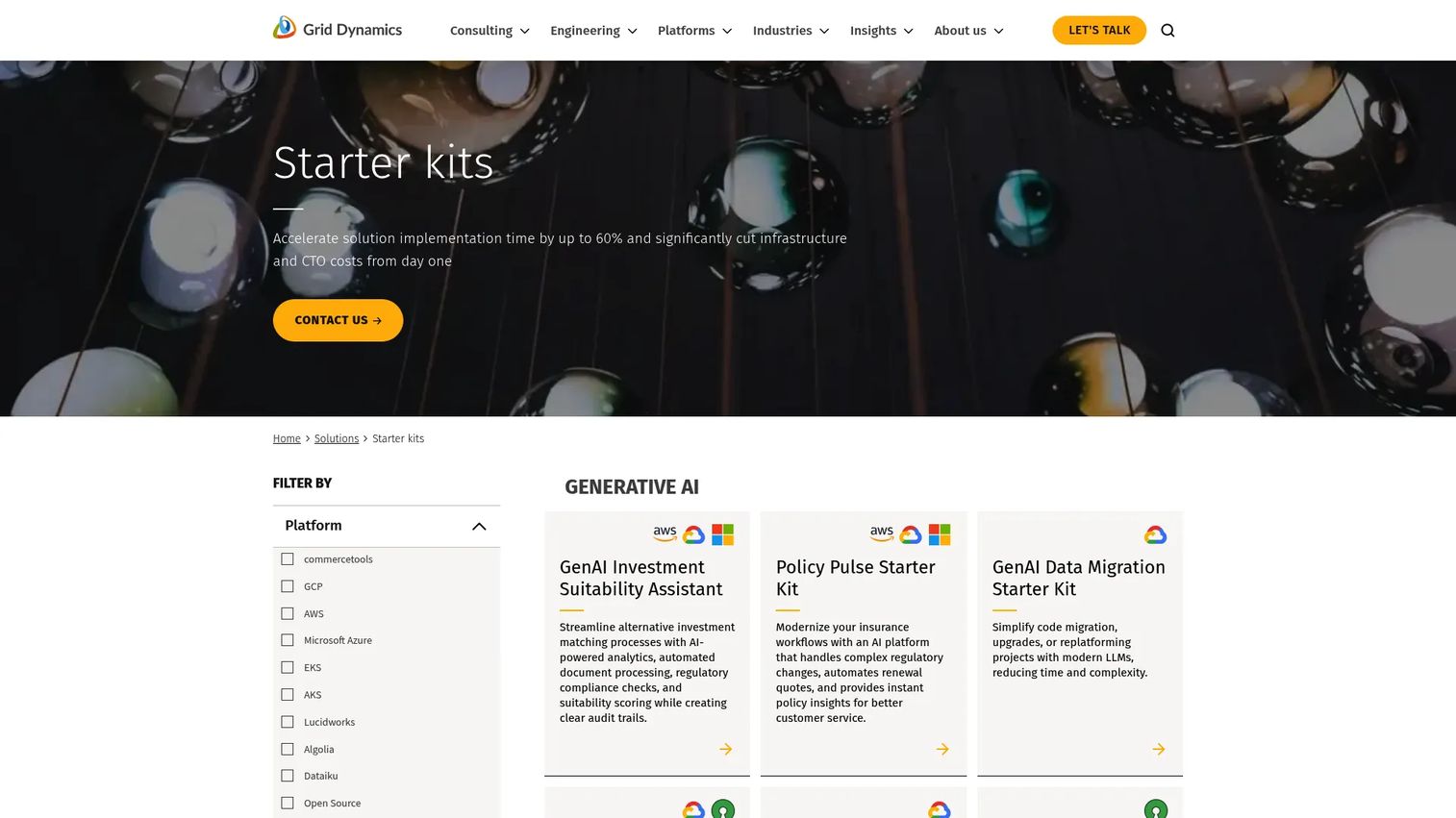
The Grid Dynamics pricing optimization starter kit is an AI/ML reference starter kit for pricing and promotion optimization on Microsoft Azure. It is a different animal from the shipped products on this list. Rather than a fixed application, it is an end-to-end reference implementation, open-source and non-proprietary, that a technical team can adapt to its own pricing logic. For organizations that want custom modeling and advisory support rather than off-the-shelf software, it accelerates the build without locking you into a vendor's fixed model.
Best for: Enterprises looking for a reference implementation to accelerate pricing and promotion optimization on Azure.
Key strengths
- End-to-end pricing optimization pipeline: A full reference build from data ingestion to recommendation.
- Open-source, non-proprietary implementation: No black box, so your data science team can inspect and extend the logic.
- AutoML-based modeling and Azure integrations: Automated model building that connects natively to the Microsoft Azure ecosystem.
Why choose Grid Dynamics: If you have a data science team and a cloud strategy centered on Azure, buying a rigid application can feel like a step backward. The starter kit gives you a proven pipeline to build on, with advisory support and a proof-of-concept path. This is the option for teams that treat dynamic price optimization as a capability to own rather than a subscription to rent.
Grid Dynamics pricing: Grid Dynamics does not publish a public price for the starter kit. The engagement is advisory and implementation-led, so cost depends on scope, custom modeling needs, and services. Contact the team to scope a proof of concept. No G2 rating is currently listed for this specific offering.
7. Periscope Price Optimization
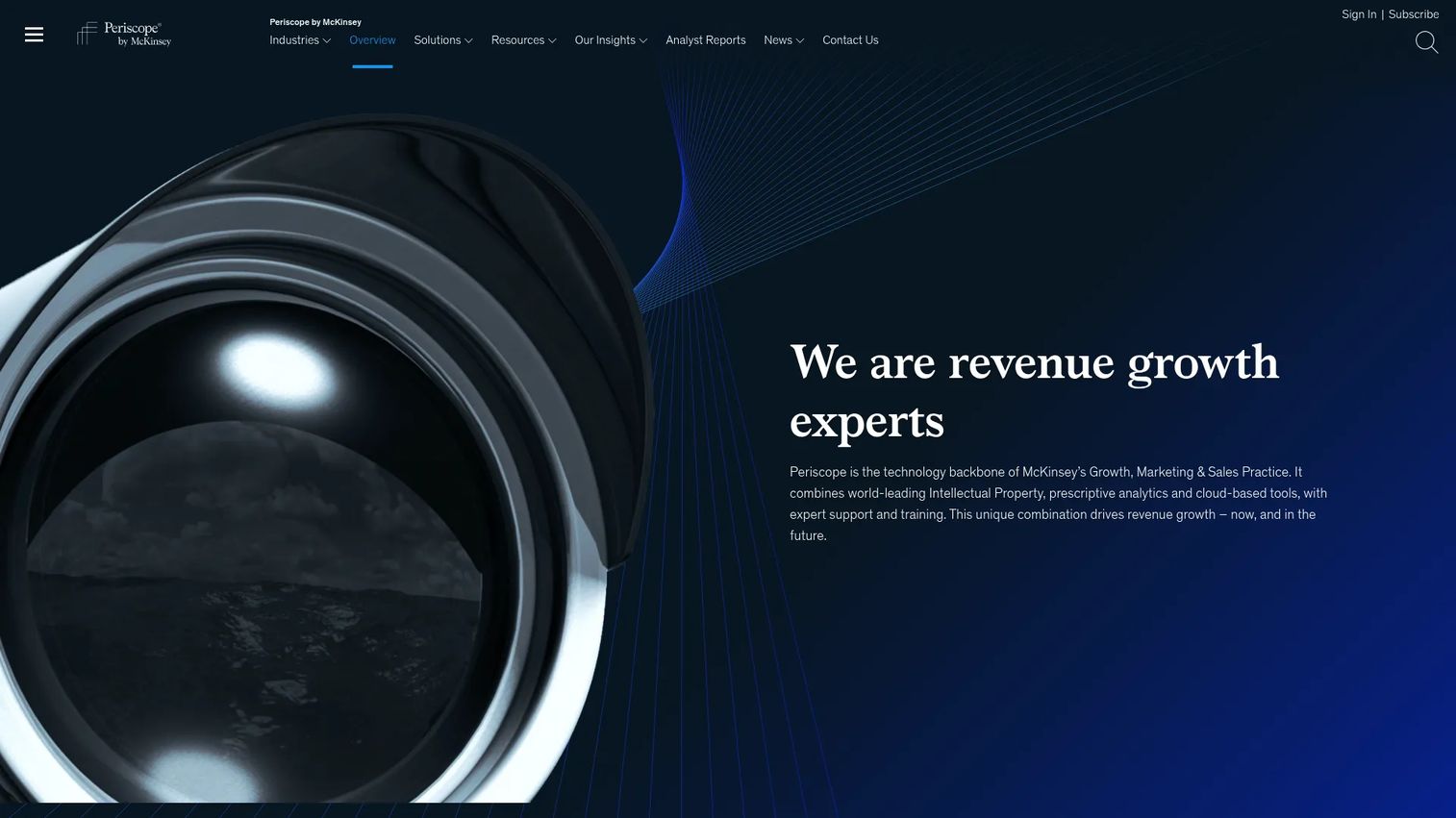
Periscope Price Optimization is McKinsey's Periscope pricing suite for B2B and B2C price, promotion, markdown, and deal optimization. It pairs software with McKinsey's analytics and consulting muscle, which is the point of difference. Teams get Price Advisor for both B2B and B2C, Markdown Advisor for retail, promotion and trade-spend optimization, and deal execution tooling. For enterprises that want strategy and software from the same partner, that combination is hard to replicate with a pure-play tool.
Best for: Enterprises seeking pricing and promotion optimization software with McKinsey-backed analytics and consulting.
Key strengths
- B2B and B2C price optimization: Price Advisor covers both commercial and consumer pricing motions.
- Markdown and promotion optimization: Markdown Advisor and trade-spend tools handle retail-specific pricing decisions.
- Deal execution optimization: Improves pricing performance management at the point of the deal.
Why choose Periscope Price Optimization: For organizations that want more than software, the McKinsey backing means strategic advisory sits alongside the tooling. That suits enterprises undertaking a pricing transformation, where the challenge is as much organizational as technical. If you want a pure software subscription, a dedicated platform may fit better, but for a combined strategy-and-execution engagement, Periscope is built for it.
Periscope Price Optimization pricing: McKinsey does not publish public pricing for Periscope. The product pages direct visitors to contact the team, and engagements are typically scoped to include analytics and advisory. No public free tier, trial, or current G2 rating is available.
8. Gartner B2B profit optimization marketplace
Gartner is a business and technology insights and advisory company whose research and marketplace resources help buyers shortlist and compare pricing optimization solutions. It is not a pricing product you deploy. It is a research aid that helps you choose one. Gartner's value here is independence: vendor comparisons, buyer diagnostics, benchmarks, and peer networks that inform a purchase decision before you commit budget. For a PMM or revenue team building a shortlist, that outside perspective can sharpen the evaluation criteria.
Best for: Enterprises seeking independent research, advisory, and decision support before shortlisting a pricing vendor.
Key strengths
- Independent business and technology insights: Vendor-neutral analysis that cuts through marketing claims.
- Advisory support and executive guidance: Access to analysts who have seen hundreds of pricing deployments.
- Diagnostics, benchmarks, and peer networks: Comparison utilities and peer input to pressure-test a shortlist.
Why choose Gartner: When the stakes of a pricing platform decision are high and the vendor claims all sound alike, independent research is worth its cost. Gartner does not replace a hands-on evaluation of the tools above, but it frames the market, defines the capabilities that matter, and gives your buying committee a neutral reference point. Use it to build the shortlist, then evaluate the products directly.
Gartner pricing: Gartner does not publish public pricing for its research and advisory services or for any B2B profit optimization marketplace offering. Access is subscription and engagement-based, scoped to your organization's needs. No free tier or public G2 rating is listed for this specific resource.
Considerations
Before you shortlist, pressure-test each option against the criteria that actually change outcomes. A feature list looks impressive in a demo. These questions surface whether the tool fits your reality.
AI transparency and explainability
A recommendation you cannot explain is a recommendation finance will not approve and reps will not trust. Ask each vendor to show you why a price was recommended, not just what. Explainable pricing is the difference between a tool your team adopts and one that gathers dust. Prioritize platforms that expose the drivers behind every number.
Integration with quoting and commerce systems
A recommended price only creates value when it reaches the quote or the shelf. Map your systems first: CPQ, ERP, CRM, and any commerce or merchandising platform. Then confirm the tool pushes optimized prices into each one without manual re-entry. Connected execution is where price analysis software either pays for itself or becomes shelfware.
Scenario modeling depth
The ability to model a change before it ships protects you from expensive mistakes. Test how far scenario testing goes. Can you model margin, revenue, and volume impact across segments? Can you compare multiple scenarios side by side? Shallow "what if" tools look fine in a demo but fall apart under a real pricing decision.
Governance and approval workflows
Discounting drifts without guardrails. Evaluate how the tool handles approvals, exception routing, pricing policy enforcement, and audit trails. Strong governance keeps pricing consistent across distributed teams and gives you a defensible record when a customer or auditor asks how a price was set.
Fit for retail, B2B, or omnichannel needs
Retail price optimization software and B2B deal pricing are different problems. Retail leans on elasticity, promotions, and markdown timing. B2B leans on segmentation, negotiated deals, and quote guidance. Match the tool's core design to your commercial motion rather than forcing a retail tool into a deal desk or the reverse.
Conclusion
The right price optimization software depends less on which vendor has the flashiest AI and more on how your team actually prices. For enterprise B2B and commerce teams that want AI deal guidance tied to quoting, Conga Price Optimization is a strong default. Retailers who plan base prices and promotions together should look hard at RELEX. B2B organizations with complex portfolios will find commercial discipline in Zilliant Price IQ, while Pricefx suits teams that want pricing and CPQ in one system.
For margin analysis before action, Vendavo Profit Analyzer surfaces where profit leaks. Teams with a data science bench and an Azure strategy can build on the Grid Dynamics starter kit. Periscope pairs software with McKinsey advisory for full pricing transformations, and Gartner helps you frame the shortlist before you commit.
The best pricing optimization solution is the one that matches your pricing motion, your systems, and your governance needs. Start by mapping your quoting and commerce stack, then shortlist two or three tools that connect cleanly to it. Request scenario-based demos using your own data, not a canned example, and put explainability and connected execution at the center of your evaluation. That is how you turn a pricing tool into real revenue optimization.
FAQs
Price optimization software ingests data on cost, demand, elasticity, customer segments, and competitor prices, then applies statistical models and machine learning to recommend prices that balance margin and volume. The strongest platforms explain the logic behind each recommendation and push the approved price into your quoting, ERP, or commerce systems so the number reaches the customer without manual re-entry.
Price management software keeps prices organized, consistent, and enforced across your systems. Price optimization decides what the price should be in the first place, using data and modeling. Many enterprise platforms combine both, but the optimization layer is what actively recommends better prices rather than just storing and enforcing the ones you already set.
Yes, when the model is transparent and the data is clean. AI price optimization is widely deployed at scale, with roughly 42% of large North American enterprises using advanced machine-learning pricing tools, per Market Growth Reports (2026). Accuracy improves when recommendations are explainable and paired with governance, so a human can review edge cases and finance can defend the logic.
Manufacturing, distribution, retail, wholesale, consumer goods, and B2B software all use pricing optimization software heavily. Retail and grocery lean on elasticity and promotion optimization, while manufacturing and distribution focus on segmented deal pricing and CPQ integration. Any industry with large product catalogs, negotiated deals, or volatile costs benefits.
Most enterprise price management software integrates through native connectors or APIs, pushing optimized prices into CPQ so reps quote correctly and into ERP so invoicing matches. This connected execution is critical: a recommended price only creates value when it flows automatically into the systems that generate quotes, orders, and invoices without manual re-entry.
Retail teams should prioritize elasticity modeling, markdown optimization, and coordinated pricing and promotion planning in a single workflow. The best retail price optimization software plans base prices and promotions together rather than in separate tools, supports scenario testing across many stores, and connects to merchandising and commerce systems for real-time price updates.
Explainable pricing turns a black-box number into a decision your team can trust and defend. When a model shows the drivers behind a recommendation, finance can approve it, reps can justify it to customers, and pricing leaders can audit it. Without explainability, adoption stalls because no one trusts a price they cannot understand.
Track margin improvement, win rate on optimized deals, discount leakage, price realization, and time-to-implement a price change. For a PMM or revenue team, also watch adoption: whether reps actually quote the recommended price. A tool that improves margin on paper but sits unused in the field has not moved the number that matters.