
Warranty claims sit in a shared inbox. Registration data lives in one spreadsheet, policy rules in another, and nobody can tell you what a single claim actually cost. When leadership asks how warranty spend breaks down by product or supplier, the honest answer is a shrug and two days of manual pulling.
That gap is expensive. The warranty management software market reached USD 5.60 billion in 2025 and is projected to hit USD 12.07 billion by 2031, growing at a 13.65% CAGR, according to Mordor Intelligence (2026). Companies are not buying these tools for fun. They are buying them because manual warranty workflows break the moment claim volume outpaces the people processing them.
The question is not whether to replace spreadsheets and email threads. It is which platform matches how your team actually operates. A high-volume automotive OEM chasing supplier recovery needs something different from a home warranty provider managing consumer claims, and both differ from a retail brand adding protection plans at checkout. Before you shortlist anything, look at automation depth, reporting quality, vertical fit, integrations, and how fast the thing goes live. This guide compares seven platforms against those exact criteria.
What's inside
This guide compares seven warranty management platforms for teams replacing manual claims routing, scattered registration data, and spreadsheet tracking with software. It covers tools for manufacturing and OEM operations, home warranty providers, aftermarket service teams, IT and asset-heavy environments, and retail protection plans.
We selected platforms on five criteria that matter most to buyers in active evaluation:
- Automation depth for claims intake, routing, and approvals
- Reporting and warranty analytics for cost, trends, and recovery
- Vertical fit across manufacturing, home warranty, aftermarket, and retail
- Integrations with ERP, CRM, commerce, and finance systems
- Implementation speed and how quickly teams reach value
The list is for operations, claims, and service leaders who already know their current process is straining and want to compare real vendors, not just definitions.
TL;DR
- Best for complex, end-to-end warranty operations: PTC Warranty, built for manufacturers running claims, returns, and supplier recovery at scale.
- Best for home warranty and multi-vertical teams: WarrantyHub, with claims automation, a customer portal, and published pricing.
- Best for manufacturing and aftermarket: Syncron Warranty, focused on automated claims workflows and supplier recovery for OEMs.
- Best for IT and asset lifecycle environments: ScalePad Lifecycle Manager, built for MSPs tracking client assets and renewals.
- Best for a clean claims and returns workflow: Claimlane, strong on post-purchase claims, returns, and repairs for brands and retailers.
- Best for retail protection plans: Extend and Clyde, both built for embedded product protection at checkout.
What is warranty management software?
Warranty management software is a platform that centralizes warranty registration, policy management, claims processing, returns, supplier recovery, and analytics so teams can handle the full warranty lifecycle in one system instead of across spreadsheets and inboxes.
The category exists to replace manual, fragmented processes with structured, trackable workflows. Core capabilities usually include:
- Warranty registration software to capture product and customer data at the point of sale or activation
- Policy management to define coverage terms, durations, and eligibility rules
- Warranty claims management software to intake, route, validate, and approve claims
- Returns and RMA handling to process replacements, repairs, and exchanges
- Supplier recovery to reclaim warranty costs from component vendors
- Warranty analytics and reporting to surface cost by product, issue type, and supplier
A warranty management system differs from field service software, which schedules and dispatches technicians, and from a generic CRM, which tracks relationships and deals. Warranty tools own the policy, the claim, and the money tied to both. They also differ sharply from spreadsheets and shared inboxes, which offer no automated routing, no audit trail, and no reliable way to report on warranty spend.
The market skews cloud and enterprise. Cloud deployments held 64.00% of market share in 2025, and large enterprises controlled 62.95%, per Mordor Intelligence (2026). Automotive and transportation alone captured 31.75% of the market, which explains why so many platforms lead with OEM and aftermarket messaging.
When to use warranty management software
Not every team needs a dedicated platform. These three situations are the clearest signals that spreadsheets have run out of room.
Replace manual claims routing
When claim volume outgrows email and spreadsheets, resolution slows and errors climb. Claims sit unassigned, status is invisible, and customers call to ask where things stand. A platform with claims processing automation routes each claim to the right reviewer, tracks status in real time, and shortens time to resolution. This is usually the first trigger that pushes teams to buy.
Centralize warranty registration and policy data
When registrations, policy records, and claim history live in separate systems, reporting breaks and the customer experience gets inconsistent. One agent sees coverage, another does not. Centralizing this data in warranty management system software gives every team a single source of truth for what is covered, for how long, and under what terms.
Track costs, trends, and recovery
When leadership wants warranty cost broken down by product, issue type, or supplier, manual reporting cannot keep up. Warranty analytics surfaces repeat failures, flags problem components, and identifies supplier recovery opportunities that manual tracking misses entirely. Teams that need to defend warranty spend or prove savings live in this data.
Comparison table
The table below ranks the seven platforms by breadth of warranty operations coverage and fit across verticals. Pricing and ratings reflect published vendor and G2 data available at the time of writing; several enterprise vendors quote privately, so those fields note custom pricing.
| # | Product | Intent | Key use case | Pricing | G2 rating |
|---|---|---|---|---|---|
| 1 | PTC Warranty | Enterprise manufacturing | End-to-end claims, returns, supplier recovery | Custom | 4.8/5 |
| 2 | WarrantyHub | Multi-vertical operations | Claims, portal, analytics for home warranty and OEM | From $549/mo | Not yet rated |
| 3 | Syncron Warranty | OEM and aftermarket | Automated claims workflows, supplier recovery | Custom | 4.3/5 |
| 4 | ScalePad Lifecycle Manager | IT and asset lifecycle | Client asset tracking, renewals, QBRs | Free tier available | Not listed |
| 5 | Claimlane | Brands and retailers | Post-purchase claims, returns, repairs | From $800/mo | 4.8/5 |
| 6 | Clyde | Merchants and DTC | Product protection, registration, resolution | Custom | Not listed |
| 7 | Extend | Retail protection plans | Embedded product and shipping protection | From $12.99/plan | 4.6/5 |
The 7 best warranty management software platforms
Each section below covers what the tool does, who it fits, its key strengths, why you would choose it, pricing, and an honest note on when it is not the right call.
1. PTC Warranty
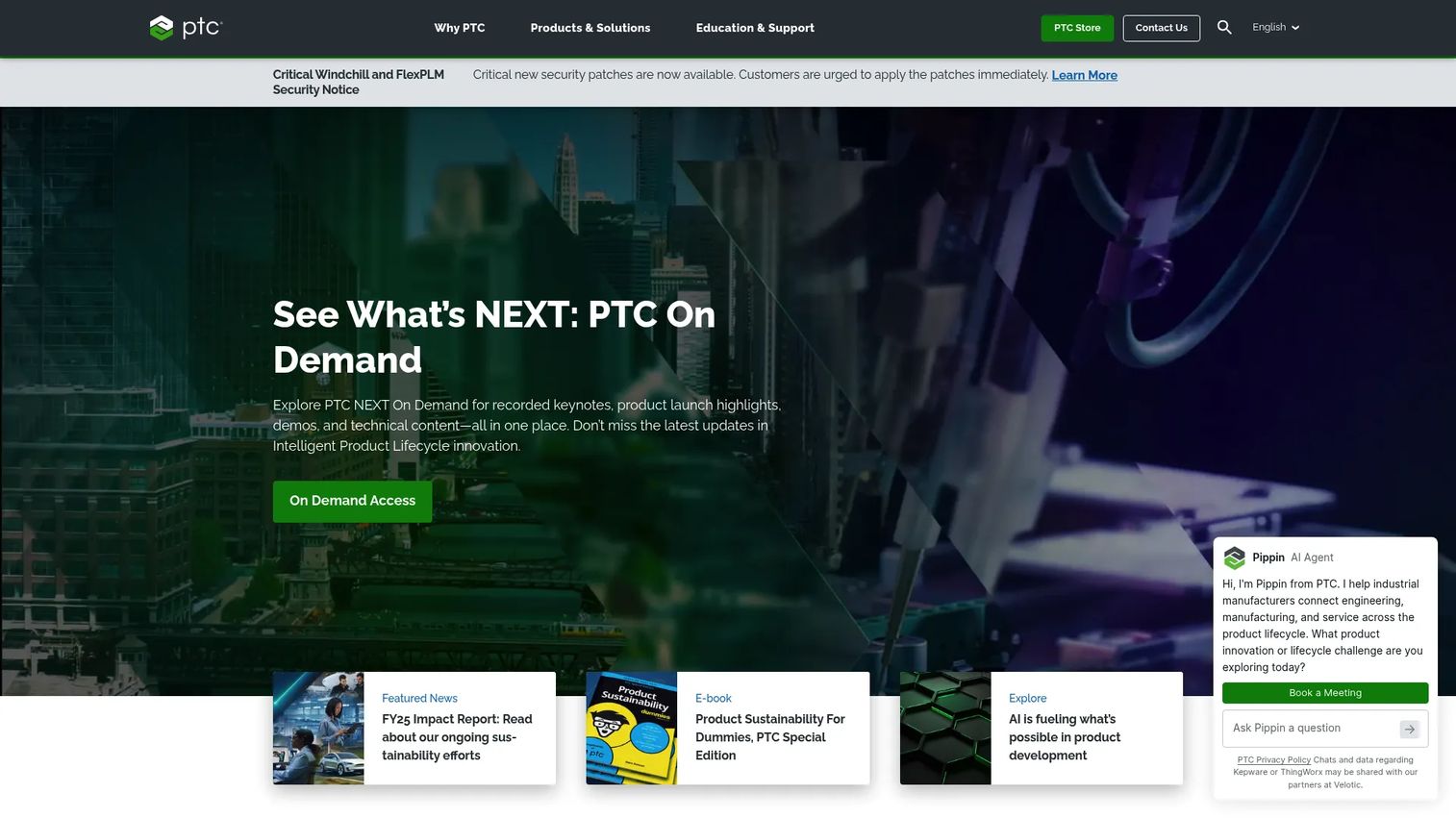
PTC Warranty is warranty management software built for manufacturers that need to manage claims, returns, supplier recovery, and analytics across the full product lifecycle. It sits inside PTC's broader industrial software portfolio, so it fits teams already thinking about connected products, service data, and enterprise scale. This is not a lightweight tool bolted onto a checkout flow. It is a system for complex warranty operations where claims, parts, and recovery all need to talk to each other.
Best for: Manufacturers needing enterprise warranty claims and recovery management across high claim volumes.
Key strengths
- Claims and returns management: Handles intake, validation, and processing of warranty claims and product returns in one workflow.
- Supplier recovery: Reclaims warranty costs from component suppliers, a major cost lever for manufacturers.
- Parts and service order management: Connects warranty claims to the parts and service orders they trigger.
Why choose PTC Warranty: If your warranty operation spans claims, returns, parts, and supplier recovery, and you need those pieces integrated rather than stitched together, PTC is built for that scope. Enterprise manufacturers with real complexity and analyst-recognized software requirements are the core fit. G2 shows a 4.8/5 rating, though the reviewer count is still small, so weigh that against your own reference calls.
PTC Warranty pricing: PTC does not publish pricing on its product page, and G2 confirms pricing details are not currently listed. Expect custom, enterprise-level quoting tied to scope and modules. You will need to contact PTC for a figure specific to your operation.
Where it is not the best fit: a small brand adding protection plans at checkout will find PTC heavier than the job requires. This is a platform for genuine enterprise warranty complexity, not lightweight consumer coverage.
2. WarrantyHub
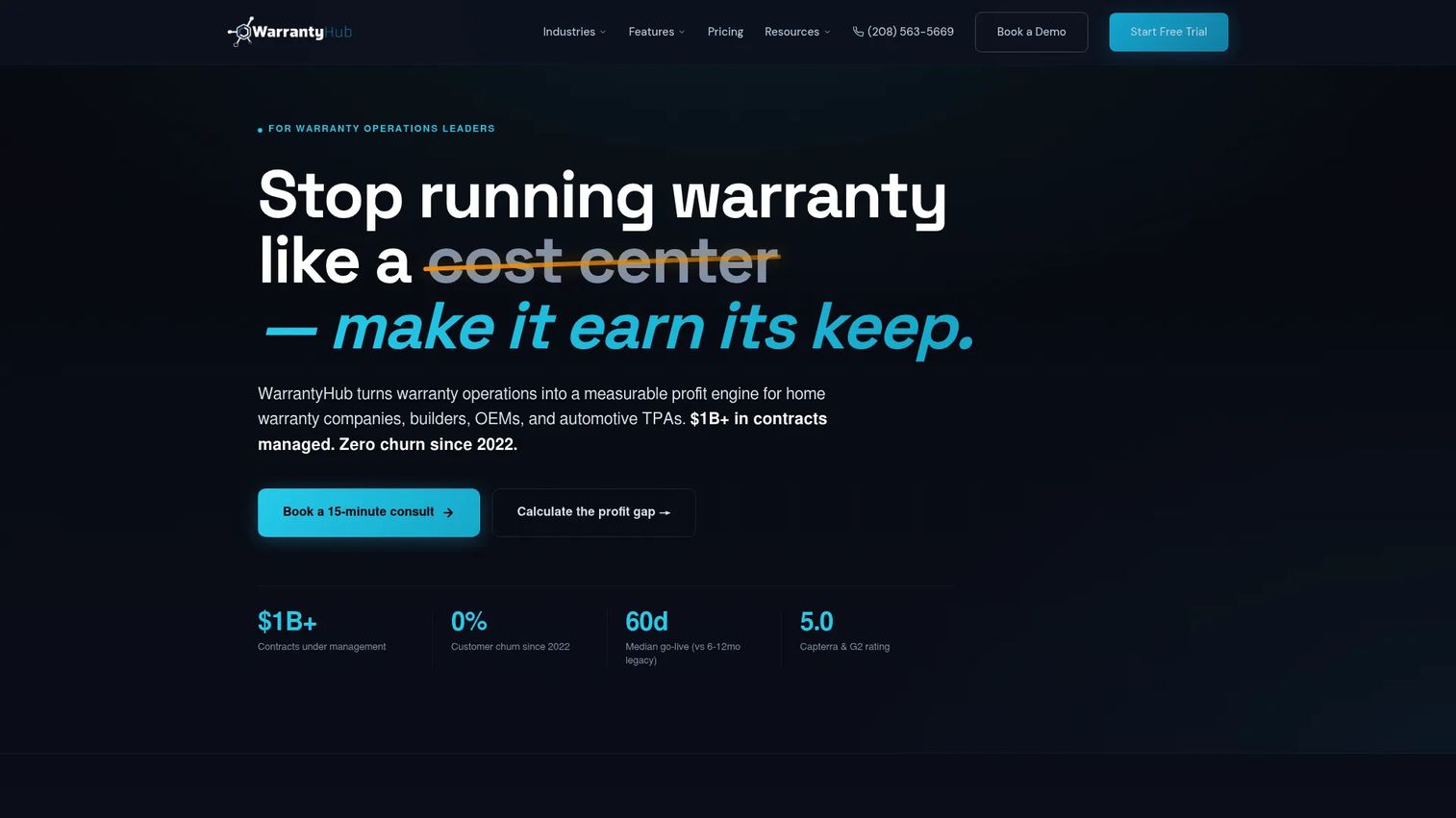
WarrantyHub is warranty management software positioned across multiple verticals, including home warranty, residential builders, commercial GCs, manufacturers, and automotive service contracts. It bundles claims management, a customer portal, and analytics into one platform with published pricing, which is rare in this category. That transparency alone makes it easier to evaluate than vendors that gate every number behind a sales call.
Best for: Mid-market warranty teams needing claims, a customer portal, analytics, and onboarding in one platform.
Key strengths
- Claims management: Automates claim intake, routing, and status tracking across product and service warranties.
- Customer portal: Gives policyholders self-service access to file claims and check coverage without calling in.
- Warranty analytics and reporting: Surfaces claim trends, costs, and performance data for operational decisions.
Why choose WarrantyHub: The multi-vertical positioning is the draw. If you run home warranty operations or straddle manufacturing and service contracts, WarrantyHub covers claims, tracking, and portal self-service without forcing you into an enterprise implementation. The ROI-oriented messaging and fast onboarding claims speak directly to teams that want value quickly.
WarrantyHub pricing: Three monthly plans are published. Essentials starts at $549 per month and Professional at $849 per month, both billed monthly. Enterprise is custom-quoted. A free trial is available with no credit card required. This is one of the few platforms here where you can see entry pricing before talking to sales.
Where it is not the best fit: WarrantyHub's G2 seller page currently shows no customer reviews, so you will rely more heavily on demos and references than on peer ratings during evaluation.
3. Syncron Warranty
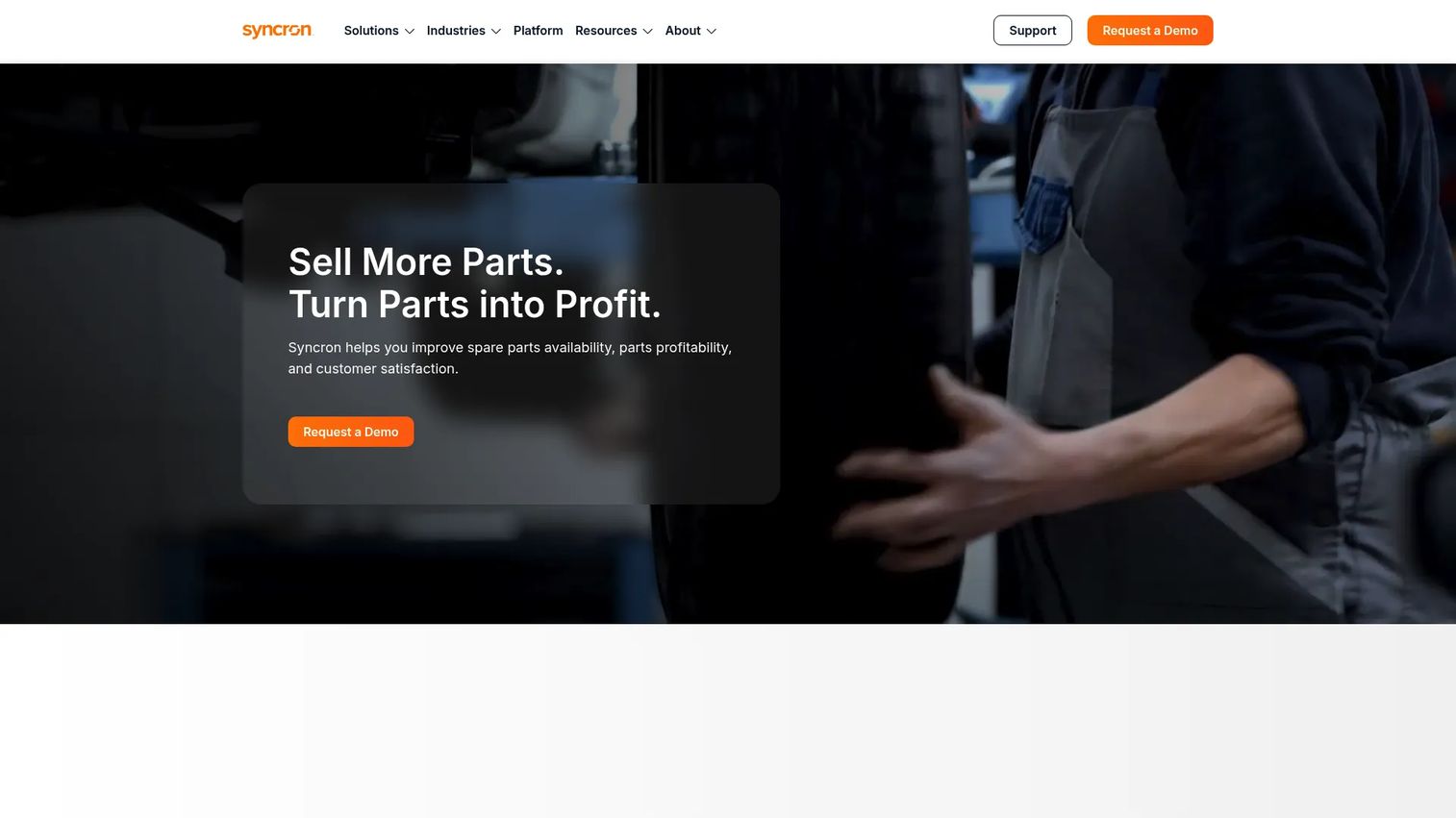
Syncron Warranty is warranty management software built for OEMs and suppliers that need to manage claims, approvals, and supplier recovery at scale. Syncron's positioning leans hard into aftermarket and manufacturing, with an emphasis on automated claims workflows, throughput, and cost control. If your warranty operation is about processing high claim volumes accurately and reclaiming costs from suppliers, this is squarely in its lane.
Best for: Complex manufacturers needing warranty claims automation and supplier recovery.
Key strengths
- End-to-end warranty process management: Covers the full claim lifecycle from submission through resolution and recovery.
- Automated claims workflows and approvals: Applies business rules to route and approve claims without manual triage.
- Supplier recovery and claims visibility: Tracks recoverable costs and gives clear visibility into where warranty spend is going.
Why choose Syncron Warranty: Workflow routing and business-rule flexibility are the core value. For OEMs drowning in claim volume, automating approvals and surfacing recovery opportunities directly reduces backlog and cost. Syncron carries a 4.3/5 rating on G2, and its aftermarket framing is backed by manufacturing case-study proof.
Syncron Warranty pricing: Syncron does not publish public pricing. Its warranty pages describe capabilities but list no numeric tiers, so expect custom enterprise quoting. Budget for a sales conversation to scope your specific claim volume and integration needs.
Where it is not the best fit: teams outside manufacturing and aftermarket, especially retail or DTC brands, will find Syncron built for a heavier, industrial warranty motion than they need.
4. ScalePad Lifecycle Manager
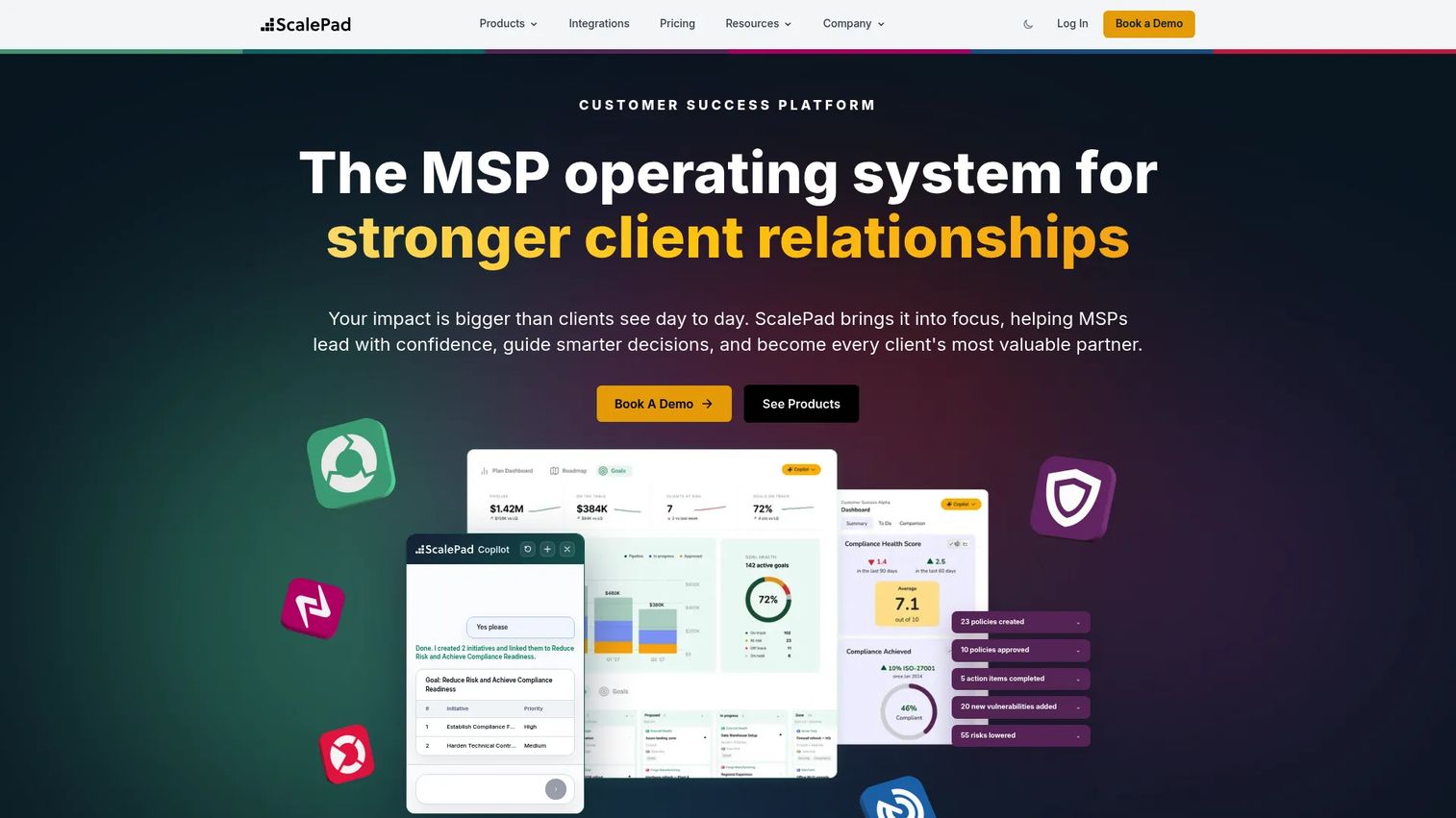
ScalePad Lifecycle Manager is a customer success and asset lifecycle management platform built for managed service providers (MSPs). Its warranty relevance sits in asset tracking and lifecycle workflows: monitoring hardware warranties, renewal dates, and client asset health across environments. If your warranty concern is really about tracking device coverage and lifecycle status rather than processing manufacturer claims, this is the closer fit.
Best for: MSPs that want to manage client planning, QBRs, and lifecycle workflows in one platform.
Key strengths
- Client roadmaps and budgets: Plans asset refresh cycles and budgets around warranty and lifecycle status.
- Assessments, findings, and maturity scoring: Evaluates client environments and flags aging or out-of-warranty assets.
- Client-ready deliverables, meetings, and action items: Turns lifecycle data into QBR-ready reports and next steps.
Why choose ScalePad Lifecycle Manager: For MSPs, the value is operational visibility into asset warranties and lifecycle timing across many clients. It surfaces which devices are aging out of coverage and turns that into planning conversations. The platform offers a free tier limited to one client, which makes it easy to test before committing.
ScalePad Lifecycle Manager pricing: The public pricing page lists Free, Pro, and Lifecycle Manager X plans. The Free tier is limited to one client, Pro bills monthly on a 12-month term, and Lifecycle Manager X is a separate SKU. Numeric prices are not shown publicly, so you will need to request a quote for Pro and above.
Where it is not the best fit: if you need to process manufacturer warranty claims, returns, and supplier recovery, this is not that tool. It tracks asset lifecycles, it does not run a claims operation.
5. Claimlane
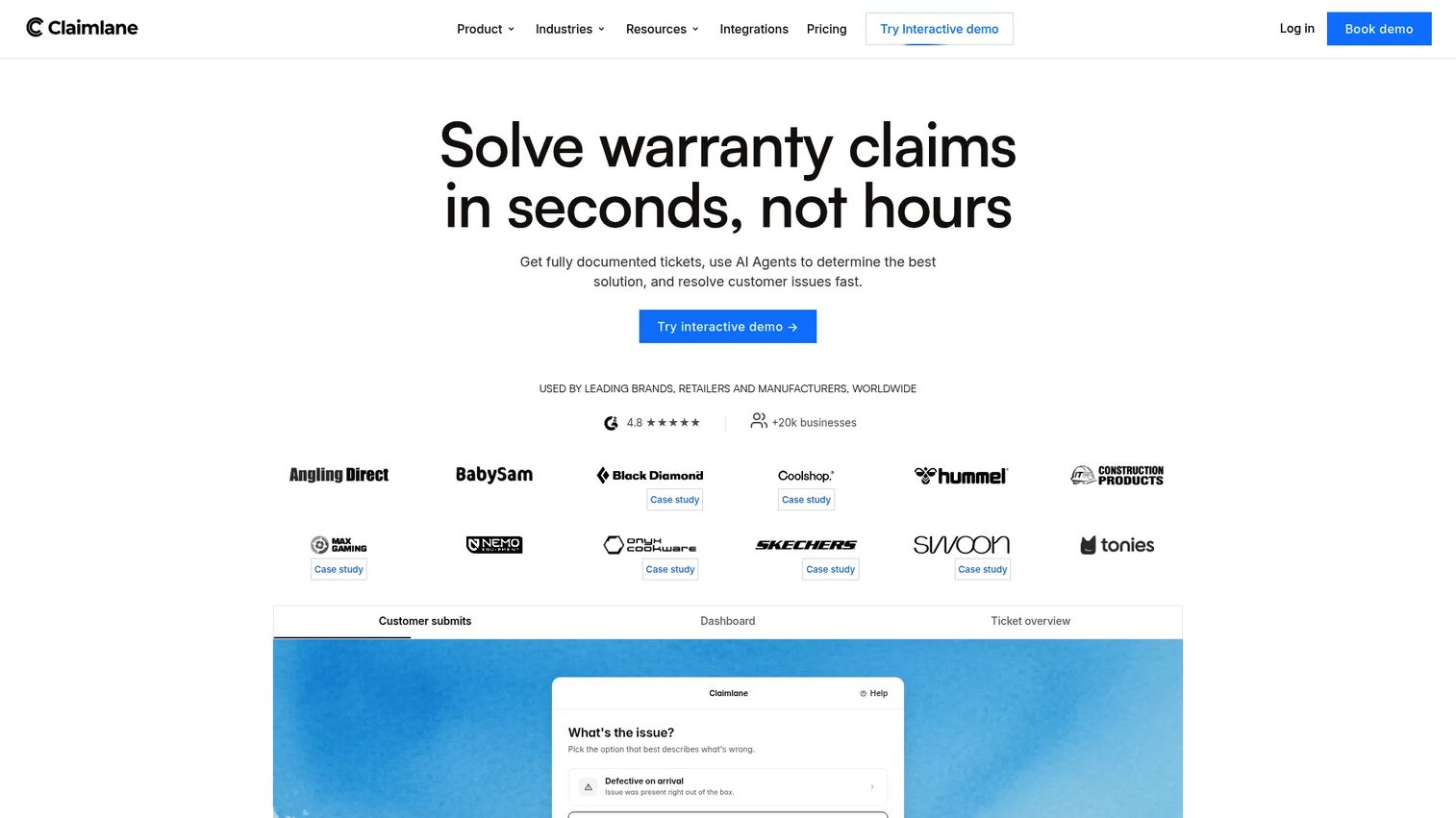
Claimlane is a post-purchase platform for claims, returns, repairs, and warranty management, built for brands and retailers. Its strength is a clean claims workflow: structured intake, customer visibility, and streamlined processing without the weight of a full enterprise suite. If you want the claim experience itself to be smooth for both your team and your customers, Claimlane is designed around that.
Best for: Brands and retailers needing automated returns and claims handling with a strong customer-facing experience.
Key strengths
- B2C self-service portal: Lets customers file claims and returns themselves, cutting inbound volume.
- B2B partner portal: Gives retail and wholesale partners a structured channel for claims and returns.
- Analytics dashboard and product reports: Surfaces claim reasons and product-level trends for quality decisions.
Why choose Claimlane: Teams that want a focused claims and returns workflow, rather than a sprawling warranty ERP, get a clean fit here. The dual B2C and B2B portals suit brands selling both direct and through partners. Claimlane holds a 4.8/5 rating on G2, which reflects strong user sentiment on the claims experience.
Claimlane pricing: The Core plan starts at $800 per month and includes 2,000 tickets per year. The Custom plan is quote-based with add-on modules. Pricing is shown publicly in both USD and EUR, and there is no free tier, so plan on the Core plan as your entry point.
Where it is not the best fit: manufacturers needing deep supplier recovery and parts management will find Claimlane focused on the post-purchase claims experience rather than industrial warranty recovery.
6. Clyde

Clyde is an ownership enrichment platform focused on product protection, registration, and issue resolution for merchants. It sits closer to the consumer protection-plan world than to industrial warranty operations. If you sell physical products and want to offer extended warranties, manage registration, and handle post-purchase issues, Clyde is built around that ownership experience.
Best for: Merchants that want to offer warranties and manage post-purchase ownership experiences.
Key strengths
- Product protection and extended warranties: Lets merchants offer coverage plans at and after the point of sale.
- Product registration: Captures ownership data to power warranty coverage and follow-up.
- Issue resolution and claims management: Handles post-purchase claims and resolution for covered products.
Why choose Clyde: For DTC and retail merchants, Clyde bundles protection-plan offers, registration, and claims into one ownership layer. That makes it a fit for teams whose warranty strategy is about revenue from protection plans and a smooth post-purchase experience, not internal manufacturing claims.
Clyde pricing: Clyde does not publish pricing publicly. The site uses request-a-demo and contact-style messaging, so you will need to reach out for a quote tied to your product catalog and protection-plan model.
Where it is not the best fit: manufacturers and aftermarket teams needing supplier recovery and parts management will find Clyde built for consumer protection plans rather than industrial warranty operations.
7. Extend

Extend is a shopper operations platform covering product protection, shipping protection, returns, and related post-purchase services. Like Clyde, it lives in the retail and commerce protection-plan space rather than industrial warranty. Extend adds shopper intelligence and returns handling alongside protection plans, which makes it a broader post-purchase play for commerce brands.
Best for: Merchants needing embedded product protection and post-purchase customer operations.
Key strengths
- Shopper Intelligence: Uses purchase and behavior data to optimize protection-plan offers.
- Returns and exchanges: Handles the returns side of post-purchase operations alongside protection.
- Product and shipping protection: Offers both product warranties and shipping protection at checkout.
Why choose Extend: For commerce and retail brands, Extend combines protection-plan revenue with returns and shopper intelligence in one post-purchase system. That breadth suits merchants who want protection, returns, and customer operations handled together rather than in separate tools.
Extend pricing: Extend's pricing appears on its industry pages rather than a central pricing page. On the apparel and accessories page, product protection plans are shown at $12.99 for one year, $17.99 for two years, and $24.99 for three years. Shipping protection pricing was not publicly visible. Extend holds a 4.6/5 rating on G2.
Where it is not the best fit: teams running manufacturing warranty claims, returns, and supplier recovery will find Extend built for consumer protection plans and commerce operations, not industrial warranty management.
What to look for before you buy
Use this checklist to pressure-test any warranty management tool against your actual operation.
Automation depth
Look at how much of the claim lifecycle the tool automates without manual intervention. Can it route claims by rule, validate coverage automatically, and approve straightforward cases without a human? The deeper the claims processing automation, the more claim volume you can handle without adding headcount.
Vertical and workflow fit
A tool built for OEM supplier recovery solves a different problem than one built for retail protection plans. Match the platform to your motion. Manufacturers need parts and recovery depth, home warranty teams need policy and portal breadth, and retail brands need embedded checkout protection.
Integrations
Warranty data does not live alone. Check whether the platform connects to your ERP, CRM, commerce platform, and finance systems. Broken integrations mean re-keying data, which reintroduces the exact manual work you are trying to eliminate.
Analytics and reporting
Confirm the tool can report warranty cost by product, issue type, and supplier, and export cleanly. Weak warranty analytics leaves you back where you started: guessing at cost and unable to spot repeat failures or recovery opportunities.
Implementation and pricing transparency
Ask how long implementation actually takes and what it requires from your team. Also weigh pricing transparency. Vendors with published pricing like WarrantyHub and Claimlane are easier to budget than custom-quote enterprise platforms, though enterprise scope often justifies the private pricing.
Conclusion
The right warranty management software depends on how your team operates, not on which vendor has the loudest landing page.
If you run industrial or OEM warranty operations with real complexity, shortlist PTC Warranty and Syncron Warranty first. Both handle claims, approvals, and supplier recovery at manufacturing scale. If you manage home warranty or multi-vertical operations, WarrantyHub gives you claims, a portal, analytics, and published pricing in one platform. For claims-heavy service and retail operations that need a clean workflow, Claimlane leads on the post-purchase experience. If your warranty concern is really asset lifecycle tracking, ScalePad Lifecycle Manager fits IT and MSP environments. And for retail brands building protection-plan revenue, Extend and Clyde are the strongest starting points.
Start by naming your operational model, then evaluate two or three tools that match it directly. Run demos against your real claim volume and integration requirements, not a generic feature checklist. That is how you avoid buying a platform built for someone else's warranty problem.
FAQs
Warranty management software centralizes warranty registration, policy management, claims processing, returns, supplier recovery, and analytics in one system. It automates claim routing and approvals, tracks status in real time, and reports on warranty cost by product, issue type, and supplier. The goal is to replace manual spreadsheet and inbox workflows with structured, trackable processes.
At minimum, look for warranty registration software, policy management, claims intake and routing, returns and RMA handling, and warranty analytics. Manufacturers should also prioritize supplier recovery and parts management. Retail and DTC brands should weigh protection-plan and checkout capabilities over industrial recovery features.
Field service software schedules and dispatches technicians and manages on-site work orders. Warranty management software owns the policy, the claim, and the costs tied to both, including registration, coverage rules, claims processing, and supplier recovery. Some operations use both, but they solve different problems.
Yes. Most warranty claims management software handles both claims and returns or RMAs in connected workflows, since a claim often triggers a repair, replacement, or return. Platforms like Claimlane and PTC Warranty treat claims and returns as parts of the same post-purchase process rather than separate systems.
Manufacturers should prioritize claims processing automation, supplier recovery, parts and service order management, and deep warranty analytics. Integration with ERP and service systems matters because warranty data connects to parts, orders, and finance. Automotive and transportation lead adoption, capturing 31.75% of the market in 2025 per Mordor Intelligence (2026), so many platforms are tuned for that motion.
Yes. Home warranty providers benefit from claims automation, policy management, customer self-service portals, and analytics. A platform like WarrantyHub positions directly for home warranty alongside builders and service contracts, covering claims, tracking, and portal access in one system.
Implementation time varies widely by platform and scope. Mid-market tools with published pricing and self-service onboarding can go live in weeks, while enterprise warranty systems with deep ERP integration and supplier recovery may take months. Always ask vendors for a realistic timeline based on your claim volume and integration requirements before you commit.
Track reduction in claim resolution time, lower cost per claim, recovered warranty costs from suppliers, and reduced headcount pressure as claim volume scales. Warranty analytics also surfaces repeat failures and recovery opportunities that manual tracking misses, and those savings often justify the investment on their own.