You launched a scooter fleet in a new city. Week one, the permit team asks for MDS feeds you can't produce. Week two, a third of your vehicles show dead batteries because nobody could see charge state on a map. Week three, revenue is flat because your pricing is one flat rate for everyone.
That's the real job of micromobility software. Not "digital transformation." Fleet uptime, city compliance, and unit economics, all colliding at once, all in software you have to keep running while you scale.
Generic fleet management software wasn't built for this. It tracks vehicles. It does not handle GBFS integration, no ride zones, permit reporting, or the battery swap routing that keeps a shared fleet earning. The global micro-mobility management software market hit USD 1.86B in 2024, according to Dataintelo (2024), and the broader micromobility platform market is projected at USD 8.8B in 2026 per Future Market Insights (2026). Buyers have options. Most operators pick badly because they evaluate features, not maintenance burden.
So how do you pick software you can actually run in a regulated market for years?
What's inside
This guide covers the best micromobility software for operators running shared bikes, scooters, mopeds, and mixed fleets. It's written for product and operations leaders who own fleet uptime and unit economics, not just a feature checklist.
We selected and compared platforms on four criteria that decide whether a deployment survives contact with a real city:
- Compliance depth: MDS compliance, GBFS integration, geofencing, no ride zones, slow zones, permit reporting
- Fleet management and battery logistics: availability dashboards, charge-state visibility, swap routing, dead battery prevention
- Monetization: dynamic pricing, ride passes, memberships, promotions
- Integrations and launch model: IoT integrations, API integrations, white-label software, multi-language support
TL;DR
- Best for regulated-city operations: Wunder Mobility, for operators that need MDS and GBFS feeds, zone control, and a full operations dashboard from day one.
- Best for fast, hardware-agnostic launch: Joyride, for teams that want a white-label rider app and broad IoT support to launch a bike sharing or scooter sharing service quickly.
- Best for profitability and pricing control: goUrban, for operators running free-floating and station-based models who want dynamic pricing, ride passes, and MaaS APIs.
- Best for market and ecosystem research: Micromobility Industries, for mapping the vendor landscape rather than operating a fleet.
- Rule of thumb: shortlist by your city's compliance requirements and your operating model first. Feature depth matters less than whether you can maintain the platform through frequent releases.
What is micromobility software
Micromobility software is the operating platform shared mobility operators use to run fleets of bikes, e-bikes, scooters, and mopeds, covering fleet management, rider apps, pricing, compliance reporting, analytics, and integrations. It is the system of record for where every vehicle is, what state it's in, and how it earns.
It sits above raw fleet management software. A generic fleet tool tracks assets. A micromobility platform adds the shared-mobility layer: rider onboarding, ID verification, geofencing, battery logistics, and the regulatory feeds cities demand.
Core capabilities most operators evaluate:
- Compliance and reporting: MDS compliance for city data sharing, GBFS integration for open feeds, permit reporting, and audit trails
- Zone control: geofencing, no ride zones, slow zones, and parking verification enforced in the rider app
- Fleet operations: an availability dashboard, real-time map, task routing, and heatmaps for rebalancing
- Battery logistics: charge-state visibility, swap routing, and dead battery prevention workflows
- Rider experience: white-label apps, pre-ride checks, multi-language support, and payments
- Monetization: dynamic pricing, ride passes, memberships, commuter passes, and promotions
- Integrations: IoT integrations with locks and telematics, plus API integrations into MaaS and payment systems
The category spans bike rental software, bike sharing software, scooter sharing software, moped sharing software, and dockless sharing software. Most modern platforms handle several vehicle types on one backend.
When to use micromobility software
Launch a shared fleet in a regulated city
Cities gate market entry on data. Before you take a single ride, you often need MDS compliance and GBFS integration in place, plus geofencing for no ride zones and slow zones. Micromobility software that ships these feeds and permit reporting lets you clear compliance review instead of stalling for months. This is the moment a purpose-built platform earns its cost over generic mobility management software.
Improve fleet availability and battery operations
Dead batteries kill revenue. When you can't see charge-state visibility on a map, field teams guess, and vehicles sit idle. Micromobility software with a live availability dashboard, swap routing, and dead battery prevention keeps more of the fleet earning. Add heatmaps and task routing, and rebalancing stops being a daily fire drill.
Grow revenue with pricing and membership models
One flat fare leaves money on the table. Operators use dynamic pricing to match demand, ride passes and memberships to lock in commuters, and promotions to fill quiet hours. Software that makes these levers easy to test, without an engineering ticket per change, is how thin unit economics turn positive.
Comparison table
The four platforms below serve different operators. Wunder Mobility and goUrban lean into compliance and operations depth. Joyride optimizes for launch speed and hardware flexibility. Micromobility Industries is a research resource, not an operating platform. Pricing and ratings reflect values verified at drafting time; where a vendor does not publish a figure or has too few reviews for a rating, the field is left open rather than guessed.
| # | Product | Best for | Key differentiator | Pricing | G2 rating |
|---|---|---|---|---|---|
| 1 | Wunder Mobility | Regulated-city operations | MDS and GBFS feeds, operations dashboard, pricing engine | Enterprise from €17.00 per vehicle/month; paid pilot from €12,500 | Not enough reviews |
| 2 | Joyride | Fast, hardware-agnostic launch | White-label rider app, broad IoT support, multi-currency payments | Grow from $900/month; White Label from $15,500/year | 4.0/5 |
| 3 | goUrban | Profitability and flexible models | Free-floating, station-based, and docked modes with MaaS APIs | Custom, via demo | Not listed |
| 4 | Micromobility Industries | Market and ecosystem research | Landscape database and industry events | Event tickets from $399 | Not listed |
Best micromobility software tools for 2026
1. Wunder Mobility
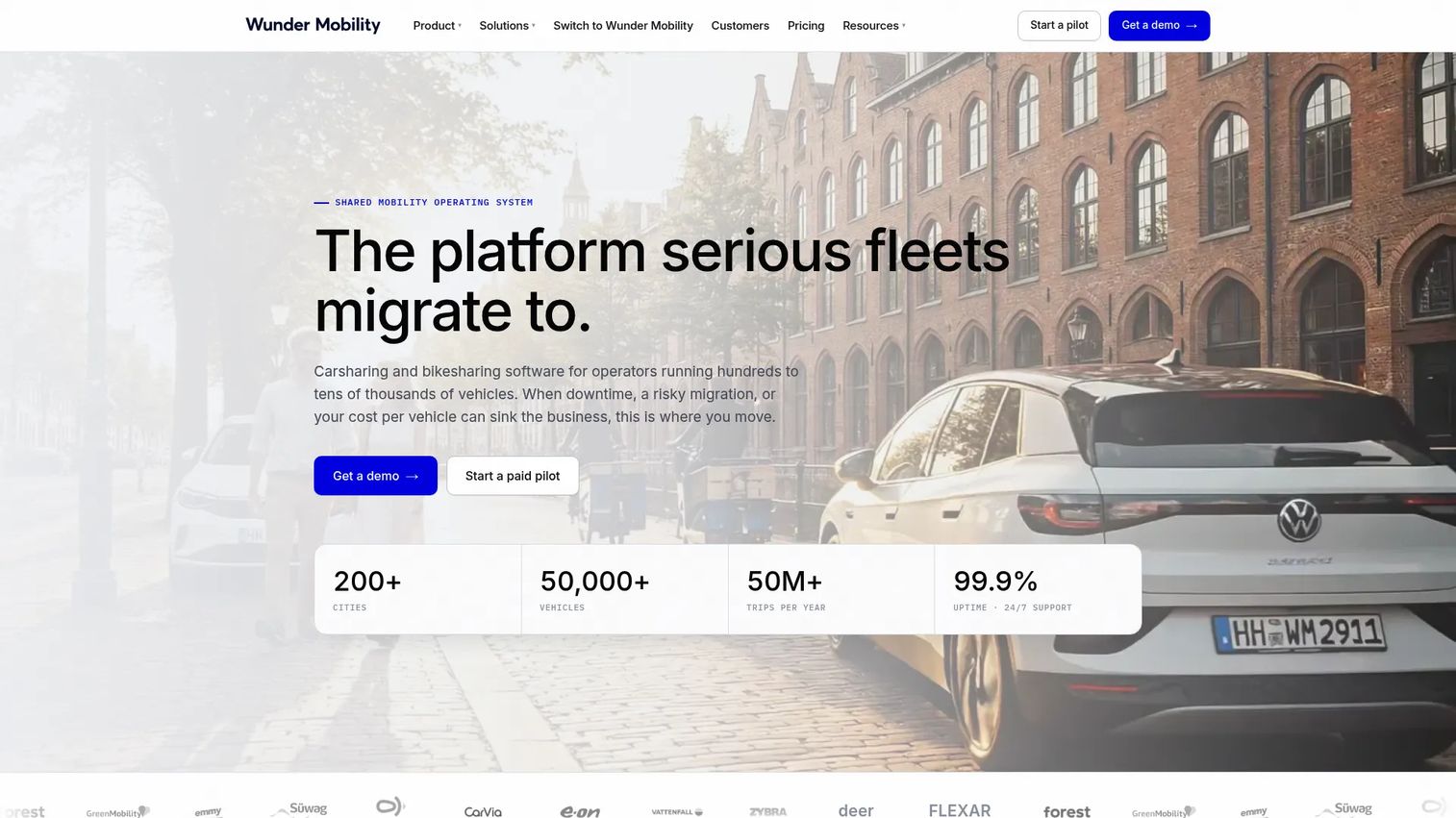
Wunder Mobility is an all-in-one platform for shared mobility operators, built to run and scale carsharing, bikesharing, and micromobility fleets. It leans hard into the regulated-city problem: MDS and GBFS feeds, zone enforcement, and an operations dashboard that gives field teams a real-time map with alerts. For operators whose deals live or die on compliance review, that depth is the point.
The pricing engine and subscription tools cover the monetization side, so dynamic pricing and membership models sit in the same system as fleet ops. White-label rider apps for iOS and Android keep the brand yours, and 24/7 support backs the enterprise commitment.
Best for: large or regulated micromobility operators running scooter or moped fleets who need compliance feeds and operational visibility from launch.
Key features
- Whitelabel rider apps for iOS and Android
- Operations dashboard with real-time map and alerts
- Pricing and subscription engine
- MDS and GBFS feeds for city compliance
- 24/7 operator support
Why choose Wunder Mobility: pick it when compliance and operational control matter more than the lowest entry price. The enterprise structure and setup investment fit operators committing to a multi-year deployment, not a weekend pilot.
Wunder Mobility pricing: the micromobility Enterprise plan starts at €17.00 per vehicle per month, with a minimum monthly spend of €11,900 that includes 700 vehicles, a €40,000 setup fee, and a contract term of at least 36 months. A fixed-price paid pilot runs €12,500 for up to three months.
G2 currently shows too few reviews to publish a rating for Wunder Mobility.
2. Joyride
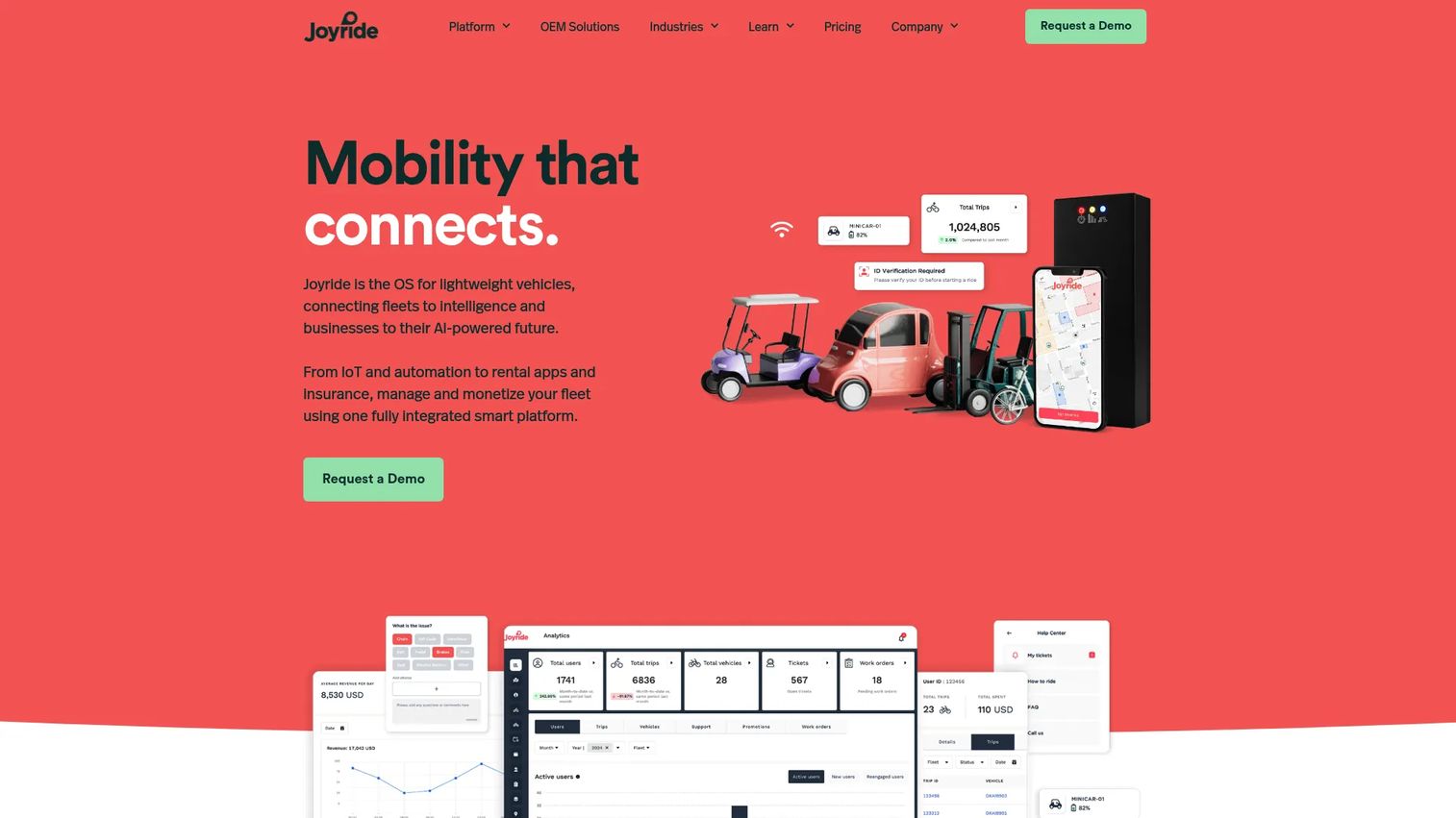
Joyride is a connected mobility platform for shared fleets and vehicle OEMs, built around fast deployment and hardware flexibility. If your priority is launching a bike sharing or scooter sharing service without getting locked to one lock vendor, Joyride's hardware-agnostic approach and broad IoT support fit that plan. The white-label rider app and multi-currency payments let you go to market under your own brand across regions.
Fleet management runs from a central dashboard, with geofencing, ID verification, and automated marketing tools to onboard and retain riders. It's a broad platform that covers most of what an operator needs to start earning.
Best for: shared mobility operators and OEMs that want a white-label platform and quick launch across connected fleets.
Key features
- Fleet management dashboard
- White-label rider app
- ID verification and geofencing
- Payments in multiple currencies
- Automated marketing tools
Why choose Joyride: it fits teams that value launch speed and flexible hardware over the deepest compliance tooling. The tiered pricing lets a smaller operator start on a lower plan and scale up as the fleet grows.
Joyride pricing: the Grow plan starts at $900 per month, Scale at $2,500 per month, and Pro at $5,000 per month. Revii Launchpad is $4,200 per year, White Label starts at $15,500 per year, and OEM plans are custom priced. Some plans carry per-vehicle minimums.
Joyride holds a 4.0 out of 5 rating on G2, based on a small number of reviews.
3. goUrban
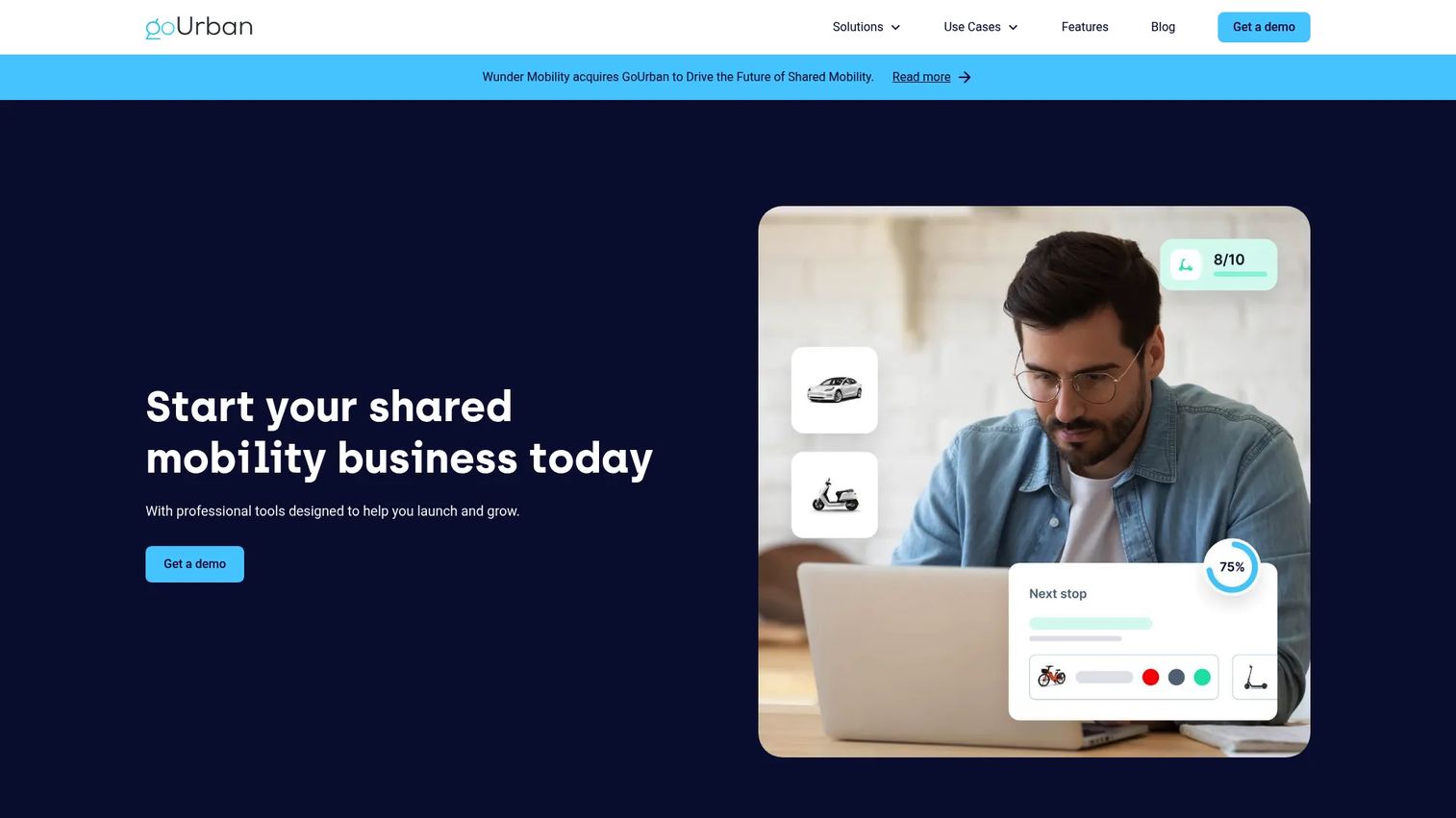
goUrban is a shared mobility SaaS platform for operating vehicle-sharing businesses across free-floating, station-based, and docking-station models. That flexibility is its edge: one platform can run a dockless scooter service and a station-based bike sharing program without separate stacks. It targets profitability directly, with pricing, booking rules, payments, billing, and dispatching in one system.
For monetization, goUrban supports ride passes, dynamic pricing, and memberships, plus MDS and GBFS for compliance and MaaS APIs to plug into wider transit platforms. A data warehouse and business accounts round out the operational and reporting side.
Best for: shared mobility operators that need one enterprise platform to run several operating models and control unit economics.
Key features
- Free-floating, station-based, and docking-station operating modes
- Pricing, booking rules, payments, billing, damage, and dispatching
- Task management and dispatching workflows
- MDS and GBFS feeds plus MaaS APIs
- Data warehouse and business accounts
Why choose goUrban: choose it when you run more than one operating model or plan to, and want pricing and revenue levers in the same platform. It suits operators optimizing for margin across a mixed fleet rather than a single-mode launch.
goUrban pricing: Pricing is arranged through a demo and tailored to the operating model, fleet size, and modules you need. Reach out via the site to get a quote for your deployment.
goUrban does not have a verified public rating on the major review platforms at this time.
4. Micromobility Industries
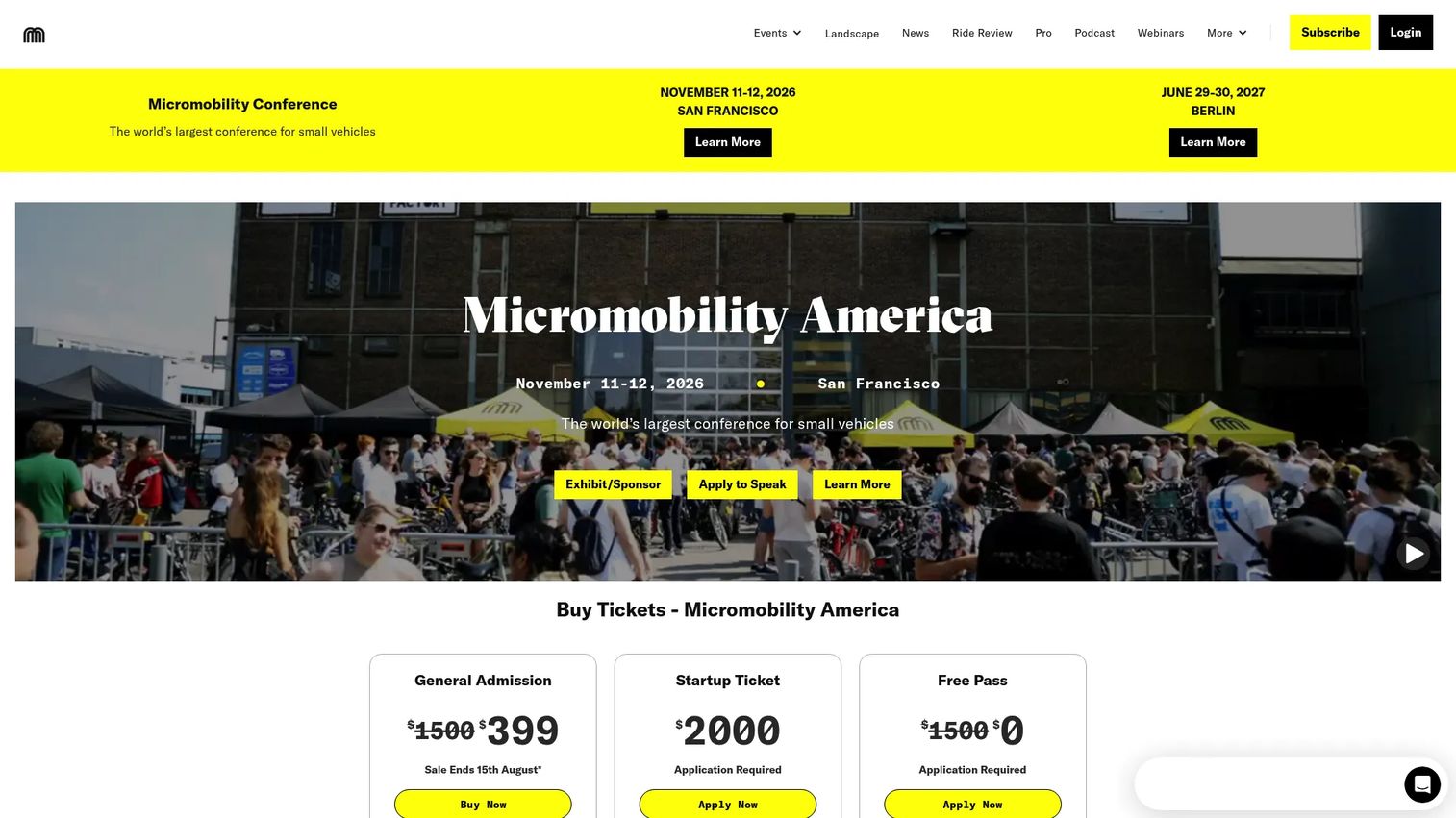
Micromobility Industries is not fleet software. It's a media and events platform, and the home of the Micromobility Landscape database, a mapped directory of vendors and categories across the small-vehicle ecosystem. Include it in your evaluation as a research tool, not an operating platform.
For a product or operations leader building a shortlist, it's useful early. The landscape helps you map who supplies what, its conferences in America and Europe are where operators and vendors meet, and the news, podcast, and video content keep you current on regulation and market shifts. Use it to inform buying, then run your fleet on one of the platforms above.
Best for: operators, investors, and industry professionals doing market research and vendor mapping in micromobility.
Key features
- Micromobility Landscape vendor database
- Conferences in America and Europe
- Micromobility news and analysis
- Podcast and video content
- Category and regional mapping
Why choose Micromobility Industries: use it to understand the market and shortlist vendors before you commit. It does not run a fleet, so pair it with an operating platform once you've narrowed your options.
Micromobility Industries pricing: this is event-ticket pricing, not SaaS. General Admission to Micromobility America is $399, a Startup Ticket is $2,000, and eligible attendees can claim a Free Pass. Content and the landscape database are largely free to browse.
Micromobility Industries does not carry a software review rating, since it isn't a fleet platform.
Considerations
Before you sign, run your shortlist through this checklist. The goal is not the most features. It's a platform you can maintain in a regulated market without constant engineering interrupts.
Compliance readiness
Confirm the platform ships MDS compliance and GBFS integration as standard feeds, not custom work. Ask how permit reporting is generated and whether geofencing, no ride zones, and slow zones enforce in the rider app. If compliance is an add-on, your launch timeline is at risk.
Fleet availability and battery logistics
Look for a live availability dashboard with charge-state visibility, not just GPS dots. Battery logistics decide margin, so verify swap routing, task routing, and dead battery prevention are built in. Ask to see heatmaps and how rebalancing recommendations actually work.
Pricing and monetization structure
Check that dynamic pricing, ride passes, memberships, and promotions are self-serve. If every price change needs a vendor ticket, you can't run experiments. Match the monetization model to your city's commuter and tourist mix.
Integration depth
Map the IoT integrations to your actual locks and telematics before committing. Confirm API integrations reach your payment stack and any MaaS platform you need. White-label software and multi-language support matter if you operate across brands or regions.
Maintenance burden
The platform that looks best in a demo can be the hardest to run at scale. Ask about release cadence, how compliance feeds stay current with changing city rules, and what support covers. A platform you can maintain beats a feature-rich one you can't.
Conclusion
Four platforms, four clear jobs. Wunder Mobility is the pick for regulated-city operations where MDS and GBFS feeds, zone control, and an operations dashboard decide whether you launch at all. Joyride wins on fast, hardware-agnostic launch with a white-label rider app and broad IoT support. goUrban is built for profitability and flexible operating models, with dynamic pricing, ride passes, and MaaS APIs across free-floating and station-based fleets. Micromobility Industries is your research layer, useful for mapping vendors and staying current, not for running a fleet.
Your next step is simple: shortlist by your city's compliance requirements and your operating model first, then pressure-test each platform on battery logistics and maintenance burden. Those are the factors that decide whether a deployment earns for years or stalls in month three.
If you build software of your own and want prospects to experience it before a sales call, Guideflow turns your product into self-serve interactive demos, sandboxes, and demo centers. You can capture a workflow in a few clicks, personalize it per audience, share it anywhere, and analyze engagement in real time.
Start your journey with Guideflow today!
FAQs
Compliance feeds, fleet visibility, and monetization matter most. You need MDS compliance and GBFS integration to enter cities, an availability dashboard with charge-state visibility to keep vehicles earning, and dynamic pricing plus ride passes to make unit economics work. Geofencing for no ride zones and slow zones is close behind, since it's often a permit condition.
It generates the data feeds and enforcement cities require. That means MDS compliance for standardized data sharing, GBFS integration for open availability feeds, and permit reporting for regulator audits. On the enforcement side, geofencing pushes no ride zones, slow zones, and parking verification into the rider app so riders can't break the rules without consequences.
Fleet management software tracks vehicles and assets. Micromobility software adds the shared-mobility layer on top: rider onboarding and ID verification, geofencing and zone enforcement, battery logistics, city compliance feeds, and monetization like memberships and dynamic pricing. If you run shared bikes or scooters, generic fleet tools leave you building the hardest parts yourself.
Battery state is the difference between a vehicle earning and sitting idle. Without charge-state visibility on a map, field teams guess where to go, and dead batteries pull vehicles out of service. Software with swap routing and dead battery prevention keeps more of the fleet available, which directly protects revenue and margin.
goUrban is built around monetization, with dynamic pricing, ride passes, and memberships across free-floating and station-based models. Wunder Mobility also ships a pricing and subscription engine alongside its compliance depth. The best fit depends on whether you need one operating model or several, and how tightly pricing must integrate with your compliance and ops stack.
For regulated markets, they're often non-negotiable. MDS is how cities collect standardized operational data from operators, and GBFS is the open feed that powers public availability and MaaS platforms. If your target cities require either, a platform that ships both as standard feeds saves months versus building the integrations yourself.
Look for analytics that drive action, not just dashboards. Heatmaps should show demand patterns you can rebalance against, and the availability dashboard should tie charge-state and location together so task routing is grounded in real fleet state. The test is simple: can a field team open the tool and know exactly where to go next?
White-label software lets you launch under your own brand without building a rider app from scratch, which cuts weeks off a launch. API integrations decide how fast you connect payments, IoT locks and telematics, and MaaS platforms. Confirm the platform's IoT integrations match your actual hardware before you commit, since a mismatch there is the most common launch delay.