An operating room sits idle. The surgeon is scrubbed and ready. Anesthesia is on standby. But the room before them ran long, the case cart is short one implant tray, and the next patient is still in pre-op. Every minute of that gap costs money and pushes the day later.
That is the real problem with manual scheduling. It is not just an admin headache. A single missed handoff ripples across surgeons, anesthesiology, nursing, equipment, and patients waiting for a date. Underused block time compounds quietly, week after week, until utilization numbers look fine on paper and terrible in practice.
The stakes are measurable. Operating room management software can improve OR utilization by up to 20% and reduce scheduling errors by around 30% through optimized surgical workflows, according to ResearchAndMarkets (2025). That is the difference between a surgical service that runs at capacity and one that leaks revenue and access every single day.
The market knows it. The global operating room scheduling and management software market is projected to grow from USD 4.05 billion in 2025 to USD 10.39 billion by 2033, a 12.5% CAGR, per SkyQuest (2024). Scheduling and workflow tools already represent the largest segment of the OR management market, per MarketsandMarkets (2024).
The tool you pick decides whether scheduling stays reactive or becomes a system you can actually plan around.
What's inside
This guide compares 10 operating room scheduling software platforms built for hospitals and surgical teams. We ranked them on the factors that decide whether a scheduling tool earns its place in your stack:
- Scheduling depth: block management, case scheduling, and conflict resolution
- Real-time visibility: live schedule updates across surgeons, staff, and rooms
- Integrations: EHR and EMR connectivity and hospital information system fit
- Analytics: utilization dashboards, throughput planning, and reporting
- Workflow fit: preference cards, cost capture, and documentation
Each platform includes verified capabilities, pricing context, and ratings where available.
TL;DR
- Best for deep perioperative workflow automation: Picis OR Manager handles scheduling, documentation, and cost capture end to end.
- Best for analytics and throughput planning: TAGNOS OR Planning leads on predictive case lengths and KPI dashboards.
- Best for real-time communication and coordination: SurgiStream and PerfectServe Lightning Bolt Scheduling keep schedules and teams in sync.
- Best for AI-driven block utilization: LeanTaaS iQueue for Operating Rooms optimizes capacity and open time.
- Best for broader hospital system integration: Oracle Health, InterSystems HealthShare, and Meditech Expanse fit teams already committed to those platforms.
What is operating room scheduling software
Operating room scheduling software is a tool that helps hospitals schedule surgeries, manage block time, coordinate staff and resources, and monitor OR performance in one system.
It sits at the center of perioperative operations. Instead of juggling spreadsheets, phone calls, and paper schedules, surgical services teams get a single source of truth for who is operating where, when, and with what. Good OR scheduling software also connects to the wider hospital information system so a change in one place updates everywhere.
Core capabilities you should expect:
- Block scheduling: assign, monitor, and rebalance surgeon and service-line block time
- Real-time schedule updates: live changes visible across surgeons, anesthesiology, nursing, and rooms
- Utilization dashboards: track block utilization, first case on-time starts, and turnover time
- EHR and EMR integration: sync case data, patient records, and orders across systems
- Conflict resolution: flag double-bookings, equipment clashes, and staffing gaps before they hit the schedule
The broader category, often called operating room management software, extends beyond scheduling into cost capture, preference cards, implant documentation, and quality reporting. Scheduling is the operational core that everything else builds on.
When to use operating room scheduling software
Not every surgical service needs the same depth. Here is how to pattern-match to your situation.
Improve block utilization
If your block schedule looks full but rooms sit empty, you have a block utilization problem, not a capacity problem. Uneven surgeon access, unreleased block time, and no visibility into who is actually using their allocation all drag throughput down. Scheduling software with block management assigns time, monitors real usage against allocation, and gives managers the data to rebalance capacity toward the surgeons and service lines that fill it.
Reduce schedule conflicts and delays
One case change should not blow up the day. When a procedure runs long or a surgeon reschedules, the ripple hits anesthesiology, equipment, staffing, and every downstream room. Real-time scheduling tools surface conflicts as they form and update everyone at once, so the team is not working off three different versions of the day.
Improve OR efficiency and patient access
Better scheduling shows up in metrics that matter: first case on-time starts, turnover time, cancellation rates, and how many patients you can treat. Tighter coordination and cleaner daily schedule visibility mean fewer wasted minutes between cases and more surgical volume without adding rooms or staff. For hospitals under pressure on patient access, that throughput gain is the point.
Comparison table
We ranked these platforms by relevance to operating room scheduling specifically, weighing scheduling depth, block management, real-time visibility, integrations, and analytics. Pricing across this category is almost universally quote-based, reflecting the enterprise, workflow-heavy nature of perioperative deployments. Ratings are drawn from G2 where a verified listing exists.
| # | Product | Best for | Key differentiator | Pricing | G2 rating |
|---|---|---|---|---|---|
| 1 | Picis OR Manager | End-to-end perioperative workflows | Scheduling, documentation, and cost capture in one suite | Custom | Not available |
| 2 | TAGNOS OR Planning | Analytics and throughput planning | Predictive case lengths and KPI dashboards | Custom | 5.0/5 |
| 3 | SurgiStream | Vendor and facility coordination | Web, iPhone, and iPad scheduling access | Free trial available, custom pricing | Not yet rated |
| 4 | PerfectServe Lightning Bolt Scheduling | Provider scheduling and communication | Automated rules-based schedule generation | Custom | 3.5/5 |
| 5 | LeanTaaS iQueue for Operating Rooms | AI-driven block utilization | Prescriptive capacity and open-time recommendations | Custom | Not available |
| 6 | Qventus | Hospital operations automation | AI operational assistants and EHR-integrated workflows | Custom | Not yet rated |
| 7 | Oracle Health Surgical Scheduling | Oracle EHR environments | Perioperative scheduling inside the Oracle Health suite | Custom | Not available |
| 8 | InterSystems HealthShare | Interoperability-first health systems | FHIR-enabled data exchange and unified records | Custom | 4.5/5 |
| 9 | Nines | Structured operational coordination | Centralized operations hub with granular permissions | Custom | Not available |
| 10 | Meditech Expanse Surgery Management | Meditech EHR customers | Surgical workflows native to Expanse | Custom | 3.1/5 |
1. Picis OR Manager
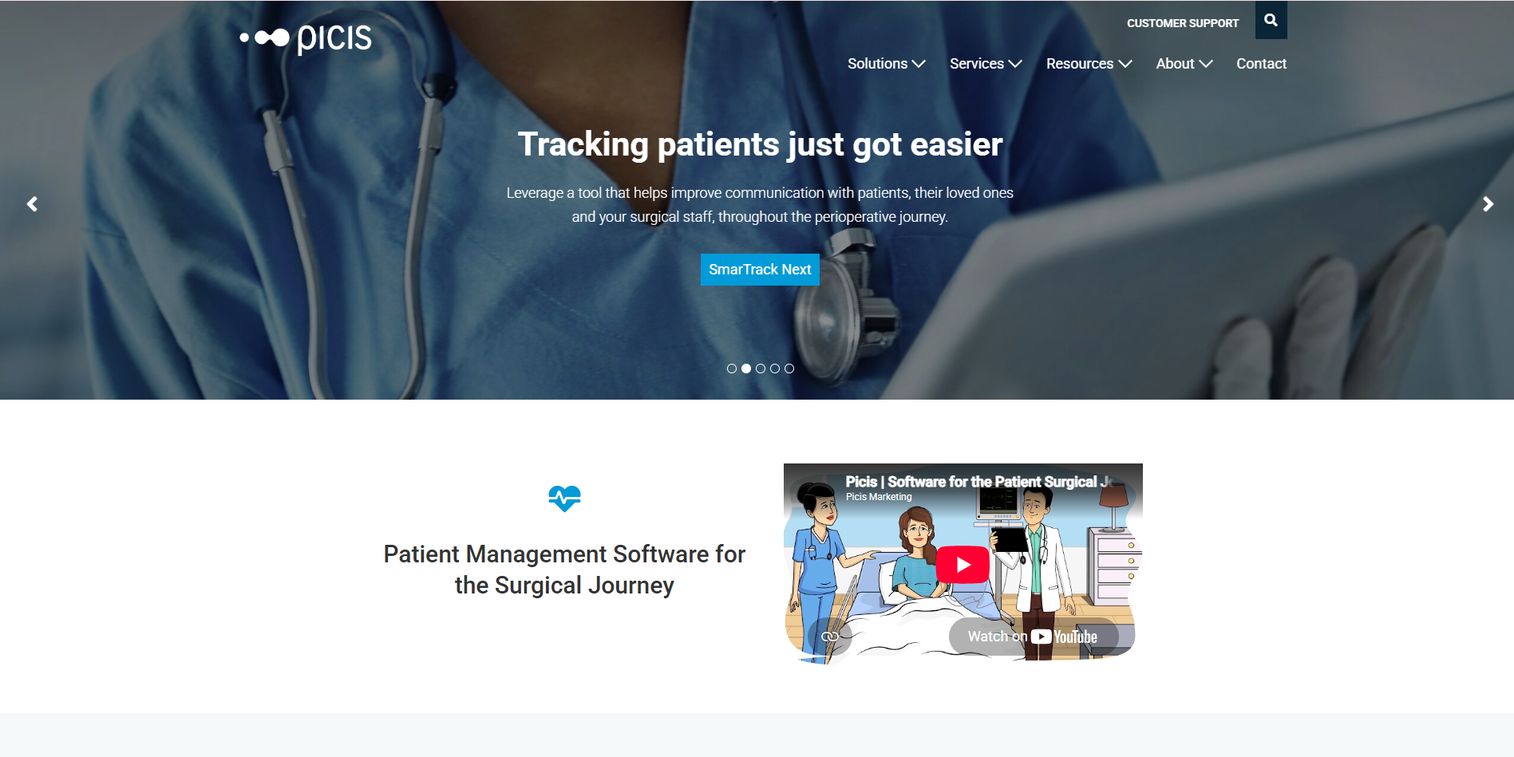
Picis OR Manager is a perioperative operating room management platform that handles scheduling, documentation, supply tracking, billing, and quality reporting inside one workflow. It is built for hospitals and surgical facilities that need to manage the full perioperative journey, not just the calendar. That breadth is why larger hospitals with complex service lines tend to shortlist it.
The scheduling layer covers surgical case scheduling and block utilization, but the real depth shows up around it. Intraoperative documentation and nursing charting live in the same system, so the record follows the case. Supply chain, tissue and implant tracking, and integrated billing close the loop between what happened in the room and what gets captured for cost and compliance.
Best for: Hospitals and surgical facilities managing perioperative workflows end to end.
Key features
- Surgical scheduling and block utilization
- Intraoperative documentation and nursing charting
- Supply chain, tissue and implant tracking, and integrated billing
- Quality and regulatory reporting
Why choose Picis OR Manager: If your pain is fragmentation, one system for scheduling, cost capture, and implant documentation, Picis is built for that consolidation. It fits teams ready to run perioperative operations from a single platform rather than stitching point tools together.
Picis OR Manager pricing: Picis does not publish public pricing for OR Manager. Pricing is arranged directly through the vendor based on facility size and module scope.
2. TAGNOS OR Planning
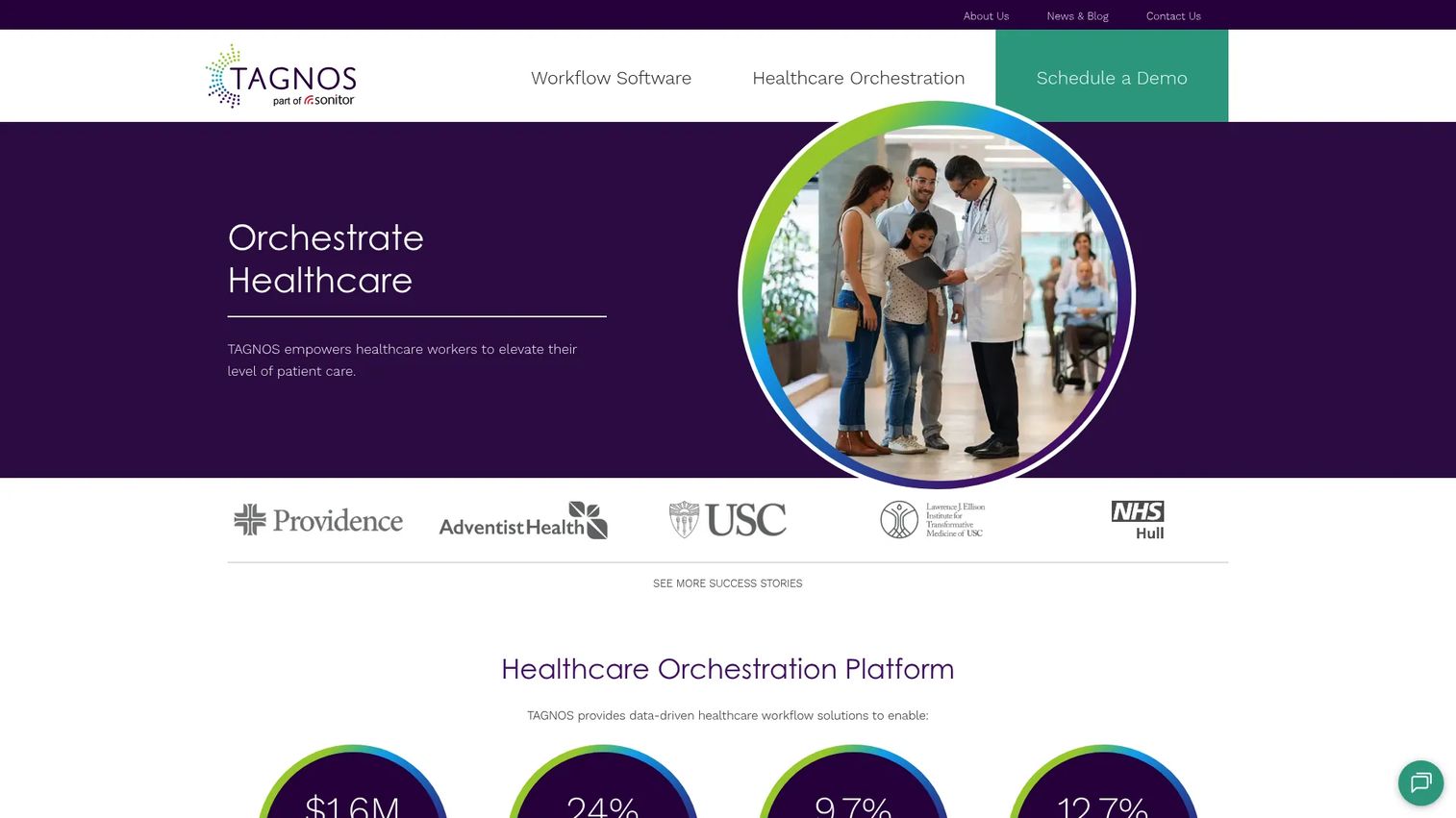
TAGNOS OR Planning is healthcare workflow orchestration software for operating rooms, emergency departments, and asset management. Its OR Planning module focuses on scheduling coordination, turnover insights, and the throughput analytics that operations teams actually plan around. If your priority is measurable operational visibility, TAGNOS is built for it.
The platform leans analytics-first. Predictive case lengths and KPI dashboards give schedulers a realistic picture of the day before it starts, and asset visibility down to surgical tray level cuts the scramble that delays turnovers. ED Planning and asset management extend the same orchestration logic across the hospital.
Best for: Hospitals looking to optimize OR, ED, and asset workflows with a data-driven approach.
Key features
- OR Planning for scheduling and turnover insights
- ED Planning for throughput and staff modeling
- Asset visibility, management, and surgical tray tracking
- KPI dashboards and predictive case-length reporting
Why choose TAGNOS OR Planning: Choose TAGNOS when throughput planning and operational analytics matter more than a full perioperative suite. It suits operations leaders who want to model, measure, and rebalance rather than just schedule.
TAGNOS OR Planning pricing: TAGNOS does not list public pricing. The site routes to a demo and contact flow, and pricing is quoted per deployment.
3. SurgiStream
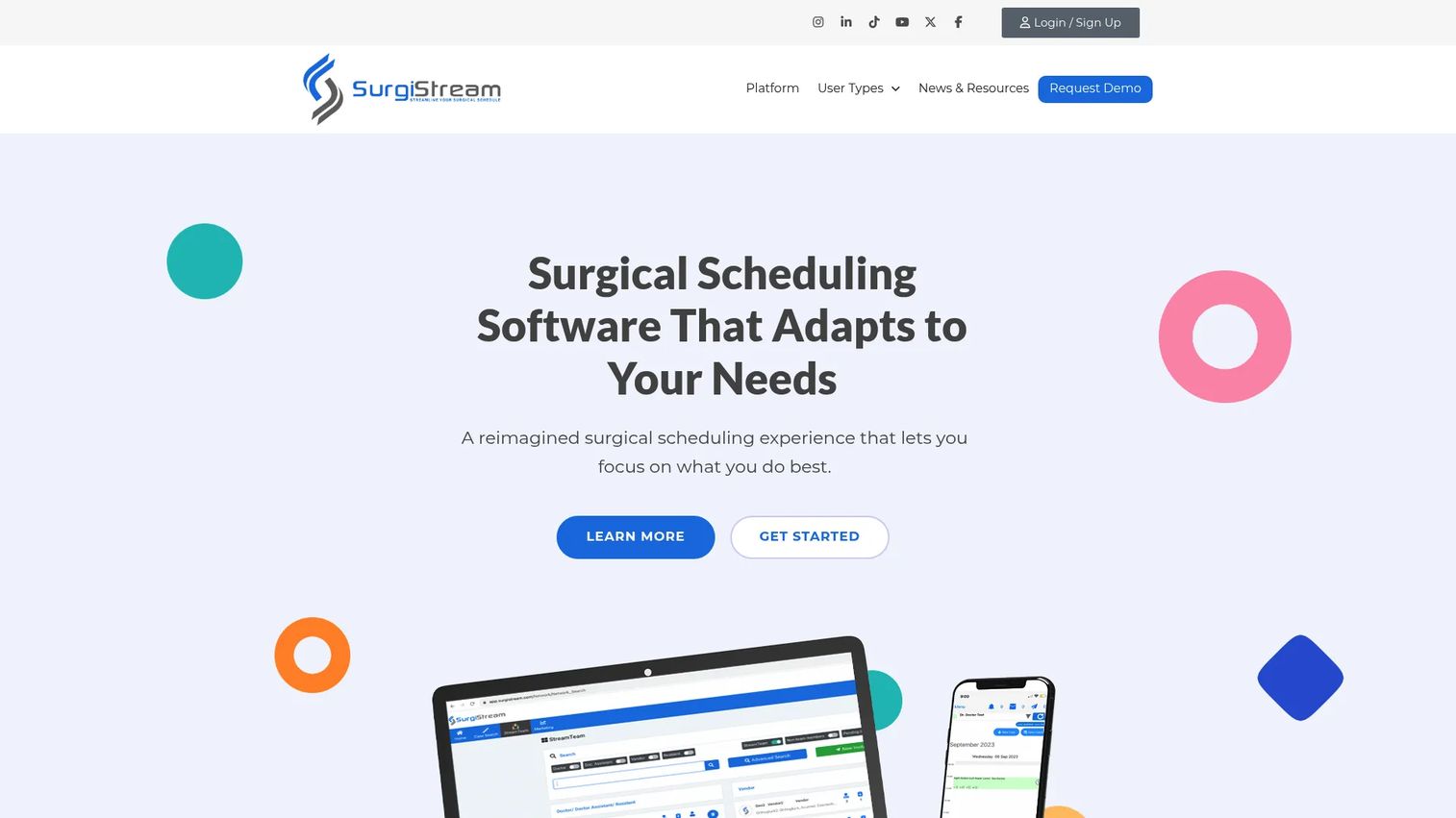
SurgiStream is surgical scheduling software for coordinating schedules, vendors, facilities, and patient communication. It is a practical, efficiency-focused option for surgical teams and surgery centers that work across multiple facilities and vendors and need everyone reading from the same schedule.
Access spans web, iPhone, and iPad, which matters for surgeons and coordinators who are rarely at a desk. Vendor and facility integration keeps outside reps and locations in sync, and the platform supports the operational plumbing around a case: pre-authorizations, intra-op imaging, charge codes, billing, and audit support. It is less a full perioperative suite and more a focused coordination layer.
Best for: Surgical teams and surgery centers needing scheduling coordination across vendors and facilities.
Key features
- Web, iPhone, and iPad access
- Vendor and facility integration
- Pre-authorization, intra-op imaging, and charge code support
- Billing and audit workflows
Why choose SurgiStream: SurgiStream fits teams whose main friction is coordinating across facilities and vendors rather than deep in-room documentation. Mobile-first access makes it practical for distributed surgical services.
SurgiStream pricing: SurgiStream offers a free trial, and full pricing is customized after a demo. No public numeric pricing is listed.
4. PerfectServe Lightning Bolt Scheduling
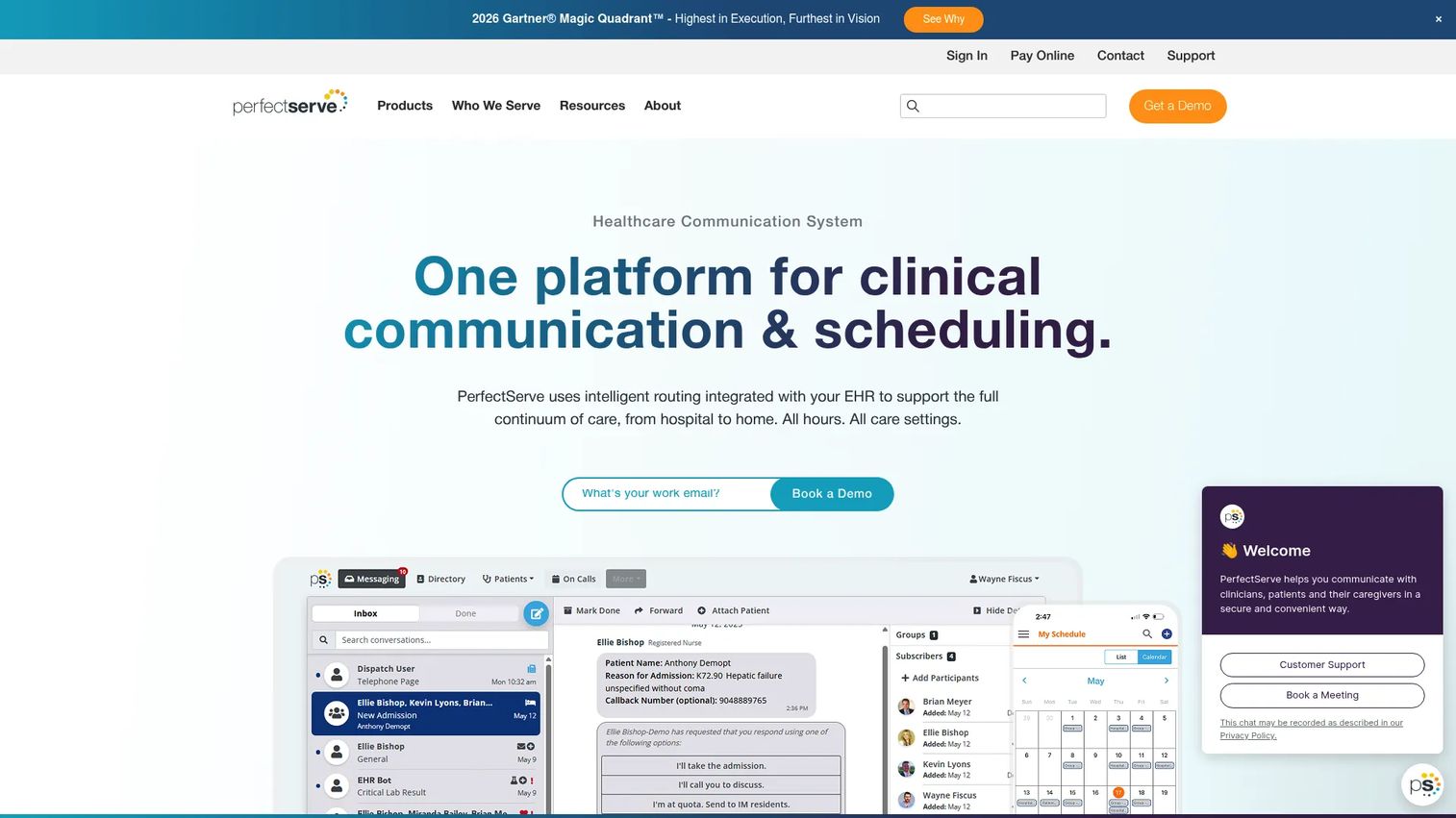
PerfectServe Lightning Bolt Scheduling is healthcare provider scheduling software that auto-generates balanced schedules and ties into clinical communication workflows. Where most tools on this list schedule rooms and cases, Lightning Bolt is strongest on the provider side: building fair, rules-based physician and staff schedules that hold up under real constraints.
The automation is the draw. It creates and manages schedules against unlimited rules and requirements, then gives providers real-time access and shift-swap capability from any device. Because it sits inside PerfectServe's broader communication platform, the schedule and the people on it stay connected, which supports tighter OR management coordination.
Best for: Hospitals and medical groups needing advanced provider scheduling with communication integrations.
Key features
- Automated, balanced schedule creation
- Unlimited scheduling rules and requirements
- Real-time schedule access and shift swaps
- Integration with clinical communication workflows
Why choose PerfectServe Lightning Bolt Scheduling: Choose Lightning Bolt when provider scheduling complexity, not room logistics, is your bottleneck. It fits organizations that want automated, defensible schedules linked to how teams actually communicate.
PerfectServe Lightning Bolt Scheduling pricing: PerfectServe does not publish a numeric price for Lightning Bolt. Pricing is quote-based through the vendor.
5. LeanTaaS iQueue for Operating Rooms
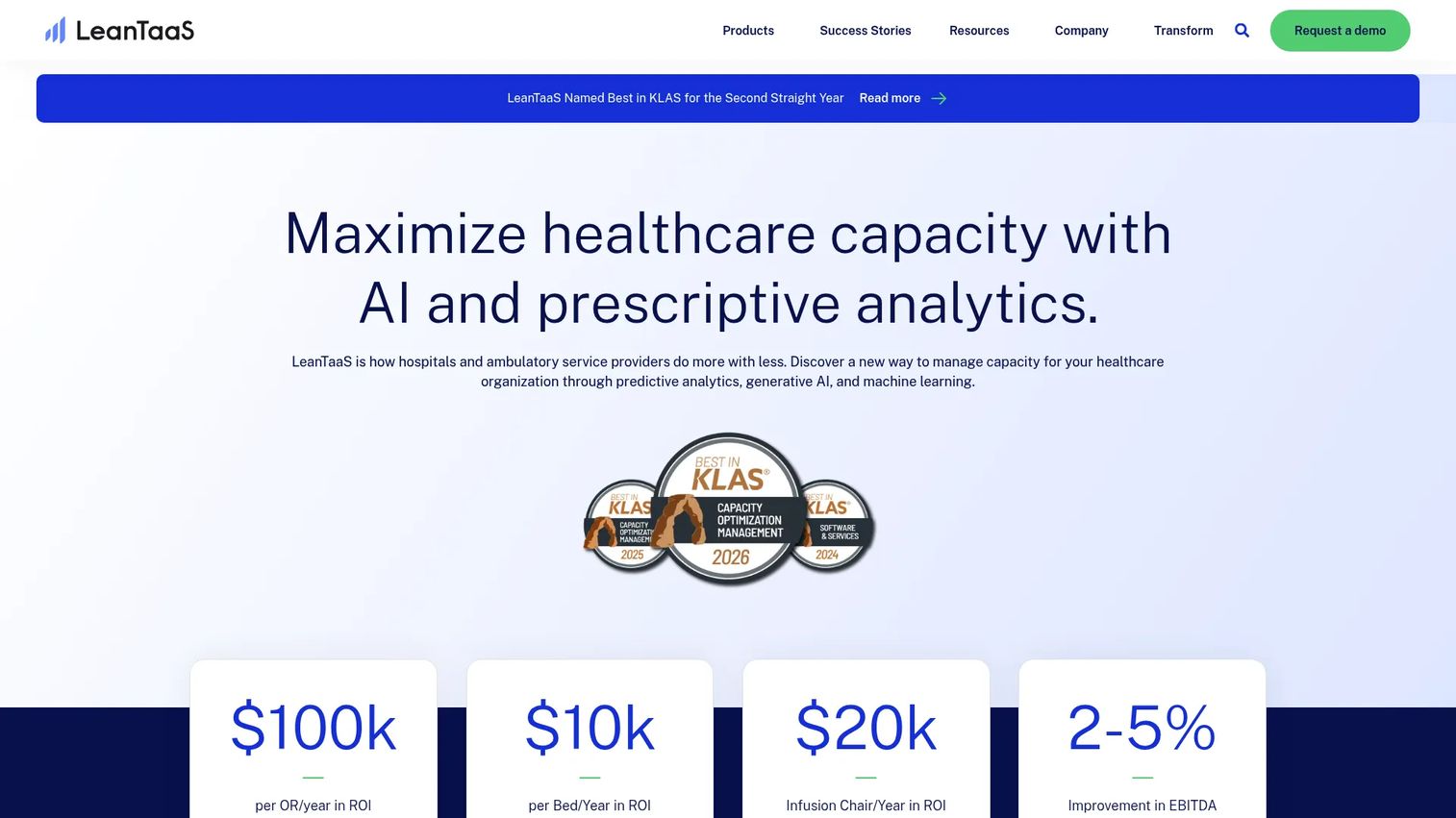
LeanTaaS iQueue for Operating Rooms is AI and machine-learning-based capacity management software for hospitals and health systems. It is the platform to look at when block utilization is the number you are trying to move. Instead of just displaying utilization, iQueue predicts and prescribes: which blocks to collect, where open time exists, and how to redistribute it toward demand.
Real-time analytics and prescriptive recommendations sit at the core. Block and open-time management surfaces underused allocation automatically, and case scheduling and staffing forecasting help match resources to the real shape of the day. For health systems where a few points of utilization translate into meaningful surgical volume, that predictive layer is where the value concentrates.
Best for: Hospitals seeking to optimize OR utilization, scheduling, and staffing with predictive analytics.
Key features
- Real-time analytics and prescriptive recommendations
- Block and open-time management
- Case scheduling support
- Staffing forecasting
Why choose LeanTaaS iQueue for Operating Rooms: Choose iQueue when your priority is squeezing more surgical volume out of existing rooms through smarter block utilization. It fits data-mature health systems that want the software to recommend, not just report.
LeanTaaS iQueue for Operating Rooms pricing: LeanTaaS does not publish public pricing. Pricing is arranged directly with the vendor based on system size and scope.
6. Qventus
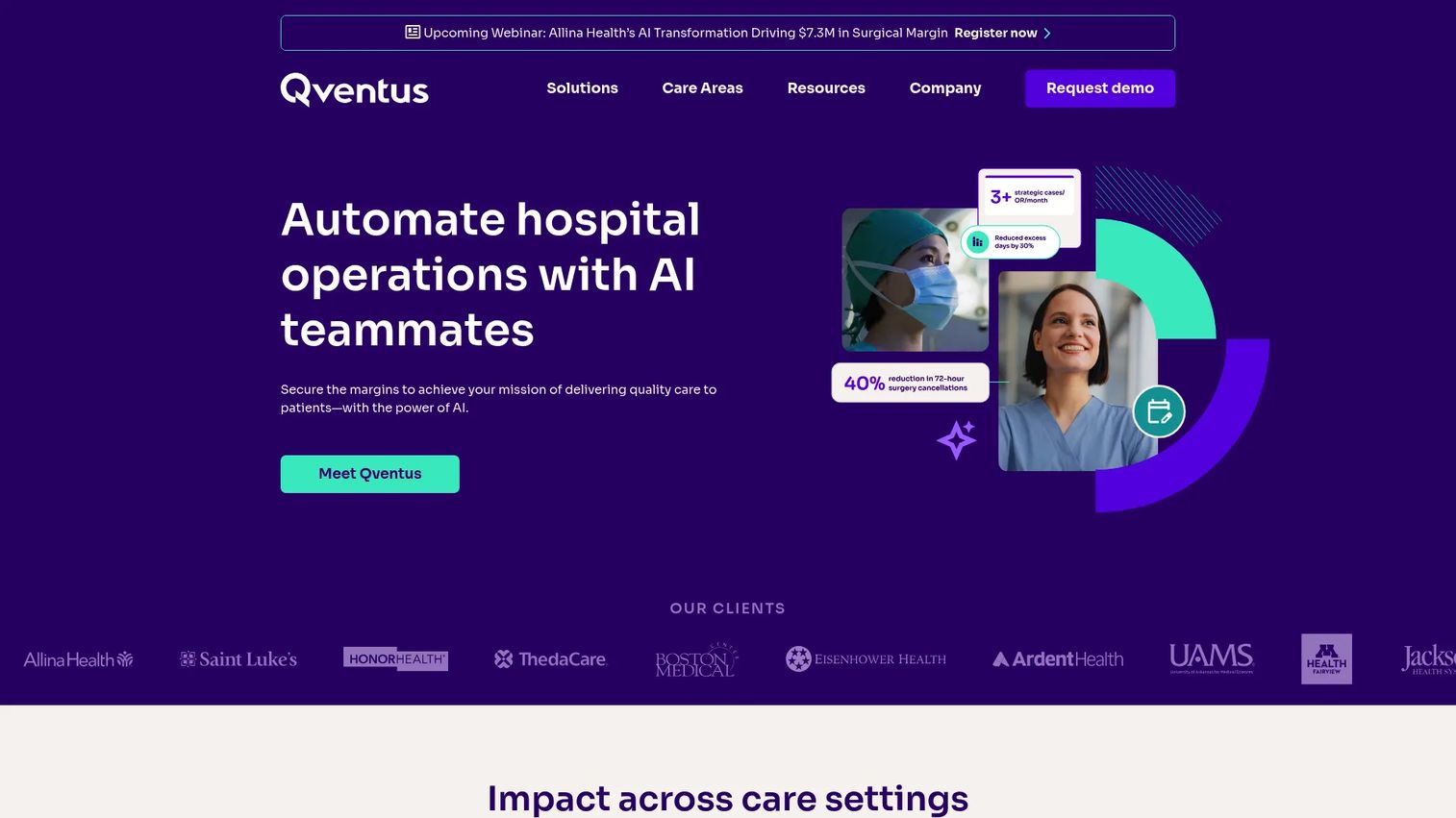
Qventus is an AI-powered healthcare operations automation platform for hospitals and health systems. It reaches beyond scheduling into broader operational orchestration, with dedicated solutions for surgical growth, perioperative coordination, and inpatient capacity. For operations teams that want workflow automation across the hospital, not just the OR calendar, Qventus fits that ambition.
Its AI operational assistants surface tasks and recommendations to frontline staff, and EHR-integrated workflow automation means the platform acts on real clinical data rather than a separate schedule. The perioperative solution targets surgical throughput and coordination, which connects OR performance to the wider operational picture.
Best for: Hospitals and health systems automating hospital operations and care-team workflows.
Key features
- AI operational assistants for frontline staff
- EHR-integrated workflow automation
- Surgical growth and perioperative coordination solutions
- Inpatient capacity management
Why choose Qventus: Choose Qventus when perioperative scheduling is one piece of a larger operations-automation goal. It suits teams looking to orchestrate workflows across surgical and inpatient settings from one platform.
Qventus pricing: Qventus does not list public pricing. Pricing is arranged directly with the vendor.
7. Oracle Health Surgical Scheduling
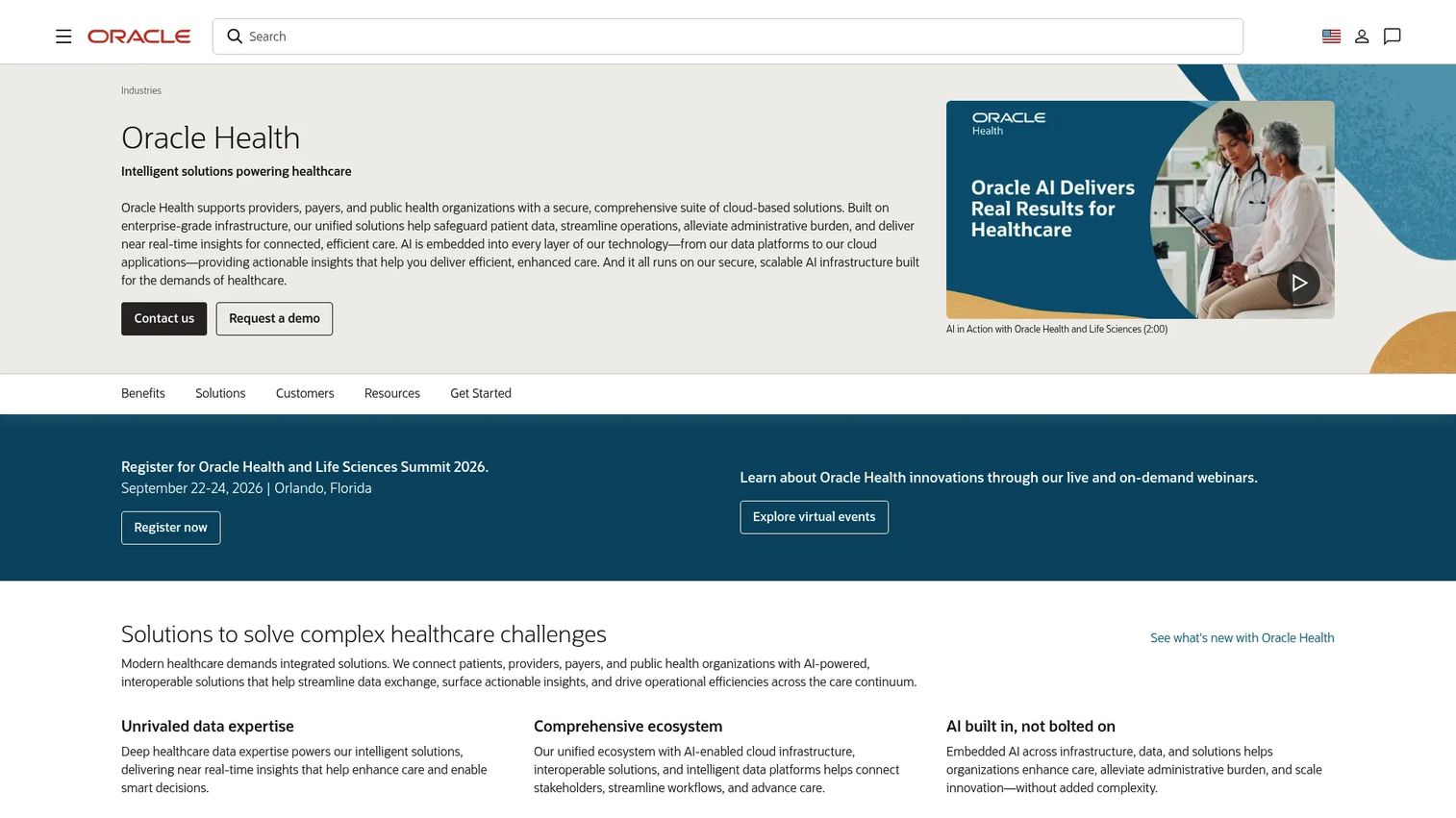
Oracle Health Surgical Scheduling is part of Oracle's perioperative and EHR workflow suite, coordinating surgical cases and related patient flow inside an integrated environment. The case for it is straightforward: if your health system already runs on Oracle Health, keeping surgical scheduling in the same ecosystem avoids the integration overhead of a separate tool.
Centralized scheduling tools handle perioperative workflows, with near real-time case updates and reporting so the surgical schedule stays current across the record. Because scheduling lives inside the EHR, patient data, orders, and case information move together rather than syncing across systems, which matters for enterprise governance and IT fit.
Best for: Healthcare organizations needing Oracle-based perioperative scheduling within an integrated EHR environment.
Key features
- Centralized perioperative scheduling tools
- Near real-time case updates and reporting
- Integrated surgical workflow support within the EHR
- Enterprise governance and IT alignment
Why choose Oracle Health Surgical Scheduling: Choose Oracle Health when you are already committed to its EHR and want surgical scheduling that lives natively inside it. The value is in consolidation and governance rather than standalone scheduling depth.
Oracle Health Surgical Scheduling pricing: Oracle does not publish a discrete public price for surgical scheduling. Oracle Health references a pay-as-you-go model, but pricing is arranged through Oracle.
8. InterSystems HealthShare

InterSystems HealthShare is a healthcare interoperability and analytics platform for sharing, unifying, and using health data across a system. It is an integration-first option rather than a dedicated scheduler. For complex health systems where the real challenge is getting scheduling and clinical data to flow cleanly between systems, HealthShare is the connective layer.
FHIR-enabled integration and interoperability let disparate systems exchange data, including scheduling and case information. A Unified Care Record pulls longitudinal patient data into one view, and built-in analytics surface real-time care insights. HealthShare deploys on premises, in the cloud, or as a fully managed solution, giving IT teams flexibility on architecture.
Best for: Healthcare organizations needing interoperability, unified patient records, and analytics.
Key features
- FHIR-enabled integration and interoperability
- Unified Care Record for longitudinal data
- Analytics and real-time care insights
- Flexible on-premises, cloud, or managed deployment
Why choose InterSystems HealthShare: Choose HealthShare when your scheduling problem is really a data-exchange problem across many systems. It fits enterprise IT teams prioritizing interoperability and unified records over a single-purpose OR scheduler.
InterSystems HealthShare pricing: InterSystems does not publish public pricing for HealthShare. Deployment model and scope determine cost, arranged with the vendor.
9. Nines

Nines is operational management software focused on structured coordination, centralizing tasks, checklists, documents, and inventory with granular permissions and expert support. It approaches operations from a coordination and accountability angle, keeping complex, multi-party workflows organized in one hub with clear ownership.
The platform's strength is structure: tasks, checklists, documents, and inventory in a single place, with permissions that control who sees and does what. For teams whose core need is streamlined operational coordination and a reliable single source of truth, that organized backbone is the draw.
Best for: Teams needing a secure, structured operations hub with clear ownership and permissions.
Key features
- Centralized tasks, checklists, and documents
- Inventory tracking in one place
- Granular permissions and access control
- Expert backup and support
Why choose Nines: Choose Nines when structured coordination and accountability across a complex operation are the priority. It suits teams that want one organized hub with tight permission control rather than a clinical scheduling engine.
Nines pricing: Nines does not list public pricing. Pricing is communicated by a Nines representative and set in an order form.
10. Meditech Expanse Surgery Management

Meditech Expanse Surgical Services is a surgical workflow module inside the Expanse EHR platform. Like Oracle Health, its main advantage is native integration: for hospitals already running Meditech Expanse, surgery scheduling lives in the same environment as the rest of the record, with no separate system to maintain.
The module covers case scheduling and rescheduling, preference card support, and inventory and materials management. Biller and manager desktops connect surgical activity to the revenue cycle, so scheduling, documentation, and billing stay linked. It is a solid fit for Meditech customers who want surgical workflows without adding a third-party scheduler.
Best for: Hospitals and health systems needing integrated OR scheduling, documentation, and inventory inside Meditech Expanse.
Key features
- Case scheduling and rescheduling
- Preference card support
- Inventory and materials management
- Biller and manager desktops with revenue cycle integration
Why choose Meditech Expanse Surgery Management: Choose Expanse Surgical Services when you already run Meditech and want surgical scheduling native to your EHR. The value is integration and revenue cycle alignment, not standalone scheduling analytics.
Meditech Expanse Surgery Management pricing: Meditech does not publish current public pricing for Surgical Services. Pricing is arranged directly with Meditech.
Considerations before you buy
Shortlisting is easy. Choosing well takes a checklist. Here is what to pressure-test before you commit.
Scheduling depth vs operational breadth
Decide whether you need a focused scheduler or a full perioperative suite. Tools like SurgiStream and Lightning Bolt concentrate on scheduling and coordination, while Picis and Meditech extend into documentation, cost capture, and billing. Buying more than you need adds cost and complexity; buying less leaves gaps you will feel daily.
EHR and EMR integration depth
Integration is where OR scheduling projects succeed or stall. Confirm exactly how a platform connects to your EHR or EMR, whether that is native (Oracle Health, Meditech) or interoperability-driven (InterSystems HealthShare). Shallow integration means duplicate data entry and stale schedules, so verify depth, not just a logo on an integrations page.
Analytics and reporting fit
Utilization dashboards, block utilization tracking, and predictive case lengths are only useful if your team will act on them. TAGNOS and LeanTaaS lead here. Ask what the platform reports out of the box, whether it supports your specific KPIs, and how easily managers can pull the numbers they defend to leadership.
Real-time visibility and coordination
A schedule that updates in one place but not others recreates the problem you are trying to solve. Test how changes propagate across surgeons, anesthesiology, nursing, and rooms in real time. Mobile access, like SurgiStream's web and iPad support, matters for staff who are never at a desk.
Implementation and change management
The best software fails if adoption stalls. Evaluate rollout timelines, training support, and how much clinical workflow disruption to expect. A tool that fits how your teams already work will earn its place faster than one that demands a process overhaul on day one.
Conclusion
The right operating room scheduling software depends on what is actually breaking in your service.
For the deepest perioperative workflow suites, Picis OR Manager and Meditech Expanse Surgery Management cover scheduling, documentation, and cost capture end to end. For analytics-first operations, TAGNOS OR Planning and LeanTaaS iQueue for Operating Rooms lead on throughput planning and block utilization. For scheduling coordination and communication, SurgiStream and PerfectServe Lightning Bolt Scheduling keep teams and schedules in sync. And for enterprise health systems, Oracle Health, InterSystems HealthShare, and Qventus fit organizations already invested in those ecosystems.
Do not try to compare all ten at once. Shortlist two or three that match your primary pain, whether that is block utilization, integration depth, or reporting. Then run each against your real numbers: current block utilization, first case on-time starts, turnover time, and the EHR you already run. The platform that improves those metrics without fighting your existing stack is the one worth the investment.
Better scheduling is not an admin upgrade. It is a throughput, access, and revenue system, and it is worth choosing deliberately.
FAQs
There is no single best platform. The right choice depends on whether your hospital needs deep perioperative workflow automation (Picis OR Manager, Meditech Expanse), analytics and throughput planning (TAGNOS, LeanTaaS iQueue), or enterprise EHR integration (Oracle Health, InterSystems HealthShare). Match the tool to your primary pain point rather than chasing the longest feature list.
It tracks assigned block time against actual usage, surfaces unused or unreleased time, and reveals scheduling patterns across surgeons and service lines. Managers use that visibility to rebalance capacity toward the surgeons and specialties that reliably fill their blocks. Platforms like LeanTaaS iQueue go further, predicting where open time exists and recommending how to redistribute it.
Prioritize real-time visibility across surgeons, staff, and rooms, conflict resolution that flags clashes before they hit the schedule, utilization dashboards and analytics, EHR or EMR integration, and staff coordination. The exact weighting depends on whether your bottleneck is scheduling, documentation, or operational analytics.
Yes, by improving coordination, real-time visibility, and communication so a single case change updates everyone at once instead of leaving teams working off different versions of the day. It reduces the delays caused by miscommunication and double-booking. Process discipline still matters, though; software supports good workflows, it does not replace them.
Many platforms support EHR or EMR integration, but depth varies significantly. Native options like Oracle Health and Meditech Expanse schedule inside the EHR itself, while interoperability platforms like InterSystems HealthShare connect systems through FHIR-based data exchange. Always verify how a specific tool connects to your hospital stack before committing.
Common metrics include block utilization, first case on-time starts, turnover time between cases, cancellation rates, patient access and surgical volume, and revenue per OR hour. Together these show whether scheduling is running rooms at capacity or leaking time and access. Most analytics-focused platforms report these on utilization dashboards.
Scheduling is one part of the broader OR management category. OR scheduling software focuses on block scheduling, case scheduling, and real-time coordination, while operating room management software extends into cost capture, implant and tissue documentation, preference cards, and quality reporting. Suites like Picis OR Manager and Meditech Expanse cover both, whereas focused tools concentrate on scheduling and coordination.