
An officer walks a block, chalks tires, and writes tickets by hand. Two hours later, half those citations bounce because a plate was mistyped or a payment never posted. The enforcement work happened. The revenue and the compliance record did not.
That gap is the real problem parking enforcement software solves. It is not about writing more tickets. It is about closing the loop between the moment an officer flags a violation and the moment a citation is paid, appealed, or escalated to collections. When license plate recognition, handheld ticketing, payments, and adjudication run on one system, the data stays clean and the money follows.
The market is scaling fast. The parking management software market is projected at US$2.6B in 2026, rising to US$7.8B by 2033, according to Persistence Market Research. The broader smart parking systems market was valued at US$9.2B in 2025, per Global Market Insights. Buyers are consolidating manual workflows into connected parking enforcement solutions that tie field operations to the back office.
This guide compares seven parking ticket software platforms and shows where each fits, from municipal enforcement teams to campuses and private lots.
What's inside
This guide is for parking operators, municipal teams, campus administrators, and operations leaders evaluating parking enforcement solutions in 2026. We chose tools based on four criteria:
- Enforcement depth: citation issuance, LPR, e-chalking, and officer field workflows
- Back-office connection: how enforcement ties to payments, collections, and adjudication
- Deployment fit: cloud, offline capability, and hardware flexibility
- Operating model match: municipality, campus, private operator, or mixed-use
No pay-to-play placement. Where public pricing exists, we cite it. Where it does not, we say so plainly.
TL;DR
- Best all-in-one for municipalities: iParq connects citations, LPR, e-chalking, scofflaw controls, payments, collections, and adjudication in one platform.
- Best for connected field operations: Passport pairs GPS tracking and real-time synchronization with citation issuance, LPR, and back-office appeals.
- Best broad operations stack: gtechna covers AI LPR, ticket-by-mail, collections, kiosks, and digital permits for cities that want more than citations.
- Best for revenue control environments: Flash Parking brings cloud-born enforcement into a larger parking technology stack with real-time dashboards.
- Best for workplace and private parking: Wayleadr handles access and compliance workflows for offices and multifamily properties.
- Best for venue and enterprise operations: ParkHub ties occupancy, payments, and enforcement visibility together at scale.
- Best for large institutions and campuses: T2 Systems offers permits, enforcement modules, and reporting in one broad parking platform.
What is parking enforcement software?
Parking enforcement software is a system that helps officers issue citations, verify violations, and connect enforcement activity to payments, appeals, and collections. It replaces handwritten tickets and disconnected spreadsheets with a workflow that runs from the curb to the cashier.
Modern parking compliance software runs in the cloud, syncs field data in real time, and gives back-office teams a single record for every citation. It usually pairs with handheld devices or mobile apps so officers can scan plates, capture evidence, and print or mail tickets on the spot.
Core features to expect in a parking enforcement system:
- License plate recognition (LPR): fixed or mobile cameras that read plates and flag violations, expired permits, and scofflaw vehicles automatically
- Citation issuance: handheld parking enforcement devices or mobile apps that generate tickets with photos, GPS, and time stamps
- E-chalking: digital tire tracking that replaces physical chalk and logs how long a vehicle has overstayed
- Scofflaw management: flags repeat offenders and triggers booting and towing automation when thresholds are met
- Payments: online, kiosk, and in-person options that post to the citation record instantly
- Collections workflow: automated escalation for unpaid tickets, including ticket-by-mail and third-party recovery
- Adjudication workflow: appeals intake, hearing scheduling, and decision tracking
- Offline ticketing: the ability to issue citations without connectivity and sync later
- Reporting dashboards: real-time visibility into citation volume, revenue, and officer activity
The strongest cloud-based parking enforcement platforms treat these as one connected flow, not separate modules stitched together after the fact.
When to use parking enforcement software
Enforce parking across a municipality
Cities issuing thousands of citations a month need parking ticket enforcement software that connects officers, payments, and courts. When a resident disputes a ticket, the adjudication record should already be in the system. When a ticket goes unpaid, collections should trigger without manual chasing. This is where an integrated parking enforcement system earns its keep.
Manage compliance on a campus
Universities juggle permits, visitor parking, and enforcement across large lots. Parking lot enforcement software with LPR reads permit status against a live database, so officers spend less time verifying and more time covering ground. Digital permits and self-service portals cut the support load.
Control revenue in private and mixed-use lots
Private operators care about occupancy, revenue recovery, and clean audit trails. Parking citation software here often lives inside a broader parking technology stack that handles payments, access control, and reporting. Enforcement becomes one signal in a larger revenue picture.
Parking enforcement software comparison
Here is a side-by-side view of the seven tools. Public pricing is sales-led across this category, so most vendors route buyers to a demo rather than list numbers. We note ratings where a verified source exists.
| # | Product | Best for | Key use case | Pricing | G2 rating |
|---|---|---|---|---|---|
| 1 | iParq | Municipalities and campuses | All-in-one citations, LPR, e-chalking, payments, collections, adjudication | Contact sales | Not available |
| 2 | Passport | Cities and operators wanting connected field ops | Citation issuance, LPR, digital chalking, real-time synchronization | Contact sales | Not available |
| 3 | gtechna | Cities and police departments | End-to-end enforcement, AI LPR, ticket-by-mail, collections | Contact sales | 4.4/5 |
| 4 | Flash Parking | Enterprise parking operators | Cloud-born enforcement inside a revenue control stack | Contact sales | Not available |
| 5 | Wayleadr | Workplace and multifamily parking | Access, arrival, and parking compliance management | Contact sales | 4.9/5 |
| 6 | ParkHub | Venue and enterprise operations | Occupancy, payments, and enforcement visibility | Contact sales | Not available |
| 7 | T2 Systems | Large institutions and campuses | Permits, enforcement modules, PARCS, reporting | Contact sales | 4.3/5 |
Best 7 tools for parking enforcement
1. iParq
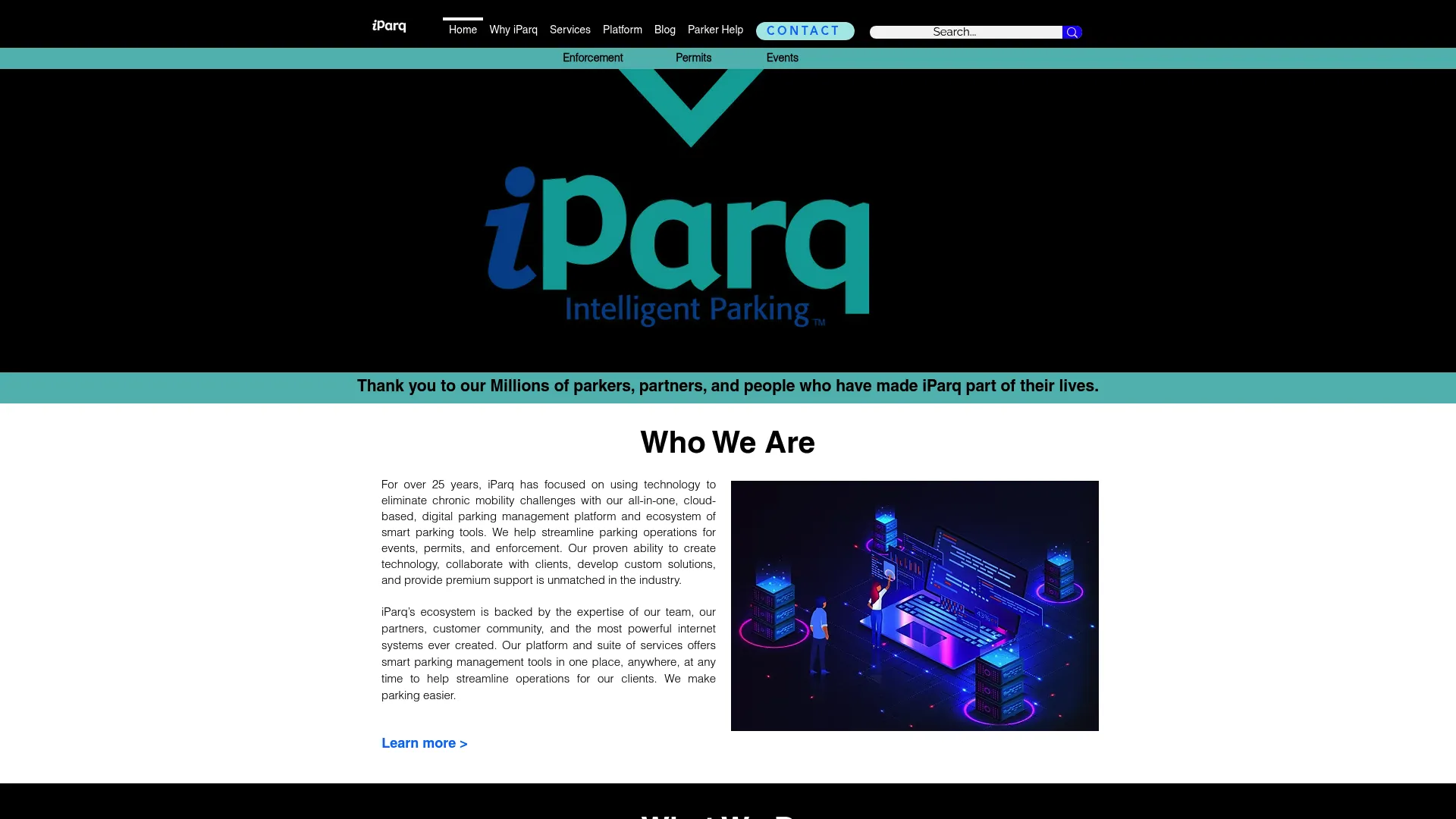
iParq is cloud-based parking management software built for permits, events, and enforcement in one platform. Its enforcement module ties officer field work directly to the back office, so a citation written on the street lands in the payment and adjudication record without a re-entry step. For municipal teams tired of running enforcement, collections, and appeals as separate systems, that single-record approach is the draw.
The platform covers the full parking ticket enforcement software workflow. Officers use LPR and handheld devices to scan plates and issue tickets with photo evidence. E-chalking replaces physical chalk with digital tire tracking, logging overstay time automatically. Scofflaw management flags repeat offenders and supports booting and towing automation when a vehicle crosses a violation threshold.
Best for: municipalities and campuses that want citations, collections, and adjudication in one parking enforcement system.
Key strengths
- Enforcement with LPR, handheld ticketing, and photo evidence
- E-chalking for digital overstay tracking
- Scofflaw controls with booting and towing triggers
- Payments and collections tied to the citation record
- Adjudication workflow for appeals and hearings
Why choose iParq: if your team wants one system for the entire enforcement-to-revenue loop rather than a citation tool plus three integrations, iParq fits municipal and campus operators well. It leans toward organizations that value a hardware-light, cloud-first setup.
iParq pricing: iParq does not publish public pricing. Product pages route buyers to contact sales for a tailored quote.
2. Passport

Passport is parking compliance, management, and payments software for cities and operators that want connected field operations. Its strength is real-time synchronization: what an officer records on the street shows up in the back office immediately, and rate or restriction changes push back out to the field. That two-way sync keeps enforcement decisions aligned with current policy instead of last week's rules.
The compliance toolkit handles citation issuance, both fixed and mobile LPR, and digital chalking. Officers issue tickets with GPS and time stamps, and the system tracks noncompliance across a city's zones. On the back end, Passport manages appeals, payments, permits, and reporting dashboards, with integrations into the wider parking operations picture.
Best for: cities and operators that want field officers and back-office teams working from the same live data.
Key strengths
- Real-time synchronization between field and back office
- Fixed and mobile LPR for citation issuance
- Digital chalking and noncompliance tracking
- Appeals and adjudication workflow
- Payments, permits, and reporting dashboards
Why choose Passport: teams that struggle with stale data between the curb and the office get the most value here. Passport suits operators running rate and restriction changes often, where field and back office need to stay in step.
Passport pricing: Passport does not display public pricing. Product pages direct visitors to schedule a demo or contact sales.
3. gtechna

gtechna provides parking, transportation, and moving-violations software for governments and institutions. It is built for cities that want a broad parking operations stack, not just a citation tool. The platform runs enforcement and ticketing modules alongside digital permits and online citizen services, so residents can pay, appeal, or manage permits without calling the office.
On enforcement, gtechna pairs LPR integration with citation workflows and adds AI LPR for higher plate-read accuracy. Ticket-by-mail extends enforcement to violations captured by camera, and the collections workflow handles revenue recovery on unpaid citations. Kiosks and business intelligence dashboards round out the operations picture. gtechna holds a 4.4/5 rating on Capterra.
Best for: cities, universities, and police departments that need enforcement plus a wider parking and violations platform.
Key strengths
- Enforcement and ticketing modules with LPR integration
- AI LPR for improved plate-read accuracy
- Ticket-by-mail for camera-captured violations
- Collections workflow for revenue recovery
- Digital permits and citizen self-service
Why choose gtechna: operators that want enforcement to sit inside a broader municipal stack, with citizen self-service and business intelligence, will find the breadth useful. It fits agencies consolidating several point tools into one platform.
gtechna pricing: gtechna does not publish public pricing. Demo and request forms indicate sales-led pricing.
4. Flash Parking
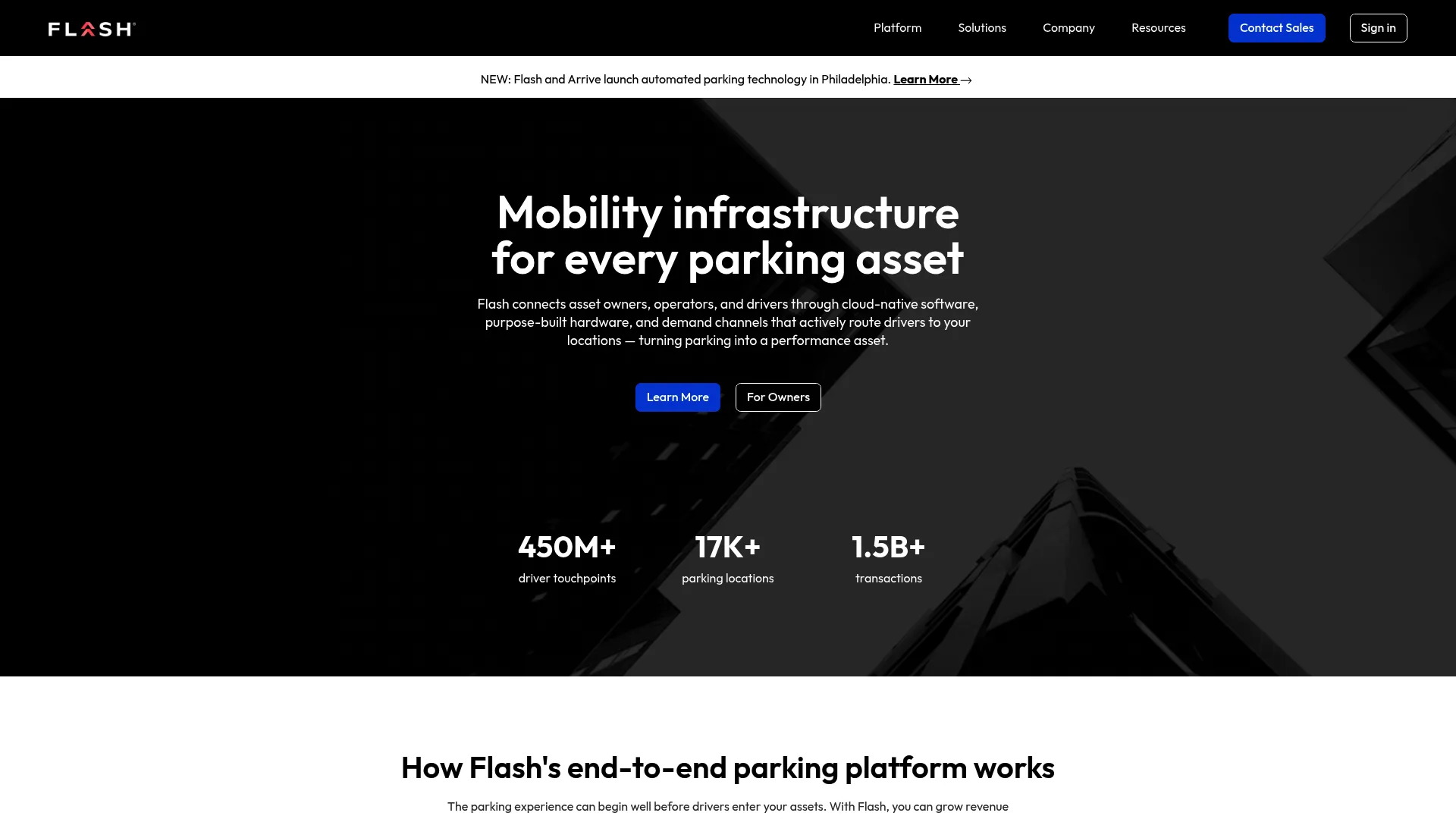
Flash Parking is a cloud-based parking technology and revenue control platform for owners and operators. Enforcement here is one part of a larger stack that includes access control, payments, and EV charging. For operators who see enforcement as a revenue signal rather than a standalone function, that context matters: a citation, an access event, and a payment all live in the same cloud record.
The platform supports both manual and LPR-based enforcement, with AI-enabled cameras handling plate reads and access decisions. Real-time dashboards give operators live visibility into enforcement activity, occupancy, and revenue. Because it is cloud-born, updates and data flow across locations without on-site servers.
Best for: enterprise parking operators who want enforcement inside a configurable access, payments, and revenue control stack.
Key strengths
- Cloud-connected parking technology across locations
- AI-enabled LPR and camera-based access control
- Manual and LPR enforcement options
- Real-time monitoring and analytics dashboards
- EV charging, kiosks, and digital payments
Why choose Flash Parking: operators running mixed enforcement environments alongside gated access and payments get a unified view. It suits teams that treat enforcement as one input in a broader revenue picture rather than a separate workflow.
Flash Parking pricing: Flash Parking does not display public numeric pricing. Its pricing page describes hardware-as-a-service, transactional, and one-time payment models and directs buyers to contact sales.
5. Wayleadr

Wayleadr is arrival and parking management software for workplaces and multifamily properties. It sits a little apart from the municipal tools on this list. Rather than issuing citations to the public, Wayleadr manages parking access and compliance inside private environments, allocating spaces, enforcing booking rules, and controlling who parks where. For an office campus or residential property, that is the enforcement problem worth solving.
The platform handles parking management, EV charging, and digital access control, plus desk and meeting room booking, carpool, and shuttle management. Compliance runs through access rules and space allocation rather than street citations. Wayleadr holds a 4.9/5 rating on G2.
Best for: organizations managing parking and arrival across workplace or residential sites, not public street enforcement.
Key strengths
- Parking management and space allocation
- Digital access control for compliance
- EV charging management
- Carpool, shuttle, and vanpool management
- Desk and meeting room booking
Why choose Wayleadr: if your enforcement challenge is internal, who parks where and whether they follow booking rules, Wayleadr fits far better than a citation-first municipal tool. It is a parking management platform first, with compliance built around access.
Wayleadr pricing: Wayleadr uses custom pricing based on features, employee count, spaces, and add-ons across its Flex, Work, and Home plans. Contact sales for a tailored quote. No free tier is offered.
6. ParkHub
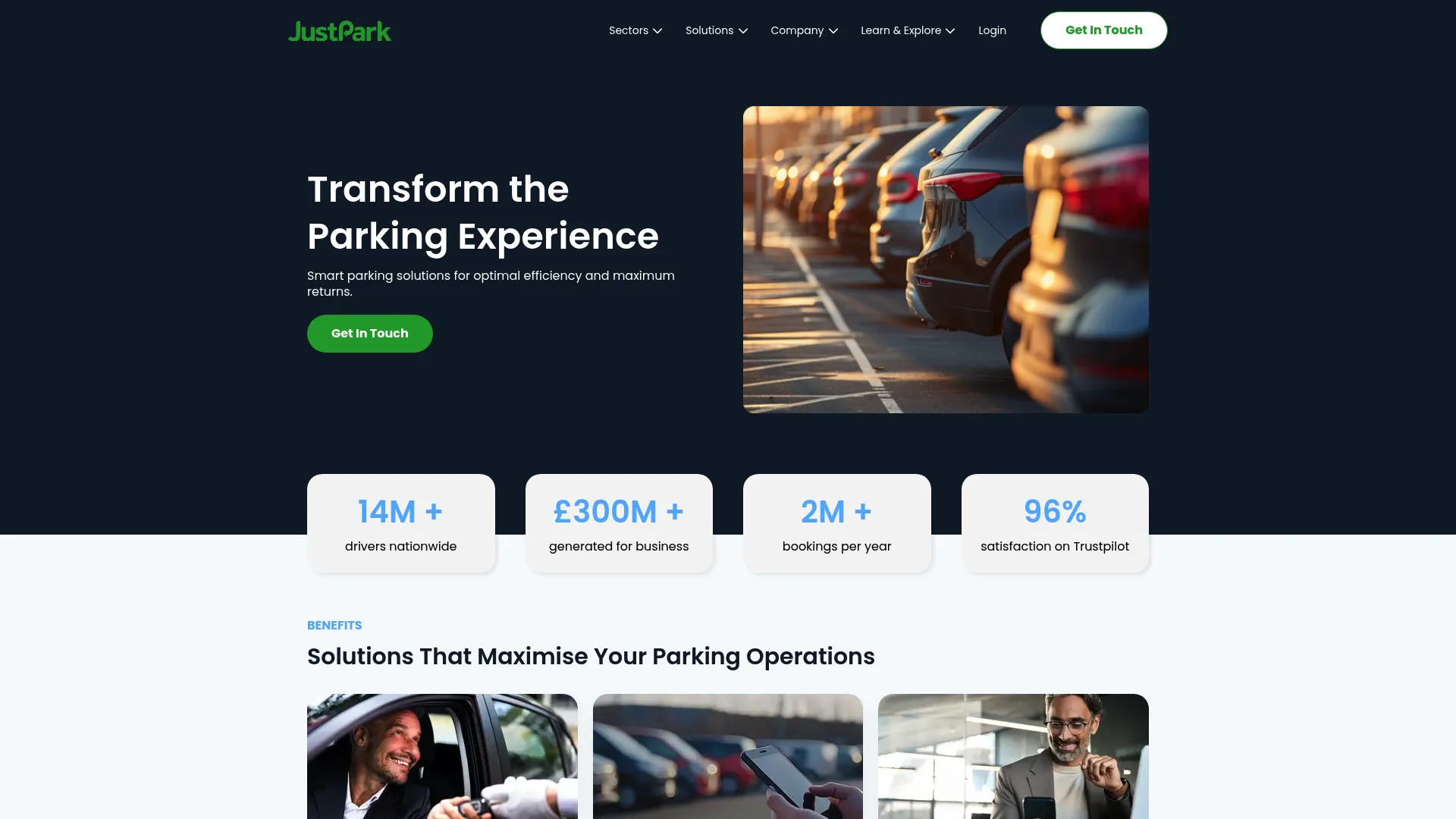
ParkHub is parking management software and hardware built for parking operations, with pass sales, reporting, and integrations. Its enforcement-adjacent value shows up in venue and enterprise settings, where revenue recovery and enforcement visibility matter as much as ticket issuance. When an operation runs mobile point-of-sale across dozens of lots, seeing where revenue leaks and where enforcement is needed is the whole game.
The platform centers on mobile point-of-sale, business intelligence, and digital passes and payments. Operators sell and validate passes in the field, track occupancy and revenue in real time, and connect enforcement visibility to the payment record. It is built for complete parking ecosystems rather than citation-only workflows.
Best for: enterprise and venue operators that need occupancy, payments, and enforcement visibility across many lots.
Key strengths
- Mobile point-of-sale for field transactions
- Business intelligence and real-time reporting
- Digital passes and payments
- Occupancy and revenue tracking across locations
- Integrations for a complete parking ecosystem
Why choose ParkHub: operators managing large-scale or event parking, where the priority is revenue capture and visibility rather than public citations, get a strong fit. It works best as the operational backbone of a venue parking business.
ParkHub pricing: ParkHub does not publish public pricing. It is subscription-based and depends on the number of mobile point-of-sale devices and the size of the parking operation.
7. T2 Systems

T2 Systems is a parking management software and hardware provider covering permits, enforcement, payments, and PARCS. Large institutions and campuses tend to consider it when they need a broad platform rather than a narrowly focused enforcement tool. Enforcement is one module inside a wider system that also handles permits, pay stations, and gated access, which suits operations that want a single vendor across the parking stack.
On enforcement, T2 supports mobile, fixed, and LPR options for citation issuance and compliance. Permit management includes digital permits, self-service, waitlists, and reporting. The platform also covers PARCS, pay stations, mobile payments, and citation services, giving institutions one system for the full parking operation. T2 Systems holds a 4.3/5 rating on G2.
Best for: universities, municipalities, and operators needing an integrated parking management platform with enforcement built in.
Key strengths
- Enforcement with mobile, fixed, and LPR options
- Permit management with digital permits and self-service
- Waitlists and reporting for permit programs
- PARCS, pay stations, and mobile payments
- Citation services across the platform
Why choose T2 Systems: institutions that want permits, enforcement, payments, and gated access from one vendor benefit from the breadth. It fits large campuses and cities standardizing on a single parking platform over a stack of point tools.
T2 Systems pricing: T2 Systems does not publish public pricing. Product pages use request-a-demo and contact-sales language.
Considerations before you buy
Picking parking ticket management software is less about feature counts and more about how the pieces connect. Run through this checklist before you commit.
Enforcement-to-revenue loop
Does a citation written in the field flow into payments, collections, and adjudication without manual re-entry? A disconnected system means officers write tickets that never turn into revenue or clean records. Ask each vendor to walk you through a single citation's full lifecycle.
LPR and hardware fit
Confirm whether the tool supports fixed LPR, mobile LPR, or both, and whether AI plate-reading is included or an upgrade. Check what handheld devices the platform runs on and whether you are locked into proprietary hardware or can bring your own.
Offline capability
Officers do not always have connectivity. Verify that the system supports offline ticketing and syncs cleanly once a device reconnects. A tool that only works online will leave gaps in coverage.
Collections and adjudication depth
Enforcement without recovery is incomplete. Look at how the platform handles unpaid citations, whether it automates ticket-by-mail and third-party collections, and how appeals move through the adjudication workflow. These back-office functions determine whether enforcement actually recovers revenue.
Deployment model and scale
Match the tool to your operation. A municipality needs court and collections depth. A campus needs permit integration. A private operator needs revenue control. Cloud-based parking enforcement scales across locations without on-site servers, which matters if you run many lots.
Conclusion
The right parking enforcement software depends on your operating model, not a feature scoreboard.
For municipalities that want one system across citations, collections, and adjudication, iParq and gtechna both fit, with gtechna adding a broader citizen-services and AI LPR layer. Passport suits cities that need real-time synchronization between field officers and the back office. For campuses and large institutions, T2 Systems offers permits, enforcement, and PARCS from a single vendor.
Private and enterprise operators have different priorities. Flash Parking and ParkHub treat enforcement as one signal inside a larger revenue control and operations stack. Wayleadr solves a different problem entirely: access and compliance for workplace and multifamily parking rather than public street enforcement.
Your next step: shortlist two tools that match your deployment model, then ask each vendor to demo a single citation's full path from LPR read to paid or adjudicated. That end-to-end walkthrough tells you more than any feature list.
FAQs
Parking enforcement software is a system that helps officers issue citations, verify violations with LPR or e-chalking, and connect that activity to payments, appeals, and collections. It replaces handwritten parking ticket software and disconnected spreadsheets with one record per citation, from the curb to the cashier.
Look for LPR, handheld or mobile citation issuance with photo evidence, e-chalking, scofflaw management, and offline ticketing. On the back end, it should handle payments, a collections workflow, and an adjudication workflow. The strongest tools connect all of these so a citation flows from issuance to resolution without re-entry.
License plate recognition uses fixed or mobile cameras to read plates and check them against a live database. It flags expired permits, unpaid citations, and scofflaw vehicles automatically, so officers verify less and cover more ground. AI LPR improves read accuracy in poor lighting or at speed.
Yes. Most platforms post payments directly to the citation record through online, kiosk, and in-person channels. For unpaid tickets, a collections workflow escalates automatically, often including ticket-by-mail and third-party recovery, so revenue does not slip through the cracks.
E-chalking replaces physical tire chalk with digital tracking. Officers log a vehicle's location and time, and the system tracks how long it overstays. It is more accurate than chalk, harder to dispute, and creates a clean timestamped record for the adjudication workflow if a ticket is appealed.
Many do. Offline ticketing lets officers issue citations without connectivity, then syncs the data once the device reconnects. If your coverage area has dead zones, confirm offline support and how the system resolves conflicts when field data syncs back to the back office.
Cities use real-time dashboards to track citation volume, revenue, officer activity, and payment status in one view. This visibility helps allocate officers to high-violation zones, spot revenue gaps, and report outcomes to leadership. Real-time synchronization keeps the numbers current instead of a week behind.
Parking enforcement software focuses on citations, LPR, e-chalking, collections, and adjudication. Parking management software is broader, covering permits, payments, access control, PARCS, and occupancy. Many parking ticket management software platforms bundle both, so enforcement becomes one module inside a wider parking operations system.