Peak demand does not warn you. It arrives on the hottest afternoon of the year, when every air conditioner in your service territory kicks on at once, and your grid has to find capacity it does not have.
The old answer was to build more supply. Fire up a peaker plant. Sign another capacity contract. Both cost money you would rather not spend for a few hours of stress a year.
Demand response flips the equation. Instead of adding supply, you shed or shift load. You pay participants to dial back, and you keep the grid stable without a new turbine.
The market reflects the shift. The global demand response management systems market reached USD 10.47 billion in 2024 and is projected to hit USD 25.92 billion by 2030 at a 15.8% CAGR, according to Grand View Research (2025). That growth means more vendors, more overlap, and a harder buying decision.
The platform you pick decides whether events dispatch cleanly, whether forecasts hold up, and whether your reporting survives regulatory review. Get it wrong and you are managing spreadsheets during a grid emergency.
What's inside
This guide is for utility operators, energy program managers, grid flexibility teams, and software buyers comparing demand response platforms in 2026. We looked at tools that shift or shed load during peak periods, then evaluated them on the criteria that actually matter in operations.
We selected and ranked platforms based on:
- Load control and event dispatch: how the platform triggers, monitors, and executes curtailment
- Forecasting and reporting: capacity forecasting, analytics, and measurement and verification
- Integration depth: connections to thermostats, meters, SCADA, billing, and market systems
- Utility workflow fit: program administration, participant tracking, and settlement
- Segmentation: support across commercial, industrial, and residential programs
TL;DR
- Best for utility program operations: Eaton, with a demand response management system built around administration portals, forecasting, and event strategies.
- Best for end-to-end program services: Enel X, covering deployment through settlement and participant management.
- Best for DER and market connectivity: Enode, with an API-first model for connecting devices and aggregating flexibility.
- Best for enterprise grid integrations: Siemens, with deep smart grid and automation credibility.
- Best for broad energy management: Schneider Electric, spanning utility and building use cases.
- Best for customer engagement and forecasting: Oracle (Opower) for utility communication, Itron for grid-edge data, CPower for commercial and industrial participation.
What is demand response software
Demand response software is a platform that helps utilities and energy operators shift or shed electricity load during peak demand periods, avoiding the need to add expensive supply. It coordinates the signal, the device, and the settlement in one workflow, so a grid operator can call an event and see participants respond in near real time.
The category sits at the center of grid flexibility. As distributed energy resources multiply, the software has to orchestrate thermostats, batteries, EV chargers, and industrial loads across thousands of sites. That orchestration is what separates a modern demand response management system from a manual curtailment process.
Core capabilities to expect:
- Real-time event dispatch and monitoring: call events, send signals, and watch load drop as it happens
- Load control and curtailment execution: direct control of thermostats, equipment, and DERs during events
- Forecasting and analytics: predict available capacity and model event performance before you dispatch
- Measurement and verification: calculate baseline load, quantify reductions, and produce settlement-grade reports
- Integrations: connect to DERs, thermostats, meters, SCADA, billing, and wholesale market systems
- Cloud-based access and role-based workflows: give operators, program managers, and administrators the right view and the right permissions
The best peak load management software treats these as one system, not bolted-on modules. A forecast that does not feed dispatch, or an event that does not flow into M&V, breaks the loop you rely on during a grid event.
Demand-side management sits alongside this category. Where demand response handles short-duration events, broader demand-side management includes energy efficiency and permanent load shaping. Most utility teams need both, and the strongest grid flexibility software supports the overlap.
When to use demand response software
Manage peak load without building new supply
Building capacity for a handful of peak hours is expensive. Demand response lets you handle temporary spikes by paying participants to reduce, which costs far less than a new peaker plant. Use it when your peak demand growth outpaces your capacity plans, or when adding supply is slow, costly, or politically difficult.
Run utility programs with clear monitoring and reporting
A demand response program is only as good as its visibility. You need to track who enrolled, who responded, and how much load actually dropped. Use the software when you run participant programs at scale and need event-level monitoring, dispatch control, and settlement reporting that holds up under regulatory scrutiny.
Connect DERs and market systems into one workflow
Modern programs pull from thermostats, batteries, EV chargers, and industrial loads, then bid that flexibility into wholesale markets. Use demand response software when you need to aggregate distributed resources, manage market participation, and coordinate devices across a fragmented portfolio without stitching together separate tools.
Comparison table
We ranked these eight platforms by relevance to utility and grid flexibility teams evaluating demand response in 2026. Note that most of these vendors sell across broad energy portfolios, so pricing is quote-based and rarely published. Where a G2 rating exists, we listed it. Read the individual sections for the operational detail that a table cannot carry.
| # | Product | Best for | Key differentiator | Pricing | G2 rating |
|---|---|---|---|---|---|
| 1 | Eaton | Utility workflow and load management | DRMS with forecasting, admin portals, and event strategies | Quote-based | 4.3/5 |
| 2 | Enel X | End-to-end program services | Deployment through settlement and participant management | Quote-based | 2.8/5 |
| 3 | Enode | DER and market connectivity | API-first device connection and flexibility aggregation | Free Starter, custom plans | Not listed |
| 4 | Siemens | Enterprise grid integration | Smart grid and automation depth | Quote-based | Not listed |
| 5 | Schneider Electric | Broad energy management | Utility and building energy use cases | Quote-based | 4.4/5 |
| 6 | Oracle (Opower) | Customer engagement | Utility communication and enrollment at scale | Quote-based | 4.0/5 |
| 7 | Itron | Grid-edge and metering | Meter integration and network connectivity | Quote-based | 5.0/5 |
| 8 | CPower Energy Management | Commercial and industrial DR | Virtual power plant and DER monetization | Subscription, quote-based | Not listed |
Best 8 demand response software platforms for 2026
1. Eaton
Eaton is a global intelligent power management company, and its demand response management system is built for utilities that run complex internal workflows. The platform pairs load management with forecasting, asset administration, and event strategies, so a program team can plan capacity, dispatch events, and manage participating assets from one place. Smart thermostat events and role-based data delivery round out the operational picture.
Best for: Utilities that need deep program administration and forecasting inside a single DRMS.
Key features
- Load management and event dispatch
- Capacity forecasting and asset management
- Customer service and administration portals
- Smart thermostat event control
- Role-based data delivery
Why choose Eaton: Utilities with layered internal workflows, from customer service to grid operations, get a platform that ties those functions to demand response instead of running them in parallel systems.
Eaton pricing: Eaton does not publish demand response software pricing, so plan on a quote-based engagement. For reference on its broader hardware catalog, list prices appear on some products in Eaton's UPS selector, such as the 5PX G2 rack/tower at $1,618.00, though that is unrelated to the DRMS.
Eaton holds a 4.3 out of 5 rating on its G2 seller profile, which spans multiple products rather than the DRMS alone.
2. Enel X

Enel X delivers demand response as an end-to-end program service rather than software alone. The company handles deployment, real-time monitoring, settlement, and participant management, which means a utility can lean on Enel X for customer recruitment and performance optimization as well as the technology. That full-service model suits teams that want a partner running the program, not just a tool to operate.
Best for: Utilities that want a managed demand response program covering recruitment through settlement.
Key features
- Program deployment and dispatch
- Real-time performance monitoring
- Settlement and payment processing
- Customer recruitment and enrollment
- Energy management software and digital platforms
Why choose Enel X: If your team lacks the headcount to run participant recruitment and M&V in-house, Enel X's operational depth fills that gap while keeping event performance visible.
Enel X pricing: Enel X doesn't list plan prices. Its pages describe solutions and features, then route buyers to sales for demand response engagements.
Enel X Connect carries a 2.8 out of 5 rating on G2, based on reviews of that specific product rather than the full brand.
3. Enode
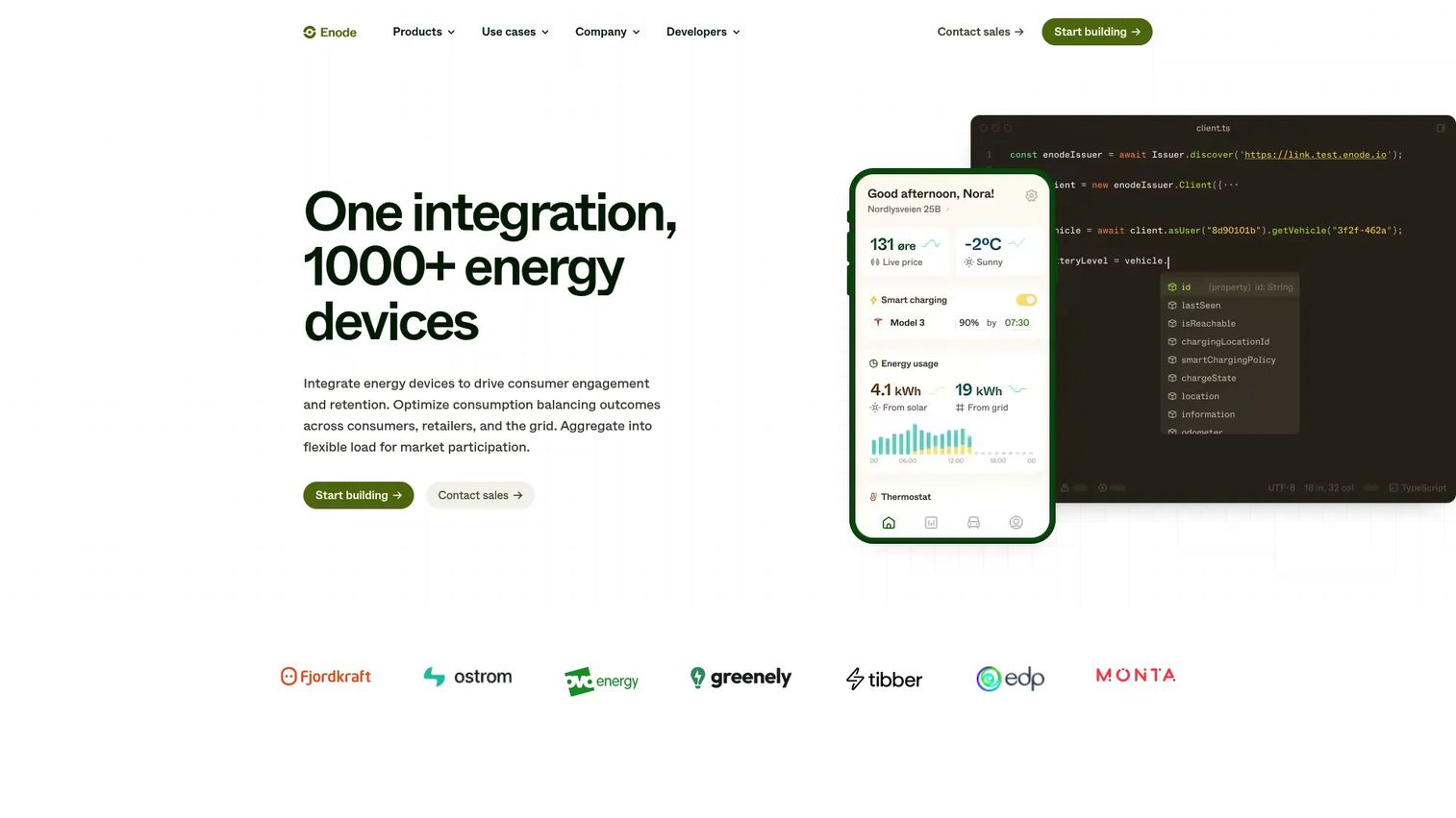
Enode takes an API-first approach to demand response. Instead of a full utility program suite, it provides the connectivity layer that links EVs, chargers, HVAC systems, solar, and batteries, then optimizes them for smart charging and scheduling. For teams building modern flexibility programs, Enode handles the hardware integration and aggregation that market participation depends on.
Best for: Energy and mobility teams building apps that connect to and control home and vehicle energy devices.
Key features
- Connect EVs, chargers, HVAC, solar, and batteries
- Link UI flows for web and mobile onboarding
- Smart charging and scheduling optimization
- Device statistics and monitoring
- API-driven flexibility aggregation
Why choose Enode: When your program depends on connecting a fragmented mix of consumer devices, Enode's API layer removes the integration burden that would otherwise consume your engineering time.
Enode pricing: Enode offers a free Starter plan to explore its APIs, with custom company plans available through sales. No numeric pricing is published on its pages.
A verified G2 rating for Enode was not available at the time of writing.
4. Siemens
Siemens brings enterprise and utility-grade credibility to demand response through its broader grid and automation portfolio. Its demand response management fits inside a wider smart grid platform, which is the draw for utilities that want DR coordinated with grid automation, electrification, and digitalization rather than isolated in a standalone tool. The integration depth here reflects decades of grid infrastructure work.
Best for: Enterprises and utilities buying demand response as part of a wider grid automation and digitalization strategy.
Key features
- Demand response management within smart grid platform
- Grid automation and electrification integration
- Industrial software and SaaS subscriptions
- Digital twin and modeling offerings
- Cloud and on-premises deployment options
Why choose Siemens: Utilities already invested in Siemens grid and automation systems get demand response that connects to the rest of their infrastructure, reducing the integration work of running DR separately.
Siemens pricing: Siemens directs software buyers through request-a-quote and contact-sales flows; its pricing pages show quote-based messaging rather than public numbers.
A verified G2 rating for the Siemens demand response offering was not available at the time of writing.
5. Schneider Electric
Schneider Electric approaches demand response from a broad energy management and automation base. Its platform spans utility grids and building energy use, so a buyer can support demand response alongside operational visibility across data centers, factories, and infrastructure. That breadth suits organizations managing energy across both the grid side and their own facilities.
Best for: Enterprises needing demand response inside a wider energy management and automation footprint.
Key features
- Electrification, automation, and digital intelligence
- Grid and building energy management
- Software-defined architectures and intelligent devices
- Operational visibility across facilities
- Advisory and digital services
Why choose Schneider Electric: Organizations that manage energy across grids, buildings, and industrial sites get demand response as one part of a unified energy management approach rather than a siloed program.
Schneider Electric pricing: Schneider Electric obtains pricing and availability through distributors and customer service rather than a public price list, per its own FAQ, so expect a quote-based process.
Schneider Electric holds a 4.4 out of 5 rating on its G2 seller profile.
6. Oracle (Opower)

Oracle (Opower) centers demand response on utility customer engagement. Oracle Utilities Opower is a cloud suite built for personalized communication, energy efficiency, and demand flexibility, which makes it strong on the enrollment and behavioral side of a program. Features like Home Energy Reports, High Bill Alerts, and Peak Management help utilities reach customers at scale and drive participation.
Best for: Large utilities that need customer engagement and enrollment reach alongside demand flexibility.
Key features
- Digital engagement and self-service communication
- Home Energy Reports and High Bill Alerts
- Demand flexibility and Peak Management
- Rate Coach and rate-based insights
- Program enrollment and operational reporting
Why choose Oracle (Opower): When participation depends on reaching and motivating customers, Opower's communication and behavioral tools drive the enrollment that makes a demand response program work.
Oracle (Opower) pricing: Oracle does not publish Opower pricing on its site and directs buyers to contracts and service descriptions, so pricing is quote-based.
Oracle Utilities Opower Energy Efficiency carries a 4.0 out of 5 rating on G2.
7. Itron
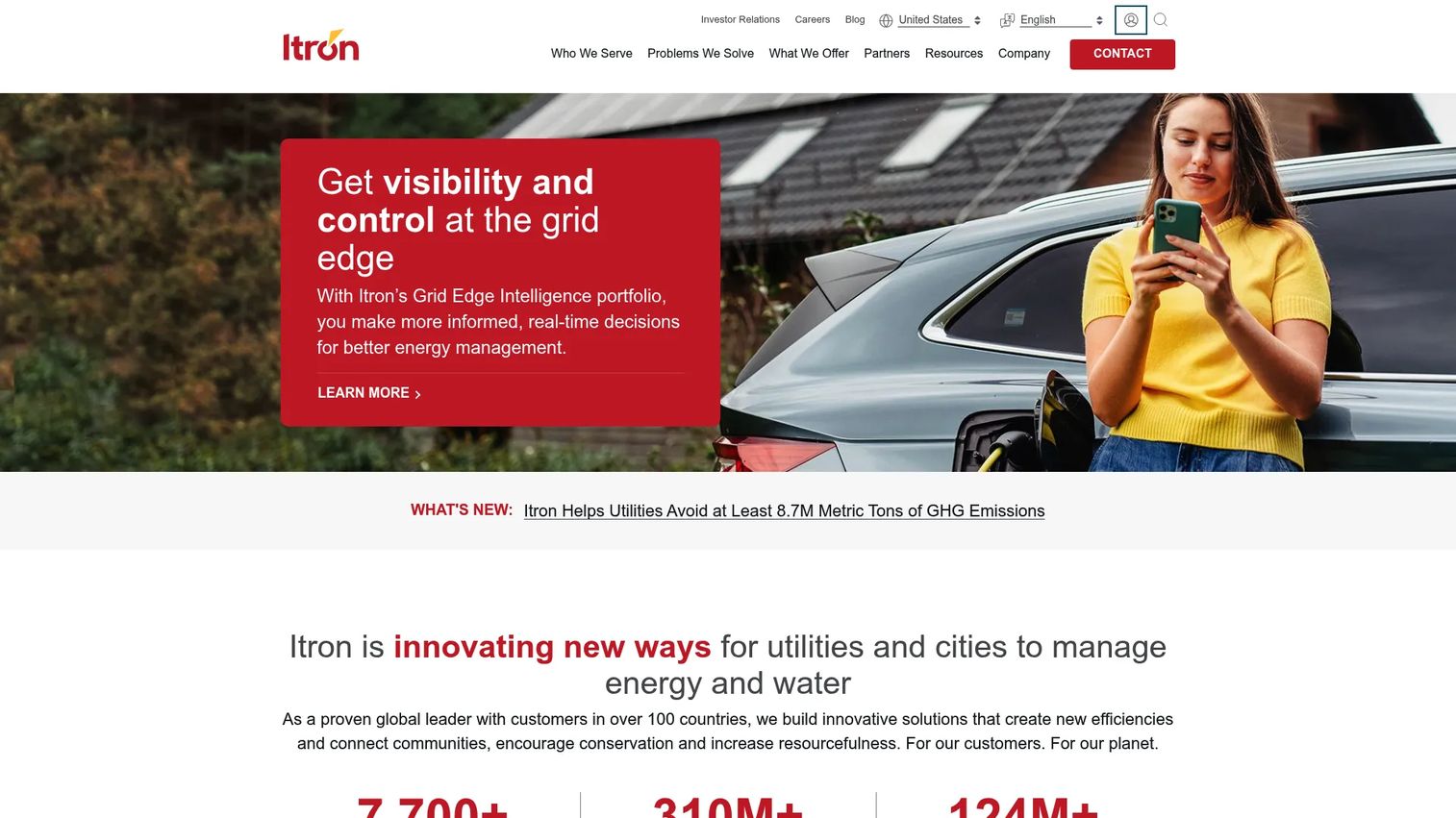
Itron supports demand response from the grid edge, where its metering and network infrastructure lives. The company connects utilities and cities through intelligent connectivity and cloud-managed services, so demand response runs alongside the metering and network data that feeds it. For utilities modernizing their grid communications, Itron ties DR to the underlying data flow.
Best for: Utilities and cities modernizing metering, network connectivity, and resource management.
Key features
- Intelligent connectivity for utilities and cities
- Network infrastructure and management
- Cloud-managed services
- Meter integration and grid-edge data
- Resource management workflows
Why choose Itron: Utilities that run demand response on top of Itron metering get DR and meter data in the same operational flow, reducing the gap between what the grid measures and what the program dispatches.
Itron pricing: Itron's product pages show features and contact-sales calls to action rather than published prices, so plan on a quote-based engagement.
Itron holds a 5.0 out of 5 rating on its G2 seller profile, based on a small number of reviews.
8. CPower Energy Management
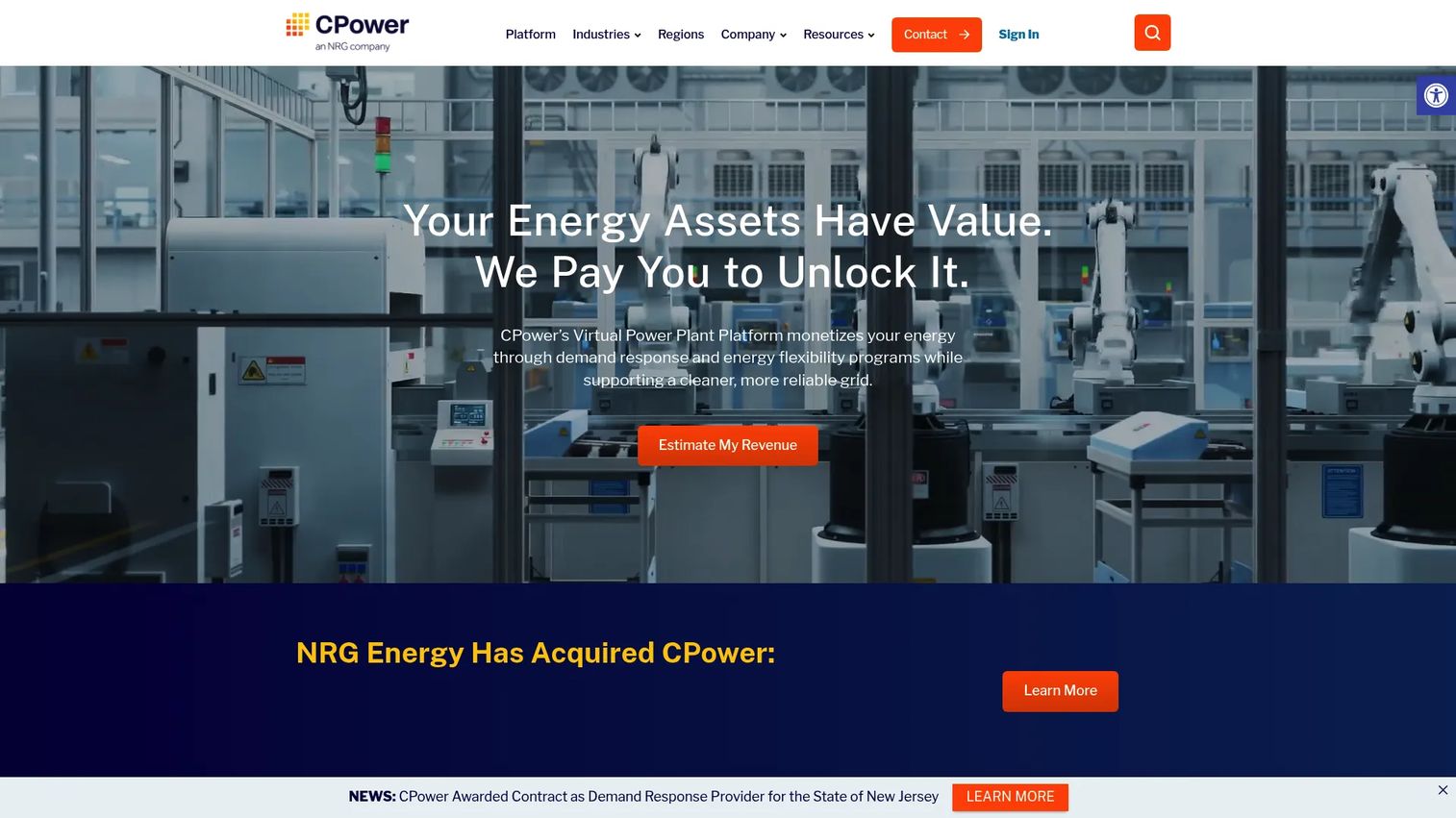
CPower Energy Management runs demand response and grid services as a virtual power plant focused on commercial and industrial participation. The platform monetizes distributed energy resources through demand response and flexibility programs, with curtailment execution, portfolio support, and performance reporting built in. Its CPower Connect API and CPower Portal handle DER integration, market participation, and event monitoring.
Best for: Commercial and industrial sites seeking demand response and DER monetization support.
Key features
- Virtual power plant for demand response and flexibility
- CPower Connect API for DER integration
- Market participation management
- Curtailment execution and portfolio support
- CPower Portal for usage, events, and payments
Why choose CPower Energy Management: Commercial and industrial operators that want to turn distributed resources into revenue get a platform purpose-built for DR monetization and portfolio-level performance.
CPower Energy Management pricing: CPower describes low-cost, fixed monthly subscription fees and service fees deducted from program payments, though it does not publish a standalone price list, so expect a quote-based subscription.
A CPower-specific G2 rating was not available at the time of writing.
Considerations
Before you commit to a demand response platform, run through this checklist against your actual program model.
Utility workflow fit
Map the platform to your real operations, from customer service to grid dispatch. A tool that ignores your administration portals or participant tracking creates parallel work. Verify that program setup, enrollment, and settlement match how your team already runs.
Event dispatch and control depth
Test how the platform triggers events and controls load. Direct thermostat control, industrial curtailment, and DER dispatch each behave differently. Confirm the software handles the device types in your portfolio and dispatches them fast enough for your market's response windows.
Forecasting and measurement
Check the forecasting model and the M&V approach before you buy. You need capacity forecasts you can trust when planning events, and baseline calculations that survive regulatory review. Ask how the platform sets baselines and whether its reports meet your market's settlement standards.
Integration requirements
List every system the platform must touch: thermostats, meters, SCADA, billing, and market systems. Integration gaps surface during events, when it is too late. Confirm supported connections and the effort to build the ones that are missing.
Program segmentation and scaling
Decide whether you need commercial, industrial, residential, or all three. Some platforms lean toward C&I portfolios, others toward residential reach. Verify the software segments programs the way your portfolio is structured, and that it scales as enrollment grows.
Conclusion
The right demand response platform depends on your program model, not on a single best pick. Eaton and Enel X suit utilities that want deep program operations, one as a DRMS and one as a managed service. Enode fits teams building DER and market connectivity from an API-first base.
For enterprise grid integration, Siemens and Schneider Electric bring automation depth across grids and buildings. Oracle (Opower) leads on customer engagement and enrollment, Itron on grid-edge metering data, and CPower on commercial and industrial DER monetization.
Narrow your shortlist by three factors: utility size, integration needs, and program model. A residential-heavy utility weighs enrollment reach differently than a C&I aggregator weighs curtailment execution. Match the platform to how your grid actually operates, then run a proof of concept against a real event scenario before you sign.
FAQs
Demand response software helps utilities and energy operators shift or shed electricity load during peak demand periods. It dispatches events, controls devices like thermostats and industrial loads, forecasts available capacity, and produces settlement reports. The goal is grid reliability without adding expensive supply.
The software calls an event and signals participants or connected devices to cut consumption during a peak window. Instead of building new supply for a few high-demand hours, the utility pays participants to reduce load. The platform then measures the reduction against a baseline to confirm and settle performance.
Look for integrations with thermostats, smart meters, SCADA, billing systems, and wholesale market platforms. DER connections for batteries, EV chargers, and solar are increasingly essential. The more of your existing stack the platform connects to, the less parallel work your team carries during events.
Demand response software focuses on shifting or shedding load during specific events and settling that performance. A DERMS, or distributed energy resource management system, manages a broader portfolio of distributed resources continuously, including generation, storage, and voltage support. The two overlap, and many modern platforms blend both, but DR is event-driven while DERMS is closer to always-on grid orchestration.
Yes. Some platforms lean toward commercial and industrial portfolios, where large loads and curtailment agreements dominate. Others emphasize residential reach through thermostats and customer engagement. The strongest grid flexibility software supports both, though most vendors have a clear center of gravity, so match the tool to your program mix.
Verify workflow fit, event dispatch depth, forecasting and M&V quality, integration coverage, and program segmentation. Run a proof of concept against a real event scenario, not a sales demo. Confirm that baseline calculations meet your market's settlement standards before you commit.
Forecasting predicts how much load reduction you can count on before you dispatch an event, which informs planning and market bids. Measurement and verification, or M&V, calculates a baseline of what load would have been, then measures the actual drop against it. That difference is what utilities settle and pay against.
SCADA integration connects demand response to the grid monitoring and control systems utilities already run. It lets operators see load conditions in real time and coordinate DR events with broader grid operations. For utilities managing dispatch at scale, SCADA connectivity keeps demand response aligned with the systems that watch the grid.