Your traders are watching prices move in ERCOT while your scheduling desk sends nominations by hand and your risk team reconciles positions in a spreadsheet that was current an hour ago.
That gap between what the market is doing and what your systems can see is where money leaks in power trading. A price spike hits during an intraday window, and by the time the signal reaches the desk, the opportunity has closed or the exposure has grown.
The energy trading and risk management software market reached roughly USD 1.8 billion in 2025 and is projected to grow to USD 3.5 billion by 2034 at a 7.8% CAGR, according to Market Intelo (2025). The pull is not hype. It is operators trying to replace fragmented workflows with a single execution layer that shows positions, prices, and schedules in real time.
The right power trading platform closes that gap. It unifies auction, intraday, ancillary, and scheduling in one place, automates the repetitive parts, and gives leaders clean reporting they can defend in a risk review.
What's inside
This guide is for trading, operations, and energy-tech leaders evaluating power trading software for regulated utility or market operations. It covers what the category does, where it sits in your stack, and how teams use it across auction, intraday, ancillary, and scheduling workflows.
We selected tools based on four criteria:
- Market coverage across auction, intraday, ancillary, and scheduling
- Automation depth, from informing decisions to executing trades
- Real-time visibility into positions, prices, and schedules
- Fit for regulated market operations, including compliance and reporting
TL;DR
- Best complete multi-market suite: Volue unifies forecasting, algorithmic execution, scheduling, and market communication across auction, intraday, and ancillary markets.
- Best for retail and gas operations: SoftSmiths handles risk, load forecasting, and ISO/RTO integration for retail energy and gas suppliers.
- Best for renewables market operations: Opoura pairs SCADA and power plant control with energy trading for wind, solar, and BESS portfolios.
- Best forecasting layer: Amperon delivers AI-driven load, price, and renewable generation forecasts to sharpen trading decisions.
- Best market data and visibility: Grid Status gives traders real-time and historical grid data across North American ISOs.
- Bottom line: Start with a full suite if you need centralized trading operations, or add an energy trading data analytics software layer if you mainly need market visibility.
What is power trading software?
Power trading software is a centralized platform or suite that supports trading, scheduling, market communication, risk, and analytics in electricity and energy markets.
It replaces scattered spreadsheets, standalone schedulers, and manual market messaging with one execution layer. Traders see positions, place or automate trades, and confirm schedules against real-time market data. Risk and compliance teams get auditable records instead of email threads.
Core capabilities of an energy trading platform usually include:
- Real-time position visibility: live view of exposure across portfolios and markets
- Automated or algorithmic execution: rules-based or algorithmic energy trading that responds to price moves
- Scheduling and market communication: nominations, bids, and ISO/RTO messaging in one flow
- Market data connectivity: feeds for prices, load, generation, and grid conditions
- Compliance and reporting: audit trails, settlement support, and regulatory reporting
- Auction, intraday, and ancillary support: coverage across the markets a desk actually trades
The category spans three practical layers. A centralized suite handles execution, scheduling, and risk end to end. An execution automation layer focuses on turning signals into trades. An energy trading data analytics software layer feeds the desk with forecasts and market intelligence. Some teams run all three. Others start with one and add the rest.
The distinction matters because energy market software is not one product. A utility running day-ahead auctions and real-time balancing needs different depth than a retailer hedging load or a renewables operator bidding a solar portfolio into intraday markets. Knowing which layer you need keeps the evaluation honest.
When to use power trading software
Unify fragmented trading workflows
You know the pattern. Auction bids live in one tool, intraday trades in another, ancillary offers in a third, and reporting gets stitched together after the close.
That fragmentation is where errors hide and hours disappear. A central layer for auction, intraday, ancillary, and reporting gives every desk one source of truth. When positions, schedules, and settlements share a system, reconciliation stops being a daily fire drill.
Automate execution in volatile markets
Manual trading works until the market moves faster than a human can react. In volatile energy markets, intraday prices can swing within minutes, and a desk placing orders by hand either misses the window or fat-fingers the size.
Energy trading automation software closes that gap. Rules and algorithms respond to price signals in real time, execute inside defined limits, and log every action. The desk sets the strategy. The system handles the speed.
Improve visibility across positions and schedules
When your board or risk committee asks for current exposure, the answer should take seconds, not a morning of spreadsheet work.
Real-time dashboards give leaders live position, price, and schedule data across every market. Cleaner reporting means faster decisions and fewer surprises in a compliance review. Visibility is not a nice-to-have in regulated operations. It is the difference between managing risk and discovering it late.
Comparison table
The seven tools below span the full range, from complete multi-market suites to focused analytics and data layers. Pricing in this category is rarely public because deployments are configured per operation. Where a vendor publishes figures, we list them. Where they do not, we say so plainly.
| # | Product | Best for | Key differentiator | Pricing | G2 rating |
|---|---|---|---|---|---|
| 1 | Volue | Complete multi-market trading operations | Forecasting, algorithmic execution, and scheduling in one suite | Custom, contact sales | Not listed |
| 2 | SoftSmiths | Retail energy and gas operations | Managed operations with risk and ISO/RTO integration | Custom, contact sales | Not listed |
| 3 | Opoura | Renewable asset trading and control | SCADA and plant control paired with trading software | Custom, contact sales | Not listed |
| 4 | Amperon | Forecasting to support trading | AI load, price, and renewable generation forecasts | Custom, contact sales | Not listed |
| 5 | Grid Status | Real-time market visibility | Grid and market data across North American ISOs | Free; Starter $1,200/mo | Not listed |
| 6 | Energize Capital | Understanding the software stack | Industry intelligence on the energy trading stack | Not applicable | Not listed |
| 7 | World Kinect Energy Services | Managed procurement and risk support | Price risk management and brokerage services | Custom, contact sales | Not listed |
Best 7 power trading software tools for 2026
1. Volue
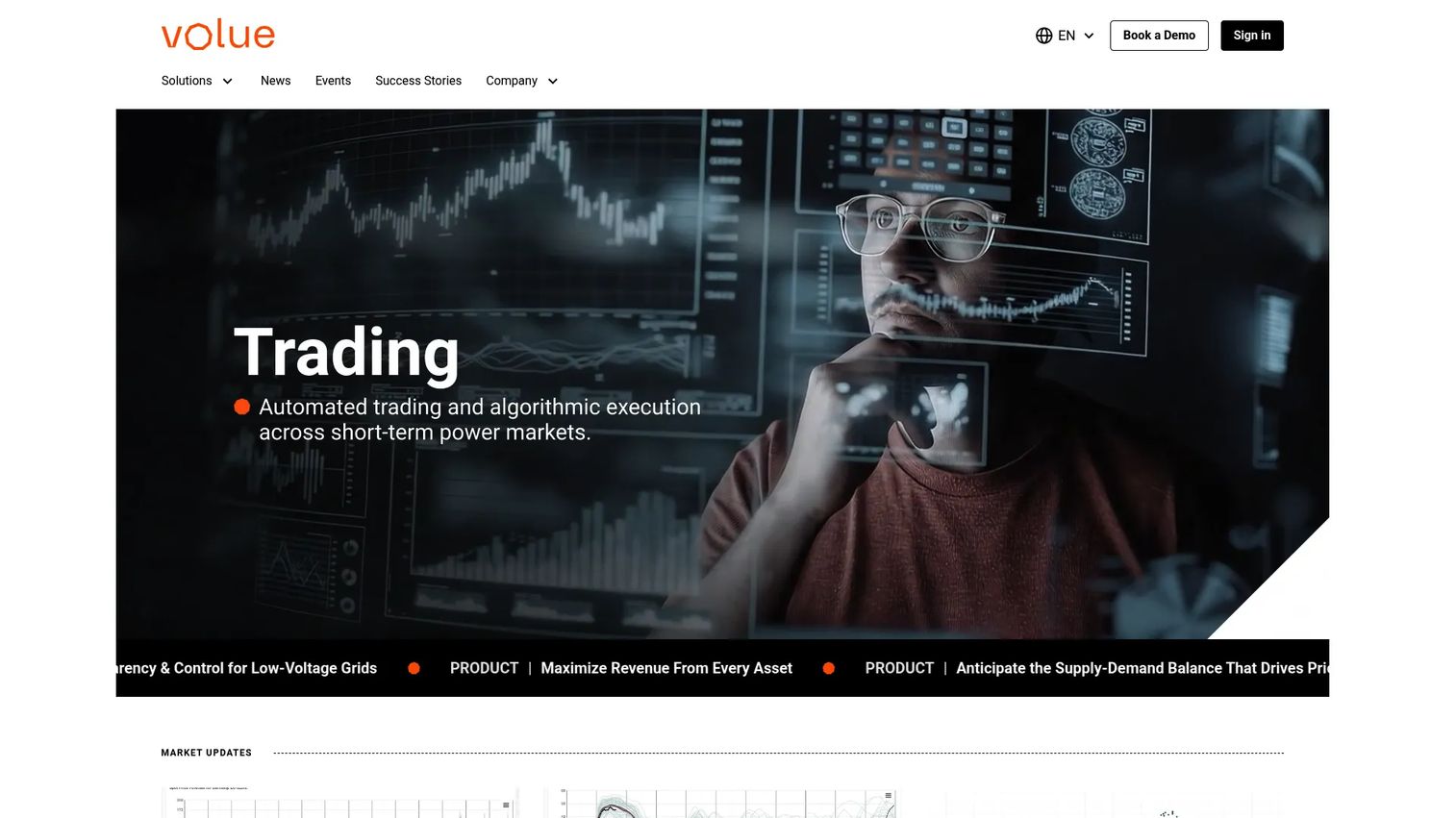
Volue is an energy software and data provider covering forecasting, trading, optimization, and grid operations. It sits at the complete end of the market, the suite you reach for when you need one system to run auction, intraday, ancillary, scheduling, and market communication together rather than bolting separate tools around a spreadsheet.
The strength here is breadth without fragmentation. Volue pairs AI-powered energy price forecasting with automated trading and optimization workflows, so signals flow into execution instead of sitting in a separate report. Its time series data management keeps the market and operational data behind every trade in one place, which matters when a risk team needs to reconstruct a position or a compliance review asks how a schedule was set.
For a desk trading across day-ahead auctions and real-time balancing, that unified layer is the point. Algorithmic execution responds to price moves inside defined limits, scheduling and nominations run through the same system, and reporting draws from a single source rather than a stitched-together export.
Best for: Utilities, power traders, and energy operators that need forecasting, algorithmic execution, and scheduling in one multi-market suite.
Key features
- AI-powered energy price forecasting
- Automated trading and optimization workflows
- Time series data management for energy operations
- Scheduling and market communication support
- Auction, intraday, and ancillary market coverage
Why choose Volue: If you want a single algorithmic energy trading platform that spans forecasting through execution and scheduling, Volue is built for that centralized operating model rather than a single slice of the workflow.
Volue pricing: Volue configures deployments per operation and directs buyers to contact its team through demo and sales prompts rather than listing plans publicly.
2. SoftSmiths
SoftSmiths is an energy intelligence and managed operations platform built for retail energy suppliers, gas providers, and asset developers. It positions itself as an end-to-end operations layer, handling the risk, forecasting, and market integration a retail or gas desk runs every day.
Where Volue leans toward multi-market trading breadth, SoftSmiths leans toward operational depth for the retail and gas side. Its risk management and portfolio analytics give the desk a live read on exposure, while load forecasting and automated scheduling reduce the manual steps that create nomination errors. Market intelligence and asset optimization round out the picture for operators balancing supply against demand.
The ISO/RTO integration is the practical hook. A retail operator managing load across a regional market needs schedules, forecasts, and settlements to line up with the ISO, and SoftSmiths is built to keep that connection clean rather than requiring a separate reconciliation pass.
Best for: Retail energy and gas operators that need a managed operations platform with risk, forecasting, and market integration in one place.
Key features
- Risk management and portfolio analytics
- Load forecasting and automated scheduling
- Market intelligence and asset optimization
- ISO/RTO integration for market operations
- Operational controls for retail and gas desks
Why choose SoftSmiths: For retail and gas operators who want operations, risk, and scheduling managed together, SoftSmiths is a power algo trading software option built around the retail energy workflow rather than a generic trading floor.
SoftSmiths pricing: SoftSmiths does not list plans on its site and routes buyers to contact the team for a scoped deployment.
3. Opoura
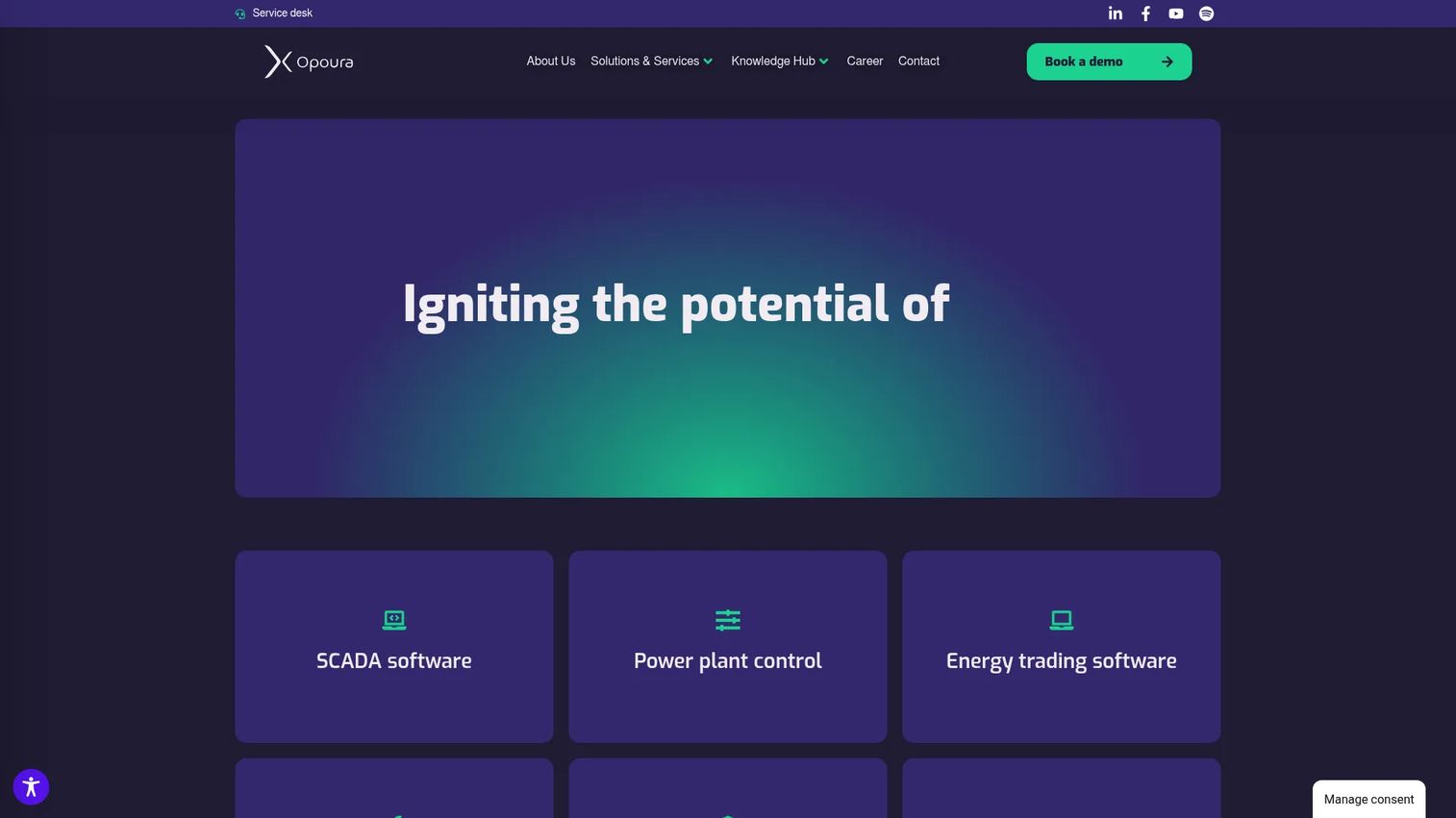
Opoura provides renewable energy software, hardware, engineering, and consulting for monitoring, control, and commercialization of energy assets. Its energy trading software sits alongside SCADA and plant control, which makes it a natural fit for operators who run and trade the same renewable portfolio.
That pairing is the differentiator. A wind, solar, or BESS operator does not just trade a position, it controls the physical asset behind it. Opoura's SCADA software handles monitoring, analysis, reporting, and control across parks and portfolios, while its power plant control covers wind, solar, BESS, and hybrid setups. The trading layer then handles portfolio control, balancing, and automated bidding on top of that operational base.
For a renewables desk bidding into intraday and balancing markets, keeping control and trading in one provider reduces the seams between what the asset is doing and what the market sees. Automated bidding responds to portfolio and market conditions rather than waiting on a manual handoff between the operations room and the trading desk.
Best for: Renewable energy operators that need SCADA, plant control, and trading software for wind, solar, and BESS portfolios.
Key features
- SCADA software for renewable park and portfolio monitoring
- Power plant control for wind, solar, BESS, and hybrid setups
- Energy trading software for portfolio control and balancing
- Automated bidding into intraday and balancing markets
- Engineering and consulting support for asset commercialization
Why choose Opoura: If you operate and trade the same renewable assets, Opoura keeps control and market execution under one roof rather than forcing a handoff between separate SCADA and trading systems.
Opoura pricing: Opoura does not publish pricing and works with operators directly to scope software, hardware, and services around the portfolio.
4. Amperon
Amperon is an AI-driven electricity forecasting platform for load, price, and renewable generation. It is not an execution system. It is the energy trading data analytics software layer that feeds better inputs into whatever platform your desk uses to trade.
The value is in the forecast quality. Amperon's AI and machine learning demand forecasting gives the desk a sharper read on load, while its price forecasting covers ERCOT and PJM hubs and zones directly. Renewable asset forecasting for wind and solar helps operators anticipate generation, which matters when you are bidding a variable resource into a volatile market.
Think of Amperon as the intelligence layer rather than the trading floor. A trader still executes in Volue, SoftSmiths, or a proprietary system, but the position and price decisions rest on forecasts built for the specific markets and assets in play. In volatile energy markets, the desk that forecasts load and price a step ahead has a real edge over one reacting after the move.
Best for: Utilities, retailers, and asset operators that need enterprise-grade load, price, and generation forecasting to inform trading decisions.
Key features
- AI and machine learning demand forecasting
- Price forecasting for ERCOT and PJM hubs and zones
- Renewable asset forecasting for wind and solar
- Enterprise forecasting for utilities and retailers
- Analytics inputs that support trading and risk decisions
Why choose Amperon: Choose Amperon when your execution is handled elsewhere and the gap is forecast quality. It sharpens the inputs behind every position rather than replacing your trading system.
Amperon pricing: Amperon states that pricing is scoped to customer requirements and does not publish list pricing, directing buyers to contact the team for a personalized estimate.
5. Grid Status
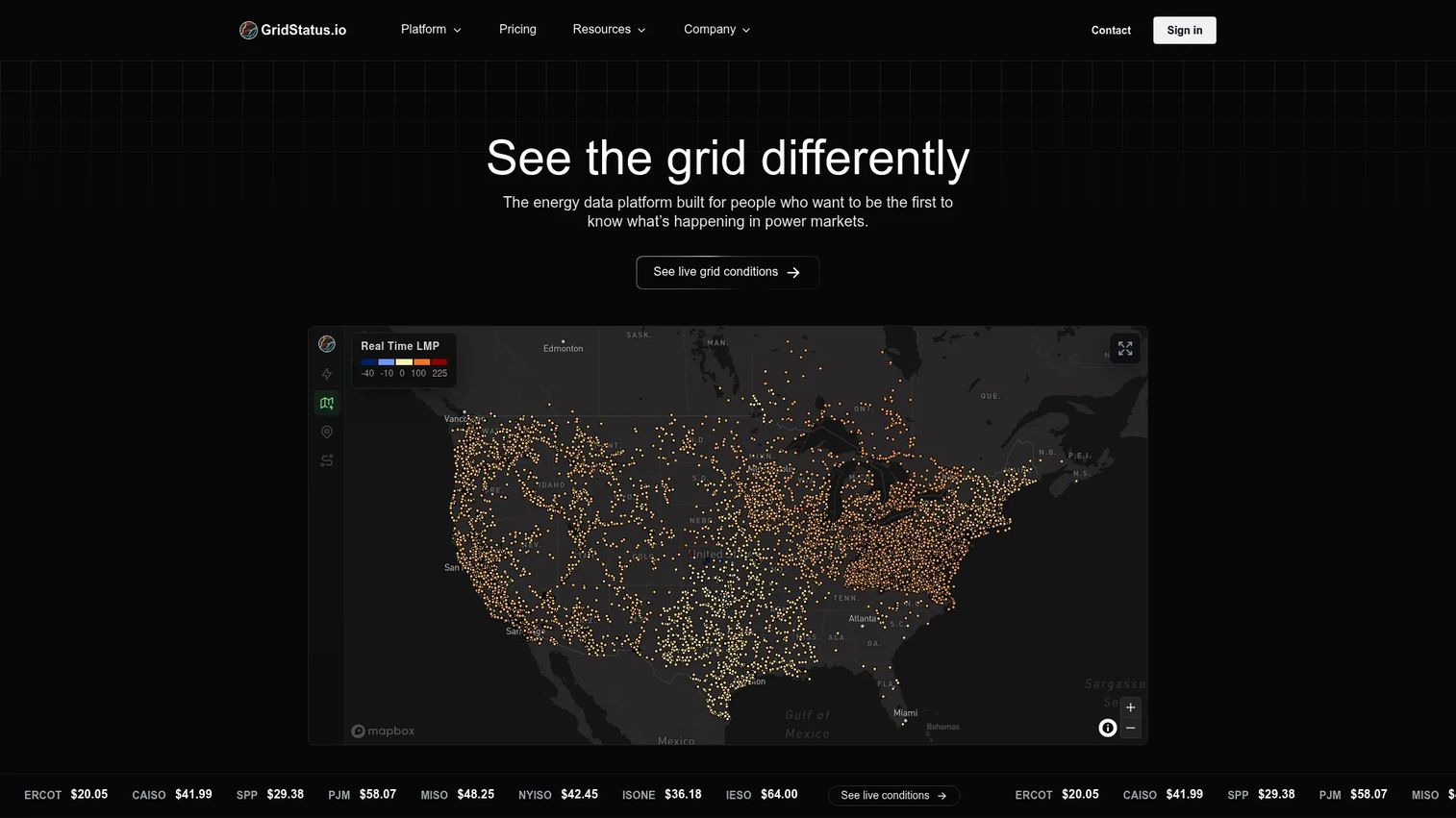
Grid Status is an energy data platform for North American power markets, offering dashboards, APIs, alerts, and market intelligence. Like Amperon, it sits on the visibility side of the stack rather than the execution side, but its focus is real-time and historical grid data rather than forecasts.
The draw is coverage and access. Grid Status pulls real-time and historical market data across North American ISOs, then surfaces it through pre-built dashboards, charts, and custom analytics apps. For teams that want to build their own tooling, API access with usage limits, alerts, and enterprise datasets makes the data programmable rather than locked in a portal.
For a trader or operator, this is the market-condition monitor. When you need to see what the grid is doing across ISOs right now, or pull historical data to backtest a strategy, Grid Status is the intelligence layer feeding those questions. It answers real-time market visibility needs without pretending to be a trading system.
Best for: Teams analyzing North American power markets that need grid data, dashboards, and APIs for real-time and historical visibility.
Key features
- Real-time and historical grid data across North American ISOs
- Pre-built dashboards, charts, and custom analytics apps
- API access with usage limits and enterprise datasets
- Configurable alerts on grid and market conditions
- Market intelligence for trading and operations teams
Why choose Grid Status: If your gap is market visibility rather than execution, Grid Status gives you programmable grid data across ISOs with published entry pricing, which is rare in this category.
Grid Status pricing: Grid Status offers a Free plan, a Starter plan at $1,200 per month billed annually, and an Enterprise plan with custom pricing.
6. Energize Capital

Energize Capital is a multi-stage investor in climate, energy, and industrial software and services. It is not a trading platform, and it belongs on this list for a different reason: its industry intelligence helps you understand the energy trading software stack before you buy into it.
This is the odd one out, and that is on purpose. When you are mapping vendors across the centralized suite, execution automation, and analytics layers, a clear view of how the stack fits together is worth as much as any feature comparison. Energize publishes intelligence on the energy trading software landscape that helps operators think in stack terms rather than tool terms.
For a founder or operator early in the evaluation, this is context, not a purchase. Energize's own work spans a Ventures strategy for Series A through C investments, an Endurance private equity strategy for mature software businesses, and EDGE portfolio services for commercialization. Read it to understand where the market is heading, then choose your actual operating tools from the platforms above.
Best for: Operators and founders who want to understand the energy trading software stack and market direction before committing to a platform.
Key features
- Industry intelligence on the energy trading software stack
- Ventures strategy for Series A, B, and C investments
- Endurance private equity strategy for mature software businesses
- EDGE portfolio services and commercialization support
- Perspective on climate and industrial software trends
Why choose Energize Capital: Treat Energize as a stack-thinking resource, not an operating platform. It helps you frame the market before you shortlist the suites and analytics layers you will actually run.
Energize Capital pricing: Energize Capital is an investment firm rather than a software vendor, so there is no product pricing to evaluate.
7. World Kinect Energy Services
World Kinect Energy Services is a B2B energy management provider offering price risk management, procurement, brokerage, and supply services. It rounds out the list as the managed-capability option for buyers who want market support rather than a platform they run themselves.
The distinction matters for the right buyer. Not every organization wants to staff a trading desk and operate its own software. World Kinect handles energy price risk management with hedging and budgeting support, runs energy brokerage and procurement for electricity and natural gas, and provides direct supply and market access for commercial energy users.
For a commercial energy buyer whose core business is not trading, this is the managed path. Rather than standing up an algorithmic energy trading platform, you get procurement, hedging, and market access as a service. It pairs well with the software platforms above when part of your operation wants managed support and another part wants direct control.
Best for: Businesses that need customized energy procurement, hedging, and risk management delivered as a managed service.
Key features
- Energy price risk management with hedging and budgeting support
- Energy brokerage and procurement for electricity and natural gas
- Direct supply and market access for commercial energy users
- Customized risk strategies for commercial buyers
- Market support without operating in-house trading software
Why choose World Kinect Energy Services: Choose World Kinect when you want managed procurement and risk support rather than running your own platform. It fits buyers who need market access without a full in-house trading operation.
World Kinect Energy Services pricing: World Kinect does not publish pricing and structures fees around performance, fixed price per transaction, or fixed price per time period, with contact-sales prompts on its site.
Considerations
Before you shortlist, run each platform against the criteria that actually decide fit in regulated market operations.
Market coverage
Confirm which markets and geographies the platform truly supports. A tool built for European day-ahead auctions may not map cleanly to ERCOT or PJM. Check auction, intraday, and ancillary coverage against the markets your desk trades, not the ones in the brochure.
Automation depth
Decide whether you need a system that executes or one that informs. Energy trading automation software runs trades inside defined limits. An analytics layer sharpens the decision but leaves execution to you. Both are valid. Buying the wrong one wastes a quarter.
Real-time visibility
Test how fast positions, prices, and schedules update. In volatile markets, a dashboard that refreshes slowly is a liability. Ask how quickly a trade or schedule change propagates across the system and into reporting.
Compliance and controls
Regulated operations live or die on auditability. Check how the platform handles approvals, audit trails, and settlement reporting. Compliance and risk tools should produce records a regulator can follow without a manual reconstruction.
Stack fit
No platform runs alone. Confirm how it connects to your forecast, optimization, and reporting systems. Market data connectivity and clean integrations determine whether you get one operating layer or another silo to reconcile.
Conclusion
Power trading software splits into three archetypes, and the right pick depends on which gap you are closing.
If you need a central operating layer for auction, intraday, ancillary, and scheduling, start with a complete suite. Volue leads for multi-market trading operations, SoftSmiths for retail and gas, and Opoura for renewable portfolios where control and trading live together.
If your execution is handled and the gap is intelligence, add an analytics layer. Amperon sharpens load, price, and generation forecasts. Grid Status delivers real-time and historical grid data across North American ISOs, with published entry pricing that is unusual in this space.
If you want managed capability rather than a platform to run, World Kinect Energy Services provides procurement, hedging, and risk support as a service. And if you are still mapping the stack, Energize Capital offers the industry context to think in layers before you commit.
Match the tool to the gap. A desk drowning in fragmented workflows needs a suite. A desk with good execution but blind spots needs data. Buy for the problem in front of you, then expand.
Start your journey with Guideflow today!
FAQs
Power trading software centralizes trading, scheduling, market communication, risk, and analytics for electricity and energy markets. It replaces spreadsheets and standalone tools with one execution layer where traders see positions, place or automate trades, confirm schedules, and produce auditable reports across auction, intraday, and ancillary markets.
An ETRM (energy trading and risk management) system focuses on capturing trades, valuing positions, and managing risk and settlement. Power trading platforms often include ETRM functions but extend into live execution, scheduling, and market communication. In practice the categories overlap, and many suites cover both. Check whether a given tool leans toward risk and reporting or toward real-time execution.
Yes. Complete suites cover auction, intraday, and ancillary markets in one system, so a desk can bid day-ahead, trade intraday, and offer ancillary services without switching tools. Confirm the specific markets and ISOs each platform supports, because coverage built for one region does not always transfer to another.
Prioritize market coverage, automation depth, real-time visibility, and compliance controls. Confirm the platform supports the auction, intraday, and ancillary markets you actually trade. Decide whether you need execution or analytics. Test how fast positions and schedules update, and check that audit trails and settlement reporting meet your regulatory obligations.
Yes. Automated scheduling and nomination workflows remove the manual steps where fat-finger errors and missed deadlines happen. When scheduling, forecasting, and settlement share one system with ISO/RTO integration, the desk stops reconciling data by hand and errors that used to surface after the close get caught earlier.
Grid Status is built for real-time and historical grid visibility across North American ISOs, with dashboards, alerts, and API access. Amperon adds forward-looking visibility through AI load, price, and generation forecasts. Full suites like Volue and SoftSmiths deliver visibility inside a complete trading system. The best choice depends on whether you want a standalone data layer or visibility built into execution.
It depends on how fast your markets move and where your gap is. If your desk struggles to react inside intraday windows, an algorithmic energy trading platform executes within defined limits at machine speed. If execution is fine but your forecasts or market reads are weak, an energy trading data analytics software layer closes that gap without replacing your trading system.
Compare across market coverage, automation depth, real-time visibility, compliance controls, and stack fit. Map each platform to the specific markets and ISOs you trade, confirm whether it executes or only informs, and verify how it connects to your forecast, optimization, and reporting systems. Then weigh managed-service options against platforms you run in-house based on whether your team wants direct control or market support.