You finished a full day of sessions. Then the second job started: writing progress notes, chasing an insurance claim, reconciling a payment, and setting up next week's telehealth links across three separate tools. None of them talk to each other. Something always slips.
That admin drag is not a small tax. U.S. speech-language pathologists using telepractice jumped from 3.9% before the pandemic to over 88% after it, according to a Fortune Business Insights and MDPI survey published in 2021. Remote sessions became normal fast, and the software stack that supports them has been playing catch-up ever since. The broader speech therapy software market reflects the same pressure, forecast to grow from USD 1.89 billion in 2025 to USD 5.5 billion by 2035 at an 11.2% CAGR, per WiseGuy Reports (2024).
Here is the split that trips up most buyers. Some speech therapy software runs your practice: scheduling, notes, claims, telehealth, and client communication. Other tools are therapy content: articulation drills, word-finding activities, and game-based practice kids will actually do. They solve different problems. Confusing the two leads to a stack that either can't bill or can't treat.
The best choice depends on what you actually need. Are you running practice operations, delivering online speech therapy software sessions, assigning home practice, or building measurable clinical content? This guide separates the operational systems from the therapy apps so you can choose by workflow first, not by whichever brand shouts loudest. If you want to go deeper on specific workflows, we also cover speech therapy practice management software, speech therapy documentation software, and telehealth speech therapy in dedicated breakdowns.
What's inside
This guide compares eight speech therapy software tools across five jobs: practice management, telehealth, documentation, billing, and therapy content. We picked tools using four criteria: SLP fit, feature depth, pricing clarity, and how much of the workflow each one actually covers.
The list mixes two categories on purpose. It includes full practice-management platforms and standalone therapy-app products, because SLPs and clinic owners usually evaluate both at the same time. One handles the business. The other handles the sessions. Knowing which is which saves you from buying the wrong thing.
TL;DR
- Best all-in-one platform: TheraPlatform pairs EMR, teletherapy, billing, and a built-in therapy app library, so private and group practices run on fewer tools.
- Best for solo and small practices: SimplePractice offers a polished practice-management workflow with scheduling, documentation, telehealth, and billing.
- Best app library breadth: Virtual Speech Center covers speech, language, and cognition goals across pediatric and adult needs.
- Best for articulation drilling: Articulation Station Pro (now Articulation Station Hive) targets sound-level practice with strong data collection.
- Best for word-finding and aphasia: Word Retrieval and Tactus Therapy Solutions focus on adult and mixed-age language rehab.
- Best for family-facing home practice: Speech Blubs encourages kids to practice at home with parent-friendly activities.
What is speech therapy software?
Speech therapy software is any digital tool that helps speech-language pathologists run their practice or deliver therapy, spanning practice management, telehealth, documentation, billing, and clinical activity content. The term is used broadly across clinicians, clinics, parents, and schools, which is why one search returns both EMR platforms and children's therapy apps.
The category breaks into clear subtypes:
- Practice management and EMR: scheduling, client records, and the operational core of a clinic. This is where speech therapy practice management software and an SLP EMR overlap.
- Telehealth and virtual sessions: secure video, screen sharing, whiteboards, and interactive scenes for remote care. This is the home of speech therapy telehealth and telepractice software.
- Documentation and note-taking: SOAP notes, treatment plans, templates, and outcome tracking. Strong speech therapy documentation software cuts the after-hours writing load.
- Billing, claims, and payments: insurance claims, superbills, and card processing. Dedicated speech therapy billing software reduces denied claims and manual reconciliation.
- Therapy apps and home-practice tools: articulation, language, and cognition activities for use in session or as speech therapy home practice.
- Progress tracking and reporting: goal data, outcome scoring, and reports you can defend to payers and families.
Core capabilities most SLP teams look for:
- HIPAA-compliant records and video
- Scheduling with automated reminders
- Note templates and outcome measures
- Claims, superbills, and payment processing
- A client or parent portal
- Therapy content or app integration
- Progress and goal reporting
Some products cover the full operational stack. Others do one job extremely well. The distinction matters more than any single feature list.
When to use each type of speech therapy software
Run a private practice without scattered tools
Choose a full EMR when you are managing schedules, notes, billing, insurance, and client communication and you are tired of stitching four tools together. Solo SLPs and group clinics both benefit here. If you bill insurance, want automated reminders, and need a client portal in one place, an all-in-one platform like TheraPlatform or SimplePractice earns its keep quickly. This is the category where consolidating your speech therapy practice management software pays off fastest.
Deliver telehealth sessions and keep them organized
Pick telehealth-capable software when remote sessions are a core part of your caseload. You want secure video, screen sharing, a shared whiteboard, and interactive scenes, plus session documentation attached to the right client record. Running video in one app and notes in another creates gaps that hurt at claim time. Integrated speech therapy telehealth keeps the session and the record together.
Assign home practice between sessions
Reach for therapy apps and diagnosis-specific tools when carryover between sessions matters. Pediatric articulation practice, adult word-finding drills, and language activities all improve outcomes when clients practice at home. These are the speech therapy apps for kids and adults that extend your work beyond the session without adding clinician hours.
Track progress and prove outcomes
Prioritize documentation and reporting when payers, schools, or families need evidence. Note templates, automated outcome scoring, and measurable goal tracking turn scattered observations into speech therapy progress tracking you can defend. If reporting is your bottleneck, weight this heavily in your decision.
Comparison table
Here is how the eight tools compare at a glance. The therapy-app products are sold per app or per bundle rather than as monthly platform plans, and several do not carry public G2 ratings.
| # | Product | Intent | Key use case | Pricing | G2 rating |
|---|---|---|---|---|---|
| 1 | TheraPlatform | All-in-one practice platform | EMR, teletherapy, billing, and therapy apps in one | From $19.50/month | 3.9/5 |
| 2 | SimplePractice | Practice management | Scheduling, documentation, telehealth, billing | From $49/month | 4.1/5 |
| 3 | Virtual Speech Center | Therapy app library | Speech, language, cognition apps across ages | From $0.99 per app | Not listed |
| 4 | Articulation Carnival | Articulation app | Game-based articulation practice for kids | App-store pricing | Not listed |
| 5 | Word Retrieval | Word-finding app | Aphasia and vocabulary practice | $9.99 one-time | Not listed |
| 6 | Articulation Station Pro | Articulation app | Sound-level drilling with data collection | From $9.99/month | Not listed |
| 7 | Speech Blubs | Family-facing app | Home speech practice for kids | Subscription | Not listed |
| 8 | Tactus Therapy Solutions | Adult therapy apps | Aphasia and rehab across skill areas | From $9.99 one-time | Not listed |
Read the table by intent first. Rows 1 and 2 run your practice. Rows 3 through 8 fill your sessions with content. Both matter. They are not substitutes.
The 8 best speech therapy software tools for 2026
1. TheraPlatform
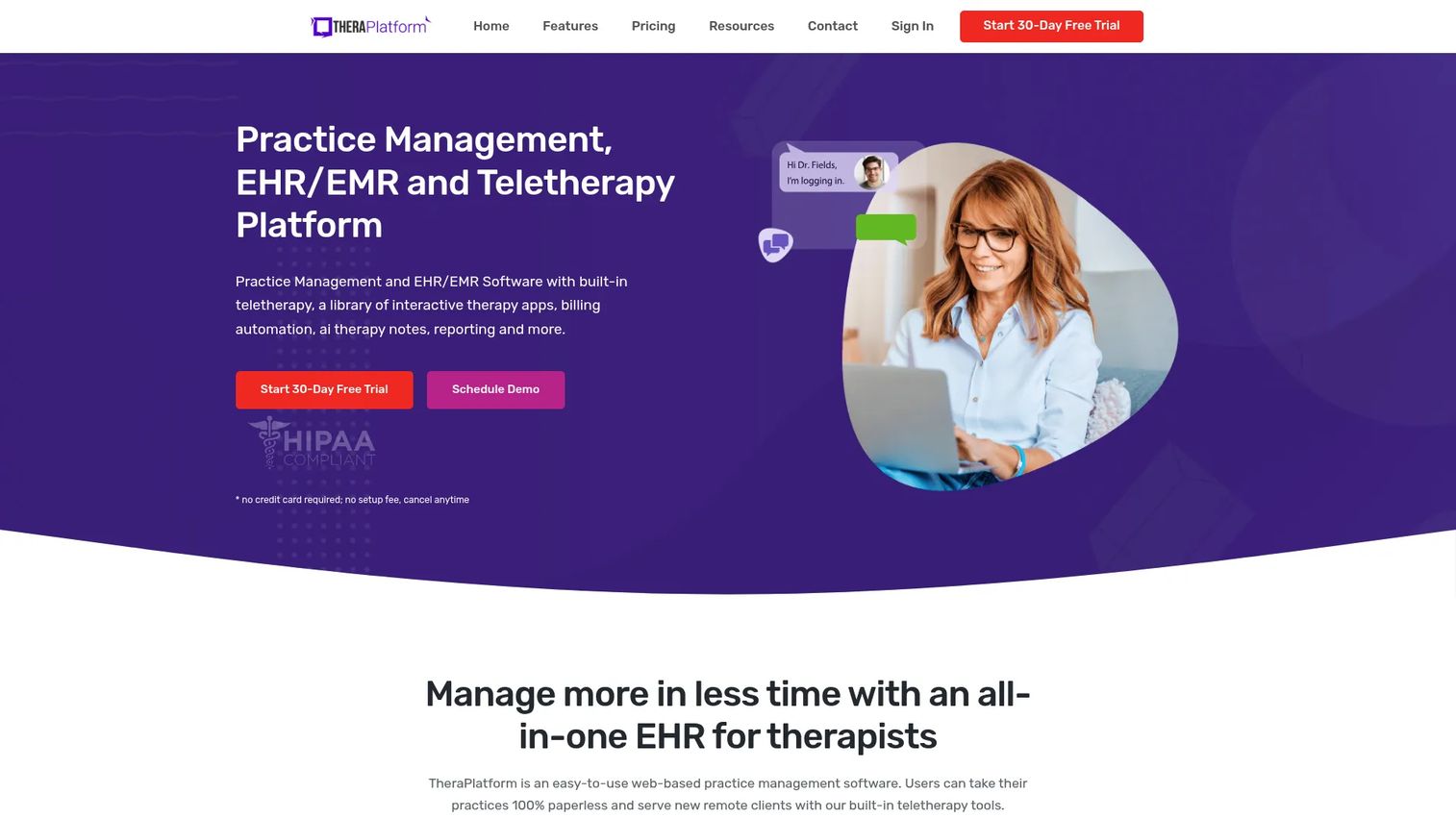
TheraPlatform is a HIPAA-compliant practice management, EHR/EMR, and teletherapy platform built for therapy and behavioral health providers. For SLPs, it stands out because it combines the operational stack with a built-in therapy app library, so scheduling, notes, claims, and remote sessions live in one system instead of four. That makes it a strong fit for private practices and group clinics that want to cut tool sprawl.
Best for: Solo and group SLP practices that want an all-in-one EMR plus teletherapy without buying separate content tools.
Key strengths
- Integrated teletherapy: HIPAA-compliant video with whiteboards, screen sharing, therapy games, visual scenes, and in-session chat keeps online speech therapy software sessions in one place.
- Built-in client portal: Clients handle communication, scheduling, payments, and documentation through a single portal.
- Documentation depth: Wiley Treatment Planners and automated outcome-measure scoring speed up notes and support speech therapy progress tracking.
Why choose TheraPlatform: If you run insurance claims and deliver telehealth, TheraPlatform consolidates the whole workflow, including a therapy app library most competitors make you source separately. That combination is rare, and it is the reason clinics evaluating speech therapy documentation software and telehealth together often land here.
TheraPlatform pricing: The pricing page lists three plans: Basic at $19.50/month, Pro at $34.50/month, and Pro Plus at $39.50/month. These are shown as limited-time discounted monthly prices with original prices struck through. There is a free trial with no credit card required, no setup fee, and you can cancel anytime. All plans include scheduling, documentation, billing, and teletherapy features.
2. SimplePractice
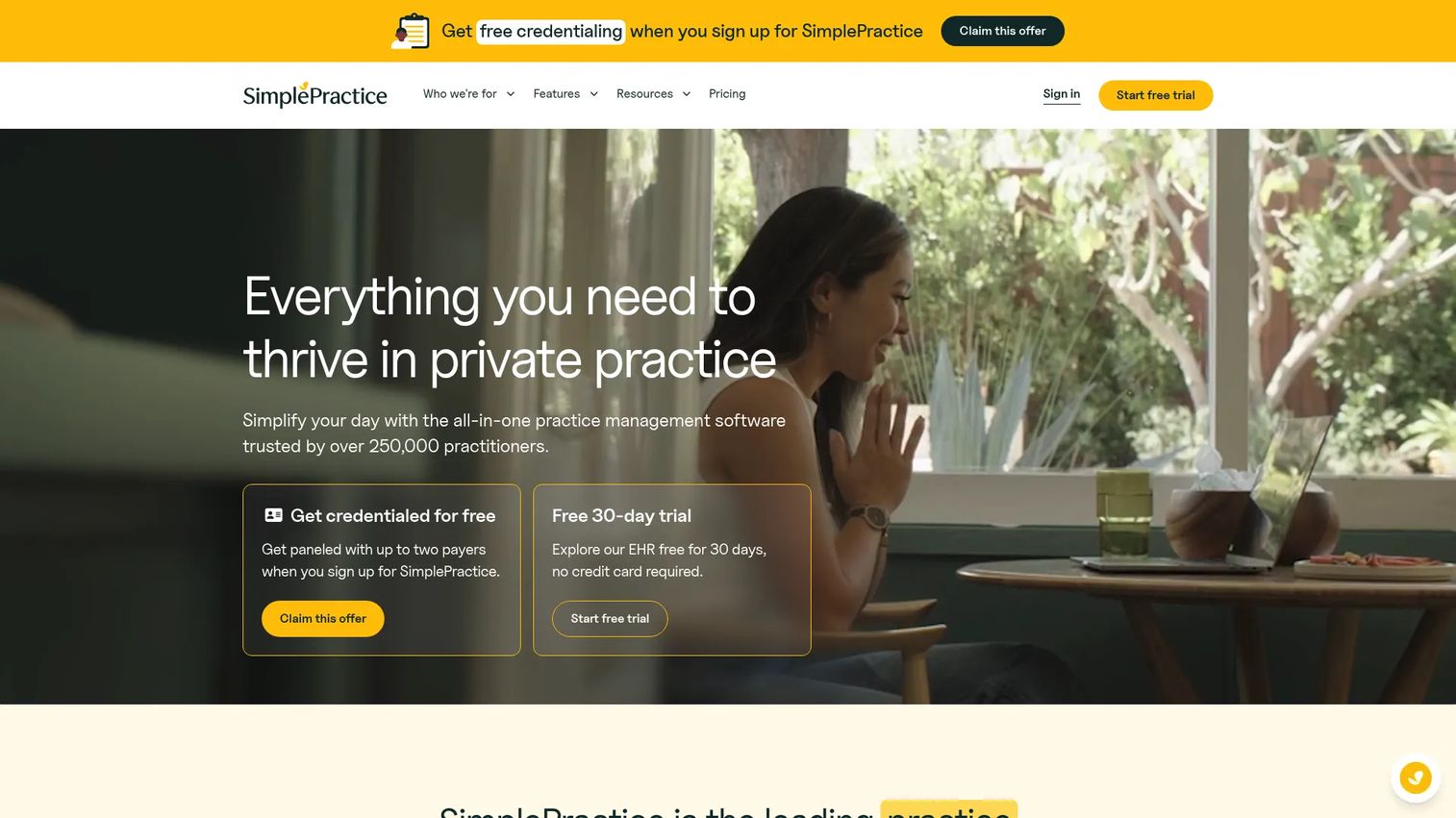
SimplePractice is practice management software for therapists and other health and wellness providers, including SLPs. It leans into a polished, low-friction workflow: online scheduling, billing and payments, and HIPAA-compliant telehealth in one clean interface. Solo and small-to-medium practices choose it when they want speech therapy practice management software that feels finished rather than assembled.
Best for: Solo and group behavioral health and SLP practices wanting an all-in-one EHR and practice-management platform with a strong client experience.
Key strengths
- Online scheduling: Client self-booking and automated reminders reduce no-shows and front-desk work.
- Billing and payments: Integrated claims and card processing handle the money side without a separate speech therapy billing software tool.
- HIPAA-compliant telehealth: Secure video for remote sessions is built in, not bolted on.
Why choose SimplePractice: The documentation and mobile experience are the draw. SLPs get customizable notes, a client portal, and mobile access, which matters when you are writing notes between sessions. If polish and ease of adoption rank high for your team, SimplePractice is hard to beat.
SimplePractice pricing: Three plans: Starter at $49/month, Essential at $79/month, and Plus at $99/month, all billed monthly. The pricing page shows a 30-day free trial, plus a limited-time 50% off for three months offer for new paid accounts. There is no permanent free tier.
3. Virtual Speech Center
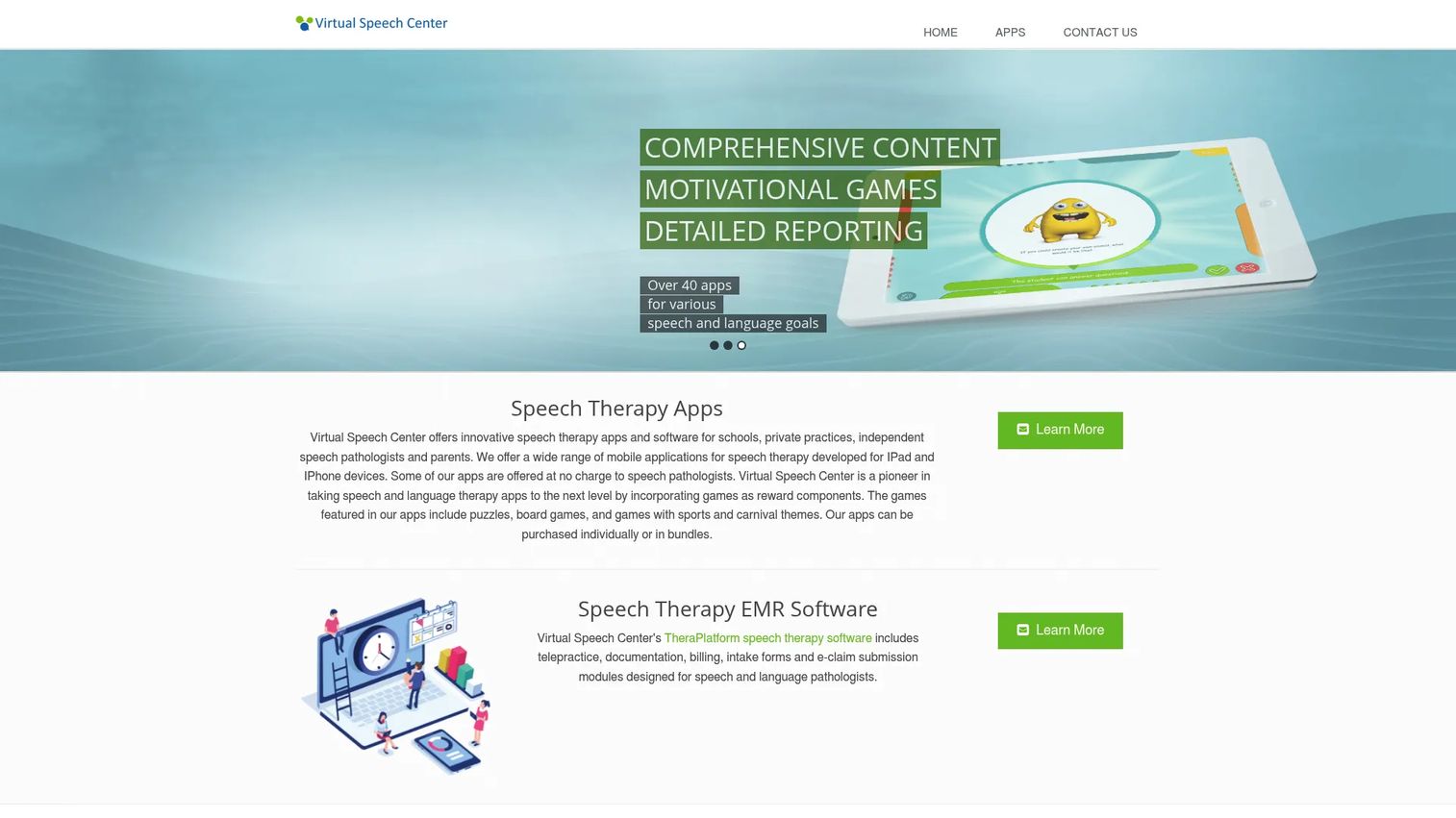
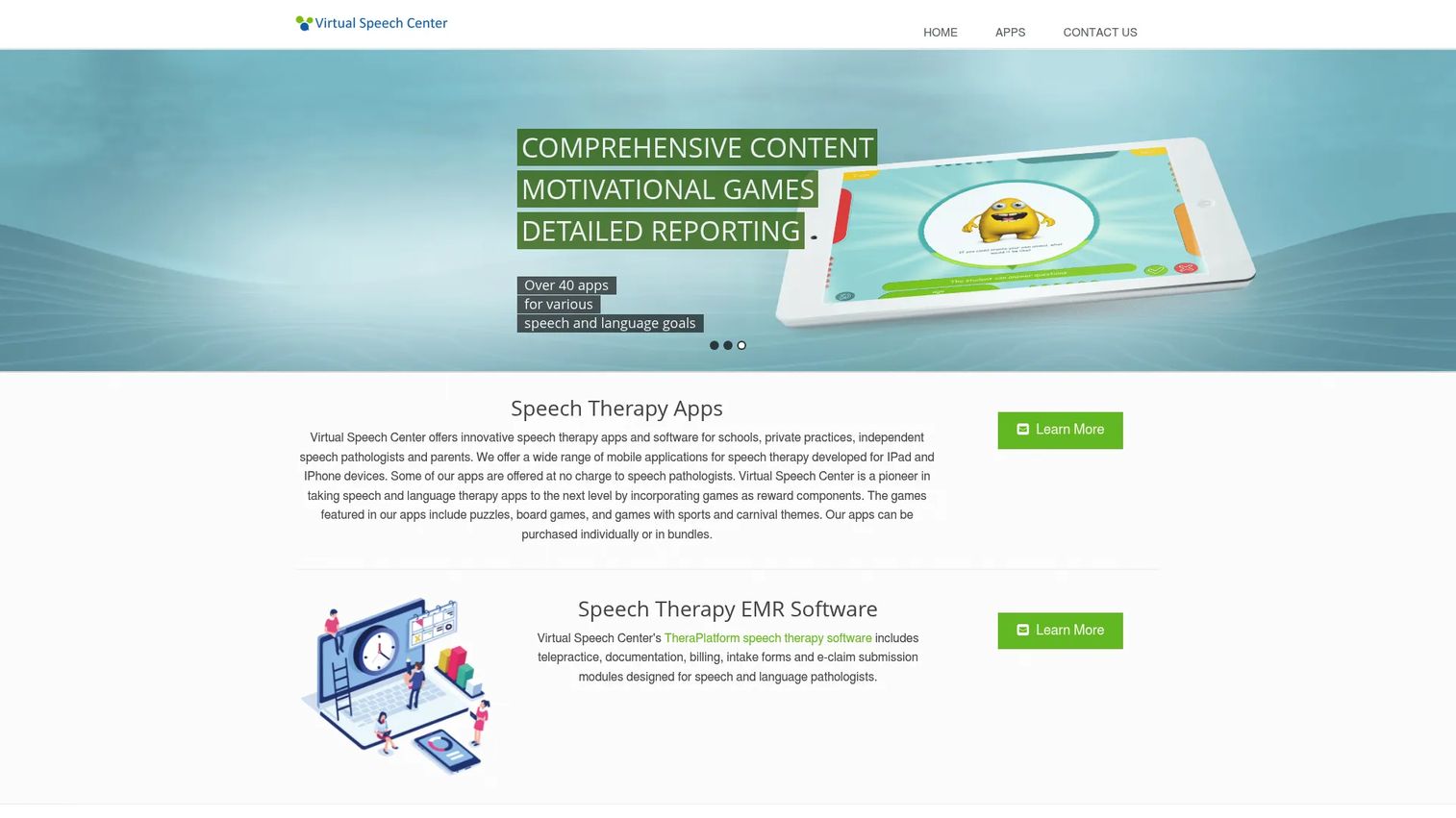
Virtual Speech Center builds speech therapy apps and software for schools, clinicians, and parents. Its strength is breadth: speech, language, and cognition apps that span pediatric through adult goals, with built-in games and reward components to keep clients engaged. Think of it as a content library rather than a practice-management system.
Best for: Speech-language pathologists and educators who want a wide catalog of app-based therapy activities across many goal areas.
Key strengths
- Goal breadth: Speech, language, and cognition apps cover a wide range of therapy targets for kids and adults.
- Engagement mechanics: Built-in game and reward components keep pediatric clients motivated during drills.
- Device flexibility: Apps run on iPad and iPhone, which fits both in-clinic and home practice.
Why choose Virtual Speech Center: If you want one publisher for a broad slice of your therapy content, the catalog depth is the reason to buy. It does not replace your EMR, and it is not meant to. Pair it with a practice platform and use it to fill sessions and home practice.
Virtual Speech Center pricing: Apps are sold individually and in bundles rather than as one subscription. Prices start as low as $0.99 for a single app, with titles like Talking Together and Word Retrieval at $9.99 and Functional Listening at $14.99, all one-time purchases. Some apps are offered at no charge to speech pathologists.
4. Articulation Carnival
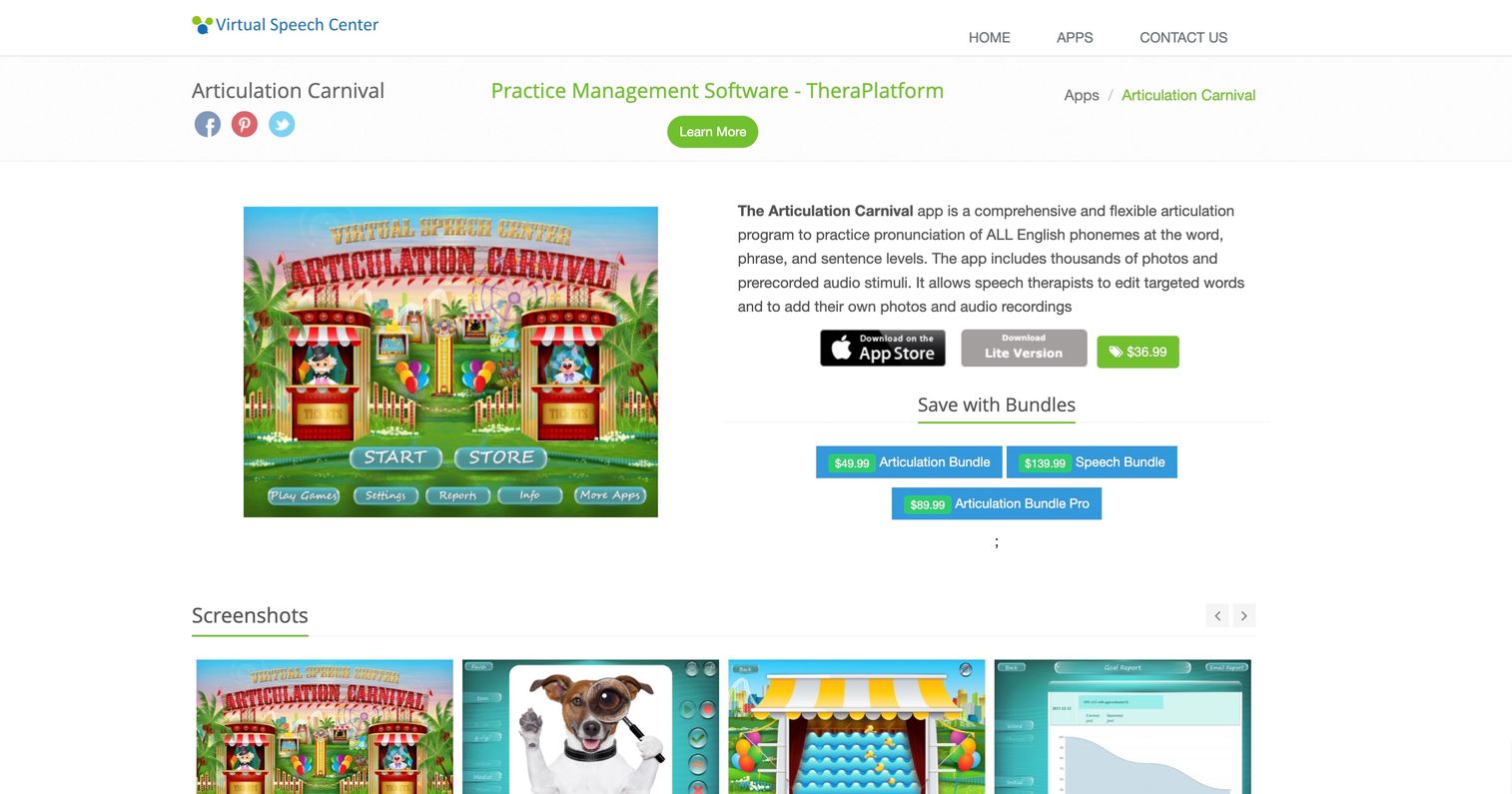
Articulation Carnival is a game-based articulation practice app designed to keep kids engaged while they drill target sounds. The carnival framing turns repetitive sound production practice into an activity children will actually sit through, which is often the hardest part of articulation therapy. It sits firmly in the therapy-content category, not the practice-management one.
Best for: SLPs and parents who want a playful, engagement-first way to run articulation practice with younger children.
Key strengths
- Game-based engagement: Carnival mechanics reward sound production and keep kids on task longer.
- Articulation focus: Targets sound-level practice, the core of most pediatric articulation caseloads.
- Parent-friendly: Simple enough for caregivers to run as speech therapy home practice between sessions.
Why choose Articulation Carnival: When a child resists flashcards and drills, engagement is the whole battle. Articulation Carnival trades depth of data for motivation, which is the right trade for many young clients. Use it alongside a data-heavy tool when you need both engagement and detailed tracking.
Articulation Carnival pricing: Articulation Carnival is distributed as an app-store title. Public pricing details were not available at the time of writing, so check the App Store listing for the current price before you buy.
5. Word Retrieval
Word Retrieval is a speech therapy app for children and adults with word-finding difficulties. It targets the exact activities clinicians use for anomia and vocabulary support: confrontational naming, associations, and divergent and convergent naming. That makes it a precise fit for aphasia work, learning disorders, and broader language support across mixed-age caseloads.
Best for: Clinicians treating word-finding difficulties in adults and children, especially in aphasia and language therapy.
Key strengths
- Confrontational naming: Structured naming tasks target the core of word-retrieval therapy.
- Associations: Semantic association activities build the connections that support word finding.
- Divergent and convergent naming: Both naming directions extend the range of retrieval practice.
Why choose Word Retrieval: This is a targeted tool, not a suite. If word finding is a recurring goal on your caseload, its focused activity set does one job well. It slots neatly into adult rehab plans and mixed-age therapy alongside broader app libraries.
Word Retrieval pricing: Word Retrieval is a single app with a one-time price of $9.99, published through Virtual Speech Center. There is no separate subscription tier or free version listed.
6. Articulation Station Pro
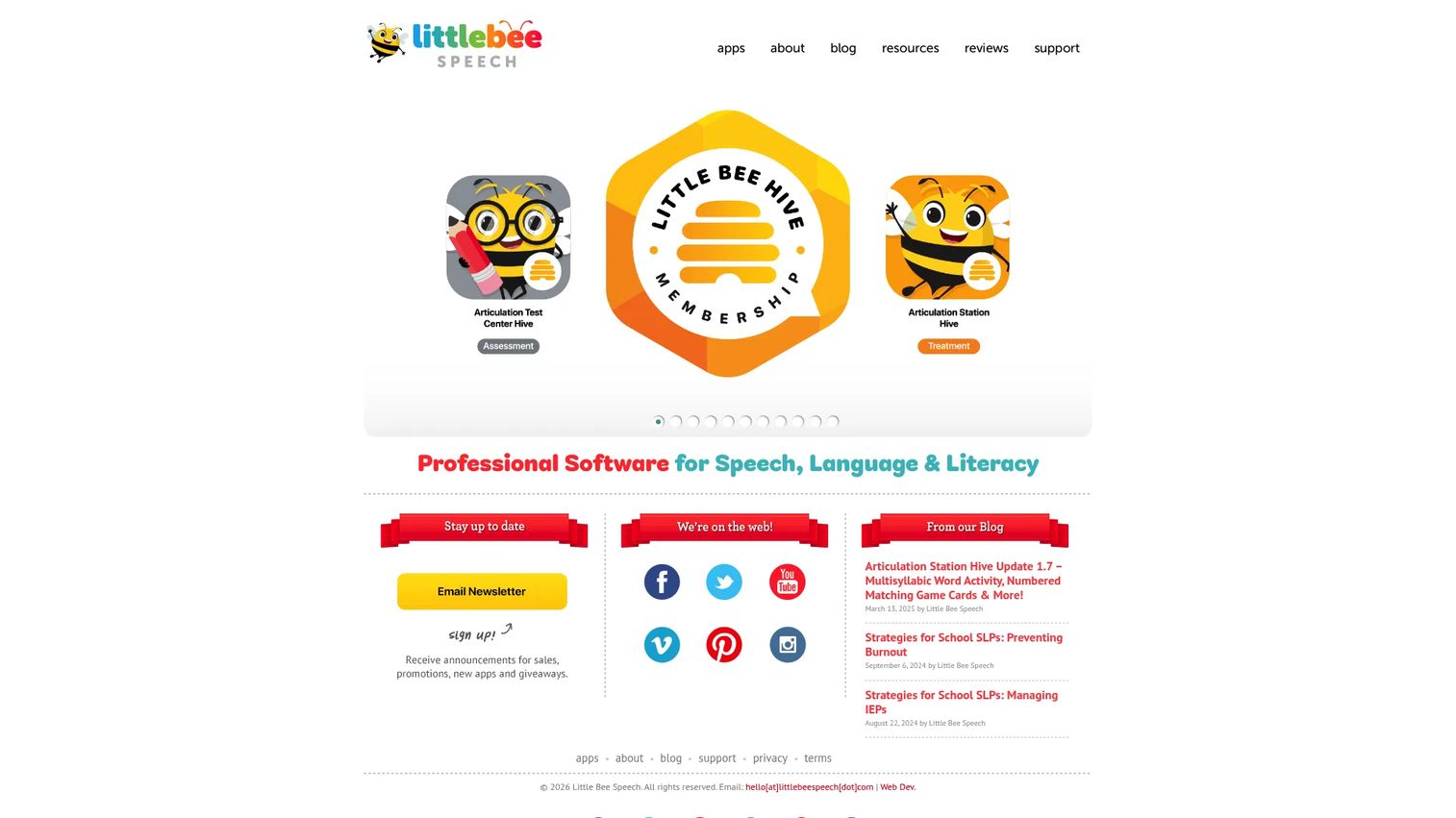
Articulation Station Pro is Little Bee Speech's articulation therapy app for iPad, iPhone, and Mac. The original Pro Classic has been retired and replaced by Articulation Station Hive, which carries the same sound-targeting approach forward. It is built for kid-friendly drilling with the data collection clinicians need to justify progress.
Best for: SLPs and parents who want structured articulation practice with strong data collection on Apple devices.
Key strengths
- Comprehensive data collection: Detailed tracking supports speech therapy progress tracking and payer documentation.
- Voice recording: Auditory feedback lets clients hear and compare their own productions.
- Custom content: Custom images and word lists tailor practice to each client's goals.
Why choose Articulation Station Pro: Compared with broad app suites, this tool goes deep on articulation and data rather than wide across goal areas. For a caseload that is heavy on sound-level work, it is often enough on its own. Note that the current version is Articulation Station Hive; the retired Pro Classic is no longer on the App Store.
Articulation Station Pro pricing: Little Bee Speech now prices access through Articulation Station Hive membership. The Professional tier is $9.99/month billed annually or $14.99/month billed monthly. A Parent tier runs $6.99/month billed annually or $9.99/month billed monthly. There is no free tier.
7. Speech Blubs
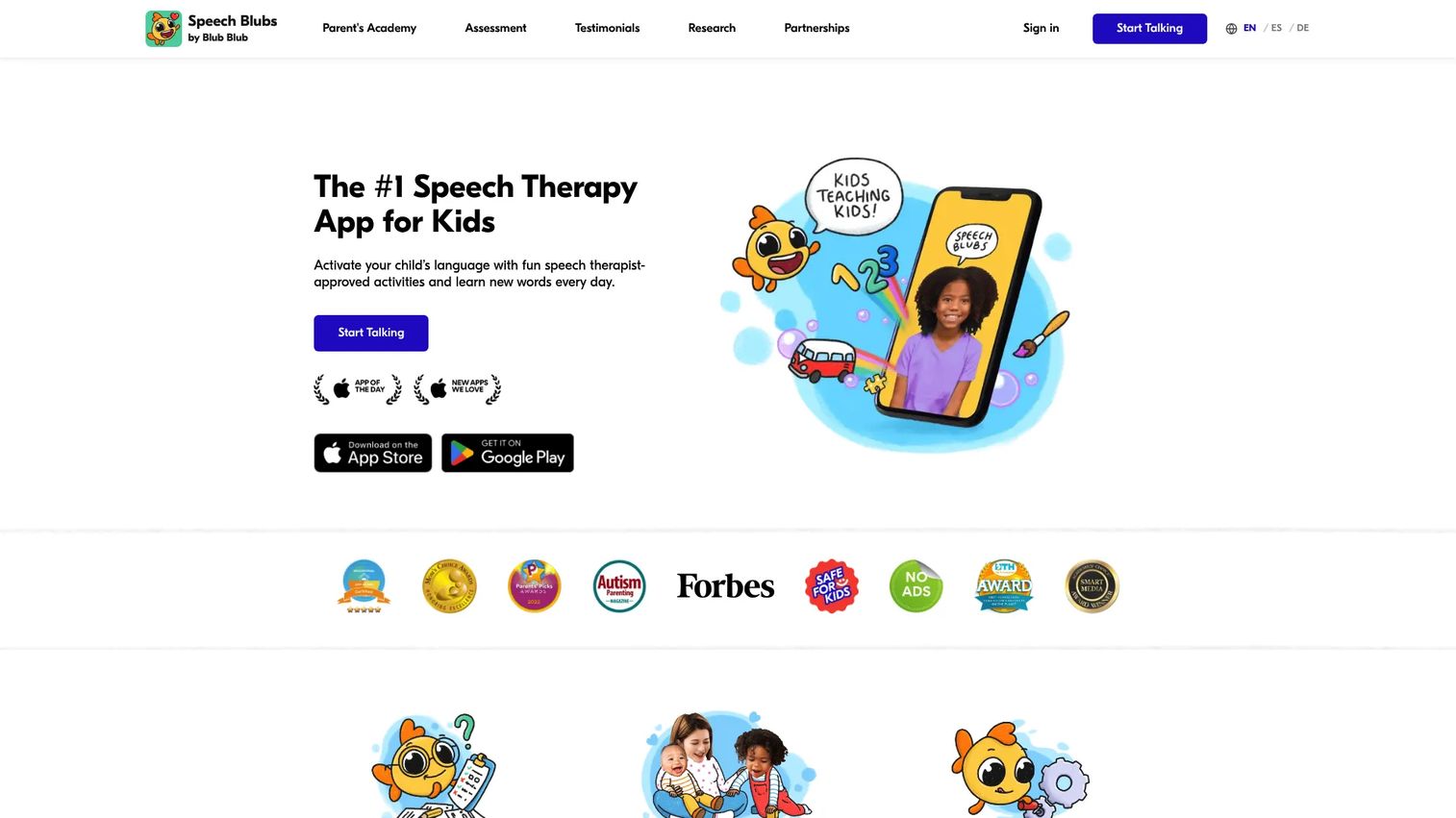
Speech Blubs is a family-facing speech app built to encourage kids to practice at home. It leans on child engagement and speech encouragement rather than clinical data, which makes it a parent's tool as much as a clinician's supplement. It is positioned squarely as speech therapy software for kids and home practice, not as a practice-management system.
Best for: Parents and SLPs who want an approachable, engaging app to drive speech practice at home between sessions.
Key strengths
- Child engagement: Playful activities hold young kids' attention and encourage vocalization.
- Speech encouragement: Content is designed to prompt and reward speech attempts.
- Parent-friendly: Simple enough for caregivers to run without clinical training.
Why choose Speech Blubs: If your gap is carryover at home, Speech Blubs gives families a structured way to keep kids practicing. It is a family-facing supplement, not a clinical management platform, so pair it with your EMR and in-session tools rather than expecting it to track goals for payers.
Speech Blubs pricing: Speech Blubs is offered as a subscription app aimed at families. Check the current App Store or website listing for the live subscription price and any trial before you commit.
8. Tactus Therapy Solutions
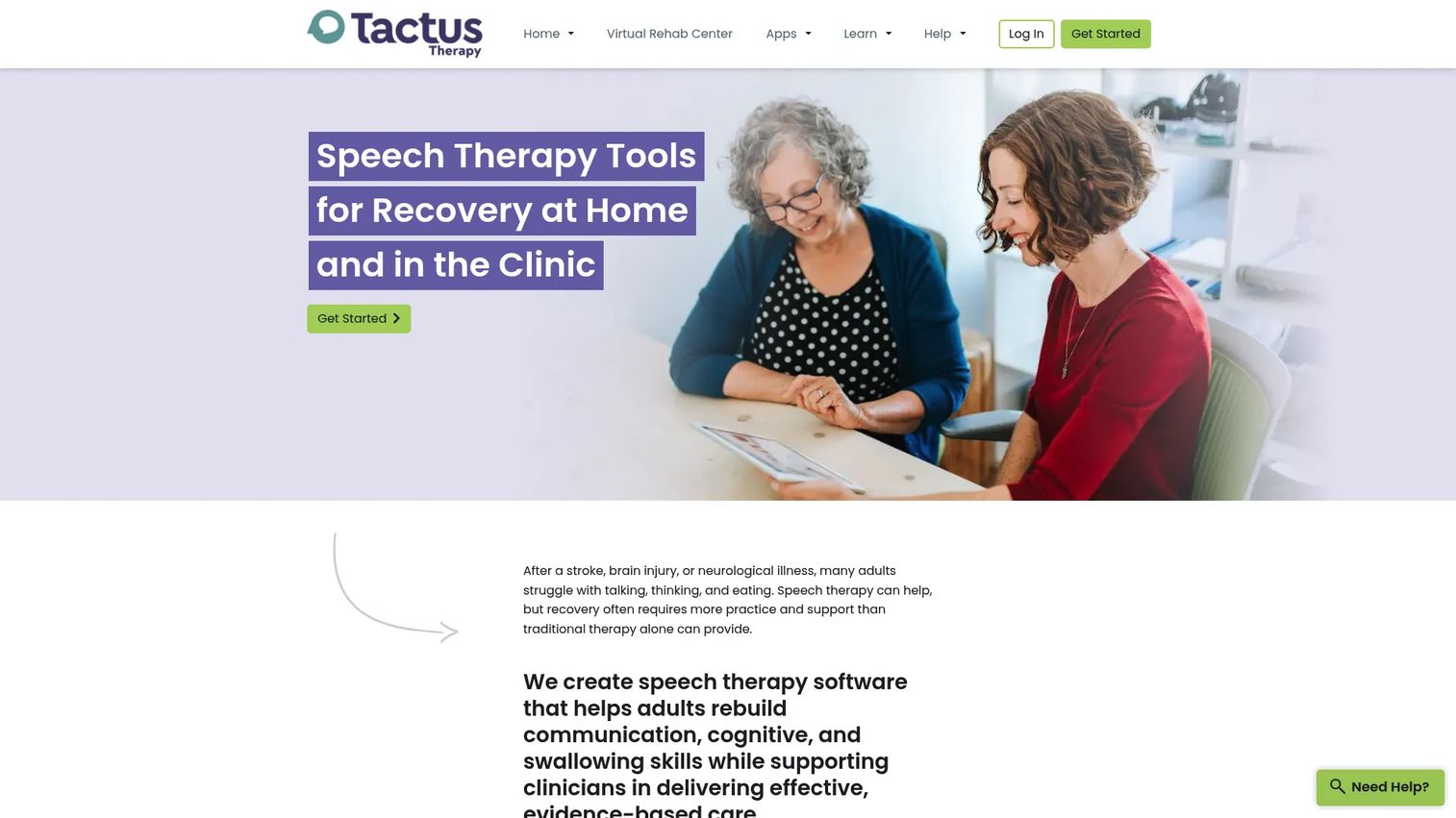
Tactus Therapy Solutions develops adult speech-therapy apps and a virtual rehab center for clinicians and patients. Its suite spans speaking, listening, reading, writing, and thinking skills, with diagnosis-based tools that fit aphasia and stroke recovery especially well. That breadth across skill areas makes it a strong pick for clinicians working across multiple therapy goals.
Best for: Speech-language professionals and stroke-recovery patients who need adult therapy apps plus clinician workflow tools.
Key strengths
- Multi-skill coverage: Apps target speaking, listening, reading, writing, and thinking skills across one publisher.
- Free Lite versions: Try-before-you-buy Lite apps let you evaluate fit before purchasing.
- Virtual Rehab Center: Evidence-based treatments, handouts, and clinician tools support structured adult rehab.
Why choose Tactus Therapy Solutions: For adult and rehab-focused caseloads, the range of diagnosis-based tools plus the Virtual Rehab Center makes this a near-complete content ecosystem. One-time app purchases keep it flexible, and the Rehab Center adds a subscription layer when you want the clinician toolkit.
Tactus Therapy Solutions pricing: Individual apps are one-time purchases, roughly $10 to $30, with the lowest visible standalone app at $9.99 and no subscriptions on the app side. App bundles run from $19.99 to $159.99. The Virtual Rehab Center is $27/month, or $22/month billed annually ($264/year), with a 21-day free trial.
Considerations before you buy
Before you commit, run every option through the same checklist. The tools split cleanly into operational systems and therapy content, so weight these criteria against the job you are actually solving.
Workflow coverage
Decide whether you need to run a practice or fill sessions. An EMR like TheraPlatform or SimplePractice handles scheduling, notes, billing, and telehealth. A therapy app handles content. Do not expect one to do the other, and do not buy both when you only need one.
Compliance and security
Anything touching client data or video must be HIPAA compliant speech therapy software. Confirm the vendor signs a BAA, encrypts records, and secures telehealth video. This is non-negotiable for practice-management tools and worth checking on any app that stores client information.
Documentation and reporting
If proving outcomes is your pain, weight note templates, automated outcome scoring, and speech therapy progress tracking heavily. TheraPlatform's Wiley Treatment Planners and Articulation Station Pro's data collection are examples of features that turn observation into defensible reporting.
Pricing model
Practice platforms bill monthly per clinician; therapy apps are usually one-time purchases or small subscriptions. Map speech therapy software pricing to how you will actually use each tool. A $9.99 one-time app and a $99/month platform are not competing line items; they solve different problems.
Device and access fit
Confirm the tool runs where your clients are. Many therapy apps are iPad and iPhone first. Practice platforms need reliable web and mobile access for notes on the go and telehealth from any location.
Conclusion
Three buying paths run through this list. If you need to run a practice, an all-in-one EMR like TheraPlatform or SimplePractice consolidates scheduling, documentation, billing, and telehealth so you stop stitching tools together. If telehealth is central, prioritize integrated video and session notes in one record. If you need content for sessions and home practice, therapy apps like Virtual Speech Center, Articulation Carnival, Word Retrieval, Articulation Station Pro, Speech Blubs, and Tactus Therapy Solutions fill that gap by goal and by age.
The mistake is treating operational software and therapy content as interchangeable. They are not. Choose by workflow first: name the job that is costing you the most time, then shortlist the two or three tools built for it. From there, start a trial with the strongest fit and test it against a real week of your caseload. The right stack usually pairs one practice platform with one or two therapy-app tools, not five overlapping systems.
FAQs
For a private practice, prioritize scheduling, HIPAA-compliant records, documentation templates, billing and claims, and secure telehealth in one system. A client portal and automated reminders reduce front-desk work. Platforms like TheraPlatform and SimplePractice cover this operational core so you are not managing separate speech language pathologist software for each task.
An SLP EMR is one type of speech therapy software focused on clinical records, scheduling, and billing. The broader term also includes therapy apps and home-practice content that an EMR does not provide. In practice, most SLPs pair an EMR for operations with app-based tools for session and home content.
Look for integrated speech therapy telehealth where secure video, screen sharing, whiteboards, and session notes live in the same record. TheraPlatform and SimplePractice both offer HIPAA-compliant telehealth built into their practice-management workflow, which keeps the session and documentation together instead of split across tools.
For kids, engagement usually wins. Game-based speech therapy apps for kids like Articulation Carnival and Speech Blubs keep young children practicing, while Articulation Station Pro adds structured drilling with data collection. Choose based on whether you need motivation, detailed tracking, or both.
No. Speech therapy apps extend therapy through home practice and in-session drills, but they do not replace clinical judgment, assessment, or the therapeutic relationship. They work best as carryover tools that reinforce what a clinician plans and monitors.
Separate the two models. Practice platforms bill monthly per clinician, often from around $19.50 to $99/month depending on tier and vendor. Therapy apps are usually one-time purchases of $9.99 to $30 or small subscriptions. Compare speech therapy software pricing against the specific job each tool does, not head to head.
Prioritize note templates, automated outcome-measure scoring, and structured goal data. TheraPlatform's Wiley Treatment Planners and Articulation Station Pro's data collection turn session observations into speech therapy progress tracking you can show to payers, schools, and families.
Yes, practice-management platforms handle it. TheraPlatform and SimplePractice both include integrated speech therapy billing software with claims, superbills, and payment processing. Standalone therapy apps do not bill insurance; that job belongs to your EMR or dedicated practice-management system.