The build passed. Production still broke.
That gap is where most release failures live. Your CI pipeline ran clean, tests passed, and the artifact was ready. Then the release stalled at a change approval window, collided with a database migration that hadn't cleared governance, or hit a Kubernetes environment that had drifted from the expected state.
According to the CNCF Cloud Native Survey (2024), 60% of organizations use CI/CD for most or all applications, yet deployment complexity keeps growing. The same survey found that 77% of respondents apply GitOps principles to deployments, which means the coordination layer above the pipeline matters more than ever.
Application release orchestration tools solve the gap between "build succeeded" and "release is safe." They coordinate approvals, environments, rollback controls, dependency sequencing, and audit trails across the full release lifecycle. For presales and sales engineers evaluating technical buyers' stacks, understanding this category helps you speak credibly to deployment safety, change management, and RFP questions about release governance.
This guide covers 21 tools across the spectrum, from full DevSecOps platforms to specialized database release automation.
What's inside
This guide is for DevOps leaders, platform engineering teams, enterprise architects, and presales engineers who need a practical shortlist of application release orchestration tools for 2026.
Tools were selected based on:
- Direct relevance to release orchestration (not just CI or build automation)
- Deployment control capabilities: Approvals, promotion, rollback, environment management
- Integration fit with common DevOps stacks
- Enterprise governance and audit trail support
- Verified pricing and G2 ratings at time of research
TL;DR
- Best overall DevSecOps release platform: GitLab, for teams consolidating source control, CI/CD, security, and release workflows on one platform
- Best for enterprise change governance: ServiceNow, for organizations where ITIL-aligned change control drives release approval
- Best for deployment orchestration depth: Octopus Deploy, for teams promoting releases across environments with runbook support
- Best for Kubernetes and progressive delivery: Harness and Codefresh, depending on whether you prioritize governed pipelines or GitOps-native workflows
- Best for Salesforce releases: Copado, the only purpose-built Salesforce DevOps platform on this list
- Best for open-source pipeline flexibility: Jenkins, GoCD, and Spinnaker, for teams that can own and maintain their own orchestration layer
- Best for database release control: DBmaestro, when production risk is concentrated in schema changes rather than application code
What is application release orchestration?
Application release orchestration is software that coordinates the planning, approval, deployment, monitoring, and rollback of application releases across teams, tools, environments, and infrastructure.
It sits above the CI/CD pipeline. Where CI/CD builds, tests, and packages code, release orchestration controls what happens next: Which artifact ships to which environment, under what approval conditions, with which rollback path, and with full audit evidence.
Core capabilities of application release orchestration tools
- CI/CD pipeline coordination and artifact promotion
- Release planning, calendars, and dependency sequencing
- Environment management and drift detection
- Approval workflows and quality gates
- Deployment automation across cloud, on-premises, and Kubernetes targets
- Rollback, pause-resume, and failure recovery controls
- Audit trails and compliance reporting
- Integrations with ticketing systems, secrets managers, and observability platforms
Release orchestration versus release automation
Release automation executes repeatable deployment tasks. Release orchestration coordinates the full release process across systems, teams, gates, and environments. Many tools do both, but evaluating orchestration depth separately from pipeline execution matters in enterprise contexts where approvals, change windows, and environment governance drive release timing.
Why presales teams should understand this category
Technical buyers in enterprise deals routinely ask about deployment safety, rollback procedures, change management alignment, and audit evidence. Presales engineers who can map a buyer's release orchestration needs to specific platform capabilities close faster in DevOps-adjacent deals and handle RFP sections on deployment reliability with confidence. Understanding this category also helps you anticipate integration questions about CI tools, secrets managers, ITSM platforms, and observability tooling. See our related coverage of application performance monitoring tools and AI model deployment software for adjacent evaluation areas.
When to use application release orchestration tools
Coordinate releases across many teams and services
When a release crosses multiple teams, services, or shared infrastructure, a single CI pipeline is no longer enough. Release orchestration handles dependency sequencing, shared environment scheduling, and release trains where dozens of services must ship together. Microservices architectures especially benefit when individual teams own their pipelines but still need a coordination layer above them.
Add governance without slowing every deployment
Good orchestration separates low-risk automated releases from high-risk changes that need review. Teams can define policy-based rules that auto-approve routine deployments and route high-impact changes to a CAB or approval gate. This distinction keeps deployment velocity high while satisfying enterprise change management requirements.
Reduce production risk in hybrid environments
On-premises infrastructure, cloud targets, Kubernetes clusters, and legacy systems all behave differently under failure conditions. Release orchestration tools built for hybrid environments handle partial connectivity, pre-flight checks, environment drift, and rollback behavior across mixed targets. A rollback plan is not a rollback button; it requires environment awareness and controlled state management.
Application release orchestration tools comparison
The table below covers 21 tools evaluated for release orchestration fit, deployment control depth, and buyer profile. Pricing reflects verified figures from each vendor's official pricing page. G2 ratings are sourced from live G2 listings. For tools with custom pricing, no numeric figure was publicly available at research time.
| # | Product | Best for | Key differentiator | Pricing | G2 rating |
|---|---|---|---|---|---|
| 1 | GitLab | End-to-end DevSecOps release workflows | Source control, CI/CD, security, and release management in one platform | Free; Premium $29/user/month (annual) | 4.5/5 |
| 2 | ServiceNow | Enterprise change and release governance | ITSM-native change control and approval workflows | Custom pricing | 4.4/5 |
| 3 | Octopus Deploy | Deployment orchestration across environments | Release promotion, deployment targets, and runbooks | Free; Professional $104/project/year | 4.4/5 |
| 4 | Jenkins | Highly customizable CI/CD release workflows | Plugin ecosystem and open-source flexibility | Free (open source) | N/A |
| 5 | RunMyJobs by Redwood | Enterprise workload and release scheduling | Cross-application automation and workload orchestration | Custom pricing | 5.0/5 |
| 6 | ActiveBatch | IT automation with release workflow control | Event-driven workload automation across systems | Custom pricing | 4.5/5 |
| 7 | Harness | Modern CI/CD with governance and progressive delivery | Policy controls, deployment verification, and feature flags | Free plan; paid plans contact sales | 4.6/5 |
| 8 | CircleCI | Cloud CI/CD release pipelines | Developer-friendly pipeline automation with parallelism | Free; Performance from $15/month | 4.4/5 |
| 9 | JFrog Pipelines | Artifact-centric release workflows (reached end of life May 2026) | Native artifact management and DevOps supply chain | N/A (EOL) | N/A |
| 10 | Codefresh | Kubernetes and GitOps delivery | Argo-native progressive delivery workflows | Custom pricing | 4.6/5 |
| 11 | Spinnaker | Multi-cloud continuous delivery | Open-source deployment strategies and cloud integrations | Free (open source) | 4.0/5 |
| 12 | Digital.ai | Enterprise application release management | Value stream, release governance, and enterprise scale | Custom pricing | 3.8/5 |
| 13 | GoCD | Pipeline as code and value stream maps | Open-source release pipeline modeling | Free (open source) | 4.1/5 |
| 14 | DeployBot | Smaller team deployments | Simple repository-to-server deployment workflows | From $29/month | N/A |
| 15 | Clarive | Enterprise release automation | Rule-based orchestration and DevOps governance | Custom pricing | 4.3/5 |
| 16 | DBmaestro | Database release automation | Database DevOps, drift control, and schema governance | Custom pricing | 4.5/5 |
| 17 | Copado | Salesforce release orchestration | Salesforce-native DevOps and release governance | Free tier; paid from $99/user/month | 4.4/5 |
| 18 | Puppet | Infrastructure automation tied to release control | Configuration enforcement and infrastructure state management | Free (up to 25 nodes); custom for 25+ | 4.2/5 |
| 19 | Buildkite | Scalable CI/CD pipelines | Hybrid agents and developer-controlled pipelines | Free; Pro $30/active user/month | 4.7/5 |
| 20 | Rundeck | Runbook automation and operations control | Self-service operations workflows and delegated automation | Community edition free; commercial contact sales | N/A |
| 21 | BuildMaster | Regulated application delivery | Release pipelines, approvals, and deployment governance | Free edition; Enterprise from $2,995/year | 4.0/5 |
Best 21 application release orchestration tools for 2026
1. GitLab
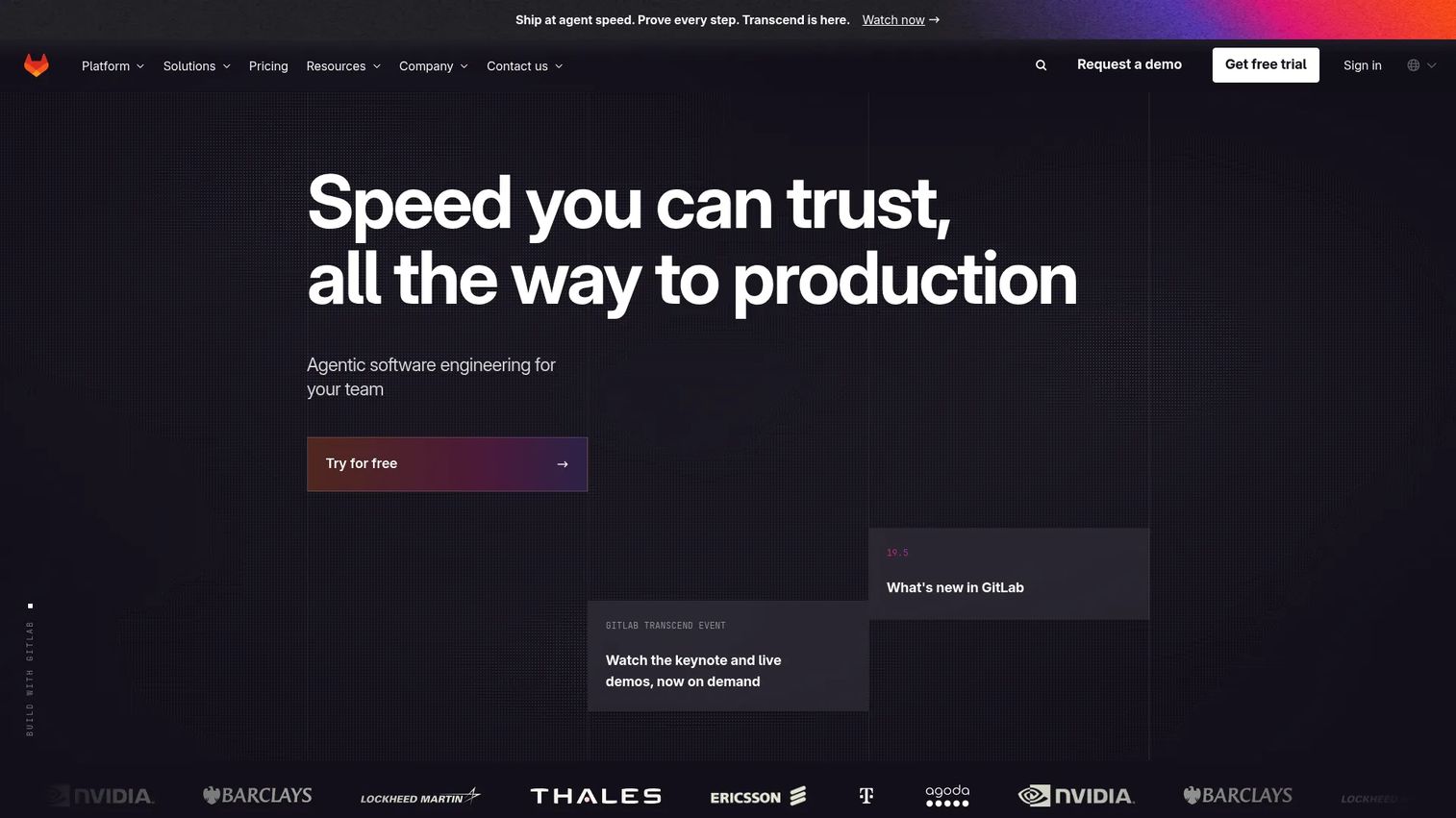
GitLab is a DevSecOps platform that covers the full software lifecycle: Source code management, CI/CD, security scanning, package management, environment visibility, and release governance. Teams use it to define release pipelines in code, track deployments across environments, and collect release evidence for compliance.
Best for: Engineering organizations that want release orchestration built into a broader DevSecOps platform rather than bolted on separately.
Key features
- Built-in CI/CD with pipeline-as-code
- Release evidence collection and environment dashboards
- Application security testing integrated into the pipeline
- Source code management with merge requests and code review
- Package and container registry for artifact management
Why choose GitLab: Choose GitLab when the buyer wants fewer disconnected DevOps tools and wants release workflows close to code, merge requests, and security controls. It's a strong fit for teams consolidating from a fragmented point-tool estate.
GitLab pricing: GitLab has a free tier for personal and open-source projects. The Premium plan costs $29 per user per month, billed annually. Ultimate pricing requires a custom quote.
G2 rating: 4.5/5
2. ServiceNow
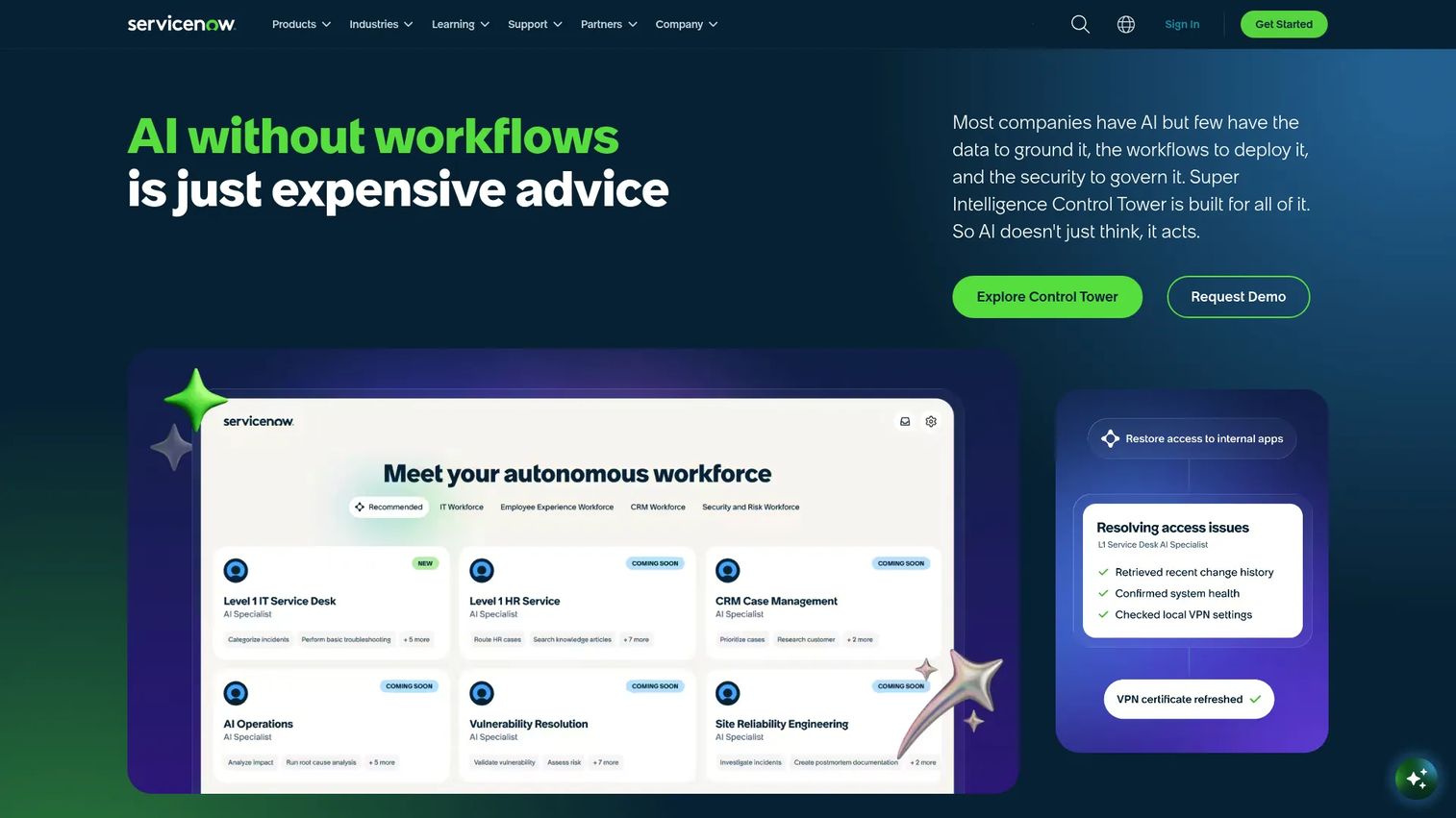
ServiceNow is an enterprise platform where release orchestration is part of broader IT service management. Change requests, release calendars, CAB approval workflows, CMDB integration, and compliance reporting all live within the same system. It's the natural choice for enterprises where IT operations owns the release governance function.
Best for: Enterprises running ITIL-aligned change management where release approval flows through established IT governance processes.
Key features
- Change management with CAB workflows and approval gates
- Release calendars and conflict detection
- CMDB integration for configuration context
- Audit trails and compliance reporting
- AI-powered automation across IT workflows
Why choose ServiceNow: Choose ServiceNow when release orchestration must align with ITIL, formal change advisory boards, and IT operations reporting structures. Logo integrations alone aren't enough; verify that the ServiceNow integration with your CI/CD toolchain has been tested at the depth the buyer needs.
ServiceNow pricing: ServiceNow uses custom pricing across all product packages. Contact sales for a quote.
G2 rating: 4.4/5
3. Octopus Deploy
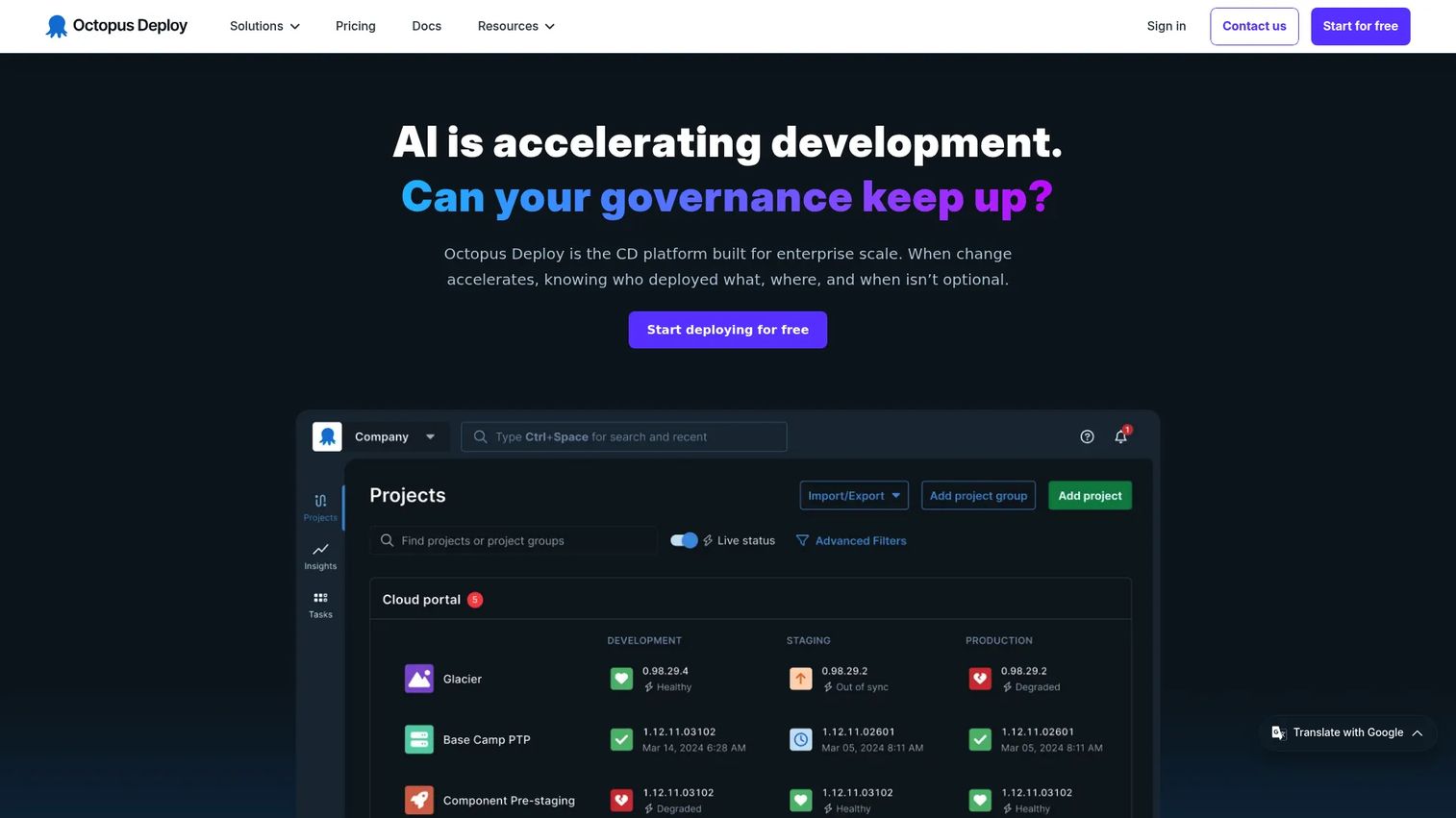
Octopus Deploy is a deployment automation and release orchestration platform purpose-built for the space between CI and production. It handles release promotion across environments, multi-tenant deployments, runbook automation for operations tasks, and deployment to cloud, on-premises, and Kubernetes targets.
Best for: Teams that have CI covered and need a dedicated system for deploying, promoting, approving, and auditing releases across multiple environments.
Key features
- Deployment projects with environment promotion lifecycles
- Runbook automation for routine and emergency operations
- Multi-tenant deployment support
- Deployment targets across cloud, on-premises, and Kubernetes
- Release versioning and audit history
Why choose Octopus Deploy: Choose Octopus Deploy when CI already builds the artifact and the team needs dedicated release orchestration with strong environment promotion and rollback controls. Presales teams should note that Octopus handles the deployment layer that many CI-only tools leave underspecified in technical validation conversations.
Octopus Deploy pricing: A free tier covers up to 10 projects, 10 tenants, and 10 machines. Professional plans cost $104 per project per year, and Enterprise plans cost $156 per project per year, both billed annually. Tenant and machine add-ons cost $77 per unit per year.
G2 rating: 4.4/5
4. Jenkins
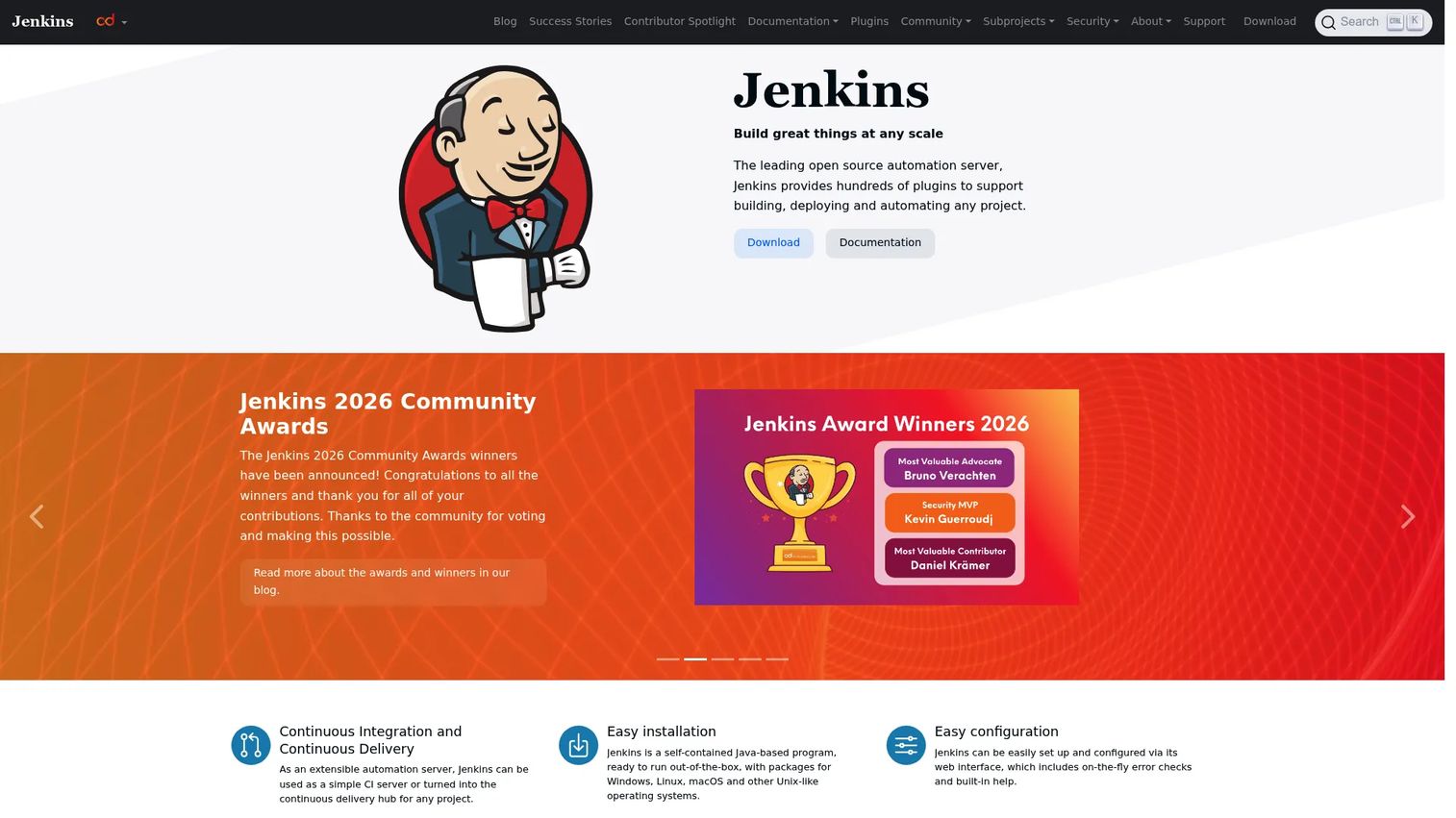
Jenkins is the original open-source automation server, widely deployed for CI/CD and customized release workflows through its plugin ecosystem and pipeline-as-code capabilities. It remains one of the most common tools in enterprise DevOps estates, though it typically requires additional tooling for release governance and visibility.
Best for: Development and DevOps teams with existing Jenkins expertise that need deep customization at the cost of managing their own automation infrastructure.
Key features
- Pipeline as code via Jenkinsfiles
- Extensive plugin ecosystem (1,800+ plugins)
- Distributed builds across multiple agents
- Shared library support for reusable pipeline logic
- Support for parallel and sequential execution
Why choose Jenkins: Jenkins wins when flexibility matters more than packaged governance. Teams that choose Jenkins should plan for additional tools to handle release visibility, approvals, and audit trails, since the core server doesn't provide these out of the box.
Jenkins pricing: Jenkins is open-source software with no license cost. Infrastructure, plugin maintenance, security patching, and admin overhead are the real costs to factor into total cost of ownership.
5. RunMyJobs by Redwood
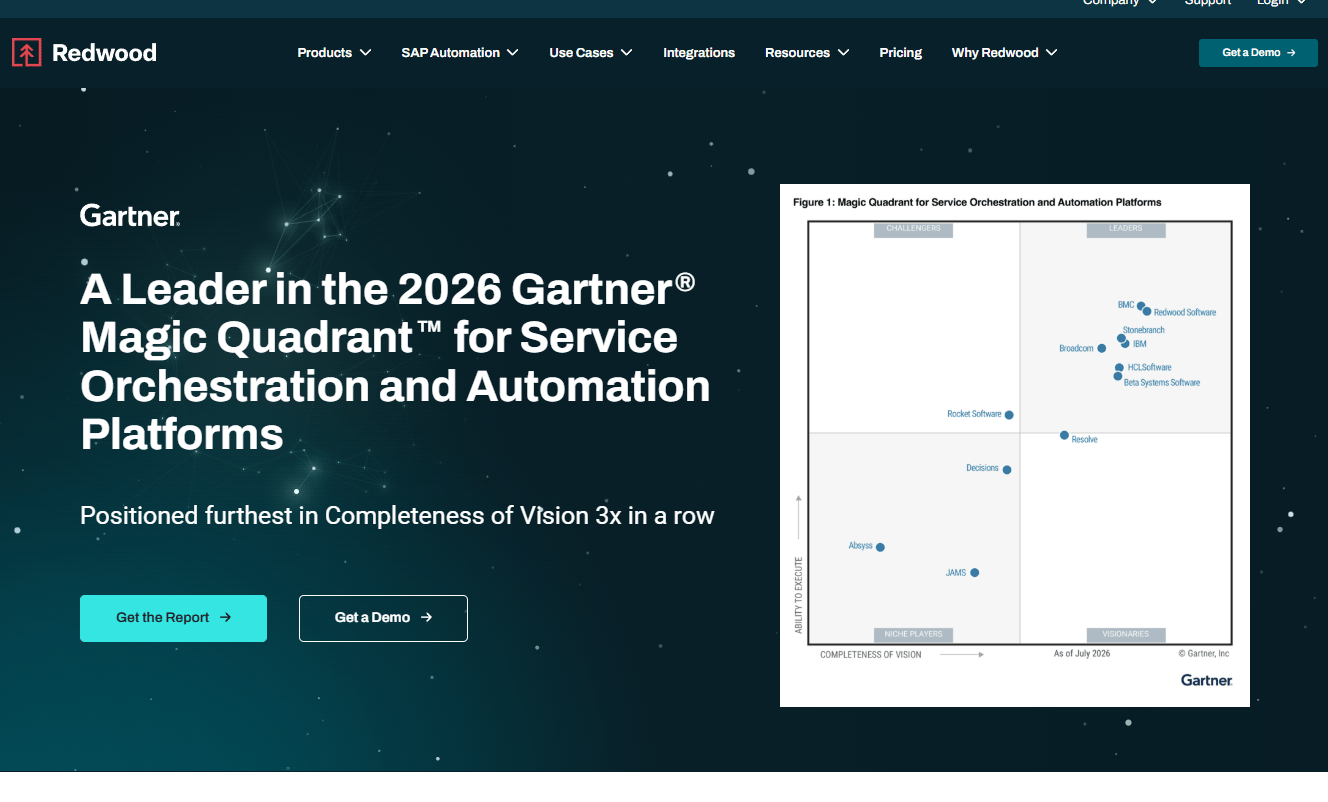
RunMyJobs by Redwood is a cloud-native enterprise workload automation platform for coordinating business processes across applications, cloud systems, and on-premises infrastructure. It's positioned for large enterprises where release orchestration overlaps with scheduled jobs, ERP workflows, and batch processing dependencies.
Best for: Large enterprises coordinating releases that depend on ERP workflows, batch jobs, or cross-application scheduling rather than pure CI/CD pipelines.
Key features
- End-to-end workflow orchestration across hybrid environments
- Event-driven and time-based job scheduling
- Predictive SLA monitoring with real-time observability
- Prebuilt connectors including SAP, Oracle, and major cloud providers
- Low-code, drag-and-drop workflow design
Why choose RunMyJobs by Redwood: Choose RunMyJobs when the release process is entangled with business process automation. If a deployment can't ship until a batch job completes or an ERP approval clears, this is the layer that coordinates it.
RunMyJobs pricing: Pricing is custom. Contact Redwood directly for a quote.
G2 rating: 5.0/5
6. ActiveBatch
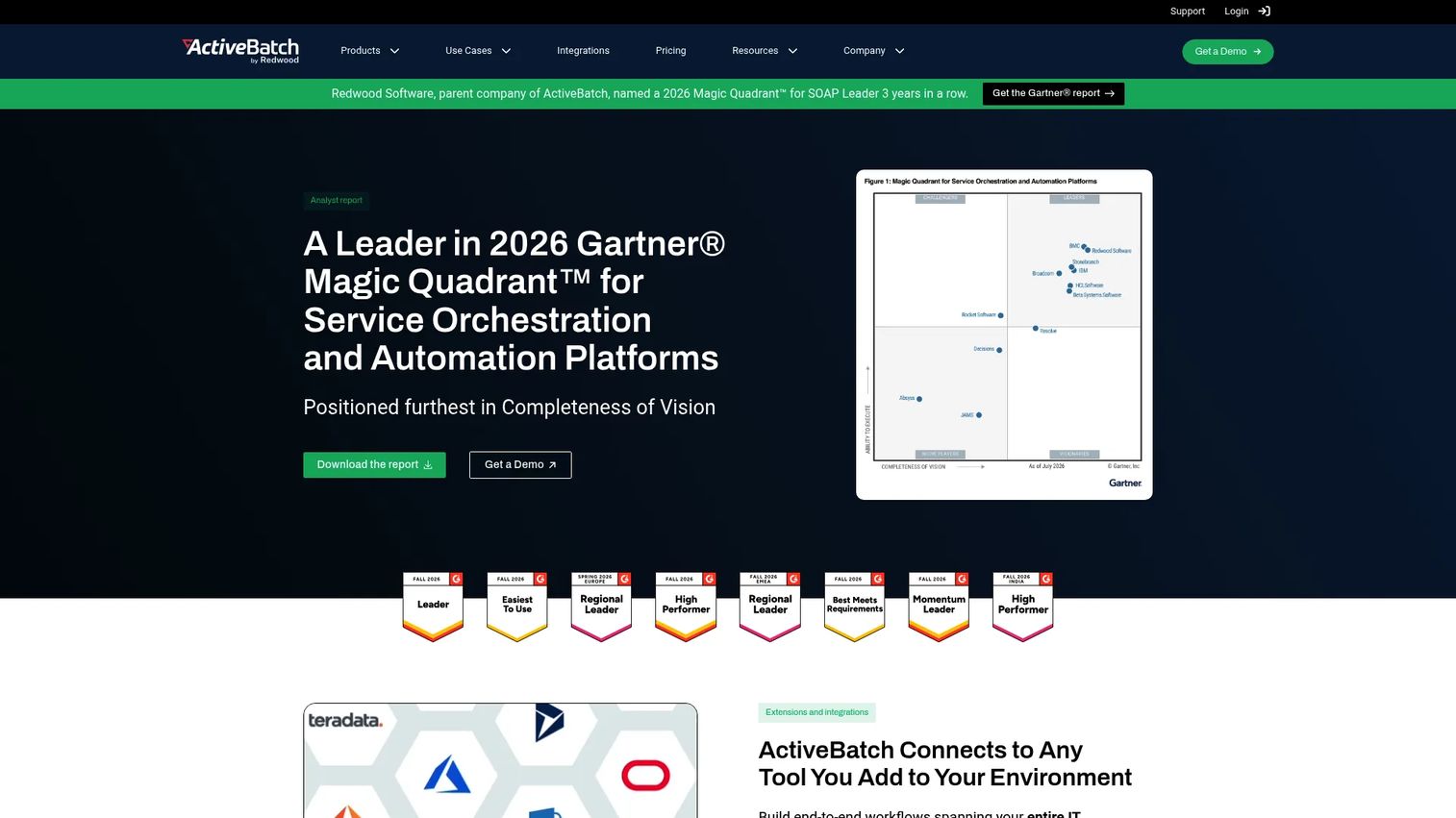
ActiveBatch is an IT automation and workload orchestration platform for building event-driven workflows across applications, databases, and infrastructure. It suits IT operations teams that need to coordinate releases alongside broader workload automation rather than treating deployment as a standalone engineering concern.
Best for: Enterprise IT and data teams orchestrating complex, cross-system batch workflows where deployment tasks sit alongside scheduled automation.
Key features
- Workflow designer with drag-and-drop job construction
- Event-driven and schedule-based triggers with dependency chains
- Cross-platform connectors for Windows and non-Windows systems
- High availability with restart, failover, and checkpoint recovery
- SLA monitoring, alerting, dashboards, and audit reporting
Why choose ActiveBatch: Choose ActiveBatch when release tasks need to interoperate with IT operations workflows, file movement, data processing, and enterprise scheduling. It's a strong fit for IT-owned release processes that span multiple business systems.
ActiveBatch pricing: ActiveBatch uses custom pricing. Contact the vendor for a quote.
G2 rating: 4.5/5
7. Harness
Harness is a modern software delivery platform with modules for CI, CD, feature flags, cloud cost management, security testing, and policy governance. Its deployment verification capabilities connect release outcomes to observability signals, and its policy-as-code controls let teams enforce standards across pipelines.
Best for: Cloud-native teams that need governed CI/CD with deployment guardrails, service reliability verification, and progressive delivery capabilities.
Key features
- Continuous delivery with GitOps and Kubernetes support
- Deployment verification using observability signals
- Feature flags for controlled progressive rollouts
- Policy-as-code for pipeline governance
- Pipeline templates for standardized delivery workflows
Why choose Harness: Choose Harness when the buyer wants deployment guardrails that tie service reliability data to release gates. The platform suits teams moving toward progressive delivery who also need enterprise governance controls. See our guide to CI/CD tools for related context on the broader pipeline automation category.
Harness pricing: A free plan is available. The Essentials and Enterprise plans require contacting sales for pricing.
G2 rating: 4.6/5
8. CircleCI
CircleCI is a CI/CD platform for automating build, test, and deployment workflows through configurable pipelines. It appeals to engineering teams that want fast, developer-owned automation with support for Docker, Linux, Windows, Arm, macOS, and self-hosted runners.
Best for: Engineering teams that want fast cloud CI/CD with release workflows tightly coupled to build automation and parallel test execution.
Key features
- Cloud and self-hosted pipeline execution
- Reusable configuration packages through orbs
- Parallel job execution and dynamic test splitting
- Test analytics for identifying slow and flaky tests
- Pipeline configuration via YAML files
Why choose CircleCI: Choose CircleCI when developer workflow speed and flexible execution environments are the priority. Teams looking for heavyweight release governance, approval gates, or environment promotion workflows will typically need a complementary tool for the deployment layer.
CircleCI pricing: A free plan includes 6,000 build minutes per month. The Performance plan starts at $15 per month. Scale pricing is custom and requires contacting sales.
G2 rating: 4.4/5
9. JFrog Pipelines
JFrog built Pipelines as the CI/CD orchestration layer within its platform, tying pipeline automation to artifact management, binary promotion, and software supply chain controls.
Important note: JFrog Pipelines reached end of life on May 1, 2026. The product no longer receives updates, bug fixes, or security patches. Organizations still running JFrog Pipelines should evaluate migration paths to alternative CI/CD orchestration tools before this becomes a security or compliance risk.
Best for: Teams already evaluating the broader JFrog Platform for artifact management should confirm the current roadmap before committing to the pipelines component.
Key features
- YAML-based pipeline-as-code
- Artifact promotion and release bundles
- Binary traceability across pipeline stages
- Centralized pipeline visibility
- Integrations with GitHub, Bitbucket, Docker, and Kubernetes
Why choose JFrog Pipelines: Evaluate the broader JFrog Platform for artifact management and supply chain governance. For pipeline orchestration specifically, plan for the end-of-life status and identify a replacement before security posture becomes a concern.
JFrog Pipelines pricing: JFrog Pipelines is end of life and pricing is not applicable for new deployments. The JFrog Platform continues under separate packaging; contact JFrog for current platform pricing.
10. Codefresh
Codefresh is a cloud-native software delivery platform built around Kubernetes and GitOps workflows. It provides native support for Argo CD, Argo Rollouts, Argo Workflows, and Argo Events, making it a strong choice for teams standardizing on Argo-based progressive delivery.
Best for: Kubernetes teams standardizing on GitOps, progressive delivery, and application promotion across multiple clusters.
Key features
- GitOps dashboards for Kubernetes deployment visibility
- Argo CD, Argo Rollouts, and Argo Workflows integration
- Progressive delivery with canary and blue/green strategies
- CI/CD pipelines for building, testing, and deploying
- Kubernetes, Helm, and cloud provider integrations
Why choose Codefresh: Choose Codefresh when Kubernetes delivery, GitOps control, and Argo-native workflows are the center of the release process. Presales teams should validate that the buyer's Kubernetes version and Argo setup are supported, since the depth of integration matters more than the logo.
Codefresh pricing: Pricing is contained in order forms and requires contacting sales. No publicly available plan prices were found.
G2 rating: 4.6/5
11. Spinnaker
Spinnaker is an open-source continuous delivery platform built for multi-cloud deployment strategies. Originally developed at Netflix and Google, it supports canary deployments, blue/green strategies, manual judgment stages, and pipeline triggers across AWS, Google Cloud, Azure, and Kubernetes.
Best for: Advanced platform engineering teams with the capacity to operate and customize open-source continuous delivery at scale across multiple cloud providers.
Key features
- Multi-cloud application deployment
- Blue/green and canary deployment strategies
- Manual judgment stages for human approval gates
- Pipeline-based automated release workflows
- Broad cloud provider integrations
Why choose Spinnaker: Choose Spinnaker when the team has platform engineering depth to run and extend an open-source CD system. Organizations that choose Spinnaker because it's free often underestimate the engineering effort required to keep it running, secure, and current.
Spinnaker pricing: Spinnaker is open-source software. Hosting, engineering, and operational costs are the real budget line items.
G2 rating: 4.0/5
12. Digital.ai
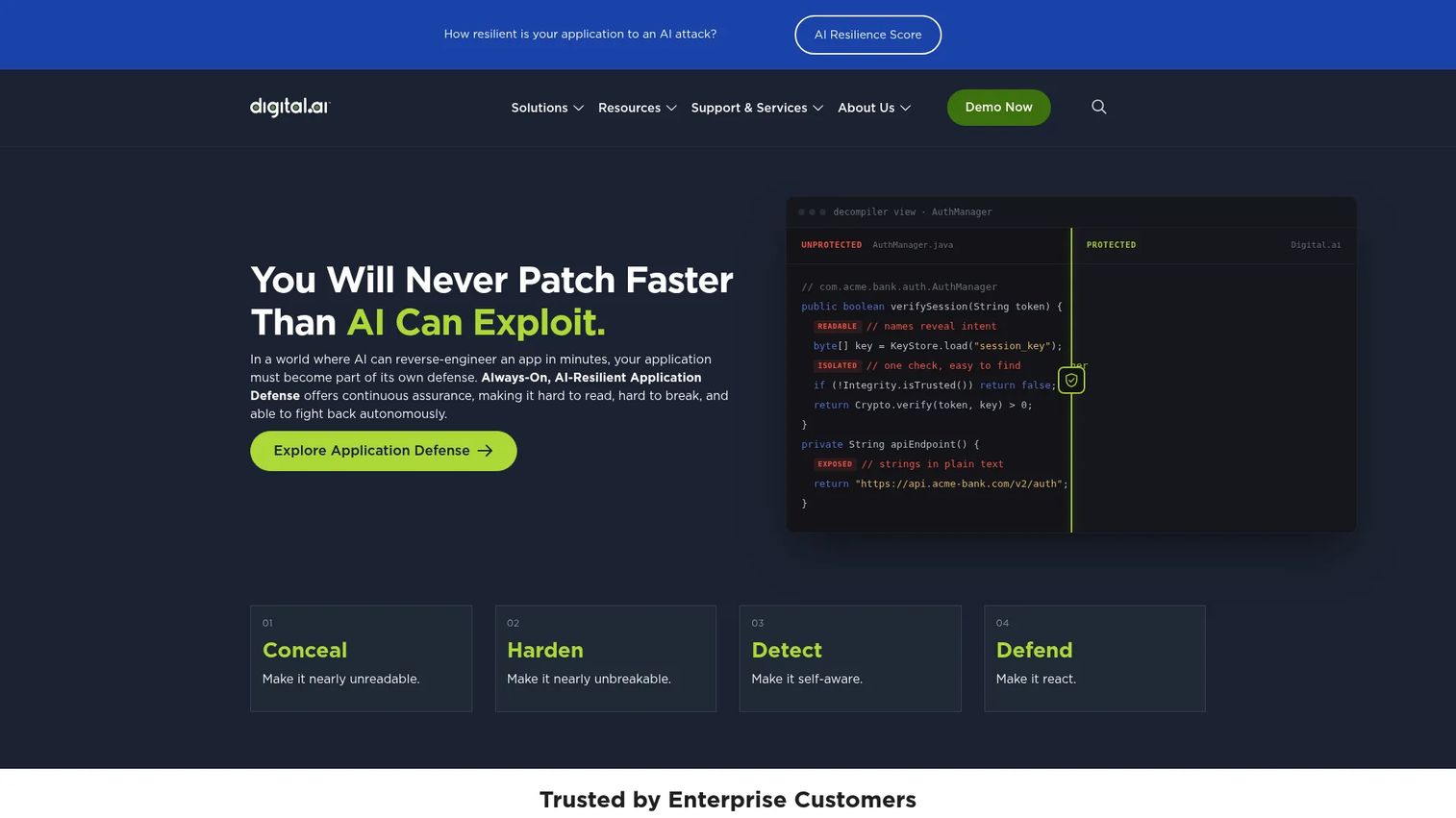
Digital.ai provides enterprise software delivery solutions covering release pipeline automation, deployment orchestration, agile planning, value stream management, and DevSecOps governance. It targets large enterprises that need coordinated releases with compliance evidence and executive reporting.
Best for: Large enterprises needing coordinated release pipelines, audit evidence, value stream visibility, and regulated deployment governance across complex hybrid environments.
Key features
- Release pipeline automation and orchestration
- Value stream management with delivery insights
- AI-assisted workflows and predictive delivery analytics
- DevSecOps governance with security gates and audit trails
- Hybrid-cloud application deployment automation
Why choose Digital.ai: Choose Digital.ai when releases span many teams and regulated environments where executive reporting and compliance evidence are first-class requirements. The platform suits buyers who need value stream context alongside deployment control. Check our application portfolio management software guide for related tooling in enterprise delivery governance.
Digital.ai pricing: Digital.ai offers Essentials, Pro, and Premium editions with custom pricing. Contact sales for a quote. Free trials are available for selected products including Digital.ai Release SaaS.
G2 rating: 3.8/5
13. GoCD
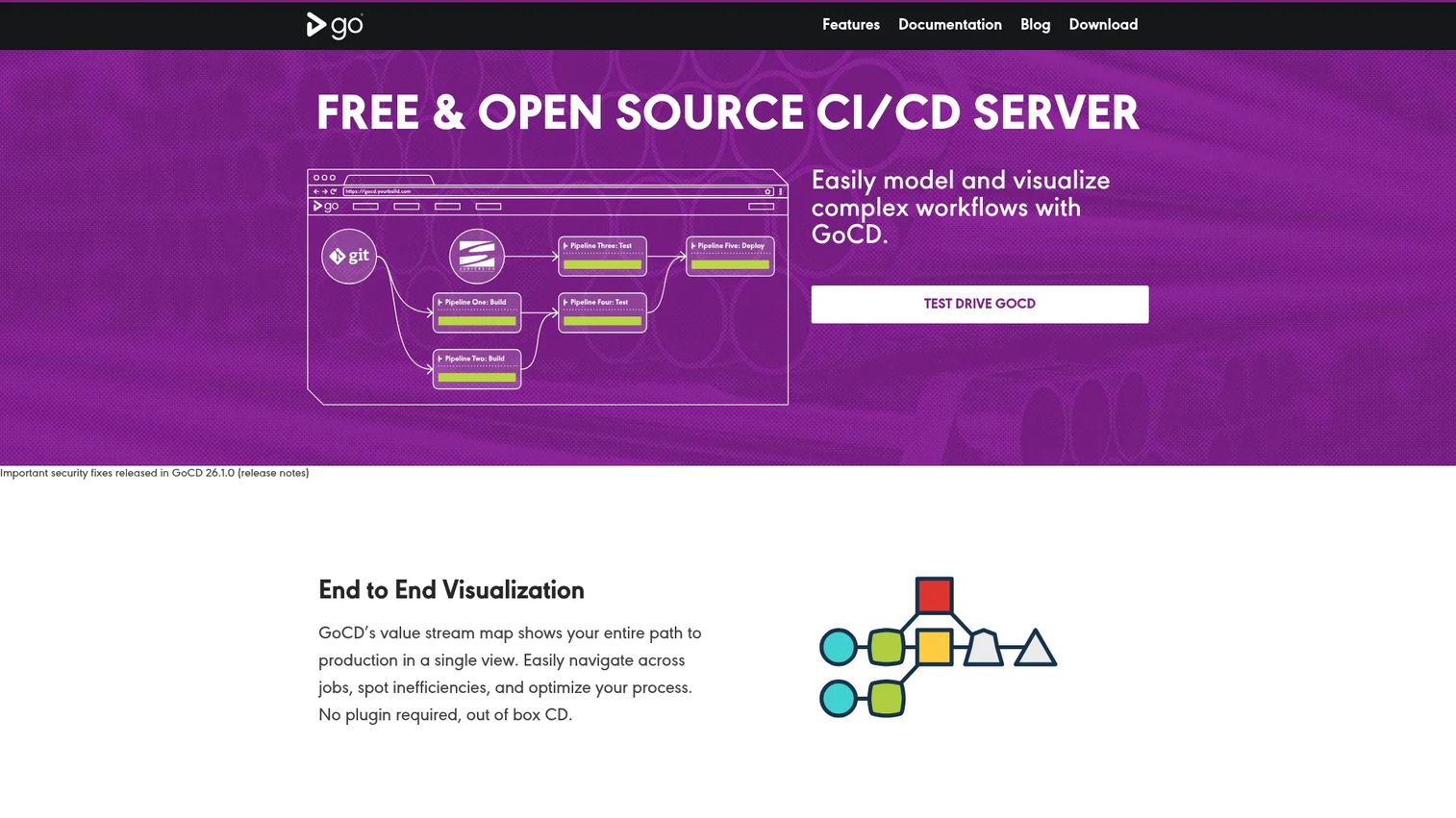
GoCD is an open-source continuous delivery server built around value stream mapping and pipeline dependency modeling. It gives teams visual end-to-end visibility into which version of code is at which stage of the delivery pipeline, making it easier to understand complex multi-pipeline dependencies.
Best for: Teams needing self-managed continuous delivery with clear pipeline dependency visualization and open-source control over their release model.
Key features
- Value Stream Map for end-to-end pipeline visualization
- Parallel and sequential pipeline execution with fan-in/fan-out
- Artifact promotion and traceability across stages
- Pipeline configuration via source repositories and APIs
- Elastic agent support for flexible execution infrastructure
Why choose GoCD: Choose GoCD when pipeline dependency visibility matters and the team wants open-source control without the operational overhead of Spinnaker or Jenkins at scale. Like any self-hosted tool, someone needs to own the platform.
GoCD pricing: GoCD is open-source and free to use under the Apache License 2.0. Infrastructure and support costs apply.
G2 rating: 4.1/5
14. DeployBot
DeployBot is a deployment automation platform that moves code from Git repositories to servers through configured deployment workflows. It handles automatic and manual deployments, build commands, rollback-capable release history, and deployment permissions for smaller development teams.
Best for: Development teams that need straightforward automated deployments from Git repositories without enterprise release governance overhead.
Key features
- Automatic and manual Git deployments
- SFTP and SSH deployment targets
- Build commands with unlimited build minutes
- Webhook, API, and Slack deployment triggers
- Deployment permissions and rollback-capable history
Why choose DeployBot: Choose DeployBot when the requirement is simple code shipping from a repository to a server, without complex environment promotion or approval chains. Enterprise release governance is out of scope for this tool.
DeployBot pricing: Plans start at $29 per month for up to 20 repositories. The Premium plan costs $59 per month for up to 50 repositories. Platinum plans cover 75 to 200 repositories at $75 to $200 per month.
G2 rating: No current G2 listing was verified for DeployBot.
15. Clarive
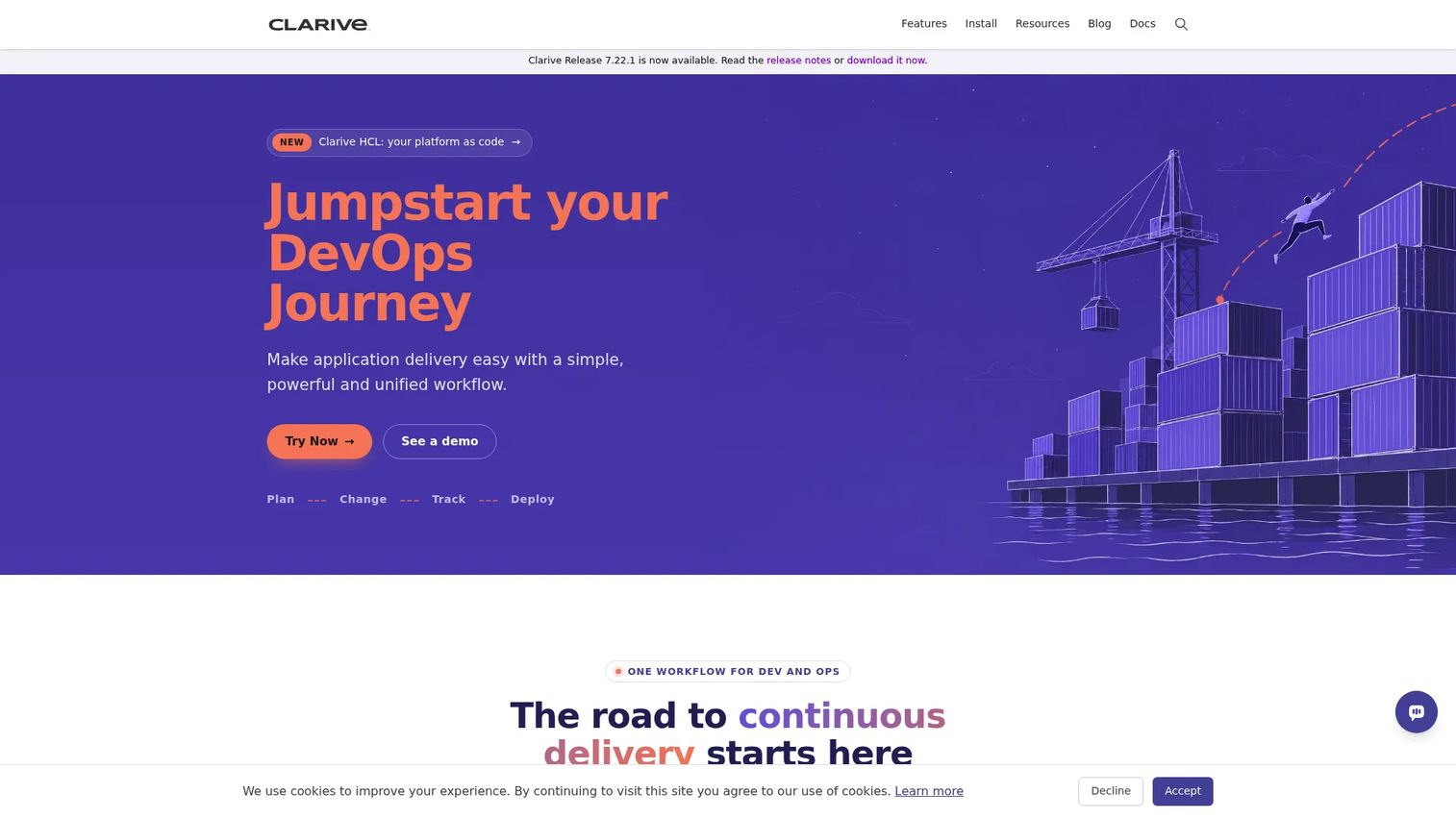
Clarive is a unified DevOps and application delivery platform for planning, tracking, automating, and deploying software changes. It uses a rule-based engine to drive CI/CD pipelines and supports environment management, scheduled deployments, rollback, and artifact repositories across heterogeneous environments.
Best for: DevOps and enterprise application delivery teams needing integrated release planning, automation, and deployment orchestration across mixed technology stacks.
Key features
- Rule-based CI/CD pipelines with event triggers
- Kanban boards, topics, workflows, and release management
- Environment management with concurrency control and rollback
- Git repository management with code review and auto-merging
- Custom dashboards and reporting
Why choose Clarive: Choose Clarive when release workflows require centralized rule-driven orchestration across diverse systems. It's a credible option for enterprises that need both planning visibility and deployment control in the same tool.
Clarive pricing: Pricing is custom. Contact Clarive for a quote.
G2 rating: 4.3/5
16. DBmaestro
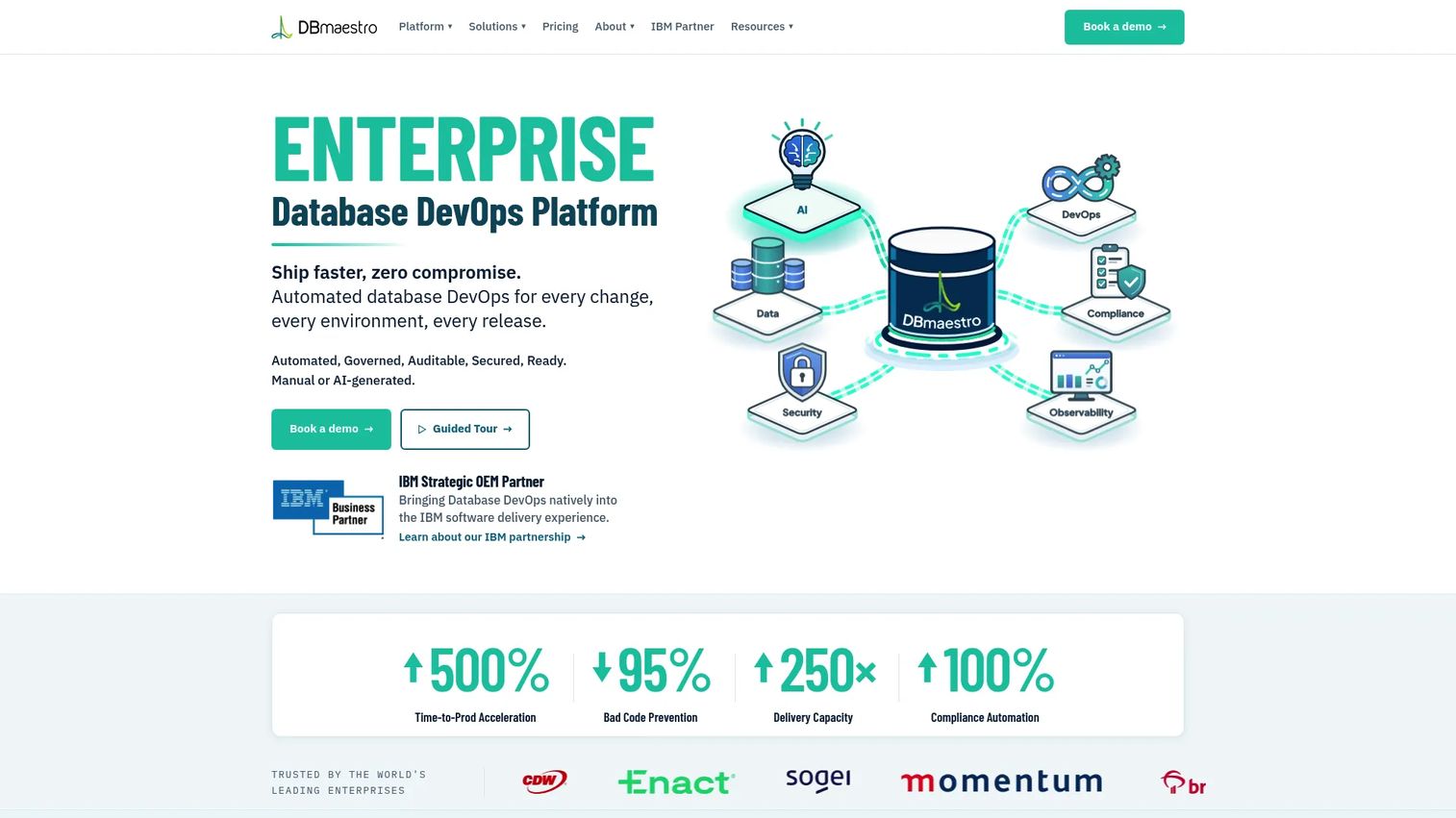
DBmaestro is an enterprise database DevOps platform that automates database releases with CI/CD pipelines, validation, approvals, rollback, and full audit trails. It addresses the release orchestration problem that most application-layer tools skip: Controlling schema changes alongside code deployments.
Best for: Enterprise organizations where application releases depend on database changes that need governed, auditable, and automated delivery controls.
Key features
- Database release automation with CI/CD integration
- Schema versioning with branching, merging, and conflict detection
- Drift detection across database environments
- Role-based access control and approval workflows
- Compliance reports and complete audit trails
Why choose DBmaestro: Choose DBmaestro when production risk lives in database changes rather than application code alone. It's a relevant addition to any release orchestration stack where schema governance and rollback for database changes are requirements. Pair it with an audit management software evaluation if compliance evidence is a parallel need.
DBmaestro pricing: Pricing is based on the number of managed database environments. Contact sales for a quote.
G2 rating: 4.5/5
17. Copado

Copado is a Salesforce-native DevOps platform for planning, building, testing, deploying, and governing Salesforce application releases. It handles user story promotion, environment synchronization, automated testing, merge conflict resolution, and compliance controls within the Salesforce ecosystem.
Best for: Salesforce teams managing releases across sandboxes, environments, and compliance processes with Salesforce-native governance.
Key features
- Salesforce-native CI/CD and deployment automation
- User story promotion across sandboxes and production orgs
- Automated and robotic Salesforce testing
- AI-powered Org Intelligence and DevOps agents
- Compliance controls, governance, and audit trails
Why choose Copado: Choose Copado when Salesforce is the primary release surface. It's the most complete Salesforce-native release orchestration platform on this list, handling the full lifecycle from development to production across complex org structures.
Copado pricing: The Essentials Free tier is available at no cost. Essentials Basic costs $99 per user per month, billed annually. Essentials Plus costs $249 per user per month, billed annually. Enterprise pricing requires contacting sales.
G2 rating: 4.4/5
18. Puppet
Puppet is an infrastructure automation and configuration management platform that enforces desired state across servers, devices, and hybrid environments. It reduces environment drift, one of the most common causes of release failures in hybrid deployments, by continuously verifying and correcting infrastructure configuration.
Best for: Organizations where environment drift and infrastructure configuration inconsistency are major contributors to release failures.
Key features
- Continuous enforcement of desired-state configurations
- Agent-based and agentless infrastructure management
- Security and compliance enforcement using CIS Benchmarks and DISA STIGs
- Configuration correction reports and audit logs
- Role-based access control with web-based management
Why choose Puppet: Choose Puppet when release reliability problems trace back to environment inconsistency rather than pipeline logic. It's a complementary tool in release orchestration stacks where infrastructure-as-code discipline is needed alongside deployment automation.
Puppet pricing: The Core Developer edition is free for up to 25 nodes. Core Commercial (25+ nodes), Enterprise, and Advanced tiers use custom pricing. Contact Puppet for quotes.
G2 rating: 4.2/5
19. Buildkite
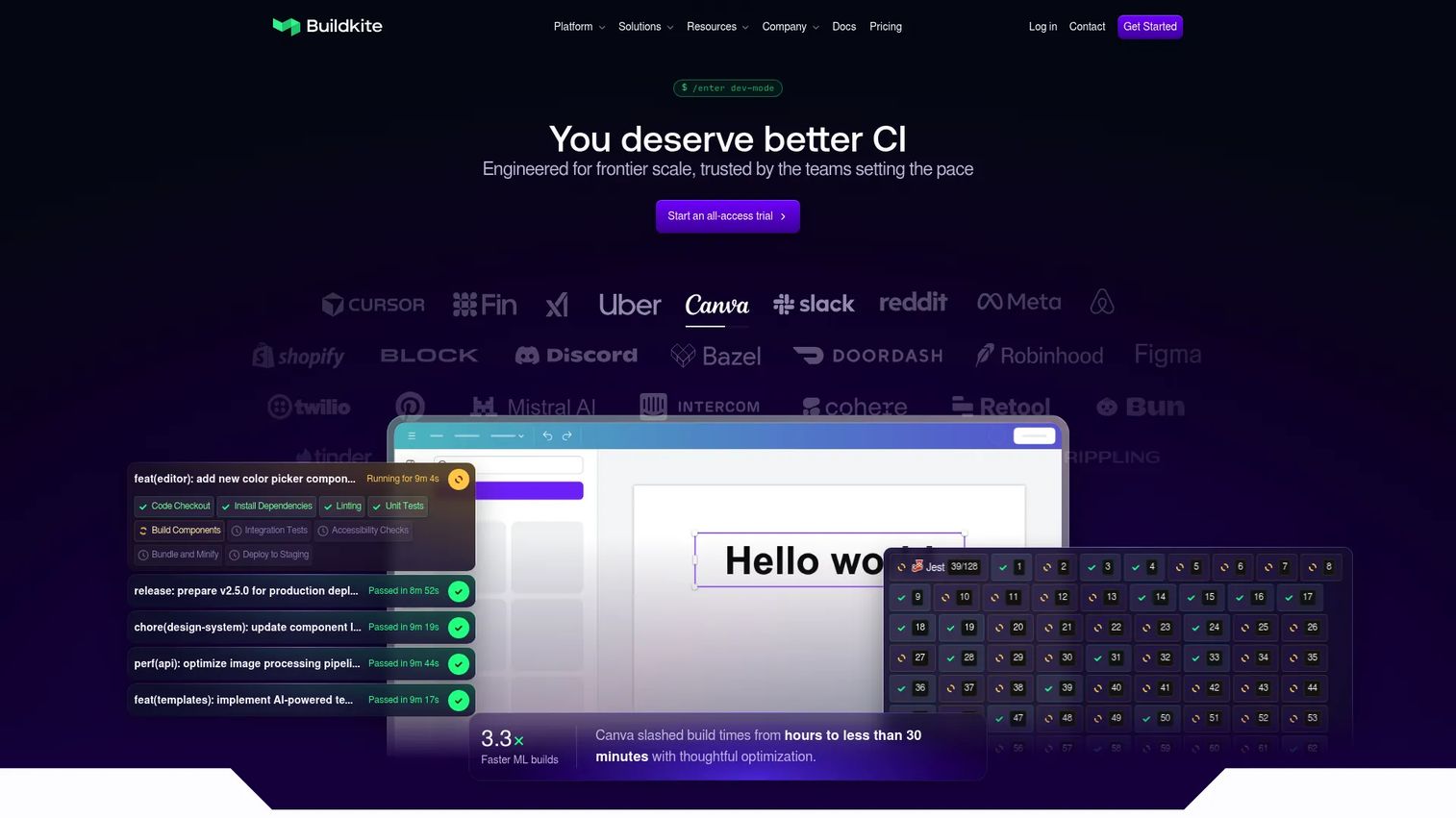
Buildkite is a scalable CI/CD platform that gives teams a hosted control plane while running pipeline agents on their own infrastructure. This hybrid model suits organizations with data residency requirements, security policies against running builds in shared cloud environments, or high-volume pipeline needs.
Best for: Engineering teams that need scalable CI/CD with full control over build execution infrastructure.
Key features
- Dynamic CI/CD pipelines with parallel execution
- Self-hosted and fully managed hosted agents
- Test Engine with test splitting and flaky-test management
- Package registries for secure artifact management
- Pipeline-as-code with flexible compute options
Why choose Buildkite: Choose Buildkite when teams want developer-controlled pipelines and infrastructure ownership without fully self-managing a CI server. The hybrid agent model is particularly relevant for organizations in regulated industries where build environment control is a compliance requirement.
Buildkite pricing: A free plan supports up to 5 users. The Pro plan costs $30 per active user per month. Enterprise pricing is custom and requires contacting sales.
G2 rating: 4.7/5
20. Rundeck
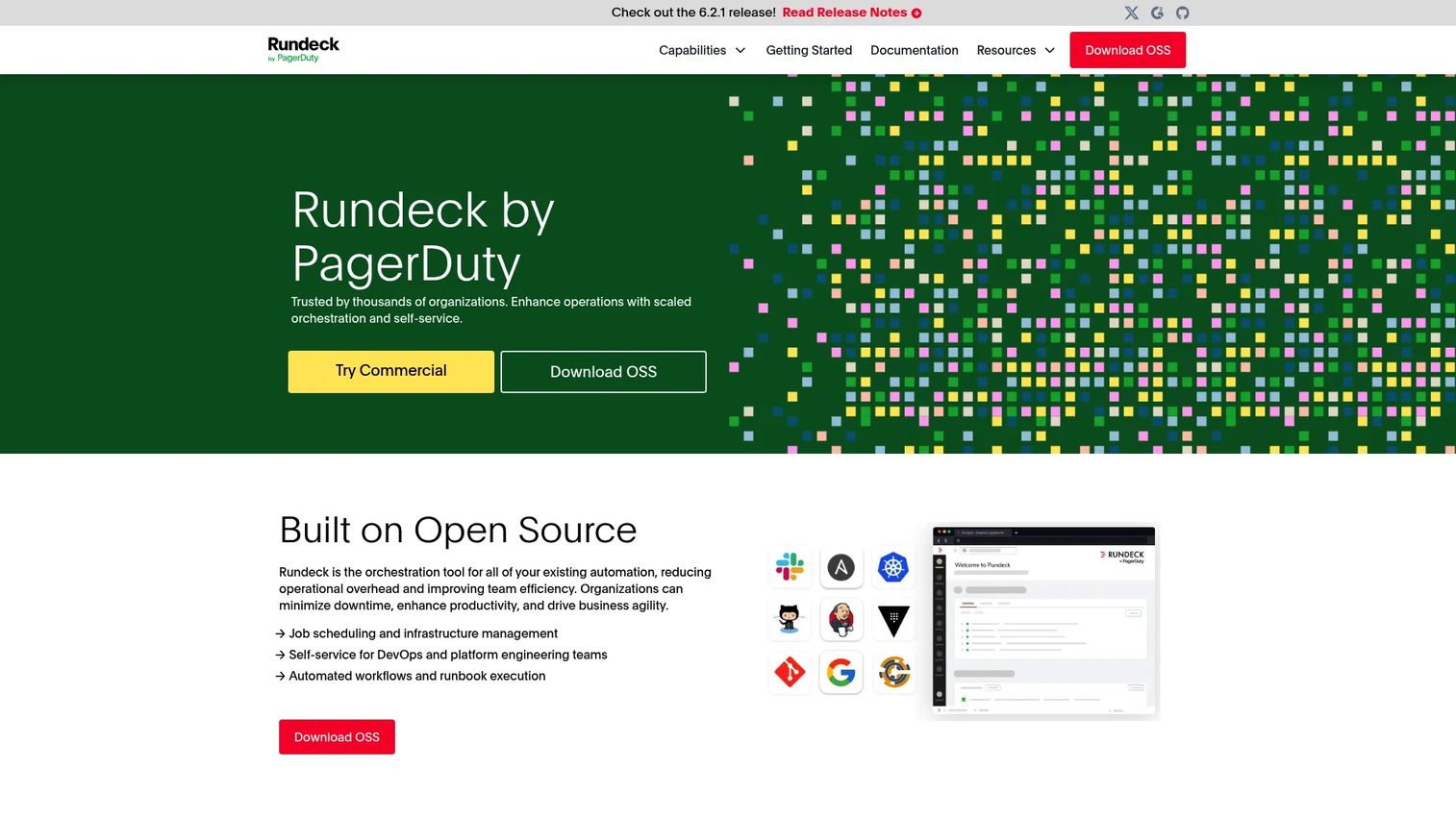
Rundeck is an operations automation platform for executing runbooks, job scheduling, and controlled operational tasks across infrastructure. It's used by DevOps and platform teams to delegate operational tasks with guardrails, audit trails, and access controls that prevent direct server access.
Best for: Operations and platform teams that need delegated release tasks, self-service runbooks, and controlled execution of deployment-related operational workflows.
Key features
- Runbook automation and job execution
- Role-based access control for delegated operations
- Execution history and audit logging
- Distributed command execution across infrastructure
- Web GUI, REST API, and CLI for workflow management
Why choose Rundeck: Choose Rundeck when release orchestration includes operational tasks that need guardrails and delegation. It's especially useful for on-call teams running deployment-adjacent runbooks without requiring shell access to production systems.
Rundeck pricing: Rundeck Community is free open-source software. The commercial PagerDuty Runbook Automation offering requires a license; contact sales for pricing.
21. BuildMaster
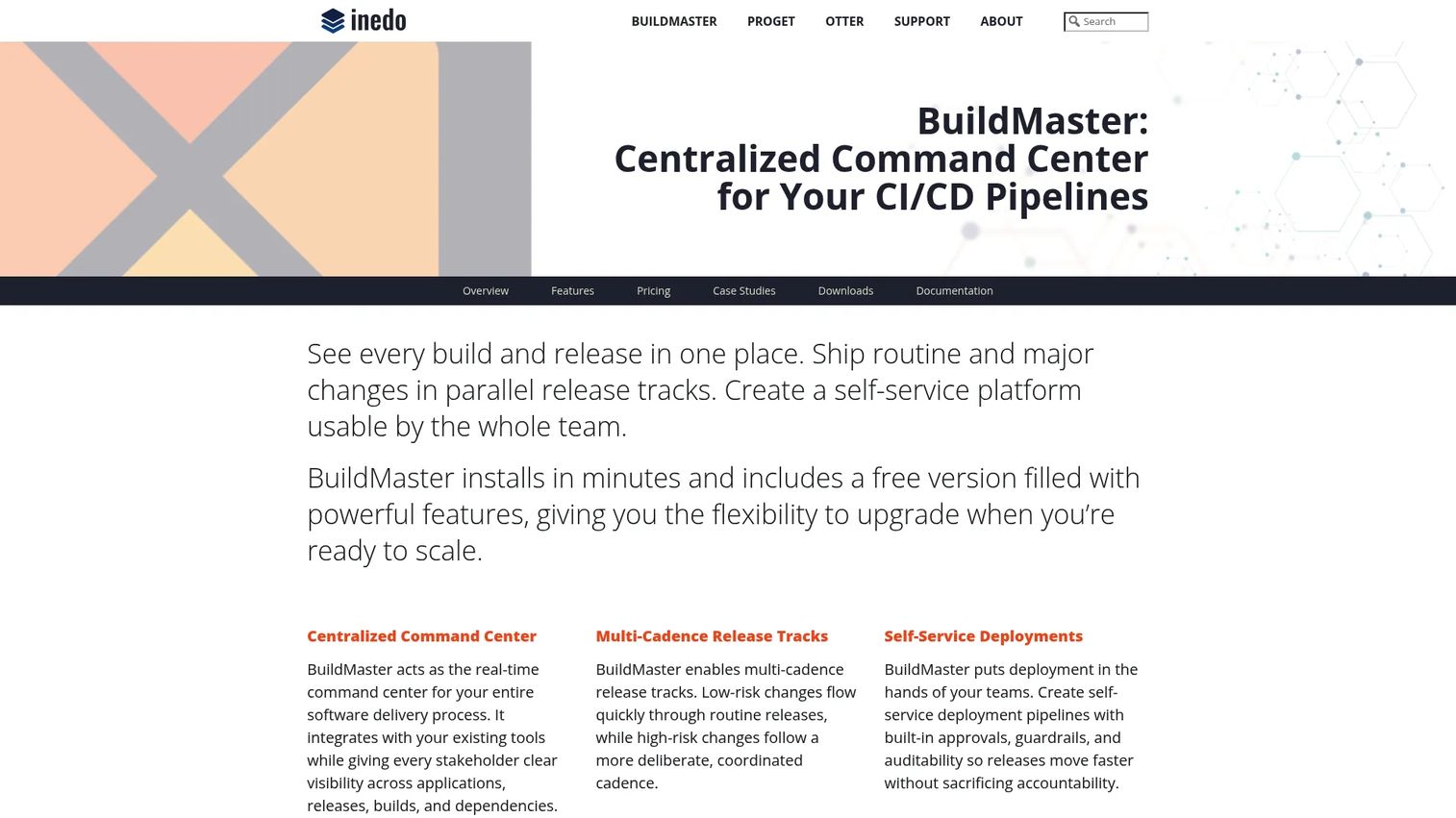
BuildMaster by Inedo is a self-hosted application release automation platform for coordinating builds, deployments, approvals, and release pipelines. It's designed for teams that need structured release governance without adopting a broad DevOps platform or a fully managed cloud service.
Best for: Teams that need structured release governance with controlled approvals and repeatable deployments in a self-hosted environment.
Key features
- Centralized portfolio view across applications, builds, and releases
- Multi-cadence release tracks for routine and major releases
- Approval gates, rollbacks, and deployment audit trails
- Environment promotion with package tracking
- Self-service deployments with access controls
Why choose BuildMaster: Choose BuildMaster when the team wants application release management with formal approval workflows and deployment governance but doesn't need a full enterprise platform. The self-hosted model suits organizations with data sovereignty requirements.
BuildMaster pricing: The free edition has no user limits and supports unlimited applications and servers. Enterprise licensing starts at $2,995 per year for up to 10 users, scaling to $29,995 per year for up to 250 users.
G2 rating: 4.0/5
Considerations when choosing application release orchestration tools
Integration fit with your existing DevOps stack
Validate that the tool connects to your specific CI system, artifact repository, secrets manager, observability platform, ITSM tool, and cloud provider. Logo integrations are not the same as tested integration depth. Ask vendors to demo the exact handoff your release process requires, not a generic pipeline.
Governance without process drag
Evaluate how the tool distinguishes low-risk automated deployments from high-risk changes that need human review. Too much governance slows every release and creates shadow processes. Too little leaves compliance gaps. Look for policy-as-code controls that route approvals based on defined criteria rather than requiring a manual step for every deployment.
Deployment model and environment coverage
Map your target environments: SaaS-hosted, self-hosted, hybrid agents, on-premises data centers, Kubernetes clusters, and multi-cloud targets. Test rollback behavior, pre-flight checks, and partial connectivity scenarios in hybrid environments before committing. These edge cases are where release tools differentiate at enterprise scale.
Release visibility and reporting
Evaluate dashboards, deployment history, release calendars, and risk signals. For presales teams, the reporting layer matters during RFPs and security reviews. Check whether the tool can produce evidence of deployment controls, change approvals, and rollback execution, the exact artifacts buyers ask for in regulated enterprise deals. Our audit management software guide covers the adjacent compliance tooling that often sits alongside release orchestration in regulated environments.
Adoption and maintenance cost
Open-source flexibility has a price. Jenkins, Spinnaker, GoCD, and Rundeck Community all require platform ownership. Estimate the engineering hours needed for setup, plugin maintenance, upgrade cycles, and incident response before counting the license cost as zero. Managed or SaaS-delivered tools shift that cost to a subscription but reduce internal maintenance burden.
How to choose the right application release orchestration tool
If you want one DevSecOps platform
GitLab is the strongest choice for teams consolidating source control, CI/CD, security scanning, and release management. ServiceNow fits organizations where IT governance owns the release approval function and change management is an ITIL-driven process.
If you already have CI and need deployment control
Octopus Deploy, BuildMaster, and Digital.ai each complement an existing CI system by controlling the release and deployment layer. Octopus suits teams with multi-environment promotion needs. BuildMaster fits self-hosted governance requirements. Digital.ai targets large enterprises needing value stream context alongside deployment orchestration.
If Kubernetes is the center of your release process
Harness delivers governed modern delivery with deployment verification and policy controls. Codefresh excels for Argo-native GitOps workflows. Spinnaker suits platform teams that have the engineering capacity to run and extend open-source multi-cloud delivery.
If releases depend on specialized systems
For Salesforce releases, Copado is the purpose-built answer. For database change control, DBmaestro handles schema governance and drift detection. Puppet addresses infrastructure configuration consistency. Rundeck suits runbook-driven operational task delegation alongside the main deployment pipeline.
Conclusion
Application release orchestration is the control layer that sits between a passing build and a safe production deployment. The tools in this list cover a wide range of deployment contexts and buyer profiles.
For teams consolidating onto a single platform, GitLab covers the broadest scope. ServiceNow fits enterprises where change governance is IT-owned. Octopus Deploy, Digital.ai, and BuildMaster each serve the deployment orchestration layer for teams that have CI handled. Harness and Codefresh lead for Kubernetes and progressive delivery, with Spinnaker as the open-source alternative for teams with platform engineering capacity.
Copado and DBmaestro serve specialized release surfaces that general-purpose tools don't fully address. Jenkins, GoCD, and Rundeck remain strong options for teams that can own and maintain their own automation infrastructure.
The practical next step: Shortlist three tools based on your primary deployment model, run each through a failed-release scenario before signing, test the integrations with your actual CI system and secrets manager, and validate rollback behavior in your target environment. Presales teams should use this guide to anticipate the questions technical buyers ask during validation, particularly around deployment safety, audit trails, and change management alignment.
Start your journey with Guideflow today!
FAQs
Application release orchestration tools are software platforms that coordinate the full release lifecycle, including planning, approval, deployment, monitoring, and rollback, across teams, tools, environments, and infrastructure. They sit above CI/CD pipelines and connect the artifact that CI produces to the controlled, governed deployment that reaches production.
CI/CD builds, tests, and packages code. Release orchestration controls what happens to that artifact after it leaves CI: Which environment it goes to, under what approval conditions, in which order relative to other services, and with which rollback path available. Most organizations need both layers, and many release orchestration tools integrate directly with existing CI platforms rather than replacing them.
Integration depth with your existing DevOps stack is the first filter. After that, evaluate approval workflows and policy-as-code controls, environment management and rollback behavior, audit trails for compliance evidence, deployment visibility and release calendars, and support for your specific infrastructure targets, whether that's Kubernetes, on-premises servers, cloud providers, or hybrid combinations.
The answer depends on whether engineering or IT operations owns the release process. GitLab fits engineering-led organizations consolidating DevSecOps tooling. ServiceNow fits IT-governed enterprises running ITIL-aligned change management. Digital.ai suits large enterprises needing value stream visibility alongside deployment governance. Harness and Octopus Deploy each serve enterprise engineering teams with different priorities around modern delivery versus deployment orchestration depth.
Harness, Codefresh, and Spinnaker are the primary options for Kubernetes-heavy release processes. Harness adds deployment verification and policy governance. Codefresh is built around Argo workflows and GitOps. Spinnaker supports advanced multi-cloud deployment strategies for teams with platform engineering capacity. Validate GitOps support, progressive delivery rollback, and observability integration before choosing between them.
Generally no. Most release orchestration platforms integrate with existing CI tools and take over from the point where the build artifact is ready. Octopus Deploy, BuildMaster, and Digital.ai are designed specifically as the deployment layer that sits downstream of CI. Platforms like GitLab and Harness include both CI and deployment capabilities, but they're positioned as additions or replacements for the full toolchain, not just the CI component.
Focus the conversation on deployment safety, environment fit, rollback behavior, and audit evidence. Technical buyers ask whether the platform integrates with their existing CI system, how it handles rollback in their specific infrastructure, what change approval evidence it produces for compliance teams, and whether the operational overhead fits their staffing model. Mapping these questions to specific platform capabilities, rather than leading with feature lists, moves technical validation forward.
Run a complete release from staging to production, trigger a failed deployment and test the rollback path, execute an approval gate workflow, and simulate a hybrid connectivity failure if your infrastructure spans cloud and on-premises targets. Test the actual integrations with your CI system, secrets manager, and observability tooling, not the vendor's reference architecture. Teams that validate failure scenarios before buying avoid the most common post-implementation surprises.