The call ends. The buyer expects a crisp proposal within 24 hours. Your notes cover scope assumptions, security constraints, implementation dependencies, and pricing context. Now you have to turn all of that into a polished document before momentum dies.
That is where most presales teams lose time. The bottleneck is not writing ability. It is the gap between discovery and a buyer-ready document that is accurate, branded, and connected to the deal. According to Responsive's 2025 research, 54% of organizations are trialing or have fully deployed AI in RFP and supplier-response workflows, which signals how seriously revenue teams now treat automated proposal generation.
The right AI proposal generator shortens that gap. The wrong one creates another disconnected document workflow that the team stops using after a month. This guide helps you tell the difference.
What's inside
This guide compares 12 AI proposal generator and AI proposal writing software tools for 2026. It is built for presales, sales engineers, solutions consultants, and RFP teams.
Tools were selected based on:
- AI drafting quality and proposal structure coverage
- Templates, branding controls, and output format flexibility
- CRM, e-signature, approval workflow, and automation support
- Fit for technical proposals, RFP responses, and post-discovery sales follow-up
Pricing and G2 ratings reflect data verified against vendor pricing pages and live G2 listings.
TL;DR
- Best overall for sales proposal workflows: Proposify combines AI proposal drafting with templates, interactive pricing, e-signatures, CRM integrations, and engagement analytics
- Best for sales document automation: PandaDoc handles proposals, quotes, contracts, and signatures in one workflow
- Best for visual and design-heavy proposals: Venngage generates polished visual proposals with a free tier available
- Best for research-heavy proposals and RFP briefs: Manus analyzes source documents and conducts web research before drafting
- Best for enterprise RFP response management: Loopio and Responsive serve high-volume bid and questionnaire workflows
- Best free AI proposal creator: HyperWrite offers a free tier for lightweight proposal drafting
What is an AI proposal generator?
An AI proposal generator is software that turns prompts, project details, uploaded documents, CRM data, or meeting notes into structured business proposals with sections such as an executive summary, scope of work, methodology, pricing, timeline, and next steps.
These tools work by accepting inputs from the user, whether a typed brief, an uploaded RFP, a paste of discovery notes, or data pulled from a CRM record. The AI drafts the proposal structure and content, which the user then edits, brands, prices, and sends. More capable platforms also handle approvals, e-signatures, and engagement tracking after the document leaves the team.
Common proposal sections AI generators support:
- Executive summary and cover letter
- Problem or opportunity statement
- Proposed solution and scope of work
- Methodology and delivery approach
- Timeline and milestones
- Pricing section and payment terms
- Next steps and signature block
Core capabilities to evaluate:
- Draft generation from prompts, briefs, or uploaded files
- Reusable proposal templates and content libraries
- CRM and document data merge
- Branding controls including logo, fonts, and color
- E-signature and approval workflows
- Proposal engagement tracking after sending
- Output formats: PDF, Word, HTML live link, or PPT
Where AI proposal generators fit into the presales workflow:
An AI proposal generator helps most at the handoff point after discovery, when technical requirements, pricing context, and implementation assumptions all need to land in a formatted document that a buying committee can review without a rep on the call. For enterprise deals, that also means RFP response support, content reuse from approved libraries, and audit trails for review cycles.
The important distinction for presales: A lightweight AI writing tool produces a first draft. A proposal management platform adds templates, approval gates, pricing controls, signatures, and CRM sync around that draft. The right choice depends on whether your team needs fast copy or a governed document workflow.
When to use an AI proposal generator
Turn discovery notes into a first draft
After a qualifying call, the SE or AE holds a stack of notes covering technical scope, integration assumptions, security requirements, and pricing ballpark. An AI proposal generator converts that raw input into a structured first draft in minutes. The team still needs to review assumptions and confirm pricing before sending, but the blank page problem disappears.
Respond to RFPs without rebuilding every answer
RFP responses involve dozens of repeated questions across security, compliance, implementation, and product capability. AI tools with content libraries surface pre-approved answers, suggest matches from prior responses, and help writers close gaps faster. For enterprise bid teams, this reduces per-response effort without sacrificing accuracy.
Send buyer-ready proposals with less manual cleanup
A draft is only part of the job. The proposal still needs consistent branding, approval sign-off, accurate pricing tables, legally binding signatures, and engagement data for follow-up. Presales teams that care about win rate should evaluate the full workflow, not just the AI writing step.
AI proposal generator tools comparison
The table below covers 12 tools sorted by relevance to sales and presales proposal workflows. Pricing reflects vendor pricing pages and G2 reviewer data. G2 ratings are from current listings.
| # | Product | Best for | Key differentiator | Pricing | G2 rating |
|---|---|---|---|---|---|
| 1 | Proposify | End-to-end sales proposal workflows | AI assistant plus proposal management, signatures, and analytics | From $35/user/mo (annual) | 4.6/5 |
| 2 | PandaDoc | Sales document automation | Proposals, contracts, CPQ, and signatures in one platform | Free tier available; paid from $19/user/mo (annual) | 4.7/5 |
| 3 | Venngage | Visual business proposals | AI design generation with free proposal tier | Free tier; paid from $10/mo | 4.7/5 |
| 4 | Portant | HubSpot-native proposal automation | AI reads HubSpot deal records and writes proposals | Custom pricing per engagement | 4.9/5 |
| 5 | Manus | Research-heavy proposals and RFP analysis | AI web research combined with document analysis | Contact for pricing | 4.6/5 |
| 6 | Qwilr | Interactive web-based proposals | Live proposal pages with buyer analytics | From $35/user/mo (annual) | 4.6/5 |
| 7 | Better Proposals | Small teams sending client proposals | Templates, tracking, signatures, and payments | From $13/mo (annual) | 4.3/5 |
| 8 | Loopio | Enterprise RFP response workflows | AI-assisted content library and response automation | Custom pricing | 4.6/5 |
| 9 | Responsive | Enterprise response management | RFP, security questionnaire, and DDQ workflows | From $10,000/year | 4.5/5 |
| 10 | Jotform | Form-to-proposal document generation | Form builder with PDF generation and e-signatures | Free tier; paid from $34/mo (annual) | 4.6/5 |
| 11 | Docupilot | Data-driven document automation | CRM and spreadsheet data merge into proposal templates | From $29/mo | 4.6/5 |
| 12 | HyperWrite | Lightweight AI proposal writing | AI writing assistant with free tier and browser extension | Free tier; paid from $19.99/mo | 5.0/5 |
Best 12 AI proposal generator tools for 2026
1. Proposify
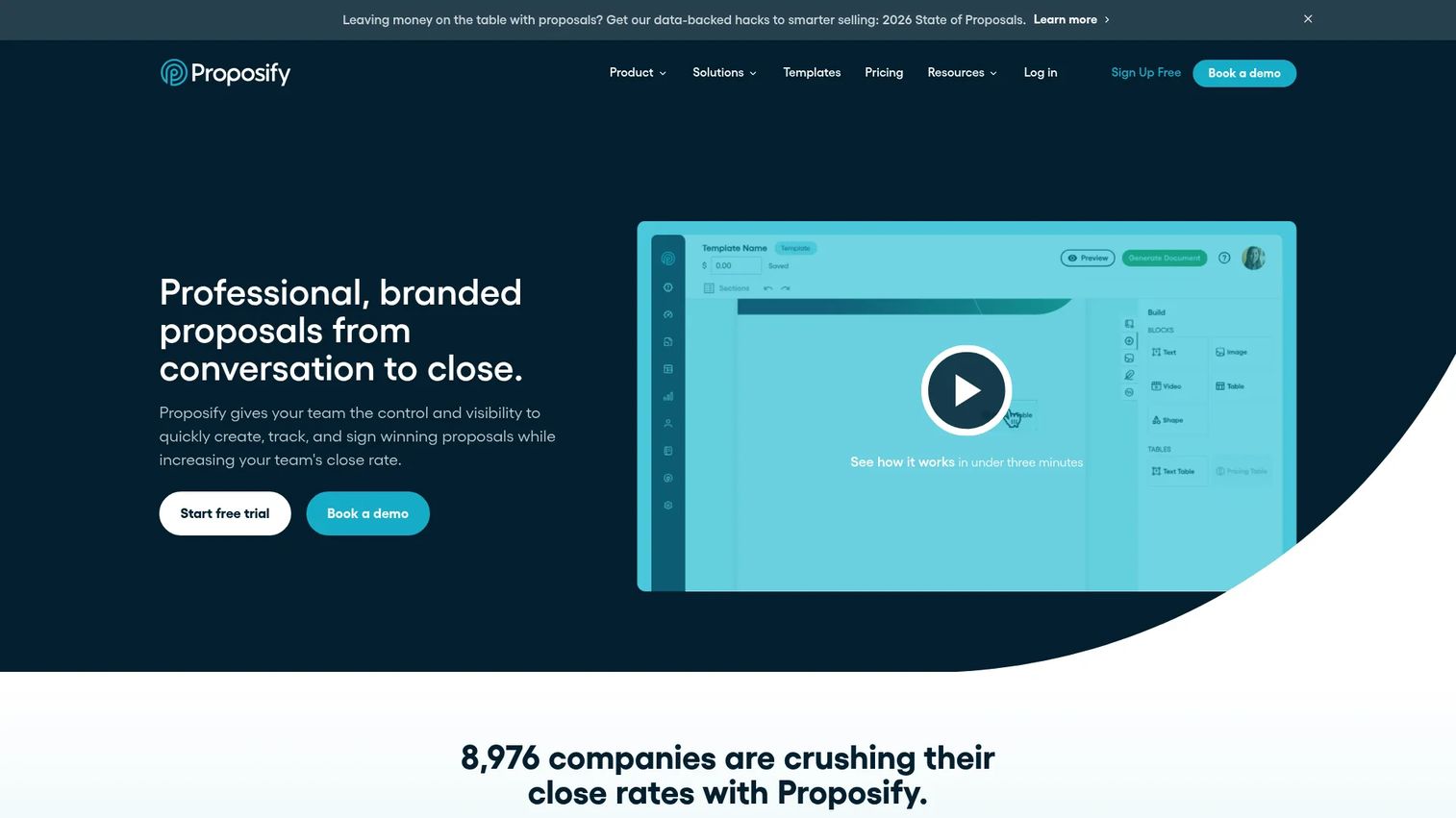
Proposify is proposal management software that combines AI drafting with a full proposal sending and tracking workflow. The AI assistant writes executive summaries, cover letters, project approaches, service descriptions, and scope sections from prompts. Teams use Proposify to create branded proposals, send them for signature, and track buyer engagement after delivery.
Best for: Sales and presales teams that need AI proposal drafting plus a governed workflow covering approvals, pricing, signatures, and CRM connection.
Key features
- AI proposal assistant for proposal sections and cover letters
- Interactive pricing tables and product catalog
- Electronic signatures and approval workflows
- Proposal engagement analytics and open notifications
- CRM, invoicing, and Zapier integrations
Why choose Proposify: Proposify sits closer to proposal management software than a simple text generator. The engagement analytics help presales teams prioritize follow-up based on what buyers actually read. It is a strong fit when your team needs the full chain from draft to signed document, not just faster copy.
Proposify pricing: A 14-day free trial is available with no credit card required. The Build plan runs $49/user/month billed monthly, or $35/user/month billed annually. The Grow plan is $325/month billed annually and includes 5 seats. The Scale plan is $1,066/month billed annually and includes 10 seats.
G2 rating: 4.6/5
2. PandaDoc
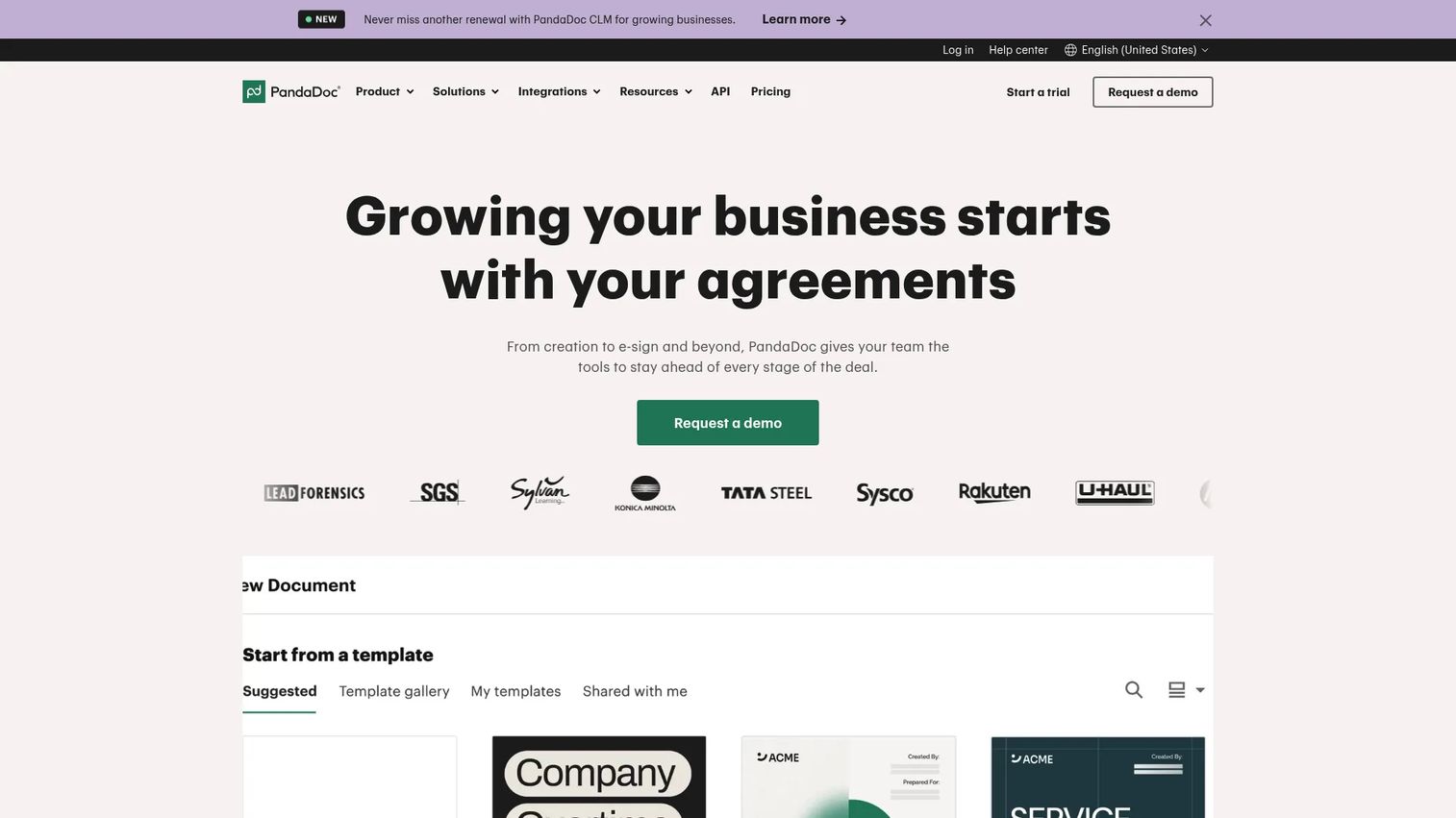
PandaDoc is an all-in-one document platform for proposals, quotes, contracts, and e-signatures. AI features assist with document creation and content suggestions. The platform includes a content library with reusable blocks, pricing tables with CPQ functionality, approval workflows, and document analytics that track open and engagement events.
Best for: Sales teams that want proposals, contracts, quotes, and signatures in one document workflow without switching tools.
Key features
- AI-assisted document creation and editing
- Reusable content library and templates
- Pricing tables and CPQ quote workflows
- eSignatures and audit trails
- CRM integrations including Salesforce and HubSpot
Why choose PandaDoc: PandaDoc covers more of the sales document stack than a standalone proposal writer. For presales teams that also own contract contributions and quote inputs, the unified workflow reduces handoff friction between document types.
PandaDoc pricing: A free plan is available with limited document sending. The Starter plan is $19/user/month billed annually (or $35/user/month billed monthly). The Business plan is $49/seat/month billed annually. Enterprise pricing is custom.
G2 rating: 4.7/5
3. Venngage
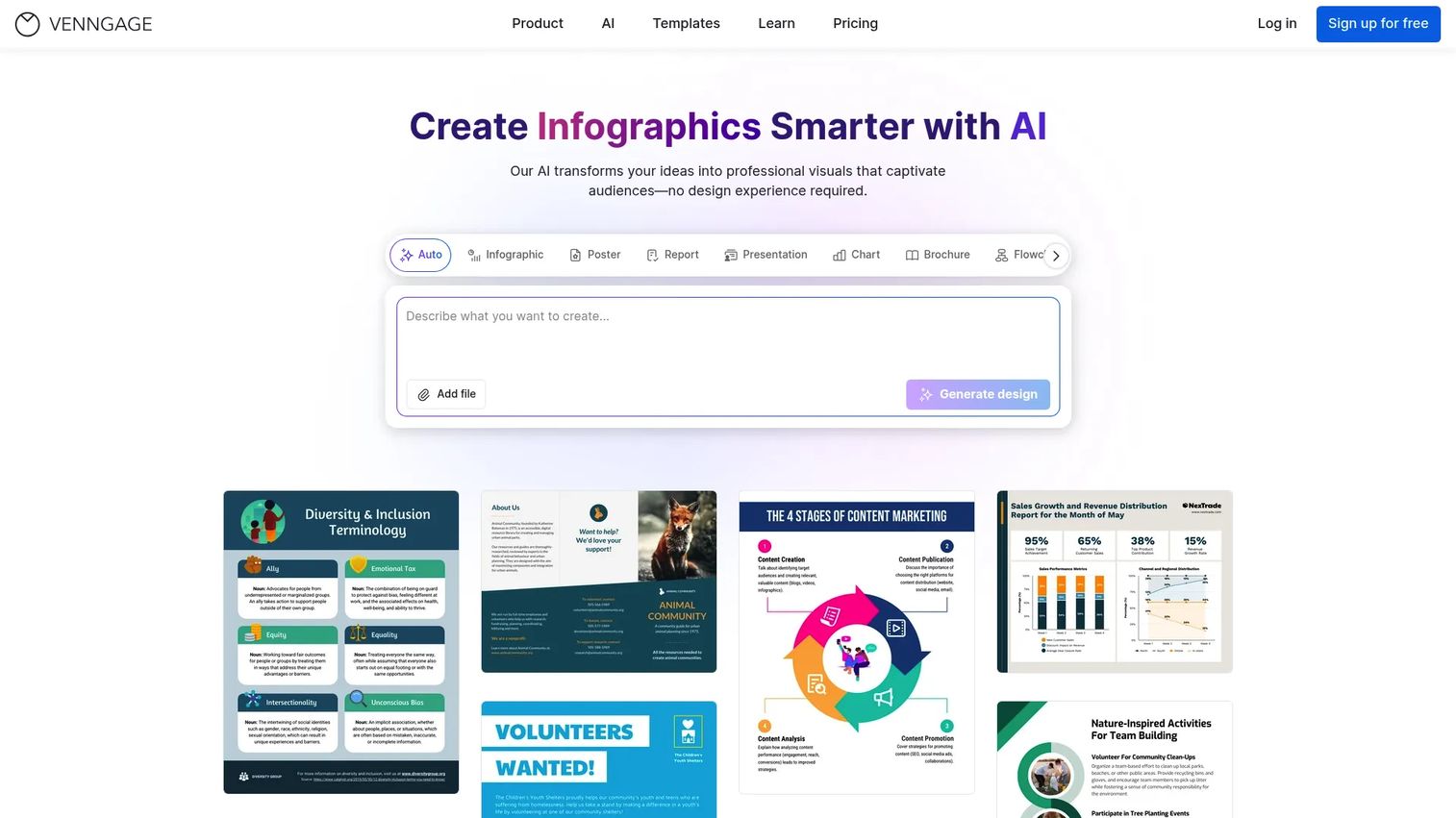
Venngage is an AI-powered design platform that generates business proposals, reports, infographics, and presentations. The AI creates layouts, icons, and content from prompts. Teams apply Brand Kit controls to match logo, font, and color. Proposals export as PDF, PPT, or PNG, and Venngage supports accessibility checks for WCAG-compliant outputs.
Best for: Agencies, consultants, nonprofit teams, and marketing professionals who need polished visual proposals fast.
Key features
- AI proposal generation from prompts
- Brand Kit with logo, font, and color controls
- DesignAI layout and icon generation
- PDF, PPT, and PNG export
- WCAG accessibility checker
Why choose Venngage: When a proposal needs to look as good as it reads, Venngage closes the gap between AI-generated copy and design-quality output. It is less focused on signatures and CRM sync, so it fits best when visual presentation matters more than post-send workflow.
Venngage pricing: A free tier is available. The Premium plan is $10/month. The Business plan is $24/user/month. The Enterprise plan starts at $499/month with a minimum of 10 members. Yearly billing reduces costs by up to 51%.
G2 rating: 4.7/5
4. Portant
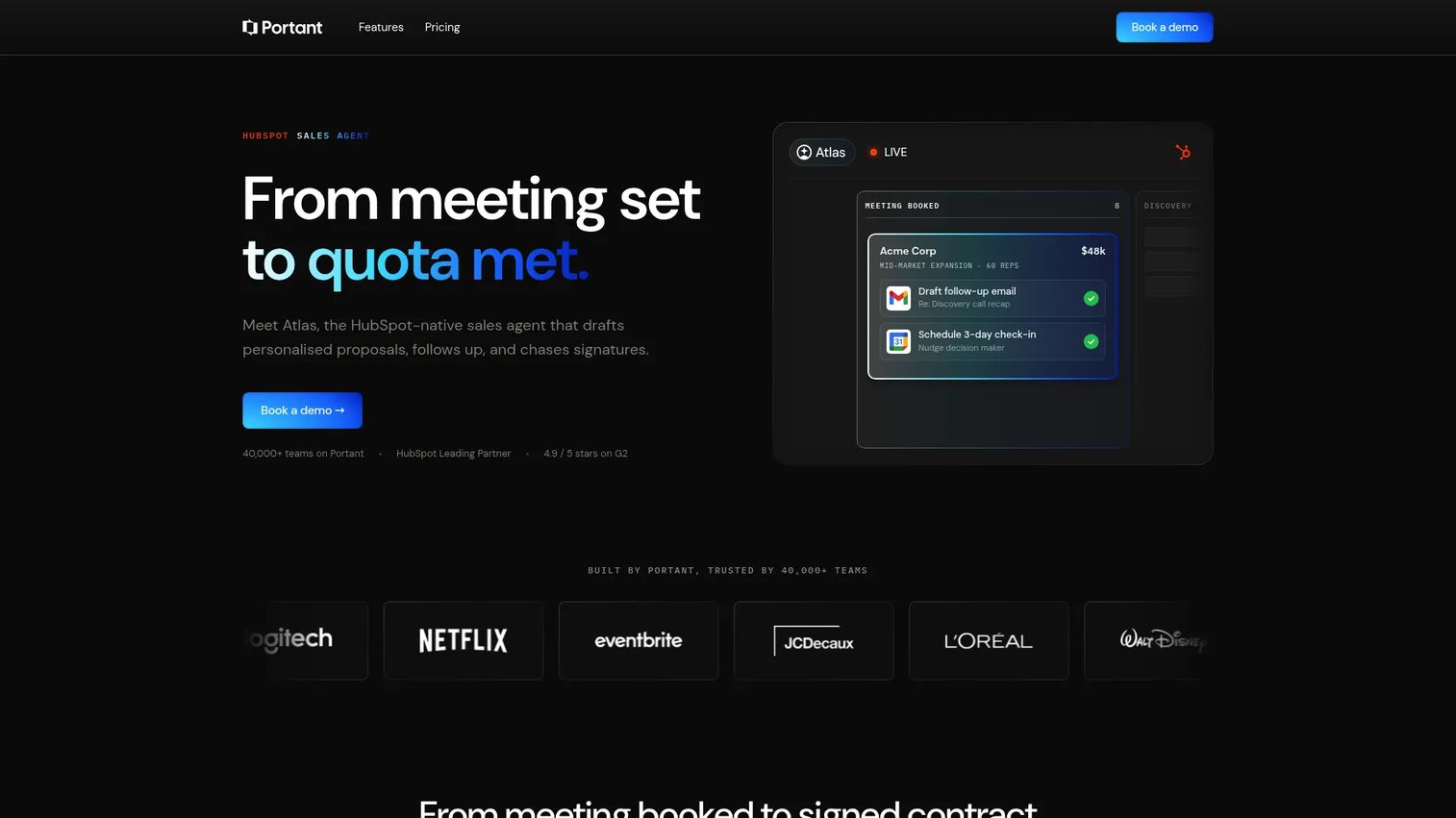
Portant is a HubSpot-native AI sales agent that reads deal records, associated contacts, meeting transcripts, and emails to generate proposals, quotes, and contracts. It embeds e-signature and payment links in documents and drafts follow-up emails automatically. The platform is built entirely around the HubSpot CRM, which makes it a focused choice for teams already running deals there.
Best for: HubSpot-based sales teams that want proposals drafted directly from CRM deal data without manual copy-paste.
Key features
- Reads HubSpot deal records, transcripts, and emails
- Generates personalized proposals and contracts
- Embedded e-signatures and payment links
- Automated follow-up emails and signature requests
- Pipeline-aware next-step decisions inside HubSpot
Why choose Portant: Most AI proposal tools require manual input of deal context. Portant pulls that context from HubSpot automatically, which matters for teams running high proposal volume where re-entering discovery notes creates delays.
Portant pricing: Portant prices by engagement rather than a flat per-seat fee. The Pro plan supports up to 10 reps and approximately 200 deals per month. The Grow plan supports up to 50 reps and approximately 1,000 deals per month. Enterprise supports unlimited reps and deals. Contact Portant for exact figures.
G2 rating: 4.9/5
5. Manus
Manus is an AI agent platform that handles research, content creation, and workflow automation. For proposal work, it conducts web research into prospects, industries, and competitors, analyzes uploaded RFP documents and reference materials, and uses parallel AI agents to process complex requirements. Users refine proposals through a conversational interface.
Best for: Teams that need AI to research and analyze source material before drafting a proposal, particularly for research-heavy consulting, technical, or grant proposals.
Key features
- Web research on prospects, industries, and market conditions
- RFP and brief document analysis
- Meeting note and reference document uploads
- Parallel AI agents for complex requirements
- Conversational proposal refinement
Why choose Manus: Most AI proposal tools start from a prompt. Manus starts from research. If proposal quality depends on synthesizing external sources alongside internal discovery, Manus adds a step that generic AI writers skip. It is not a full proposal management platform, so pair it with a document workflow tool for signatures and CRM sync.
Manus pricing: Contact Manus directly for plan information.
G2 rating: 4.6/5
6. Qwilr
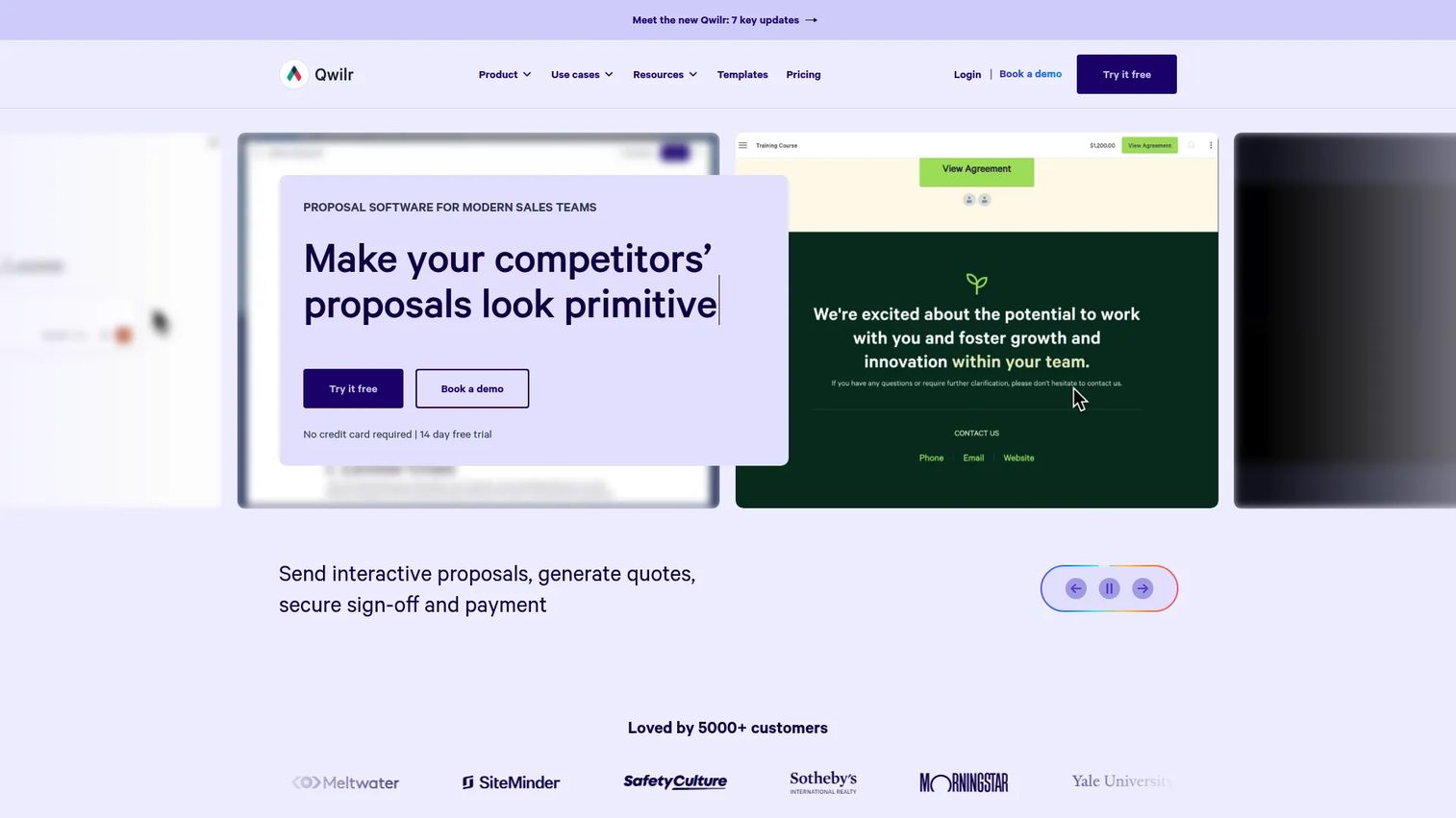
Qwilr creates interactive, web-based proposal pages instead of static PDFs. Buyers receive a link to a branded proposal page with flexible quote blocks, ROI calculators, and an accept-and-sign experience built in. Sales teams see real-time buyer analytics covering page visits, section views, and quote interactions. Integrations connect to CRM platforms for automated proposal creation.
Best for: Sales teams that want proposals to feel like interactive buyer experiences rather than attachments, with engagement data to inform follow-up.
Key features
- Web-based proposal pages with no PDF required
- Flexible quote blocks and ROI calculators
- Buyer engagement analytics by section
- E-signatures and online acceptance
- CRM integrations and Smart Proposal Engine
Why choose Qwilr: The section-level analytics tell presales which parts of a proposal a buyer actually read, which changes how the follow-up conversation starts. It is a strong fit when deal velocity and buyer experience both matter, and when the team wants proposal data flowing back into the pipeline.
Qwilr pricing: The Starter plan is $35/user/month billed annually. The Growth plan is $55/user/month billed annually and includes 5 users. The Scale plan is $75/user/month billed annually and includes 10 users.
G2 rating: 4.6/5
7. Better Proposals
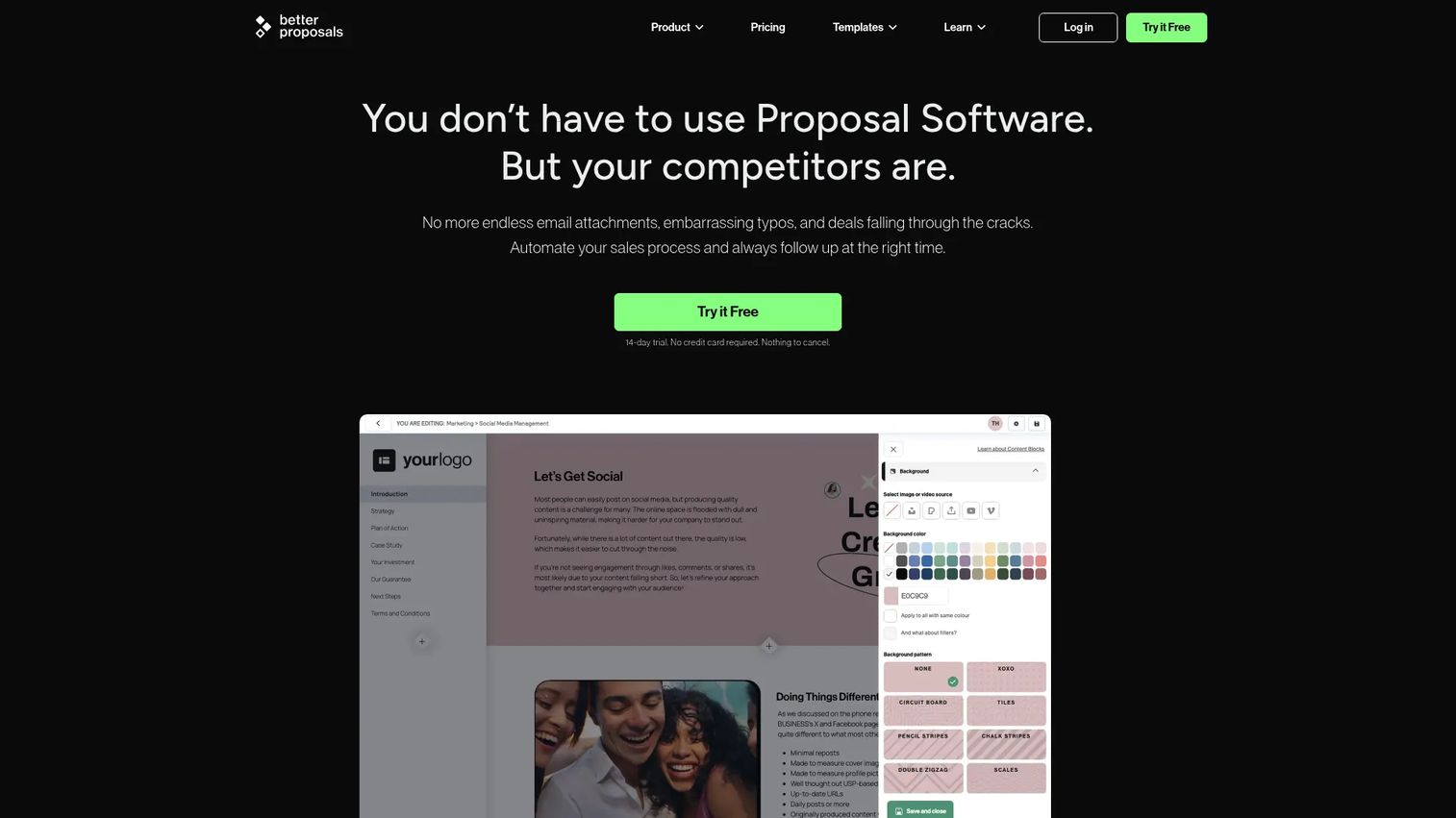
Better Proposals is online proposal software for creating, sending, and accepting client proposals. It offers proposal templates, automatic design and branding, interactive pricing tables, digital signatures, and payment collection. The platform tracks when a proposal is opened and notifies the sender in real time.
Best for: Freelancers, agencies, and small sales teams that want client-facing proposals with built-in tracking, signatures, and payments.
Key features
- Proposal templates with automatic branding and design
- Interactive pricing tables and document tracking
- Legally binding digital signatures
- Payment collection and client onboarding flows
- Real-time open notifications and analytics
Why choose Better Proposals: The combination of signatures and payment collection makes it a good fit for service businesses where the proposal and the payment are part of the same client conversation. It does not carry enterprise RFP complexity, which keeps the setup straightforward for smaller teams.
Better Proposals pricing: A 14-day free trial is available. The Starter plan is $13/month billed annually (or $19/month billed monthly). The Premium plan is $21/user/month billed annually (or $29/user/month monthly). The Enterprise plan is $42/user/month billed annually (or $49/user/month monthly).
G2 rating: 4.3/5
8. Loopio
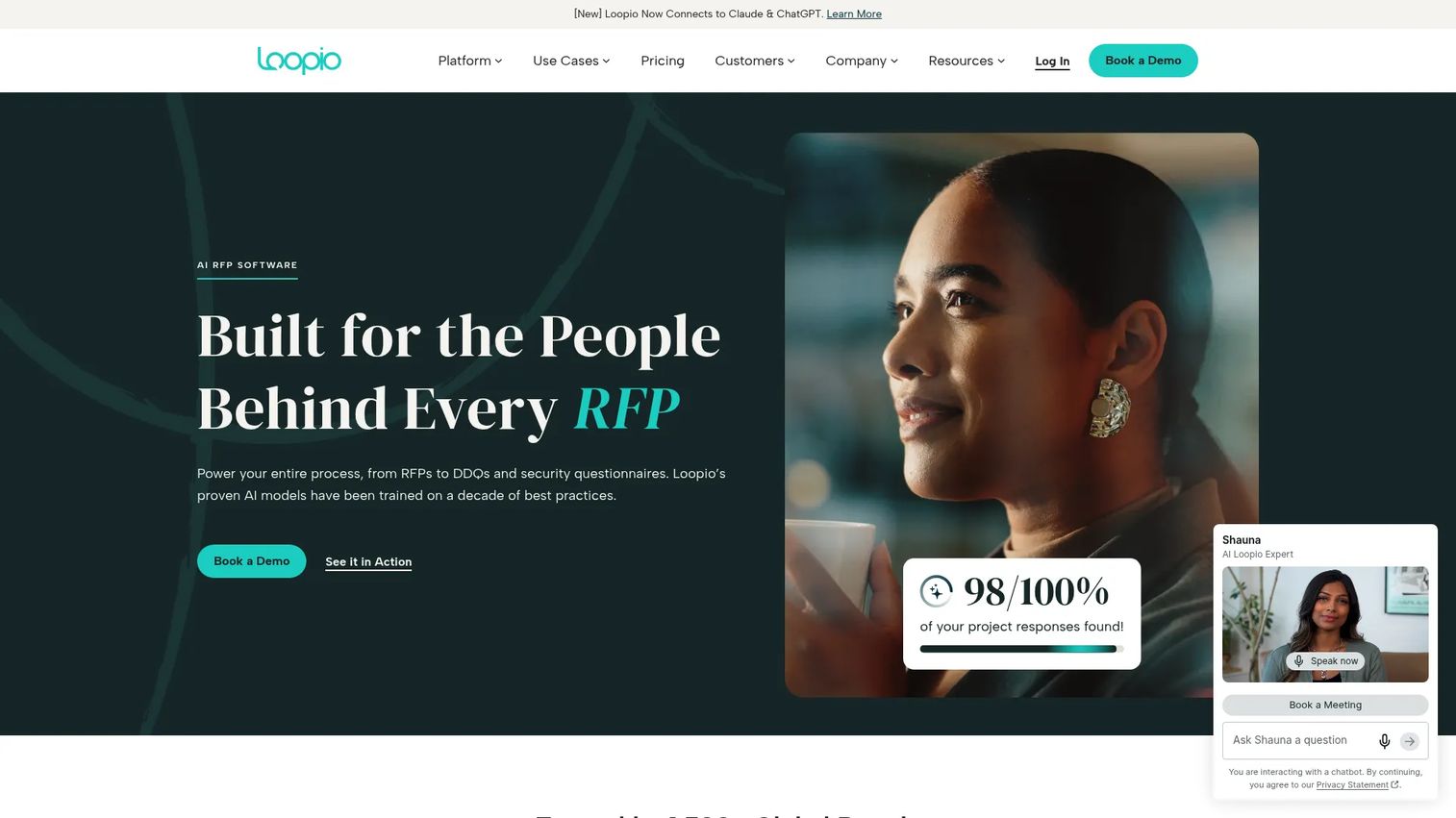
Loopio is AI-powered response management software for RFPs, RFIs, DDQs, and security questionnaires. Its content library stores pre-approved answers that the AI suggests when new questions match prior responses. Teams use Loopio's collaboration workflows to assign sections, run review cycles, and track completion against deadlines. Integrations connect to Salesforce, HubSpot, Google Drive, and Microsoft Teams.
Best for: Enterprise and mid-market proposal, bid, and presales teams managing high-volume RFPs and security questionnaires.
Key features
- AI generative responses for first-draft answers
- Pre-approved content library with smart answer suggestions
- Document and web portal response automation
- Collaboration workflows with assignments and milestones
- Integrations with Salesforce, HubSpot, and SharePoint
Why choose Loopio: For presales teams where RFP volume is a real constraint, Loopio's content library changes the economics of response work. Reusing approved answers across multiple RFPs reduces per-response time while maintaining consistency in technical and security language.
Loopio pricing: All plans use custom pricing. The Foundations plan includes 10 seats with unlimited projects and generative AI. Enhanced and Enterprise plans add multilingual libraries, multi-step reviews, and business unit separation. Contact Loopio for a quote.
G2 rating: 4.6/5
9. Responsive
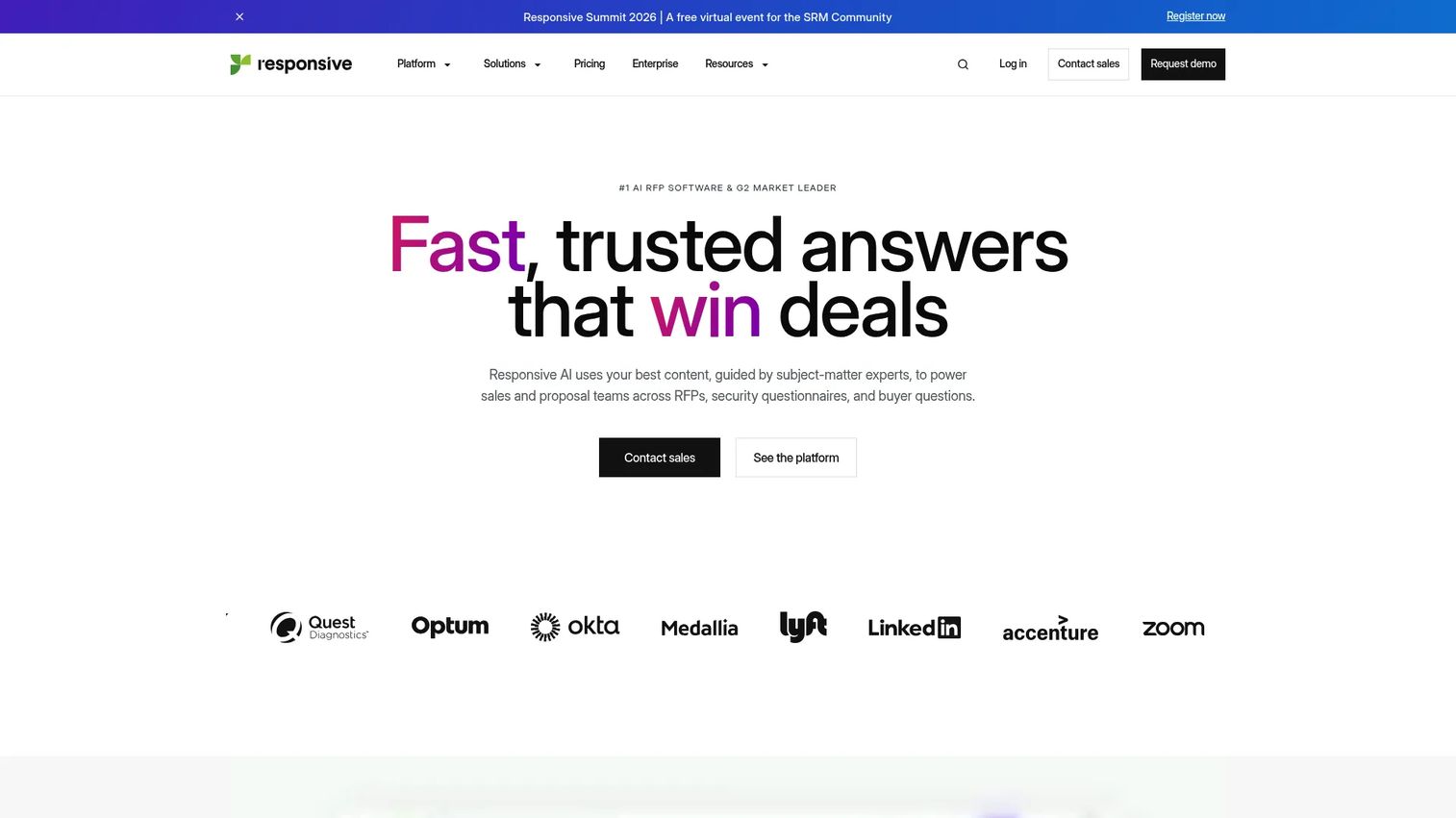
Responsive is Strategic Response Management software for RFPs, RFIs, DDQs, security questionnaires, and due diligence workflows. The platform includes a centralized content library, AI-assisted response automation, collaboration tools with permissions and review stages, and integrations with CRM and cloud storage platforms. Reporting dashboards track response operations across projects.
Best for: Large organizations that respond to complex buyer requests, security reviews, and enterprise questionnaires at scale.
Key features
- Response projects for RFPs, RFIs, and security questionnaires
- Centralized content library and AI-powered response support
- Collaboration workflows with SSO, permissions, and review stages
- eSignature and intake requests
- CRM, cloud storage, and collaboration integrations
Why choose Responsive: Responsive is built for organizations where RFP responses involve multiple contributors, approval layers, and content governance requirements. It is not a lightweight AI writing tool. The starting price reflects that scope.
Responsive pricing: The Emerging Edition starts at $10,000/year on an annual platform fee plus user licenses. Growth and Enterprise editions are priced by contact with sales. Pricing covers unlimited projects and responses.
G2 rating: 4.5/5
10. Jotform
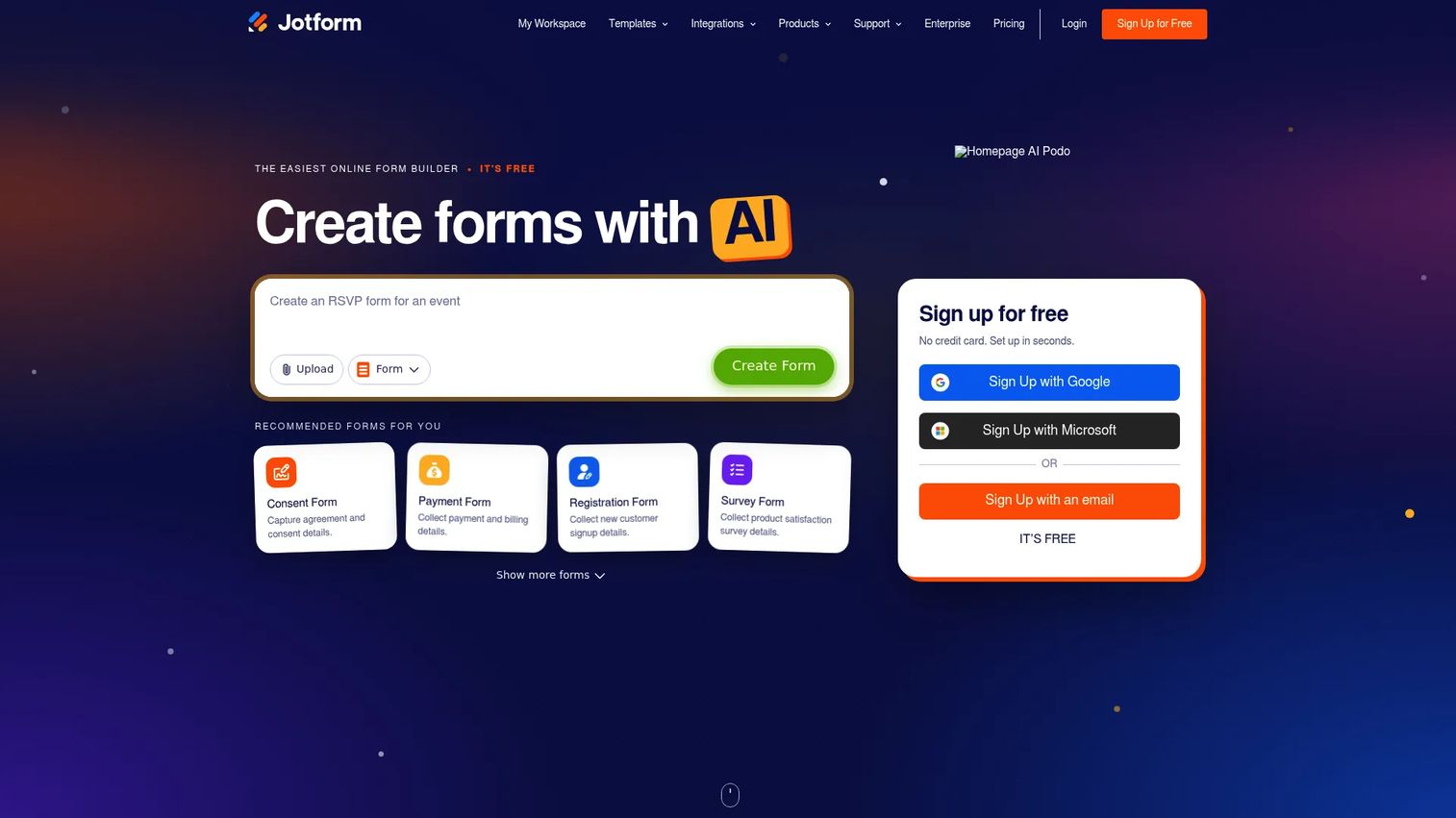
Jotform is an online form builder that converts form submissions into polished PDF documents. For proposal workflows, teams build intake forms that capture project scope, budget, timeline, and requirements. Jotform generates a formatted PDF proposal from the submission, which can be signed electronically and routed for payment collection.
Best for: Small businesses and service teams that want to generate basic proposal documents from form inputs without a full proposal platform.
Key features
- Drag-and-drop form builder with 20,000+ templates
- Submission-to-PDF conversion
- Conditional logic and form translation
- E-signatures and payment integrations
- Automated email notifications and visual reports
Why choose Jotform: The form-to-document approach works well when a proposal is a predictable output from a structured intake process. For presales teams running complex technical deals, Jotform is better suited to supporting intake and data collection than producing the full proposal document.
Jotform pricing: A free Starter plan is available. The Bronze plan is $34/month billed annually. The Silver plan is $39/month billed annually. The Gold plan is $99/month billed annually. Enterprise pricing is custom. HIPAA-enabled features are on Gold and Enterprise.
G2 rating: 4.6/5
11. Docupilot
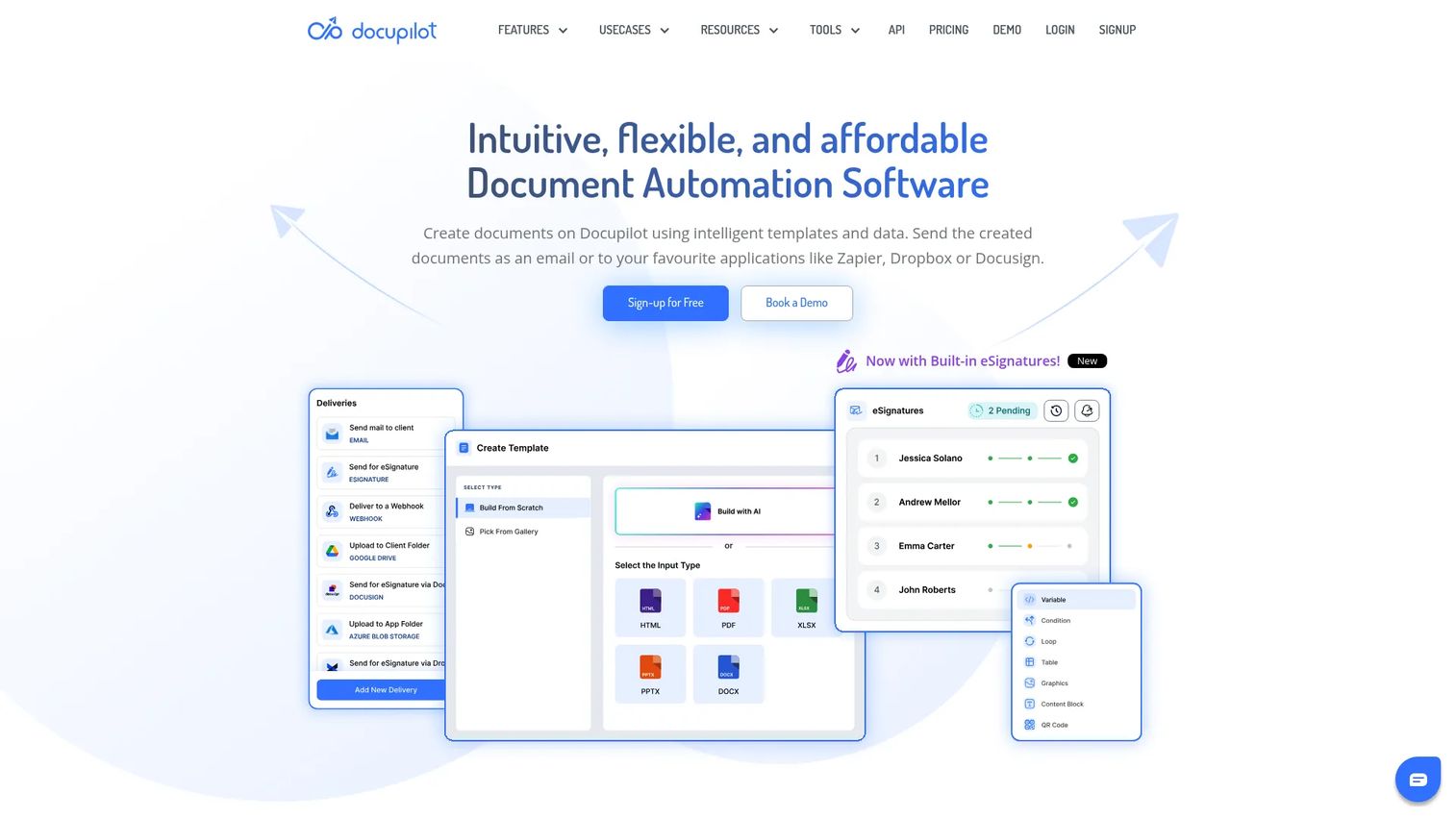
Docupilot is document automation software that generates proposals, contracts, and sales documents from structured data. Users build templates with variables, conditional logic, and loops. The platform merges data from CRMs, spreadsheets, forms, Zapier, Make, and Airtable into those templates and delivers the output as PDF or Word. All plans include API access and unlimited templates.
Best for: RevOps and sales ops teams that want proposals generated automatically from CRM or form data rather than drafted one at a time.
Key features
- Document generation from CRM, spreadsheet, and form data
- Custom templates with variables, conditional logic, and loops
- PDF and Word output
- Integrations with Zapier, Make, and Airtable
- API access on all plans
Why choose Docupilot: When the same proposal structure repeats across dozens of deals with only the client name, pricing, and scope changing, document automation beats manual drafting every time. Docupilot is a strong choice for RevOps teams that want proposals to generate from CRM records automatically.
Docupilot pricing: A 14-day free trial is available without a credit card. The Starter plan is $29/month. The Plus plan is $99/month. The Pro plan is $149/month. The Premium plan is $199/month. The Business plan is $399/month and the Enterprise plan is $699/month. Plans are priced by monthly document volume, with all plans including unlimited templates and API access. eSignature is an add-on.
G2 rating: 4.6/5
12. HyperWrite
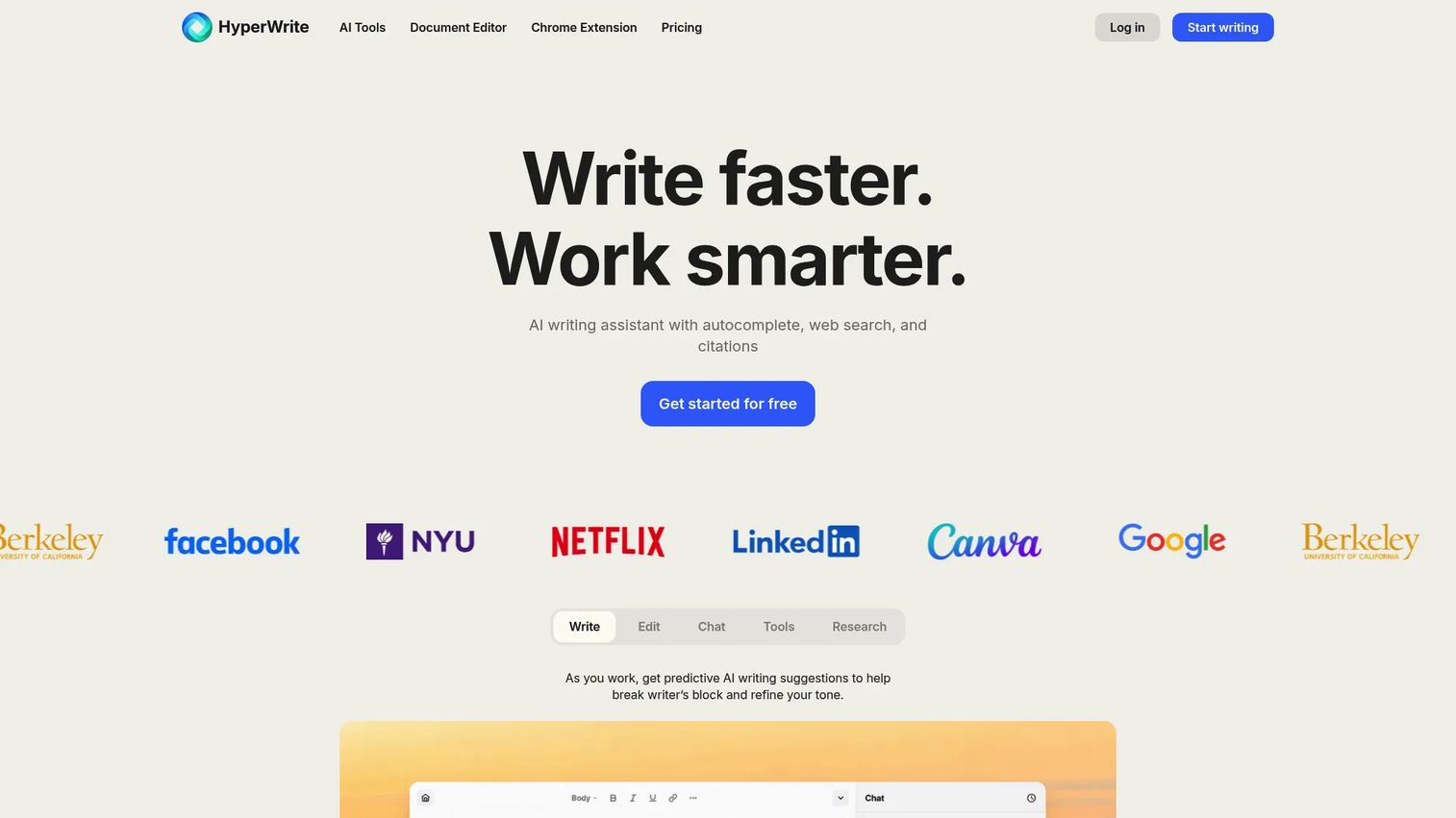
HyperWrite is an AI writing assistant for drafting, editing, and researching content. For proposal work, it helps write executive summaries, cover letters, scope descriptions, and section copy from prompts. The browser extension brings AI writing assistance into any web-based tool. HyperWrite also includes real-time research with citations and a browser-based AI agent for web tasks.
Best for: Individuals and small teams who need a fast AI writing assistant for proposal drafts without a full proposal management platform.
Key features
- AI writing, editing, and autocomplete via TypeAhead
- Hundreds of specialized writing tools and prompt templates
- Real-time research with citations
- Browser-based AI agent for web navigation
- Document chat and AI feedback on existing text
Why choose HyperWrite: HyperWrite covers the copy drafting step well, but it does not replace a proposal platform. There are no native e-signatures, proposal templates, CRM integrations, or engagement analytics. Use it to accelerate writing, then move the draft into a document workflow tool for the rest of the process.
HyperWrite pricing: A free plan is available with limited monthly credits. The Premium plan is $19.99/month (or $16/month billed annually). The Ultra plan is $44.99/month (or $29/month billed annually). The Premium plan includes 250 AI messages per month. Ultra includes unlimited messages.
G2 rating: 5.0/5
Considerations when choosing an AI proposal generator
Match the tool to the proposal type
A free writing assistant covers simple client briefs. Formal sales proposals, statements of work, and enterprise RFPs need stronger controls around content accuracy, pricing, and approvals. Presales teams should evaluate whether the tool handles the full proposal lifecycle or only the drafting step.
Check the source inputs the tool accepts
The best AI output comes from the best source material. Evaluate whether the tool accepts CRM data, uploaded RFP documents, meeting transcripts, emails, or voice notes. For complex technical deals, the richer the input, the more accurate the first draft.
Review approvals and content governance
Presales teams protect specific language around security, implementation assumptions, and pricing terms. Look for content libraries with version control, permissioned editing, and approval workflows before an executive sends the proposal out.
Compare sending, signatures, and engagement data
A proposal is not done when the document exports. Check whether the tool supports e-signatures, buyer engagement tracking by section, pricing visibility for the buyer, and follow-up signals that the sales team can act on.
Verify CRM and stack integrations before buying
Confirm the tool connects to your CRM (Salesforce or HubSpot are the most common), your e-signature provider if separate, and your document storage. A tool that requires manual data entry between systems will not get adopted.
Conclusion
For presales and sales teams evaluating AI proposal software in 2026, the right pick depends on where the bottleneck actually sits.
Proposify and PandaDoc cover the most ground for teams that need drafting plus the full proposal workflow. Venngage is the strongest option when visual quality drives client perception. Portant is the right answer if the team runs deals entirely in HubSpot. Loopio and Responsive serve enterprise bid teams where RFP volume and content governance are the main constraints. Qwilr adds buyer-facing interactivity and section-level analytics that change how follow-up conversations start.
For lighter needs, Jotform, Docupilot, and HyperWrite each solve a narrower slice of the problem: Form-to-document generation, data-driven document automation, and AI copy drafting, respectively.
If the team only needs a first draft occasionally, a free AI writing tool is enough. If proposals directly influence revenue and require consistent branding, approval workflows, pricing accuracy, and CRM data, invest in a full proposal management platform.
Once your proposal is ready, buyers still need to validate the product behind it. Use interactive demos to let prospects explore workflows, share proof with stakeholders, and arrive at the next call with sharper questions.
Start your journey with Guideflow today!
FAQs
For end-to-end sales proposal workflows, Proposify and PandaDoc cover drafting, pricing, signatures, CRM sync, and analytics in one platform. If buyer engagement data matters for follow-up prioritization, Qwilr adds section-level analytics. For high-volume RFP teams, Loopio and Responsive are built specifically for that motion.
Several tools offer free access. Venngage has a permanent free tier for basic proposal design. HyperWrite offers a free plan with limited monthly AI credits. PandaDoc offers a free document plan with limited sends. Jotform's free Starter plan covers basic form-to-PDF workflows. Check whether the free output includes PDF export, branding controls, and commercial usage rights before committing.
AI can produce a strong first draft from prompts, discovery notes, or uploaded documents. The draft still requires human review. Presales teams should verify technical scope, implementation assumptions, pricing accuracy, security language, and legal terms before sending to a buyer. AI speeds up the writing step; it does not replace the subject-matter expertise behind the content.
A complete business proposal typically covers an executive summary, problem statement, proposed solution, scope of work, methodology, timeline, pricing section, proof points or case studies, and next steps with a signature block. Technical proposals for enterprise deals may also include security overview, integration architecture, implementation plan, and compliance documentation.
Yes. All tools in this list support some level of editing after generation. More capable platforms add brand kits, reusable content blocks, approval workflows, and version control so the customization stays governed. HyperWrite customization is primarily copy editing. Proposify, PandaDoc, and Qwilr offer templated customization connected to CRM data.
The most common outputs are PDF, Word (.docx), and HTML live links. Venngage also exports to PowerPoint and PNG. Qwilr delivers proposals as web pages rather than file attachments. Docupilot outputs PDF and Word from data-merge templates. Format availability varies by plan, so confirm the specific output you need before subscribing.
An AI proposal generator focuses on producing a draft from inputs. Proposal management software builds a complete workflow around that draft, adding reusable templates, approval gates, e-signatures, pricing controls, CRM integrations, and buyer engagement analytics. Tools like HyperWrite and Manus sit toward the generator end. Proposify, PandaDoc, and Loopio sit toward the management end. Many teams use both: An AI tool for rapid drafting and a management platform for the rest of the process.
Yes, if the tool supports document upload, content libraries with pre-approved answers, and collaborative review workflows. HyperWrite and Venngage can draft RFP sections from prompts but do not manage the full response process. Loopio and Responsive are built specifically for high-volume RFP and security questionnaire responses, with content governance and team collaboration at the core. For teams responding to more than a handful of RFPs per month, a dedicated RFP platform covers the workload more reliably than a general AI writing tool.
The clearest signal is what happens after the draft exists. If the document still needs to travel through approvals, pricing review, and legal sign-off before going out, and then requires a signature and tracking after it does, a proposal management platform covers those steps. If the team only needs to accelerate writing and handles the rest in existing tools, an AI writing assistant may be enough. Presales teams running complex, multi-stakeholder deals almost always benefit from the full platform approach. For more context on AI writing assistants and AI content creation tools, those guides cover the broader AI writing software landscape. You can also explore agentic AI tools for sales for a wider view of how autonomous AI is changing revenue workflows. Teams evaluating the full presales software stack can also review best presales software tools for a category-by-category breakdown.