
Unmanaged IT and cyber risk does not stay quiet. A misconfigured cloud bucket, an unpatched server, a vendor breach three tiers down your supply chain, each one moves from unknown to incident on its own timeline, not yours. And the numbers are climbing. The global risk management software market is estimated at USD 15.21 billion in 2026, projected to reach USD 32.72 billion by 2031 at a 16.55% CAGR, according to Mordor Intelligence (2026). That growth reflects a simple reality: teams can no longer track exposure in a quarterly spreadsheet and hope nothing changes between reviews.
The right IT risk management software closes that gap. It gives you continuous monitoring instead of point-in-time snapshots, ties remediation to business impact instead of raw severity scores, and maps controls to the frameworks you actually report against. For product managers evaluating adjacent operational tooling, the same logic applies to any category where visibility and low maintenance overhead decide whether a tool earns its place in the stack. If you are also weighing security-adjacent tooling, our roundups of ai cybersecurity solutions, ai security posture management, and audit management software cover neighboring problems worth reading alongside this one.
We built this list around five things that separate a real IT risk management platform from a checkbox tool: continuous monitoring depth, remediation workflows tied to impact, framework mapping and audit evidence, integration reach across your stack, and third-party risk management coverage. Below are 11 IT risk management solutions worth shortlisting, with honest notes on where each one fits.
What's inside
This guide is for IT risk leaders, GRC managers, security operations owners, and product managers researching enterprise operational risk tooling. Every tool here handles some version of the core job: identify, assess, prioritize, monitor, and remediate IT and cyber risk while connecting that work to compliance and reporting.
We chose tools on four criteria: continuous monitoring and control testing strength, remediation and risk prioritization logic, compliance mapping and audit evidence handling, and integration depth across scanners, CMDBs, ticketing, cloud, and identity systems. Pricing and G2 ratings should be confirmed at the time you evaluate, since vendors update both regularly.
TL;DR
- Best for deep IT risk and enterprise risk register alignment: Riskonnect bridges IT risk and broader ERM in one platform.
- Best for board reporting and AI-assisted prioritization: Diligent turns technical risk into board-ready language fast.
- Best for teams already on ServiceNow: ServiceNow GRC layers risk workflows onto existing IT and service operations.
- Best for large, regulated environments: IBM OpenPages and MetricStream both offer mature, model-driven GRC and IT risk coverage.
- Best for continuous cyber asset visibility: JupiterOne maps assets, relationships, and exposure for security-first teams.
- Best for fast compliance coverage with lean operations: Vanta automates evidence collection and continuous monitoring.
Background
IT risk management software is a platform that helps teams identify, assess, prioritize, monitor, and remediate risks to IT systems, data, and infrastructure while connecting that work to compliance and business impact. It sits between raw security tooling and broad enterprise governance, translating technical exposure into decisions leaders can act on.
An IT risk assessment software platform typically covers asset and vulnerability visibility, risk scoring and prioritization, continuous monitoring, control testing, remediation workflows, and compliance mapping. Cloud deployments now dominate this space, accounting for 64.78% of market revenue in 2025 and forecast to grow at a 20.92% CAGR through 2031, per Mordor Intelligence. That shift matters because cloud-native platforms make continuous monitoring and integration far easier to sustain.
Core capabilities to expect from an IT risk management platform:
- Asset and vulnerability tracking: a live inventory of systems, data, and exposures.
- Risk assessment and scoring: repeatable methods to rate likelihood and impact.
- Continuous monitoring: ongoing signal instead of quarterly snapshots.
- Control testing: evidence that controls are designed and operating as intended.
- Remediation workflows: assignment, tracking, and closure of issues by priority.
- Compliance and framework mapping: control alignment to standards like ISO 27001, NIST, SOC 2, and PCI DSS.
- Third-party risk management: vendor and supply-chain exposure in the same system.
- Enterprise risk register and reporting: aggregation into a single view for audit evidence and board reporting.
How IT risk management differs from broader tools. Enterprise risk management (ERM) covers financial, operational, strategic, and reputational risk across the whole business. General cybersecurity risk management software focuses on threats, vulnerabilities, and defenses. IT risk management sits in the middle: scoped to IT and cyber risk, but structured for governance, compliance mapping, and business impact analysis. The line between IT risk, GRC, and third-party risk is blurry in practice, and many platforms here span more than one. Adjacent categories like application performance monitoring tools feed signal into these platforms rather than replace them.
When to use IT risk management software
Track IT risks continuously instead of in quarterly spreadsheets
A spreadsheet captures risk on the day you fill it in and starts decaying the next morning. New assets spin up, patches lag, vendors change their posture, and none of that shows up until the next manual review. Continuous monitoring replaces that lag with live signal, so your enterprise risk register reflects reality rather than last quarter's guess. For teams tracking exposure across cloud and identity systems, this is the single biggest reason to move off static tracking.
Tie remediation to business impact and severity
Raw severity scores tell you a vulnerability is critical. They do not tell you whether it sits on a system that processes payments or a test box nobody uses. Good IT risk management software runs business impact analysis alongside severity, so remediation workflows queue the fixes that protect revenue and operations first. Risk prioritization stops being a gut call and becomes a defensible, repeatable decision.
Centralize control evidence and framework mapping
Audit prep turns painful when evidence lives in email threads, screenshots, and ten different tools. A platform that centralizes control testing results and maps them to framework requirements makes audit evidence reusable across ISO 27001, SOC 2, NIST, and PCI DSS at once. Instead of rebuilding the same proof for every audit, you collect once and map many times, which is where much of the manual work disappears.
Comparison table
The table below helps you spot fit fast, especially by compliance depth, ERM alignment, and continuous monitoring strength. Every IT risk management platform here approaches the job differently, so match the intent column to your primary use case. Pricing and G2 ratings should be verified at publication, since vendors change both often. If your evaluation touches neighboring categories, our guides to contract lifecycle management software and business intelligence reporting tools may help round out the stack.
| # | Product | Intent | Key differentiation | Pricing | G2 rating |
|---|---|---|---|---|---|
| 1 | Riskonnect | IT risk plus ERM bridge | RMIS, GRC, and resilience in one platform | Custom quote | Not listed |
| 2 | Diligent | Board-ready risk reporting | AI-assisted prioritization and governance | Request-only | 4.5/5 |
| 3 | ServiceNow GRC | Workflow-native risk | Runs on existing ServiceNow operations | Custom quote | Not listed |
| 4 | IBM OpenPages | Enterprise GRC at scale | AI-powered, no-code configuration | From $3,300 | 4.2/5 |
| 5 | MetricStream | Mature IT and cyber risk | Centralized asset, threat, and control repository | Contact sales | 4.5/5 |
| 6 | OneTrust | Tech risk and compliance | 55+ frameworks, 200+ integrations | Contact sales | 4.6/5 |
| 7 | Archer | Governance-heavy IT risk | Configurable registers and controls monitoring | Contact sales | Not listed |
| 8 | Resolver | Risk plus incident context | AI-powered control gap analysis | Custom quote | 4.3/5 |
| 9 | SAI360 | Regulated-industry GRC | AI-assisted risk and control library | Request quote | 4.1/5 |
| 10 | Vanta | Fast compliance automation | Continuous monitoring, 300+ integrations | Request demo | 4.6/5 |
| 11 | JupiterOne | Cyber asset visibility | Graph-based asset and relationship mapping | From $25,000/yr | 4.9/5 |
1. Riskonnect
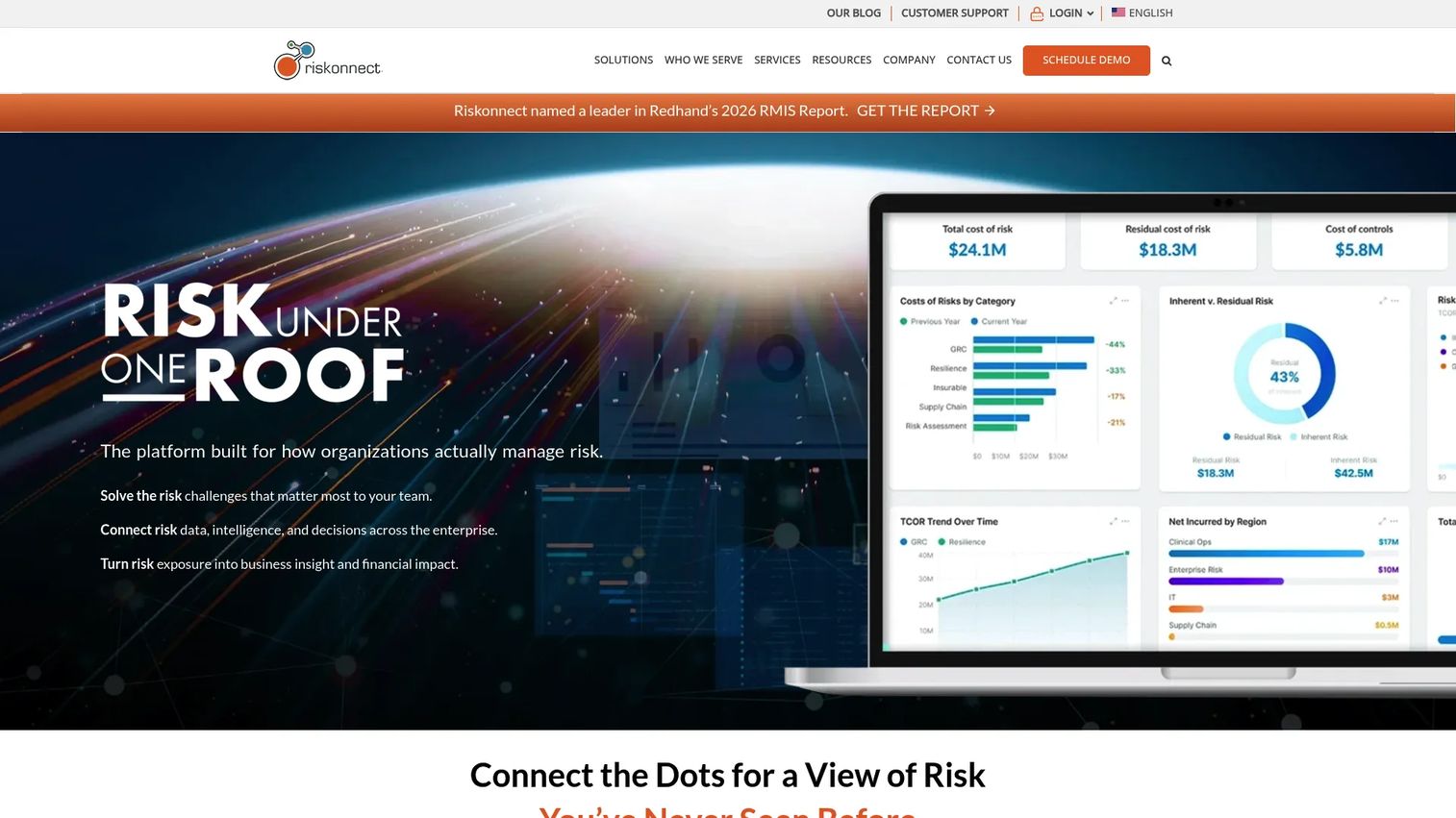
Riskonnect brings risk management information systems (RMIS), GRC, claims, and business continuity into a single platform. For IT risk teams, that means IT risk governance, proactive monitoring, asset and vulnerability visibility, and financial impact analysis all live next to broader enterprise risk data. It is built for organizations that want IT risk to feed a wider enterprise risk register rather than sit in a silo.
Best for: Mid-market to enterprise teams that need a genuine bridge between IT risk and enterprise risk management.
Key strengths
- Unified RMIS and GRC: Manage IT risk, compliance, claims, and resilience without stitching separate tools together.
- Financial impact analysis: Quantify risk in business and dollar terms, not just severity ratings.
- Framework mapping: Align IT controls to standards and roll them into enterprise reporting.
Why choose Riskonnect: If your mandate is connecting IT and cyber risk to the wider business, Riskonnect's breadth is the draw. It fits teams that already think in terms of an enterprise risk register and want IT exposure to sit inside that same view, complete with continuous monitoring and remediation workflows.
Riskonnect pricing: Riskonnect does not publish pricing. The company states that cost depends on project size and customization, so you will need to request a quote based on your modules and scope.
2. Diligent
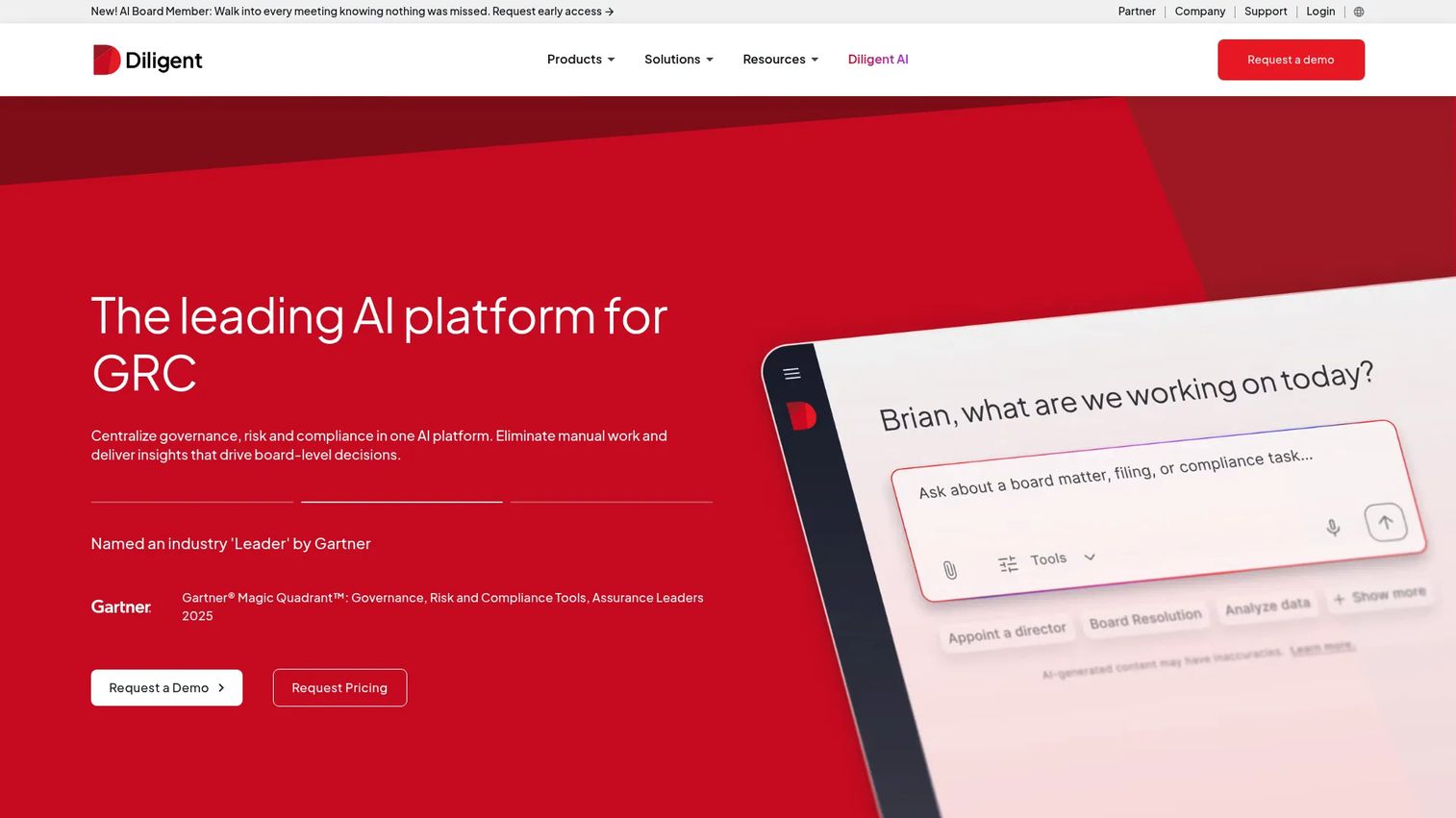
Diligent is a governance, risk, compliance, audit, and board management provider built around the Diligent One Platform. Its strength for IT risk teams is AI-assisted prioritization paired with board-ready reporting, so technical exposure gets framed in language executives and directors can act on. Third-party risk, due diligence, and audit products round out the coverage.
Best for: Enterprises and boards that need governance depth and clear risk communication upward.
Key strengths
- AI-assisted prioritization: Surface the risks that matter most without manual triage of every finding.
- Board-ready reporting: Translate IT and cyber risk into business impact framing for directors.
- Third-party risk intelligence: Fold vendor and due diligence data into the same governance view.
Why choose Diligent: When board reporting and governance are the pressure points, Diligent's positioning around secure, board-facing workflows is hard to match. It suits teams that need to defend risk decisions to leadership and want compliance mapping built into the same platform.
Diligent pricing: Diligent uses tailored, request-only pricing. The pricing page confirms a tiered model but publishes no numbers, so plan on a sales conversation to scope cost. Diligent Boards holds a 4.5/5 rating on G2.
3. ServiceNow Governance Risk and Compliance
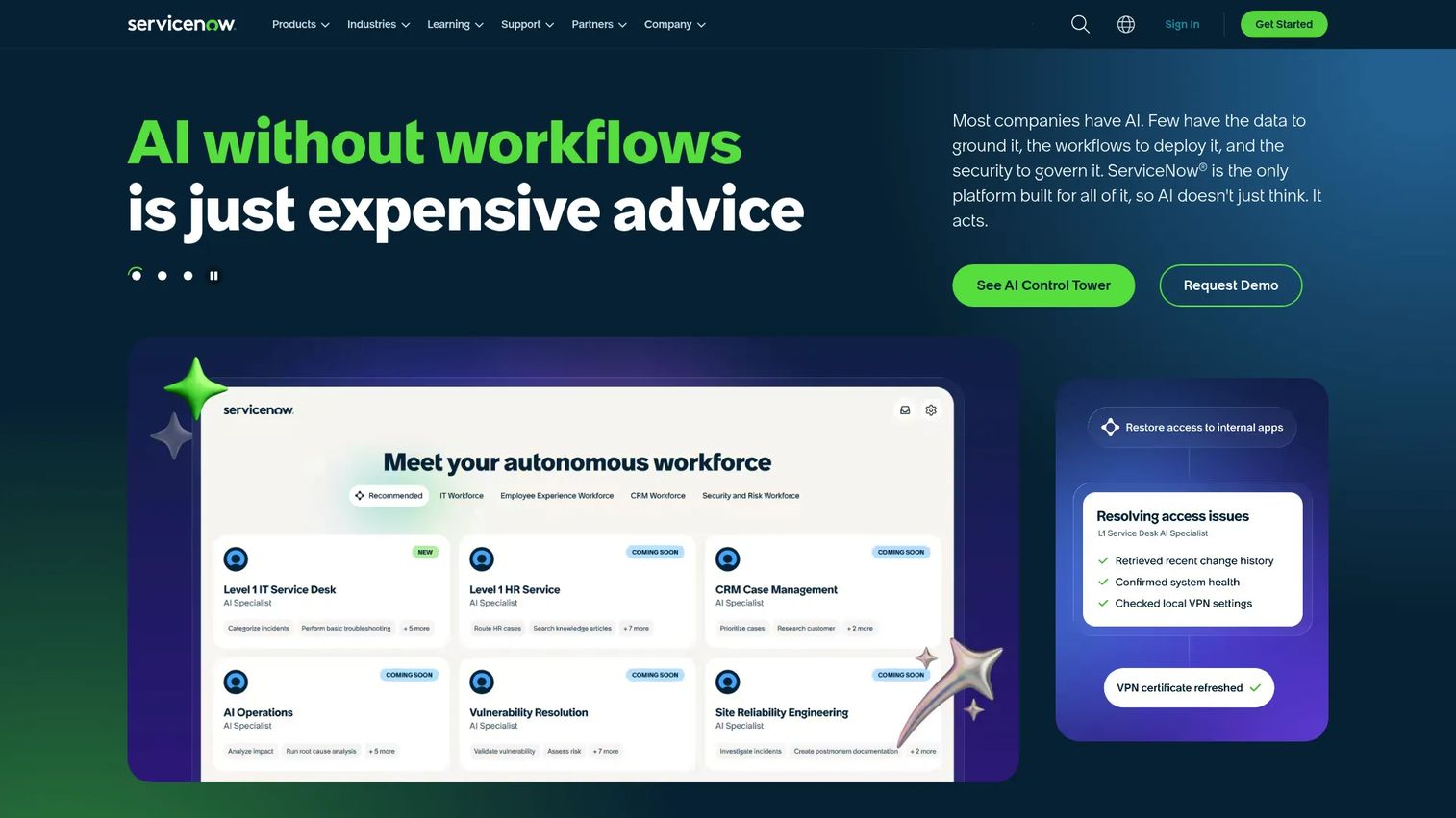
ServiceNow Governance, Risk and Compliance runs integrated risk management, policy and compliance management, and audit management on the same platform that already powers IT and service workflows for many enterprises. That shared foundation is the whole point: risk and control data lives next to the incidents, changes, and assets your IT teams already manage.
Best for: Large enterprises already standardized on ServiceNow for IT and service operations.
Key strengths
- Integrated risk management: Connect risk and control data to live IT operations, not a separate database.
- Policy and compliance management: Centralize policies and map them to controls and frameworks.
- Audit management: Run audits against evidence that already flows through ServiceNow.
Why choose ServiceNow GRC: The value compounds when you already run ServiceNow. Risk workflows plug into existing CMDB, ticketing, and change data, which removes a layer of integration work most standalone tools require. It fits organizations that want continuous monitoring tied directly to operational reality.
ServiceNow GRC pricing: ServiceNow prices GRC by custom quote and shows no public figure. Expect pricing to reflect your platform footprint and module selection, so budget for a scoped enterprise conversation.
4. IBM OpenPages
IBM OpenPages is an AI-powered GRC platform for managing risk, compliance, and audit across complex, regulated environments. Its model-driven approach and no-code configuration let large organizations shape workflows, calculations, and dashboards without custom development. Modules span operational risk, regulatory compliance, internal audit, and third-party risk.
Best for: Large organizations that need a configurable GRC platform for risk, compliance, and audit at scale.
Key strengths
- AI-powered GRC automation: Reduce manual effort across risk and compliance processes.
- No-code configuration: Build workflows, calculations, and dashboards without engineering.
- Broad module coverage: Operational risk, regulatory compliance, internal audit, and third-party risk in one platform.
Why choose IBM OpenPages: OpenPages fits regulated environments where configurability and scale outweigh speed of setup. If you have complex framework mapping requirements and need control testing and audit evidence to hold up under scrutiny, its depth earns the evaluation.
IBM OpenPages pricing: IBM publishes SaaS pricing starting at $3,300 for the Essentials edition and $6,050 for Standard, with on-cloud options at $6,250 (Single Solution) and $9,000 (Enterprise). On-premises pricing is quote-based. It holds a 4.2/5 rating on G2.
5. MetricStream IT Risk Management
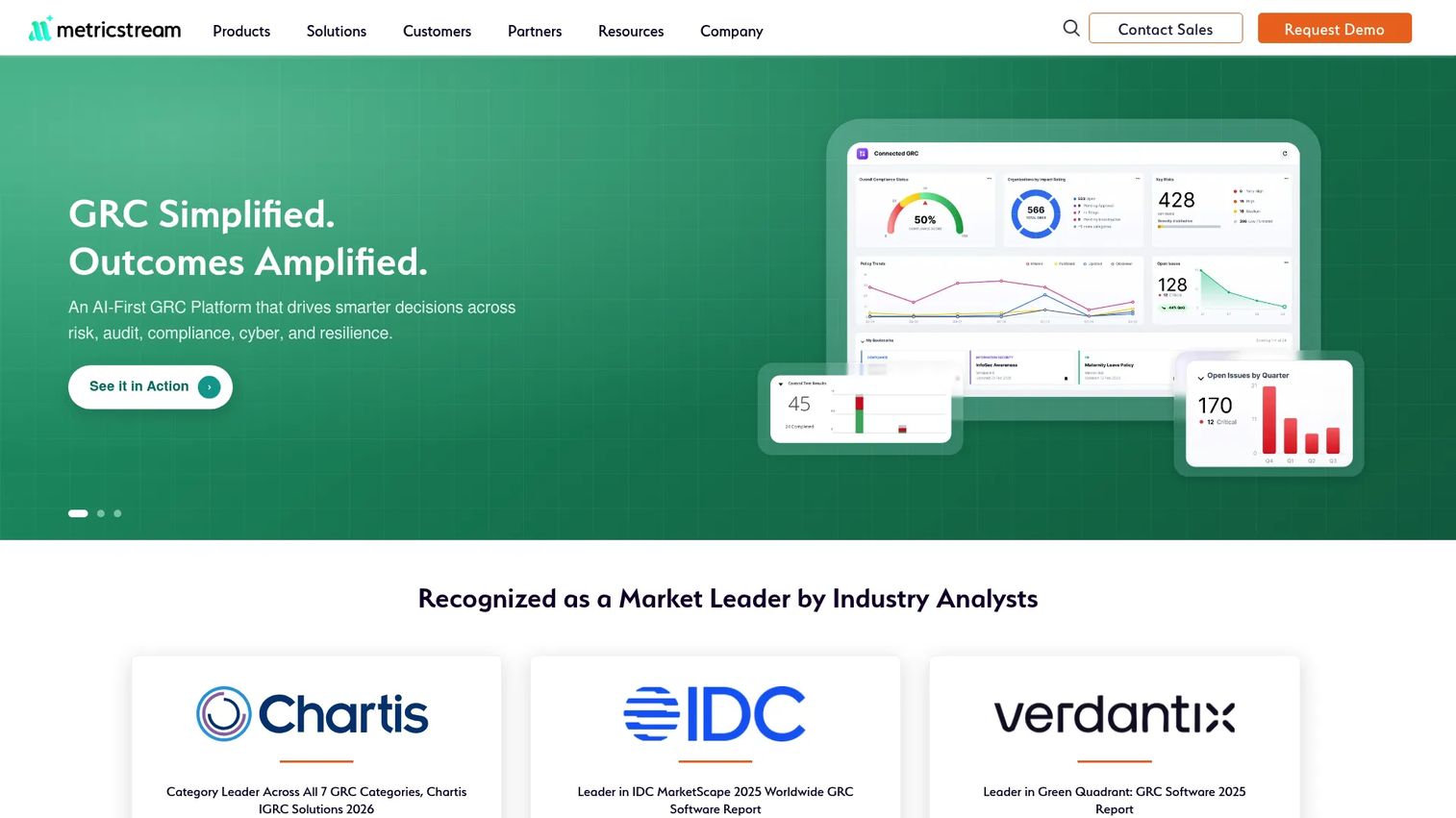
MetricStream IT Risk Management is IT and cyber risk software built around a centralized repository for assets, processes, threats, vulnerabilities, and controls. It supports IT risk assessments, control implementation, and mitigation actions, with threat and vulnerability management that produces combined risk ratings and analytics. It suits organizations that want mature GRC and IT risk coverage in one place.
Best for: Enterprises that need a governed platform for IT and cyber risk assessment and mitigation.
Key strengths
- Centralized risk repository: Assets, threats, vulnerabilities, and controls in a single source.
- Combined risk ratings: Merge threat and vulnerability data into actionable analytics.
- Continuous risk and control monitoring: Keep assessments current instead of point-in-time.
Why choose MetricStream: MetricStream fits teams that treat IT risk as a mature, ongoing program rather than a periodic exercise. Its repository model and analytics support risk prioritization and remediation workflows at enterprise scale, with compliance workflows and reporting built in.
MetricStream pricing: MetricStream does not list public pricing and directs prospects to contact sales or request a demo. Its IT and cyber risk product holds a 4.5/5 rating on G2.
6. OneTrust Tech Risk & Compliance
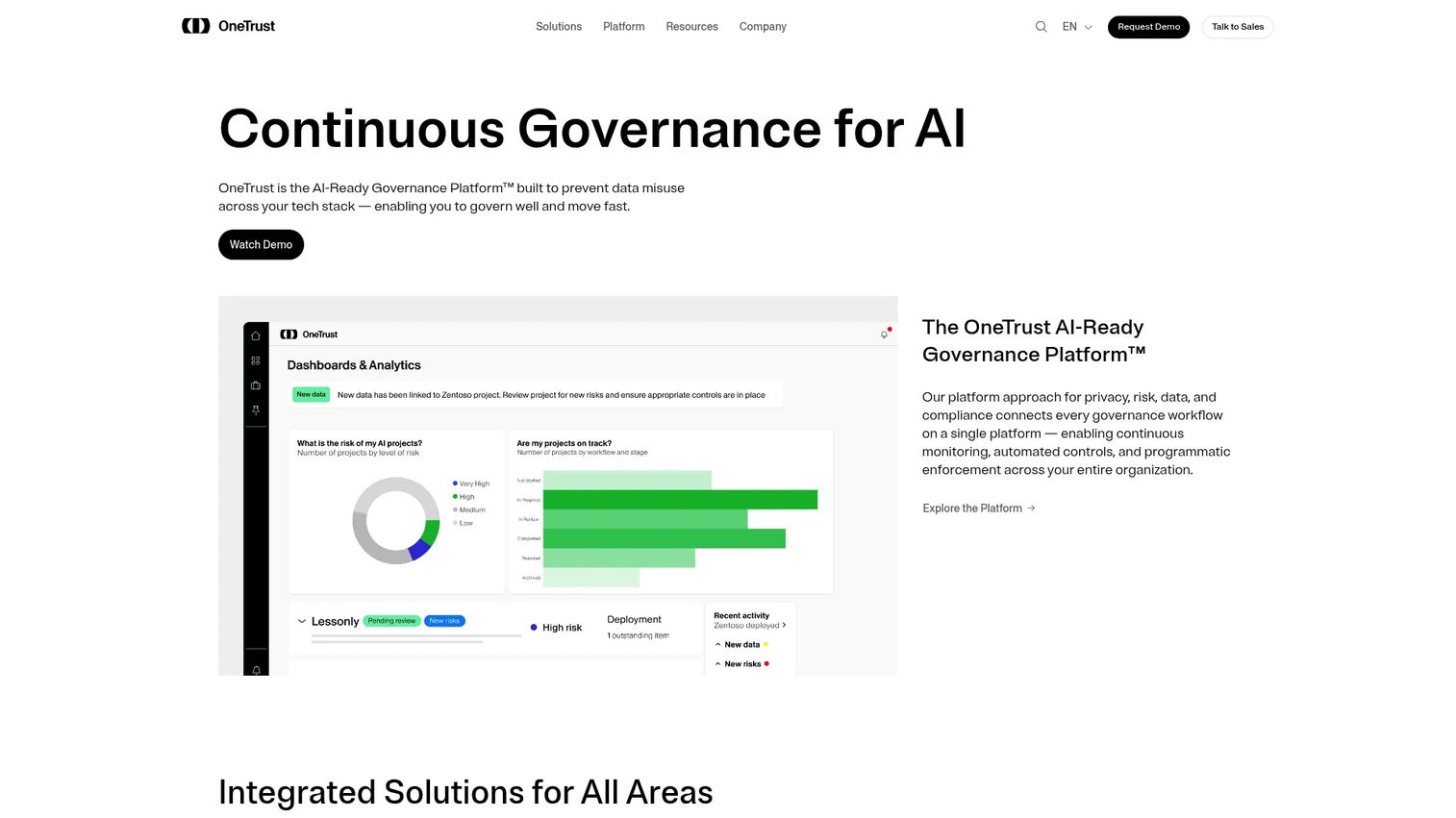
OneTrust Tech Risk & Compliance brings technology risk, compliance, controls, and policy workflows into one GRC platform. With more than 55 ready-to-action frameworks and over 200 pre-built integrations, it is built to reduce the manual work of framework mapping and evidence collection. Risk scoring and prioritization help teams focus on what matters.
Best for: Enterprises that need a centralized platform for tech risk, compliance, and program visibility.
Key strengths
- 55+ ready-to-action frameworks: Map controls to standards without building mappings from scratch.
- 200+ pre-built integrations: Pull signal from across your stack for continuous monitoring.
- Risk scoring and prioritization: Rank exposure so remediation queues by impact.
Why choose OneTrust: OneTrust shines when framework breadth and integration reach are priorities. Teams juggling multiple standards benefit from the pre-built framework library, and the integration count reduces the plumbing work that usually eats into evaluation timelines.
OneTrust pricing: OneTrust does not publish pricing for Tech Risk & Compliance; the page directs you to contact sales. It holds a 4.6/5 rating on G2.
7. Archer IT & Security Risk Management
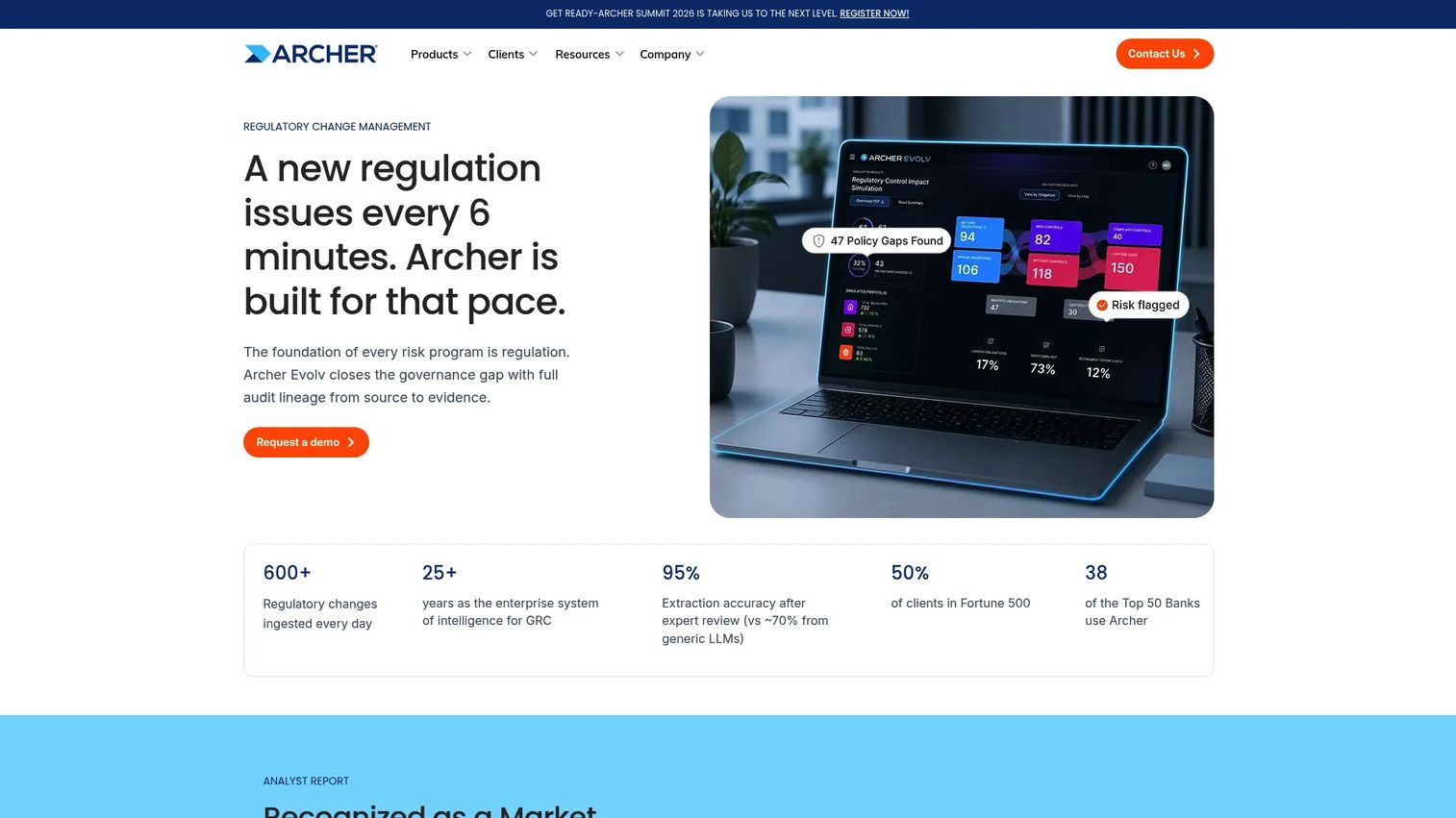
Archer IT & Security Risk Management is enterprise software for documenting and reporting IT risks, controls, vulnerabilities, audit findings, regulatory obligations, and issues. Continuous controls monitoring covers IT, cloud, and identity controls, and the platform layers on policy, controls assurance, incident response, and IT regulatory management. It is a fit for governance-heavy environments.
Best for: Large organizations that need a configurable IT and security risk platform with strong reporting.
Key strengths
- Comprehensive risk registers: Document IT risks, controls, vulnerabilities, and findings in one place.
- Continuous controls monitoring: Track IT, cloud, and identity controls without manual checks.
- Broad program coverage: Policy, controls assurance, incident response, and regulatory management together.
Why choose Archer: Archer suits governance-heavy environments where reporting rigor and configurability matter most. If your program spans policy, controls assurance, and incident response, keeping them in one platform simplifies audit evidence and board reporting.
Archer pricing: Archer does not publish public pricing and directs prospects to contact sales. The company references a flexible pricing model in its SaaS materials, but no figure is listed publicly.
8. Resolver RiskVision
Resolver is a risk intelligence and GRC platform, now home to the former RiskVision product, that manages risk, controls, compliance, incidents, and investigations. It handles risk data collection, connection, and calibration, adds AI-powered control management with gap analysis, and automates workflows, analytics, and reporting. The draw is keeping risk and incident context together.
Best for: Enterprise teams that want configurable risk, compliance, and security operations workflows in one place.
Key strengths
- AI-powered gap analysis: Spot control gaps before they become findings.
- Risk and incident context together: Connect risk data to incidents and investigations.
- Workflow automation: Automate analytics and reporting to cut manual effort.
Why choose Resolver: Resolver fits teams that want operational resilience built into their risk program, with incidents and investigations linked to the same risk data. That combination helps risk prioritization reflect what is actually happening, not just what a scan reported.
Resolver pricing: Resolver uses tailored, quote-based pricing and shows no public figure on its pricing page. It holds a 4.3/5 rating on G2.
9. SAI360 IT & Cybersecurity
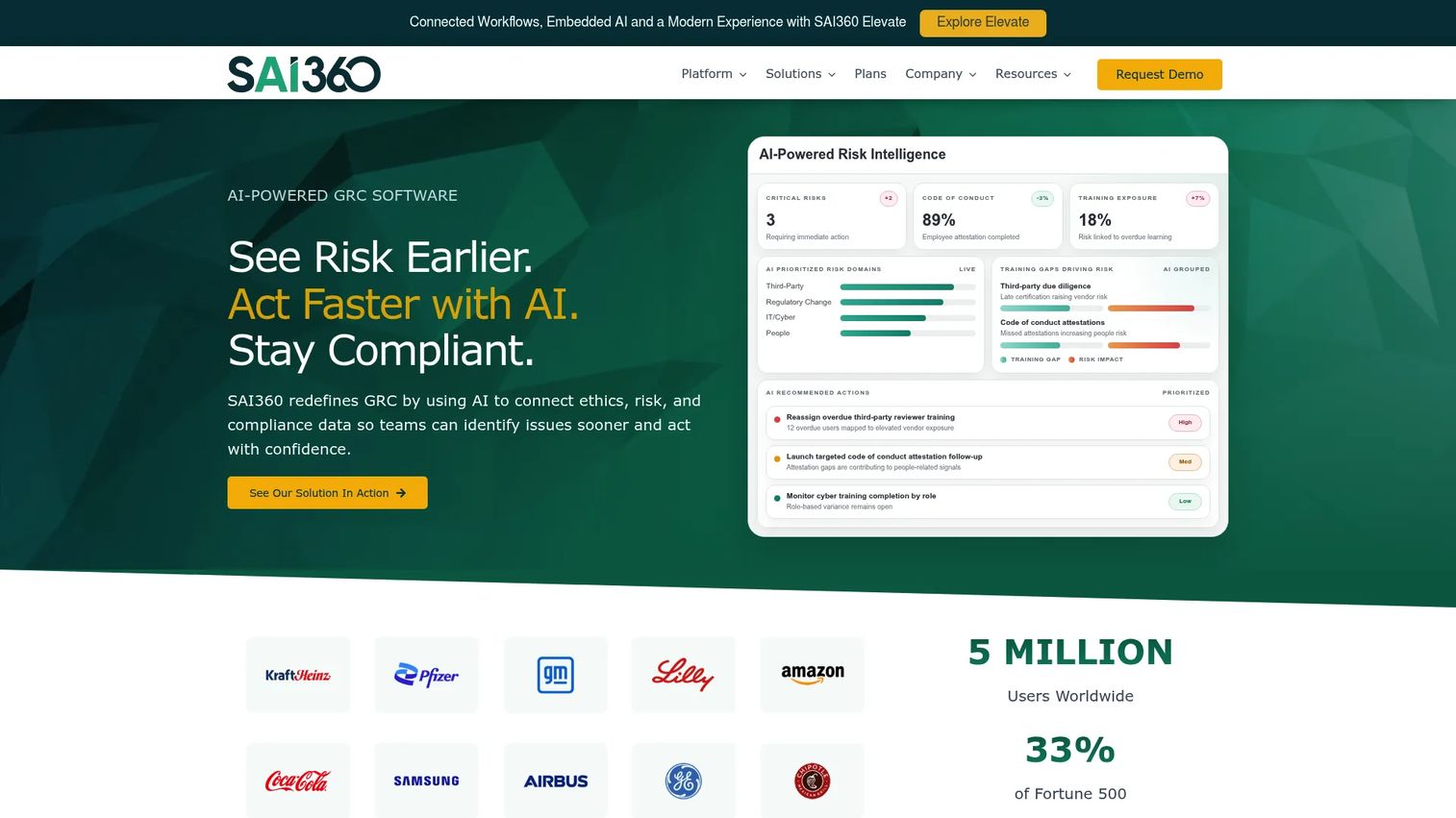
SAI360 is AI-powered GRC software for IT risk and cybersecurity, built around an IT risk and control library, AI-assisted risk assessments, and threat and vulnerability analysis. Its risk, compliance, audit, and policy workflows make it a fit for regulated industries with heavier governance requirements. Three editions scale from smaller programs to enterprise.
Best for: Organizations in regulated industries that need a configurable platform for IT risk, cybersecurity, and compliance.
Key strengths
- IT risk and control library: Start from a structured library instead of building controls from zero.
- AI-assisted risk assessments: Speed up assessments with automated support.
- Threat and vulnerability analysis: Connect exposure data to risk and compliance workflows.
Why choose SAI360: SAI360 fits regulated environments where risk, audit, and policy need to live together. Its edition structure lets you match scope to program maturity, and the control library reduces the upfront work of framework mapping.
SAI360 pricing: SAI360 offers Essentials, Professional, and Enterprise editions, all quote-based. Pricing depends on edition, users, selected modules, and implementation scope, so plan a sales conversation. It holds a 4.1/5 rating on G2.
10. Vanta
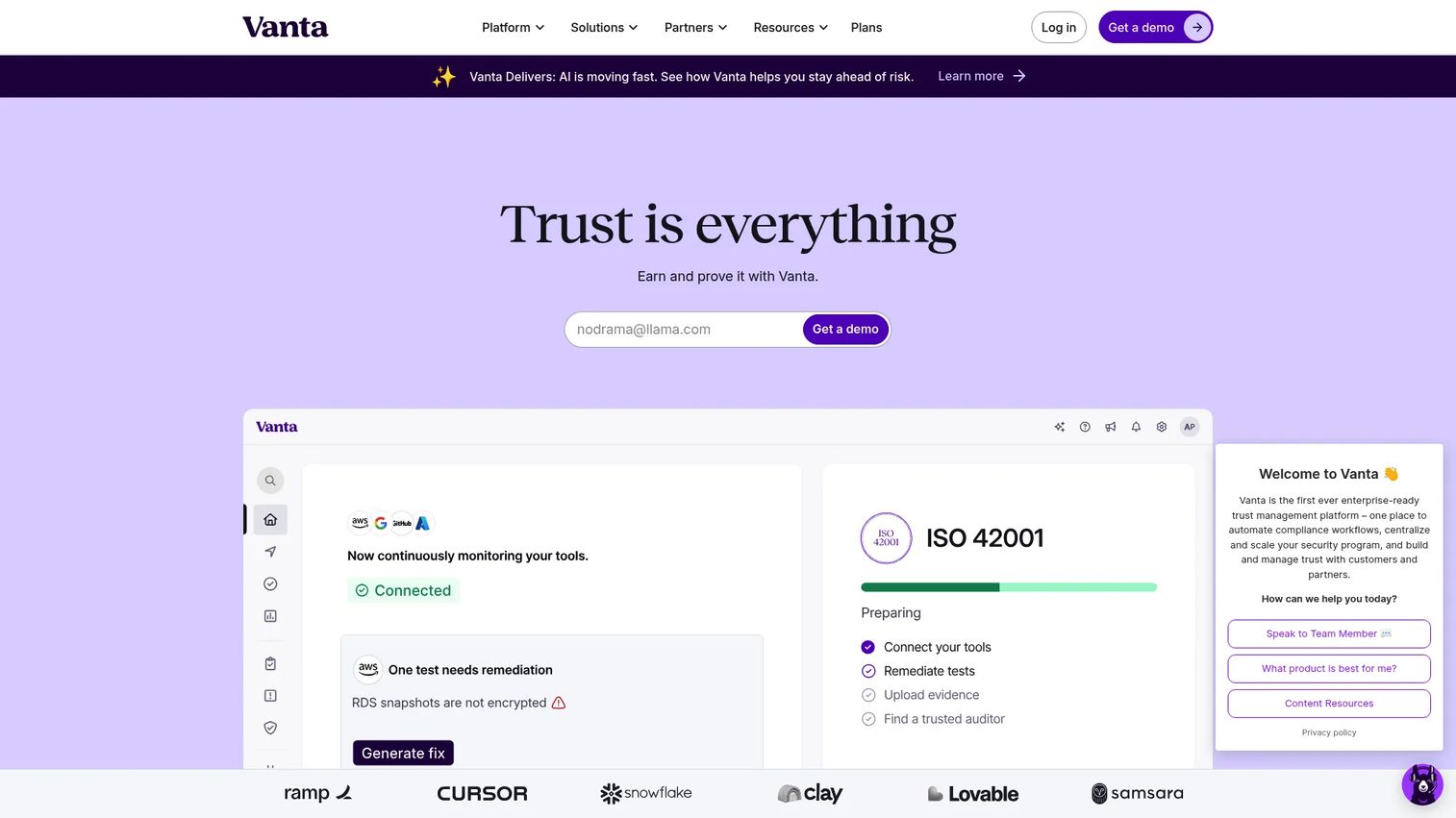
Vanta is a trust management platform for compliance, security, risk, and vendor management. It automates evidence collection and continuous compliance monitoring across more than 300 pre-built integrations, and adds a Trust Center, questionnaire automation, and access reviews. It fits teams that want fast compliance coverage without heavy operational overhead.
Best for: Companies that need automated compliance and trust management at scale with lean operations.
Key strengths
- Continuous compliance monitoring: Keep evidence current automatically rather than in audit sprints.
- 300+ integrations: Connect your stack quickly for continuous monitoring.
- Automated evidence collection: Reduce the manual work of proving control operation.
Why choose Vanta: Vanta performs best when speed to compliance and lean operations are the priorities. It automates the evidence and monitoring work that otherwise consumes small security teams. For organizations that need a full enterprise IT risk register with deep ERM alignment, Vanta pairs well with a broader GRC platform, since its center of gravity is compliance automation and vendor risk rather than heavyweight governance.
Vanta pricing: Vanta does not display public pricing and asks prospects to request a demo. Plans include Essentials, Plus, Professional, and Enterprise. It holds a 4.6/5 rating on G2.
11. JupiterOne
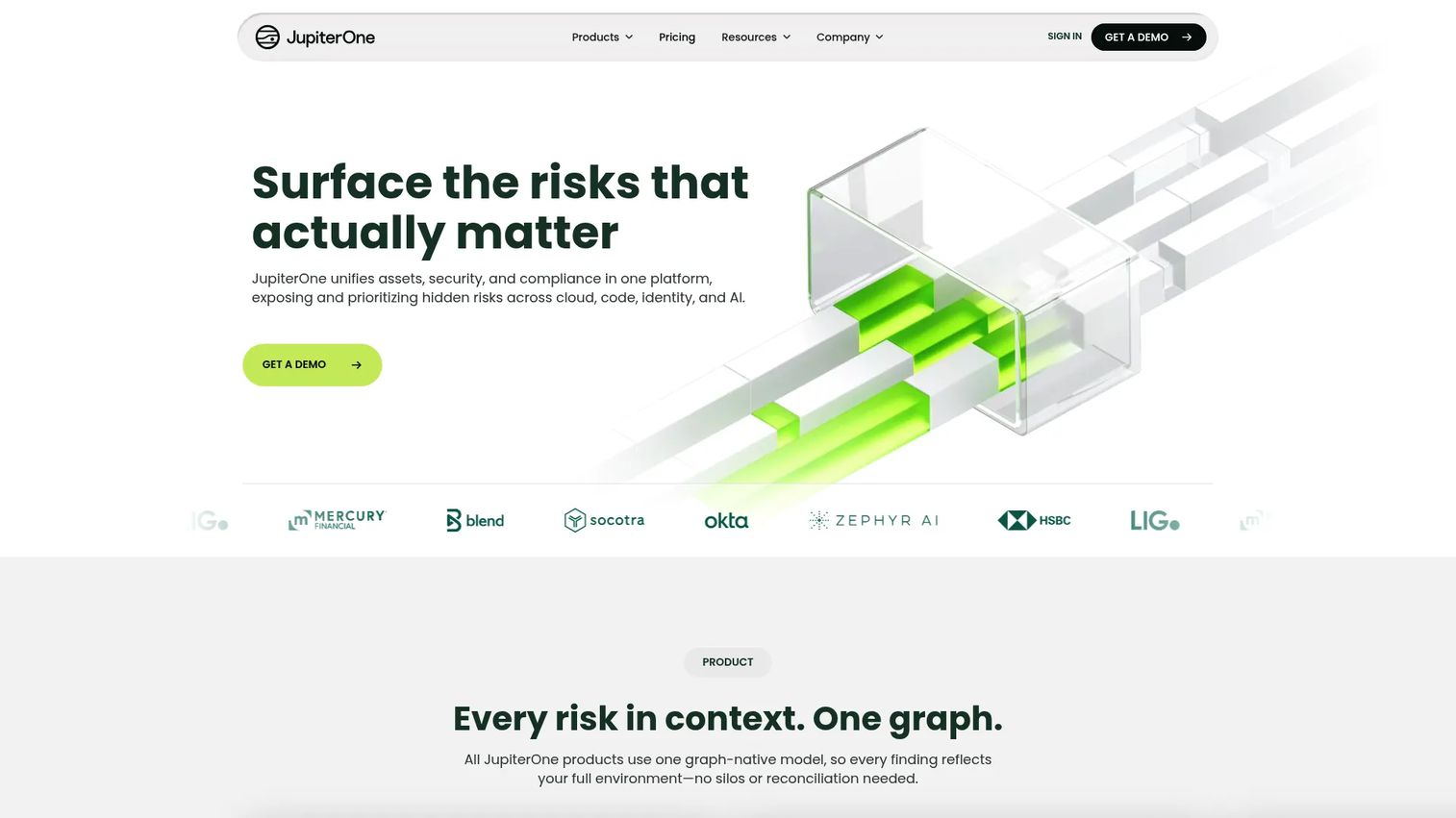
JupiterOne is a cyber asset attack surface management platform that unifies asset, relationship, and compliance visibility. It inventories devices, users, apps, networks, and code repositories, maps relationships for blast-radius analysis, and supports natural-language queries plus continuous controls monitoring. The appeal is exposure-driven risk prioritization for security-first teams.
Best for: Security teams that need a graph-based view of cyber assets, relationships, and compliance posture.
Key strengths
- Asset inventory across the stack: Devices, users, apps, networks, and code repos in one graph.
- Relationship and blast-radius mapping: Understand what an exposure actually touches.
- Natural-language queries: Ask questions about your environment without writing complex code.
Why choose JupiterOne: JupiterOne appeals to security-first teams that want asset and relationship context driving risk prioritization. Its graph model answers the question raw scanners cannot: not just what is vulnerable, but what that vulnerability connects to.
JupiterOne pricing: JupiterOne publishes annual pricing based on datapoints: Small-Market at $25,000, Mid-Market at $50,000, and Enterprise at $100,000 per 12 months, with custom quotes above that. A free tier is available. It holds a 4.9/5 rating on G2.
Considerations
Before you commit, run every shortlisted IT risk management platform through the same checklist. The differences that matter rarely show up in a feature grid.
Integration depth
Check whether the tool connects cleanly to your scanners, CMDB, ticketing, cloud, and identity systems. A platform that cannot ingest signal from your existing stack forces manual data entry, which defeats the point of continuous monitoring. Confirm the specific integrations you rely on, not just the total count.
Risk prioritization model
Verify the platform prioritizes by exposure, severity, and business impact together, not severity alone. A tool that ranks everything critical helps no one. The goal is risk prioritization that queues remediation by what actually protects revenue and operations, backed by business impact analysis.
Framework and audit support
Confirm control mapping, evidence handling, and reporting for the frameworks you actually use, whether that is ISO 27001, SOC 2, NIST, or PCI DSS. Strong compliance mapping and reusable audit evidence turn recurring audits from a scramble into a routine.
Third-party risk coverage
Determine whether third-party risk management is native or bolted on. Vendor and supply-chain exposure belongs in the same system as internal IT risk, so you see one connected picture rather than two disconnected programs.
Reporting for leadership
Assess whether the platform can translate technical risk into board reporting language. Directors care about business impact and residual risk, not CVE counts. A tool that produces board-ready output saves hours of manual translation every quarter.
Conclusion
The best IT risk management software depends on where your program sits and what pressure you are under. For a genuine bridge between IT risk and enterprise risk management, Riskonnect and IBM OpenPages lead. For board reporting and AI-assisted prioritization, Diligent stands out. Teams already on ServiceNow gain the most from ServiceNow GRC, while MetricStream, OneTrust, Archer, SAI360, and Resolver each bring mature GRC depth for regulated and governance-heavy environments. For fast compliance automation, Vanta fits lean teams, and JupiterOne wins for security-first teams that need cyber asset visibility.
Keep the distinction clear as you choose. Broad GRC platforms govern risk across the business, IT risk platforms scope that discipline to technology and cyber, and cyber asset visibility tools map exposure at the infrastructure layer. Many tools here overlap, which is why the right pick comes down to your primary job and your existing stack.
Shortlist two or three of these risk management software solutions, then evaluate them on integration depth and reporting needs against your actual environment. Those two factors, more than any feature list, decide which platform sustains continuous monitoring and operational resilience over time.
FAQs
It helps teams identify, assess, prioritize, monitor, and remediate risks to IT systems, data, and infrastructure. Most platforms add continuous monitoring, control testing, remediation workflows, and compliance mapping so risk work connects to audit evidence and business impact rather than sitting in isolation.
GRC software governs risk, compliance, and controls across the entire business, including financial and operational domains. IT risk management solutions scope that same discipline to technology and cyber risk. In practice the two overlap heavily, and several platforms here serve both, so the distinction is about primary focus rather than a hard boundary.
Prioritize continuous monitoring, risk prioritization that weighs business impact alongside severity, control testing, remediation workflows, and framework mapping. Integration depth across scanners, CMDBs, cloud, and identity systems matters just as much, since a platform that cannot ingest your signal cannot monitor continuously.
Yes. Many platforms include native third-party risk management, letting you assess and monitor vendor and supply-chain exposure in the same system as internal IT risk. Confirm whether vendor risk is built in or added as a separate module, because native coverage gives you one connected view.
They combine exposure, severity, and business impact analysis rather than ranking by severity alone. A critical vulnerability on a payment system outranks the same vulnerability on an unused test box. The strongest platforms make that logic repeatable so remediation queues by what protects revenue and operations first.
Common ones include ISO 27001, NIST CSF and 800-53, SOC 2, and PCI DSS, with many platforms offering dozens of pre-built framework mappings. The value is reusing collected audit evidence across multiple frameworks at once instead of rebuilding proof for each audit.
Yes. Better platforms translate technical risk into business impact and residual risk language directors understand. This turns board reporting from a manual translation exercise into an output the platform generates, which saves hours each reporting cycle and keeps leadership aligned on the risks that matter.
Verify integration depth with your existing stack, the risk prioritization model, framework and audit support for the standards you use, whether third-party risk is native, and reporting quality for leadership. Shortlist two or three tools and test them against your real environment before committing.