Your food cost crept from 28% to 34% over two quarters. Nobody made a bad decision. A supplier raised chicken by 11%, a new line cook over-portioned, three recipes never got re-costed after a menu update, and one location kept ordering off a stale purchase list. None of it showed up until the P&L did.
That is how margin leaks work in foodservice. Small errors compound across recipes, locations, and menu cycles until the number is ugly and the cause is invisible. The global food cost management software market was valued at $3.2 billion in 2025 and is projected to reach $6.8 billion by 2034, a 9.8% CAGR, according to MarketIntelo (2025). Restaurants alone accounted for 42.1% of that revenue in the same year.
The reason spend is climbing is simple. Spreadsheets do not catch price changes in real time, and manual inventory counts do not tie back to what your recipes actually cost. Software does. This guide breaks down eight tools that treat food cost as a workflow system, not a one-time recipe calculator.
What's inside
This guide is for restaurant operators, multi-unit teams, culinary leaders, and finance-minded owners trying to stop margin leakage. We selected tools on four criteria that matter more than feature counts:
- Food costing accuracy: recipe costing, yield logic, and actual vs theoretical food cost
- Inventory and purchasing depth: counting workflows, purchase orders, invoice capture
- Integration quality: POS integrations, accounting integrations, supplier integrations
- Multi-location fit: centralized recipes, purchasing control, and multi-unit reporting
Each tool sits somewhere different in the operational stack. We flag where.
TL;DR
- Best for recipe-first teams: meez, built around professional recipe management and live costing
- Best for inventory and purchasing control: MarketMan
- Best for multi-unit visibility: Restaurant365
- Best for invoice and cost automation: MarginEdge
- Best for budget-conscious buyers: reciProfity
- Best for supplier ordering workflows: BlueCart
- Best for beverage-heavy operations: WISK AI
- Best for enterprise restaurant groups: CrunchTime
If you run one kitchen and live in your recipes, start with meez. If you run 40 locations and need clean financials, look at Restaurant365 or CrunchTime.
What is food cost management software?
Food cost management software is a system that tracks the real cost of every dish by connecting recipe costing, inventory counts, purchasing, and invoice data so operators can see and control food cost percentage across a menu and multiple locations.
It replaces the spreadsheet-and-clipboard method with live data. When a supplier price changes, your recipe cost updates. When you count inventory, the system compares what you should have used against what you actually used.
Core functions most food costing software includes:
- Recipe costing: ingredient-level cost per dish, with yield and unit conversions
- Inventory management: counts, par levels, and variance tracking
- Purchasing: purchase orders, supplier catalogs, and order approval
- Invoice capture: line-item price extraction from supplier invoices
- Menu engineering: margin and popularity analysis per menu item
- Reporting: actual vs theoretical food cost, waste, and multi-unit rollups
There is a real difference between narrow recipe costing software and broader restaurant back-office systems. A recipe costing tool answers "what does this plate cost." A back-office platform answers "what did we spend, what did we sell, and where did the gap go," and often folds in accounting and labor. Many operators start with the first and graduate to the second.
When to use food cost management software
Tighten margins after food costs creep up
When your food cost percentage climbs and you cannot point to a single cause, you need visibility, not another price hike. Software surfaces which recipes, ingredients, and locations moved. You can re-price a menu with actual numbers instead of guessing, and catch supplier increases the week they land rather than the quarter they hit the P&L.
Standardize operations across multiple locations
Running multi-unit operations off local spreadsheets guarantees drift. One kitchen portions differently, another buys off a different list, a third never updates a recipe. Centralized recipe and purchasing control means every location costs the same dish the same way and orders against the same approved catalog. That is where actual vs theoretical variance becomes comparable across sites.
Reduce waste, variance, and manual admin
If your team still keys invoices by hand and counts inventory on paper, most of that time produces no insight. Automating invoice processing and counts turns raw data into variance reports. You see where product disappears between purchase and sale, which drives waste reduction and margin improvement without adding headcount.
Comparison table
Pricing and ratings below are drawn from each vendor's own pricing page and G2 listing where available. Some vendors quote custom pricing and reveal figures during a demo.
| # | Product | Best for | Key differentiator | Pricing | G2 rating |
|---|---|---|---|---|---|
| 1 | meez | Recipe-first culinary teams | Professional recipe management with live food costing | From $19/mo | Not verified |
| 2 | Restaurant365 | Multi-location back office | Accounting, inventory, and workforce in one platform | Custom quote | 4.6/5 |
| 3 | MarginEdge | Invoice and cost automation | Automated invoice processing and POS/accounting sync | From $350/location/mo | 4.6/5 |
| 4 | MarketMan | Inventory and purchasing control | Purchase orders, COGS reporting, supplier ordering | From $199/mo | 4.3/5 |
| 5 | BlueCart | Supplier ordering workflows | Wholesale ordering and per-account catalog pricing | Custom | 5.0/5 |
| 6 | WISK AI | Beverage-heavy operations | Bar and food inventory with recipe costing | From $249/mo | 5.0/5 |
| 7 | CrunchTime | Enterprise restaurant groups | Centralized ops, labor, and inventory at scale | Custom | 4.3/5 |
| 8 | reciProfity | Budget-conscious buyers | Recipe costing and inventory at a low entry price | From $65/mo | Not rated |
Best food cost management software for 2026
1. meez
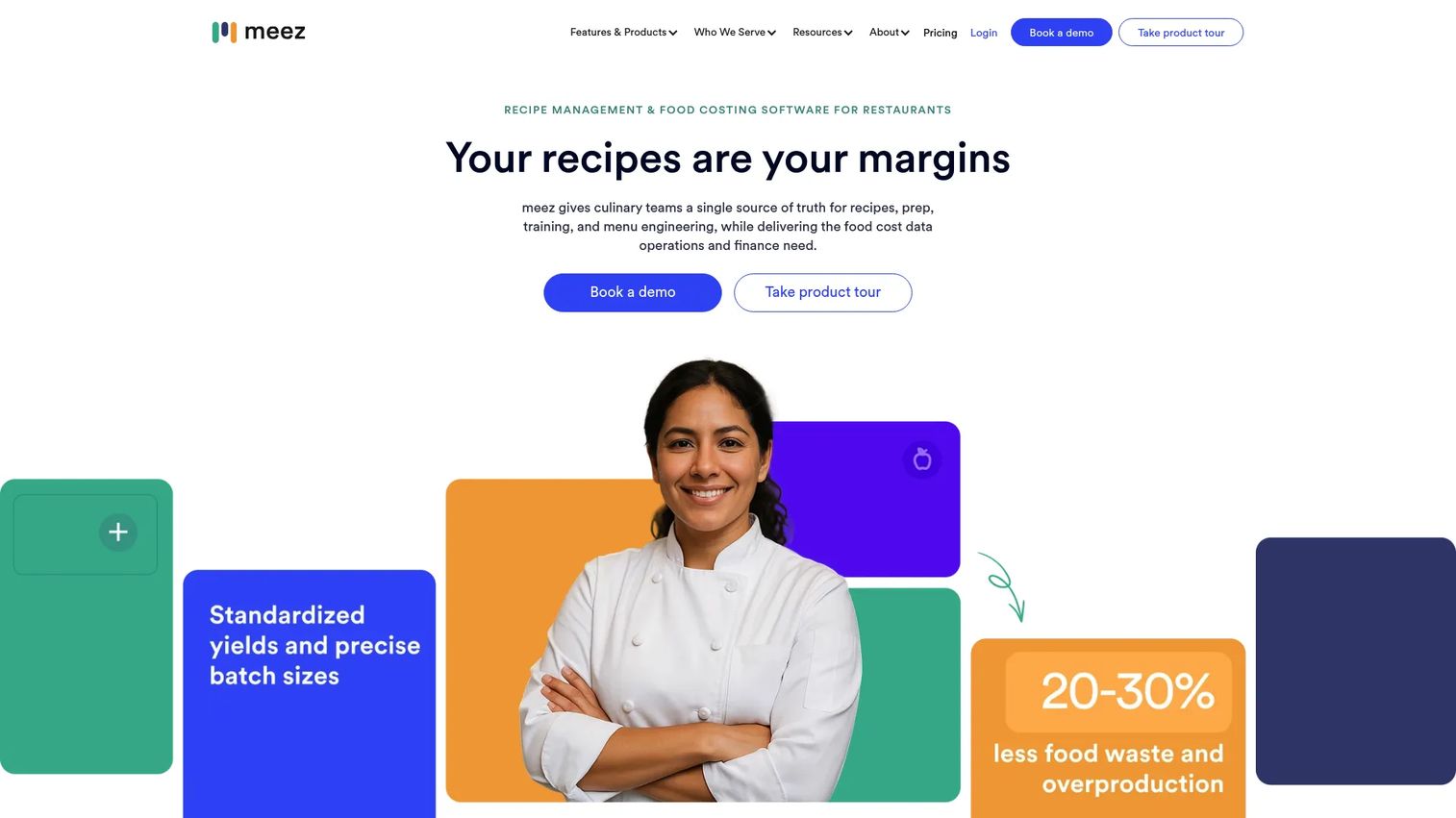
meez is recipe management and food costing software built for culinary teams. It treats the recipe as the source of truth, then layers costing, scaling, and training on top. If your food cost problem starts in the kitchen rather than the ledger, this is where meez fits.
Best for: Restaurants and hospitality teams standardizing recipes, costing, and prep workflows.
Key strengths
- Professional recipe management: structured, scalable recipes
- Live food costing: cost updates as prices change
- Kitchen training and [menu rollouts: consistent execution across staff
- Allergen and nutrition data attached to recipes
- Menu engineering](https://en.wikipedia.org/wiki/Menu\_engineering) to see margin per dish
Why choose meez: It wins for recipe-first, culinary-led teams who want one place for recipes, costing, and training rather than a finance-first back office. Chefs adopt it because it speaks their language, not accounting's.
meez pricing: Plans start at $19/mo for Starter, billed annually. Pro is $89/mo and Premium is $179/mo, both annual, with a custom Enterprise tier. A free tier is available.
A verified G2 rating for meez was not confirmed at the time of writing.
2. Restaurant365
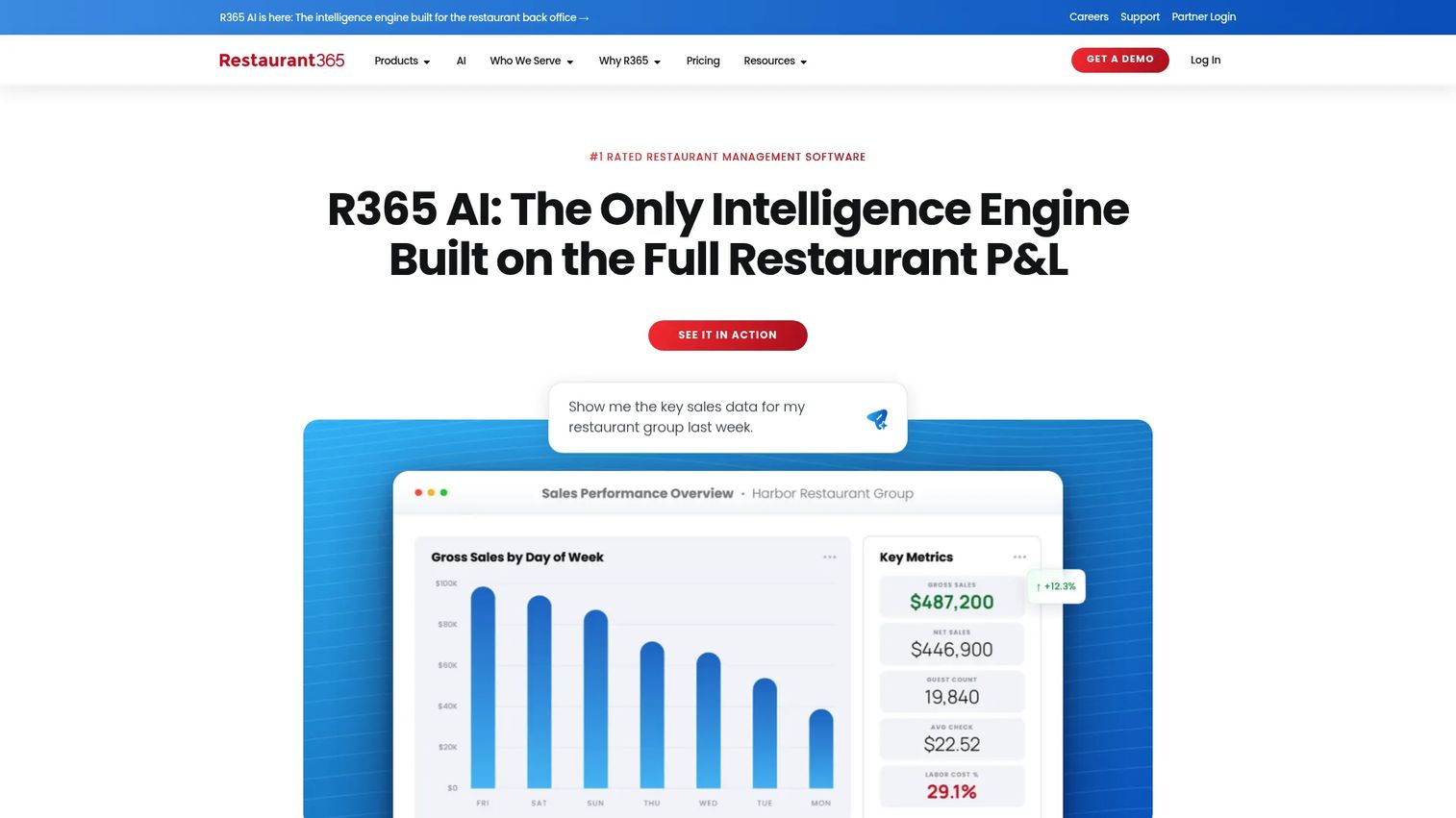
Restaurant365 is a cloud-based restaurant management platform that folds accounting, inventory, purchasing, and workforce into one system. It sits deeper in the stack than a pure costing tool. If your finance team and operators want the same source of truth, this is the fit.
Best for: Multi-location restaurants that want an integrated back-office operations platform.
Key strengths
- Accounting and financial reporting built in
- Inventory and purchasing control across locations
- Workforce management and scheduling
- Multi-location reporting and rollups
- POS integrations and accounting integrations
Why choose Restaurant365: Operators already running scattered accounting and inventory tools choose it to consolidate. It fits groups that need clean financials for multi-unit operations, not just a recipe calculator.
Restaurant365 pricing: The vendor's own pricing page directs you to request a custom quote rather than listing a figure. Third-party directories reference a starting point around $499, though that is not confirmed on the brand site.
Restaurant365 holds a 4.6/5 rating on G2.
3. MarginEdge
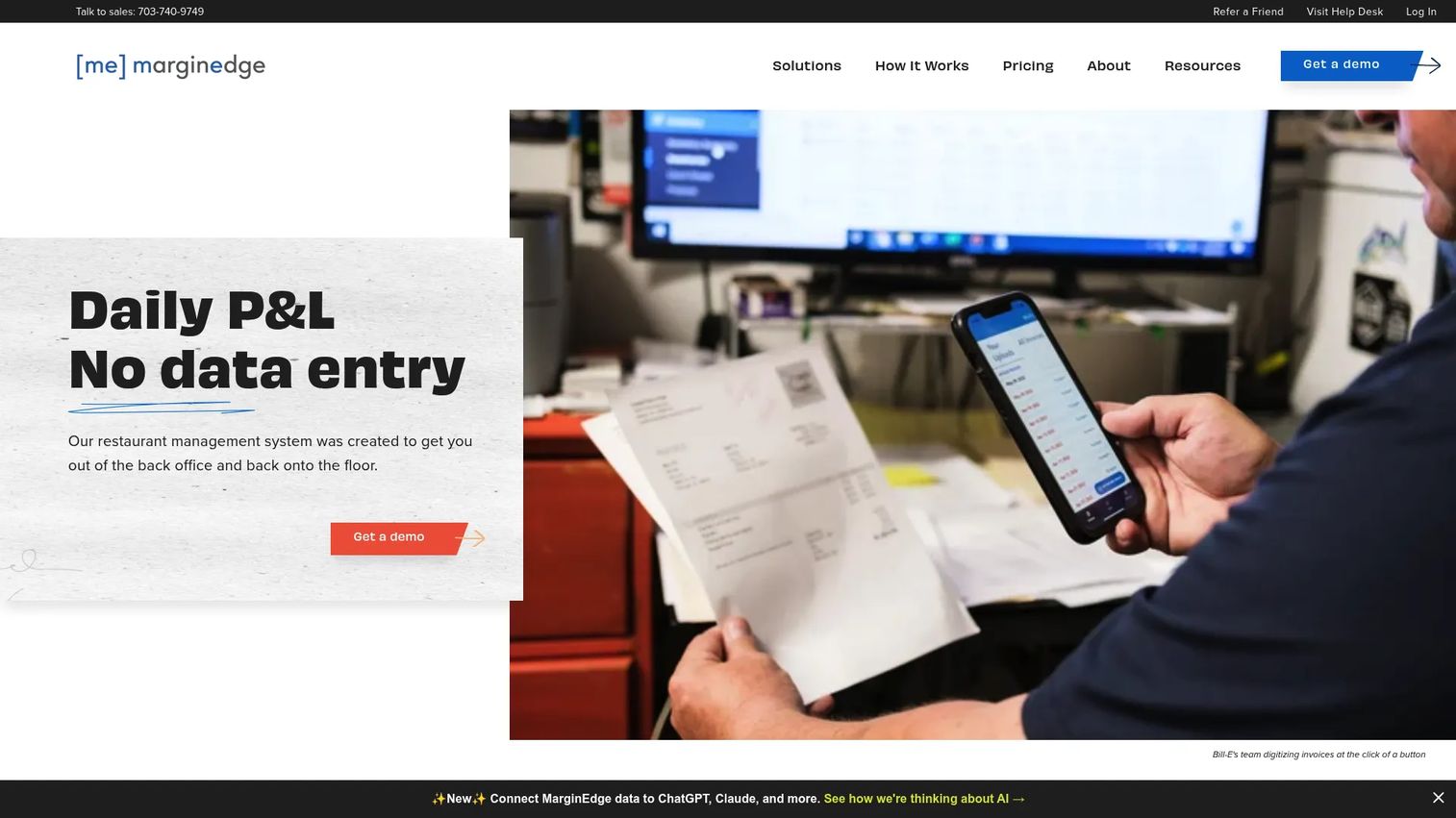
MarginEdge automates the grind of invoice processing and ties it to inventory, recipe costing, and accounting. Snap or forward an invoice, and it extracts line-item prices and updates your costs. It fits operators who lose hours keying invoices and want real-time food cost without the admin.
Best for: Restaurants that want one platform for back-office automation and food-cost control.
Key strengths
- Automated invoice processing with line-item extraction
- POS integrations and accounting integrations
- Inventory, ordering, recipe costing, and bill pay
- Real-time food cost as invoices land
- Flat all-inclusive pricing per location
Why choose MarginEdge: It suits teams whose biggest leak is manual admin and stale pricing. Flat pricing per location makes the cost predictable as you add sites.
MarginEdge pricing: MarginEdge is $350 per location per month, all-inclusive. The MarginEdge + Freepour bundle for beverage programs is $500 per location per month.
MarginEdge holds a 4.6/5 rating on G2.
4. MarketMan
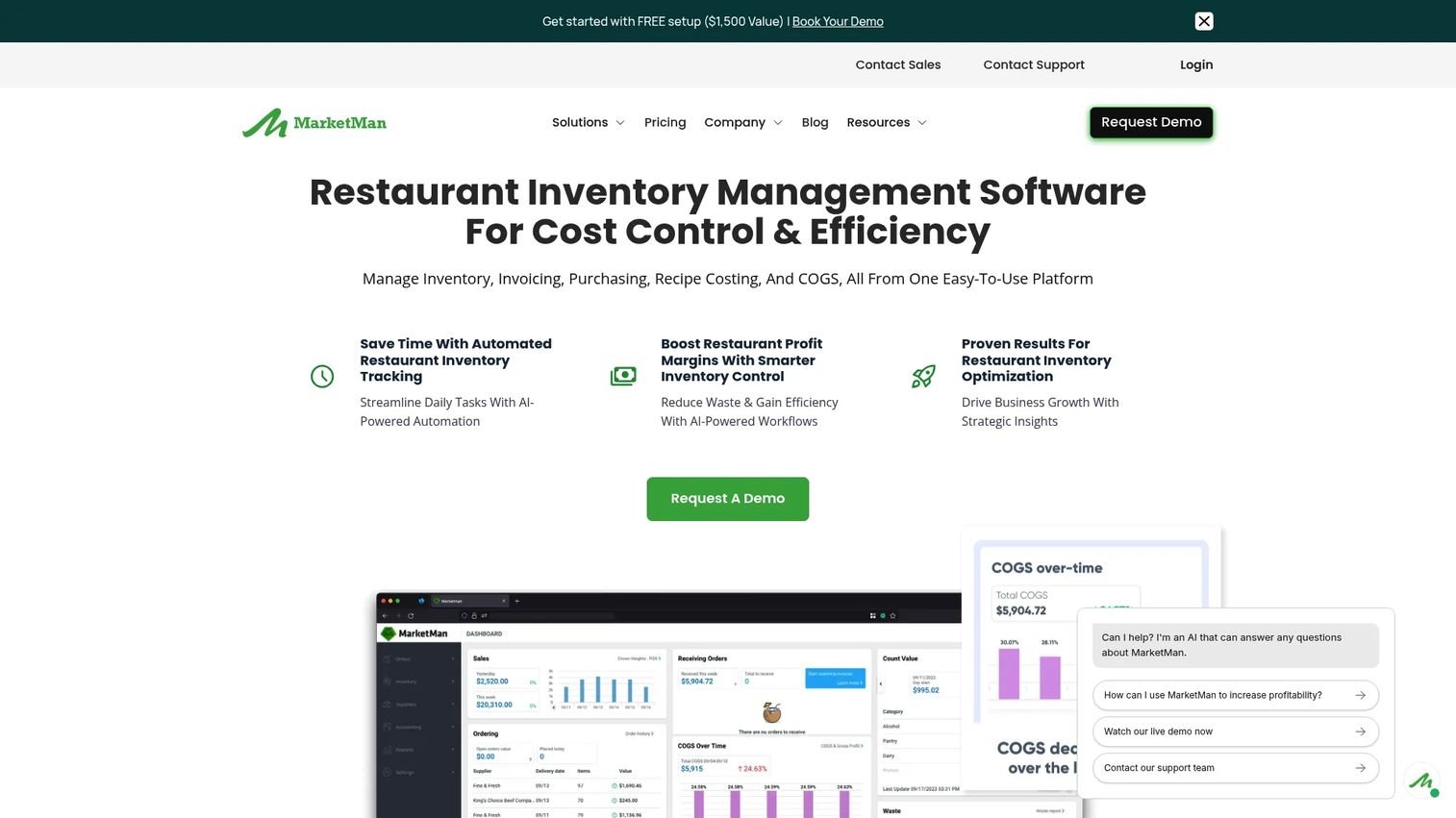
MarketMan is restaurant inventory and supply management software built around ordering, costing, and COGS control. It is strongest where purchasing meets inventory. If your food cost problem is buying and receiving rather than recipes, MarketMan sits right in that gap.
Best for: Restaurants that need inventory, purchasing, and recipe costing in one platform.
Key strengths
- Inventory management with variance tracking
- Purchasing and purchase orders
- Recipe costing and COGS reporting
- Supplier integrations for ordering
- Multi-location buying control
Why choose MarketMan: It fits operators who want to control what gets bought, from whom, and at what price, then tie it back to COGS. Purchasing-first teams get the most out of it.
MarketMan pricing: Starter is $199/month and Growth is $249/month. Enterprise is custom, with add-ons listed on the pricing page. No free tier is shown.
MarketMan holds a 4.3/5 rating on G2.
5. BlueCart
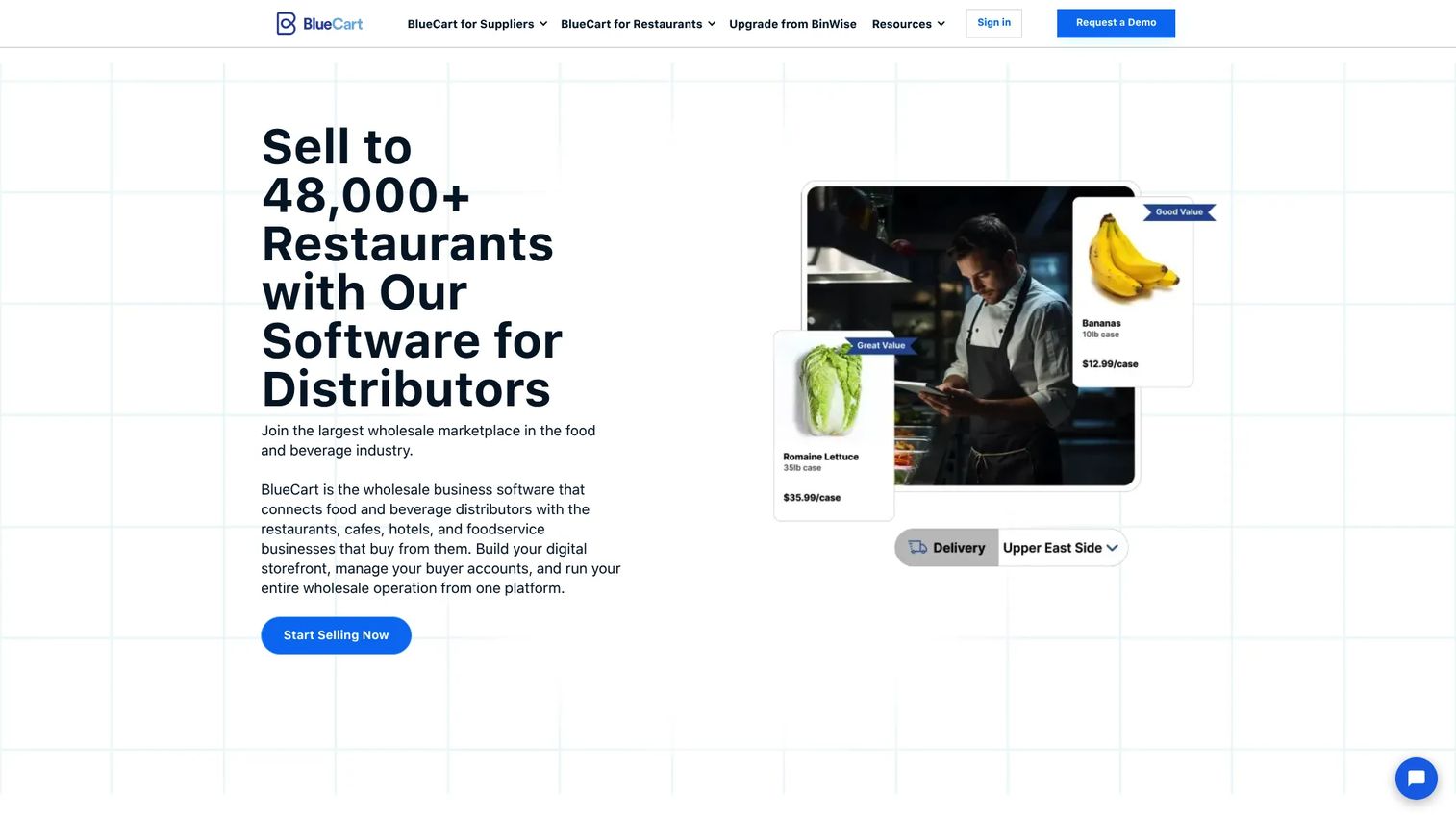
BlueCart is wholesale business software for food and beverage distributors and the operators who order from them. It costs against live supplier pricing and centralizes ordering. If your margin work starts at the purchase order and your supplier relationships are the lever, BlueCart fits.
Best for: Food and beverage wholesalers and operators needing a single platform for ordering, pricing, and invoicing.
Key strengths
- Buyer-facing ecommerce storefront for ordering
- Per-account catalog and pricing management
- Order management and inventory tracking
- Delivery route management and invoicing
- CRM for buyer relationships
Why choose BlueCart: It suits teams where supplier ordering workflows drive cost, especially operations with heavy wholesale volume. It leans toward the buy side more than recipe-level costing.
BlueCart pricing: BlueCart does not publish plan prices on its site and routes to a demo booking to discuss pricing. Expect to talk to sales for a quote.
BlueCart holds a 5.0/5 seller rating on G2, with Capterra showing 4.1/5.
6. WISK AI
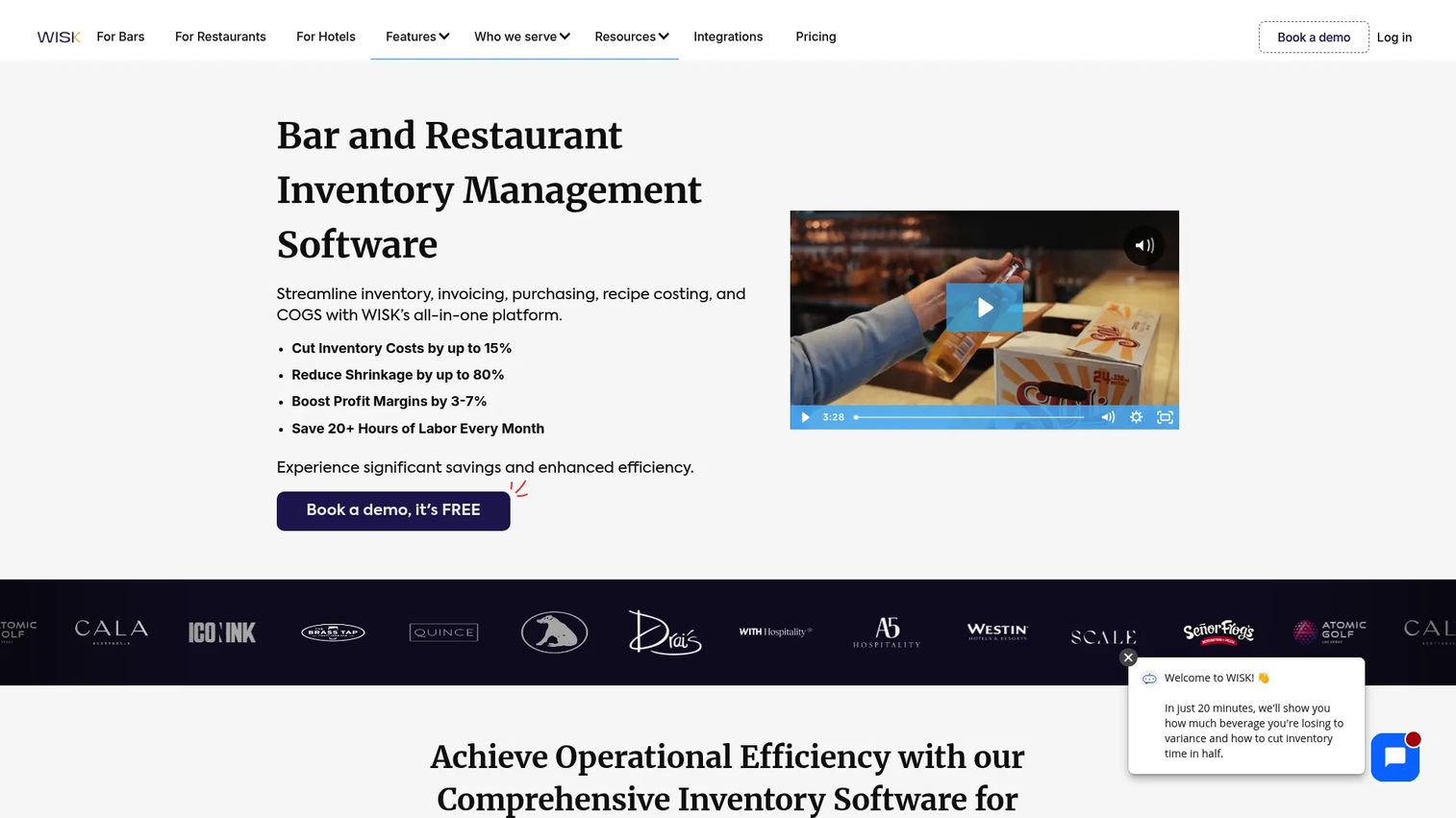
WISK AI is hospitality inventory management software built for bars and restaurants, with strong beverage handling. It tracks inventory, costs recipes, and processes invoices. If pour cost and beverage variance are eating your margin, WISK is built for that reality.
Best for: Bars, restaurants, and hospitality groups needing inventory and recipe-cost control.
Key strengths
- Inventory tracking for bar and food
- Recipe costing including cocktails
- Invoice processing
- Beverage-focused variance and loss control
- Single-venue to multi-outlet plans
Why choose WISK AI: It fits beverage-heavy operations where liquor and pour cost are the biggest variance drivers. Food-only kitchens can use it too, but the beverage depth is the draw.
WISK AI pricing: Single Venue plans start at $249/mo for beverage or food, with an F&B bundle at $399/mo. Multi-Outlet Property plans range from $499/mo to $1,999/mo depending on scope, billed quarterly or annually. Enterprise is custom, and a setup fee applies.
WISK AI holds a 5.0/5 seller rating on G2.
7. CrunchTime
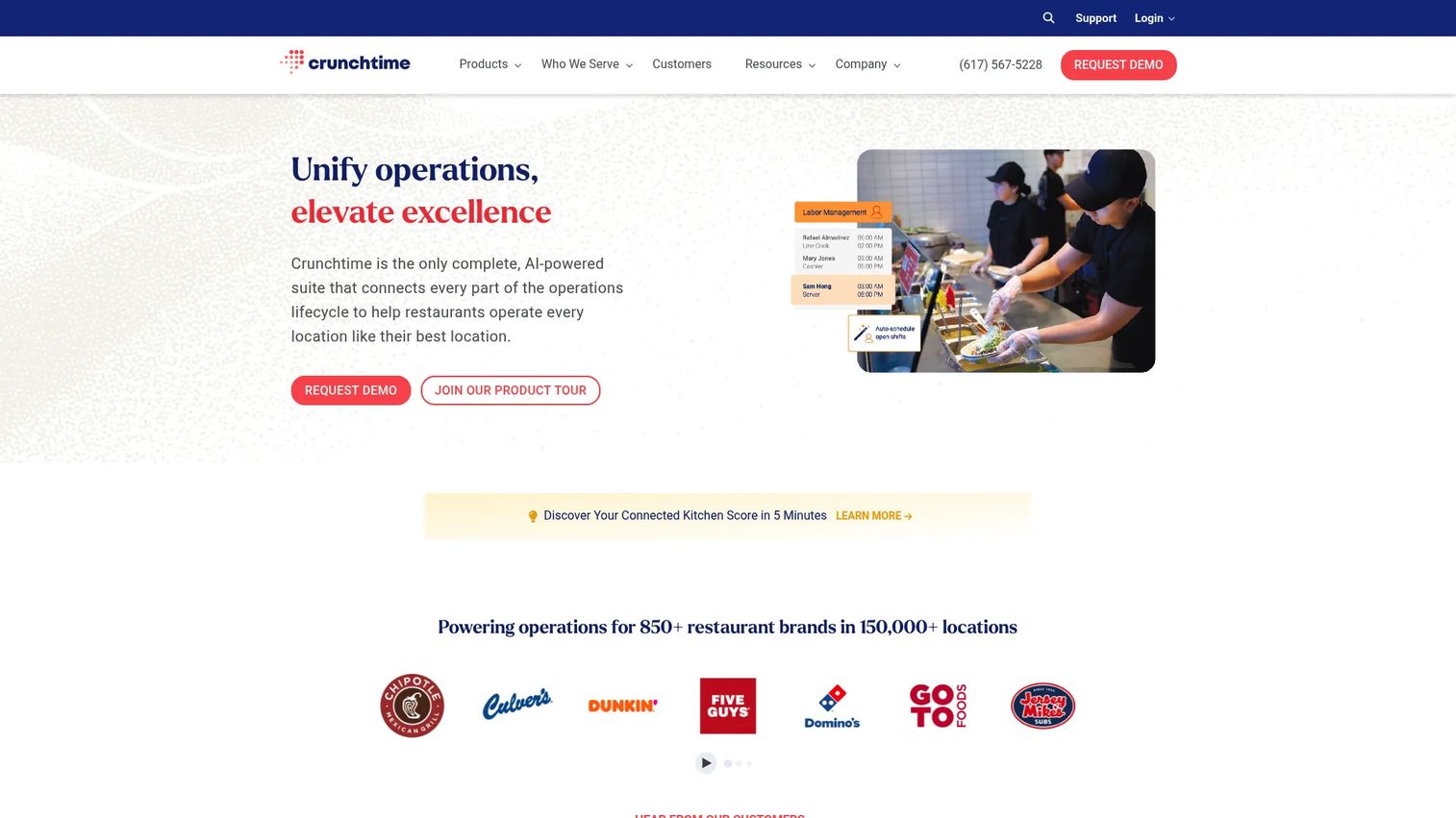
CrunchTime is restaurant operations management software for multi-unit brands running at scale. It centralizes inventory, labor, purchasing, and operations execution across large fleets. If you run 100+ locations, this is the tier built for that governance.
Best for: Multi-unit restaurant brands needing centralized ops, labor, and inventory control.
Key strengths
- Inventory management across large fleets
- Labor and scheduling
- Operations execution and task management
- Purchasing control at scale
- Multi-unit governance and reporting
Why choose CrunchTime: It fits enterprise groups where consistency across hundreds of units is the mandate. Enterprise chains with 100+ locations generated 39.92% of restaurant management software revenue in 2025, according to Mordor Intelligence (2025), and this is the segment CrunchTime serves.
CrunchTime pricing: Plan on a sales conversation scoped to your fleet size and modules.
CrunchTime holds a 4.3/5 rating on G2.
8. reciProfity
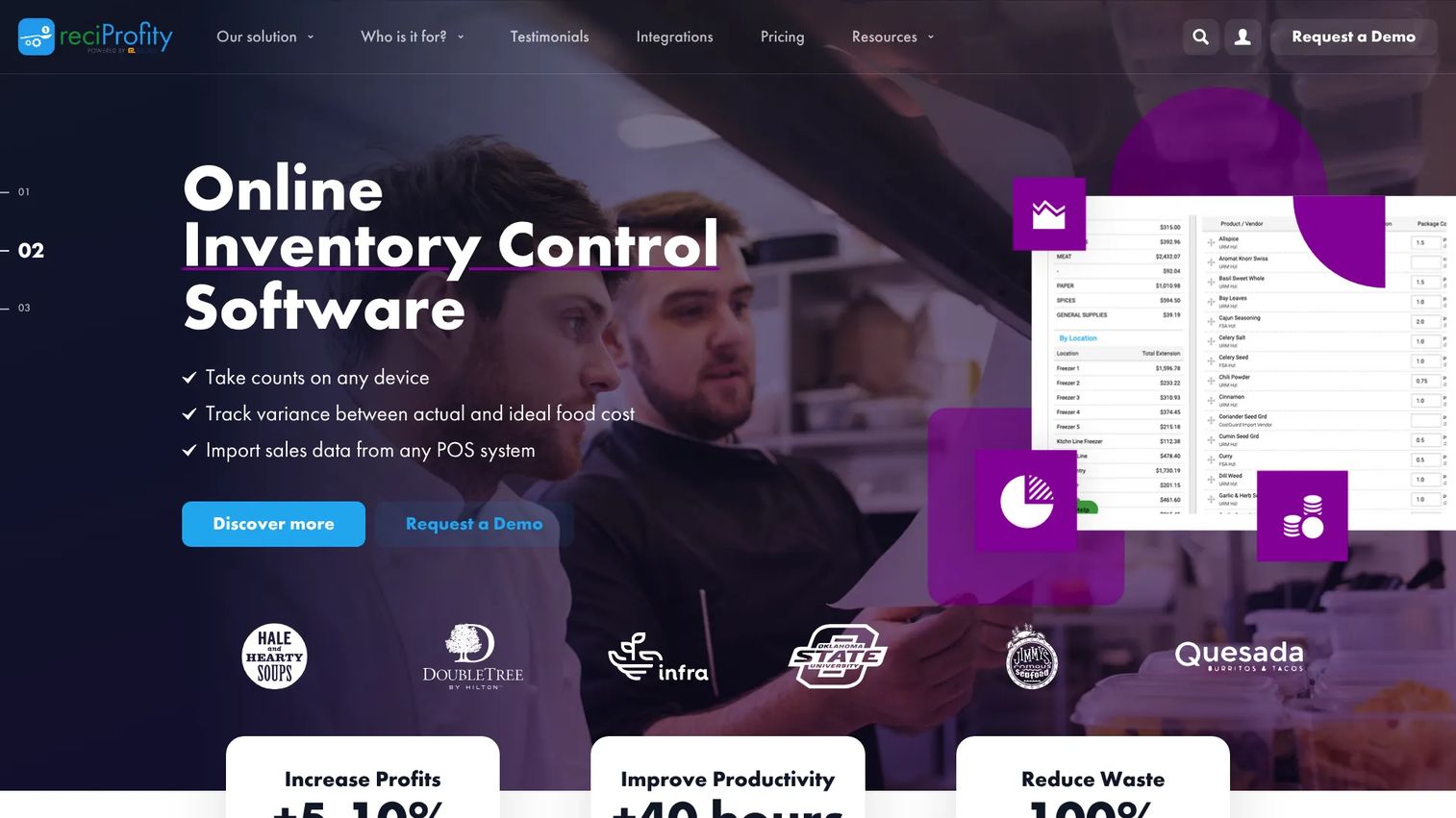
reciProfity is cloud-based food costing, recipe management, and inventory control software for foodservice businesses. It delivers recipe costing and inventory at the lowest entry price on this list. If budget is the constraint and you still need real costing, reciProfity fits.
Best for: Restaurants, caterers, and multi-unit foodservice operators needing recipe costing and inventory control.
Key strengths
- Recipe costing with yield logic
- Inventory control and alerts
- Multi-unit support
- Low-cost entry plan
- 30-day free trial on the Analyzer plan
Why choose reciProfity: It fits budget-conscious buyers and caterers who want recipe costing and inventory without a full back-office platform. The entry price is hard to beat for what it covers.
reciProfity pricing: Agile starts at $65/mo, Aware at $82/mo, Analyzer at $99/mo, and Multi-Unit at $124/mo, billed monthly. Add-ons are listed separately, and a 30-day free trial comes with the Analyzer plan.
reciProfity currently shows no reviews on G2, so no rating is available.
Considerations
Before you shortlist, pressure-test each tool against the way your kitchen actually runs.
Recipe accuracy and yield logic
A recipe cost is only as good as its yield math. Check whether the tool handles unit conversions, trim loss, and cooking yield, not just raw ingredient price. Weak yield logic quietly understates cost and inflates your theoretical margin.
Inventory counting workflow
Counts are where adoption dies. Look at how the mobile count works, whether it supports offline inventory counts in a walk-in with no signal, and how par levels drive reordering. If counting is painful, your team will skip it and your variance data breaks.
Integrations with POS, accounting, and suppliers
The tool has to talk to your stack. Confirm POS integrations for sales data, accounting integrations for the GL, and supplier integrations for ordering. Missing one of these means manual re-keying, which reintroduces the errors you bought software to remove.
Multi-unit reporting and governance
For multi-unit operations, check whether recipes and purchasing lock centrally or drift per location. Ask how rollup reporting compares actual vs theoretical food cost across sites, and who can change what.
Implementation and adoption overhead
The best tool nobody uses saves nothing. Ask about setup time, data migration, and whether the daily workflow fits how your staff already works. A tool that earns adoption in the first month beats a heavier platform that stalls.
Conclusion
Recipe-first teams should start with meez, where costing lives next to the recipe and kitchen training. Inventory- and purchasing-first operators get the most from MarketMan or MarginEdge, with MarginEdge leaning hardest into invoice automation. Beverage-heavy rooms fit WISK AI, budget buyers fit reciProfity, and supplier-driven cost fits BlueCart.
For multi-unit and enterprise groups, Restaurant365 and CrunchTime carry the accounting, labor, and governance that scale demands. Small chains with 2 to 20 sites are adopting fastest, at a 15.78% CAGR through 2031 according to Mordor Intelligence (2025), so the mid-tier options matter more every year.
Next step: shortlist two or three tools, confirm they integrate with your POS and accounting system, then run a real test. Cost one recipe and complete one inventory count in each. The tool that makes both fast, and matches the number to reality, is your winner.
FAQs
Food costing software calculates the exact cost of each dish by combining ingredient prices, quantities, and yield. It updates costs as supplier prices change so you always know your food cost percentage per plate and per menu.
It connects four data streams: recipes, inventory counts, purchase orders, and supplier invoices. Invoices update ingredient prices, recipes calculate plate cost, and inventory compares theoretical usage against actual. The gap between the two is your variance, which points to waste, theft, or portioning issues.
Entry pricing ranges widely. reciProfity starts at $65/mo and meez at $19/mo, while MarketMan starts at $199/mo and MarginEdge at $350 per location per month. Enterprise platforms like Restaurant365 and CrunchTime use custom pricing revealed during a demo.
Yes. Most tools here support multi-unit operations, but depth varies. Restaurant365 and CrunchTime are built for large fleets with centralized governance, while reciProfity and MarketMan cover multi-location needs at a lower price point.
Most do. Look for POS integrations to pull sales, accounting integrations to sync the general ledger, and supplier integrations for ordering. MarginEdge and Restaurant365 are strong on accounting sync specifically.
By exposing the gap between actual vs theoretical food cost. When the system knows what you should have used versus what you actually used, it flags waste, over-portioning, and shrinkage. Fixing those gaps drives waste reduction and margin improvement without cutting quality.
Recipe costing tells you what a dish should cost based on ingredients and yield. Inventory management tracks what you actually have and use over time. Recipe costing is your theoretical number; inventory management reveals reality. You need both to close the variance gap.
For large enterprise groups, CrunchTime and Restaurant365 offer the deepest multi-unit governance, reporting, and labor control. For smaller chains watching budget, MarketMan and reciProfity cover multi-location recipe costing and inventory at a lower entry price.