A driver runs a stop sign at 6:42 a.m. You find out at the monthly safety review three weeks later, on slide 14, next to a bar chart nobody reads.
That gap is the real problem fleet safety software solves. Not tracking. Response time.
Most teams treat fleet safety as a reporting exercise: log the incident, tally the score, discuss it later. But the value is in the moment. When a harsh brake or a phone-in-hand event surfaces the same day, a manager can coach before the near-miss becomes a claim. The global fleet safety and compliance software market sat at USD 2.1 billion in 2024 and is projected to reach USD 6.8 billion by 2033, a 15.2% CAGR, according to a 2024 market analysis published on LinkedIn. Fleets are spending because the math is simple: one avoided collision covers years of software.
For 2026, the stakes climbed. Insurance premiums keep rising, driver shortages make retention a safety issue, and AI dash cams now flag risk before a supervisor ever sees it. Good driver safety software turns scattered signals into three jobs done well: detect risk, coach behavior, and prove the improvement to finance and insurers. This guide ranks eight platforms for fleet safety management software buyers who need measurable fleet risk management, not another dashboard.
What's inside
This guide is for operations, safety, and finance stakeholders comparing vendors, plus product-minded buyers who need to justify a purchase internally. We picked tools on the criteria that actually move the needle:
- Safety depth: driver monitoring, dash cams, collision detection, and coaching workflows
- Analytics and reporting: safety scoring, trend visibility, and exportable proof
- Rollout and fit: ease of deployment across fleet sizes and vehicle types
- Social proof: verified G2 ratings and real-world adoption
Some picks are safety-first video telematics platforms. Others are broad fleet suites with strong safety modules. We flag which is which so you match the tool to your bottleneck.
TL;DR
- Best overall for large, complex fleets: Geotab, for predictive fleet risk management and deep telematics.
- Best for video telematics and coaching: Samsara, for AI dash cams and live safety signal.
- Best for AI-driven safety operations: Motive, for fast action on risky fleet driver safety events.
- Best for broad fleet operations plus safety: Verizon Connect, when safety rides alongside routing and compliance.
- Best for event review and risk analytics: Lytx, for camera-based incident insight.
- Best for maintenance-linked safety: Fleetio, when preventive maintenance is your risk lever.
- Best for simpler SMB deployment: Azuga, for driver scoring, rewards, and quick setup.
What is fleet safety software?
Fleet safety software is a category of driver safety software that combines vehicle telematics, driver behavior monitoring, dash cams, incident alerts, coaching, and reporting into one system for reducing collisions and managing risk across a fleet.
Think of it as a measurement layer for risk, not a surveillance tool. It captures what happens on the road, scores it against safe-driving benchmarks, and gives supervisors a way to act, whether that means a coaching nudge, a video review, or a compliance record.
Buyers should expect these core capabilities:
- Driver safety monitoring: harsh braking, speeding, cornering, and distraction detection
- Real-time alerts: in-cab and manager notifications the moment a risky event fires
- Dash cam and video review: road- and driver-facing footage for context and evidence
- Coaching and scoring: safety scores per driver plus structured coaching workflows
- Collision detection and incident reconstruction: automatic crash detection with event replay
- Safety dashboards and trend reporting: fleet-wide visibility and exportable proof of improvement
- Integrations: connections to fleet, operations, HR, and insurance systems
The distinction that matters for fleet telematics safety: telematics tells you where the vehicle is and how it runs. Fleet safety software tells you how the person drives it, then helps you change that behavior. The strongest platforms in 2026 layer predictive analytics on top, flagging drivers trending toward risk before an incident happens.
When to use fleet safety software
Reduce collisions and risky driving
When your loss runs are climbing and you can't pinpoint why, you need behavior monitoring and harsh-event detection. These platforms catch speeding, hard braking, and distraction in real time, then feed a coaching loop. The pattern is simple: detect the event, surface it fast, coach the driver, measure the change. Fleets running this loop consistently see scores improve within a quarter.
Investigate incidents faster
A disputed accident without video is a coin flip. Video telematics and collision detection software change that. When a crash triggers, the system captures the seconds before and after, so you get incident reconstruction instead of guesswork. That footage resolves disputes, speeds insurance claims, and protects drivers who weren't at fault. For fleets with frequent litigation exposure, this alone justifies the spend.
Standardize safety across a growing fleet
Adding trucks and sites means inconsistent safety practices unless you systematize. Operations teams use safety dashboards, automated coaching assignments, and consistent scoring to hold every location to the same bar. When a new terminal opens, the same rules, the same alerts, and the same reports apply on day one. That consistency is what makes fleet risk management scale.
Fleet safety software comparison
The table below sorts fleet safety management software by relevance to safety-first buyers. Compare by intent, not brand recognition. Pricing for most enterprise fleet telematics safety platforms is custom and quote-based, so the notes below the table explain how to read it.
| # | Product | Best for | Key differentiator | Pricing | G2 rating |
|---|---|---|---|---|---|
| 1 | Geotab | Large, complex fleets | Predictive safety plus open telematics platform | Custom (GO Core, GO plans) | 4.5/5 |
| 2 | Samsara | Video telematics and coaching | AI dash cams with real-time safety signal | Custom quote | 4.5/5 |
| 3 | Motive | AI safety operations | AI dash cams plus automated safety workflows | Custom quote | 4.4/5 |
| 4 | Verizon Connect | Broad fleet operations | Safety inside routing and compliance stack | Custom quote | 3.8/5 |
| 5 | Lytx | Event review and risk analytics | Video-based safety and incident insight | Custom quote | 4.3/5 |
| 6 | Teletrac Navman | Telematics with compliance | Fleet visibility plus compliance tooling | Custom quote | 3.6/5 |
| 7 | Fleetio | Maintenance-linked safety | Preventive maintenance and inspections | From $4/vehicle/mo | 4.6/5 |
| 8 | Azuga | SMB and mid-market fleets | Driver scoring plus rewards | From $25/vehicle/mo | 4.7/5 |
How to read the pricing column: most of these vendors gate pricing behind a sales conversation because deals vary by fleet size, hardware, and camera count. Fleetio and Azuga publish per-vehicle rates, so you can budget without a call. For the rest, expect a quote tied to unit count and a minimum term. G2 ratings reflect current listings at the time of writing.
1. Geotab
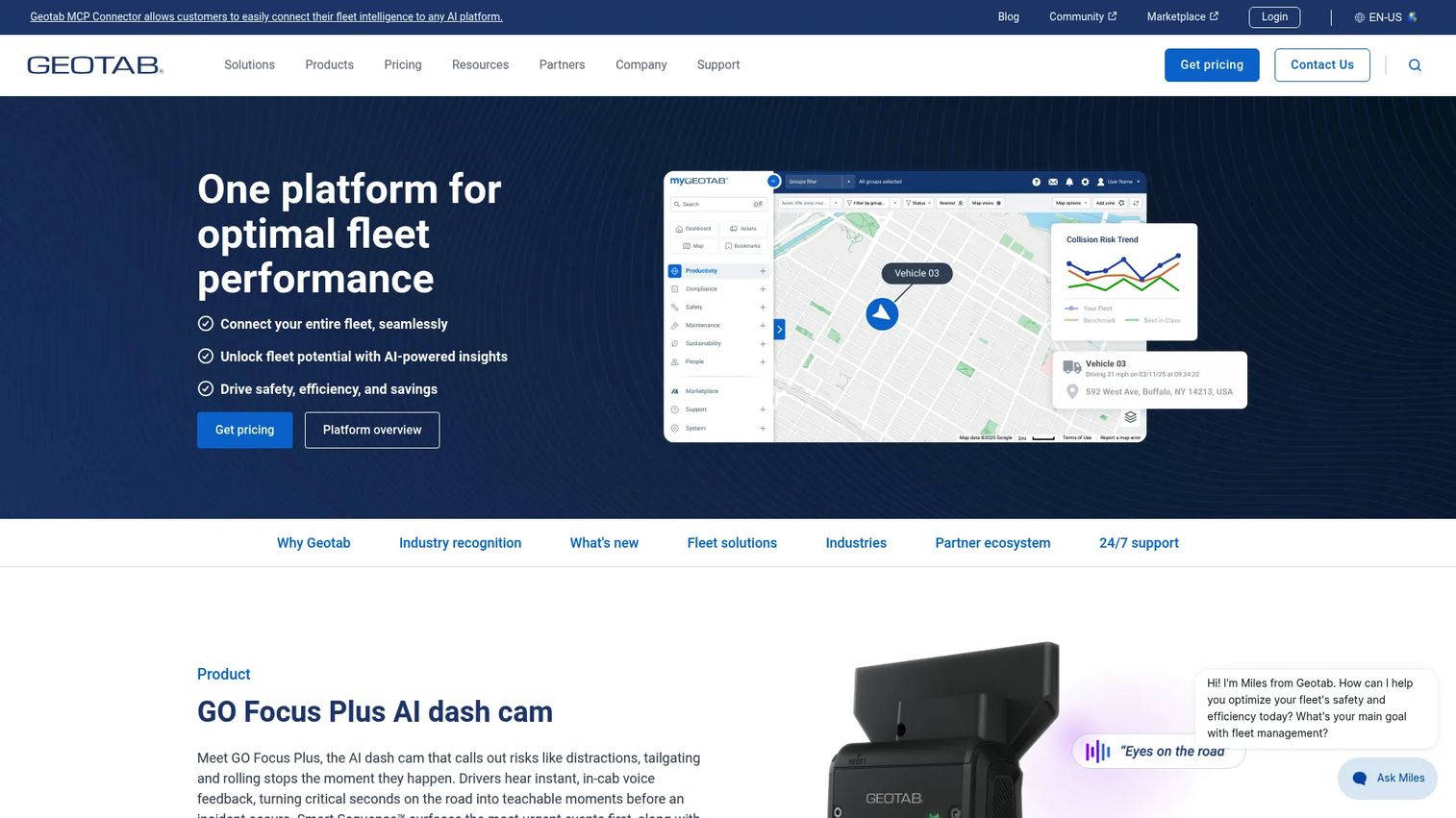
Geotab is the depth pick. It pairs driver safety monitoring with connected-vehicle telematics on an open platform, so large fleets can run safety, compliance, and maintenance from one place. The MyGeotab interface and Marketplace ecosystem let you add AI dash cams, insurance integrations, and third-party apps as your program grows. For fleets that outgrow single-purpose tools, this breadth is the draw.
On safety specifically, Geotab scores driver behavior, detects collisions, and supports incident reconstruction with event data. It layers predictive analytics to flag drivers trending toward risk, and its dash cam fleet safety integrations add video context to every flagged event. Coaching workflows and safety reporting close the loop, and the insurance positioning gives finance a number to take to the carrier.
Best for: Large or multi-site fleets that need telematics, safety, compliance, and maintenance in one platform.
Key strengths
- Driver safety scoring and behavior monitoring
- Collision detection and incident reconstruction
- Open platform with AI dash cam integrations
- Coaching workflows and safety reporting
- Predictive risk analytics
Why choose Geotab: Choose Geotab when your fleet is too complex for a point solution and you want one data layer feeding safety, maintenance, and insurance decisions. The tradeoff is that its breadth rewards teams willing to configure it, so smaller fleets may not use the full platform.
Geotab pricing: Geotab lists a GO Core Plan and a GO Plan, but public prices are not shown. Pricing runs through sales and authorized resellers, so budget on a per-unit quote plus hardware.
2. Samsara
Samsara is the video telematics pick for teams that want fast safety signal without building a custom reporting stack. Its connected operations platform combines real-time GPS tracking, AI dash cams, ELD compliance, and equipment monitoring. The UI is the differentiator here: managers get a clean view of live events and can act the same day rather than waiting for a report.
For fleet driver safety, Samsara's AI dash cams capture harsh events and distraction, then surface them with video for coaching. Real-time alerts fire the moment a risky event happens, and the driver coaching workflow turns each event into a documented conversation. Safety dashboards roll everything up so leadership sees trends, not noise. The dash cam fleet safety angle is central to Samsara's value.
Best for: Fleet-heavy organizations that want integrated video safety, compliance, and asset tracking with minimal setup overhead.
Key strengths
- AI dash cams with event capture
- Real-time in-cab and manager alerts
- Driver coaching workflows
- Safety dashboards and trend reporting
- ELD compliance and asset tracking
Why choose Samsara: Choose Samsara when you want strong video telematics and coaching that scales across a mixed fleet without a heavy analytics build. It fits teams that value usability and speed to signal over deep platform customization.
Samsara pricing: Samsara does not publish numeric pricing. Plans are quoted by fleet size and hardware, so request a quote for your vehicle count.
3. Motive
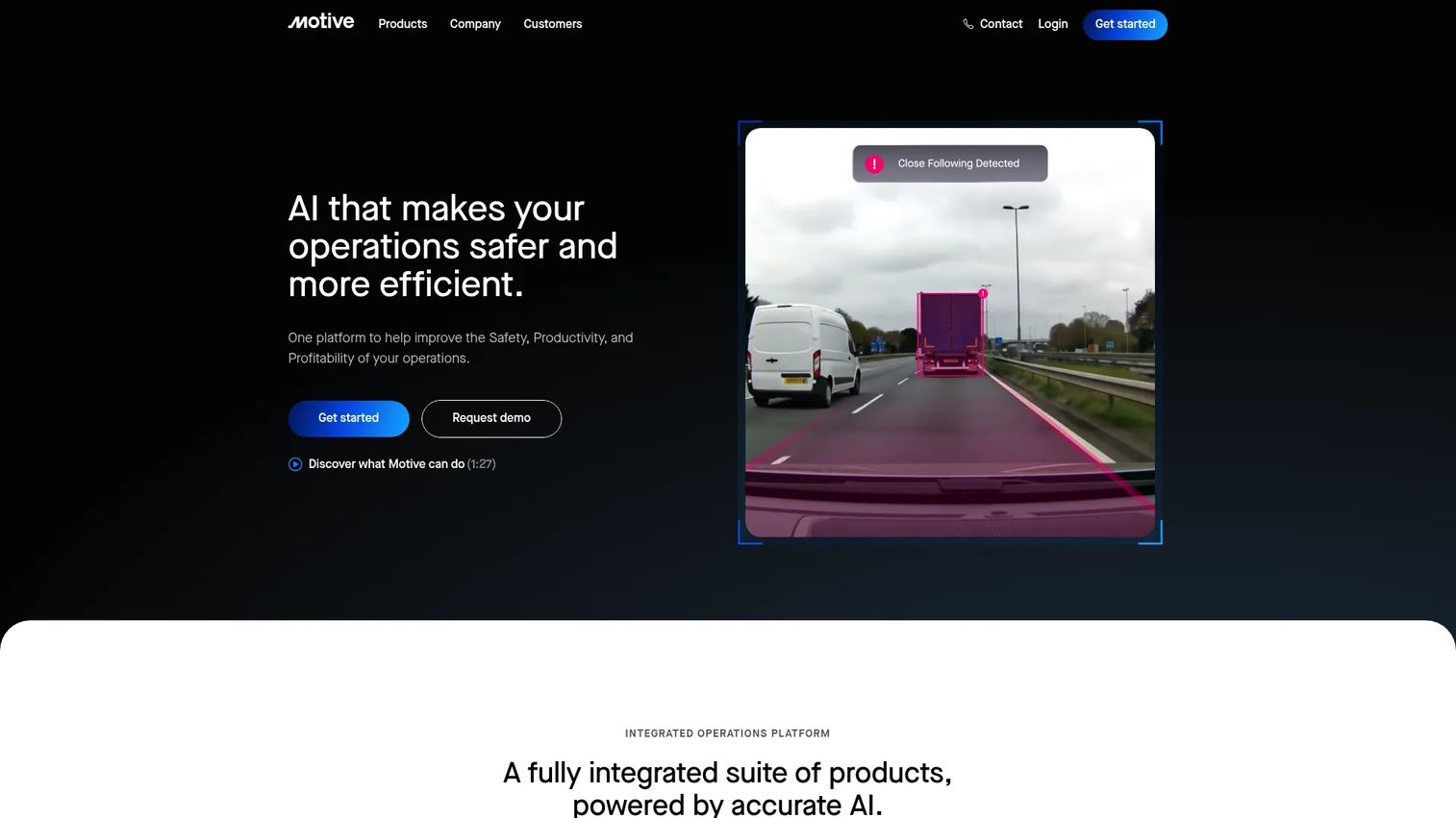
Motive is built for fleets that want AI to do the heavy lifting on safety operations. Its integrated platform covers telematics, AI dash cams, compliance, and spend management, but the safety story is where it earns a spot here. Motive's AI dash cams monitor driver behavior and flag risk automatically, cutting the manual review that bogs down safety teams.
The platform pairs collision alerts with driver coaching software and safety scoring, so a flagged event moves straight into a coaching queue. Reporting and trend visibility let ops leaders see which behaviors are improving and which drivers need attention. For fleets that need fast action on risky behavior and clean incident review, Motive's automation is the pitch.
Best for: Fleet operations leaders who want AI-driven detection and automated safety workflows across telematics, safety, and compliance.
Key strengths
- AI dash cams and driver behavior monitoring
- Automated collision alerts
- Driver coaching and safety scoring
- Reporting and trend visibility
- Compliance and maintenance workflows
Why choose Motive: Choose Motive when your safety team is stretched and you want AI to triage events before a human reviews them. It suits fleets that value speed and automation over hands-on configuration.
Motive pricing: Motive does not list public numeric pricing and directs prospects to request a demo. Expect a quote based on fleet size and the hardware you deploy.
4. Verizon Connect
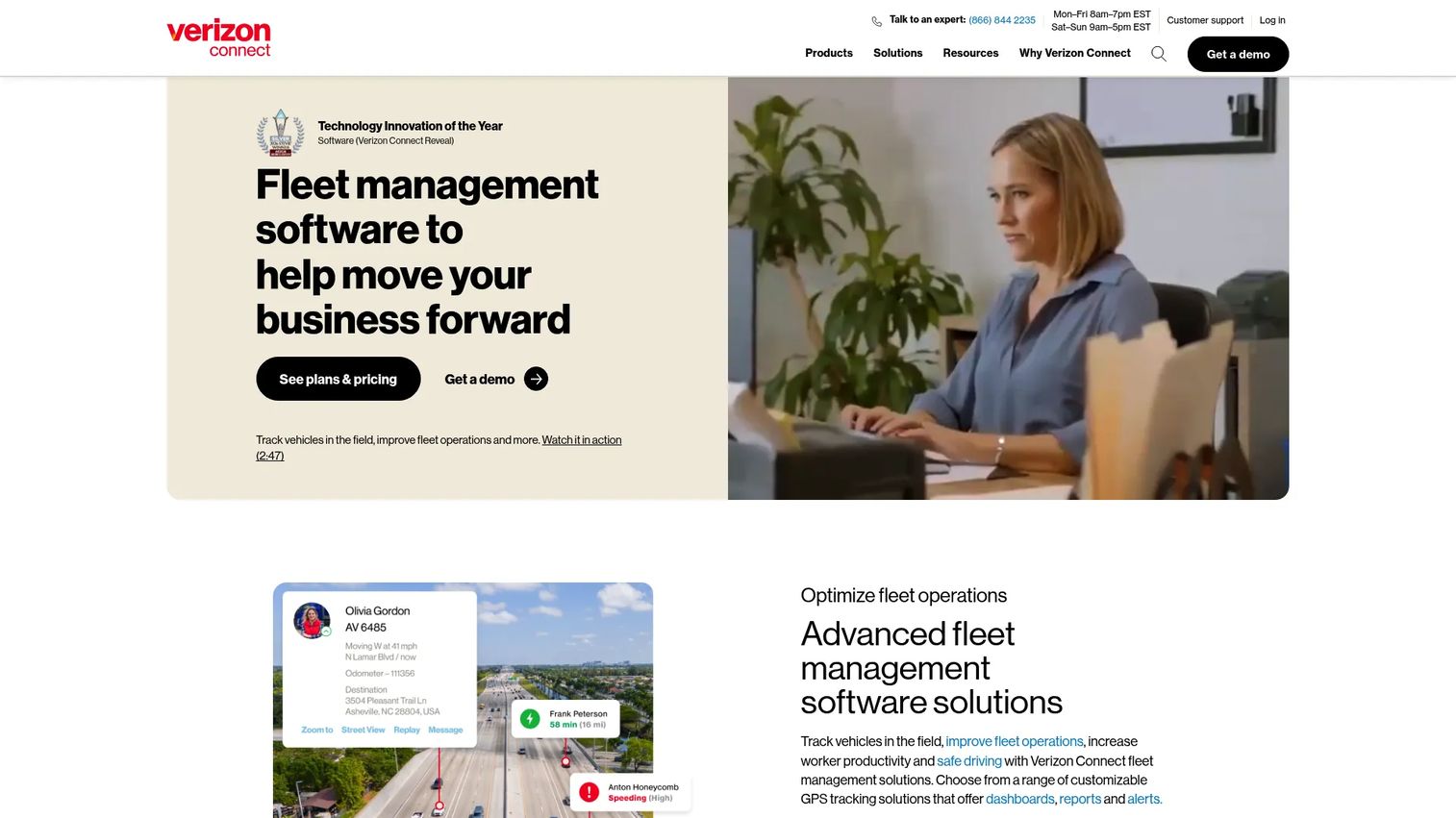
Verizon Connect is the pick when safety needs to sit inside a broader operations stack. It's a full fleet management platform: GPS tracking, asset tracking, compliance including HOS, ELD, and DVIR, plus dash cams and driver behavior monitoring. If your bottleneck is coordinating routing, compliance, and safety in one tool, this breadth is the reason to look.
On the safety side, Verizon Connect monitors driver behavior, fires alerts on risky events, and provides dash cam fleet safety footage for context. Reporting dashboards tie safety metrics to operational data, so you can see how driver behavior connects to routes and utilization. It fits teams that want fleet risk management as one workflow among many, not a standalone system.
Best for: Businesses that want vehicle tracking, compliance, and driver safety bundled inside one operations platform.
Key strengths
- GPS fleet tracking and asset tracking
- Safety monitoring and driver behavior alerts
- Compliance tools: HOS, ELD, DVIR
- Dash cams and video context
- Reporting dashboards across operations
Why choose Verizon Connect: Choose Verizon Connect when you want safety folded into a wider fleet operations stack rather than run as a dedicated safety platform. It fits teams managing routing, assets, and compliance who want one vendor.
Verizon Connect pricing: Verizon Connect does not display a public subscription price and notes bundles with minimum unit requirements. Pricing runs through a quote tied to your fleet size.
5. Lytx
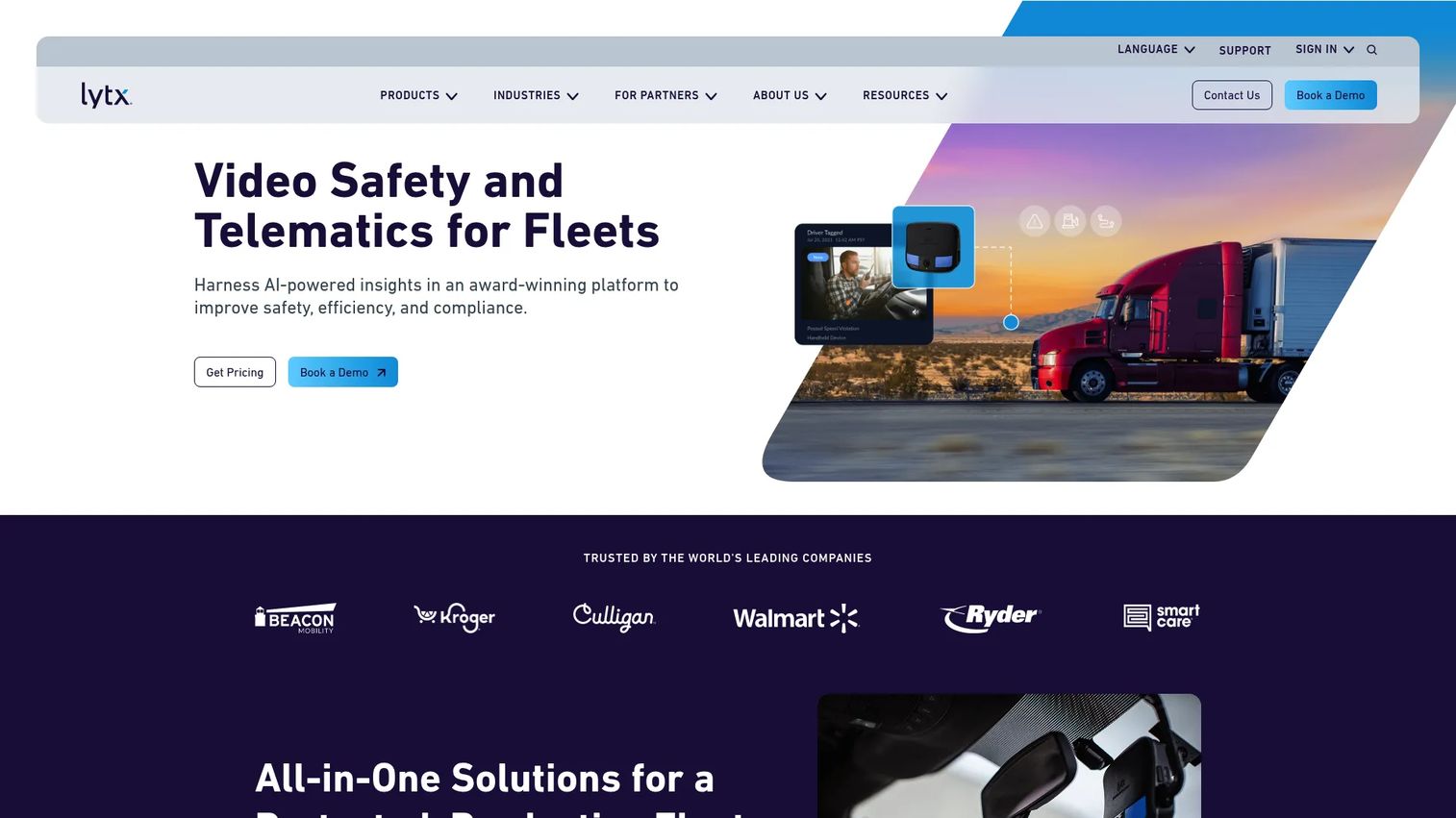
Lytx is the video-first pick for fleets that live and die by event review. It's a video safety and telematics platform built around AI-powered cameras, driver behavior detection, and coaching. For teams that care about accountability and high-visibility incident review, the camera evidence is the point.
Lytx's driver-facing and road-facing footage captures risky behavior and collisions, then feeds coaching workflows that hold drivers accountable with context. Its safety analytics surface patterns across the fleet, and the collision detection software captures the seconds around an event for incident reconstruction. That evidence resolves disputes and protects drivers who weren't at fault, which matters most in fleets with real litigation exposure.
Best for: Commercial fleets that prioritize video-based safety, coaching accountability, and detailed incident review.
Key strengths
- AI-powered video safety and event capture
- Driver behavior detection
- Coaching workflows with video context
- Event review and incident reconstruction
- Fleet-wide safety analytics
Why choose Lytx: Choose Lytx when video evidence and coaching accountability are your top priorities and you want a platform purpose-built around the camera. It fits fleets where incident review and driver exoneration drive the safety program.
Lytx pricing: Lytx shows a "Get Pricing" flow rather than public rates. Expect a quote based on camera count, vehicles, and program scope.
6. Teletrac Navman
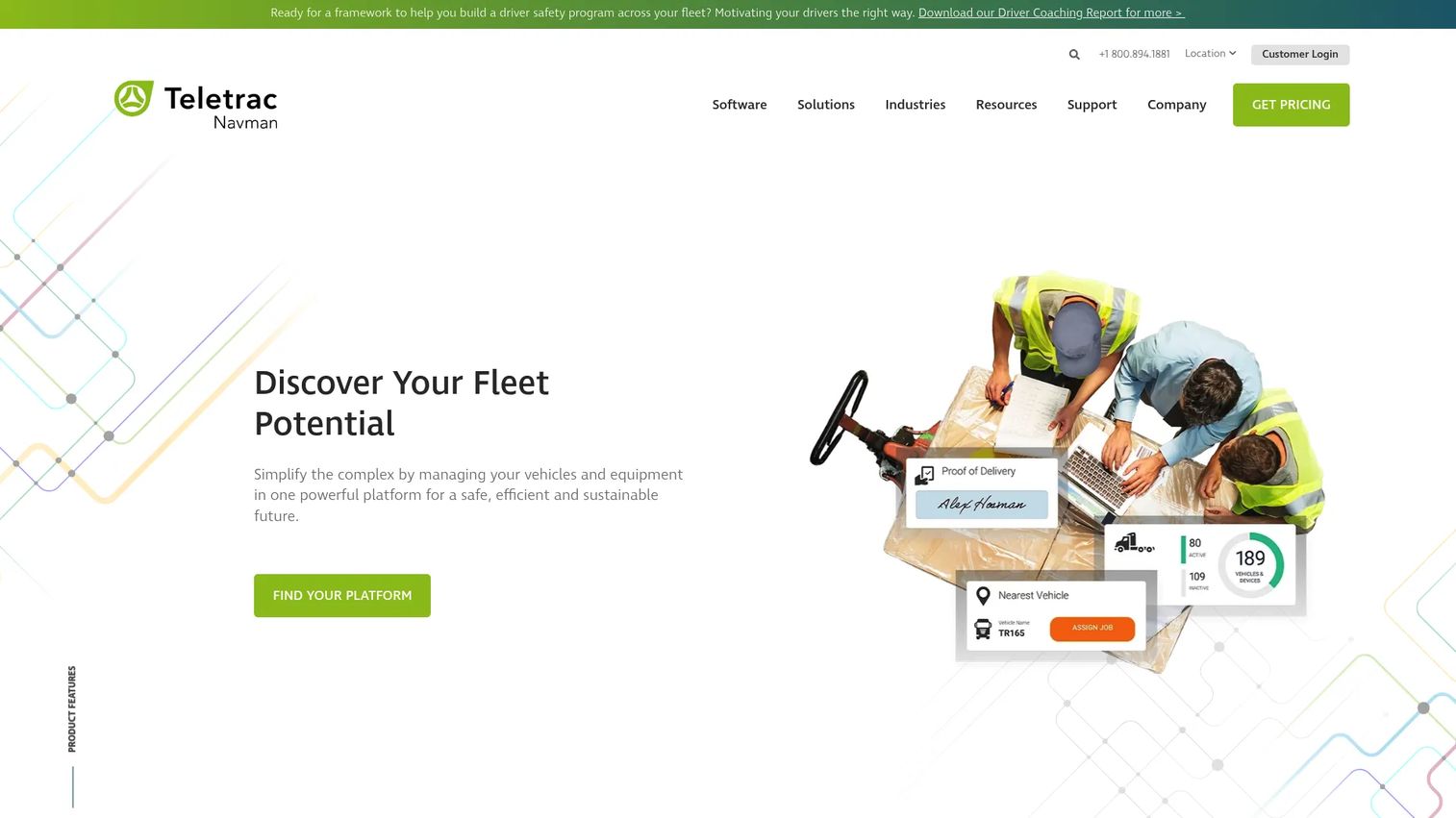
Teletrac Navman is a telematics and fleet management platform for teams that need risk visibility alongside operational control. It covers GPS fleet tracking, ELD and compliance tools, and maintenance planning with asset visibility. Safety sits inside that broader picture, so it fits fleets evaluating fleet telematics safety as one requirement among several.
On monitoring, Teletrac Navman gives real-time vehicle tracking and driver safety visibility, with alerting on events that matter. Its compliance tooling supports the regulatory side of a safety program, and reporting ties activity back to fleet-wide trends. For operators who want telematics, compliance, and safety from a single vendor, it's a practical evaluation candidate.
Best for: Fleet operators who need telematics, compliance, and asset tracking with safety visibility built in.
Key strengths
- Real-time GPS tracking and monitoring
- Driver safety visibility and alerts
- ELD and compliance tools
- Maintenance planning and asset visibility
- Fleet-wide reporting
Why choose Teletrac Navman: Choose Teletrac Navman when compliance and telematics anchor your requirements and you want safety visibility layered on top. It fits operators who value operational control across tracking, maintenance, and compliance.
Teletrac Navman pricing: Teletrac Navman uses a "Get Pricing" flow and a product builder rather than public rates. Pricing comes as a quote tied to your configuration and fleet size.
7. Fleetio
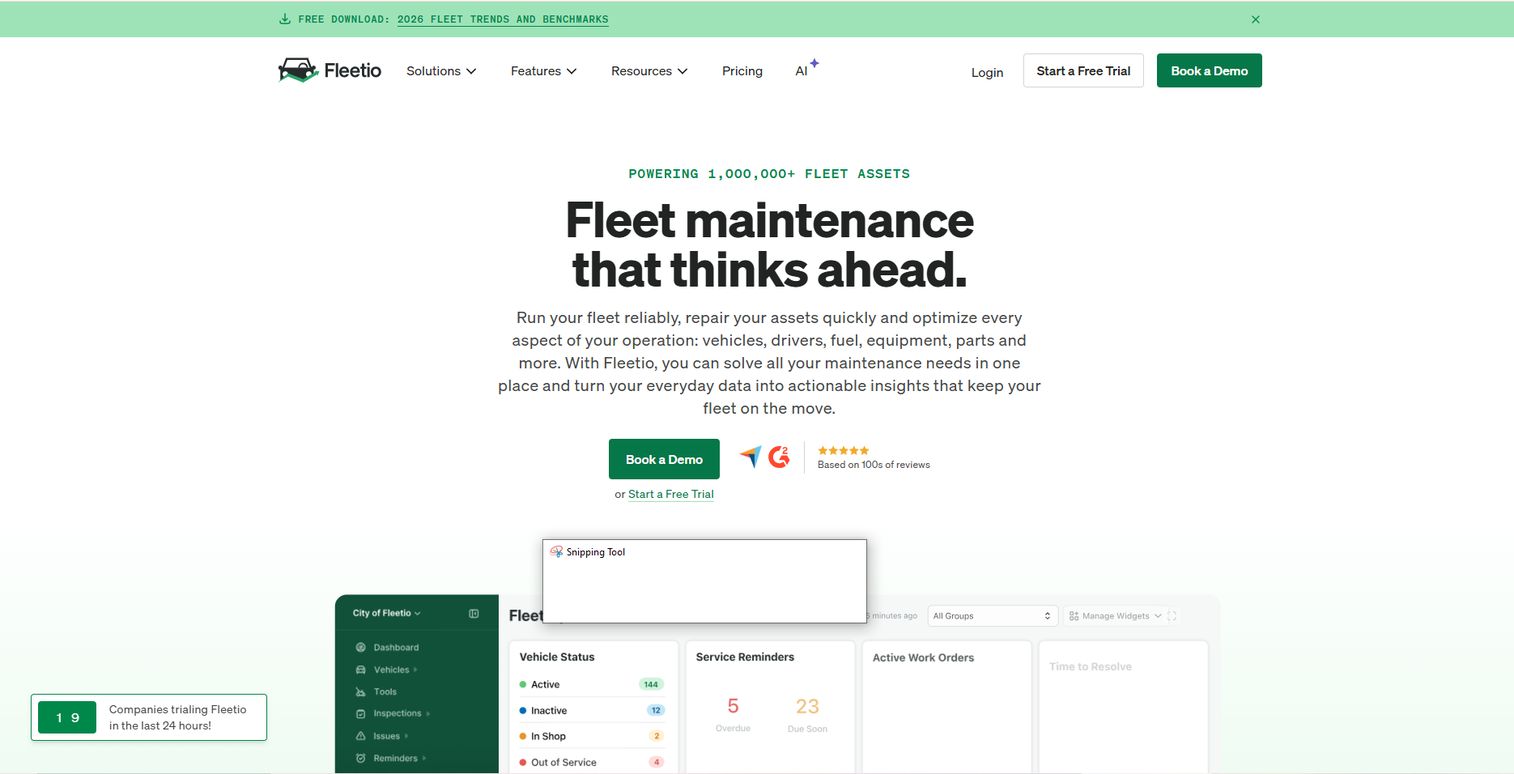
Fleetio is the pick when your safety lever is maintenance discipline, not cameras. It's a fleet maintenance and asset management platform built around inspections, work orders, preventive maintenance, and parts inventory. The safety angle is prevention: a truck that passes inspection and gets serviced on schedule is a truck that doesn't fail on the road.
Fleetio's driver inspection workflows catch defects before they become incidents, and its preventive maintenance scheduling keeps vehicles roadworthy. The Fleetio Go mobile app lets drivers run inspections and report issues from the cab, feeding a maintenance workflow that reduces mechanical risk. Reporting and automation tie it together, so a failed inspection triggers a work order instead of sitting in someone's inbox. It's not a video safety platform, and it doesn't pretend to be, but for ops-heavy fleets, maintenance is a real safety layer.
Best for: Ops-heavy fleets where preventive maintenance and inspection discipline are the primary risk reducers.
Key strengths
- Preventive maintenance scheduling
- Driver inspection workflows
- Work orders and parts inventory
- Fleetio Go mobile app for drivers
- Reporting, dashboards, and automation
Why choose Fleetio: Choose Fleetio when mechanical failures and missed inspections drive your risk more than driver behavior does. It fits maintenance-heavy fleets that want safety through operational prevention rather than in-cab video.
Fleetio pricing: Fleetio starts at $4 per vehicle per month on the Essential plan billed annually, or $5 billed monthly. Professional is $7 per vehicle per month and Premium is $10 per vehicle per month, both billed annually. A 14-day free trial is available, and per-vehicle rates vary by fleet size band and contract term.
8. Azuga
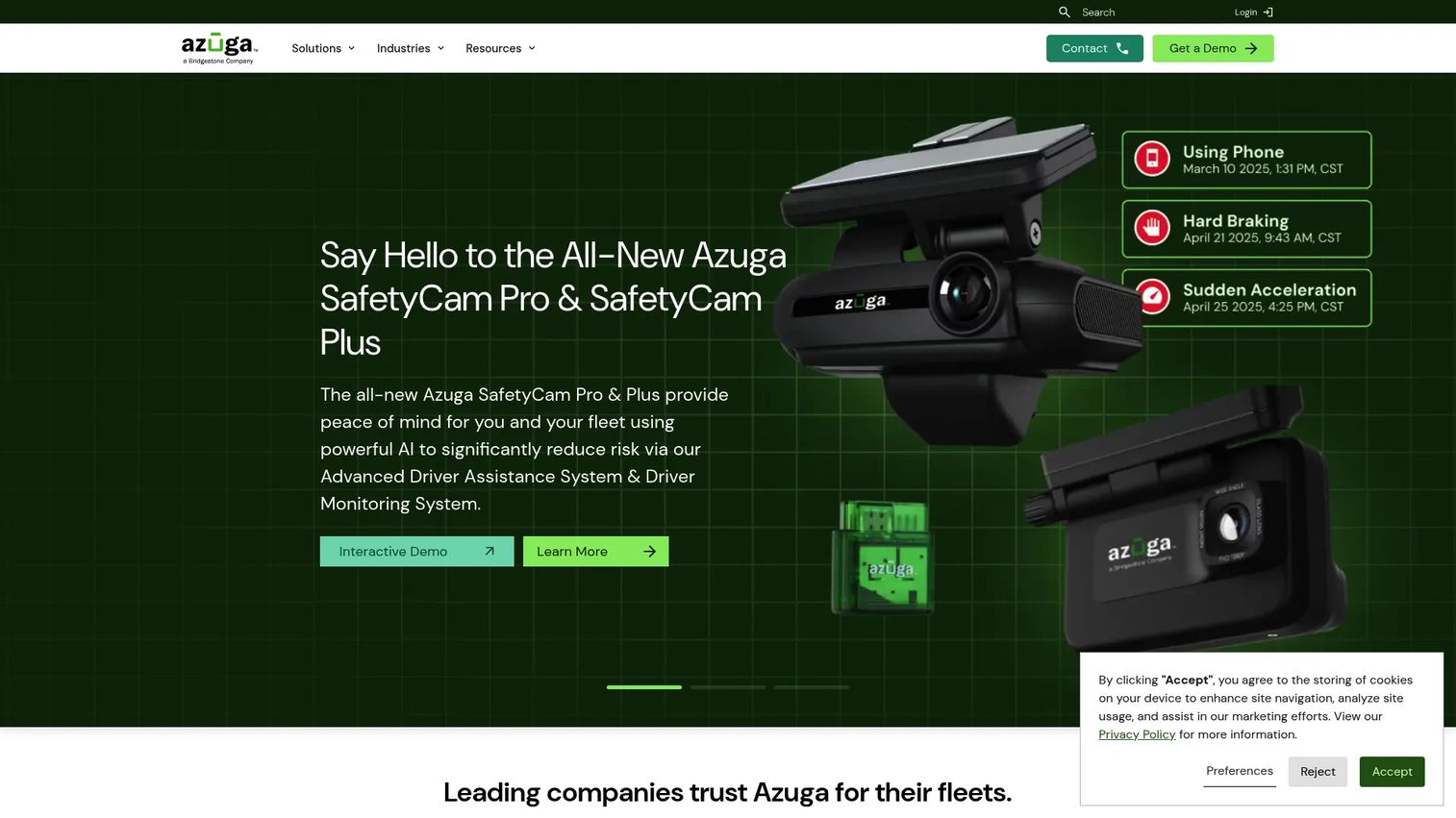
Azuga is the simpler-deployment pick for smaller and mid-sized fleets that want practical driver visibility without an enterprise rollout. It combines GPS fleet tracking with driver scoring, rewards, geofencing, and alerts. The rewards angle is distinctive: instead of only flagging bad behavior, Azuga gamifies safe driving to keep drivers engaged with their scores.
On safety, Azuga monitors driver behavior, assigns safety scores, and alerts on risky events. Its SafetyCam AI add-on brings dash cam capability for fleets that want video, and geofencing catches out-of-bounds activity. The setup is built to be approachable, which matters for SMB and mid-market teams without a dedicated safety department. For fleets that want driver scoring, coaching signals, and rewards in one place, Azuga fits.
Best for: SMB and mid-market fleets that want GPS tracking, driver scoring, and rewards with a straightforward rollout.
Key strengths
- GPS fleet tracking
- Driver safety scores and rewards
- Geofencing and event alerts
- SafetyCam AI dash cam add-on
- Approachable setup for smaller teams
Why choose Azuga: Choose Azuga when you want driver behavior monitoring and coaching signals without the complexity of an enterprise platform. It fits smaller fleets that value ease of use and driver engagement through rewards.
Azuga pricing: Azuga publishes three plans: BasicFleet at $25 per vehicle per month, SafeFleet at $30, and CompleteFleet at $35. A SafetyCam AI add-on starts at $41.99 per month. There is no free tier.
What to look for when choosing fleet safety software
Detection depth and accuracy
Look at how the platform detects risk, not just that it does. AI dash cams that flag distraction and drowsiness catch more than accelerometer-only harsh-event detection. Ask about false-positive rates, because a system that cries wolf trains supervisors to ignore alerts. Collision detection software should capture the seconds before and after an event for real incident reconstruction.
Coaching workflow
Detection without coaching is just data. The best driver coaching software turns each flagged event into a documented conversation, assigns it to a supervisor, and tracks whether behavior changed. Check whether coaching is built in or bolted on, and whether drivers get in-cab feedback in the moment, not a lecture three weeks later.
Reporting and proof
You'll need to prove ROI to finance and your insurer. Look for safety dashboards that show trend lines, per-driver scoring, and exportable reports. Predictive analytics that flag drivers trending toward risk add real value. If you can't export a clean before-and-after, you can't defend the spend.
Compliance and integrations
Compliance tracking (HOS, ELD, DVIR) matters if you run regulated vehicles. Check that the platform integrates with your existing fleet, maintenance, and HR systems so safety data doesn't live in a silo. Insurance integrations that feed telematics data to carriers can directly lower premiums.
Rollout and fit
A platform your team won't use is wasted spend. Match the tool to your fleet size and your bottleneck. Large, complex fleets reward deep platforms; smaller teams benefit from approachable setup and per-vehicle pricing you can budget without a sales call.
Conclusion
Pick based on your primary bottleneck, not the longest feature list.
Geotab wins for depth: large, complex fleets that need predictive safety and open telematics in one platform. Samsara and Motive lead on video telematics and coaching, with Motive leaning harder into AI automation. Verizon Connect fits teams that want safety inside a broad operations stack alongside routing and compliance. Lytx is the choice when video evidence and coaching accountability drive your program. Fleetio owns the maintenance-linked safety angle for ops-heavy fleets. Azuga fits smaller teams that want driver scoring and rewards with a simple rollout.
The next step is practical: shortlist two or three tools and demo them against the same scenario. Run a real risky-driving event through each and watch how fast it surfaces, how the coaching workflow handles it, and what the report looks like afterward. That head-to-head reveals more than any spec sheet, and it tells you which platform will actually cut collisions, coaching load, and premiums. Insurance savings alone often cover the software, so weigh the fleet risk management payback, not just the sticker price.
FAQs
At minimum, expect driver behavior monitoring, real-time alerts, dash cams with video review, safety scoring, coaching workflows, collision detection, and reporting dashboards. Strong platforms add predictive analytics and incident reconstruction. The best driver safety software connects detection to coaching so a flagged event drives a documented behavior change, not just a data point.
Telematics tells you where a vehicle is and how it runs: location, fuel, engine data, and utilization. Fleet safety software focuses on how the person drives it, scoring behavior and driving coaching. Most modern platforms bundle both, but the safety layer is what turns raw fleet telematics safety data into fewer collisions.
Yes, when paired with coaching. Dash cam fleet safety works because video gives context that accelerometer data can't, and it exonerates drivers who weren't at fault. But a camera that only records footage is a passive tool. The improvement comes from using clips in coaching conversations and reviewing incidents fast enough to change behavior.
Driver coaching software takes a flagged event, such as a harsh brake or distraction alert, and routes it to a supervisor as a coaching task. The supervisor reviews the video or data, has a documented conversation with the driver, and the system tracks whether the behavior improves. Some platforms deliver in-cab feedback in real time so drivers self-correct.
Yes. Collision detection software captures the seconds before and after a crash, giving you incident reconstruction that resolves disputes and speeds claims. Video evidence protects drivers who weren't at fault and can lower settlement costs. Some platforms feed telematics data directly to insurers, which can reduce premiums as your safety scores improve.
Often, yes. One avoided collision can cover years of subscription cost. Smaller fleets benefit from platforms with per-vehicle pricing and approachable setup rather than enterprise deployments. Focus on driver scoring, alerts, and basic coaching first, then add cameras if your risk profile or insurer justifies the spend.
Track collision frequency, claim costs, and insurance premiums before and after rollout, plus safety score trends per driver. Coaching load and incident response time are secondary signals. The clearest proof is a before-and-after on loss runs and premiums, which is why exportable safety dashboards and predictive analytics matter when you defend the spend to finance.
Incident reconstruction is the ability to replay the moments around a collision using captured video, telematics, and event data. It shows speed, braking, following distance, and what the driver was doing before impact. That reconstruction resolves fault disputes, supports insurance claims, and turns a single event into a coaching lesson for the whole fleet.