You set a price on Monday. By Wednesday, three competitors have undercut you, a supplier cost has moved, and a slow-moving SKU is eating shelf space. By Friday you are reacting, not deciding. That gap between what the market is doing and what your prices say is where margin quietly leaks.
Most retail teams know this. The fix is not "watch competitors harder." It is putting a system between market signal and shelf price, so the decision happens with data instead of a gut call at month-end. That is what retail pricing software does. The category is growing fast for a reason: the global retail pricing software market is projected to climb from USD 13.61 billion in 2026 to USD 19.39 billion by 2030, a 9.3% CAGR, according to Research and Markets (2024).
For a product marketing manager or GTM lead, this matters in a second way. Pricing is a positioning surface. The price you show is part of the story you tell, and inconsistent pricing across channels reads as a company that does not know its own value. Choosing the right price optimization software for retail is partly an operations decision and partly a narrative one. If you build go-to-market assets, you already know the discipline of keeping a message consistent across every touchpoint, the same way you might study analytics platforms that drive ROI or sharpen launch storytelling with AI writing tools for marketers. Pricing is no different. This guide ranks eight retail pricing tools so you can move from category education to a shortlist without wading through vendor decks.
What's inside
This guide is built for retail operators, pricing leaders, ecommerce teams, and the GTM stakeholders who sit next to them. We looked at eight retail pricing solutions and ranked them by how well each fits a specific job: competitor price tracking, dynamic pricing for retail, enterprise-grade retail price optimization, and lifecycle pricing across base, promo, and markdown. Selection criteria were four things that actually decide fit: use-case match, pricing transparency, data and modeling depth, and integration reach across your stack. Pricing and G2 ratings reflect verified sources as of mid-2026. Where a vendor gates pricing behind a quote, we say so plainly instead of guessing.
TL;DR
- Best for fast competitor price tracking on a budget: Price2Spy, with public entry pricing and URL-based monitoring.
- Best for SMB teams wanting simple repricing: Prisync, strong automation with a clear three-tier price.
- Best for omnichannel dynamic pricing: Omnia Retail, with a visual pricing logic editor and enterprise reach.
- Best for AI-driven price optimization: Competera, built for elasticity-based optimization at enterprise scale.
- Best for full lifecycle pricing (base, promo, markdown): Revionics, with strategic pricing architecture.
- Best for predictive, forecast-led pricing: 7Learnings, leaning hard into demand modeling.
What retail pricing software does and why it matters now
Retail pricing software is a category of tools that collect market and demand data, then recommend or automatically set retail prices to protect margin, win share, and keep pricing consistent across channels. Some products focus on watching the market. Others focus on optimizing the price itself. The strongest retail pricing optimization software does both and ties the decision to a forecast.
The category splits into a few recognizable layers. Knowing which layer you need is most of the buying decision.
- Price monitoring and competitor price tracking: automated collection of competitor prices, stock status, and promotions across sites and marketplaces.
- Dynamic pricing for retail: rules and automation that adjust prices in response to competitor moves, stock, demand, or time.
- Retail pricing analytics: dashboards, elasticity models, and reporting that explain why a price should change.
- Price optimization: AI and demand modeling that recommend the profit- or revenue-maximizing price per product.
- Markdown optimization: sell-through-aware logic that times and sizes discounts to clear inventory without crushing margin.
Two shifts make this urgent in 2026. First, AI pricing is now mainstream, not experimental: AI-driven dynamic pricing accounts for 47.4% of pricing strategy share, per Mordor Intelligence (2024). Second, deployment has gone cloud-native. Cloud represents 63.7% of the price optimization software market, the same source reports, which lowers the bar to adopt a serious retail price management software platform without a heavy IT lift. Retail and ecommerce already drive 30.2% of price optimization demand and are growing at 17.4% CAGR through 2031.
When to use retail pricing software
React to competitor moves without manual checking
If your team is opening competitor tabs every morning, you have outgrown the spreadsheet. Price monitoring and competitor price tracking tools watch the market continuously and alert you when a key SKU shifts. This is the entry point for most retailers and the fastest path to a visible win.
Set prices dynamically across a large catalog
When you manage thousands of SKUs across multiple channels, manual repricing does not scale. Dynamic pricing for retail applies rules and automation so every product responds to the market in near real time. This is where omnichannel pricing consistency starts to matter, because a price that is right on the site but stale in a marketplace listing erodes trust.
Optimize for margin, not just match the market
Matching competitors is defensive. Optimization is offensive. AI-led price optimization software for retail uses elasticity and demand signals to find the price that maximizes margin or revenue per product, then explains the recommendation. Lifecycle tools extend this to promotions and markdown optimization, timing discounts against sell-through targets so you clear inventory without giving away margin.
Comparison table
Here is the shortlist at a glance. Use it to narrow to two or three retail pricing tools, then read the full sections below. Pricing and G2 ratings are verified to mid-2026; where a vendor only quotes custom pricing, the table says so.
| # | Product | Intent | Key use case | Pricing | G2 rating |
|---|---|---|---|---|---|
| 1 | Prisync | Monitoring + repricing | Competitor price tracking and automated repricing for SMB ecommerce | From $99/mo | 4.7/5 |
| 2 | Price2Spy | Monitoring + repricing | URL-based price monitoring and alerts for broad catalogs | From $39.95/mo | 4.8/5 |
| 3 | Omnia Retail | Dynamic pricing | Omnichannel dynamic pricing with visual logic editor | From €399/mo | 4.4/5 |
| 4 | PriceShape | Monitoring + dynamic pricing | Competitor monitoring with pricing recommendations | From €599/mo | 4.7/5 |
| 5 | Competera | AI price optimization | Elasticity-based optimization for enterprise retail | Custom pricing | 4.9/5 |
| 6 | Revionics | Lifecycle optimization | Base price, promotions, and markdown optimization | Custom pricing | 4.5/5 |
| 7 | BlackCurve | Dynamic pricing | Competitor tracking and dynamic pricing automation | From £199/mo | 4.8/5 |
| 8 | 7Learnings | Predictive optimization | Forecast-led predictive price optimization | Custom pricing | 4.5/5 |
1. Prisync
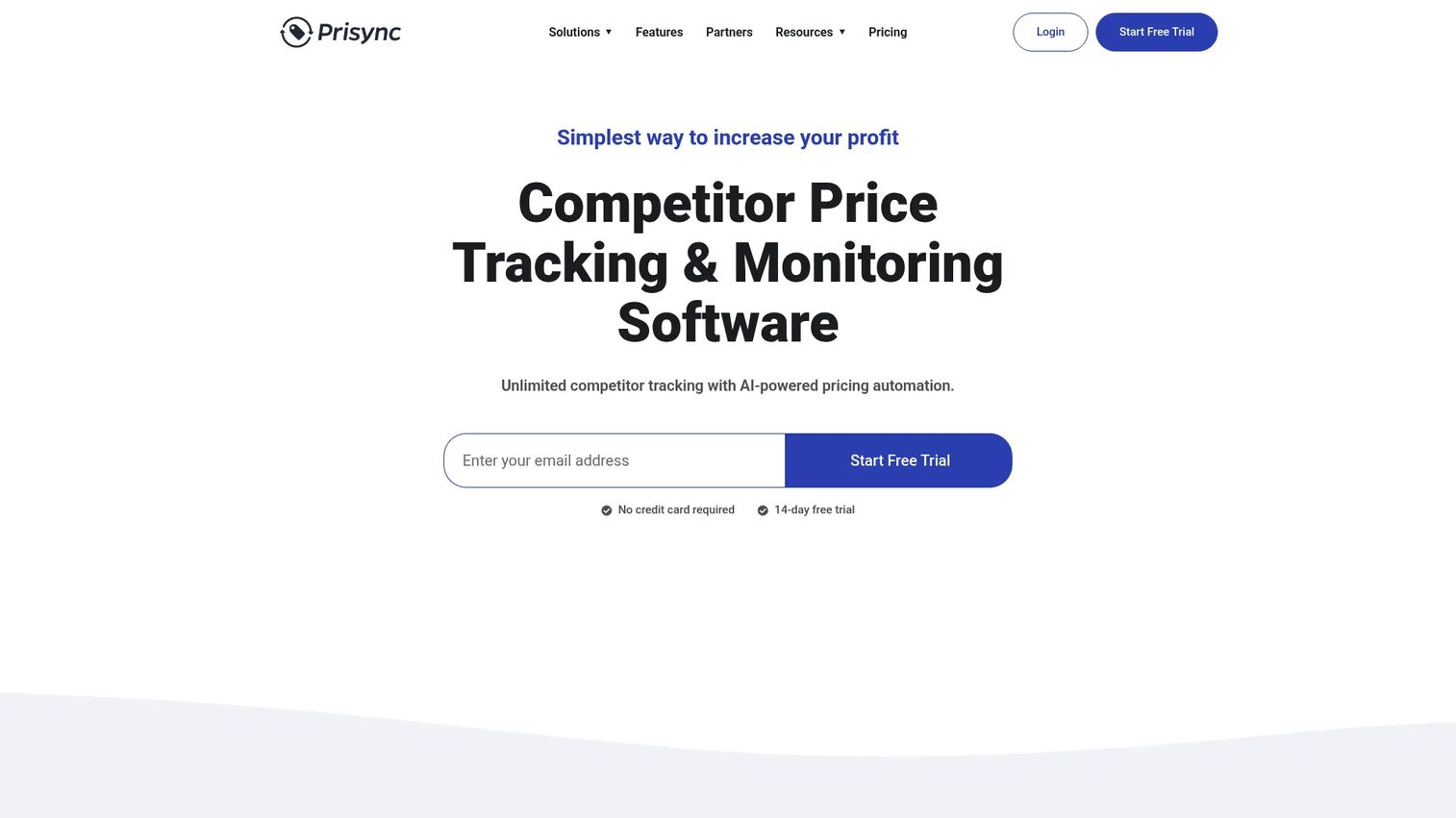
Prisync is competitor price tracking and dynamic pricing software built for ecommerce merchants and manufacturers who want results fast without an implementation project. It watches competitor prices and stock, then applies repricing rules so your catalog stays in position automatically. For a smaller team, the appeal is simple: you can stand it up, point it at competitors, and start seeing where you are over- or under-priced within days, not quarters.
The product keeps the workflow tight. You track competitor prices and stock availability, set dynamic pricing rules, and let the system reprice on your terms. That keeps human attention on strategy rather than data entry, which is exactly what a lean retail team needs.
Best for: Ecommerce teams that need competitor price monitoring and automated repricing without heavy setup.
Key strengths
- Competitor price tracking: Continuous monitoring of competitor prices across the sites that matter to you.
- Dynamic pricing rules: Rule-based repricing that adjusts your catalog as the market moves.
- Price and stock monitoring: Visibility into both pricing and stock availability so you react to the full picture.
Why choose Prisync: Prisync suits retailers who want a focused monitoring-and-repricing engine rather than a sprawling enterprise platform. The three-tier pricing is public and predictable, which matters when you need to justify the spend internally. If your job is to defend margin on a finite catalog, this is a clean, fast fit.
Prisync pricing: Prisync uses three published plans: Professional at $99 per month, Premium at $199 per month, and Platinum at $399 per month, per Capterra (June 2026). There is a 14-day free trial and no permanently free version. Confirm current pricing on the vendor site before you commit, as published tiers can shift.
2. Price2Spy
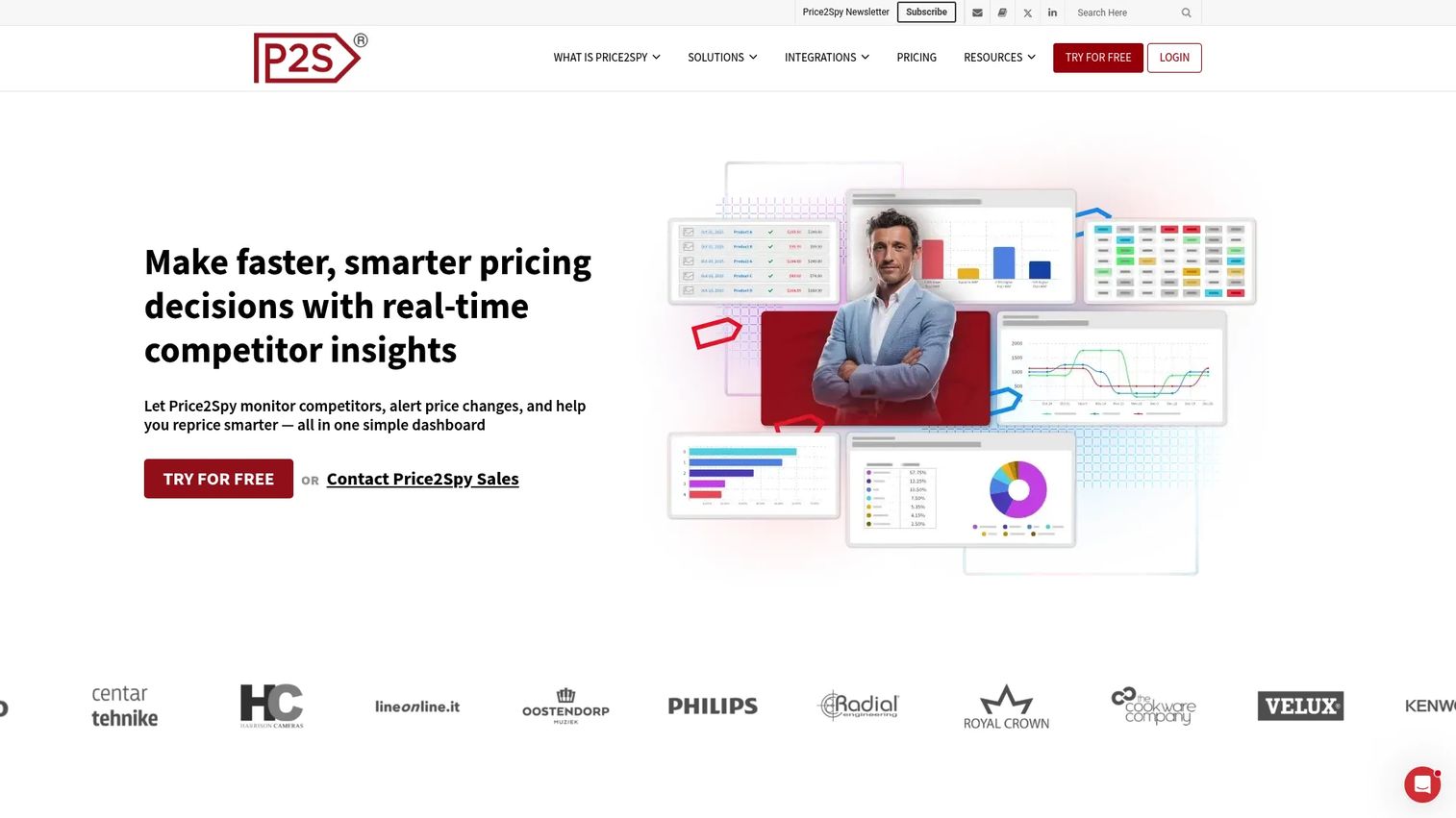
Price2Spy is price monitoring, comparison, and repricing software for ecommerce brands and retailers that need to track a lot of URLs without paying enterprise rates. It handles URL-based monitoring well, surfaces market analytics, and pushes pricing alerts when something moves, which is the core loop most ecommerce teams want before they layer on automation.
The value here is reach for the money. You can monitor competitors at scale, read market analytics reports to spot patterns, and work from a pricing dashboard that keeps the team on the same page. For a catalog-heavy retailer, that breadth of coverage is the point.
Best for: Ecommerce teams needing competitor price monitoring and repricing across broad catalogs.
Key strengths
- Price monitoring: Track competitor prices across a high volume of product URLs.
- Market analytics reports: Spot pricing patterns and positioning gaps over time.
- Pricing dashboard: A shared view that keeps pricing decisions visible across the team.
Why choose Price2Spy: The low entry price and URL-based model make Price2Spy a strong starting point when you need wide coverage before committing to a heavier optimization platform. It is the tool for teams whose first problem is "we cannot see the market clearly," not "we need an AI to set every price."
Price2Spy pricing: Price2Spy publishes its tiers openly. Starter begins at $39.95 per month for up to 500 URLs, Basic at $157.95 per month for up to 2,000 URLs, and Premium is custom-quoted, per the vendor pricing page (June 2026). A 14-day free trial is available; there is no permanently free plan.
3. Omnia Retail
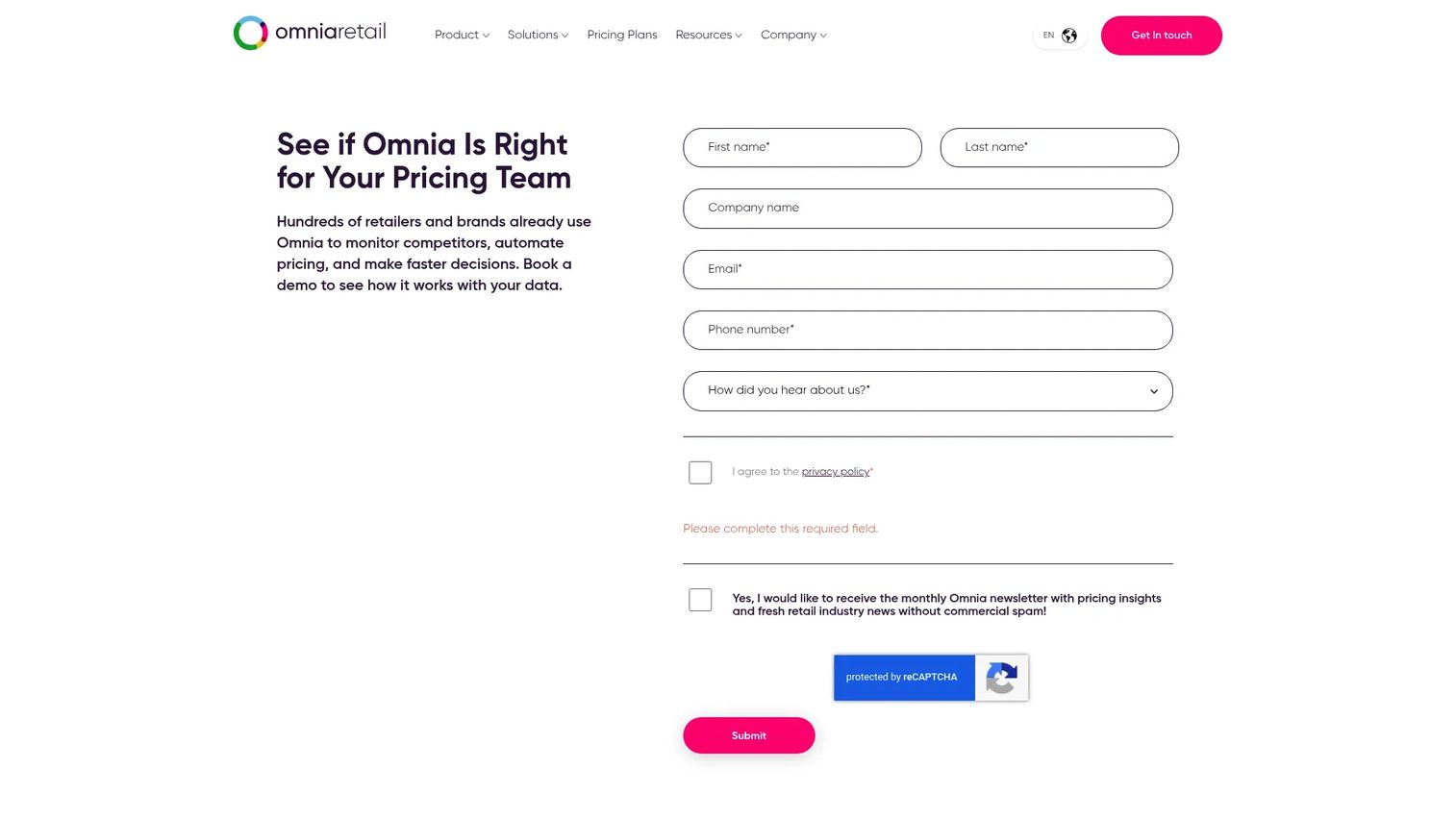
Omnia Retail is enterprise pricing software for retailers and brands, focused on price monitoring, dynamic pricing, and pricing automation. Its standout is the Pricing Strategy Tree, a visual logic editor that lets pricing teams build and audit complex rules with explainability built in. That matters when you need to show a stakeholder exactly why a price moved.
The platform spans the work a serious pricing team does day to day. It runs AI price monitoring across competitors, resellers, or any domain, executes AI dynamic pricing automatically, and gives you a visual rule editor with an audit trail. That combination is what makes it a real omnichannel pricing engine rather than a monitoring tool with rules bolted on.
Best for: Retailers and DTC brands needing enterprise-scale pricing automation and competitor monitoring.
Key strengths
- AI price monitoring: Track prices across competitors, resellers, or any domain you specify.
- AI dynamic pricing: Automated price execution that responds to the market without manual steps.
- Pricing Strategy Tree: A visual logic editor with audit trail and explainability for every rule.
Why choose Omnia Retail: Omnia fits teams that want automation they can explain and defend, not a black box. The visual logic editor makes pricing strategy reviewable, which is gold for cross-functional alignment when finance, merchandising, and marketing all have a stake in the price.
Omnia Retail pricing: Omnia publishes an SMB tier starting at €399 per month and an enterprise tier quoted per company, per the vendor pricing page (June 2026). There is no free tier. The published SMB entry point makes it more accessible than most enterprise pricing platforms, which usually hide everything behind a sales call.
4. PriceShape
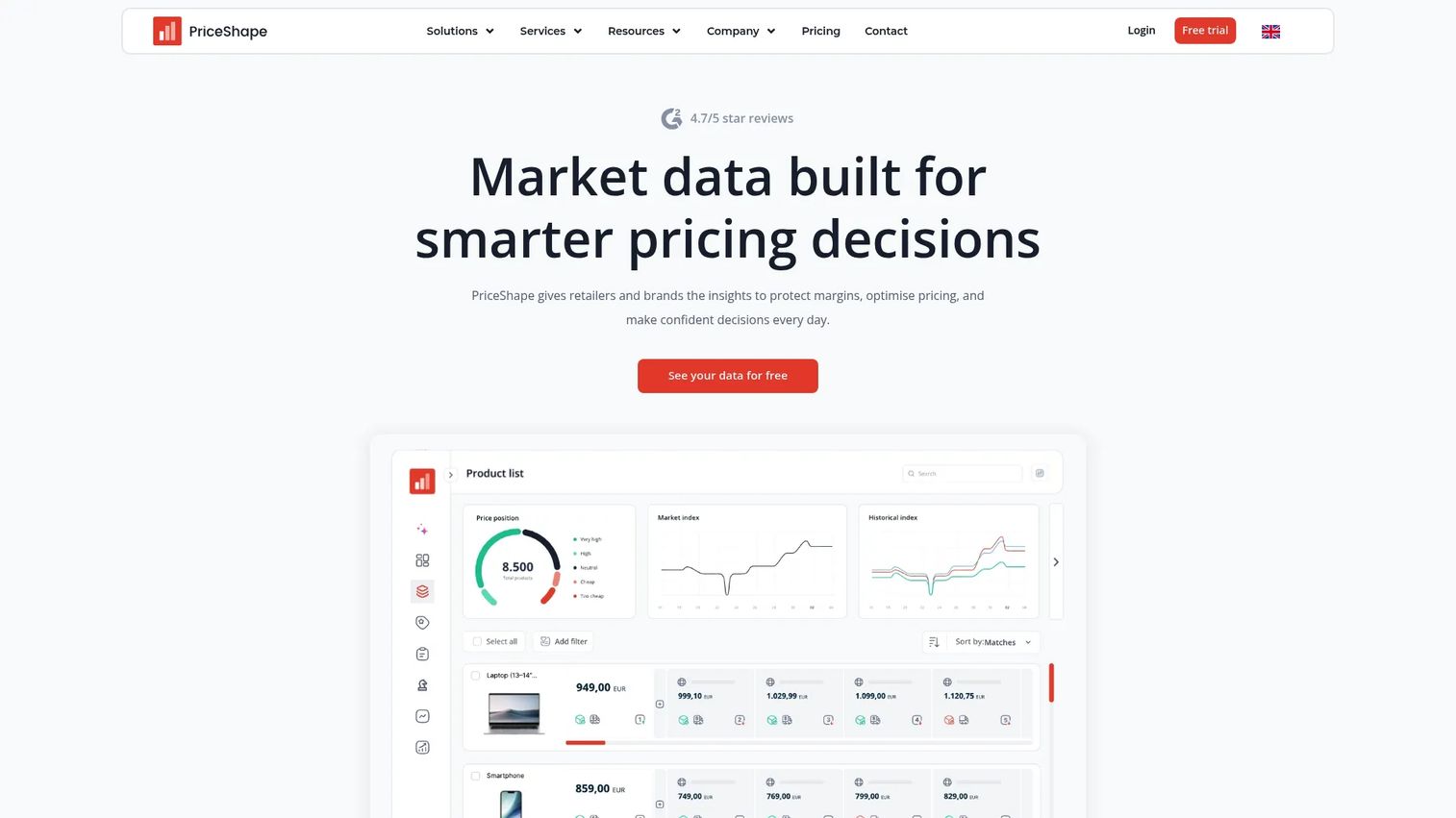
PriceShape is a SaaS platform for competitor price monitoring, dynamic pricing, and market insights aimed at retailers and brands. It pairs market and competitor monitoring with pricing recommendations, so you are not just seeing the market, you are getting a suggested move. That bridge from data to decision is what separates it from pure monitoring tools.
The platform covers the full loop a growing retailer needs. It monitors competitor prices, applies intelligent dynamic pricing, and surfaces market insights and product performance so you can see which SKUs are pulling weight. For teams scaling past simple monitoring, that recommendation layer earns its keep.
Best for: Ecommerce retailers and brands that need competitor monitoring and pricing optimization in one place.
Key strengths
- Competitor price monitoring: Continuous tracking of competitor pricing across your market.
- Dynamic and intelligent pricing: Rule-based and recommendation-driven price adjustments.
- Market insights and product performance: Visibility into how individual products perform so you prioritize the right ones.
Why choose PriceShape: PriceShape suits retailers who have outgrown plain monitoring and want recommendations without jumping straight to enterprise optimization. The 14-day free trial with no credit card lowers the risk of trying it on a real catalog.
PriceShape pricing: PriceShape publishes a Growth plan starting at €599 per month, with Enterprise custom-quoted, per the vendor pricing page (June 2026). A 14-day free trial is available with no credit card required, which makes it easy to validate fit before committing.
5. Competera
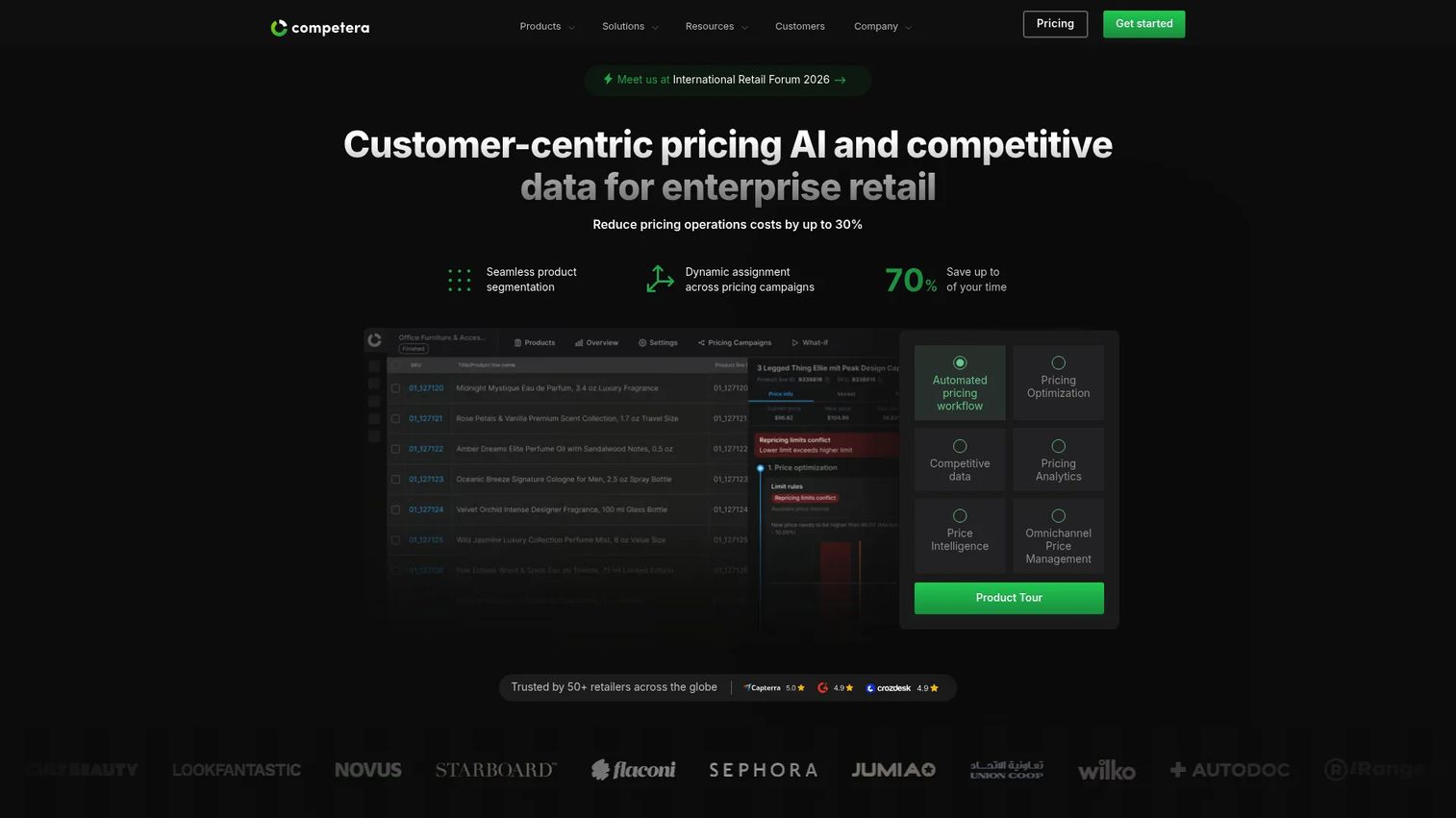
Competera is AI-powered retail pricing software built for enterprise retailers that need optimization across categories and channels, not just competitor matching. It combines competitive data and product matching, pricing automation with rules and workflows, and price optimization that factors in elasticity and demand. The result is a recommendation engine that explains its reasoning, which is what enterprise pricing committees demand before they trust a model with revenue.
For a retailer running thousands of SKUs across many categories, the differentiator is the optimization layer. Competera does not just tell you a competitor dropped a price; it tells you whether you should follow, hold, or move in the opposite direction based on demand. That is retail price optimization in the truest sense.
Best for: Enterprise retailers needing AI-driven price optimization and pricing automation.
Key strengths
- Competitive data and product matching: Accurate matching so you compare like for like across the market.
- Pricing automation: Rules and workflows that scale pricing decisions across large catalogs.
- Price optimization: Elasticity- and demand-based optimization that recommends the right price per product.
Why choose Competera: Competera is the pick when matching the market is no longer enough and you need a model that optimizes for margin or revenue with transparency. The highest G2 rating on this list reflects strong customer sentiment among enterprise users who value explainable recommendations.
Competera pricing: Competera does not publish public pricing; the vendor uses a request-a-quote flow, confirmed on its pricing page (June 2026). That is typical for enterprise retail pricing optimization software, where scope and catalog size drive the cost. Expect a scoped, custom proposal rather than a self-serve tier.
6. Revionics
Revionics is AI-powered retail pricing software that optimizes across the full price lifecycle: base price, promotions, and markdowns. Where many tools focus on one moment, Revionics treats pricing as a connected architecture, so a base-price decision, a promo, and an end-of-season markdown all work from the same strategy. For enterprise retailers, that coherence is the value.
The platform is built around three optimization engines. Base price optimization sets the everyday price, promotions optimization sizes and times deals, and markdown optimization manages clearance against sell-through. Together they cover the decisions that determine a season's margin, which is why Revionics shows up in enterprise evaluations.
Best for: Enterprise retailers needing lifecycle price optimization across base, promo, and markdown.
Key strengths
- Base price optimization: AI-led everyday pricing tuned to demand and strategy.
- Promotions optimization: Sizing and timing for promotions that protect margin.
- Markdown optimization: Sell-through-aware clearance logic to move inventory without overcutting.
Why choose Revionics: Revionics is the strong fit when pricing is a lifecycle problem, not a single-decision one. If your margin leaks at the markdown stage as much as the base-price stage, a connected optimization architecture is the right lens, and that is where Revionics is built to win.
Revionics pricing: Revionics does not publish public pricing on its site; engagement starts with a contact-sales conversation. As with most enterprise retail price optimization platforms, pricing is scoped to catalog size, categories, and the optimization modules you deploy. Treat it as a custom enterprise engagement.
7. BlackCurve

BlackCurve is pricing optimisation software for competitor price tracking, dynamic pricing, and pricing intelligence. It leans on Google Shopping monitoring for competitor data, runs dynamic pricing across sales channels and marketplaces, and connects through APIs and ecommerce platform integrations. For retailers who live in Google Shopping and across multiple marketplaces, that focus is practical.
The platform is built to keep pricing consistent as the market shifts. It tracks competitors via Google Shopping, applies dynamic pricing across channels, and integrates with the ecommerce platforms you already run. That makes it a fit for teams that need automation and competitive response without rebuilding their stack.
Best for: Ecommerce retailers needing pricing automation and competitor monitoring across channels and marketplaces.
Key strengths
- Competitor price tracking: Google Shopping monitoring for competitor pricing data.
- Dynamic pricing: Automated pricing across sales channels and marketplaces.
- Integrations: API and ecommerce platform connections to fit your existing setup.
Why choose BlackCurve: BlackCurve fits retailers whose competitive picture runs through Google Shopping and multiple marketplaces, and who want dynamic pricing that holds consistency across them. The full Enterprise plan on a 30-day free trial lets you test the top tier before signing an annual contract.
BlackCurve pricing: BlackCurve publishes three tiers, billed annually on a 12-month contract: Team from £199 per month, Professional from £699 per month, and Enterprise from £1,300 per month, per the vendor pricing page (June 2026). Free trials provide the full Enterprise plan for 30 days. There is no permanently free tier.
8. 7Learnings
7Learnings is AI-powered predictive pricing software for retailers and brands, with a stronger lean toward forecasting than most tools on this list. It uses predictive price optimization, performance marketing optimization, and order optimization to connect pricing decisions to expected demand. The pitch is data-led pricing: model what will happen, then set the price that gets you there.
For retailers with the data maturity to feed a predictive model, the depth pays off. 7Learnings optimizes price against forecasted demand, ties pricing to performance marketing, and extends to order optimization, so the price is one lever in a connected system rather than an isolated rule. That makes it a fit for teams ready to move past reactive repricing into forecasting.
Best for: Mid-to-enterprise retailers and D2C brands optimizing pricing decisions with predictive modeling.
Key strengths
- Predictive price optimization: Set prices against forecasted demand rather than past behavior alone.
- Performance marketing optimization: Connect pricing decisions to marketing performance.
- Order optimization: Treat price as one lever in a broader demand and order system.
Why choose 7Learnings: 7Learnings is the pick for retailers that want forecasting at the center of pricing, not bolted on. If your team already invests in data and wants pricing decisions grounded in predicted outcomes, the modeling depth here is the differentiator.
7Learnings pricing: 7Learnings does not publish public pricing; engagement runs through a demo and sales conversation. As with other predictive and enterprise platforms, expect pricing scoped to your data setup, catalog, and modeling needs. Treat it as a custom engagement and confirm scope early.
What to check before you buy
Picking retail price management software is less about the longest feature list and more about fit with how your team actually works. Run any shortlist through these checks.
Use-case match
Be honest about the job. If you need to stop manually checking competitors, a monitoring tool wins. If margin leaks at markdown, you need lifecycle optimization. Buying an enterprise optimization platform to solve a monitoring problem wastes money and time.
Pricing transparency
Some vendors publish tiers; others quote custom. Neither is wrong, but match it to your stage. Published pricing makes internal approval faster; custom pricing usually signals enterprise scope and a scoping conversation. Know which you are walking into.
Data and modeling depth
A rules engine and an elasticity model are different things. Ask whether the tool matches the market, recommends a price, or optimizes against demand, and whether it can explain its recommendations. Explainability is what gets a model trusted internally.
Integration and omnichannel reach
Pricing consistency breaks at the seams between systems. Check that the tool connects to your ecommerce platform, marketplaces, and the channels where price actually appears. A cloud-native pricing platform that integrates cleanly will hold consistency better than a powerful tool that lives in a silo.
Conclusion
The right retail pricing software depends on the job in front of you, not the longest brochure. For competitor price tracking and fast wins, Price2Spy and Prisync get you monitoring and repricing quickly with public, predictable pricing. For omnichannel dynamic pricing you can explain to stakeholders, Omnia Retail and BlackCurve bring automation with audit trails and broad channel reach. PriceShape sits neatly between monitoring and optimization for teams scaling up.
When matching the market stops being enough, the optimization platforms take over. Competera and Revionics bring AI-driven retail price optimization, with Revionics extending across base price, promotions, and markdown, and Competera leading on explainable, elasticity-based recommendations. 7Learnings is the pick when forecasting sits at the center of your pricing strategy.
Your next step: name the single pricing problem costing you the most margin right now, pick the two retail pricing tools above that target it most directly, and run a trial or scoped demo on a real catalog. Pricing consistency and margin improvement come from a system you trust and actually use, not the one with the most features.
FAQs
Retail pricing software collects market and demand data, then recommends or automatically sets prices to protect margin, win share, and keep pricing consistent across channels. Depending on the tool, that ranges from competitor price tracking to AI-driven retail price optimization across base prices, promotions, and markdowns. The goal is to replace gut-call pricing with data-led decisions at scale.
Price monitoring tools watch the market and tell you what competitors are doing. Retail pricing optimization software goes further: it recommends or sets the price that maximizes margin or revenue, often using elasticity and demand models. Many platforms do both, but the dividing line is whether the tool just reports the market or actually optimizes your price against it.
For omnichannel pricing, look for tools that automate across your site, marketplaces, and other channels while keeping pricing consistent. Omnia Retail and BlackCurve are strong fits for dynamic pricing across channels, while Competera and Revionics handle optimization at enterprise scale across categories. The key is integration reach, since consistency breaks wherever a channel is left out.
AI pricing tools use demand and elasticity modeling to find the price that maximizes margin or revenue per product, rather than simply matching competitors. AI-driven dynamic pricing now accounts for 47.4% of pricing strategy share, per Mordor Intelligence (2024). The margin gain comes from pricing each product to its real demand sensitivity and timing markdowns against sell-through.
Check four things: use-case match (monitoring versus optimization), pricing transparency, data and modeling depth, and integration reach across your channels. Also confirm whether the tool can explain its recommendations, since explainability is what gets a pricing model trusted internally. Match the tool to the job, not the longest feature list.
Yes, especially for monitoring and repricing. Tools like Price2Spy and Prisync start at public, accessible price points and deliver fast wins by automating competitor price tracking and repricing. Smaller retailers usually see value first from stopping manual market checks, then graduate to optimization as their catalog and data mature.
Yes. Lifecycle platforms like Revionics optimize across base price, promotions, and markdowns, sizing and timing discounts against sell-through targets to clear inventory without crushing margin. Markdown optimization is one of the highest-leverage features for seasonal and inventory-heavy retailers, since that is often where margin leaks most.
Track margin improvement, revenue lift, and sell-through rate against a pre-adoption baseline, plus the time saved that previously went to manual market checks. Many teams also watch pricing consistency across channels and how quickly they respond to competitor moves. The clearest ROI signal is margin held or gained on the SKUs the tool actively prices.