You sent 50 cold emails this week. Three people replied. None booked a call.
Most reps read that and assume it's a targeting problem. Build a better list, they think. Tighten the ICP. But the numbers tell a different story. In Overloop's 2026 benchmark across more than 1,000 cold email sequences, AI-written emails lifted reply rates by 25 to 40 percent versus templated outreach, and high-volume senders only hit those numbers when their email actually landed in the primary inbox. That second part is where most outbound quietly dies.
Here's what that means for you as an account executive. Your number depends on pipeline coverage, and pipeline coverage depends on replies that turn into meetings. If half your sends route to spam instead of the primary inbox, no subject line saves you. If your activity never syncs to the CRM, you spend Monday reconstructing what happened in last week's deals instead of working them. The right email outreach tool fixes both problems at once: it protects your domain so messages land, and it keeps every reply, open, and booked meeting attached to the opportunity.
So the real question is not "how do I send more." It's "which email outreach tool lands in the inbox, fits my workflow, and turns sends into qualified conversations without burning the domain my whole team shares?" That's what separates a tool that books meetings from one that just runs up an activity count.
What's inside
This guide is written for AEs, SDR and BDR leaders, and founders running cold email at volume. Everyone here already owns a number and needs outreach that converts into booked meetings, not just activity.
We evaluated each email outreach tool against four criteria that matter to revenue teams:
- Deliverability infrastructure: warmup, inbox rotation, throttling, and sender reputation monitoring.
- Sequencing and personalization at scale: AI copy, merge variables, and multichannel steps.
- Lead data and verification: built-in databases, email finders, and verification to cut bounces.
- Workflow and CRM fit: how cleanly activity, replies, and meetings sync to your pipeline.
Every pricing figure and G2 rating below was verified against live vendor pages and G2 listings. If you want a wider view of the category, our roundup of the best outreach software and top sales engagement tools complements this guide.
TL;DR
Short on time? Here are the decision shortcuts.
- Best for high-volume outbound: Instantly, with unlimited inboxes and built-in warmup.
- Best for agencies and deliverability at scale: Smartlead, with unlimited mailboxes and white-label workspaces.
- Best for prospecting plus outreach in one tool: Apollo, pairing a 200M+ contact database with sequences.
- Best for personalization-heavy outreach: Lemlist, with image, video, and multichannel steps.
- Best for CRM-native AEs: Klenty, with deep Salesforce, HubSpot, Pipedrive, and Zoho sync.
- Best for solo founders and budget teams: GMass for Gmail-first sending, Snov.io for lean all-in-one prospecting.
What email outreach tools actually do
Email outreach tools are software platforms that help sales and growth teams send, automate, personalize, and track cold and follow-up email campaigns at scale while protecting deliverability. They sit between your prospect list and the inbox, handling the sending mechanics so reps focus on replies instead of manual admin.
The category goes by several names: cold email software, cold email tools, outbound email automation, and email prospecting tools. The core jobs are the same. Most platforms in this space combine the following capabilities.
- Sequence and campaign builders: multi-step cadences with automated follow-ups that stop when a prospect replies.
- Deliverability infrastructure: inbox warmup, inbox rotation across multiple mailboxes, sending throttles, and bounce detection to protect sender reputation.
- Personalization and AI copy: merge variables, dynamic fields, and AI-generated first lines that keep relevance high at volume.
- Lead databases and email verification: built-in B2B contact data, email finders, and verification that cuts bounce rates before you send.
- Multichannel steps: LinkedIn, SMS, and phone actions layered into the same cadence for teams that work more than one channel.
- Analytics: open, reply, positive-reply, and meeting-booked reporting so you measure outcomes, not just sends.
- CRM and integration sync: two-way connection with Salesforce, HubSpot, Pipedrive, and Zoho so activity and replies attach to the right deal.
The practical difference between cold email automation and a basic mail-merge is deliverability. A mail-merge sends. An outreach platform sends, rotates inboxes, warms domains, verifies addresses, and tells you which messages turned into pipeline. For AEs, that last layer matters most: it connects outreach activity to forecast. Teams that also rely on open tracking will want to compare options in our guide to the best email tracking software.
When to use email outreach tools
Outreach tools earn their place when manual sending starts to cost you replies, deliverability, or deal context. Three situations make the case clearly.
Run outbound at volume without burning your domain
When one rep sends a few dozen cold emails a day, a single mailbox holds up. Scale to hundreds across a team and your domain reputation becomes the bottleneck. Warmup, inbox rotation, and sending limits spread volume across multiple mailboxes so no single inbox trips spam filters that block bulk senders. Smartlead and Instantly built their reputations on exactly this: keeping deliverability healthy while volume climbs.
Personalize sequences without manual research per lead
Relevance and volume usually pull against each other. Research every lead by hand and you send 20 great emails a week. Skip research and you blast 500 generic ones that get ignored. AI personalization and merge variables close that gap. Overloop's 2026 test found AI-written cold emails lifted reply rates 25 to 40 percent over templates, which is the difference between a quiet week and a full calendar. For teams investing more in tailored messaging, our best personalization software roundup is a useful next read.
Wait - the Overloop URL is already used above. I'll skip the duplicate and keep the original anchor text plain.
Personalize sequences without manual research per lead
Relevance and volume usually pull against each other. Research every lead by hand and you send 20 great emails a week. Skip research and you blast 500 generic ones that get ignored. AI personalization and merge variables close that gap. Overloop's 2026 test found AI-written cold emails lifted reply rates 25 to 40 percent over templates, which is the difference between a quiet week and a full calendar. For teams investing more in tailored messaging, our best personalization software roundup is a useful next read.
Keep outreach activity synced to your CRM and pipeline
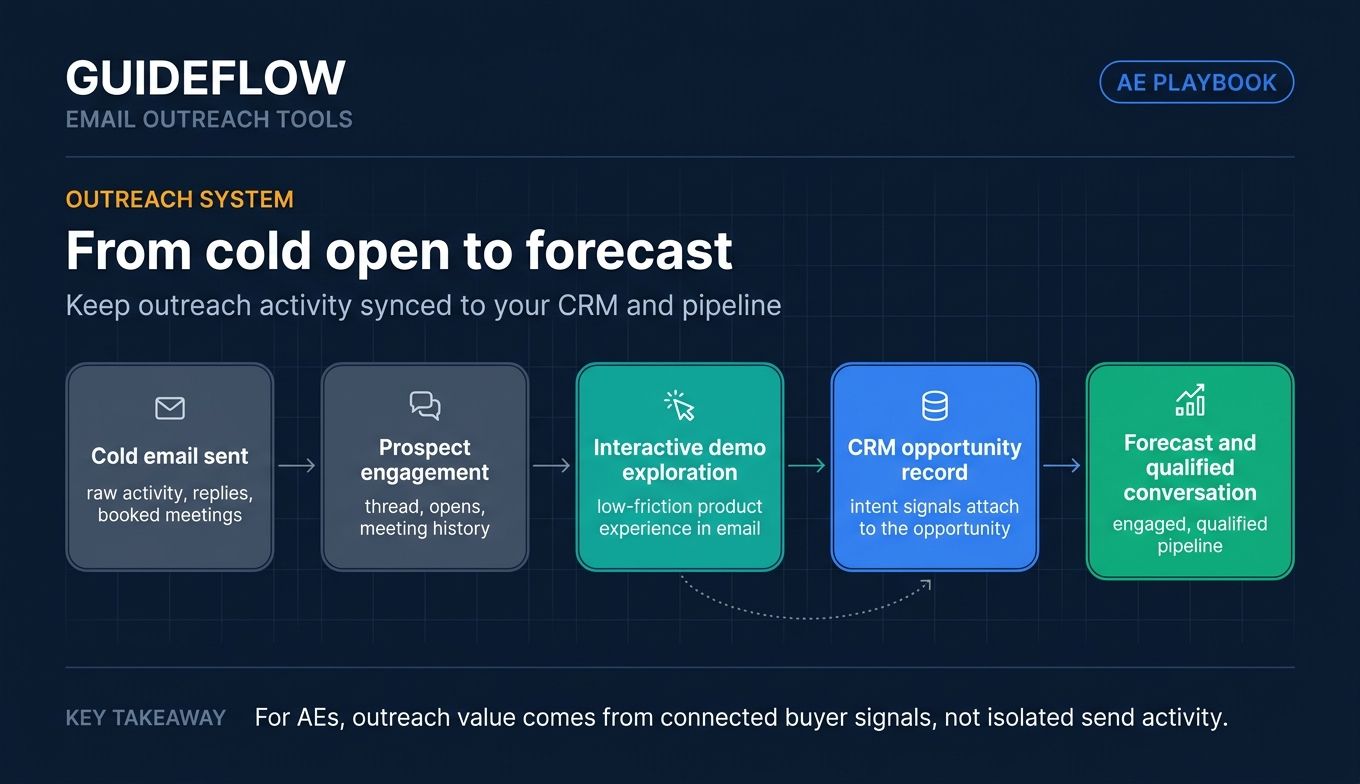
For AEs, the worst part of outbound is not sending. It's reconstructing what happened. When a champion replies three weeks into a deal, you need that thread, that open history, and that meeting attached to the opportunity, not buried in a separate tool. CRM-native outreach keeps deal context intact and your forecast accurate. Some outbound teams go a step further and embed an interactive demo in the email itself, giving prospects a low-friction way to explore the product before a call and generating intent signals that flow back to the CRM. That pairing turns a cold open into an engaged, qualified conversation. If you're choosing a system of record alongside your outreach stack, see our list of the best CRM software.
Email outreach tools compared
Here's the shortlist at a glance. The table covers each email outreach tool's primary intent, what sets it apart, verified starting price, and current G2 rating. Use it to build a buying shortlist, then read the full sections for workflow fit. Pricing reflects live vendor pages as of June 2026, and ratings match current G2 listings.
| # | Product | Intent | Key differentiation | Pricing | G2 rating |
|---|---|---|---|---|---|
| 1 | Instantly | High-volume cold email | Unlimited inboxes, warmup, 450M+ lead database | From $37.60/mo | 4.8/5 |
| 2 | Smartlead | Agency and scaled outbound | Unlimited mailboxes, master inbox, white-label | From $39/mo | 4.5/5 |
| 3 | Apollo | Prospecting plus outreach | Built-in B2B database, enrichment, dialer | Free tier; paid plans available | 4.7/5 |
| 4 | Saleshandy | Budget SMB and mid-market | Sequences, sender rotation, lead finder | From $25/mo | 4.6/5 |
| 5 | Lemlist | Personalization-heavy outbound | Image, video, multichannel, 650M+ leads | From $31/user/mo | 4.6/5 |
| 6 | GMass | Gmail-first sending | Native Gmail mail-merge, Sheets, inbox rotation | From $29.95/mo | 4.8/5 |
| 7 | Mailshake | Simple multichannel cadences | Easy sequences, dialer, deliverability tools | From $29/mo | 4.7/5 |
| 8 | Woodpecker | B2B follow-up automation | Adaptive sending, condition-based campaigns | From $35/mo | 4.5/5 |
| 9 | Klenty | CRM-native sales teams | Deep CRM sync, multichannel, dialer | From $50/mo | 4.6/5 |
| 10 | Snov.io | Lean all-in-one prospecting | Email finder, verifier, drip campaigns, CRM | From $39/mo | 4.5/5 |
The 10 best email outreach tools for 2026
1. Instantly
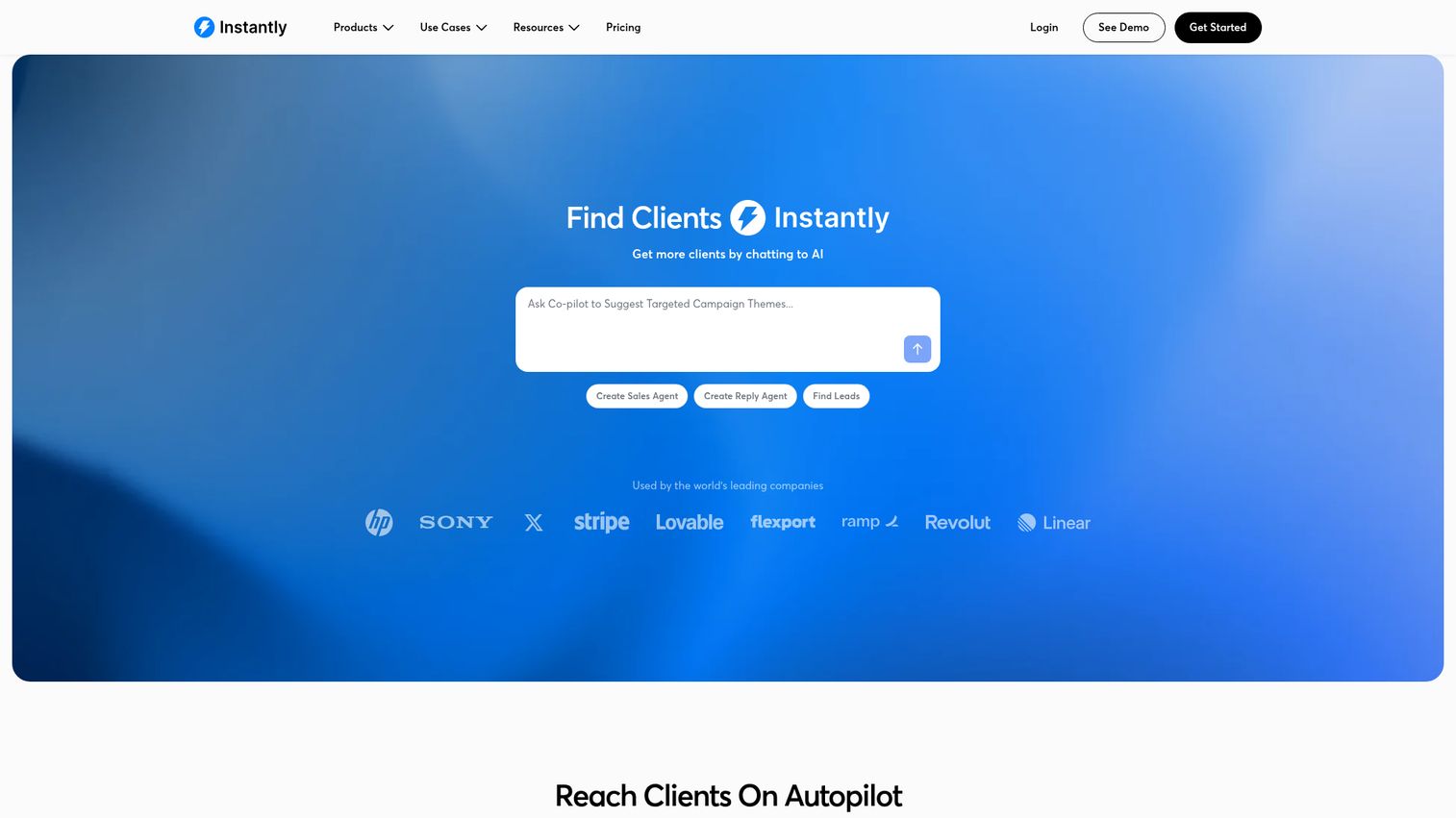
Instantly is a sales engagement and lead intelligence platform built for finding leads, creating AI sales agents, and automating cold email at scale. It pairs unlimited email accounts and unlimited warmup with a 450M+ lead database, so you can source, send, and track from one place. For high-volume teams, the appeal is simple: add inboxes, rotate sends, and keep deliverability healthy as volume climbs.
Best for: B2B teams and agencies running cold email outreach at scale with lead sourcing and AI-assisted campaign automation.
Key strengths
- Unlimited inboxes and warmup: Spread volume across as many mailboxes as you need without paying per inbox, protecting domain reputation.
- 450M+ lead database with enrichment: Source and verify prospects inside the same tool you send from, cutting bounces before they happen.
- AI Sales Agent and Reply Agent: Automate first-touch copy and reply handling, with campaign analytics and CRM tracking tied to outcomes.
Why choose Instantly: If your motion is email-volume-first and you want sourcing, warmup, and sending under one roof, Instantly fits. AEs and SDR leaders who manage multiple domains lean on it because adding inboxes does not inflate cost the way per-seat tools do. The trade-off is that it skews toward email; teams that need heavy phone or LinkedIn cadences will want a multichannel-first option.
Instantly pricing: Plans start at $37.60 per month for Growth, with Hypergrowth at $77.60 per month and Light Speed at $286.30 per month, all billed monthly. Enterprise is custom. The pricing page also lists separate Bundles and credit-based options for lead data.
2. Smartlead
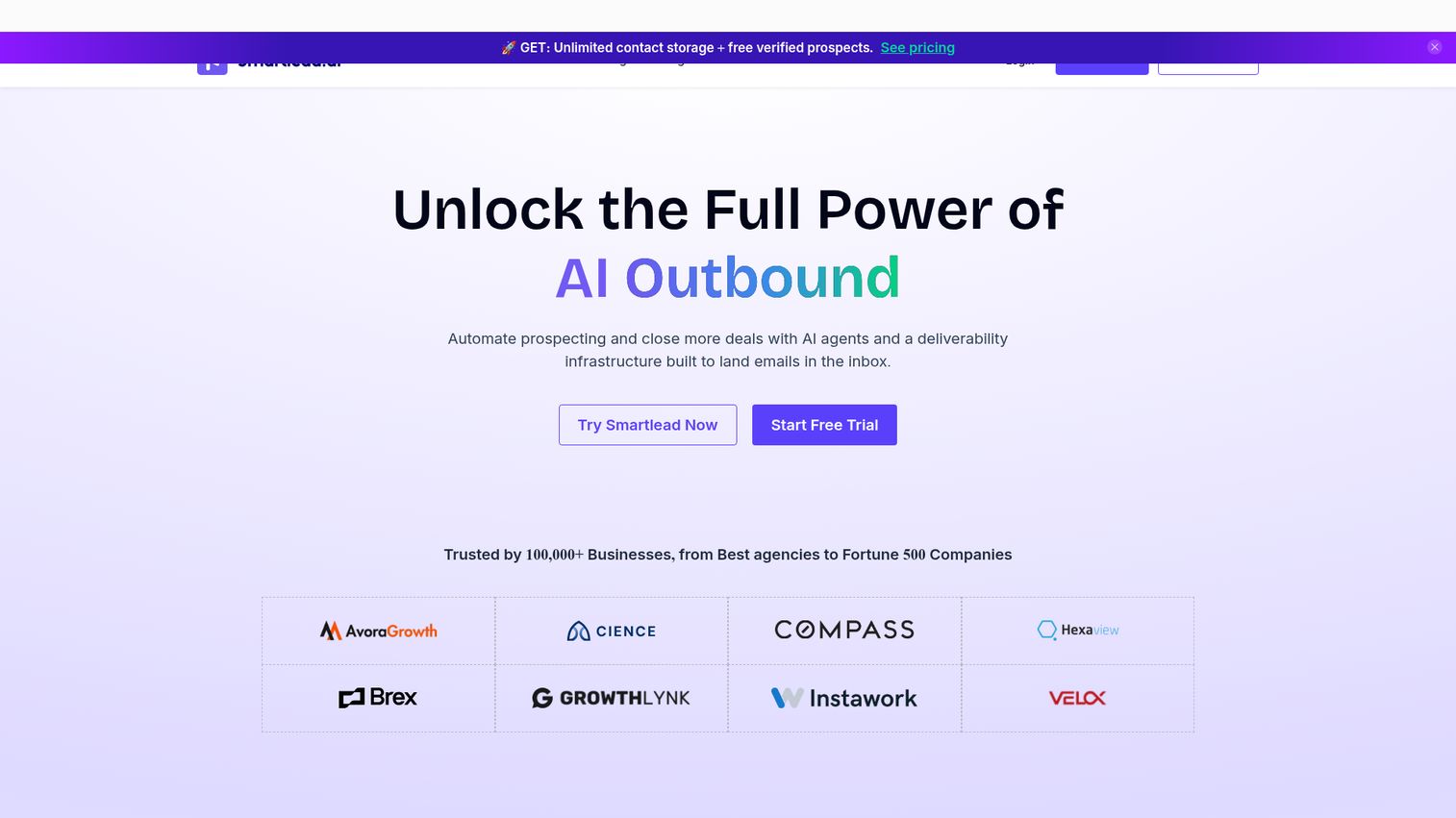
Smartlead is an AI-native outbound platform for cold email, multichannel sequencing, deliverability infrastructure, and unified reply management. Its calling card is scale: unlimited mailboxes with automated warm-up and a master inbox that pulls every reply across every mailbox into one view. Agencies running outbound for multiple clients lean on its white-label workspaces.
Best for: B2B sales teams and agencies running high-volume cold outbound with multiple inboxes and deliverability needs.
Key strengths
- Unlimited mailboxes with warm-up and rotation: Send at volume across many inboxes while automated warmup and sender rotation protect deliverability.
- Unified master inbox: Manage replies from every mailbox in one place, so no positive reply slips through the cracks.
- APIs and automation for agencies: White-label workspaces and integrations make it practical to run outbound as a service across clients.
Why choose Smartlead: Agencies and high-volume in-house teams pick Smartlead when deliverability at scale is the whole game. The master inbox keeps reply management sane when you run dozens of mailboxes, and white-labeling lets agencies brand the experience. If you only run one or two inboxes, you may not use the full ceiling here.
Smartlead pricing: Base starts at $39 per month, Pro at $94 per month, Unlimited Smart at $174 per month, and Unlimited Prime at $379 per month, billed monthly. Smartlead offers a 14-day free trial. There is no permanent free tier.
3. Apollo
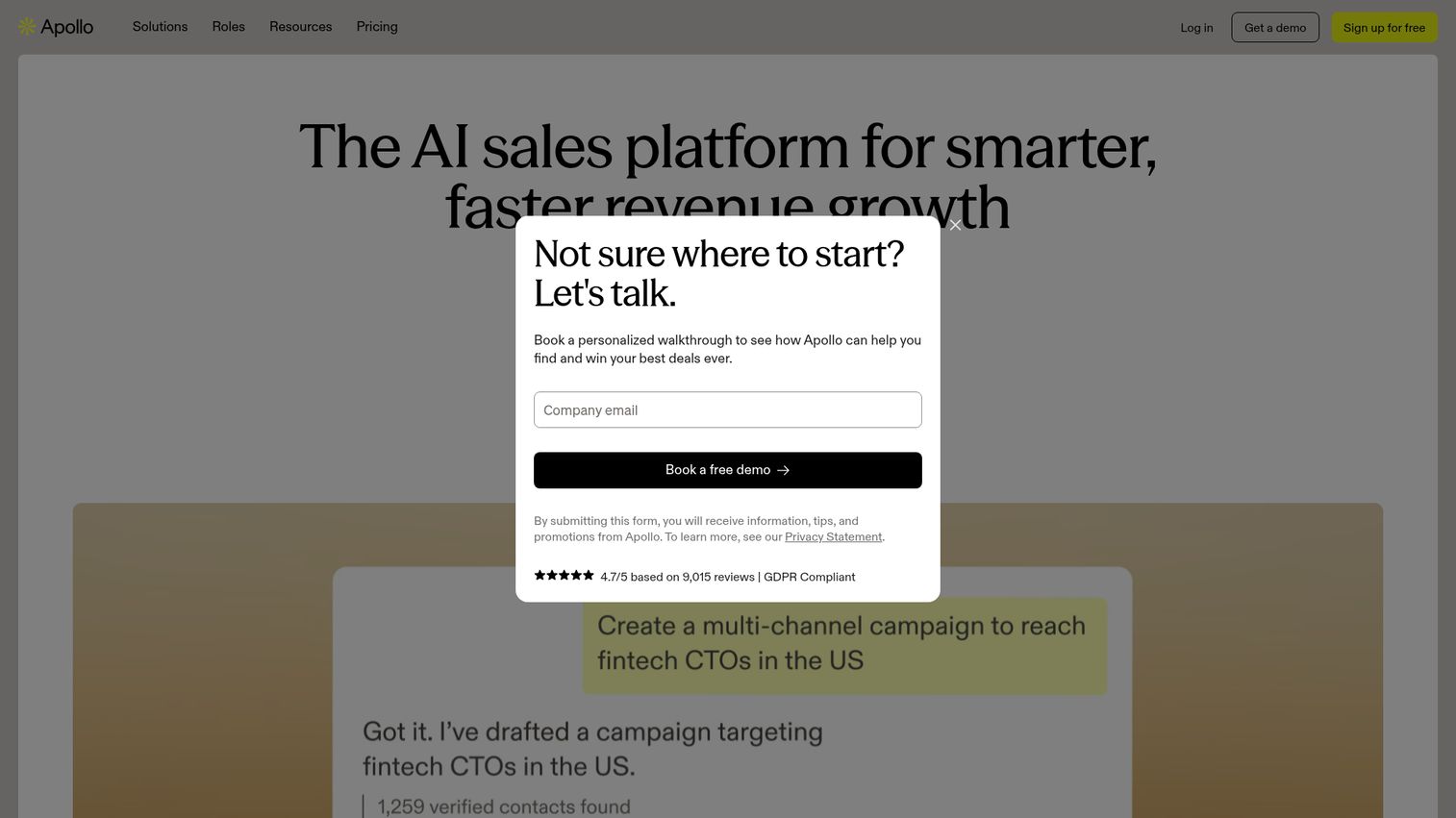
Apollo is an AI sales platform for building pipeline, engaging buyers, enriching data, and managing deal execution. Its differentiator is the built-in B2B database: instead of buying lists elsewhere and importing them, you prospect, enrich, and sequence in one tool. For AEs who want prospecting and outreach without stitching tools together, that consolidation is the draw. You can see how Apollo presents its workflow in this Apollo.io interactive demo.
Best for: B2B sales and marketing teams that want one platform for prospecting, outreach, enrichment, and deal workflows.
Key strengths
- Large built-in B2B database with enrichment: Find verified emails and phone numbers, then push them straight into sequences without leaving the tool.
- Multichannel outbound campaigns: Run email, calls, and tasks in coordinated cadences from a single workflow.
- Inbound qualification and routing: Enrich form fills, qualify leads, and schedule meetings, so prospecting and inbound live in one system.
Why choose Apollo: Apollo wins when you want to collapse your prospecting and outreach stack into one tool. AEs and full-cycle reps like that the data and the sequences share a home, which keeps deal context intact. The trade-off is that an all-in-one platform can feel heavier than a focused cold email tool if you only need sending.
Apollo pricing: Apollo offers a free-forever Starter plan after the trial downgrade, which makes it easy to test prospecting and outreach without commitment. Paid plans add higher data limits and advanced features; check the live pricing page for current paid tiers, as the public plan comparison gates specifics behind sign-up.
4. Saleshandy
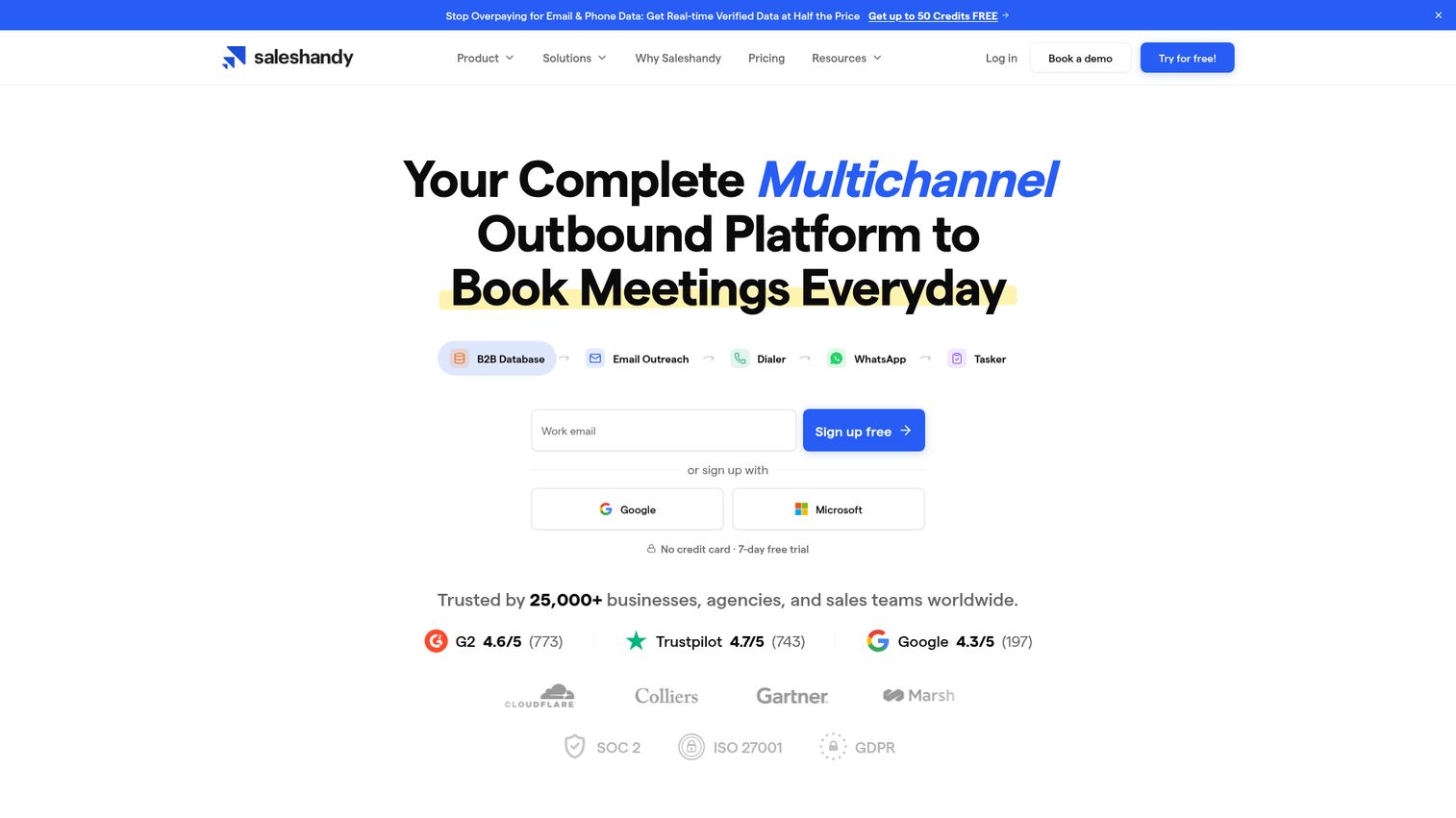
Saleshandy is a multichannel outbound platform for B2B database prospecting, email outreach, dialer, WhatsApp, and sales tasks. It bundles AI-powered sequences, a Lead Finder with email and phone data, and a deep deliverability toolkit including unlimited email accounts, warm-up, sender rotation, and inbox placement testing. For budget-conscious teams, it packs a lot into a low entry price.
Best for: Sales teams and agencies running scalable cold email and outbound prospecting campaigns.
Key strengths
- AI sequences with auto follow-ups: Build multi-step cadences that pause automatically when a prospect replies, keeping outreach relevant.
- Lead Finder with email and phone data: Source verified contacts inside the platform, then move them straight into campaigns.
- Full deliverability suite: Unlimited email accounts, warm-up, sender rotation, verification, and inbox placement testing protect domain health.
Why choose Saleshandy: SMB and mid-market teams choose Saleshandy when they want serious deliverability tooling without a serious price tag. The inbox placement test is a genuine differentiator for reps who want to confirm they're landing in the primary inbox. It's a strong budget pick that doesn't feel stripped down.
Saleshandy pricing: Outreach Starter is $25 per month billed annually ($300 per year, or $36 per month if paid monthly). Outreach Pro is $69 per month, Outreach Scale is $139 per month, and Outreach Scale Plus is $209 per month, all billed annually. A 7-day free trial covers the core Outreach product, and separate free plans exist for the Inbox Placement Test and CRM.
5. Lemlist
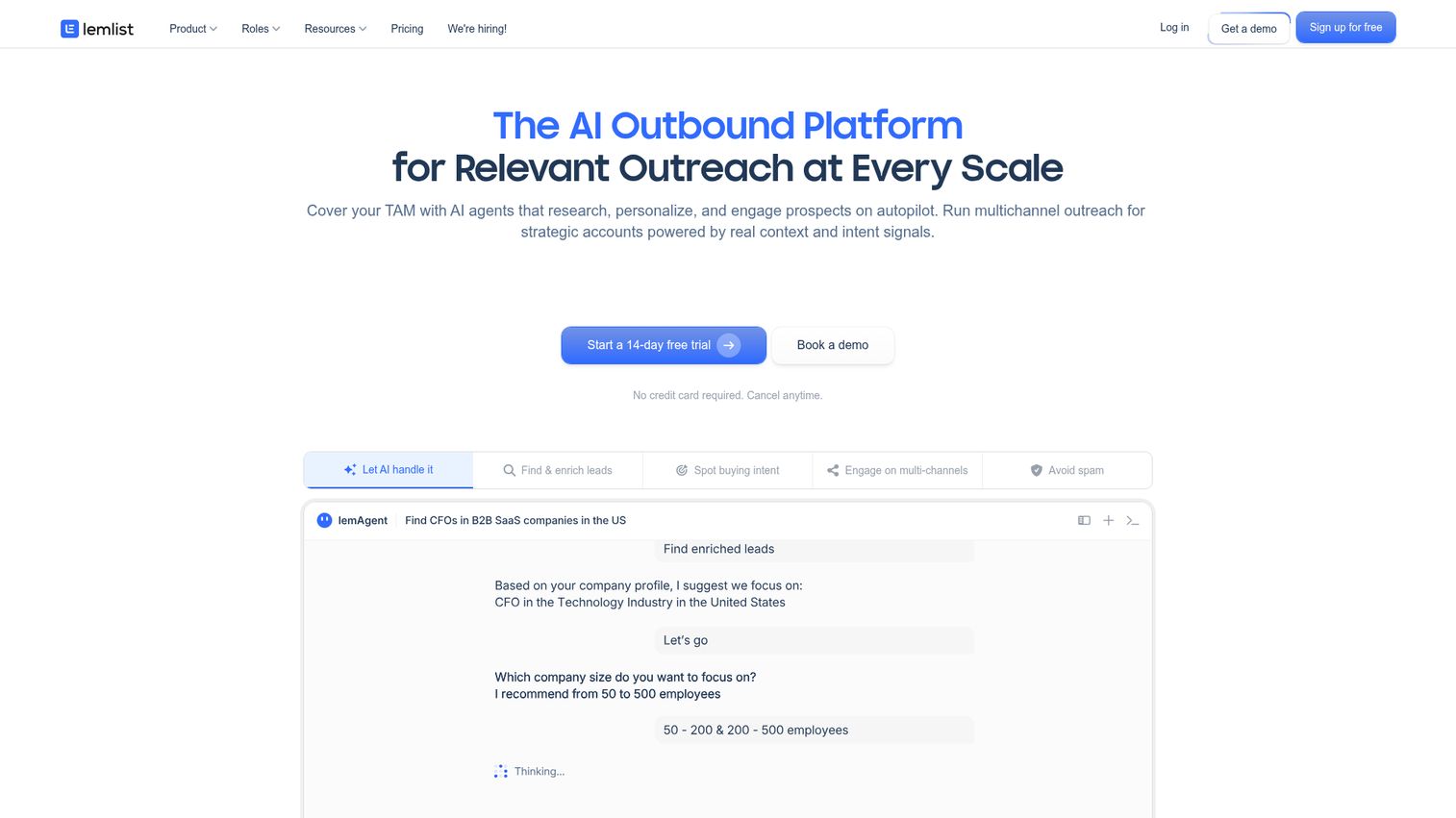
Lemlist is a sales engagement and multichannel outbound platform for B2B lead generation, enrichment, outreach, deliverability, and CRM-connected workflows. It's best known for personalization depth: custom images, video snippets, and dynamic landing pages that make a cold email feel one-to-one. A 650M+ lead database and multichannel sequences across email, LinkedIn, calls, WhatsApp, and SMS round it out.
Best for: B2B sales teams and growth agencies that need one platform for prospect data, enrichment, multichannel outbound, and email deliverability.
Key strengths
- Hyper-personalization at scale: Insert custom images, video, and dynamic fields so each message feels researched, not blasted.
- 650M+ lead database with finders: Source emails and phone numbers, then enrich and sequence inside the same workflow.
- Multichannel sequences: Combine email, LinkedIn, calls, WhatsApp, and SMS in one cadence, plus a deliverability hub and warm-up.
Why choose Lemlist: Teams that compete on relevance, not just volume, pick Lemlist. If your reply rates depend on standing out in a crowded inbox, the personalization tooling earns its keep. It's a fuller multichannel platform than a pure cold email tool, which suits teams that work LinkedIn and email together.
Lemlist pricing: The Email plan starts at $31 per user per month (billed yearly), including 5,000 emails per month, the lead database, finders, unified inbox, and deliverability hub. Multichannel starts at $87 per user per month, adding unlimited messages, LinkedIn and SMS automation, and a built-in dialer. Enterprise is custom. There's no permanent free tier, only free trials.
6. GMass
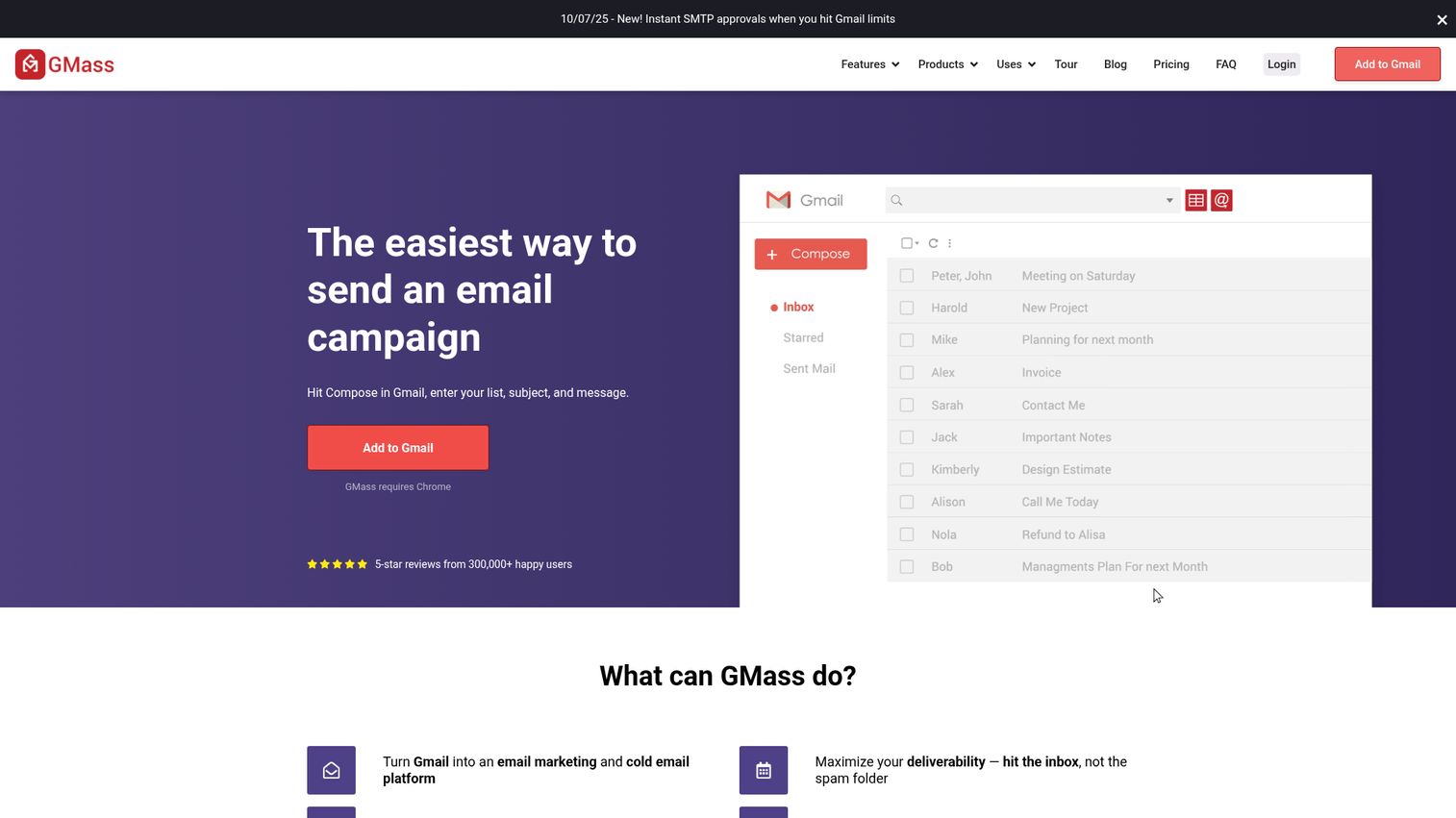
GMass is an email marketing and cold email platform that works directly inside Gmail. Instead of learning a separate app, you run mail-merge campaigns, follow-up sequences, and analytics from the inbox you already use. For solo founders and Gmail-first users, the near-zero learning curve is the whole pitch. If broader campaign reach is also on your roadmap, browse our best email marketing software comparison.
Best for: Gmail users who want to send personalized email campaigns, cold outreach, and automated follow-ups without leaving Gmail.
Key strengths
- Gmail-native mail-merge: Personalize campaigns from a Google Sheet and send straight from Gmail, with no new interface to learn.
- Automated follow-up sequences: Set drip follow-ups that stop on reply, all managed inside your existing inbox.
- Deliverability and analytics: Inbox rotation, email verification, a Spam Solver, and reporting on opens, clicks, replies, and bounces.
Why choose GMass: Founders running their own outbound and small teams already living in Gmail pick GMass because it removes setup friction entirely. Every plan includes unlimited emails, contacts, and campaigns, which keeps pricing predictable. If you need a built-in lead database, you'll pair it with a separate data source.
GMass pricing: The Standard plan is $29.95 per month, Premium is $39.95 per month, and Professional is $59.95 per month. Annual billing drops those to $20, $29, and $49 per month respectively. All plans include unlimited emails, contacts, campaigns, mail-merge, verification, sequences, A/B testing, and inbox rotation.
7. Mailshake
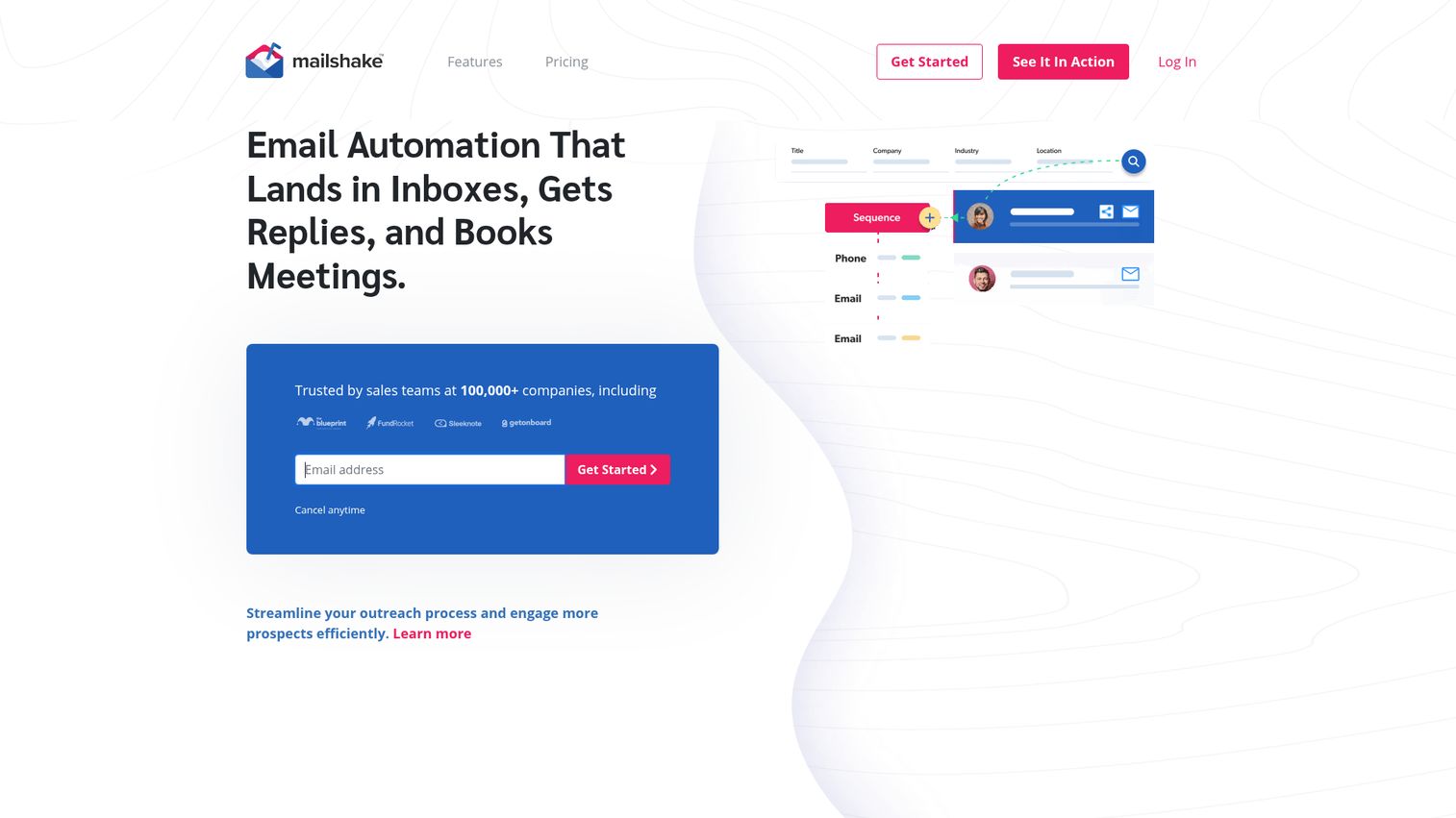
Mailshake is a sales engagement and cold outreach platform for automating personalized email, phone, and social prospecting campaigns. It leans into simplicity: a clean sequence builder, deliverability tooling, and multichannel follow-up that teams can launch fast. For reps who want to send without wrestling a complex interface, that ease of use is the point.
Best for: Sales teams and agencies running cold outbound campaigns that need email automation, deliverability tooling, and multi-channel follow-up.
Key strengths
- Simple sequence builder: Launch automated email cadences with follow-ups quickly, without a steep learning curve.
- Deliverability tooling: Warmup, list cleaning, and a copy analyzer help messages land and read well before they send.
- Multichannel outreach: Add phone and social steps to email cadences, with a built-in dialer on higher tiers.
Why choose Mailshake: Teams that value getting live over configuring endlessly pick Mailshake. The unified inbox and straightforward cadence builder mean new reps ramp fast. It's a clean fit for teams that want multichannel basics without the overhead of a heavier platform.
Mailshake pricing: Starter is $29 per month and includes one email address and 1,500 sends per month. Email Outreach is $49 per month, adding unlimited sends, email rotation, and a unified inbox. Sales Engagement is $99 per month, adding a phone dialer and lead temperature scoring. The Agency Plan is custom. There's no free tier.
8. Woodpecker
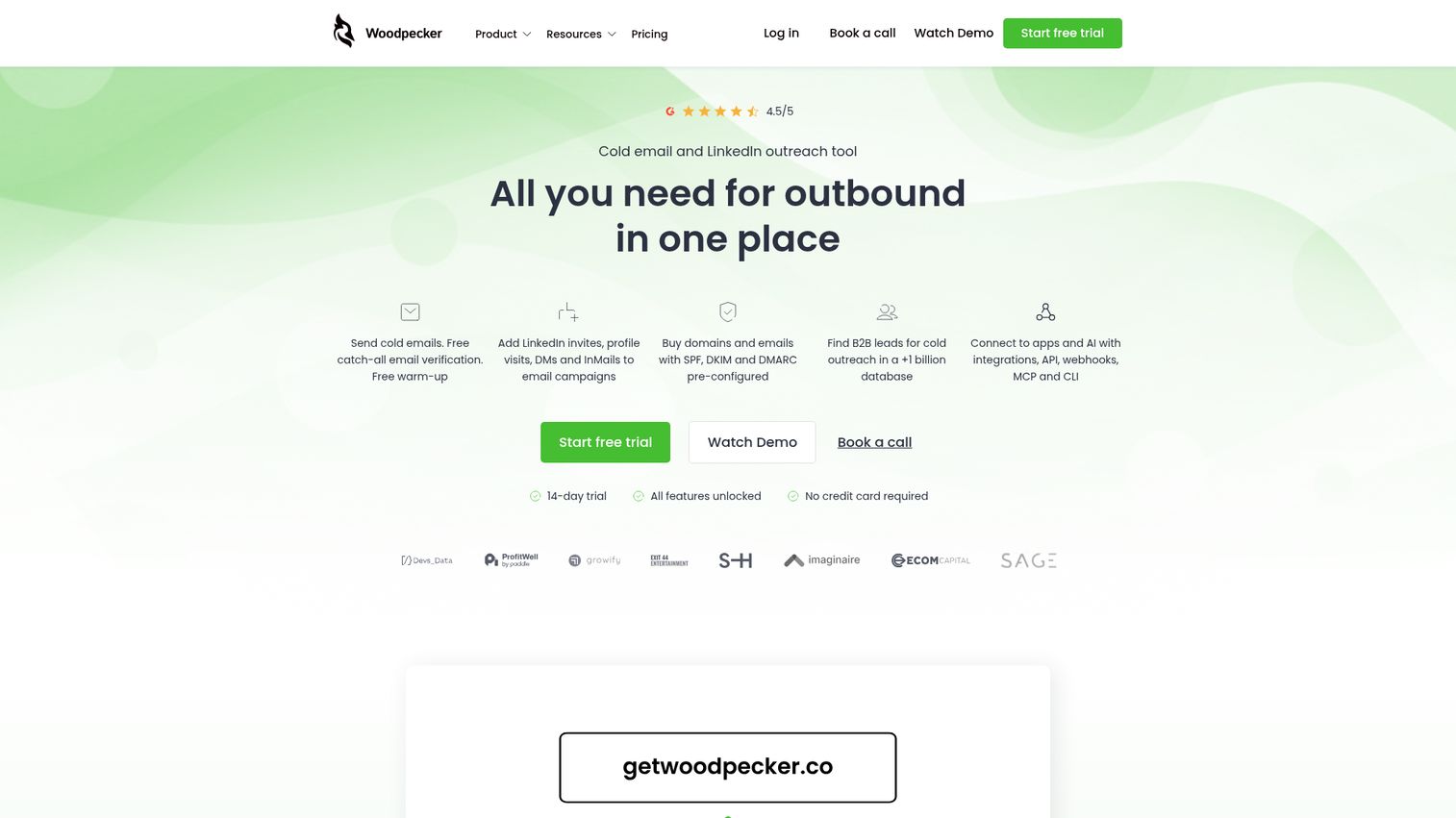
Woodpecker is a cold email and LinkedIn outreach tool for outbound sales and agency outreach. Its strength is intelligent sending: adaptive sending adjusts volume to protect deliverability, and condition-based campaigns branch follow-ups based on how prospects engage. For B2B teams that live on disciplined follow-up, that automation does real work.
Best for: Sales teams, recruiters, business owners, and lead generation agencies running cold email and LinkedIn outbound campaigns.
Key strengths
- Adaptive sending and deliverability monitor: Sending adjusts to protect domain reputation, backed by a deliverability monitor and domain audit.
- Condition-based campaigns: Branch follow-ups based on prospect behavior, so sequences respond to engagement automatically.
- Free verification and warm-up: Built-in email verification and warm-up, plus inbox rotation and AI interest-level detection.
Why choose Woodpecker: B2B teams and agencies that treat follow-up as a system pick Woodpecker. The condition-based logic and adaptive sending keep cadences responsive without manual babysitting, and the AI interest detection helps reps prioritize who to work next. Pricing scales with contacted prospects, so it fits teams with variable volume.
Woodpecker pricing: The Cold Email plan starts at $35 per month for 500 contacted prospects and 2,000 stored prospects, with pricing scaling by volume. A 14-day free trial is available with no credit card required. There's no permanent free tier.
9. Klenty
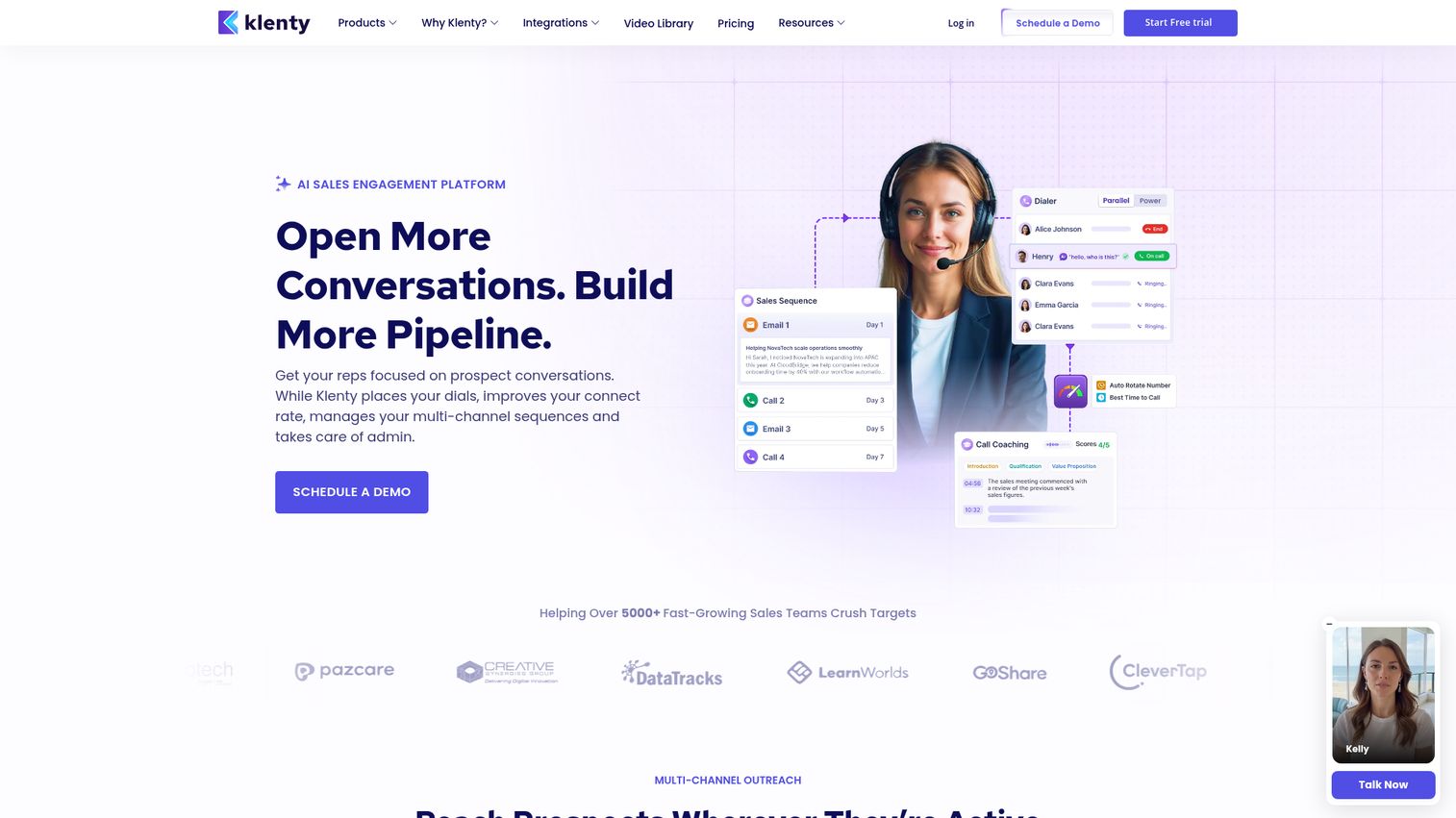
Klenty is an AI sales engagement platform for running personalized, multichannel outbound and managing sales execution workflows. For AEs, the standout is CRM depth: it integrates with Pipedrive, Microsoft Dynamics, HubSpot, Zoho, and Salesforce, so outreach activity and replies sync cleanly to the system of record. That keeps deal context intact across the cycle. See how it works in this Klenty interactive demo.
Best for: Sales teams running outbound prospecting that need email sequencing, calling, SMS, CRM sync, and account-based sales engagement in one platform.
Key strengths
- Multichannel outreach: Combine email, calls, and SMS in one cadence, with engagement tracked across every step.
- Deep CRM integrations: Two-way sync with Salesforce, HubSpot, Pipedrive, Zoho, and Microsoft Dynamics keeps activity attached to deals.
- Deliverability and analytics: Email personalization, A/B testing, deliverability tooling, and a live engagement feed surface who's worth working now.
Why choose Klenty: CRM-anchored AEs and account-based teams pick Klenty because the outreach never floats free of the pipeline. When a prospect replies mid-deal, the context is already in the CRM, which makes forecasting and follow-up cleaner. If your team lives in Salesforce or HubSpot, that native sync is worth real money.
Klenty pricing: Starter is $50 per month billed annually with personalized email outreach. Growth is $70 per user per month, adding cold calling, multichannel, and CRM capabilities. Plus is $99 per user per month, adding data credits and account-based selling. A Parallel and Power Dialer add-on is $45 per user per month. A 14-day free trial is available; there's no permanent free tier.
10. Snov.io
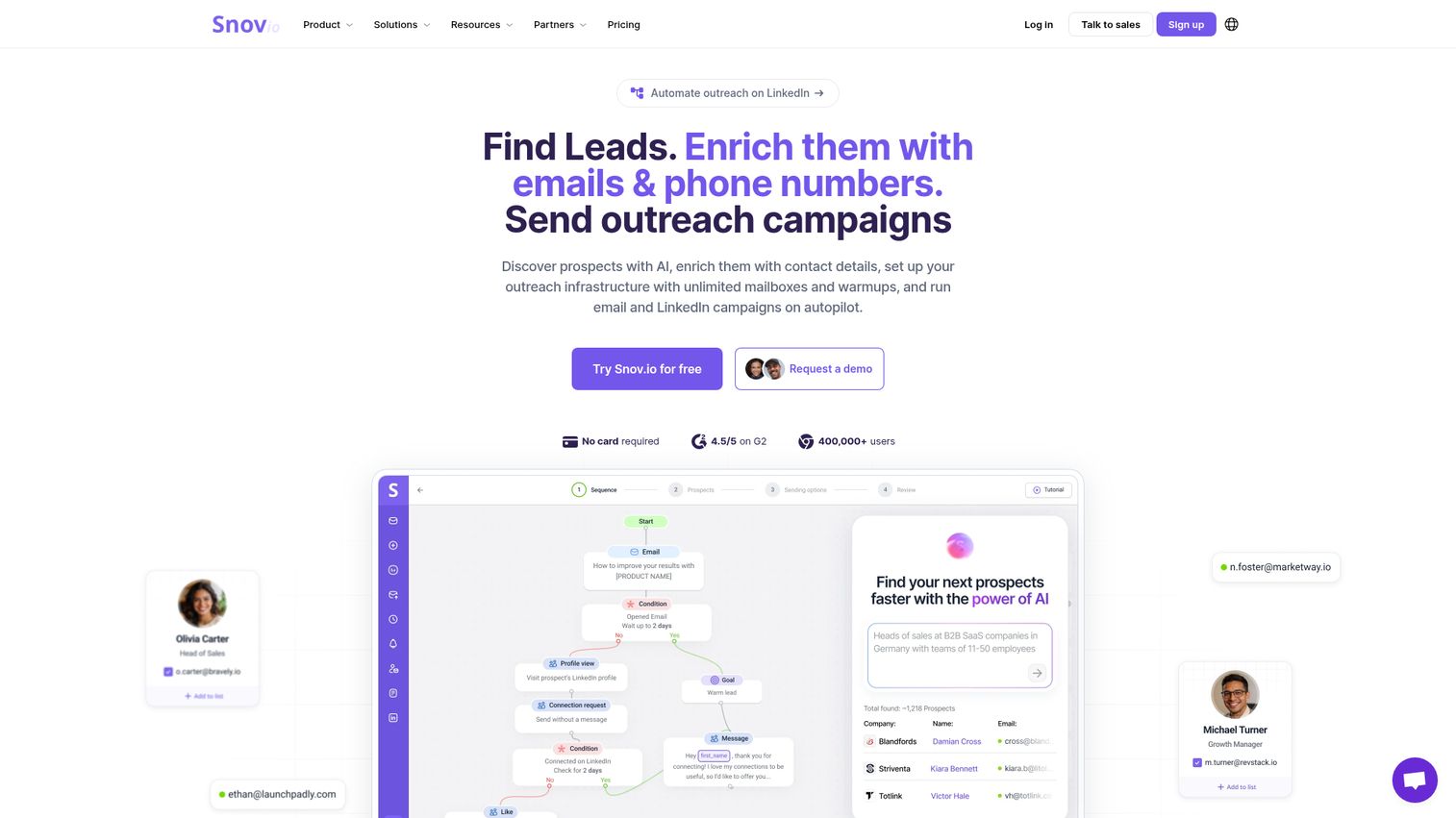
Snov.io is an AI lead generation and outreach automation platform for finding prospects, enriching them with contact data, and running email and LinkedIn campaigns. It bundles a B2B lead database, an Email Finder, an Email Verifier, and drip campaigns into one lean tool. For teams that want prospecting and outreach combined without a big spend, it covers the full loop. Preview the experience in this Snov.io interactive demo.
Best for: B2B sales and marketing teams that need one platform for prospecting, email verification, deliverability, and outbound email and LinkedIn sequences.
Key strengths
- Email Finder and database: Source verified prospects from a built-in B2B database, then move them straight into campaigns.
- Email Verifier and deliverability tools: Verify addresses before sending to cut bounces and protect sender reputation.
- Multichannel drip campaigns: Run email and LinkedIn sequences with a built-in CRM to keep deals organized.
Why choose Snov.io: Lean teams and budget-conscious founders pick Snov.io when they want finding, verifying, and sending in one affordable platform. The built-in CRM means you don't immediately need a separate system of record, which keeps the early stack simple. It's a practical all-in-one for prospecting plus outreach.
Snov.io pricing: A free Trial plan renews every 30 days. Starter is $39 per month (with a $19.50 first-month promotion) and includes 1,000 credits and 5,000 recipients. Pro S is $99 per month, Pro M is $189 per month, Pro L is $369 per month, and Ultra is $738 per month. Custom Ultra is contact-sales pricing.
If a listed tool's data shifts or a plan changes mid-evaluation, QuickMail is also worth a look as a deliverability-focused alternative for agencies and high-volume senders.
How to choose an email outreach tool
Shortlisting is easy. Picking the one that protects your domain and fits your workflow takes a few deliberate checks. Run each candidate through these criteria before you commit.
Deliverability infrastructure
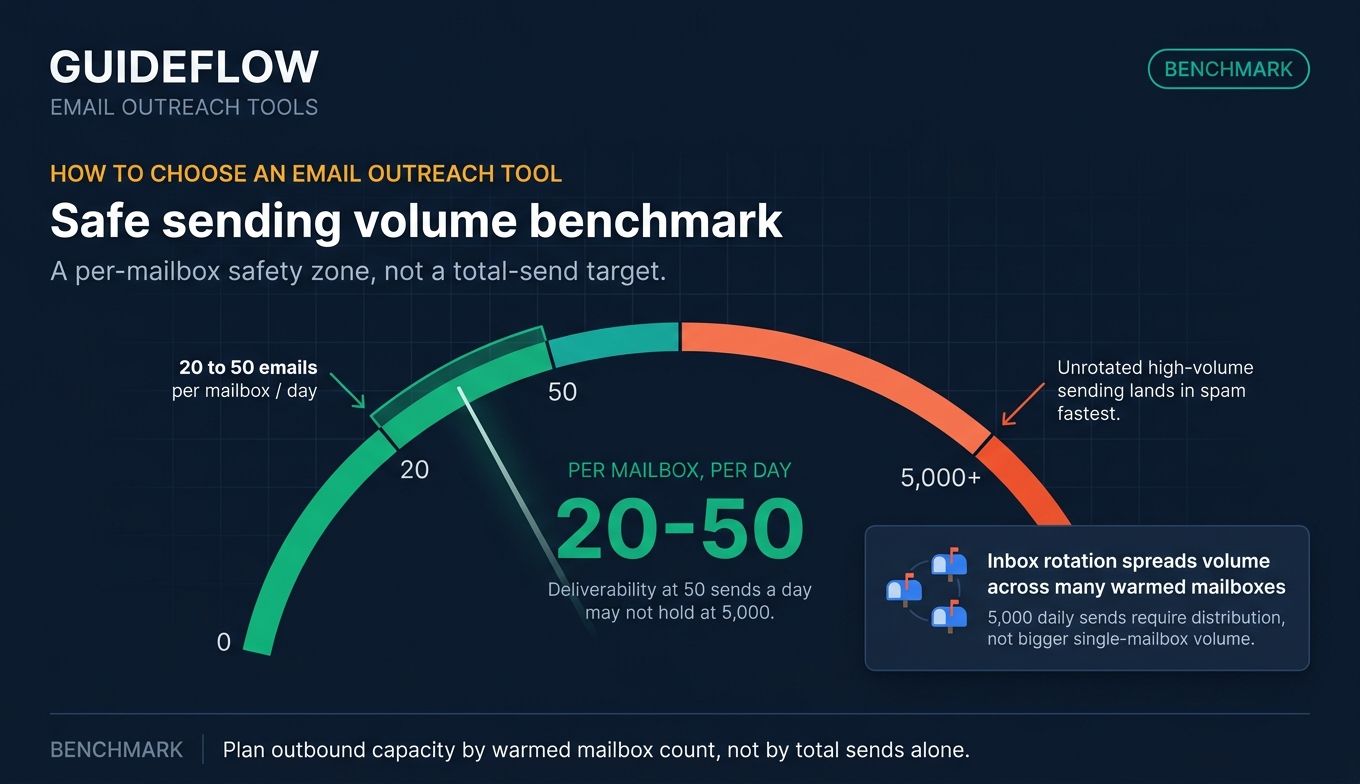
This is the criterion that decides whether your outreach lands or dies. Confirm the tool offers inbox warmup, inbox rotation across multiple mailboxes, sending throttles, and sender reputation monitoring. Then verify it holds up at your actual send volume, not a demo's worth. A tool that protects deliverability at 50 sends a day may not at 5,000.
CRM and workflow fit
For AEs, a tool that doesn't sync to the CRM creates a second job: rebuilding deal context by hand. Check that activity, replies, and booked meetings flow into Salesforce, HubSpot, Pipedrive, or whatever you run. Native two-way sync beats a one-directional export every time, because forecasting depends on accurate, current data.
Lead data and verification
Decide whether you want a built-in database or plan to bring your own lists. Tools like Apollo, Instantly, Lemlist, and Snov.io bundle data and sending. Either way, confirm there's email verification in the flow. Verification before sending is the cheapest way to cut bounce rates and protect domain reputation. If sourcing intent signals matters to your motion, our roundup of buyer intent data providers is worth a scan.
Personalization and AI quality
Volume without relevance gets ignored. Test the AI copy and merge variables on a real list before you buy. Can it personalize first lines without sounding robotic? Strong personalization is what separates a 3 percent reply rate from a double-digit one, so treat this as a buying factor, not a nice-to-have. Many of these tools overlap with the broader AI sales tools landscape worth evaluating.
Pricing model and scalability
Watch how cost scales. Per-inbox pricing rewards high-volume senders, while per-seat pricing can punish growing teams. Map the tool's model against your roadmap: a price that works for three reps may break at ten. Confirm the entry tier covers your needs and the next tier doesn't blindside your budget.
Conclusion
The right email outreach tool isn't the one with the longest feature list. It's the one that lands in the inbox and keeps your deals organized so outreach turns into booked meetings.
For high-volume outbound, Instantly and Smartlead lead on deliverability and unlimited inboxes. For prospecting and outreach in one tool, Apollo's built-in database is hard to beat. CRM-native AEs who live in Salesforce or HubSpot get the cleanest workflow from Klenty. Teams that compete on relevance should test Lemlist's personalization, while solo founders and lean budgets are well served by GMass and Snov.io.
Your next step is simple. Pick two or three tools from this list that match your send volume, your CRM, and your budget, then run a real campaign on each during the trial. Watch reply rates, inbox placement, and how cleanly activity syncs to your pipeline. The tool that protects deliverability and fits your workflow without adding admin is the one that turns cold sends into qualified conversations, and that's the only metric that moves your number.
FAQ
It depends on your use case. For high-volume cold email, Instantly leads on unlimited inboxes and warmup. For combined prospecting and outreach, Apollo's built-in B2B database makes it a strong all-in-one. For CRM-native sales teams, Klenty's deep Salesforce, HubSpot, and Pipedrive sync keeps deal context intact. Match the tool to your motion, send volume, and CRM rather than chasing a single winner.
A CRM is your system of record for deals, contacts, and pipeline. An email outreach tool sends and automates cold and follow-up campaigns at scale while protecting deliverability. The two work together: outreach tools sync activity, replies, and meetings back into the CRM so your forecast stays accurate. Most AEs run both, with the outreach tool feeding the CRM.
They use several layers. Inbox warmup gradually builds sender reputation on new mailboxes. Inbox rotation spreads volume across multiple mailboxes so no single inbox trips spam filters. Throttling caps how many emails go out per inbox per day. Bounce detection and email verification cut bad addresses before sending. Together these keep your domain healthy as volume scales.
Some offer free tiers or trials. Apollo has a free-forever Starter plan after the trial downgrade. Snov.io includes a free Trial plan that renews every 30 days. Most others, including Smartlead, Klenty, and Woodpecker, offer free trials (often 7 to 14 days) rather than permanent free plans. Saleshandy provides free plans for its Inbox Placement Test and CRM. Always check current limits on the vendor's live pricing page.
A common safe practice is roughly 20 to 50 cold emails per mailbox per day, ramped up gradually after warmup, in line with Google and Yahoo bulk sender requirements. The exact number depends on domain age, reputation, and warmup status. This is why inbox rotation matters: spreading volume across many warmed mailboxes lets a team send thousands per day without overloading any single inbox. Sending too much, too fast from one domain is the fastest way to land in spam.
Some do, and some are email-only. Klenty, Lemlist, Apollo, Mailshake, and Saleshandy support multichannel cadences that combine email with LinkedIn, calls, SMS, or WhatsApp. Tools like Instantly, Smartlead, and GMass focus primarily on email at volume. If your motion depends on coordinated email plus phone or LinkedIn steps, prioritize a multichannel-first platform.
For solo founders already in Gmail, GMass offers near-zero setup with unlimited emails on every plan. For lean teams wanting prospecting and outreach combined affordably, Snov.io bundles an email finder, verifier, and campaigns at a low entry price. Saleshandy is another budget-friendly pick that doesn't skimp on deliverability tooling. All three keep costs predictable as a small team grows.
Track outcomes, not just sends. Reply rate and positive reply rate tell you whether your messaging resonates. Meetings booked is the metric that ties outreach to pipeline. Bounce rate and inbox placement reveal deliverability health before it costs you replies. AEs should watch how many sends convert to qualified conversations, since that's what feeds the forecast.