You booked the show. Then the contract lived in your email, the deposit invoice lived in a spreadsheet, the load-in time lived in a text thread, and the settlement lived in your head. A week later someone asks what the guarantee was, and you spend twenty minutes reconstructing a deal you closed last month.
That is [the actual problem artist management software solves. Not "productivity." Not "collaboration." It solves the fact that a single booking touches contracts, payments, calendars, and three or four people, and every one of those touchpoints currently lives somewhere different.
The category is growing because the pain is real. The global artist management software market was valued at $1.2 billion in 2025 and is projected to reach $2.6 billion by 2034, a 9.8% CAGR, according to MarketIntelo (2025).](https://marketintelo.com/report/artist-management-software-market) Cloud-based tools accounted for 67.2% of global revenues that year, which tells you most of this money is going to SaaS that centralizes operations rather than desktop point tools.
For anyone running a roster, a booking agency, or a solo artist business, the question in 2026 is not whether to replace the spreadsheets. It is which artist management platform actually fits how you work, and whether you need a purpose-built musician management software tool or a flexible general-purpose one. This guide answers both.
What's inside
This guide covers seven tools that music teams actually use to run bookings, contracts, invoices, tours, and roster coordination. We selected them across four criteria: relevance to artist, manager, and agency workflows; breadth across booking, collaboration, planning, and admin automation; verified public pricing; and fit for teams that want to reduce manual overhead rather than add more tabs.
The list includes both specialized artist management software (built specifically for the music business) and general-purpose tools (databases and work management apps that music teams adapt). We flag which is which, because the right pick depends on whether you want an opinionated workflow out of the box or maximum flexibility to build your own.
TL;DR
- Best for booking-heavy workflows: Gigwell, with contracts, payments, and venue discovery in one place.
- Best for agency-style artist management: Stagent, for booking agencies juggling rosters, contracts, and invoices.
- Best for team collaboration and planning: Artist Growth, for cross-functional music teams managing calendars, tickets, and finances.
- Best for AI-assisted release planning: Orphiq, an artist workspace centered on release strategy and content.
- Best for simple internal organization: Notion, a flexible workspace for docs, calendars, and lightweight tracking.
- Best for customizable workflow tracking: Airtable, a database-like operations layer for rosters, releases, and bookings.
- Best for task execution and coordination: Asana, for teams that need clear ownership and deadlines.
The short version: pick one specialized tool and one flexible tool, then decide which owns the source of truth.
What is artist management software?
Artist management software is a centralized platform for coordinating the business side of an artist or roster: bookings, contracts, invoices, tour planning, roster management, and team collaboration in one place instead of scattered across email, spreadsheets, and calendars.
At its core, it replaces the manual admin that eats a manager's or agent's week. Instead of tracking a deal across five tools, the deal, the contract, the payment, and the calendar entry live in one connected system with shared visibility.
Core capabilities most buyers evaluate:
- Booking and deal tracking: capture inquiries, offers, holds, and confirmed shows in one pipeline instead of an inbox.
- Contract and payment workflows: generate contracts, collect e-signatures, and automate invoicing and payment reminders. This is the heart of contract management for artists.
- Calendar and tour planning: shared availability, routing, and itineraries, which is where tour planning software earns its place.
- Roster and team coordination: manage multiple artists and the people working each one, the backbone of artist roster management.
- Document and asset management: riders, stage plots, W-9s, and press assets attached to the right show or artist.
- Reporting and operational visibility: see confirmed revenue, outstanding invoices, and upcoming dates without rebuilding a report by hand.
Booking management software and booking agency software are close cousins in this category. The difference is scope: some tools focus tightly on the booking-to-payment cycle, while broader entertainment management software adds roster, tour, and finance layers on top. Where you land depends on how many artists you run and how much of the business you need in one view.
When to use artist management software
Not every artist or team needs a dedicated platform on day one. Here is how to tell when the switch pays off.
Centralize bookings and deal flow
When your booking process is a stack of email threads, a shared calendar, and a running spreadsheet, deals slip. Someone double-books a date. An offer expires because nobody followed up. A confirmed show has no signed contract on file. This is the clearest trigger for booking management software: the moment tracking deals across tools costs more time than the deals are worth managing manually.
Coordinate tours, logistics, and approvals
Tours multiply the coordination problem. Routing, hotels, advance details, guest lists, and settlements all need to move between the artist, the agent, and the road team. When handoffs happen by text and nobody has a single view of the itinerary, things get missed. Tour planning software and shared calendars fix the visibility gap so the whole team works from the same schedule.
Replace scattered spreadsheets and docs
Sometimes the pain is not any single workflow, it is the accumulated admin overhead and lost context. You have a spreadsheet for finances, a folder for contracts, a calendar for dates, and none of them talk to each other. Manual spreadsheet replacement is the driver here: teams reach a point where the cost of stitching everything together by hand is higher than the cost of a real system.
Comparison table
Here is a side-by-side view of the seven tools, sorted from the most artist-management-specific platforms to the flexible general-purpose ones. Pricing reflects current public pricing at the time of writing. G2 ratings are included where a verified public rating exists.
| # | Product | Intent | Key use case | Pricing | G2 rating |
|---|---|---|---|---|---|
| 1 | Orphiq | AI artist workspace | Release planning, content, and career strategy | Free; paid from $37/mo | Not rated |
| 2 | Gigwell | Booking agency software | Bookings, contracts, payments, tour logistics | From $33/mo (billed annually) | Not listed |
| 3 | Stagent | Artist and agency management | Bookings, contracts, invoices, tour scheduling | From €39/mo (billed yearly) | Not rated |
| 4 | Artist Growth | Music business management | Roster, calendar, tickets, finances | From $9/mo per seat | Not listed |
| 5 | Notion | Flexible workspace | Docs, calendars, lightweight tracking | Free; paid from $10/member/mo | Not listed |
| 6 | Airtable | No-code database | Roster, release, and booking tracking | Free; paid from $20/user/mo | Not listed |
| 7 | Asana | Work management | Task ownership, deadlines, coordination | Free; paid from $10.99/user/mo | 4.4/5 |
The top four are purpose-built for music and entertainment. The bottom three are general-purpose tools that music teams adapt into an operations layer. Both approaches work. The rest of this guide breaks down where each one fits.
1. Orphiq
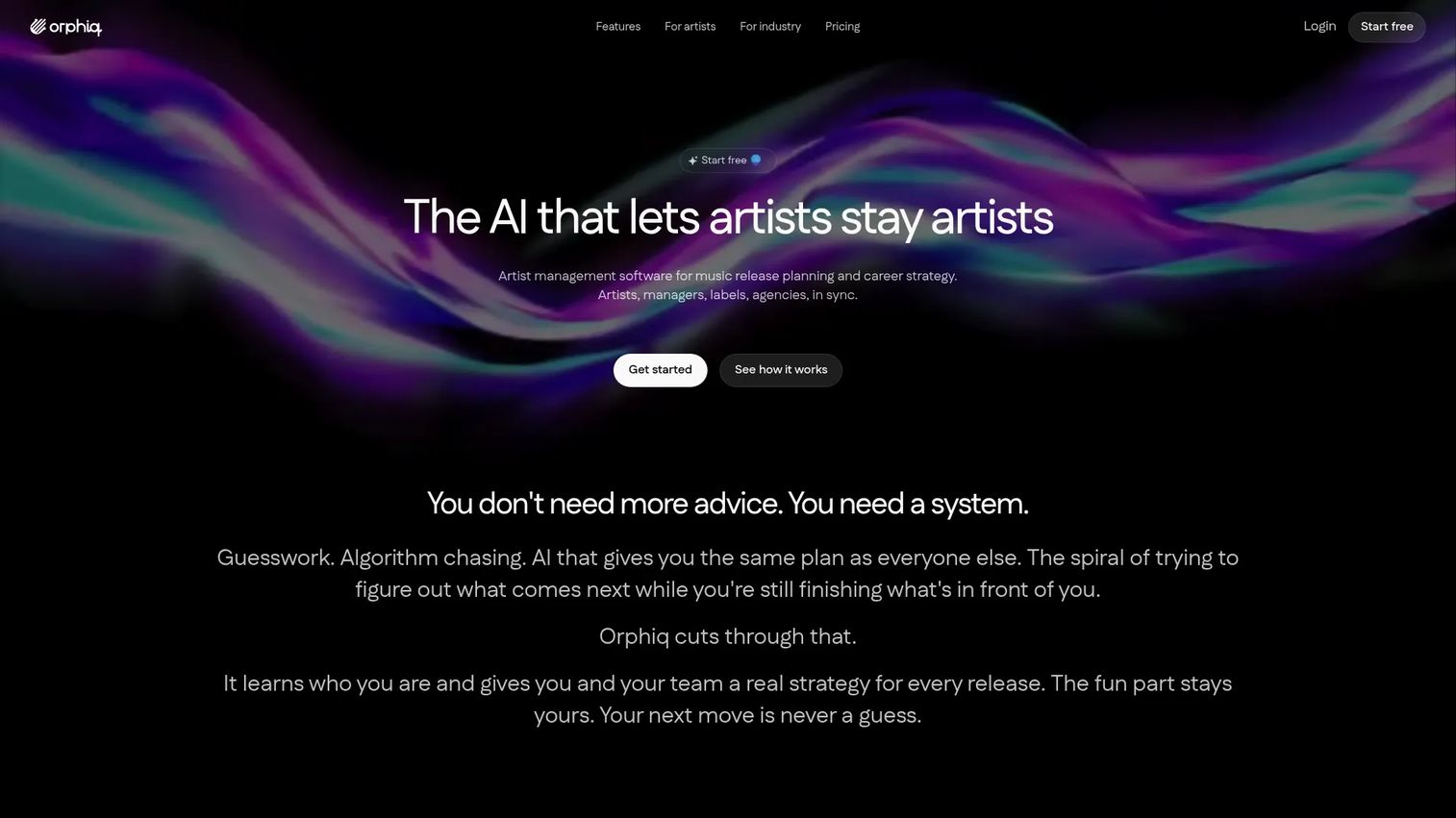
Orphiq is an AI workspace built for music artists and their teams, centered on release planning and career strategy rather than the booking-to-invoice cycle. It positions itself as a place where independent artists, managers, labels, and agencies plan releases, generate content, and coordinate projects in one space. That makes it a comparison-friendly entry: it overlaps with the category on collaboration and roster planning but leans toward the creative and strategic side of an artist's business.
Best for: independent artists and small teams who want AI-assisted release planning and content alongside project coordination.
Key strengths
- Music release planning: structure a release timeline and the tasks around it so nothing slips before drop day.
- Content creation AI: generate marketing and content assets without leaving the workspace.
- Team collaboration and project management: coordinate the people around an artist on shared projects.
Why choose Orphiq: If your bottleneck is release strategy and content velocity rather than contracts and settlements, Orphiq fits the gap that heavier booking tools leave open. It is strongest for artists building career momentum, and it complements a booking-focused tool rather than replacing one.
Orphiq pricing: Orphiq offers a free tier at $0/month and separate plan tracks for artists and industry users. Artist plans run DIY at $37/month, Pro at $97/month, and Star at $397/month, all billed monthly. Industry-side plans include a free Access Pass, Industry Pass at $37/month, Specialist Pass at $157/month, and Executive Pass at $397/month. Pricing is publicly listed on the Orphiq site.
2. Gigwell
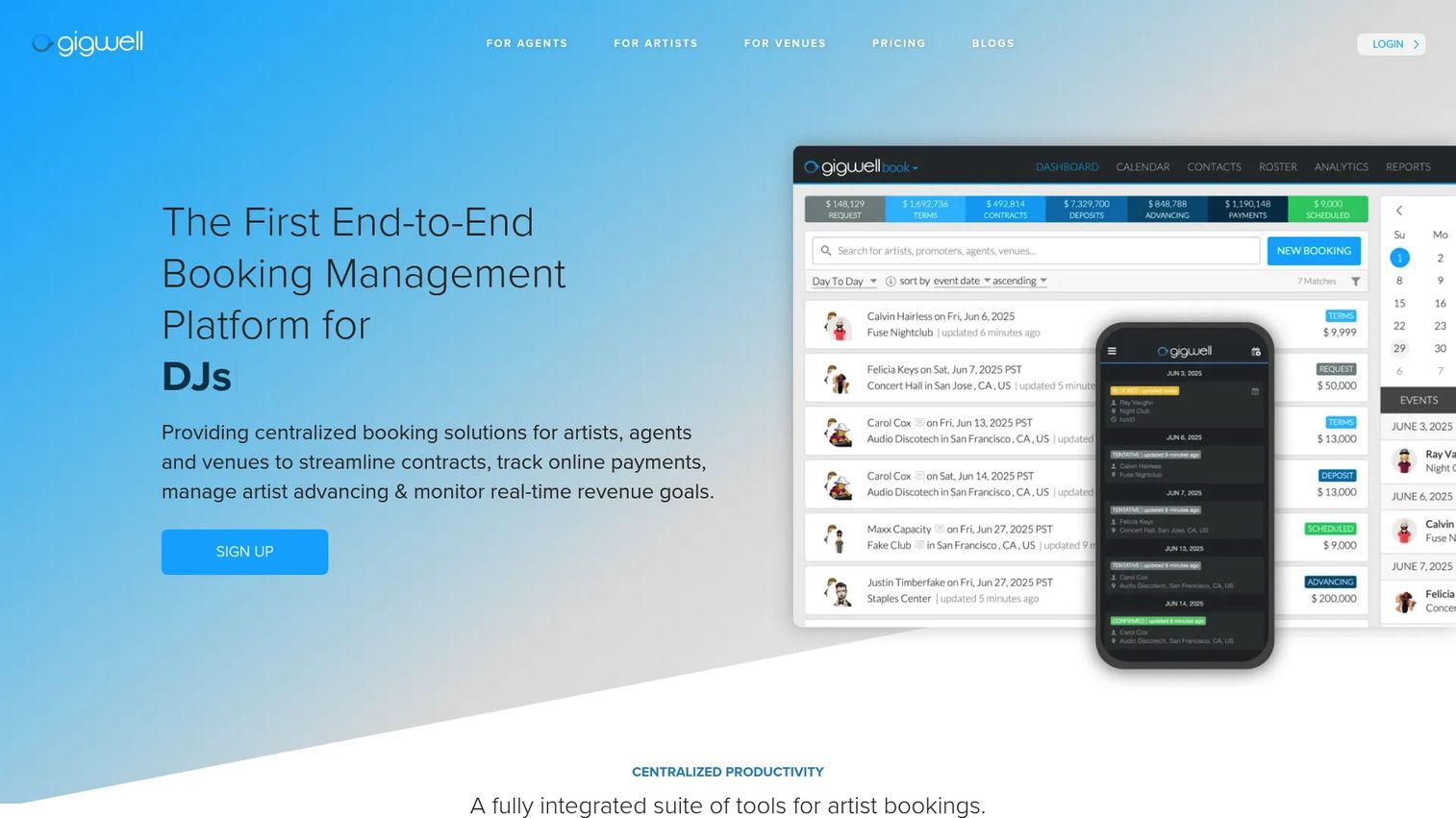
Gigwell is end-to-end booking agency software for artists, agencies, and venues, and it is the deepest commercial fit on this list for booking-centric operations. It ties the full booking cycle together: find talent buyers and venues, build and sign contracts, and collect payments without leaving the platform. For a team whose week revolves around booking workflow automation, this is the tool built for exactly that motion.
Best for: booking teams and agencies that need contracts, payments, and venue discovery in one connected platform.
Key strengths
- Tour IQ venue and talent buyer database: search venues and buyers to source and route dates, the backbone of tour logistics software.
- Contract builder with e-signatures: generate and sign contracts in-platform, which is contract management for artists done inside the booking flow.
- Online payments and payment reminders: send invoices, collect payments, and automate reminders, covering invoice and payment automation end to end.
Why choose Gigwell: Gigwell earns its spot when booking is the business. It connects venue discovery, contracts, payments, and tour logistics into one workflow, so an agent is not exporting data between four tools to close and settle a single show. It fits agencies and busy booking desks more than solo hobbyists.
Gigwell pricing: Gigwell shows public pricing across two product lines. Tour IQ starts at $33/month for the 500 tier, $99/month for 1500, and $199/month for Unlimited, all billed annually. Ticket Counts Pro runs from $79/month (Basic) up to $319/month (Unlimited), also billed annually. There is no free tier listed. Pricing is published on the Gigwell site.
3. Stagent
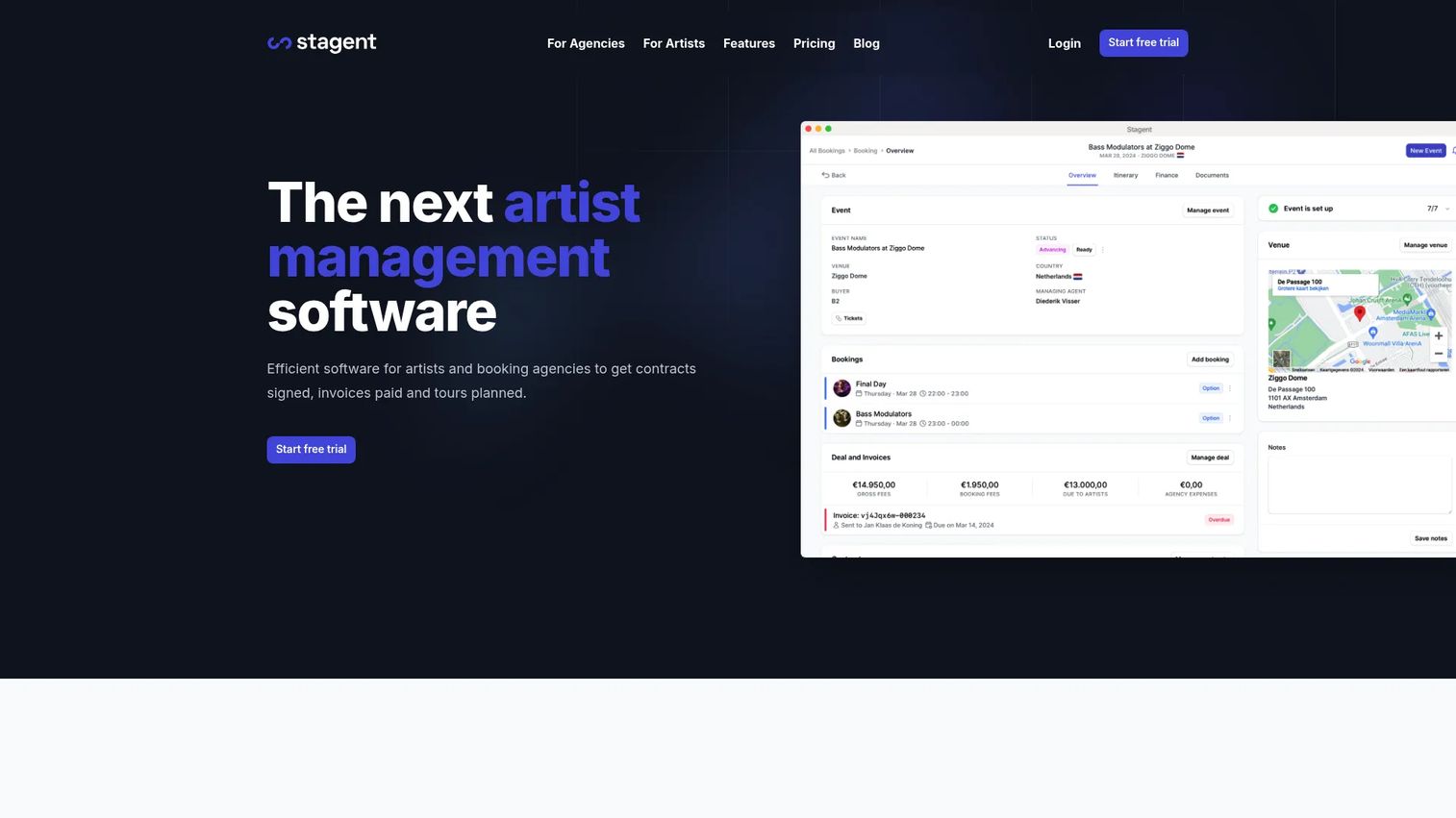
Stagent is artist management and booking software built for artists, booking agencies, and management teams. It positions itself as booking agency software that keeps bookings, contracts, invoices, and tour logistics in one place, with a clear split between solo and agency-scale plans. Where Gigwell leans into venue discovery, Stagent focuses on making the day-to-day booking-to-payment cycle clean and simple.
Best for: booking agencies and artists who want a focused tool for bookings, contracts, invoices, and tour scheduling without enterprise complexity.
Key strengths
- Contracting and eSignatures: build and sign contracts in-platform, streamlining contract management for artists.
- Invoices and digital payments: send invoices and collect payments so the money side stays connected to the booking.
- Tour schedule and itinerary management: keep dates, routing, and itineraries organized for the artist and the team.
Why choose Stagent: Stagent fits smaller operators who need focus more than breadth. If you are a solo agent or a small booking agency, its Solo and Agency plans map cleanly to how you are structured, and the booking simplification is the point. Larger operations can grow into the Enterprise tier without switching platforms.
Stagent pricing: Stagent lists pricing in euros with a 14-day free trial. The Solo plan is €39/month billed yearly or €49/month monthly. Agency is €119/month yearly or €129/month monthly. Enterprise runs €799/month yearly or €849/month monthly. There is also startup pricing for up to five artists at €59/month or €589/year. Pricing is published on the Stagent site.
4. Artist Growth
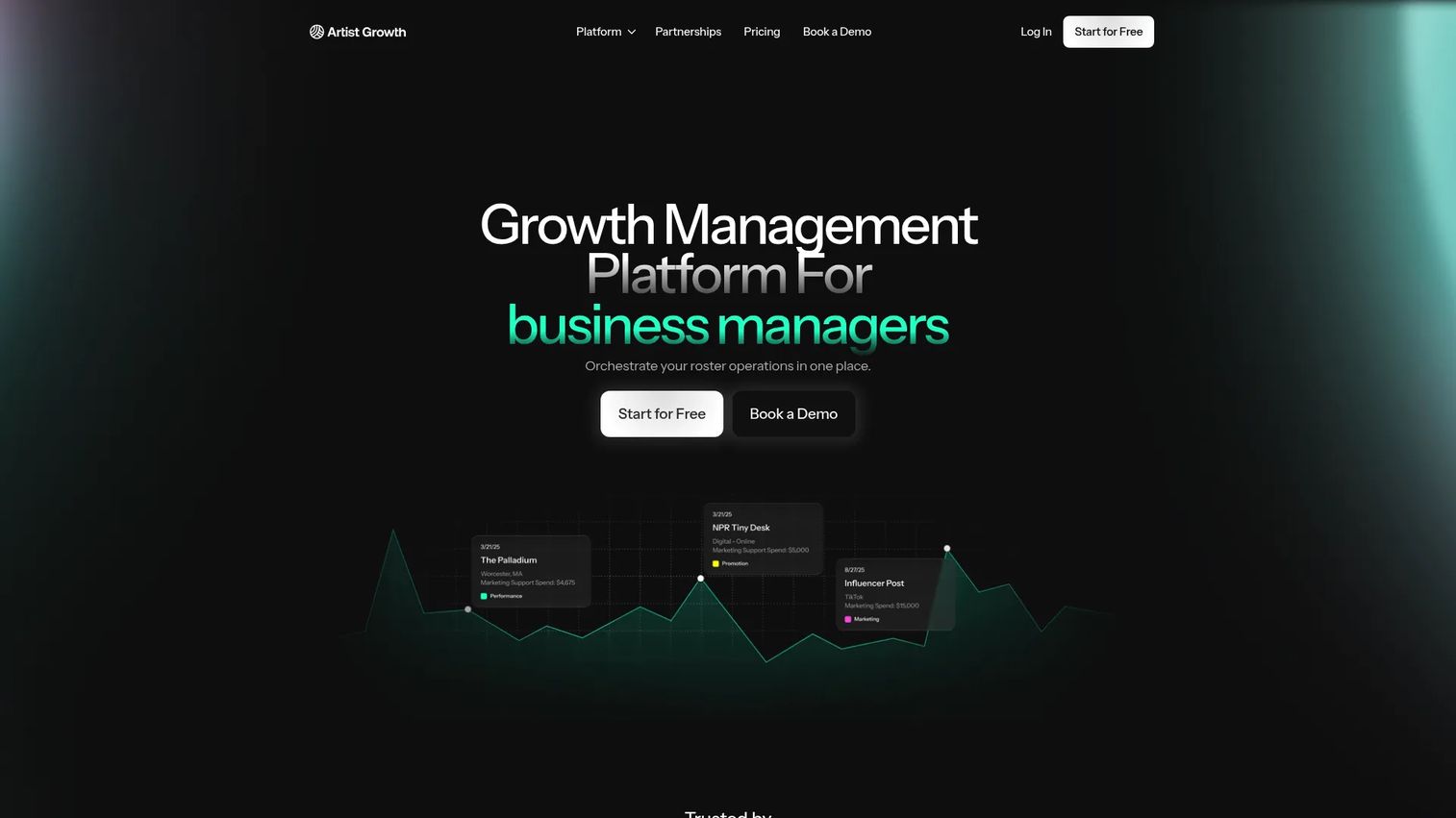
Artist Growth is a music business management platform for organizing calendars, projects, tickets, and finances across a team. It leans into collaboration and cross-functional coordination, which makes it a strong fit for artist teams and organizations that need more than a booking calendar. Think roster management platform plus event management for artists, with the financial and ticketing layers built in.
Best for: music teams that need centralized roster, calendar, ticket, and financial management with real collaboration.
Key strengths
- Project management: coordinate the work around releases, tours, and campaigns as structured projects.
- Event management: organize shows and events with the details attached, supporting event management for artists end to end.
- Ticket management: track ticketing and guest workflows alongside the rest of the operation.
Why choose Artist Growth: Artist Growth fits when the business spans multiple people and functions, not just one agent closing dates. As artist collaboration software, it centralizes roster, calendar, tickets, and finances so a whole team works from one system. It scales from small teams into enterprise via per-seat pricing.
Artist Growth pricing: Artist Growth publishes per-seat pricing. Rise is $9/month per seat and Scale is $14/month per seat, with Enterprise on custom pricing. The site notes a 14-day free trial and unlimited free read-only seats, so collaborators who only need to view do not add cost. Pricing is listed on the Artist Growth site.
5. Notion
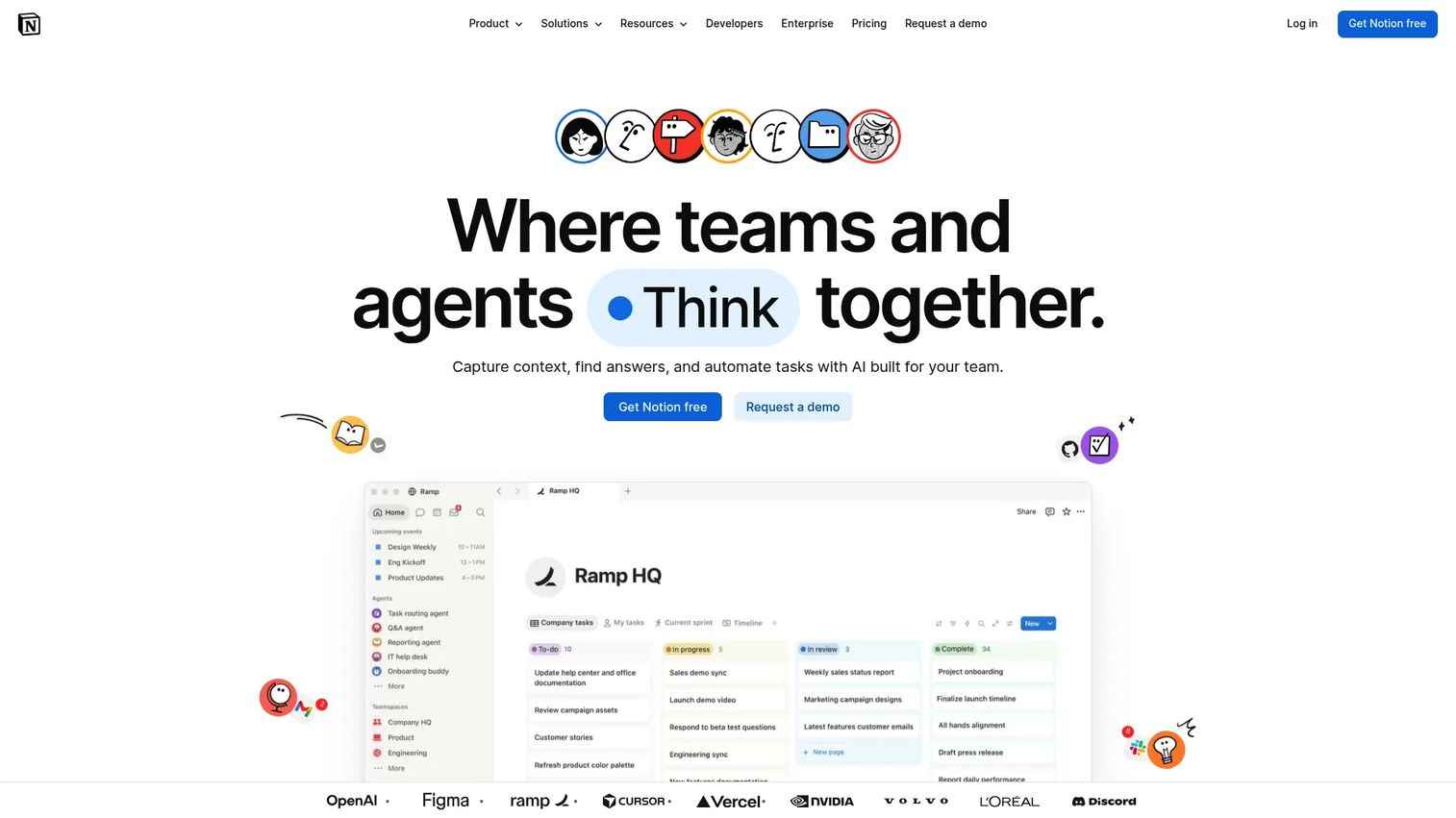
Notion is an all-in-one workspace for docs, wikis, databases, and AI-assisted collaboration. It is not purpose-built artist management software, but plenty of music teams run their operations inside it because the flexibility is the draw. You can build a booking tracker, a tour calendar, a roster database, and a shared knowledge base in one workspace and shape it exactly to how you work.
Best for: artist teams that want maximum customization and a low starting cost for docs, planning, and lightweight tracking.
Key strengths
- Docs, wikis, and databases: build booking trackers, tour plans, and roster records as connected databases.
- AI features: use Notion Agent and AI meeting notes to speed up planning and documentation.
- Enterprise search and connections: search across the workspace and connect to external apps you already use.
Why choose Notion: Notion is the pick when you want to design your own system rather than adopt an opinionated one. For music team collaboration, it centralizes docs, calendars, and tracking without a music-specific price tag. The trade is that you build the workflows yourself, which is a benefit if you want control and a cost if you want it ready out of the box.
Notion pricing: Notion offers a free plan at $0 per member per month. Plus is $10 per member per month and Business is $20 per member per month, with Enterprise on custom pricing. Custom Agents are free to try, then $10 per 1,000 monthly Notion credits. Pricing is published on the Notion site.
6. Airtable
Airtable is a digital operations platform for building workflows and apps on structured data. For artists and managers, it functions as a database-like operations layer: customizable tracking for rosters, releases, bookings, and planning, with the structure of a spreadsheet and the power of a database. If your instinct is "this should be a table, but smarter," Airtable is where that instinct lives.
Best for: teams that want a flexible no-code database plus automation and custom views for structured artist workflows.
Key strengths
- Interface Designer: build custom views and lightweight apps on top of your data for different roles.
- Automations: trigger reminders, status changes, and handoffs so records update without manual work.
- Sync and administration: keep data connected across tables and control who sees what.
Why choose Airtable: Airtable is the strongest general-purpose option when your operation is fundamentally about structured records: a roster, a release calendar, a booking pipeline. It is a serious manual spreadsheet replacement that adds automation and custom views without forcing you into someone else's workflow. Music teams that outgrow a spreadsheet but do not want a full booking suite land here often.
Airtable pricing: Airtable has a free plan at $0. The Team plan is $20 per user per month and Business is $45 per user per month, both billed annually. Enterprise Scale is custom pricing through sales. Pricing is published on the Airtable site.
7. Asana
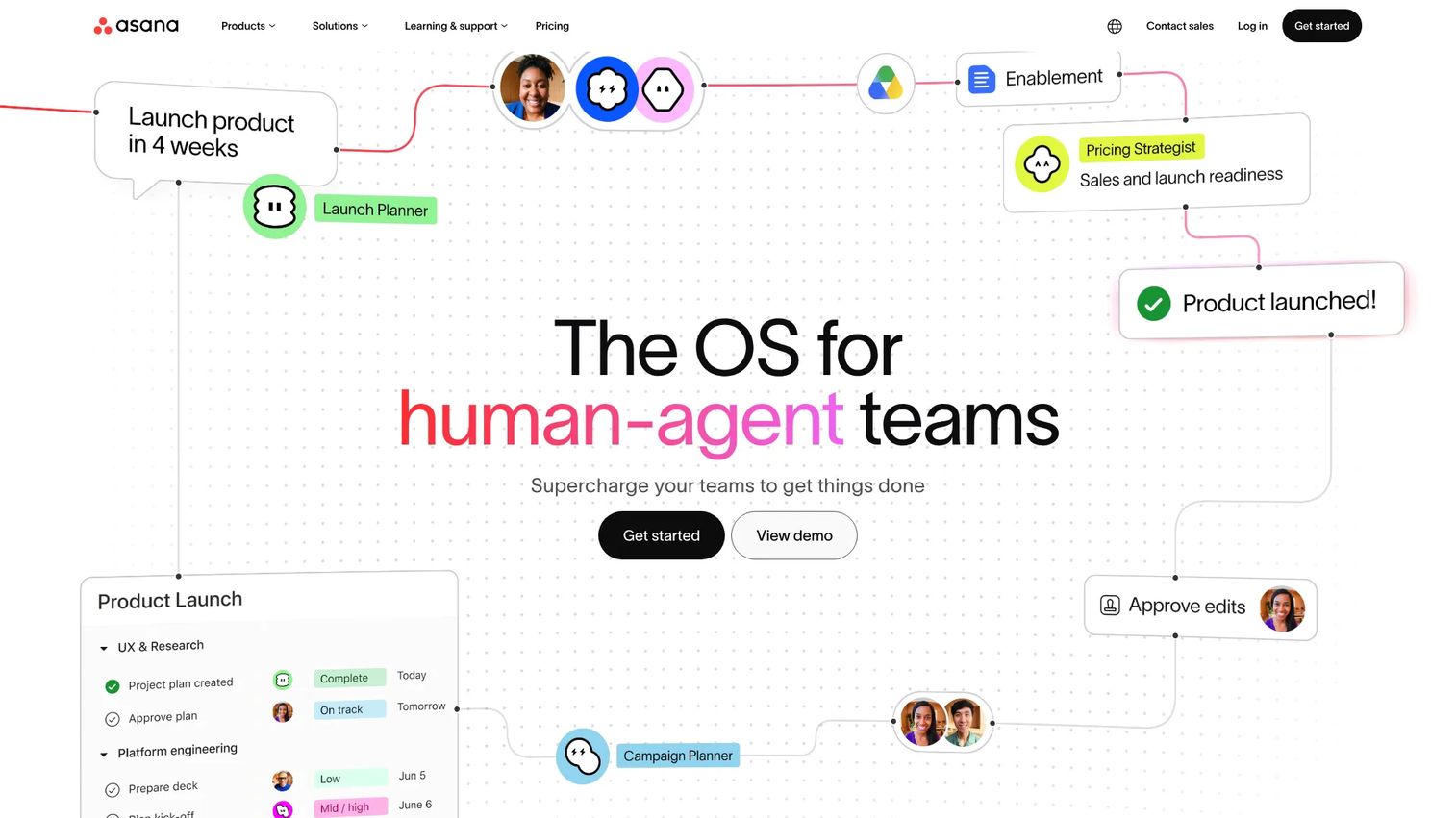
Asana is work management software for teams to organize, track, and automate projects. For artist teams, managers, and agencies, it is the tool for task ownership, deadlines, and cross-functional coordination. It will not generate a contract or send an invoice, but it will make sure the release checklist, the tour prep list, and the campaign timeline all have owners and due dates. Position it as an operations complement, not a standalone artist management suite.
Best for: artist teams that need clear task ownership, deadlines, and collaboration across projects.
Key strengths
- Task and project management: assign owners and deadlines so nothing sits unclaimed.
- Multiple views: list, board, calendar, timeline, and Gantt views for different kinds of planning.
- Automation, forms, and reporting: intake requests via forms, automate routine steps, and report on progress.
Why choose Asana: Asana earns its place as the execution layer for music team collaboration. When the problem is "who owns this and when is it due" rather than "where is the contract," Asana is the fit. It pairs well with a specialized booking tool: the booking platform owns deals and money, Asana owns the work around them.
Asana pricing: Asana has a free Personal plan for up to two users. Starter is $10.99 per user per month billed annually ($13.49 monthly), and Advanced is $24.99 per user per month billed annually. Enterprise and Enterprise+ are contact-sales pricing. Asana holds a 4.4/5 rating on G2. Pricing is published on the Asana site.
How to choose the right tool
Before you commit, run your shortlist through this checklist. The goal is a centralized platform that fits your actual operation, not the one with the longest feature list.
Match the tool to your primary workflow
Be honest about what eats your week. If it is bookings, contracts, and payments, a purpose-built booking tool like Gigwell or Stagent will save you the most time. If it is release planning and content, Orphiq fits. If it is coordinating a team across many moving parts, Artist Growth or a general-purpose tool fits better.
Decide specialized versus flexible
Specialized tools give you an opinionated workflow out of the box: contracts, invoices, and tour logistics already wired together. Flexible tools like Airtable, Notion, and Asana give you a blank canvas you shape yourself. Specialized saves setup time; flexible gives control. Most teams end up running one of each.
Check the money workflow
For artist business management, the payment side is where tools separate. Confirm the platform handles invoicing, deposits, and payment reminders the way you actually collect money, including currency and international payouts if you tour abroad.
Test the migration path
Your data lives in spreadsheets and email today. Before you buy, confirm you can import your roster, your calendar, and your open deals without rebuilding everything by hand. A free trial is the fastest way to see whether the switch is a weekend or a month.
Conclusion
The right pick comes down to scenario. For booking-centric workflows where contracts, payments, and tour logistics run the business, Gigwell is the deepest fit. For streamlined agency operations that need bookings, contracts, and invoices without enterprise weight, Stagent is the cleaner match. For collaborative teams juggling roster, calendar, tickets, and finances, Artist Growth is built for it. And if your bottleneck is release strategy, Orphiq covers a different but real need.
If you would rather build your own system, Airtable, Notion, and Asana give you the flexibility to replace scattered spreadsheets with self-serve artist operations you control.
The practical move: evaluate one specialized artist management platform and one flexible general-purpose tool side by side before committing. Run your real bookings and real roster through a trial of each. The one that reduces admin fastest, without making you rebuild your whole process, is the one worth paying for.
FAQs
Artist management software centralizes the business operations behind an artist or roster: bookings, contracts, invoices, tour planning, and team coordination. It replaces scattered spreadsheets, email threads, and calendars with one connected system so a deal, its contract, its payment, and its calendar entry all live in the same place. Teams use it to reduce admin overhead and make bookings, payments, and planning repeatable.
For a solo artist doing a handful of shows a year, a spreadsheet may still be enough. The value kicks in once tracking deals, contracts, and payments across tools costs more time than it saves. Several platforms, including Orphiq, Stagent, and Airtable, offer free tiers or low-cost entry plans, so independent artists can start small and scale into paid features as the workload grows.
Booking agencies should prioritize booking agency software that handles the full cycle: deal tracking, contract generation with e-signatures, invoicing, and payment collection. Roster management matters when you represent multiple artists, and shared calendars matter when several agents coordinate dates. Tools like Gigwell and Stagent are built specifically for this agency motion, with plans that scale from solo agents to full agencies.
Yes, and that is usually the point. A dedicated platform connects the data that spreadsheets and calendars keep separate, so a booking, its contract, and its payment status update together instead of in three places. General-purpose tools like Airtable and Notion are a strong manual spreadsheet replacement if you want to design your own structure, while specialized tools replace the whole stack with a purpose-built workflow.
Artist management software is built for the music business specifically, with bookings, contracts, invoices, and tour logistics wired together. Project management tools like Asana handle task ownership, deadlines, and coordination across any kind of work, but do not generate contracts or process payments. Many teams use both: the artist management platform owns deals and money, and the project tool owns the work around them.
For tour logistics software combined with contract management for artists, Gigwell is the deepest fit, with venue discovery, contract building, payments, and tour routing in one platform. Stagent is a strong alternative for teams that want focused tour scheduling, contracting, and invoicing without enterprise complexity. Both keep the contract and the tour date connected to the same booking record.
Start by exporting your current roster, calendar, and open deals into a clean format the new tool can import. Most platforms support CSV import, and many offer a free trial so you can migrate a slice of your data first and confirm it maps correctly before moving everything. Run a few live bookings through the new system in parallel with your spreadsheets for a couple of weeks, then cut over once you trust it as the single source of truth.