You run three production units on three different spreadsheets. Purchasing lives in email. Finance reconciles rolls and lots by hand at month end. Then a customer asks where their order is, and nobody can answer in under an hour.
That is the daily reality for most textile operations before they consolidate onto one system. The global apparel and textile ERP software market was valued at USD 2.8 billion in 2025 and is forecast to reach USD 6.1 billion by 2034 at a 9.1% CAGR, according to Dataintelo (2025). Growth is not driven by hype. It is driven by teams that outgrew disconnected tools and needed real-time visibility across production, purchase, inventory, quality, finance, and sales.
Textile ERP is about knitting those functions into one operating layer. Not another dashboard bolted onto chaos. A system where a dye lot, a purchase order, a shipment, and a ledger entry all reference the same source of truth. For an operator trying to prove the business scales without manual coordination, that is the whole game.
This guide is comparison-led and buyer-first. It ranks 12 options by operating model, not by feature count, so you can shortlist fast and validate the rest in a demo.
What's inside
This guide is for operations leaders, founders, and manufacturing buyers evaluating erp software for the textile industry across garment, weaving, dyeing, apparel, and retail workflows. We shortlisted the 12 tools below on four criteria that matter when you actually implement: textile and apparel workflow fit, depth of MRP and production planning, inventory control with lot and roll traceability, and cloud strength plus pricing transparency.
We did not rank by marketing polish. We ranked by how well each system handles the messy, department-crossing reality of textile manufacturing software, and where each one fits by company size and operating complexity.
TL;DR
- Best overall fit for large or complex operations: Oracle NetSuite ERP, for multi-entity finance, inventory, and operations control in one cloud suite.
- Best textile-specific workflow depth: WFX Textile ERP, built around production, costing, and shipment workflows for fashion and textile manufacturers.
- Best for India-focused SMB and mid-market: LOGIC ERP, for configurable retail, distribution, and manufacturing workflows.
- Best for flexible open-source deployment: ERPNext, free and open source with hosting from $5/month.
- Best for apparel-heavy teams with SKU and variant complexity: ApparelMagic, an apparel-specific ERP and PLM.
- Best for lower-friction textile-specific setup: TexSavvy from AES, purpose-built for home textile value chains.
What is textile ERP software?
Textile ERP software is an integrated system that manages the full operational lifecycle of a textile or apparel business, connecting production planning, procurement, inventory, quality control, traceability, finance, and sales in one platform. It replaces the disconnected spreadsheets and point tools that most mills and garment makers accumulate as they scale.
Unlike generic ERP, textile industry erp software is built or configured around the specifics of how fabric, yarn, and garments actually move. That means handling variants like color, size, and fabric composition, tracking material at the roll and lot level, and costing a bill of materials that changes with every style.
Core modules buyers should expect from an erp for the textile industry:
- Production planning and MRP: schedule production across departments, calculate material requirements, and sequence work orders against capacity.
- Procurement and purchase: manage supplier orders, raw material intake, and purchase approvals tied to production demand.
- Inventory control: track raw material, work in progress, and finished goods across multiple locations in real time.
- Quality control: define inspection checkpoints for incoming material, in-process work, and finished goods.
- Traceability: follow a lot, roll, or batch from raw material through to shipment for compliance and recalls.
- Finance: unify costing, accounts payable and receivable, and reporting against operational data.
- Sales and order management: handle order entry, allocation, and fulfillment across channels.
Textile-specific features worth confirming:
- Barcode and RFID inventory tracking for fast, accurate stock movements on the floor.
- Lot and roll management so fabric is tracked by physical unit, not just quantity.
- Batch and dye lot control to keep color-matched material grouped through production.
- Cloud textile ERP visibility so multiple units and locations report against one live dataset.
When to use textile ERP software
Manage textile production across multiple departments
When production, purchasing, inventory, and finance each live in a separate tool, every handoff is a place where information gets lost. A weaving unit finishes a batch, but procurement does not know to reorder yarn until someone emails. Textile ERP coordinates those functions in one system, so a completed work order automatically updates inventory, triggers the next purchase, and posts the cost. Fewer manual handoffs means fewer missed steps and faster decisions.
Track materials, rolls, and batches with more confidence
Fabric is not a simple SKU. A single style can pull from multiple dye lots, and a customer complaint or a compliance audit can require tracing one roll back to its raw material source. ERP with lot traceability, roll tracking, and batch control gives textile and apparel workflows a defensible record. Pair that with quality checkpoints at receiving, in-process, and finished goods, and you catch problems before they ship rather than after.
Replace disconnected tools with one operating layer
At some point a textile business outgrows spreadsheets, standalone accounting, and a generic ERP that was never built for fabric. The signal is usually reporting: month-end takes days, nobody trusts the inventory numbers, and the founder is still the only person who can answer where an order stands. Consolidating onto one textile ERP produces cleaner reporting and faster answers, which is exactly what a scaling operation needs to run without constant founder intervention.
Comparison table
Placed the most textile-specific and commercially relevant tools near the top. Pricing and ratings reflect verified first-party and G2 sources where available; where a vendor gates pricing behind a sales conversation, that is noted.
| # | Product | Intent | Key use case | Pricing | G2 rating |
|---|---|---|---|---|---|
| 1 | Oracle NetSuite ERP | Enterprise cloud suite | Multi-entity finance, inventory, and operations | Quote-based, free test drive | Not listed |
| 2 | WFX Textile ERP | Textile-native ERP | Production, costing, and shipment workflows | Quote-based | 4.2/5 |
| 3 | LOGIC ERP | SMB and mid-market ERP | Retail, distribution, and manufacturing | From ₹1,638/mo (billed yearly) | 4.8/5 |
| 4 | Onfinity ERP | Textile and apparel ERP | Manufacturing and order management | Not listed | 4.4/5 |
| 5 | ERPNext | Open-source ERP | Flexible, customizable operations | From $5/mo hosting | 4.3/5 |
| 6 | TexSavvy (AES) | Textile-specific ERP | Home textile value-chain coverage | Quote-based | Not listed |
| 7 | AIMS360 | Apparel ERP | Wholesale, DTC, multi-channel apparel | Quote-based (3 tiers) | 4.4/5 |
| 8 | Acumatica | Cloud ERP | Customizable mid-market operations | From $1,495/mo | 4.4/5 |
| 9 | SAP Business One | SMB ERP | Finance, inventory, and production | Quote-based | Not listed |
| 10 | Infor CloudSuite | Enterprise industry cloud ERP | Multi-site industry operations | Quote-based | Not listed |
| 11 | ApparelMagic | Apparel ERP and PLM | Variants, inventory, order processing | From $337/mo (annual) | 4.9/5 |
| 12 | Absolute ERP | IFS ERP consulting | Implementation and support services | Not listed | Not rated |
1. Oracle NetSuite ERP
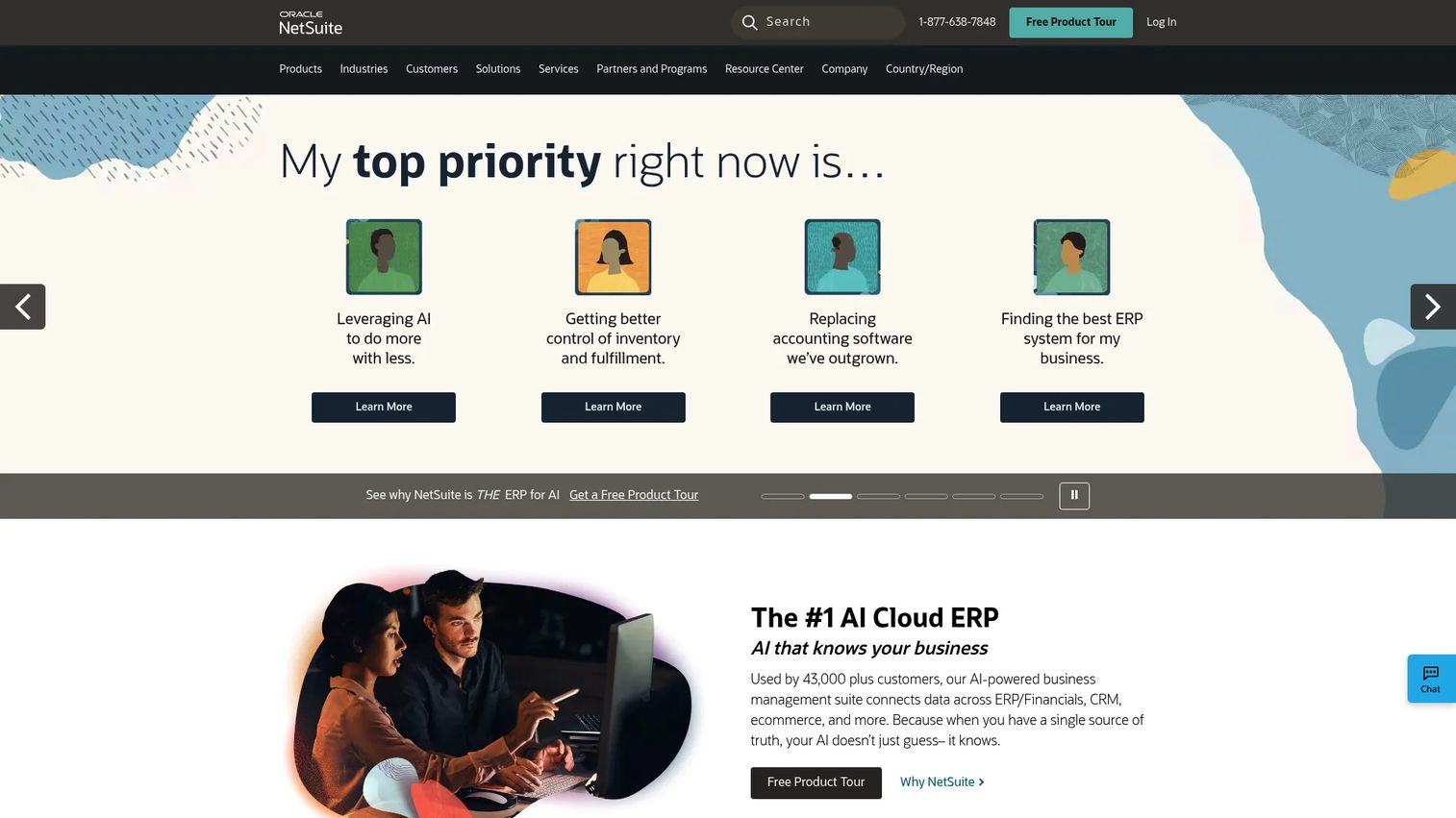
Oracle NetSuite ERP is a cloud ERP and business management suite covering financials, operations, commerce, CRM, and services. For a textile business running multiple entities, currencies, or subsidiaries, it centralizes the finance and operations layer that fragmented tools cannot. It is not textile-native out of the box, but its depth in inventory, multi-subsidiary reporting, and analytics makes it a strong backbone for complex operating models.
Best for: Midmarket to enterprise textile companies that need a unified cloud ERP across finance, inventory, and multiple business units.
Key strengths
- Cloud ERP and financial management: run finance, procurement, and inventory on one platform with real-time visibility.
- Multi-subsidiary and multi-currency support: consolidate reporting across units, regions, and currencies without manual reconciliation.
- Built-in analytics and reporting: surface operational and financial metrics clean enough to survive board scrutiny.
Why choose Oracle NetSuite ERP: If your textile operation has outgrown single-entity tools and needs one system to run finance and operations at scale, NetSuite is the most complete cloud suite here. It suits founders who care more about consolidated visibility and repeatable reporting than about pre-built fabric-specific modules, which typically come from a partner or configuration.
Oracle NetSuite ERP pricing: Oracle does not publish a list price on its NetSuite pages. Pricing is quote-based and scales with modules, users, and subsidiaries. Oracle does offer a free three-day test drive so you can evaluate the environment before engaging sales.
2. WFX Textile ERP
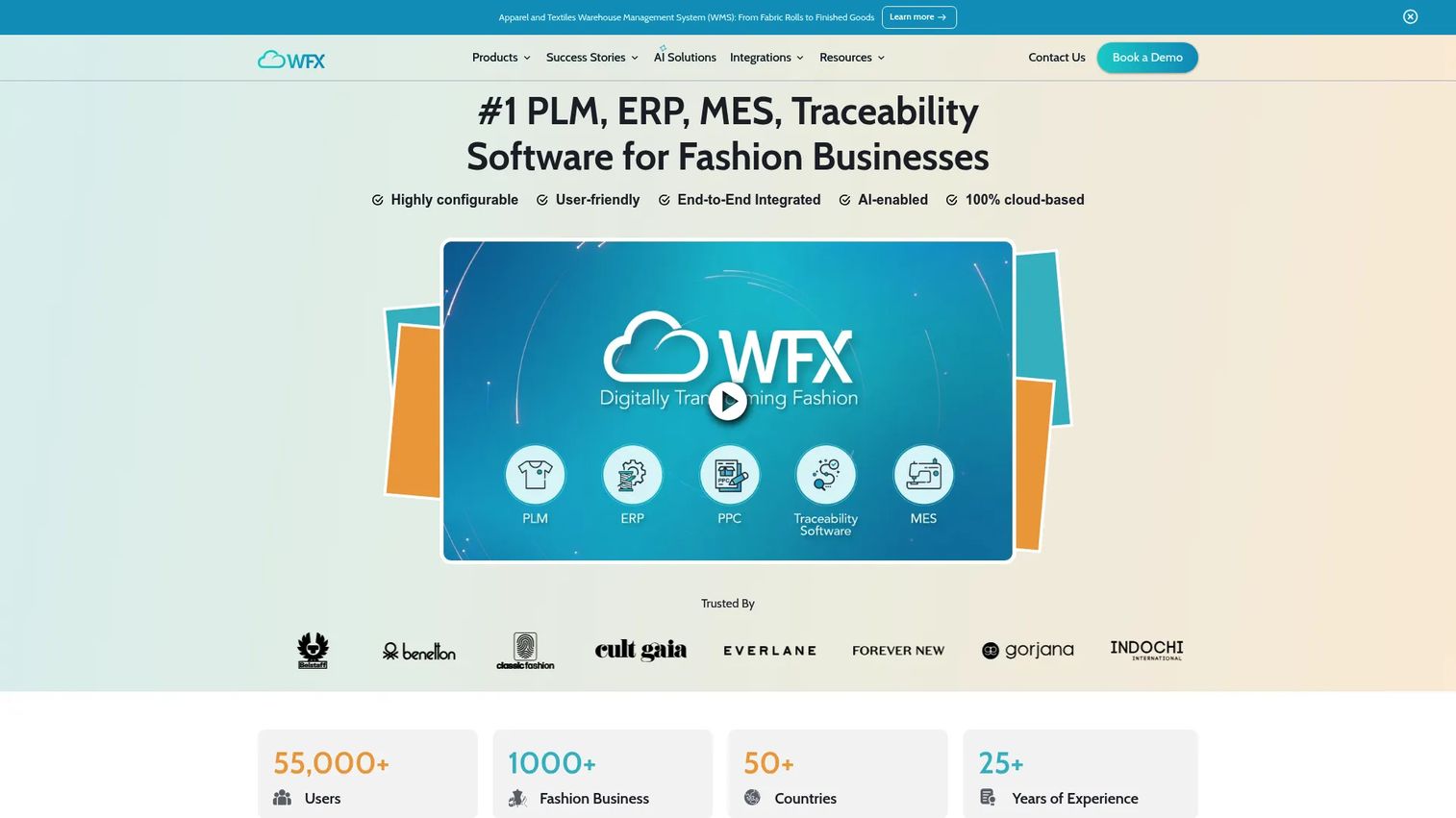
WFX Textile ERP is a 100% cloud-based textile ERP built specifically for fashion and textile manufacturers. Where generic suites need configuration to fit fabric workflows, WFX ships with them, covering production, costing, procurement, quality, and shipment. That textile-native depth is the reason to shortlist it if you want a dedicated garment erp rather than a general platform you have to bend into shape.
Best for: Textile and apparel manufacturers that want a cloud ERP with production, procurement, and reporting workflows already built for the industry.
Key strengths
- 100% cloud-based: run every unit and location against one live dataset with real-time visibility.
- End-to-end integrated ERP: connect production, costing, procurement, and shipment in a single system.
- Open API integrations and certified connectors: link WFX to the rest of your stack without custom middleware.
Why choose WFX Textile ERP: WFX is the pick for teams that want the shortest distance between deployment and textile-specific workflows. Rather than configuring a generic ERP to understand fabric libraries, operation libraries, and costing, you start with those built in. That reduces the implementation lift for manufacturers who know exactly what textile processes they need modeled.
WFX Textile ERP pricing: WFX does not publish a public price. Pricing is sales-led through a book-a-demo flow. Its G2 seller profile shows an overall rating of 4.2/5.
3. LOGIC ERP
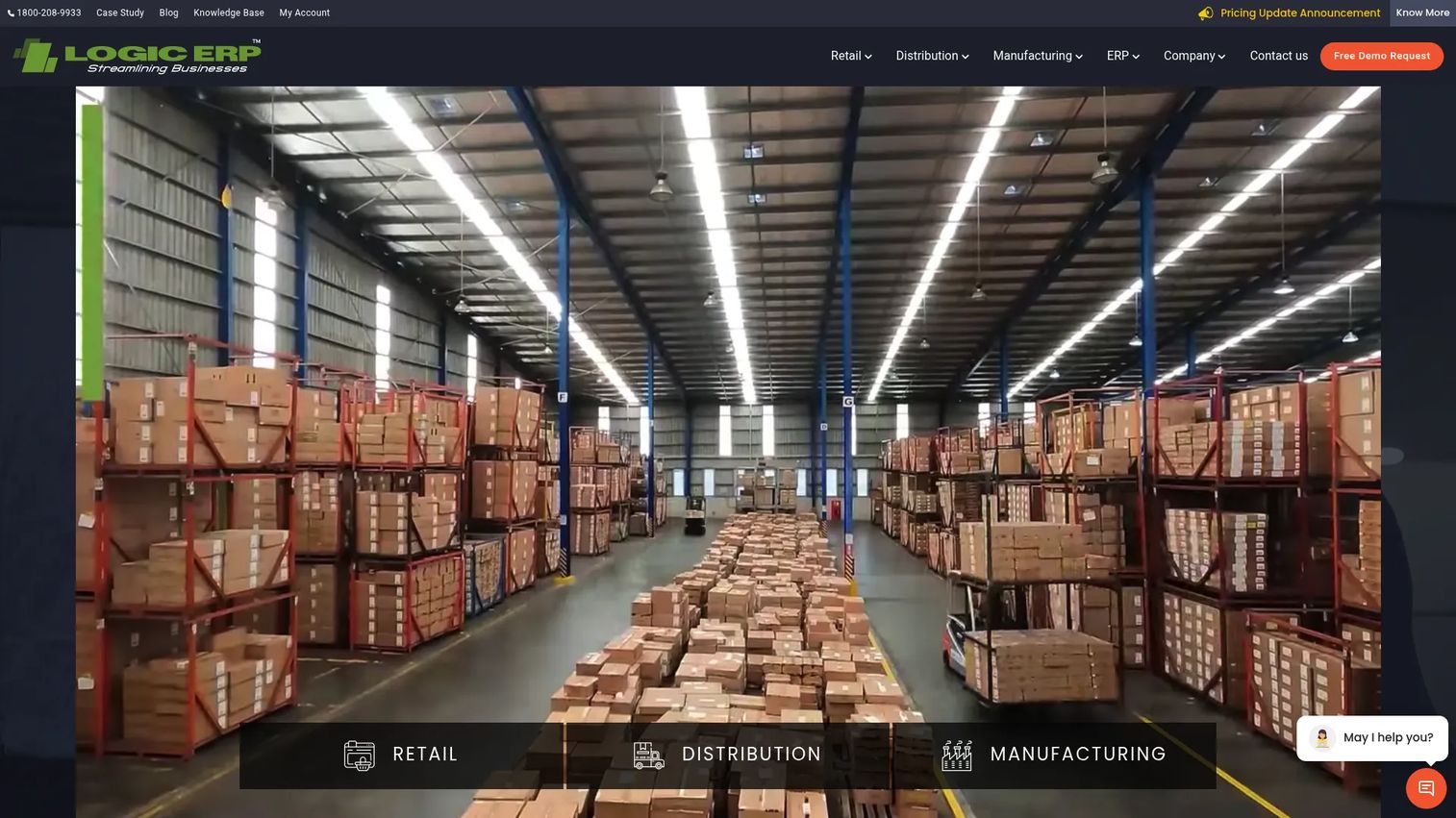
LOGIC ERP is an ERP for retail, distribution, manufacturing, and related operations, with configurable billing, POS, and inventory workflows. It is a practical, industry-focused option for textile and apparel businesses in India and similar markets that need configurable operations without enterprise-suite overhead. Its SaaS cloud model and multiple price-list handling make it flexible for mixed retail and manufacturing setups.
Best for: Retail, distribution, and mid-market manufacturing businesses that need configurable ERP, billing, and inventory workflows.
Key strengths
- SaaS cloud ERP for SMEs: deploy a cloud system sized for small and mid-market operations.
- Configurable billing, POS, and GST workflows: handle compliance and point-of-sale without custom builds.
- Multiple price lists and pricing formulas: manage complex pricing across channels and customer types.
Why choose LOGIC ERP: LOGIC fits buyers who want an affordable, configurable ERP that spans retail and manufacturing, especially in GST-driven markets. It is less about deep textile-native modeling and more about operational practicality at an SME budget, which is why it earns a 4.8/5 on G2 from teams that value getting up and running quickly.
LOGIC ERP pricing: The cloud Logic Business tiers start at ₹1,638 (plus taxes) per month, billed yearly, and scale up through Standard, Professional, Professional Plus, and Ultimate tiers to ₹2,962 per month. Enterprise suite pricing is contact-us only. The pricing page lists both INR and USD currency options.
4. ERPNext
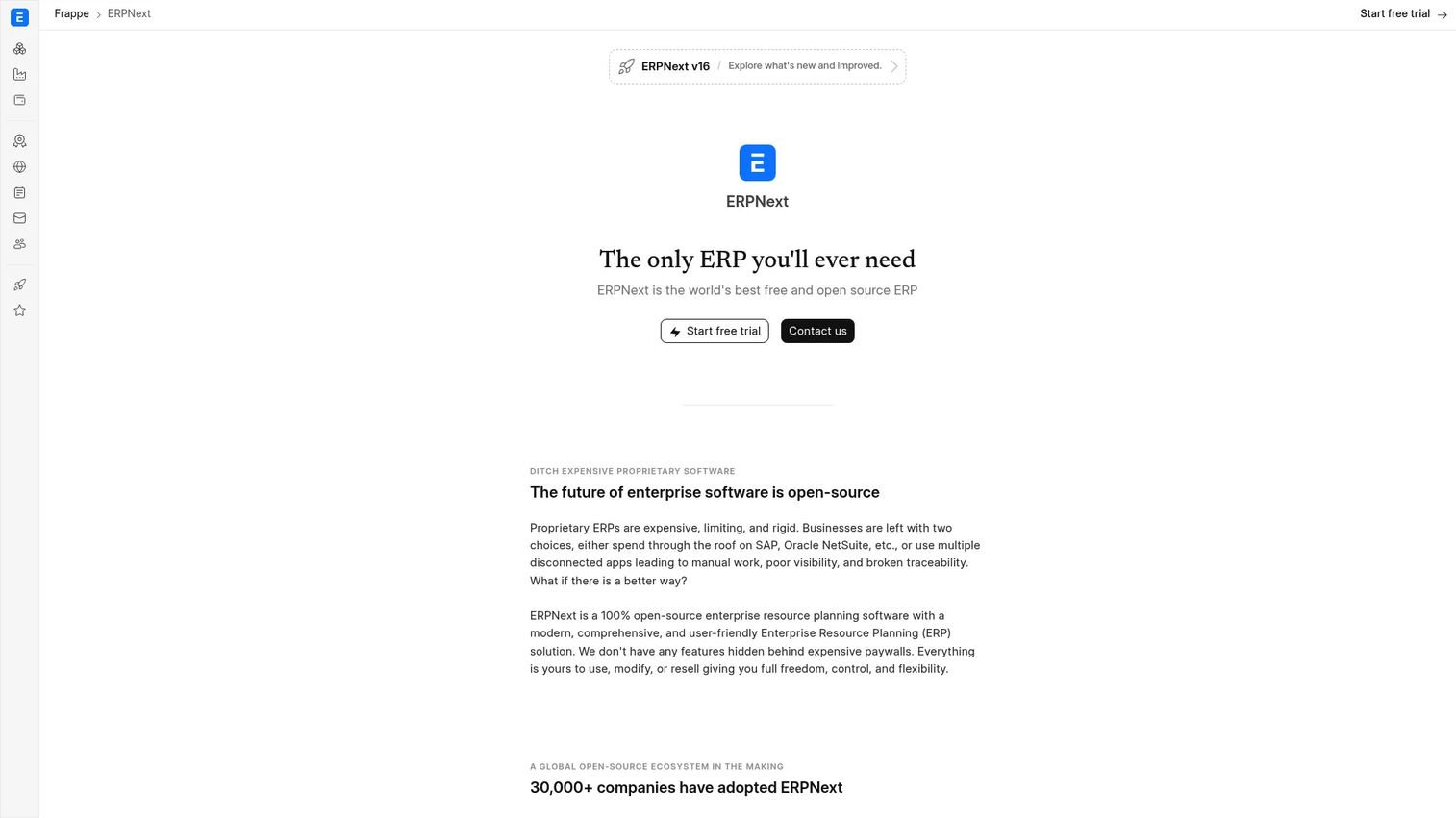
ERPNext is an open-source ERP covering accounting, sales, inventory, manufacturing, projects, HR, and support. For textile teams that want flexibility and control, open source is attractive: you can tailor manufacturing and inventory modules to model roll tracking, dye lots, and multi-stage production without licensing lock-in. It is a broad ERP that adapts to textile workflows rather than a purpose-built textile-only product.
Best for: Businesses that want a free, open-source ERP with the option of hosted support and custom textile configuration.
Key strengths
- Accounting and financial statements: run full finance on the same platform as operations.
- Sales, procurement, CRM, and inventory: cover the core operational modules out of the box.
- Manufacturing, projects, POS, HR and payroll, and a no-code builder: extend and customize workflows without a heavy dev team.
Why choose ERPNext: ERPNext is the flexible option for teams with the appetite to configure. If you want to model textile-specific workflows precisely and avoid per-seat licensing, the open-source foundation gives you room to do it. It holds a 4.3/5 on G2, and the no-code builder lowers the barrier to tailoring it for fabric and garment operations.
ERPNext pricing: ERPNext is free and open source. Paid pricing covers hosting on Frappe Cloud, starting at $5/month for Sites and $20/month for Servers. Enterprise support and implementation require a contact-us conversation.
5. TexSavvy - AES textile erp
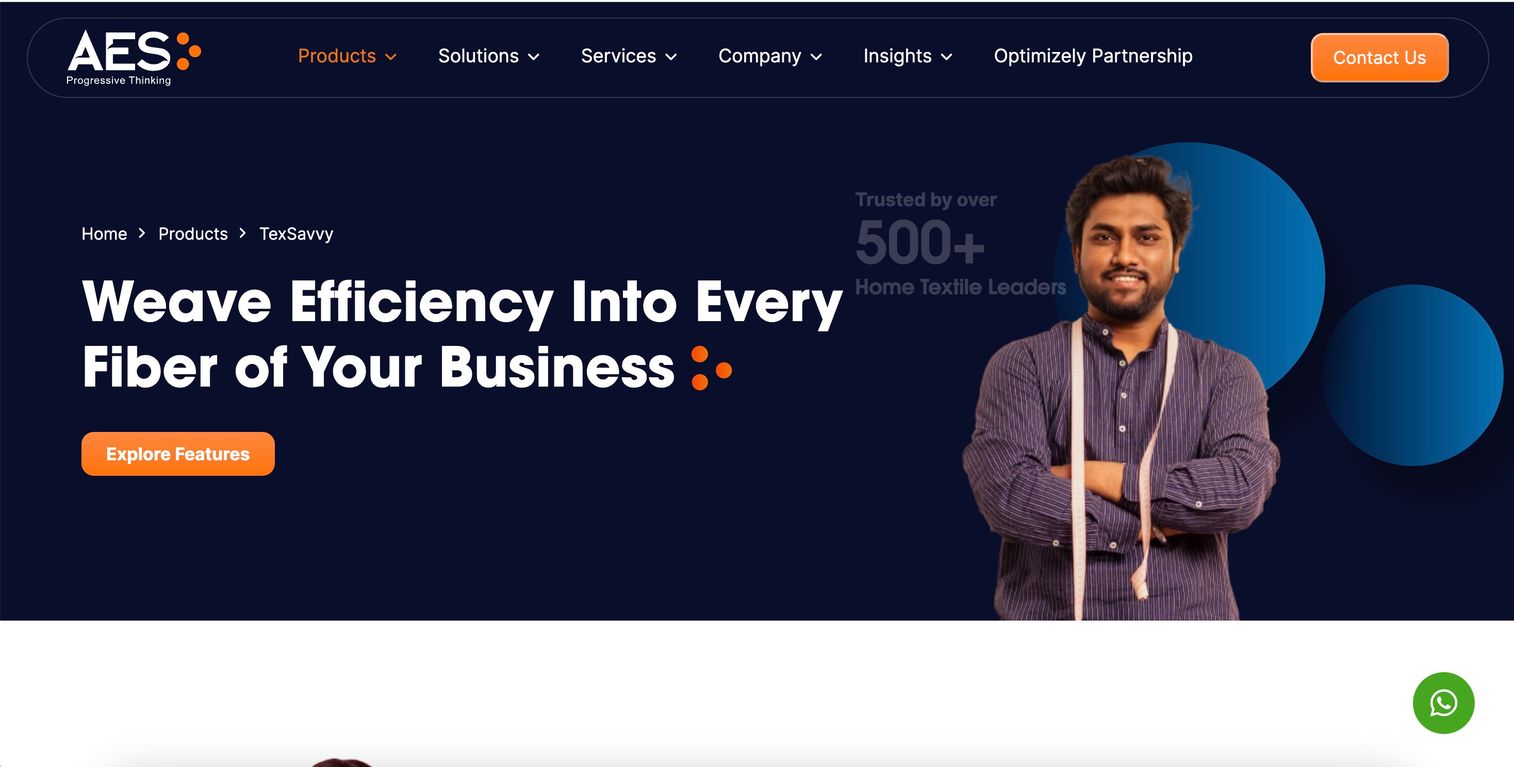
TexSavvy from AES is a textile ERP focused on home textile operations, with end-to-end value-chain coverage. It is built to give home textile manufacturers real-time visibility across units and locations, along with integrated HR functions. If your operation is specifically in home textiles and you want a system shaped to that value chain, TexSavvy is a targeted option worth a demo.
Best for: Home textile manufacturers that need an end-to-end ERP covering the full production value chain.
Key strengths
- Complete value-chain coverage: connect processes from raw material through finished goods.
- Real-time visibility across units and locations: monitor multi-site operations on one live view.
- Integrated HRMS: manage attendance and payroll alongside production.
Why choose TexSavvy: TexSavvy is a strong candidate when your operating model is home textiles and you want an ERP already oriented to that value chain rather than a horizontal platform. Public detail is limited, so use the demo to confirm module depth, integrations, and deployment model against your specific production planning and traceability requirements.
TexSavvy pricing: TexSavvy does not publish pricing on its site. Request a quote and use that conversation to confirm what is included and how implementation is scoped.
6. AIMS360
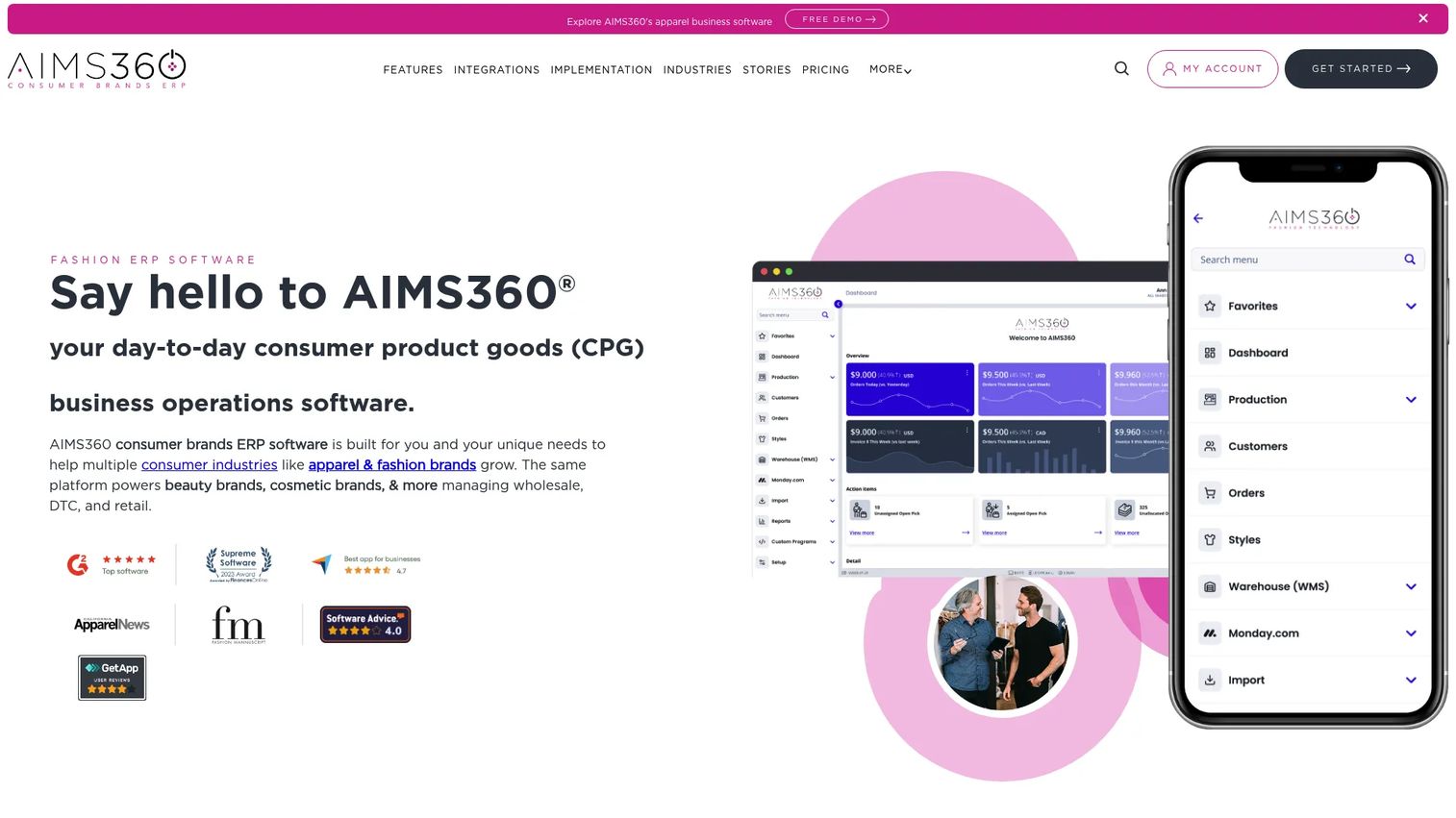
AIMS360 is a cloud-based consumer products ERP for apparel and fashion brands, bridging production and multi-channel distribution. It is built for teams that sit between textile production and apparel selling, covering PLM, omnichannel order management, inventory, EDI, shipping, and accounting. For apparel-centric operations juggling wholesale and DTC, that end-to-end coverage is the draw.
Best for: Apparel and consumer brands that need an end-to-end ERP for wholesale, DTC, and multi-channel operations.
Key strengths
- Production and PLM: manage product development alongside manufacturing.
- Omnichannel order management: handle wholesale, DTC, and multiple channels in one flow.
- Inventory, WMS, CRM, EDI, shipping, and accounting: run distribution operations with AI automations layered in.
Why choose AIMS360: AIMS360 fits apparel brands that need to connect production to distribution without stitching together separate systems. It carries a 4.4/5 on G2 and is a good match when your complexity is on the selling side, across channels and trading partners, as much as on the manufacturing side.
AIMS360 pricing: AIMS360 lists three plans, Bronze (3-user minimum), Silver (5-user minimum), and Gold (10-user minimum), but does not display public plan prices. It provides a custom, itemized quote, so pricing depends on your users and modules.
7. Acumatica
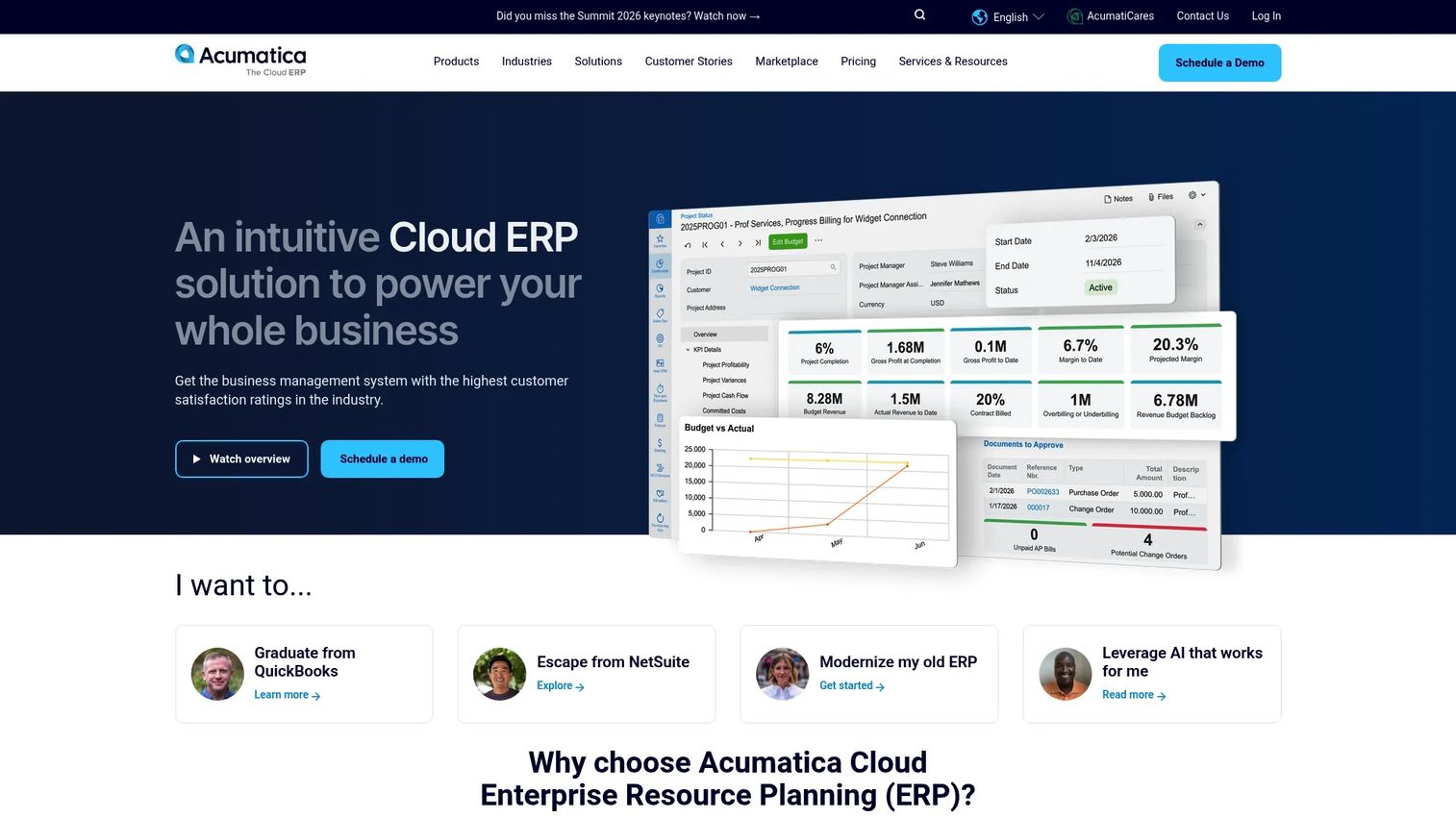
Acumatica is a cloud ERP for growing mid-market companies, known for modular applications and unlimited-user pricing. Its flexibility and integration strength make it a candidate for textile businesses that want broad ERP depth plus room to customize. Like other horizontal suites, textile-specific workflows are a configuration exercise, so factor in the modeling of roll tracking, costing, and quality checkpoints during evaluation.
Best for: Mid-market textile companies that want a customizable cloud ERP with unlimited users.
Key strengths
- Unlimited users: scale headcount without per-seat licensing pressure.
- Modular cloud ERP applications: turn on distribution, manufacturing, and finance modules as you need them.
- Reporting, dashboards, and business intelligence: get real-time visibility across operations.
Why choose Acumatica: Acumatica is attractive when user count is growing fast and per-seat pricing would penalize you. Its unlimited-user model and modular design suit textile operations expanding across departments and locations. It holds a 4.4/5 on G2, with strong marks for flexibility from mid-market teams.
Acumatica pricing: Acumatica's pricing is tailored to applications, usage, and deployment. It publicly lists bundled offers starting under $1,495/month for distribution and $2,185/month for manufacturing. There is no free tier; the exact figure depends on your configuration.
8. SAP Business One
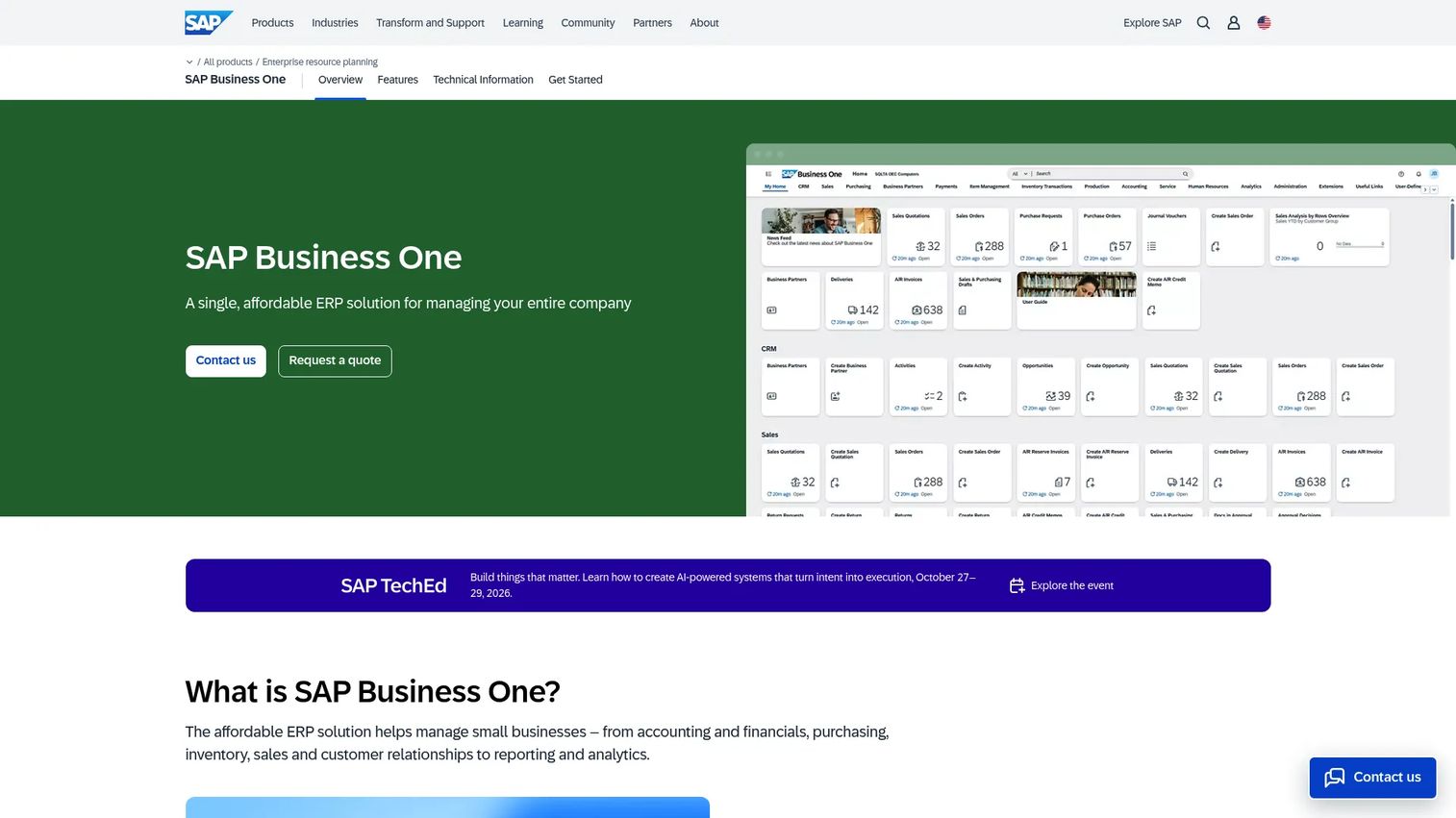
SAP Business One is an ERP for small and midsize businesses to manage finance, purchasing, inventory, sales, CRM, and analytics. It suits manufacturers with mature process discipline that want SAP's reliability at an SMB scale. Textile-specific fit is largely a matter of configuration and partner implementation, so choose an implementation partner with textile experience if you go this route.
Best for: SMBs that need a single ERP to centralize finance, inventory, production, and core operations.
Key strengths
- Integrated business intelligence: analyze operations and finance from one dataset.
- Integration with SAP HANA: run on SAP's in-memory platform for speed and reporting depth.
- Quick deployment: get a structured SMB ERP live faster than full enterprise SAP.
Why choose SAP Business One: SAP Business One is the pick for textile SMBs that value process rigor and want a well-supported platform with a large partner ecosystem. The textile-specific depth comes from that partner layer, so the quality of your implementation partner matters as much as the software itself.
SAP Business One pricing: SAP does not publish a public price for Business One. The product page directs you to request a quote, so plan pricing conversations around your users, modules, and deployment choice.
10. Infor CloudSuite
Infor CloudSuite is a family of industry-specific cloud ERP suites built on Infor's AWS-native platform. For larger textile and apparel operations with multi-site complexity, its industry orientation and prebuilt analytics are the appeal. It is aimed at organizations that need enterprise-grade scale and depth rather than a lightweight SMB tool.
Best for: Midmarket and enterprise organizations that need an industry-specific cloud ERP suite for multi-site operations.
Key strengths
- Industry-specific cloud ERP: start from suites shaped for manufacturing verticals.
- Prebuilt analytics with adaptable data models: report on operations without building dashboards from scratch.
- Role-based workspaces and integrated cloud portfolio: give teams focused, relevant views of the system.
Why choose Infor CloudSuite: Infor CloudSuite fits large textile and apparel organizations running multiple sites that need enterprise scale, industry depth, and prebuilt analytics. It is a heavier commitment than SMB tools, so it makes sense when operational complexity genuinely warrants an enterprise industry cloud.
Infor CloudSuite pricing: Infor does not display public pricing. The product pages route prospects to contact-us and demo flows, so pricing is scoped through a sales conversation based on your industry suite and scale.
11. ApparelMagic
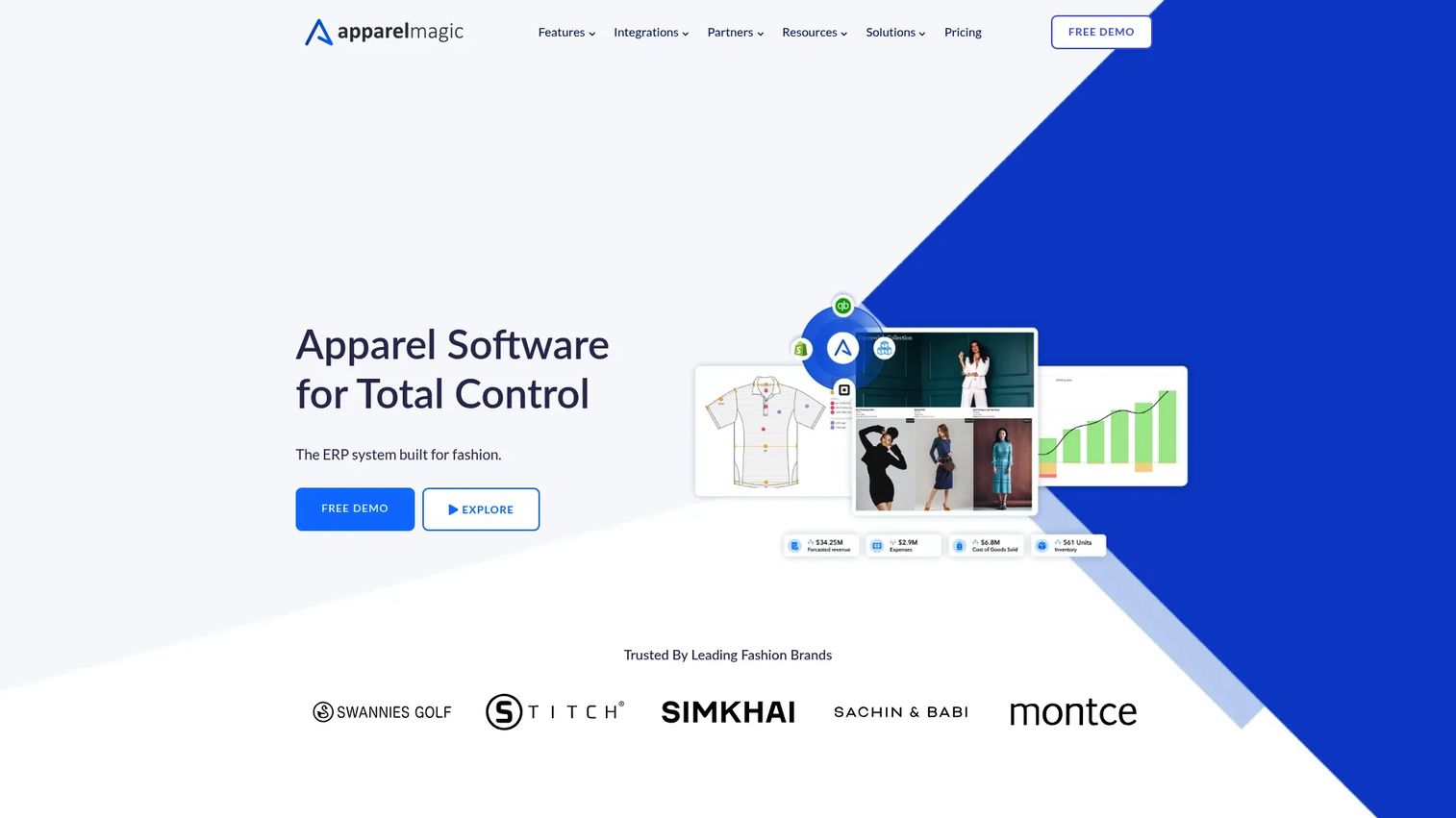
ApparelMagic is a cloud-based apparel ERP and PLM for fashion brands, strong on SKU and variant complexity. It handles the product-variant, inventory, and order-processing challenges that define apparel operations, with multi-currency, multi-warehouse, and multi-divisional support. Its apparel emphasis is distinct from broader textile manufacturing depth, so it shines for brands whose complexity lives in styles, sizes, and colors.
Best for: Fashion brands that need an apparel-specific ERP with PLM, inventory, and B2B sales.
Key strengths
- PLM, inventory, order management, B2B e-commerce, manufacturing, and financials: cover the apparel lifecycle end to end.
- Multi-currency, multi-warehouse, and multi-divisional support: operate across regions and business units.
- Integrations and APIs: connect ApparelMagic to your existing tools.
Why choose ApparelMagic: ApparelMagic is the strong apparel pick when your operation is defined by variant-heavy catalogs and B2B selling rather than raw textile manufacturing. It earns a 4.9/5 on G2, the highest rating in this list, from fashion brands that value its apparel-native design.
ApparelMagic pricing: ApparelMagic publishes public pricing. The Professional plan starts at $337/month paid annually, Enterprise at $655/month paid annually, and Ultimate is custom. Monthly-with-annual-commitment options run slightly higher, at $356 and $691 respectively. There is no free tier.
12. Absolute ERP
Absolute ERP is a UK-based ERP consulting firm focused on IFS implementations, support, reporting, data management, and training. It rounds out this shortlist for buyers whose evaluation is as much about implementation and support services as about a specific product license. If you are standardizing on IFS or need consulting depth around an existing ERP, Absolute is worth a conversation.
Best for: Organizations using or adopting IFS that need consulting, support, or reporting help.
Key strengths
- IFS ERP implementation services: get expert help standing up an IFS deployment.
- IFS support and security administration: maintain and secure your environment post-launch.
- Report development and business intelligence: build the reporting layer your operations team needs.
Why choose Absolute ERP: Absolute ERP fits organizations that have chosen or are considering IFS and want a partner for implementation, support, and reporting. Confirm module depth, support scope, and deployment model directly, since the value here is in services rather than a packaged textile product.
Absolute ERP pricing: Absolute ERP does not publish public pricing. Because it is a services and consulting firm, scope and cost are defined per engagement, so treat the first conversation as a scoping exercise.
Considerations before you buy
Shortlisting is the easy part. These are the criteria that decide whether an implementation actually lands.
Textile and apparel workflow fit
Confirm the system models your reality: fabric libraries, dye lots, roll-level inventory, and variant-heavy catalogs. A generic ERP can be configured to do this, but ask who does the configuration and how long it takes. A textile-native system ships with more of it built in.
MRP and production planning depth
Test how the system calculates material requirements and sequences work orders against capacity across departments. If your production spans weaving, dyeing, and finishing, verify that the MRP logic handles multi-stage flows, not just a single production step.
Inventory control and traceability
Check whether the system tracks material at the lot, roll, and batch level, not just as quantity on hand. Confirm barcode and RFID inventory tracking support if your floor relies on scanning, and test whether you can trace one unit from raw material to shipment.
Cloud, integrations, and real-time visibility
Verify that the system gives you live visibility across units and locations, and that it integrates with the tools you keep. Cloud textile ERP makes multi-site reporting far easier, but confirm the specific connectors and APIs you need exist before you commit.
Conclusion
Pick by operating model, not feature count. If you run a large or multi-entity operation, Oracle NetSuite ERP and Infor CloudSuite give you the finance and industry depth to scale. If you want textile-native workflows without heavy configuration, WFX Textile ERP is built for exactly that. For India-focused SMB and mid-market teams, LOGIC ERP is a practical, affordable fit, while ERPNext rewards teams willing to configure an open-source foundation. Apparel-heavy brands should look hard at ApparelMagic and AIMS360, and home textile operations at TexSavvy.
Next step: shortlist three tools that match your operating model and company size, then validate the workflows that actually break under load, production planning, lot traceability, and inventory control, inside a live demo. Do not buy on the module list. Buy on how the system handles your messiest, department-crossing process, because that is where real-time visibility either holds up or falls apart.
FAQs
Textile ERP software is an integrated system that manages production planning, procurement, inventory, quality, traceability, finance, and sales for textile and apparel businesses in one platform. It replaces disconnected spreadsheets and point tools with a single source of truth, so a dye lot, purchase order, shipment, and ledger entry all reference the same data.
At minimum, look for production planning and MRP, procurement and purchase, inventory control, quality control, traceability, finance, and sales or order management. Textile-specific additions like lot and roll management, batch and dye lot control, and barcode or RFID inventory tracking separate a true erp for the textile industry from a generic suite.
Generic ERP handles finance, inventory, and operations but treats products as simple SKUs. Textile industry erp software is built or configured around fabric realities: color, size, and composition variants, roll and lot tracking, dye lot grouping, and bills of materials that change per style. That specificity is what makes traceability and costing accurate.
Yes, usually. A garment erp emphasizes style, size, and color variants, PLM, and multi-channel order management for wholesale and DTC selling. A textile mill leans harder on raw material intake, multi-stage production across weaving, dyeing, and finishing, and roll-level inventory. Many systems cover both, but the depth differs, so match the tool to where your complexity actually lives.
Test the workflows that break under load: multi-stage MRP, lot and roll traceability, quality checkpoints, and real-time inventory across locations. Ask who configures textile-specific logic and how long it takes. Run your own messiest, department-crossing process through the system rather than watching a scripted happy path.
For most teams, cloud textile ERP wins on multi-site visibility, faster deployment, and lower maintenance, which is why cloud represented 54.7% of apparel ERP revenue in 2025 according to Dataintelo. On-premise still fits operations with strict data-residency requirements or heavy existing infrastructure, so weigh it against your compliance and IT reality.
If your floor moves physical rolls, batches, and finished goods, barcode and RFID inventory tracking is close to essential for accuracy and speed. It reduces manual counting errors and makes lot traceability far more reliable. Confirm the ERP supports your specific hardware and scanning workflows before you commit.
It varies widely by scope, from a few weeks for a configurable SMB system to several months for a multi-entity enterprise suite with custom textile workflows. The biggest variables are data migration, the number of departments and locations, and how much textile-specific configuration your workflows require. Ask each vendor for a realistic timeline based on operations like yours.