You booked the same LED wall for two jobs on the same weekend. Nobody caught it until the second crew showed up to an empty shelf. The quote went out fast, but the sub-rental you forgot to add ate the margin. Someone updated the call sheet in Slack, someone else updated it in a spreadsheet, and the driver drove to the wrong venue.
Running AV rentals through disconnected tools does not just cost time. It costs jobs, crews, and margin you never see leaking. Every double booking, missing case, and rushed quote is a coordination failure hiding inside your ops. And the market is not getting simpler. The global equipment rental management software market reached USD 1.9 billion in 2024 and is forecast to hit USD 4.7 billion by 2033 at a 10.2% CAGR, according to DataIntelo (2024). The U.S. audio-visual equipment rental industry alone is valued at USD 10.6 billion in 2026, per LendControl (2026).
That growth means more jobs, more gear, more freelancers, and more chances for something to fall through the cracks. The right av rental software pulls inventory, crew, quoting, logistics, and finance into one system so you stop reconciling reality by hand. This guide is your shortlist. It compares seven platforms built for AV, lighting, and production teams, and it leads with the operational pain first, features second.
What's inside
This guide compares audio visual rental software for the five jobs that actually decide whether a rental business runs clean or bleeds margin: inventory control, crew and transport coordination, quoting and invoicing, cloud and mobile access, and financial reporting.
We chose the seven platforms based on four criteria:
- AV vertical fit: how well the workflows map to AV, lighting, and production rentals, not generic gear.
- Workflow coverage: whether inventory, crew, quoting, logistics, and finance live in one system.
- Cloud and mobile access: whether teams can check availability and update jobs from the warehouse or the field.
- Trust signals: public pricing, review ratings, and adoption among rental operators.
We do not repeat item-level detail here. Each tool gets its own section below.
TL;DR
- Best overall for operationally complex AV teams: Rentman. Inventory, crew scheduling, quoting, and transport in one system.
- Best for cloud visibility across locations: Current RMS. Real-time availability and paperless warehouse workflows.
- Best broad rental platform with AV modules: EZRentOut. Ordering, billing, webstore, and mobile in one place.
- Best ERP-style operations: AcuRental. Rental workflows built on Acumatica with project accounting.
- Best for specialized asset workflows: RentalWorks. Multi-warehouse operations with customer storefront and portal.
- Best for service-heavy rental operations: Texada. Sales, service, and rental under one platform.
- Best for event and production teams wanting all-in-one ops: IntelliEvent. Cloud inventory, scheduling, and labor management.
What is AV rental software?
AV rental software is equipment rental management software built for audio visual, lighting, and production businesses to manage inventory, crew, quoting, logistics, and finances in one system.
At its core, av equipment rental software should handle these jobs:
- Inventory control: track serialized gear, bulk items, kits, and sub-rentals with real-time availability.
- Crew coordination: schedule staff and freelancers, assign roles, and generate call sheets.
- Quoting: build proposals with bundled pricing and digital approvals.
- Invoice management: turn approved quotes into invoices and sync them with accounting.
- Logistics: plan transport, assign drivers, and track gear in and out of the warehouse.
- Margin reporting: compare estimated versus actual costs to see where profit leaks.
The distinction matters. General equipment rental management software handles the basics of booking and billing. Production rental software adds the AV-specific layers most operators actually live in: sub-rental margin tracking, crew scheduling, transport planning, and kit-based inventory. A tool that tracks a forklift rental fine may miss the reality that one AV job is a hundred serialized items, three freelancers, two vans, and a sub-rented line array.
Most modern platforms in this category are cloud based equipment rental software, which means the warehouse, the office, and the field see the same live inventory at the same time. That shared visibility is what stops the double bookings and shortages that spreadsheets guarantee.
When to use AV rental software
If you are still tracking gear in a spreadsheet and coordinating crew in group chats, the signal to move is friction you can feel. Here is where av management software earns its place.
Centralize inventory and stop double booking
When the same gear moves across jobs, vans, and locations, a spreadsheet cannot tell you what is actually available on a given date. Someone always books what is already committed. A single source of truth for av inventory shows real-time availability across every job and warehouse, so you catch conflicts before crews do. It also kills the manual reconciliation ritual where someone spends Friday afternoon cross-checking three lists to confirm what shipped and what came back.
Coordinate crews, freelancers, and transport
Equipment planning and people planning are the same problem. A job is not booked until the gear, the crew, and the truck all line up on the calendar. Strong av rental software puts crew scheduling next to equipment availability, so you assign freelancers, generate call sheets, and confirm driver assignments in one place. It also tracks transport costs against the job, which matters because logistics is where quiet margin loss hides.
Quote faster and protect margin
Speed and accuracy pull against each other when you quote by hand. Bundled pricing, reusable proposal templates, and digital approvals let you send a clean quote fast without dropping a sub-rental or a labor line. The payoff is margin visibility during quoting, not after the job closes. When the system reconciles estimated against actual costs, you finally see which jobs make money and which ones only look like they do.
Comparison table
Here is how the seven platforms map to different buyer intents. The strongest operational system leads. Pricing and ratings reflect publicly available figures at the time of writing; verify current numbers with each vendor.
| # | Product | Intent | Key differentiation | Pricing | G2 rating |
|---|---|---|---|---|---|
| 1 | Rentman | Complex AV production ops | Inventory, crew, quoting, transport in one system | From €14 / user / month | 4.5/5 |
| 2 | Current RMS | Cloud visibility across sites | Real-time availability, warehouse scan workflows | From $79 / month | Not listed |
| 3 | EZRentOut | Broad rental platform | Ordering, billing, webstore, mobile | From $59 / month | 4.5/5 |
| 4 | AcuRental | ERP-style rental ops | Rental workflows on Acumatica | From $130 / month | Not listed |
| 5 | RentalWorks | Specialized asset workflows | Multi-warehouse, storefront, customer portal | Contact vendor | Not listed |
| 6 | Texada | Service-heavy operations | Sales, service, rental in one platform | Contact vendor | Not listed |
| 7 | IntelliEvent | Event and production ops | Cloud inventory, scheduling, labor management | Contact vendor | 4.0/5 |
1. Rentman
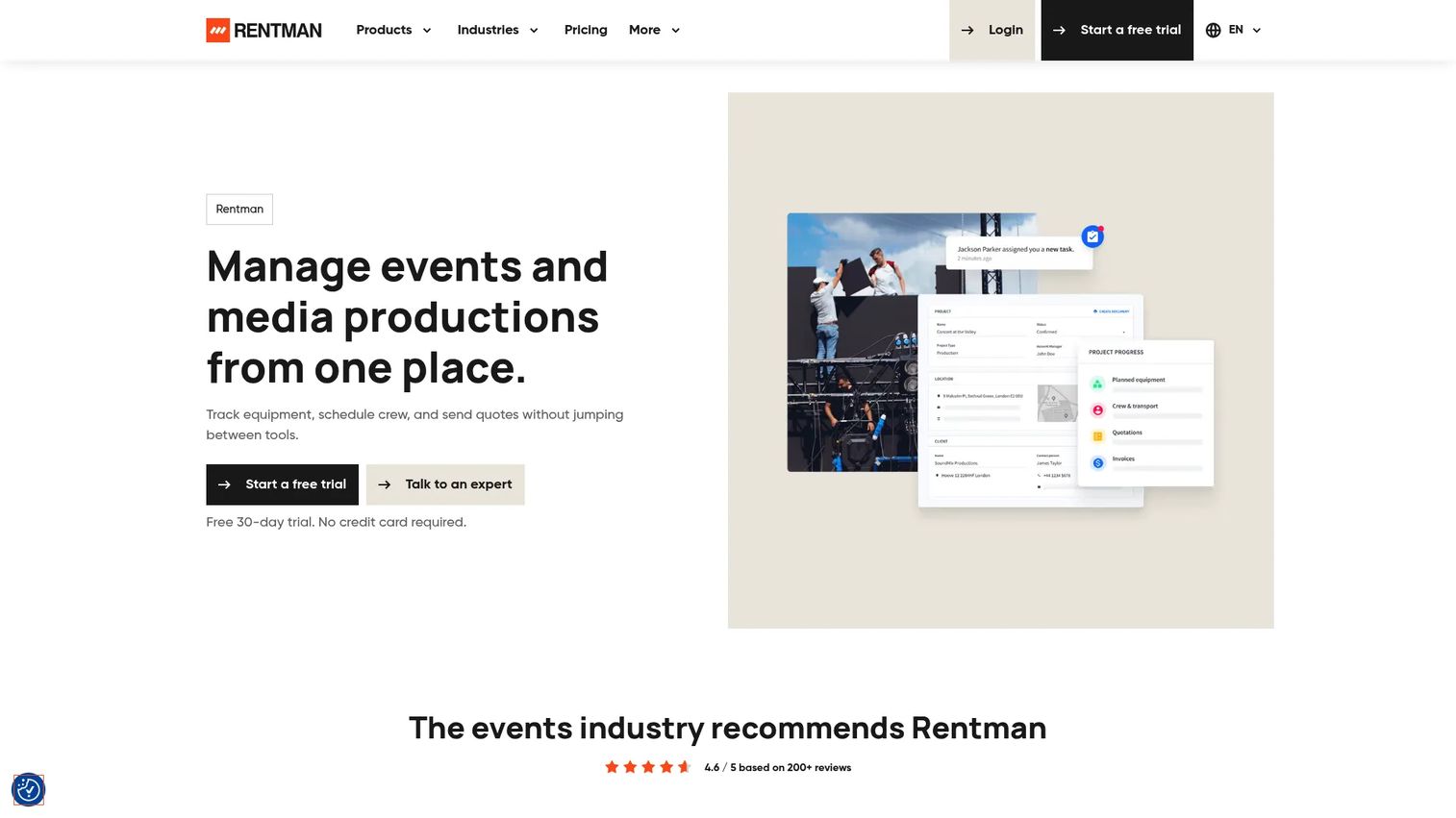
Rentman is rental and resource management software built for equipment, crew, and project planning. It pulls the three things that fall out of sync on most AV jobs, gear, people, and timeline, into one system. For teams running multiple simultaneous productions, that consolidation is the whole point.
Best for: Equipment rental businesses that need inventory, crew, and project scheduling in one system.
Key strengths
- Equipment and inventory scheduling: track availability across jobs and warehouses so double bookings surface before they hit a crew.
- Crew scheduling and time registration: assign staff and freelancers, log hours, and keep people planning next to equipment planning.
- CRM and communication: keep client history, quotes, and job comms in one record instead of scattered across inboxes.
Why choose Rentman: If your operation is genuinely complex, meaning many concurrent jobs, a mix of staff and freelancers, and gear that moves between locations, Rentman fits the way you actually work. It does not treat crew as an afterthought bolted onto inventory. Both live in the same scheduling view, which is what keeps a booked job from unraveling between the quote and the load-in.
Rentman pricing: Rentman uses a base Platform plan at €39 per month plus product-based add-ons. Equipment Scheduling Standard runs €14 per Power User per month, and Crew Scheduling Essential starts at €14 per Power User per month, scaling up through Pro tiers. Enterprise is invite only. A 30-day free trial is available. Prices display in EUR with a USD selector on the pricing page. Rentman holds a 4.5/5 rating on G2.
2. Current RMS
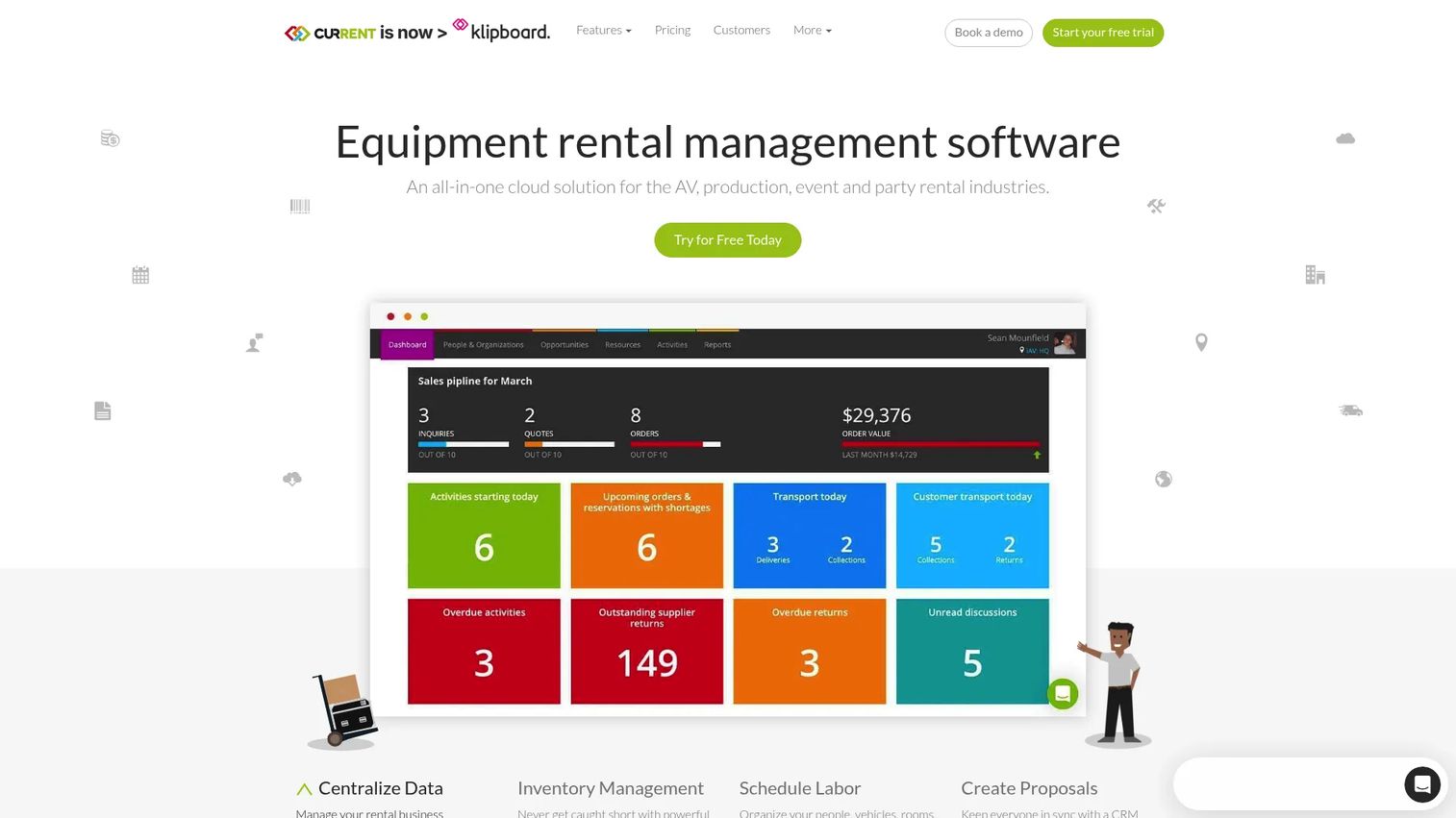
Current RMS is cloud-based equipment rental management software built for AV, production, event, and party rental businesses. Its pitch is visibility: everyone sees the same live inventory and job status, whether they are in the office, the warehouse, or on site. That shared picture is what makes paperless workflows actually work rather than just sound good.
Best for: Rental businesses needing cloud inventory, scheduling, and warehouse workflow management.
Key strengths
- Inventory management: availability tracking, barcode and QR scanning, accessories, and asset tracking in one place.
- Labor and transport scheduling: drag-and-drop resource allocation with iCal feeds so crew and vehicles line up with gear.
- Warehouse management: scan in and out, build kits and packages, run global check-in, and use the companion app on the floor.
Why choose Current RMS: If your team is spread across locations or works remotely, the cloud-first model earns its keep. The scan-based warehouse workflow closes the return-scan bottleneck that jams so many operations on Monday morning. It is a strong fit for AV and lighting rental teams that need clean visibility across sites without a heavy on-premise setup.
Current RMS pricing: Pricing is straightforward. The first user is $79 per month, and each additional user is $49 per month. Every plan includes unlimited support and training, automatic free updates, and secure data protection with backups. There is no free tier, but pricing is published transparently in multiple currencies on the vendor's pricing page.
3. EZRentOut
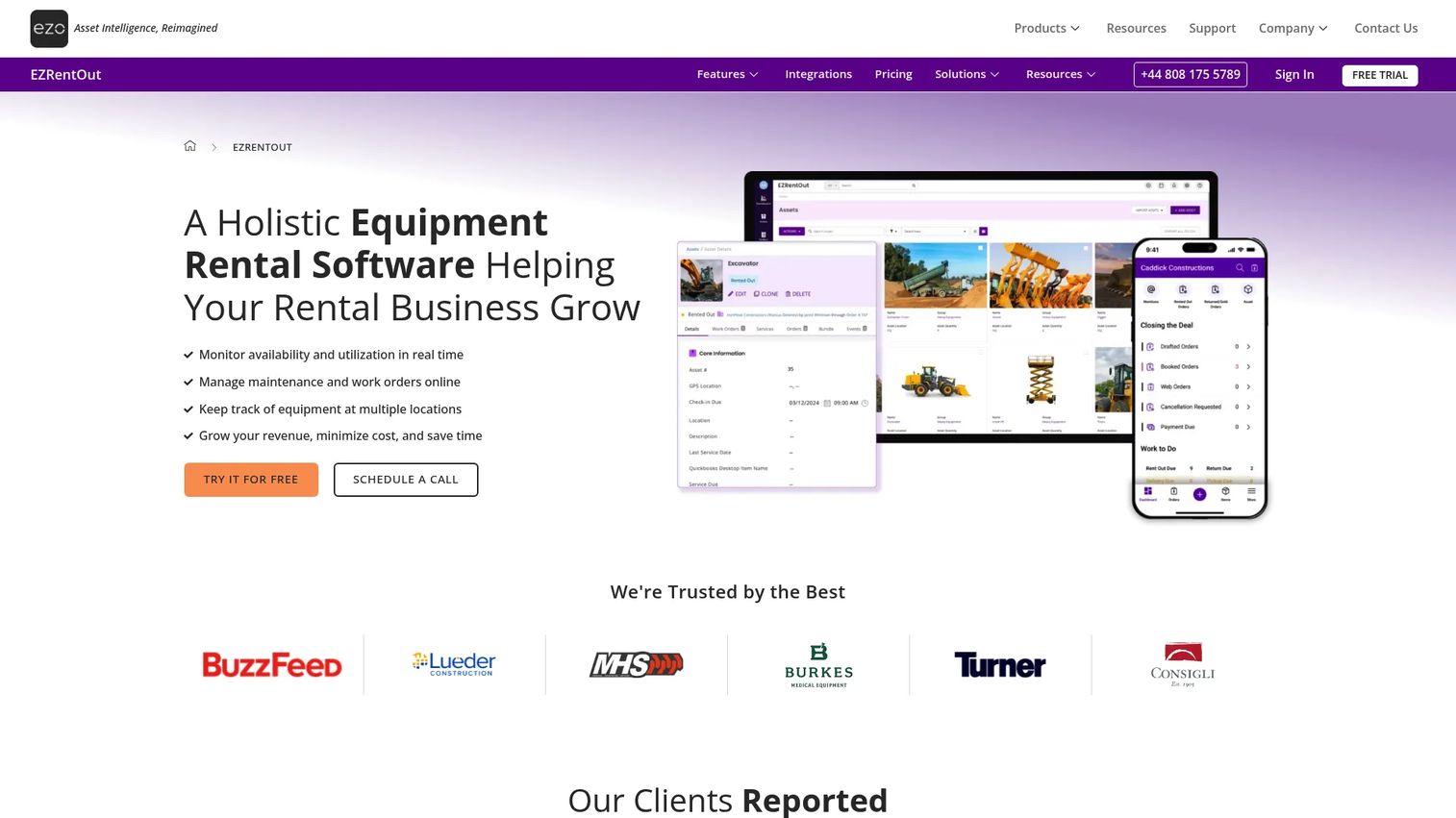
EZRentOut is rental and inventory management software for equipment rental businesses. It leans broad rather than AV-native, covering ordering, billing, a customer webstore, and mobile access. For teams that want one platform handling the full rental workflow, that breadth is the draw.
Best for: Equipment rental businesses needing cloud-based operations software.
Key strengths
- Order and booking management: handle reservations, orders, and returns from a single dashboard.
- Equipment tracking and inventory management: monitor availability, location, and status across your catalog.
- Maintenance and reporting: schedule upkeep and pull operational reports to keep gear job-ready.
Why choose EZRentOut: This is the pick for teams that value a wide rental workflow over deep AV-specific language. The webstore and mobile access suit operations that take online reservations and manage gear on the go. It is more general rental software than a purpose-built production system, so if your workflows lean heavily on sub-rentals and crew call sheets, weigh that against the breadth.
EZRentOut pricing: According to G2, EZRentOut lists an Essential plan at $59 per month and a Growth plan at $399 per month. A free trial is available, but there is no free tier. The brand's own pricing page was not directly accessible at the time of writing, so confirm current figures with EZRentOut before you commit. EZRentOut holds a 4.5/5 rating on G2.
4. AcuRental
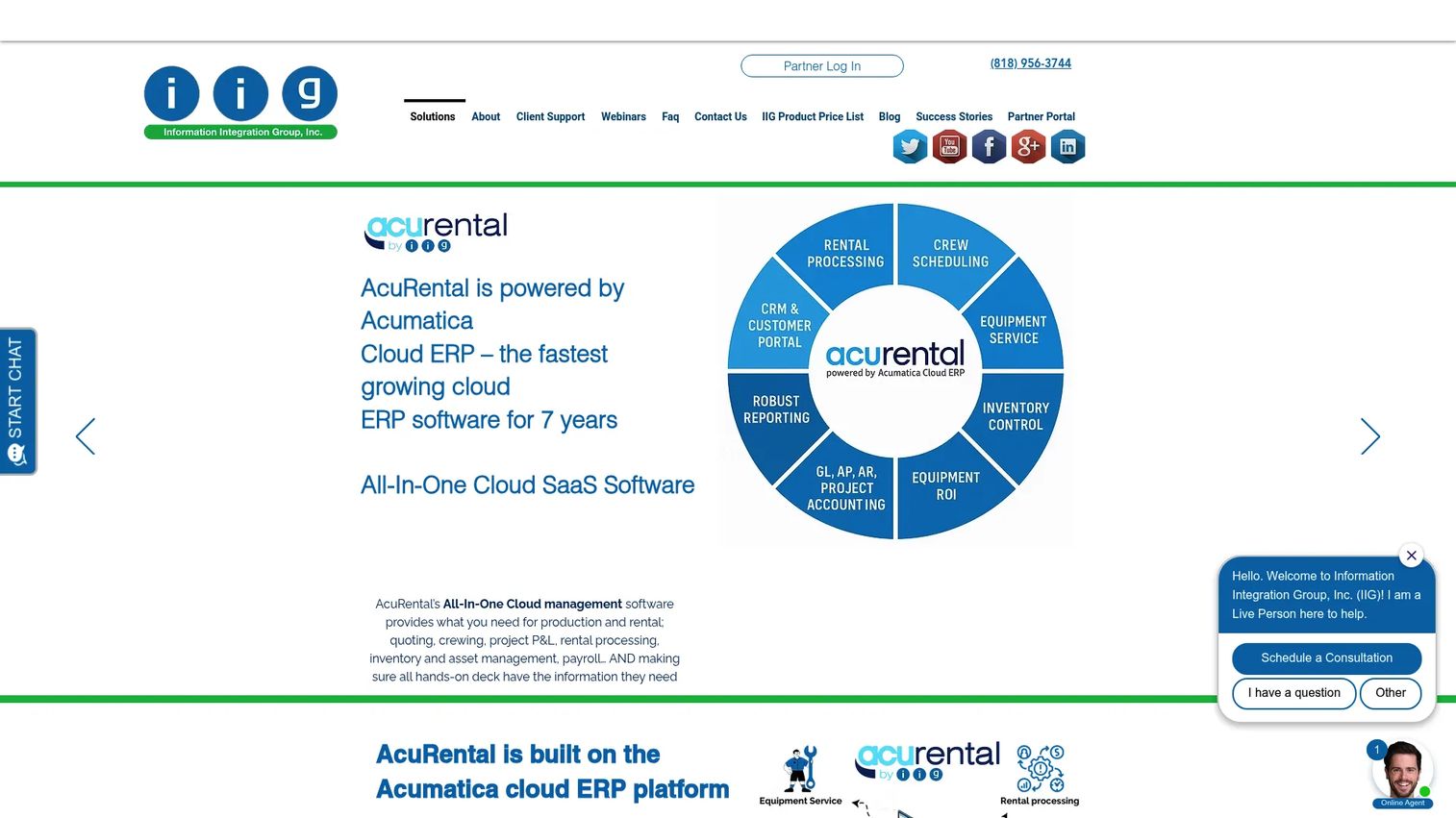
AcuRental is cloud-based rental ERP software for equipment, event, AV, and construction rental operations, built on the Acumatica platform. That foundation is the differentiator. You get rental workflows sitting inside a full ERP, which means quoting and inventory connect directly to project accounting and billing.
Best for: Rental businesses needing ERP-style management for quotes, inventory, billing, and operations.
Key strengths
- Rental quote and order processing: move from quote to order inside a single connected system.
- Inventory availability tracking: see what is committed and what is free before you book.
- Maintenance and inspection management: log service and inspection history against each asset.
Why choose AcuRental: If you want your rental operation to sit inside a broader accounting and operations backbone rather than a standalone rental app, AcuRental fits. The Acumatica foundation appeals to businesses that already think in ERP terms, want project accounting tied to rentals, and need finance visibility without stitching tools together. It is a heavier commitment than a lightweight rental app, which is exactly the point for operations that have outgrown one.
AcuRental pricing: Public listings show a Basic plan at $130 per month, priced usage-based, according to Capterra. There is no free tier shown. AcuRental's first-party site redirects to its parent, IIG Services, and no public first-party pricing page was found, so confirm current pricing directly with the vendor before deciding.
5. RentalWorks
RentalWorks is web-based inventory tracking and asset management software for rental-focused businesses, including equipment, AV, event, and production companies. Its strength is handling specialized asset workflows across multiple locations, with customer-facing tools that reduce back-and-forth on quotes and payments.
Best for: Equipment rental, AV, event, and production companies needing inventory and asset management software.
Key strengths
- Multi-office and multi-warehouse operations: run inventory across several sites from one system.
- Customer storefront: let clients view inventory and request quotes without a phone call.
- Customer portal: give clients a place to pay invoices and see quote and order history.
Why choose RentalWorks: For rental teams with more specialized asset workflows and multiple warehouses, RentalWorks brings inventory and customer self-service together. The storefront and portal offload routine quote requests and payment questions, which frees your team for the jobs that actually need coordination. It suits operations that want customers to help themselves without losing control of the catalog.
RentalWorks pricing: RentalWorks does not publish pricing on its own domain, and no public price was verifiable at the time of writing. Reach out to the vendor for a quote tailored to your location count and asset volume, and ask specifically about how the platform handles serialized versus bulk items in your catalog.
6. Texada
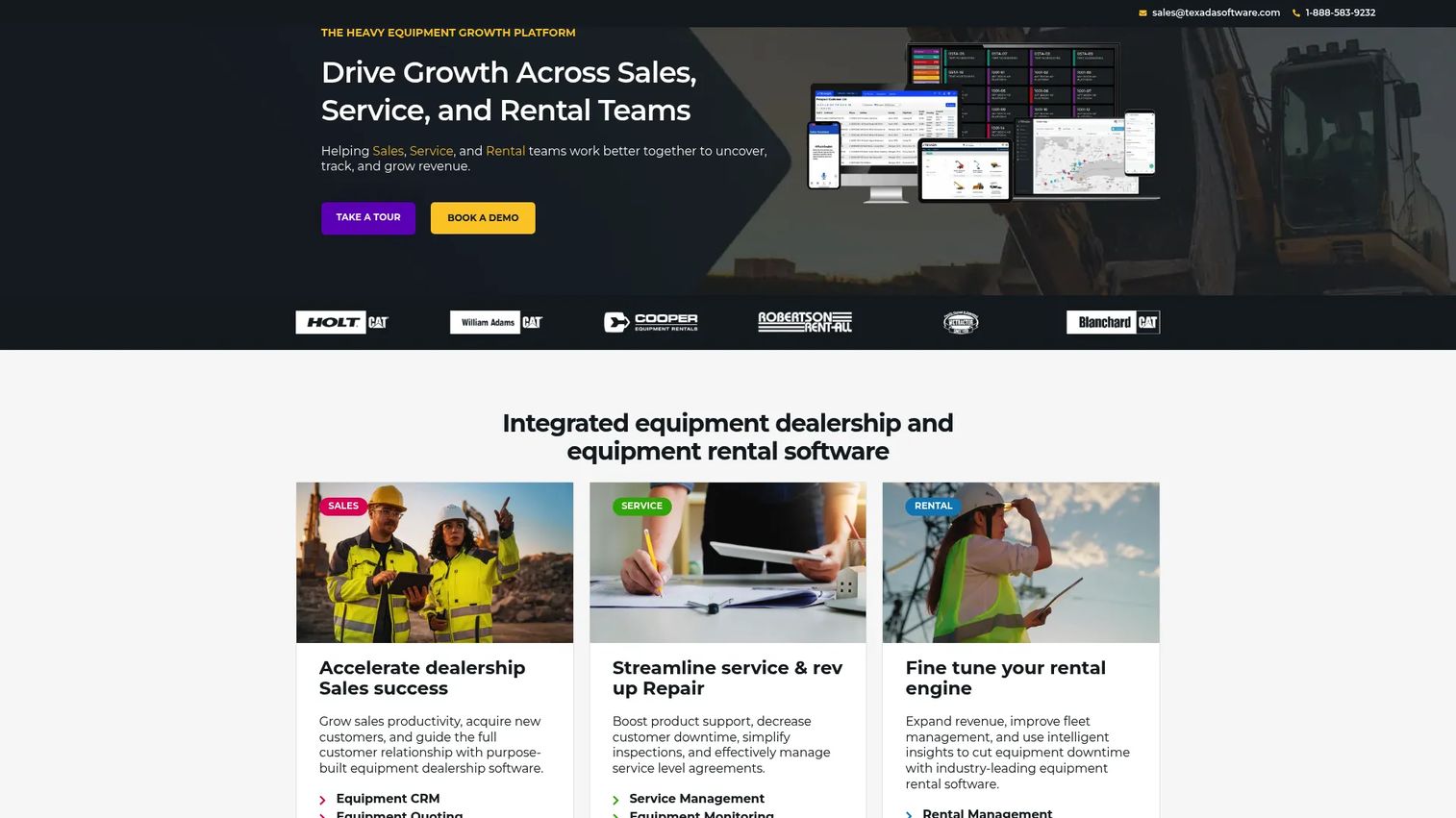
Texada is a software platform for heavy equipment dealers and rental businesses that unifies sales, service, and rental. For AV teams whose operations include a meaningful service and maintenance component, that three-in-one model matters. It treats service as a first-class workflow rather than a side note.
Best for: Heavy equipment dealerships and rental companies needing integrated sales, service, and rental workflows.
Key strengths
- Equipment rental management: run the full reservation-to-return cycle in one place.
- Service management: track maintenance, repairs, and service jobs alongside rentals.
- Equipment CRM: keep customer and asset history connected for sales and rental follow-up.
Why choose Texada: Texada is the broader equipment rental system on this list, built to suit operations where sales and service carry real weight next to rentals. If your AV business also sells gear and runs a service desk, keeping all three motions in one platform reduces the handoffs that lose information. It is a wider operational fit than a pure rental tool, which is the reason to consider it.
Texada pricing: Texada does not publish plan pricing on its site, directing prospects to contact sales instead. No public price or plan names were verifiable at the time of writing. Given the platform's breadth across sales, service, and rental, request a scoped quote that reflects the specific mix of workflows your team runs.
7. IntelliEvent
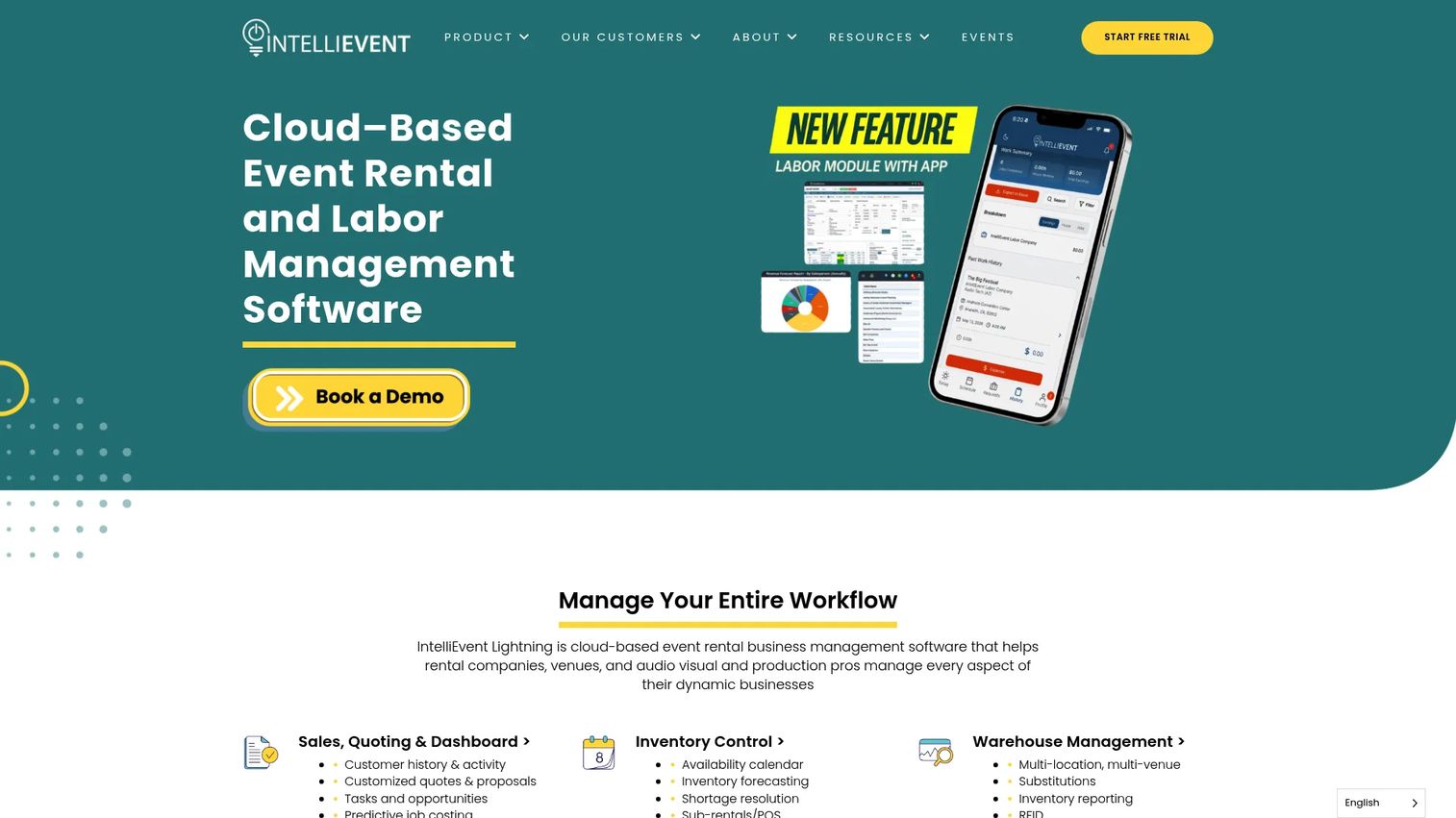
IntelliEvent is cloud-based event rental and labor management software for rental companies, venues, and AV and production teams. It aims to be an all-in-one operations platform, tying sales and quoting to inventory forecasting and warehouse logistics. The labor scheduling built into the same system is a practical fit for production teams that live and die by crew coordination.
Best for: Event rental businesses needing an all-in-one operations platform.
Key strengths
- Sales, quoting, and dashboards: build quotes and track pipeline with operational visibility in one view.
- Inventory control and availability forecasting: see what is available now and what is committed ahead.
- Warehouse, logistics, and labor scheduling: coordinate gear, transport, and crew from a single system.
Why choose IntelliEvent: IntelliEvent is a practical option for teams that prioritize real-time operations and want quoting, inventory, and labor in one cloud platform. The combination of availability forecasting and labor scheduling speaks directly to the AV production reality where a job needs gear and people confirmed together. It suits event and production operations that want breadth without running several disconnected tools.
IntelliEvent pricing: IntelliEvent does not publish pricing publicly, and the product page points prospects toward a demo. No first-party price was verifiable at the time of writing. IntelliEvent Lightning holds a 4.0/5 rating on G2 from limited reviews, so weigh that alongside your own hands-on evaluation. Request a demo and a scoped quote before deciding.
Considerations
The best av equipment rental software is the one that fits how your team actually works, not the one with the longest feature list. Run every shortlisted tool against these criteria before you sign.
Inventory model and asset complexity
Verify how the system handles serialized gear, bulk items, kits, and sub-rentals. AV jobs are rarely one item; they are a hundred serialized pieces plus a sub-rented line array. Confirm the platform tracks availability at the level of detail your catalog demands, and ask how it treats accessories and cases tied to a parent item.
Crew and logistics workflows
Check whether the system handles freelancers, transport, and day-of changes cleanly. The real test is how an update flows from quote to schedule to call sheet. If a change to the crew list does not propagate everywhere automatically, you will be back to reconciling by hand.
Quoting and invoicing depth
Verify whether bundled pricing, digital approvals, and invoice syncing are native or bolted on. The feature that separates strong equipment rental sales service software from weak is margin visibility during quoting. You want to see estimated cost against price before the quote goes out, not after the job closes.
Mobile and cloud access
Confirm the team can check inventory, update jobs, and manage crews offsite. This matters most for warehouse scanning and field coordination. Equipment rental software cloud deployment means the office, the warehouse, and the load-in crew all see the same live data, which is the whole point of moving off spreadsheets.
Finance and integrations
Check accounting sync, reporting quality, and reconciliation workflows. Make sure the software connects to the finance tools you already run. Clean reporting on estimated versus actual cost is what turns operational data into margin decisions you can defend.
Conclusion
The right av management software is not the one with the most modules. It is the one that reduces coordination cost and protects margin on every job you run.
For operationally complex AV production teams juggling gear, crew, and timeline, Rentman leads the shortlist. If cloud visibility across locations is your priority, Current RMS earns the look. Teams wanting a broad rental platform with a webstore and mobile access should evaluate EZRentOut. For ERP-style operations tied to project accounting, AcuRental fits. RentalWorks suits specialized multi-warehouse asset workflows, Texada fits service-heavy operations, and IntelliEvent is a strong all-in-one for event and production teams.
Do not buy on the demo alone. Shortlist your top two or three, run them against the considerations above, and test them with a real job, a real quote, and a real crew schedule. The tool that handles your messiest week without a manual reconciliation is the one worth paying for.
FAQs
AV rental software is a system that helps audio visual, lighting, and production businesses manage inventory, crew, quoting, invoicing, and logistics in one place. It replaces spreadsheets and disconnected tools with a single source of truth for what gear is available, who is working, and which jobs make money.
At minimum, look for inventory tracking, crew and freelancer scheduling, quoting with bundled pricing, invoicing, transport and logistics planning, and reporting on estimated versus actual margin. Mobile access is increasingly important so warehouse and field teams can check availability and update jobs without returning to a desk.
They overlap, but they are not identical. General equipment rental management software handles booking, billing, and inventory for any gear. AV rental software adds the workflows AV teams live in, such as sub-rental margin tracking, kit-based inventory, crew call sheets, and transport planning. A general rental system is enough if your jobs are simple; AV-specific tools earn their keep when jobs involve many serialized items, freelancers, and sub-rentals.
Look for tools that put crew scheduling next to equipment planning rather than treating people as an afterthought. Rentman and IntelliEvent both build crew and labor scheduling into the same system as inventory, so a job is only confirmed when gear and people line up together. Check how updates flow from the schedule to the call sheet before you decide.
Prioritize platforms with proposal building, bundled pricing, digital approvals, and finance sync. AcuRental's ERP foundation ties quoting directly to project accounting and billing, while Current RMS and Rentman offer strong quote-to-invoice workflows. The deciding factor is margin visibility during quoting, so you see profit before the quote goes out.
For most AV teams, yes. Cloud deployment means the office, warehouse, and field crew all see the same live inventory and job status at the same time. That shared visibility removes the double bookings and version-conflict problems that spreadsheets guarantee, and it lets teams update jobs and scan gear remotely. Equipment rental software cloud access is now standard among the platforms built for AV workflows.
Buying for inventory alone and ignoring crew, transport, and finance. Inventory control is necessary but not sufficient. A job fails when the gear is booked correctly but the crew update never reached the call sheet, or when the sub-rental never made it into the margin calculation. Choose for end-to-end workflow fit across inventory, people, logistics, and finance, not just the part of the problem that hurts most today.