Your sales team is chasing accounts that went cold three weeks ago. Meanwhile, your competitors are already in conversations with the prospects actively researching solutions right now. According to 6sense's 2025 Buyer Experience Report, the winning vendor is already on the buyer's Day One shortlist 95% of the time.
Buyer intent data providers solve this timing problem by revealing which companies are in-market before they ever fill out a form. This guide breaks down the 12 best B2B intent data providers, how they collect signals, and how to turn that data into pipeline.
What's inside
This guide covers the top B2B intent data providers, explains how intent signals work, and shows you how to turn that data into pipeline. You'll find a comparison table, detailed breakdowns of each platform, and practical advice for choosing the right tool for your GTM stack.
TL;DR
Bombora leads for third-party intent with its massive B2B Data Co-op covering 18,000+ topics.
6sense and Demandbase excel at predictive, AI-powered account intelligence for enterprise ABM.
ZoomInfo combines intent signals with verified contact data for immediate sales activation.
G2 and TrustRadius capture high-intent signals from buyers actively comparing software.
Leadfeeder and RB2B specialize in identifying anonymous website visitors, with RB2B offering person-level identification.
What is buyer intent data
Top buyer intent data providers in 2026 include Bombora, 6sense, ZoomInfo, Demandbase, and G2. Each specializes in a distinct area: cooperative data, AI predictions, sales intelligence, account-based marketing, and software comparison insights. B2B sales and marketing teams use intent data to identify companies actively researching solutions, which improves outreach timing and efficiency.
Intent data reveals which companies are actively researching topics related to your product or service. It helps you find the 5% of B2B accounts actively looking to buy at any given time.
By tracking online behaviors like content consumption and keyword searches, intent data providers give you a window into a buyer's journey. You can then engage prospects with the right message at the right time, often before competitors even know the account is in-market.
How intent data providers collect B2B signals
Intent data providers use several methods to capture buying signals across the web:
Content consumption tracking: Monitoring which articles, whitepapers, and webinars companies engage with across networks of B2B publisher websites.
Search behavior analysis: Capturing research patterns and keyword searches at the account level to understand what solutions companies are looking for.
Website visitor identification: Using reverse IP lookup and tracking pixels to de-anonymize visitors and identify the companies they work for.
Review site engagement: Tracking which companies are comparing software, reading reviews, and evaluating alternatives on platforms like G2 and TrustRadius.
First-party vs third-party intent data
First-party intent data comes from your own digital properties. Website visits, content downloads, email engagement, and demo requests all fall into this category. You own this data, and it indicates direct interest in your brand.
Third-party intent data is collected by external providers from publisher networks, data co-ops, and review sites. This data provides a broader view of an account's research activity across the web, often before they ever visit your site.
Most teams use a combination of both for comprehensive coverage.
When to use intent data platforms
Buyer intent data providers support multiple use cases across sales and marketing. The best platforms provide signals that can be activated to achieve specific strategic goals.
Account-based marketing and ABM target lists
Intent data helps marketing teams build and prioritize ABM target lists by identifying accounts showing active research behavior. Instead of relying solely on static firmographic data, you can focus resources on accounts that are already in-market. Platforms like Demandbase and 6sense combine intent with firmographic data to power ABM campaigns, which deliver an average ROI of 137%.
Sales prioritization and outbound sequencing
Sales and pre-sales teams use intent signals to prioritize outreach to accounts showing clear buying behavior. Instead of cold outreach, reps can focus on accounts already researching relevant topics. This approach improves response rates and shortens deal cycles.
Demand generation and paid media targeting
Demand gen teams use intent data to target digital ads to in-market accounts, making ad spend more efficient through interactive marketing approaches. Platforms like Bombora and Demandbase allow for audience syndication to ad platforms.
This ensures your budget is spent on companies actively looking for a solution like yours. This is a core function of modern demand generation tools.
Churn prevention and at-risk account detection
Intent data can reveal when existing customers are researching competitors or related solutions, which is a strong signal of churn risk. Customer success teams can then proactively engage at-risk accounts and reinforce the value of your partnership before it's too late.
Comparison table
# | Product | Intent type | Key differentiator | Pricing | G2 rating |
|---|---|---|---|---|---|
1 | Bombora | Third-party co-op | Largest B2B data cooperative | Custom | 4.1 |
2 | 6sense | Predictive/AI | AI-powered buying stage prediction | Custom | 4.6 |
3 | ZoomInfo | Contact + intent | Intent signals combined with contact database | Tiered | 4.4 |
4 | Demandbase | Predictive/AI | All-in-one ABM platform | Custom | 4.4 |
5 | Cognism | Contact + intent | Strong EMEA coverage and GDPR compliance | Custom | 4.6 |
6 | Leadfeeder | First-party/website | SMB-friendly website visitor ID | Freemium | 4.3 |
7 | G2 Marketing | Review site | High-intent signals from software buyers | Tiered | 4.6 |
8 | TrustRadius | Review site | Enterprise software review-based intent | Tiered | 4.7 |
9 | RB2B | First-party/website | Person-level website visitor identification | Freemium | 4.8 |
10 | DemandScience | Third-party co-op | Content syndication + intent-based leads | Custom | 4.3 |
11 | Lusha | Contact + intent | Browser extension for contact lookup with intent | Freemium | 4.3 |
12 | IntentData.io | Third-party co-op | Flexible intent data feeds via API | Custom | 4.9 |
Top buyer intent data providers for B2B
1. Bombora
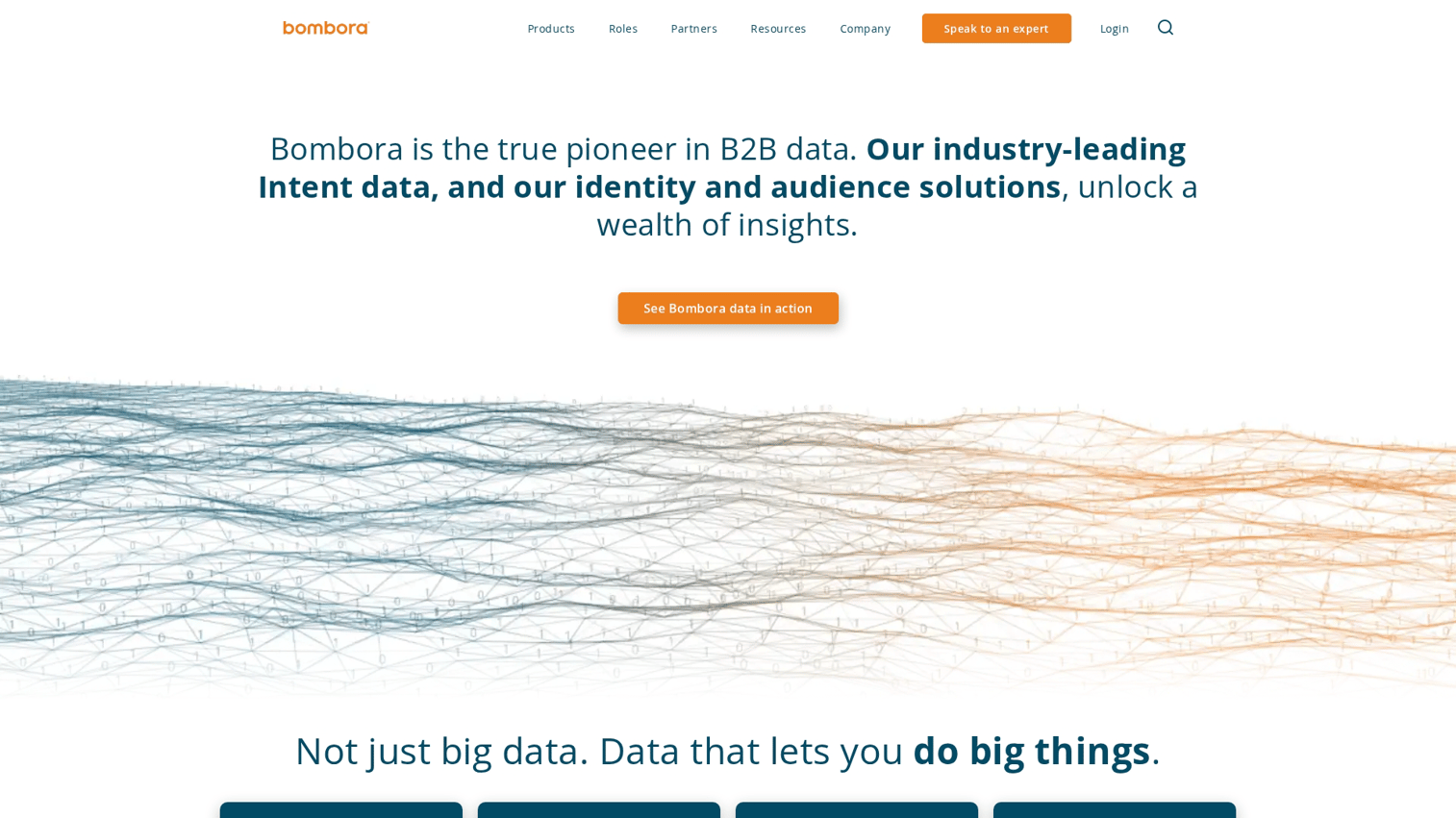
Bombora is the market leader in third-party intent data, powered by its massive B2B Data Co-op. The platform aggregates content consumption signals from thousands of publisher sites to identify companies with elevated research activity.
Best for: Third-party topic-level intent data at scale.
Key strengths
B2B Data Co-op aggregating signals from thousands of publisher sites
Company Surge® scoring to identify accounts with elevated research activity
Comprehensive topic taxonomy covering 18,000+ B2B topics
Deep integrations with major CRMs and ABM platforms
Why choose Bombora: Bombora has the largest cooperative data network for B2B intent, making it ideal for teams that want broad, off-site signal coverage. If you want to know who's researching topics related to your solution before they visit your site, Bombora is the standard.
Pricing: Custom pricing, typically enterprise-tier.
2. 6sense
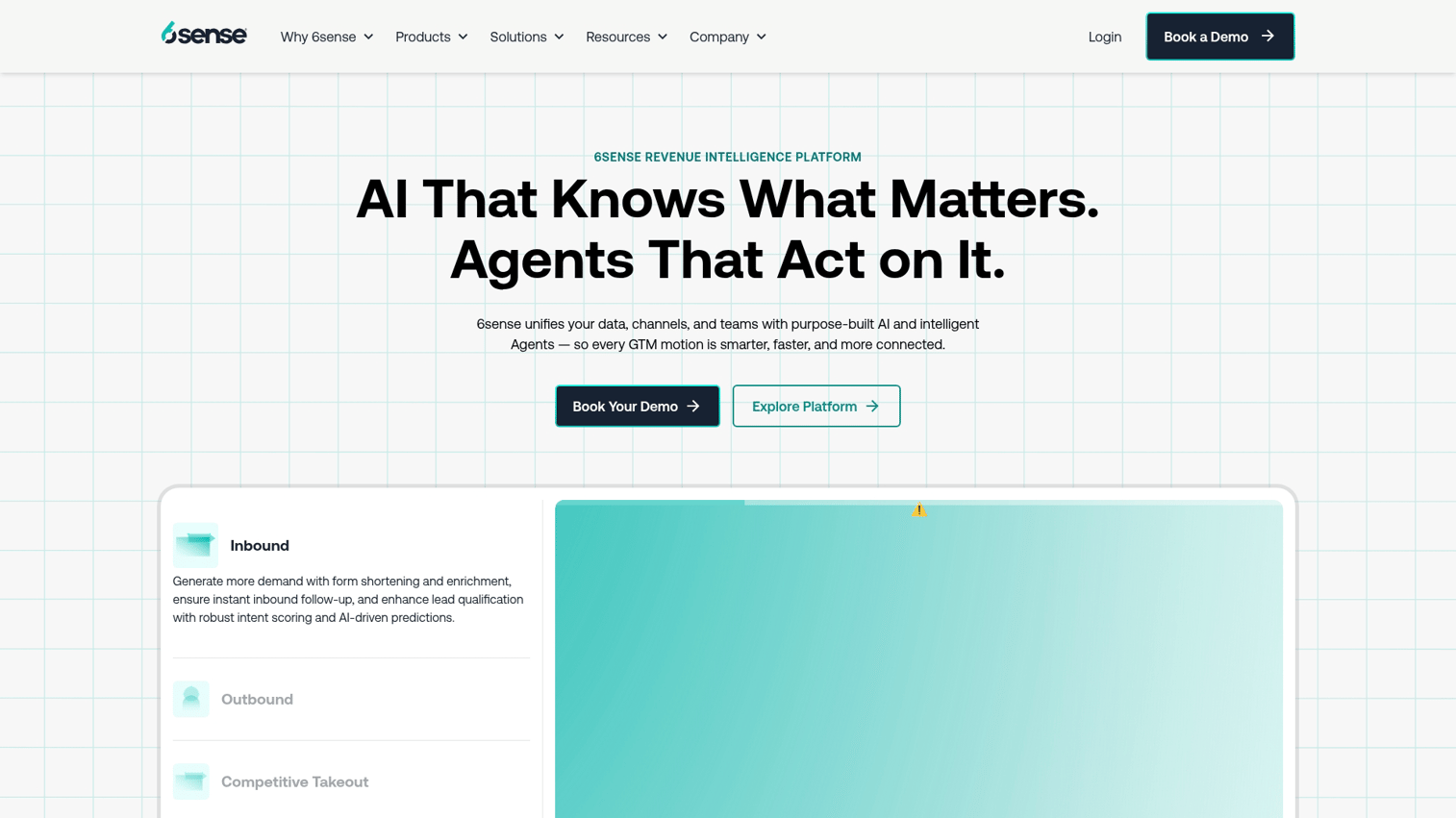
6sense is an AI-powered platform that excels at predicting which accounts are in-market and where they are in the buying journey. The platform goes beyond simple intent spikes to map the full customer journey.
Best for: AI-driven account identification and buying stage prediction.
Key strengths
Identifies anonymous buying signals across the web
Predicts where accounts are in their buying journey
Revenue AI™ for prioritization and orchestration
Strong native ABM and advertising capabilities
Why choose 6sense: 6sense works well for teams wanting predictive analytics based on intent signals to map the full customer journey, not just intent spikes. The AI layer adds context that raw intent data alone can't provide.
Pricing: Custom pricing based on platform tier.
3. ZoomInfo
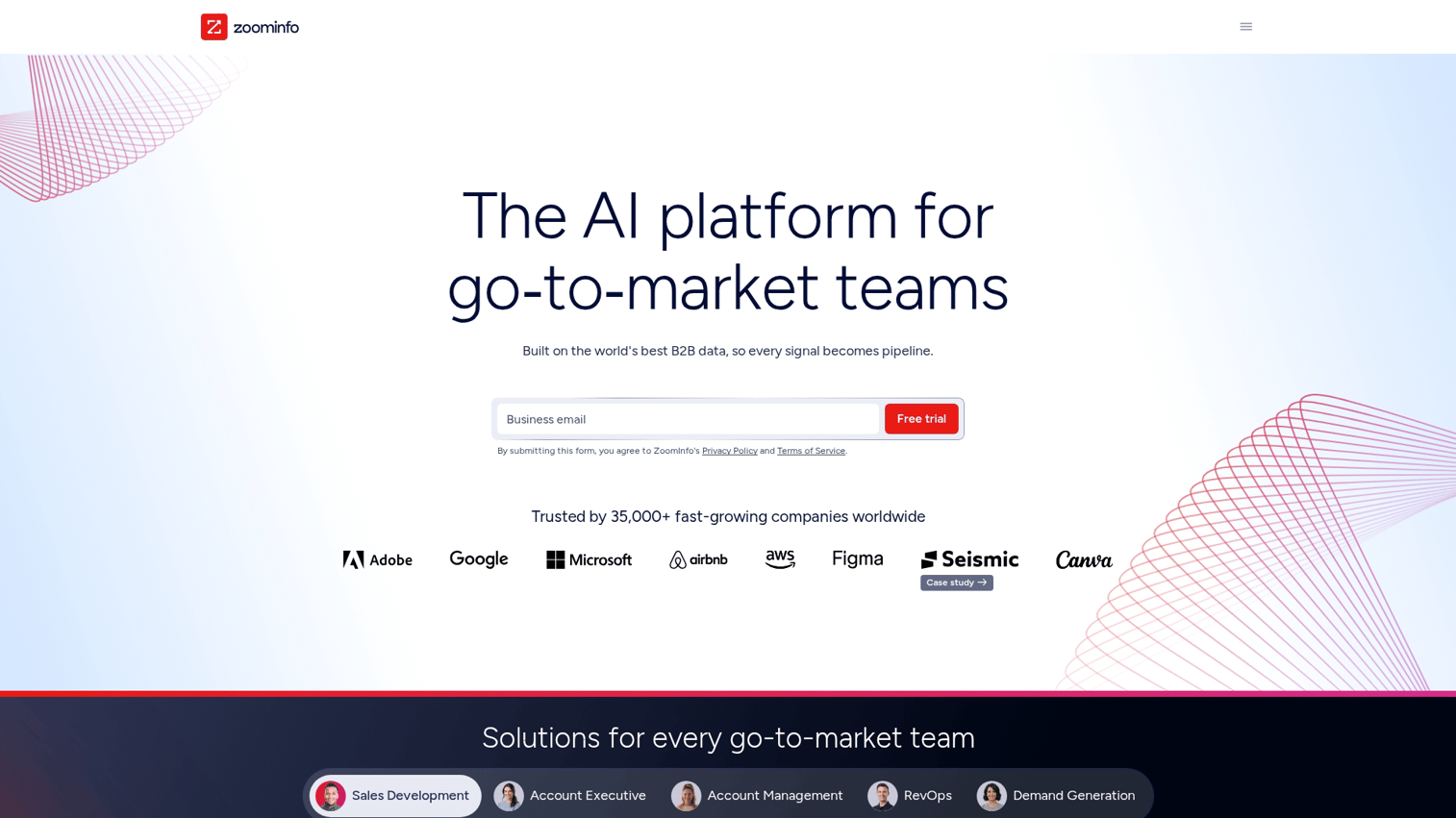
ZoomInfo combines real-time intent signals with one of the world's largest B2B contact databases. This makes it a go-to platform for sales teams who want both the "who" and the "when" in one place.
Best for: Sales teams wanting verified contacts alongside intent signals.
Key strengths
Real-time intent signals integrated with extensive B2B contact database
Streaming intent for immediate alerts on surging accounts
Direct access to decision-maker contact information
Strong sales workflow integrations
Why choose ZoomInfo: ZoomInfo is ideal when you want to act on intent signals immediately by reaching out to specific decision-makers. The combination of intent and contact data eliminates the extra step of enrichment.
Pricing: Tiered pricing, contact for quotes.
4. Demandbase
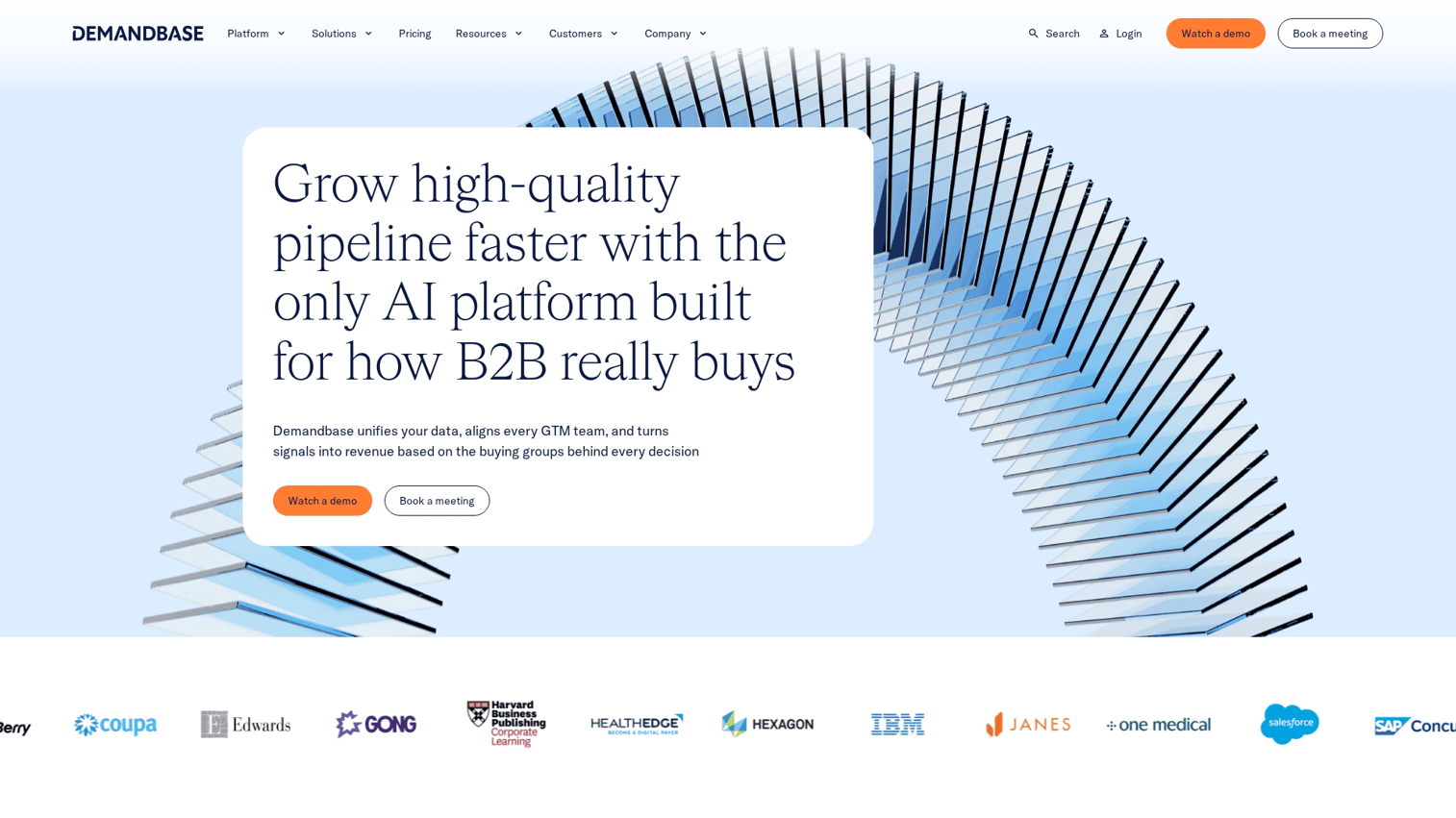
Demandbase is a comprehensive ABM platform that uses intent data as a core component of its Account Intelligence engine. The platform combines first and third-party data for comprehensive account insights.
Best for: Account-based marketing with combined first and third-party intent.
Key strengths
Account Intelligence combining multiple data sources (firmographic, technographic, intent)
End-to-end ABM platform with advertising, personalization, and orchestration
Journey analytics to track account progression through the funnel
Strong B2B advertising capabilities
Why choose Demandbase: Demandbase works well for marketing teams running full ABM programs. It suits teams who want intent as part of a broader, integrated platform rather than a standalone data feed.
Pricing: Custom pricing, enterprise focus.
5. Cognism
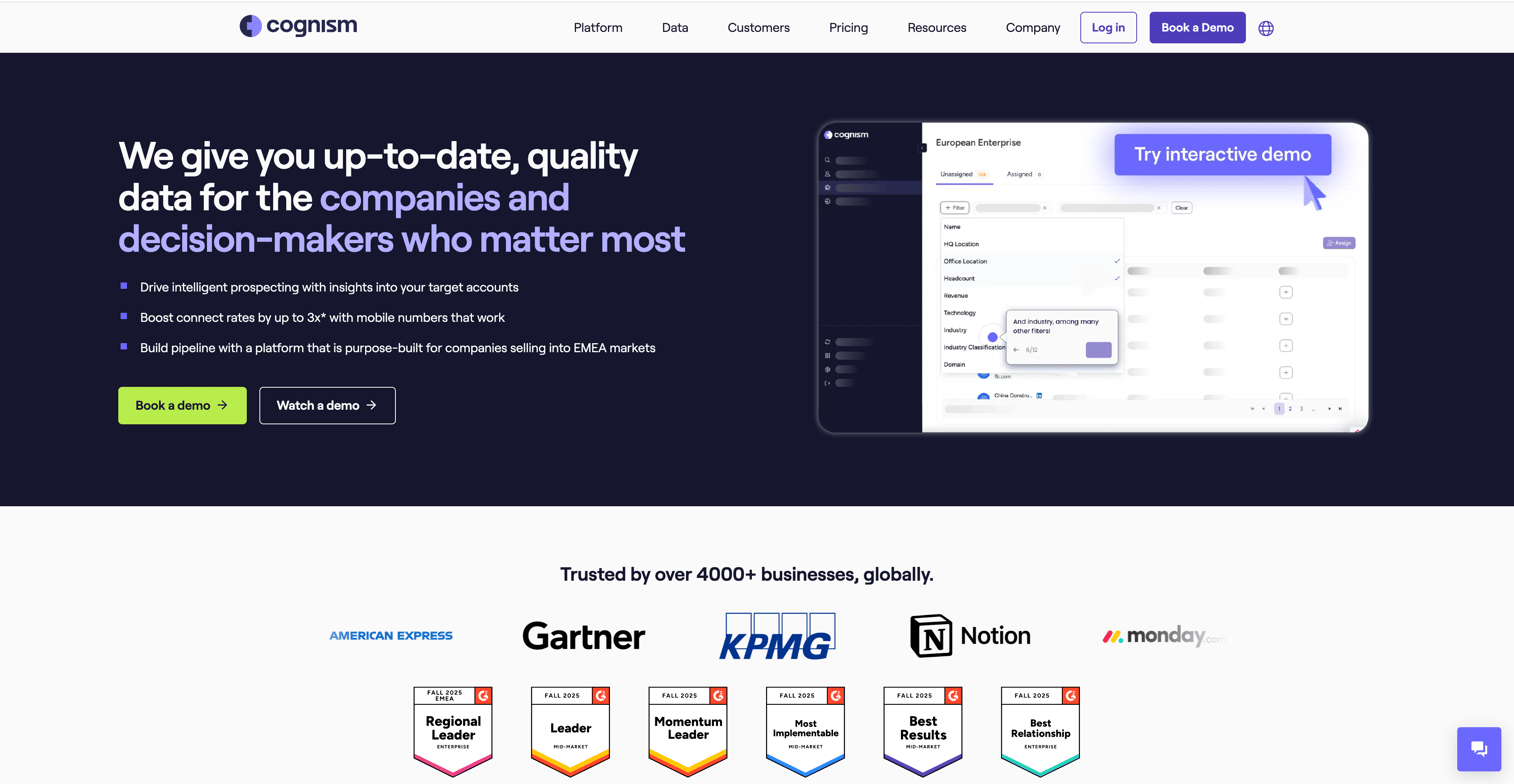
Cognism is a sales intelligence platform that combines intent data (via a Bombora integration) with a GDPR-compliant contact database. The platform has a strong focus on European markets.
Best for: European markets and GDPR-compliant intent data.
Key strengths
Strong EMEA coverage and compliance focus
Combines intent with verified mobile numbers and emails
Diamond Data® verification for high contact accuracy
Bombora intent integration
Why choose Cognism: Cognism is a strong fit for teams selling into Europe who want compliant, verified contact data paired with intent signals. The GDPR compliance is built in, not bolted on.
Pricing: Custom pricing.
6. Leadfeeder
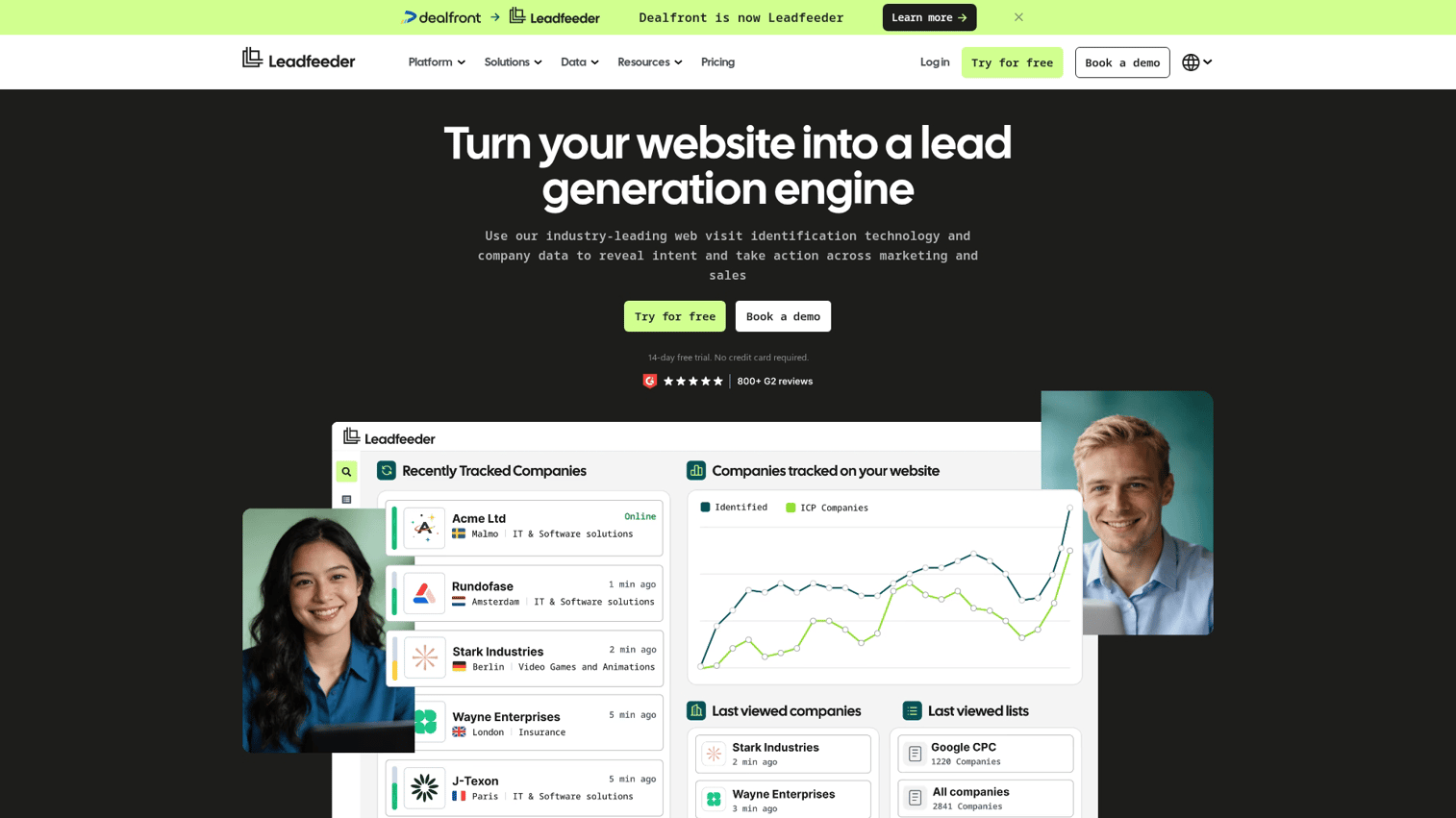
Now part of Dealfront, Leadfeeder is a popular tool for identifying companies that visit your website. The platform is accessible for SMBs and mid-market companies who want website visitor identification without enterprise pricing.
Best for: SMB and mid-market website visitor identification.
Key strengths
Identifies companies visiting your website using reverse IP lookup
Tracks specific pages and content consumed by each visiting company
Integrates with popular CRMs and sales tools
Part of the Dealfront platform with strong European focus
Why choose Leadfeeder: Leadfeeder works well for smaller teams wanting affordable first-party intent without enterprise-level pricing. The free tier makes it easy to test before committing.
Pricing: Free tier available, with paid plans that scale with leads identified.
7. G2 Marketing Solutions
G2 provides high-value intent data sourced directly from its software marketplace. The platform captures signals from buyers who are actively comparing products, which represents some of the highest-intent behavior available.
Best for: Capturing intent from buyers actively comparing software.
Key strengths
Intent data from users researching and comparing products on G2
Category-level and competitor comparison signals
Buyer intent alerts when prospects view your profile or a competitor's
Integration with CRMs and marketing automation
Why choose G2: G2 is a strong fit for software companies wanting review site intent signals from buyers who are in an active evaluation mode. Buyers on G2 are often further along in their journey than those showing topic-level intent.
Pricing: Included with G2 seller subscriptions, with tiered pricing.
8. TrustRadius for Vendors
Similar to G2, TrustRadius offers intent data based on buyer activity on its software review platform. The platform has a strong reputation among enterprise buyers.
Best for: B2B software vendors wanting review-based intent signals.
Key strengths
Intent from enterprise buyers researching software on TrustRadius
Buyer activity insights showing which companies view your product
Competitor comparison tracking
Integration with Salesforce and HubSpot
Why choose TrustRadius: TrustRadius is a good fit for enterprise software vendors where TrustRadius has strong buyer traffic in their specific category.
Pricing: Vendor subscription tiers.
9. RB2B
RB2B goes a step beyond traditional website visitor ID by identifying the specific person visiting your site, not just the company. This person-level identification enables highly personalized outreach.
Best for: Identifying individual visitors, not just companies.
Key strengths
Person-level identification of website visitors
Real-time Slack notifications when target prospects visit your site
LinkedIn profile matching for easy follow-up
Free tier for getting started
Why choose RB2B: RB2B is a strong fit for teams who want to identify the specific person visiting their site. This enables highly personalized, timely outreach. The person-level data is a significant step up from company-level identification.
Pricing: Free tier available, with paid plans for higher volume.
10. DemandScience
DemandScience is a B2B data company that combines intent signals with content syndication and lead generation services.
Best for: Combining content syndication with intent-based lead generation.
Key strengths
Intent-driven content syndication programs
Lead generation with intent qualification filters
Global B2B data coverage
Custom audience building for targeted campaigns
Why choose DemandScience: DemandScience works well for teams running content syndication programs who want intent data built directly into their lead generation process.
Pricing: Custom pricing based on program scope.
11. Lusha
Lusha is primarily a contact data provider that has layered intent signals onto its platform. The browser extension makes it easy for sales reps to find contacts at surging accounts.
Best for: Sales teams wanting quick contact lookup with intent context.
Key strengths
Popular browser extension for fast contact lookup on LinkedIn and company websites
Intent signals layered on top of contact data
Direct dial and email verification
CRM integrations
Why choose Lusha: Lusha is a good fit for individual sales reps who want fast contact access with some intent context. It's one of the more accessible intent data tools for small businesses.
Pricing: Free tier available, with paid plans per user.
12. IntentData.io
IntentData.io is a flexible provider that aggregates multiple sources of online intent data and delivers it via flexible feeds for custom use cases.
Best for: Teams wanting flexible access to intent data feeds.
Key strengths
Multiple intent data sources aggregated into one feed
Flexible data delivery options (API, file delivery)
Custom topic configuration
API access for building custom integrations and workflows
Why choose IntentData.io: IntentData.io is a good fit for teams with technical resources who want raw intent data feeds to build custom workflows and models.
Pricing: Custom pricing based on data volume.
How to evaluate intent data software
Not all buyer intent data providers are created equal. When evaluating intent data software, use the criteria below to choose the right platform for your GTM stack.
Data quality and signal accuracy
The value of intent data hinges on its accuracy. When evaluating a provider, ask about their methodology: How do they verify that signals represent genuine buying behavior versus random noise? What is the false positive rate, and how do they filter out non-commercial research activity?
CRM and marketing automation integrations
The best intent data is actionable. Ensure the platform has native integrations with your core systems like Salesforce, HubSpot, or other marketing automation software. The goal is to integrate with your existing workflows so signals can be acted upon immediately.
Signal freshness and update frequency
Stale intent data loses its value almost instantly. A signal from three weeks ago is far less actionable than one from today.
Ask providers how often their signals refresh. Real-time or daily updates are critical for timely outreach.
Pricing model and scalability
Pricing models for intent data vary significantly:
Per-seat pricing: Common for contact-focused tools like ZoomInfo and Lusha.
Platform/tier pricing: Used by enterprise ABM tools like 6sense and Demandbase.
Data volume pricing: Often used by pure intent providers like Bombora.
Understand how costs will scale as your usage and list of tracked accounts or topics grow.
Account-level vs contact-level intent signals
Account-level intent tells you which company is researching but not who specifically. This is the most common type and requires additional enrichment to find the right contact.
Contact-level intent identifies the specific person showing intent. This is highly actionable but less common. Providers like ZoomInfo and RB2B offer this capability.
How to turn intent signals into pipeline
Collecting intent data is only the first step. Its true value is realized when you act on it.
Prioritize accounts for sales activation
Sales teams can use intent scores to rank and prioritize accounts for outreach. Accounts showing high-intent signals receive immediate, personalized attention. This process can be automated by building intent-based lead scoring directly into your CRM to surface the hottest accounts for your reps.
Personalize campaigns with intent topics
Intent data doesn't just tell you who is in-market, but also what they care about. Use the specific topics an account is researching to personalize email copy and content, ad creative, and website experiences. If an account is researching "CRM migration," your outreach can speak directly to that pain point.
Trigger automated workflows in your CRM
Modern intent platforms can push signals directly into your CRM, where you can use them to trigger automated workflows. You might set up a rule that automatically alerts a sales rep or updates a lead score when intent spikes. You can also enroll an account in a specific nurture campaign at that moment.
Surface interactive demos to high-intent buyers
High-intent accounts are actively evaluating solutions and often don't want to wait for a sales call to see your product in a demo center. Surfacing interactive demos on your website or in outreach allows buyers to self-serve and qualify themselves while their intent is at its peak.
This is the ultimate activation layer: intent data tells you who's ready, and interactive product experiences give them something meaningful to act on. The engagement data from interactive demos and sandbox environments can then enrich your intent signals even further.
How to convert high-intent accounts into pipeline
The right buyer intent data provider helps you find in-market accounts, but converting them requires giving buyers a low-friction way to evaluate your product. Pairing intent data with engaging interactive demos creates a complete pipeline from signal to qualified opportunity.
FAQs about buyer intent data providers
Pricing varies widely. Website visitor tools like Leadfeeder and RB2B offer free tiers. Enterprise platforms like Bombora, 6sense, and Demandbase typically require custom quotes starting in the five-figure range annually.
Intent data captures external buying signals, such as research on third-party sites. Lead scoring typically assigns points based on internal engagement with your brand, like email opens, website visits, and demo requests. Most teams use both together for a complete prioritization model.
Yes. Tools like Leadfeeder, RB2B, and Lusha offer free tiers or affordable per-user pricing that work well for small teams. Enterprise platforms like 6sense and Demandbase are designed for larger organizations with bigger budgets.
Most intent tools can be implemented quickly. Website visitor tools require only adding a tracking script to your site, which takes minutes.
CRM integrations for platforms like ZoomInfo or Bombora can often be set up in hours or days. Full enterprise ABM platforms may take longer to configure.
Teams measure ROI by tracking metrics like conversion rates on intent-flagged accounts versus cold accounts, pipeline velocity for high-intent opportunities, and improvements in win rates. A simple approach is to compare the performance of sales and marketing campaigns before and after adopting intent data.
Among buyer intent data providers for broad topic-level intent, Bombora and 6sense lead the pack for B2B lead generation. For identifying visitors already on your website, Leadfeeder and Lead Forensics are strong options.
For software companies, G2 and TrustRadius capture high-intent signals from buyers in the final stages of comparison. The best choice depends on your sales motion and target market.