Generic website experiences leave money on the table - BCG projects $2 trillion in revenue will shift to companies that master personalization. Research shows personalized experiences can lift conversion rates by 10-30%, yet most teams still serve the same content to every visitor regardless of who they are or what they're looking for.
Personalization software uses AI and behavioral data to tailor content, recommendations, and messaging for each user in real-time. This guide breaks down 14 platforms across website personalization, content personalization, marketing personalization, and demo personalization, with honest evaluations of where each tool fits.
What's inside
This guide covers the best personalization software for 2026, spanning website personalization tools, content personalization platforms, marketing personalization software, and AI personalization engines. We selected tools based on G2 ratings, feature depth, integration capabilities, and use case fit across e-commerce, B2B, and SaaS environments. You'll find a comparison table, detailed breakdowns of each platform, and practical guidance on choosing the right tool for your team.
TL;DR
- Best enterprise personalization engine: Dynamic Yield handles omnichannel experiences at scale
- Best for experimentation-first teams: Optimizely combines content personalization with robust A/B testing
- Best for B2B website personalization: Mutiny personalizes landing pages for target accounts
- Most affordable entry point: HubSpot offers personalization features within its existing CRM ecosystem
What is personalization software
Personalization software uses AI, machine learning, and user data to deliver customized content, product recommendations, and experiences across web, email, and SMS channels. The platforms analyze behavior, location, and demographics to tailor interactions in real-time, typically integrating with CRM and e-commerce systems.
Here's what personalization software actually does:
- Real-time behavioral tracking: Captures user actions to update visitor profiles instantly
- AI-driven recommendations: Predicts and displays products or content relevant to each user
- Targeted messaging: Delivers customized pop-ups, emails, and SMS based on user segments
- A/B testing and optimization: Tests different tailored experiences to maximize conversion
- Omnichannel consistency: Ensures a personalized experience across multiple channels
Website personalization tools
Website personalization software customizes on-site experiences based on visitor behavior, location, referral source, and past interactions. Common use cases include dynamic landing pages, personalized CTAs, and custom navigation paths that adapt to each visitor.
Content personalization platforms
Content personalization platforms tailor articles, resources, and media based on user preferences and engagement history. You'll find content personalization commonly used in media, publishing, and B2B content marketing where the goal is keeping visitors engaged longer.
Marketing personalization software
Marketing personalization software automates tailored campaigns across email, SMS, ads, and web. The platforms often integrate with marketing automation tools for triggered messaging sequences based on user behavior.
AI personalization engines
AI personalization engines use machine learning to predict user preferences and serve recommendations without manual rule-setting. AI engines represent the most sophisticated tier, often used by enterprises with large datasets and complex customer journeys.
Demo and product experience personalization
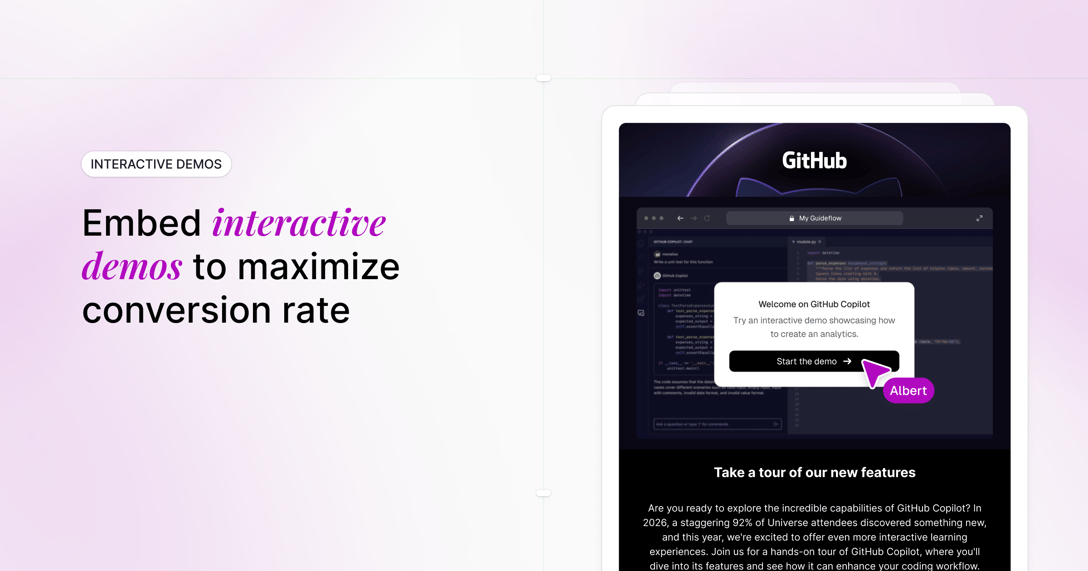
Demo personalization tools let teams tailor interactive product demos for specific accounts, industries, or personas. For B2B teams, personalized demos often outperform static content because prospects can experience the product in their own context rather than watching a generic walkthrough.
When to use a personalization platform
Improving website conversion rates
Personalization makes sense when you have high traffic but low conversion, generic user experiences, or anonymous visitors bouncing before engaging - over 75% of consumers are turned off by content that doesn't feel relevant.
Scaling marketing campaigns across segments
Marketing personalization software becomes valuable when you're managing multiple customer segments, running campaigns that require dynamic content, or outgrowing batch-and-blast email. Fast-growing companies derive 40% more revenue from personalization than slower-growing counterparts.
Personalizing sales demos for target accounts
B2B teams benefit from demo personalization when sales cycles are long, multiple stakeholders are involved, or generic demos fail to resonate. Interactive demos allow personalization at scale without custom builds for each prospect.
Onboarding customers with tailored experiences
Post-sale personalization helps when you're guiding users to features relevant to their use case or reducing time-to-value through customized walkthroughs.
Personalization software comparison table
| # | Product | Intent | Key differentiation | Pricing | G2 rating |
|---|---|---|---|---|---|
| 1 | Dynamic Yield | Website personalization | Enterprise omnichannel engine | Custom pricing | 4.5/5 |
| 2 | Optimizely | Content personalization | Experimentation-first platform | Custom pricing | 4.3/5 |
| 3 | Adobe Target | Enterprise personalization | Deep Adobe ecosystem integration | Custom pricing | 4.0/5 |
| 4 | Segment | Data infrastructure | CDP powering personalization tools | From $120/mo | 4.6/5 |
| 5 | Personyze | Website personalization | All-in-one mid-market solution | From $250/mo | 4.6/5 |
| 6 | Insider | Omnichannel personalization | Mobile and messaging focus | Custom pricing | 4.7/5 |
| 7 | Bloomreach | E-commerce personalization | Search and merchandising combined | Custom pricing | 4.6/5 |
| 8 | Monetate | Retail personalization | Testing and segmentation depth | Custom pricing | 4.2/5 |
| 9 | Salesforce Marketing Cloud Personalization | CRM-native personalization | Native Salesforce integration | Custom pricing | 4.2/5 |
| 10 | VWO | Website personalization | A/B testing heritage | From $314/mo | 4.3/5 |
| 11 | Mutiny | B2B website personalization | ABM-focused landing pages | Custom pricing | 4.7/5 |
| 12 | HubSpot | Marketing personalization | SMB-friendly CRM integration | From $800/mo | 4.4/5 |
| 13 | Braze | Messaging personalization | Mobile-first engagement | Custom pricing | 4.5/5 |
| 14 | Iterable | Cross-channel personalization | AI send-time optimization | Custom pricing | 4.4/5 |
Top 14 personalization software platforms
1. Dynamic Yield
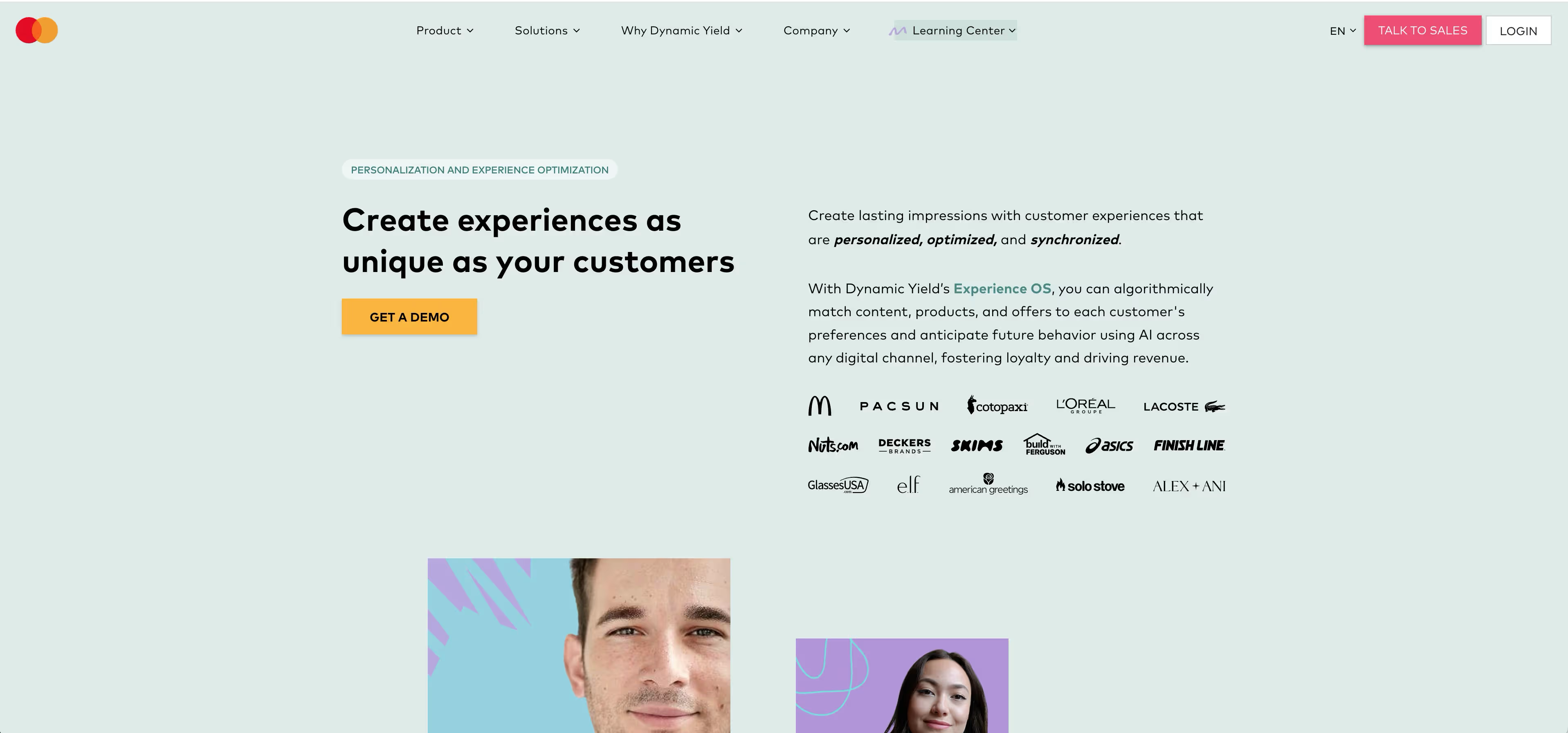
Dynamic Yield is an enterprise personalization engine that delivers tailored experiences across web, mobile, email, and ads from a single platform. The system uses machine learning to determine which content, products, and offers to show each visitor based on their behavior and predicted preferences.
Best for: Large e-commerce and retail brands that want omnichannel personalization at scale with sophisticated testing capabilities.
Key strengths
- Omnichannel orchestration: Coordinate personalized experiences across every customer touchpoint
- Predictive targeting: AI determines optimal content without manual rule configuration
- Advanced testing: Run complex experiments across segments and channels simultaneously
- Product recommendations: Machine learning powers dynamic product suggestions
Pricing: Custom pricing based on traffic and feature requirements.
2. Optimizely
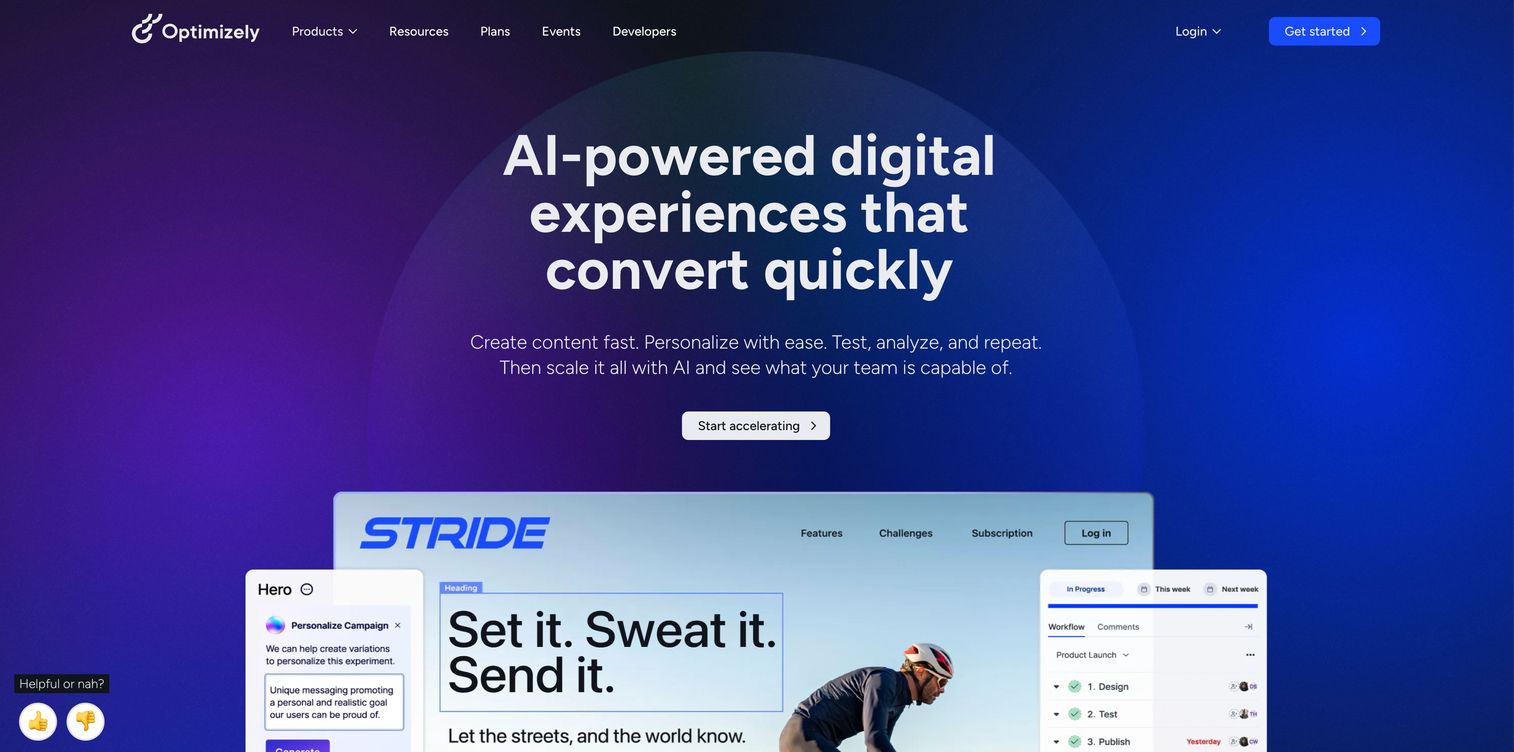
Optimizely combines content personalization with its experimentation heritage, letting teams test and refine personalized experiences with statistical rigor.
Best for: Teams that want to validate personalization hypotheses through rigorous A/B testing before full deployment.
Key strengths
- Experimentation-first approach: Test personalization variants with statistical confidence
- Content recommendations: AI suggests relevant content based on visitor behavior
- Feature flagging: Roll out personalized experiences gradually to manage risk
- Full-stack capabilities: Personalize both front-end experiences and back-end logic
Pricing: Custom pricing based on traffic and feature requirements.
3. Adobe Target
Adobe Target provides enterprise-grade personalization and testing within the Adobe Experience Cloud ecosystem. The platform excels when you're already using Adobe Analytics, Adobe Experience Manager, or other Adobe tools.
Best for: Organizations already invested in the Adobe stack who want native integration across their marketing technology.
Key strengths
- Adobe ecosystem integration: Seamless data flow with Analytics, AEM, and other Adobe products
- AI-powered automation: Adobe Sensei handles targeting decisions automatically
- Multi-channel testing: Personalize and test across web, mobile, and IoT
- Enterprise governance: Robust permissions and compliance controls
Pricing: Custom pricing as part of Adobe Experience Cloud.
4. Segment
Segment is a customer data platform that collects, unifies, and routes customer data to other personalization tools. While not a personalization engine itself, Segment provides the data foundation that makes personalization possible.
Best for: Teams that want a single customer view before they can personalize effectively, especially teams with data scattered across multiple systems.
Key strengths
- Data unification: Collect customer data from every source into unified profiles
- Real-time streaming: Route data to personalization tools as events happen
- Identity resolution: Connect anonymous and known user behavior
- 300+ integrations: Send data to any tool in your stack
Pricing: Free tier available. Team plan starts at $120/month.
5. Personyze
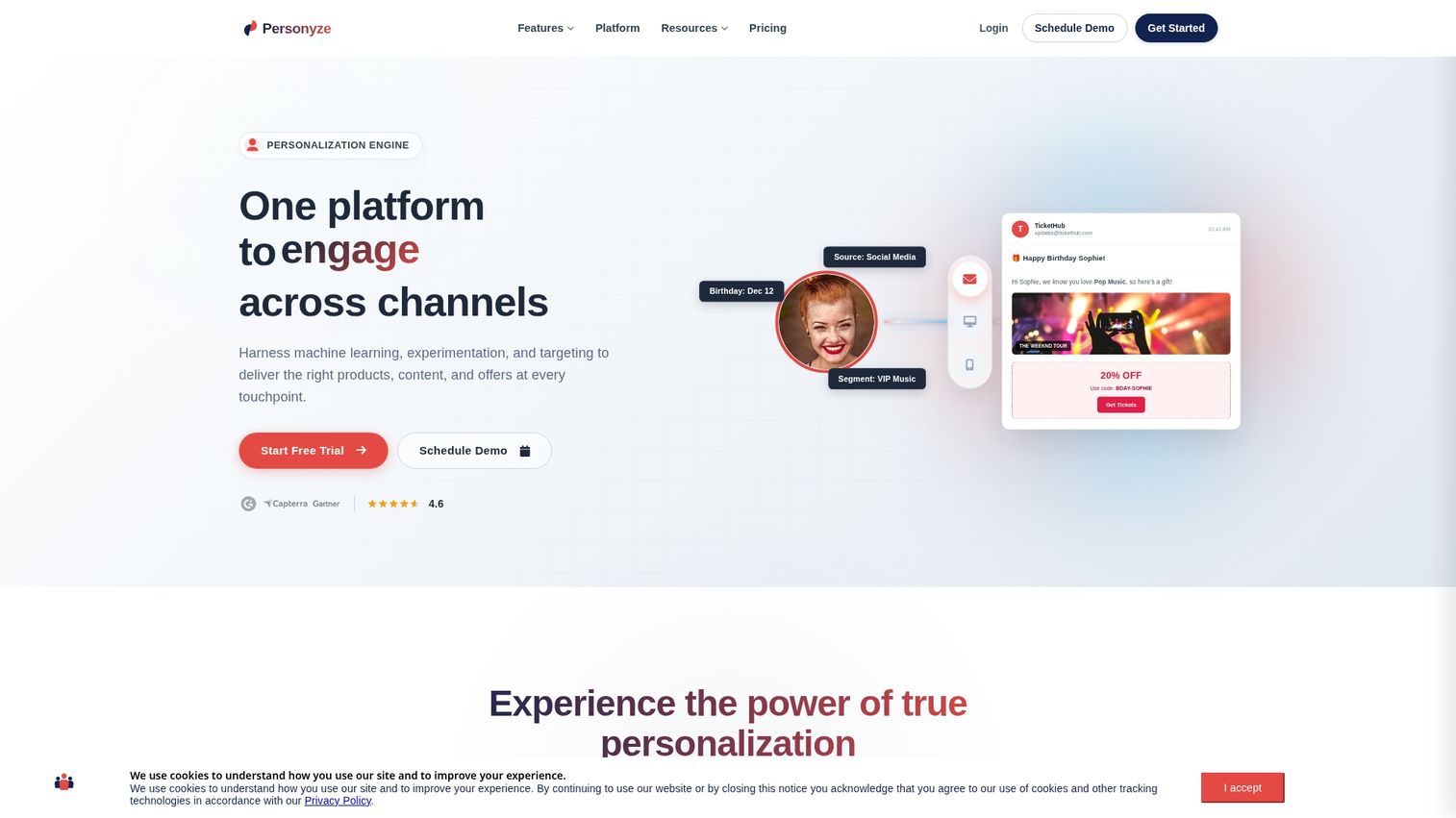
Personyze offers all-in-one website personalization for mid-market companies, combining behavioral targeting, recommendations, and email personalization without enterprise pricing.
Best for: Mid-market teams wanting unified personalization capabilities without the complexity or cost of enterprise platforms.
Key strengths
- Behavioral targeting: Personalize based on real-time visitor actions and attributes
- Product recommendations: AI-powered suggestions for e-commerce and content sites
- Email personalization: Extend website personalization into email campaigns
- Visual editor: Create personalized experiences without developer involvement
Pricing: Plans start at $250/month based on traffic and features.
6. Insider
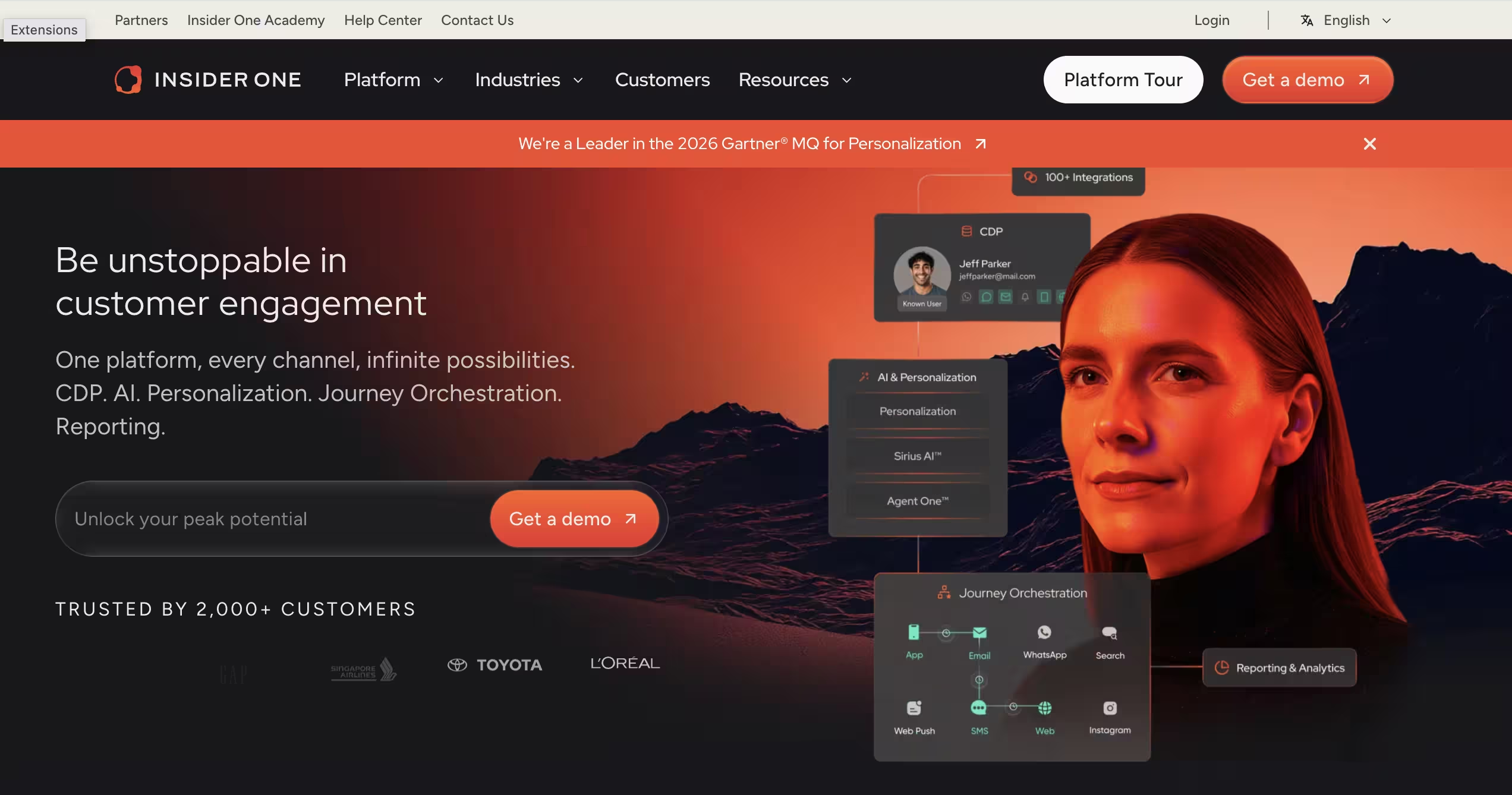
Insider is an omnichannel personalization platform with particular strength in mobile, web, and messaging personalization for consumer brands.
Best for: Consumer brands with cross-channel requirements who want to personalize mobile app, web, email, SMS, and push experiences from one platform.
Key strengths
- Mobile-first capabilities: Deep personalization for app experiences
- Cross-channel orchestration: Coordinate personalized journeys across every touchpoint
- AI-powered predictions: Anticipate customer behavior and preferences
- Template library: Pre-built personalization templates for common use cases
Pricing: Custom pricing based on channels and traffic.
7. Bloomreach
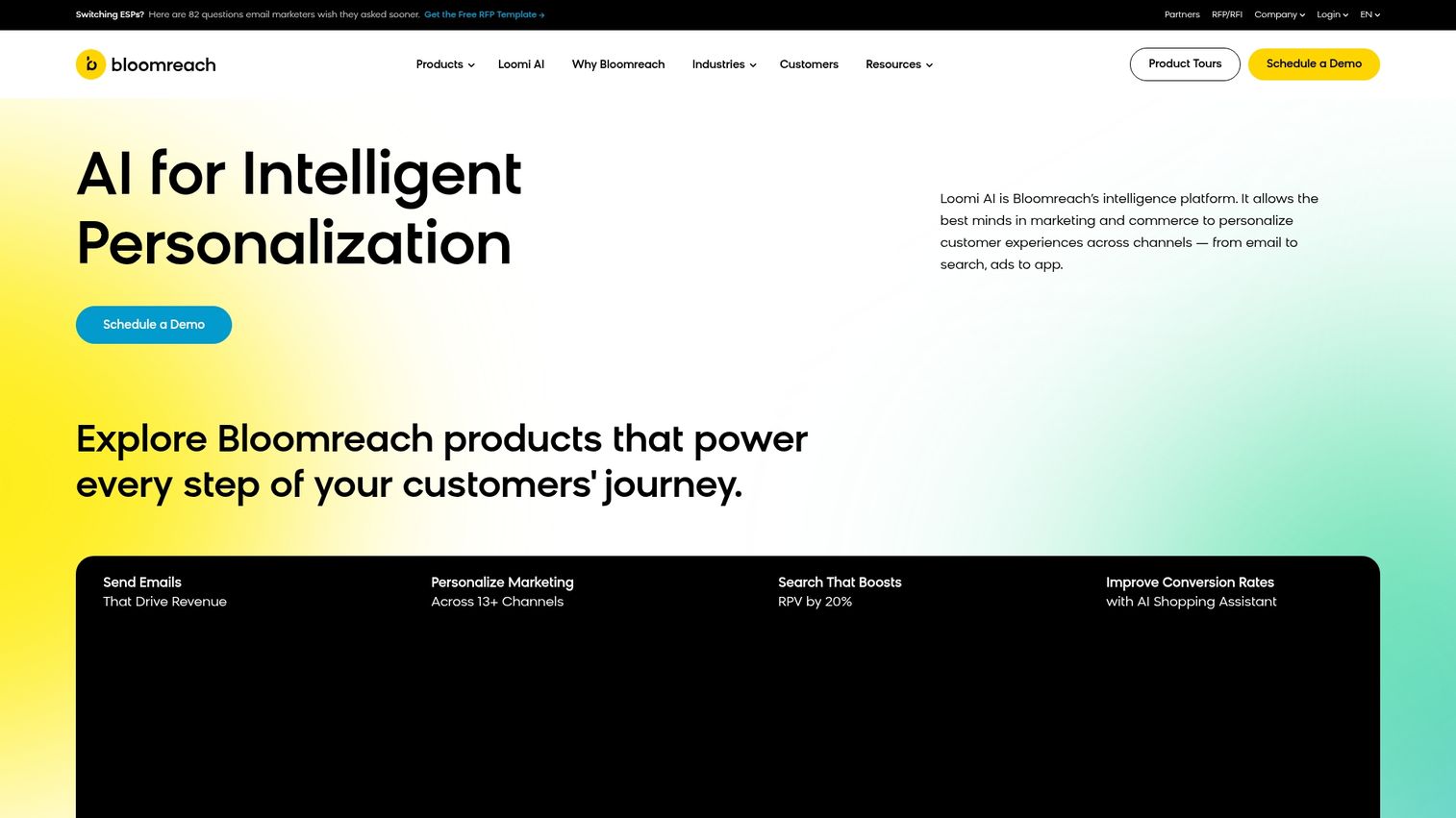
Bloomreach combines e-commerce personalization with search and merchandising, helping online retailers deliver personalized product discovery experiences.
Best for: Online retailers wanting AI-driven product discovery that personalizes search results, category pages, and recommendations.
Key strengths
- Search personalization: Tailor search results to individual shopper preferences
- Merchandising automation: AI optimizes product placement and sorting
- Content personalization: Deliver relevant content alongside product experiences
- Headless architecture: Personalize across any front-end implementation
Pricing: Custom pricing based on traffic and modules.
8. Monetate
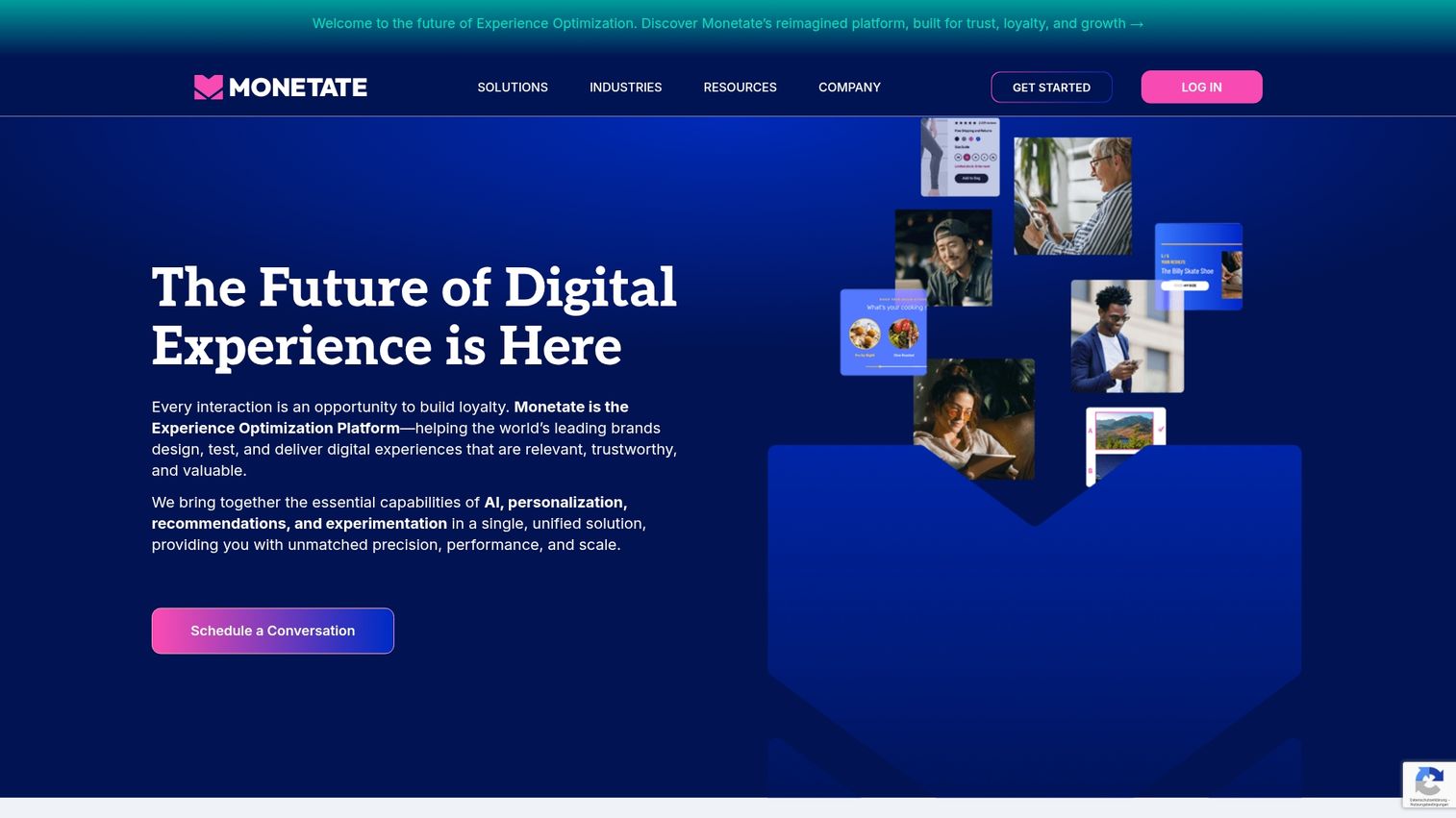
Monetate provides personalization and testing for retail and e-commerce, with strong segmentation and experimentation features.
Best for: Retail brands wanting to personalize across web and app with robust testing capabilities.
Key strengths
- Advanced segmentation: Create granular audience segments based on behavior and attributes
- Testing depth: Run sophisticated experiments across personalized experiences
- Product recommendations: AI-powered suggestions based on browsing and purchase history
- Social proof: Display personalized urgency and popularity signals
Pricing: Custom pricing based on traffic and features.
9. Salesforce Marketing Cloud Personalization
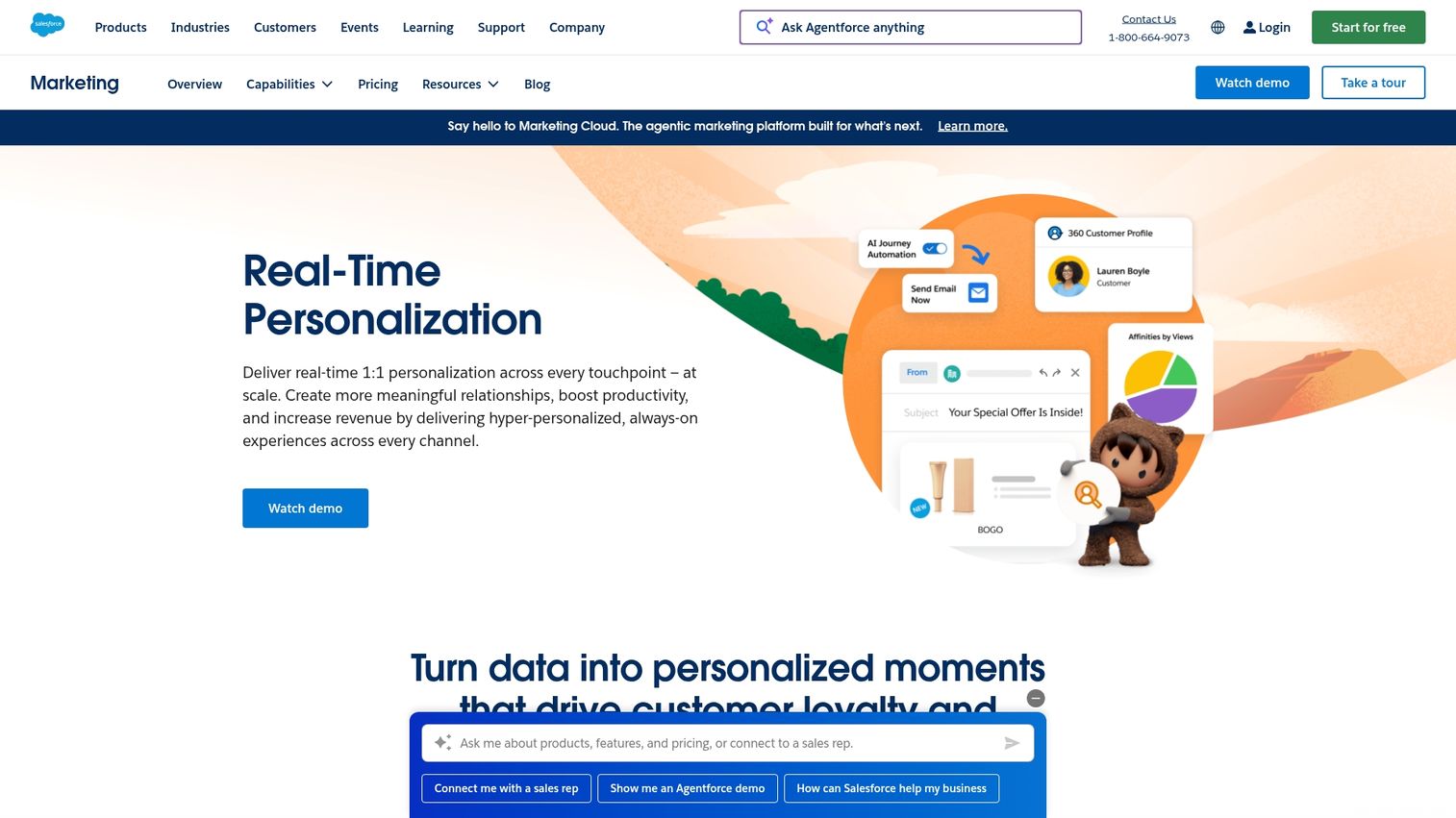
Salesforce Marketing Cloud Personalization (formerly Interaction Studio) delivers real-time personalization within the Salesforce ecosystem.
Best for: Organizations using Salesforce CRM who want native integration between customer data and personalization.
Key strengths
- Native Salesforce integration: Leverage CRM data directly for personalization
- Real-time decisions: Personalize based on current session behavior
- Cross-channel coordination: Extend personalization across email, web, and mobile
- Einstein AI: Salesforce's AI powers recommendations and predictions
Pricing: Custom pricing as part of Marketing Cloud.
10. VWO
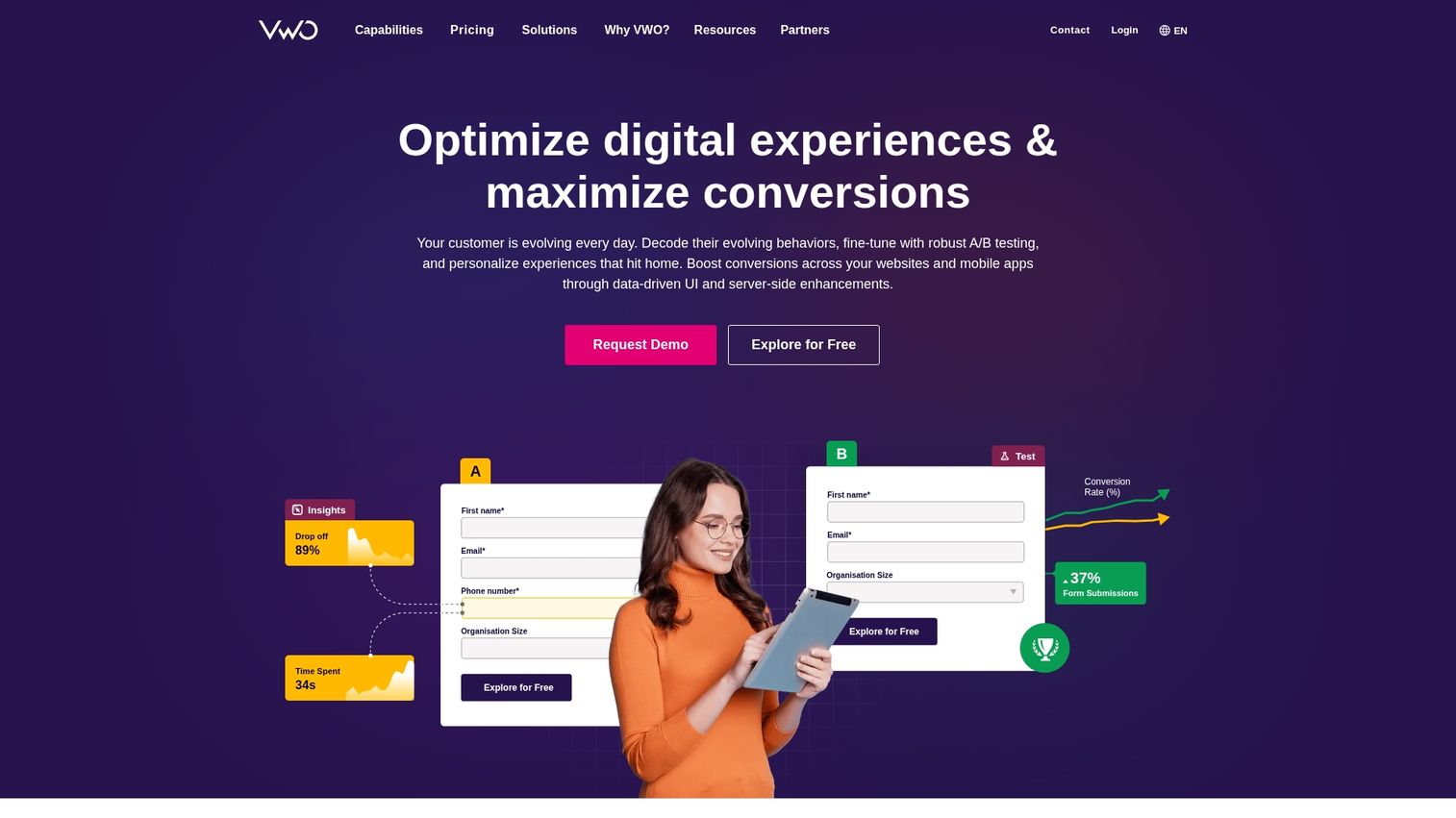
VWO offers website personalization with strong A/B testing roots, making it accessible for conversion rate optimization teams.
Best for: CRO teams wanting personalization without heavy enterprise overhead, especially teams already focused on testing.
Key strengths
- Testing heritage: Robust A/B and multivariate testing capabilities
- Visual editor: Create personalized experiences without code
- Behavioral targeting: Personalize based on visitor actions and attributes
- Heatmaps and recordings: Understand how visitors interact with personalized content
Pricing: Personalization plans start at $314/month.
11. Mutiny
Mutiny personalizes B2B websites for target accounts, adapting landing pages and site experiences based on company data and intent signals.
Best for: B2B marketing teams running ABM programs who want to personalize website experiences for target accounts.
Key strengths
- Account-based personalization: Tailor experiences based on company firmographics and intent
- No-code editor: Marketing teams can create personalized pages without developers
- Integration with ABM tools: Connect with 6sense, Demandbase, and other intent providers
- Conversion tracking: Measure how personalization impacts pipeline
Pricing: Custom pricing based on traffic and accounts.
12. HubSpot
HubSpot offers marketing personalization within its broader platform, including smart content, personalization tokens, and behavioral triggers.
Best for: SMBs already using HubSpot CRM who want personalization without adding another vendor.
Key strengths
- CRM integration: Personalize based on contact and company data already in HubSpot
- Smart content: Show different content to different segments on the same page
- Email personalization: Dynamic content and send-time optimization
- Accessible pricing: Personalization included in Marketing Hub tiers
Pricing: Marketing Hub Professional starts at $800/month with personalization features.
13. Braze
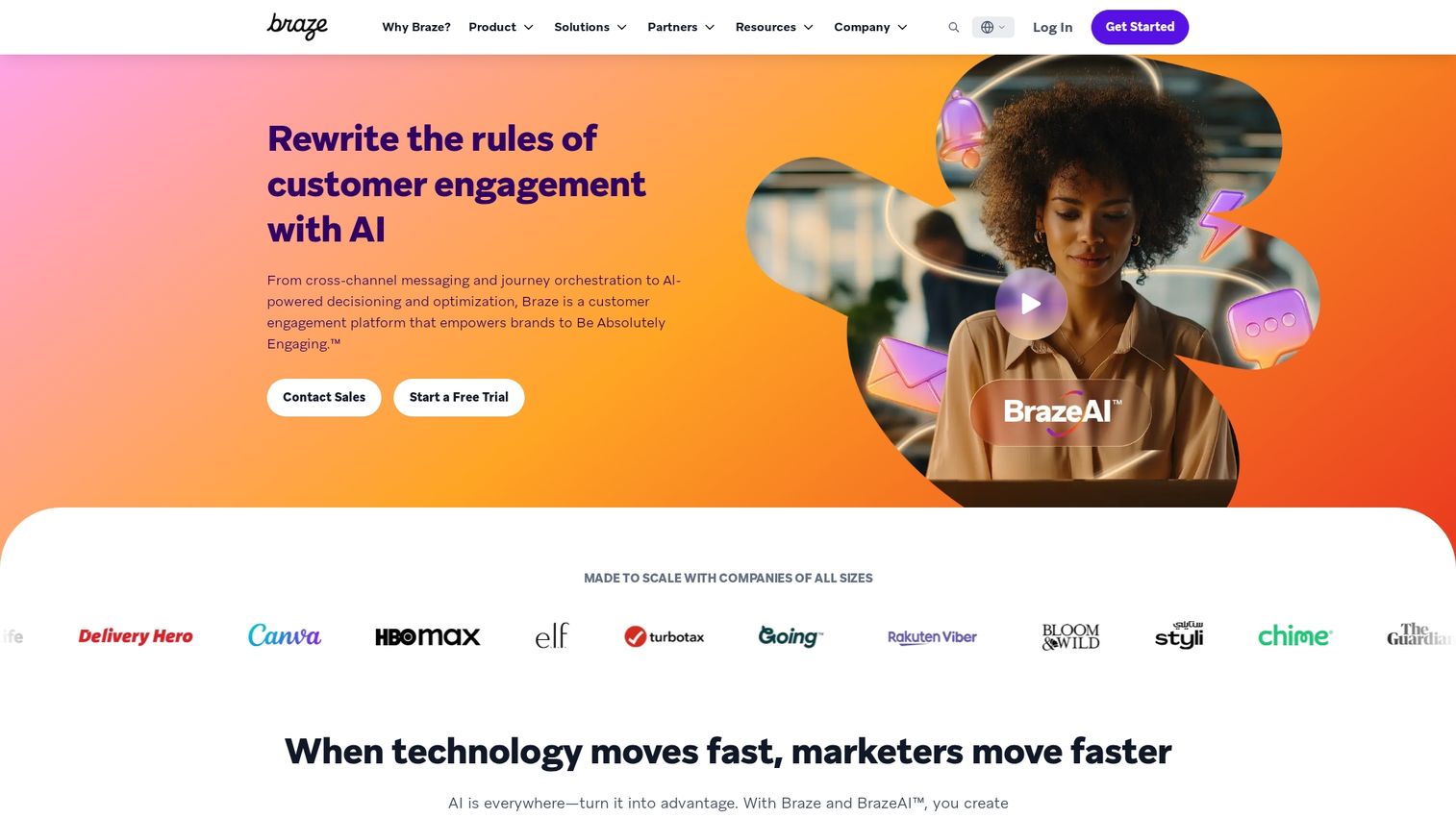
Braze is a customer engagement platform with strong messaging personalization, particularly for mobile-first brands.
Best for: Mobile-first brands personalizing push, email, SMS, and in-app messages based on user behavior.
Key strengths
- Mobile expertise: Deep personalization for push notifications and in-app messages
- Real-time triggers: Respond to user actions instantly with personalized messages
- Cross-channel coordination: Orchestrate personalized journeys across messaging channels
- Canvas flow builder: Visual tool for creating personalized customer journeys
Pricing: Custom pricing based on monthly active users and channels.
14. Iterable
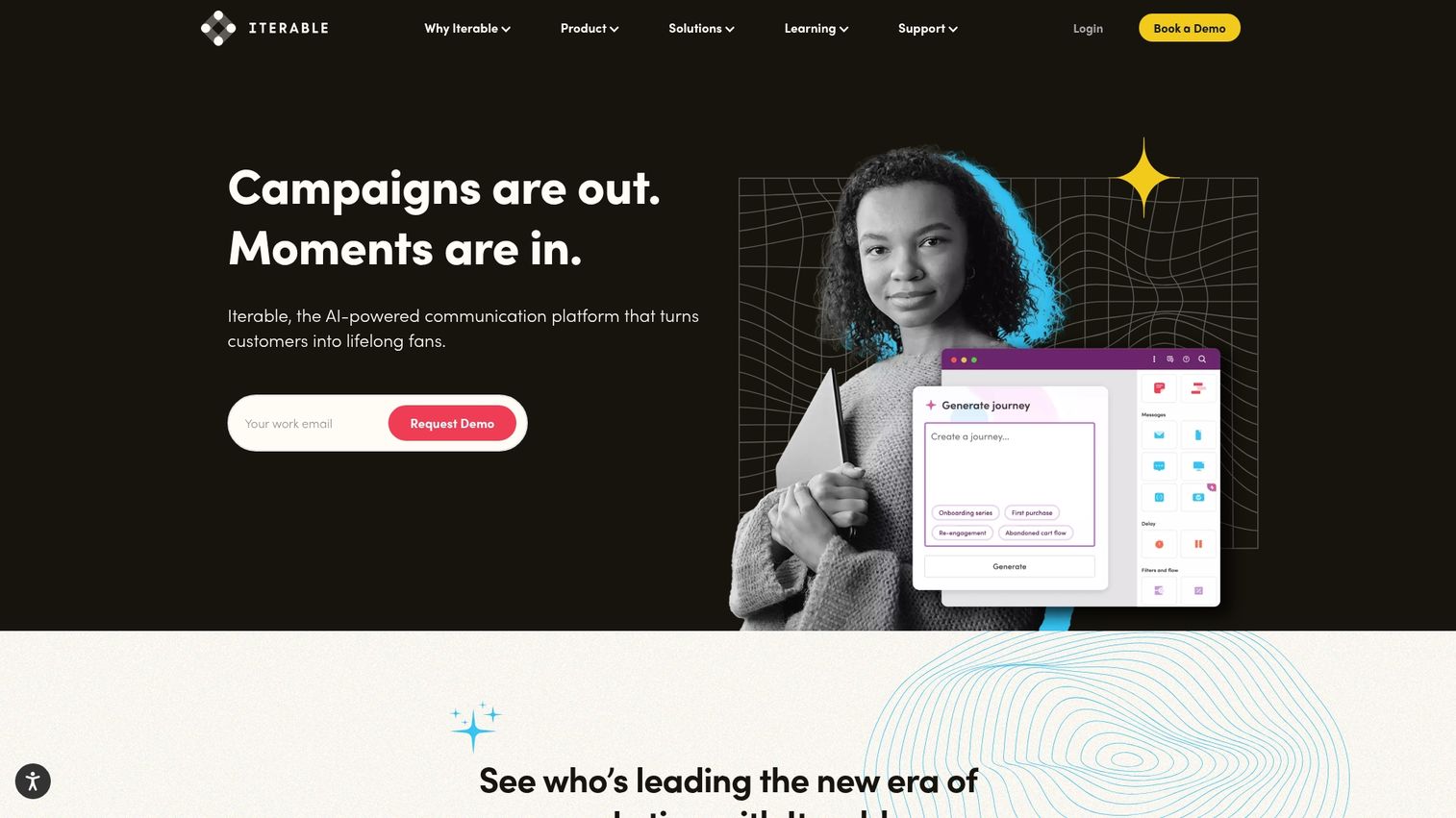
Iterable provides cross-channel marketing personalization with AI-powered send-time optimization and content personalization.
Best for: Growth teams wanting sophisticated lifecycle personalization across email, push, SMS, and in-app.
Key strengths
- AI send-time optimization: Deliver messages when each user is most likely to engage
- Dynamic content: Personalize message content based on user data and behavior
- Workflow studio: Build complex personalized journeys with visual tools
- Experimentation: Test personalization variants across channels
Pricing: Custom pricing based on contacts and message volume.
How to choose the best personalization software
Integration with your CRM and data stack
Personalization is only as good as the data powering it. Check native integrations with your CRM, CDP, analytics, and marketing automation software before committing to a platform.
No-code capabilities for marketing teams
Marketing and sales teams benefit from creating and editing personalized experiences without engineering tickets. Look for drag-and-drop editors and template libraries that reduce dependency on developers.
AI features for scaling personalization
Manual rule-based personalization breaks down at scale. AI personalization engines can automatically determine the best content for each visitor, though AI engines typically require more data to perform well.
Analytics and measurement depth
Proving personalization ROI requires platforms that track engagement, conversion lift, and revenue attribution at the segment level rather than just aggregate metrics.
Pricing models and total cost of ownership
Personalization software pricing varies widely: per-visitor, per-seat, or platform fees. Factor in implementation, training, and ongoing optimization costs alongside the subscription price.
Website personalization trends shaping the market
AI-powered personalization engines
Machine learning now drives recommendations and content selection without manual rule configuration. AI shifts personalization from reactive (responding to segments) to predictive (anticipating individual preferences).
Privacy-first contextual personalization
With third-party cookies disappearing, personalization tools are shifting to first-party data and contextual signals. Prioritize platforms that work effectively in a cookieless environment.
Omnichannel personalization platforms
Buyers expect consistent experiences across web, email, mobile, and in-person touchpoints. Look for platforms that unify personalization across channels rather than siloing by touchpoint.
Interactive demo personalization for B2B
B2B teams are moving beyond static PDFs and generic recordings. Interactive demos that personalize content, flow, and messaging for each prospect are becoming standard in enterprise sales, letting buyers experience products in their own context.
Why personalized demos convert better than static experiences
The principle behind personalization software applies directly to product demos: generic experiences create friction, while tailored ones reduce it. When prospects see their industry, their data patterns, and their use cases reflected in a demo, they can evaluate fit faster.
Static screenshots and recorded walkthroughs force prospects to mentally translate generic examples into their own context. That translation takes effort, and effort creates drop-off. Personalized interactive demos remove that translation step entirely.
Start your journey with Guideflow today!
FAQs about personalization software
The four main types are website personalization tools, content personalization platforms, marketing personalization software (email, SMS, ads), and AI personalization engines that use machine learning for automated recommendations.
Implementation time ranges from a few hours for lightweight tools with no-code setup to several months for enterprise personalization engines requiring data integration and custom development.
A CDP (Customer Data Platform) collects and unifies customer data from multiple sources, while a personalization engine uses that data to deliver tailored experiences. Many teams use both together.
Yes, modern personalization platforms increasingly rely on first-party data, logged-in user behavior, and contextual signals rather than third-party cookies.
Track conversion rate lift, revenue per visitor, engagement metrics, and time-to-value compared to non-personalized control groups.
Segmentation groups users by shared characteristics for targeted campaigns, while personalization tailors individual experiences in real-time based on behavior and preferences.
Small businesses can often start with personalization features built into their existing CRM or email platform before investing in dedicated personalization engines.
Most personalization platforms offer consent management, data anonymization options, and compliance controls. Verify specific certifications and data residency options before purchasing.