A claims investigator finds the post they need. Then the profile goes private, the content disappears, or the capture is a screenshot with no timestamp, no source URL, and no chain of custody. The case stalls.
That's not a research problem. It's a workflow problem. Finding public social content has never been easier. The hard part is preserving it defensibly, reviewing it efficiently, and getting usable output into the claims or legal system your team already runs.
The FBI estimates insurance fraud costs the industry more than $40 billion per year, according to the Coalition Against Insurance Fraud (2023). A significant share of those investigations now depend on public social media signals. Yet most teams are stitching together browser screenshots, email threads, and spreadsheets to manage that work.
Social media discovery software is the category built to close that gap. This guide compares 12 platforms across evidence collection, fraud intelligence, OSINT research, and case management so you can find the right fit before your next demo or procurement review.
What's inside
This guide is for insurance claims leaders, SIU managers, litigation support teams, fraud investigators, and founders evaluating investigation infrastructure for a regulated vertical.
- 12 social discovery tools spanning evidence collection, claims intelligence, OSINT research, and case workflows
- What each platform is best for and where it fits in the investigation stack
- How to evaluate preservation quality, source coverage, investigator workflows, and integration fit
- How to decide between a managed reporting service, a desktop collection tool, and a full fraud analytics platform
Tools were selected based on documented capabilities for professional investigations, evidence handling, workflow coverage, and available pricing or review context.
TL;DR
- Best for managed social media reports: Social Discovery, for claims and SIU teams that want human-reviewed output without building an internal collection operation
- Best for legal and eDiscovery collection: X1 Social Discovery (X1 Search), for litigation teams that need structured case-centric collection and export
- Best for web evidence preservation: WebPreserver or Page Vault, for investigators who need defensible, timestamped captures before content changes
- Best for insurance fraud intelligence: CLEAR, Tracelight, or Carpe Intel, depending on whether you need broad identity data, automated OSINT triage, or AI-scored risk signals
- Best for investigation operations: Case IQ for SIU workflow structure, DataWalk for complex fraud network analysis
What is social discovery software?
Social discovery software helps professional investigators find, collect, preserve, search, analyze, and report publicly available social media and web information for legal, insurance, fraud, or risk investigation workflows.
Social discovery software is not generic social media monitoring
Social listening tools track brand mentions and campaign sentiment for marketing teams. Social discovery products support investigation workflows. The output is not a dashboard of impressions. It is an evidence package, an investigation report, or a prioritized case queue. Buyers should verify which type they actually need before evaluating tools.
Core capabilities to look for
- Public social media search and profile discovery
- Web and social content capture with source context
- Metadata retention, timestamping, and hashing
- Search, review, tagging, and annotations across collected content
- Exportable reports and evidence packages
- Integration with claims platforms, legal matter systems, or case management tools
- Identity research, risk scoring, or link analysis where relevant
Four types of social discovery tools
| Type | Primary job | Typical buyer |
|---|---|---|
| Managed reporting services | Deliver investigator-reviewed reports | Claims teams, SIUs, attorneys |
| Evidence capture tools | Preserve web and social content | Legal teams, eDiscovery, investigators |
| OSINT investigation platforms | Connect digital, social, and identity signals | Fraud teams, corporate investigations |
| Fraud and case workflow platforms | Prioritize, investigate, and manage cases | Insurers, SIUs, enterprise risk teams |
Understanding which layer you need first is the most useful decision a buyer can make before a vendor demo.
When to use social discovery software
Validate suspicious insurance claims
Claims teams use public social signals as one input into claim validation, fraud referral decisions, or Special Investigations Unit (SIU) escalation. A claimant posting active physical content while claiming total disability is a signal worth capturing and preserving before the profile changes. Social discovery software gives investigators a documented record of what was visible and when, which matters if the case moves to litigation or audit.
Preserve public posts for legal review
Courts and attorneys require more than a screenshot. They need evidence that shows the source URL, the capture timestamp, the account context, and documentation of how the content was collected. Evidence capture tools handle this by producing a record that can be reviewed by counsel, included in a case file, or produced in discovery without questions about authenticity.
Investigate identities, networks, and digital footprints
Some investigations require more than a single profile. Organized fraud patterns, linked claimants, and coordinated staging operations leave traces across social accounts, public records, marketplaces, and other digital environments. OSINT platforms and graph analytics tools help teams connect those traces into a coherent investigation picture, especially when multiple claims or entities are involved.
Social discovery software comparison
These tools solve overlapping but different jobs. Choose based on the actual workflow bottleneck: Evidence preservation, investigator capacity, fraud intelligence, identity research, or case coordination.
| # | Product | Best for | Key differentiator | Pricing | G2 rating |
|---|---|---|---|---|---|
| 1 | Social Discovery | Managed claims and legal reports | Human-reviewed social media reporting | Quote-based | N/A |
| 2 | X1 Social Discovery | Legal and eDiscovery collection | Desktop case-centric collection and export | From $79 (1-yr license) | 4.5/5 |
| 3 | WebPreserver | Defensible web and social preservation | Browser capture with SHA-256 and digital signatures | Quote-based | 4.0/5 |
| 4 | Page Vault | Court-focused web capture | Timestamped evidence packages for legal review | From $199 (on demand) | 4.6/5 |
| 5 | CLEAR | Broad identity and risk intelligence | Public and proprietary data fusion for insurers | Quote-based | 4.2/5 |
| 6 | Whooster | OSINT and identity research | Public and private data fusion via OWL Intelligence | Quote-based | N/A |
| 7 | Tracelight | High-volume SIU triage | Automated OSINT with free tier and transparent pricing | From $49/mo | N/A |
| 8 | Carpe Intel | AI-scored insurance fraud intelligence | ML risk scoring with deep OSINT and dark web scanning | Quote-based | N/A |
| 9 | FraudSniffr | Claims defense social media investigation | Human-verified social profiles with physical surveillance integration | Quote-based | N/A |
| 10 | SockPuppet | Complex digital investigations | Managed investigation environments with attribution controls | Quote-based | N/A |
| 11 | DataWalk | Complex fraud network analysis | Graph analytics across internal and external investigation data | Quote-based | 4.7/5 |
| 12 | Case IQ | SIU case management and operations | Configurable workflows with shared audit trails | Quote-based | 4.5/5 |
Best 12 social discovery software tools for 2026
1. Social Discovery
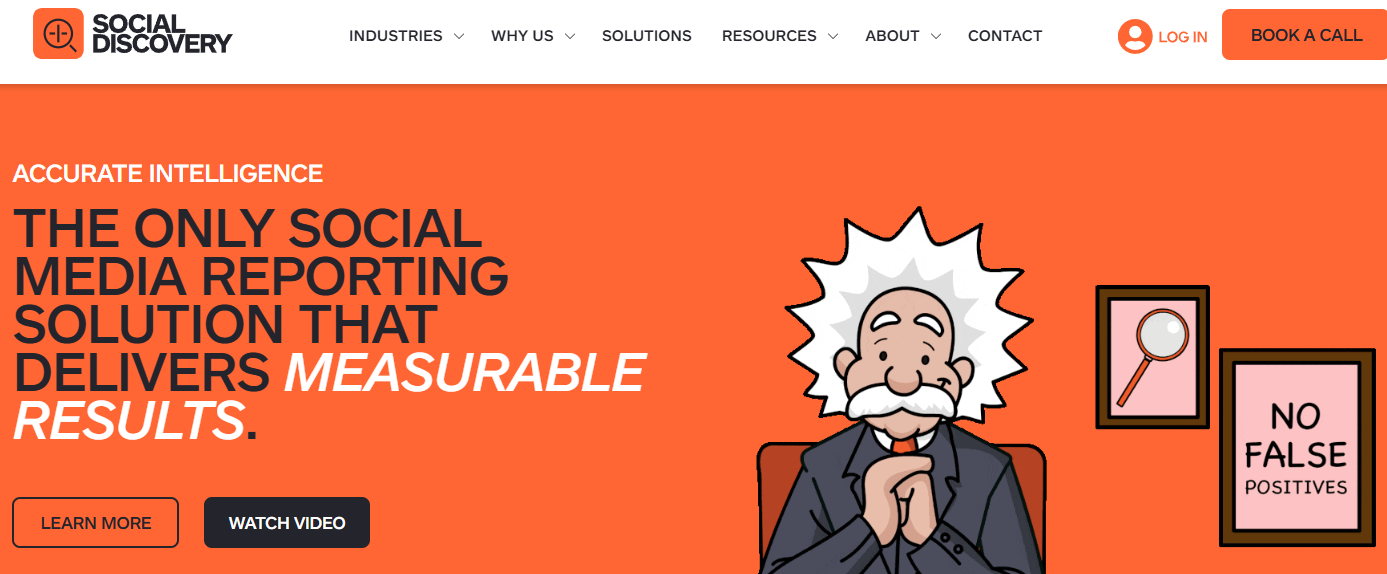
Social Discovery is a social media investigation and reporting provider serving insurance carriers, SIUs, employers, attorneys, and risk management teams. The product combines software-assisted discovery with human review to produce curated, court-ready reports. Clients submit a subject profile and receive verified social media findings, not raw scraped data.
Best for: P&C insurance teams and SIUs that want external investigation capacity and standardized reporting without operating an internal social collection workflow.
Key features
- Curated social media reports combining software and human intelligence
- Verified and targeted social media profile searches
- Claims and SIU workflow support
- Court-ready reporting output
- Custom social media reporting by industry vertical
Why choose Social Discovery: This is a managed reporting model. You get investigator-reviewed output, which matters for teams where report quality and defensibility are priorities. It suits organizations that need episodic or high-volume reporting without staffing up a dedicated social discovery team.
Social Discovery pricing: Social Discovery prices through a quote process. Costs are typically structured by report volume, claim type, or enterprise agreement. Contact the vendor directly to discuss per-report, per-claim, or subscription pricing structures.
2. X1 Social Discovery
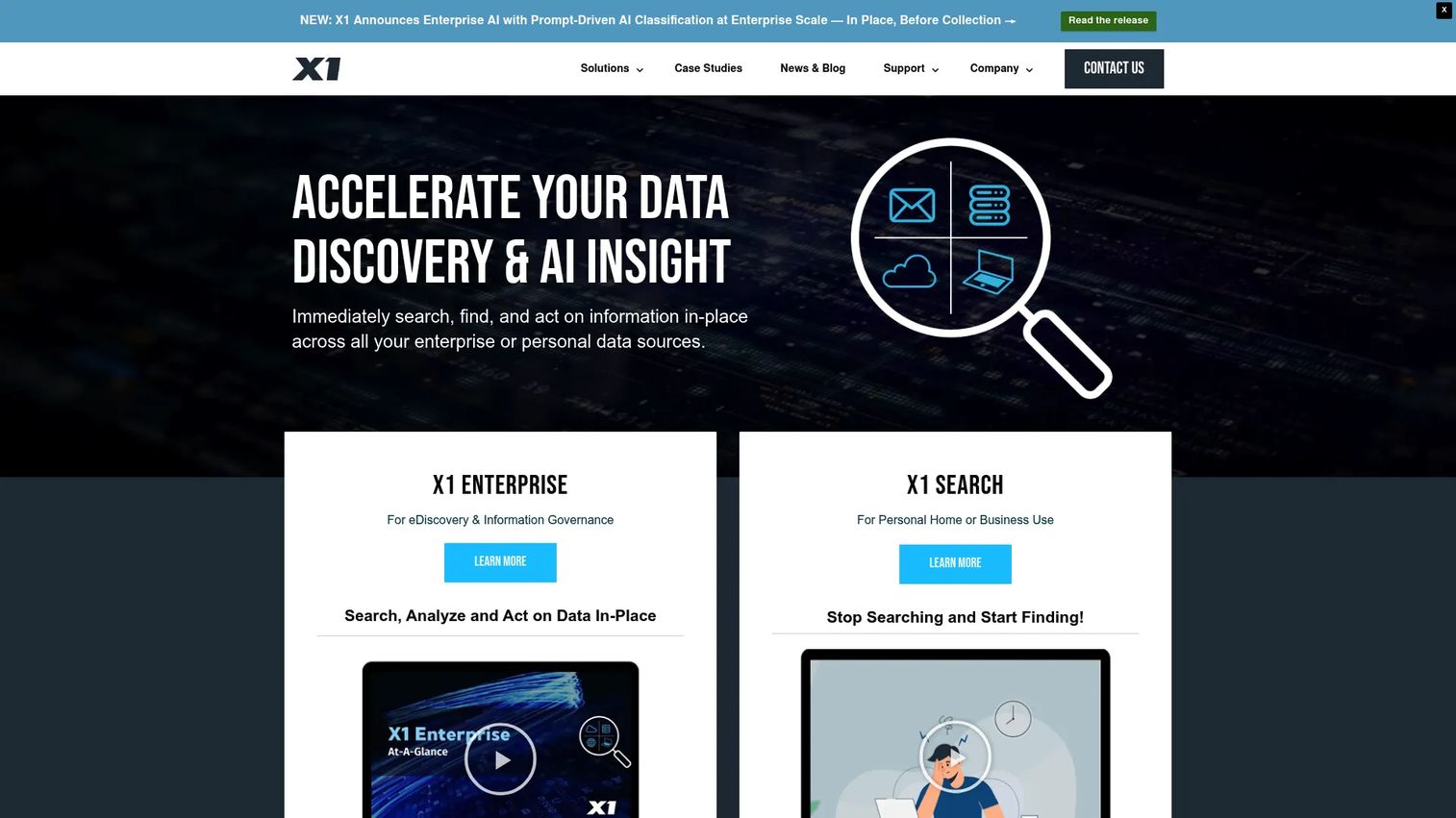
X1 Social Discovery is marketed as part of the X1 Discovery product family, with the current flagship offering branded as X1 Search. It focuses on unified search and targeted collection across social media, email, cloud storage, and other enterprise data sources for eDiscovery, compliance, and investigation workflows. Litigation support teams use it for case-centric collection and export with review capabilities built in.
Best for: Litigation teams, eDiscovery professionals, and corporate investigators handling repeat social media collection across active legal matters.
Key features
- Unified search across social, email, cloud, and local data sources
- Case-centric collection with metadata filters and full-fidelity previews
- AI-powered classification of emails, documents, and attachments
- In-place indexing with targeted collection for eDiscovery
- Native export workflows with evidence preservation controls
Why choose X1 Social Discovery: The fit is strongest for buyers who need investigator control over collection and export, with structured workflows per matter. Teams running social media collection alongside broader eDiscovery workstreams will benefit most from the unified search across data types.
X1 Social Discovery pricing: X1 Search is available as a 1-year license starting at $79 or a 3-year license at $189. Enterprise and volume licensing requires contacting sales.
G2 rating: 4.5/5
3. WebPreserver
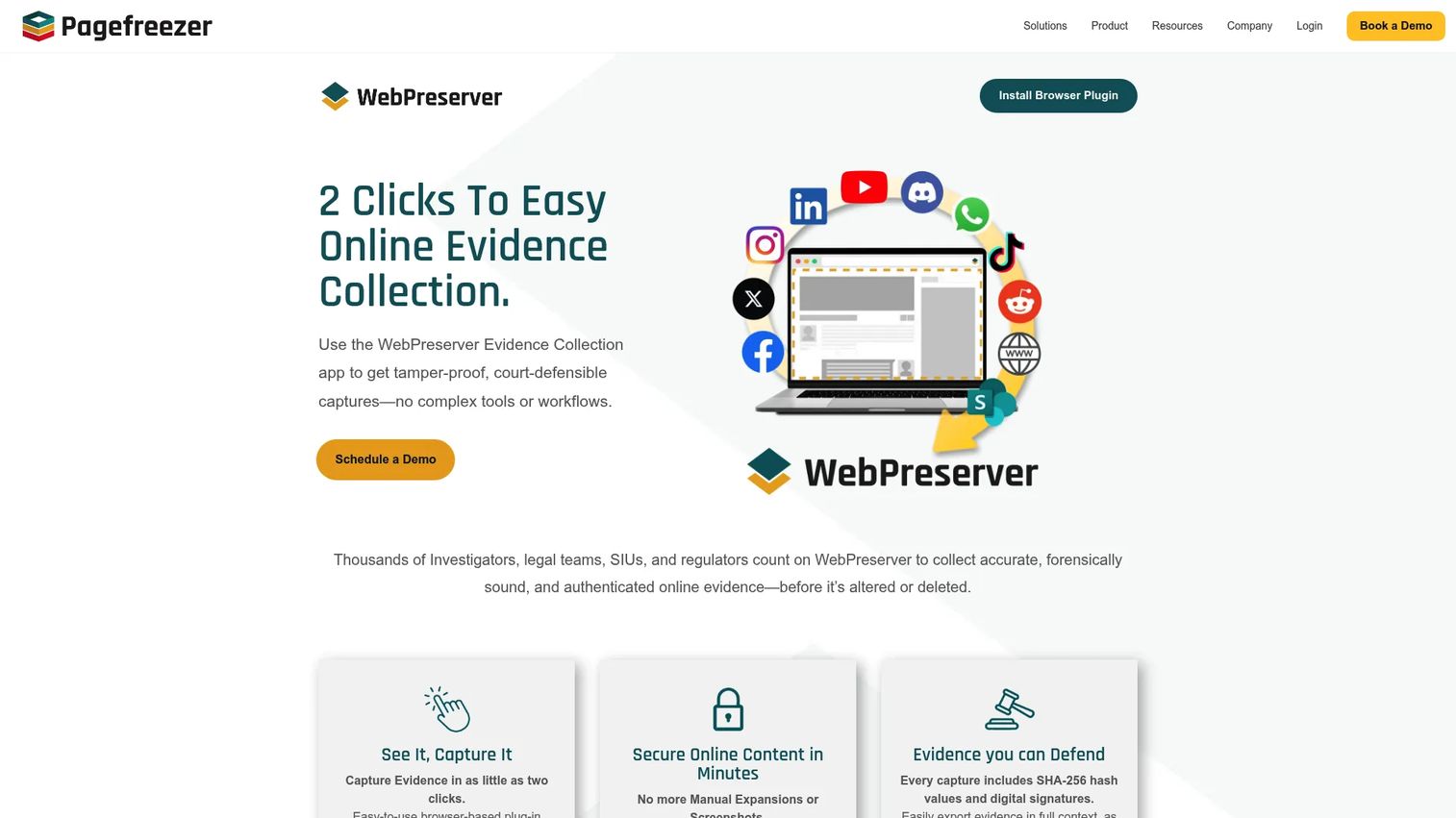
WebPreserver is a browser-based evidence collection product for capturing and preserving websites, social media threads, videos, and other online content as authenticated digital evidence. It operates as a browser extension that records pages with their full context, expanded comment threads, metadata, and integrity controls in a two-click workflow.
Best for: Legal teams, corporate investigators, insurance teams, and compliance teams that need defensible web and social captures before content changes or disappears.
Key features
- Two-click browser-based capture with expanded threads and timelines
- Automated video capture in MP4 format
- SHA-256 hashes, digital signatures, and timestamps
- Exports to searchable OCR PDF, MHTML, and WARC formats
- Bulk capture of websites and social media profiles
Why choose WebPreserver: The focus is on evidence integrity. It fits teams whose core need is preserving a specific page, profile, or thread with documented capture provenance. If your bottleneck is cross-case fraud analytics or SIU workflow management, you will likely need a separate platform alongside it.
WebPreserver pricing: WebPreserver does not publish plan pricing on its website. Schedule a demo with the vendor to get pricing based on organization size, capture volume, and access requirements.
G2 rating: 4.0/5
4. Page Vault
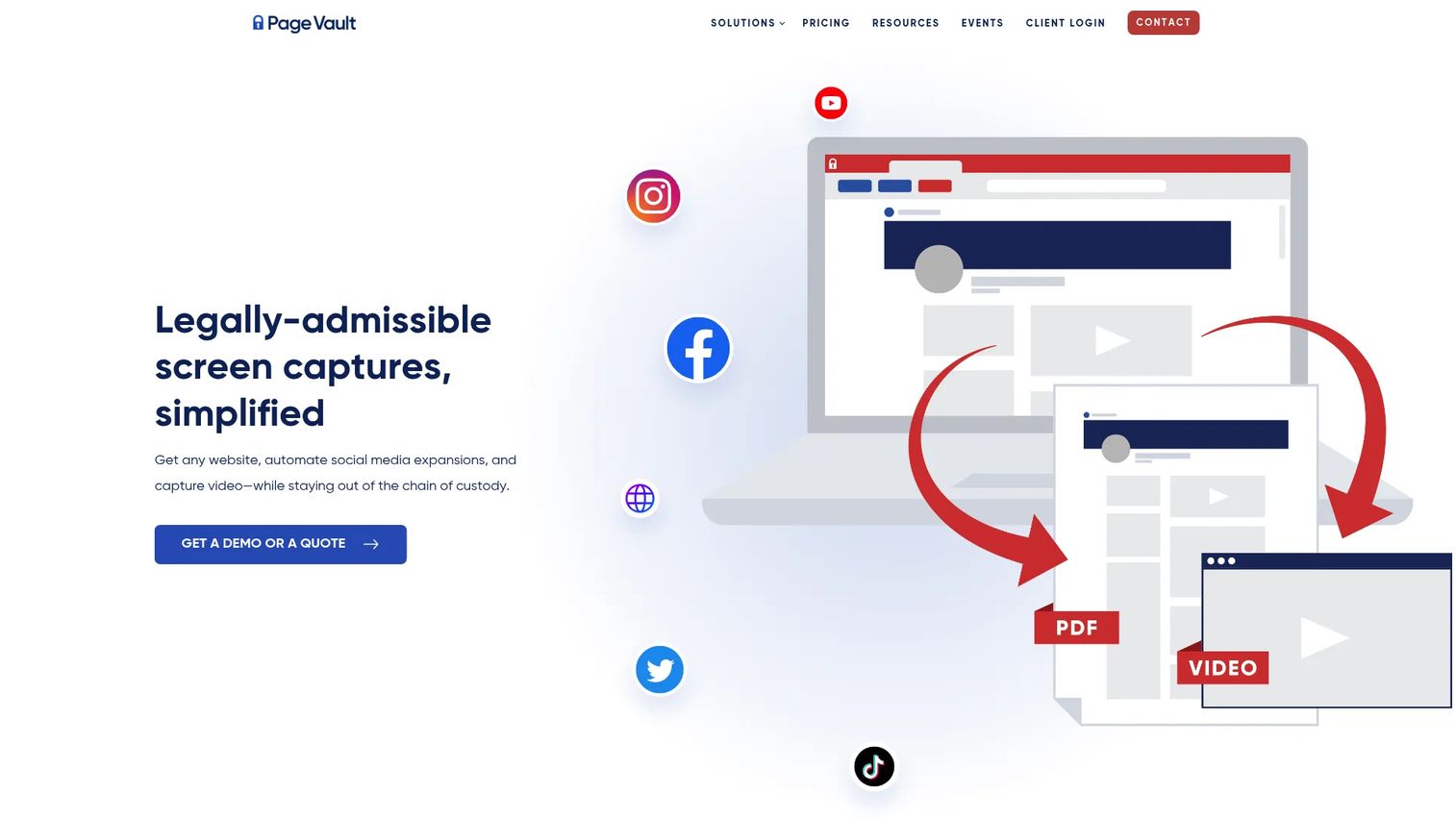
Page Vault is a legal web evidence capture platform for law firms, investigators, and government agencies that need archived social media and website evidence. It produces timestamped, court-ready captures with affidavit support and chain-of-custody documentation, and offers both self-service software and an on-demand managed service for individual projects.
Best for: Law firms and investigators that need high-quality, defensible captures of specific public pages or social profiles for active legal matters.
Key features
- Automated full-page and website captures with social media expansion
- Timestamped URL, account, and SHA-256 metadata
- Affidavits and chain-of-custody support
- Unlimited capture storage and exports
- Batch capture workflows for high-volume matters
Why choose Page Vault: It suits teams handling discrete, high-stakes legal captures where court-ready documentation is the priority. On-demand pricing makes it accessible for smaller firms or occasional investigation needs without a long-term software commitment.
Page Vault pricing: On-demand capture starts at $199 for websites, $349 for social media profiles, and $299 for video projects. Annual software plans cover Solo, Team, Professional, and Enterprise tiers; specific package prices require contacting the vendor.
G2 rating: 4.6/5
5. CLEAR
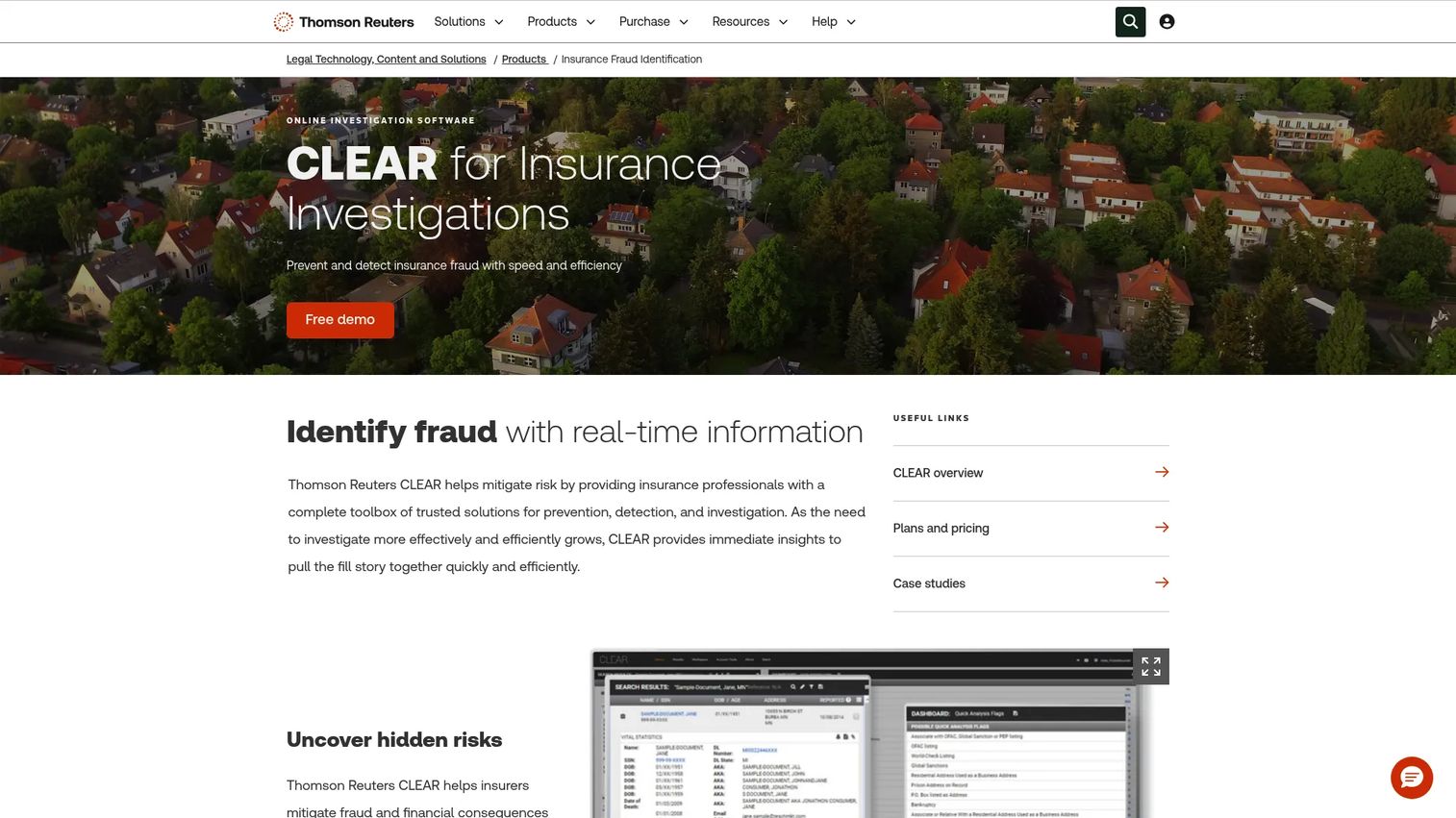
CLEAR is an online investigation platform from Thomson Reuters built for insurance professionals to prevent, detect, and investigate fraud. It fuses real-time public records, proprietary data, associate analytics, and negative news into a single investigation workspace. Social media is one input among many, making it a broad intelligence tool rather than a dedicated evidence capture platform.
Best for: Insurance carriers and fraud teams that need comprehensive subject research across identity, public records, and risk signals before deciding whether to escalate a claim.
Key features
- Real-time public and proprietary data fusion
- Associate Analytics for relatives and connected entities
- Risk Inform and ID Confirm scoring modules
- Customizable dashboards, reports, and workspaces
- Batch processing and system-to-system API integration
Why choose CLEAR: CLEAR is the right fit when social media is one investigation input among many. It is particularly strong for teams that need broad subject research at scale, with integration into existing claims workflows via API. Teams whose primary need is preserving a specific post for litigation will need a dedicated capture tool alongside it.
CLEAR pricing: CLEAR uses quote-based pricing with a minimum one-year contract. Costs vary by plan features, data packages, user minimums, and whether you access via desktop, API, or batch. Contact Thomson Reuters for an insurance-specific quote.
G2 rating: 4.2/5
6. Whooster
Whooster provides investigative data solutions for law enforcement, government agencies, and private-sector investigation teams. It combines public source research with private data access through its OWL Intelligence Platform to help investigators find people, addresses, phone numbers, social profiles, and associated entities. Insurance fraud and background investigation teams use it to build clearer subject profiles from fragmented identifying information.
Best for: Investigation teams starting with partial identifying information who need to connect a subject to their digital presence, addresses, and related entities.
Key features
- Identity resolution and skip tracing
- Social profile discovery across platforms
- Address, phone, and associate research
- Know-your-customer and compliance workflows
- Access via web UI, SMS, API, and partner integrations
Why choose Whooster: The strength is in connecting disparate records into a coherent subject profile quickly. It is particularly useful in early-stage fraud investigations where you have a name and limited context. Note that evidence preservation for legal proceedings may still require a dedicated capture tool if your standards require chain-of-custody documentation.
Whooster pricing: Whooster does not display pricing on its public website. Pricing is shown next to individual searches and reports after login. Contact the vendor or request a demo to understand seat-based or volume-based access costs.
7. Tracelight
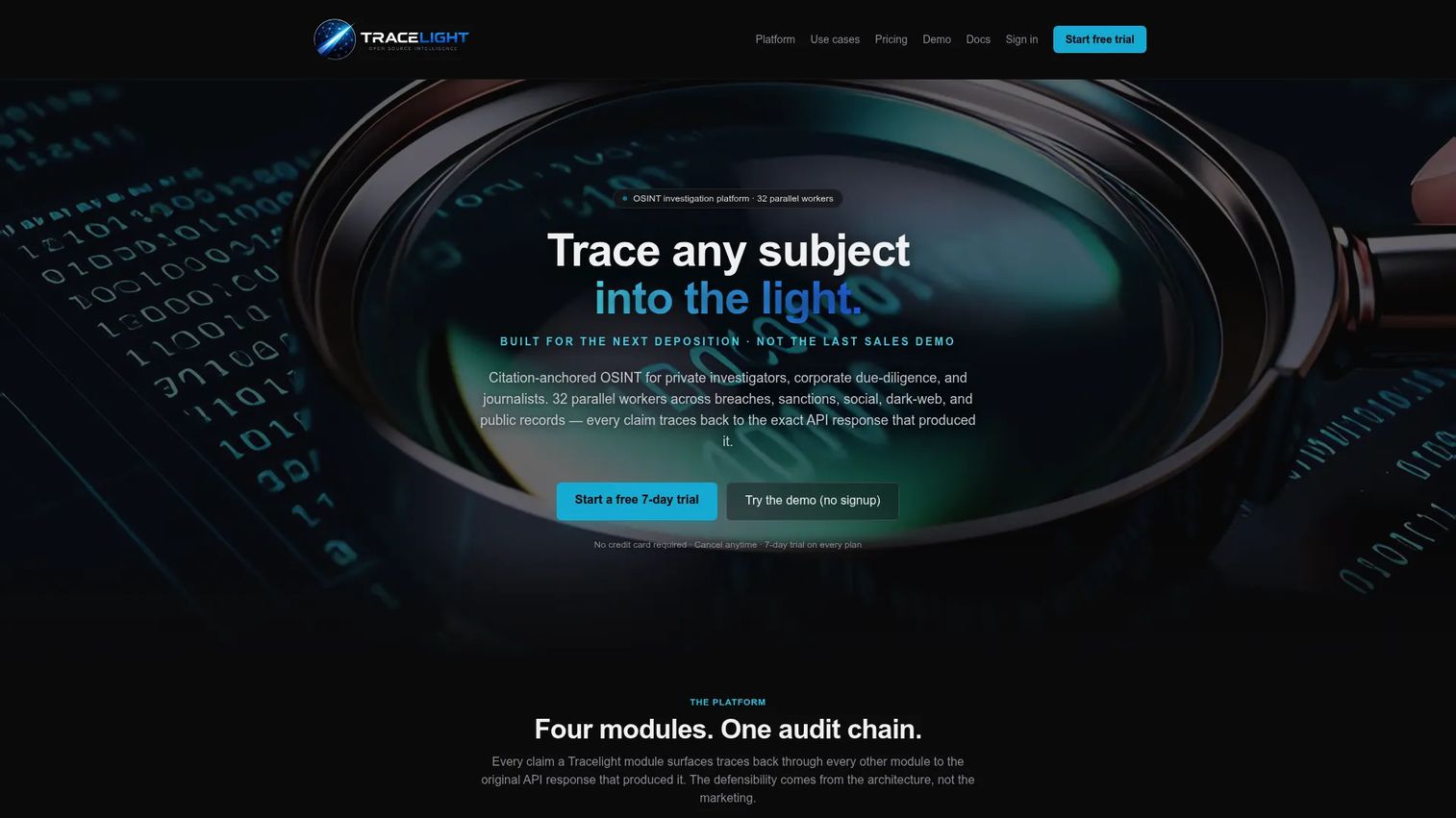
Tracelight is a citation-anchored OSINT investigation platform running 32 parallel workers across breach records, social platforms, court filings, dark web sources, infrastructure data, and other channels. It produces auditable PDF reports that preserve source citations and raw API responses for each finding. Built for private investigators, corporate due diligence teams, and insurance SIUs, it includes continuous monitoring with scheduled rescans and alert notifications.
Best for: SIU teams and investigators handling a high volume of cases who need automated research triage and auditable citation-backed reports without manual OSINT work per case.
Key features
- 32 parallel OSINT workers across social, breach, court, dark web, and infrastructure sources
- Citation-anchored PDF reports with raw API response preservation
- Case workspaces with collaboration, attachments, and audit logging
- Continuous monitoring with scheduled rescans and webhook alerts
- Free tier with 3 cases per month; paid plans available
Why choose Tracelight: The transparent, tiered pricing and free tier make it accessible for teams that want to test automated OSINT before committing. The citation-backed reports reduce the risk of unsourced findings entering case files. Ask the vendor about current social platform coverage before relying on it for specific network sources.
Tracelight pricing: Free plan includes 3 cases per month. Starter plan is $49/month for 25 cases. Pro is $149/month for 100 cases, and Agency is $499/month for 500 cases. Annual billing saves 20%. A 7-day free trial applies to paid plans.
8. Carpe Intel
Carpe Intel is an AI-powered OSINT investigation platform built specifically for insurance SIU teams and claims operations. It scans social profiles, public records, news archives, court filings, and dark web sources to produce evidence-based intelligence briefs with risk scores and source citations. The platform scores each subject from 0 to 100 using machine learning trained on insurance fraud patterns.
Best for: Insurance fraud teams that want a unified view of social and external risk signals around a claim, with automated prioritization before assigning an investigator.
Key features
- Deep OSINT scanning across social, public records, news, and dark web sources
- AI-powered contradiction detection and risk-pattern assessment
- 0 to 100 ML risk scoring with actionable findings
- Claimant-detail entry and claim-document upload
- Evidence-based intelligence briefs with source citations
Why choose Carpe Intel: The strongest fit is for teams that want automated signal surfacing before investigator assignment. Before deploying, validate the platform's data coverage for your specific lines of business, the false-positive rate on the risk scoring, and how the score is documented for audit trails.
Carpe Intel pricing: Carpe Intel lists Score, Instant, Thinking, and Pro investigation tiers on its homepage but does not display prices. Contact the vendor for pricing based on claim volume, lines of business, and investigator seats.
9. FraudSniffr
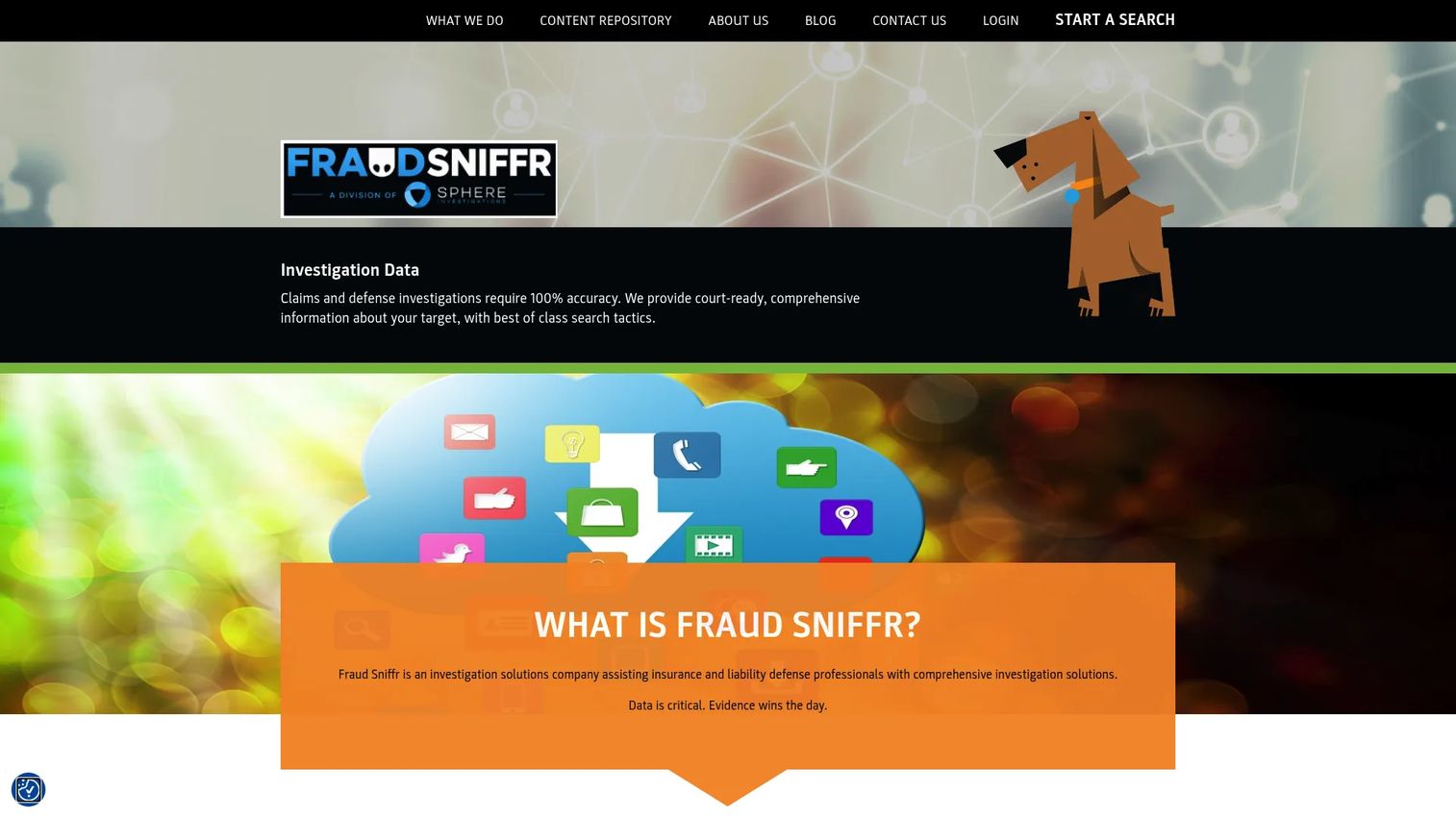
FraudSniffr is an investigation services company providing social media research, physical surveillance, employment checks, asset investigations, and criminal record research for insurance claims teams and legal defense professionals. Investigators access a searchable and filterable repository of findings organized chronologically, with on-demand court-ready report downloads. Human-verified profile identification is a core part of the service model.
Best for: Claims defense teams that want specialist social media research and investigation support without operating a full in-house discovery platform.
Key features
- Searchable repository for social media, OSINT, and surveillance data
- Chronological findings with on-demand court-ready report downloads
- Human-verified social media profile identification and extended searches
- Physical surveillance data integrated with social media reports
- Employment, assets, criminal records, and medical canvas services
Why choose FraudSniffr: A service-led model works well for teams with episodic or irregular investigation needs. High-volume internal SIU operations may eventually prefer a self-service platform that scales without per-report cost, but FraudSniffr is a strong option for claims defense work where investigator quality matters more than tool ownership.
FraudSniffr pricing: FraudSniffr handles pricing through direct inquiry. Costs are structured by report scope, case type, and investigation services requested. Contact the vendor for a quote.
10. SockPuppet
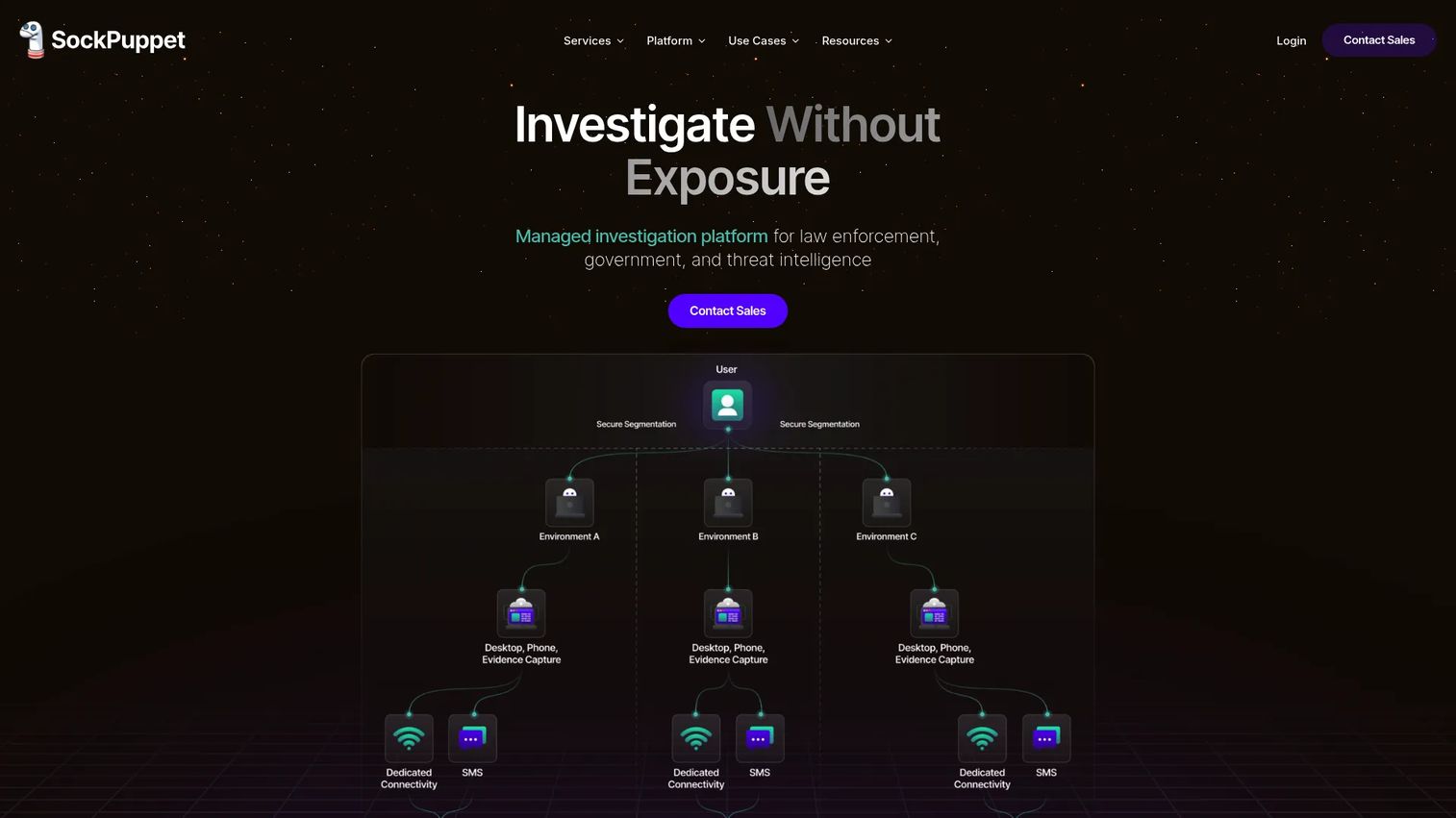
SockPuppet is a managed investigation platform for law enforcement, government agencies, corporate security, and cybersecurity teams. It provides persistent virtual desktops, virtual phones, configurable internet connectivity, and managed attribution controls so investigators can conduct online research in isolated environments. A centralized dashboard handles audit trails and reporting across investigation sessions.
Best for: Investigation teams conducting research across difficult digital environments, including online marketplaces, messaging platforms, and cross-border cases where attribution and operational security matter.
Key features
- Persistent virtual desktops with managed attribution controls
- Virtual phones and SMS capabilities for investigation workflows
- Configurable internet connectivity and isolation
- Secure credential and evidence vaults
- Centralized dashboard with audit trails and reporting
Why choose SockPuppet: The platform is built for operational security in investigations. It is less about single-page legal preservation and more about conducting broader digital research safely across platforms that standard tools cannot access cleanly. Vetting and access requirements apply; the platform is not a self-service tool for general insurance teams.
SockPuppet pricing: SockPuppet offers self-managed and fully managed packages across Standard, Pro, and Advanced tiers, plus Foundation, Professional, and Executive bundles. All pricing requires contacting sales.
11. DataWalk
DataWalk is an enterprise graph analytics and AI platform that brings together internal claims data, external records, and OSINT sources to identify fraud patterns and relationships. It uses a knowledge graph with visual link charts, entity resolution, and contextual search to surface connections across large, complex datasets. DataWalk is not a SaaS offering in the typical sense; deployment is enterprise-grade, often through partners.
Best for: Large insurers and enterprise fraud teams investigating organized fraud patterns across many claims, entities, and internal data sources simultaneously.
Key features
- No-code data fusion and ontology management
- Knowledge graph with graph and relational database technology
- Visual link charts, graph analytics, and entity resolution
- AI, machine learning, and intelligent automation
- Real-time API and application framework for custom integration
Why choose DataWalk: The fit is for teams that have data integration requirements and need to investigate complex networks, not for a law firm or investigator who mainly needs to capture a single social post. Expect a significant implementation scope, deployment services, and analyst training to get full value from the platform.
DataWalk pricing: Enterprise pricing is quote-based via the vendor's Request Pricing option. Total cost depends on deployment scope, data connectors, analyst seats, and implementation services.
G2 rating: 4.7/5
12. Case IQ
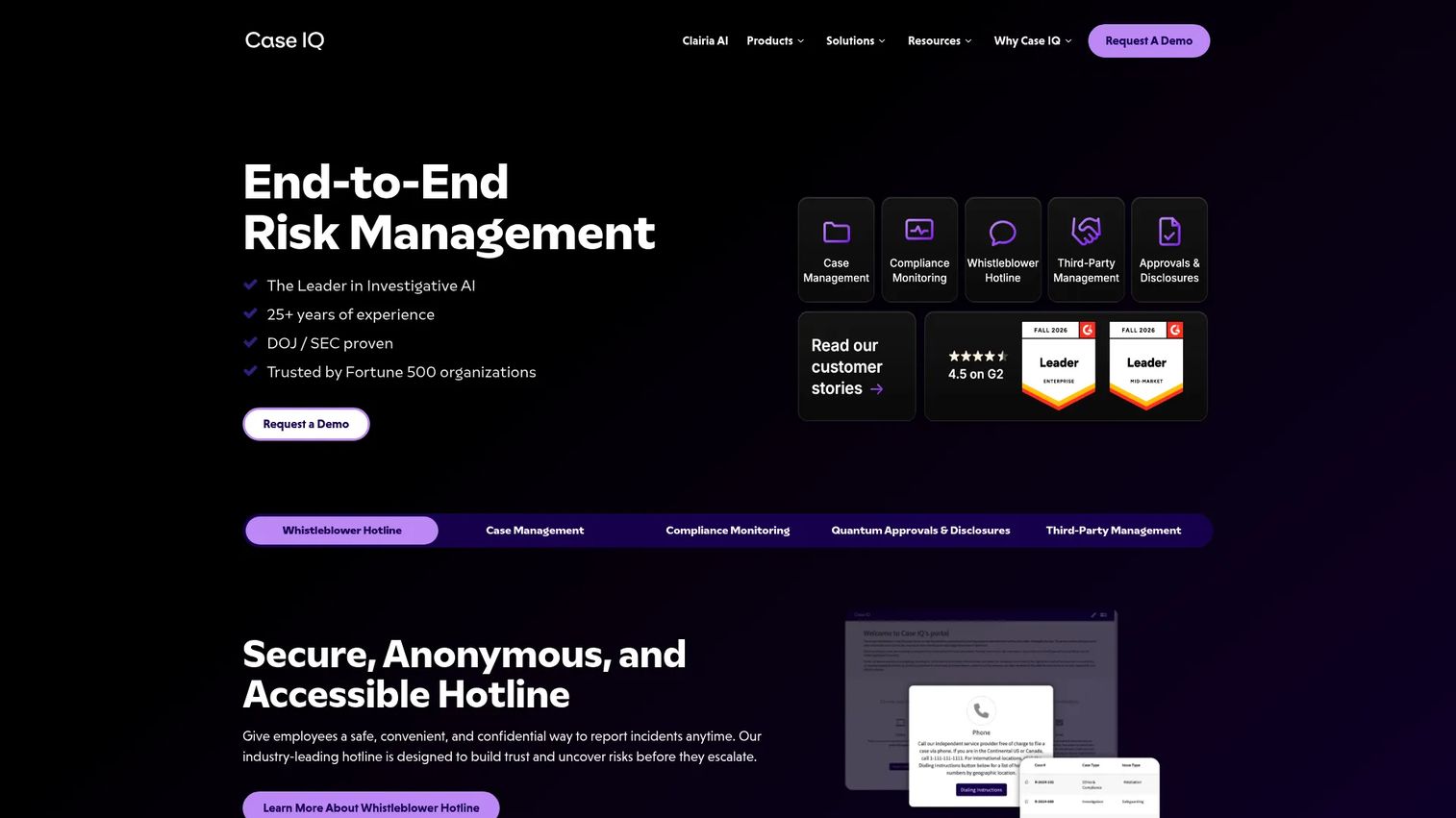
Case IQ is a compliance and investigative case management platform for SIUs, insurance teams, and enterprise compliance functions. It centralizes case intake, investigation assignments, evidence tracking, supervisor review, and audit trails in configurable workflows. Case IQ does not replace social discovery tools; it manages the investigation process after a case is opened, drawing on evidence collected elsewhere.
Best for: Insurance organizations that need structured SIU workflows, shared audit trails, and consistent case management across fraud investigations.
Key features
- Multichannel and anonymous case intake
- Configurable SIU case workflows and centralized documentation
- Advanced analytics, dashboards, and investigation reporting
- Role-based access controls and single sign-on
- AI-assisted case summarization and intake
- Integrations with HRIS, identity providers, CRM, and ERP systems
Why choose Case IQ: This is the right tool when your discovery inputs are solid but investigation operations lack structure. Teams often pair it with a separate social discovery or evidence capture platform. If you already have CLEAR or Tracelight surfacing signals, Case IQ gives those signals a managed workflow to move through.
Case IQ pricing: Pricing is custom and typically combines a one-time implementation component with an annual subscription. Cost drivers include organization size, workflow modules, integration requirements, user access, and contract term. Contact the vendor for a quote.
G2 rating: 4.5/5
Considerations when choosing social discovery software
Define your evidence standard before selecting a tool
Screenshots without source context, timestamps, metadata, and capture documentation can fail review by counsel or in audit. Before evaluating tools, define whether your evidence standard requires full chain-of-custody documentation, court-ready capture records, or internal investigation notes. That decision narrows the field significantly.
Separate discovery from case management
Finding a public profile, preserving a post, analyzing a fraud pattern, and tracking an investigation through to disposition are related but separate jobs. Avoid buying a full fraud graph platform when your bottleneck is basic evidence capture, or a managed reporting service when you need scalable internal collection workflows.
Verify the source coverage that matters to your cases
Platform access rules change often, and not every tool captures every network. Before committing, ask each vendor to confirm current coverage for the specific social platforms, public records sources, marketplaces, and forums your investigators use week to week.
Ask how outputs enter your existing workflows
A strong investigation report that cannot connect to your claims platform, legal matter system, or case management tool creates manual rework. Ask about export formats, API availability, Guidewire or other claims platform integrations, and how alert data flows into your CRM or workflow tools.
Evaluate analyst capacity, not feature count
Teams handling occasional matters may find managed reports more cost-effective than a self-service platform requiring training and maintenance. High-volume SIU or litigation operations typically need internal collection capability, standardized review queues, and scalable workflows. The build-versus-buy question here is really a headcount question.
Conclusion
Social discovery is not a single software category. It is a workflow built across evidence capture, social media reporting, OSINT research, fraud intelligence, and case management. Buying the wrong layer first is the most common mistake.
Choose Social Discovery or FraudSniffr when managed, human-reviewed social media reports are the goal. Choose X1 Social Discovery, WebPreserver, or Page Vault when preservation and evidence handling are the primary requirements. For broad investigative intelligence, CLEAR, Whooster, Tracelight, Carpe Intel, or SockPuppet each cover different points on the OSINT spectrum. DataWalk fits when the challenge is complex fraud network analysis across large datasets. Case IQ belongs in any stack where investigation operations need consistent workflow structure and shared audit trails.
Before booking a vendor demo, identify one specific workflow bottleneck: Claim triage, web evidence capture, social media reporting, or SIU case management. Evaluate each shortlisted tool against that workflow, your evidence documentation standard, and the data sources your investigators actually rely on. That framing will get you to a useful decision faster than any feature matrix.
For broader context on managing claims management software or comparing best social media analytics tools that sit adjacent to investigation workflows, those guides are worth reviewing before finalizing your stack.
Start your journey with Guideflow today!
FAQs about social discovery software
Social discovery software helps professional teams research, collect, preserve, review, and report public social media and web information for claims investigations, legal matters, fraud detection, and risk research. It is distinct from general social media monitoring because it produces investigation records, evidence packages, and case-ready reports rather than marketing dashboards.
No. Social media monitoring generally serves marketing and communications teams tracking brand mentions, sentiment, and campaign performance. Social discovery software supports investigation workflows, including evidence capture, records documentation, search and review, and reporting for claims, legal, or fraud investigation purposes.
Public posts can provide relevant context in an insurance investigation and may inform a fraud referral or SIU escalation decision. They should be evaluated alongside other evidence and handled in line with the organization's legal, privacy, and claims-handling policies. A flagged social post is a signal for investigation, not a determination of fraud by itself.
Look for capture documentation that records the source URL, timestamp, and account context at the moment of collection. Metadata retention, digital hashing, export formats compatible with your eDiscovery or matter management system, user access controls, and a documented chain of custody are the core requirements for defensible evidence.
A tool can preserve content that was publicly visible at the time of capture. It cannot recover content that was deleted before capture occurred, and it cannot access content that visibility settings restrict from public view. The earlier you capture relevant content in an investigation, the lower the risk of loss.
Social discovery software focuses primarily on social media and web evidence collection, search, and reporting. OSINT platforms typically combine social sources with public records, court filings, identity data, news archives, dark web signals, and other open sources into a broader investigative picture. Many investigations require both, applied at different stages.
Some platforms use automation, risk scoring, or pattern detection to prioritize cases for investigator review. A risk score or flagged signal is not proof of fraud. Investigation teams still need documented review procedures, appropriate human oversight, and a clear audit trail showing how findings were gathered and interpreted.
Evidence capture tools such as Page Vault offer on-demand pricing starting at $199 per project. Automated OSINT platforms like Tracelight start at $49/month for 25 cases. Enterprise fraud intelligence platforms, managed reporting services, and case management systems typically price by quote, with total cost driven by user count, claim volume, data sources, deployment scope, and contract term.
Most investigation teams combine tools from two or more of the four categories: A managed reporting service or evidence capture tool for collection, an OSINT platform for identity and network research, and a case management system for workflow and audit trail. The right combination depends on case volume, investigation complexity, internal analyst capacity, and the evidence standards your organization or legal counsel requires.