A physician joins your organization. Before they can see a single patient or bill a single payer, someone has to verify their license, board certification, DEA registration, malpractice history, education, and work history against primary sources. Then run enrollment with every payer. Then privilege them through the medical staff office. Then do it all again at recredentialing.
Miss a step and you get denied claims, lost revenue, and compliance exposure.
The global healthcare credentialing software market reached USD 807.8 million in 2023 and is projected to hit USD 1.42 billion by 2030 at an 8.3% CAGR, according to Grand View Research (2024). That growth is not marketing hype. It reflects a real operational shift away from spreadsheets and paper files toward systems that track provider data, automate primary source verification, and flag expirations before they cost you.
Manual credentialing does not scale. Every provider added multiplies the tracking burden, and onboarding delays turn straight into enrollment delays and delayed reimbursement.
What's inside
This guide is for healthcare operations leaders, medical staff services teams, and provider enrollment managers comparing credentialing management software for 2026. We focused on platforms that cover the full provider lifecycle, not point tools.
We selected and ranked tools based on:
- Primary source verification depth and automation
- Provider enrollment and payer roster management
- Privileging, recredentialing, and OPPE/FPPE support
- Compliance monitoring, including sanctions and exclusions screening
- Integrations, reporting, and audit trails
Every pricing and rating figure below reflects what each vendor publishes or what verified review data shows. Where a vendor keeps pricing behind a quote, we say so plainly.
TL;DR
- Best all-in-one compliance and training fit: MedTrainer combines credentialing, provider data, and compliance in one platform, ideal for groups that want fewer systems.
- Best for large health systems: symplr Provider and HealthStream CredentialStream cover end-to-end lifecycle workflows including privileging, OPPE/FPPE, and enrollment at scale.
- Best for sanctions and exclusions monitoring: Verisys leads on FACIS screening, license verification, and continuous provider data monitoring.
- Best for unified scheduling-adjacent workflows: QGenda Credentialing ties credentialing and enrollment into broader provider operations.
- Best for lean teams and CAQH tracking: Modio Health centralizes provider profiles, document storage, and compliance tracking for smaller groups.
- Best for deep medical staff services workflows: MD-Staff supports privileging, committee review, and enrollment for hospital medical staff offices.
What is medical credentialing software
Medical credentialing software is a system that verifies, tracks, and manages healthcare provider qualifications across the full provider lifecycle, from onboarding through enrollment, privileging, and recredentialing.
It replaces spreadsheets and paper files with a single source of provider data, automating the verification and monitoring work that keeps clinicians eligible to practice and bill.
Provider credentialing software typically covers these functions:
- Primary source verification: Confirms licenses, board certifications, DEA registration, education, and work history directly with the issuing source.
- Provider data management: Stores and maintains a structured, auditable record for every provider.
- Provider enrollment: Manages payer enrollment, roster generation, and enrollment status tracking so providers can bill.
- Privileging: Manages clinical privilege requests, delineation, and committee review through the medical staff office.
- Recredentialing: Automates the periodic re-verification cycle so nothing lapses.
- Sanctions and exclusions monitoring: Screens against OIG, SAM, state, and other databases on an ongoing basis.
- OPPE and FPPE: Supports ongoing and focused professional practice evaluation tied to provider performance.
- Reporting and audit trails: Produces compliance-ready reports, role-based access, and a defensible record of every action.
The strongest platforms connect these functions so a single provider record flows from initial credentialing through enrollment and recredentialing without re-keying data.
When to use medical credentialing software
Speed up provider onboarding without spreadsheets
Manual onboarding means chasing documents, re-typing data into payer portals, and tracking expiration dates in a spreadsheet nobody trusts. Credentialing automation pulls provider data once and reuses it across verification, enrollment, and privileging. That cuts the gap between hire date and first billable encounter.
Centralize provider data across teams
Medical staff services, enrollment, and compliance often work from different files on the same provider. A shared provider data management layer gives every team one record. When a license renews or a certification changes, everyone sees it, and CAQH integration keeps external profiles aligned.
Reduce compliance risk during recredentialing and monitoring
Recredentialing cycles and continuous sanctions monitoring are where manual processes quietly fail. Software runs exclusions and license checks on a schedule, flags expirations before they hit, and logs every check in an audit trail. That turns compliance from a fire drill into a background process.
Medical credentialing software comparison table
The table below ranks seven platforms by how well they fit common credentialing use cases. Pricing across this category is almost entirely quote-based, so treat the pricing column as a signal of packaging, not a published rate card.
| # | Product | Best for | Key differentiator | Pricing | G2 rating |
|---|---|---|---|---|---|
| 1 | MedTrainer | All-in-one compliance, training, and credentialing | Credentialing plus learning and compliance in one platform | Quote-based (Select, Premier, Signature) | 4.4/5 |
| 2 | symplr Provider | Large health systems | End-to-end lifecycle: credentialing, privileging, enrollment, OPPE | Quote-based | Not published |
| 3 | HealthStream CredentialStream | Credentialing plus enrollment at scale | Paperless applications with Epic and HRIS integrations | Quote-based | Not published |
| 4 | Verisys | Sanctions and exclusions monitoring | FACIS screening and continuous license monitoring | Quote-based | 4.6/5 |
| 5 | QGenda Credentialing | Unified provider operations | Credentialing tied to broader workforce workflows | Quote-based | 4.6/5 |
| 6 | Modio Health | Lean teams and CAQH tracking | Centralized profiles and document storage | Quote-based | Not published |
| 7 | MD-Staff | Medical staff services depth | Privileging and committee review workflows | Quote-based | Not published |
Best medical credentialing software for 2026
1. MedTrainer
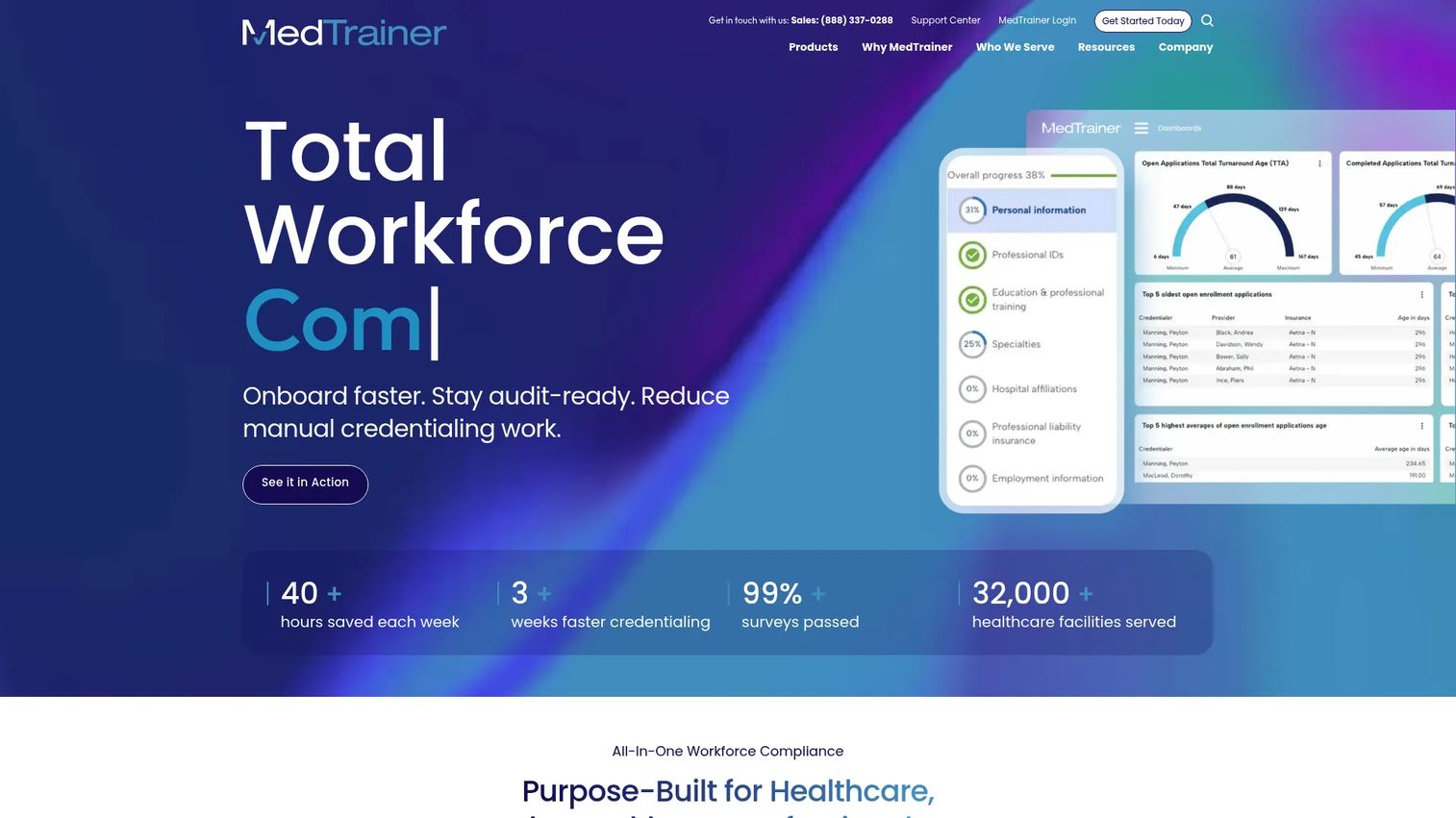
MedTrainer is a healthcare compliance platform that combines training, credentialing, and compliance management in one system. For groups tired of stitching together a learning system, a credentialing tool, and a policy tracker, the appeal is consolidation. One platform holds provider data, runs credentialing workflows, and manages compliance reporting alongside healthcare-specific courses.
That breadth makes it a strong broad fit for organizations that want to reduce the number of vendors touching provider and compliance data.
Best for: Healthcare organizations that want credentialing, training, and compliance in a single all-in-one platform.
Key strengths
- Credentialing and provider data management in one place
- Healthcare-specific learning and training courses
- Policy and compliance management with reporting
- Centralized provider records across teams
- Exclusions and compliance monitoring workflows
Why choose MedTrainer: If your operational reality is a small team wearing multiple hats, consolidating credentialing, training, and compliance into one system reduces context-switching and vendor overhead. It fits groups that value breadth over deep single-function specialization.
MedTrainer pricing: Pricing is quote-based. MedTrainer describes three tiers, Select, Premier, and Signature, and asks visitors to request a quote rather than publishing rates.
2. symplr Provider
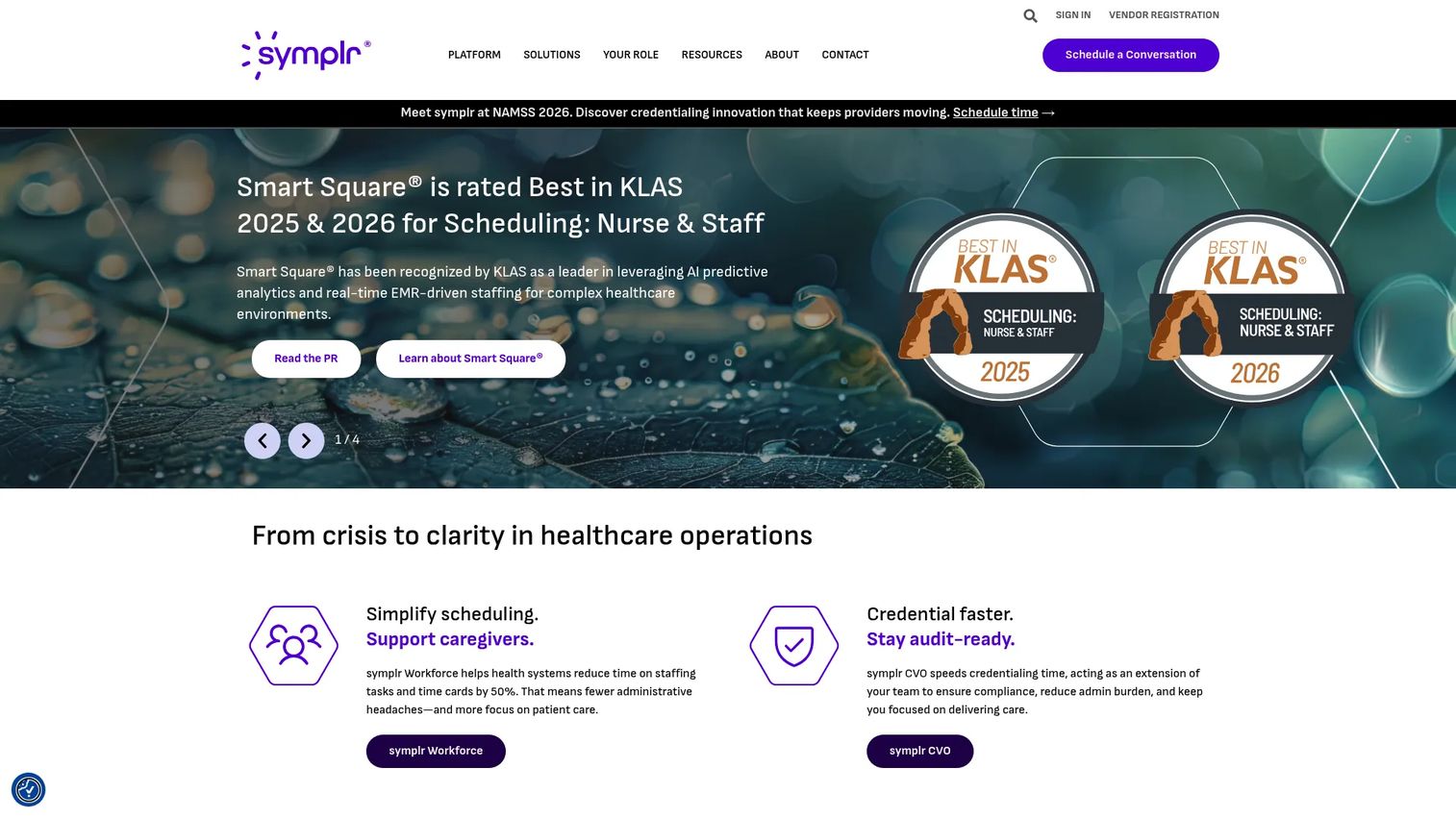
symplr Provider is a cloud-based provider credentialing platform built for onboarding, privileging, enrollment, and provider performance management. It targets the full provider lifecycle in one system, which is why it shows up repeatedly in large health system evaluations. Credentialing automation runs primary source and regulatory database verification, while enrollment management handles roster generation and tracking.
The platform pulls credentialing, privileging, enrollment, OPPE, and provider performance together so a single provider record moves through each stage without re-keying.
Best for: Large healthcare organizations managing complex provider credentialing and enrollment workflows at scale.
Key strengths
- End-to-end credentialing, privileging, and enrollment
- OPPE and provider performance management built in
- Credentialing automation with primary source verification
- Regulatory database verification
- Provider enrollment with roster generation and tracking
Why choose symplr Provider: For a health system that needs privileging, OPPE/FPPE, and enrollment governed in one place, the lifecycle breadth is the draw. It fits organizations with the medical staff services structure to use deep workflow depth.
symplr Provider pricing: Pricing is not published on the site and appears to be quote-based through sales. Request pricing directly for your provider volume and module needs.
3. HealthStream CredentialStream
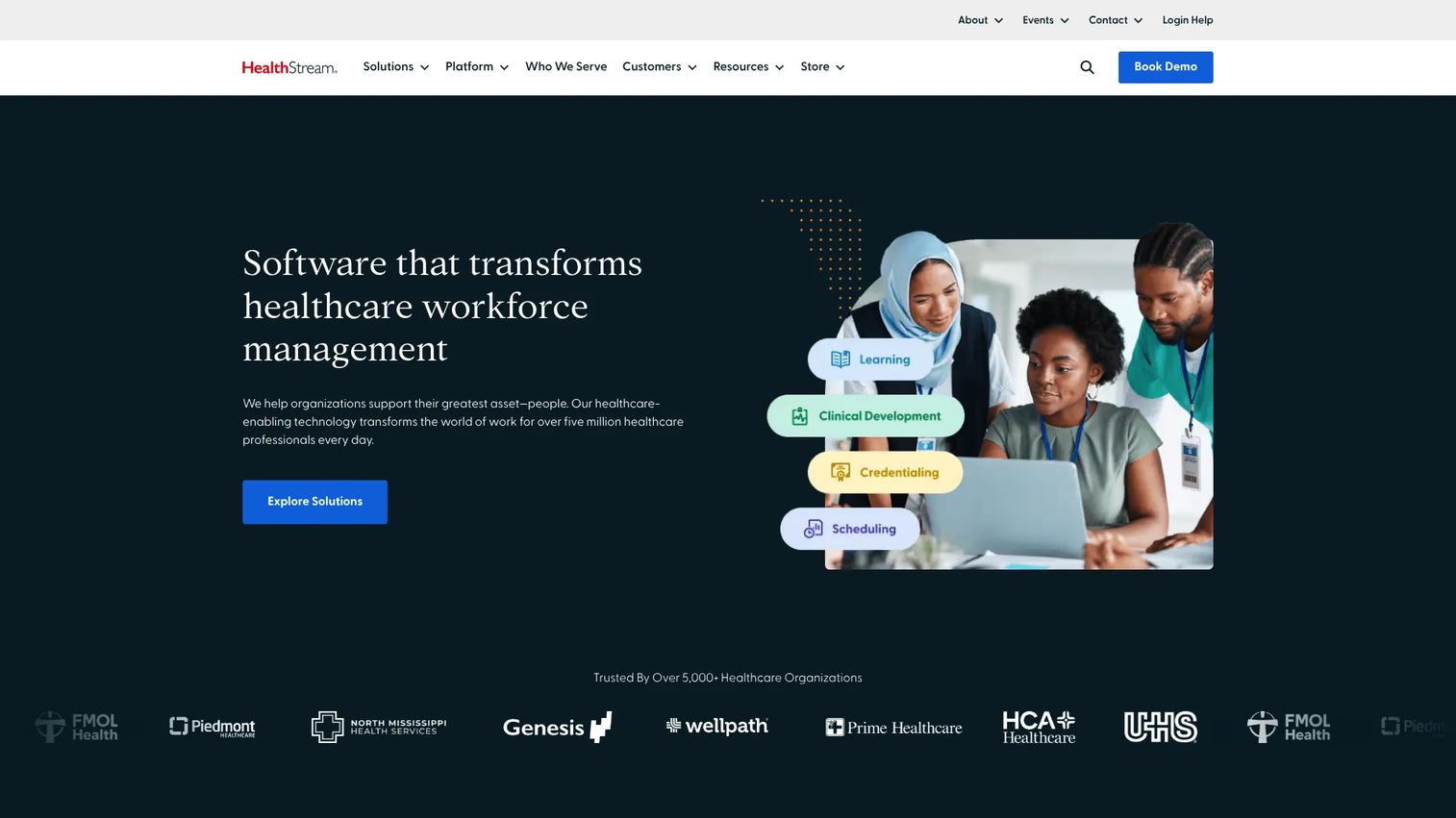
HealthStream CredentialStream delivers credentialing, privileging, and provider enrollment in a single platform, with a focus on moving applications and department review off paper. The paperless application flow and department review tools aim to compress onboarding, and Epic and HRIS integrations keep provider data flowing between systems of record.
For organizations already running other HealthStream products, the integration story into existing workflows is a meaningful pull.
Best for: Healthcare organizations that need provider credentialing and enrollment management with strong integration into core systems.
Key strengths
- Credentialing, enrollment, and privileging workflows
- Paperless application and department review
- Epic and HRIS integrations
- Provider onboarding workflow support
- Performance insight tooling
Why choose HealthStream CredentialStream: If your provider data needs to move cleanly between your EHR, HRIS, and credentialing, the native Epic and HRIS integrations reduce manual reconciliation. It fits systems that prioritize data flow across the stack.
HealthStream CredentialStream pricing: Pricing is not publicly displayed. HealthStream directs prospects to contact sales or book a demo for a quote based on scope.
4. Verisys
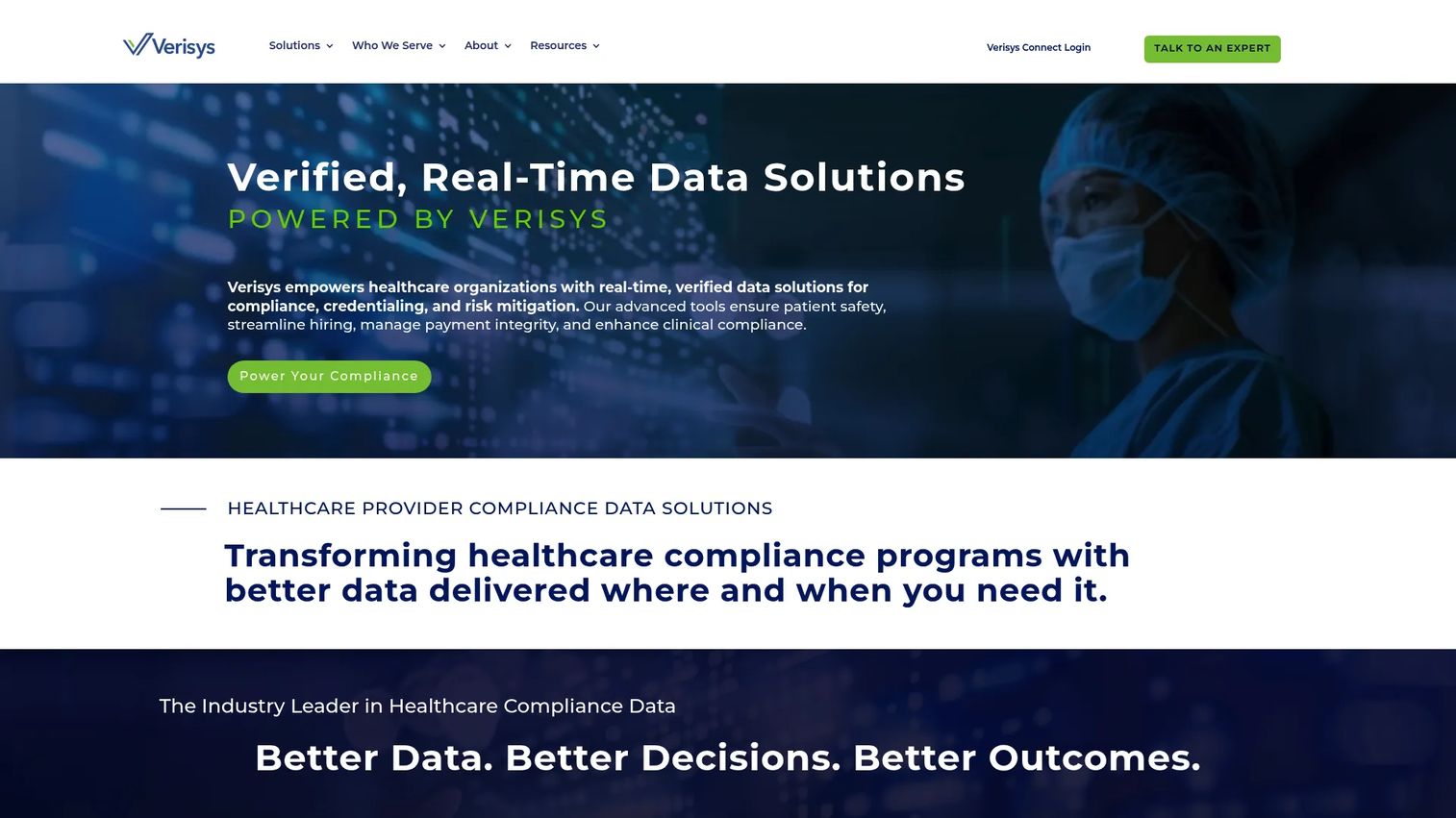
Verisys is a healthcare compliance data and workflow platform covering credentialing, licensing, exclusion screening, monitoring, and provider data management. Its differentiator is data depth on the compliance side. FACIS sanction and exclusion screening, automated license verification, and continuous monitoring make it the pick when sanctions and exclusions monitoring is the priority, not an afterthought.
Provider credentialing and data management sit alongside that monitoring layer, so screening is not a separate silo.
Best for: Healthcare organizations that need strong compliance data, exclusion screening, and continuous provider monitoring.
Key strengths
- FACIS sanction and exclusion screening
- Continuous exclusions and sanctions monitoring
- Automated license verification and monitoring
- Provider credentialing and data management
- Compliance-focused provider data
Why choose Verisys: If exclusion screening and continuous monitoring are your highest-risk area, Verisys leads with data depth other tools treat as a bolt-on. It fits compliance-driven teams that want monitoring at the core.
Verisys pricing: Pricing is quote-based. The site routes visitors to request a quote rather than showing published rates, so pricing scales with your screening and monitoring needs.
5. QGenda Credentialing
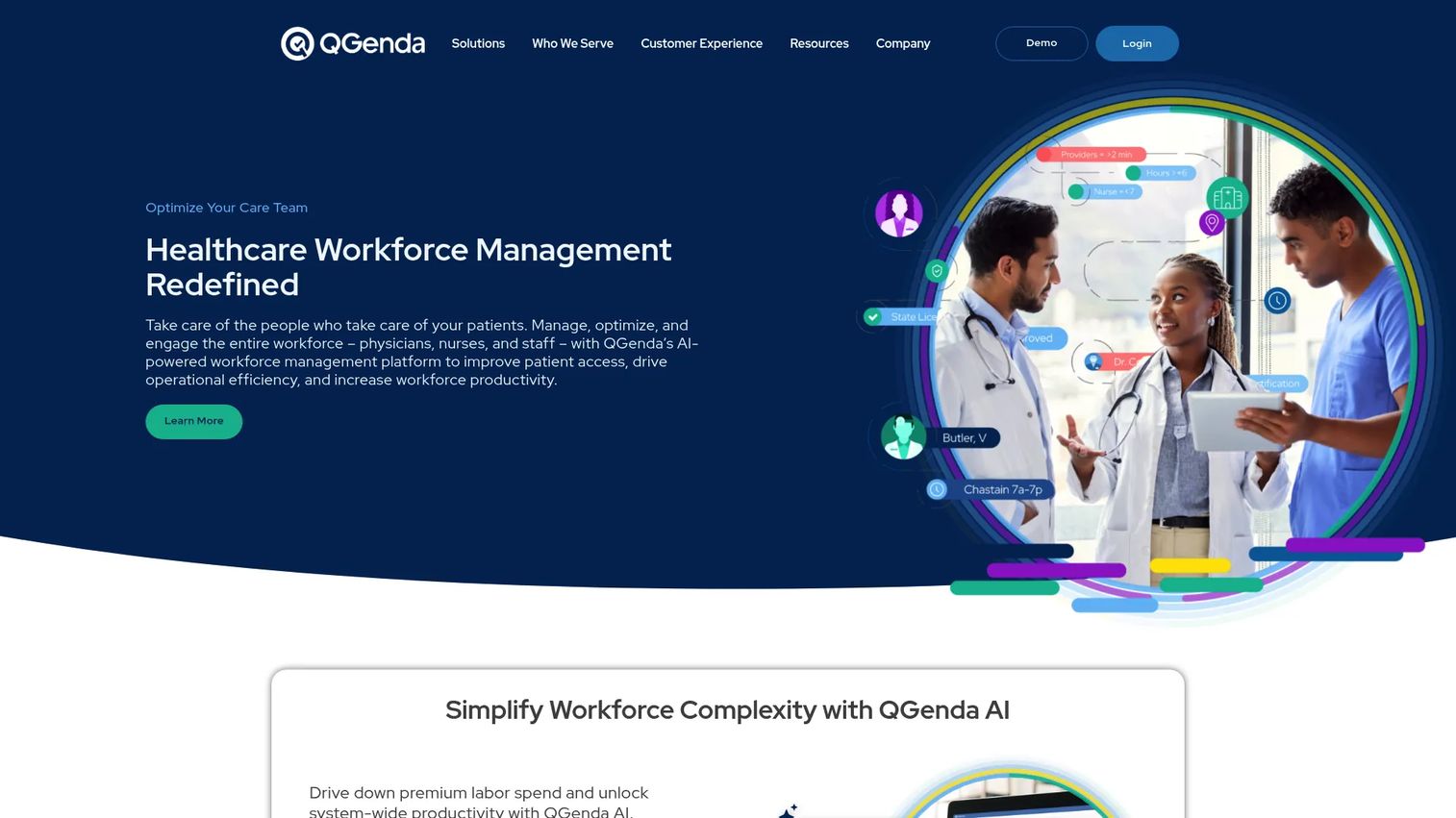
QGenda Credentialing handles provider onboarding, privileging, and payer enrollment inside a broader provider operations platform. The advantage is adjacency: credentialing sits near scheduling and workforce management, so provider data serves more than one operational job. End-to-end credentialing, privileging, recredentialing, and enrollment workflows are supported, with primary source verification and committee review built in.
Built-in analytics, reporting, and provider self-service round out the operational picture.
Best for: Healthcare organizations that want credentialing unified with broader provider operations and workforce workflows.
Key strengths
- End-to-end credentialing, privileging, and recredentialing
- Primary source verification and committee review
- Payer enrollment workflows
- Built-in analytics and reporting
- Provider self-service
Why choose QGenda Credentialing: If you already think about credentialing and provider scheduling as connected problems, unifying them cuts duplicate data entry. It fits operations teams that want one provider record across more than credentialing.
QGenda Credentialing pricing: Pricing is not publicly displayed and appears to be contract-based. QGenda references per-provider-per-month pricing in its own content, but no public rate is confirmed, so request a quote for your provider count.
6. Modio Health
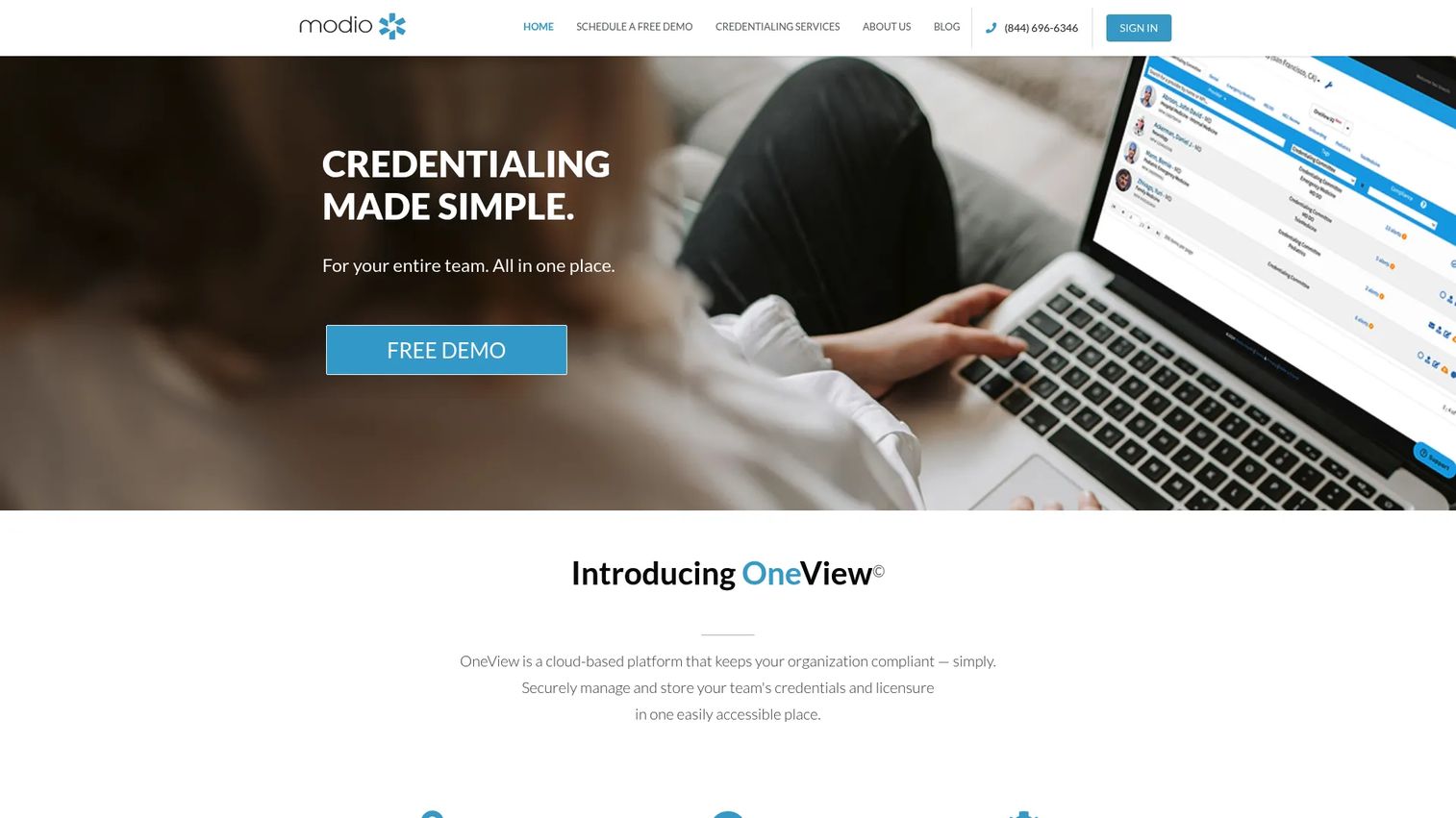
Modio Health is a cloud-based credentialing and career management platform for healthcare providers and organizations. It centralizes provider credentialing, compliance tracking, and secure document storage, with pre-populated forms and electronic signatures to cut manual entry. For lean teams that need a clean central profile per provider and reliable CAQH tracking, the centralization is the draw.
Reporting and workflow tracking keep expirations and compliance status visible without a spreadsheet.
Best for: Healthcare organizations and lean teams managing provider credentials, compliance, and CAQH tracking.
Key strengths
- Provider credentialing and compliance tracking
- Secure document storage and reporting
- Pre-populated forms and electronic signatures
- Centralized provider profiles
- Workflow and expiration tracking
Why choose Modio Health: If you run a smaller group and want a central, well-organized provider profile without heavy implementation, Modio's storage and tracking fit that operational maturity. It suits teams prioritizing simplicity and CAQH upkeep.
Modio Health pricing: Pricing is not publicly displayed and appears to be quote-based. Contact Modio Health for pricing tied to your provider count and workflow needs.
7. MD-Staff
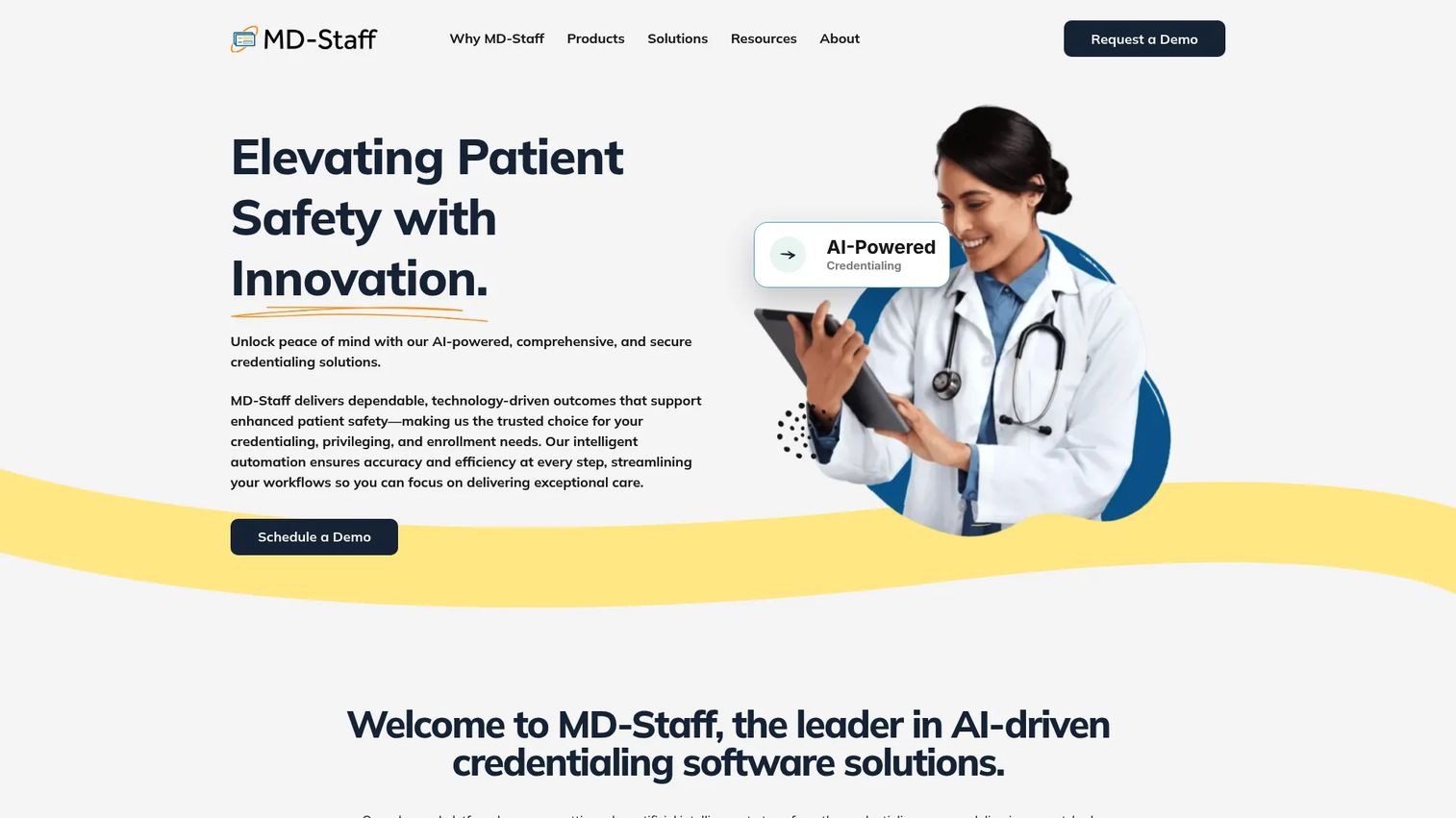
MD-Staff is credentialing, privileging, enrollment, and medical staff management software built for hospitals and medical staff offices. Its strength is workflow depth for medical staff services: automated credentialing and onboarding, privileging with committee review support, and managed care and enrollment reporting with task templates. For a hospital medical staff office running privileging and committee cycles, that depth matters.
The task template approach helps standardize repeatable credentialing and privileging steps across providers.
Best for: Hospitals and medical staff offices managing credentialing, privileging, and provider enrollment.
Key strengths
- Automated credentialing and onboarding workflows
- Privileging and committee review support
- Managed care and enrollment reporting
- Task templates for repeatable workflows
- Medical staff management tooling
Why choose MD-Staff: If your medical staff office lives in privileging and committee review, MD-Staff's depth in those workflows fits better than a generalist tool. It suits hospitals with established medical staff services processes.
MD-Staff pricing: Pricing is not publicly displayed. MD-Staff directs prospects to request a demo, so pricing is scoped to your organization's size and workflow needs.
Considerations
Primary source verification depth
Not all verification is equal. Check whether the platform verifies directly with issuing sources or relies on secondary data, and which credentials it automates versus leaves manual. Deeper primary source verification means less staff time chasing confirmations and a more defensible compliance record.
Enrollment and privileging coverage
Credentialing and provider enrollment are different jobs, and privileging is a third. Confirm the tool covers all the stages you actually run. If you manage clinical privileges and committee review, verify privileging and OPPE/FPPE support rather than assuming credentialing includes them.
Compliance monitoring and alerts
Look at how the platform handles ongoing sanctions monitoring, exclusions monitoring, and expiration alerts. Continuous monitoring against OIG, SAM, and state databases matters more than a one-time check. Ask how alerts surface and whether they reach the right person before a lapse becomes exposure.
Integrations and data flow
Provider data should not live in isolation. Evaluate CAQH integration, EHR and HRIS connections, and how cleanly data moves between systems of record. The fewer places you re-key provider information, the lower your error rate and reconciliation burden.
Reporting, audit trails, and role-based access
Compliance readiness lives in the audit trail. Confirm the platform logs every verification and change, produces audit-ready reports, and enforces role-based access so the right people see the right data. This is what turns a survey or payer audit from a scramble into a report you can pull.
Conclusion
The right platform depends on your operational maturity and scale. For groups that want credentialing, training, and compliance consolidated, MedTrainer covers the broadest ground. Large health systems running privileging, OPPE/FPPE, and enrollment at scale should shortlist symplr Provider and HealthStream CredentialStream, especially where Epic and HRIS integration matters.
If sanctions and exclusions monitoring is your highest-risk area, Verisys leads on compliance data depth. QGenda Credentialing fits teams that want credentialing unified with broader provider operations. Lean groups focused on central profiles and CAQH tracking will find Modio Health practical, while hospital medical staff offices deep in privileging and committee review should evaluate MD-Staff.
Your next step: shortlist two or three based on the stages you actually run, then request quotes and scoped demos against your real provider volume. Since pricing across this category is quote-based, the demo is where you validate that the workflow depth matches your medical staff services and revenue cycle needs. Faster onboarding and reduced manual work follow from picking the tool that fits your process, not the longest feature list.
FAQs
Credentialing verifies that a provider is qualified: license, board certification, education, work history, and sanctions status, confirmed through primary source verification. Provider enrollment is the separate process of registering that provider with payers so they can bill and be reimbursed. You credential first, then enroll. Many platforms handle both, but they are distinct workflows with different data and timelines.
Prioritize primary source verification depth, provider enrollment, privileging and recredentialing support, and continuous sanctions and exclusions monitoring. Then check integrations like CAQH, EHR, and HRIS, plus reporting, audit trails, and role-based access. The best fit covers the specific lifecycle stages your team runs, not the longest generic feature list.
Many platforms do, but coverage varies. Tools like symplr Provider, MD-Staff, and QGenda Credentialing support privileging workflows, committee review, and OPPE/FPPE tied to provider performance. If clinical privileging and peer review are core to your medical staff office, confirm the depth of those specific workflows rather than assuming credentialing includes them.
Primary source verification confirms a provider's credentials directly with the issuing source, the state licensing board, the certifying body, the DEA, and the school or prior employer. Credentialing software automates much of this by querying source databases and logging each confirmation in an audit trail. That replaces manual phone calls and letters with a faster, more defensible record.
No. Hospitals and health systems use it for privileging and medical staff services, but physician groups, ambulatory surgical centers, telehealth providers, and payers use it too. Nearly 65% of ambulatory surgical centers have adopted credentialing software, according to Industry Research Biz (2026). Lean groups often favor centralized profile and CAQH-focused tools, while large systems need full lifecycle depth.
CAQH integration is near-essential for keeping provider profiles aligned with the industry data source. Beyond that, EHR integrations like Epic and HRIS connections reduce re-keying provider data across systems of record. Payer connections for enrollment and continuous feeds into sanctions and exclusions databases round out the integrations that save the most manual work.
Start with the lifecycle stages you run: verification, enrollment, privileging, recredentialing, and monitoring. Map each vendor's coverage against that list, then weigh integrations, reporting, and audit trails. Since pricing is almost always quote-based, use scoped demos with your real provider volume to compare workflow depth and implementation effort before you decide.
Expect audit-ready compliance reports, expiration and recredentialing dashboards, enrollment status tracking, and a full audit trail of every verification and change. Role-based access should control who sees what. Strong reporting is what turns a payer audit or accreditation survey from a manual scramble into a report you pull in minutes.