Presales is the process of engaging potential customers between initial contact and contract signature, focused on technical discovery, solution design, and product demonstrations. It reduces deal risk by validating that a solution meets buyer requirements before anyone commits.
Most sales teams treat presales as "the demo people." That undersells the function. Presales professionals are the reason buyers trust that a product will actually work for their specific situation. This guide covers the full presales process, key roles, best practices, and the tools modern teams use to scale.
What's inside
This guide covers everything you want to know about presales: what it means, how it differs from sales, the step-by-step process, key roles, best practices, and the tools modern teams use. Whether you're a sales leader building a presales function, a solutions engineer sharpening your craft, or someone exploring a presales career, you'll find practical guidance here.
TL;DR
- Presales definition: All activities between first prospect contact and contract signature, focused on technical validation and solution fit
- Key distinction: Presales proves value before purchase; sales closes the deal after value is established
- Core activities: Lead qualification, discovery calls, product demos, technical proposals, and RFP responses
- Why it matters: Reduces deal risk by confirming the solution meets buyer requirements before commitment
- Modern shift: Demo automation and interactive demos now let presales teams scale without adding headcount
What is presales
Presales encompasses all activities between initial prospect engagement and contract signature. The focus is on technical discovery, solution design, product demonstrations, and RFP responses. Presales reduces risk by validating that a solution meets customer requirements, often acting as a connector between sales teams and technical experts.
You might also see it written as "pre-sales" or "pre sales." All three refer to the same function. The core idea is straightforward: before a buyer commits, someone confirms the product actually solves their problem.
Presales professionals blend technical knowledge with sales acumen. They're not closing deals. They're proving value so the deal can close.
Core presales activities include:
- Lead qualification: Determining if prospects have the right fit, budget, and authority
- Discovery calls: Uncovering technical requirements and business pain points
- Technical presentations: Demonstrating how the product solves specific problems
- Customized proposals: Crafting solutions tailored to buyer requirements
- RFP responses: Answering formal procurement questions with technical detail
What is the difference between presales and sales
The handoff point is clear: presales proves value, sales negotiates and closes. Presales focuses on technical fit and solution design. Sales focuses on commercial terms and relationship management.
Think of it this way. Presales ends when the buyer agrees the solution works. Sales ends when the contract is signed.
| Aspect | Presales | Sales |
|---|---|---|
| Primary focus | Technical validation and solution fit | Commercial negotiation and close |
| Key activities | Demos, discovery, proposals, POCs | Pricing, contracts, relationship management |
| Success metric | Technical win rate | Closed revenue |
| Buyer interaction | "Does this solve my problem?" | "What are the terms?" |
| Typical roles | Solutions engineer, presales consultant | Account executive, sales rep |
In smaller organizations, one person might handle both. As deal complexity grows, separating the functions lets each specialist focus on what they do best.
Why presales matters for revenue growth
Presales reduces deal risk by confirming fit before commitment. When buyers trust that a solution works for their specific situation, they commit faster and with more confidence.
Strong presales shortens sales cycles by removing technical objections early. Instead of discovering integration issues in month three of a negotiation, you surface them in week two and address them.
Business impact of effective presales:
- Faster sales cycles: Technical questions get answered before they stall deals
- Higher win rates: Buyers commit when they trust the solution fits their requirements
- Fewer failed implementations: Presales validates feasibility before contracts
- Better pipeline quality: Unqualified deals get filtered out earlier
Without presales, sales teams waste time on deals that were never going to close. Worse, they close deals that fail during implementation because nobody validated the technical fit.
What is the presales process
The presales process spans from first qualified contact to technical win. Steps may overlap or repeat depending on deal complexity, but the sequence typically follows a predictable pattern.
1. Lead qualification and research
Before engaging, presales evaluates fit based on technical requirements, budget, and timeline. This isn't just checking boxes. It's understanding whether your product can actually solve the prospect's problem.
Research into the prospect's tech stack, industry, and use case happens before the first call. Walking into discovery blind wastes everyone's time.
2. Discovery and needs analysis
Discovery calls uncover business pain, technical constraints, and success criteria. Good discovery shapes the entire solution approach.
The goal isn't to pitch. It's to understand. What problem are they solving? What have they tried? What does success look like? The answers determine everything that follows.
3. Solution design and technical validation
Presales maps product capabilities to buyer requirements. This might involve proof of concept work, technical architecture discussions, or integration planning.
Sometimes the answer is "our product isn't the right fit." That's valuable information. Better to know now than after a failed implementation.
4. Product demonstration
Demos show the product solving the buyer's specific problem. Generic demos fail. Personalized, use-case-specific presentations win.
Modern presales teams increasingly use interactive demos to let buyers explore on their own terms. This shifts the demo from a scheduled event to an always-available resource.
5. Proposal and proof of concept development
Presales creates customized proposals, responds to RFPs, and builds POC environments. Technical documentation supports the buyer's internal decision process.
For complex deals, this phase might include building a sandbox environment where technical evaluators can test the product hands-on.
6. Handoff to sales for close
When technical validation is complete, presales passes the deal to sales with clear documentation: requirements confirmed, objections addressed, stakeholders aligned.
A clean handoff prevents the "we already discussed this" frustration that kills deals. Everything the buyer cares about technically gets captured and communicated.
The role of demos in presales
Demos are where presales proves product value in action. Demo quality often determines technical win or loss. A great demo makes the buyer think "this solves my problem." A poor demo leaves them confused or skeptical.
Live product demonstrations
Traditional screen-share or in-person demos work best for complex questions, executive audiences, and late-stage deals. The presales professional controls the narrative and can adapt in real-time to buyer reactions.
The downside? They don't scale. Every demo requires a person's time.
Interactive self-serve demos
Interactive demos let prospects explore the product without scheduling a call. Presales teams use interactive demos to qualify interest and warm up buyers before live conversations.
When a prospect spends 15 minutes clicking through an interactive demo, they arrive at the live call with better questions and clearer expectations.
Sandbox environments for technical buyers
Sandbox environments let technical evaluators test the product hands-on. Sandboxes are ideal for technical due diligence, security reviews, and integration testing.
Unlike live demos, sandboxes use synthetic data and isolated environments. No risk of exposing production systems or sensitive information.
Demo centers for buying committees
Demo centers organize multiple demos and assets for complex buying groups. 74% of B2B buyer teams experience unhealthy conflict during purchase decisions - different stakeholders care about different things. A CFO wants ROI data. A developer wants API documentation. A demo center serves each with relevant content.
Presales roles and responsibilities
Presales titles vary by company, but responsibilities overlap. All roles blend technical expertise with sales acumen.
Presales consultant
The front-line technical advisor who runs discovery, demos, and proposals. Presales consultants typically have industry experience and strong communication skills. They translate technical capabilities into business value.
Solutions engineer
Deeper technical focus on architecture, integrations, and custom configurations. Solutions engineers often have engineering backgrounds and can discuss implementation details at a technical level.
Sales engineer
Often used interchangeably with solutions engineer, sometimes with more sales-facing responsibilities. The title varies by company and industry.
Technical account manager
Sometimes spans presales and post-sales, especially in strategic accounts. Technical account managers maintain relationships through the entire customer lifecycle.
Presales best practices
Effective presales requires repeatable processes and continuous improvement. Here's what separates good presales teams from great ones.
1. Align with sales on lead qualification
Presales and sales agree on qualification criteria before handoff. The cost of presales time wasted on unqualified deals is significant. Clear criteria prevent that waste.
2. Personalize every demo to the buyer
Generic demos fail. Tailor demos to specific use cases, industries, and personas. Use the buyer's terminology. Show their scenarios. Make them see themselves using the product.
3. Prepare for technical objections
Anticipate and address common technical concerns before they arise. Competitive objections, integration questions, security requirements. Have answers ready.
4. Document learnings and patterns
Capture what works: winning talk tracks, successful demo flows, common objections and responses. Documentation scales knowledge across the team.
5. Track demo engagement and iterate
Measure which demo moments drive engagement and which lose buyers. Use analytics to improve demo content and delivery over time.
Presales software and tools
Presales software helps teams scale demos, track engagement, and collaborate with sales. The right tools reduce manual work and provide visibility into buyer interest.
Demo automation: Guideflow
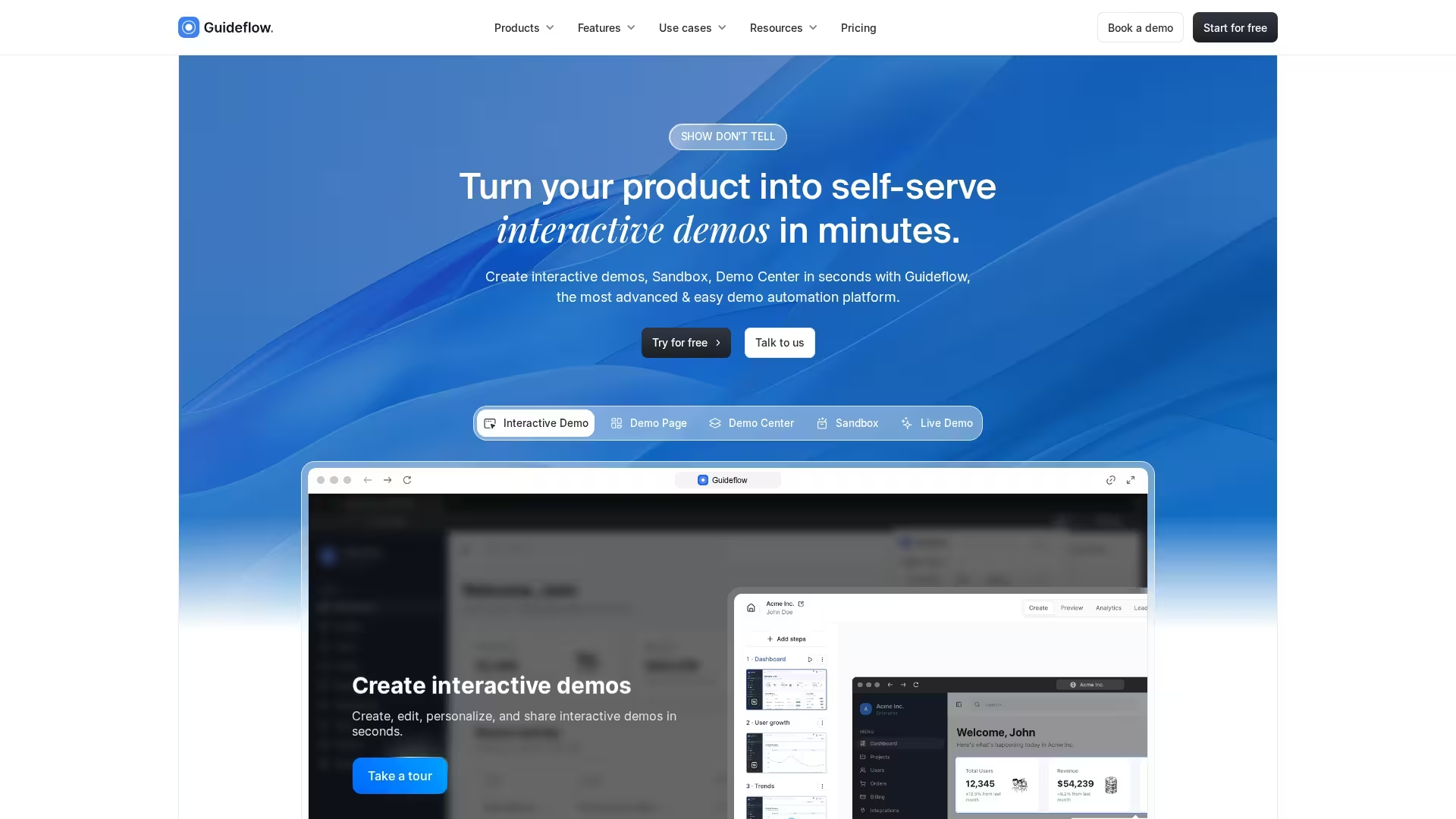
Demo automation platforms are software solutions that allow users to create high-fidelity, interactive product demos without extensive engineering resources. They are the core of a modern presales tech stack. Key capabilities include screen capture, no-code editing, personalization at scale, and engagement analytics. Guideflow is a leading example of a platform designed to empower presales teams. You capture your product flow and turn it into clickable, step-by-step demos you can embed on landing pages, link in outbound, or share with prospects.
Guideflow is the heart of any presales stack, but any high-performing team will layer in a handful of other tools to handle scheduling, communication, call performance, visual planning and deal management. Here are the essentials to get you going.
CRM and sales engagement software: HubSpot

Presales uses CRM to track deal context and sales engagement tools to coordinate outreach. HubSpot CRM is a natural starting point - it's free to get set up, integrates with the majority of demo and analytics tools with ease, and gives you one place to see how prospects are interacting with your demo across the entire sales process. When the demo platform pushes engagement data into HubSpot, you get a clear picture of which flows are actually working and which ones need a tweak, without having to chase down sales team updates manually.
Best for: Presales working with smaller to medium-sized sales teams who need a lightweight CRM to track demo activity without setting up a whole new system.
Pricing: Free plan on offer; paid tiers start at $9/user/month.
Scheduling: Calendly
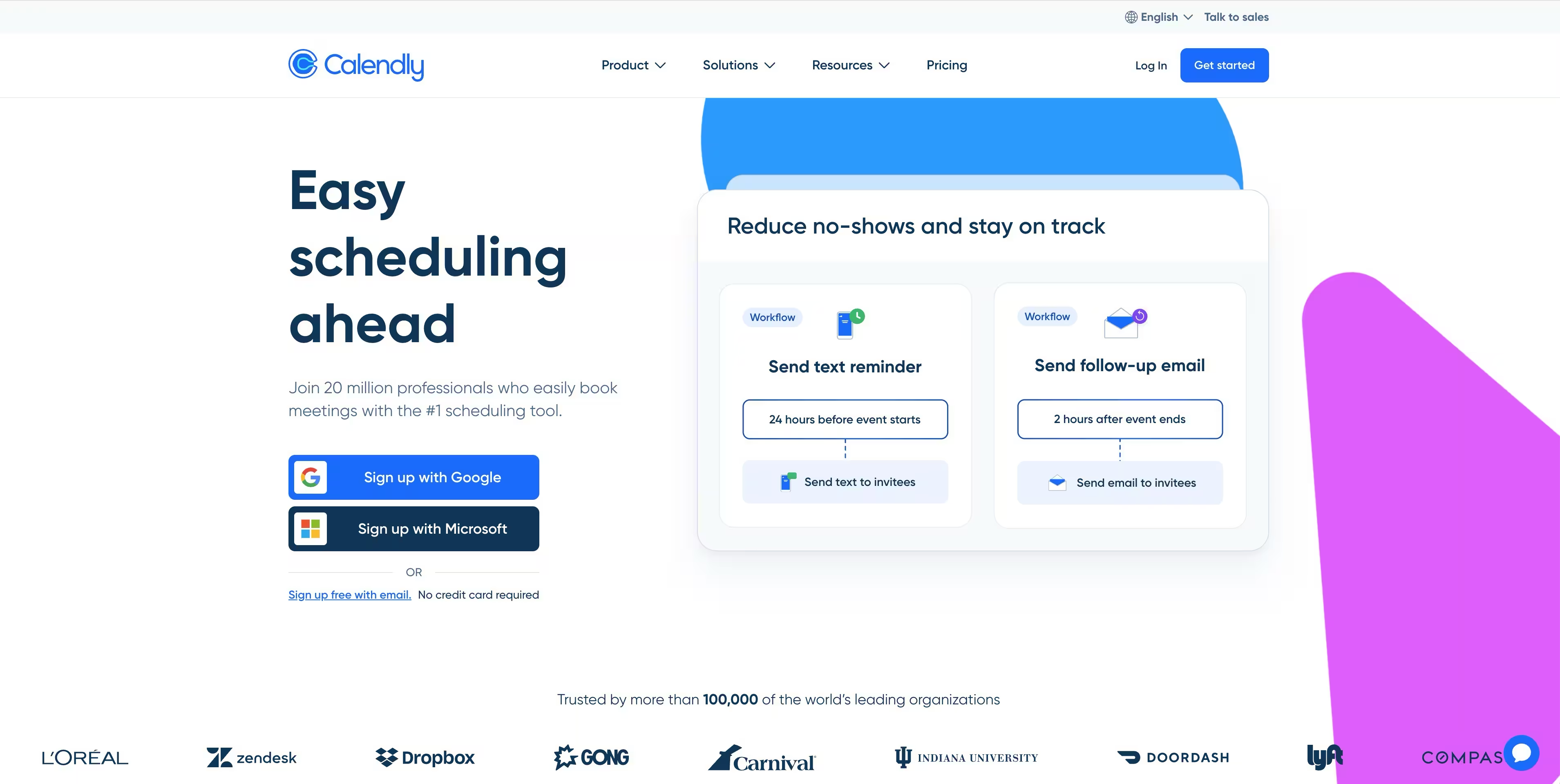
Getting the right prospects into the right demo experience at the right time is half the battle. Calendly makes this happen by letting prospects book a time slot directly from a shareable link that syncs up in real time with your calendar. This is super useful for presales teams who are managing a library of custom demo flows for different use cases - Calendly's intake questions help steer prospects to the right flow before they even have the meeting. Plus, it integrates with HubSpot and Salesforce so all that booking info flows into your CRM automatically.
Best for: Presales teams coordinating demo sessions across multiple sales departments or personas who need reliable scheduling without any hassle.
Pricing: Free plan available; Teams plan at $16/user/month.
Async walkthroughs: Loom
Not every prospect explanation needs a live call - sometimes it's just a simple recorded screen walkthrough that will do. Loom lets presales teams record video screen walkthroughs in minutes - complete with face, voice and click annotations. This is particularly useful for follow-up explanations after a live session, or for onboarding new sales reps on a new demo flow. Viewer analytics also give you a handle on who actually watched, how far they got, and whether they clicked through to the next step - all super useful signals for prioritizing follow-up.
Best for: Presales teams who need to put together clear technical explanations or walkthrough recordings without having to schedule another meeting.
Pricing: Free plan (25 videos, up to 5 minutes); Business plan at $15/user/month.
Conversation intelligence: Fathom
Solution engineer gets some great product feedback from sales calls - but only if those calls are properly recording. Fathom records, transcribes and summarises calls on Zoom, Google Meet and Teams with speaker ID and searchable highlights. For a demo engineer this is gold - you can review which features generated the most questions, where you lost the room, and what objections keep surfacing - and then use those insights to improve your demo scripts and flows. It syncs with HubSpot and Salesforce automatically.
Best for: Presales teams who want to close the feedback loop between live demo delivery and demo environment improvements without having to sit in on every single call.
Pricing: Free plan on offer; Team plan at $16/user/month.
Visual collaboration: Miro
Presales are often trying to map out complex demo architectures, narrative flows or journey maps before they even start building anything. Miro provides an infinite collaborative canvas for this - think of it like a whiteboard where you plan the demo before you even start building it. It's super useful when working with multiple teams and functions to get everyone aligned on what stories the demo should tell and in what order. With 1,000+ templates and real-time collaboration, it replaces scattered slide decks and email threads.
Best for: Presales teams working with multiple stakeholders who need a shared visual workspace for planning demo flows, discovery maps and narrative structures.
Pricing: Free plan available; Starter from $8/user/month.
Proposals and document tracking: PandaDoc
Once a demo is done, the next bottleneck is usually the proposal. PandaDoc lets presales and their sales counterparts put together, send and track branded proposals with CRM-linked data, built-in e-signatures and real-time engagement analytics. Knowing where in the proposal your prospect spent their time after seeing your demo helps you personalise follow-up and make the next conversation more effective. Approval workflows also mean that the right people are on board before anything goes out.
Best for: Presales teams involved in deal support at the end stage who need visibility into how prospects are engaging with proposals after the demo.
Pricing: Free plan available; paid plans from $19/user/month.
Knowledge management: Guru
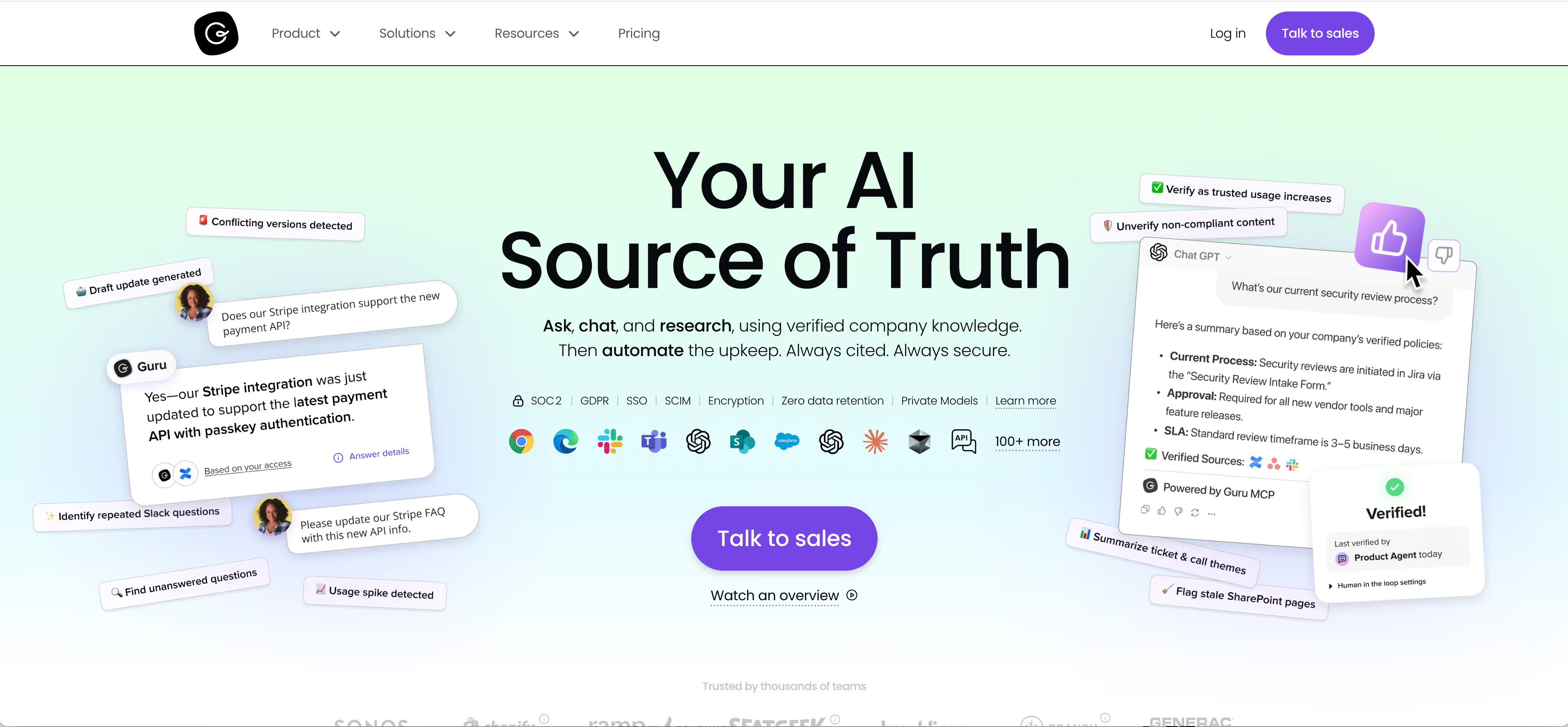
Presales teams store and access demo scripts, competitive intel, and technical documentation. Searchable, up-to-date knowledge base solution prevents reinventing the wheel for every deal. Guru focuses on delivering verified information directly within your team's existing workflows. The browser extension and Slack integration surface knowledge wherever your teams are working, reducing context switching. The verification workflow ensures content stays accurate and up-to-date.
Best for: Presales teams that want knowledge accessible within their existing tools.
Pricing: Free tier available. Paid plans from $5/user/month.
Sales Enablement: Highspot
Presales teams do so much more than just building demos - they arm the whole sales team with the tools to deliver them effectively. Highspot combines sales enablement with content analytics and training. It helps presales teams find the right content and understand what's actually driving results. It's a sales enablement platform that pools all the essential sales collateral - pitch decks, demo guides, onboarding material and playbooks under one roof - and then keeps tabs on how reps actually use that content out in the streets. For a demo engineer this creates a crucial feedback loop: you can now push out a new demo flow, attach the relevant talk track and script, run reps through some guided learning and then see who's actually using it, how prospects are responding and where the delivery falls over. And the best part - that feedback then goes straight back into shaping the next iteration of the demo itself.
Best suited to: Presales teams working with bigger sales teams who need a decent system to get demo content out there, run some enablement training and actually measure what's getting used on the front lines.
Pricing: They don't have a fixed price, so you'll need to ring them up and ask.
Analytics and buyer intent: Bombora
Knowing which accounts are actively researching stuff that your product might actually help with - before they ever decide to give you their details - gives your presales and sales teams a big advantage when it comes to prioritising who to call on. Bombora collects all sorts of clues from the web to tell you which companies are really interested in what you do right now. For demo engineers that means knowing exactly which demo flows to concentrate on next: if a bunch of your key targets are checking out a particular application of your product, then that's the flow that needs to be top-notch and ready to go. Bombora plugs in with Salesforce, HubSpot, and most other major CRM systems so those buying signals end up in the same place the sales teams are working from.
Best suited for: Presales teams who are hanging out with presales and marketing teams and want to make sure the demo content they're working on is really in step with what the market is actually interested in right now.
Pricing: They have custom pricing so you'll need to get a quote from them direct.
Presales stack - overview
| Tool | Category | Starting price |
|---|---|---|
| HubSpot CRM | CRM & pipeline | Free / $9/mo |
| Calendly | Scheduling | Free / $16/mo |
| Loom | Async walkthroughs | Free / $15/mo |
| Fathom | Conversation intelligence | Free / $16/mo |
| Miro | Visual collaboration | Free / $8/mo |
| PandaDoc | Proposals & docs | Free / $19/mo |
| Guru | Knowledge management | Free / $10/mo |
| Bombora | Buyer intent tracking | Custom |
| Highspot | Sales enablement | Custom |
How to measure presales success
Presales performance metrics differ from sales metrics. Here's what leading presales teams track.
- Demo to opportunity conversion rate: The percentage of demos that result in qualified opportunities. This reveals demo quality and lead qualification effectiveness.
- Technical win rate: The percentage of deals where presales achieved technical validation. This matters separately from closed-won rate because it isolates presales contribution.
- Sales cycle impact: Measure presales contribution to deal velocity. Compare cycle length with and without presales involvement.
- Demo completion and engagement: Track how much of each demo buyers actually view. Engagement data identifies interested buyers and spots drop-off points.
Industries where presales drives the most value
Presales is essential in industries with complex products, long sales cycles, or technical buyers.
- B2B SaaS and technology: Software companies rely heavily on presales for technical validation and competitive differentiation. The product is often complex, and buyers want proof before committing.
- Financial services: Regulatory requirements, security reviews, and integration complexity make presales critical. Buyers want confidence that the solution meets compliance standards.
- Healthcare and life sciences: Compliance requirements, interoperability concerns, and clinical workflow validation require deep technical expertise during the sales process.
- Manufacturing and industrial: Technical specifications, system integration, and custom configuration requirements demand presales involvement to validate fit.
How to build and scale a presales team
When to hire your first presales person depends on deal complexity. If account executives are spending more time on technical validation than selling, it's time.
Typical presales-to-sales ratios range from 1:2 to 1:5, depending on product complexity and deal size. More complex products require more presales support.
Demo automation helps presales teams handle more deals without adding headcount. When prospects can self-serve through interactive demos, presales focuses on high-value conversations.
Career paths typically move from presales consultant to senior solutions engineer to presales manager or director. Some move into product management or customer success.
Considerations for choosing presales tools
When evaluating presales software, consider the following criteria:
- Ease of demo creation: Can presales build demos without engineering help?
- Personalization depth: Can demos be tailored to specific buyers and use cases?
- Analytics and tracking: Does the tool show what buyers engage with?
- CRM integration: Does data flow into existing sales workflows?
- Collaboration features: Can presales and sales work together in the tool?
- Security and compliance: Does it meet enterprise requirements?
How demo automation is changing presales
The shift is significant. Presales used to be the demo bottleneck. Every prospect required a scheduled call with a specialist. That model doesn't scale.
Demo automation changes the equation. 61% of B2B buyers prefer rep-free experiences, and interactive demos and sandbox environments let them self-serve while presales focuses on high-value conversations. Analytics give presales visibility into buyer interest before the call.
The result? Presales teams handle more pipeline with the same headcount. Buyers get faster access to product experiences. Win rates improve because buyers arrive at live calls already convinced the product works.
Start your journey with Guideflow today!
FAQs about presales
A presales job description typically includes conducting product demos, leading discovery calls, creating technical proposals, responding to RFPs, and collaborating with sales to close deals. Most roles require both technical expertise and strong communication skills.
No, presales focuses on technical validation and solution design for qualified opportunities, while business development focuses on generating new leads and initial outreach. Some organizations have BDRs hand off to presales once a prospect is qualified.
In retail and entertainment, "presale" means early access to purchase before the general public, which differs from B2B presales. This guide focuses on B2B presales, which refers to technical sales activities before a deal closes.
Presales compensation varies by region, industry, and experience level, but typically includes base salary plus variable compensation tied to deal outcomes. Solutions engineers and presales consultants at technology companies average $187,318 per year, making them among the higher-paid technical sales roles.
Yes, presales teams work remotely using video conferencing for live demos and interactive demo tools for asynchronous presentations. Remote work has accelerated adoption of demo automation and self-serve demo experiences.
Presales certifications from organizations like PreSales Collective and vendor-specific certifications (AWS, Salesforce, etc.) can strengthen credibility. Technical certifications relevant to your product domain also help establish expertise with buyers.
Presales duration varies from days for simple products to months for enterprise deals with multiple stakeholders and technical requirements. Complex deals often involve multiple discovery calls, demos, and proof of concept phases.
The terms are often used interchangeably, with "solutions consulting" sometimes implying a broader advisory role beyond product demos. Both roles focus on understanding buyer requirements and demonstrating how the product solves specific problems.