

Your reps have a playbook. It lives in a Google Doc nobody opened since Q2. The talk track drifted three product releases ago. Two managers coach discovery one way, three coach it another, and you have no idea which reps actually follow any of it.
That gap is expensive. Only 42% of best-in-class companies use structured playbooks, compared to just 14% of laggards, according to Prospeo (2024). And 40% of sales teams still run without any structured playbook at all. The maturity gap between the two groups shows up in win rates, ramp time, and forecast accuracy.
Here is the real problem. A playbook is not a document. It is the operating layer that connects readiness, execution, consistency, and measurement. When it sits in static files, reps ignore it, managers cannot coach against it, and you cannot tie play usage to revenue. Sales enablement software fixes that by delivering guidance in the flow of work, then showing you who used what and what happened next.
The market agrees this matters. The sales playbook management software market was valued at USD 2.5 billion in 2024 and is projected to reach USD 8.3 billion by 2033 at a 16.2% CAGR, per LinkedIn (2024). This guide breaks down where the money is going and which tools earn it.
What's inside
This guide is built for Sales Enablement Managers who need more than a shared drive full of decks. We picked seven sales playbook software tools for 2026 and evaluated each on the things that actually move numbers.
- Workflow fit: Does guidance reach reps inside their CRM workflow, or force them into another tab?
- Governance: Versioning, ownership, approvals, and content that stays fresh.
- Integrations: CRM, sales engagement, conferencing, and call recording.
- Analytics: Play usage analytics and enablement analytics that connect to outcomes.
- Enablement value: Coaching, certification, and sales onboarding depth.
TL;DR
- Best overall for enterprise enablement: Highspot, for unified content, plays, coaching, and analytics at scale.
- Best for CRM-native playbooks: HubSpot, for teams that want guidance and note capture inside the CRM.
- Best for embedded learning and coaching: Spekit, for in-the-flow guidance that meets reps where they work.
- Best for analytics and call coaching: Dialpad, for AI-guided selling tied to conversation intelligence.
- Best for faster rollout and certification: SalesHood, for structured onboarding and coaching loops.
- Best for tighter sales process consistency: Showpad and Allego, for governed content plus seller readiness.
What is sales playbook software?
Sales playbook software is a system that builds, delivers, governs, and measures repeatable sales plays inside the seller's daily workflow, replacing static documents with dynamic, trackable guidance.
A modern sales playbook is not a static PDF library. It is a living framework that tells a rep what to do next, at a specific deal stage, for a specific persona, and then records whether they did it. That difference matters because static docs do not adapt, do not surface the next best action, and do not produce play usage analytics.
Here is what strong playbook software includes:
- Sales plays: Repeatable guidance mapped to ICP, use case, and funnel stage.
- Guided selling: Next best action prompts that fire in context, not in a binder.
- Sales coaching: Manager tools for call scoring, role play, and deal reviews.
- Analytics: Play usage analytics tied to win rate, conversion, and cycle length.
- Versioning and governance: Ownership, approvals, and expiration so content stays current.
- CRM context: Guidance delivered inside the CRM workflow where reps already work.
Adoption of AI sales playbooks reached 43% of enterprises by end of 2023, per Gitnux (2023). The shift toward codified, automated plays is why sales enablement software now sits at the center of most revenue stacks, not at the edge.
When to use sales playbook software
Standardize onboarding and ramp
New reps default to guessing when guidance lives in scattered files. Playbook software cuts that variance by giving every hire the same certified plays, talk tracks, and objection handling from day one. That shortens ramp time and reduces the gap between your top rep and your median rep. Structured sales onboarding paths also let you certify readiness before a rep touches a live deal.
Push new messaging and launches
Every product launch or repositioning is a change management problem. Playbook software lets enablement teams roll out new positioning, proof points, and competitive readiness plays in one motion, then confirm reps actually consumed them. No more hoping the new battlecard reached the field. You see who opened it, who used it, and where it stalled.
Improve manager coaching and deal execution
Managers cannot coach what they cannot see. Playbook data shows which plays reps run, where deals stall, and which talk tracks correlate with wins. That turns coaching from opinion into signal. Managers reinforce sales process consistency by coaching against the actual play, not a vague memory of what good looks like, which lifts deal coaching quality across the team.
Comparison table
We ranked this list by fit for Sales Enablement Managers, with the strongest enterprise and workflow-native tools near the top. Pricing and ratings reflect verified values from each vendor and G2 at the time of writing.
| # | Product | Best for | Key differentiation | Pricing | G2 rating |
|---|---|---|---|---|---|
| 1 | Highspot | Enterprise GTM enablement | Unified content, plays, coaching, analytics | Custom | 4.7/5 |
| 2 | HubSpot | CRM-native playbooks | Playbooks and note capture inside the CRM | Free; paid from $15/mo per seat | 4.4/5 |
| 3 | Spekit | Embedded enablement | In-workflow guidance and AI Sidekick | Custom | Not listed |
| 4 | Dialpad | Call coaching and analytics | AI-guided selling with conversation intelligence | From $15/user/mo | 4.4/5 |
| 5 | SalesHood | Onboarding and certification | Coaching loops and structured learning | Custom | 4.6/5 |
| 6 | Showpad | Governed content and readiness | Content governance plus buyer engagement | Custom | 4.6/5 |
| 7 | Allego | Coaching and practice | Learning, role play, and digital sales rooms | Custom | 4.6/5 |
Best 7 sales playbook software tools for 2026
1. Highspot
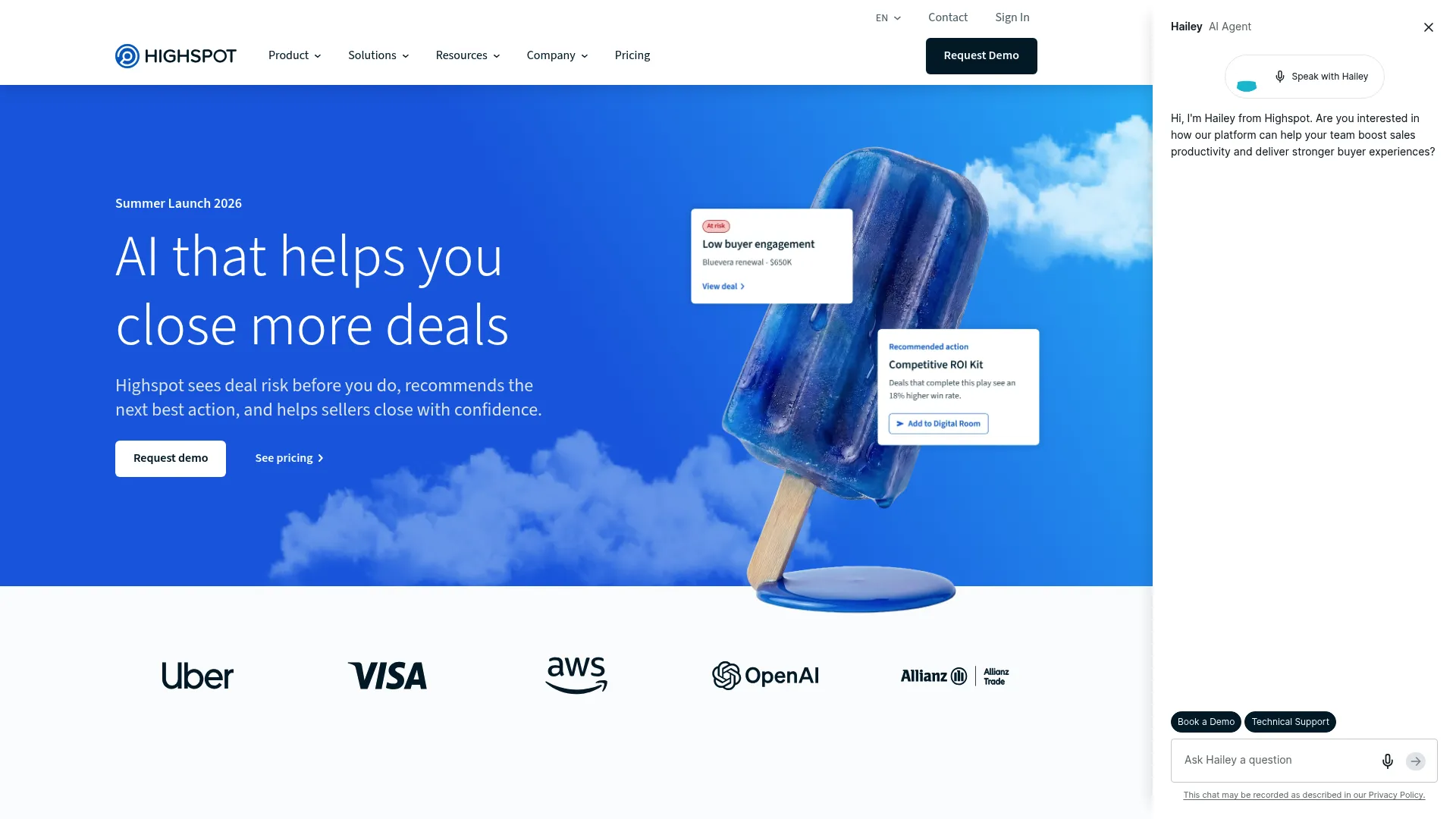
Highspot is an AI-powered go-to-market enablement platform that unifies content, training, coaching, analytics, and buyer engagement in one place. For enablement teams tired of stitching together a content tool, an LMS, and a separate analytics dashboard, Highspot collapses those into a single system where sales plays, guided selling, and coaching all share the same data. Its Sales Plays and Digital Sales Rooms give reps stage-specific guidance, while analytics tie play usage back to pipeline and win rate.
Best for: Enterprise GTM teams that need a unified enablement and coaching platform with deep analytics.
Key strengths
- AI-supported content organization and governance
- Sales Plays and Digital Sales Rooms
- AI-assisted training, coaching, and role play
Why choose Highspot: Highspot fits enablement teams that own readiness, content, and coaching and want one governed system instead of three. Smaller teams running a lean stack may find it more platform than they need day one, but scaling orgs grow into it fast.
Highspot pricing: Highspot uses custom pricing tailored to capabilities, use cases, org size, and complexity. Plans are grouped as Equip and engage, Train and practice, and Coach and reinforce, all quoted through sales.
2. HubSpot
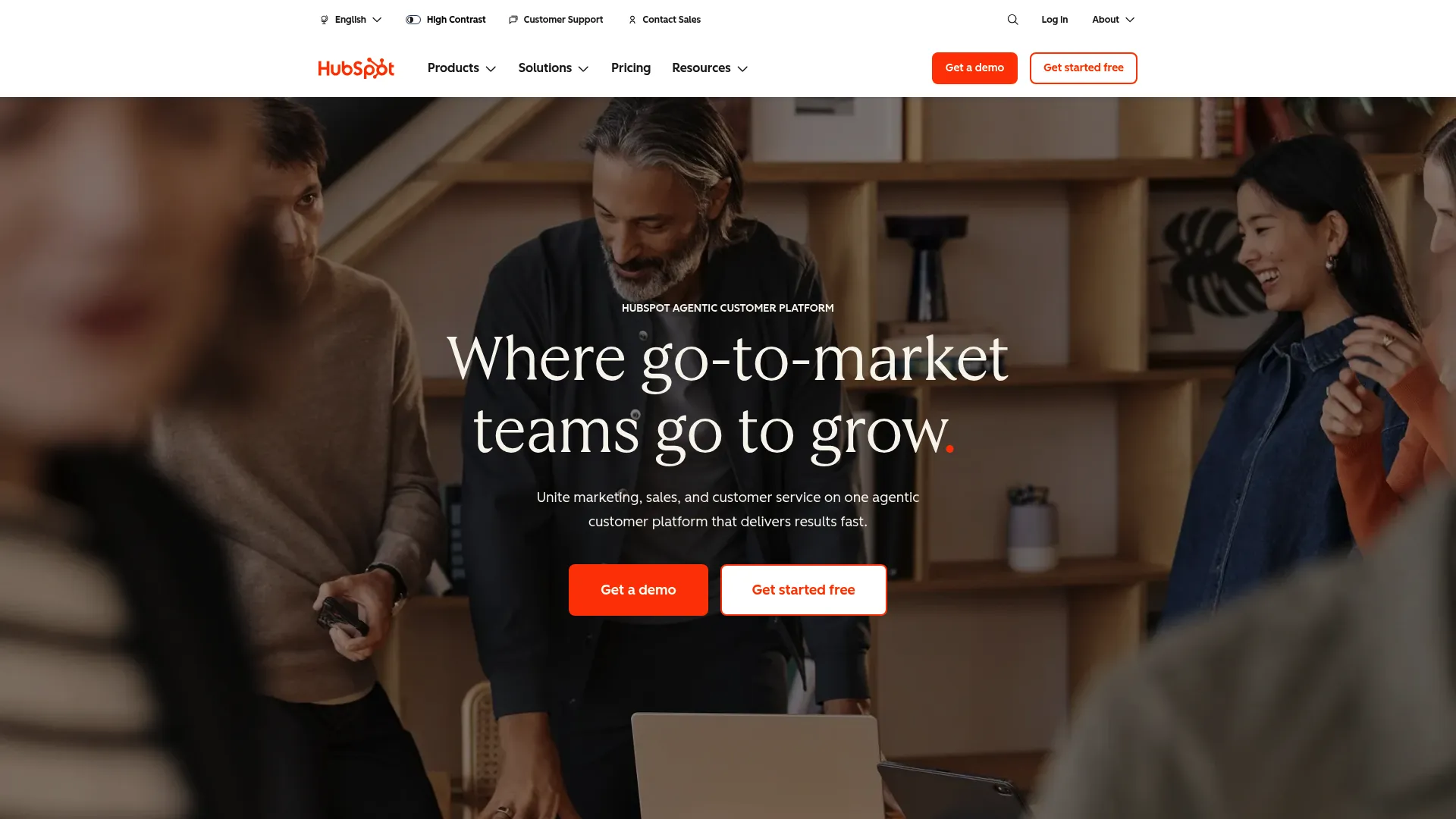
HubSpot builds playbooks directly into its Sales Hub, so guidance, call scripts, and structured note capture live inside the same CRM workflow reps already use. When a rep opens a deal or logs a call, the relevant playbook surfaces with question prompts and snippets, and the answers write back to the record. That keeps CRM hygiene high and gives managers clean data to coach against. For teams already running on HubSpot, this is the path of least resistance to consistent execution.
Best for: Revenue teams already standardized on HubSpot that want playbooks native to the CRM.
Key strengths
- Free CRM with contact management, deal pipelines, and reporting
- Integrated marketing, sales, service, and operations hubs
- AI features including Breeze Assistant and chatbot builder
Why choose HubSpot: HubSpot works best when your CRM is already the center of gravity. Playbooks in-workflow mean reps never leave the record to find guidance. Teams needing deep standalone coaching and certification may pair it with a dedicated enablement tool.
HubSpot pricing: HubSpot offers a free CRM at $0/mo. Paid plans start at $15/month per seat for Starter, $50/month per seat for Professional, and $75/month per seat for Enterprise.
3. Spekit

Spekit is an AI-powered revenue enablement platform built around in-the-flow guidance. Instead of sending reps to a separate destination, Spekit surfaces plays, answers, and coaching inside the tools reps already use, including Salesforce and Gmail. Its GTM Knowledge Engine governs content centrally, while the AI Sidekick answers rep questions in context. For enablement teams, the appeal is speed of maintenance: update the source, and the guidance updates everywhere it appears.
Best for: Revenue teams that want embedded enablement and governed knowledge without pulling reps out of their workflow.
Key strengths
- GTM Knowledge Engine for governed content
- AI Sidekick and in-workflow coaching inside Salesforce and Gmail
- Learning Paths, Deal Rooms, and analytics
Why choose Spekit: Spekit performs best when adoption is the bottleneck. Guidance that lives inside the CRM workflow gets used because reps never break stride to find it. Enablement teams that value low-maintenance governance tend to like the update-once model.
Spekit pricing: Spekit does not publish public pricing tiers on its site. Pricing is quoted directly based on team size and needs.
4. Dialpad

Dialpad approaches playbooks from the call itself. Its AI-powered communications platform runs conversation intelligence during live calls, so playbook prompts, objection handling cues, and next-step recommendations surface in real time while a rep is talking. Managers get AI recaps and call scoring for coaching, and reps get guided selling that adapts to what the buyer just said. This is execution-first enablement rather than content storage.
Best for: Teams already using Dialpad for calls that want AI-guided selling and call coaching in one platform.
Key strengths
- AI transcription and recaps
- Conversation intelligence for live coaching
- Real-time next-step recommendations
Why choose Dialpad: Dialpad fits teams where the phone is the primary sales motion and coaching signal comes from calls. It excels at deal coaching from live conversation data. Teams needing a broad content library may pair it with a dedicated enablement platform.
Dialpad pricing: Dialpad Connect starts at $15/user/month for Standard and $25/user/month for Pro. Enterprise is custom-quoted. A 14-day free trial is available.
5. SalesHood
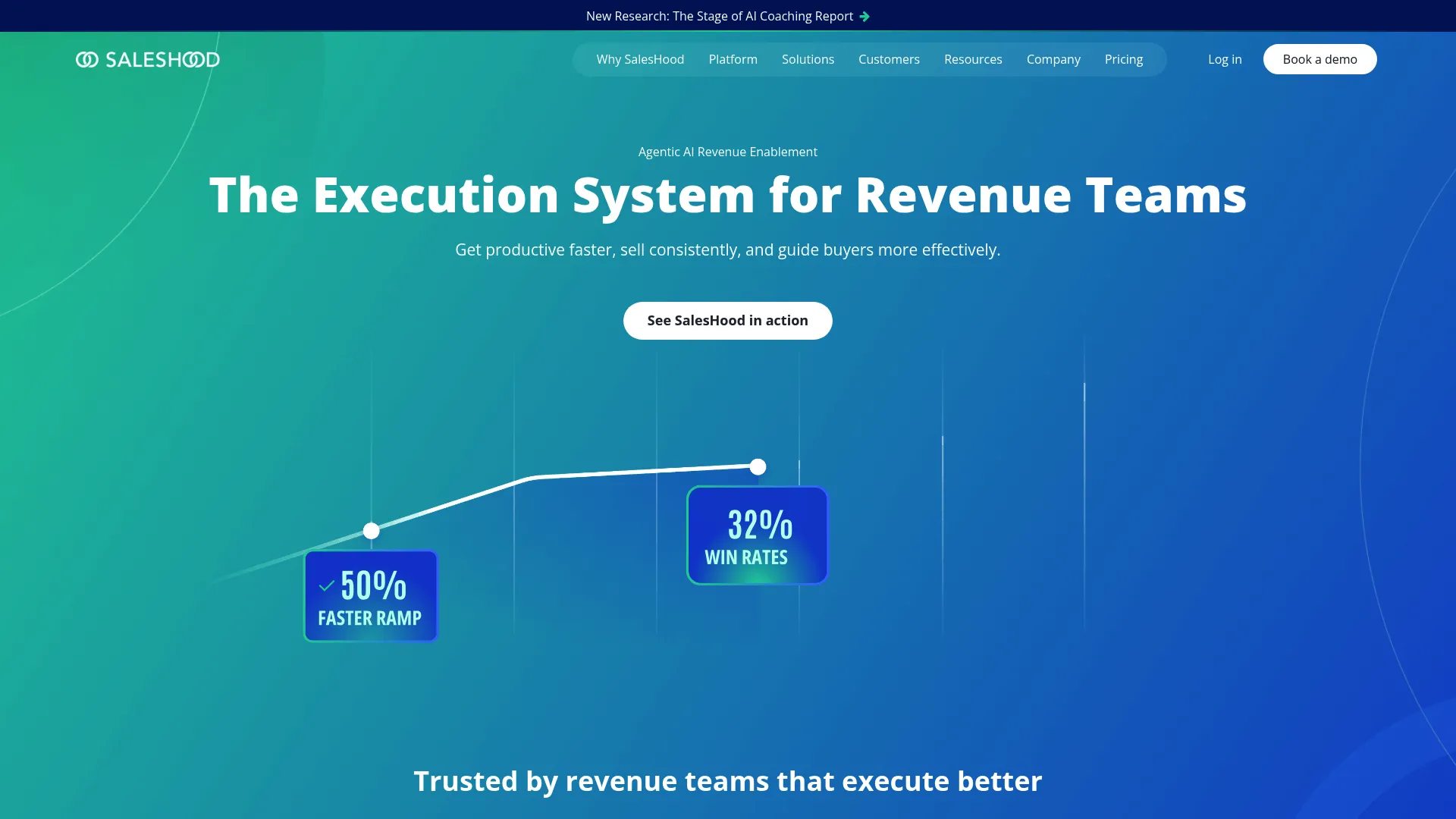
SalesHood is an agentic AI sales enablement platform centered on training, coaching, and content. Its strength is the coaching loop: structured learning paths, role plays, and deal reviews that certify readiness before reps hit real deals. For enablement teams focused on ramp time and ongoing rep development, SalesHood turns onboarding into a measurable, repeatable program rather than a one-time firehose. AI coaching scales the manager's reach across the team.
Best for: B2B revenue teams that need strong sales onboarding, certification, and ongoing coaching.
Key strengths
- AI Assistant for revenue workflows
- AI coaching with role plays and deal reviews
- Sales enablement with content, training, and impact analytics
Why choose SalesHood: SalesHood works best when the bottleneck is readiness and ramp. Certification and coaching loops give managers proof that reps can execute before they carry quota, which tightens sales process consistency across cohorts.
SalesHood pricing: SalesHood offers Essential, Pro, and Unlimited plans. Pricing is not published publicly; the site directs teams to request a quote.
6. Showpad
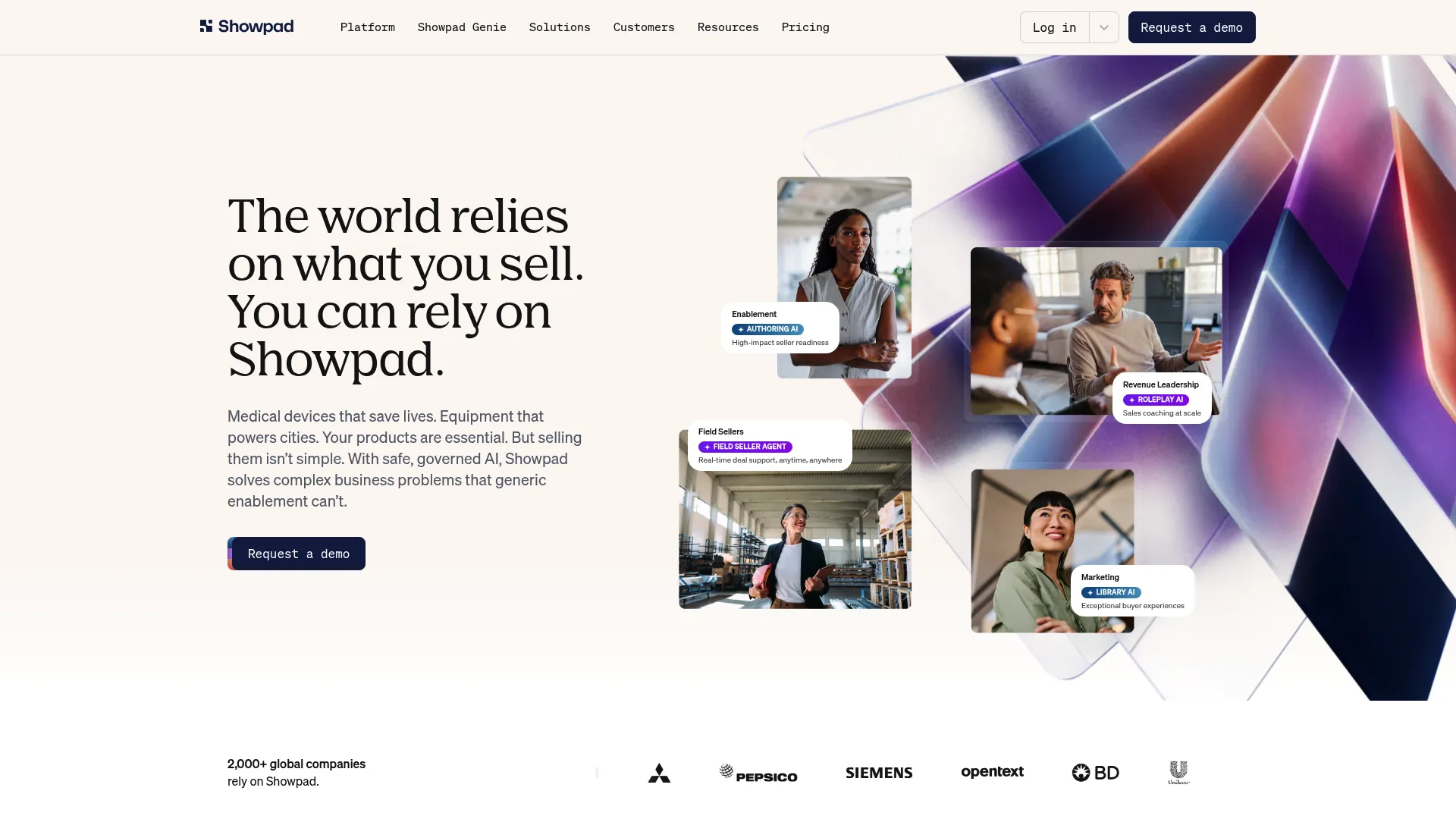
Showpad is an AI-native revenue effectiveness platform that pairs strong content governance with guided selling and buyer engagement. For enablement teams drowning in scattered, outdated, duplicated content, Showpad brings order: version control, ownership, and distribution that keeps the field on the current message. It layers play distribution and buyer-facing shared spaces on top, plus analytics that show what content moves deals. This is the pick when governance and cross-functional alignment sit at the core of the problem.
Best for: Enterprise revenue teams that need governed content, seller readiness, and buyer engagement in one place.
Key strengths
- Content management and distribution
- Buyer engagement experiences and shared spaces
- Analytics, reporting, and AI-assisted insights
Why choose Showpad: Showpad fits teams where content sprawl is the primary pain and governance is non-negotiable. It keeps messaging consistent across a large, distributed field while giving PMM and enablement shared ownership of the source of truth.
Showpad pricing: Showpad licenses per user across Professional, Advanced, and Expert plans. Pricing is request-a-quote and customized by package.
7. Allego
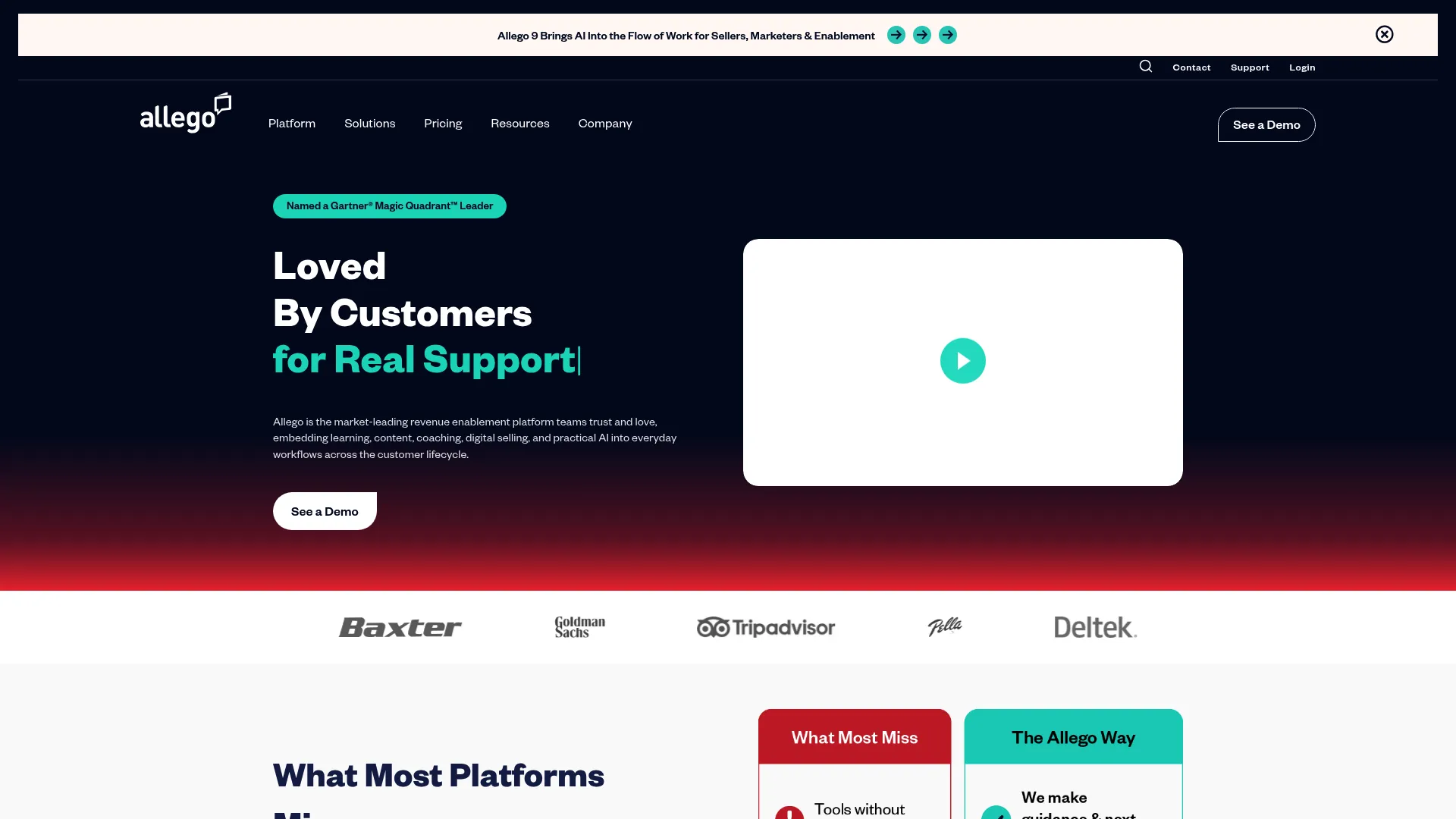
Allego is a revenue enablement platform built around learning, content, and coaching. Its coaching workflows and AI role play let reps practice pitches and objection handling in a safe environment, then get scored against a rubric. Combined with content management and digital sales rooms, Allego supports the full arc from onboarding through skills reinforcement to play adoption in live deals. Managers use it to reinforce consistent seller behavior across the team.
Best for: Enterprise revenue teams that want an all-in-one enablement platform with strong coaching and practice.
Key strengths
- Practical AI agents and AI role play
- Learning, readiness, and onboarding
- Content management and digital sales rooms
Why choose Allego: Allego performs best when practice and reinforcement drive the outcome you care about. Role play and coaching workflows build muscle memory for objection handling, while digital sales rooms carry that consistency into buyer-facing moments.
Allego pricing: Allego prices per user per month, billed annually. Modern Learning with Conversation Intelligence, AI Role Play, Content Management, and Digital Rooms are quoted based on seats and contract length.
Considerations before you buy
Findability and workflow fit
The best playbook is the one reps actually see. Evaluate whether guidance reaches sellers inside their CRM workflow and daily tools, or requires a separate login. In-workflow delivery drives rep adoption more than any feature list. If reps have to go looking, they will not.
Governance and maintainability
Content sprawl is the enemy. Check for versioning, clear ownership, approval flows, and expiration dates so plays stay current through product and messaging changes. A tool that makes updates easy keeps your source of truth trustworthy. One that does not becomes another graveyard of stale docs.
Integrations
Your playbook software has to fit the stack. Confirm native integrations with your CRM, sales engagement platform, conferencing, and call recording tools. Guidance and data should flow both ways so play usage and next best action prompts stay connected to real deal context.
Analytics and measurement
You need to connect play usage analytics to outcomes, not just track opens. Look for enablement analytics that map to win rate, stage conversion, cycle length, and ramp time. Without that line of sight, you cannot prove impact or defend the tool at renewal.
Coaching and readiness
If coaching is your bottleneck, prioritize call scoring, role play, and certification. The strongest tools turn manager coaching from gut feel into signal, with talk track adherence and objection handling scores you can act on.
Conclusion
The right pick depends on where your bottleneck actually sits. If you own enterprise readiness, content, and coaching under one roof, Highspot gives you the unified system. If your CRM is the center of gravity, HubSpot puts playbooks where reps already work. Spekit wins when adoption is the problem and you need guidance in the flow of work.
For call-driven teams, Dialpad ties guided selling to conversation intelligence. SalesHood is the pick when ramp time and certification dominate. And when content governance and sales process consistency sit at the core, Showpad and Allego bring order plus coaching depth.
Do not choose on feature count. Choose on the single metric you most need to move: ramp, win rate, CRM workflow adoption, or coaching effectiveness. Then shortlist the two tools that map to it, run a real pilot with live plays, and watch the usage data before you commit. The tool that gets used beats the tool with the longest feature list every time.
FAQs
A sales playbook is a structured set of plays, talk tracks, and guidance that tells reps what to do at each stage of a deal, for each persona and use case. Good sales playbook examples map discovery questions, objection handling, competitive positioning, and next best action to specific funnel stages. The goal is repeatable, consistent execution across the whole team.
Sales playbook software is a platform that builds, delivers, governs, and measures those plays inside the seller's workflow instead of a static document. It surfaces guidance in context, captures what reps do, and produces play usage analytics you can tie to win rate and cycle length. It turns a playbook from a file into an operating system for sales execution.
A PDF is frozen the moment you export it. It cannot adapt to deal stage, surface the next best action, or tell you whether a rep read it. Playbook software delivers guidance dynamically inside the CRM workflow, updates everywhere when you change the source, and reports on usage. That difference is the whole point: static content gets ignored, in-workflow guidance gets used.
A strong playbook includes ICP and persona definitions, stage-by-stage plays, discovery questions, objection handling, competitive battlecards, proof points, and email or call templates. Many sales playbook templates also add qualification frameworks and next-step guidance for each stage. The best ones tie every play to a trigger, so reps know exactly when to run it.
Track play usage analytics by rep, stage, and segment: who opened which play, who used the associated content, and whether they followed the prescribed next step. Then connect that behavior to outcomes like stage conversion, win rate, and ramp time. Adoption without outcome data is vanity; the two together tell you whether the playbook actually changes behavior.
Sales Enablement Managers own it, but the value spreads across the org. Frontline managers use it for coaching, reps use it for guided selling, RevOps uses the analytics for forecasting signal, and Product Marketing uses it to roll out new messaging. It sits at the intersection of Sales, Marketing, and RevOps.
Playbooks give every new hire the same certified plays, talk tracks, and objection handling from day one, which cuts the variance that slows ramp. Structured sales onboarding paths let you certify readiness before a rep touches a live deal. That shortens time-to-first-opp and narrows the gap between new reps and your proven performers.
Guided selling is the practice of surfacing the next best action to a rep in real time, based on deal stage, buyer signals, and the play that fits the moment. Instead of the rep guessing, the software prompts the right question, content, or step in context. It is how modern playbook software turns static guidance into live, in-the-moment execution.