Your last talent review cycle probably looked something like this: A shared spreadsheet, fourteen different rating scales depending on which manager built their own template, calibration sessions that ran 90 minutes over time, and a succession plan that lived in a VP's head rather than a system anyone could act on.
The market for talent management software reached USD 11.30 billion in 2025 and is projected to grow at a 12.0% CAGR through 2032, according to Fortune Business Insights (2024). That growth reflects real organizational pressure: Companies are running more frequent review cycles, building succession pipelines earlier, and asking managers to make better-calibrated decisions with less time. Spreadsheets and manual processes don't hold up at that pace.
The right talent review software fixes the workflow problem first. It standardizes how managers collect input, runs calibration sessions against consistent criteria, surfaces succession gaps before they become emergencies, and connects review outputs to development plans. The result is decisions you can defend, not just documentation you filed.
What's inside
This guide covers eight talent review platforms evaluated for performance reviews, 9-box calibration, succession planning, and manager workflow support.
Items were selected and ranked based on:
- Workflow fit: Support for annual, quarterly, and continuous review cadences
- Calibration and succession depth: 9-box views, successor identification, and multi-rater input
- Analytics and governance: Ratings distribution, readiness signals, and role-based permissions
- Adoption: Ease of use for managers who already resist admin-heavy tools
TL;DR
- Best overall for enterprise talent review programs: Dayforce
- Best for performance and succession depth: Workday Human Capital Management
- Best for broad talent suite buyers: SAP SuccessFactors HCM
- Best for practical HR review workflows: UKG Pro
- Best for calibration and employee feedback: Quantum Workplace
- Best for leaner teams wanting simpler review management: TalentHR
- Best for all-in-one HR management with reviews: BambooHR
- Best for payroll-connected HR operations: Paylocity
What is talent review software
Talent review software is a category of HR technology that helps organizations collect structured manager input, run performance appraisals, calibrate employee ratings, identify succession candidates, and track development decisions across review cycles.
A full-featured platform typically covers:
- Performance review cycles: Structured annual, quarterly, or continuous appraisal workflows with configurable forms and rating scales
- Goal alignment: Cascaded objectives tied to individual reviews and team outcomes
- 9-box talent review: A two-axis grid plotting performance against potential, used in calibration sessions to surface high-potential employees
- Succession planning: Identification and readiness tracking of candidates for key roles
- Manager calibration: Cross-manager alignment sessions to normalize ratings and reduce bias
- Analytics and reporting: Ratings distributions, flight risk indicators, completion tracking, and talent pipeline health
Talent review software differs from general performance management tools in one important way: It's built for the calibration layer. The 9-box session, the succession committee review, the side-by-side comparison of candidates for a leadership role. That's where these platforms add the most value beyond what a simple performance form can do.
Most platforms in this category sit inside a broader HCM suite, which means they share data with payroll, learning, compensation, and workforce planning. That integration matters when you want review outcomes to actually move into development plans and comp decisions, not just sit in a report.
When to use talent review software
Run structured annual or quarterly reviews
Spreadsheets break when more than a dozen managers are rating employees on different scales. Talent review software standardizes the form, the timeline, and the rating logic so HR isn't chasing completions and reconciling conflicting formats after the cycle closes. It also gives you a consistent record across cycles, which matters when someone challenges a promotion decision.
Calibrate high-potential talent
The 9-box grid is simple in concept and complicated in practice. Getting managers to agree on what "high potential" means takes structured facilitation, not just a shared document. Talent review platforms support multi-rater input, filtering by team or department, and session-based views that let calibration committees compare employees on the same criteria simultaneously.
Tie reviews to development plans
A review that doesn't connect to a development action is just documentation. The platforms in this guide link review outcomes to goal-setting, learning recommendations, and manager follow-up tasks. That connection reduces the gap between what gets decided in a calibration session and what actually happens in the following quarter.
Talent review software comparison
Eight platforms compared on the criteria most relevant to HR leaders and people operations teams evaluating talent review software in 2026.
| # | Product | Best for | Key differentiator | Pricing | G2 rating |
|---|---|---|---|---|---|
| 1 | Dayforce | Enterprise all-in-one HCM | Unified HR, pay, talent, and analytics platform | Custom pricing | 4.2/5 |
| 2 | Workday Human Capital Management | Large orgs with complex HCM needs | Broad HCM platform with strong performance and succession | Custom pricing | 4.1/5 |
| 3 | SAP SuccessFactors HCM | Global, process-heavy enterprises | AI-enabled HCM with deep performance and succession modules | From $6.30/user/mo | 4.1/5 |
| 4 | UKG Pro | Mid-to-enterprise HR teams | Integrated HR, payroll, and talent workflows | Custom pricing | 4.3/5 |
| 5 | Quantum Workplace | Mid-market HR teams focused on calibration | 9-box talent review, engagement, and feedback in one platform | Custom pricing | 4.3/5 |
| 6 | TalentHR | Small teams wanting simple review management | Free plan up to 10 users, affordable paid tiers | Free / from $2/user/mo | 4.5/5 |
| 7 | BambooHR | Growing SMBs wanting an all-in-one HR suite | Performance management inside a broad, easy-to-use HR platform | From $10/employee/mo | 4.4/5 |
| 8 | Paylocity | Mid-sized teams with payroll-connected HR needs | Unified HCM with employee experience tools | Custom pricing | 4.5/5 |
Best talent review software for 2026
1. Dayforce
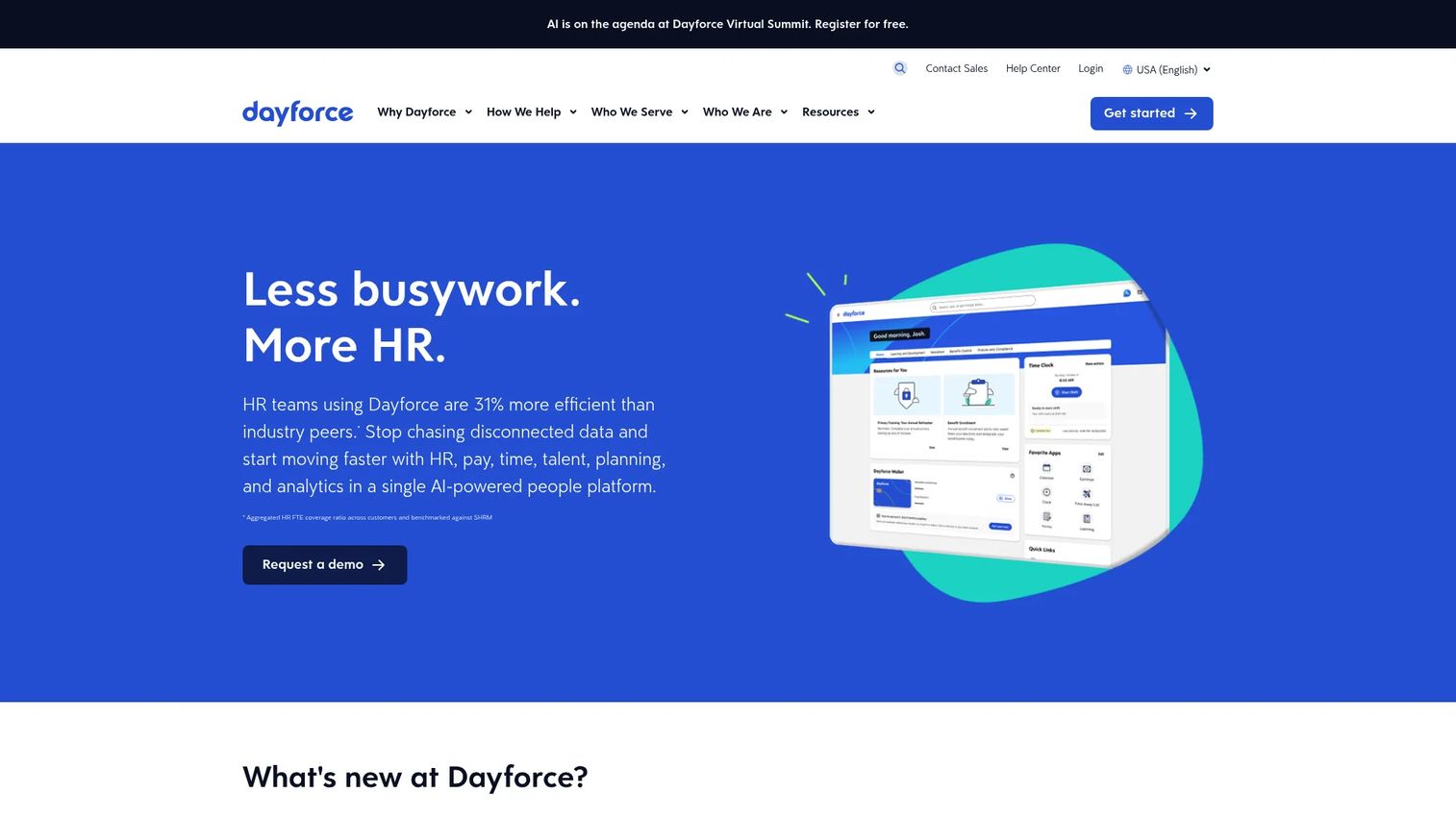
Dayforce is an AI-powered people platform that brings HR, payroll, time, talent, and analytics into a single system. Built for large and complex organizations, it covers the full workforce management lifecycle without requiring data to move between separate systems. Talent review and performance workflows sit inside the same environment as compensation planning and workforce scheduling, which reduces the gap between review decisions and operational action.
Best for: Large enterprises that need performance reviews, calibration, and compensation decisions managed inside one integrated HCM platform.
Key features
- HR, pay, time, talent, and analytics unified in one platform
- Recruiting, onboarding, and learning alongside performance management
- Global payroll and workforce management with reporting and analytics
Why choose Dayforce: If your talent review process needs to feed directly into compensation adjustments, workforce scheduling, or succession planning without manual data exports, Dayforce handles that end-to-end. It suits organizations with enough HR complexity to need a full HCM suite rather than a standalone review tool.
Dayforce pricing: Dayforce sells by module and handles all pricing through its sales team. Contact Dayforce directly for a quote based on your workforce size and module selection. G2 reviewers note this is standard for enterprise HCM platforms at this scale.
G2 rating: 4.2/5
2. Workday Human Capital Management
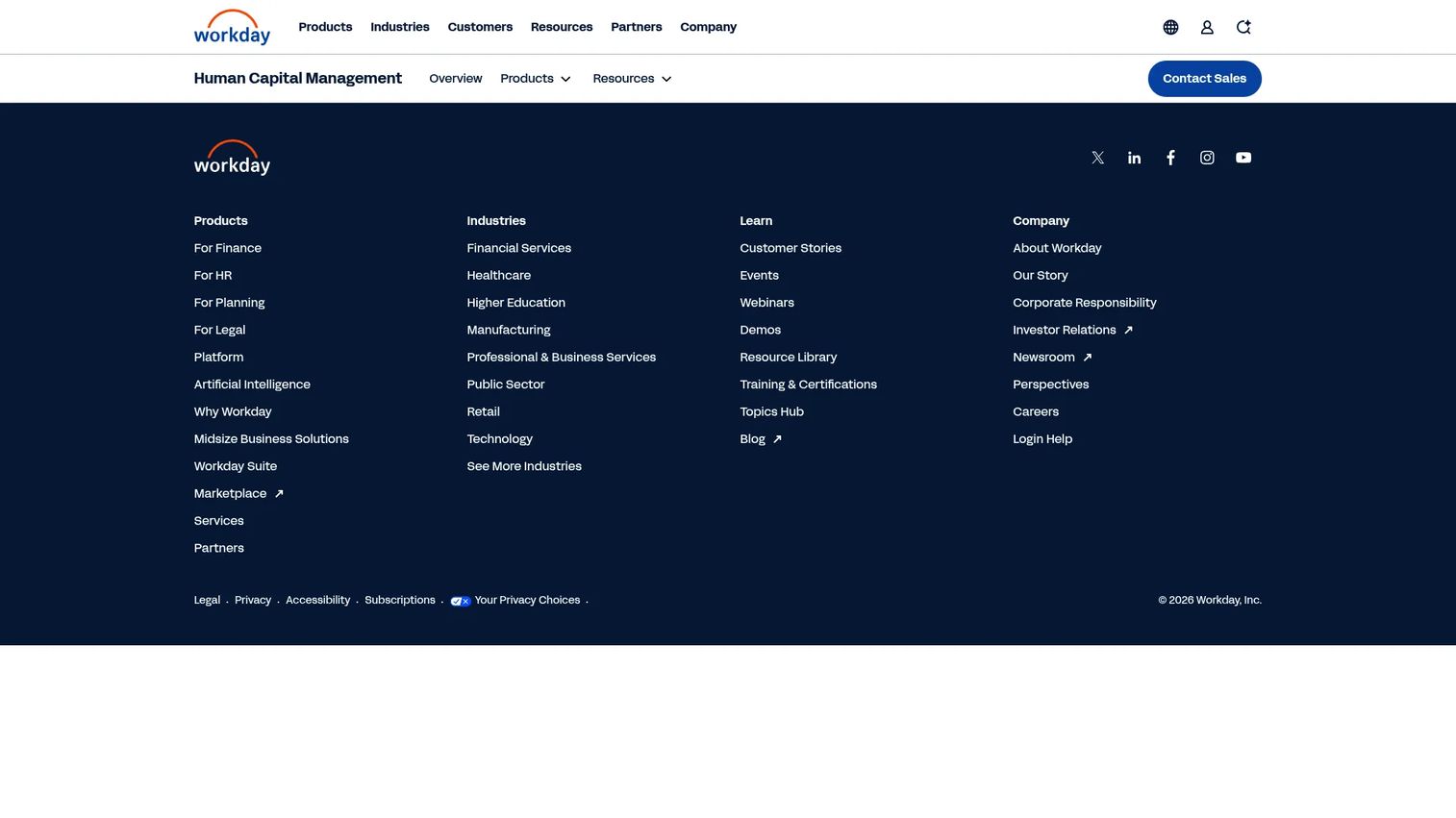
Workday Human Capital Management is a cloud-based HCM suite covering HR, talent, payroll, time, benefits, and workforce analytics. Its talent management layer includes performance reviews, goal management, succession planning, and calibration tools built into the same data model as core HR. For organizations that run complex multi-stakeholder review processes across large employee populations, Workday provides the depth and governance infrastructure to support them.
Best for: Large organizations that want performance reviews, succession planning, and workforce analytics inside a single enterprise HCM platform.
Key features
- Core HR, lifecycle management, and employee data in one system
- Talent acquisition, performance, learning, and talent management modules
- Workforce management, time tracking, absence, and benefits administration
Why choose Workday HCM: Organizations already running Workday for core HR and payroll will find the talent review layer a natural extension rather than an additional integration project. The platform's strength is data continuity: The same employee record that drives payroll also powers calibration views and succession dashboards.
Workday HCM pricing: Workday directs all pricing conversations through its sales team. Reach out to Workday for a quote based on organization size and selected modules. G2 reviewers describe this as typical for enterprise HCM purchasing at this scale.
G2 rating: 4.1/5
3. SAP SuccessFactors HCM
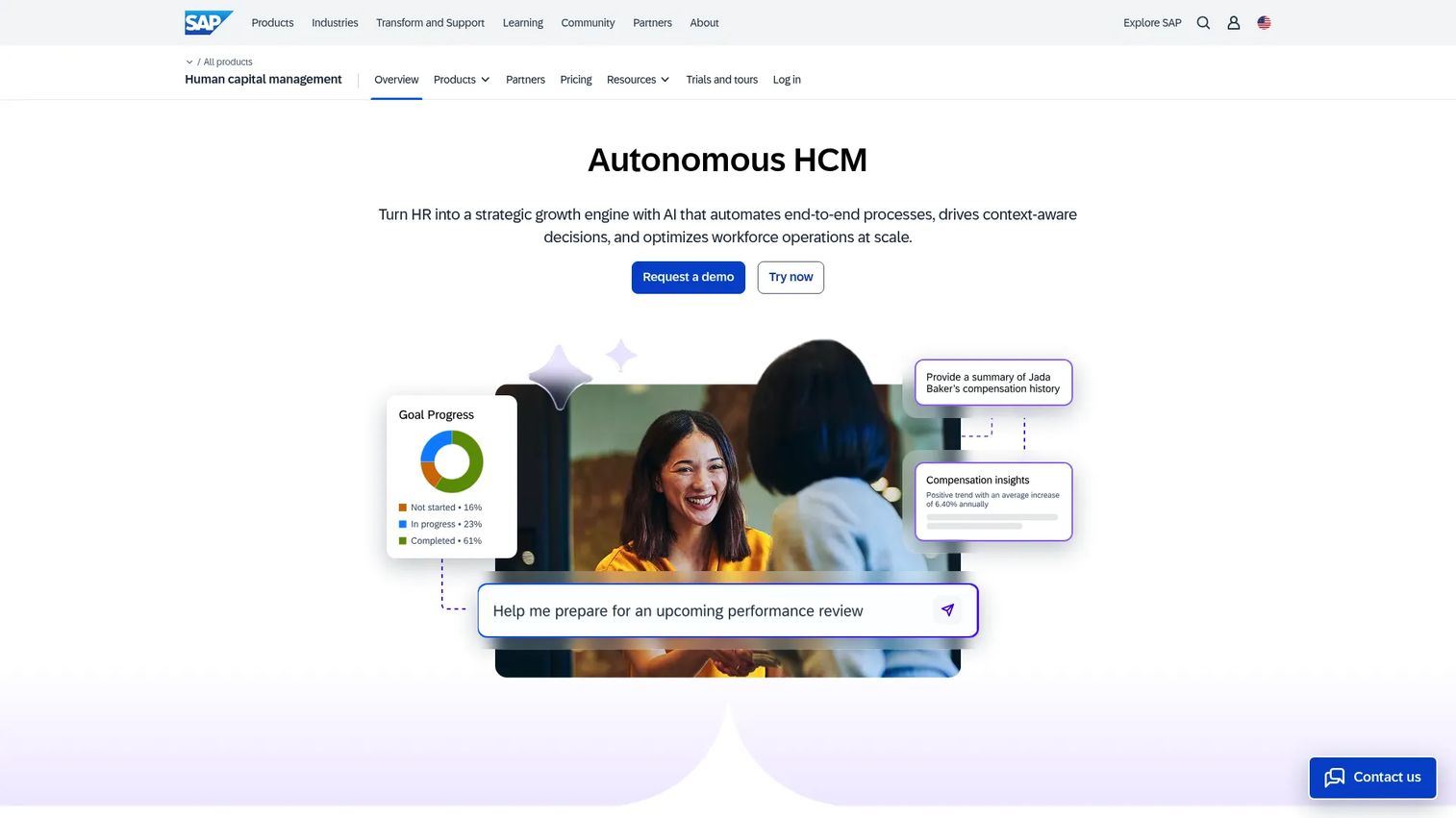
SAP SuccessFactors HCM is an AI-enabled cloud HCM suite covering core HR, talent management, payroll, learning, analytics, and employee experience. The platform's performance and succession modules support structured review cycles, calibration, goal alignment, and development planning at global scale. SAP's depth in compliance, localization, and enterprise process governance makes it a common choice for multinational organizations running reviews across multiple regions.
Best for: Large and global organizations that need a full HCM suite with strong performance, succession, and cross-border governance capabilities.
Key features
- Core HR and payroll with global compliance and localization
- Talent management covering recruiting, onboarding, performance, compensation, and succession
- AI-enabled workforce insights, automation, and analytics
Why choose SAP SuccessFactors HCM: Organizations already in the SAP ecosystem will find SuccessFactors a natural fit for talent review workflows, with deep integration into existing ERP and finance processes. It's particularly suited to organizations with strict process governance requirements across global teams.
SAP SuccessFactors HCM pricing: The Employee Central core HR module starts at $6.30 per user per month, with annual contracts ranging from one to five years. Full HCM suite pricing (including performance and succession modules) is handled through SAP's sales team. Contact SAP for a complete quote.
G2 rating: 4.1/5
4. UKG Pro
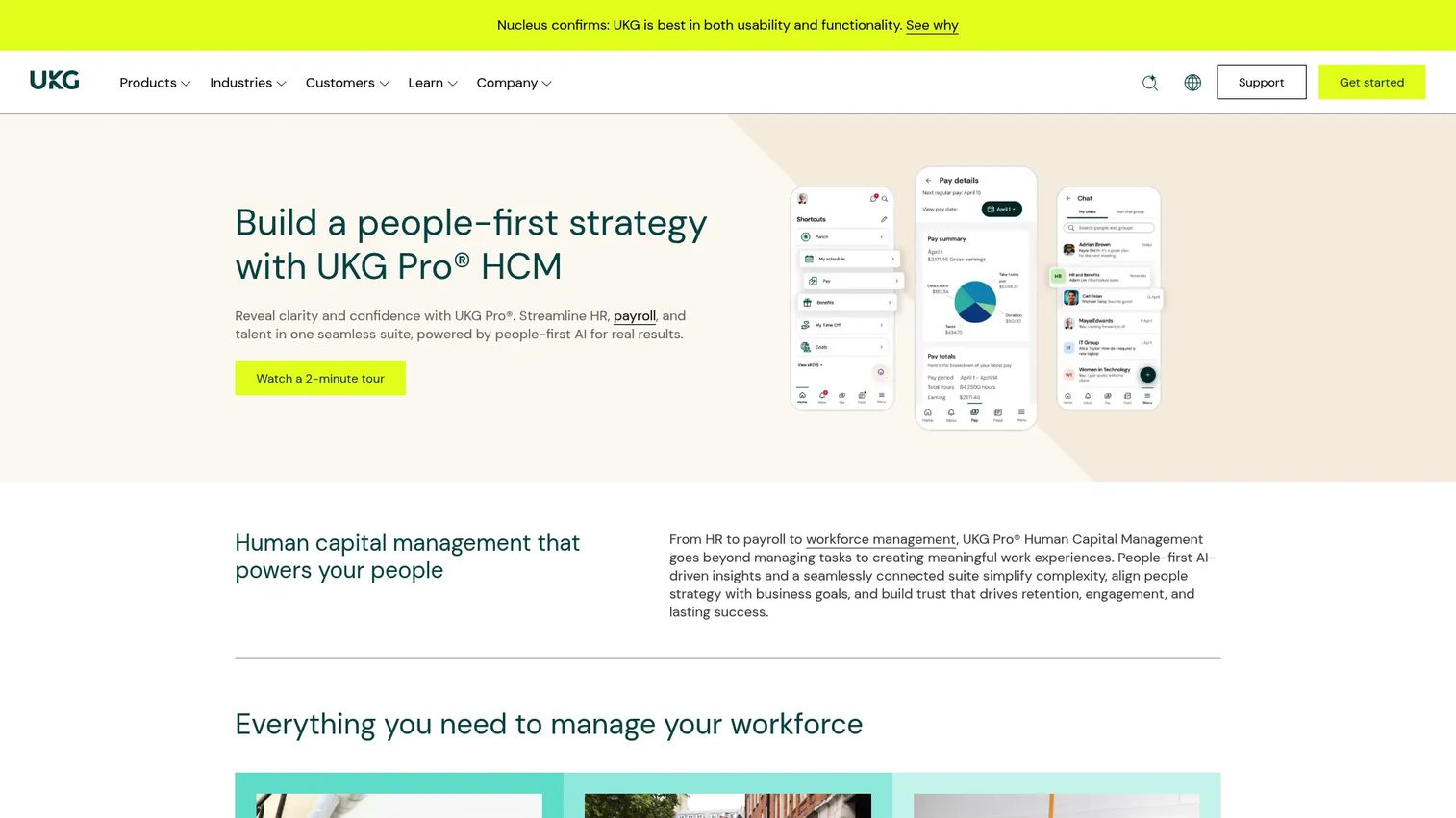
UKG Pro is an enterprise HCM platform covering HR, payroll, workforce management, talent, and analytics. Its talent management tools support structured performance reviews, goal tracking, and development planning alongside core HR operations. UKG Pro is designed for organizations that need HR, payroll, and talent workflows connected in a single system rather than managed across separate platforms.
Best for: Large organizations with complex HR and payroll operations that want talent review workflows integrated into the same environment.
Key features
- Human resources, HR service delivery, and employee lifecycle management
- Payroll processing and workforce management in one platform
- Scheduling, compliance, reporting, and workforce analytics
Why choose UKG Pro: Teams that already manage HR and payroll in UKG will find the talent review tools a practical addition rather than a new system to adopt. The integration between performance data and operational HR records is a genuine workflow advantage for organizations running annual or quarterly review cycles at scale.
UKG Pro pricing: UKG Pro pricing is quote-based through UKG's sales team. Reach out directly for a proposal based on your organization size and selected modules. G2 reviewers confirm this is standard for UKG Pro at the mid-to-enterprise tier.
G2 rating: 4.3/5
5. Quantum Workplace
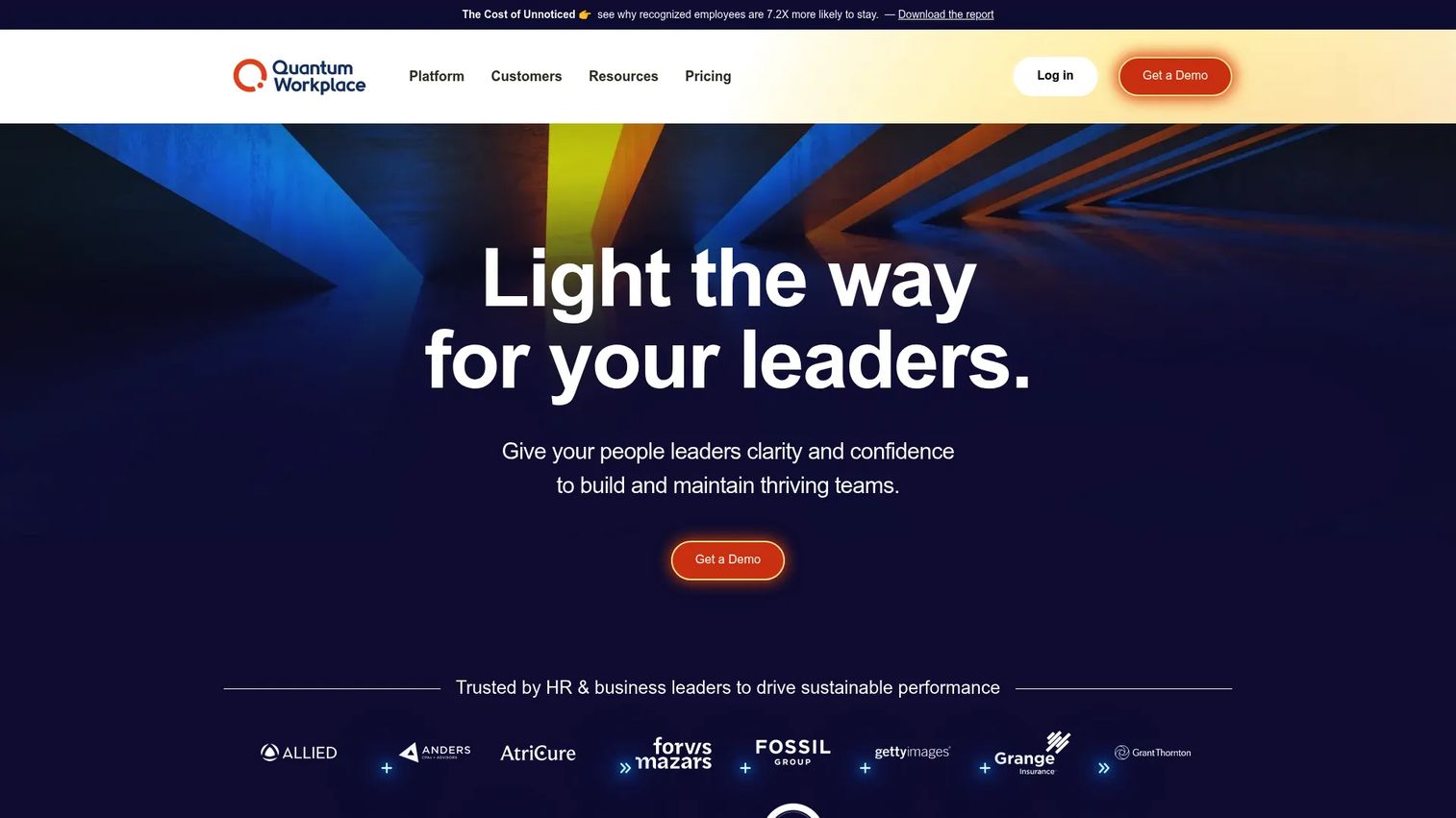
Quantum Workplace is an all-in-one HR platform for employee engagement, performance, development, and recognition. Its performance tools include goal tracking, structured feedback, 1-on-1 support, and performance reviews, with calibration and talent review capabilities that connect directly to engagement and succession workflows. For teams that want 9-box talent review and calibration without buying a full enterprise HCM suite, Quantum Workplace is a focused option.
Best for: Mid-market and enterprise HR teams that want connected performance, calibration, and employee engagement in one platform.
Key features
- Employee engagement surveys, pulse surveys, lifecycle surveys, analytics, and benchmarks
- Performance tools including goals, feedback, 1-on-1 workflows, and structured reviews
- Employee development and recognition connected to performance data
Why choose Quantum Workplace: If your current pain is calibration consistency and manager follow-through rather than payroll integration, Quantum Workplace addresses that directly. The platform's focus on team-level discussion and action planning makes it practical for organizations where the calibration session itself is the hardest part to run well.
Quantum Workplace pricing: Quantum Workplace uses flexible, quote-based pricing. Contact their team for a proposal matched to your employee count and feature requirements. G2 reviewers confirm no fixed public tier structure is available.
G2 rating: 4.3/5
6. TalentHR
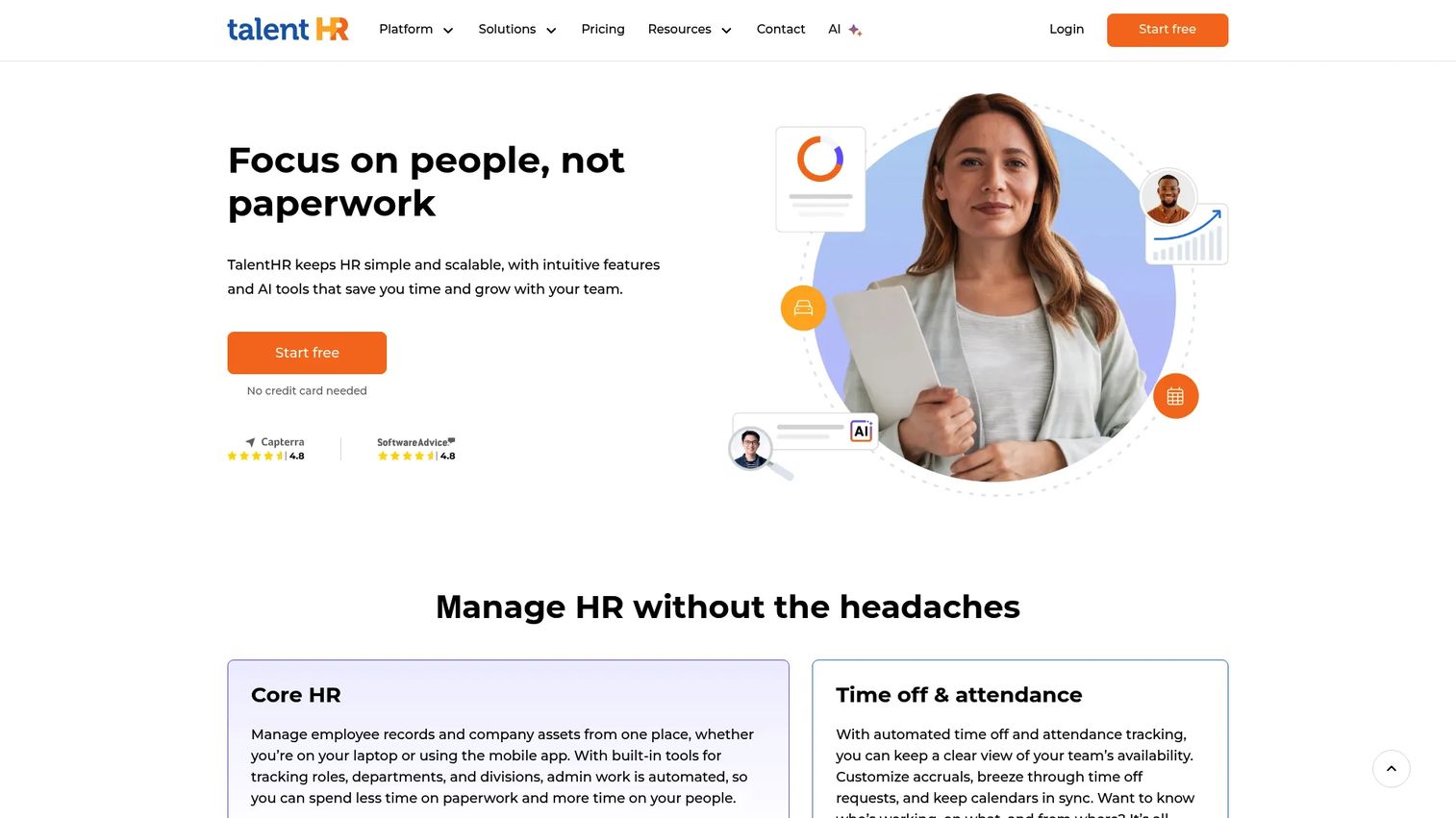
TalentHR is a cloud HR platform built for small and mid-sized teams. It covers employee management, time off tracking, hiring, performance reviews, surveys, document signing, and AI-generated insights in a single tool. For organizations that need structured performance review workflows without the implementation overhead or cost of an enterprise HCM suite, TalentHR offers a practical starting point.
Best for: Small teams and growing companies that need affordable, low-overhead performance review management with core HR functionality included.
Key features
- Free plan supporting up to 10 users with core HR and time-off tracking
- Performance reviews, surveys, and AI-powered insights on paid plans
- Integrations with Slack, Zapier, and API access for workflow automation
Why choose TalentHR: Organizations with fewer than 50 employees that want to move off spreadsheets without committing to enterprise-tier complexity or pricing will find TalentHR a practical fit. The free plan gives smaller teams a real starting point, and the paid tiers stay affordable as headcount grows.
TalentHR pricing: The Free plan covers up to 10 users. The Essential plan starts at $2 per user per month (billed annually) or $2.40 per user per month billed monthly. The Premium plan is $4 per user per month annually, or $4.80 per user per month on a monthly basis. Paid plans require a minimum of 15 users.
G2 rating: 4.5/5
7. BambooHR
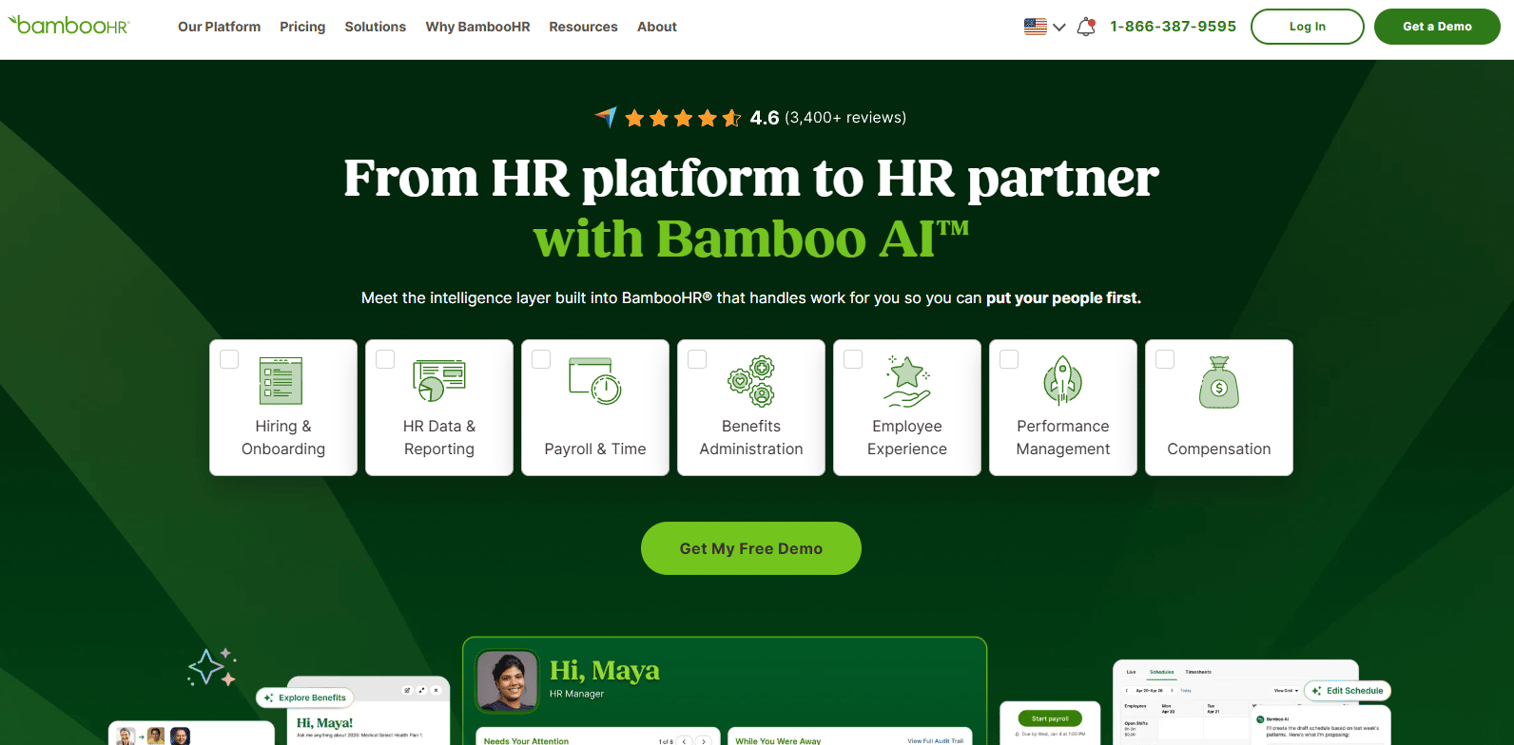
BambooHR is a cloud HR platform for small and mid-sized businesses, covering HR data, applicant tracking, onboarding, performance management, payroll, benefits, time and attendance, and an AI assistant. Its performance management module supports structured review cycles, goal tracking, and feedback workflows inside the same environment as employee records and payroll. For growing companies that want reviews without adding a separate tool to the stack, BambooHR is a practical choice.
Best for: Growing SMBs that want straightforward performance review workflows inside a broader HR platform with payroll and benefits options.
Key features
- HR data management, reporting, and applicant tracking in one platform
- Performance management with review cycles, goals, and feedback tools
- Payroll, benefits, time and attendance, and AI assistant included
Why choose BambooHR: Teams that are outgrowing spreadsheet-based reviews and want a single HR system that handles both people data and performance workflows will find BambooHR's all-in-one approach reduces the number of tools managers need to use. The platform's adoption record among SMBs reflects its reputation for usability relative to its feature depth.
BambooHR pricing: Core plan starts at $10 per employee per month. The Pro plan is $17 per employee per month and the Elite plan is $25 per employee per month. For companies with 25 or fewer employees, a flat monthly rate starting at $250 per month applies. Payroll and benefits administration are available as add-ons. Volume discounts are available for larger teams.
G2 rating: 4.4/5
8. Paylocity
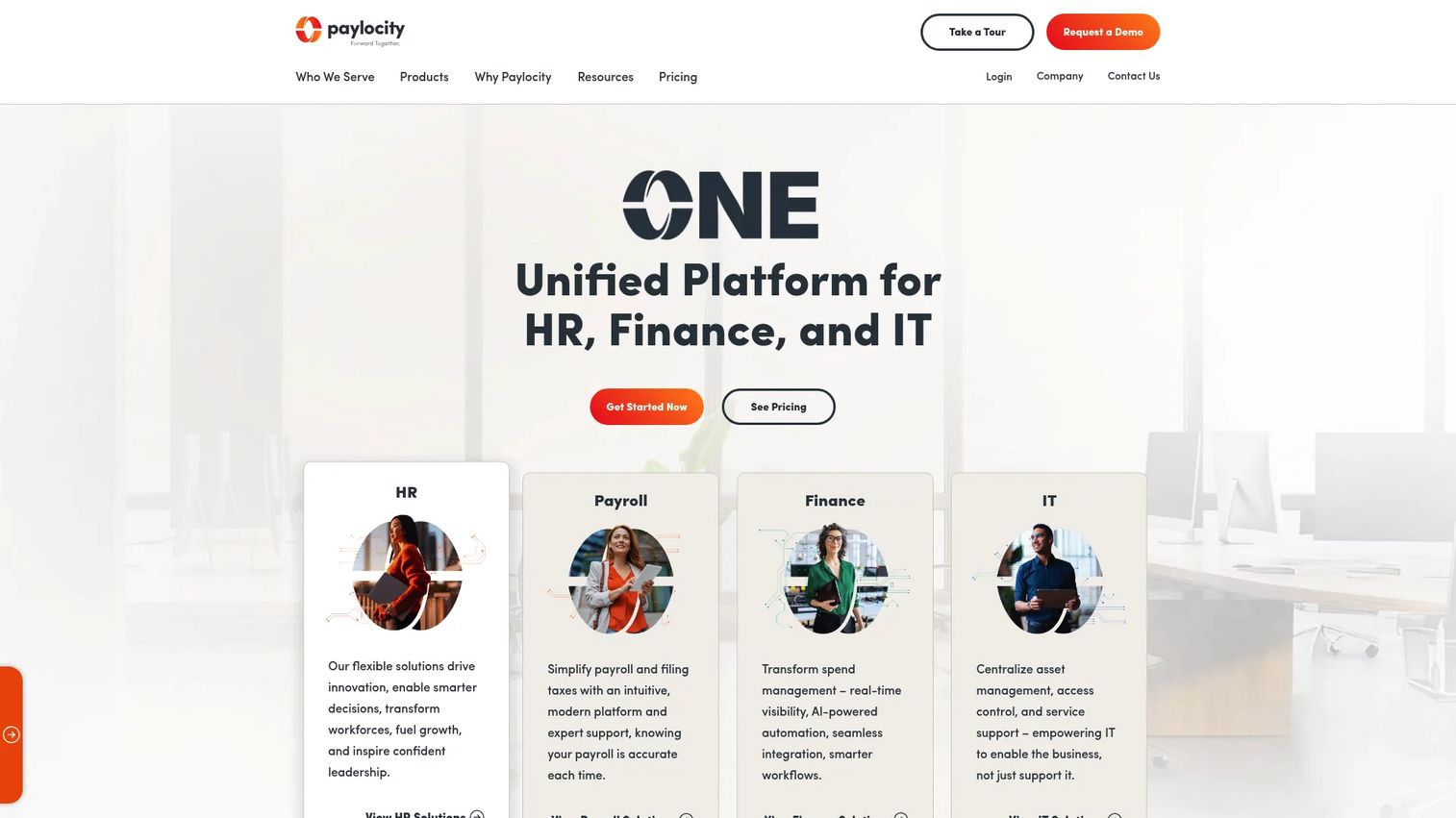
Paylocity is a unified HCM platform covering payroll, HR automation, employee experience, and workforce management. Its talent and performance tools support review workflows, goal management, and employee development inside the same system as payroll and HR operations. For mid-sized organizations that want performance reviews connected to payroll data without a separate integration, Paylocity delivers that connection out of the box.
Best for: Mid-sized to enterprise organizations that want performance review and talent tools tightly integrated with payroll and HR operations.
Key features
- Payroll and HR automation with strong compliance coverage
- Integrations across HR, payroll, finance, and IT in one platform
- Employee experience and workforce management tools alongside talent features
Why choose Paylocity: Organizations that currently manage payroll in Paylocity and want to bring performance review workflows into the same environment will find the integration a genuine efficiency gain. It reduces the manual work of connecting review outcomes to compensation records and reduces the number of systems managers need to log into during a review cycle.
Paylocity pricing: Paylocity pricing is custom, based on company size, selected products, and support requirements. Contact Paylocity directly for a proposal. G2 reviewers rate the platform highly at 4.5/5 for its combined HR and payroll capability.
G2 rating: 4.5/5
Considerations
Before committing to a talent review platform, work through these evaluation criteria. The right tool for one organization's review maturity and tech stack is often the wrong one for another.
Review workflow fit
Check whether the platform supports your actual review cadence, not just an annual cycle. Some tools are optimized for formal annual reviews, while others support quarterly check-ins, continuous feedback, or multi-rater input as first-class features. If your organization is moving toward more frequent touchpoints, confirm the workflow supports that before signing a contract.
Calibration and succession depth
Not all platforms treat the 9-box calibration session as a first-class feature. Some offer it as a reporting view; others build structured facilitation workflows around it. If calibration and successor identification are central to your review program, test those specific workflows in a demo rather than assuming they work the way you need.
Analytics and reporting
Ask what leaders can actually see after a review cycle closes. Ratings distribution, completion rates, flight risk signals, and readiness dashboards are not consistently available across all platforms. Confirm the reporting matches what your CHRO or VP of Sales needs to make talent decisions at the end of a review period.
Integration and governance
Review tools that don't connect to your HRIS, payroll system, or LMS create reconciliation work on the back end. Confirm which integrations are native versus third-party, and check role-based permissions carefully. Governance matters when managers, HR business partners, and executives all need different views of the same data.
Adoption and maintenance
A tool that managers refuse to use is worse than no tool at all. Evaluate UI complexity from the manager's perspective, not just the HR admin's. Also confirm how updates are handled: If the vendor releases changes mid-cycle, you need to know whether those changes will break your current review forms or ratings logic.
Conclusion
The eight platforms in this guide cover the full range of talent review needs: From large enterprises running global calibration programs inside a full HCM suite, to growing teams that need affordable performance workflows without significant implementation overhead.
For enterprise HR teams with complex succession and calibration requirements, Dayforce and Workday HCM deliver the platform depth and governance infrastructure to match. SAP SuccessFactors is the right fit when global compliance and ERP integration are non-negotiable. UKG Pro and Paylocity suit organizations that want talent review connected to existing payroll operations. Quantum Workplace stands out for teams where calibration quality and manager follow-through are the primary problems to solve. BambooHR and TalentHR serve growing organizations that need to move off spreadsheets without a long implementation cycle.
Start with the tool that matches your current review maturity. If you're running your first structured review cycle, a simpler platform with clean workflows and accessible pricing is the right call. If your calibration and succession programs are already established and the bottleneck is consistency across a large manager population, that's when the enterprise HCM depth pays off.
Start your journey with Guideflow today!
FAQs
Talent review software helps HR teams run structured performance appraisals, calibrate employee ratings across managers, identify succession candidates, and connect review outcomes to development plans. It replaces spreadsheet-based review processes with a consistent, auditable workflow that scales across large manager populations.
Performance review software focuses on the appraisal cycle itself: Forms, ratings, feedback, and completion tracking. Talent review software adds the calibration layer, including 9-box sessions, successor identification, and cross-manager alignment workflows. Many platforms include both, but the distinction matters when you're evaluating whether a tool supports the committee review that happens after individual appraisals close.
Not necessarily, but the 9-box model gives succession committees a consistent framework for comparing employees across performance and potential dimensions. Without structured tooling, those sessions tend to rely on manager advocacy rather than comparable data. Platforms like Quantum Workplace build the 9-box view directly into their calibration workflow, which reduces the facilitation burden on HR.
They don't eliminate bias, but they reduce its impact in two ways. First, consistent rating scales and calibration sessions force cross-manager comparison against shared criteria. Second, multi-rater input (peer feedback, skip-level input) introduces perspectives beyond a single manager's view. The calibration session, supported by data from the platform, is where the most meaningful bias correction happens.
The most actionable reports answer four questions: Who completed their reviews on time? How are ratings distributed across departments and managers? Which employees are flagged as flight risks or high-potential? And which successor candidates are rated ready now versus ready in 12 to 24 months? If a platform's analytics don't address those questions out of the box, confirm whether custom reporting is available and who builds it.
Yes, and most organizations that make the switch don't go back. Spreadsheets create version control problems, inconsistent rating scales, and no audit trail. Talent review software standardizes the form, tracks completion, stores historical data across cycles, and connects calibration outputs to development records. The switch does require an implementation period, but the operational return on consistent, accessible review data compounds over time.
The highest-priority integrations are your HRIS (for employee data accuracy), your compensation platform (to connect review outcomes to pay decisions), and your LMS (to route development recommendations into learning paths). If you run a CRM-connected sales team, integration with your sales performance data can also enrich talent reviews for revenue-generating roles.
Run each vendor through the same calibration scenario: Bring a sample employee dataset and ask them to walk through a 9-box session, a succession committee view, and a post-cycle ratings report. The gap between what vendors claim in a sales conversation and what the product actually does in a calibration workflow is usually visible within 30 minutes of a hands-on demo. Also ask specifically about what changes between review cycles: Form updates, rating scale modifications, and manager permission changes are where implementation complexity tends to surface.