Hiring more underwriters does not fix inconsistent rating logic, missing documents, or pricing rules buried in spreadsheets. The bottleneck is the system, not the headcount.
According to Wipro's 2025 insurance AI survey, 46% of U.S. insurers had already extensively implemented AI in underwriting workflows. Yet most teams still route quote requests through email, manually re-key applicant data between systems, and manage rate overrides without a reliable audit trail.
The problem is not ambition. It is that underwriting and rating software is not one category. It is a stack of different jobs: Comparative quoting for agencies, governed rating-rule management for carriers, policy administration for insurers modernizing core systems, document intake automation for teams drowning in submissions, and risk intelligence for fraud-sensitive workflows. Buying the wrong type costs you a year of implementation and still does not fix the actual bottleneck.
This guide cuts through that confusion. It maps the 15 best insurance underwriting and rating software options for 2026 by buyer type, so you can hand this to your VP or operations lead with enough context to run a credible shortlist.
What's inside
This guide covers 15 underwriting and rating software tools across agency quoting, enterprise carrier systems, AI document extraction, and pricing analytics categories.
- Who each tool fits: Agencies, P&C carriers, life and health brokers, enterprise insurers, and document-heavy underwriting teams
- Side-by-side comparison with pricing and G2 ratings
- Selection criteria covering rating governance, auditability, integration fit, and implementation cost
- Practical guidance on where AI belongs in the underwriting workflow
Pricing and G2 ratings were verified against vendor pages and G2 listings at time of writing.
TL;DR
- Best for independent agencies: EZLynx combines comparative rating with agency management, renewals, and accounting in one platform
- Best for personal-lines quoting speed: TurboRater generates multi-carrier quotes in an average of four seconds, with built-in underwriting rules
- Best enterprise carrier suite: Guidewire InsuranceSuite connects policy, billing, claims, and underwriting in a single core system
- Best low-code rating engine: Oracle Insurance Insbridge Enterprise Rating gives enterprise teams governed, configurable rating logic without custom code
- Best AI document extraction: Ocrolus and Heron Data both automate the intake of financial documents before underwriting decisions happen
- Best pricing analytics: Earnix suits insurers that need data-driven rate optimization rather than faster quote workflows
What is underwriting and rating software?
Underwriting and rating software helps insurance teams evaluate risk, calculate premiums, generate quotes, apply underwriting rules, document decisions, and route approved policies into downstream systems.
The category spans several distinct tool types that serve different parts of the workflow:
- Risk intake: Collects applicant, policy, financial, behavioral, or claims data at the start of a submission
- Insurance rating engine: Calculates premiums using rules, tables, algorithms, and filed rates; this is the core of premium calculation software
- Underwriting rules: Applies eligibility, referral, decline, approval, and exception logic to route submissions correctly
- Document processing: Extracts structured data from applications, bank statements, tax documents, loss runs, and commercial submissions
- Workflow routing: Assigns cases, flags exceptions, tracks decisions, and maintains handoff records
- Audit trails: Records rate changes, overrides, approvals, and rule modifications for regulatory and governance purposes
- Integrations: Connects with policy administration systems, billing, claims, CRM, analytics platforms, and third-party data providers
- Analytics: Supports pricing optimization, risk scoring, fraud detection, portfolio monitoring, and predictive underwriting
Category boundaries to understand before you buy:
Agency comparative raters help agents quote across multiple carriers from a single entry point. Rating engines manage premium calculation and pricing-rule governance at the carrier level. Underwriting platforms support risk assessment and decision workflows. Insurance policy administration software includes rating and underwriting as part of a broader core system. AI document tools feed structured, extracted data into underwriting workflows rather than making decisions themselves.
Buying the wrong category for your bottleneck is the most common and expensive mistake in this space. A full policy suite does not fix a quote-speed problem at an agency. A comparative rater does not solve a carrier's rating-governance gap. Map the job first, then choose the tool.
When to use underwriting and rating software
Standardize rating rules across products and states
Carriers, MGAs, and insurers launching products across multiple states or jurisdictions need rating logic that stays consistent, auditable, and updatable without engineering involvement. When rate changes require a developer to modify hardcoded logic, product launches slow and compliance risk grows. A governed insurance rating engine or underwriting management system solves this by giving business users control over rules, versioning, and effective dates.
Quote faster without losing underwriting control
Agencies and direct-to-consumer insurers under pressure to shorten quote turnaround need tools that reduce manual rekeying across carrier portals while preserving referral flags and exception handling. The right insurance quoting software compresses the time between submission and bindable quote without bypassing underwriting guardrails that exist for good reason.
Turn unstructured underwriting data into decisions
Document-heavy commercial insurance underwriting and financial underwriting workflows often stall because underwriters spend more time reading and validating documents than evaluating risk. Bank statements, tax returns, loss runs, and commercial submissions arrive as PDFs and emails. AI document extraction tools convert that unstructured intake into structured, decision-ready data, so underwriting time goes toward judgment rather than data entry.
Underwriting and rating software comparison
The table below covers all 15 tools in order of buyer type, starting with agency quoting tools and moving through enterprise carrier systems, data services, analytics, and AI layers. Pricing reflects current vendor pages; G2 ratings are live at time of writing.
| # | Product | Best for | Key differentiator | Pricing | G2 rating |
|---|---|---|---|---|---|
| 1 | EZLynx | Independent insurance agencies | Comparative rating plus agency management in one platform | Contact sales | 4.4/5 |
| 2 | TurboRater | Personal-lines agency quoting | Multi-carrier quotes in an average of four seconds | Contact sales | N/A on G2 (4.3 on Capterra) |
| 3 | Guidewire InsuranceSuite | Enterprise P&C carriers | Connected policy, billing, claims, and underwriting suite | Contact sales | 4.1/5 |
| 4 | Duck Creek Technologies | P&C insurers modernizing core systems | Cloud-native insurance platform with configurable rating | Contact sales | 4.6/5 |
| 5 | PL Rating | Personal-lines comparative rating | Multi-carrier quoting from a single data entry point | Contact sales | 4.5/5 |
| 6 | Guidewire PolicyCenter | Policy administration teams | Policy lifecycle with underwriting and rating workflows | Contact sales | 4.2/5 |
| 7 | Duck Creek Policy | P&C policy administration | Configurable policy system with prebuilt insurance content | Contact sales | 4.6/5 |
| 8 | Oracle Insurance Insbridge Enterprise Rating | Enterprise rating governance | Codeless rating-rule configuration with versioning and audit | Contact sales | 4.3/5 |
| 9 | Quotit | Health and life insurance agents | Quote comparison, enrollment, and CRM in one platform | From $99/month | 4.6/5 |
| 10 | Verisk A-PLUS | Claims-history underwriting data | Loss-history reports for personal and commercial lines | Contact sales | 4.1/5 (Verisk overall) |
| 11 | Earnix | Pricing and predictive analytics teams | AI-driven pricing optimization and rate deployment | Contact sales | N/A on G2 |
| 12 | Sapiens | Insurers needing core system modernization | AI-powered SaaS platform across policy, billing, and claims | Contact sales | 4.4/5 |
| 13 | Heron Data | Document-heavy underwriting intake | AI extraction from applications and bank statements | Contact sales | N/A on G2 |
| 14 | Shift Technology | Fraud and risk intelligence teams | AI fraud detection and claims decisioning for carriers | Contact sales | 4.0/5 |
| 15 | Ocrolus | Financial document underwriting | Extracts income, cash-flow, and fraud signals from 1,700+ document types | Free trial available; contact sales for volume pricing | 4.6/5 |
Best 15 underwriting and rating software tools for 2026
1. EZLynx
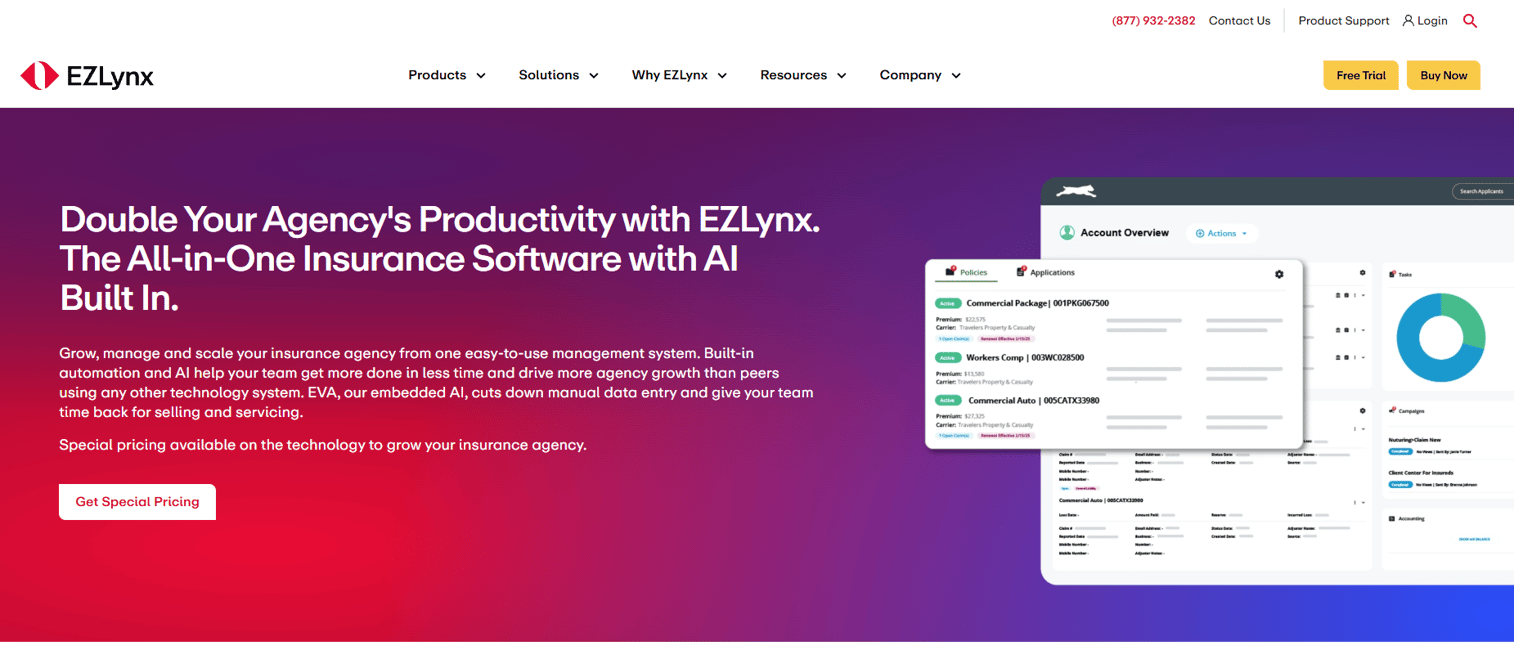
EZLynx is a cloud-based insurance agency management and comparative rating platform built for independent agents. It consolidates quoting, policy servicing, renewals, sales pipeline tracking, client communications, accounting, and digital payments into one system. The platform targets agencies that want to stop managing quoting in one tool, client records in another, and commissions in a spreadsheet.
Best for: Independent insurance agencies that need comparative rating and agency operations in the same platform.
Key features
- Comparative personal-lines rating across carriers
- Agency management and policy servicing workflows
- Sales pipeline and client retention tools
- Accounting, commissions, and digital payments
- Customer portal for self-service and document requests
Why choose EZLynx: It suits agencies where quoting speed and operations are both bottlenecks. If your team is managing carrier portals separately from your agency management system, EZLynx consolidates that into one log-in. Teams whose main need is carrier-side underwriting governance will want a different category of tool.
EZLynx pricing: Pricing is built around the agency's user count and selected modules. Ask sales to quote based on number of users, states, carrier connections, and which modules you need. No standard tiers are shown publicly.
G2 rating: 4.4/5
2. TurboRater
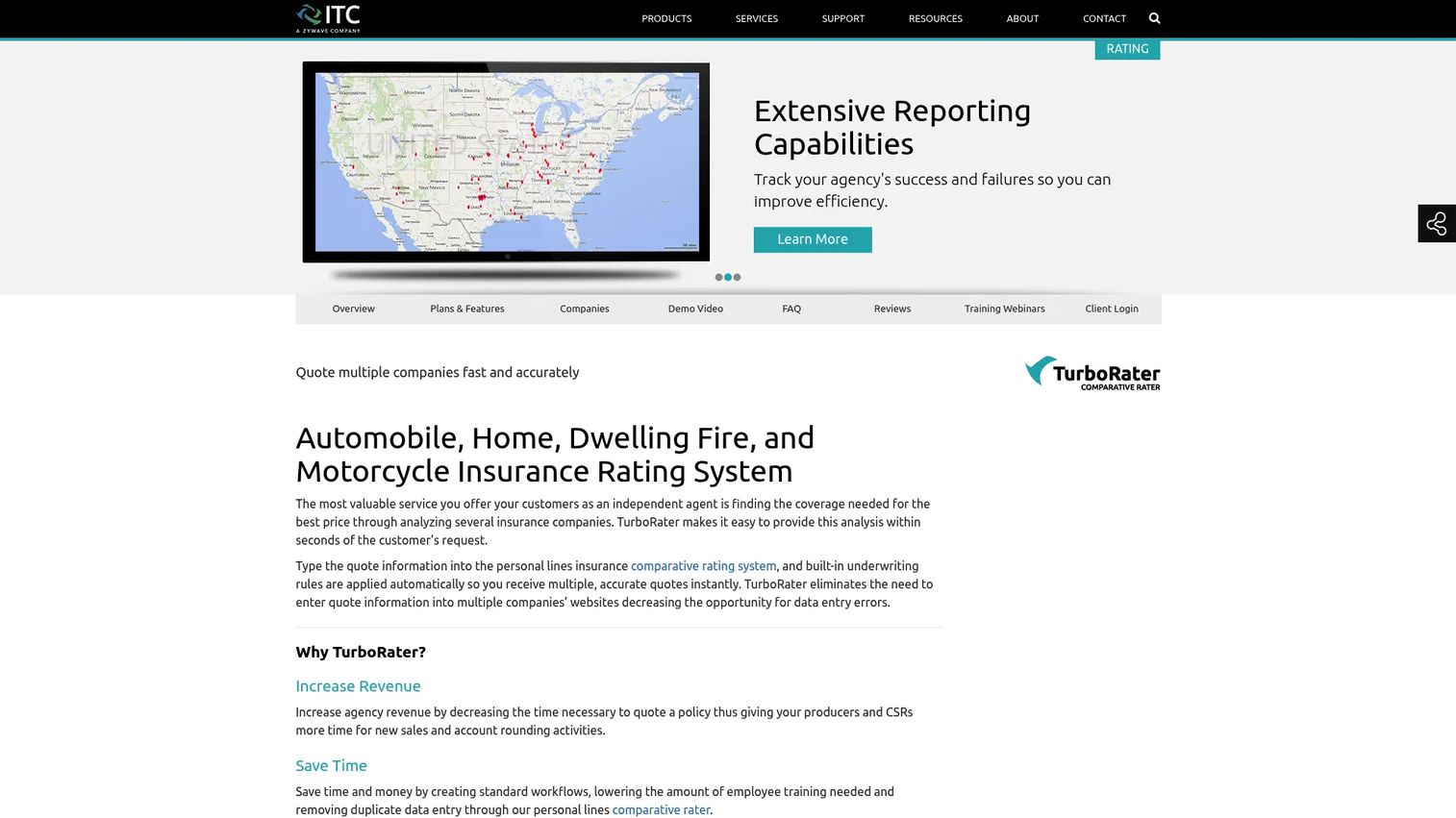
TurboRater is a web-based comparative rating platform focused on personal-lines agencies. It generates multi-carrier quotes with an average turnaround of four seconds, applying built-in underwriting rules automatically so agents do not have to re-enter eligibility logic per carrier. It covers auto, homeowners, condo, renters, dwelling fire, and motorcycle policies.
Best for: Independent agencies quoting high volumes of personal insurance.
Key features
- Multi-carrier quotes averaging four seconds per submission
- Built-in carrier underwriting rules applied automatically
- Personal-lines coverage: Auto, homeowners, renters, motorcycle
- Reporting tools for quote-to-bind tracking
- Free weekly TurboRater Academy training webinars
Why choose TurboRater: This is a focused tool for one job: Personal-lines quoting throughput. It does not try to be a full agency management system. If your bottleneck is agent time spent on comparative rating across carrier portals, it addresses that directly.
TurboRater pricing: Ask sales to confirm cost per user, supported states, carrier appointments, and any agency management system integrations you need.
3. Guidewire InsuranceSuite
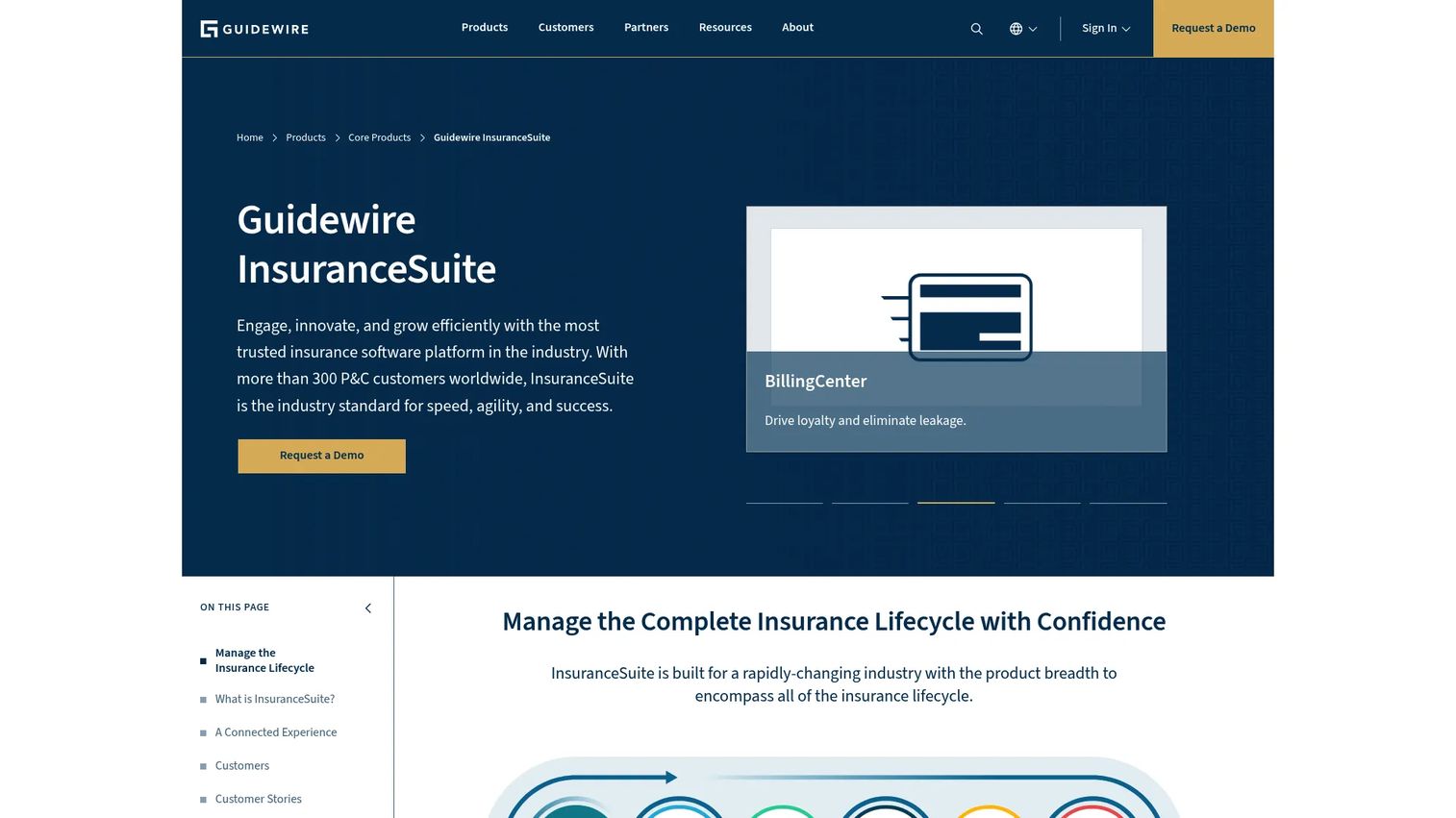
Guidewire InsuranceSuite is a core insurance platform for mid-to-large P&C carriers. It covers policy administration, billing, claims, pricing, underwriting, digital experiences, and data analytics as modular applications that can be deployed individually or as a connected suite. Carriers use it when they need multiple core systems to operate from a shared data model rather than through point-to-point integrations.
Best for: Large P&C carriers modernizing connected policy, billing, claims, and underwriting operations.
Key features
- Policy administration across the full insurance lifecycle
- Billing, payment-plan management, and collections
- End-to-end claims management
- Unified pricing, rating, and underwriting
- Data and analytics layer across all core modules
Why choose Guidewire InsuranceSuite: Guidewire suits enterprise transformation initiatives where underwriting and rating need to connect directly with billing and claims. Smaller carriers should plan for a substantial implementation motion before go-live.
Guidewire InsuranceSuite pricing: Pricing is contact-sales. Guidewire typically prices based on direct written premium, usage, or deployment scope. Ask about modules, lines of business, regions covered, implementation partner requirements, and data migration scope.
G2 rating: 4.1/5
4. Duck Creek Technologies
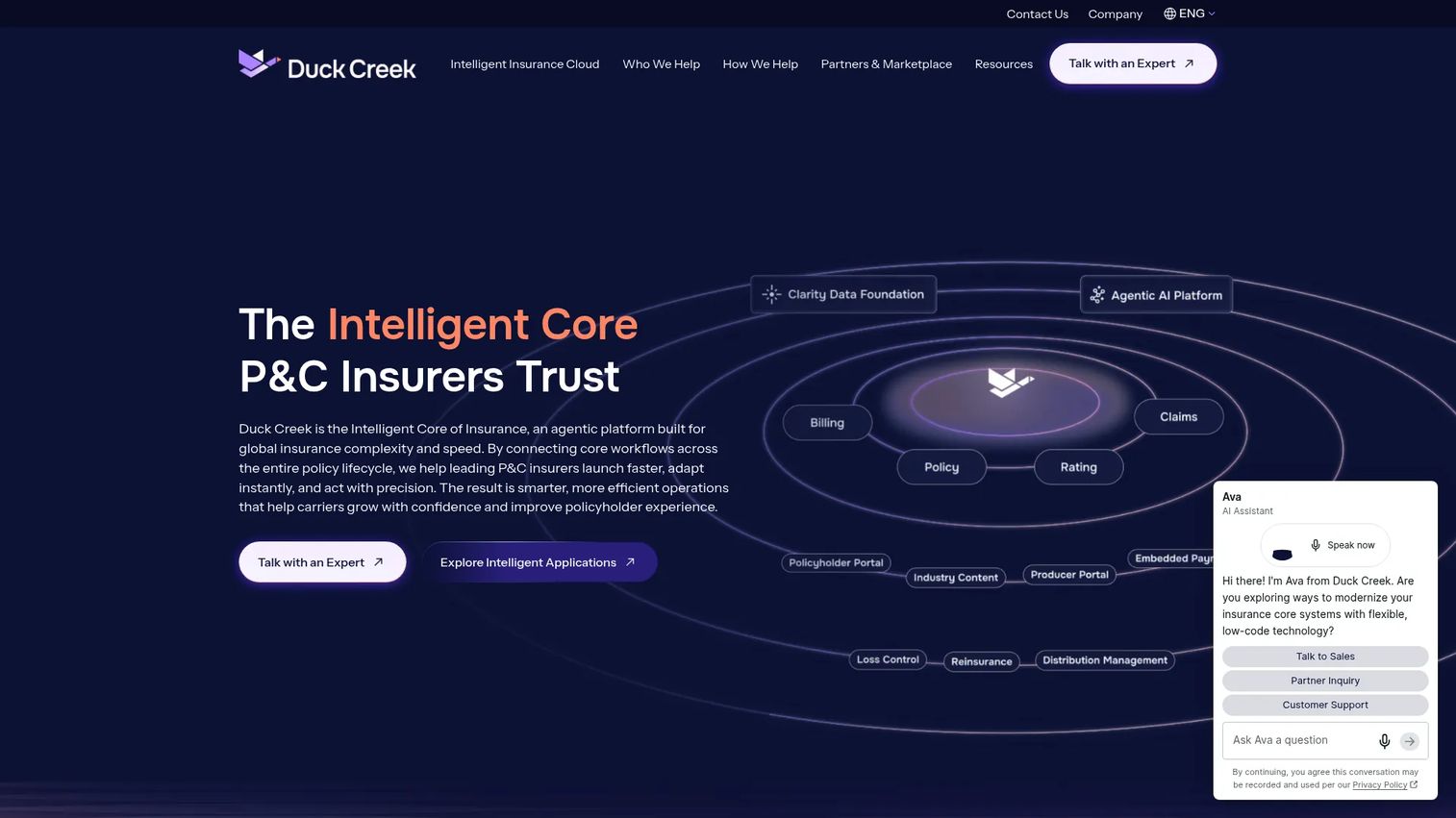
Duck Creek Technologies is a cloud-native insurance software provider for P&C carriers. Its platform spans policy administration, billing, claims, rating, distribution management, and data capabilities. Duck Creek positions itself around configurability: Carriers can build, test, and launch insurance products without heavy engineering involvement using its rules and content management tools.
Best for: P&C insurers moving rating, policy, and billing workflows to the cloud.
Key features
- Configurable rating and product-launch tools
- End-to-end policy lifecycle management
- Billing, payments, and collections
- Claims management and automation
- Reinsurance, distribution, and policyholder engagement modules
Why choose Duck Creek Technologies: It suits carriers that want core insurance modernization in a cloud environment with configurable rating and policy logic. Teams evaluating Duck Creek should confirm which modules they need and size the implementation services accordingly.
Duck Creek Technologies pricing: Contact sales for pricing. Confirm product modules, implementation services scope, data migration plan, and support model before comparing quotes.
G2 rating: 4.6/5
5. PL Rating
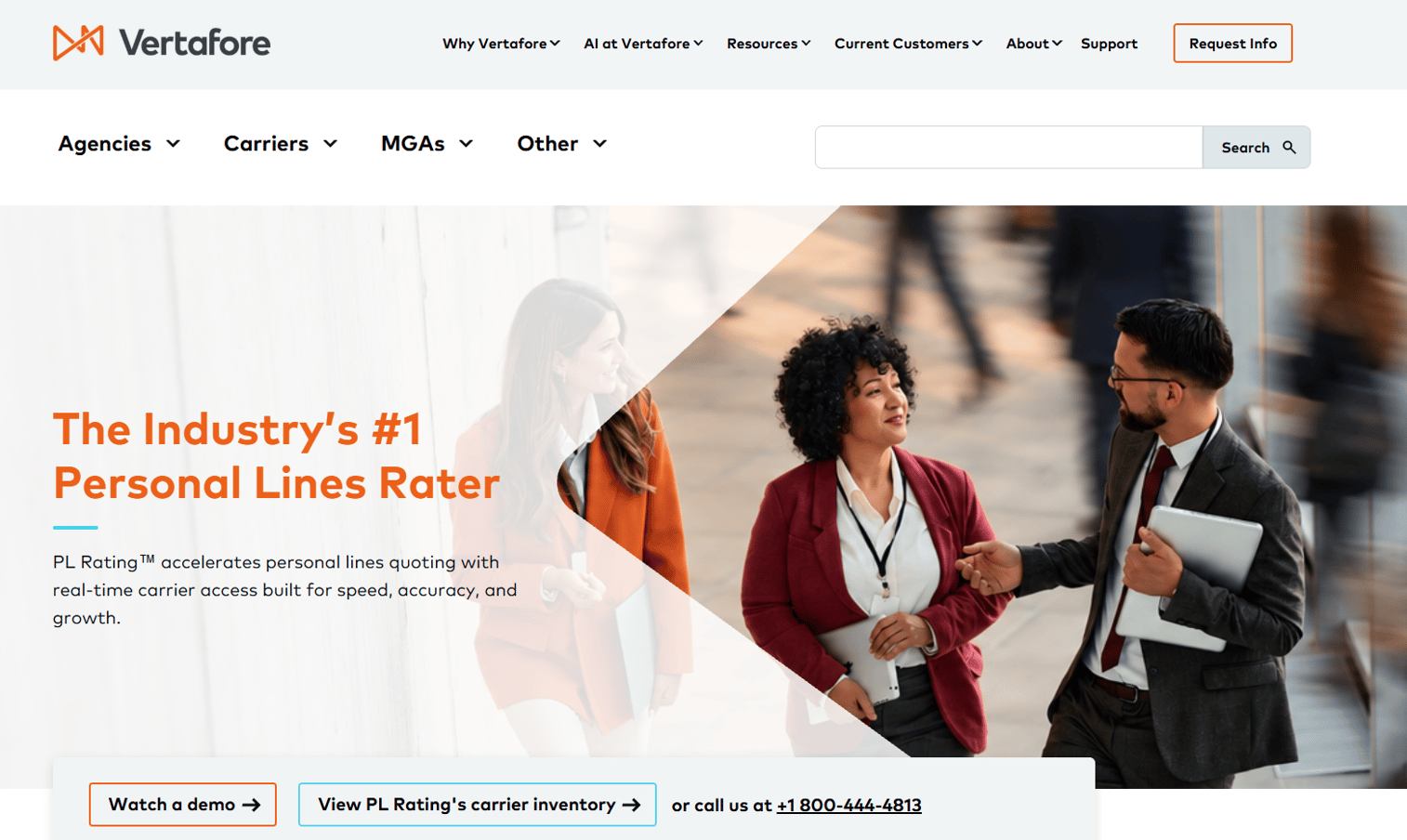
PL Rating, from Applied Systems, is a personal-lines comparative rater that lets agencies quote risks across multiple carriers from a single data entry point. It covers auto, home, condo, renters, umbrella, boat, flood, and motorcycle policies, and transfers data to carrier portals when live rates are not yet available. It also supports remarketing by pulling existing policy details into new quote workflows.
Best for: Independent agencies focused on personal-lines quote comparison across carriers.
Key features
- Single data entry for multi-carrier personal-lines quotes
- Side-by-side premium and coverage comparison
- Supports auto, home, condo, renters, umbrella, boat, and flood
- Carrier portal data transfer for non-rated products
- Remarketing using existing policy data
Why choose PL Rating: Agencies that want a focused personal-lines rater rather than a full agency management system will find PL Rating straightforward. It is part of the Applied Systems ecosystem, which matters if you are already using Applied Epic or other Applied products.
PL Rating pricing: Ask Applied Systems to quote based on agency users, states, and carrier access requirements.
G2 rating: 4.5/5
6. Guidewire PolicyCenter
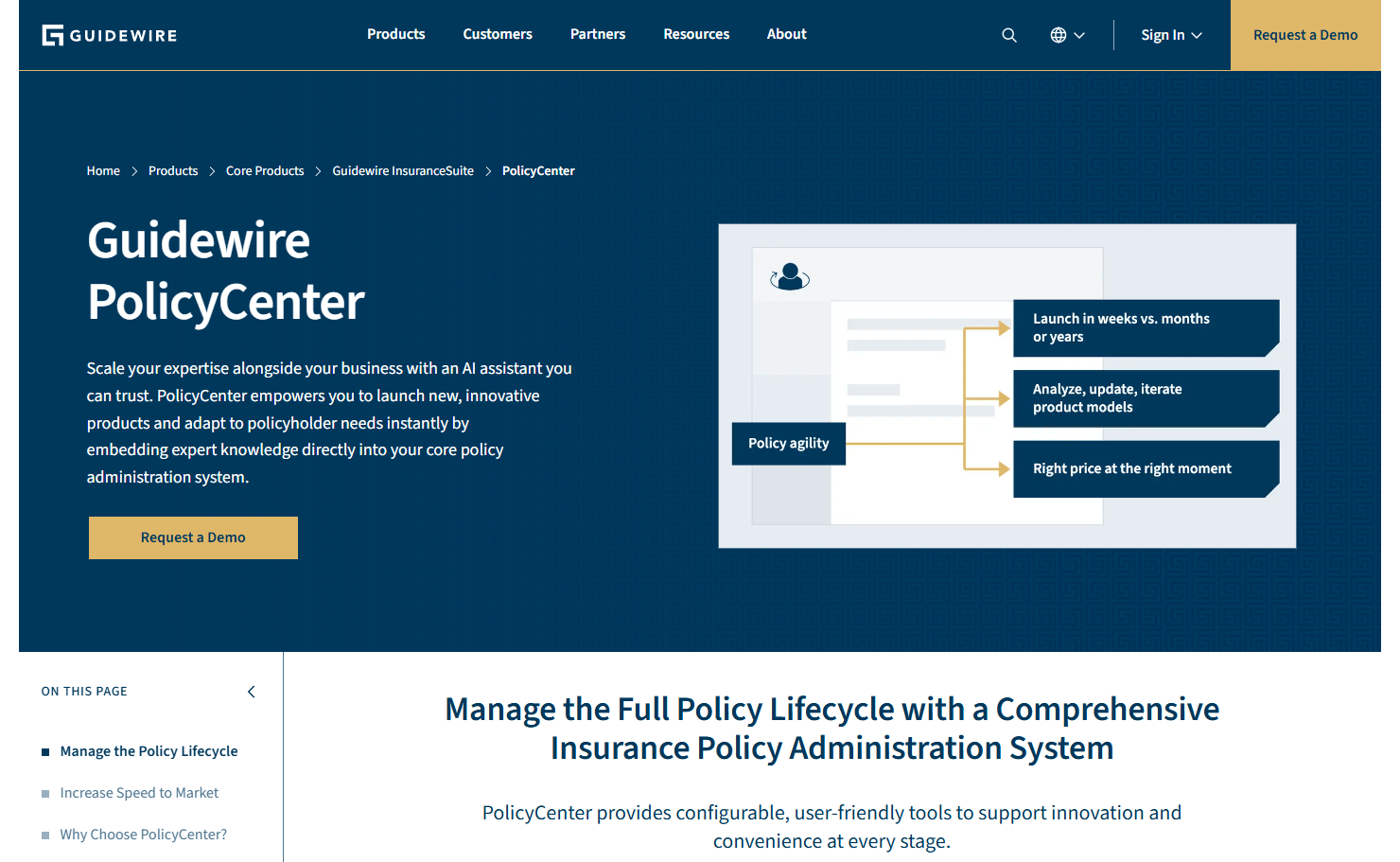
Guidewire PolicyCenter is Guidewire's policy administration system for P&C carriers. It manages the full policy lifecycle from product development and quoting through underwriting, issuance, endorsements, renewals, and cancellations. PolicyCenter includes low-code configuration tools that allow business users to build and modify insurance products without writing code.
Best for: Mid-to-large P&C carriers that need a policy system of record where underwriting and rating decisions feed directly into bound policies.
Key features
- Full policy lifecycle: Quoting through cancellation
- Low-code product configuration for business users
- Underwriting rules and workflow automation
- Support for personal, commercial, and specialty lines
- Integration with Guidewire billing and claims systems
Why choose Guidewire PolicyCenter: PolicyCenter works best when you need a policy administration backbone and want to connect it to billing and claims within the Guidewire suite. Teams not already on Guidewire should weigh implementation complexity against their current system's gaps.
Guidewire PolicyCenter pricing: Contact Guidewire for a quote. Cost drivers include implementation partner fees, number of lines of business, product complexity, and integration scope.
G2 rating: 4.2/5
7. Duck Creek Policy
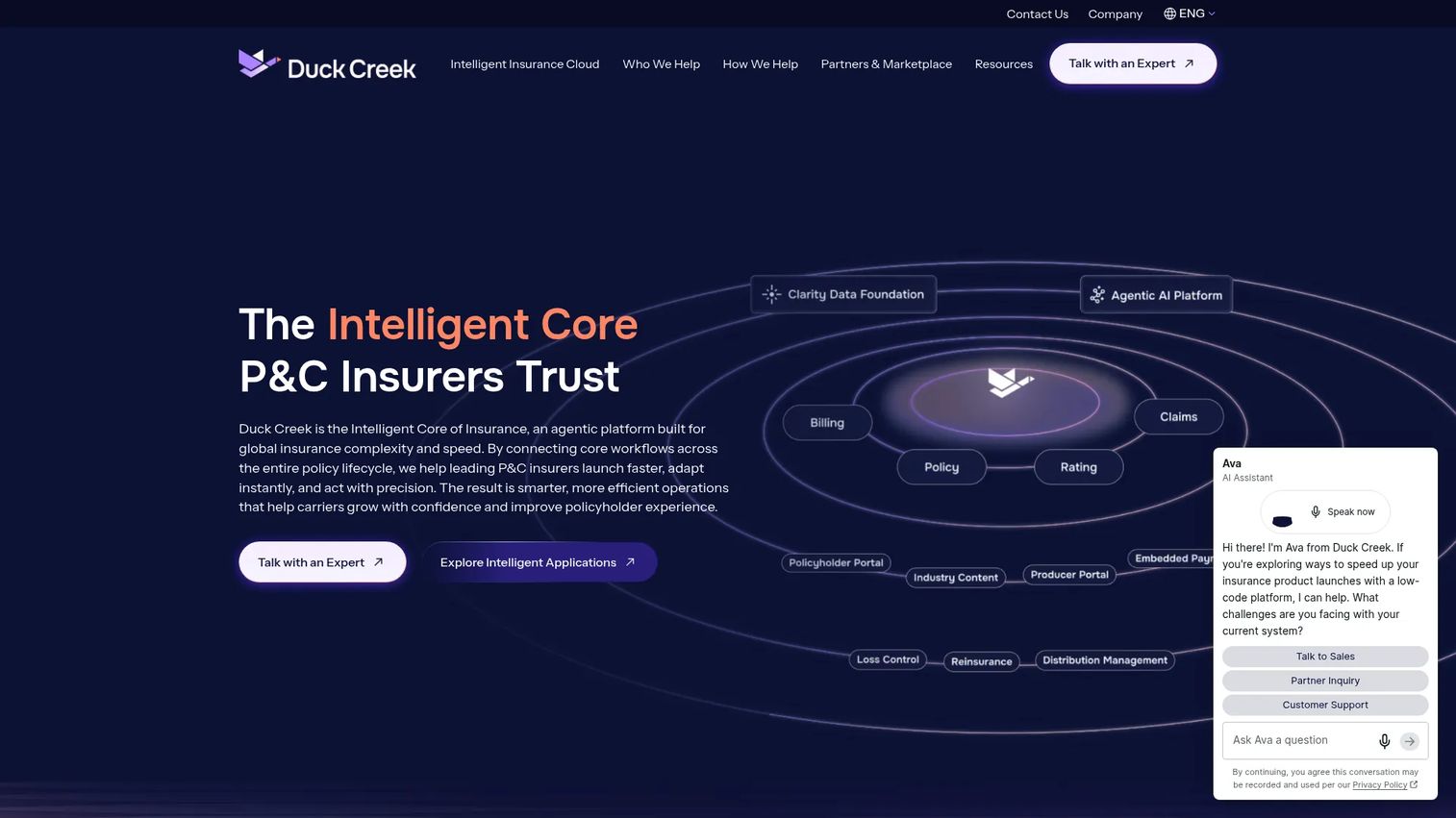
Duck Creek Policy is Duck Creek's policy administration system for P&C carriers. It includes prebuilt insurance content, rates, rules, and forms, which shortens initial configuration time for standard lines of business. It supports low-code and no-code product configuration, end-to-end policy lifecycle management, rules-based underwriting workflows, and API integrations with third-party systems.
Best for: Large P&C carriers that need configurable policy administration with prebuilt insurance content.
Key features
- Low-code and no-code product configuration
- End-to-end policy lifecycle management
- Rules-based underwriting and automated workflows
- Prebuilt rates, rules, and forms for standard lines
- API integrations with third-party data and systems
Why choose Duck Creek Policy: The prebuilt content library accelerates initial deployment for standard P&C lines compared to building from a blank configuration. Carriers with highly non-standard products should still expect custom configuration work.
Duck Creek Policy pricing: Contact Duck Creek for pricing. Confirm lines of business, product complexity, migration scope, and implementation services before you get a quote.
G2 rating: 4.6/5
8. Oracle Insurance Insbridge Enterprise Rating
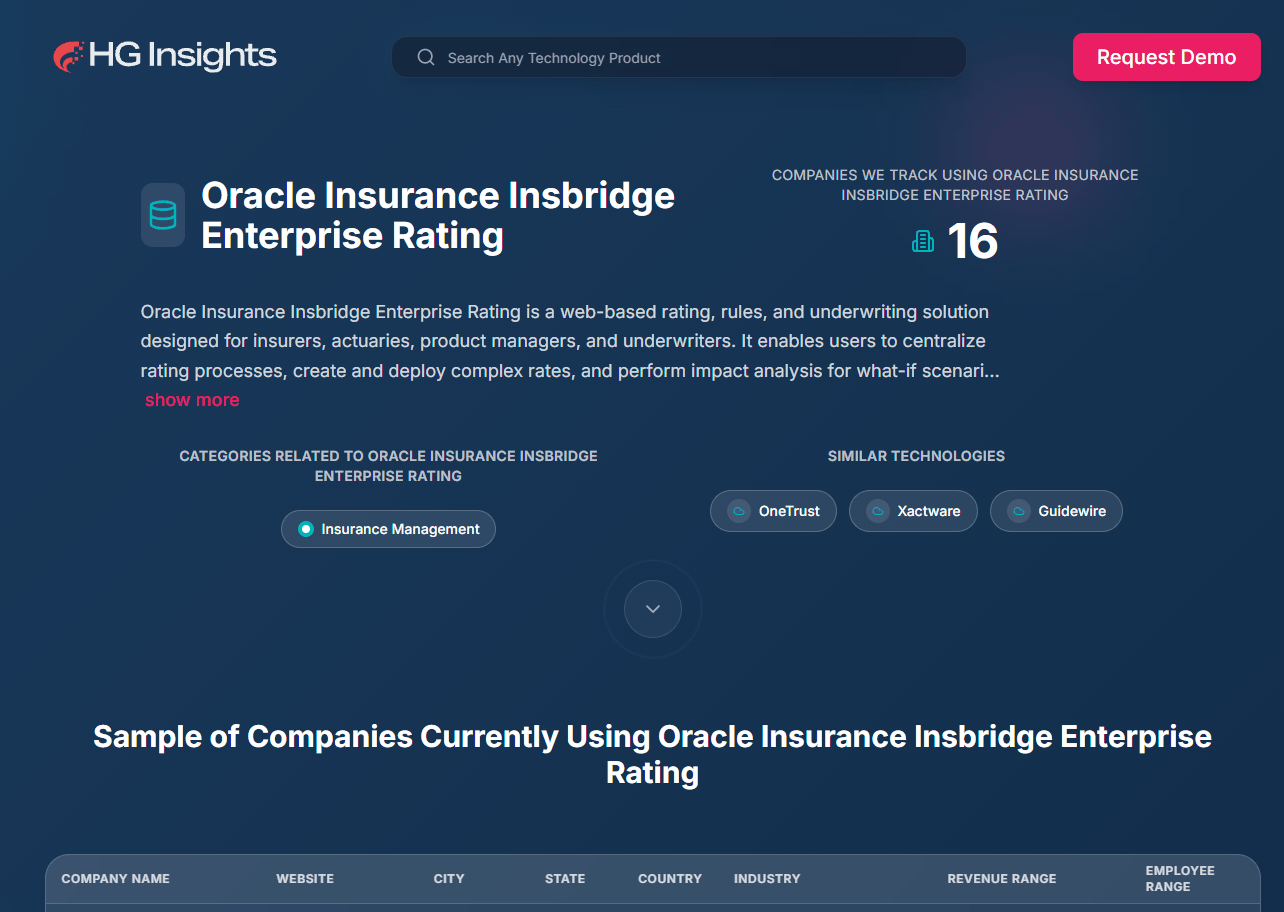
Oracle Insurance Insbridge Enterprise Rating is an enterprise rating engine for building, managing, and deploying complex rating logic without custom code. It uses a codeless interface that business users can operate to configure rating rules, versioning, effective dates, and scenario modeling. It also generates impact analysis and audit reports, which matters for filed-rate governance and regulatory documentation.
Best for: Enterprise insurance carriers that need governed, configurable rating-rule management across products, channels, or jurisdictions.
Key features
- Codeless rating-rule configuration for business users
- Product, channel, and effective-date versioning
- Impact analysis and auditability reports
- XML and web-services integrations with core systems
- Scenario testing before rule deployment
Why choose Oracle Insurance Insbridge Enterprise Rating: When rating complexity is the core problem, this is built for it. Teams that need pricing governance, audit trails for filed rates, and the ability to model rate changes before they go live will find it purpose-fit. It is not a quoting front-end or a policy administration system.
Oracle Insurance Insbridge Enterprise Rating pricing: Contact Oracle for pricing. Drivers include enterprise licensing structure, number of environments, integration requirements, and implementation services.
G2 rating: 4.3/5
9. Quotit
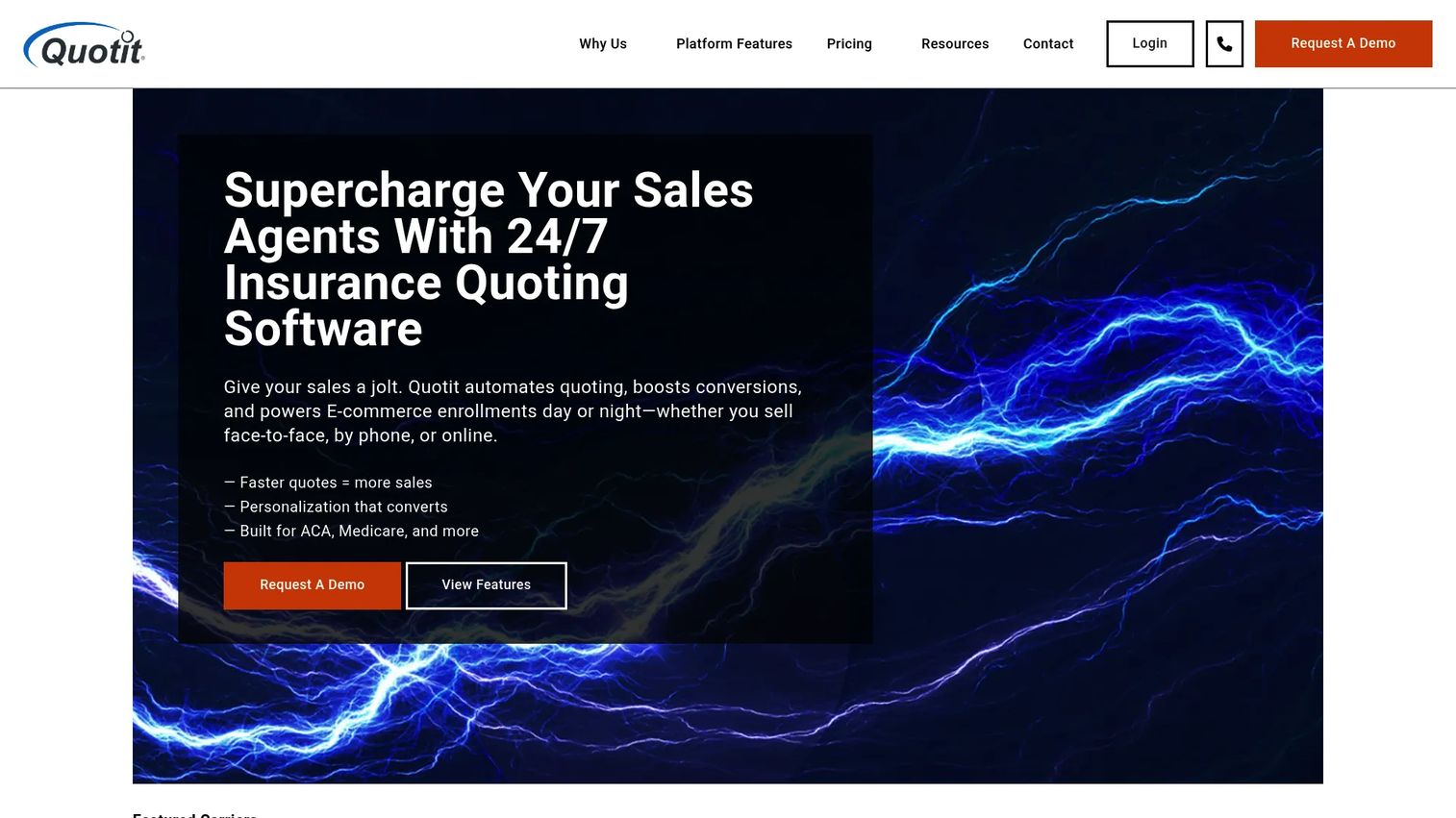
Quotit is an insurance software platform for agents and agencies selling health, life, and related products. It combines a multi-carrier quoting engine with CRM, enrollment workflows, proposal generation, policy tracking, and marketing automation. It also supports consumer-direct quoting and lead routing for agencies that want a client-facing quote experience.
Best for: Insurance agents and agencies that sell health or life insurance and need quoting, enrollment, and client management in one place.
Key features
- Multi-carrier health and life quoting engine
- CRM with client and policy tracking
- Compare and enroll functionality
- Proposal creation and marketing automation
- Consumer-direct quoting and lead routing
Why choose Quotit: It addresses a specific segment: Health and life insurance agents who want quoting and enrollment without managing separate CRM and proposal tools. It is not a carrier-grade underwriting engine or a policy administration system.
Quotit pricing: Independent agent plans start at $99/month with a $150 activation fee. Agency plans start at $199/month with a $300 activation fee. Higher tiers add features and go up to $199/month for agents and $459/month for agencies. Enterprise and high-volume clients contact Quotit directly.
G2 rating: 4.6/5
10. Verisk A-PLUS
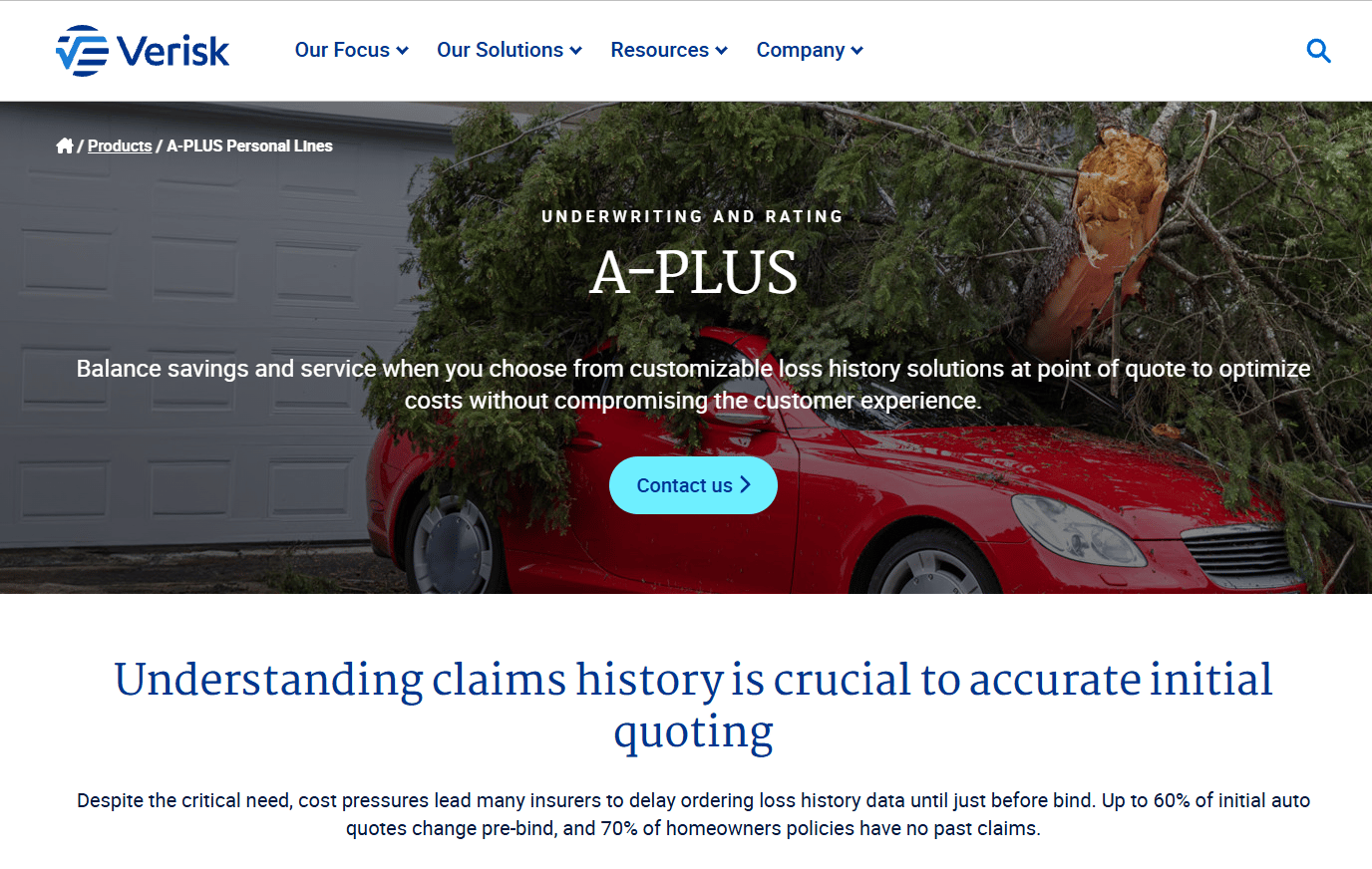
Verisk A-PLUS is a loss-history data service for insurance underwriting. It provides auto and property loss-history reports with up to five years of claims and coverage information, as well as the Claims Activity Profiler (CAP) for point-of-quote claims indicators and police-report enhancements with normalized accident analytics. It supports underwriting decisions by giving carriers access to prior claims history they would not otherwise see at application.
Best for: Carriers using prior loss-history as a key underwriting and pricing signal.
Key features
- Auto loss-history reports with up to five years of data
- Property loss-history for individuals, businesses, and locations
- Claims Activity Profiler (CAP) at the point of quote
- Police-report data with normalized risk analytics
- Coverage-history indicators for underwriting decisions
Why choose Verisk A-PLUS: It addresses a specific underwriting data gap: What did this applicant's prior claims look like before they arrived at your door? Teams often pair it with a rating engine or policy system rather than using it as a standalone platform.
Verisk A-PLUS pricing: Contact Verisk to price based on report volume, data access terms, insurance lines, and integration requirements.
G2 rating: 4.1/5 (Verisk overall)
11. Earnix
Earnix is an AI-driven pricing, rating, and analytics platform for insurers, banks, and lenders. It supports dynamic pricing optimization, an enterprise rating engine with real-time rate deployment, predictive underwriting, scenario forecasting, and governance and compliance features. It connects pricing strategy with rate execution in a way that most separate analytics and rating tools do not.
Best for: Insurance pricing teams that need analytics-driven rate decisions and governed rate deployment, not just faster quoting.
Key features
- Dynamic pricing optimization and rate deployment
- Enterprise rating engine with real-time capabilities
- Predictive modeling and analytical underwriting
- Simulation, scenario forecasting, and governance
- Product personalization and customer-decisioning support
Why choose Earnix: It suits teams with pricing sophistication who need better rate strategy and faster rate deployment, not a quoting front-end. The fit is enterprise insurers where pricing is a strategic capability, not a configuration task.
Earnix pricing: Contact Earnix for a quote.
12. Sapiens
Sapiens is a SaaS-based insurance software provider with core systems for P&C, life and annuities, reinsurance, and workers' compensation. Its platform includes policy administration, underwriting, billing, claims, digital tools, finance, compliance, and AI-powered automation. Sapiens positions itself around cloud-native delivery and AI-enabled decisioning across insurance lines.
Best for: Enterprise insurers seeking broad core-system modernization across multiple insurance lines.
Key features
- AI-powered insurance automation and decisioning
- Cloud-native SaaS insurance platform
- Policy administration, underwriting, billing, and claims
- Digital tools, finance, and compliance capabilities
- Cross-line support: P&C, life, annuities, reinsurance
Why choose Sapiens: It suits carriers that need a broad platform and want underwriting and rating connected to billing, claims, and compliance across multiple lines of business. Confirm the specific modules relevant to your lines before entering a procurement process.
Sapiens pricing: Contact Sapiens for pricing. Confirm product suite, implementation scope, geography, insurance lines, and integration work before comparing quotes.
G2 rating: 4.4/5
13. Heron Data
Heron Data is an underwriting automation platform for small-business finance and insurance. It processes applications and documents into decision-ready submissions by handling intake, document classification, ISO and bank-statement scrubbing, background checks, cashflow analytics, fraud detection, and CRM or policy administration system synchronization. It targets teams where the bottleneck is before the underwriting decision: Gathering, reading, and structuring applicant data.
Best for: Funders, brokers, and insurers automating small-business underwriting intake workflows.
Key features
- Application and email intake with document classification
- ISO scrubbing and bank-statement data extraction
- Background checks and risk screening
- Cashflow analytics and fraud detection
- CRM and policy system synchronization
Why choose Heron Data: The core value is intake automation. If underwriters spend significant time validating documents before they can evaluate risk, Heron Data addresses that directly by structuring the data before it reaches them.
Heron Data pricing: Contact Heron Data for pricing. Confirm document volume, intake workflows, integration requirements, and human review expectations.
14. Shift Technology
Shift Technology provides AI agents and decisioning tools for insurance carriers. Its platform covers claims assessment and automation, fraud and risk detection with case management, subrogation opportunity detection, and payment-integrity workflows. It is primarily used by claims and risk teams, but its fraud-detection and risk-scoring capabilities extend into underwriting workflows where anomaly signals matter.
Best for: Insurance carriers that need AI-powered fraud detection and risk intelligence across claims and underwriting.
Key features
- AI-powered claims assessment and triage
- Fraud and risk detection with case assignment
- Subrogation opportunity detection and liability assessment
- Network analysis for connected risk signals
- Underwriting decision support through risk scoring
Why choose Shift Technology: It fits carriers where fraud and anomaly detection are underwriting inputs, not just claims outputs. If your underwriting and claims teams share risk signal needs, it covers both sides.
Shift Technology pricing: Contact Shift Technology for a quote. Confirm use case, data volume, model deployment approach, integration effort, and professional services scope.
G2 rating: 4.0/5
15. Ocrolus
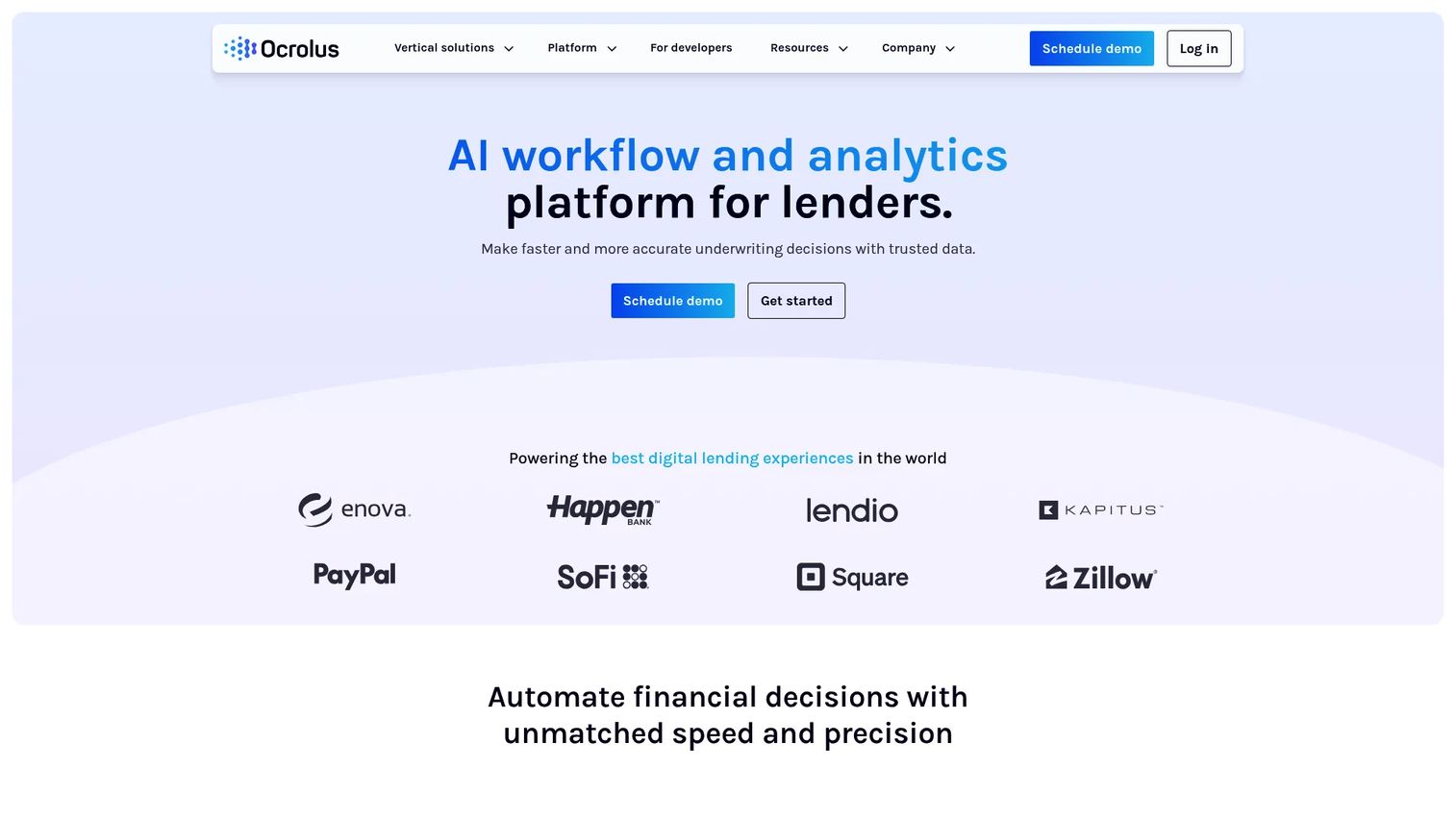
Ocrolus is an AI workflow and analytics platform for lenders and financial-services teams. It automates document classification and data extraction across more than 1,700 document types, including bank statements, W-2s, 1040s, pay stubs, and business financial documents. Beyond extraction, it delivers income and cash-flow analytics, AI-powered document fraud detection, and human-in-the-loop verification where needed.
Best for: Teams underwriting from bank statements, tax forms, and financial documents who want to reduce manual document review.
Key features
- Document classification and extraction across 1,700+ document types
- Income, employment, asset, and cash-flow analytics
- AI-powered fraud and document-tampering detection
- Human-in-the-loop verification layer
- API and dashboard-based workflows
Why choose Ocrolus: When underwriters spend hours validating financial documents before evaluating risk, Ocrolus moves that work upstream. It is strongest for financial document workflows and lending-adjacent underwriting, where bank statements and income verification are the primary inputs.
Ocrolus pricing: A free trial covers up to 100 pages of bank statements, W-2s, 1040s, and pay stubs. Volume pricing is contact-sales. Confirm document types, monthly volume, review model, and integration requirements.
G2 rating: 4.6/5
Considerations when choosing underwriting and rating software
Match the tool to your operating model
Agencies need comparative rating and quoting tools. Carriers need rating engines or full policy suites. Document-heavy teams need intake automation before decisioning. Buying a full policy administration suite to fix a quote-speed problem adds implementation costs without solving the bottleneck. Write down your specific workflow gap in one sentence before you open any vendor demo.
Check rating governance and auditability
Filed rates, rule changes, approval trails, overrides, and versioning are not optional features. They are operational and regulatory requirements. Ask every vendor how rate changes are documented, who can approve overrides, and how the system handles effective dates. For carriers in regulated markets, the audit trail is as important as the rating logic itself.
Map integrations before you book demos
Confirm which systems the tool needs to connect to: Policy administration, billing, claims, CRM, data warehouse, payment processing, document management, and third-party data providers. Enterprise insurance systems that look complete in a demo often require substantial integration work in practice. Get the integration architecture conversation started early, not after contract signature.
Price the implementation, not just the subscription
Configuration, data migration, actuarial involvement, product team time, training, and partner services often cost more than the annual license for enterprise insurance platforms. Ask vendors for a full implementation cost estimate, not just a software price. The teams that get surprised by implementation cost are almost always the ones who skipped this question during evaluation.
Decide where AI belongs in the workflow
AI for document extraction, AI for fraud detection, AI for predictive pricing, and AI for underwriting recommendations are four different capabilities. Do not let vendors bundle them under a single "AI-powered" claim. Ask specifically what the AI does, where it sits in the workflow, how it handles exceptions, and what happens when it is wrong. That question separates tools worth evaluating from those with marketing language that outpaces the actual product.
Conclusion
The right underwriting and rating software depends entirely on where the bottleneck is.
Agencies focused on quoting speed should start with EZLynx, TurboRater, or PL Rating for personal lines, or Quotit for health and life. Enterprise carriers modernizing core systems should evaluate Guidewire InsuranceSuite, Duck Creek Technologies, or Sapiens based on lines of business, implementation capacity, and existing stack. Teams whose main need is a governed insurance rating engine without replacing a full core system should look at Oracle Insurance Insbridge.
Document-heavy workflows that stall before the underwriting decision can get to review speed improvements through Heron Data or Ocrolus. Carriers that need risk intelligence layered into claims and underwriting should evaluate Shift Technology. Pricing teams focused on rate strategy rather than faster quoting have a different conversation with Earnix. Verisk A-PLUS fills a specific data gap for carriers that rely on prior loss history as an underwriting input.
Before booking a single demo, write down the bottleneck in one sentence. Quote speed, rating governance, document intake, risk scoring, or core system modernization. The right shortlist gets much clearer from there.
For more context on evaluating insurance software and analytics vendors, see the guide to best predictive analytics software tools.
FAQs
Underwriting and rating software helps insurance teams evaluate risk, calculate premiums, generate quotes, apply underwriting rules, document decisions, and route approved policies into downstream systems. It spans multiple tool types including comparative raters for agencies, rating engines for carriers, policy administration systems, AI document extraction tools, and pricing analytics platforms. The right choice depends on which part of the workflow is the actual bottleneck.
Underwriting software evaluates risk and supports approval, referral, or decline decisions based on eligibility rules and risk criteria. Rating software calculates the premium using rules, rate tables, algorithms, and jurisdiction-specific filed rates. Many platforms combine both, but specialized tools exist for each job. A rating engine governs premium calculation; an underwriting workbench governs the decision logic around it.
Agencies primarily need comparative rating and quoting tools rather than carrier-grade underwriting platforms. EZLynx suits agencies that want rating and agency management in one system. TurboRater focuses on personal-lines quoting speed. PL Rating offers multi-carrier personal-lines comparison through the Applied Systems ecosystem. Quotit serves agents selling health and life products who need quoting, enrollment, and CRM together.
Enterprise carriers should evaluate Guidewire InsuranceSuite and Duck Creek Technologies for connected core-system modernization, Guidewire PolicyCenter or Duck Creek Policy for policy administration specifically, and Oracle Insurance Insbridge Enterprise Rating for standalone rating-rule governance. Sapiens is a viable alternative for carriers that need a broad platform across multiple insurance lines. The choice depends on whether you are modernizing one system or multiple core operations at once.
Cost depends on buyer type, modules selected, users, states, lines of business, and implementation scope. Agency quoting tools like Quotit publish plans starting at $99/month. Enterprise platforms from Guidewire, Duck Creek, Oracle, and Sapiens do not publish pricing and are sized based on direct written premium, deployment scope, and implementation services. For enterprise systems, implementation costs frequently exceed annual license fees. Ask every vendor for a total-cost estimate, not just a software quote.
Agency comparative raters are typically lighter to deploy, often measured in days or weeks. Enterprise policy and rating systems require data migration, product configuration, underwriting-rule setup, integration work, user acceptance testing, and training. Implementation for full core-system replacements at large carriers commonly runs twelve to twenty-four months. Document extraction tools like Ocrolus or Heron Data can be faster to integrate via API if data pipelines are already defined.
AI can automate document extraction, detect fraud signals, score risk, and prioritize case queues, but it does not replace human underwriting judgment in complex or non-standard risks. Governance, regulatory accountability, and final coverage decisions in most markets remain human-led. The practical value of AI in underwriting today is narrowing the time underwriters spend on data gathering and anomaly flagging, so they can focus on the decisions that require judgment. According to Gen Re's 2025 survey, 82% of life carriers had fully or partially implemented accelerated-underwriting workflows, most combining AI screening with human review rather than replacing it.
Ask how rating rules are configured and who can change them. Ask how the system documents rate overrides and approval decisions. Ask what the audit trail looks like for a filed-rate change. Ask which policy administration, billing, and claims systems it integrates with and what that integration requires. Ask for a full implementation timeline estimate, not just a software timeline. For AI tools, ask specifically what the model does, what happens when it flags something incorrectly, and how exceptions are handled.