

Your best hire this quarter never applied. They were already employed, happy enough, and not scanning job boards. You had to go find them.
That is the whole problem with waiting for inbound. The candidates you actually want are passive. They ignore your careers page. They open one in ten cold messages if the copy is good. And every hour a recruiter spends toggling between LinkedIn, a spreadsheet, an email tool, and your ATS is an hour not spent talking to people.
The market has noticed. The global applicant sourcing platform market was valued at $7.8 billion in 2025 and is projected to reach $13.5 billion by 2034, growing at a 6.8% CAGR, according to MarketIntelo (2025). Money follows friction, and sourcing is where recruiting friction concentrates.
For a founder scaling a team, the question is not "should we source proactively?" It is "which tool reduces recruiter manual work without becoming another system nobody maintains?" This guide answers that with seven picks, an evaluation framework, and honest notes on where each one fits.
What's inside
This guide is for recruiters, talent leaders, and founders building sourcing infrastructure for a scaling team. It covers standalone sourcing platforms and ATS-integrated ones, with a bias toward practical recruiting workflows over feature-count bragging.
Tools were selected and ranked on four criteria:
- Coverage: how many candidate profiles the tool can search and how fresh that data stays
- Automation and AI: whether the AI assists sourcing or actually removes manual steps
- Integrations: how cleanly it syncs with your ATS, CRM, and outreach stack
- Cost and ease: entry price, implementation effort, and fit for smaller teams
We deprioritized pure job-board posting tools and generic HR suites where sourcing is a bolt-on rather than the core job.
TL;DR
- Best overall for AI-first sourcing plus CRM: Gem combines sourcing, outreach, and pipeline analytics in one workflow.
- Best ATS-integrated recruiting workflow: Simplicant pairs sourcing with screening, interviews, offers, and onboarding.
- Best for deep candidate coverage and search: SeekOut searches across a large profile index with strong AI screening.
- Best for assisted outbound sourcing: Fetcher runs AI candidate discovery and outreach campaigns for lean teams.
- Best for mid-market and enterprise scale: HireEZ layers sourcing, CRM, and engagement automation across web and ATS.
- Best for field and deskless hiring: Team Engine handles sourcing plus employee messaging for blue-collar teams.
- Best for global hiring workflow: Deel Hire connects sourcing to compliant hiring and onboarding across countries.
What candidate sourcing software is
Candidate sourcing software is a set of tools that proactively finds, scores, and engages potential candidates before they apply, drawing from job boards, professional networks, talent pools, and referrals.
Unlike an applicant tracking system, which manages people who already raised their hand, sourcing platforms go looking. They surface passive candidates, enrich contact data, and help recruiters run outreach at volume without losing the personal touch that gets replies.
What candidate sourcing software does
Good sourcing tools compress a manual, tab-heavy process into one workflow. A recruiter defines a role, the platform searches across public profiles and internal databases, ranks candidates by fit, and surfaces verified contact details. From there, the recruiter launches personalized outreach and tracks who opened, replied, and progressed. The signal that comes back, response rates, drop-off points, source quality, feeds the next search.
Core features to expect
- Candidate discovery: search across job boards, social channels, and talent pools
- AI matching and scoring: rank candidates against role requirements automatically
- Multichannel outreach: email and messaging sequences with response tracking
- Talent pool management: build and re-engage warm pipelines over time
- ATS and CRM integrations: sync candidates and status without double entry
- Analytics and source tracking: measure response rates, funnel conversion, and cost per hire
When to use candidate sourcing software
Sourcing tools earn their place in specific situations, not every hire. Here is how to pattern-match your own.
Build pipelines before roles open
Proactive sourcing means you are not starting from zero the day a req opens. Talent CRM features let you build warm pools by function, seniority, and geography, then re-engage them when a role appears. For a scaling team hiring the same profiles repeatedly, this turns a four-week search into a shortlist you already have.
Fill hard-to-source roles faster
Niche engineering, specialized sales, or leadership roles rarely fill from inbound. The candidates qualified for them are employed and passive. Sourcing platforms with deep coverage and diversity filters help you find people no job board surfaces, in markets where a handful of qualified candidates exist.
Reduce recruiter manual work
Enrichment, list building, and outreach sequencing are the tasks that eat recruiter time. Automating them frees hours for the human parts of hiring: conversations, evaluation, and closing. The goal is fewer tabs and fewer copy-paste steps, not more dashboards.
Improve visibility into sourcing performance
You cannot fix what you cannot see. Source tracking tells you which channels produce hires, response-rate reporting shows which messages land, and cost-per-hire data tells you where budget is wasted. For a founder answering to a board, clean sourcing metrics survive scrutiny.
Comparison table
Here is a side-by-side view of the seven candidate sourcing platforms in this guide. Tools are sorted by relevance to proactive applicant sourcing, not alphabetically. Pricing and G2 ratings reflect each vendor's public pages at the time of writing.
| # | Product | Best for | Key differentiation | Pricing | G2 rating |
|---|---|---|---|---|---|
| 1 | Gem | AI-first sourcing plus CRM | Sourcing, outreach, and pipeline analytics in one | From $130/mo | 4.7/5 |
| 2 | Simplicant | ATS-integrated recruiting workflow | Sourcing through onboarding in one ATS | Quote-based | 4.8/5 |
| 3 | SeekOut | Deep candidate coverage | AI search across 1B+ profiles | From $149/mo | Not listed |
| 4 | Fetcher | Assisted outbound sourcing | AI discovery plus managed outreach | Quote-based | 4.6/5 |
| 5 | HireEZ | Mid-market and enterprise scale | Sourcing across web and ATS with CRM | From $494/mo | 4.6/5 |
| 6 | Team Engine | Field and deskless hiring | Sourcing plus employee messaging | From $500/mo | 4.7/5 |
| 7 | Deel Hire | Global hiring workflow | Sourcing tied to compliant hiring | From $14/worker/mo | 4.8/5 |
Best applicant sourcing software for 2026
Seven tools, ranked by fit for proactive sourcing. Each entry covers what it does, who it suits, key strengths, the honest trade-off, and current pricing.
1. Gem
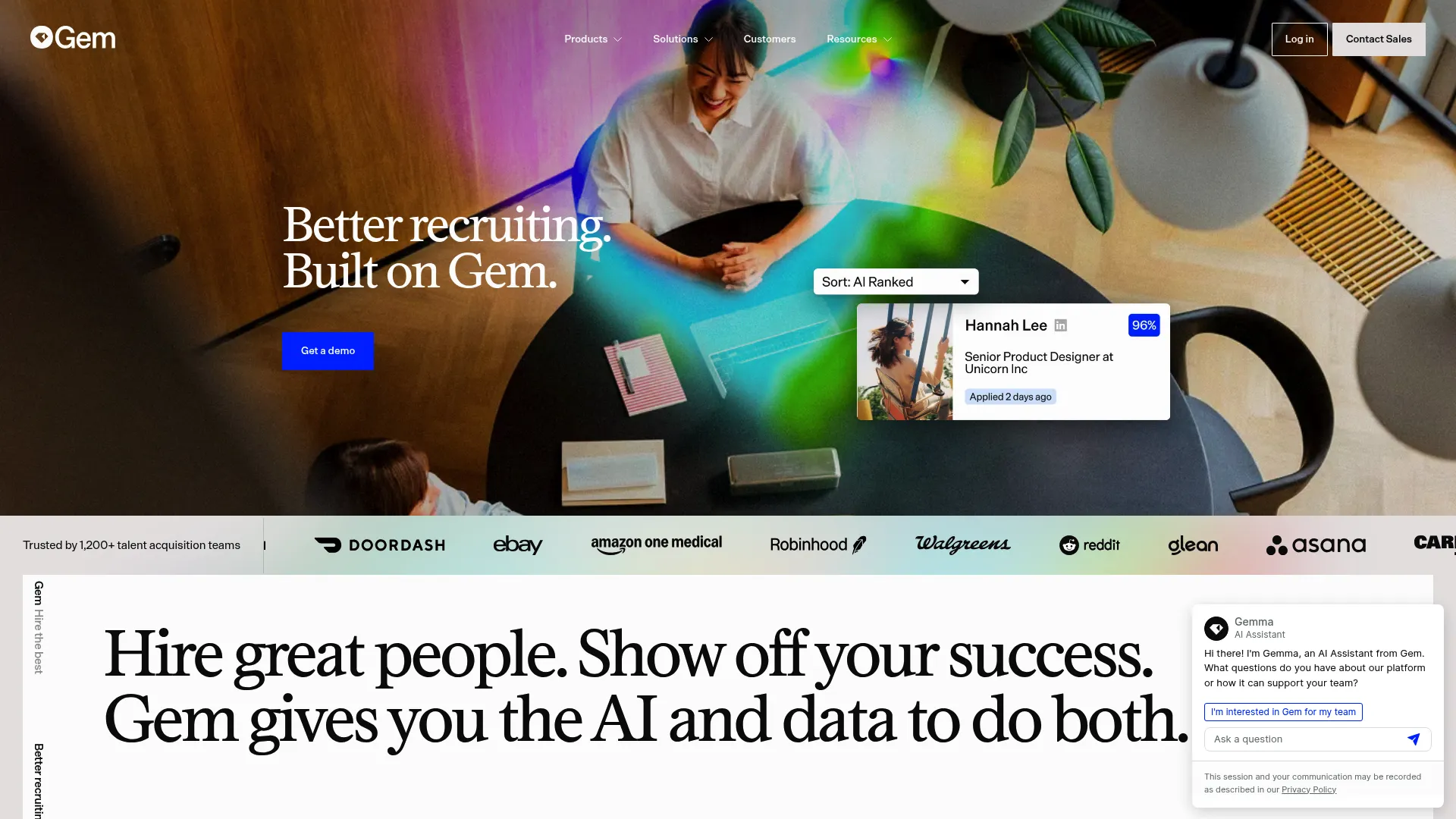
Gem is an AI recruiting platform built for talent acquisition teams that want sourcing, CRM, and pipeline management in one system. It surfaces candidates, coordinates outreach sequences, and keeps engagement data in a talent CRM so recruiters stop rebuilding pipelines every quarter. The analytics layer ties sourcing activity to hiring outcomes.
Best for: Recruiting teams that want AI-first sourcing plus engagement orchestration in a single workflow.
Key strengths
- AI sourcing and CRM: find candidates and nurture warm pools over time
- Applicant tracking and scheduling: move sourced candidates through hiring without a second tool
- Pipeline analytics: correlate sourcing activity with hires and time-to-fill
- Automations: run outreach sequences without manual follow-up tracking
Why choose Gem: Gem fits teams that treat sourcing and engagement as one motion rather than two disconnected steps. If you are hiring similar profiles repeatedly and want response-rate data to guide the next search, the combined CRM and analytics earn their place. It rewards teams ready to commit to a structured pipeline workflow.
Gem pricing: The Gem Startup Program starts at $130 per month, billed yearly with a 10% discount. Gem plus your ATS is custom priced based on FTE count. Gem All-in-One is free for six months, then 50% off, for companies under 30 employees. No permanent free tier is listed.
2. Simplicant
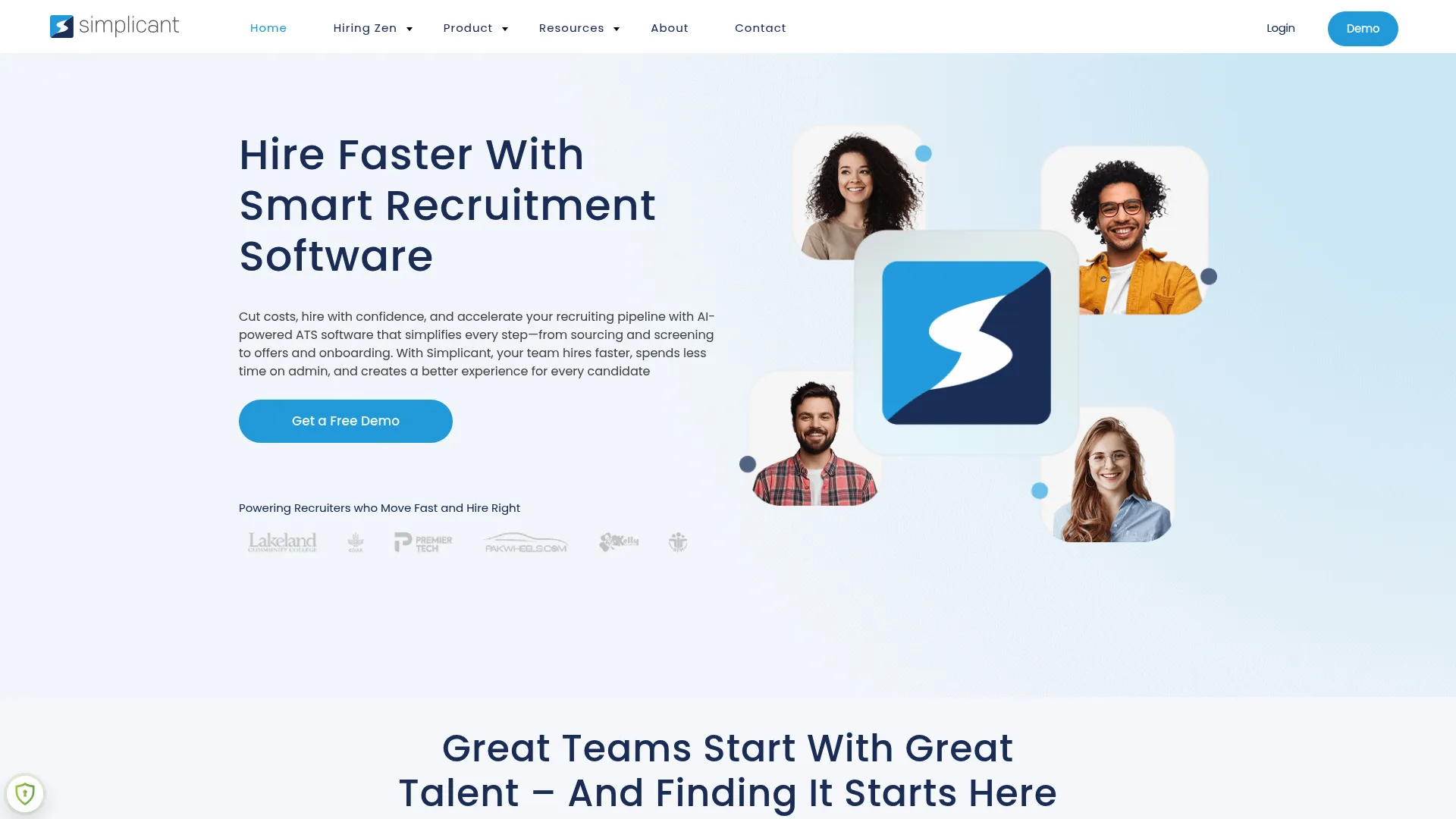
Simplicant is applicant tracking and recruitment software that folds sourcing into a full hiring workflow. It covers sourcing, AI candidate matching, resume parsing, screening, interviews, offers, onboarding, and reporting. For teams that want sourcing and downstream hiring in one place rather than stitched together, this is the appeal.
Best for: Teams seeking an ATS with recruiting workflow, sourcing, screening, and hiring automation built in.
Key strengths
- ATS with built-in sourcing: find and track candidates in one system
- AI candidate matching and resume parsing: rank applicants against role criteria automatically
- End-to-end workflow: screening, interviews, offers, and onboarding in one place
- Reporting and analytics: track pipeline health and hiring performance
Why choose Simplicant: Simplicant makes sense when handoff consistency matters more than best-of-breed sourcing depth. A sourced candidate never leaves the system between discovery and onboarding, which cuts the double entry that fragments most recruiting stacks. It suits teams that want one recruiting platform, not five.
Simplicant pricing: Simplicant lists three tiers, Standard, Professional, and Enterprise, all quote-based rather than public. Contact the vendor for pricing specific to your seat count and workflow needs.
3. SeekOut
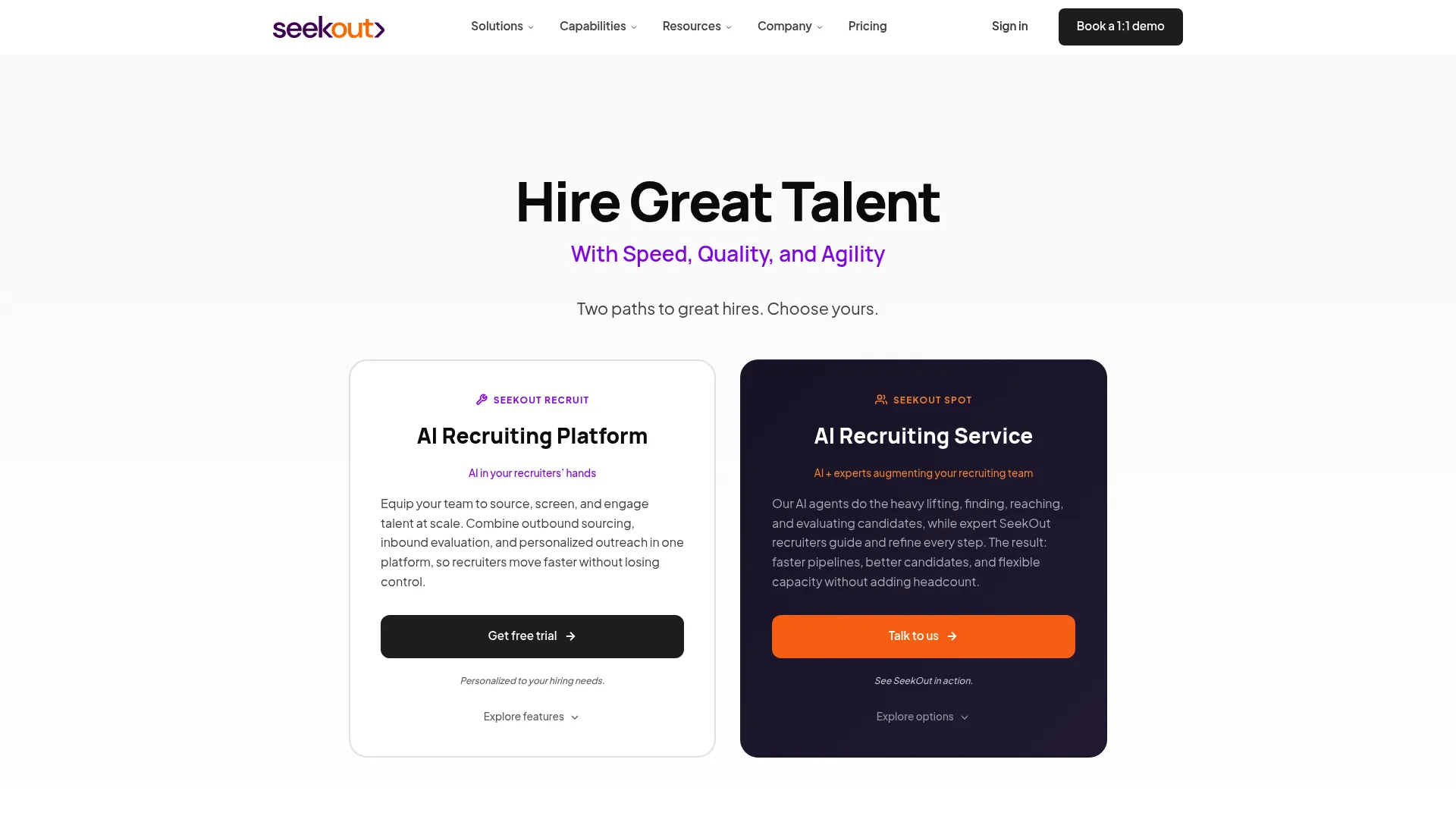
SeekOut is an AI recruiting platform built for depth of candidate coverage. It searches across more than a billion profiles, evaluates inbound applicants with AI screening, and supports personalized outreach and talent rediscovery. For teams filling hard-to-source or specialized roles, the breadth of the index is the differentiator.
Best for: Recruiting teams that need AI-assisted sourcing and screening at scale across large candidate pools.
Key strengths
- Search across 1B+ profiles: reach passive candidates no job board surfaces
- AI screening: evaluate inbound applicants against role requirements
- Personalized outreach: engage candidates with tailored messaging
- Talent rediscovery: re-surface past applicants who now fit open roles
Why choose SeekOut: SeekOut is the pick when your bottleneck is finding qualified people at all, not managing a small known pool. Deep coverage and diversity signals help teams with complex search requirements reach candidates in thin markets. Teams hiring generic profiles from a healthy inbound flow may not need the depth.
SeekOut pricing: SeekOut Recruit Core starts at $149 per month paid annually, or $179 per month billed monthly. Sourcing and integration tiers, plus SeekOut Spot, are custom priced. No free tier is listed.
4. Fetcher
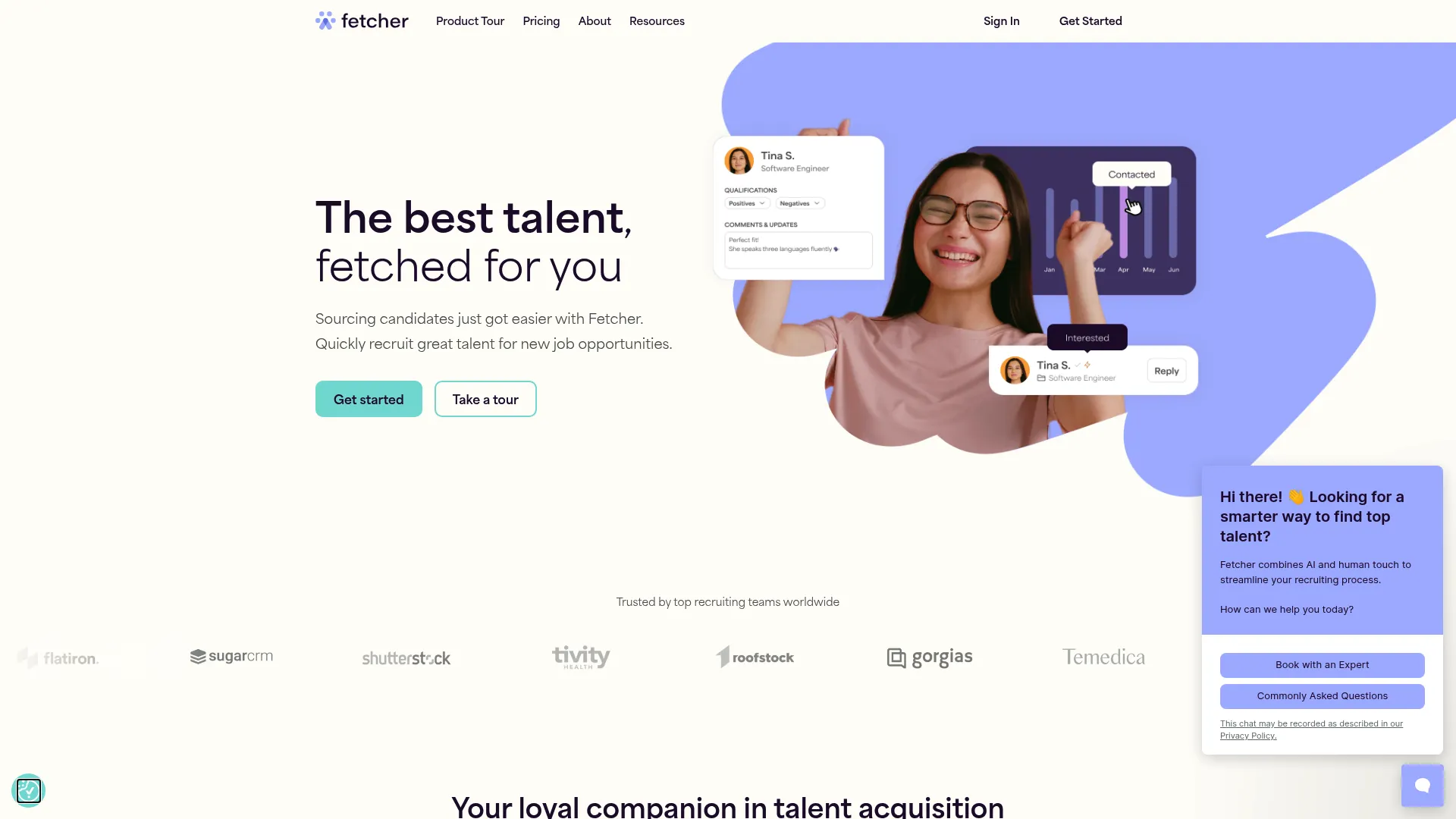
Fetcher is an AI candidate sourcing and recruiting platform that pairs discovery with managed outreach. It screens candidates with AI, runs outbound email campaigns, and integrates with your ATS, CRM, email, and Slack. The model suits lean teams that want a steady flow of sourced, contacted candidates without building the process themselves.
Best for: Recruiting teams that want AI-assisted sourcing and candidate outreach handled for them.
Key strengths
- AI candidate screening: filter for fit before a recruiter reviews
- Outbound sourcing and email campaigns: run outreach at volume with tracking
- ATS, CRM, email, and Slack integrations: keep sourced candidates flowing into your stack
- Practical pipeline building: a consistent top-of-funnel without manual list building
Why choose Fetcher: Fetcher fits when recruiter time is the scarce resource and you want sourcing plus outreach as a service rather than a tool to operate. It trades some hands-on control for a lighter operational load. Teams that want to tune every search parameter themselves may prefer a more manual platform.
Fetcher pricing: Fetcher's pricing page lists four plans, Self-serve, Growth, Amplify, and Enterprise, billed monthly or annually, with no public dollar amount. Larger teams are directed to request volume pricing.
5. HireEZ
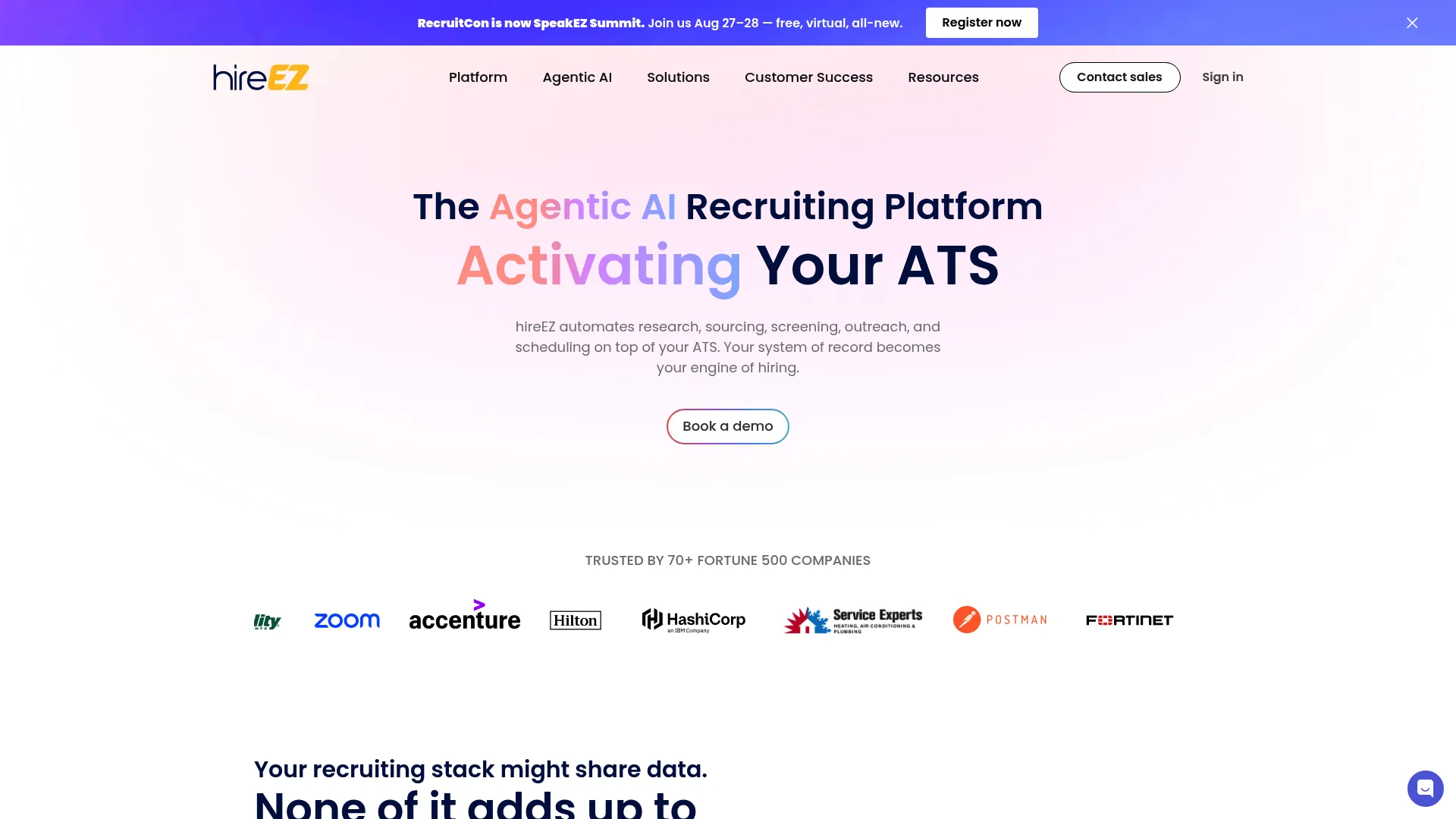
HireEZ is an AI recruiting platform built for sourcing intensity and scale. It sources across the open web and your ATS, runs a talent CRM, automates candidate engagement, and adds Applicant Match, AI screening, and interview scheduling. Mid-market and enterprise teams use it as an all-in-one talent acquisition stack.
Best for: Mid-market and enterprise recruiting teams needing a broad talent acquisition platform in one place.
Key strengths
- AI-powered sourcing across web and ATS: reach candidates inside and outside your database
- Talent CRM and engagement automation: nurture pools and automate follow-up
- Applicant Match and AI screening: rank candidates against open roles
- Interview scheduling: move candidates forward without calendar ping-pong
Why choose HireEZ: HireEZ is the pick when sourcing volume and coverage across many roles is the priority and you have the budget for an enterprise stack. It consolidates sourcing, CRM, and engagement so recruiters work in fewer tools. The entry price makes it a heavier lift for very small teams.
HireEZ pricing: The solo recruiter plan starts at $494 per month, with a 7-day free trial. Enterprise pricing is not flat and is configured to the stack it replaces. Contact the vendor for enterprise quotes.
6. Team Engine
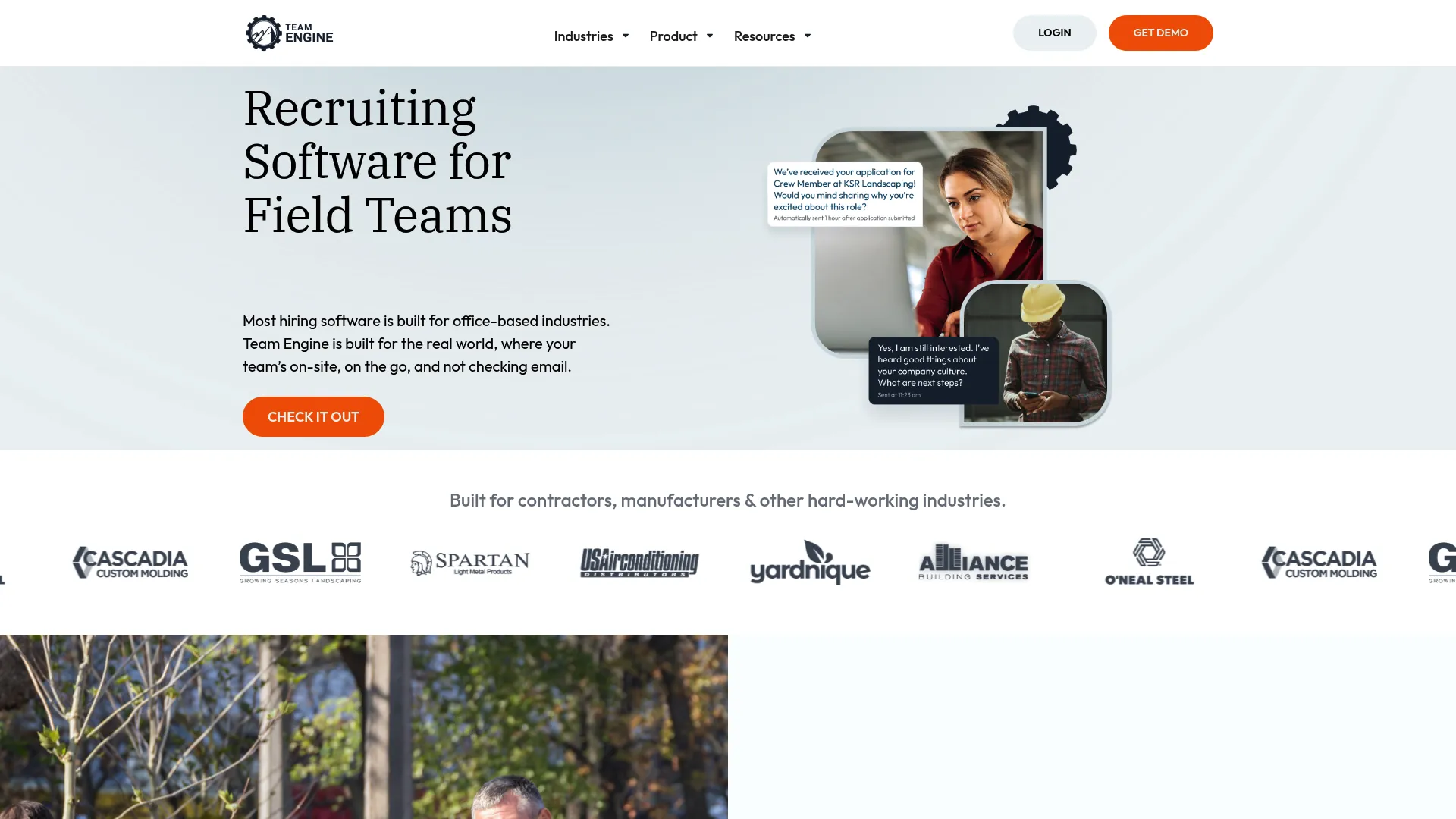
Team Engine is HR automation and recruiting software built for field-based and deskless teams. It combines applicant tracking and job posting with employee messaging, texting, and surveys. For companies hiring blue-collar or field workers, where SMS beats email and speed to first contact wins, this focus matters.
Best for: Companies with deskless or field teams that need hiring plus employee communication automation.
Key strengths
- Applicant tracking and job posting: post and track candidates across channels
- Employee messaging and texting: reach field candidates where they actually respond
- Surveys and feedback collection: gather signal from applicants and employees
- Source tracking: see which channels produce hires
Why choose Team Engine: Team Engine fits companies whose candidates do not live on LinkedIn and do not check email during a shift. Texting-first outreach and source tracking suit high-volume field hiring. Teams sourcing knowledge workers from professional networks will find a more specialized fit elsewhere.
Team Engine pricing: Essential starts at $500 per month billed annually. Growth starts at $800 per month billed annually. Enterprise is custom priced. No free tier is listed.
7. Deel Hire
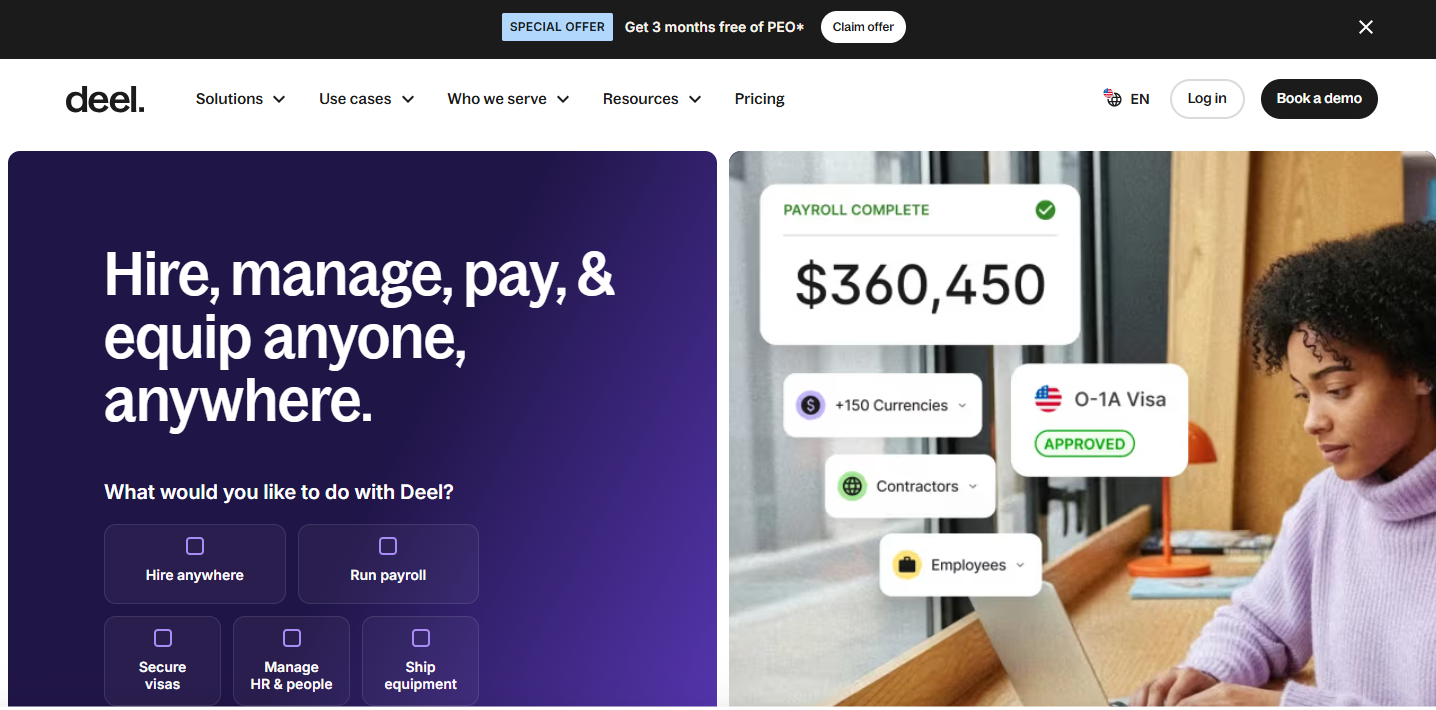
Deel Hire is Deel's global hiring platform that connects sourcing to compliant hiring and onboarding across countries and employment types. It supports finding talent, hiring full-time employees through EOR and PEO, managing global contractors, and handling ATS, compliance, onboarding, and equipment workflows. The draw is one platform from source to signed across borders.
Best for: Companies that need one platform to source, hire, and manage global workers.
Key strengths
- Talent sourcing tied to hiring: find candidates and move straight to compliant hiring
- Global EOR, PEO, and contractor support: hire across countries without local entities
- ATS and onboarding workflows: track candidates and onboard in one system
- Compliance and equipment handling: manage the operational side of global hires
Why choose Deel Hire: Deel Hire suits teams hiring internationally who want sourcing connected to the compliance and payroll reality of cross-border employment. Sourcing is one piece of a broader global hiring workflow. Teams focused purely on domestic sourcing depth may want a dedicated sourcing specialist instead.
Deel Hire pricing: Finding talent starts at $14 per worker per month. Hiring contractors is $49 per contractor per month, Contractor of Record is $325 per month, US PEO is $125 per employee per month, and EOR is $599 per employee per month.
Considerations
Before you commit to any sourcing platform, run it against this checklist. The right tool depends on your roles, your stack, and your team size.
Data freshness and candidate coverage
Stale profiles waste outreach. If a tool surfaces a candidate whose title changed 18 months ago, your message reads as careless and response rates drop. Ask how often the platform refreshes profile data and how large its searchable index is. Coverage without freshness is just a bigger pile of dead contacts.
ATS and CRM integration depth
A sourcing tool that does not sync cleanly with your ATS creates double entry and lost candidates at handoff. Check which systems it integrates with, whether the sync is one-way or two-way, and how status updates flow. Shallow integrations quietly recreate the tab-switching problem you bought the tool to solve.
Outreach and deliverability controls
Sourcing is only half the job. Look at sequencing, response handling, and bounce reporting. High bounce rates hurt your sending reputation and your reply rates. A platform that surfaces deliverability data lets you fix bad addresses before they cost you.
AI capability and automation quality
Ask whether the AI assists or actually removes manual steps. Assistive AI suggests candidates you still have to vet and contact one by one. Automation-grade AI ranks, enriches, and sequences so a recruiter reviews a shortlist instead of building one. The difference shows up in hours saved per week.
Reporting and ROI visibility
Source tracking, time-to-response, and cost-per-hire tell you whether the tool pays for itself. For a founder answering to a board, sourcing metrics that survive due diligence matter as much as the hires themselves. Confirm the reporting exports cleanly and maps to the numbers your leadership already tracks.
Security, privacy, and governance
Candidate data is personal data. Check access controls, candidate consent handling, and compliance posture, especially if you hire across regions with different privacy rules. Governance is boring until an audit makes it urgent.
Conclusion
The right applicant sourcing software depends on what breaks first in your process. If you want sourcing, outreach, and analytics in one AI-first workflow, Gem is the strongest all-around pick. If handoff consistency from source to onboarding matters most, Simplicant keeps everything in one ATS. For raw candidate coverage in thin markets, SeekOut's index depth is hard to beat.
Lean teams that want sourcing plus outreach handled for them should look at Fetcher. Mid-market and enterprise teams scaling across many roles will get the most from HireEZ. Field and deskless hiring belongs to Team Engine, and global hiring across borders points to Deel Hire.
Start by naming your single biggest sourcing bottleneck, coverage, manual work, integration, or visibility, then shortlist the two tools that solve it best. Run a trial against a live req before you sign anything. The tool that fills one real role in week one is the one worth keeping.
FAQs
Applicant sourcing software proactively finds, scores, and engages potential candidates before they apply, pulling from job boards, professional networks, and talent pools. It focuses on passive candidates who are not actively job hunting. Unlike an ATS, which manages inbound applicants, sourcing platforms go out and find people.
AI improves sourcing by ranking candidates against role requirements, enriching contact data, and drafting or sequencing outreach at volume. The best implementations remove manual steps rather than just suggesting them, so a recruiter reviews a ranked shortlist instead of building one by hand. That shifts recruiter time from list building to conversations.
An ATS manages candidates who have already applied, tracking them through screening, interviews, and offers. Candidate sourcing software works earlier and outward, finding passive candidates before they raise their hand. Many teams run both, and some platforms combine sourcing and ATS in one system to reduce handoff friction.
Tools with two-way sync keep candidate records and status consistent across both systems. Gem, Fetcher, and HireEZ are built to integrate with common ATS platforms, and Simplicant folds sourcing into its own ATS to avoid the handoff entirely. Always confirm the specific integration with your ATS before buying.
Track source-of-hire, outreach response rate, time-to-response, pipeline conversion, and cost-per-hire. Response rate tells you whether your messaging lands, source tracking tells you which channels produce hires, and cost-per-hire tells you where budget is wasted. Clean sourcing metrics also hold up under board and due-diligence scrutiny.
For passive candidates, data freshness and coverage matter most, because outdated profiles kill response rates. Then comes personalized, multichannel outreach with deliverability controls, since passive candidates ignore generic messages. Talent CRM features to nurture warm pools over time round out the essentials.
Sourcing platforms surface verified contact data, personalize messages at scale, and sequence follow-ups so no candidate is dropped. They also report opens, replies, and bounces, so you can fix bad addresses and refine copy. Better copy plus fresher data plus disciplined follow-up is what moves response rates up.
It can be, if you scope it to your biggest bottleneck. A small team hiring niche roles benefits more from coverage and outreach automation than from a broad enterprise suite. Start with a tool that has a low entry price or free trial, prove it fills one real role, then expand.