Healthcare software decisions have become some of the most consequential infrastructure choices an operator can make. Pick the wrong system and you fragment patient records, slow billing cycles, bury clinical staff in administrative work, and hand leadership dashboards nobody trusts. According to a 2026 Bain & Company and KLAS Research survey, 95% of U.S. healthcare providers and payers ranked software and digital technology among their top five strategic priorities. The pressure is real, and the stakes are high.
For founders and operators building into or alongside healthcare, the bigger question is not which tool has the most features. It is which system becomes the workflow your team can scale around without you being in every room.
This guide maps 18 health care software platforms across clinical, administrative, financial, analytics, imaging, documentation, telehealth, research, and interoperability workflows. It is a starting point for shortlisting, not a substitute for your security review or implementation plan.
What's inside
This guide compares 18 healthcare software systems selected from tools repeatedly surfaced across SERP research and category coverage. Each entry was evaluated on four criteria:
- Workflow fit: Does it solve a core operational problem for a specific team?
- Organization type: Is it built for hospitals, practices, payers, or research teams?
- Interoperability: Can it exchange data with EHRs, claims systems, and pharmacy networks?
- Pricing visibility: Is pricing accessible or quote-only, and what drives cost?
Guideflow is not in this list. Health care software covers clinical, administrative, and research platforms that sit outside Guideflow's category.
TL;DR
- Best overall for large health systems: Epic, for deeply embedded EHR and patient experience across hospitals, academic medical centers, and specialty clinics
- Best enterprise portfolio: Oracle Health, for organizations standardizing clinical, financial, and operational systems under one platform
- Best for independent practices: AdvancedMD for billing-heavy workflows, DrChrono for mobile-first charting
- Best for virtual care: Doxy.me for lightweight browser-based visits, Amwell for enterprise virtual care programs
- Best for analytics and population health: Health Catalyst and Arcadia.io for aggregating clinical and claims data
- Best for cutting documentation time: Freed, with AI-generated notes starting at $39/month
What is health care software?
Health care software is a category of digital systems that helps healthcare organizations manage clinical care, patient data, administrative operations, financial workflows, analytics, communication, and care delivery across settings.
The category spans a wide range of functions:
- Electronic health records (EHR software): Patient charts, clinical documentation, medication history, and care orders
- Practice and hospital management: Scheduling, registration, claims, and front-office workflows
- Telemedicine software: Video visits, remote consultations, and digital triage
- Healthcare analytics software: Quality measures, risk stratification, utilization, and cost trends
- Medical imaging software: Radiology workflows, image review, and AI-assisted triage
- Medical documentation software: Ambient notes, AI transcription, and clinician admin reduction
- Medical billing software: Coding, claims submission, and payment posting
- Clinical trial software: Electronic data capture, study operations, and patient data management
- Healthcare interoperability software: E-prescribing, records exchange, and network connectivity
- Healthcare supply chain software: Inventory management, procurement, and distribution
Healthcare software systems overlap in practice. An EHR may bundle scheduling and billing. An analytics platform may pull from EHR, claims, and external data sources simultaneously. Buyers should map tools to the specific workflow owner before comparing feature lists, because a tool that solves everything for a large hospital may be overbuilt for a 10-provider independent practice.
The category also covers care coordination software that connects clinicians across settings, and platforms that sit at the intersection of AI medical diagnostic platforms and clinical decision support. Understanding where each tool's value concentrates is the first step toward a defensible shortlist.
When to use health care software
Centralize clinical and patient records
When a provider organization operates across multiple sites or care teams, shared patient context becomes the foundation of safe and efficient care. EHR and enterprise clinical applications become essential when clinicians need to see the same medication history, orders, and notes regardless of where a patient was last seen. Multi-site practices, hospitals, specialty groups, and health systems all hit this problem as they grow.
Reduce administrative drag
Practice management, billing, documentation, and scheduling tools address the administrative burden that slows clinician capacity and revenue capture. For operators, the useful question is simple: What manual work disappears? Claim denial rates, note time per visit, and referral turnaround are concrete metrics to establish before buying. Tools in this category range from aged care management software to revenue cycle platforms serving high-volume specialist practices.
Scale care beyond the clinic
Telehealth, remote monitoring, patient engagement, and interoperability tools extend care into homes, employers, and community settings. These platforms also serve as infrastructure for chronic care programs, value-based care contracts, and multi-stakeholder coordination. Founders building into healthcare SaaS or investing in health tech will find this layer is where most of the AI and automation activity is concentrating in 2026.
Health care software comparison
The table below is a starting point. Healthcare buying depends on organization type, care setting, security review, implementation support, and reimbursement workflows. Use it to narrow your shortlist, then verify pricing and ratings directly with each vendor.
| # | Product | Best for | Key differentiator | Pricing | G2 rating |
|---|---|---|---|---|---|
| 1 | Epic | Large health systems and hospitals | Deep EHR and patient experience ecosystem | Quote-based | 4.2/5 |
| 2 | Oracle Health | Enterprise healthcare organizations | Clinical, financial, and operational platform breadth | Quote-based | N/A |
| 3 | Meditech Expanse | Hospitals and health systems | Integrated web-based EHR across acute and ambulatory | Quote-based | 3.1/5 |
| 4 | AthenaOne | Ambulatory practices needing EHR and billing | Network-enabled practice operations with services | Quote-based | N/A |
| 5 | AdvancedMD | Independent practices and billing-heavy clinics | Specialty-specific EHR, PM, and RCM bundles | From $130/provider/mo | 3.6/5 |
| 6 | DrChrono | Mobile-first practices | iPad-friendly EHR with AI scribe | Quote-based | 3.4/5 |
| 7 | Doxy.me | Simple telehealth visits | Free browser-based virtual visits | Free; paid from $29/user/mo | 4.5/5 |
| 8 | Amwell | Enterprise virtual care programs | Scalable telehealth for health plans and systems | Quote-based | 3.5/5 |
| 9 | Health Catalyst | Healthcare analytics teams | Data platform plus embedded analytics applications | Quote-based | 5.0/5 |
| 10 | Arcadia.io | Population health and value-based care | Aggregated clinical and claims data intelligence | Quote-based | 5.0/5 |
| 11 | Philips IntelliSpace | Imaging and radiology workflows | Enterprise imaging informatics and clinical workflow | Quote-based | 3.8/5 |
| 12 | Aidoc | AI-assisted radiology triage | AI imaging workflow prioritization and care coordination | Quote-based | N/A |
| 13 | Freed | Clinician documentation reduction | AI-generated notes and front-desk automation | From $39/mo | 5.0/5 |
| 14 | UpToDate | Clinical decision support | Evidence-based clinical reference at the point of care | Quote-based | 4.8/5 |
| 15 | CareCloud | Practices needing RCM and engagement | AI-powered EHR, PM, and revenue cycle services | Quote-based | 3.6/5 |
| 16 | Tecsys Elite Healthcare | Healthcare supply chain teams | Hospital supply chain execution and inventory visibility | Quote-based | 4.7/5 |
| 17 | Medidata Rave | Clinical research teams | Configurable electronic data capture for trials | Quote-based | N/A |
| 18 | Surescripts | E-prescribing and interoperability | Nationwide health information network connectivity | Quote-based | 4.5/5 |
Best 18 health care software tools for 2026
1. Epic
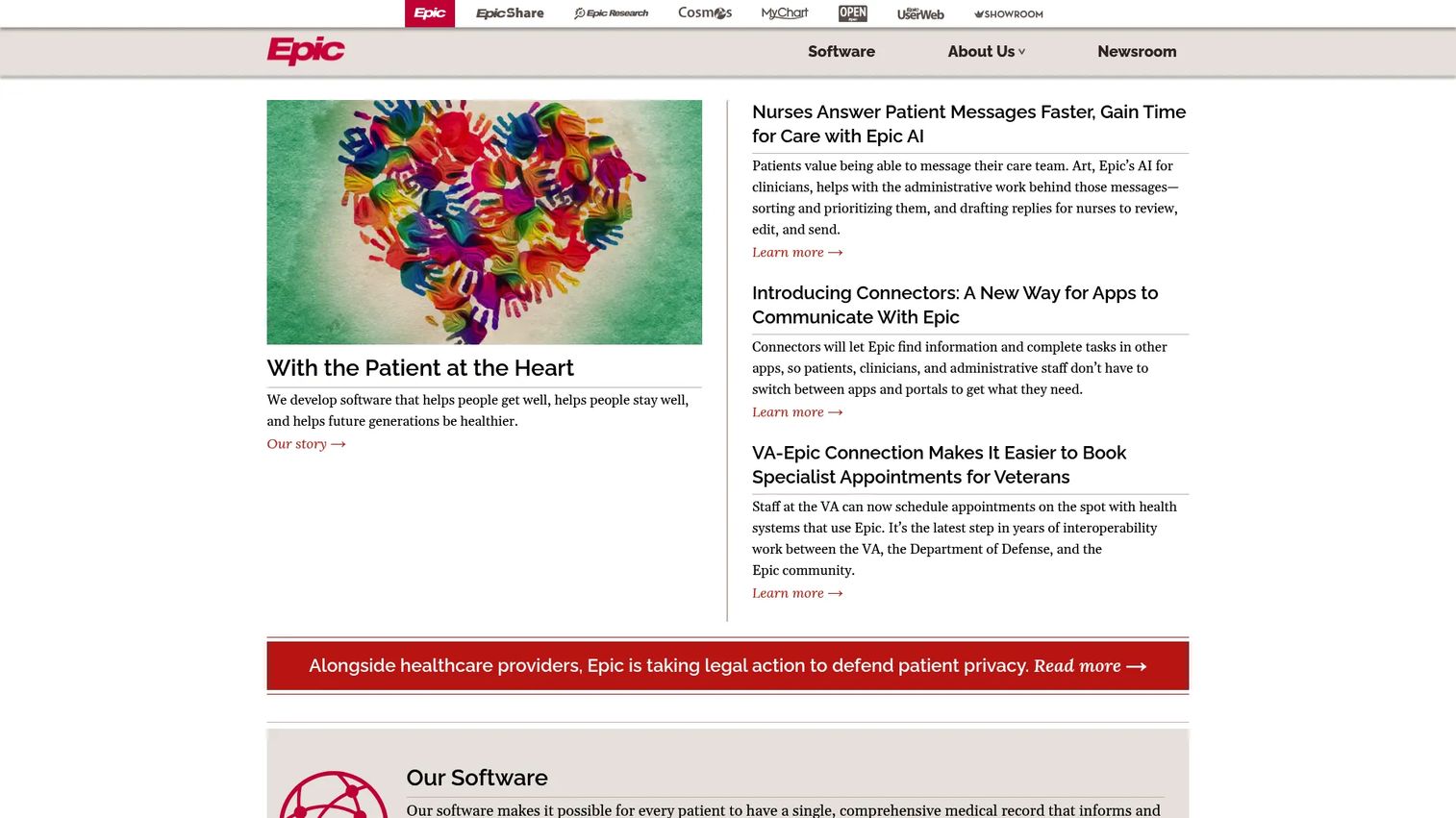
Epic develops electronic health records and healthcare software for providers, payers, life sciences organizations, and patients. It covers hospitals, academic medical centers, specialty clinics, post-acute settings, and community health systems. Its patient portal, MyChart, extends the EHR into patient-facing scheduling, messaging, and virtual care. Epic's interoperability tools, including Care Everywhere and FHIR-based APIs, allow data exchange across healthcare organizations.
Best for: Large provider organizations and integrated delivery networks standardizing patient records across clinical and operational workflows.
Key features
- Enterprise EHR with specialty-specific clinical workflows
- MyChart patient portal and digital front door
- Care Everywhere interoperability and FHIR-based APIs
- Telemedicine and remote patient monitoring
- Population health and analytics
Why choose Epic: Choose Epic when the EHR needs to function as the operating system for a large provider organization. The evaluation should include major implementation planning, change management, and governance from the start, because the platform's depth requires sustained organizational commitment.
Epic pricing: Epic uses quote-based pricing. Contact Epic directly for implementation, licensing, and hosting cost drivers.
G2 rating: 4.2/5
2. Oracle Health
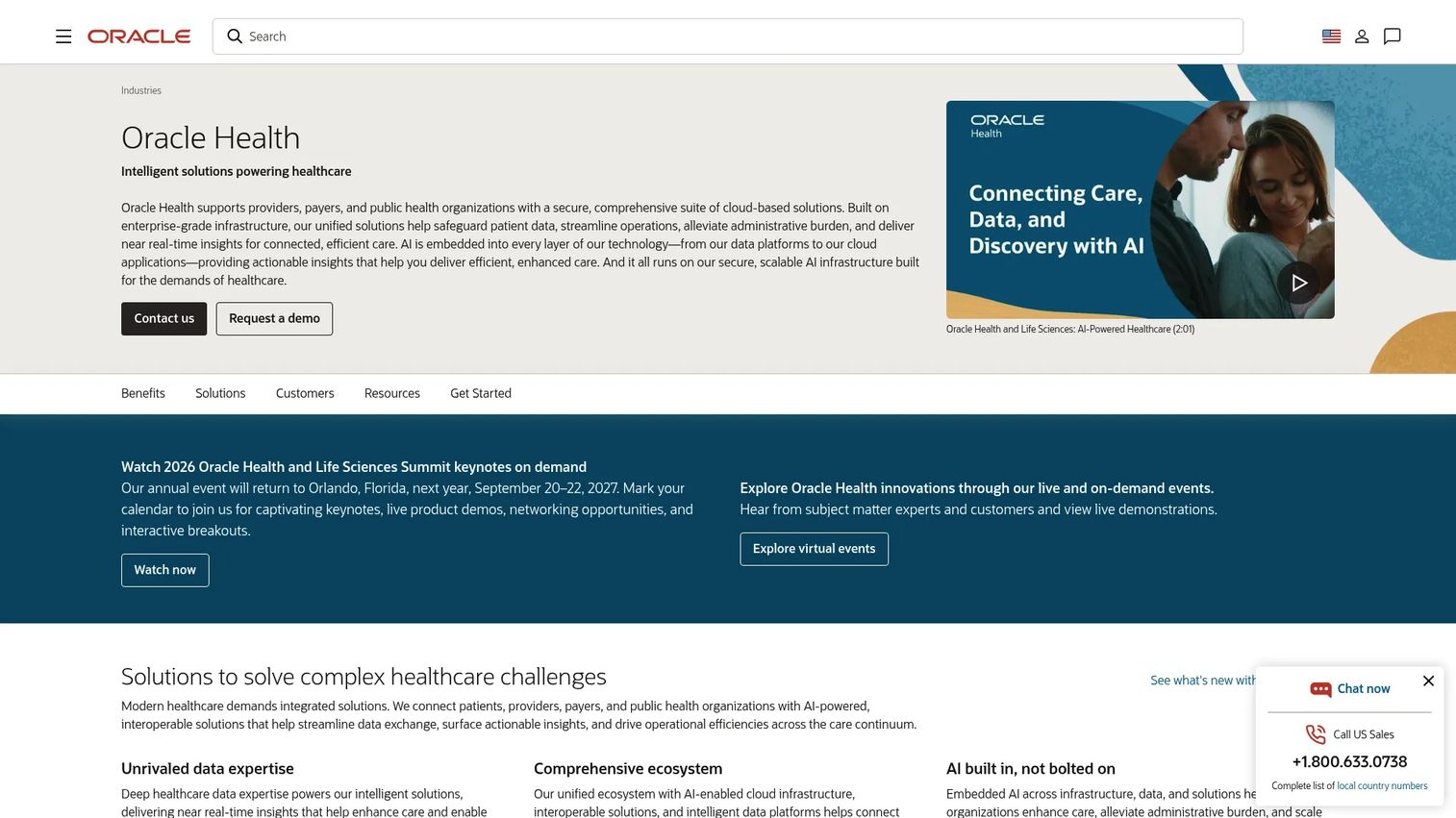
Oracle Health provides cloud-based healthcare solutions for providers, payers, public health organizations, and life sciences companies. The portfolio includes the Cerner EHR alongside Oracle's broader cloud, data infrastructure, and AI capabilities. Organizations can standardize clinical applications, revenue cycle, analytics, interoperability services, and enterprise operations within one vendor relationship.
Best for: Enterprise healthcare organizations looking to consolidate clinical, financial, operational, and infrastructure systems under one platform.
Key features
- AI-powered clinical applications and EHR workflows
- Interoperability and healthcare data exchange
- Clinical, financial, and operational analytics
- Revenue cycle management
- Cloud infrastructure and enterprise security
Why choose Oracle Health: Choose Oracle Health when leadership wants fewer disconnected systems across clinical and financial work. Implementation scope can be broad and typically requires executive ownership and a multi-year roadmap.
Oracle Health pricing: Most Oracle Health products use quote-based pricing. The available Oracle Health Payment Cloud Service is usage-based at 2.8% plus $0.15 per processed payment. Contact Oracle for broader platform pricing.
3. Meditech Expanse
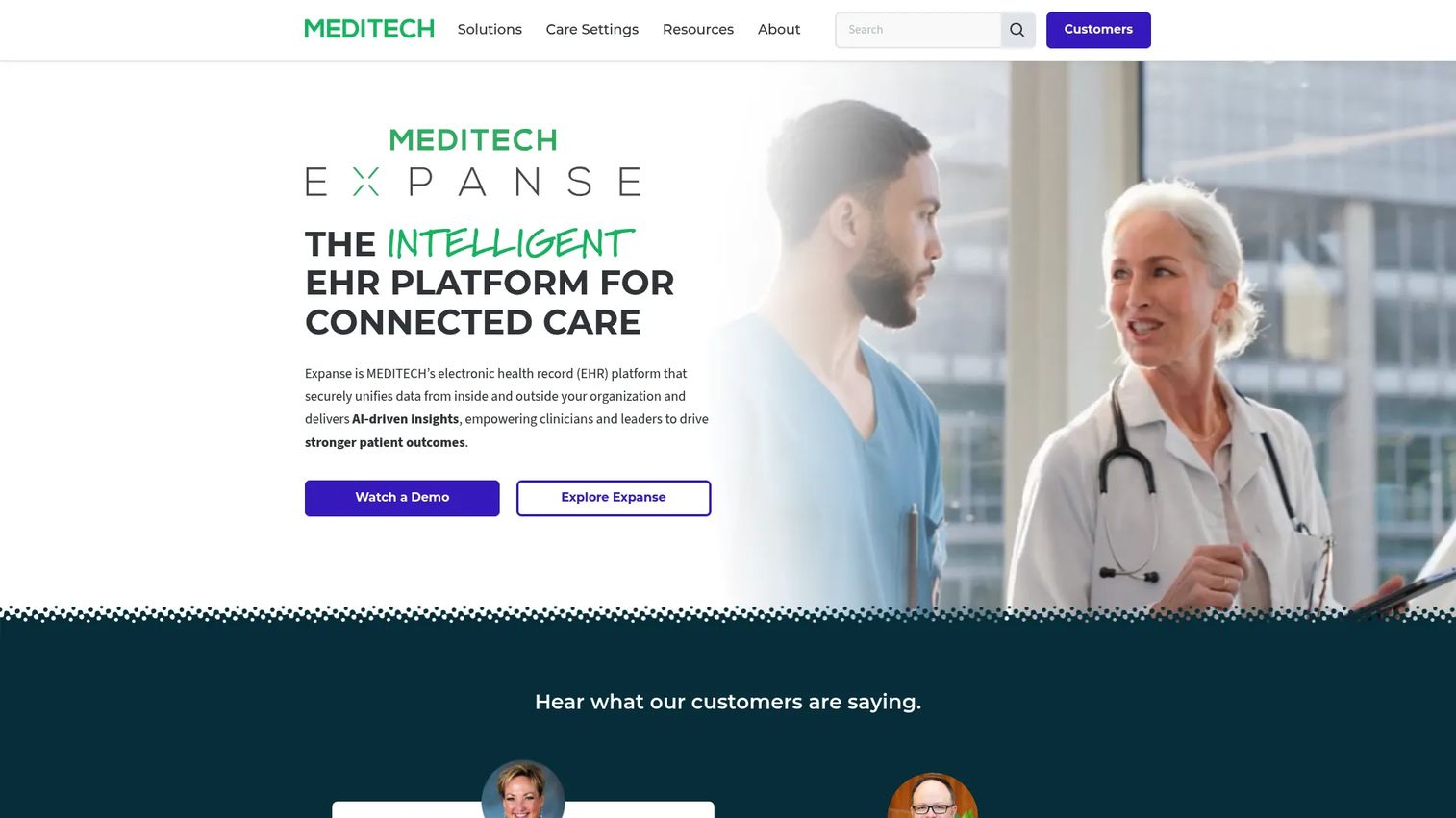
Meditech Expanse is a fully integrated, interoperable EHR platform covering clinical, administrative, financial, and patient-engagement workflows. It serves hospitals and health systems that want a modern web-based EHR across acute care, ambulatory settings, and care coordination. Features include AI-powered ambient listening for automated documentation and mobile workflows for physicians and bedside nursing.
Best for: Hospitals and community health systems that need an established EHR without defaulting to the largest enterprise platforms.
Key features
- Web-based EHR across acute and ambulatory care
- AI-powered ambient listening and automated documentation
- Mobile workflows for physicians and bedside nursing
- Interoperable longitudinal patient data
- Patient portal and patient engagement tools
Why choose Meditech Expanse: Choose it when your organization wants health-system breadth with a modern web interface. Evaluate migration effort, specialty fit, and interoperability requirements carefully before committing.
Meditech Expanse pricing: Pricing is quote-based. Reach out to Meditech for implementation, hosting, and support cost context.
G2 rating: 3.1/5
4. AthenaOne
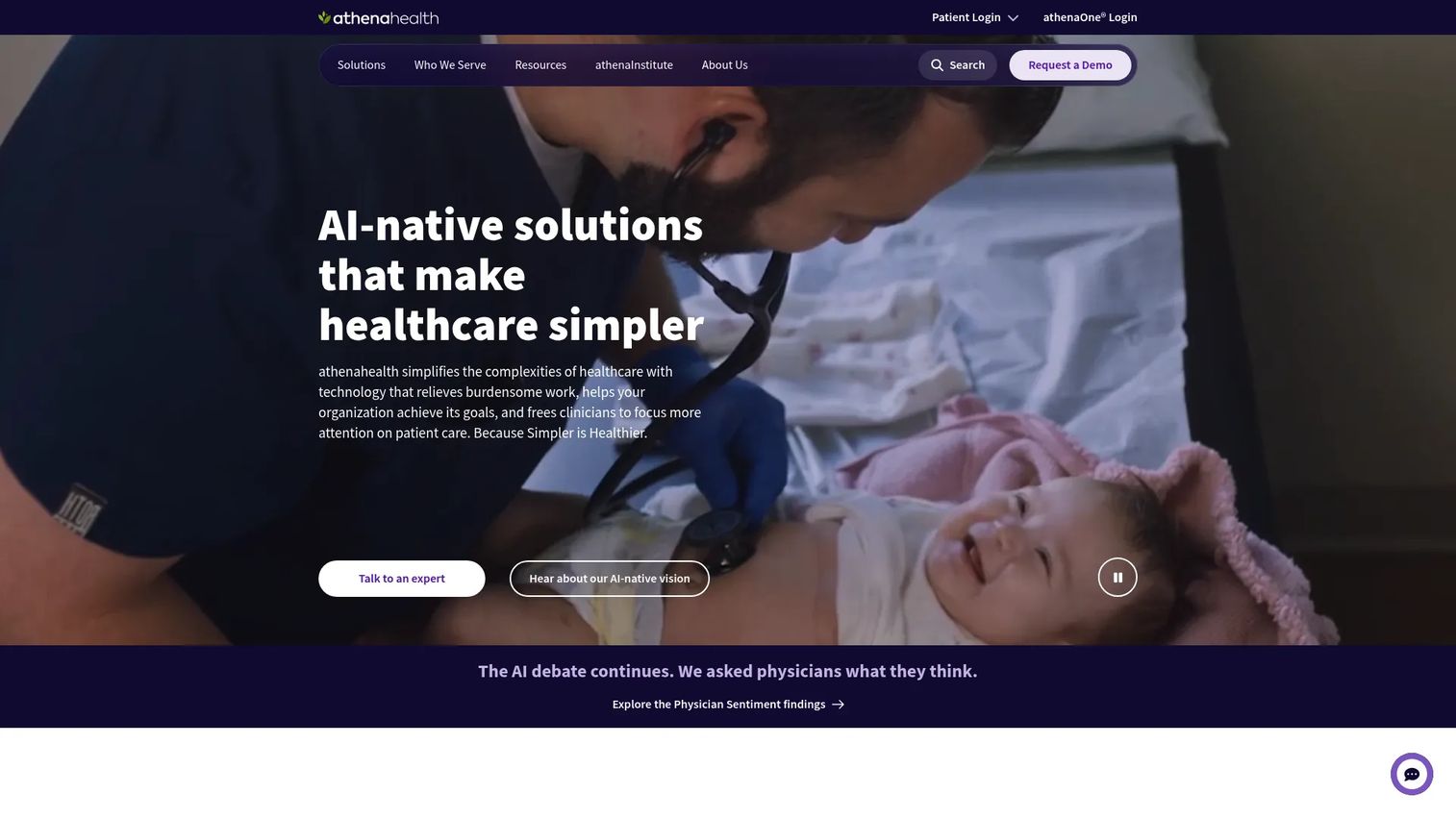
AthenaOne is an integrated healthcare platform from athenahealth combining EHR, medical billing, practice management, and patient engagement. It uses a network-enabled model where claim data across its user base informs denial prevention and coding. The platform includes AI-powered ambient documentation, ChartSync interoperability, referral tracking, and automated patient outreach.
Best for: Ambulatory practices that want clinical and administrative workflows connected without managing multiple separate vendors.
Key features
- AI-powered EHR with ambient documentation
- Medical billing and practice management
- Patient portal, mobile app, and telehealth
- ChartSync interoperability and clinical data exchange
- Authorization support and claims management
Why choose AthenaOne: Choose AthenaOne when cleaner administrative throughput matters as much as charting quality. Evaluate the service model, reporting clarity, and claims performance before signing, since pricing is percentage-based.
AthenaOne pricing: Pricing is percentage-of-collections based and requires a custom quote.
5. AdvancedMD
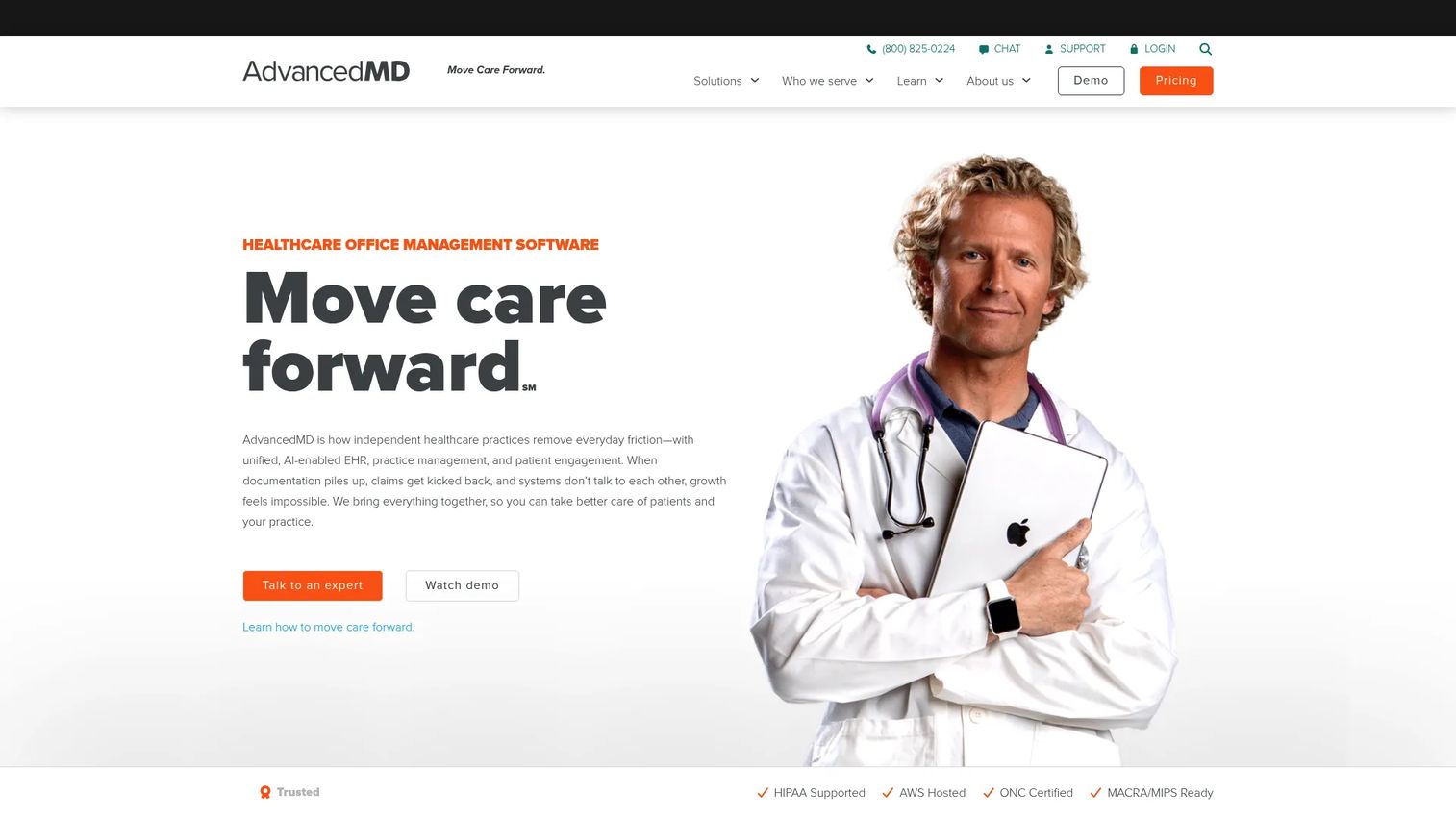
AdvancedMD is a cloud-based practice management platform serving independent practices and medical groups. It integrates EHR, scheduling, billing, claims management, revenue cycle services, and patient engagement. The platform offers specialty-specific pricing bundles and an AdvancedMD Now 30-day free trial. For practices where fragmented front-office and billing workflows slow collections, AdvancedMD connects those functions within one system.
Best for: Independent medical practices and billing companies that need integrated clinical, administrative, and billing workflows.
Key features
- EHR and customizable clinical templates
- Practice management and scheduling
- Medical billing and claims management
- Patient portal and telehealth
- Revenue cycle management services at 4 to 8% of collections
Why choose AdvancedMD: Choose AdvancedMD when billing operations and clinical workflows need tighter coordination. Validate specialty fit and reporting needs before selecting a bundle, since pricing varies by specialty and feature set.
AdvancedMD pricing: Specialty-specific per-provider subscriptions start at $130 per provider per month for mental health plans, with medical specialty plans ranging from $429 to $1,070 per provider per month. RCM services run 4 to 8% of collections. A 30-day free trial is available.
G2 rating: 3.6/5
6. DrChrono
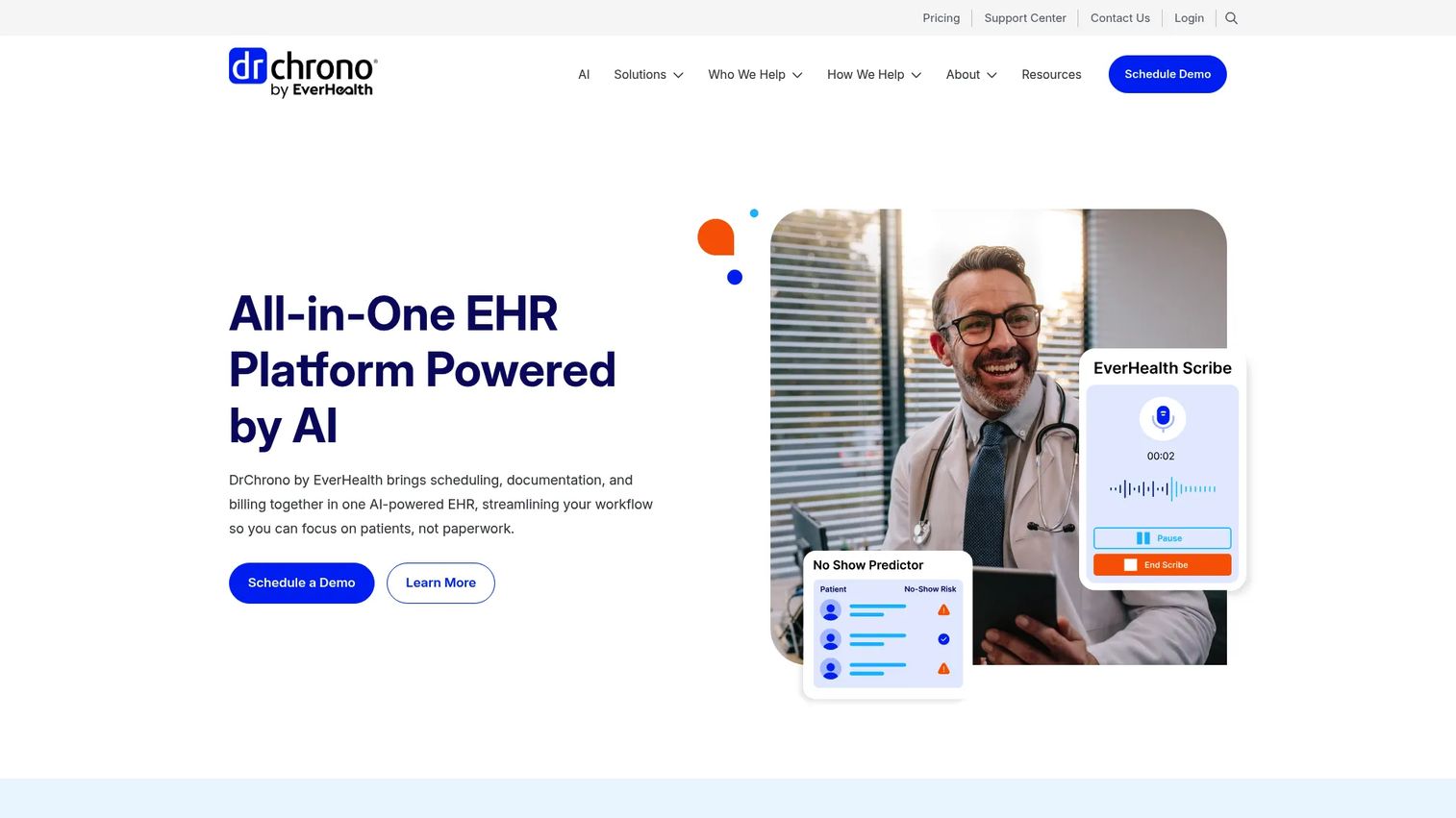
DrChrono by EverHealth is a mobile-first EHR platform combining charting, scheduling, billing, patient engagement, and AI automation. It is built for use on iPad and mobile devices, making it practical for smaller or specialty practices where clinician portability matters. EverHealth Scribe AI handles clinical documentation. The platform includes e-prescribing, lab integrations, e-faxing, and telehealth.
Best for: Medical practices that want mobile-friendly charting, scheduling, and billing in one platform.
Key features
- Mobile EHR and iPad-based charting
- Scheduling, patient intake, and reminders
- Integrated medical billing and claims management
- EverHealth Scribe AI clinical documentation
- Telehealth and e-prescribing
Why choose DrChrono: Choose DrChrono when clinician mobility and fast chart access are operational priorities. Confirm that its workflow depth fits your specialty and billing complexity before committing.
DrChrono pricing: DrChrono offers three plans (Foundation, Growth, and Premium) with quote-based subscription pricing. Usage fees include $0.05 per text, $0.07 per faxed page, and $0.10 per phone call.
G2 rating: 3.4/5
7. Doxy.me
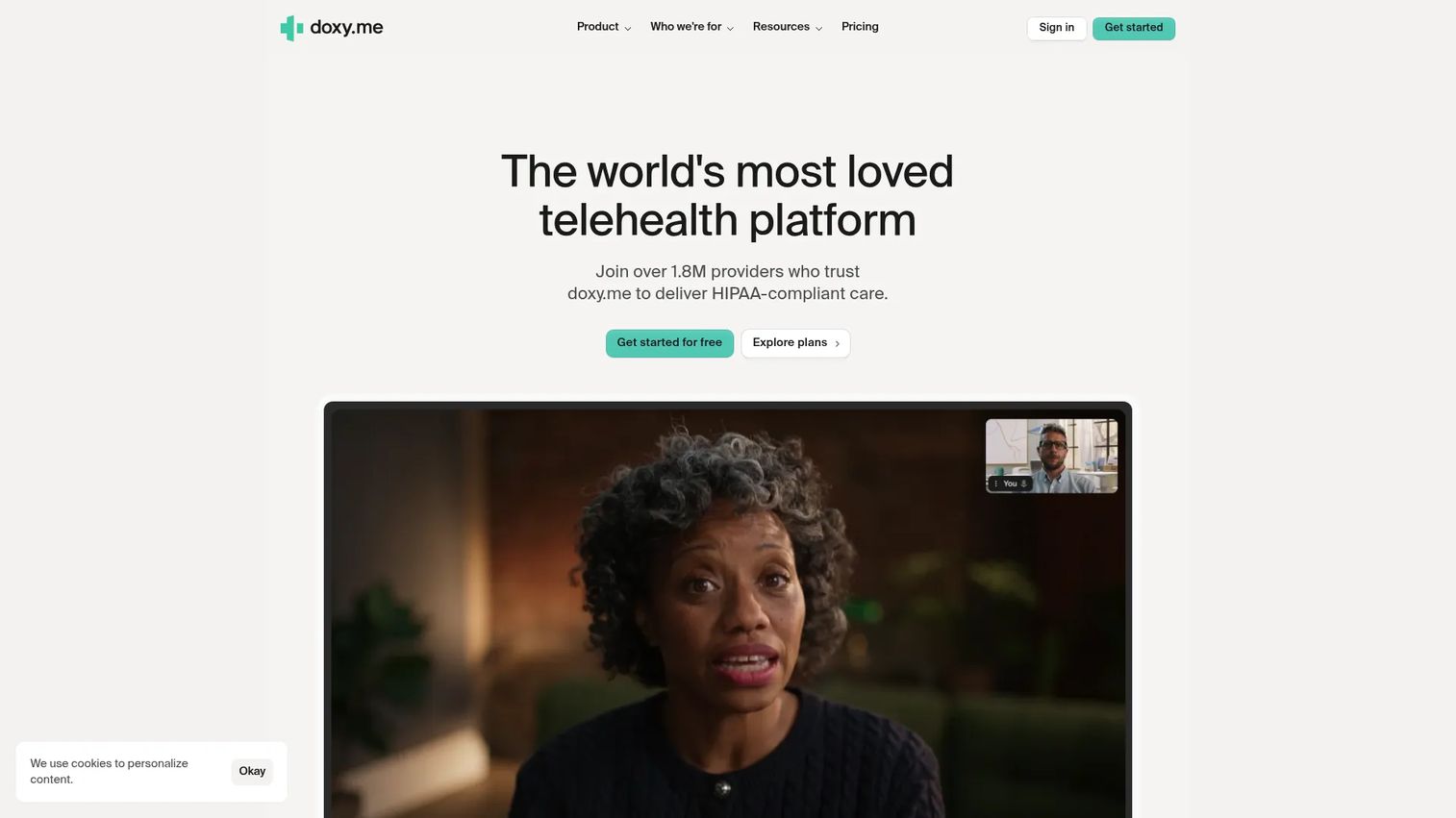
Doxy.me is a browser-based telemedicine software platform for secure virtual care. Patients join visits without downloading an app or creating an account. Providers get a persistent virtual waiting room and room link. The platform includes screen sharing, file transfer, group calls, and a HIPAA-compliant BAA. It is built for straightforward virtual visits, not enterprise virtual care infrastructure.
Best for: Clinics and individual providers that need reliable, low-friction virtual visits without large platform complexity.
Key features
- Browser-based video visits (no patient download required)
- Virtual waiting room and patient queue
- Screen sharing and file transfer
- Group calls
- HIPAA compliance with included BAA
Why choose Doxy.me: Choose Doxy.me when the core job is a reliable virtual visit, not a broad enterprise platform. Validate reporting, integrations, and administrative controls before scaling across a larger organization.
Doxy.me pricing: A free plan covers basic telehealth with no subscription charge. Premium plans run $29 per user per month billed annually, or $35 per user per month billed monthly. Premium adds coordinated-care, clinic management, and clinical workflow features.
G2 rating: 4.5/5
8. Amwell
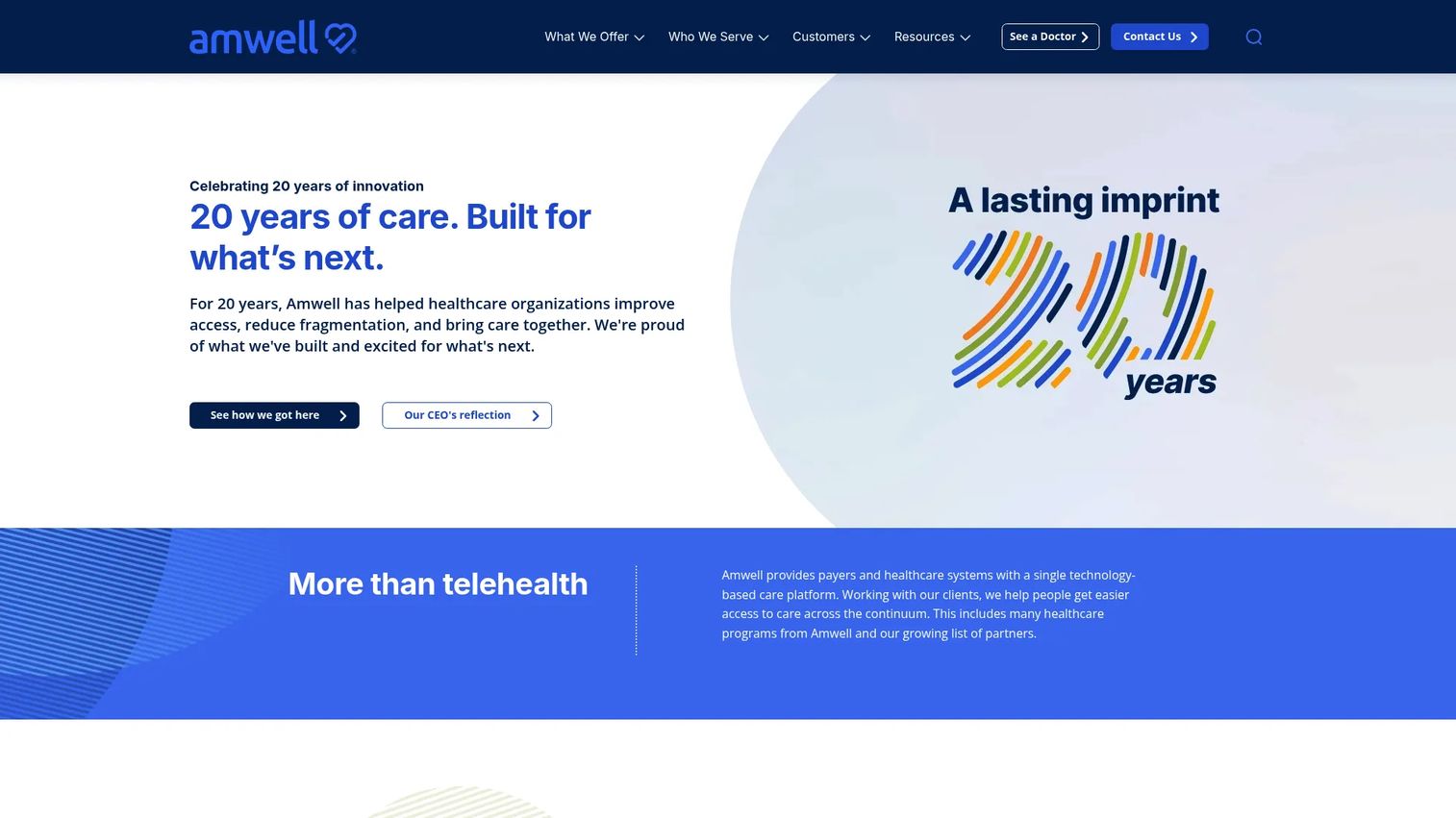
Amwell provides a unified digital care platform for payers and providers, integrating virtual, in-person, automated, and specialty care programs. It supports enterprise deployment of virtual primary care, urgent care, behavioral health, and specialty services. The platform integrates with major EHRs including Epic and Cerner, and it serves health plans, health systems, and employers building virtual care as a strategic channel.
Best for: Health plans and healthcare providers building scalable virtual care programs across service lines and patient populations.
Key features
- Unified digital care platform for payers and providers
- EHR integrations with major systems
- Virtual primary care, urgent care, and behavioral health programs
- Scheduled visits and enterprise care team workflows
- Care coordination and patient engagement
Why choose Amwell: Choose Amwell when virtual care needs to scale across service lines and sites rather than serve a single clinic's appointment volume. Evaluate implementation support and integration requirements before signing.
Amwell pricing: Enterprise pricing is quote-based. Amwell directs prospective customers to contact their sales team.
G2 rating: 3.5/5
9. Health Catalyst
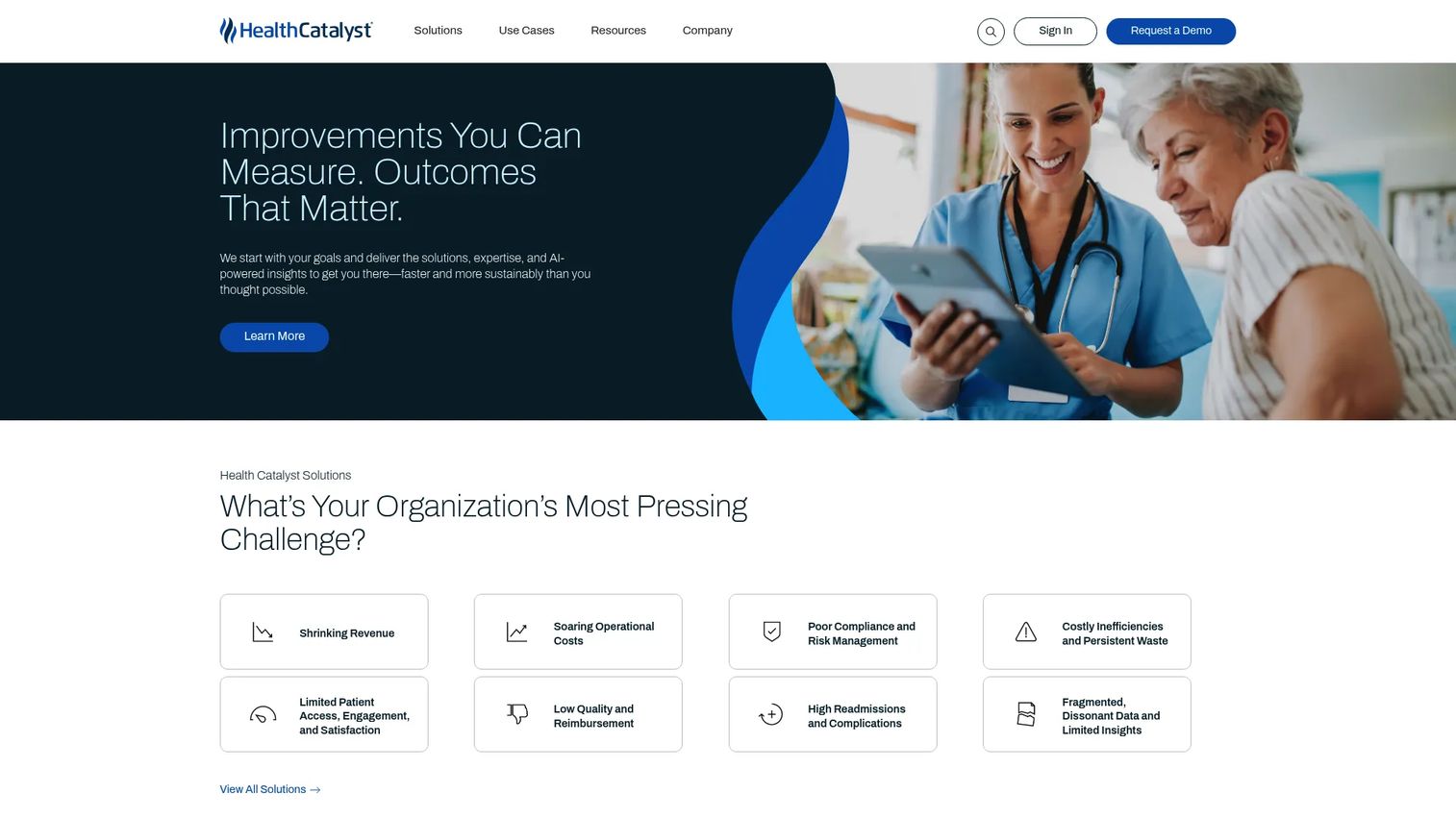
Health Catalyst provides healthcare data and analytics technology, software, and services for clinical, financial, and operational improvement. Its platform unifies clinical, financial, and claims data into a standardized model. Teams can build self-service population analytics, cohort analysis, and embedded AI workflows on top of the data layer. For operators dealing with fragmented data across EHR, claims, and finance systems, Health Catalyst is built to consolidate that into trusted reporting. See also our guide to big data analytics software for context on the broader analytics market.
Best for: Healthcare analytics teams that need a trusted data platform for clinical and operational decisions.
Key features
- Unified clinical, financial, and claims data platform
- Self-service population analytics and cohort building
- Embedded AI and healthcare analytics applications
- Data profiling and data quality management
- Performance improvement workflows
Why choose Health Catalyst: Choose Health Catalyst when decision-making slows because data sits in too many systems with conflicting definitions. Focus the evaluation on data ingestion breadth, governance controls, and analyst adoption.
Health Catalyst pricing: Pricing is quote-based. Contact Health Catalyst for enterprise pricing context.
G2 rating: 5.0/5
10. Arcadia.io

Arcadia.io is a healthcare performance platform that unifies clinical, claims, and operational data to support analytics, AI-powered workflows, and population health management. It aggregates data from EHR, claims, social determinants of health, pharmacy, and other sources. Provider groups, payers, ACOs, and government organizations use it for quality measure tracking, risk stratification, care gap identification, and point-of-care insights.
Best for: Organizations managing value-based care programs and population health initiatives that require aggregated clinical and claims data.
Key features
- EHR, claims, and pharmacy data aggregation
- AI-powered quality, risk, and care workflows
- Risk stratification and care gap identification
- Patient registries and benchmarking
- Point-of-care insights for care teams
Why choose Arcadia.io: Choose Arcadia.io when value-based care performance depends on unifying fragmented patient data across payers and providers. Test how well it maps to your existing contracts, quality measures, and care-team workflows during evaluation.
Arcadia.io pricing: Pricing is quote-based. Arcadia directs prospective customers to request a demo.
G2 rating: 5.0/5 (based on 1 review)
11. Philips IntelliSpace
Philips IntelliSpace is a family of healthcare information management and clinical workflow solutions covering imaging, cardiovascular, critical care, ECG, and perinatal applications. It provides centralized access to clinical and patient data, workflow orchestration, and integration with EMR, HIS systems, and medical devices. For radiology departments and imaging-heavy organizations, IntelliSpace supports enterprise imaging informatics and clinical decision support.
Best for: Radiology departments and health systems managing imaging workflows at scale across multiple modalities.
Key features
- Enterprise imaging and radiology workflow management
- Centralized clinical and patient data access
- Workflow orchestration and clinical decision support
- Integration with EMR, HIS, and medical devices
- Cardiovascular, critical care, and perinatal applications
Why choose Philips IntelliSpace: Choose Philips IntelliSpace when imaging workflows need enterprise-grade coordination across departments. Validate modality support, PACS and EHR integration requirements, and implementation complexity before proceeding.
Philips IntelliSpace pricing: Pricing is quote-based.
G2 rating: 3.8/5
12. Aidoc
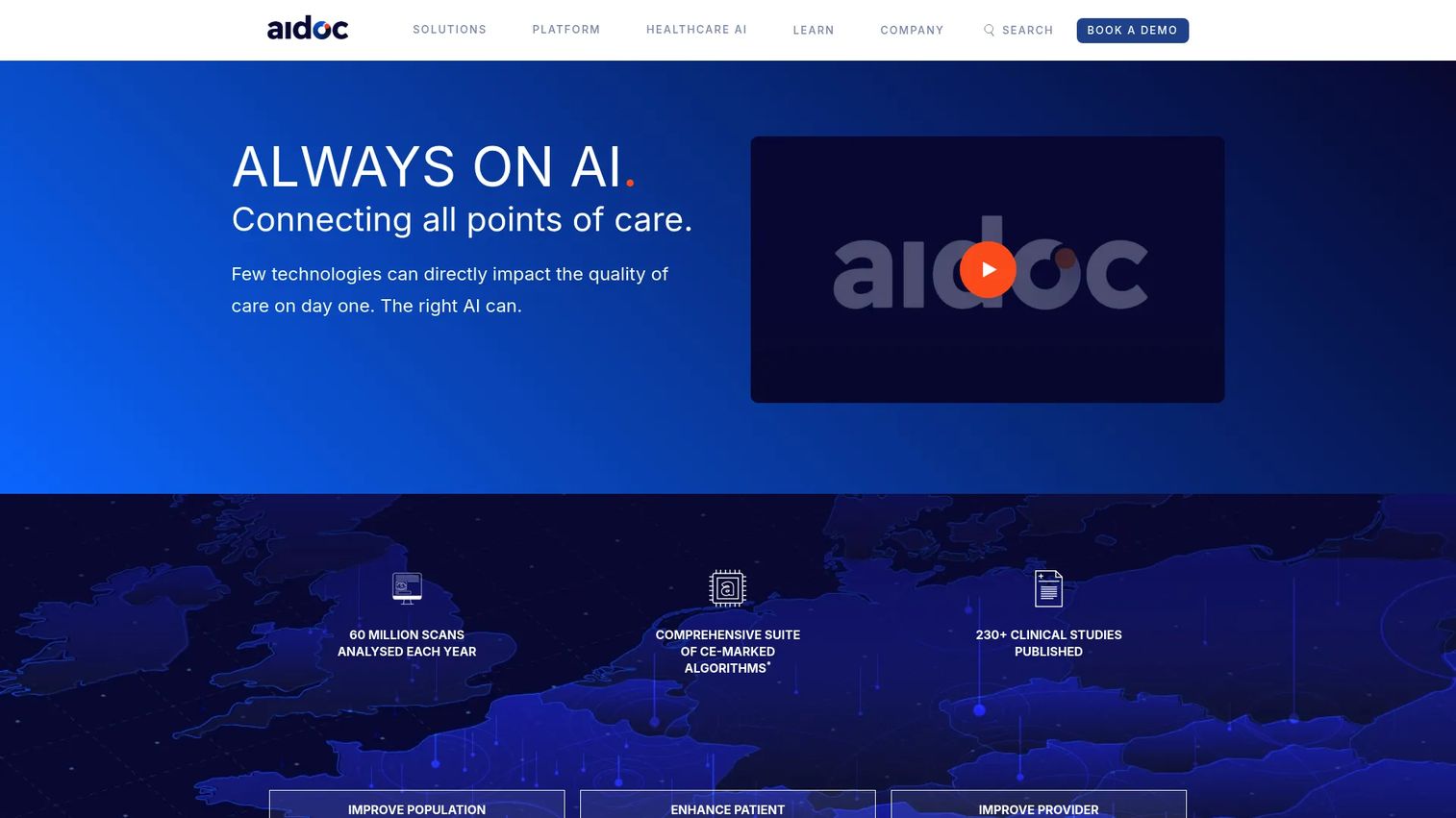
Aidoc provides enterprise clinical AI technology through its aiOS platform, supporting radiology, care coordination, and patient management workflows. Its radiology AI covers triage, detection, and quantification across imaging studies. Care coordination features include real-time notifications and mobile imaging access. Aidoc also offers patient management and follow-up automation, with integrations to PACS, EHR, and mobile tools. Buyers evaluating this category should also review our roundup of AI medical diagnostic platforms for a broader view.
Best for: Hospitals and health systems evaluating enterprise clinical AI for radiology triage, care coordination, and patient management.
Key features
- aiOS clinical AI orchestration platform
- Radiology AI for triage, detection, and quantification
- Real-time care coordination notifications
- Patient management and follow-up automation
- PACS, EHR, and mobile integrations
Why choose Aidoc: Choose Aidoc when imaging teams need help surfacing urgent findings faster within existing workflows. Validate regulatory status, supported use cases, and clinical governance requirements before purchasing.
Aidoc pricing: Contact Aidoc directly for enterprise pricing.
13. Freed

Freed is an AI medical scribe and front-desk platform designed to help independent clinics reduce documentation and administrative work. It generates specialty-specific clinical notes from ambient listening, with ICD-10, E/M, and CPT coding assistance. The Premier plan adds one-click EHR push integration. A separate AI receptionist handles multilingual calls, patient intake, two-way SMS, and shared inbox management. For practices where after-hours documentation is consuming clinician capacity, Freed addresses the core bottleneck directly.
Best for: Independent clinicians and small-to-midsized practices trying to cut after-hours documentation time and administrative overhead.
Key features
- AI-generated clinical notes with specialty templates
- Clinical Evidence answers from 50-plus trusted sources
- ICD-10, E/M, and CPT coding assistance
- One-click EHR push integration (Premier plan)
- AI receptionist with multilingual calls and patient intake
Why choose Freed: Choose Freed when documentation load is the clearest bottleneck limiting clinician capacity. Verify specialty support, privacy handling, note quality, and EHR workflow fit before rolling out across a team.
Freed pricing: Starter runs $39 per month (up to 40 notes). Core is $59 per month with unlimited notes. Premier is $104 per month billed annually and adds EHR push, visit summaries, and coding. Groups pricing is custom. A 7-day free trial is available without a credit card.
G2 rating: 5.0/5
14. UpToDate
UpToDate is an evidence-based clinical decision support and medical reference platform from Wolters Kluwer. It covers more than 25 specialties and subspecialties with continuously updated, expert-authored clinical topics. Clinicians access drug information, GRADE-rated recommendations, patient education materials, and CME tracking through a mobile app with voice search and offline access. UpToDate functions as a reference layer alongside an EHR, not as an EHR replacement.
Best for: Healthcare professionals and institutions that need evidence-based clinical reference at the point of care.
Key features
- Continuously updated expert-authored clinical topics
- Evidence-based recommendations with GRADE ratings
- Drug information and patient education
- CME, CE, and CPD credit tracking
- Mobile app with voice search and offline access
Why choose UpToDate: Choose UpToDate when care teams need trusted reference content in daily workflows. Compare institutional access options, integration paths with your EHR, and specialty coverage depth before purchasing.
UpToDate pricing: Individual, add-on, and institutional subscriptions are available. Specific pricing was not publicly readable on the official store page. Contact Wolters Kluwer for current institutional rates.
G2 rating: 4.8/5
15. CareCloud
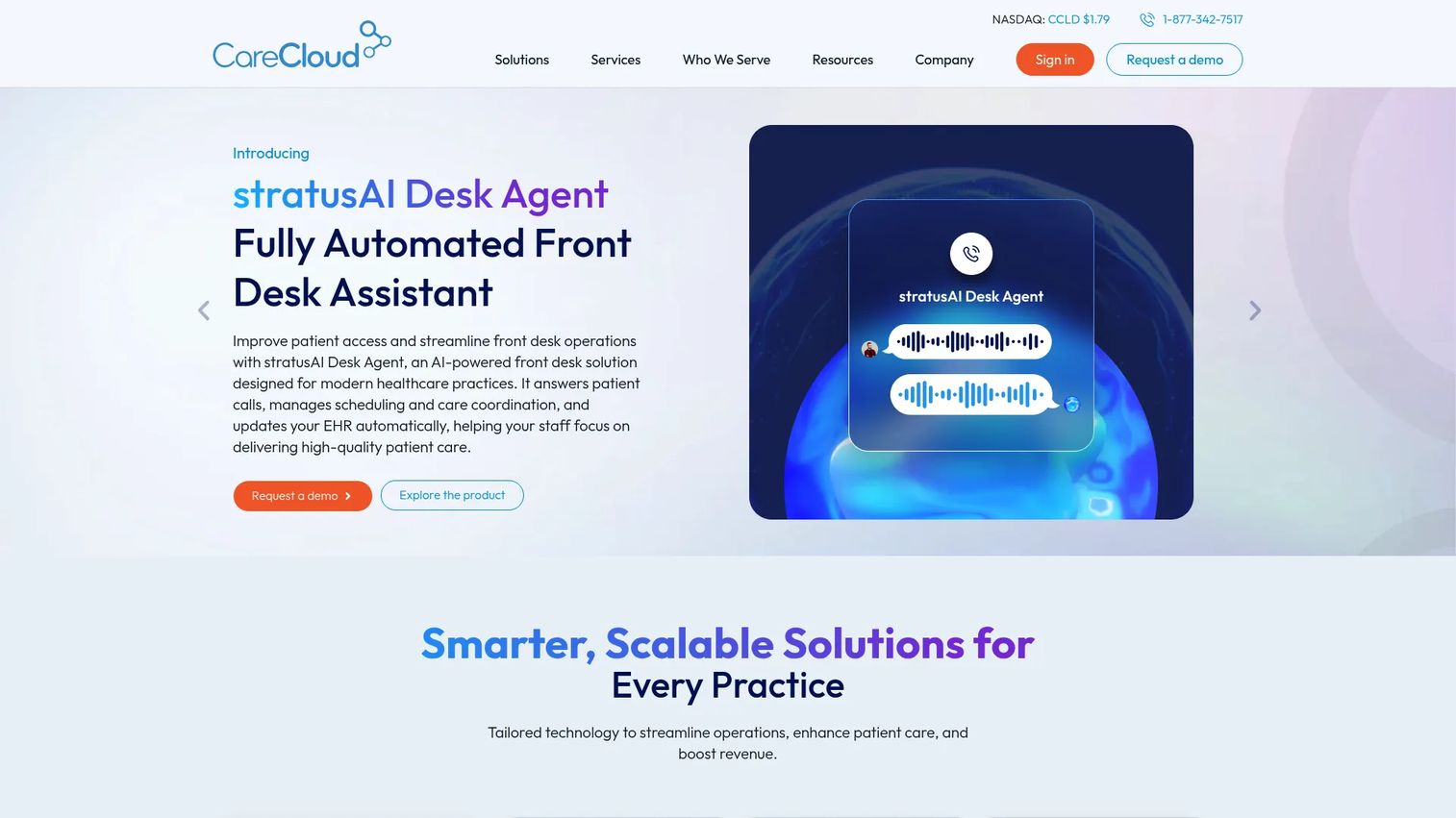
CareCloud provides cloud-based, AI-powered healthcare software spanning EHR, practice management, revenue cycle management, patient engagement, digital health, and analytics. It includes AI-powered documentation, encounter summaries, clinical chat assistance, and robotic process automation for revenue cycle tasks. Customizable dashboards cover financial, claims, operational, and clinical reporting. CareCloud targets medical practices trying to connect administrative and financial operations within one system.
Best for: Medical practices that need revenue cycle support connected tightly to daily clinical and scheduling operations.
Key features
- EHR and clinical documentation
- Practice management and scheduling
- Revenue cycle management and denial management
- Patient engagement and online scheduling
- AI-powered documentation and encounter summaries
Why choose CareCloud: Choose CareCloud when billing operations, patient engagement, and practice management need tighter coordination. Verify specialty support and revenue cycle service expectations before signing.
CareCloud pricing: Pricing is customized based on practice size, specialty, and selected features. Contact CareCloud for a package quote.
G2 rating: 3.6/5
16. Tecsys Elite Healthcare
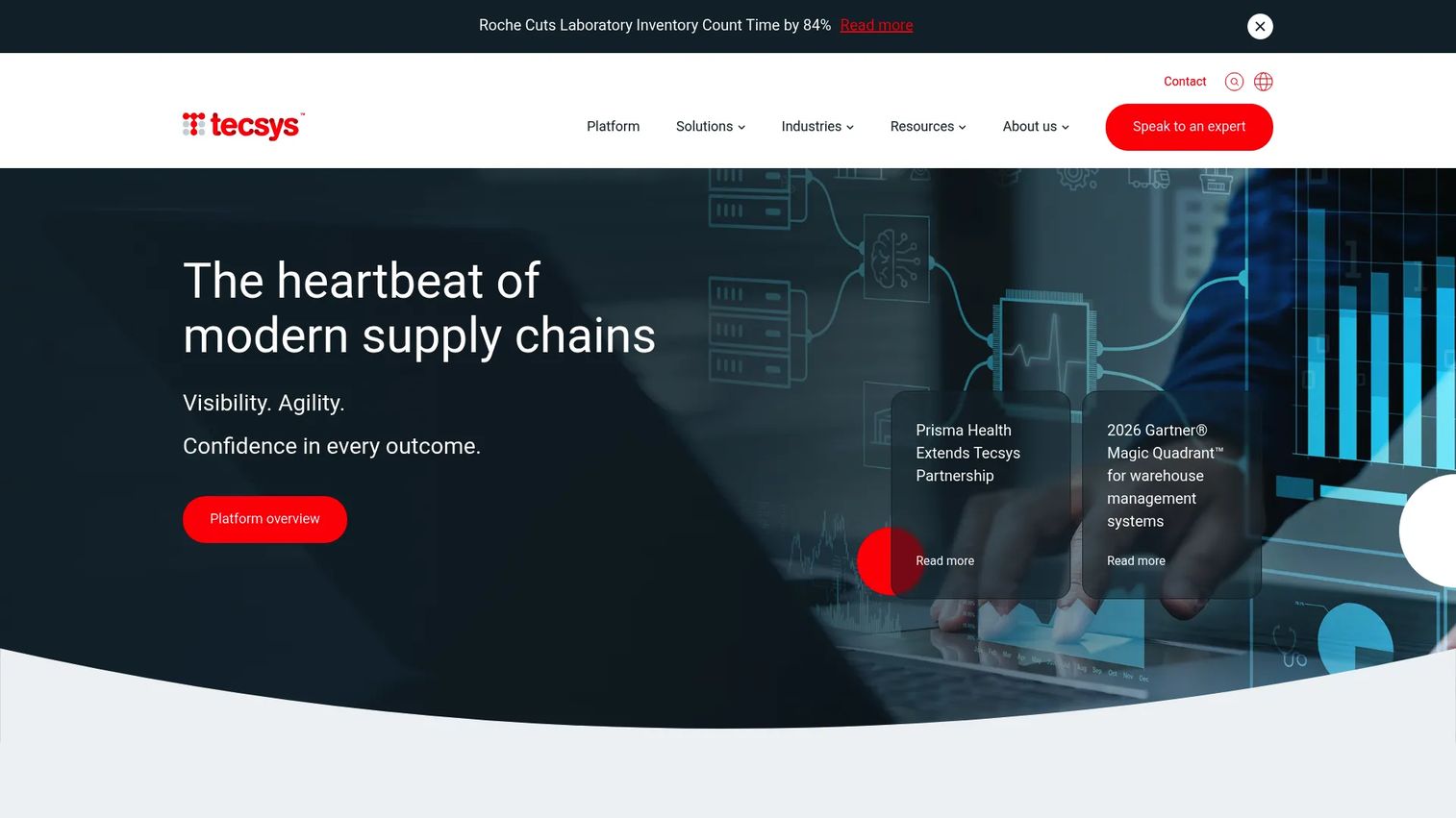
Tecsys Elite Healthcare provides healthcare supply chain solutions for hospitals, pharmacies, and medical distributors. It manages inventory, procurement, warehouse operations, point-of-use workflows, pharmacy management, transportation, and delivery. Real-time inventory visibility uses RFID, barcode, and mobile tracking with item-level traceability. Pharmacy inventory management includes purchasing automation and lot and expiration tracking. For health systems where supply availability and cost control directly affect operating margins, Tecsys addresses those problems at the operational layer.
Best for: Healthcare supply chain teams managing complex inventory, distribution, and point-of-use workflows across hospital facilities.
Key features
- Real-time inventory visibility and supply chain management
- Point-of-use RFID, barcode, and mobile tracking
- Item-level traceability across the supply chain
- Pharmacy inventory management with lot tracking
- Purchasing automation and analytics
Why choose Tecsys Elite Healthcare: Choose Tecsys when supply chain reliability has become a financial and operational problem. Evaluate ERP integration requirements, facility rollout scope, and inventory data quality before committing.
Tecsys Elite Healthcare pricing: Pricing is quote-based. Contact Tecsys for enterprise pricing.
G2 rating: 4.7/5
17. Medidata Rave
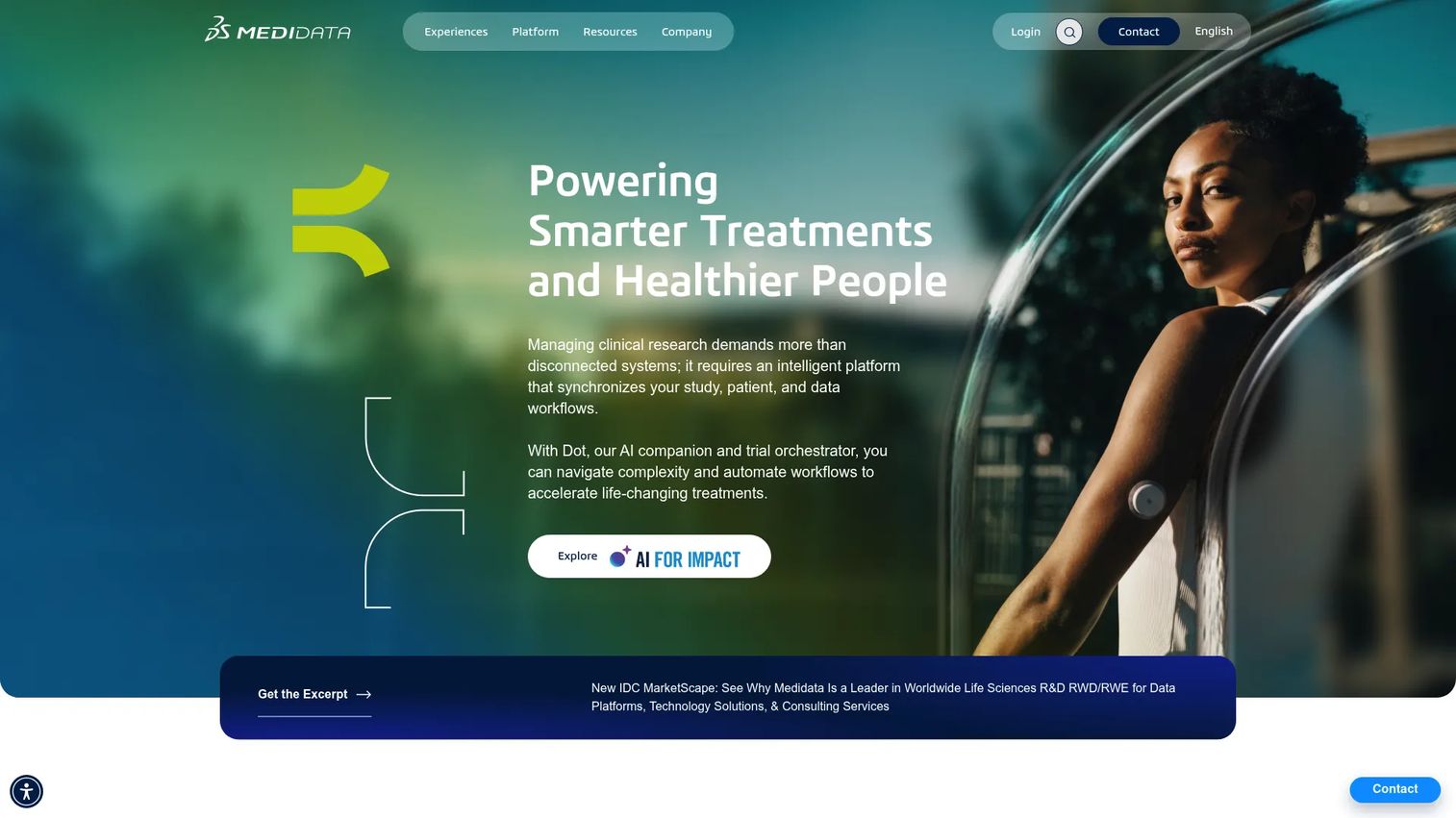
Medidata Rave is a cloud-based electronic data capture system for capturing, managing, cleaning, and reporting clinical trial data. It supports configurable EDC study builds, real-time data validation, centralized administration of users, roles, and sites, and EHR connectivity through Rave Companion. Sponsors, CROs, and research sites use it for study data integrity and trial operations. Medidata Rave is research software, not a provider operations platform.
Best for: Clinical research teams, sponsors, and CROs managing trial data with configurable, compliant electronic data capture.
Key features
- Configurable electronic data capture for clinical trials
- Real-time data validation and edit checks
- Centralized user, role, and site administration
- EHR connectivity through Rave Companion
- Real-time workflow and site-performance visibility
Why choose Medidata Rave: Choose Medidata Rave when research data integrity and trial operations are the core workflow. Evaluate study complexity, sponsor requirements, and integration with broader trial management systems before selecting.
Medidata Rave pricing: Pricing is quote-based. Medidata directs prospective customers to contact sales.
18. Surescripts
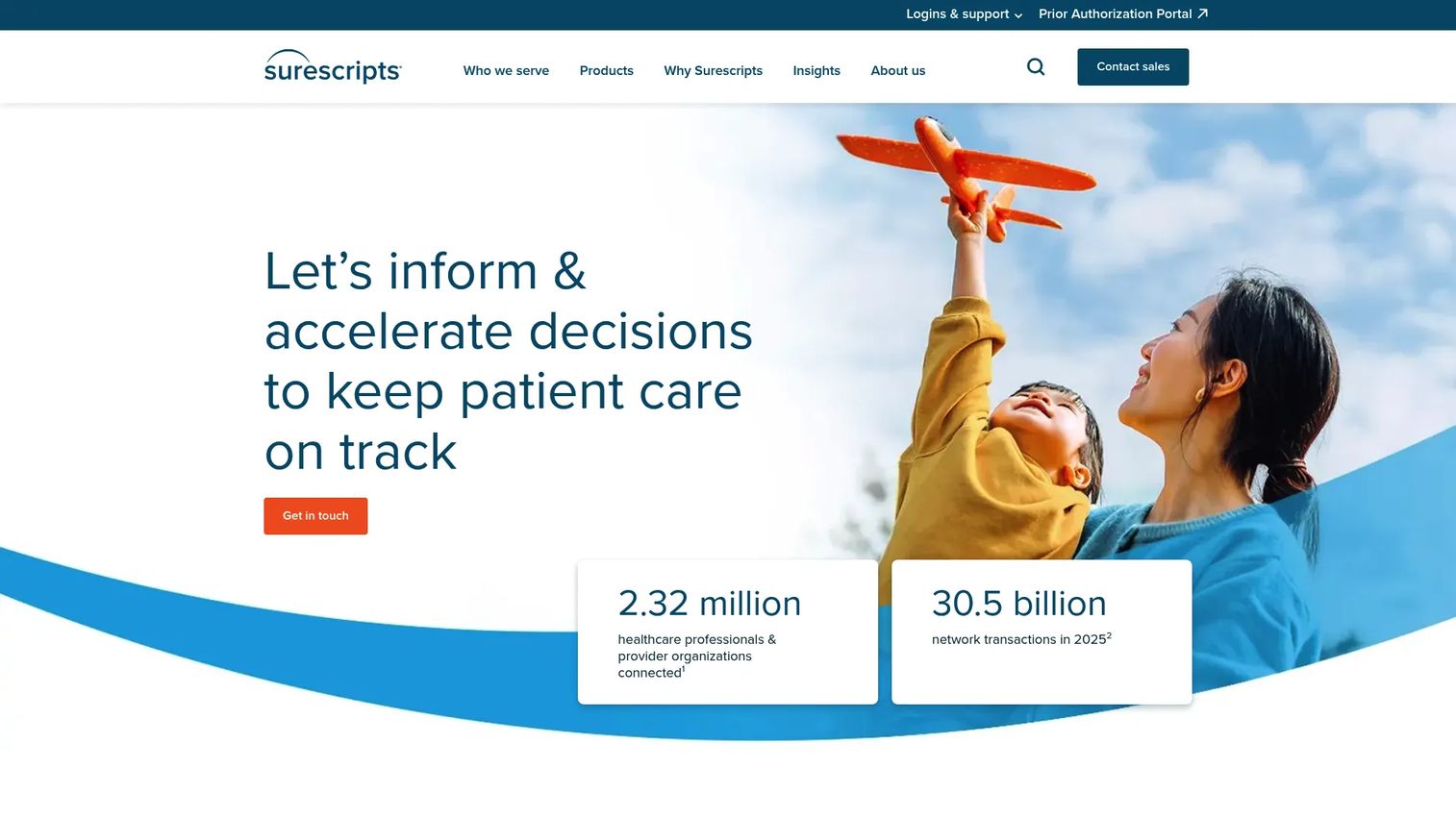
Surescripts operates a nationwide health information network connecting providers, pharmacies, payers, and life sciences organizations with health intelligence and medication-related workflows. Its e-prescribing network handles NewRx, RxFill, RxChange, and related transactions. Real-Time Prescription Benefit gives clinicians patient-specific medication pricing and coverage details at the point of prescribing. Electronic Prior Authorization automates clinical question exchange and renewals. Medication History provides up to 12 months of standards-based prescription data. Surescripts functions as infrastructure rather than a user-facing application, making it relevant for health technology vendors and organizations building prescribing and interoperability capabilities. For a broader view of the healthcare interoperability landscape, our guide to care coordination software covers adjacent platforms.
Best for: Healthcare organizations needing interoperable prescribing, medication history, benefits verification, and prior authorization workflows.
Key features
- Electronic prescribing network with full transaction support
- Real-Time Prescription Benefit for point-of-prescribing coverage
- Electronic Prior Authorization with automated renewals
- Medication History with up to 12 months of prescription data
- Clinical data exchange across network participants
Why choose Surescripts: Choose Surescripts when prescribing and medication data exchange are central to the workflow. Verify network access requirements, partner eligibility, and integration needs with your EHR vendor before proceeding.
Surescripts pricing: Pricing varies by participant type and network use. Contact Surescripts for access and commercial terms.
G2 rating: 4.5/5
Considerations when choosing health care software
Match the software to the workflow owner
An EHR buyer, supply chain director, radiology team, clinical research group, and practice administrator each measure value differently. Map each tool to the team that owns the metric before comparing feature lists. A platform that earns its cost for a large hospital may carry unnecessary complexity for a 10-provider specialty practice.
Check interoperability before the demo
Healthcare software regularly fails at the handoff between systems. Evaluate HL7, FHIR, EHR integrations, claims feeds, pharmacy networks, imaging systems, and analytics pipelines early in the process. Healthcare interoperability software that handles data exchange cleanly can save months of manual reconciliation work after go-live. Confirm whether the vendor's integration is native, middleware-dependent, or requires a custom build.
Price the implementation, not only the subscription
Software cost is one part of the budget. Migration, training, workflow redesign, data cleanup, support, integrations, and lost productivity during rollout are all real line items. A tool that looks cheaper upfront can become expensive once those factors land. Ask vendors for reference customers at similar organization sizes who can speak to total cost of ownership, not just the annual subscription.
Validate security, privacy, and governance
Healthcare software buyers need access controls, audit logs, data handling documentation, vendor risk review, and regulatory context before signing. Do not assume a tool makes your organization compliant with any law or framework. Confirm what the vendor covers in its security model and what your organization is responsible for maintaining.
Define the operational metric before buying
For operators, the useful question is simple: What manual work disappears and what does that free up? Ask teams to establish a baseline metric before vendor calls. Options include note time per visit, claim denial rate, referral turnaround, patient wait time, or report assembly time. Without a baseline, it is impossible to know whether the tool earned its cost.
Conclusion
The right starting point varies by workflow and organization type.
Large health systems should evaluate Epic, Oracle Health, and Meditech Expanse for enterprise EHR and patient experience infrastructure. Independent practices should compare AdvancedMD, AthenaOne, DrChrono, and CareCloud, with the choice depending on billing model, specialty, and mobile requirements. Virtual care teams should put Doxy.me and Amwell side by side, with Doxy.me covering lightweight visits and Amwell covering enterprise virtual care programs. Analytics and population health leaders should evaluate Health Catalyst and Arcadia.io based on data source breadth and value-based care contract requirements. Imaging and radiology teams should compare Philips IntelliSpace and Aidoc for enterprise imaging informatics and AI-assisted triage. For documentation burden, Freed offers the most accessible entry point with a 7-day free trial. Research teams should start with Medidata Rave. Prescribing and interoperability workflows should include Surescripts in the conversation.
The practical next step: Identify the workflow that is most broken, define the metric that proves improvement, and shortlist two to four tools from the relevant category. Verify pricing, implementation timeline, integrations, and support before vendor calls, not after.
Start your journey with Guideflow today!
FAQs
Health care software is a category of digital systems that helps healthcare organizations manage clinical care, patient data, administrative operations, financial workflows, analytics, communication, and care delivery. It spans EHR, practice management, medical billing, telehealth, analytics, imaging, documentation, and interoperability platforms. The category covers both clinical and non-clinical functions, from physician charting to hospital supply chain execution.
The main types are electronic health records, practice management, hospital management, medical billing and revenue cycle, telemedicine, remote patient monitoring, healthcare analytics, medical imaging, medical documentation, clinical decision support, clinical trial software, healthcare supply chain, and interoperability and data exchange platforms. Many vendors combine two or more of these into integrated suites.
The terms often overlap in practice. Medical software typically refers to software with direct clinical application, such as EHRs, diagnostic imaging tools, or clinical decision support. Health care software is a broader category that includes administrative, financial, patient engagement, and operational systems alongside clinical tools. The distinction matters most in regulatory contexts, where software that influences clinical decisions may carry different requirements than administrative systems.
Hospitals typically evaluate EHR, hospital management, imaging, analytics, revenue cycle, supply chain, and interoperability systems across separate procurement processes. Large organizations commonly start with Epic, Oracle Health, or Meditech Expanse for the EHR layer, then add specialized tools for imaging, supply chain, and analytics. The evaluation should include implementation scope, change management requirements, and total cost over three to five years.
Small and independent practices should compare AdvancedMD, DrChrono, AthenaOne, and CareCloud. AdvancedMD offers specialty-specific pricing starting at $130 per provider per month. DrChrono suits mobile-first workflows. AthenaOne uses a percentage-of-collections model. The right choice depends on billing complexity, specialty, and whether the practice prioritizes clinical depth or administrative efficiency.
Pricing varies substantially by category and organization size. Small practice tools like Freed start at $39 per month and Doxy.me offers a free tier. Enterprise EHR, analytics, imaging, research, and interoperability platforms typically use quote-based pricing with implementation costs that can exceed the annual subscription. AdvancedMD is one of the few platforms in this list that publishes tier pricing publicly, starting at $130 per provider per month for mental health plans.
Prioritize workflow fit over feature breadth, confirm interoperability with your existing systems, and get a full implementation cost estimate before comparing subscription rates. Security review documentation, data handling clarity, and vendor support quality all affect total cost of ownership. Define the operational metric you want to improve before vendor calls so you can hold the evaluation to a concrete outcome rather than a demo experience.
AI appears across documentation (ambient note generation in Freed and AthenaOne), imaging triage (Aidoc), clinical decision support (UpToDate evidence matching), coding assistance, population health risk stratification, and administrative workflow automation. Buyers should verify clinical governance processes, model oversight, regulatory status, and data handling for any AI feature before deploying it in a clinical workflow. AI use in healthcare software is growing fast, with 48% of clinicians reporting AI tool use at work in 2025, up from 26% in 2024, according to Elsevier.