The phrase "AI diagnosis platform" hides several different markets. A radiology triage product, a rare-disease reasoning engine, and a cardiovascular imaging platform may each claim diagnostic value, yet they sell into entirely different workflows, datasets, and clinical decisions. Treating them as interchangeable is how procurement stalls and partnerships disappoint.
According to the American Medical Association, 66% of physicians used AI in practice in 2024, up from 38% the year before. The global AI diagnostics market reached $2.0 billion in 2025, per Grand View Research. Clinical adoption is accelerating, but the purchasing decisions remain complex. Matching a platform to the right workflow matters far more than following a general "best AI tools" list.
This guide compares platforms by intended use, evidence posture, data modality, workflow fit, privacy requirements, and regulatory readiness. It does not rank a symptom-reasoning engine against a CCTA analysis platform on a generic feature score. The two are answering different clinical questions for different buyers.
A note before you proceed: This article is market and platform guidance, not medical, legal, regulatory, or clinical advice. Every platform description states its intended use. Clinician oversight, local validation, and workflow governance remain the responsibility of each care organization.
What's inside
- A category map of six AI diagnostic platform types covered in this list
- Selection criteria for each of the 10 platforms (clinical use case, evidence of deployment, workflow fit, privacy controls, regulatory readiness)
- A comparison table with intent, key differentiator, pricing model, and G2 rating
- Individual sections covering strengths, considerations, and pricing for each platform
- A founder-oriented evaluation checklist covering clinical evidence, integration requirements, data governance, and commercial fit
- Scenario-based guidance for narrowing the list to the platforms relevant to your workflow
For a broader view of how AI infrastructure categories are evolving, see our roundup of agentic AI platforms and our analysis of AI governance tools.
TL;DR
- Best for rare and complex diagnostic support: DxGPT, which generates prioritized differential hypotheses from symptoms, histories, and uploaded documents
- Best for enterprise radiology AI workflows: Aidoc, which orchestrates imaging triage and clinical follow-up across high-volume health systems
- Best for stroke and vascular care coordination: Viz.ai, which pairs AI detection with care-team activation workflows
- Best for broad imaging AI coverage: Qure.ai, which supports multiple radiology modalities and population-scale screening
- Best for cancer-focused imaging AI: Lunit, which concentrates on chest imaging and oncology screening contexts
- Best for multimodal precision medicine: SOPHiA GENETICS, which analyzes genomics, pathology, and clinical data together
- Safety caveat: Clinical utility depends on intended use, local validation in the target population, and unambiguous clinician accountability. No platform on this list functions as a substitute for clinical judgment.
What are AI medical diagnostic platforms?
AI medical diagnostic platforms are software products that analyze clinical information, including medical images, symptoms, physiological signals, laboratory results, genomics, or patient histories, to help healthcare professionals identify, prioritize, or investigate possible conditions. The category is broad enough to include a chest X-ray triage algorithm, a rare-disease differential-diagnosis engine, and a multiomics precision-medicine platform. These tools answer materially different questions.
For clinical decision support software categories and AI governance considerations, the evaluation framework shifts considerably depending on where in the diagnostic pathway the tool operates.
Core platform types
Clinical reasoning and differential-diagnosis support: Analyzes symptoms, clinical histories, and documents to generate ranked diagnostic hypotheses for clinician review.
Diagnostic imaging AI: Applies models to CT, MRI, X-ray, mammography, or pathology slides to flag findings, prioritize worklists, or quantify disease markers.
Radiology triage and workflow AI: Combines imaging detection with care-team notification and workflow routing, often across large imaging networks.
Cardiovascular AI diagnostics: Analyzes cardiac imaging or physiological data to support coronary assessment, arrhythmia detection, or cardiac risk stratification.
Point-of-care screening and acoustic AI: Brings AI-assisted analysis to bedside auscultation or other point-of-care signals, typically through connected hardware.
Genomics and multimodal precision-medicine platforms: Integrates genomic sequencing, pathology, radiomics, and clinical data to support precision oncology and inherited-disease workflows.
What these platforms can do
- Flag suspected abnormalities for clinician review
- Prioritize urgent imaging studies within a radiology workflow
- Generate ranked differential-diagnosis hypotheses
- Quantify anatomical structures or disease markers
- Support care-team notification and coordination after detection
- Combine genomic, clinical, and imaging data in a single analysis pipeline
- Surface structured reasoning or evidence references for clinician review
What they should not be assumed to do
A platform's approved or intended use may be narrow. Authorized for one imaging modality does not mean validated for another. Diagnostic performance varies across patient populations, imaging equipment, and care settings. Clinicians and care organizations retain full accountability for patient decisions. FDA authorization, where it applies, is product-specific and does not extend to every possible downstream use.
| Platform type | Primary input | Typical output | Common buyer |
|---|---|---|---|
| Clinical reasoning support | Symptoms, history, documents | Differential hypotheses, follow-up questions | Specialty clinics, research programs |
| Imaging AI | CT, MRI, X-ray, mammography | Findings, prioritization, quantification | Radiology departments |
| Cardiovascular AI | Cardiac CT, physiology data | Risk or disease analysis | Cardiology programs |
| Multimodal precision medicine | Genomics, pathology, clinical data | Biomarker insights, treatment guidance | Oncology and genomics programs |
When to use AI medical diagnostic platforms
Prioritize time-sensitive imaging findings
Radiology departments handling high imaging volumes face a consistent operational challenge: The most urgent studies do not always arrive first. AI triage tools can help flag suspected time-sensitive findings, such as pulmonary embolism, intracranial hemorrhage, or pneumothorax, so they reach a radiologist faster. Platform fit still depends on modality coverage, PACS integration, and the specific intended use documented for the product.
Support complex or rare diagnostic workups
Clinicians encountering patients with atypical symptom patterns, multi-system involvement, or long diagnostic delays often lack structured tools for working through a broad differential. Platforms designed for clinical reasoning support can surface hypotheses the clinician may not have considered, drawing on a patient's documented history, uploaded records, and current symptoms. These tools do not diagnose independently. They organize clinical context.
Standardize specialist analysis across sites
Multi-site health systems and imaging networks face variation in how studies are read, how urgency is triaged, and how findings are communicated. AI platforms can introduce standardization in worklist management, detection sensitivity, and reporting structure. This is commercially meaningful for founders building infrastructure that needs to perform consistently across hospitals with different staff, equipment, and workflows. Avoid claiming that AI eliminates variation. It reduces certain dimensions of it under specific conditions.
Build an evidence-backed health-tech product strategy
For a health-tech founder, the platform-versus-build decision hinges on where your proprietary advantage sits. Partnering with a validated clinical AI platform may accelerate access to a regulated wedge without the cost of building clinical evidence from scratch. Building a proprietary model may be justified when your differentiation depends on a unique dataset, a specific workflow integration, or a clinical application that existing platforms do not cover. Start by defining the clinical decision the product supports, then assess whether an existing platform already owns that decision credibly.
AI medical diagnostic platforms comparison
These platforms should be compared by the clinical decision they support, not by a general feature score. A radiology imaging platform may be exactly wrong for a clinical reasoning workflow, even if it has more regulatory clearances. The table below reflects intent, primary differentiation, commercial model, and verified rating where available.
| # | Product | Intent | Key differentiator | Pricing | G2 rating |
|---|---|---|---|---|---|
| 1 | DxGPT | Rare and complex diagnostic support | Prioritized differential diagnosis from symptoms, histories, and uploaded documents | Free (public app); API: Freemium (50 calls/day) or usage-based Pro | No G2 listing verified |
| 2 | Aidoc | Enterprise radiology AI workflow | Imaging triage, detection, and orchestration across clinical workflows via aiOS platform | Custom pricing, contact vendor | 4.0/5 |
| 3 | Viz.ai | Stroke and vascular care coordination | AI-supported detection paired with care-team activation workflows | Custom pricing, contact vendor | 4.5/5 |
| 4 | Qure.ai | Multi-modality imaging AI | Broad radiology portfolio across chest, neuro, and population-health use cases | Custom pricing, contact vendor | 5.0/5 (1 review) |
| 5 | Lunit | Cancer-focused imaging AI | AI support for chest imaging, mammography, and digital pathology in oncology workflows | Custom pricing, contact vendor | No reviews verified |
| 6 | Annalise.ai | Imaging interpretation support at scale | Models detecting up to 124 chest X-ray and 130 head CT findings with PACS integration | Custom pricing, contact vendor | No G2 listing verified |
| 7 | RapidAI | Neurovascular imaging and workflow | Stroke and neurovascular triage with care-team collaboration and auto-reporting | Custom pricing, contact vendor | No G2 listing verified |
| 8 | Heartflow | Coronary artery disease assessment | Noninvasive CCTA analysis for blood flow, plaque, and surgical planning | Custom pricing, reimbursement-sensitive | No reviews verified |
| 9 | Eko Health | Cardiac and pulmonary screening support | AI-enabled digital stethoscope with FDA-cleared detection algorithms | Free tier; Eko+ from $119.99/year or $12.99/month | No G2 listing verified |
| 10 | SOPHiA GENETICS | Multimodal precision medicine | Cloud-native platform for genomics, pathology, and clinical data analysis | Custom pricing, contact vendor | No G2 listing verified |
Best AI medical diagnostic platforms for 2026
1. DxGPT
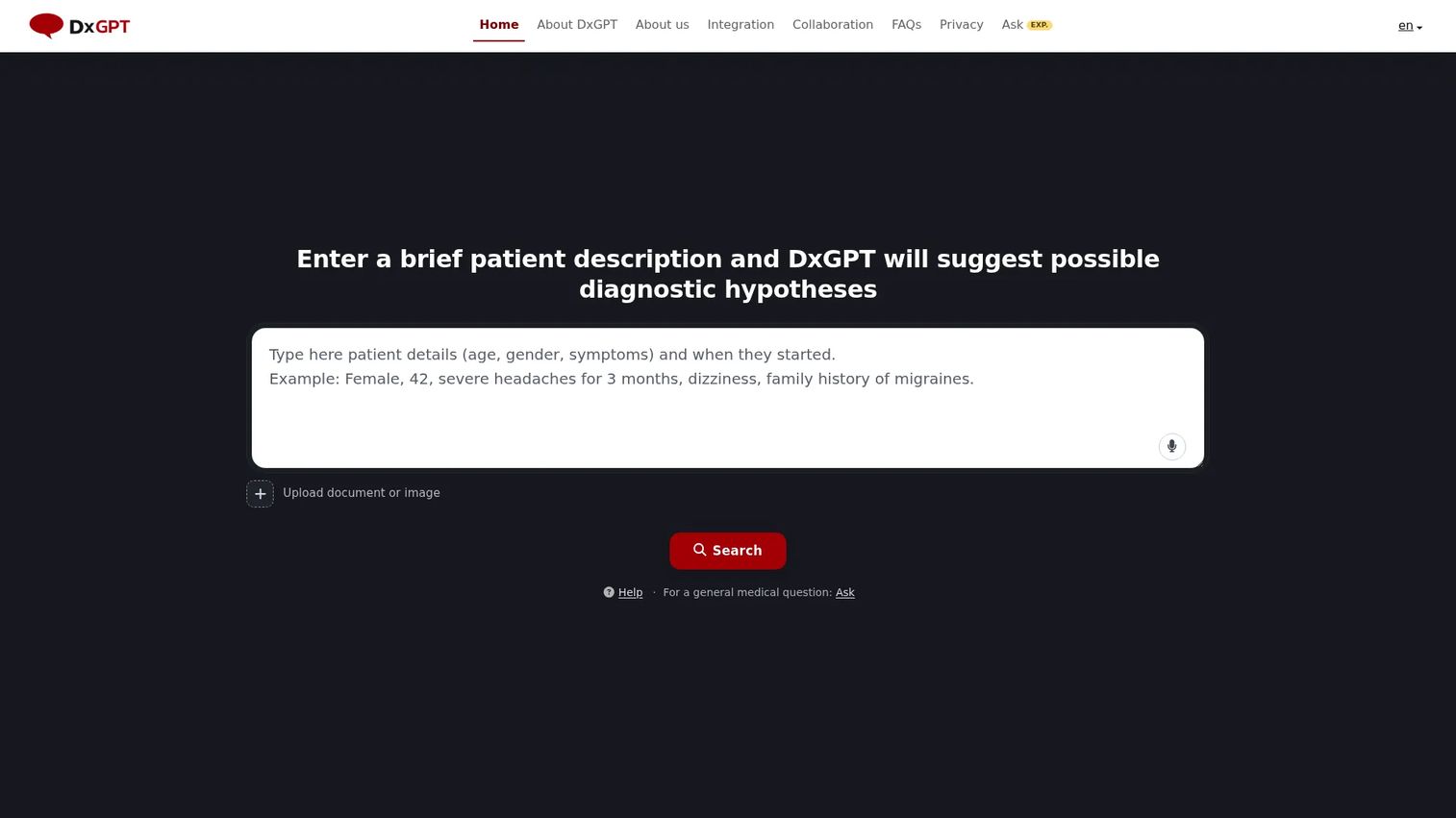
DxGPT is a free AI-powered platform that generates prioritized differential-diagnosis hypotheses from symptoms, clinical histories, uploaded medical documents, and images. It is designed for healthcare professionals, researchers, and developers who need broad clinical-context reasoning, particularly for rare, atypical, or diagnostically challenging cases. The platform supports multilingual input with automatic language detection and processes data with automatic anonymization and encrypted transmission.
Best for: Clinical teams, rare-disease programs, and health-tech founders exploring symptom-led and history-led diagnostic support rather than imaging-specific algorithms.
Key strengths
- Prioritized differential-diagnosis suggestions from free-text and structured clinical input
- Upload and analysis of medical documents and images alongside symptom descriptions
- Interactive AI-generated follow-up questions to refine diagnostic hypotheses
- Multilingual input with automatic language detection and translation
- API access with Freemium and usage-based Pro tiers for developer and enterprise integration
Why choose DxGPT: DxGPT fits organizations that need a reasoning layer across longitudinal clinical context, not a narrow imaging algorithm. It is a practical starting point for founders mapping the rare-disease diagnosis space or evaluating clinical reasoning infrastructure before committing to a proprietary model. Outputs should always support, not replace, clinician-led evaluation.
DxGPT pricing: The public app is free with no usage cap. The API offers a Freemium tier covering 50 calls per day and a Pro plan billed on a usage basis with a monthly invoice. The pricing page at pricing.dxgpt.app provides typical per-operation cost ranges. No fixed subscription price applies to the Pro tier.
No active G2 or Capterra listing was verifiable for DxGPT at the time of writing. Verify the current access model and any enterprise governance or support terms directly with the vendor before deploying in a clinical or regulated environment.
2. Aidoc
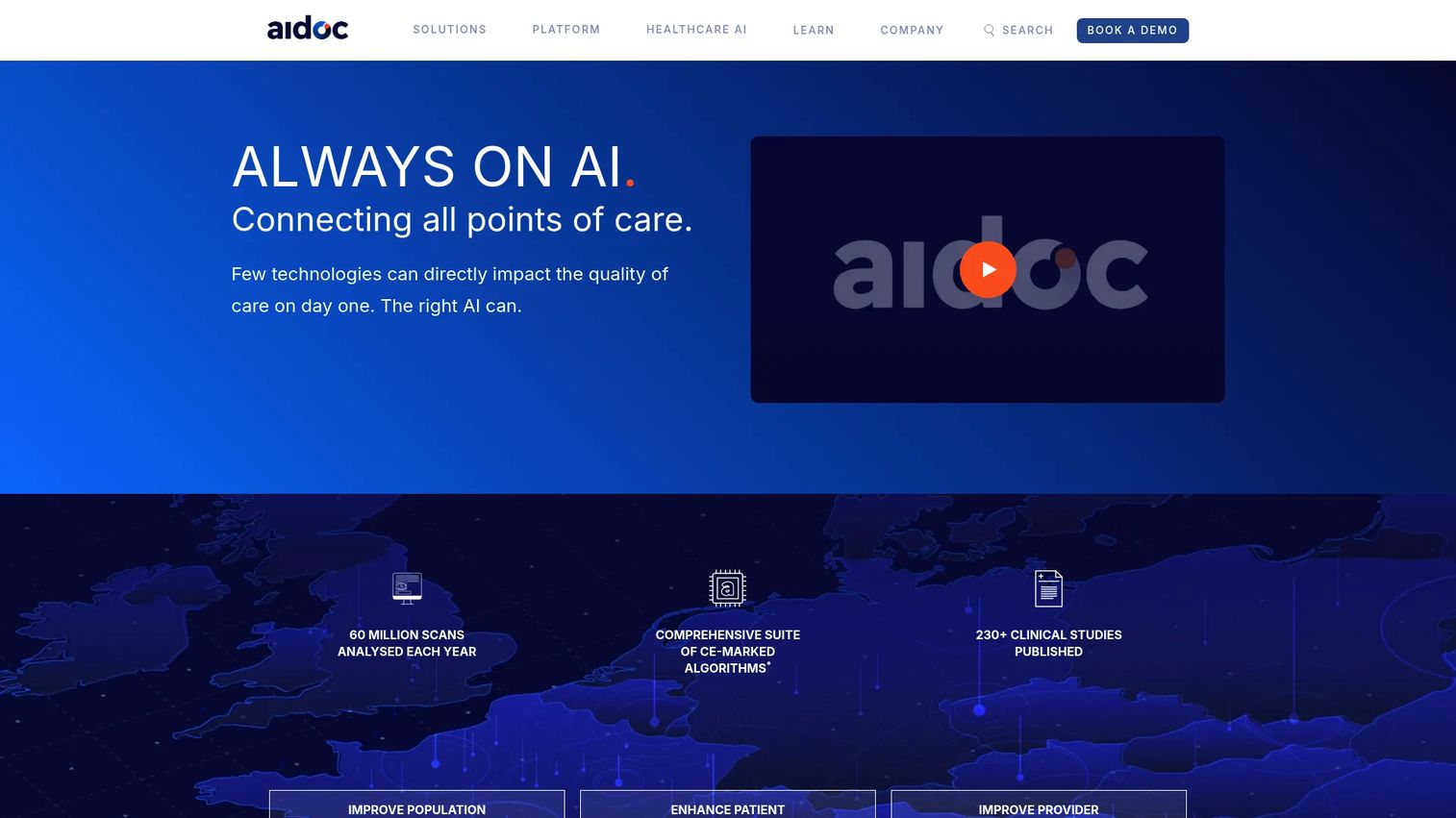
Aidoc is a clinical AI platform built around the aiOS infrastructure, which allows health systems to deploy, orchestrate, and govern multiple AI applications across imaging and care-coordination workflows. Its capabilities span radiology triage, detection, and quantification integrated with PACS, EHR, scheduling, and reporting systems. Aidoc operates across radiology, cardiology, neurovascular, and vascular care. The platform model is designed for organizations that want AI across multiple clinical workflows from a single vendor.
Best for: Hospitals and health systems running high imaging volumes that need enterprise clinical AI for triage prioritization, workflow orchestration, patient identification, and care-team notification.
Key strengths
- aiOS platform for deploying and governing multiple clinical AI applications
- Radiology triage and quantification with real-time PACS and EHR integration
- Real-time care-team notification via desktop and mobile workflows
- Patient identification, risk stratification, and follow-up management
- Clinical AI applications across cardiology, neurovascular, and vascular care
Why choose Aidoc: The platform approach suits organizations that want to standardize AI infrastructure rather than procure point tools for each indication. This matters commercially when the goal is creating a scalable clinical AI layer that new applications can be added to over time.
Aidoc pricing: No publicly displayed pricing is available. Pricing is structured as enterprise agreements and should be evaluated against module count, imaging volume, site footprint, integration scope, and support requirements. Contact Aidoc directly for a quote.
G2 rating: 4.0/5
3. Viz.ai
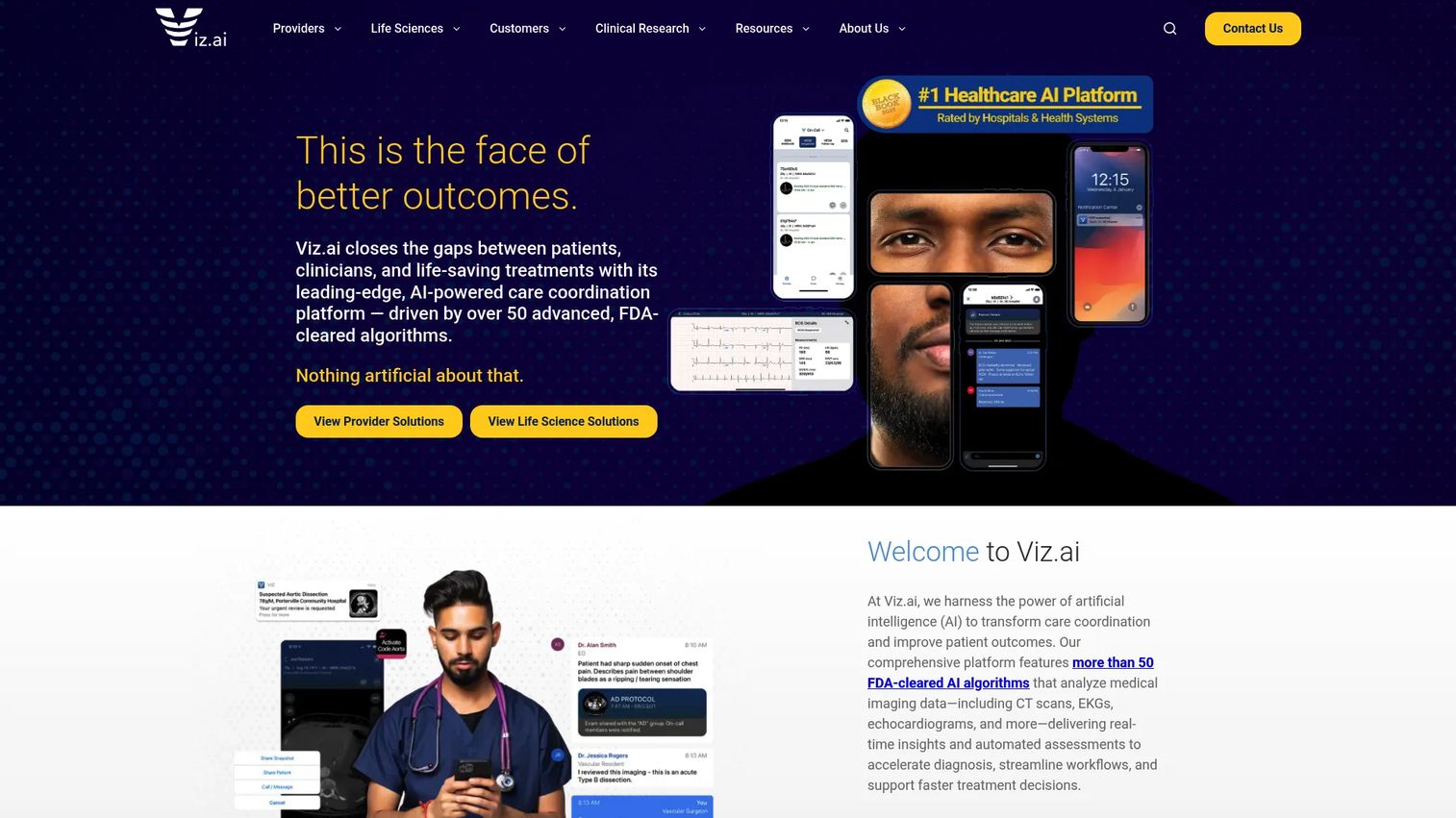
Viz.ai provides an AI-powered care-coordination platform that analyzes medical imaging and other clinical data to detect suspected conditions and activate care teams. The platform combines AI detection with real-time alerts, secure messaging, mobile collaboration, and integration with EHR and PACS systems. Its core value proposition sits at the intersection of detection and coordination: Identifying a suspected finding is paired immediately with notifying the right clinicians across the treatment pathway.
Best for: Stroke networks, neurovascular programs, and health systems where the commercial and clinical value depends on reducing delays between imaging detection, specialist notification, and treatment initiation.
Key strengths
- AI-powered detection across medical imaging and clinical data inputs
- Real-time alerts and care-team communication via mobile and web
- EHR, PACS, and radiology worklist integration
- Time-sensitive care workflow support across vascular and neurovascular pathways
- Networked care coordination across spoke-and-hub facility models
Why choose Viz.ai: Viz.ai fits organizations where the business case extends beyond a detection algorithm to include operational outcome improvements, specifically faster specialist activation and reduced time to treatment. Founders building in stroke care or vascular coordination should evaluate how the platform's notification architecture maps to local care protocols.
Viz.ai pricing: No publicly displayed pricing is available. Commercial terms require a vendor discussion and are likely structured around clinical pathway modules, facility count, care-network complexity, and implementation scope.
G2 rating: 4.5/5
4. Qure.ai
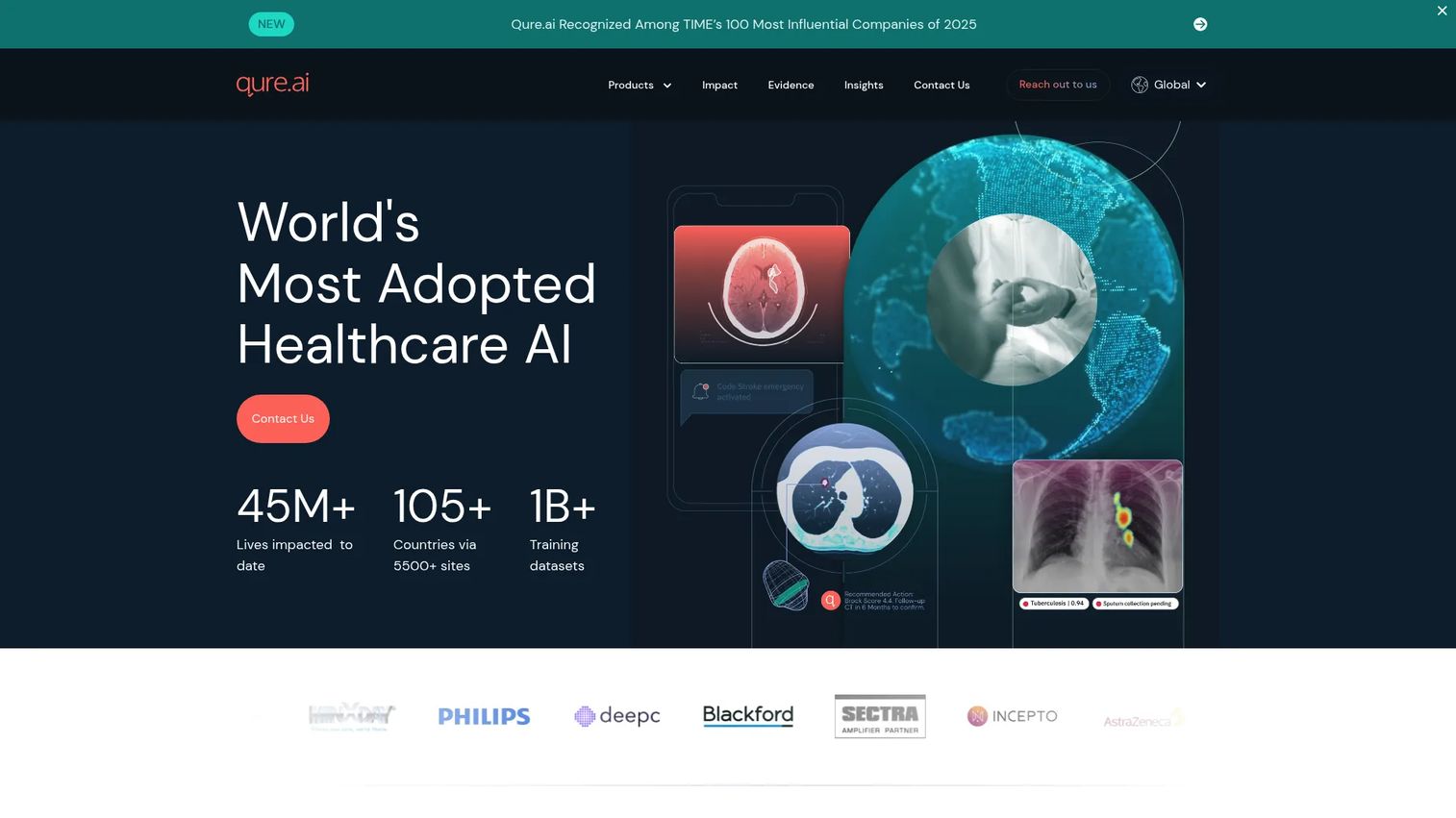
Qure.ai provides AI-assisted medical imaging and care-coordination tools across multiple radiology modalities. Its principal products include qXR for chest X-ray interpretation, qER for head CT analysis and triage, and qCT with qTrack for lung-nodule quantification and longitudinal tracking. The platform has documented deployments across screening programs, population-health initiatives, and clinical radiology workflows in multiple geographies, giving it relevance both for high-resource hospital environments and lower-resource screening contexts.
Best for: Imaging networks, public-health programs, and health-tech teams needing AI-assisted radiology coverage across several workflows rather than a single indication.
Key strengths
- qXR: AI-assisted chest X-ray interpretation across a broad range of thoracic findings
- qER: Head CT analysis and triage for time-sensitive neurological presentations
- qCT and qTrack: Lung-nodule quantification and longitudinal tracking
- Population-scale deployment capability across diverse care settings
- Clinical workflow integration for radiology triage and reporting support
Why choose Qure.ai: Breadth is Qure.ai's primary commercial advantage. When a buyer needs imaging AI across chest radiology, neuroimaging, and population screening rather than a single specialty, Qure.ai reduces vendor complexity. Verify performance data for the specific patient population and imaging equipment before deployment.
Qure.ai pricing: No publicly displayed pricing is available. Commercial terms should be evaluated by module selection, deployment scale, imaging volume, and integration requirements. Contact Qure.ai directly.
G2 rating: 5.0/5 (based on 1 review)
5. Lunit
Lunit provides AI-powered cancer-screening, medical-imaging, digital-pathology, and precision-oncology software. Its imaging products include AI-assisted analysis for mammography and digital breast tomosynthesis, chest X-ray analysis for thoracic abnormalities and workflow support, and digital pathology tools for immune phenotyping, IHC quantification, and genotype prediction. The company operates across clinical imaging and the biopharma sector, where its pathology AI is used in drug development and clinical trial contexts.
Best for: Oncology programs, breast-imaging and radiology teams, pathology organizations, and biopharma companies needing AI-supported cancer detection or biomarker analysis.
Key strengths
- AI-assisted mammography and digital breast tomosynthesis analysis
- Chest X-ray analysis for thoracic abnormalities with normal-case flagging and workflow support
- Digital pathology AI for immune phenotyping, IHC quantification, and genotype prediction
- Oncology-centered positioning across clinical imaging and drug development
- Relevant across both clinical and biopharma research contexts
Why choose Lunit: Lunit is the strongest fit when oncology is the primary clinical focus and the buyer needs AI across both imaging and pathology rather than a general radiology platform. The biopharma positioning also matters for founders building at the intersection of clinical care and pharmaceutical research.
Lunit pricing: No publicly displayed pricing is available. Commercial terms are structured through enterprise agreements. Contact Lunit for module-specific and volume-based pricing details.
6. Annalise.ai
Annalise.ai provides AI-powered medical imaging solutions that support radiologists with chest X-ray and non-contrast head CT analysis. Its chest X-ray model detects up to 124 findings, and its head CT model detects up to 130 findings. The platform integrates with PACS and RIS systems for worklist prioritization, delivers localization overlays and confidence bars alongside findings, and supports customizable thresholds and priority groups. The company's model architecture reflects a design philosophy of comprehensive finding coverage rather than narrow single-indication detection.
Best for: Radiology groups and health systems that need AI assistance across a wide range of findings within chest X-ray and head CT workflows.
Key strengths
- Detection of up to 124 findings on chest X-ray
- Detection of up to 130 findings on non-contrast head CT
- PACS and RIS integration with worklist prioritization
- Localization overlays and confidence-bar presentation for radiologist review
- Customizable detection thresholds and priority groupings
Why choose Annalise.ai: The breadth of finding coverage within two modalities differentiates Annalise.ai from single-indication imaging tools. For radiology operations where comprehensive finding sensitivity matters more than multi-modality coverage, this architecture is commercially relevant.
Annalise.ai pricing: The official website directs healthcare organizations to book a demo rather than displaying pricing. Commercial terms should be discussed directly with Annalise.ai and evaluated against imaging volume, module selection, PACS integration complexity, and deployment environment.
7. RapidAI
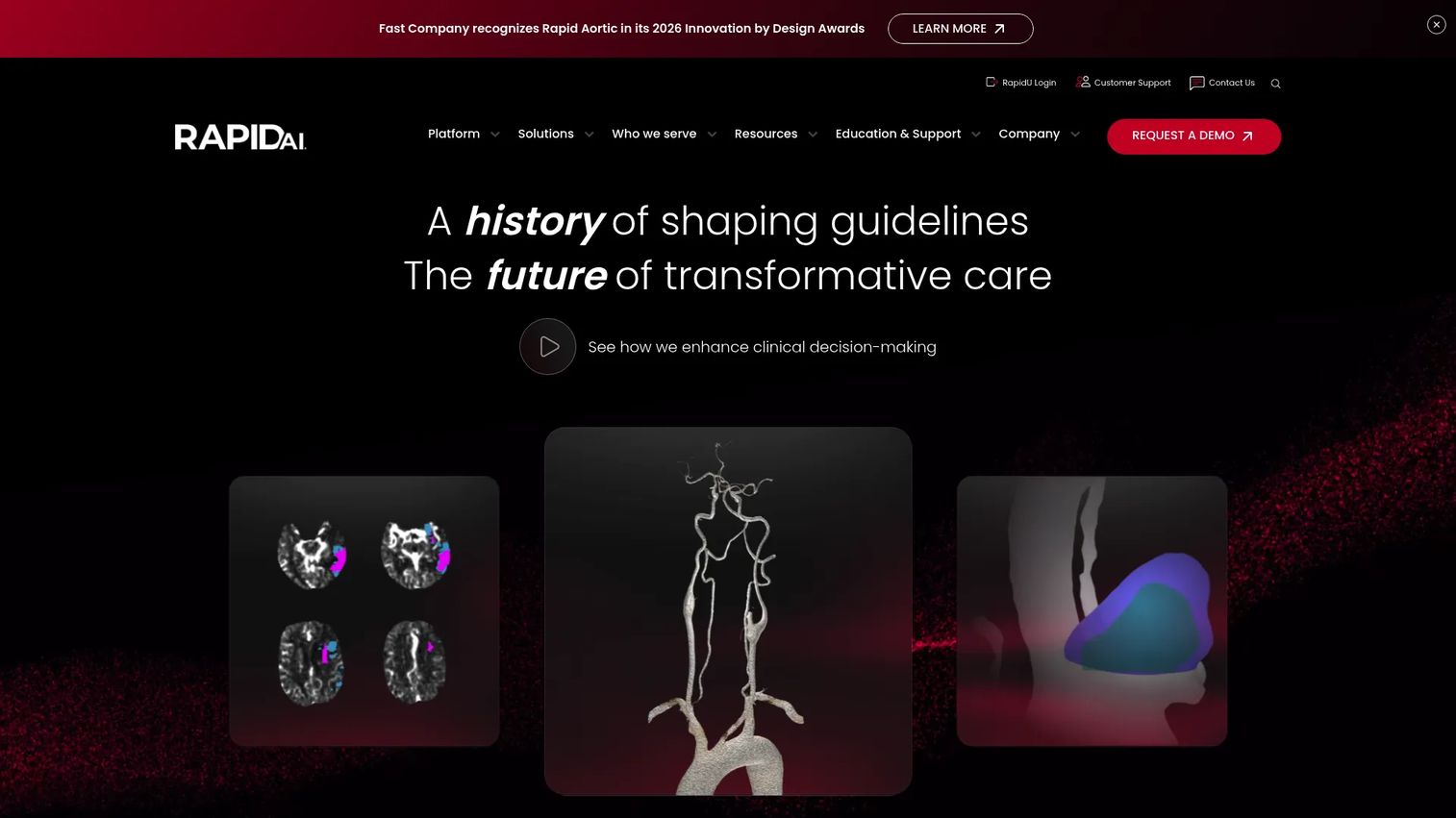
RapidAI provides clinical AI for medical imaging analysis, care-team collaboration, and enterprise healthcare workflow management. Its capabilities cover triage, localization, quantification, characterization, visualization, and longitudinal tracking across neurovascular, radiology, cardiac, vascular, and life-sciences workflows. The platform includes real-time alerts, mobile and web collaboration tools, secure messaging, DICOM image review, radiology case prioritization, AI interpretation assistance, and auto-reporting. Enterprise infrastructure includes analytics, centralized management, and scalable deployment architecture.
Best for: Stroke centers, neurovascular networks, and operators building or evaluating end-to-end pathway tools that connect imaging analysis with specialist activation and treatment coordination.
Key strengths
- Neurovascular imaging triage, localization, and quantification
- Real-time alerts, mobile and web collaboration, and secure care-team messaging
- Radiology case prioritization, AI interpretation assistance, and auto-reporting
- EHR and PACS integration with enterprise analytics and centralized management
- Longitudinal tracking and life-sciences workflow support
Why choose RapidAI: RapidAI fits organizations where the business case for clinical AI centers on a specific specialty workflow, stroke and neurovascular care, rather than broad enterprise imaging deployment. The auto-reporting and longitudinal tracking capabilities matter for programs measuring clinical outcomes over time.
RapidAI pricing: No publicly displayed pricing is available. Commercial structure should be evaluated by sites, care-network coverage, imaging volume, and clinical module selection. Contact RapidAI for current enterprise terms.
8. Heartflow
Heartflow is an AI-driven coronary care platform that transforms coronary CT angiography (CCTA) scans into patient-specific insights about coronary anatomy, blood flow, and plaque. Its product suite includes Roadmap Analysis for CCTA interpretation, FFRCT Analysis for blood-flow assessment and revascularization planning, Plaque Analysis for coronary plaque quantification and characterization, Plaque Staging for total plaque volume-based risk stratification, and PCI Navigator for patient-specific procedural planning. The platform integrates with PACS and EMR systems.
Best for: Cardiology programs and health systems making coronary artery disease assessments through CCTA-based diagnosis, risk stratification, and treatment planning.
Key strengths
- Roadmap Analysis for efficient, consistent CCTA interpretation
- FFRCT Analysis to assess blood flow and inform revascularization decisions
- Plaque Analysis for coronary plaque quantification and characterization
- Plaque Staging for volume-based cardiac risk stratification
- PCI Navigator for patient-specific interventional planning
Why choose Heartflow: Heartflow occupies a specific and clinically defensible position in coronary CAD assessment, where CCTA-derived physiological analysis can support decisions that previously required invasive catheterization. For founders evaluating cardiology AI, understanding how local reimbursement economics and care pathway design affect adoption is essential before treating Heartflow's clinical evidence as a proxy for commercial readiness.
Heartflow pricing: No publicly displayed software pricing is available. Commercial and reimbursement structures vary by market, and Medicare reimbursement amounts for FFRCT analysis in the U.S. are documented separately from customer licensing terms. Contact Heartflow directly for current enterprise pricing and reimbursement support resources.
9. Eko Health
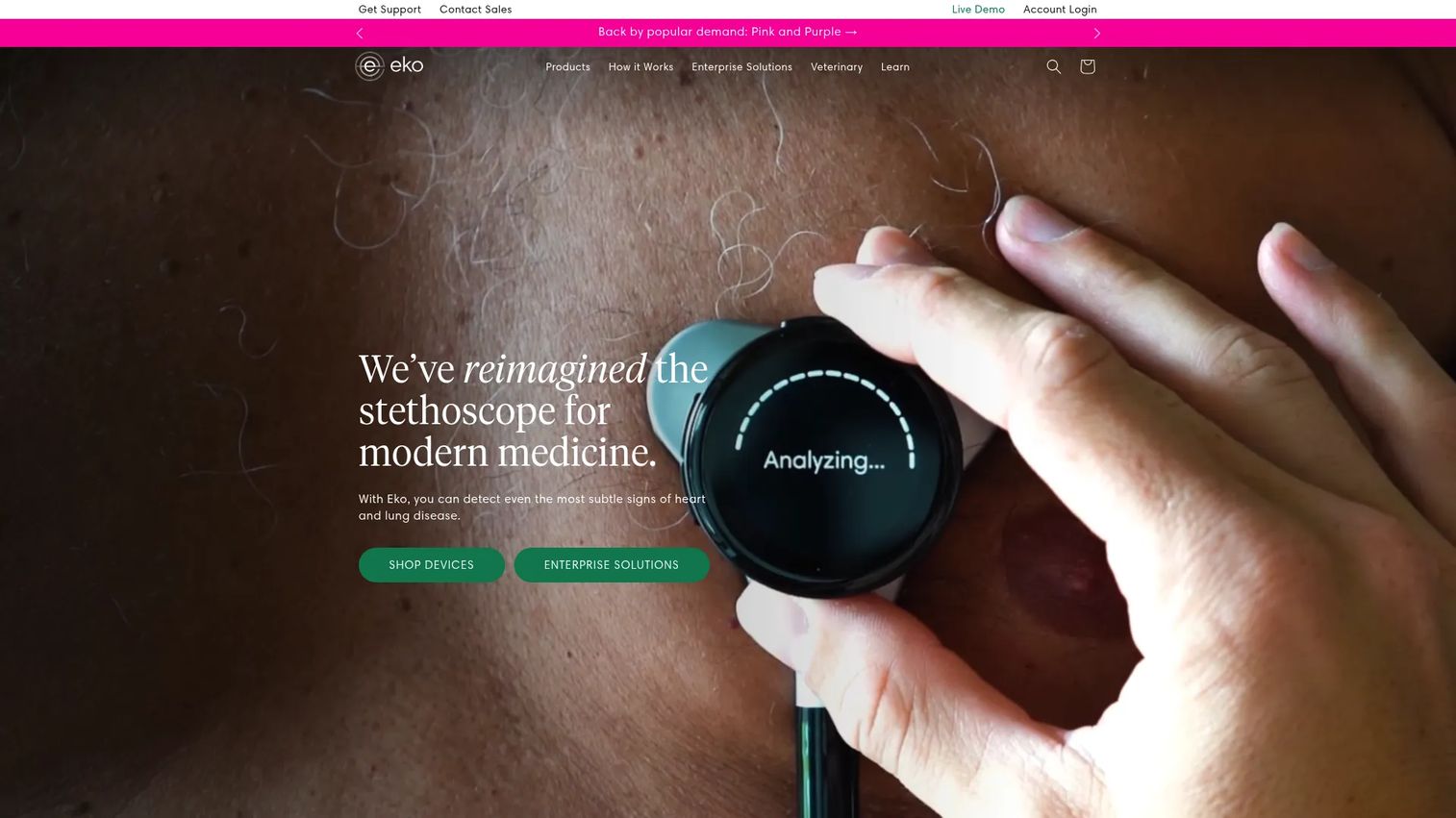
Eko Health combines digital stethoscope hardware with software using enhanced audio, ECG visualization, and FDA-cleared AI to support earlier detection of cardiac and pulmonary conditions. Its AI algorithms are FDA-cleared for detecting structural murmurs, atrial fibrillation, tachycardia, bradycardia, and low ejection fraction. Features include digitally enhanced audio with amplification and noise cancellation, real-time waveforms, 3-lead ECG, recording and sharing capabilities, PDF reports, patient profiles, and a web dashboard. Bluetooth-enabled listening and telehealth integration extend point-of-care reach.
Best for: Healthcare providers and health systems seeking digitally enhanced auscultation, AI-supported disease detection at the point of care, and telehealth-enabled cardiac screening workflows.
Key strengths
- FDA-cleared AI for structural murmur, AFib, tachycardia, bradycardia, and low-ejection-fraction detection
- Digitally enhanced audio with amplification and active noise cancellation
- Real-time waveforms and 3-lead ECG via connected digital stethoscope
- Recording, patient profiles, PDF reports, and web dashboard
- Telehealth and Bluetooth listening capabilities
Why choose Eko Health: Eko Health is appropriate when the diagnostic interaction happens at the bedside or in a primary care visit, not in an imaging department. The hardware-plus-software model creates a different commercial evaluation than a pure software platform. For founders evaluating point-of-care AI products, device procurement, clinical training, hygiene protocols, and workflow integration with documentation and referral processes all factor into total deployment cost.
Eko Health pricing: The Eko Standard software tier is free. Eko+ adds AI analysis, advanced recording, reporting, sharing, and dashboard features, priced at $119.99 per year or $12.99 per month billed monthly. Eko Telehealth and Eko SENSORA enterprise offerings are priced by contact. Eko Vet+ for veterinary professionals is $180 per year. Device hardware pricing is separate from software subscription costs.
10. SOPHiA GENETICS
SOPHiA GENETICS provides an AI-powered precision-medicine platform for analyzing genomic and other multimodal healthcare data. Its end-to-end workflows cover oncology and inherited disorders, with capabilities spanning variant detection, prioritization, interpretation, and reporting. The platform is cloud-native and designed for scalable data management and knowledge sharing across institutions. It serves healthcare institutions, genomic laboratories, and biopharma organizations that need AI-assisted analysis across complex, multi-datatype clinical datasets.
Best for: Oncology programs, genomic laboratories, precision-medicine teams, and founders building data-intensive clinical products that combine genomic sequencing, pathology, and clinical outcomes.
Key strengths
- AI-powered analysis of genomic and multimodal healthcare data
- End-to-end workflows for oncology and inherited disorders
- Variant detection, prioritization, interpretation, and structured reporting
- Scalable cloud-native platform with data management and institutional knowledge sharing
- Integration across laboratory systems, pathology workflows, and EHR infrastructure
Why choose SOPHiA GENETICS: SOPHiA GENETICS fits organizations whose clinical differentiation depends on combining complex datasets, not detecting findings in a single modality. For founders building at the genomics-clinical interface, data governance, laboratory system interoperability, and the evidence base for each deployed application are the primary evaluation criteria. Generic AI claims matter far less than the specific evidence supporting each variant interpretation model.
SOPHiA GENETICS pricing: No publicly displayed pricing is available. Enterprise terms should be assessed against data volumes, selected applications, implementation scope, system integrations, and support model. Contact SOPHiA GENETICS directly for current commercial details.
Considerations when choosing an AI medical diagnostic platform
Start with the clinical decision, not the AI category
"AI diagnostics" is too broad a procurement category. Before evaluating vendors, define the specific decision point the tool is meant to support: What clinical data goes in, what output the clinician receives, who acts on it, and what action it triggers. A radiology worklist triage tool, a rare-disease differential engine, and a genomic variant interpreter all sit under the "AI diagnostics" umbrella, but they require completely different evaluation criteria, procurement processes, and integration partners.
Founders building health-tech products benefit from this specificity most. A narrow wedge with a clear buyer, defined workflow, and measurable outcome creates a more defensible go-to-market position than a general diagnostic copilot with broad claims.
Verify intended use, evidence, and regulatory status
Marketing materials, published studies, and regulatory authorizations are distinct categories of evidence. A peer-reviewed paper may describe a model's performance in a research cohort that differs significantly from the target deployment population. An FDA authorization applies to a specific product and intended use, not to every potential application of the underlying technology.
The FDA maintains a list of AI-enabled medical devices authorized for U.S. marketing. Treat it as a starting point for regulatory diligence, not a substitute for reviewing the specific product, intended use, and authorization documentation relevant to your market. For AI deployment governance considerations, our guide to AI governance tools covers frameworks for managing model oversight and auditability.
Evaluate local validation and model monitoring
Performance data from another health system's population is not a guarantee of equivalent performance in yours. Ask vendors for evidence from populations, imaging equipment, and clinical workflows comparable to your target environment. Require a clear plan for monitoring false positives, false negatives, alert fatigue, model drift, and escalation ownership after deployment. Post-deployment monitoring is not optional for regulated clinical AI.
Map integration work before estimating value
The most common reason a clinical AI pilot does not reach production is integration complexity. Common dependencies include PACS, RIS, EHR, imaging archive systems, clinical communication infrastructure, laboratory information systems, genomics pipelines, and identity management. Understand who owns each integration in your organization, what engineering capacity it requires, and what the vendor provides versus what you build. That mapping often determines the real timeline and cost of a deployment.
Treat privacy and governance as operating requirements
Data retention policies, de-identification approaches, auditability, access controls, vendor security documentation, data-use rights, and incident escalation processes all require scrutiny before a clinical AI platform goes into production. This is not a checkbox exercise. A vendor's SOC 2 report and HIPAA business associate agreement are starting points, not conclusions. Review how data flows through each module, what the vendor can access, and how you retain control over patient data in the event of contract termination. No platform described in this article is claimed to guarantee compliance with HIPAA, GDPR, or any other regulatory framework. That determination is yours to make, with qualified legal and compliance counsel.
Model the commercial path, not only the license price
Enterprise healthcare AI economics extend well beyond a subscription fee. Implementation services, data migration, per-study or per-analysis fees, hardware costs (where applicable), PACS or EHR integration work, local clinical validation, training, and ongoing support all affect the total cost of ownership. Founders evaluating platform partnerships should also consider reimbursement pathways where relevant: Some clinical AI applications have established reimbursement codes that affect how health systems calculate ROI, while others do not. Understanding this before signing a commercial agreement avoids a common late-stage procurement problem.
How to choose the right AI medical diagnostic platform for your team
If you need a rare-disease or complex-case reasoning layer
Prioritize platforms that accept longitudinal clinical context, structured and unstructured inputs, and produce transparent differential hypotheses ranked for clinician review. DxGPT is the clearest fit among the listed options for this use case, with its free public access model and API integration path reducing barrier to evaluation. Verify enterprise governance requirements before deploying in a clinical setting.
If you need AI inside radiology operations
Aidoc, Qure.ai, Lunit, and Annalise.ai each merit evaluation, but against specific criteria: The imaging modality your workflow depends on, the indication you need to support, the PACS and EHR systems already in place, and the evidence your clinical team requires before adoption. Breadth of a vendor's portfolio is not a proxy for evidence quality in your specific indication. Evaluate module by module.
If your workflow depends on rapid specialist activation
Viz.ai and RapidAI both address time-sensitive care-coordination workflows in stroke and neurovascular care. The evaluation should separate evidence for AI detection accuracy from evidence for operational outcomes, since the business case often rests on the latter. Map the platform to your specific notification routing, on-call coverage model, and transfer protocols before treating either as commercially ready for your network.
If you are building around a specialist clinical wedge
Heartflow for coronary CT-based programs and Eko Health for point-of-care acoustic screening represent narrower, deeper clinical wedges. Specialist depth in a validated pathway often creates stronger commercial defensibility than broad category coverage. For Heartflow, understand how local reimbursement policy shapes the health system's adoption decision. For Eko Health, account for the full hardware-plus-software procurement and clinical training cycle.
If your differentiation depends on multimodal clinical data
SOPHiA GENETICS is the clearest fit for organizations working across genomics, pathology, imaging, and clinical outcomes in a unified analysis framework. Governance and interoperability sit at the center of value realization here, not the AI model itself. Founders building precision-medicine products should assess the platform's laboratory system integrations and variant interpretation evidence base before anything else. For related reading on how agentic AI platforms and AI model deployment software are evolving alongside clinical AI infrastructure, those categories intersect increasingly with precision-medicine data pipelines.
Conclusion
The AI medical diagnostic space is not a single category. It spans clinical reasoning support, imaging AI, care coordination, cardiac analysis, acoustic screening, and multimodal precision medicine, and the right platform depends entirely on which of those problems you are trying to solve.
The 10 platforms in this list each occupy a defensible clinical position. DxGPT serves rare-disease reasoning. Aidoc and Qure.ai address enterprise imaging operations. Viz.ai and RapidAI target time-sensitive care coordination. Lunit and Annalise.ai focus on oncology and broad radiology coverage respectively. Heartflow specializes in coronary CT analysis. Eko Health brings AI to the point-of-care auscultation workflow. SOPHiA GENETICS supports precision medicine across complex multimodal datasets.
For founders and health-tech operators, the most useful shortlisting exercise starts with one question: What is the specific clinical decision the platform supports, and who in the care organization acts on the output? Match the platform to that answer, then evaluate evidence, integration requirements, data governance, and commercial fit. A narrow, well-validated wedge almost always creates a faster sales cycle and a more defensible market position than a general-purpose diagnostic AI claim.
This article provides market and platform guidance only. It is not medical, legal, regulatory, or clinical advice. Clinician oversight, local validation, and workflow governance remain the responsibility of each care organization.
FAQs
AI medical diagnostic platforms are software products that analyze clinical inputs, including medical images, symptoms, physiological signals, laboratory results, genomic data, or patient histories, to help healthcare professionals identify, prioritize, or investigate possible conditions. Platform scope ranges from imaging triage algorithms and rare-disease differential engines to cardiovascular analysis tools and multimodal genomics platforms. They do not operate as autonomous diagnosticians. They surface structured information for clinician review and decision-making.
Most are designed to support clinicians within a specified intended use, not to replace clinical judgment. Whether a product can operate autonomously depends on the specific product, the indication, local regulatory requirements, and the authorization or clearance status in the relevant market. In practice, the tools in this list generate hypotheses, flag findings, quantify markers, or prioritize workflows. Clinicians and care organizations retain accountability for patient decisions.
Start with peer-reviewed evidence, then review the vendor's regulatory documentation and intended-use statement. Assess whether the evidence was generated in a population, care setting, and imaging environment comparable to your own. Review performance by clinically relevant subgroups, including age, sex, and comorbidity profile where applicable. Require a clear plan for local validation before production deployment and a protocol for ongoing performance monitoring, covering false-positive rates, alert fatigue, and model drift over time.
Clinical decision support (CDS) encompasses a broad range of software tools that assist clinicians with decisions, from simple reference tools to complex analytical systems. A subset of CDS functions as regulated medical-device software, subject to FDA or equivalent regulatory oversight, depending on what the software analyzes and the clinical claims it makes. Not all CDS is regulated as a medical device, and the boundary has evolved as regulators have updated guidance. The determination for any specific product requires a legal and regulatory review against the relevant jurisdiction's requirements and the product's specific intended use.
Radiology is the most visible application area, but the category extends considerably further. Platforms in this list cover cardiovascular imaging and physiology (Heartflow), point-of-care acoustic analysis (Eko Health), clinical reasoning and rare-disease diagnosis support (DxGPT), and multimodal genomics and precision medicine (SOPHiA GENETICS). Care coordination workflows, pathology, and population-health screening are also active application areas. Radiology simply has the most established market because imaging data is structured and AI models have a long development history in that domain.
Required integrations depend on the care workflow and the platform type. Imaging AI typically requires PACS and RIS integration, plus EHR connectivity for patient context and notification routing. Care-coordination platforms need clinical communication infrastructure and, often, mobile notification systems. Point-of-care tools may need EHR documentation and referral workflow integration. Genomic and precision-medicine platforms require laboratory information system connectivity, pathology infrastructure, and often a data warehouse or analytics layer. Identity management, access controls, and audit logging apply broadly. Mapping these dependencies before vendor selection is one of the most important steps in avoiding a failed pilot.
Most enterprise platforms in this list use quote-based pricing with no publicly displayed rates. Costs depend on clinical module selection, imaging or analysis volume, site count, hardware (where applicable), integration scope, implementation services, and ongoing support requirements. Reimbursement economics can also affect what health systems are willing to pay, particularly for platforms like Heartflow where a Medicare reimbursement code affects the buyer's return-on-investment calculation. Eko Health is the exception, with a publicly posted software pricing structure starting free and scaling to $119.99 per year for the Eko+ tier. For enterprise and telehealth tiers, contact sales applies there too.
No. FDA authorization applies to a specific product and intended use. It does not validate every possible application of the underlying AI, and it does not account for performance variation across patient populations, imaging equipment, workflow designs, or care settings. Health systems deploying an FDA-authorized AI tool still need workflow validation, integration testing, clinical governance, and performance monitoring in their own environment. The FDA itself notes that its list of AI-enabled medical devices identifies those authorized for U.S. marketing and does not replace product-specific review of intended use and supporting documentation.