

Your development plans live in a spreadsheet, three managers' heads, and a Slack channel nobody checks. The review cycle ended two months ago. Half the growth goals never got a follow-up. And when leadership asks whether any of it moved retention or performance, you have activity data, not outcomes.
That gap is the real problem. Development rarely fails because people don't want to grow. It stalls because the plan lives in too many places, managers lack a system to follow through, and skill gaps stay invisible until they slow a deal or a project.
The global employee development software market sat at USD 5.64 to 6.04 billion in 2024 to 2025 and is projected to reach USD 12 billion by 2035, a roughly 7.1% CAGR, according to WiseGuy Reports (2025). Growth is real, but the tools vary widely in what they actually do.
This guide breaks down the tradeoffs so you can pick based on your job, not the marketing.
What's inside
This guide is for HR, People Ops, enablement, and people leaders who need software to run growth plans, competencies, manager coaching, and measurable development. It works for a Sales Enablement Manager building ramp paths just as well as an HR generalist standardizing reviews.
We picked tools based on four criteria:
- Personalization: competencies, career paths, and individual development plans
- Analytics: skill gap tracking, reporting, and ROI measurement
- Integrations: HRIS, Slack, Teams, and the rest of your stack
- Ease of use and governance: manager adoption, versioning, and maintenance
TL;DR
- Best overall for personalized development plans: Culture Amp
- Best for manager effectiveness and career paths: 15Five
- Best for configurable HR workflows: Lattice
- Best for talent mobility inside a suite: Workday
- Best for training-heavy teams: TalentLMS
- Best for coaching and team development: Cloverleaf
If you want personalized development tied to measurable, manager-led growth, start your shortlist with Culture Amp, 15Five, or Lattice.
What is employee development software
Employee development software is a platform that helps organizations plan, deliver, and measure employee growth through competencies, career paths, learning, and manager coaching. It sits between a learning management system and a performance tool, connecting what people should learn to how their growth gets tracked over time.
Unlike a pure LMS focused on course delivery, an employee development platform ties learning to career progression, skill gaps, and individual development plans. Unlike a standalone performance tool focused on reviews, it emphasizes continuous growth rather than a once-a-year rating.
Key features to expect from employee development tools:
- Personalized growth plans: individual development plans mapped to roles and goals
- Competencies and skills tracking: frameworks that show where each person stands
- Career paths: clear progression routes and role clarity for internal mobility
- Manager coaching: structured 1-on-1s, prompts, and development conversations
- Learning paths: curated content and microlearning in the flow of work
- Analytics and reporting: skill gap tracking, dashboards, and ROI measurement
- Integrations: HRIS integration, Slack, Teams, and Google Workspace connectivity
The best employee development solutions turn scattered growth conversations into a repeatable system. That matters for a Sales Enablement Manager who needs ramp paths and certification just as much as for an HR team running company-wide development cycles. For teams that also need to show a product or process visually, an interactive demo can support internal training and new hire onboarding alongside these platforms.
When to use employee development software
When ramp time is getting too long
New hires take too long to hit productivity, and every manager onboards differently. Employee development software standardizes onboarding paths, development plans, and checkpoints. You define the competencies a role needs, map a learning path, and set checkpoints managers actually follow. Ramp becomes a repeatable process instead of a manager-by-manager improvisation. To reinforce product knowledge visually during ramp, teams often pair these platforms with a guided walkthrough that new reps can revisit on their own.
When managers need a better coaching system
Most managers want to coach but lack a structure. Development tools give frontline managers prompts, 1-on-1 templates, and progress views so growth conversations stop being ad hoc. Instead of "how's it going," managers run structured development conversations tied to real competencies and goals. Manager enablement is where most development programs live or die, so this matters more than any content library.
When skill gaps are slowing performance
You suspect certain skills are weak, but you're guessing. Competency frameworks, assessments, and learning paths replace that guesswork with data. Skill gap tracking shows exactly where a team or individual falls short, then routes the right learning to close it. When you can see gaps by team, role, or segment, you prioritize development where it changes outcomes instead of spreading it evenly and thin.
Comparison table
Here is a side-by-side view of the 10 tools, sorted by relevance to personalized, manager-led development. Pricing and ratings reflect verified values at the time of writing. Where a vendor does not publish a numeric price, we note quote-based pricing rather than guess.
| # | Product | Best for | Key use case | Pricing | G2 rating |
|---|---|---|---|---|---|
| 1 | Culture Amp | Personalized development plans | Growth plans, competencies, manager development | Quote-based, billed annually | 4.5/5 |
| 2 | 15Five | Manager effectiveness and career paths | Performance, engagement, coaching | From $4 per user/mo (annual) | Not listed |
| 3 | Lattice | Configurable HR workflows | Performance, goals, career growth | From $4 seat/mo (annual) | 4.7/5 |
| 4 | Workday | Talent mobility inside a suite | HCM, internal mobility, succession | Quote-based | 4.2/5 |
| 5 | TalentLMS | Training-heavy teams | LMS, course creation, learning paths | From $119/mo | 4.7/5 |
| 6 | Cloverleaf | Coaching and team development | Assessments, AI coaching, team insights | Quote-based | 4.8/5 |
| 7 | Coursera Business | Formal learning at scale | Course library, role-based upskilling | From €348.69/yr per license | 4.5/5 |
| 8 | Torch | Manager and leader coaching | 1:1 coaching, leadership development | Quote-based | Not listed |
| 9 | BetterUp | High-touch coaching at scale | Human plus AI coaching, behavior change | Quote-based | 4.5/5 |
| 10 | PeopleGoal | Process-driven development | Goals, feedback, reviews, core HR | From $4 per user/mo (annual) | 4.5/5 |
Best employee development software for 2026
1. Culture Amp
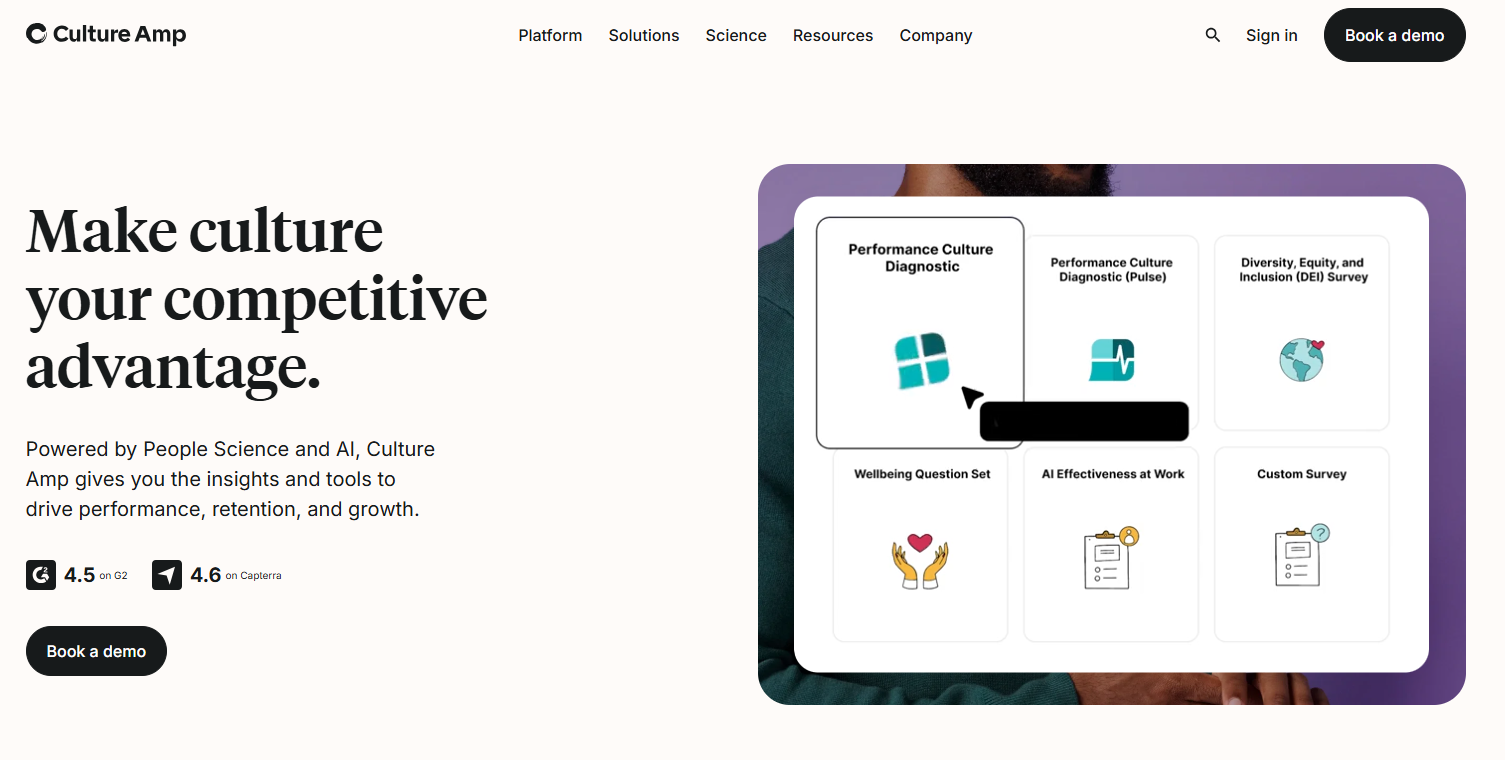
Culture Amp is an employee experience platform covering engagement, performance, and development. Its Develop module builds personalized growth plans grounded in competencies, then connects them to manager conversations and analytics. People teams that want science-backed growth planning tend to land here first.
The pitch is measurable development, not just activity. Culture Amp ties development plans to competencies and career paths, so growth conversations reference the same framework across the org. Its AI Coach and comment summaries help managers turn survey and feedback data into next steps rather than another dashboard nobody reads.
Best for: Mid-market and enterprise people teams centralizing engagement, performance, and development in one platform.
Key strengths
- Personalized development plans tied to competencies
- Engage: surveys, retention insights, AI comment summaries
- Perform: reviews, 1-on-1s, feedback, and goals
- Develop module with AI Coach for growth planning
Why choose Culture Amp: If you want development anchored in engagement and performance data, this is the strongest fit. It suits teams that value evidence and career paths over a bolt-on learning library.
Culture Amp pricing: Pricing depends on employee count, products chosen, and service tier, and all products are billed annually. The public page uses quote-based pricing across Engage, Perform, and Develop, with enterprise pricing available.
2. 15Five
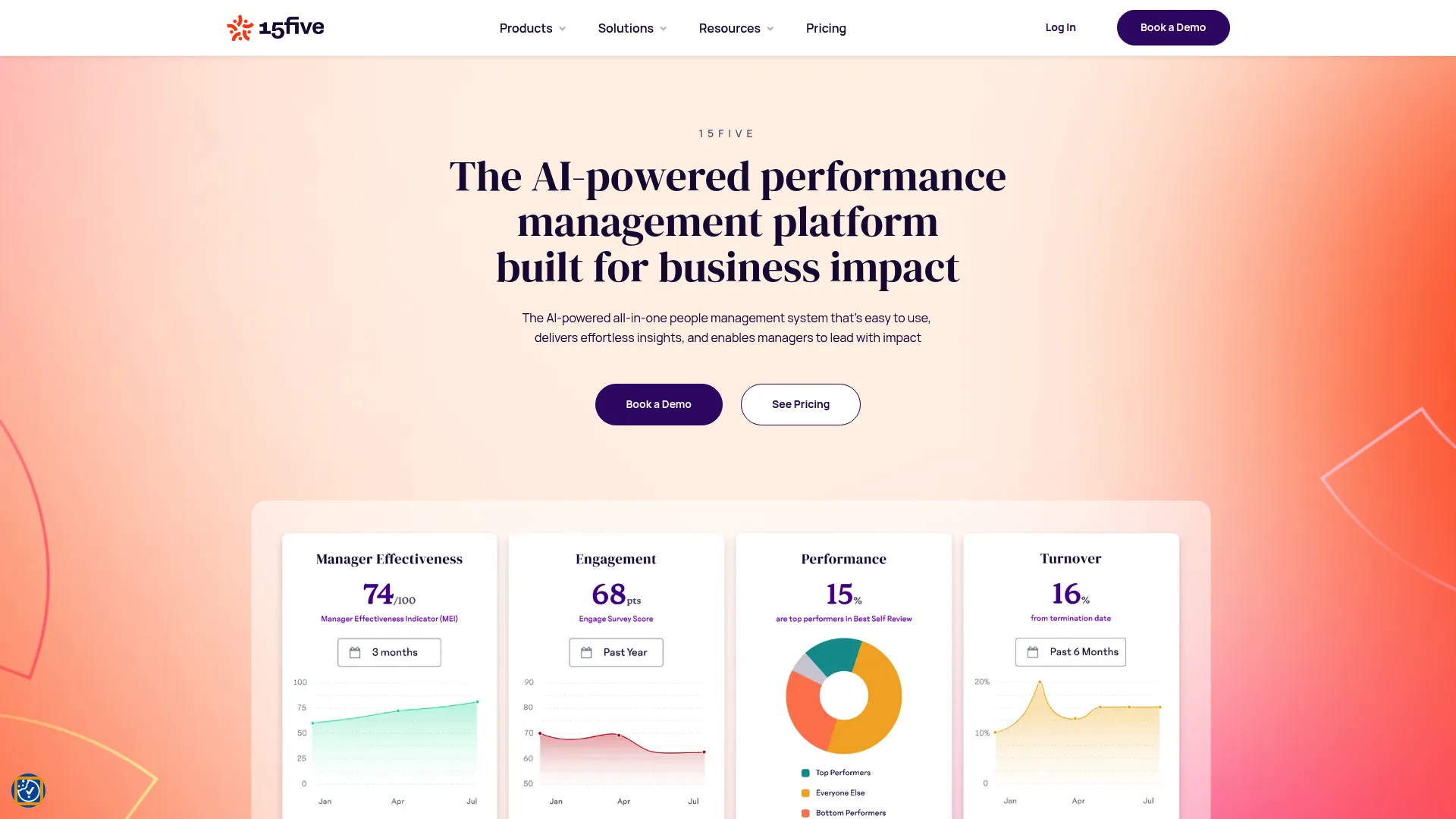
15Five combines performance management, engagement, and manager effectiveness in one platform. It's built for teams that want development tied directly to reviews, 1-on-1s, and coaching rather than treated as a separate track. Career paths and growth plans sit close to the day-to-day management workflow.
The manager-effectiveness angle is where 15Five stands out. It pairs performance reviews and 360 feedback with AI-powered insights and coaching, so frontline managers get prompts and structure instead of a blank agenda. For a Sales Enablement Manager, that means coaching conversations that reference real goals and competencies, not vibes.
Best for: Mid-market companies wanting performance, engagement, and manager effectiveness tools in one place.
Key strengths
- Performance reviews and 360 feedback
- OKRs, goal management, and talent reviews
- AI-powered analytics, insights, and coaching
Why choose 15Five: Pick 15Five when manager coaching is the priority and you want development woven into the review cycle. It fits teams that treat manager enablement as the lever for retention and performance.
15Five pricing: Public pricing starts at $2 per employee per month billed annually for the Kona Meeting Assistant. Core plans include Engage at $4 per user/mo, Perform at $11 per user/mo, and Total Platform at $16 per user/mo, all billed annually.
3. Lattice
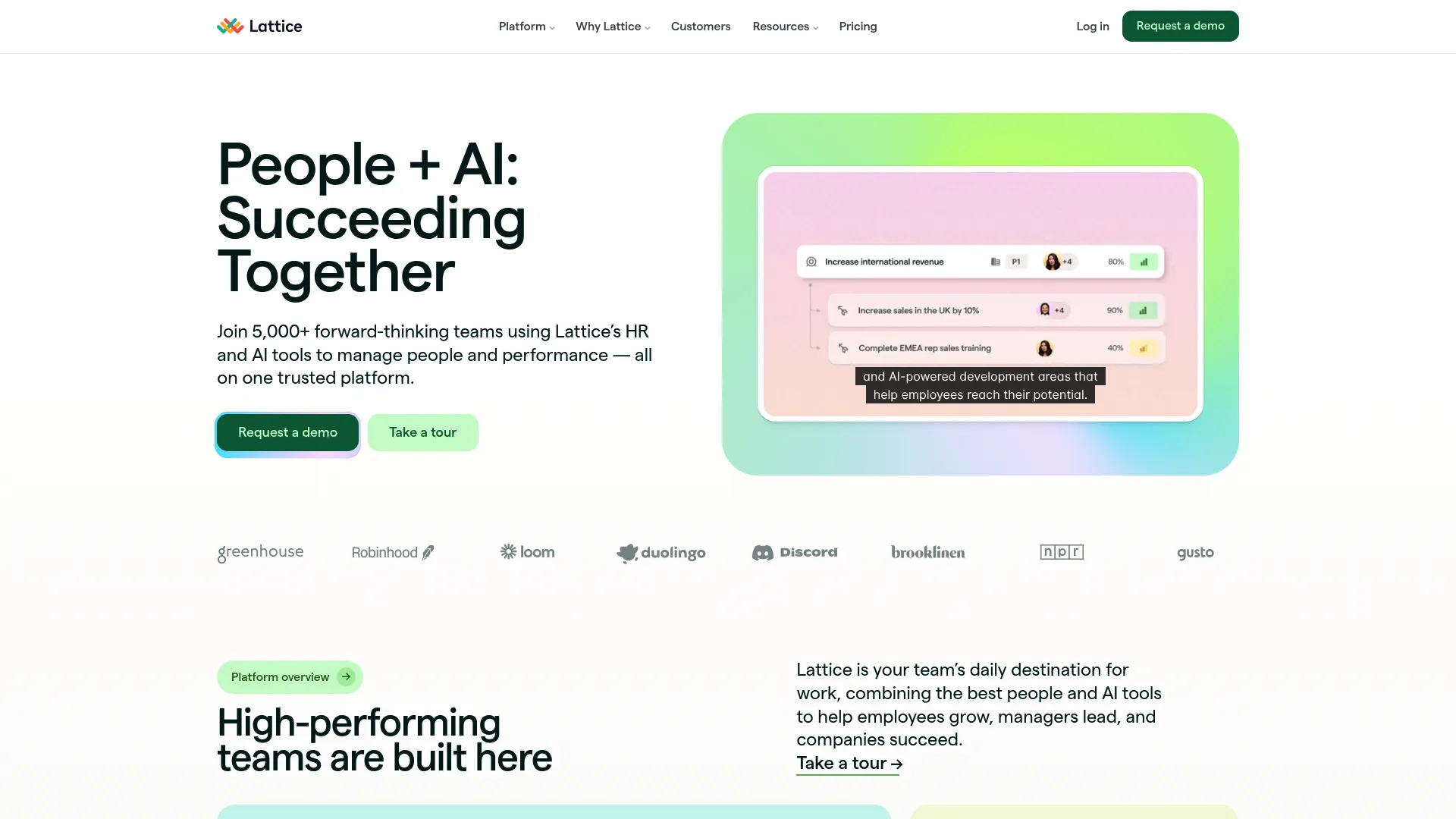
Lattice is people management software spanning performance, goals, engagement, compensation, and career growth. Its Grow product handles competencies, individual development plans, and career tracks, while modular pricing lets you assemble only the pieces you need. HR teams that want performance and development in one flexible stack gravitate here.
Flexibility is the selling point. You can start with performance or engagement, then add Grow for career development as the program matures. That modularity suits teams building a development motion incrementally rather than buying everything on day one, and the analytics tie activity back to progression.
Best for: HR and people teams that want a modular people-management platform they can configure over time.
Key strengths
- Grow: competencies, IDPs, and career tracks
- Performance reviews and PIPs
- Goals and OKRs
- Engagement surveys and feedback
Why choose Lattice: Choose Lattice when you want to combine performance and development in one configurable system. It's a strong fit for teams that expect their development program to expand.
Lattice pricing: Modular seat-based pricing starts at $4 seat/mo, with Foundations at $13 seat/mo and Performance at $10 seat/mo. Contracts are billed annually with a $4,000 minimum annual agreement.
4. Workday
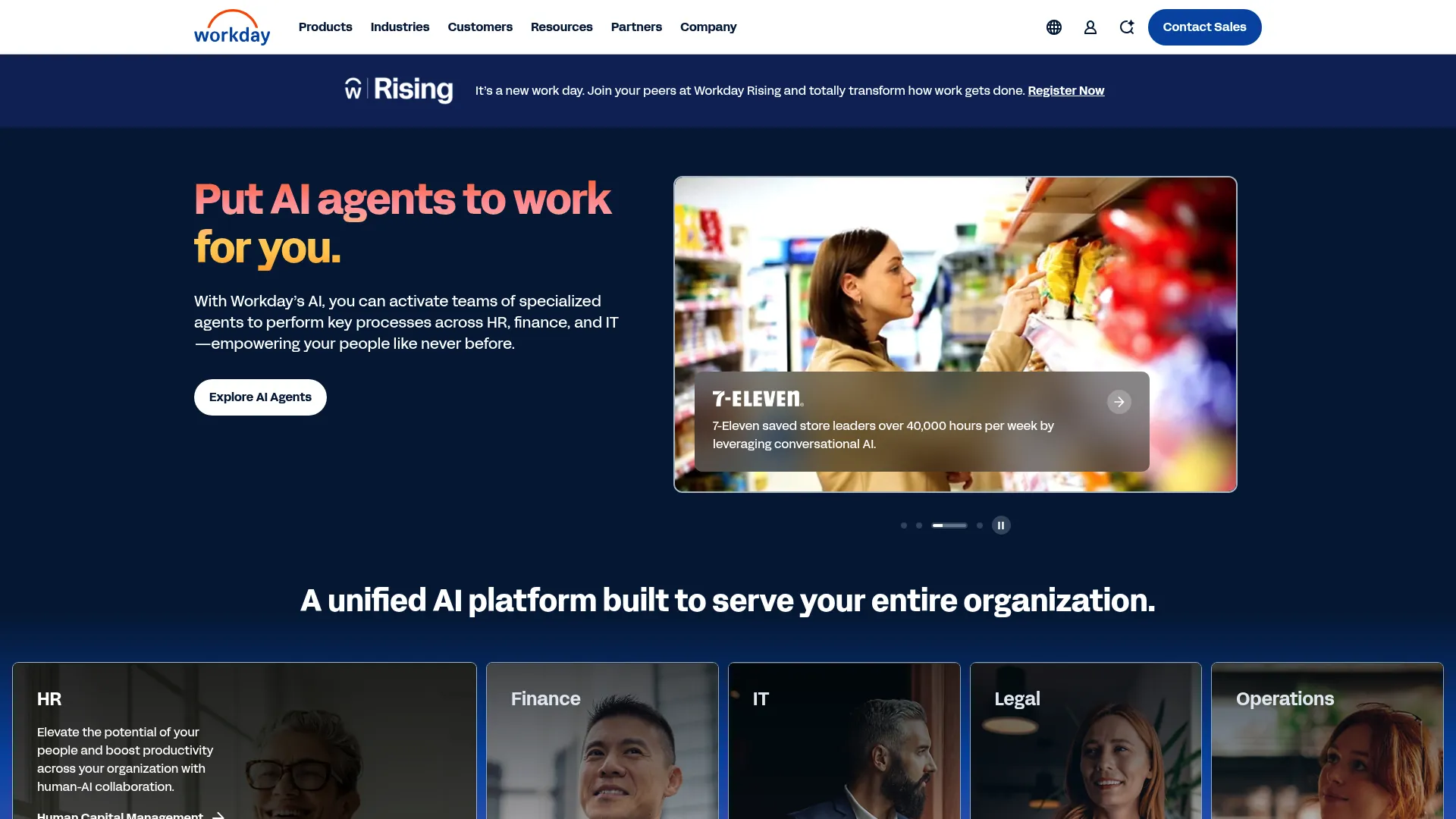
Workday is enterprise cloud software for HR, finance, planning, and payroll, with talent optimization built into its human capital management suite. For development, its value is talent mobility, reskilling, and succession planning inside a single system of record. It fits organizations already running Workday for core HR.
The advantage is suite-level scope. Skills data, internal mobility, and succession sit next to payroll, recruiting, and workforce planning, so development connects to the broader talent picture. If Workday is your HRIS, keeping development inside it avoids another disconnected tool and gives leaders one place to see workforce analytics.
Best for: Large organizations that need a unified cloud suite for HR and finance and want development inside it.
Key strengths
- Human capital management across HR, payroll, and recruiting
- Workforce planning, analytics, and AI-enabled automation
- Internal mobility, reskilling, and succession planning
Why choose Workday: Choose Workday when you already run it for core HR and want talent development in the same system. It's built for enterprise scale rather than a lightweight, standalone development motion.
Workday pricing: Workday uses subscription-based and packaged pricing described in general terms, with no public price figure. Product pages direct buyers to contact sales for a quote.
5. TalentLMS
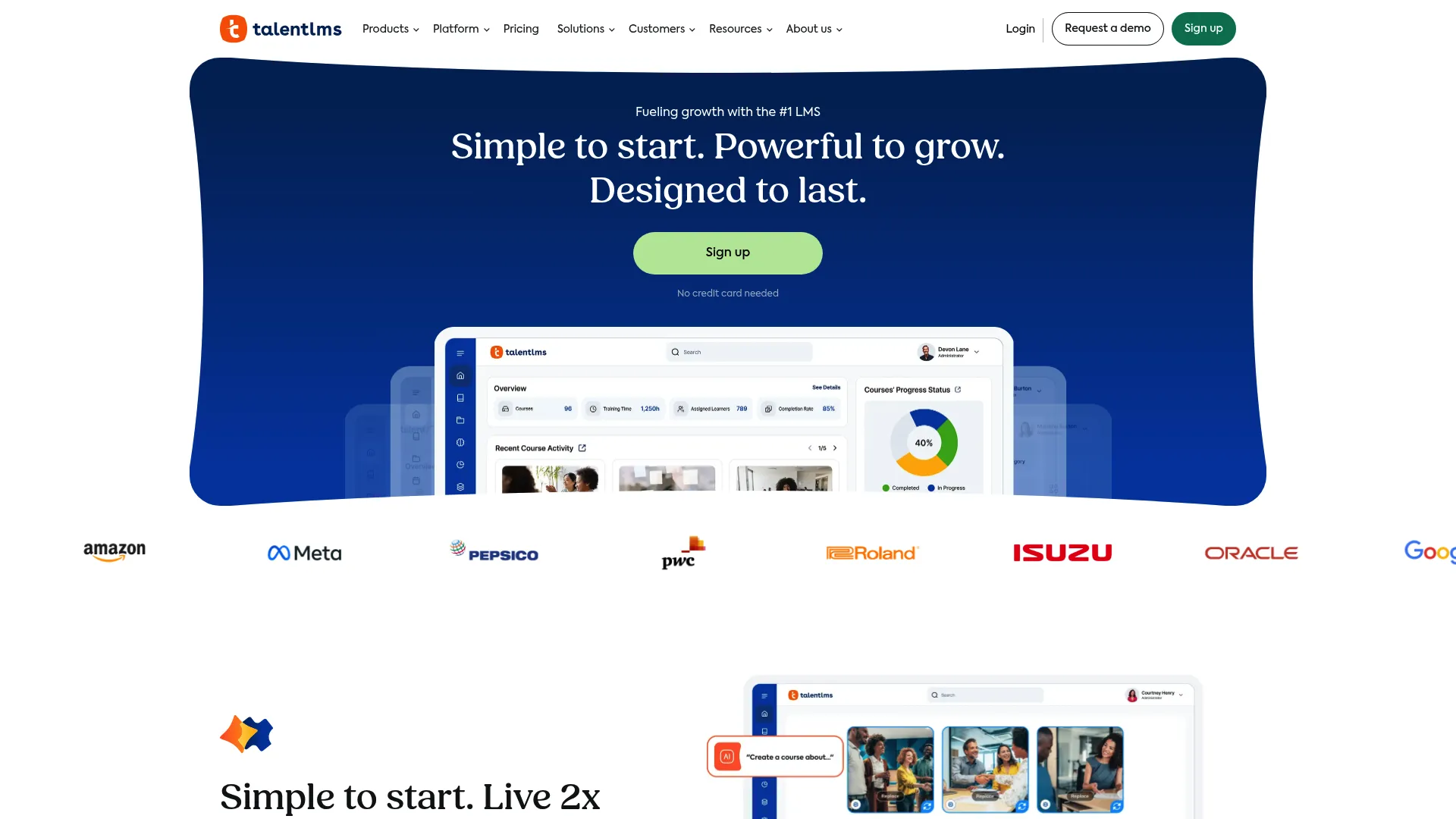
TalentLMS is a cloud-based learning management system for employee and customer training. It fits training-heavy development programs where fast course creation, mobile learning, and automation matter more than career-path planning. AI-assisted content and branded portals let you stand up training quickly.
Where TalentLMS shines is content velocity. AI content creation, testing, and translation plus learning paths and SCORM support make it fast to build and deploy training. For teams whose development is largely structured training and certification, this is a practical, quick-to-deploy option that scales across groups and branches.
Best for: Teams needing a fast-to-deploy LMS with AI-assisted course creation and branded training portals.
Key strengths
- AI content creation, testing, translation, and coaching
- Learning paths, SCORM, xAPI, and cmi5 support
- Automations, groups, branches, and custom branding
Why choose TalentLMS: Choose TalentLMS when your development program centers on training and certification at scale. It excels at course delivery, complementing rather than replacing career-path tools.
TalentLMS pricing: Public USD pricing lists Core at $119/month, Grow at $229/month, and Pro at $449/month. A free plan supports up to 5 users and 10 courses, and Enterprise is quote-based.
6. Cloverleaf
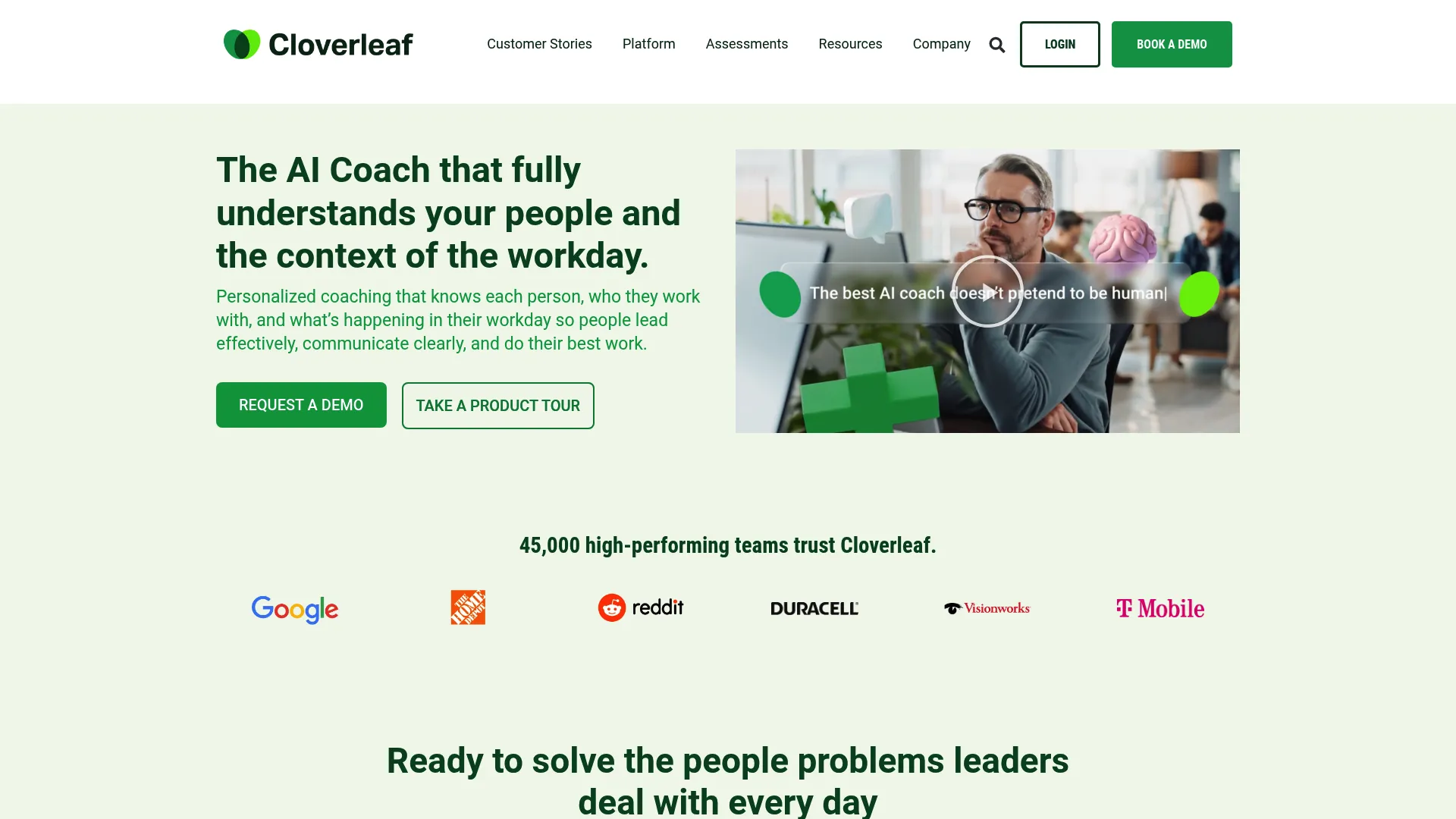
Cloverleaf is a team development platform that combines validated assessments with AI coaching delivered inside daily workflow tools. Instead of a separate portal, coaching insights show up where people already work. It's best for manager coaching and team effectiveness grounded in behavioral data.
The differentiator is embedded, assessment-backed coaching. Cloverleaf uses DISC, Enneagram, CliftonStrengths, and more to surface communication and collaboration insights, then delivers coaching tips in the flow of work. For teams that want development woven into daily interactions rather than scheduled sessions, this approach keeps growth continuous.
Best for: People and talent teams that want assessment-driven coaching and team development in daily workflows.
Key strengths
- Validated assessments: DISC, Enneagram, 16 Types, CliftonStrengths
- AI coaching inside daily workflow tools
- Team dashboards, reporting, and HRIS integrations
Why choose Cloverleaf: Choose Cloverleaf when team dynamics and manager coaching are the focus. It fits teams that want continuous, embedded development over a formal course catalog.
Cloverleaf pricing: Cloverleaf presents plans as Assess, Coach, and Connect with quote-based pricing and a Coach free trial. Public numeric prices are not shown; contact sales for a quote.
7. Coursera Business
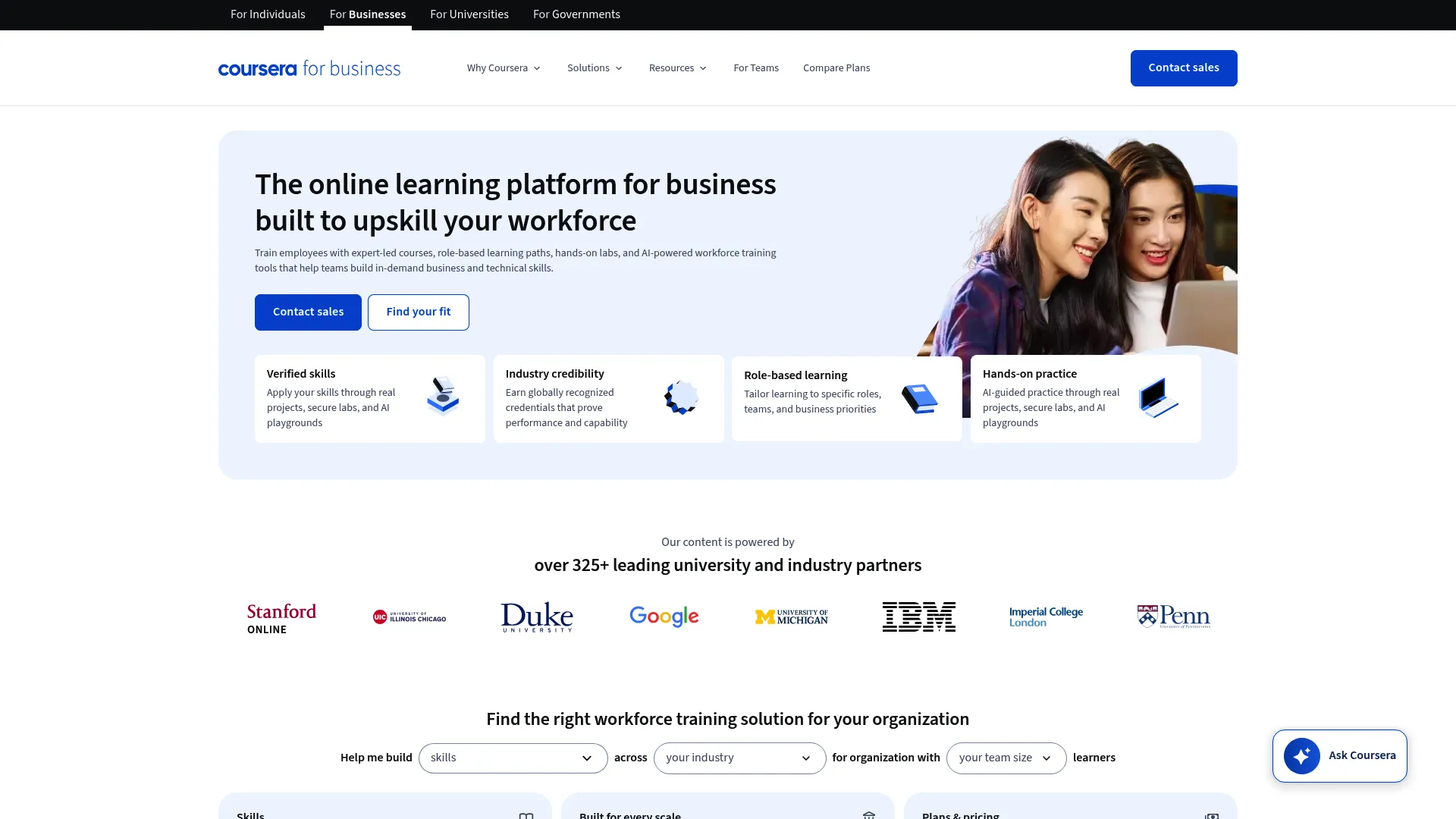
Coursera Business brings Coursera's enterprise course catalog to corporate upskilling. It's built for formal learning programs that rely on external content across business, data, and tech. Role-based learning paths and skill tracking connect that content to development goals.
The strength is breadth and credibility of content. Access to the full library, Professional Certificates, hands-on labs, and AI guidance means you can build structured upskilling without producing courses yourself. For continuous learning programs that lean on recognized external content, Coursera Business covers a lot of ground.
Best for: Mid-market and enterprise teams wanting structured upskilling across business, data, and technical skills.
Key strengths
- Access to the full enterprise content library
- Role-based learning paths and skill tracking
- Professional Certificates, hands-on labs, and AI guidance
Why choose Coursera Business: Choose Coursera Business when external, credentialed content drives your learning strategy. It complements development platforms that handle career paths and coaching.
Coursera Business pricing: The Teams plan for 2 to 499 users is priced at €348.69/year per license billed annually, or €383.56/year billed quarterly. Enterprise for more than 499 users is custom-priced.
8. Torch
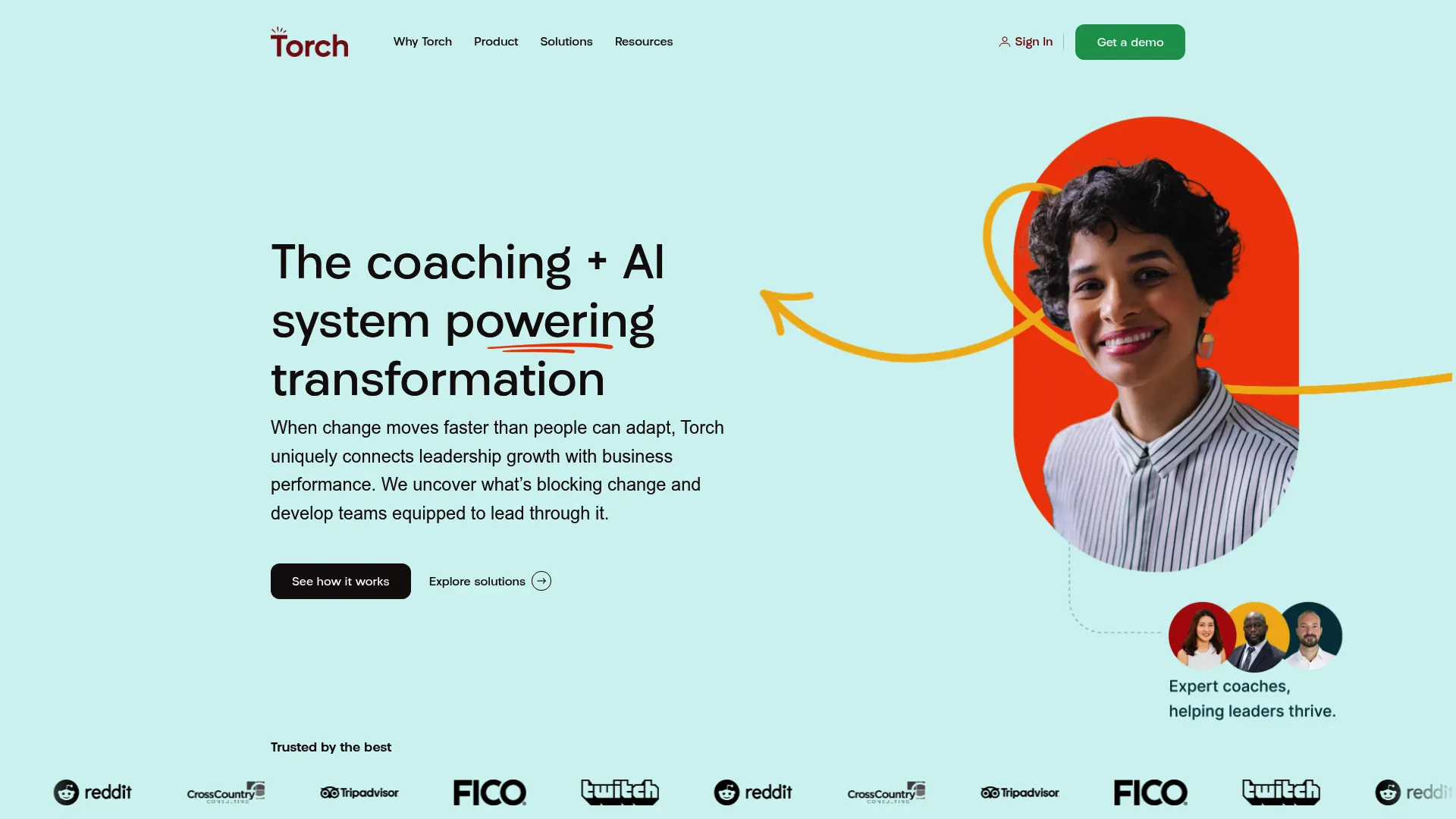
Torch is a leadership coaching and alignment platform for enterprise teams. It focuses on manager coaching, leadership development, and guided conversations that grow future leaders. Torch fits organizations investing specifically in manager and leader enablement.
The emphasis is human plus AI-supported coaching at the leadership layer. With 1:1 coaching, group coaching, and its Spark AI agent, Torch structures development for managers and emerging leaders rather than the whole workforce. For companies building a leadership pipeline, that focus is the point.
Best for: Mid-market and enterprise leadership development programs centered on managers and future leaders.
Key strengths
- 1:1 coaching for managers and leaders
- Group coaching programs
- Spark AI coaching agent
Why choose Torch: Choose Torch when leadership development and manager coaching are your priority. It's purpose-built for the leader layer rather than broad, company-wide learning.
Torch pricing: Torch uses enterprise-quoted pricing that requires a sales conversation. No public numeric price is listed.
9. BetterUp
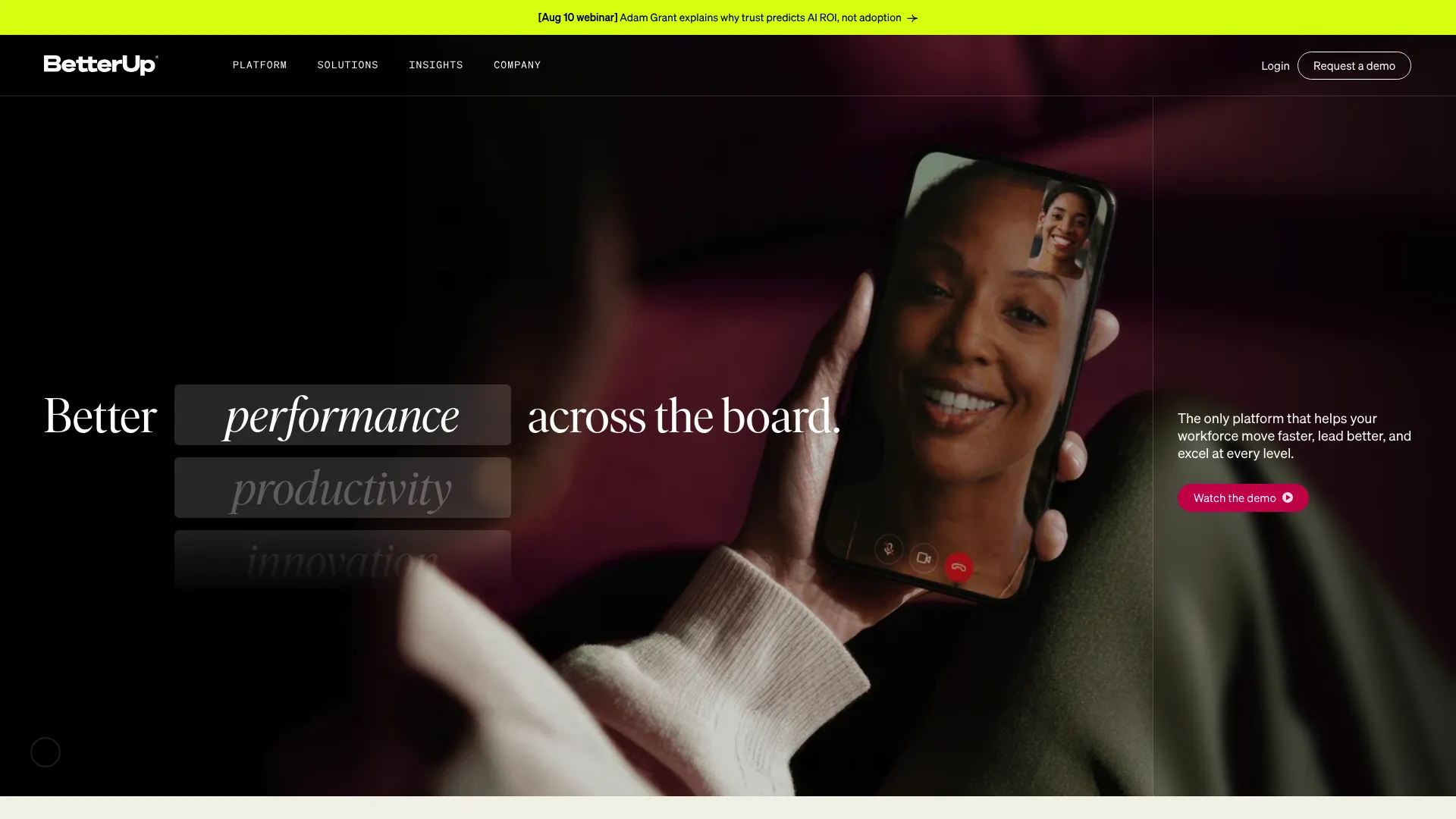
BetterUp is an enterprise coaching platform combining human coaching, AI coaching, and behavioral science. It's aimed at companies investing in high-touch, personalized development and lasting behavior change. Coaching Circles and assessments round out the offering.
BetterUp's differentiator is coaching at scale with a behavioral-science backbone. Human coaches plus AI coaching support deliver personalized development that goes beyond content consumption toward measurable behavior change. For organizations willing to invest in high-touch growth for managers and key talent, it's a strong fit.
Best for: Companies seeking enterprise coaching and manager development at scale with a behavior-change focus.
Key strengths
- Human coaching with BetterUp coaches
- AI Coach for ongoing support
- Coaching Circles and assessments
Why choose BetterUp: Choose BetterUp when high-touch coaching and behavior change matter more than a self-serve learning library. It excels at personalized development for managers and priority talent.
BetterUp pricing: BetterUp does not publish public pricing and directs buyers to contact sales for a customized proposal. Plans are tailored to the organization.
10. PeopleGoal
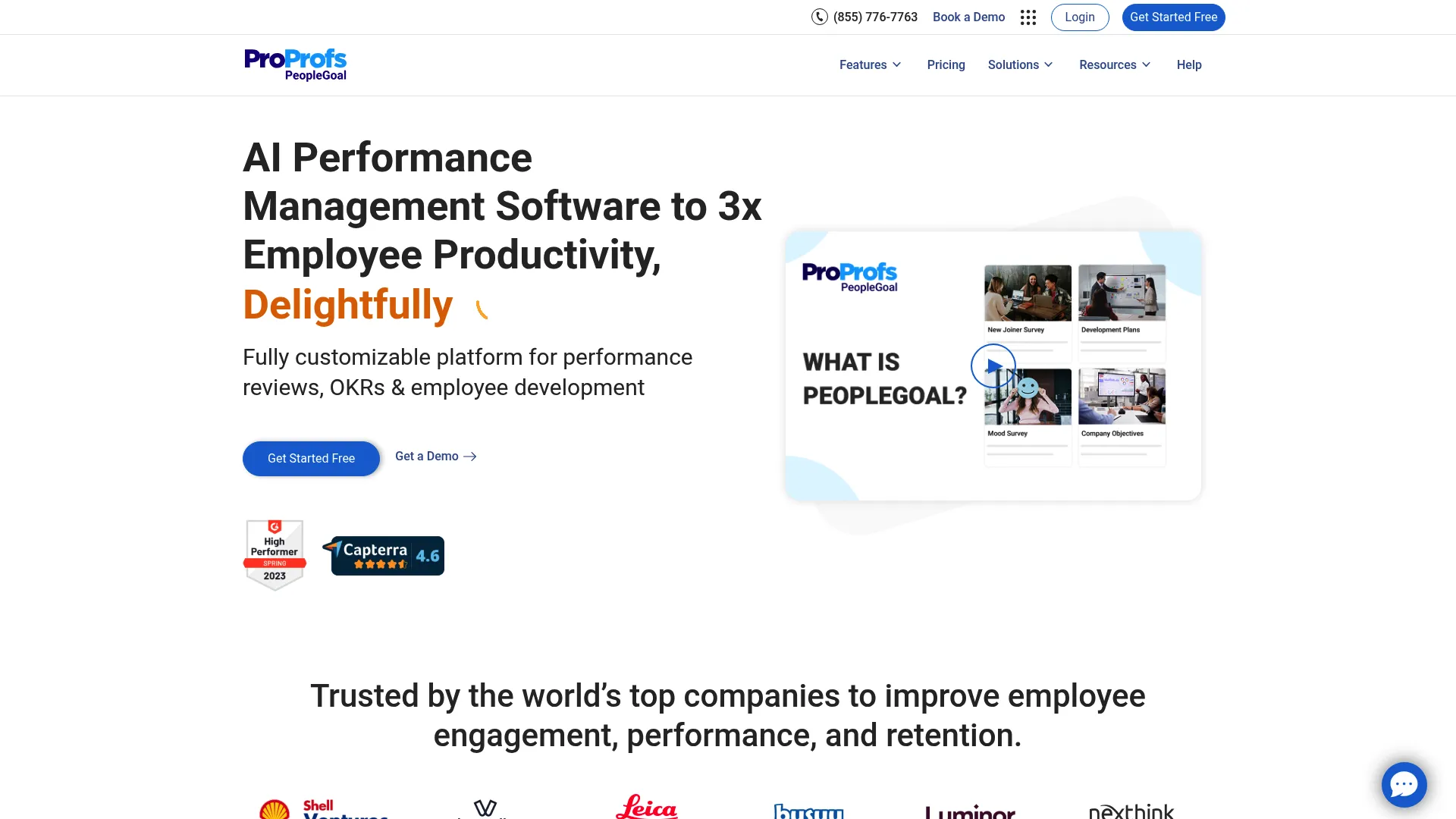
PeopleGoal is cloud-based HR software covering performance management, engagement, development, and core HR workflows. Its flexible, process-driven approach lets teams configure development plans, goals, and feedback to match how they already work. It reads as a broad employee development platform rather than a single-purpose tool.
The appeal is configurability at an accessible price. Goals, feedback, reviews, and 1-on-1s sit alongside engagement surveys, recognition, and core HR like onboarding and absence management. For teams that want customizable performance-adjacent workflows without heavy overhead, PeopleGoal is a practical option.
Best for: Teams needing customizable performance management with goals, feedback, and onboarding workflows.
Key strengths
- Goals, feedback, reviews, and one-to-ones
- Engagement surveys and recognition
- Core HR: onboarding, absence management, asset tracking
Why choose PeopleGoal: Choose PeopleGoal when you want a flexible, process-driven platform that adapts to your workflows. It fits smaller teams that value configurability and a clear entry price.
PeopleGoal pricing: The PeopleGoal Professional plan is billed annually at $4 per user/month for up to 50 users. A 14-day free trial is available with no credit card required.
Considerations
Before you commit, run every shortlisted tool through these checks. The goal is matching the platform to your actual development motion, not the longest feature list.
Check the depth of development planning
Look past the marketing and confirm the tool supports competencies, career tracks, and personalized growth plans. A performance tool that only handles reviews will not carry a development program. If internal mobility matters, verify that career paths connect to skills data, not just job titles.
Confirm manager adoption support
Development lives or dies with frontline managers. Check whether managers get real guidance: 1-on-1 templates, coaching prompts, and progress views they will actually use. A platform managers ignore produces activity, not growth, so weight adoption support heavily in your decision.
Validate reporting and ROI visibility
Confirm dashboards tie development activity to outcomes like retention, progression, or ramp time. Skill gap tracking and analytics should show whether learning changes behavior, not just completion counts. If you cannot connect the tool to a business metric, you will struggle to defend the spend.
Review integrations and workflow fit
Check HRIS integration first, then Slack, Teams, and Google Workspace. Development in the flow of work only happens when the tool reaches people where they already are. Confirm the integrations you need exist today rather than sitting on a roadmap.
Look at maintenance and governance
Ask how content, competencies, and plans get updated. Versioning, ownership, and approvals keep a program current as roles and priorities shift. A platform that is hard to maintain drifts out of date fast, and stale development plans erode trust quickly.
Conclusion
The right employee development software depends on the job you're solving, not a ranking. If your goal is personalized development tied to measurable, manager-led growth, start your shortlist with Culture Amp, 15Five, or Lattice. Each connects growth plans, competencies, and coaching to analytics you can defend to leadership.
For training-heavy programs, TalentLMS and Coursera Business handle content and upskilling at scale. For coaching and behavior change, Cloverleaf, Torch, and BetterUp each bring a distinct approach, from embedded team insights to high-touch leadership coaching. If you already run Workday, keeping development inside the suite is worth serious consideration. And PeopleGoal offers a flexible, accessible entry point for process-driven teams.
Pick two or three finalists, run a short pilot with real managers, and watch adoption before you scale. That single step tells you more than any feature comparison. If you also need to show a product or process visually during training, Start your journey with Guideflow today!
FAQs
An LMS focuses on delivering and tracking courses. Employee development software goes further, connecting learning to competencies, career paths, individual development plans, and manager coaching. Many teams use both: an LMS or content library like TalentLMS or Coursera Business for training, and a development platform like Culture Amp or Lattice to tie that learning to growth and progression.
It gives managers structure instead of a blank agenda. Most platforms include 1-on-1 templates, coaching prompts, goal tracking, and progress views tied to competencies. Tools like 15Five and Cloverleaf push coaching insights into the flow of work, so development conversations reference real data rather than gut feel. That consistency is what turns occasional check-ins into a repeatable coaching system.
Prioritize personalized growth plans, competency and skill gap tracking, career paths, manager coaching tools, and analytics with ROI measurement. Then confirm integrations with your HRIS, Slack, Teams, and Google Workspace. Finally, check governance features like versioning and ownership so plans stay current. The right mix depends on whether your program leans toward learning, performance, or coaching.
Start with a baseline before rollout. Track leading indicators like plan completion, competency progress, and manager coaching activity, then connect them to outcomes such as retention, internal mobility, ramp time, and performance. Dashboards should tie development activity to a business metric, not just completion counts. For a Sales Enablement Manager, ramp time and stage conversion are the numbers that prove impact.
It can, when it makes growth visible and consistent. Employees who see clear career paths and regular development conversations are more likely to stay. Platforms that combine engagement data with development, like Culture Amp and 15Five, help you spot flight risk early and act on it. Retention improves because people feel their growth is planned, not left to chance.
Small teams usually want configurability and a clear entry price. PeopleGoal starts at $4 per user/month for up to 50 users with a 14-day free trial, which suits lean teams. Lattice's modular pricing from $4 seat/mo also lets small teams start narrow and expand. Choose based on whether you need performance, engagement, or development first.
Competencies define the skills and behaviors a role requires, and career paths map how those competencies grow across roles. Development platforms let you assess where each person stands, identify skill gaps, and route learning or coaching to close them. Tools like Lattice Grow and Culture Amp Develop build individual development plans against these frameworks, so progression is measurable rather than subjective.
Most do. HRIS integration keeps employee data, roles, and org structure in sync so development plans stay accurate. Enterprise suites like Workday keep everything in one system of record, while standalone platforms like Cloverleaf and Lattice connect to common HRIS tools plus Slack, Teams, and Google Workspace. Always confirm the specific integrations you need are available today, not planned.