Your demand signal lives in one system. Inventory data sits in another. Trade spend runs through a spreadsheet someone built three years ago. Product specs are scattered across email threads, shared drives, and a PLM tool that half the team stopped using.
The result: Slower decisions, margin leakage nobody can explain in a board meeting, and a finance close that takes two weeks longer than it should.
Consumer goods software is an umbrella term, not a single product category. It covers ERP, product lifecycle management, demand planning, trade promotion, manufacturing execution, CPG procurement software, and customer intelligence, each solving a different operating bottleneck. According to Rockwell Automation's State of Smart Manufacturing Report (2025), 83% of CPG manufacturers say digital transformation must accelerate to overcome industry obstacles. The pressure is real. The harder question is: Which bottleneck should drive the software decision?
What's inside
This guide covers 10 consumer goods software tools across ERP, product lifecycle management software for consumer goods, demand planning, trade promotion, manufacturing, procurement, and customer feedback. Tools were selected based on:
- Fit for a specific operating job (not general feature breadth)
- Verified G2 ratings and pricing information
- Relevance across different company sizes and CPG sub-categories
- Implementation realism for teams without unlimited integration resources
TL;DR
- Best enterprise operating backbone: SAP S/4HANA for large consumer goods organizations managing multi-entity finance, supply chain, and manufacturing across global operations
- Best for product-to-market workflows: Centric Software for teams whose bottleneck sits between product development, pricing, and commercialization
- Best cloud ERP for scaling brands: Oracle NetSuite for growing consumer goods companies that need connected finance, inventory, and order management
- Best for trade promotion and retail execution: Vividly for trade-spend planning and financial modeling; Promomash for field activity and distributor management
- Best for procurement control: Zycus for organizations where sourcing, contract governance, and supplier management directly affect gross margin
What is consumer goods software?
Consumer goods software is a group of business applications that help CPG, FMCG, food and beverage, retail, and consumer product companies plan, make, move, sell, and improve physical products.
The category is wide because the jobs are distinct. Buying an ERP does not replace a demand planning tool. A trade promotion platform does not do what a procurement suite does. Founders evaluating this space often make the same mistake: Comparing platforms that solve completely different operating problems as if they were direct substitutes.
Consumer goods software categories
- ERP (consumer products ERP): Finance, procurement, inventory, manufacturing, order management, and reporting under one system of record
- Product lifecycle management (PLM): Product development, formulas, specifications, packaging approvals, and launch workflows
- Demand planning and inventory optimization: Forecasting, replenishment, assortment planning, and stock-risk management
- Trade promotion management: Promotional calendars, deductions, customer agreements, trade-spend planning, and ROI tracking
- Manufacturing and quality systems: Production scheduling, batch controls, traceability, quality checks, and plant operations
- CPG procurement software: Supplier onboarding, sourcing events, contract governance, spend analytics, and risk controls
- Customer intelligence platforms: Voice-of-customer programs, channel feedback, closed-loop workflows, and retention signals
Key capabilities to look for
- Multi-entity financial controls and consolidated reporting
- SKU and item-level data management across channels
- Demand forecasting and automated replenishment
- Promotion planning, deduction tracking, and trade ROI analysis
- Supplier and contract governance with spend visibility
- Integrations with commerce, warehouse, CRM, and BI systems
- Role-specific dashboards for finance, operations, sales, and product teams
Founder-specific framing
A scaling consumer goods company should not select software based on the broadest feature checklist. Select the system that eliminates the most expensive decision bottleneck first. A platform that adds 12 months of implementation risk needs a board-level business case before the contract is signed.
When to use consumer goods software
Replace fragmented finance and inventory reporting
This is the right moment when financial close, purchase orders, stock positions, and order data live in disconnected systems. ERP becomes urgent when your leadership team cannot trust a weekly view of inventory, margin, or cash. The problem compounds quickly as SKU count and channel complexity grow.
Control product launches and assortment complexity
Use product lifecycle management and planning tools when new SKUs, packaging changes, and regional assortments are creating missed deadlines. If the handoff between product development and commercial teams consistently breaks down, the problem is usually process and data, not effort. PLM and best product analytics software tools address the structural gap.
Defend margin during promotions and replenishment cycles
Trade spend, retailer deductions, pricing changes, and stockouts all erode gross margin when commercial decisions rely on spreadsheet modeling. Trade promotion and demand planning tools matter when the business is running promotions at scale but lacks visibility into which ones actually work.
Consumer goods software comparison
The table below compares tools by the job they solve. These are not direct substitutes for each other. ERP, PLM, trade promotion, and procurement platforms address fundamentally different operating bottlenecks.
| # | Product | Best for | Key differentiator | Pricing | G2 rating |
|---|---|---|---|---|---|
| 1 | SAP S/4HANA | Large enterprise consumer goods | Unified ERP across finance, supply chain, and manufacturing | Contact for quote | 4.4/5 |
| 2 | Centric Software | Product development and commercialization | PLM, planning, pricing, and product experience in one platform | Contact for quote | 4.3/5 |
| 3 | Oracle NetSuite | Growing consumer brands | Cloud ERP for finance, inventory, and order management | Contact for quote | 4.1/5 |
| 4 | Infor CloudSuite Food & Beverage | Process manufacturers | Food and beverage ERP with traceability and quality controls | Contact for quote | N/A |
| 5 | Vividly | CPG trade-spend teams | Trade promotion management and account profitability | Contact for quote | 4.8/5 |
| 6 | LEAFIO AI | Retail and distribution planning | AI-driven forecasting, replenishment, and assortment optimization | Contact for quote | 5.0/5 |
| 7 | Epicor Kinetic | Manufacturers with complex production | Manufacturing ERP for discrete and process operations | Contact for quote | 4.1/5 |
| 8 | Promomash | Growing CPG brands and field teams | Retail execution, distributor management, and field activity | Contact for quote | 4.7/5 |
| 9 | Zycus | Procurement-led organizations | Source-to-pay, contracts, and supplier intelligence | Contact for quote | 3.6/5 |
| 10 | CustomerGauge | Customer and channel insight teams | Revenue-linked NPS, closed-loop workflows, and account intelligence | Starting at $24K | 4.6/5 |
Pricing and ratings verified October 2026 from each vendor's official pricing page and G2 listing.
Best consumer goods software tools for 2026
1. SAP S/4HANA
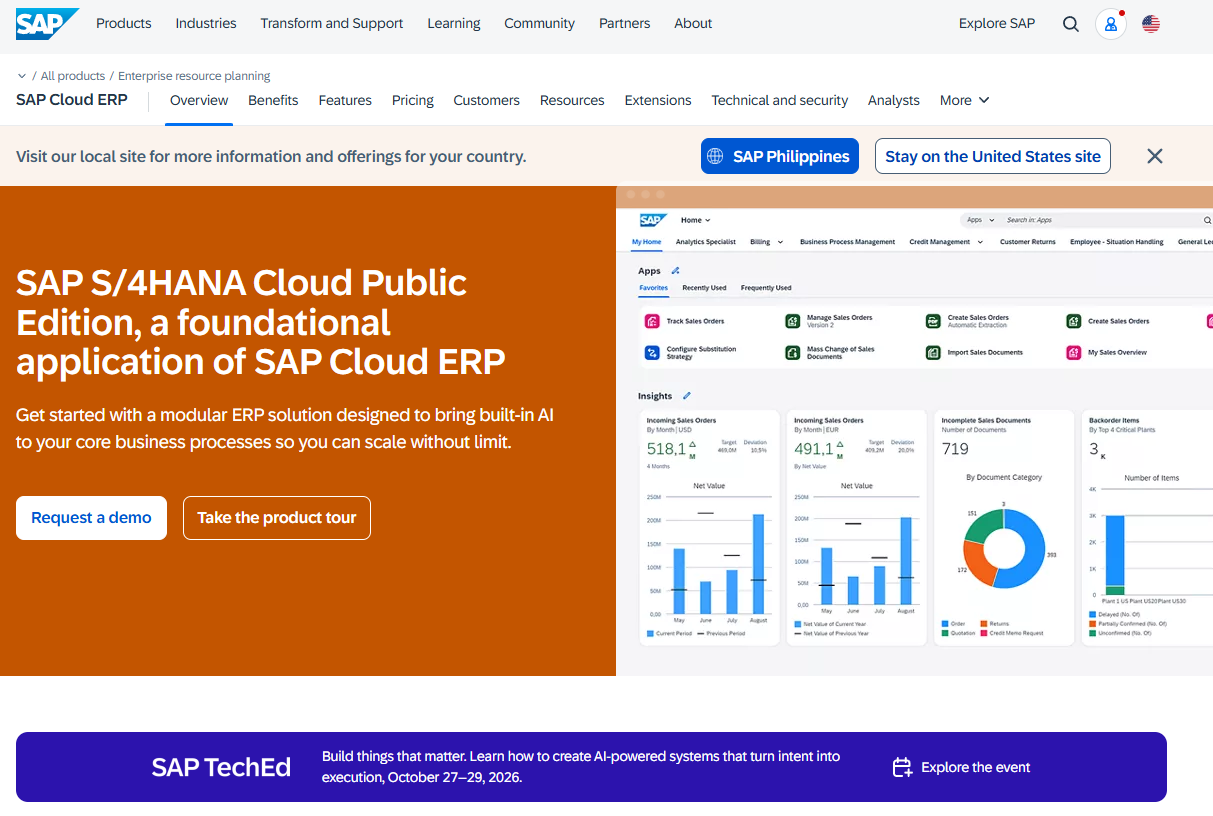
SAP S/4HANA is an enterprise resource planning platform built on the SAP HANA in-memory database, designed to run integrated, real-time business processes across finance, supply chain, manufacturing, procurement, and sales. It is the system-of-record choice for large consumer goods companies operating across countries, plants, and legal entities. For CPG and FMCG enterprises with complex supply chain structures, it covers the breadth of operating workflows under one data layer.
Best for: Large CPG and FMCG enterprises that need a long-term operational backbone across multi-entity finance, supply chain, and commercial execution.
Key features
- AI-enabled automation and embedded analytics across core business processes
- Integrated finance, supply chain, manufacturing, and procurement workflows
- Real-time dashboards, planning, and consolidated reporting
- Preconfigured industry best practices and guided implementation
- Open APIs and extensibility for third-party integrations
Why choose SAP S/4HANA: SAP fits when fragmented legacy systems create governance and reporting risk that leadership and the board can no longer tolerate. Do not buy it to fix one forecasting gap. The decision makes sense when standardizing operations across major business units matters more than rapid deployment.
SAP S/4HANA pricing: SAP uses a quote-based model for S/4HANA Cloud; no standard entry price is published. Pricing varies by deployment model, license type, user count, and module scope. Contact SAP directly for a commercial proposal.
G2 rating: 4.4/5 (verified October 2026).
2. Centric Software
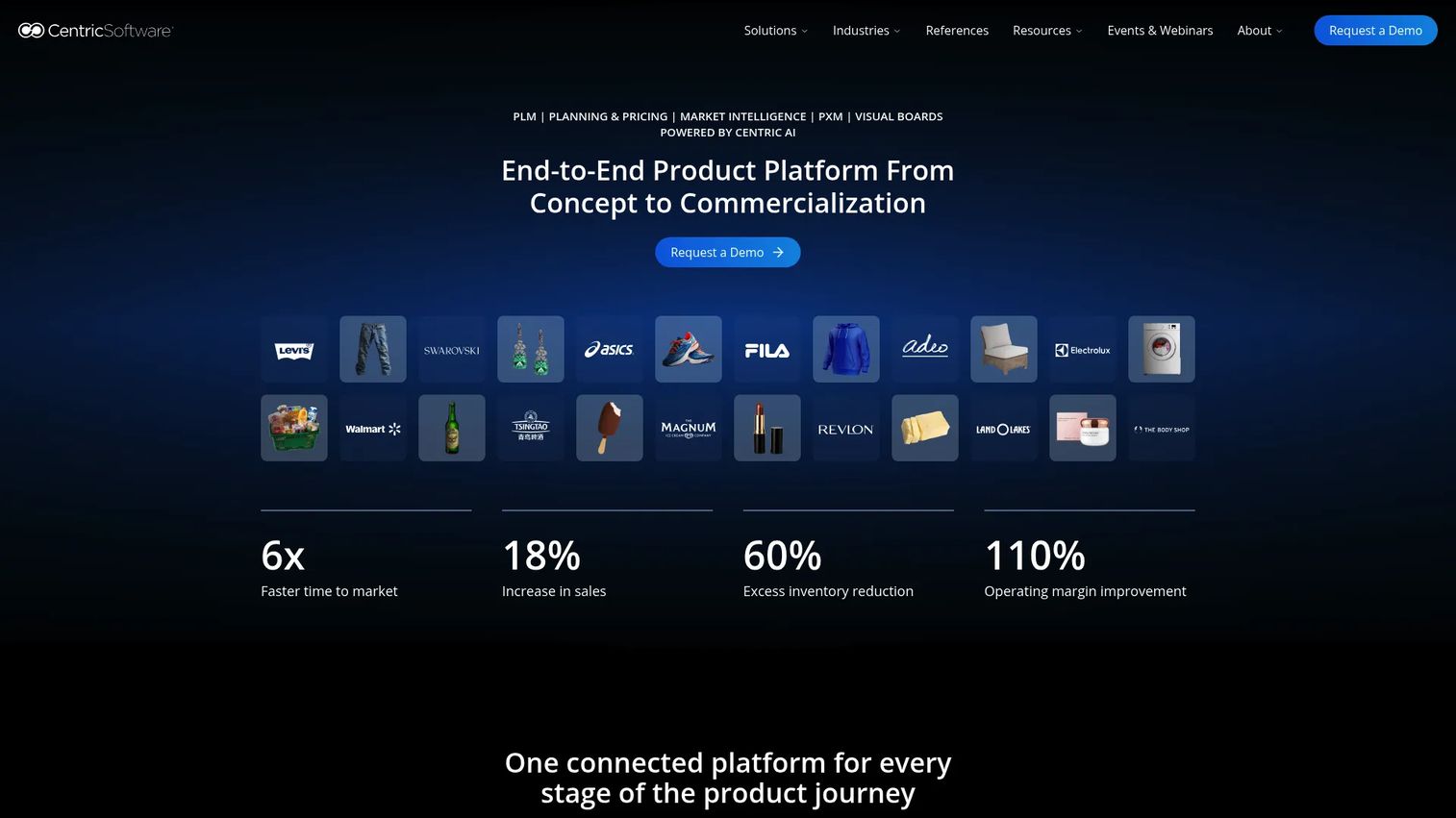
Centric Software is an AI-powered product platform for consumer brands, retailers, and manufacturers. It covers product lifecycle management, assortment and merchandise planning, pricing, inventory planning, market intelligence, and product information management in one suite. The platform connects the decisions that happen between concept and shelf: What to launch, where to sell it, how to price it, and how to keep product data current across channels and trade partners.
Best for: Consumer goods businesses whose bottleneck sits between product creation, merchandising, pricing, and commercialization rather than general accounting or production.
Key features
- Product lifecycle management for design, development, sourcing, testing, and launch
- AI-powered assortment, pricing, and demand forecasting
- Product information management with AI enrichment and omnichannel syndication
- Market intelligence signals integrated into planning workflows
- Product experience management and visual collaboration tools
Why choose Centric Software: The case for Centric is strongest when better product and assortment decisions matter more than replacing the general ledger. If your team is losing weeks to manual data reconciliation between product, merchandising, and commercial teams, this is the category to evaluate first.
Centric Software pricing: No standard pricing is published on the official site. Centric directs prospects to request a demo for commercial terms. Contact Centric for a quote.
G2 rating: 4.3/5 (verified October 2026).
3. Oracle NetSuite
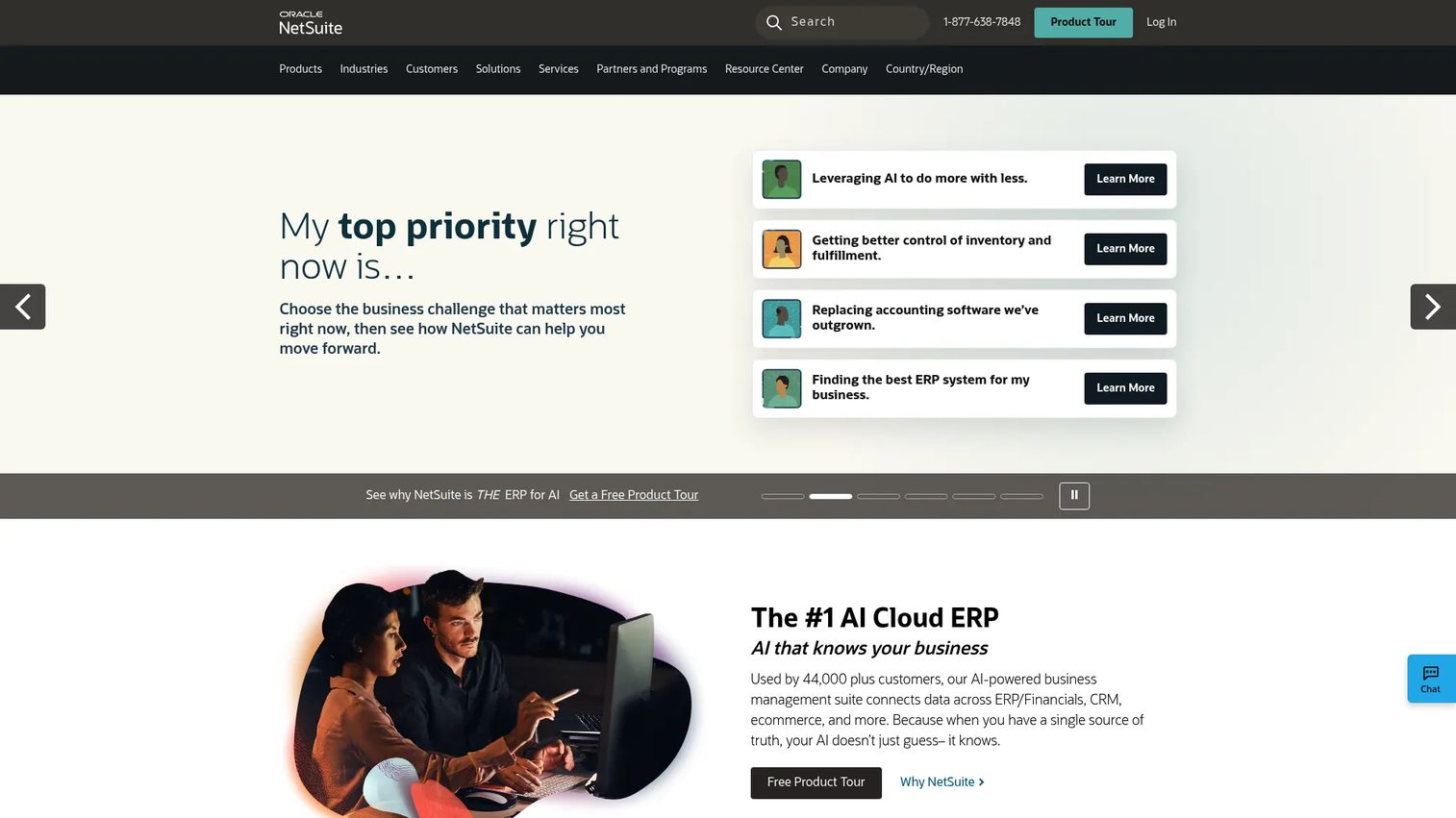
Oracle NetSuite is a cloud-based ERP suite that integrates financial management, inventory, order management, procurement, CRM, and analytics in one platform. For growing consumer brands that have outgrown their accounting software and need more control over purchasing, stock, and financial reporting, NetSuite is a frequently evaluated option. It also includes embedded AI capabilities and a broad ecosystem of SuiteApps for extending core functionality.
Best for: Growing consumer goods brands building their first connected cloud ERP foundation, particularly those moving from a founder-led operating model to repeatable finance and inventory systems.
Key features
- Cloud financial management, accounting, and multi-subsidiary controls
- Inventory, order management, and supply chain workflows
- Procurement and purchasing automation
- Embedded analytics, dashboards, and Ask Oracle AI capabilities
- Commerce and CRM modules with SuiteApp extensibility
Why choose Oracle NetSuite: NetSuite fits when the priority is clean close, inventory visibility, and fewer manual reconciliations, without starting a full global enterprise transformation. Integrations and implementation partner quality have a significant effect on the actual complexity and timeline.
Oracle NetSuite pricing: NetSuite charges an annual license fee covering the core platform, optional modules, and user count, plus a one-time implementation fee. No numeric price is published. Contact NetSuite for current package pricing.
G2 rating: 4.1/5 (verified October 2026).
4. Infor CloudSuite Food & Beverage
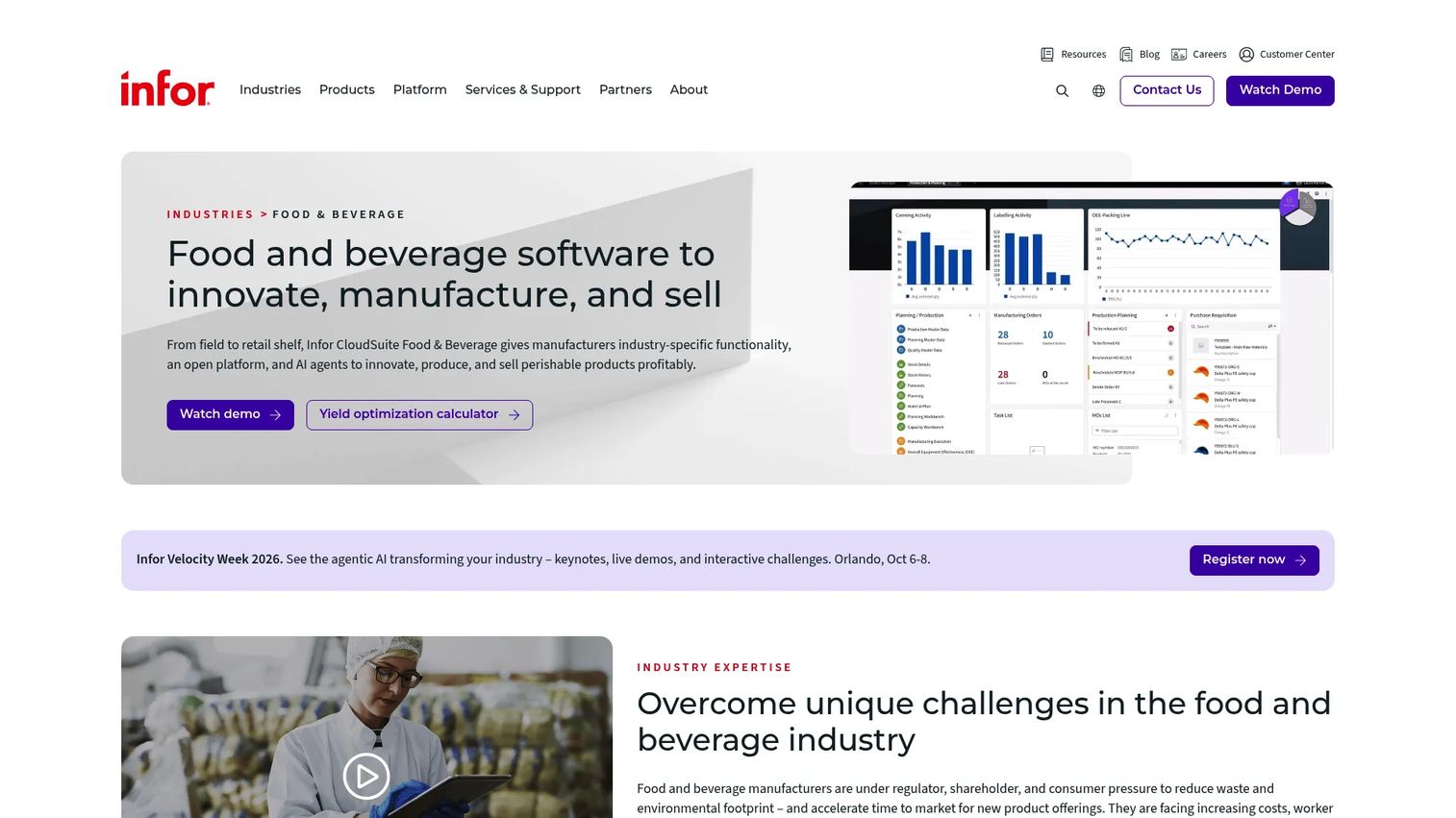
Infor CloudSuite Food & Beverage is an industry-specific cloud ERP suite built for food and beverage manufacturers that need to manage production, quality, traceability, supply chain planning, and commercial workflows within a single platform. Generic ERP often struggles with the process manufacturing complexity these companies face: Shelf life, ingredient management, batch control, labeling requirements, and regulatory compliance. Infor's vertical focus means those workflows are preconfigured rather than customized from scratch.
Best for: Food and beverage manufacturers with formula, batch, quality, traceability, or regulatory process complexity that generic cloud ERP cannot address without significant customization.
Key features
- Food-specific ERP with quality management, traceability, and compliance controls
- Product lifecycle management for formulas, recipes, and new product development
- Supply chain planning, demand forecasting, and production scheduling
- Manufacturing execution and warehouse management
- Trade promotion management integrated with supply and demand planning
Why choose Infor CloudSuite Food & Beverage: This is a vertical fit decision. When operational specificity reduces implementation risk more than flexibility does, an industry-specific platform earns its cost. A food manufacturer evaluating this against a horizontal ERP should model the customization cost on the generic side before assuming a lower total cost of ownership.
Infor CloudSuite Food & Beverage pricing: Infor uses a subscription model but does not publish numeric pricing for CloudSuite Food & Beverage. Pricing varies by deployment scope, user count, and module selection. Contact Infor for a commercial proposal.
5. Vividly
Vividly is a specialist trade promotion management platform for CPG sales and finance teams. It helps brands model promotions, track spend, manage customer plans, resolve deductions with AI-assisted reconciliation, and connect trade decisions to financial outcomes. When trade spend is growing faster than commercial discipline, Vividly gives teams a dedicated system rather than a patchwork of spreadsheets and ERP workarounds.
Best for: CPG brands that need tighter control of retailer promotions, trade spend, deductions, and account-level profitability, particularly once trade is running through multiple retail partners simultaneously.
Key features
- Real-time sales and trade-promotion forecasting
- End-to-end deduction management with AI reconciliation
- AI-powered promotion optimization and scenario modeling
- Trade-spend analytics dashboards and budget tracking
- Unified promotional calendar and account planning
Why choose Vividly: Specialist software earns its place when trade spend has grown too consequential to run through disconnected tools. Vividly complements rather than replaces a core ERP; it solves the commercial planning and deduction problem that most ERPs handle poorly. G2 reviewers rate it at 4.8/5 across 42 reviews, which signals strong user satisfaction for its focused use case.
Vividly pricing: Vividly describes custom packages but does not publish numeric prices. Contact Vividly for a quote based on brand size and trade volume.
G2 rating: 4.8/5 (verified October 2026).
6. LEAFIO AI
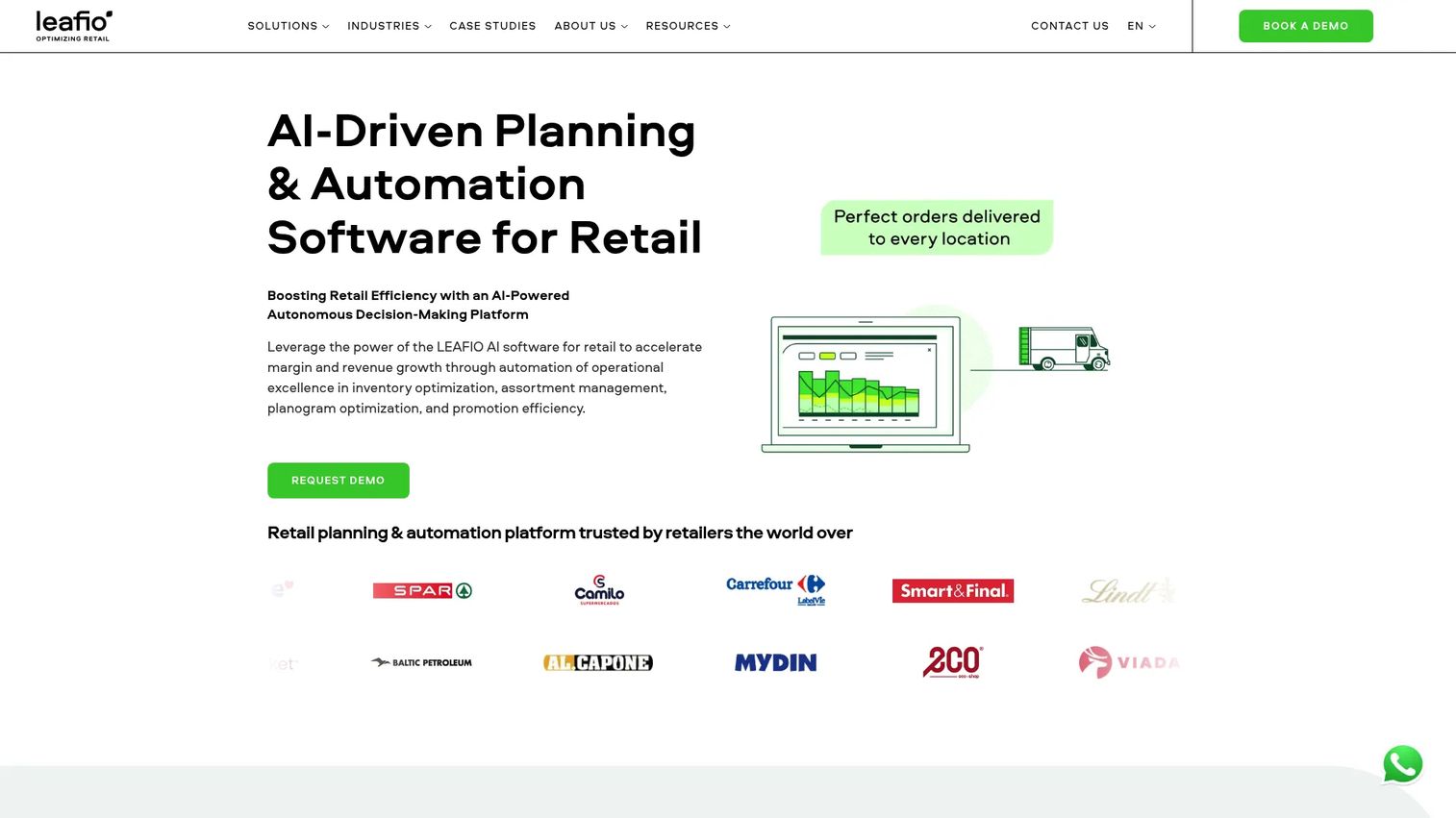
LEAFIO AI is an AI-powered retail automation platform focused on inventory optimization, assortment management, demand forecasting, shelf and planogram optimization, and retail execution. It is relevant for consumer goods retailers, distributors, and planning teams dealing with stockout risk, overstock cycles, multi-location inventory, or complex assortments across hundreds of SKUs and store clusters. Rockwell Automation's State of Smart Manufacturing Report (2025) found that 82% of CPG manufacturers have invested in or plan to invest in ML and AI within 12 months, and LEAFIO sits directly in that adoption wave.
Best for: Consumer goods retailers and distribution teams that need to improve replenishment decisions, assortment productivity, and shelf execution across multiple locations.
Key features
- AI demand forecasting and automated replenishment planning
- Assortment planning and store-cluster management
- Data-driven planogram generation and shelf-space optimization
- Promotion planning, simulation, and forecasting
- Planogram compliance recognition from shelf photos and a retail execution mobile app
Why choose LEAFIO AI: Inventory is cash. LEAFIO fits when the biggest cost is inventory uncertainty rather than general accounting or manufacturing control. A company cannot improve margin if planners are still manually reconciling stock positions across locations each week. Its 5.0/5 G2 rating across 33 reviews reflects strong satisfaction, though the review base is concentrated.
LEAFIO AI pricing: LEAFIO uses a subscription model scaled by store count and SKU volume, plus a one-time implementation fee. Numeric pricing is not published. Contact LEAFIO for a quote.
G2 rating: 5.0/5 (verified October 2026).
7. Epicor Kinetic
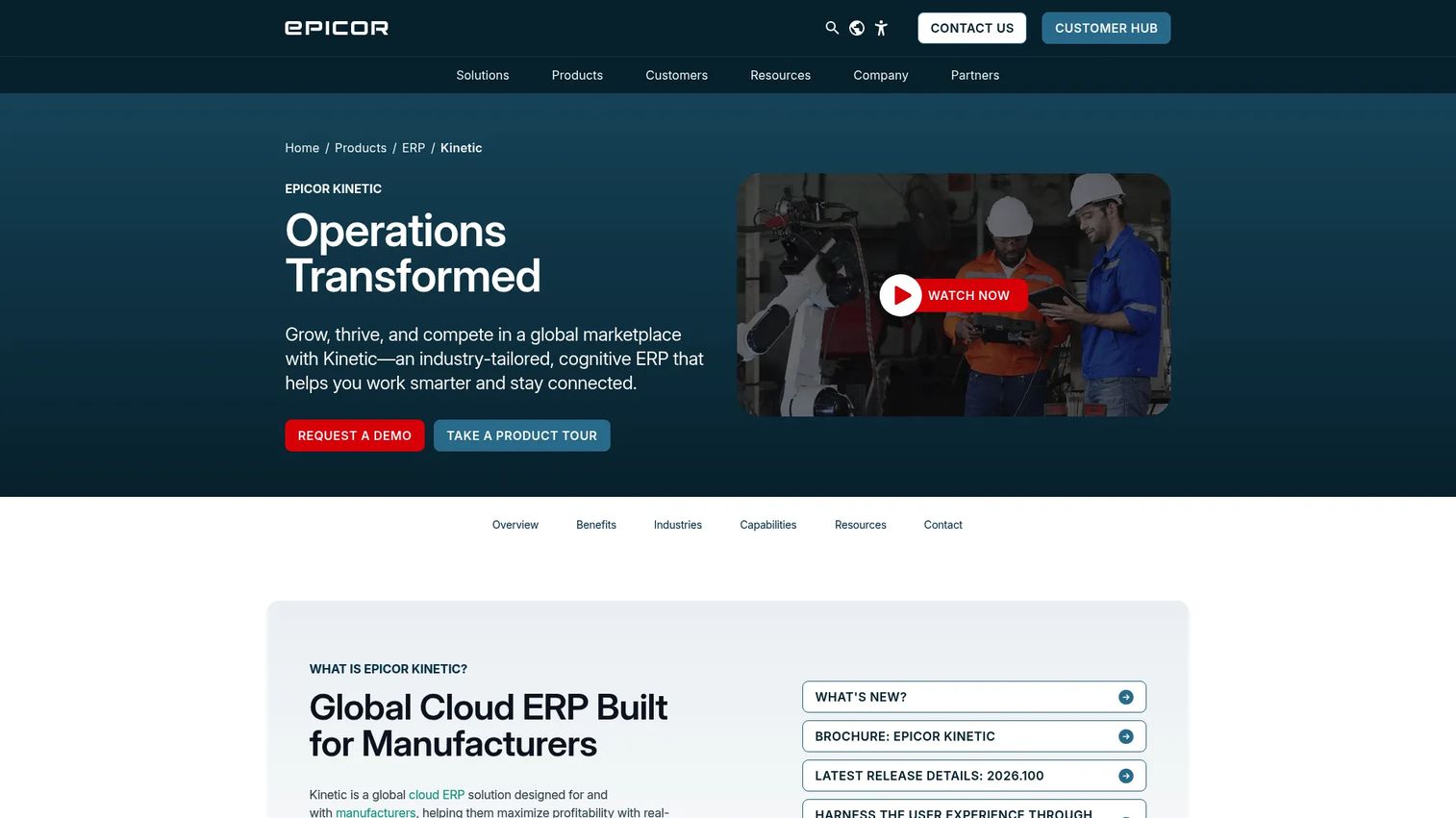
Epicor Kinetic is a cloud-focused manufacturing ERP for organizations that need deeper production, scheduling, materials, engineering, and operational controls than a broad enterprise ERP typically provides out of the box. It targets mid-market and global manufacturers with discrete, process, make-to-order, and multi-site production workflows. Consumer goods manufacturers facing capacity constraints, production variability, or quality traceability gaps will find Kinetic more purpose-built than a horizontal ERP for those specific operational problems.
Best for: Consumer goods manufacturers with discrete or mixed-mode production workflows where shop-floor visibility, scheduling accuracy, and quality traceability are the primary operational risks.
Key features
- Production planning, scheduling, and manufacturing execution workflows
- Supply chain management, MRP, and advanced planning and scheduling
- Inventory, materials, and quality management with traceability
- Financial management and operational business intelligence
- IoT-enabled monitoring and configurable integrations
Why choose Epicor Kinetic: The constraint that caps throughput deserves the most investment. If production planning or plant execution is that constraint, a manufacturing-focused ERP creates more value than a broad enterprise suite with weaker production modules. Epicor fits when operational specificity matters more than suite breadth.
Epicor Kinetic pricing: Epicor does not publish standard pricing for Kinetic. The commercial model varies by deployment type, user count, and module scope. Contact Epicor for current pricing details.
G2 rating: 4.1/5 (verified October 2026).
8. Promomash
Promomash is a platform for CPG brands managing trade promotion, deduction management, and field marketing operations. It covers retail execution tracking, field team activity, distributor and account workflows, in-store demo scheduling, and promotional event management. For growing brands that have achieved distribution but lack visibility into what happens after the product leaves the warehouse, Promomash provides the operational layer between trade plans and retail reality.
Best for: Growing CPG brands that need a more disciplined view of field activity, distributor execution, and in-store performance across multiple retail partners.
Key features
- Trade promotion planning and management with plan-vs-actual monitoring
- End-to-end deduction capture, categorization, dispute management, and recovery
- In-store demo and field-event scheduling, staffing, payment, and ROI analysis
- Distributor and account workflow management
- Reporting and task coordination across field teams
Why choose Promomash: Promomash solves a different problem than trade promotion financial planning tools. If you need to understand what is happening at the shelf and with your field teams, not just model promotional ROI in a spreadsheet, this is the category to evaluate. The distinction between trade promotion management and retail execution often gets blurred in evaluations; Promomash leans toward execution and operations.
Promomash pricing: Promomash prices plans based on annual revenue, deduction invoice volume, or event volume depending on the module. Numeric prices are not published. Contact Promomash for commercial terms.
G2 rating: 4.7/5 (verified October 2026).
9. Zycus
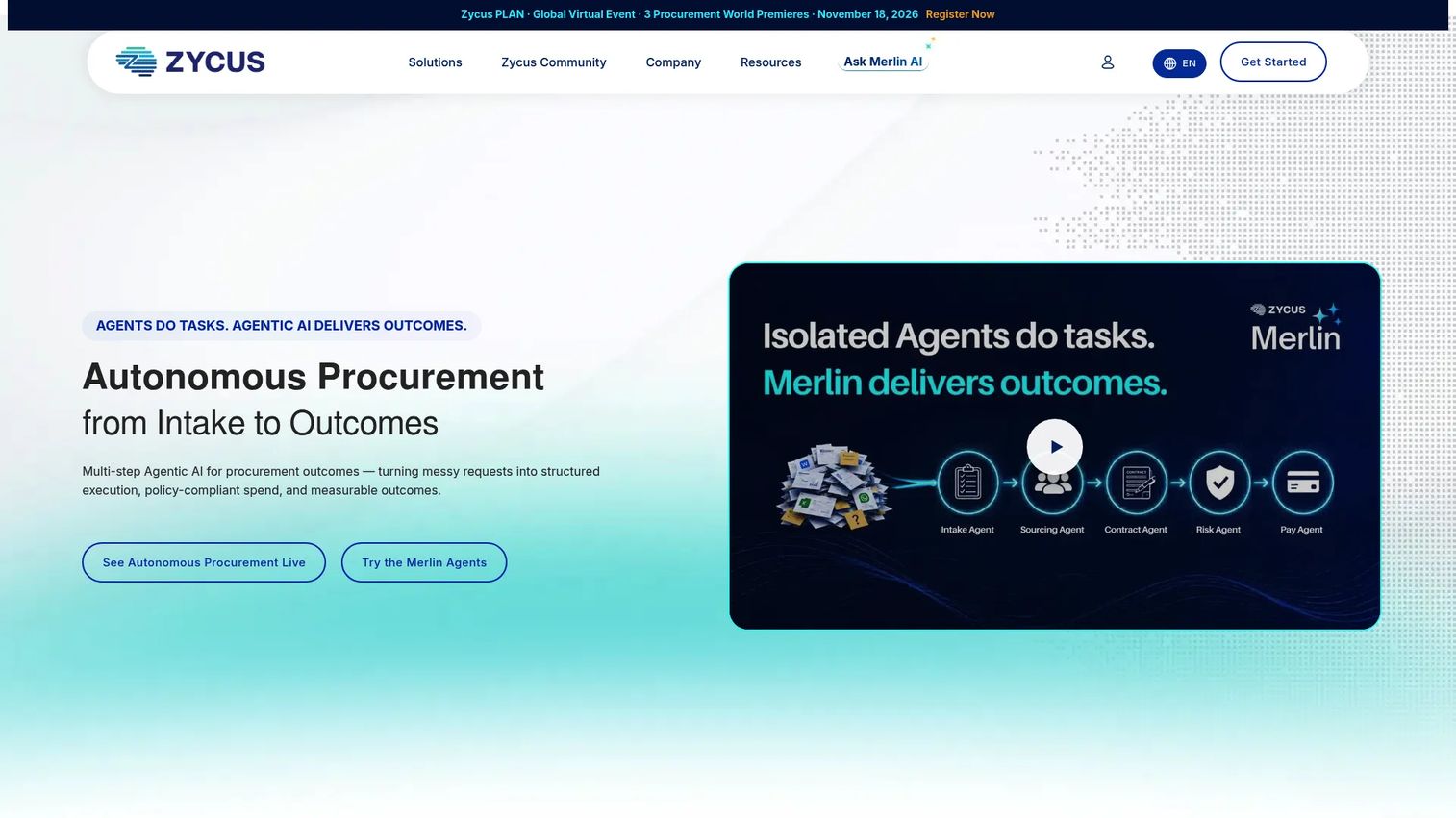
Zycus provides an AI-powered source-to-pay procurement platform covering intake management, sourcing, supplier management, contract lifecycle management, purchasing, spend analysis, and accounts payable. For consumer goods companies where supplier complexity, contract leakage, or indirect spend is damaging margin, Zycus provides the governance and visibility that purchase-order-only workflows cannot. Its Merlin AI layer adds autonomous tail-spend negotiation and procurement orchestration capabilities across the platform.
Best for: Consumer goods companies where sourcing, contract governance, and supplier performance directly affect gross margin and where the procurement function has outgrown basic purchase order processing.
Key features
- AI-powered intake and procurement orchestration through Merlin Intake
- Source-to-pay modules for sourcing, contracts, suppliers, spend analysis, and invoice management
- Autonomous tail-spend negotiation with Merlin ANA, priced at approximately $15 per purchase order for that module
- Contract lifecycle management with risk and compliance controls
- Spend analytics across direct and indirect categories
Why choose Zycus: Procurement software becomes strategic when sourcing is more than approving purchase orders. Zycus fits organizations that need to understand supplier performance, contract exposure, and total spend across categories, then act on that data to protect margin. The 3.6/5 G2 rating on 13 reviews suggests a smaller verified user base, which is worth factoring into due diligence alongside your reference checks.
Zycus pricing: The Zycus platform uses enterprise pricing that is not published. The Merlin ANA module targets approximately $15 per tail-spend purchase order based on annual volume. Contact Zycus for full platform pricing. You can find additional context through G2's pricing tab and Capterra reviewer notes.
G2 rating: 3.6/5 (verified October 2026).
10. CustomerGauge
CustomerGauge is a B2B customer experience platform that connects account-level NPS feedback to revenue, retention, and growth signals. For consumer goods companies that sell through distributors, retailers, or large accounts, understanding where relationships are weakening before they affect renewal or reorder rates is a material business problem. CustomerGauge's Gaige AI agents surface churn signals, closed-loop workflows prompt action from account teams, and Salesforce integrations push the data where revenue decisions get made.
Best for: Consumer goods companies with complex channel and account relationships where distributor health, retailer satisfaction, or account-level NPS is a leading indicator of revenue risk.
Key features
- Revenue-based NPS and revenue-linked CX analytics
- Gaige AI agents and AI-powered customer data insights
- Real-time churn alerts and closed-loop action workflows
- Account hierarchy views and multi-stakeholder tracking
- Salesforce and CRM integrations with dashboards, driver analysis, and API access
Why choose CustomerGauge: Operational data tells you what happened. Feedback data helps explain why an account, distributor, or retail relationship is weakening before the revenue line shows it. A founder who is trying to protect NRR and channel health needs both signals, not just a revenue report after the fact.
CustomerGauge pricing: CustomerGauge starts at $24K per year. Pricing scales by account-base size and activated modules. No free tier is available; pilots are paid and scoped separately. Contact CustomerGauge for a detailed proposal.
G2 rating: 4.6/5 (verified October 2026).
Considerations when choosing consumer goods software
Start with the operating bottleneck, not the category
Before evaluating any platform, name the most expensive operational problem your team faces right now. Financial visibility gaps, launch delays, inventory volatility, trade spend leakage, production constraints, procurement risk, and customer signal gaps all require different categories of software. Buying a broad ERP to fix a forecasting gap is a common and costly mistake.
Separate system of record from specialist software
ERP often becomes the system of record for finance, inventory, and procurement. Planning tools, best contract lifecycle management software, trade promotion platforms, and customer intelligence systems solve deeper domain problems on top of that foundation. A well-built stack can include both layers, but the system-of-record decision comes first.
Model implementation effort before signing
Ask every vendor: What data needs migration, which processes must change, which integrations are essential, and who internally owns adoption. A platform can be powerful and wrong for your company if your team lacks the capacity to implement it. Implementation timelines for enterprise ERP can run 12 months or longer, which requires a board-level business case to justify.
Verify integration and data ownership
Require specific answers on integrations with your ecommerce platform, warehouse management system, CRM, BI tools, EDI infrastructure, and finance stack. Also establish who owns master data, reporting definitions, and future workflow changes after go-live. This question surfaces vendor dependency risk before the contract is signed.
Evaluate total cost beyond the subscription fee
Include implementation fees, internal project time, training, change management, integration development, and future module requirements. For the founder audience: The real cost question is not the annual license. It is how many months of leadership attention the implementation will consume, and whether that trade-off is justified by the operational gain.
Conclusion
Consumer goods software is a category decision before it is a vendor decision. Pick the bottleneck first, then find the platform that solves it best.
SAP S/4HANA is the enterprise operating backbone for large organizations managing global complexity across finance, supply chain, and manufacturing. Centric Software fits product-led teams where better development-to-market decisions drive growth. Oracle NetSuite suits scaling brands building their first connected cloud ERP. Infor CloudSuite Food & Beverage and Epicor Kinetic address deeper process manufacturing requirements where a generic ERP would require too much customization. Vividly, LEAFIO AI, Promomash, Zycus, and CustomerGauge each solve a specialist bottleneck: Trade-spend control, inventory productivity, retail execution, procurement governance, and customer signal, respectively.
The right consumer goods software removes the most expensive blind spot in your operating model, then earns its place in the stack within the first year.
If you're evaluating how software vendors in this space show complex product workflows to multi-stakeholder buying committees, interactive product demos and Demo Center hubs give buyers a structured way to explore before they ever talk to sales.
Start your journey with Guideflow today!
FAQs
Consumer goods software is a group of business applications that help CPG, FMCG, food and beverage, and consumer product companies manage planning, product development, production, inventory, promotions, procurement, and customer operations. The category includes both core ERP systems and specialist platforms for trade promotion, demand planning, retail execution, and customer intelligence. No single platform covers every job equally well.
ERP is a core system of record for finance, inventory, procurement, and operations. CPG software is a broader label that includes ERP alongside specialist systems for product lifecycle management, demand planning, trade promotion management, retail execution, and customer feedback. Many consumer goods companies run an ERP as their foundation and layer specialist tools on top for the workflows where ERP falls short.
Start with the current bottleneck. If financial data and inventory positions are unreliable, ERP comes first. If an ERP already exists but commercial decisions still run through spreadsheets, trade promotion or demand planning software addresses the next gap. Buying in the wrong order creates implementation burden without solving the operating constraint that matters most.
The answer depends on company size, manufacturing complexity, geography, regulatory requirements, and existing infrastructure. Large global operations with complex supply chains typically evaluate SAP S/4HANA. Growing brands building their first integrated cloud stack often find Oracle NetSuite a better fit. Food and beverage manufacturers with process complexity and traceability requirements frequently evaluate Infor CloudSuite Food & Beverage. Consumer goods manufacturers with discrete production workflows consider Epicor Kinetic.
Trade promotion management software helps CPG companies plan, approve, execute, measure, and improve promotions with retailers, distributors, and customers. Key capabilities include trade-spend budget tracking, promotional calendar management, deduction resolution, customer agreements, and profitability analysis at the account level. It is distinct from retail execution software, which focuses on what happens in the field after promotions are agreed.
Dedicated demand planning becomes valuable when stockouts, overstocks, manual replenishment, or slow forecast cycles create cash and margin pressure. Some ERP platforms include planning modules, but specialist tools like LEAFIO AI typically deliver deeper optimization for companies managing high SKU counts, multi-location inventory, or complex assortments. According to Rockwell Automation (2025), 67% of CPG manufacturers are already using smart manufacturing technologies, which signals that AI-driven planning adoption is accelerating across the category.
Identify the specific bottleneck the software addresses. Then ask: Who internally will own implementation, what integrations are required from day one, how clean is the current data, what process changes will adoption require, and what is the total cost including internal time. Also establish what a realistic first-year win looks like and how you will measure whether the platform delivered it.
They can, but enterprise platforms often introduce more implementation overhead than a smaller company can absorb without a dedicated project team. A scaling brand at Series A or early Series B is usually better served by a cloud ERP like Oracle NetSuite than by a full enterprise suite. Match the platform to current operational complexity, not to an aspirational future state that may be three years away.